Category: Uncategorized

  • Kim Jong-un accepts Donald Trump’s invite to Washington, North Korea state media says

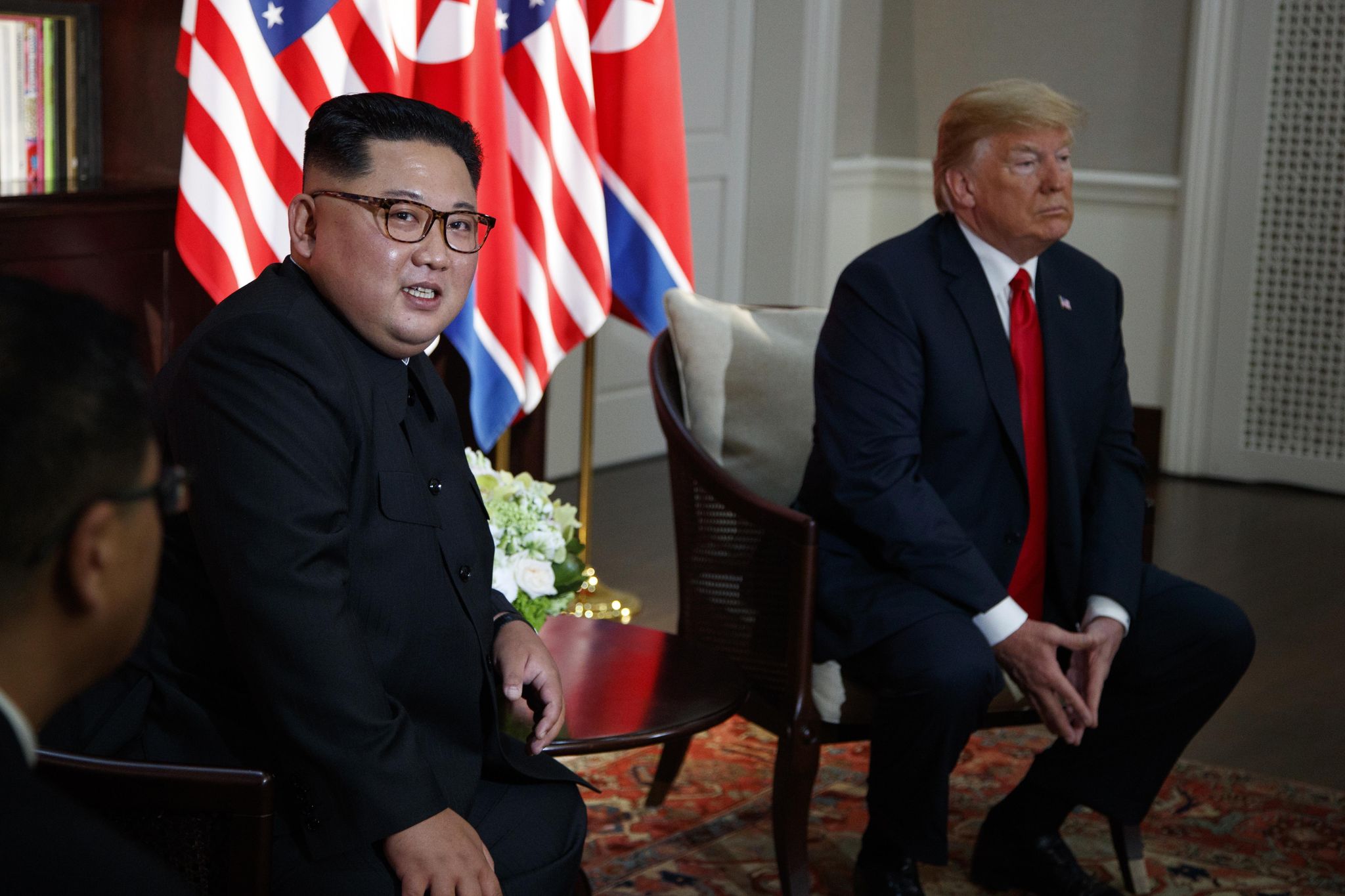
    North Korean leader Kim Jong-un has accepted President Trump’s invitation to visit Washington, North Korea’s Korean Central News Agency reported Tuesday night.

    North Korean leader Kim Jong-un has accepted President Trump’s invitation to visit Washington, North Korea’s Korean Central News Agency reported Tuesday night.

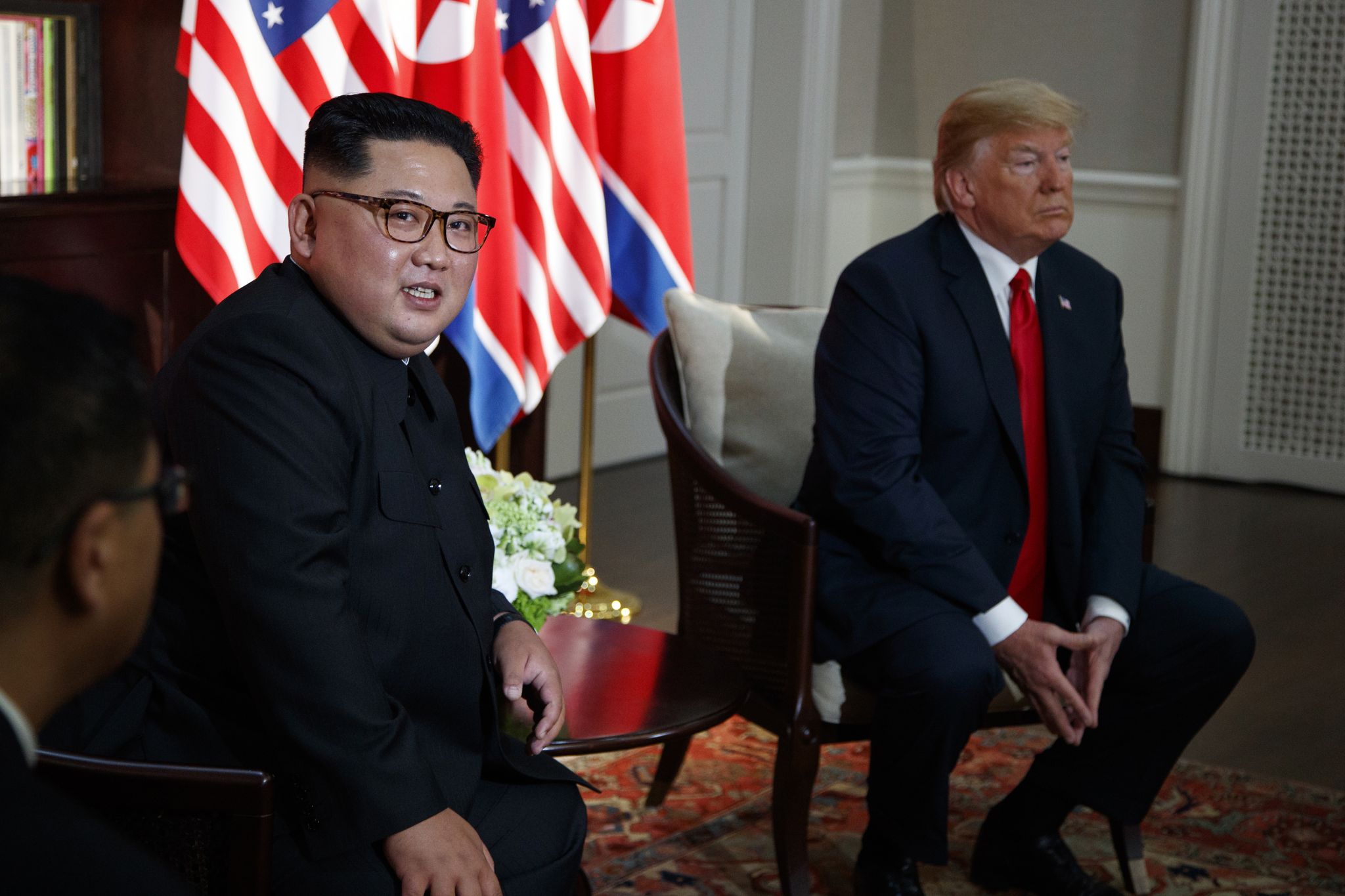
    The report came on the heels of the two leaders met for the first time in Singapore Tuesday for an historic summit on eliminating North Korea’s nuclear weapons. Mr. Trump had said he intended to invite Mr. Kim to visit the White House.

    At the summit, the two leaders signed a two-page document committing Mr. Kim to denuclearization, while Mr. Trump agreed to provide security guarantees for North Korea.

  • The Latest: Aid group refuses migrants from US Navy ship

    The Latest on the flow of migrants into Europe (all times local):

    CATANIA, Sicily (AP) – The Latest on the flow of migrants into Europe (all times local):

    10:05 p.m.

    A German humanitarian group says it is declining to take aboard 41 migrants rescued by a U.S. Navy ship because Italy has refused to assign the group’s ship a port where it can dock.

    Sea Watch, whose rescue vessel is operating off Libya’s northern coast, said the migrants were picked up by the Navy after their rubber dinghy sank and at least 12 people died. The group said Wednesday the survivors need immediate care on land.

    The group cited Italy’s recent refusal to let another group’s rescue ship dock as the reason it was not taking on the passengers the U.S. Navy ship Trenton rescued Tuesday.

    Sea Watch confirmed it had space on board its ship and food for 41 passengers, “but that without an assigned place of safety, Sea-Watch 3 isn’t in a position to carry out a transfer” of migrants from the Trenton.

    The U.S. Sixth Fleet says it is coordinating with its partners on where the migrants will go.

    ___

    6:10 p.m.

    German Chancellor Angela Merkel is heading for a showdown with her conservative allies in a dispute over whether to turn back some refugees at the border.

    Horst Seehofer, who heads the Bavaria-only sister party to Merkel’s center-right Christian Democratic Union, made the proposal as part of a 63-point plan to crack down on illegal migration.

    As interior minister, Seehofer oversees border control and migration, and his party is under pressure to take a hard line ahead of state elections in Bavaria this fall.

    Seehofer told reporters Wednesday that he wants an agreement this week, and backed the idea of an Italian-Austrian-German “axis” to tackle illegal migration.

    Speaking at a separate event, Merkel said she wants a “solution for all of Europe” rather than one that works only for some countries.

    ___

    3:10 p.m.

    Italy’s finance minister has canceled a planned meeting in Paris with his French counterpart after the two countries clashed over Italy’s decision to refuse entry to a migrant rescue ship.

    The office of Finance Minister Giovanni Tria confirmed Wednesday’s meeting with Bruno Le Maire had been scrapped. Le Maire’s office confirmed the cancellation. No reason was given by either office.

    But earlier, Italy’s foreign ministry warned that relations had been compromised by France’s public criticism that Italy’s decision to refuse entry to the migrant ship Aquarius had been “cynical” and irresponsible.

    Italy summoned the French ambassador to protest and demanded an official apology.

    Italy has defended its decision to refuse the Aquarius and its 600 passengers entry. Spain has offered to take it in and the ship is currently on the days long voyage to Valencia.

    ___

    2:15 p.m.

    The U.N. refugee agency chief says a bitter dispute over which European country should take in a rescue boat carrying hundreds of migrants in the Mediterranean is “profoundly shameful” for the European Union.

    Filippo Grandi railed against the dispute involving France, Italy, Malta and Spain over the Aquarius, which is carrying some 629 migrants who left from Libya.

    Speaking to reporters in Geneva, Grandi said the EU can expect more such incidents in coming weeks as long as it remains divided on its policies toward migrants and refugees.

    Spain offered to take in the Aquarius after Italy and Malta refused to do so. French President Emmanuel Macron criticized the Italian government’s refusal.

    Grandi said closing ports wrongly threatens “rescue at sea” – a requirement under international law – but said Italy’s reasoning was “something that we need to listen to.”

    ___

    2 p.m.

    France’s foreign ministry spokeswoman says France is fully aware of the burden weighing on Italy amid the migrant crisis, and of the efforts made by the country.

    Agnes von der Muhll says “none of the comments by French authorities have questioned this, nor the need for a close coordination between Europeans”, in a written statement Wednesday.

    She wouldn’t comment any further on the decision of Italian Foreign Minister Enzo Moavero Milanesi to summon the French ambassador on Wednesday following comments by the French president on Italy’s refusal to allow a ship carrying rescued migrants to dock.

    French President Emmanuel Macron is to meet with new Italian Premier Giuseppe Conte on Friday in Paris.

    Migrant-related issues will be at the heart of the discussions and France hopes to maintain a “close dialogue” with its neighbor, the statement says.

    ___

    1:35 p.m.

    The leader of Austria and Germany’s conservative interior minister say their countries will cooperate with Italy to tackle the problem of illegal migration.

    Austrian Chancellor Sebastian Kurz said an “axis of the willing” between Rome, Vienna and Berlin makes sense because the countries form one of the main travel routes into Europe for migrants who have crossed the Mediterranean.

    Kurz told reporters in Berlin that a growing number of European governments agree on the need to curb uncontrolled migration and crack down on people trafficking.

    Horst Seehofer, Germany’s interior minister, said he spoke Tuesday to his Italian counterpart, adding that the three countries would press ahead on the issue.

    Seehofer has taken a tough line on immigration that’s put him at odds with German Chancellor Angela Merkel.

    ___

    1:15 p.m.

    Italy’s foreign ministry says French criticism of its handling of the migrant ship Aquarius is “unacceptable,” and is compromising their diplomatic relations.

    The ministry issued a statement after Foreign Minister Enzo Moavero Milanesi summoned the French ambassador to complain on Wednesday. The French charge d’affairs, Claire Anne Raulin, represented France as the ambassador was out of Rome.

    In the statement, Italy said France could have made its views privately, and considered the public complaints by President Emmanuel Macron “unacceptable” and “unjustified.” Macron had said Italy had been cynical and irresponsible for having denied entry to the Aquarius, a rescue vessel with more than 600 migrants onboard.

    The ministry said: “Such declarations are compromising relations between Italy and France.” It added that Italy was waiting for French to take action to “heal the situation that has been created.”

    ___

    11:40 a.m.

    Italy is challenging France to take in the migrants it promised to under an EU agreement, and has accused France of turning back some 10,000 migrants at Italy’s northern border.

    Interior Minister Matteo Salvini blasted the French critique of its handling of the Aquarius migrant ship standoff during a speech to Parliament on Wednesday. Salvini demanded an apology after French President Emmanuel Macron accused Italy of cynical, irresponsible behavior by refusing to let the Aquarius dock in an Italian port.

    Salvini said France had committed to accepting 9,816 migrants under a 2015 EU redistribution scheme to relieve front-line countries of the pressure of asylum-seekers. The scheme has never gotten off the ground.

    Salvini said in three years, France has accepted only 640 people. “So I ask President Macron to pass from words to action and tomorrow morning welcome the 9,816 France promised to welcome as a sign of concrete generosity and not just words.”

    ___

    10:45 a.m.

    The co-founder of the SOS Mediterranee charity says three ships carrying 629 migrants are expected to arrive around Saturday night at the Spanish port of Valencia, depending on weather conditions.

    Sophie Beau said Wednesday in a news conference in Marseille, France, “it’s a relief for everyone, our teams and of course above all for the survivors to know that they are finally allowed to head to a safe port in Europe.”

    Beau said while the rescue ship the association operates, the Aquarius, is travelling the 1,500 kilometers (930 miles) to Spain, new victims “are dying under our eyes.”

    She called on European countries to set up a fleet to save human lives in the Mediterranean Sea.

    Spain offered to welcome migrants aboard the Aquarius rescue ship after Italy and Malta refused to take them in.

    Italy sent two ships operated by the Italian navy and coast guard to take on some of the migrant passengers and escort the ship on the voyage.

    ___

    10:40 a.m.

    Italy’s coast guard says its ship Diciotti has brought 932 migrants to shore in Catania, Sicily, as a diplomatic standoff continues over Italy’s refusal to let another rescue ship dock.

    The Diciotti was also carrying the corpses of two people who died during their voyage, a woman and a teenage boy.

    Thirteen of the passengers disembarking in Catania are pregnant and 208 are minors. The passengers hailed from Eritrea, Sudan, Mali, Ivory Coast and Guinea.

    During the voyage to Sicily, four pregnant women and a man suffering from fever were evacuated urgently and taken to hospitals.

    The Aquarius migrant ship operated by SOS Mediterranee has been refused entry to Italian ports. It is now heading to Spain.

    ___

    9:25 a.m.

    Italy has summoned the French ambassador for consultations after French President Emmanuel Macron criticized what he called Italy’s cynicism and irresponsibility in turning away a migrant rescue ship with more than 600 people aboard.

    A statement from the foreign ministry said the ambassador had been summoned Wednesday morning “following the statements given in Paris yesterday about the Aquarius.”

    Macron’s office said Tuesday that France doesn’t want to “start a precedent” that would allow some European countries to breach international laws and rely on other EU member states to take in migrants.

    Spain has agreed to accept the Aquarius in its port in Valencia.

    ___

    9:15 a.m.

    An Italian coast guard vessel has docked in Sicily with more than 900 migrants aboard, evidence that Italy’s new anti-migrant government is still taking in some asylum-seekers but is forcing the rest of Europe to accept others.

    Crew aboard the Diciotti began disembarking passengers in Catania’s port early Wednesday. At the same time, the Aquarius vessel of the aid group SOS Mediterranee continued its days long westward voyage to Spain, where it was rerouted after Italy and Malta refused it entry.

    The fates of the two ships are evidence of the policy shift by Italy’s new populist government: refuse entry to rescue ships of European-flagged aid groups, but allow Italian maritime vessels in its ports.

    The shift has heightened tensions in Europe, with France accusing Italy of “cynical” and irresponsible behavior.
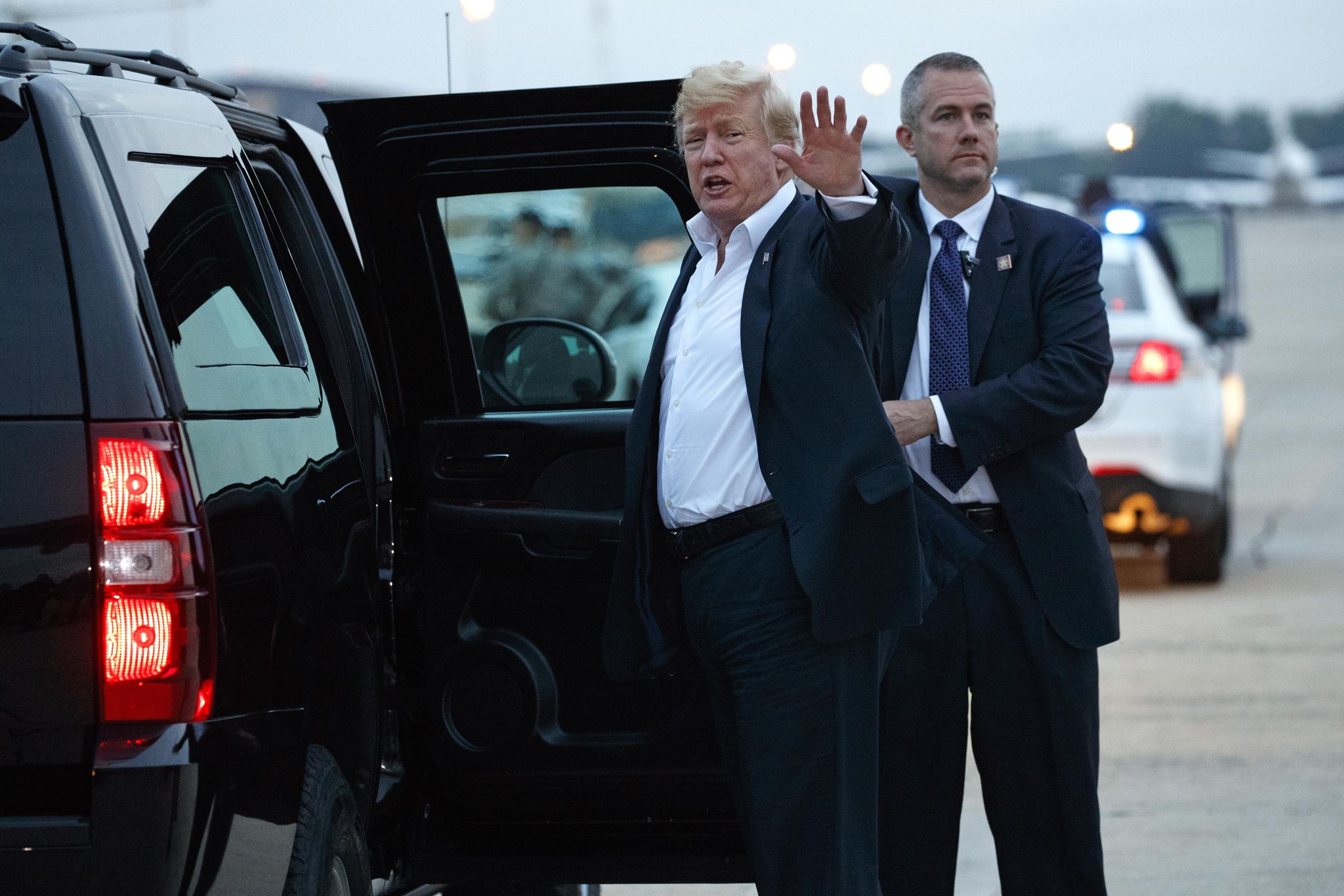
  • Trump tags US media as nation’s ‘biggest enemy’ after summit

    President Donald Trump challenged skeptical media coverage of his historic summit with North Korea’s Kim Jong Un on Wednesday, declaring that “Fake News” is the nation’s “biggest enemy.”

    WASHINGTON (AP) – President Donald Trump challenged skeptical media coverage of his historic summit with North Korea’s Kim Jong Un on Wednesday, declaring that “Fake News” is the nation’s “biggest enemy.”

    The president’s tweet, delivered a few hours after Air Force One touched down outside Washington, was reminiscent of his February 2017 Twitter rebuke in which he called several leading news outlets “the enemy of the American people.”

    Trump has sought to portray his unprecedented meeting with Kim as a significant accomplishment that has made the world less vulnerable to the North’s nuclear arsenal. Critics say that his agreement with the North lacks specific restraints on Kim’s government and that he offered to end joint military exercises with South Korea with little in return.

    The president tweeted after returning from his Singapore summit that “the Fake News, especially NBC and CNN,” are “fighting hard to downplay the deal with North Korea.” He added: “500 days ago they would have ‘begged’ for this deal-looked like war would break out.”

    “Our Country’s biggest enemy is the Fake News so easily promulgated by fools!” Trump tweeted.

    The president also asserted that after his initial round of talks with Kim, there is “no longer a Nuclear Threat from North Korea.” Trump’s claim is dubious given that independent experts estimate Pyongyang has enough fissile material for 20 to 60 bombs.

    The tweet followed a New York Times story on the Trump administration’s lack of scientific expertise, the president’s questioning of the honesty of the American media at an international summit in Canada and his dismissal of diplomatic expertise in favor of using a “touch” and “feel” approach in his talks with Kim.

    Trump has bristled against questions over his decision to meet with Kim, whose country is estimated to have 80,000 to 120,000 political prisoners. The president has dubbed his detractors “haters & losers.”

    “It’s a mistake to see attacks on the media as separate from those things,” said Jay Rosen, a New York University journalism professor. “It’s the erosion of the common world of fact. If we can’t agree on what the facts are, if there are no facts because they are in endless dispute, there is no accountability.”

    Rosen noted that international summits were often venues for the U.S. president and American journalists to insist on joint news conferences with autocratic leaders or strongmen and their accompanying press corps, a form of soft diplomacy that demonstrated America’s commitment to democratic institutions such as freedom of the press.

    While Trump held a news conference at the G-7 summit in Quebec last week, he told reporters during one exchange that he “came up with the term fake news” because many journalists who cover him are “very dishonest.” In response to a journalist representing CNN, Trump criticized the premise of the reporter’s question and then criticized “fake news CNN” as “the worst.”

    “Anybody who can exert a factual check on the president, saying ‘Wait a minute, that’s not what happened,’ is to be dismissed, attacked, delegitimized, pushed aside and turned into a hate object,” Rosen said.

    ___

    On Twitter, follow Ken Thomas at https://twitter.com/KThomasDC

  • Cybersecurity panel chair seeks briefing from Navy following reports of Chinese hack, data breach

    The chair of the Senate Armed Services Committee’s Subcommittee on Cybersecurity has reportedly asked the U.S. Navy for details about a data breach that allegedly allowed Chinese government hackers to

    The chair of the Senate Armed Services Committee’s Subcommittee on Cybersecurity has reportedly asked the U.S. Navy for details about a data breach that allegedly allowed Chinese government hackers to steal throngs of sensitive military data.

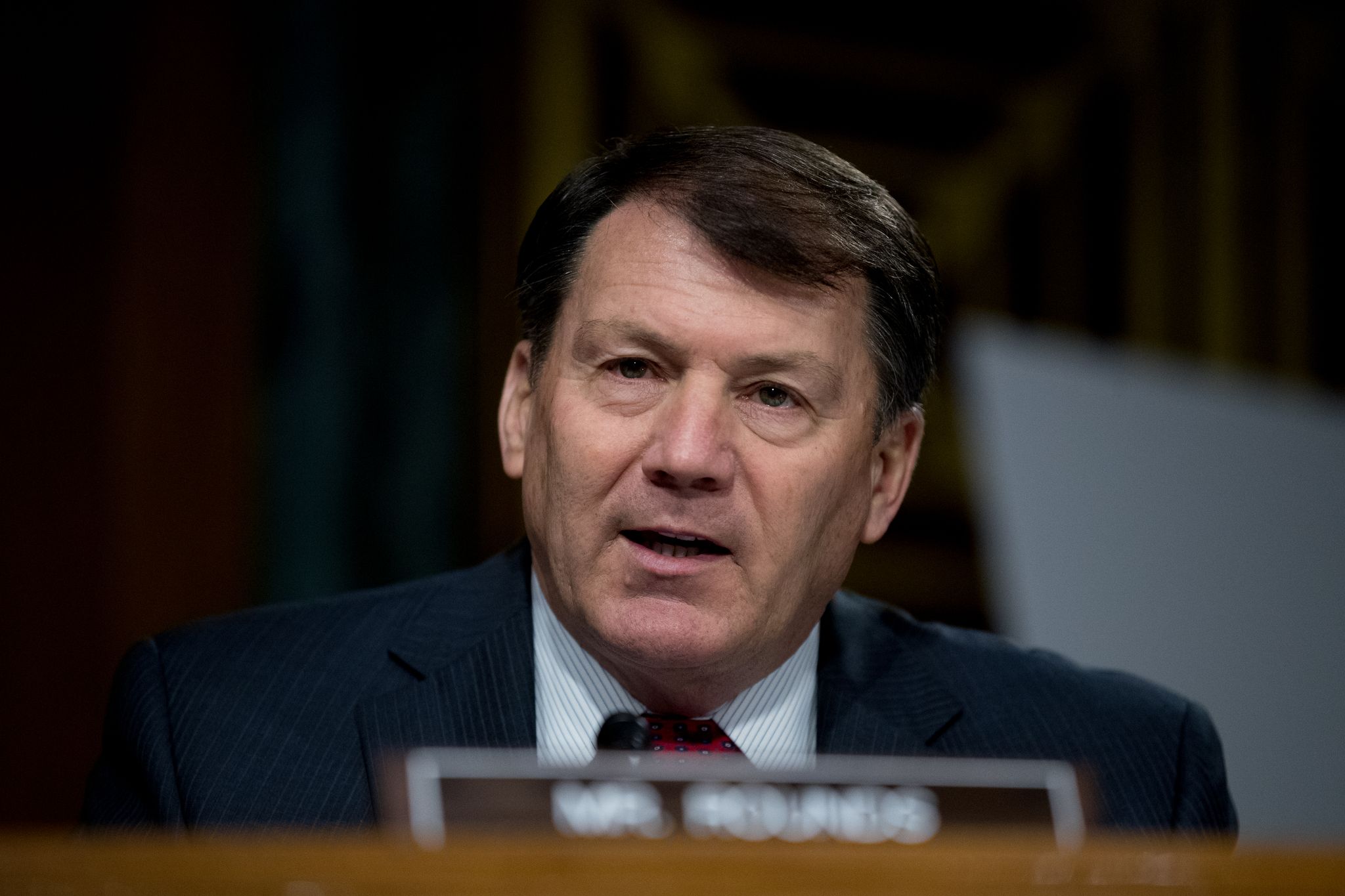
    Sen. Mike Rounds, South Dakota Republican, has requested that the Navy brief lawmakers in the wake of The Washington Post revealing last week that Chinese hackers successfully infiltrated a government contractor and compromised huge amounts of highly sensitive intelligence involving classified military operations, Politico reported Wednesday.

    “I’ll give them an opportunity to explain what went on and why,” Mr. Rounds told Politico. “I most certainly want to find out what really did happen and what we have to do to avoid it in the future.”

    The incident is “once again … a case of where we have, perhaps, hygiene that has to be improved. We’ll find out,” Mr. Rounds said.

    Other military branches may face scrutiny as well, the congressman added.

    “We’re going to start with the Navy and we’ll move from there,” he told Politico.

    Chinese hackers breached an unidentified contractor that works for the Naval Undersea Warfare Center in Rhode Island and subsequently stole huge amounts of sensitive data in January and February, The Post reported.

    Intelligence compromised in the breach included signals and sensor data, submarine radio room information, the Navy submarine development unit’s electronic warfare library, plans to develop a supersonic anti-ship missile and over 600 gigabytes of data involving “Sea Dragon,” a classified project undertaken by the Pentagon’s Strategic Capabilities Office, the report said.

    Defense Secretary James Mattis ordered a review of contractor cybersecurity policies following publication of The Post’s article last week, the newspaper reported afterwards.

    A representative for Sen. Bill Nelson of Florida, the ranking Democrat on the cybersecurity subcommittee, did not immediately return an email seeking comment Wednesday.

  • Russia invites Donald Trump to World Cup

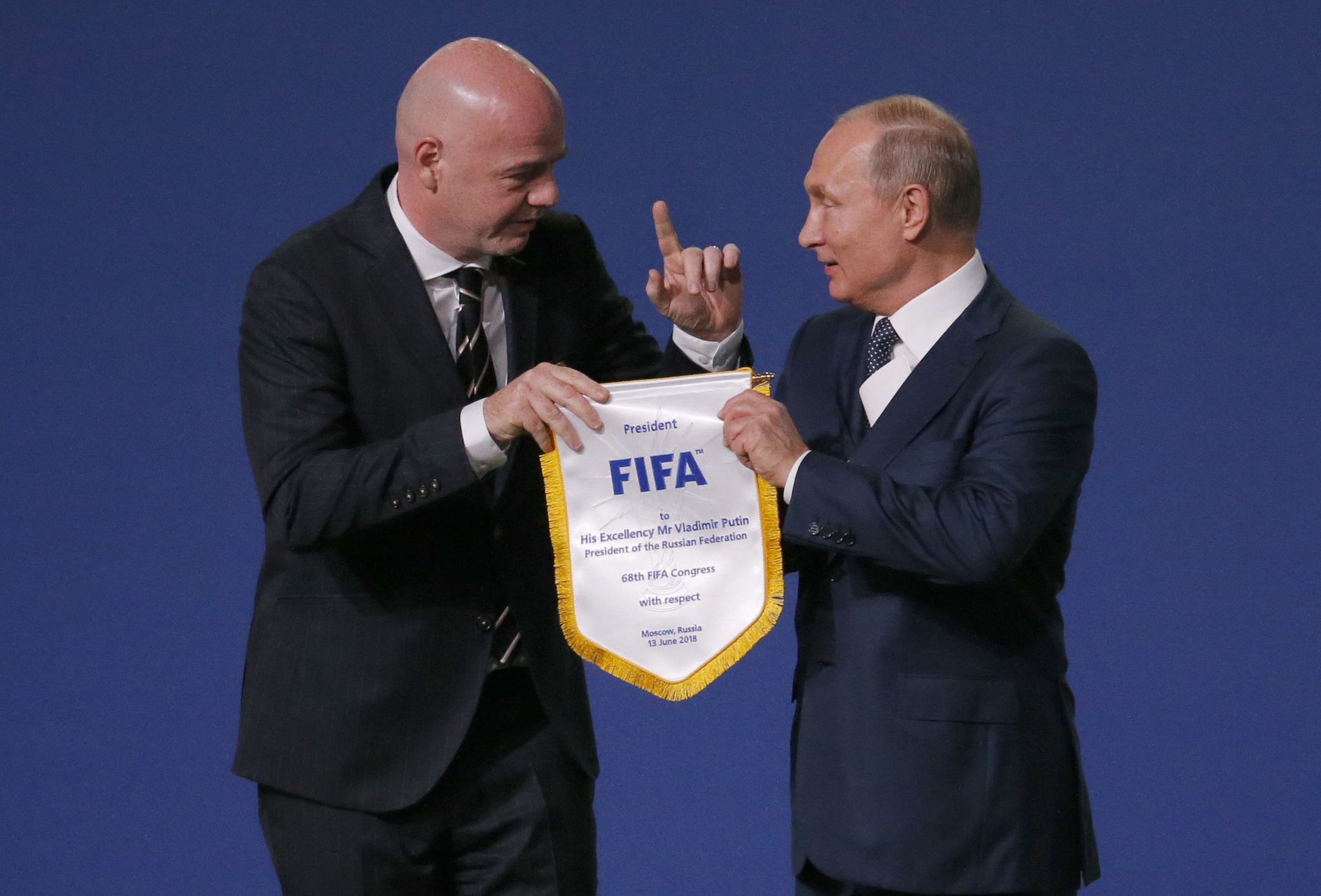
    President Trump is a welcome guest at the upcoming FIFA World Cup in Russia, Kremlin spokesman Dmitry Peskov told reporters on Wednesday.

    President Trump is a welcome guest at the upcoming FIFA World Cup in Russia, Kremlin spokesman Dmitry Peskov told reporters on Wednesday.

    “Russian President Vladimir Putin said he would be glad to see all guests here in Moscow and certainly this concerns the guests from the United States at the highest level,” Mr. Peskov told journalists when asked if Mr. Trump could be invited to attend a World Cup match, the official Russian state news wire TASS reported.

    Just a day before the 2018 competition kicks off with an opening match in Moscow between hosts Russia and Saudi Arabia, European media is feverishly debating which dignitaries will attend the monthlong tournament that concludes on July 15.

    Some world leaders face a quandary — attend and possibly be accused of playing into Mr. Putin’s hands during a time of global tension over Russian activities, or decline and be seen as not supporting their home team.

    According to German media, Chancellor Angela Merkel has yet to commit one way or anther.

    Ms. Merkel attended the 2006 World Cup in Germany, which helped raise her profile. In 2014, however, she also went to more mixed reviews. Images of her cheering a German goal were praised back home, but she received criticism for photos of her sitting alongside Mr. Putin and FIFA’s disgraced former president, Sepp Blatter.

    As for the U.K., no government ministers or royal family members will attend. British officials made that announcement earlier this year in response to the poisoning, allegedly by Russia, of a former Kremlin spy on English soil.

    French President Emmanuel Macron is keeping his options open. He has told French journalists he will attend but only if France reaches the semifinals. Saudi Arabia’s Crown Prince Mohammed Bin Salman will be present for the opening ceremony and the first game, which features his home team. South Korean President Moon Jae-in has also accepted Russia’s invitation.

    Foreign leaders are expected from a range of former Soviet states and also multiple South American countries.

    As for Mr. Trump, while the U.S. team is not in this year’s tournament, on Wednesday FIFA announced a joint North American bid will host the 2026 World Cup, returning to competition to the U.S. for the first time since 1994. The U.S-led effort, which includes Canada and Mexico, beat what was seen as a more risky Moroccan bid in a 134 to 65 vote.

    Afterwards, Mr. Trump tweeted his approval: “The U.S., together with Mexico and Canada, just got the World Cup. Congratulations – a great deal of hard work!”

    U.S. media also reported that some of the president’s behind-the-scenes actions could have helped sway key votes.

  • Trump-Kim summit raises new questions over South Korean role

    When South Korea’s president shuttled between North Korea and the United States to broker their first-ever summit, he faced both praise and criticism over whether he was a peace-making mediator or was

    SINGAPORE (AP) – When South Korea’s president shuttled between North Korea and the United States to broker their first-ever summit, he faced both praise and criticism over whether he was a peace-making mediator or was helping North Korea find ways to weaken U.S.-led economic sanctions.

    A day after President Donald Trump and North Korean leader Kim Jong Un held their summit in Singapore, is it clearer whether Moon Jae-in played a positive or negative role? A quick answer: Probably not.

    Assessments of Moon’s diplomacy have become more divisive and complex, with Trump criticized in both South Korea and the U.S. for the concessions he made to North Korea, while others believe the summit will successfully prolong the current mood of detente.

    Meeting for about five hours, Trump and Kim exchanged an historic handshake, took a short stroll together, patted each other’s backs and signed a summit agreement. Trump promised to provide security guarantees to the North and suspend joint military drills with the South as long as negotiations with the North continue in “good faith.” Kim, in return, agreed to work toward a vague “complete denuclearization of the Korean Peninsula.”

    Those moves were unthinkable even several months ago, when the two unpredictable leaders threatened to nuke each other and traded a series of harsh personal insults.

    Moon issued a statement after the summit calling it a “huge step forward” toward peace that “helped break down the last remaining Cold War legacy on Earth.”

    He acknowledged that many difficulties are likely to lie ahead but vowed to work together with the U.S., North Korea and others to bring lasting peace to the Korean Peninsula.

    “We will never go back to the past again and never give up on this bold journey. History is a record of people who take action and rise to a challenge,” he said.

    But conservatives in South Korea slammed the summit, saying it failed to curb North Korea’s nuclear ambitions. They said both Trump and Moon should be blamed for not specifying steps and deadlines for North Korea’s nuclear disarmament, allowing it time to perfect its weapons program.

    “High expectations were met by low results,” said Nam Sung-wook, a North Korea expert at Seoul’s Korea University. “Moon, and then Trump, were quick to bite on North Korea’s invitation for talks. When Trump realized there wasn’t going to be anything substantial in return, it was impossible for him to back out because he had already gone too far.”

    U.S. officials had worked hard to get North Korea to agree to “complete, verifiable and irreversible” disarmament, and said they would not offer any major concessions until it took meaningful steps. Despite those efforts, Trump announced after the summit that he had agreed to suspend U.S. military drills with South Korea, something North Korea has long demanded.

    On Wednesday, North Korean state media said Trump had also agreed to the North’s desire for a step-by-step disarmament process with corresponding U.S. concessions at each step, rather than immediate disarmament as the U.S. had initially sought.

    Trump’s agreement to suspend the military drills apparently came without prior consultation with South Korea, baffling many who believe the U.S.-South Korea alliance, forged in blood during the 1950-53 Korean War, should remain strong throughout the push for a negotiated end to the nuclear tensions.

    “Why did South Korea and the U.S. form an alliance and stage military drills before the nuclear crisis flared? It’s because North Korea has been belligerent,” said Kim Taewoo, former president of the Korea Institute for National Unification in Seoul. He said cancellation of the drills “is really a bad idea … and (Trump) betrayed our people.”

    Asked to respond to Trump’s decision, Moon spokesman Kim Eui-kyeom said the allies must consider a “variety of ways to further facilitate dialogue” during the nuclear negotiations. He said South Korea is still trying to figure out the exact meaning and intent of Trump’s comments.

    Since taking office in May last year, Moon, a son of North Korean refugees, has sought to take the lead in diplomatic efforts to end the North Korean nuclear standoff, which had been dominated by world powers including the U.S. and China.

    Provocative nuclear and missile tests by North Korea last year initially gave Moon little diplomatic room to maneuver. But he kept trying to reach out to North Korea, and eventually found a role as a mediator after Kim offered in January to send a delegation to the South Korean Winter Olympics.

    After successful cooperation at the Olympics, Moon sent special envoys to North Korea who later traveled to Washington with Kim’s proposal for a summit with Trump. Moon held talks with Kim in April at which Kim agreed to work toward “complete denuclearization.” He met Kim again in May when Trump said he was withdrawing from the planned summit with Kim – a decision Trump quickly reversed.

    Experts now expect a temporary peace to continue since North Korea has probably won what it wanted from Tuesday’s summit and Trump is unlikely to back down from summit deals that he wants to portray as a diplomatic triumph.

    Analyst Hong Min at Seoul’s Korea Institute for National Unification said critics of the joint statement signed by Trump and Kim are missing a bigger point.

    He said it’s meaningful in itself that the leaders of the United States and North Korea met, talked and signed an agreement that will carry more weight and significance than any pact previously made between the wartime foes. The agreement’s aspirational language on denuclearization was a “strategic decision” to reduce pressure on both sides and keep the process going, Hong said.

    Trump and Kim agreed that their countries will quickly engage in follow-up talks led by U.S. Secretary of State Mike Pompeo and a “relevant high-level” North Korean official.

    Bong Youngshik, a professor at Seoul’s Yonsei University, said it’s too early to predict how Trump’s cancellation of the military drills will play out in future nuclear negotiations. He said North Korea is likely to consider Trump’s decision a temporary measure while it remains in negotiations with Washington.

    Moon may not face any immediate serious political repercussions at home since North Korea will likely take gradual steps toward disarmament to prevent others from thinking it reneged on its pledge. But if Trump seeks re-election in 2020, his government is likely to apply more pressure on North Korea to make substantial progress in denuclearization, which could bring the nuclear issue to another critical point, said Shin Beomchul of Seoul’s Asan Institute for Policy Studies.

    ___

    Kim Tong-hyung reported from Seoul, South Korea.

  • The Latest: Trump’s claim of no nuke threat seen as dubious

    The Latest on the summit between President Donald Trump and North Korean leader Kim Jong Un (all times local):

    WASHINGTON (AP) – The Latest on the summit between President Donald Trump and North Korean leader Kim Jong Un (all times local):

    11:30 a.m.

    Secretary of State Mike Pompeo says he’s confident that U.S. talks with North Korea will resume “sometime in the next week.”

    Pompeo says he doesn’t know the exact timing. Speaking in Seoul, he says he expects it to happen fairly quickly after he and the North Koreans return to their nations. Pompeo returns late Thursday to the U.S.

    He says President Donald Trump is “in the lead” but that “I will be the person who takes the role of driving this process forward.”

    He says much more work has been done by the U.S. and North Korean that couldn’t be encapsulated in the Trump-Kim Jong Un statement. So he says teams will now work to make more progress on those items.

    ___

    11:20 a.m.

    Secretary of State Mike Pompeo says the United States wants North Korea to take major nuclear disarmament steps within the next two years.

    Pompeo is laying out an ambitious timeline for denuclearization following President Donald Trump’s meeting with Kim Jong Un. He says he won’t disclose specific timelines but that the administration is hopeful that “major, major disarmament” steps can occur before the end of Trump’s first term. The term ends in January 2021.

    Pompeo is also urging skepticism after North Korean official media said Trump had agreed to a step-by-step approach to denuclearization. Pompeo isn’t being specific but says that “one should heavily discount some things that are written in other places.”

    Pompeo spoke to reporters from Seoul, South Korea.

    ___

    11:15 a.m.

    Secretary of State Mike Pompeo says that North Korean leader Kim Jong Un understands that “there will be in-depth verification” of nuclear commitments in any deal with the U.S.

    Pompeo is pushing back on criticism that the joint agreement signed by Kim and President Donald Trump includes no mention of verifying North Korean nuclear disarmament. Ahead of Trump’s summit with Kim, the U.S. had said disarmament must be “complete, verifiable and irreversible.”

    But Pompeo tells reporters that it’s silly to focus on the lack of the word “verifiable.” He says that’s because the agreement does refer to “complete” denuclearization of the Korean Peninsula. Pompeo says that “in the minds of everyone concerned,” the word “complete” encompasses “verifiable.”

    Pompeo says: “I am equally confident they understand that there will be in-depth verification.”

    ___

    11:10 a.m.

    Secretary of State Mike Pompeo says joint U.S.-South Korea military exercises will resume if North Korea stops negotiating in good faith over its nuclear program.

    Pompeo is in South Korea a day after President Donald Trump met with Kim Jong Un and announced the U.S. would freeze what he called “war games” with North Korea.

    Pompeo says he was there when Trump talked about it with Kim. He says Trump “made very clear” that the condition for the freeze was that good-faith talks continue. He says if the U.S. concludes they no longer are in good faith, the freeze “will no longer be in effect.”

    Pompeo says Trump was “unambiguous” in conveying that to Kim.

    ___

    11 a.m.

    House Speaker Paul Ryan says President Donald Trump should be “applauded” for his meeting with North Korea leader Kim Jong Un. But Ryan is cautioning on Wednesday that the next steps toward an agreement won’t go fast.

    The Wisconsin Republican, who is retiring this year, told reporters that “The president needed to disrupt the status quo, and the president has disrupted the status quo” with the historic meeting in Singapore. He said “the president should be applauded….Now let’s go get an agreement.”

    Trump and Kim signed a joint statement that contained a repeat of past promises to work toward a denuclearized Korean Peninsula, but the details haven’t been nailed down.

    He cautioned that no one should expect that process to go quickly. “Time,” he said, “will tell how this ends.”

    ___

    10 a.m.

    President Donald Trump is challenging skeptical media coverage of his historic summit with North Korea’s Kim Jong Un. He says “Fake News” is the nation’s “biggest enemy.”

    Trump writes on Twitter that “the Fake News, especially NBC and CNN” are “fighting hard to downplay the deal with North Korea.”

    Trump says that “500 days ago they would have ‘begged’ for this deal-looked like war would break out.”

    The president says the country’s “biggest enemy is the Fake News so easily promulgated by fools!”

    Trump has been tweeting about his talks with Kim since Air Force One returned to the United States early Wednesday morning, arguing that the talks with North Korea have made the U.S. safer. Trump’s claim is dubious considering Pyongyang’s significant weapons arsenal.

    ___

    7:25 a.m.

    President Donald Trump is defending his calls to end military exercises with South Korea that allies have said is important to security in the Asia Pacific region.

    Trump says on Twitter after returning from his Singapore summit that “we save a fortune by not doing war games, as long as we are negotiating in good faith.”

    Trump has said the U.S. and South Korea should stop their joint military exercises as long as both sides are negotiating in good faith, which the president says is happening.

    Back in the United States, Trump is tweeting about his historic summit with North Korean leader Kim Jong Un. He says there is no longer a nuclear threat from North Korea even though experts estimate that Kim’s government has enough fissile material for 20 to 60 bombs.

    __

    6:15 a.m.

    President Donald Trump says on Twitter, “There is no longer a Nuclear Threat from North Korea,” as he returns to the United States after his historic summit with North Korea leader Kim Jong Un.

    Trump says on Twitter that “everybody can now feel much safer than the day I took office.”

    He says before he took office, “people were assuming that we were going to War with North Korea,” and President Barack Obama said North Korea was the nation’s biggest problem.

    Trump and Kim signed an agreement to work toward denuclearization, but it appears weaker than past deals that failed. Independent experts estimate North Korea now has enough fissile material for 20 to 60 bombs, and it has tested missiles that could potentially deliver a nuclear weapon to the U.S. mainland.

    ___

    5:37 a.m.

    President Donald Trump has arrived back in Washington from his historic nuclear summit with North Korea’s Kim Jong Un in Singapore.

    Air Force One touched down at Joint Base Andrews early Wednesday morning, completing the president’s marathon trip to Asia for talks with the North Korean leader. The president made refueling stops in Guam and Hawaii on his return to Washington.

    While his aircraft refueled in Hawaii, Trump thanked Kim for “taking the first bold step toward a bright new future for his people,” saying their summit on Tuesday “proves that real change is possible!”

    During his return, Trump spoke with South Korean Prime Minister Moon Jae-in and Japanese Prime Minister Shinzo Abe.

    ___

    6:25 p.m.

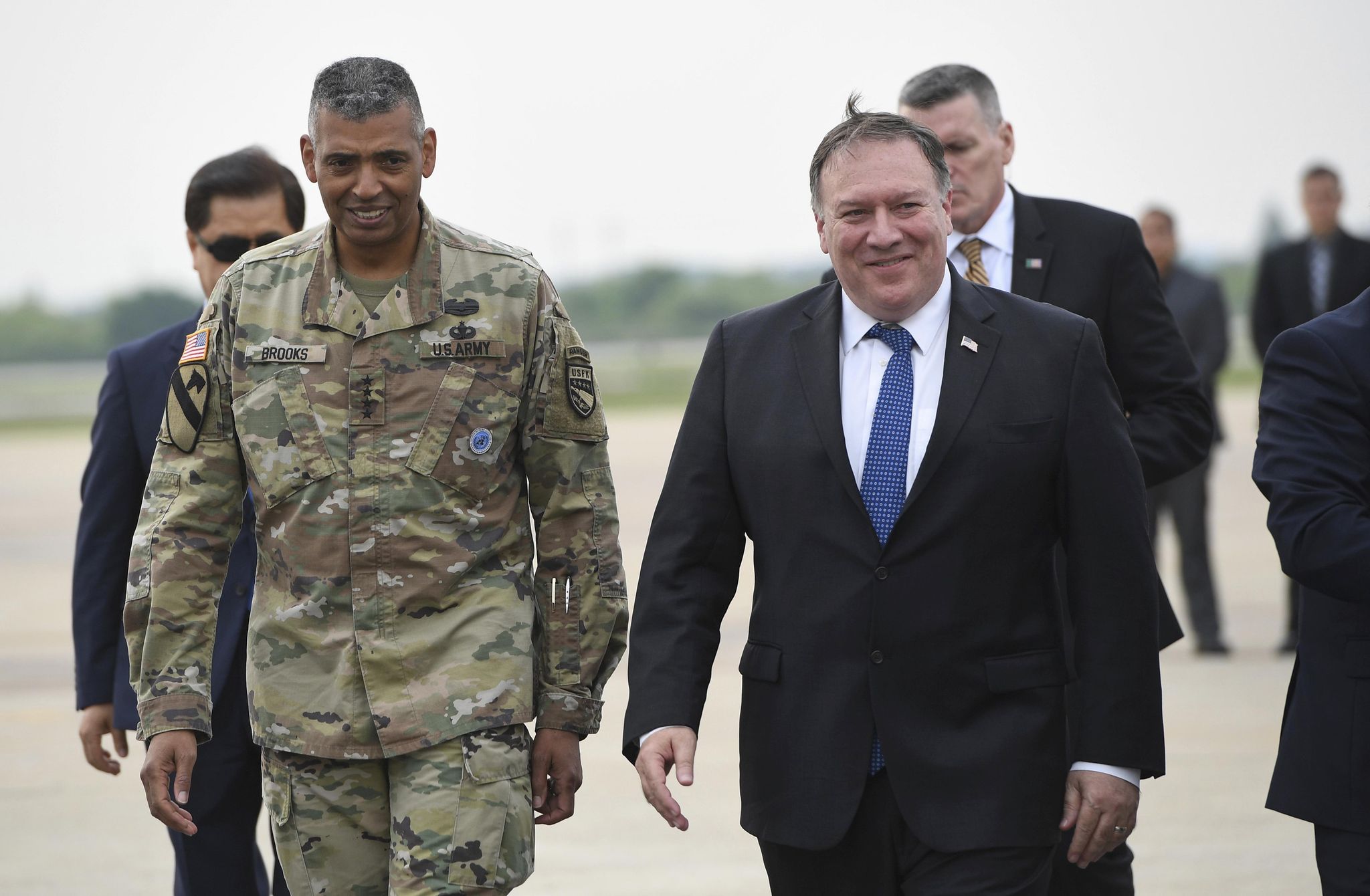
    U.S. Secretary of State Mike Pompeo has landed at Osan Air Base south of Seoul ahead of meetings with America’s allies in the aftermath of the summit between President Donald Trump and North Korean leader Kim Jong Un.

    He’s expected to meet privately in the evening with Gen. Vincent Brooks, commander of U.S. Forces Korea.

    Pompeo will meet President Moon Jae-in on Thursday morning to discuss the summit.

    Japanese Foreign Minister Taro Kono is also heading to Seoul and is due to meet with Pompeo and his South Korean counterpart. Pompeo, the former CIA director, then plans to fly to Beijing to update the Chinese government on the talks.

    ___

    5:05 p.m.

    Russia is welcoming the outcome of the summit between President Donald Trump and North Korean leader Kim Jong Un.

    Kremlin spokesman Dmitry Peskov says “one can only welcome the fact that such a meeting took place and that direct dialogue was begun.”

    Peskov tells reporters in Moscow on Wednesday that the meeting helps de-escalate tensions and push the situation away “from the critical point where it was just a few months ago.”

    Peskov says the meeting confirms Russian President Vladimir Putin’s view that “there is no alternative to political and diplomatic means in solving the problem of the Korean Peninsula.”

    Peskov adds, however, that given how complicated the situation is around North Korea, the Kremlin isn’t expecting a quick resolution.

    ___

    3:20 p.m.

    A spokesman of South Korean President Moon Jae-in says Washington and Seoul need to consider a “variety of ways to further facilitate dialogue” while they are engaged in nuclear negotiations with Pyongyang.

    Kim Eui-kyeom made the comments on Wednesday when asked to respond to President Donald Trump, who following his summit with North Korean leader Kim Jong Un said that the United States and South Korea should stop their joint military exercises “as long as we are negotiating in good faith.”

    Kim, Moon’s spokesman, says Seoul is still trying to figure out the exact meaning and intent of Trump’s comments.

    ___

    10:50 a.m.

    The U.S. top diplomat is jetting to South Korea to brief the country’s president as Asian allies try to parse the implications of the extraordinary nuclear summit in Singapore between President Donald Trump and North Korea’s Kim Jong Un.

    South Korea’s presidential office says U.S. Secretary of State Mike Pompeo will meet President Moon Jae-in Thursday morning to discuss the meeting, which made history as the first between sitting leaders of the U.S. and North Korea.

    Trump and Kim reached a broad agreement that offered few specifics but included promises of U.S. security guarantees and a reiteration from Kim of his country’s commitment to “complete denuclearization of the Korean Peninsula.”

    Trump however seems to have caught allies off guard by saying he would stop U.S.-South Korean war games.

  • The Latest: Trump arrives back in Washington

    The Latest on the summit between North Korean leader Kim Jong Un and President Donald Trump (all times local):

    WASHINGTON (AP) – The Latest on the summit between North Korean leader Kim Jong Un and President Donald Trump (all times local):

    5:37 a.m.

    President Donald Trump has arrived back in Washington from his historic nuclear summit with North Korea’s Kim Jong Un in Singapore.

    Air Force One touched down at Joint Base Andrews early Wednesday morning, completing the president’s marathon trip to Asia for talks with the North Korean leader. The president made refueling stops in Guam and Hawaii on his return to Washington.

    While his aircraft refueled in Hawaii, Trump thanked Kim for “taking the first bold step toward a bright new future for his people,” saying their summit on Tuesday “proves that real change is possible!”

    During his return, Trump spoke with South Korean Prime Minister Moon Jae-in and Japanese Prime Minister Shinzo Abe.

    ___

    8:20 a.m.

    President Donald Trump is thanking North Korean leader Kim Jong Un for “taking the first bold step toward a bright new future for his people,” saying their summit Tuesday “proves that real change is possible!”

    Tweeting from Air Force One, which just landed in Hawaii to refuel on the trip back from Singapore, Trump says, “There is no limit to what NoKo can achieve when it gives up its nuclear weapons and embraces commerce & engagement w/ the world.”

    Trump is celebrating Tuesday’s agreement to launch a process to denuclearize the Korean Peninsula, though experts and allies are still awaiting details on the broad accord the two sides say they’ve reached.

    ___

    Follow AP’s summit coverage here: http://apne.ws/MPbJ5Tv

  • Cambodia scorns US sanctions against senior military officer

    Cambodian authorities reacted with scorn Wednesday to an announcement by the United States that it has blacklisted an important senior army officer over human rights abuses, blocking his access to any

    PHNOM PENH, Cambodia (AP) – Cambodian authorities reacted with scorn Wednesday to an announcement by the United States that it has blacklisted an important senior army officer over human rights abuses, blocking his access to any assets in the U.S.

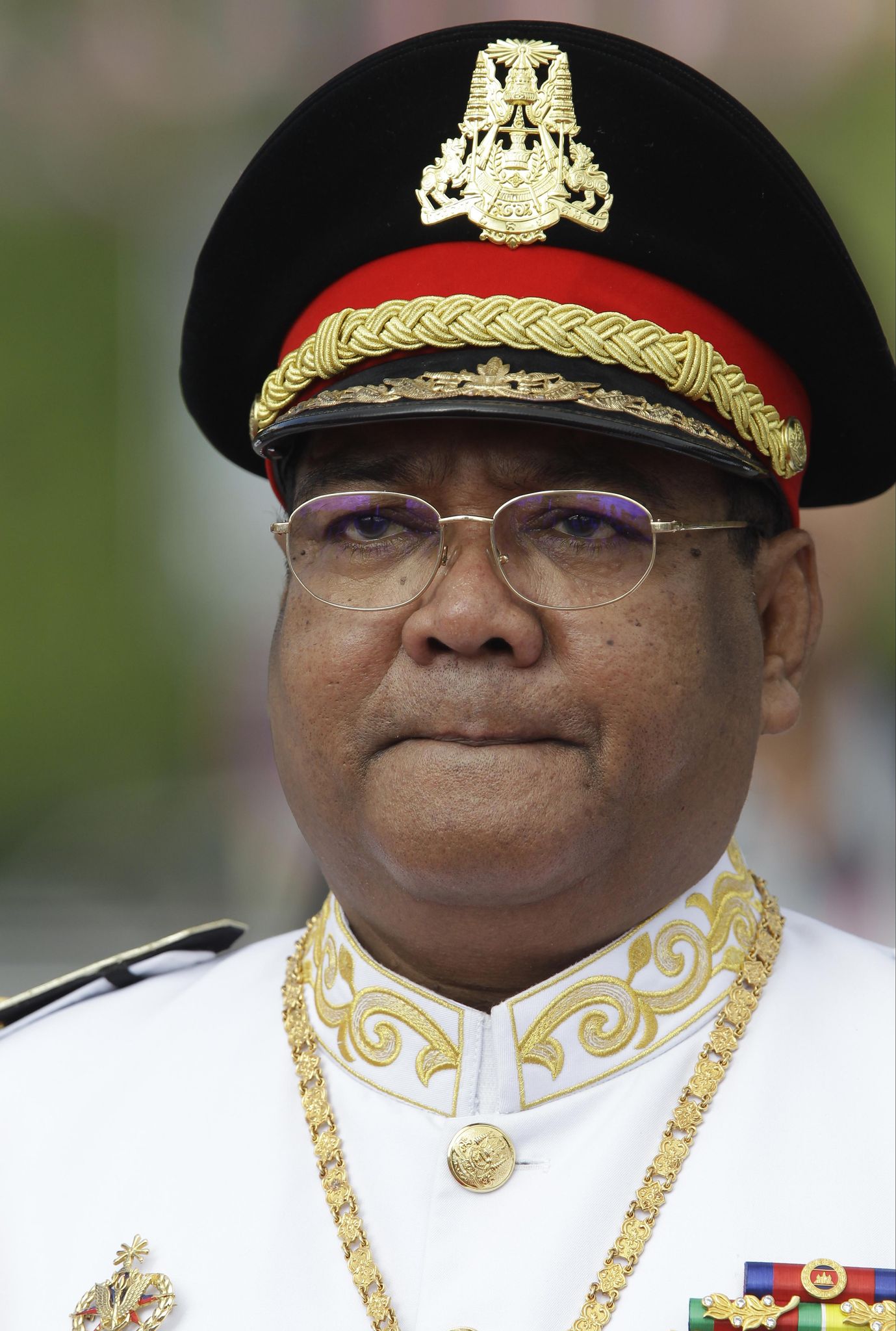
    The Treasury Department announced sanctions Tuesday against Gen. Hing Bun Hieng, commander of Cambodia’s Prime Minister Bodyguard Unit, which it said had been engaged in serious human rights violations for at least the past 21 years.

    A Cambodian Defense Ministry statement issued Wednesday regretted and condemned the U.S. action, which it described as unjust and not backed by any evidence. It said it was a “stupid decision that Cambodia cannot accept.”

    The U.S. move came just a little over a month before a general election in which the main and only credible opposition party will not take part because it was dissolved last year by Cambodian courts in what critics contend was a politically motivated move to ensure the continued rule of Prime Minister Hun Sen. Other moves to curb the opposition have included silencing most independent media.

    Bun Hieng, a four-star general, also holds the position of deputy commander of the armed forces. The bodyguard unit is an elite force with thousands of troops which is seen as being deeply involved in internal security matters and especially loyal to Hun Sen, who has held power for three decades.

    The Treasury Department announcement said the unit “has been implicated in multiple attacks on unarmed Cambodians over the span of many years” and is “connected to incidents where military force was used to menace gatherings of protesters and the political opposition going back at least to 1997, including an incident where a U.S. citizen received shrapnel wounds.”

    The 1997 incident involved grenades being thrown at a small political protest the opposition leader was attending in the middle of the capital city, Phnom Penh. Seventeen people were killed and about 150 wounded.

    The Treasury Department action also bars U.S. citizens generally from doing any transactions with Bun Hieng.

    Bun Hieng told The Associated Press that he had not committed any human rights abuses and held no property in the United States.

    “As an army commander, I have never committed anything that was contrary to the Cambodian Constitution and laws, therefore, I am not worried at all by the U.S. sanction,” he said by telephone. “The sanctions are laughable because I don’t have any property in the U.S. or deposited with any company there.”

    Additional statements decrying the U.S. action were issued by the Foreign Ministry and the offices of the Cabinet – which said it violated Cambodia’s sovereignty – and the Royal Cambodian Armed Forces. The Foreign Ministry statement said it could be construed as part of a series of coordinated attacks on the government’s image ahead of next month’s polls.

    Washington’s move was applauded by others.

    “Hin Bun Hieng’s position as commander of PM Hun Sen’s bodyguards makes him one of the most feared men in Cambodia, and with good reason. It’s about time the U.S. finally recognized that it falls to a major global power to call out such a powerful figure on human rights grounds, and hold him accountable for the atrocities he’s committed,” said Phil Robertson, Asia deputy director for the New York-based Human Rights Watch.

    The Cambodian National Rescue Party, the opposition grouping that was dissolved last year, said it welcomed the U.S. action, calling it justified because Bun Hieng was, it charged, one of the country’s biggest human rights abusers.

    It said Washington’s move should serve as a warning to Cambodia’s government that it must cease its abuses or face punishment from the international community.

  • In SC primary, ardent Trump backer defeats Rep. Mark Sanford

    President Donald Trump is crediting his Election-Day tweet in part for the defeat of a South Carolina Republican congressman who has been critical of his administration.

    COLUMBIA, S.C. (AP) – President Donald Trump is crediting his Election-Day tweet in part for the defeat of a South Carolina Republican congressman who has been critical of his administration.

    Trump tweeted Wednesday that his advisers didn’t want him to get involved in the Republican primary, thinking Rep. Mark Sanford “would easily win.”

    But Trump says Rep. Katie Arrington “was such a good candidate, and Sanford was so bad, I had to give it a shot.”

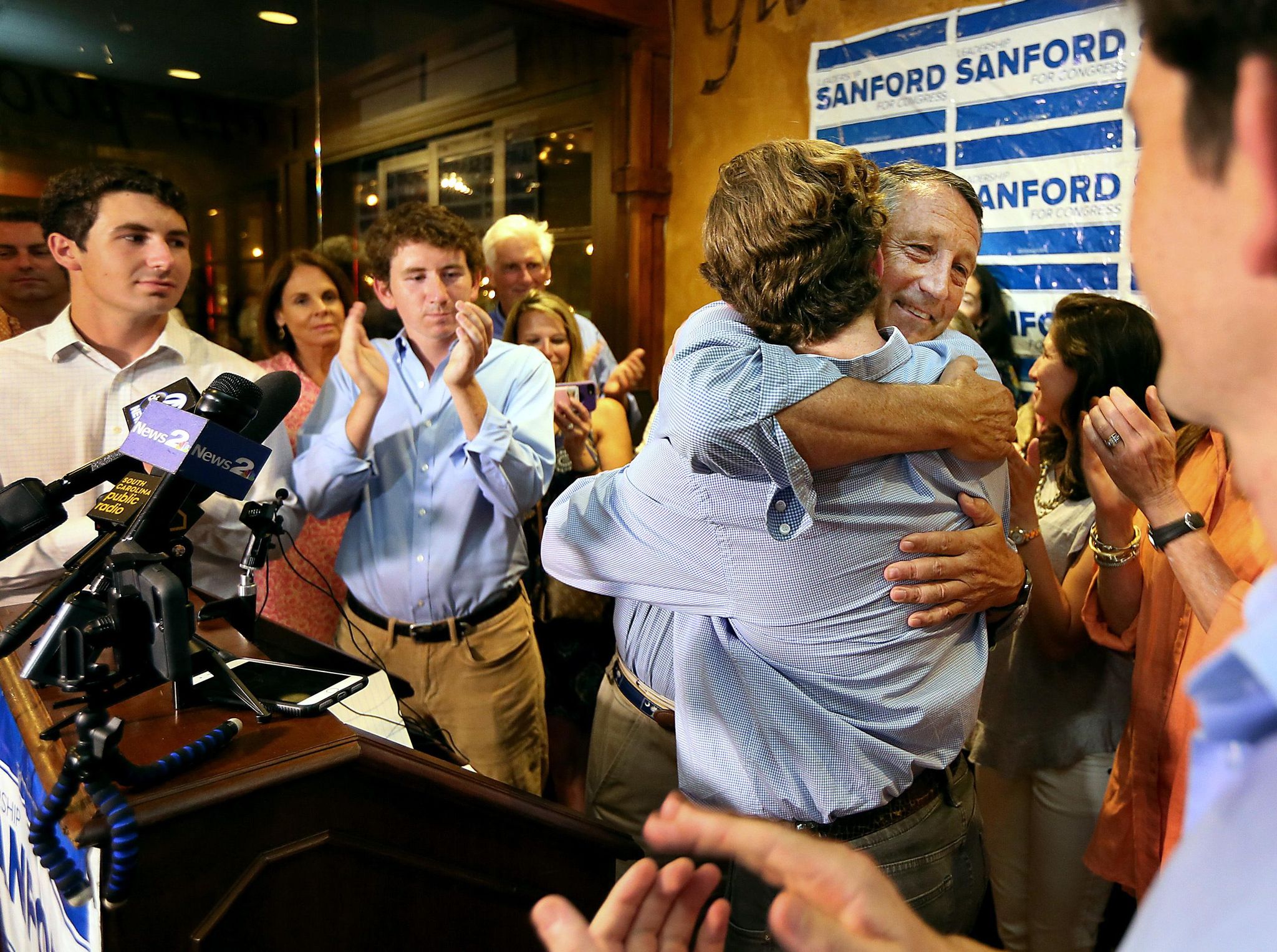
    Arrington narrowly defeated Sanford after Trump tweeted that Sanford had been unhelpful, adding, “He is better off in Argentina.”

    That was a reference to Sanford’s surprise disappearance from the state as governor, which he later revealed was to further his affair with an Argentine woman.

    Sanford’s loss was perhaps the most dramatic result in primaries across five states Tuesday.

    He becomes the second incumbent House Republican to lose a primary this year – the latest victim of intense divisions among the GOP in the Trump era.

    Sanford’s voting record is generally conservative, but his criticism of Trump as unworthy and culturally intolerant made him a target of dedicated Trump supporters who often elevate loyalty over policy.

    Arrington blasted Sanford as a “Never Trumper,” and Trump tweeted a startlingly personal attack hours before polls closed, calling Sanford “MIA and nothing but trouble … he’s better off in Argentina.”

    Even for a political figure with no shortage of confidence in challenging party decision-making, the attack was a bold case of going after a sitting member of Congress. It’s almost certain to make other Republicans even more reluctant to take him on, even as Trump stirs divisions on trade, foreign policy and the Russia investigation.

    Sanford said Tuesday night that “I stand by every one of those decisions to disagree with the president.”

    Sanford had never lost a political race in South Carolina, and his defeat Tuesday came amid a roller-coaster political career. Despite the scandal over the affair, he completed his second term as governor and voters sent him to Congress two years later.

    In her victory speech, Arrington asked Republicans to come together, saying “We are the party of President Donald J. Trump.”

    Four other states voted Tuesday, including several races that will be key to determining which party controls the House of Representatives next year.

    In other races:

    __

    IN SOUTH CAROLINA, INCUMBENT GOVERNOR FACES RUN-OFF

    Sanford was not the only establishment Republican to face a challenge Tuesday. South Carolina Gov. Henry McMaster, a close ally of Trump, was forced into a runoff after failing to muster the required 50 percent vote to win outright.

    McMaster, an early supporter of the president’s 2016 campaign, had Trump’s full endorsement, marked by a weekend tweet.

    But while Trump remains very popular in the state, McMaster has been shadowed by a corruption probe involving a longtime political consultant. McMaster received the most votes of the four Republicans running, but will face Greenville businessman John Warren in a second contest June 26.

    McMaster, the former lieutenant governor, assumed the governorship last year after Nikki Haley resigned to become U.S. ambassador to the United Nations.

    ___

    GOP‘S ‘VICIOUS’ VIRGINIA VICTOR

    Trump is tweeting that people shouldn’t underestimate his loyalist Corey Stewart, who won Virginia’s Republican primary to face Democratic Sen. Tim Kaine. The president tweeted Wednesday that Stewart has “a major chance of winning!”

    Stewart, known for his ardent defense of Trump and of Confederate symbols, said he plans a “vicious” campaign against Kaine, who has a huge fundraising advantage going into the general election.

    Kaine gives passionate campaign speeches, but Trump’s tweet calls him a “total stiff.”

    As Trump’s top campaign aide in Virginia, Stewart accused the Republican Party of inadequately defending the candidate after the release of a recording in which Trump bragged about groping women.

    Stewart also has called efforts to remove Confederate monuments “an attempt to destroy traditional America.”

    ___

    A HOUSE BELLWETHER IN VIRGINIA

    Democratic State Sen. Jennifer Wexton was the clear winner in a six-way primary in a northern Virginia district considered key to the House battleground map this fall, and will challenge Republican Rep. Barbara Comstock.

    Democrats in two other districts they hope to retake nominated women: Abigail Spanberger in central Virginia and Elaine Luria in the district that includes Virginia Beach.

    In Comstock’s district, Wexton was the best-known in the field, and was viewed as the Democratic Party’s establishment choice. She had the endorsement of Democratic Gov. Ralph Northam.

    Comstock, a moderate Republican who easily beat back a challenge from conservative Shak Hill, is one of the Democrats’ top targets in November. The second-term House member’s district leans Republican, though Democrat Hillary Clinton received more votes there than Trump did in 2016.

    Though Wexton favors a ban on the sale of assault weapons, she defied what has been the tendency in some swing districts to nominate Democrats with liberal profiles on other key issues. She has not called for a single-payer, government-run health insurance system, as some Democratic House primary winners in California, Nebraska and Pennsylvania have.

    Democrats need to gain 23 seats to win the majority in the House.

    __

    TURNING THE LePAGE

    Maine voters are deciding on a successor to term-limited, conservative Republican Gov. Paul LePage. But first they had to wrestle with a new balloting system. Maine on Tuesday debuted its statewide ranked-choice voting , which allows voters to rank candidates first to last on their ballot.

    The system insured that counting was slow and winners difficult to call. But businessman Shawn Moody won the GOP nomination after midnight. He maintained a wide lead through the night, but risked not winning the race outright under the new rules.

    The Associated Press did not call the Democratic primary as none of the seven candidates was close to the majority needed to be declared the outright winner, so more tabulations are required next week under ranked-choice voting. Last-place candidates will be eliminated and votes reallocated until there is a winner, a process that may take more than a week.

    __

    NEVADA, NORTH DAKOTA: SEE YOU IN NOVEMBER

    Nevada and North Dakota are home to two of the most pivotal Senate races this year. What they didn’t have were competitive Senate primaries.

    Nevada Sen. Dean Heller, the only Republican seeking re-election in a state that Hillary Clinton carried in 2016, and Democratic Rep. Jacky Rosen sailed through their primaries, and already have begun focusing their criticism on each other in what is expected to be among the most competitive Senate races this year.

    There was also the return of Sharron Angle , the conservative who once ominously threatened to “take out” then-Sen. Harry Reid. Angle, who lost to Reid in her 2010 bid for Senate, lost her primary challenge to Rep. Mark Amodei on Tuesday.

    Centrist Steve Sisolak won a bruising battle between Clark County commissioners vying to be Nevada’s first Democratic governor in two decades. Fellow board member Chris Giunchigliani ran as a progressive, knocking Sisolak for his positive rating from the National Rifle Association in light of the mass shooting in Las Vegas in October. Republican Attorney General Adam Laxalt easily cleared the GOP field.

    Nevada election officials blamed new touch-screen voting machines for glitches that affected a small number of voters and delayed the count of ballots in rural Pershing County. In no case were voters unable to successfully cast a ballot, the Nevada Secretary of State’s office said.

    In North Dakota, GOP Rep. Kevin Cramer will face moderate Democratic Sen. Heidi Heitkamp . She is seeking re-election in a state Trump carried by 36 percentage points in 2016.

    __

    BROTHELS ON THE BALLOT

    Pimp Dennis Hof, the owner of half a dozen legal brothels in Nevada and star of the HBO adult reality series “Cathouse,” won a Republican primary for state Legislature, ousting a three-term lawmaker.

    Voters in November will also be voting on closing down brothels in at least one of the seven Nevada counties where they’re legally operating, and activists are trying to get the measure on the ballot in another district.

    __

    This story has been corrected to reflect that Sanford completed his second term as South Carolina governor and did not resign.

    __

    Associated Press writers Meg Kinnard and Christina Myers in Columbia, S.C.; Marine Villeneuve in Augusta, Maine; Patrick Whittle in Portland, Maine; Alan Suderman in Richmond, Va.; Matthew Barakat in McLean, Va.; Scott Sonner in Reno, Nev.; Michelle Price in Las Vegas; and James MacPherson in Bismarck, N.D., contributed to this report.