Category: Uncategorized

  • Iran deal comparisons cloud Trump’s North Korea summit

    President Donald Trump’s triumphant assertions about the success of the unprecedented Singapore summit are being met with skepticism and outright derision from critics seizing on the contradiction bet

    WASHINGTON (AP) – President Donald Trump’s triumphant assertions about the success of the unprecedented Singapore summit are being met with skepticism and outright derision from critics seizing on the contradiction between his withdrawal from the Iran nuclear deal and his willingness to accept vague pledges from North Korean leader Kim Jong Un.

    White House officials have repeatedly stressed that this week’s meeting in Singapore is the beginning, not the end, of a process that Trump’s team argues could have only been jump-started with the face-to-face meeting. The Singapore summit set out broad goals to be met in the coming months while the Iran deal, signed by President Barack Obama in 2015 and approved by seven nations, was an imperfect end to 18 months of negotiations, they say. Criticism that Tuesday’s commitment does not include specifics on denuclearization and verification is too early, they argue.

    “While I am glad the president and Kim Jong Un were able to meet, it is difficult to determine what of concrete nature has occurred,” said Sen. Bob Corker, R-Tenn., the chairman of the Senate Foreign Relations Committee. He said he wanted Secretary of State Mike Pompeo, who will lead the follow-on negotiations, to explain details of what the administration has in mind.

    The top Democrat on that panel, Sen. Bob Menendez of New Jersey, who also opposed the Iran deal, took issue with Trump’s zeal as well as his announcement of the suspension of U.S.-South Korea military exercises.

    “In exchange for selfies in Singapore, we have undermined our maximum pressure policy and sanctions,” Menendez said.

    For Iran deal proponents, though, the Singapore summit was evidence of Trump’s lack of preparedness and poor negotiating skills. Iran deal opponents, meanwhile, seemed willing to wait and see.

    Sen. Tom Cotton, R-Ark., a Trump advocate and fervent Iran deal foe, urged patience and sought to dispel suggestions that the president had unwisely plunged into a meeting with a dictator after having withdrawn from the accord with Tehran. He noted, as did other Trump allies, that North Korea already had nuclear weapons and the capability to deliver them whereas Iran did not.

    “There is a school of thought that … the United States president should not sit down with two-bit dictators,” Cotton told conservative commentator Hugh Hewitt. “I think there’s some validity to that school of thought with the exception (of) once those dictators have nuclear weapons.”

    “You know, countries like Iran and Cuba and other two-bit rogue regimes don’t have nuclear weapons, yet,” he said. “They can’t threaten the United States in that way. Once they have missiles that can deliver them to use, I would liken it to past presidents sitting down with Soviet dictators.”

    Victor Cha, a Georgetown University professor and former National Security Council director for Asia in President George W. Bush’s administration, lamented that the summit results “left a lot to be desired.” But he also maintained that the Trump-Kim meeting had reduced the chance of conflict even if it was only a “modest start.”

    “Despite its many flaws, the Singapore summit represents the start of a diplomatic process that takes us away from the brink of war,” Cha wrote in The New York Times in the immediate aftermath of the summit. “Mr. Trump’s unconventional approach leaves a lot to be desired in the foreign policy of the United States, but there was no other path to this less-than-satisfying but digestible outcome.”

    Kelsey Davenport, the nonproliferation policy director at the Arms Control Association, which supported the Iran deal, called the summit result “mediocre.”

    “The vague language on denuclearization is not a breakthrough, it is a boilerplate reiteration of past statements,” she said, adding: “It is far too early in the process for Trump to declare success.”

    In the case of the Iran deal, even the most generous assessors of the Singapore summit sought to remind the White House that intense diplomacy preceded the agreement with Tehran.

    “Pompeo will now have to undertake the kind of arduous, multiyear negotiations with Pyongyang that former secretary of state John Kerry undertook with Tehran,” Cha and Koreas expert Sue Mi Terry said in a paper for the Center for Strategic and International Studies. “Trump has assailed Obama’s deal with Iran as the ‘worst ever,’ but he now faces substantial challenges to achieve as much as Obama did.”

    Iran itself cautioned North Korea against taking Trump at his word.

    “We are facing a man who revokes his signature while abroad,” the semi-official Fars news agency quoted government spokesman Mohammad Bagher Nobakht as saying on Tuesday.
  • Made-for-TV summit puts Trump the Showman in spotlight

    From the staged handshake before a watching world, to the debut of an infomercial about an imagined North Korea, the summit between President Donald Trump and Kim Jong Un was a made-for-the-cameras pr

    Andersen Air Force Base, GUAM (AP) – From the staged handshake before a watching world, to the debut of an infomercial about an imagined North Korea, the summit between President Donald Trump and Kim Jong Un was a made-for-the-cameras production.

    While the Singapore sit-down at a luxury resort purported to be a serious conversation about a rising nuclear standoff, it was as much an opportunity for two decidedly unorthodox leaders to put on a show. From its start, the men embraced the power of the image over the substance, both keenly aware that the eyes of the world were fixated right where they’d intended: on them.

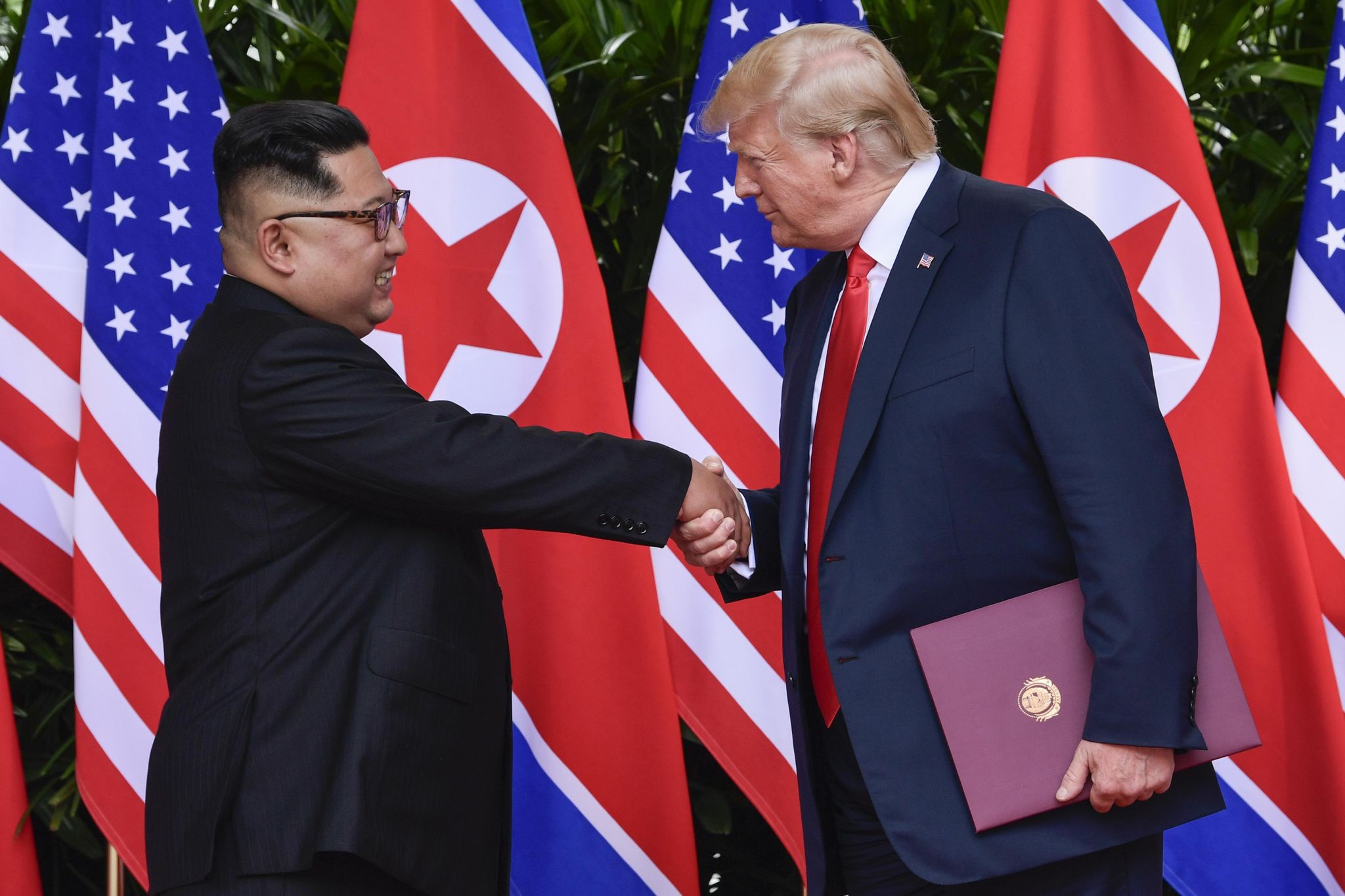
    Each moment of the high-stakes summit at a luxury resort on a Singapore island appeared designed for the cameras. Just after its start, both men walked toward each other from opposite ends of a colonnade, pausing before a row of alternating U.S. and North Korean flags for a lengthy handshake as cameras flashed and video and photos were beamed around the world.

    The image alone had deep, historic import, and surreal quality that even the leaders couldn’t ignore. “I think the entire world is watching this moment,” Kim said through an interpreter, comparing it to fantasy and a “science fiction movie.”

    Others thought of a different genre.

    “There’s no question this was a television production,” said Robert Thompson, director of the Bleier Center for Television and Popular Culture at Syracuse University. “Its major purpose was to be a television production.”

    For Trump, the reality television star turned surprise commander in chief, it was a chance to show off his deal-making skills on a global stage to a skeptical world. To Kim, an autocratic leader reviled by most of the international community, it represented a play for international legitimacy though a public greeting with the leader of the free world.

    Both were aware that the once-unthinkable meeting between a sitting U.S. president and a North Korean leader was a media blockbuster, drawing journalists from around the world, international viewers and mobs of cellphone-waving onlookers in the Asian city-state chosen for their sit-down. The buildup was filled with cliffhangers, from the name-calling to Trump’s first shocking announcement they would meet, to its sudden cancellation and resurrection.

    Historians were quick to point out the joint statement the two leaders signed was actually far less detailed than those struck with North Korea in the past, the same ones that Trump has repeatedly derided for ending in failure and perpetuating the nuclear threat.

    Trump immediately sold the deal – on television. He appeared before hundreds of journalists at a news conference, the sort of free-wheeling media session that he’s determinedly avoided for most of his presidency. It wasn’t a surprise that he took his message to unabashed supporter Sean Hannity for a Fox News Channel interview, but he also sat down with ABC News’ George Stephanopoulos for his first interview with a broadcast network in more than a year.

    Stressing that he had tried to pitch Kim on possible economic gains, Trump played for reporters a video depicting a utopian North Korea-of the-future, where speedboats glide alongside opulent, modern skyscrapers. Then he disclosed that he’d screened the film, produced for the occasion, for Kim.

    “That was a tape that we gave to Chairman Kim and his people, his representatives. And it captures a lot. It captures what could be done,” Trump said Tuesday.

    Proving he was a worthy foil, Kim stole the show from Trump on Monday night. The autocrat left his hotel and took a tour of some popular night spots, surrounded by a horde of security officials and breathlessly carried on live television, with people watching a leader who rarely leaves his home, much less goes out in public.

    Before leaving Singapore, Trump suggested a sequel as he talked about hosting Kim at the White House.

    He told ABC in an interview, “I would love to have him at the White House, whatever it takes. And I would love to have him at the White House and I think he’d love to be there. And at a certain point, when it’s all complete, I’d love to” go to North Korea, he said.

    ___

    Bauder reported from New York. Associated Press writer Zeke Miller contributed to this report.

  • Rideshare drivers mostly earning less than minimum wage: MIT report

    Motorists making some extra cash by hauling around Uber or Lyft customers are mostly earning less than minimum wage, and nearly a third of ride-hailing drivers are losing money behind the wheel, accor

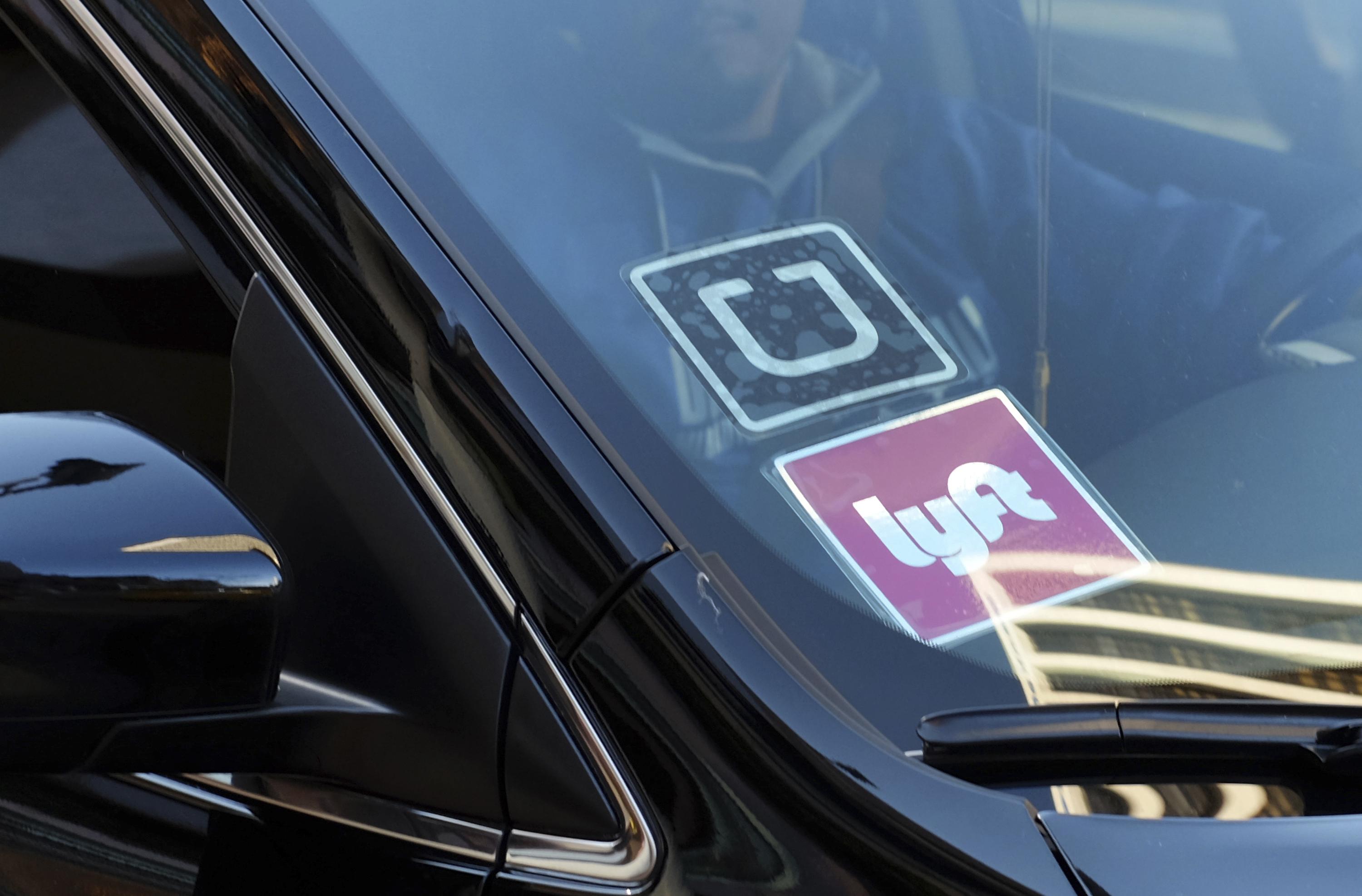
    Motorists making some extra cash by hauling around Uber or Lyft customers are mostly earning less than minimum wage, and nearly a third of ride-hailing drivers are losing money behind the wheel, according to researchers at the Massachusetts Institute of Technology.

    The median profit before taxes earned by ride-hailing drivers at either service is about $3.37, or less than half of the minimum wage in most states, researchers at MIT’s Center for Energy and Environmental Policy Research wrote in their newly published working paper, “Economics of Ride-Hailing: Driver Revenue, Expenses and Taxes.”

    Culled from interviews conducted with over 1,100 Uber and Lyft drivers, the analysis “provides one of the first detailed estimates of ride-hailing profit,” its authors wrote.

    The MIT researchers quizzed respondents with questions like how many miles they drive and the types of car they use, then factored in the costs of insurance, fuel, maintenance, repairs and depreciation to reach their figures.

    Seventy-four percent of drivers earn less than the minimum wage in their state, while 30 percent “are actually losing money once vehicle expenses are included,” the report said.

    “We were surprised by the numbers; they seemed pretty low,” co-author Stephen Zoepf, executive director of Stanford’s Center for Automotive Research, told the San Francisco Chronicle.

    Indeed, Mr. Zeopf said he plans to crunch the numbers with a different formula as his findings are questioned by both San Francisco-based companies, the newspaper reported Friday.

    “While the paper is certainly attention grabbing, its methodology and findings are deeply flawed. We’ve reached out to the paper’s authors to share our concerns and suggest ways we might work together to refine their approach,” Uber spokesperson Michael Amodeo said in a statement.

    “We have not yet reviewed this study in detail, but an initial review shows some questionable assumptions,” said Lyft.

    Uber and Lyft launched in 2009 and 2012, respectively, leaving a limited window for research into either of the nation’s two largest ride-hailing companies.

    Nonetheless, previous studies have suggested drivers receive significantly more than MIT’s researchers concluded. A 2015 study funded by Uber found that drivers overall in Denver, Detroit and Houston earned less than $13.25 an hour after expenses. More recently, a 2017 survey conducted by the RideShareGuy blog and cited by Uber in response to the MIT study reported average hourly earnings of $15.68.

  • Weinstein Co. revives sale deal, staving off bankruptcy

    The Weinstein Co. revived a deal to sell its assets to a group of investors who want to transform the scandal-plagued film studio into a female-led entertainment venture, the latest twist in the compa

    NEW YORK (AP) — The Weinstein Co. revived a deal to sell its assets to a group of investors who want to transform the scandal-plagued film studio into a female-led entertainment venture, the latest twist in the company’s tortured efforts to avoid bankruptcy following the downfall of Hollywood mogul Harvey Weinstein.

    The company’s announcement Thursday marks a swift and dramatic reversal of fortunes. It came just four days after the Weinstein Co. announced it would file for bankruptcy protection, saying negotiations had fallen apart with the group led by businesswoman Maria Contreras-Sweet and billionaire investor Ron Burkle. But the two sides soon returned to talks, along with New York State Attorney General Eric Schneiderman, who filed a lawsuit against the company three weeks ago that threw a wrench in the deal.

    A bankruptcy protection filing would have halted lawsuits filed by women who have accused Harvey Weinstein of sexual harassment, assault and other misconduct. The sale deal includes a commitment from the buyers to establish a compensation fund of up to $90 million for Weinstein’s accusers. Weinstein has denied all allegations of assault.

    “The deal provides a clear path for compensation for victims and protects the jobs of our employees,” the Weinstein Co.’s board of directors said in a statement. “We consider this to be a positive outcome under what have been incredibly difficult circumstances.”

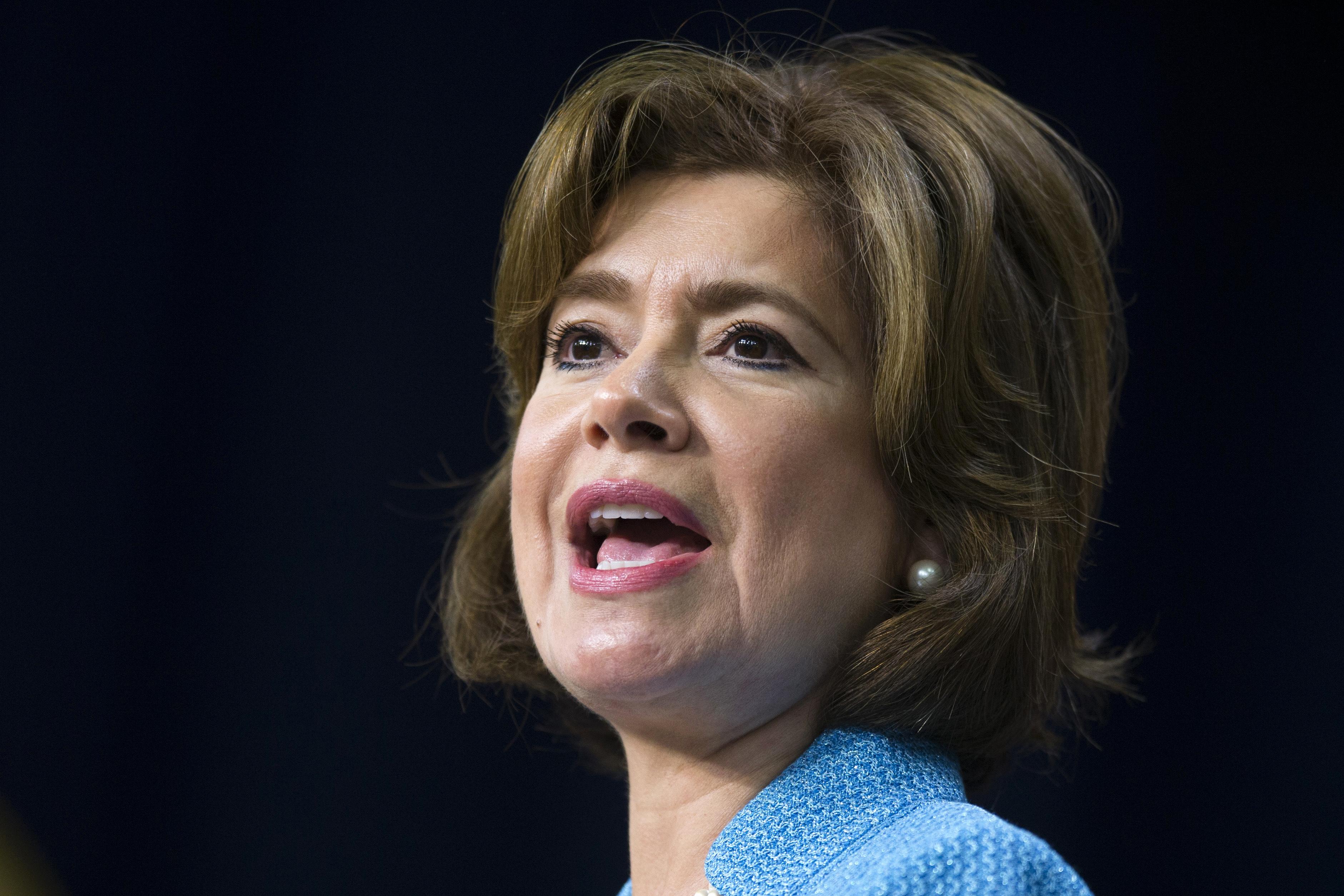
    Contreras-Sweet said the deal would save about 150 jobs and protect the small businesses that are owed money by the studio. She said she would “launch a new company that represents the best practices in corporate governance and transparency.”

    Schneiderman said in a statement that he was pleased that the deal would “create a real, well-funded victims compensation fund, implement HR policies that will protect all employees and will not unjustly reward bad actors.”

    He said his office would work with the two sides to ensure they honor their commitment and that his lawsuit and investigation into the Weinstein Co. remain active.

    The announcement came after Contreras-Sweet and Burkle met with the company’s co-founder, Bob Weinstein, at Schneiderman’s office, according to several people familiar with the negotiations.

    A person familiar with the negotiations said the two sides agreed to a 40-day closing process. The person said the deal includes financing for the Weinstein Co. to meet payroll, rent and other financial obligations while the sale is being finalized.

    The buyers would pay $220 million for most of the Weinstein Co. assets and assume about $225 million of the studio’s debt. The new company would also dedicate $90 million to compensate Harvey Weinstein’s accusers, including $60 million put up by the buyers and $30 million from insurance proceeds. The person also said the buyers intend to retain company’s approximately 150 employees, though personnel decisions will be made later in the process.

    The people declined to be identified because they were unauthorized to speak publicly about the private talks.

    Contreras-Sweet’s proposal has emerged as the Weinstein’s Co.’s best chance to remain mostly intact, although under new leadership and with a different name. Contreras Sweet, who headed the small business administration during the Obama administration, has no previous entertainment experience but her proposal beat out several other prominent bidders who were mostly interested in buying parts of the company out of bankruptcy.

    She has proposed remaking the company into a women-led venture, with a female-majority board of directors. But Schneiderman objected to the deal out of concerns that there insufficient documentation guaranteeing compensation for the victims. He also said the deal would potentially keep in place top executives accused of enabling Weinstein’s alleged abuse of the company’s female employees.

    The lawsuit launched three weeks of fraught, behind-the scenes talks to revive the sale, with several unreleased films hanging in the balance, including the Thomas Edison tale “The Current War,” with Benedict Cumberbatch, and “Mary Magdalene,” starring Rooney Mara.

    Days after Schneiderman’s lawsuit, the Weinstein Co. fired its president and former COO, David Glasser. Contreras-Sweet’s group, in private talks with the attorney general, ironed out a deal to alleviate his concerns, including setting the $90 million compensation fund.

  • New York Gov. Cuomo signs bill to move primary election date

    New York state has moved its fall 2018 primary election date back two days so it doesn’t interfere with the anniversary of 9/11 or the Jewish holiday of Rosh Hashanah.

    ALBANY, N.Y. (AP) — New York state has moved its fall 2018 primary election date back two days so it doesn’t interfere with the anniversary of 9/11 or the Jewish holiday of Rosh Hashanah.

    Democratic Gov. Andrew Cuomo announced Friday that he has signed into law a measure moving the date of the primary election from Tuesday, Sept. 11 to Thursday, Sept. 13.

    Lawmakers approved the date change earlier this month.

    Lawmakers and supporters said that they wanted to move the date so the election would occur on a less busy day, and to honor both 9/11 and the observation of Rosh Hashanah.