Category: POLITICS

  • Kevin McCarthy, House GOP leader, announces get-tough immigration bill

    House Majority Leader Kevin McCarthy announced Friday a new get-tough immigration bill that would build the rest of President Trump’s border wall, punish sanctuary cities and stiffen penalties on repe

    House Majority Leader Kevin McCarthy announced Friday a new get-tough immigration bill that would build the rest of President Trump’s border wall, punish sanctuary cities and stiffen penalties on repeat-illegal immigrants.

    The bill is unlikely to see action in the near future but instead serves as a marker for House Republicans as they prepare for what’s likely to be a renewed immigration debate in December or, should Democrats win control of the House, early next year.

    “Maintaining strong borders is one of the basic responsibilities of any nation. For too long, America has failed in this responsibility,” Mr. McCarthy said in announcing the bill.

    Mr. Trump is likely to be most excited about the wall funding, which is symbolically important to fulfilling a campaign pledge, but the more substantive parts of the bill deal with withholding federal money from sanctuary cities, shrinking several categories of humanitarian relief and boosting jail time for illegal immigrants who amass serious criminal records.

    The bill does not cover illegal immigrant “Dreamers.”

    An earlier GOP push this year for a crackdown strategy toward illegal immigration faltered after a number of Republicans were unable to back the legislation because it didn’t include full citizenship rights for millions of illegal immigrants.

  • Hillary Clinton lost security clearance

    Hillary Clinton has given up her security clearance in the wake of the scandal over her handling of secret information on her email server, the Senate Judiciary Committee revealed Friday.

    Hillary Clinton has given up her security clearance in the wake of the scandal over her handling of secret information on her email server, the Senate Judiciary Committee revealed Friday.

    Chairman Charles E. Grassley also revealed top Clinton aide Cheryl Mills and four others no longer have clearance.

    Mrs. Clinton’s clearance expired at the end of August. The others lost their access privileges in September.

    The State Department, in a letter to Mr. Grassley, had said Mrs. Clinton and her aides retained clearance in order to conduct research after she left office.

    The names of the four additional aides besides Ms. Mills were redacted from the State Department letter that the committee released.

  • Brexit papers: What no deal could mean

    British passport

    Another slew of technical notices aimed at providing guidance to the public and businesses on how to prepare for a no-deal Brexit were released by the government on Thursday.

    Ministers say it is an “unlikely” scenario and the UK and EU are working on getting an agreement finalised.

    But what detail has come out of the 28 papers?

    Here is a summary:

    Driving

    Image copyright Science Photo Library

    Mobiles

    Last year, travellers were delighted as Brussels quashed roaming charges for phones used inside the European Union.

    Rather than massive bills for calling back home or posting snaps on social networks, the mobile networks were forced to treat use in other EU countries the same as if the customer was at home.

    A no-deal Brexit means free roaming can no longer be guaranteed.

    The government has tried to put minds at rest, saying it will legislate to include a cap on data roaming charges.

    However, that is not quite the same as being able to use a UK phone in the EU with no additional costs.

    Irish citizens

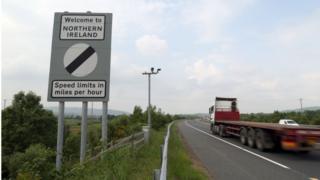
    As the rules currently stand, UK citizens can cross the border between Northern Ireland and the Irish Republic without any checks, and vice versa.

    That is because of the Common Travel Area (CTA) – which allows for passport-free travel between the UK, Irish Republic, Jersey, Guernsey, and the Isle of Man.

    But what happens if there is a no-deal Brexit?

    The government has said there will be “no practical changes” to their approach and “no routine immigration controls on journeys from within the CTA to the UK”.

    But with no deal agreed, it is not clear what the EU will say to that.
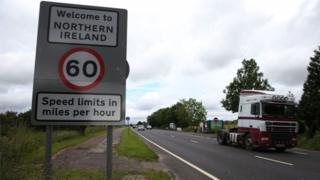
    Image copyright PA

    Passports

    Ensuring your passport up-to-date is the message from this paper.

    Anyone who wants to travel to the EU after Brexit is told to have at least six months left on their document – or they won’t be allowed to travel.

    And those expecting to get their hands on a blue passport soon will have to wait a little longer.

    Initially, burgundy will still be the colour of choice, although the cover will no longer carry the words “European Union”.

    But if you want the blue passport, ministers say they will be issued in late 2019.

    Firearms

    Currently, EU citizens are allowed to travel with firearms between member states.

    This requires a “European Firearms Pass”, and if you have one, you can go back and forth with it.

    However, in a no-deal scenario, people from the UK will not be able to get one of these passes and will have to check with the country they are travelling to what the rules are.

    The rules won’t change for EU citizens though, whose passes will still be accepted in the UK.

    Safety standards for goods

    One of the things offered by the EU’s single market are common regulations for goods.

    It means, whether you have tomatoes from Spain or sausages from Germany, they all have to adhere to a strict set of rules for quality.

    But, come 29 March 2019, there could be problems.

    If there is a no-deal, goods from the UK would not be covered by the regulations and businesses wanting to export their products would have to check on legislation in each country before they sent them there.

    Also, goods tested by a UK body – say cosmetics or bathroom products – would no longer be recognised by the EU, so would have to go through checks again – by a European Union-approved body – to make sure they meet the bloc’s minimum safety requirements.

    Cars

    As with food and make up, car manufacturers are going to face similar regulation issues.

    If a car is made in the UK, or the parts are, a no-deal Brexit means firms will have to apply to the EU for what is called “type approval” – which shows they comply with EU safety and environmental standards.

    Without this green light, they won’t be able to sell their cars and parts in the 27 member states.

    The paper says that for a time-limited period, perhaps two years, the UK will automatically convert EU approvals into UK approvals – meaning there would be no problem for EU manufacturers wanting to sell their cars in the UK.

    But, without a deal, there is no guarantee the EU would give Britain the same in return.

    Image copyright Getty Images

    Broadcasting

    As it stands, broadcasters in the EU can show their channels in any of the member states, but they only have to come under the scrutiny of one.

    For example, the BBC can show BBC programmes in France, but it only answers to Ofcom’s code, not the French equivalent.

    This “country of origin” principle, however, will disappear with a no-deal Brexit.

    That means broadcasters will have to abide by the regulations in each individual country they want to show their content in.

    Personal data

    You will remember earlier this year that inboxes were flooded with emails about “GDPR”.

    The General Data Protection Regulation applies to all organisations that handle European Union citizens’ data.

    When the rules came in, they gave consumers new rights, such as finding out what data is being held on them, and getting firms to delete that information, unless they had a good reason to keep it.

    Part of the regulation also meant companies were only able to transfer personal data outside of the EU if there was a legal basis for doing so – but they could send it anywhere within the bloc.

    The UK is going to keep the same standard, so there would be no immediate impact there.

    However, if a deal wasn’t agreed, British companies could face problems getting data from member states, as they would no longer be party to it.

    Environment/pollution

    There is a lot of law that has been made in the EU when it comes to protecting the environment and, in turn, the health of citizens.

    Targets to reduce air, water, and land pollution are set by the bloc, as well as emissions from vehicles and industry.

    The UK has pledged to keep these standards, and perhaps raise them higher, but in a no-deal scenario, there may have to be interim measures while we wait for the government to get their new rules through Parliament.

    Also, when it comes to products using damaging chemicals, the companies who make and sell them may need two different permits – one for the UK and one for the EU – giving them more red tape to wade through.

    Image copyright Reuters

    Drugs

    Drug precursors are chemicals that can be used in the illicit manufacture of narcotics.

    But they can also be used for more legitimate means, such as in medicines, perfumes or for plastics.

    Trading these materials is easy enough as a member of the EU.

    But if you are on the outside, it comes at a cost – a license to sell into the block that could cost thousands of pounds.

    So, a no-deal would put firms in that position straight away.

    Space

    The UK is part of a number of joint European space programmes.

    These include Galileo, a satellite project for GPS systems, Copernicus, which carries out earth observations, and EU space surveillance.

    These are important for a range of UK businesses, from telecoms firms to universities.

    But whilst the average smartphone user won’t feel the effect, companies, academics and researchers will no longer play a part in developing the systems and will be unable to bid for future contracts.

    The government has promised to invest £92 million from its “Brexit readiness” to design its own UK Global Navigation Satellite System, but many in the sector have expressed fears of dropping out of the existing EU version.
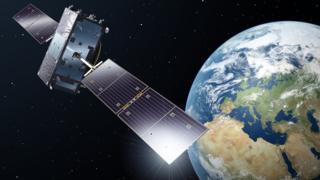
    Image copyright European Space Agency

    Grants

    The UK can apply for a number of different grants from the EU to fund projects across the country.

    This can range from cash for transport projects and superfast broadband rollouts, through to help for disadvantaged communities, like schemes to create jobs or teach skills.

    But if there is a no-deal Brexit, the cash these things rely on could be cut off early.

    In July, the government promised to fund billions of pounds of programmes until the end of 2020 in the event of a no-deal.

    But there will be some caveats involved, such as collaborations with other member states getting the axe, and changes in line with other public spending.

    Business and investment

    The EU has long held big companies to account when it comes to competition.

    The idea is it stops companies abusing a dominant market position.

    So, when Google was putting its own shopping service ads at the top of search results or when Microsoft promoted its web browser on computers running Windows, the EU gave levied hefty fines and imposed new rules.

    The UK has seen those rules duplicated here – Microsoft introducing a Browser Choice Screen pop-up for example – but if no-deal happens, the same rules won’t apply.

    The government says the UK Competition and Markets Authority will take on responsibility for this role, but it will not be bound by EU law – so outcomes could be different.

    Shipping

    We are an island, and as such, shipping has always played a key role in the economy.

    But a no-deal Brexit could lead to some trouble on the high seas.

    If a ship from a non-EU country wants to enter an EU port, it has to submit security information and get an exemption before docking.

    Of course, members of the EU don’t need to worry about this.

    But, a no-deal UK on the outside would have to apply.

    The papers also reveal crew members from the UK may be affected as they would no longer hold the correct certificates to work on EU vessels.

    The UK has said it will continue to recognise EU certificates for European workers on British boats – but it is up to the EU to reciprocate that.
  • MP cradles baby on Commons benches

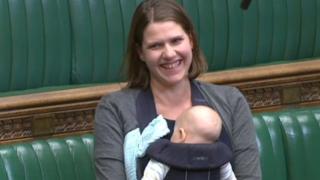
    Jo Swinson and Gabriel Image copyright PA

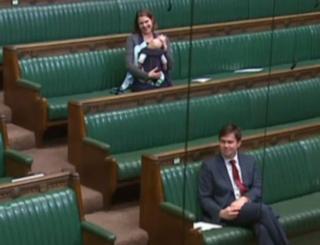
    An MP has cradled her baby on the House of Commons benches for what is thought to be the first time during a debate.

    Lib Dem deputy leader Jo Swinson appeared in the chamber with Gabriel to listen to the closing remarks of a discussion about proxy voting.

    Proxy voting could allow MPs on maternity and paternity leave to nominate a colleague to cast their vote in their absence.

    Ms Swinson gave birth to Gabriel – her second child – on 29 June.

    MPs have often been seen in the Commons chamber with their children during votes, but not during active debates.

    Image copyright PA

    She said: “This House first resolved that members with small babies should be able to vote by proxy seven months ago – since then Gabriel, Elijah and Solomon have been born and two more Commons babies are on the way.

    “A cynic might conclude that because all five pregnant and new mum MPs are on the opposition benches the government is trying to kick this issue into the long grass.

    “And after what happened to me in July I think I might be able to be forgiven for being cynical about the government’s motivations.”

    ‘Profound change’

    Opening the debate, Commons Leader Andrea Leadsom said proxy voting would be a “significant change” as it would allow MPs “for possibly for the first time ever” to vote while not being present in parliament.

    She said: “Proxy voting will be a profound change to the procedures of this House and so we must get it right to ensure robust voting practice for generations to come.

    “If we take this significant step now then, in my view, we will have a fairer, more inclusive parliament for future generations.”

    Mrs Leadsom said issues to be considered include whether proxy voting will only be limited to new parents, the types of Commons business it is allowed to be used for, and who should exercise such a vote on behalf of an MP.

  • Preparing for two ‘no deal’ scenarios

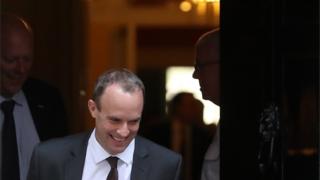
    Brexit Secretary Dominic Raab leaves cabinet meeting to discuss 'no deal' preparations Image copyright AFP

    A lot of hassle and potential cost for a lot of people.

    The government’s spent the afternoon giving details of what might need to happen, if there was no deal with the EU.

    There’s no guarantee you’d be able to avoid big phone bills if you use your mobile abroad, although ministers say they’d cap any data charges at £45 a month and some of the firms say they won’t change prices.

    If you want to go on the road on the continent, you might need an International Driving Permit.

    Free phone roaming ‘not guaranteed’ UK driving licences ‘may not be valid’

    If you want to jump on a cheap flight for a last-minute weekend, better check you have six months left on your passport, or you might be turned back.

    Image copyright AFP

    In that situation, the government would be walking away without being able to tell MPs or the public how much we would still have to stump up.

    Ministers’ belief, however, is that the chances of there being no agreement are now relatively small.

    They are hopeful that next week EU leaders will give helpful hints at a special meeting in Salzburg.

    Yet there is a long way to go until Dominic Raab, or anyone in government, can be sure. And don’t doubt that many Tory MPs are adamant they simply won’t vote for the kind of proposal Theresa May has put on the table.

    One senior MP told me: “If people in Number 10 haven’t made clear to her that ‘Chequers minus minus’ isn’t going to get through the Commons, then she is getting the wrong advice.”

    After all, there are two kinds of “no deal” – one seems very unlikely, where the EU and the UK simply can’t agree. The prime minister comes back to Parliament and says: “I’m sorry, I tried, but it just won’t wash.”

    But the other is that Theresa May comes back with a deal but her party, and Parliament, chucks it out.

    The political climate would be different in those two cases.

    But in the potential chaos of either, the hassle outlined on Thursday might just be the start.

  • Diane Abbott unveils Labour’s new immigration policy

    Diane Abbott

    A Labour government would bring in a simplified visa system for foreign workers with “bona fide skills”, Diane Abbott has said.

    The shadow home secretary said the party would also scrap the government’s “bogus” net migration target.

    She set out plans for a “flexible work visa” to end the “idiocy” of medical staff not being able to take up jobs.

    Migrants from outside the EU should be treated with the same “fairness” as EU migrants after Brexit, she added.

    Do we really know how many people come to the UK? Migration from EU to UK continues to fall Windrush compensation ‘could be capped’ Diane Abbott: Labour would close two immigration detention centres

    The Conservatives said Labour’s new policy would “tear up the rules for people coming from outside the EU which would allow more low-skilled immigration”.

    Image copyright Getty Images Image caption Labour wants to “simplify” the immigration system

    Ms Abbott vowed to scrap the government’s target of reducing net migration – the difference between those arriving in the UK and leaving – to below 100,000 a year.

    “The target had never been met and never will be met,” she told the BBC, and called for “a new conversation about migration that is not fixated on numbers”.

    She vowed to scrap the minimum income requirement for non-EU migrants and to give people “more rights of family reunion”.

    What the party’s policy towards migrants from the EU would be after Brexit would depend on what the current government agreed in Brussels, she told the BBC, but she wanted to see “fairness” between the two categories.

    “We want an immigration system which is fair, and which is managed, in the interests of the economy and the community as a whole,” she added.

    The shadow home secretary is also pledging that Labour will abolish the Immigration Act 2014 and end the “hostile environment” policy deployed by the government, which she said had led to the Windrush scandal.

    But she insisted Labour would act against illegal immigration and “make the system of deportation of overseas criminals much easier and smoother”.

    “If a judge issues a recommendation for deportation for serious criminals post-sentence, that should be carried out as a matter of routine. From the prison to the airport,” she said in her speech.

    Immigration minister Caroline Nokes said Labour had “no interest in getting control of our borders as we leave the EU”.

    “Only the Conservatives will end free movement and build a fair and controlled immigration system,” she added.

  • Edward Snowden surveillance powers ruled unlawful

    Computer screen with code Image copyright European Photopress Agency
    The UK’s bulk interception powers, exposed by the whistleblower Edward Snowden, have been found to be illegal by the European Court of Human Rights.

    In a landmark judgement, the court ruled agencies had violated rights as there were no proper safeguards.

    The court crucially said bulk interception was legitimate and it had seen no evidence it had been abused.

    Parliament reformed surveillance powers in 2016 and introduced a new watchdog. Critics say the system is still flawed.

    What were the powers being challenged in court?

    In 2013, Edward Snowden revealed that GCHQ – the UK’s eavesdropping agency – had been secretly collecting communications sent over the internet on an industrial scale.

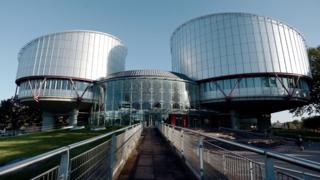
    Image copyright AFP/Getty Images Image caption The European Court of Human Rights in Strasbourg

    The court also criticised powers to ask internet companies to hand over “communications data” – the basic technical facts of how people have exchanged information.

    It said: “The content of an electronic communication might be encrypted and, even if it were decrypted, might not reveal anything of note about the sender or recipient.

    “The related communications data, on the other hand, could reveal the identities and geographic location of the sender and recipient and the equipment through which the communication was transmitted.

    “In bulk, the degree of intrusion is magnified, since the patterns that will emerge could be capable of painting an intimate picture of a person through the mapping of social networks, location tracking, internet browsing tracking, mapping of communication patterns, and insight into who a person interacted with.”

    Is this system still in force?

    In 2016, Parliament passed the Investigatory Powers Act in a massive overhaul of surveillance law.

    A government spokeswoman said it would give “careful consideration” to the judgement – but added that new safeguards were already in place.

    “The Investigatory Powers Act 2016 replaced large parts of the Regulation of Investigatory Powers Act (RIPA) which was the subject of this challenge,” she said.

    “This includes the introduction of a ‘double lock’ which requires warrants for the use of these powers to be authorised by a secretary of state and approved by a judge.

    “An Investigatory Powers Commissioner has also been created to ensure robust independent oversight of how these powers are used.”

    UK surveillance powers explained

    But Jim Killock of Open Rights Group – one of the bodies behind the challenge – said: “Viewers of the BBC drama, Bodyguard, may be shocked to know that the UK actually has the most extreme surveillance powers in a democracy.

    “Since we brought this case in 2013, the UK has actually increased its powers to indiscriminately surveil our communications whether or not we are suspected of any criminal activity.

    “In light of today’s judgment, it is even clearer that these powers do not meet the criteria for proportionate surveillance and that the UK government is continuing to breach our right to privacy.”

    Silkie Carlo, of Big Brother Watch, added: “This landmark judgment confirming that the UK’s mass spying breached fundamental rights vindicates Mr Snowden’s courageous whistleblowing.”

    Lord David Anderson QC, the former independent terror laws watchdog, said that judgement was “enormously important” because the court had backed the use of bulk interception powers that had so worried Edward Snowden.

    “That should come as a relief – not only to the agencies who do this work, but the rest of us who they are trying to keep safe,” he told BBC Radio 4’s The World At One.

    “I have looked pretty carefully at this over a number of years and there is no doubt in my mind that these powers are very useful – not just in counter-terrorism, but in cyber defence and at a much more everyday level they are useful for the police in fighting online sex crime, county lines and in a missing persons investigation.

    “What they [the judges] are doing are holding the feet of our new super regulator to the fire, and saying if you are going to give government these powers, then you have to look really closely at how they are authorised, how they are used and what happens to the data after it’s been collected.”

  • EU network charges could revive roaming fees

    A smartphone with the flag of the European Union on its screen Image copyright Getty Images Image caption The EU scrapped roaming charges in 2017
    “Put back those roaming charges we’ve just scrapped? We wouldn’t dream of it!” That’s the public message coming from the UK mobile phone operators about the threat of higher costs for travellers from a “no deal” Brexit.

    But off the record there is a subtler message – it all depends on what our continental colleagues do.

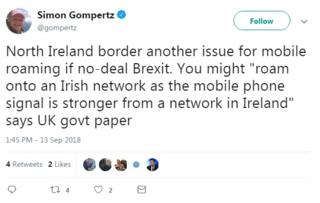
    Roaming may be free for customers but not for the operators. Every time you use your phone abroad your home operator is charged a fee by the one you are using abroad. That rate has been capped by the EU as part of the abolition of roaming but once the UK leaves, all bets are off.

    “If we leave the market they wouldn’t be bound by the directive,” says one operator. “They could treat our customers like someone from America or Australia and double or triple the charge.”

    The government’s own document on what would happen in the event of a “no deal” Brexit says “surcharge-free roaming when you travel to the EU could no longer be guaranteed”.

    And some may be more tempted than others. Millions of UK travellers visit Spain each year while far fewer Spaniards come here, so Spanish operators may decide it is time to start recouping the cost of letting them roam on their networks.

    Europe’s mobile companies reluctantly accepted the abolition of roaming charges by the EU while warning there would be a cost. While they may have been charging excessive amounts when you travelled abroad in the past, that allowed them to keep prices down at home.

    Now, they have the opportunity to profit from UK travellers who have enthusiastically taken up the opportunity to “roam like at home”.

    UK operators will undoubtedly be under great pressure from the government to just absorb any higher costs from roaming customers.

    But they are also being told to find the money to invest in new 5G networks. So expect them to be among the fiercest opponents of a “no deal” Brexit.

  • UK driving licence ‘may not be valid in EU’ after no-deal Brexit

    Woman driving Image copyright Jonathan Brady

    UK drivers may have to get an international driving permit if they want to drive in European countries after a no-deal Brexit.

    The government says that after March 2019 “your driving licence may no longer be valid by itself” in the EU, in its latest no-deal planning papers.

    It also warns that Britons travelling to the EU may need to make sure their passports have six months left to run.

    International permits cost £5.50 and are available at some post offices.

    The cabinet met earlier for a “no deal” planning session. Brexit Secretary Dominic Raab told the BBC that the government was aiming to get a Brexit deal with Brussels by mid-November at the latest but was stepping up contingency planning in case that did not happen.

    After the meeting, ministers published the latest series of papers outlining the work it has done to prepare.

    While UK driving licences are currently valid in the EU, the papers say if no deal is reached, an international driving permit may be required – as it is currently to drive in Japan, some US states and other countries.

    There are two types of permit, depending on which EU state you are driving in. The government says the current process for getting one type of permit over the counter at the 90 post offices it is available at “takes around five minutes on a turn-up-and-go basis”.

    It says it will start providing both types permits itself from February and applications will be made at 2,500 post offices across the UK.