Category: WORLDS

  • After Toronto rampage, does Canada have a gun drawback?

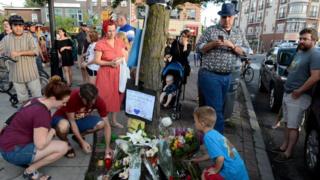
    Mourners leave flowers at a memorial for the victims of a mass shooting on Danforth Avenue in Toronto Symbol copyright AFP Symbol caption Mourners depart flowers at a memorial for the sufferers of a mass capturing on Danforth Street in Toronto

    After a deadly summer time of gun violence, many Canadians are pondering if their united states isn’t as resistant to the gun crime plaguing the u.s. as they thought.

    Toronto’s summer time has been sizzling and deadly.

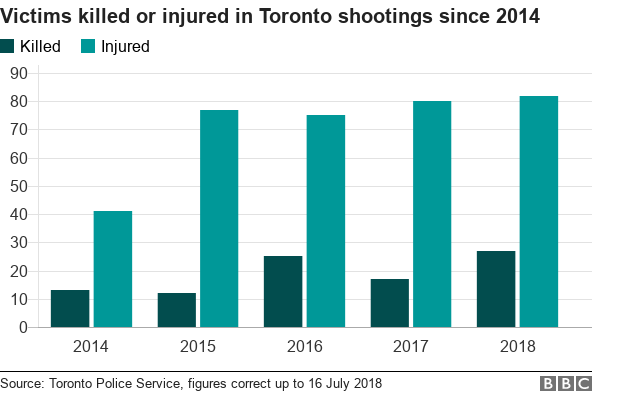
    There have been 109 shootings within the town because Would Possibly, including last Sunday’s fatal assault on Danforth Street, when a gunman opened fireplace on strangers, killing and injuring THIRTEEN others.

    For many, the shooting spree used to be the overall straw amid escalating gun violence in the town.

    “now we have had an escalating factor with gun violence in this town,” town councillor Joe Cressy told the BBC.
    Gun deaths on the upward thrust

    Although so much of the discussion around gun control in the America and Canada has fascinated by assault-style rifles and semi-automated weapons, handguns are answerable for the bulk of gun-comparable homicides.

    In Canada, handguns account for 58% of all homicides regarding firearms (in the u.s., that determine is 68%).

    Consistent With Information Canada, gun violence has been on the upward push given that 2013, with probably the most of the rise attributed to a rise in crime outside of city centres.

    Toronto reeling after long weekend of gun violence Toronto taking pictures suspect recognized as Faisal Hussain, 29

    Gun deaths also are on the upward push. In 2016, there have been 223 firearm-related homicides in Canada, the highest it’s been on account that 2005.

    More than half of those homicides were associated with gang job, in keeping with the government’s annual homicide document, with such a lot of the deaths happening within the towns of Toronto and Vancouver.

    In Toronto on my own, there had been 228 shootings in 2018 to this point, compared to 205 for all of the 12 months in 2017 according to police records. The Ones shootings have ended in 28 deaths, in comparison to 17 in 2017.

    In certain American towns, those numbers could seem trifling. If Toronto had been in the united states, it will be considered one of the most secure cities: Toronto has a homicide fee of 2.1 in line with ONE HUNDRED,000 compared to Chicago, which has a homicide charge of 10.7.

    But a few gun keep watch over advocates argue that it is time for Canada to prevent comparing itself to its violent neighbour to the south.

    “one of the actual challenges we have in Canada is Canadians examine themselves to the America and feeling smug and complacent,” says Wendy Cukier, the president for the Coalition for Gun Control.

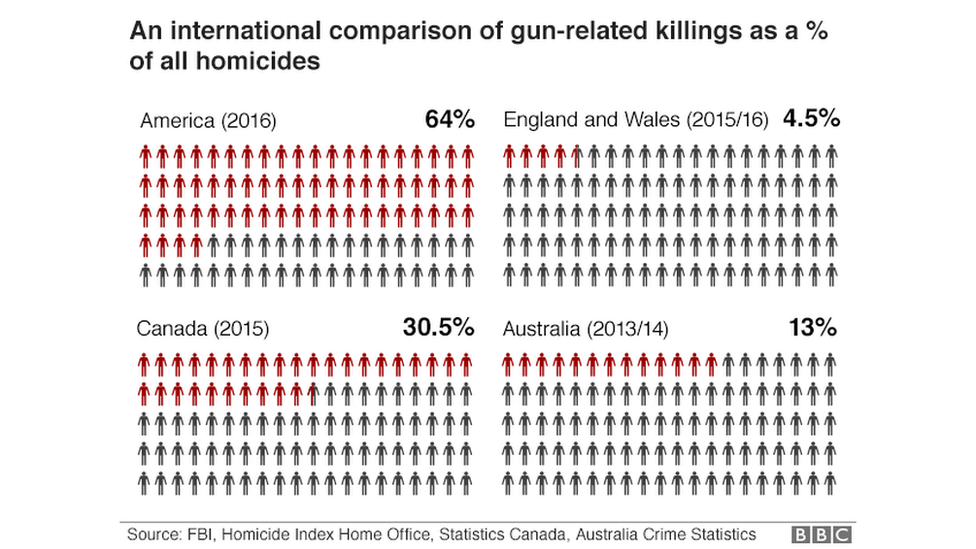
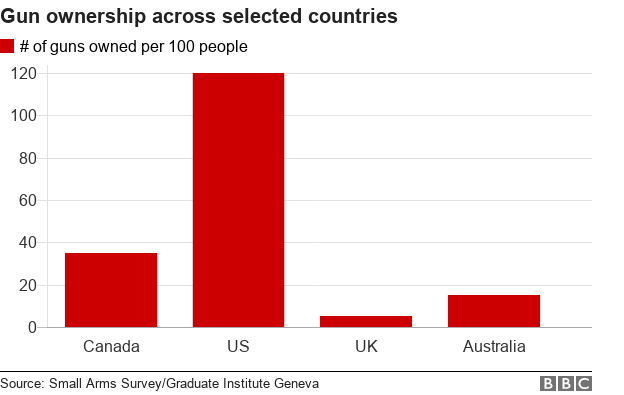
    Canada has significantly more gun violence than the united kingdom or Australia, a indisputable fact that Cukier attributes to Canada’s laxer gun regulations and the greater prevalence of guns in Canada.
    How onerous is it to get a gun in Canada?

    Canada has stricter gun regulations than most US states. In Canada, gun ownership is federally regulated and weapons are divided into three categories – limited, non-limited and prohibited.

    Most handguns and semi-automatic guns fall underneath the limited magnificence, and gun customers must move further protection checks so as to possess one. Applicants are also matter to a criminal and mental well being background check.

    They should also belong to a shooting range, and apply for an Authorization to move licence so as to transport the gun.

    This licence doesn’t permit the person to carry the gun on their particular person in any respect instances, best to move the gun between their house and a shooting range, gun show, gunsmith, police station or the border.

    Conceal-and-elevate is not allowed.
    Where are those guns coming from?

    it is laborious to pinpoint why gun crime is on the upward push in Canada. Are more weapons at the street? How did they get here?

    In Spite Of limits on Canadian gun house owners, limited firearm ownership in Canada has grown frequently over the prior decade. In 2004, there have been 384,888 limited firearms within the u . s .. By 2016, that quantity had more than doubled, to 839,295.

    These numbers do not come with guns purchased illegally or smuggled into the rustic.

    The handgun utilized by Faisal Hussain, the suspect in Sunday’s assault in Toronto, was allegedly smuggled into Canada from the us, even if main points are scarce.

    That used to be the norm, says Toronto Detective Rob Di Danieli, who leads the force’s weapons and gangs unit.

    Now, about half of illegal firearms traced by means of police have household origins, he instructed CBC.

    When Jooyoung Lee moved to Canada from the united states, he was once shocked at Canada’s personal gun tradition.

    “I got here here pondering it used to be inconceivable to own a gun in Canada, however that isn’t actual,” he says.

    An affiliate professor of sociology on the School of Toronto, Lee specialises in the roots of gun violence.

    “we look at gun violence as a symptom of a society that may be unwell,” he says.

    He supports Toronto’s move to prohibit the sale of handguns, but thinks the city needs to do more to address the explanations why people are turning to gun violence within the first position, corresponding to training and employment opportunities.

    “I see gun keep an eye on as one piece of a much larger, systemic series of changes that experience to happen if we actually want to scale back or totally get rid of gun violence,” says the professor.

  • Canada taking pictures: A Few useless in Fredericton, New Brunswick

    Emergency vehicles are seen at the Brookside Drive area in Fredericton Image copyright Kev Bourque/by the use of Reuters Symbol caption Emergency vehicles pictured near the scene in Fredericton, New Brunswick
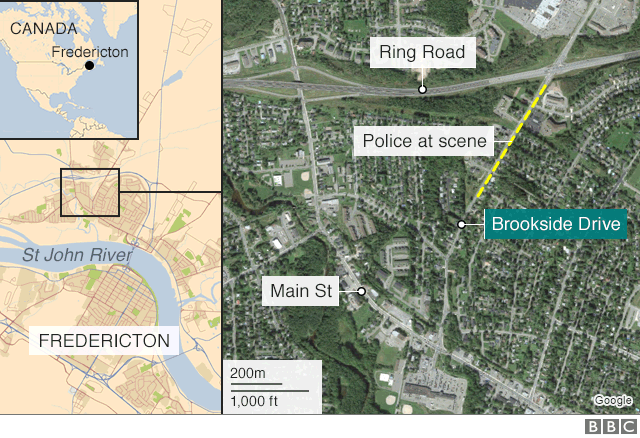
    Canadian police say a suspect is in custody after a minimum of 4 other people have been killed in a capturing within the jap city of Fredericton, New Brunswick.

    Authorities described the capturing as an “energetic incident”.

    They have instructed citizens of Brookside Drive to “stay in their homes with doorways locked at this time for his or her protection”.

    “We Will Be Able To supply extra main points as quickly as we will,” city police tweeted, urging the public to circumvent the area.

    Does Canada have a gun drawback?

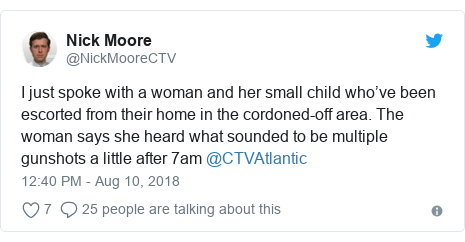
    an area TV reporter mentioned he heard 4 gunshots just after 07:00 (11:00 GMT).

    Symbol Copyright @NickMooreCTV @NickMooreCTV
  • Racial ‘disparity’ in police appreciate

    Police officer with body camera Symbol copyright Getty Photographs Image caption The researchers used frame cam photos in their analysis
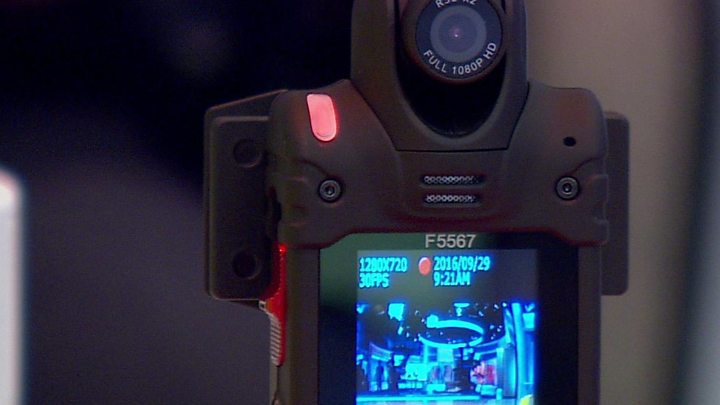

    California cops discuss much less respectfully to individuals of the public who are black than to those who’re white, researchers learning body digicam pictures say.

    Scientists advanced a way to measure levels of respect, based on the officers’ language throughout regimen traffic stops in Oakland City.

    The observe is published in Proceedings of the National Academy of Sciences.

    It aims to use bodycam pictures to assist toughen police-neighborhood members of the family.

    While bodycam photos has been used as proof in prison instances – together with some where proceedings have been made in opposition to police – the aim of this look at was once to turn this incessantly gathered pictures into data and use that to trace and fortify on a regular basis policing.

    “Those routine interactions are vital,” said lead scientist Prof Jennifer Eberhardt, “they’re the way the general public come across the police.”

    “and people care as so much approximately how they’re handled as whether or not they got a speeding ticket.

    “it may possibly impact how other people view the police, how they believe concerning the police – whether or not they want to co-operate with them.”

    Evidence or data?

    The observe used to be a part of a unique, decade lengthy research collaboration among Stanford University and the Oakland Police Division in California, which began while the dept asked Prof Eberhardt to examine their stop and search information.

    Media playback is unsupported for your software

    Media captionBenjamin Learn demonstrates how police body cameras work

    “We had area and main points of who was stopped, however we also had the digital camera’s recording of each interaction,” she mentioned.

    “I figured lets may examine precisely what is taking place right here.”

    The Stanford staff transcribed 1,000 interactions between police and members of the general public, then picked out a random collection of 400 “utterances” made by means of officials all over those dialogues.

    They then had a group of volunteers read and rate those utterances, with each one being rated by way of no less than 10 other folks.

    “Our volunteers looked at the textual content with out knowing the race of the officer or of the community member,” stated Prof Eberhardt.

    “the duty was once to come up with a score that quantified respectfulness, so each and every utterance was once rated for politeness, friendliness and the way formal or casual it was once.

    “Then we searched for what we name the linguistic correlates of that score- so what phrases are provide when one thing is scored as more or less respectful.”

    Co-writer of the study PhD student Rob Voigt explained how the crew had used these volunteers’ ratings to boost a pc fashion that would robotically analyse the utterances – searching and scoring refined linguistic markers that made an officer’s language more or less respectful.

    “Our laptop type learns to measure each and every of these linguistic features,” Mr Voigt said.

    “So we can ask, ‘How well mannered is it when you apologise?’ and it will possibly supply us a number.

    “So, apologies, calling any individual ‘sir’, taking an interest in the person, maybe by way of pronouncing, ‘Drive correctly,’ they are all perceived as more respectful.

    “after which disrespectful options include questions, negatively charged words and the usage of terms like ‘bro’ or ‘man’, or first names rather than titles,” he stated.

    Prof Eberhardt said that they had found “real racial disparity in officials’ language use”.

    ‘Ground-breaking’

    The researchers’ major collaborator within the police department, Deputy Chief Leronne Armstrong, advised BBC News that Oakland PD wanted to examine interactions with the neighborhood in order to “higher educate our officers and fortify the best way we be in contact”.

    “We Now Have heard many times the neighborhood’s concern about racial profiling,” he told BBC Information. “now we have to be prepared to invite those actually difficult questions about what our officers are doing.”

    Prof Eberhardt additionally wired that those findings didn’t “equate to racial bias”.

    “There may well be many the explanation why you will have the variations we are discovering,” she stated. “it would must do with a selected law enforcement strategy, police policies, the neighborhood members’ language, or if there may be rigidity already in a group as a result of a up to date top profile case.

    “We Are looking to keep in mind the basis, however we aren’t taking without any consideration that it’s bias.”

    Deputy Leader Armstrong delivered: “This collaboration in point of fact is ground-breaking.”

    “No other police power within the the rustic has spread out and given scientists get right of entry to to this information.

    “And this file might be a way wherein we will be told and be better – to be the most productive we will be for our community.

    “Any police division must do the same.”

    Media playback is unsupported for your software

    Media captionPolice in Norfolk, Virginia need extra minority police officers, but some say relations are too aggravating

    (more…)

  • Tour de France winner Jan Ullrich held for ‘prostitute assault’

    File picture of German cyclist Jan Ullrich leaving court in Weinfelden after his involvement in a three-car crash in 2015 Image copyright AFP

    Tour de France-successful cyclist Jan Ullrich has been arrested for allegedly assaulting a prostitute in Frankfurt.

    “he’s in police custody,” a police spokesman informed AFP news agency, including that the German national “was underneath the influence of alcohol and medicine”.

    The 44-year-antique received the race in 1997.

    He was additionally arrested the previous Friday in Majorca after reportedly jumping over a neighbour’s fence. Mr Ullrich stated he used to be only looking to check with his neighbour.

    In an interview with German magazine Bild, he mentioned he had been in “deep despair” considering separating from his spouse.

    He said he was once receiving treatment for issues of drugs and alcohol.

  • Chicago police underneath fireplace after ‘bait truck’ used to lure thieves

    Screengrabs from a video uploaded to YouTube showing residents confronting police about the unmarked truck Symbol copyright Martin G. Johnson / YouTube Image caption Video uploaded to social media confirmed citizens confronting the police concerning the unmarked truck

    Police within the US city of Chicago say they are going to “take a hard look” at their use of “bait vans” to seize thieves following grievance from activists.

    Video published on social media last week confirmed residents confronting cops about a white unmarked truck.

    Activists say it was once stuffed with fashion designer shoes and left partly open to entrap groups of young people.

    But the police say the truck was once used to target thieves who had been breaking into freight containers at a rail yard.

    “on the end of the day, just because it is available in the market and it’s not yours, that does not imply you are imagined to take it,” police Superintendent Eddie Johnson mentioned at a news conference on Thursday.

    Image copyright Getty Images Image caption Police Superintendent Eddie Johnson and his division had been accused of carrying out stunts
    “Police in Chicago must cope with development trust and better relationships throughout the groups they serve, now not have interaction in stunts like bait trucks,” Karen Sheley of The American Civil Liberties Union (ACLU) mentioned in a statement.

    “The police department admits that it cannot resolve murders and violent crimes because groups of color don’t accept as true with the Chicago Police. Those stunts won’t help.”

    Others stated the truck was once a waste of police resources. Roderick Sawyer, who chairs town council’s black caucus, slammed the operation as an try to “create crime”.

    “This initiative serves only to undermine already fragile efforts to construct consider among legislation enforcement and the neighborhood,” he mentioned.

    He delivered: “Those kind of tactics are the last item we must always be spending manpower and effort on.”

    What are “bait vans”?

    it is now not uncommon for police to make use of automobiles and programs to lure doable thieves.

    essentially the most not unusual instance is police “bait” automobiles, which can be usually parked in areas where car crime is an issue.

    The particularly-supplied vehicles are often left with cellphones, sat navs, laptops and different valuables on display.

    they are frequently equipped with GPS tracking devices so the police can find the stolen items and understand the thief.

    Earlier this 12 months, police in San Francisco deployed “bait bikes” following a surge in thefts within the town.

    In 2012, police within the UK filled a lorry with pretend items and used it as bait to focus on gangs.

  • Taliban assault strategic Afghan city of Ghazni

    Smoke rises into the air after Taliban militants launched an attack on the Afghan provincial capital Ghazni Symbol copyright AFP Symbol caption Few pictures have emerged from the city since the assault began
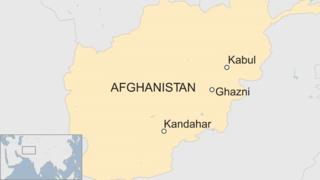
    The Taliban have launched an important evening-time attack at the Afghan city of Ghazni, a provincial capital on the key freeway among Kabul and Kandahar.

    The militants took control of parts of the city ahead of being driven again to the outskirts, officers said.

    Thirty Taliban warring parties and one Afghan safety forces’ member have been killed, in line with the provincial govt.

    The choice of casualties is expected to upward thrust as many houses had been destroyed.

    At least 8 civilians and seven government safety personnel were injured, provincial executive spokesman Mohammad Arif Noori Ghazni informed the BBC. Sporadic gunfire may just nonetheless be heard in the town, the place Afghan unique forces were deployed.

    The freeway from Kabul to Ghazni, and from Ghazni heading further south, was once closed on Friday.

    The assault comes as force keeps at the Taliban to go into peace talks with the Afghan government.

    Secret talks had been not too long ago held in Qatar among Taliban and US officers after an unparalleled three-day ceasefire throughout Eid celebrations in June that was in large part revered through each side.

  • Why is there stress among China and the Uighurs?

    The Xinjiang autonomous area in China’s far west has had an extended historical past of discord among the authorities and the indigenous ethnic Uighur population. The BBC sets out why.

    Who lives in Xinjiang?

    Symbol copyright AFP Symbol caption The ethnic Uighur population used to be the bulk in China’s Xinjiang area
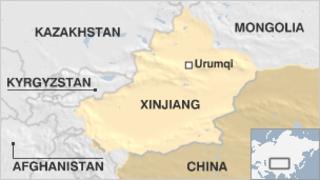
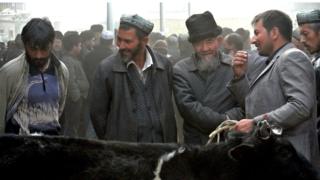
    The Most Important of China’s administrative regions, Xinjiang borders eight international locations – Mongolia, Russia, Kazakhstan, Kyrgyzstan, Tajikistan, Afghanistan, Pakistan and India – and till recently its population was once most commonly Uighur.

    Most Uighurs are Muslim and Islam is a very powerful part of their life and identification. Their language is said to Turkish, they usually regard themselves as culturally and ethnically close to Crucial Asian nations.

    The region’s economy has in large part revolved around agriculture and trade, with cities comparable to Kashgar thriving as hubs along the well-known Silk Street.

    Image copyright AFP Symbol caption Xinjiang formally turned into a part of Communist China in 1949
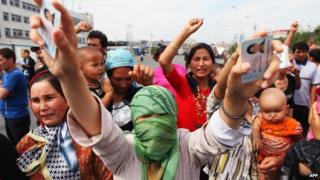
    The area has had intermittent autonomy and low independence, however what’s now known as Xinjiang came beneath Chinese Language rule in the 18th Century.

    An East Turkestan state used to be briefly declared in 1949, however independence used to be short-lived – later that year Xinjiang officially became a part of Communist China.

    In the nineteen nineties, open fortify for separatist teams larger after the collapse of the Soviet Union and the emergence of unbiased Muslim states in Primary Asia.

    Then Again, Beijing suppressed demonstrations and activists went underground.

    Profile: Xinjiang self sufficient region

    What is on the center of the unrest?

    Symbol copyright AFP Symbol caption China’s critics say government have stepped up a crackdown on Uighurs in recent years

    Even As the location is complicated, many say that ethnic tensions caused by financial and cultural factors are the basis reason for the new violence..

    Major construction initiatives have introduced prosperity to Xinjiang’s big towns, attracting young and technically certified Han Chinese from japanese provinces.

    The Han Chinese are said to be given the most productive jobs and the majority do smartly economically, one thing that has fuelled resentment amongst Uighurs.

    Image copyright Reuters Image caption The Uighur tradition leans more against Central Asia than China
    Activists say Uighur industrial and cultural actions had been gradually curtailed by means of the Chinese Language state. There are complaints of critical regulations on Islam, with fewer mosques and strict regulate over non secular schools.

    Rights staff Amnesty Global, in a record published in 2013, mentioned authorities criminalised “what they labelled ‘illegal religious’ and ‘separatist’ activities” and clamped down on “peaceful expressions of cultural identity”.

    In July 2014, a few Xinjiang government departments banned Muslim civil servants from fasting through the holy month of Ramadan. It was once no longer the first time China had limited fasting in Xinjiang, nevertheless it adopted a slew of attacks at the public attributed to Uighur extremists, prompting considerations the ban may increase tensions.

    Making sense of the unrest from China’s Xinjiang

    Death on the Silk Course: Violence in Xinjiang

    How has the violence developed?

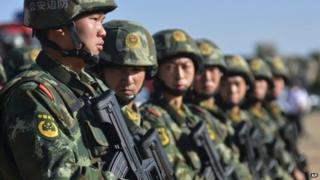
    Image copyright AP Symbol caption China has poured troops into the area in recent years as unrest has rumbled
    China has been accused of intensifying its crackdown at the Uighurs after street protests in the 1990s and once more in the run-up to the Beijing Olympics in 2008.

    But issues really escalated in 2009, with huge-scale ethnic rioting within the nearby capital, Urumqi. A Few 2 HUNDRED other people had been killed in the unrest, so much of them Han Chinese Language, in keeping with officers.

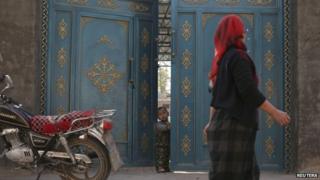
    Symbol copyright Reuters Image caption Xinjiang’s economic system has in large part revolved round agriculture and industry
    Safety was once increased and lots of Uighurs detained as suspects. However violence rumbled on as proper groups more and more pointed to tight keep an eye on through Beijing.

    In June 2012, six Uighurs reportedly tried to hijack a plane from Hotan to Urumqi prior to they have been overpowered through passengers and crew.

    There was bloodshed in April 2013 and in June that 12 months, 27 other people died in Shanshan county after police opened fire on what state media defined as a mob armed with knives attacking local executive buildings

    Establishing information approximately these incidents is tricky, as a result of overseas journalists’ access to the area is tightly controlled, but in latest months, there seems to had been a shift towards larger-scale incidents where citizens have become the target, specifically in Xinjiang.

    At least 31 people had been killed and more than 90 suffered injuries in May 2014 whilst two vehicles crashed through an Urumqi marketplace and explosives had been tossed into the gang. China referred to as it a “violent terrorist incident”.

    It adopted a bomb and knife attack at Urumqi’s south railway station in April, which killed 3 and injured SEVENTY NINE others.

    In July, authorities mentioned a knife-wielding gang attacked a police station and executive workplaces in Yarkant, leaving 96 dead. The imam of China’s largest mosque, Jume Tahir, was stabbed to death days later.

    In September approximately 50 died in blasts in Luntai county outdoor police stations, a marketplace and a store. Details of both incidents are uncertain and activists have contested some debts of incidents in state media.

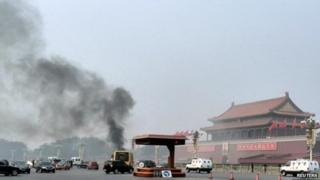
    Symbol copyright Reuters Symbol caption Chinese officials blamed the attack at Tiananmen Square on separatists from Xinjiang

    A Few violence has additionally spilled out of Xinjiang. A March stabbing spree in Kunming in Yunnan province that killed 29 folks was once blamed on Xinjiang separatists, as was once an October 2013 incident the place a automotive ploughed right into a crowd and burst into flames in Beijing’s Tiananmen Square.

    In response to the most recent slew of assaults, the authorities have launched what they call a “yr-lengthy marketing campaign towards terrorism”, stepping up security in Xinjiang and undertaking extra army drills in the area.

    There have additionally been stories of mass sentencings and arrests of several “terror groups”. Chinese state media have said long lists of people convicted of extremist activity and in a few instances, dying sentences.

    Top-profile Uighur educational, Ilham Tohti was detained and later charged in September 2014 on charges of separatism., sparking international criticism.

    Shock and anger after Kunming brutality

    China tries to block Xinjiang blast memorial

    Who’s in charge?

    Image copyright AFP Image caption China also blamed Xinjiang separatists for the brutal attack in March 2014 at Kunming station
    China has frequently blamed ETIM – the East Turkestan Islamic Motion – or folks inspired via ETIM for violent incidents both in Xinjiang and past the area’s borders.

    ETIM is alleged to want to establish an independent East Turkestan in China. the us State Division in 2006 mentioned ETIM is “probably the most militant of the ethnic Uighur separatist teams”.

    The scope of ETIM’s activities remains unclear with some wondering the workforce’s capability to organise serious acts of extremism.

    ETIM has not stated it used to be at the back of any of the assaults. Chinese government stated the Turkestan Islamic Party – which it says is synonymous with ETIM – launched a video backing the Kunming attack, however.

    With the new apparent escalation in Xinjiang-comparable violence, the query of who and what’s using it’s prone to draw in higher scrutiny.

    Q&A: East Turkestan Islamic Movement

  • China Uighurs: Xinjiang ban on lengthy beards and veils

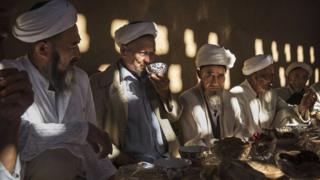
    Uyghur men gather for a holiday meal during the Corban Festival on 13 September, 2016 in Turpan County, in the far western Xinjiang province, China Symbol copyright Getty Images Symbol caption The Uighurs say they face widespread discrimination in Xinjiang
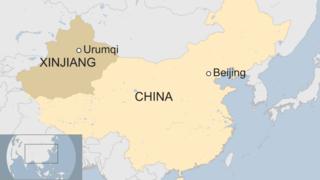

    China has offered new regulations within the some distance western region of Xinjiang in what it describes as a campaign in opposition to Islamist extremism.

    The measures include prohibiting “abnormally” lengthy beards, the dressed in of veils in public puts and refusing to observe state television.

    Xinjiang is the place of birth of the Uighurs, a historically Muslim team who say they face discrimination.

    Recent years have observed bloody clashes within the area.

    The Chinese Language government blames the violence on Islamist militants and separatists.

    the limitations were approved through Xinjiang lawmakers and published at the region’s reputable news website.

    Chinese government had up to now imposed different measures, together with restrictions on granting passports to Uighurs.

    Uighurs and Xinjiang

    Image copyright AFP Uighurs are ethnically Turkic Muslims They make up about 45% of Xinjiang’s population; 40% are Han Chinese Language China re-based keep watch over in 1949 after crushing the fast-lived state of East Turkestan Because then, there has been huge-scale immigration of Han Chinese Uighurs worry that their conventional culture shall be eroded
    Why is there tension between China and the Uighurs?

    (more…)

  • ‘All-out offensive’ in Xinjiang dangers worsening grievances

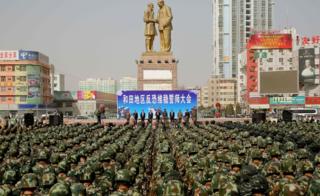
    This photo taken on 27 February 2017 shows ranks of Chinese military police attending an anti-terrorist oath-taking rally in Hetian, northwest China's Xinjiang region. Image copyright AFP Image caption Huge rallies via safety forces were held in Xinjiang just lately
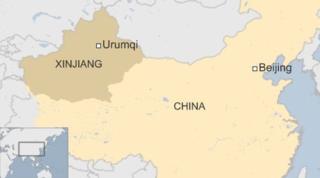

    China is within the midst of what it calls a “people’s struggle on terror” in its a ways west. What sparked this contemporary campaign was once a knife attack.

    After 5 people were killed on 14 February in Xinjiang, house to China’s Muslim Uighur minority, Beijing began an “all out offensive”. It flew in hundreds of armed troops to carry mass police rallies and deploy columns of armoured cars on town streets.

    Xinjiang’s Communist Birthday Party boss Chen Quanguo advised those forces to “bury the corpses of terrorists in the huge sea of a people’s battle”.

    Mass police rallies held in Xinjiang China to trace vehicles in terrorism crackdown Why is there tension among China and the Uighurs? Extra about Xinjiang

    Judging from the response on Chinese social media, no less than a few folks approve.

    “Terrorists won’t ever be stamped out unless we weaken Muslim non secular forces,” instructed one post on China’s Twitter-like Weibo.

    But The ethnic Uighur inhabitants of Xinjiang has no discernible voice. in the midst of an “all-out offensive” it’s unhealthy for them to talk up, except to echo the government’s message.

    One contact in Kashgar informed the BBC that the situation is “hypersensitive”, with all trade within the town closed down by evening. He mentioned individuals of his circle of relatives are summoned to weekly meetings to demonstrate political allegiance.

    “we’re reliving the Cultural Revolution”, he mentioned.

    Uighurs and Xinjiang

    Image copyright AFP Uighurs are ethnically Turkic Muslims They make up about FORTY FIVE% of Xinjiang’s inhabitants; FORTY% are Han Chinese Language China re-established keep watch over in 1949 after crushing the quick-lived state of East Turkestan When You Consider That then, there has been massive-scale immigration of Han Chinese Uighurs worry that their traditional tradition will probably be eroded
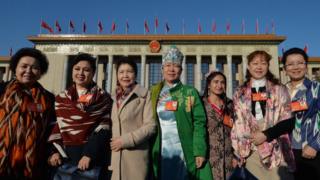
    who’re the Uighurs?

    So what lies behind China’s greatest display of power in Xinjiang in nearly a decade?

    The incident in Pishan on 14 February is the one deadly assault to be said this 12 months. Details are nonetheless scarce however there is no advice of the kind of outside involvement or huge scale co-ordination which might give an explanation for such a huge response.

    Instead, unofficial reports counsel the trigger for the assault might had been one thing way more non-public: the police punishment of a Uighur circle of relatives who held a Muslim prayer assembly at house.

    this is indisputably no longer the type of state of affairs which requires the deployment of lots of paramilitary reinforcements.

    However The state controlled Xinjiang Daily newspaper has urged security forces to arrange “for a fight among good and evil, lightness and dark” and the region’s Communist Birthday Celebration boss warned of “grim prerequisites” in the combat towards terrorism.

    Image copyright AFP Image caption besides because the firm hand of Beijing, Uighurs are concerned in the operating in their semi-self sufficient region
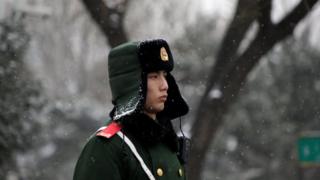
    So are conditions truly grim?

    Notwithstanding the video risk, outdoor Xinjiang, there has been no significant terrorist assault in China in view that 2014 and pronounced attacks within the area were sporadic and small-scale.

    By contrast, France has noticed numerous terror attacks in latest years, together with a few leading atrocities. But The French government did not claim a frontline, fly in lots of troops or mount mass armed rallies on town streets.

    It Is onerous to flee the conclusion that China is wielding a hammer to crack a nut. But Xinjiang’s security forces are already well armed with every form of “nutcracker”, including highly trained manpower, speedy reaction gadgets, cellular police stations, surveillance cameras, helicopters, drones, satellite monitoring of automobiles, biometrics and grid style control of every group right down to the person family.

    Image copyright Reuters Symbol caption Police control and public surveillance is on the upward thrust throughout China
    So what explains the drive?

    It Is conceivable that the current security scenario in Xinjiang is worse than seems and that there are many assaults going unreported.

    Or that China has an overly different risk calculus from different countries and feels a hammer is the best response to each nut.

    A 3rd chance is that caution of “grim prerequisites” in counter-terrorism serves an unrelated goal and the nut must be redefined as an existential threat to justify the hammer.

    My feeling is that each one three reasons play a part.

    The first is the least significant.

    It’s laborious to ensure occasional unofficial reviews of small scale attacks in far off parts of Xinjiang as a result of it’s very difficult and perilous for native Uighurs to contact foreign newshounds. However it is unlikely that the government may just duvet up a major atrocity although they wanted to.

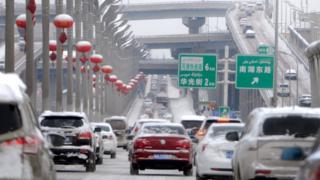
    Image copyright AP Symbol caption Xinjiang government have ordered all automobiles to have satellite tv for pc monitoring devices in a crackdown on terrorism
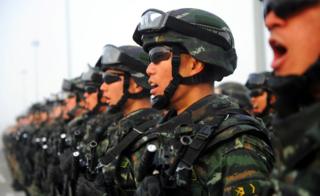
    the risk calculus is a miles larger factor. it’s a sweeping generalisation unsupported by means of exhausting evidence, however in my experience Chinese Language voters are chance averse.

    They have the next expectation than, for instance, British voters, that their govt should keep them safe.

    China’s growing authoritarianism approach there’s no vocal constituency arguing that civil liberties are value a definite worth in national security. But Even So which, low agree with in professional news sources makes Chinese society liable to hearsay and panic.

    So China’s leaders have to be chance averse when coping with a high density inhabitants, which is handiest grudgingly dependable within the first place and not likely to be resilient to terror or tolerant of failure to forestall it.

    In Xinjiang, recent attacks could also be small, but Beijing must display its public that it is doing one thing approximately them, even supposing that something is ineffectual or worse, counter-productive.

    Symbol copyright Reuters Image caption The region’s safety forces are already smartly educated and armed
    Turning to the 3rd conceivable cause for an “all-out offensive” towards scattered enemies armed simplest with knives, China has robust vested interests whose objectives are advanced by means of speaking up the security danger.

    The politicians involved wish to beef up their hand ahead of a vital Communist Birthday Party Congress within the autumn, the safety services need to expand their bureaucratic empire, and the companies producing surveillance apparatus and software have cash to make.

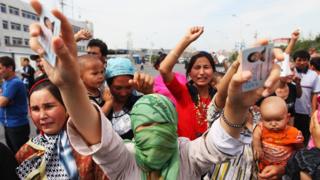
    Image copyright Getty Pictures Image caption Ethnic riots in 2009 left nearly 200 lifeless and led to mass arrests, in opposition to which those women protested
    Despite China’s perfect efforts to cut off the routes of get away by the use of Relevant and South East Asia, greater than ONE HUNDRED Uighur fighters have made their way to Iraq and Syria. And now, IS is the usage of photos from Xinjiang in its propaganda videos.

    It’s not possible to pass judgement on how a ways this may have happened without insurance policies of religious and cultural repression in Xinjiang.

    Banning beards and head scarves in public places, forcing Muslims to damage their rules on fasting, demolishing mosques, micromanaging non secular education, exacting outward shows of ideological loyalty serves to alienate Uighurs in Xinjiang.

    Image copyright AFP Image caption A Few Uighurs really feel their particular tradition is below danger

    in many countries terror triggers the impulse to repress and punish the group which seems to harbour the “terrorist”. However different societies debate the hazards of alienation and the danger that the ones criminalised might turn into much more prone to exploitation by way of extremists.

    In 2014, making the case for an honest appraisal of the risks of repression earned the Uighur academic Ilham Tohti a life sentence in prison.

    the risk of demonising such gentle dissent is to go away China’s Uighurs best the voice of the separatist, the “terrorist” or the non secular fundamentalist.

    Symbol copyright Getty Photographs Symbol caption In Spite Of moderately reasonable activism, Uighur instructional Ilham Tohti used to be jailed for all times
    at this time, the fee of this silence is skilled only through Uighurs and through Han Chinese Language who reside and work in Xinjiang. However this will change.

    Already the applied sciences of an Orwellian police state are advancing across China. Safety services haven’t any inhibitions about getting access to social media bills and private financial records to construct an increasingly more entire picture of the lives of persons of interest.

    A vaguely worded new anti-terror legislation and accompanying narrative of overseas threats justify each constriction of civil liberties and detention of human rights lawyers, labour activists, non secular believers and feminists.

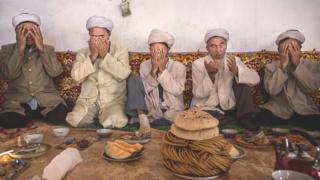
    Image copyright Getty Pictures Symbol caption Most of the Uighur ethnic minority, which makes up about 45% of Xinjiang’s inhabitants, preparation the Muslim religion

    Every Now And Then the Chinese public pushes back with court cases on social media approximately aggressive policing or miscarriages of justice.

    And China does have traditions of sentimental energy as well as exhausting – lines of Confucian paternalism during which a benign emperor regulations via wisdom and natural authority, no longer via fear.

    But in 2017, those strains are absent in Xinjiang. there’s no significant pushback to the Communist Party message that the security of the state trumps the freedom of the citizen.

    So China will cross on failing to win the fight for hearts and minds in Xinjiang, and failing to persuade the skin global that its offensive there may be a clear-lower struggle among just right and evil.