Category: WORLDS

  • Cambodia scorns US sanctions against senior military officer

    Cambodian authorities reacted with scorn Wednesday to an announcement by the United States that it has blacklisted an important senior army officer over human rights abuses, blocking his access to any

    PHNOM PENH, Cambodia (AP) – Cambodian authorities reacted with scorn Wednesday to an announcement by the United States that it has blacklisted an important senior army officer over human rights abuses, blocking his access to any assets in the U.S.

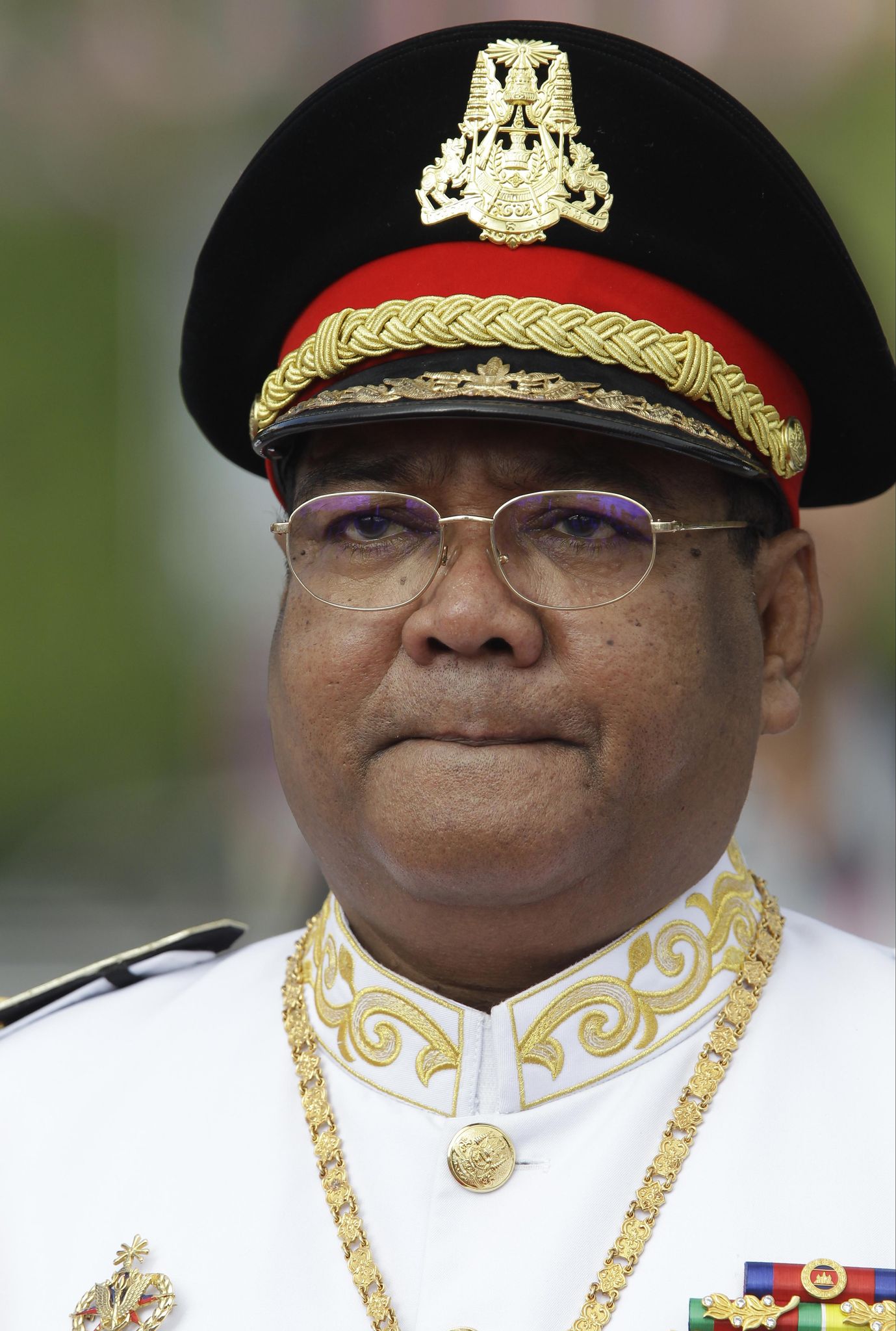
    The Treasury Department announced sanctions Tuesday against Gen. Hing Bun Hieng, commander of Cambodia’s Prime Minister Bodyguard Unit, which it said had been engaged in serious human rights violations for at least the past 21 years.

    A Cambodian Defense Ministry statement issued Wednesday regretted and condemned the U.S. action, which it described as unjust and not backed by any evidence. It said it was a “stupid decision that Cambodia cannot accept.”

    The U.S. move came just a little over a month before a general election in which the main and only credible opposition party will not take part because it was dissolved last year by Cambodian courts in what critics contend was a politically motivated move to ensure the continued rule of Prime Minister Hun Sen. Other moves to curb the opposition have included silencing most independent media.

    Bun Hieng, a four-star general, also holds the position of deputy commander of the armed forces. The bodyguard unit is an elite force with thousands of troops which is seen as being deeply involved in internal security matters and especially loyal to Hun Sen, who has held power for three decades.

    The Treasury Department announcement said the unit “has been implicated in multiple attacks on unarmed Cambodians over the span of many years” and is “connected to incidents where military force was used to menace gatherings of protesters and the political opposition going back at least to 1997, including an incident where a U.S. citizen received shrapnel wounds.”

    The 1997 incident involved grenades being thrown at a small political protest the opposition leader was attending in the middle of the capital city, Phnom Penh. Seventeen people were killed and about 150 wounded.

    The Treasury Department action also bars U.S. citizens generally from doing any transactions with Bun Hieng.

    Bun Hieng told The Associated Press that he had not committed any human rights abuses and held no property in the United States.

    “As an army commander, I have never committed anything that was contrary to the Cambodian Constitution and laws, therefore, I am not worried at all by the U.S. sanction,” he said by telephone. “The sanctions are laughable because I don’t have any property in the U.S. or deposited with any company there.”

    Additional statements decrying the U.S. action were issued by the Foreign Ministry and the offices of the Cabinet – which said it violated Cambodia’s sovereignty – and the Royal Cambodian Armed Forces. The Foreign Ministry statement said it could be construed as part of a series of coordinated attacks on the government’s image ahead of next month’s polls.

    Washington’s move was applauded by others.

    “Hin Bun Hieng’s position as commander of PM Hun Sen’s bodyguards makes him one of the most feared men in Cambodia, and with good reason. It’s about time the U.S. finally recognized that it falls to a major global power to call out such a powerful figure on human rights grounds, and hold him accountable for the atrocities he’s committed,” said Phil Robertson, Asia deputy director for the New York-based Human Rights Watch.

    The Cambodian National Rescue Party, the opposition grouping that was dissolved last year, said it welcomed the U.S. action, calling it justified because Bun Hieng was, it charged, one of the country’s biggest human rights abusers.

    It said Washington’s move should serve as a warning to Cambodia’s government that it must cease its abuses or face punishment from the international community.

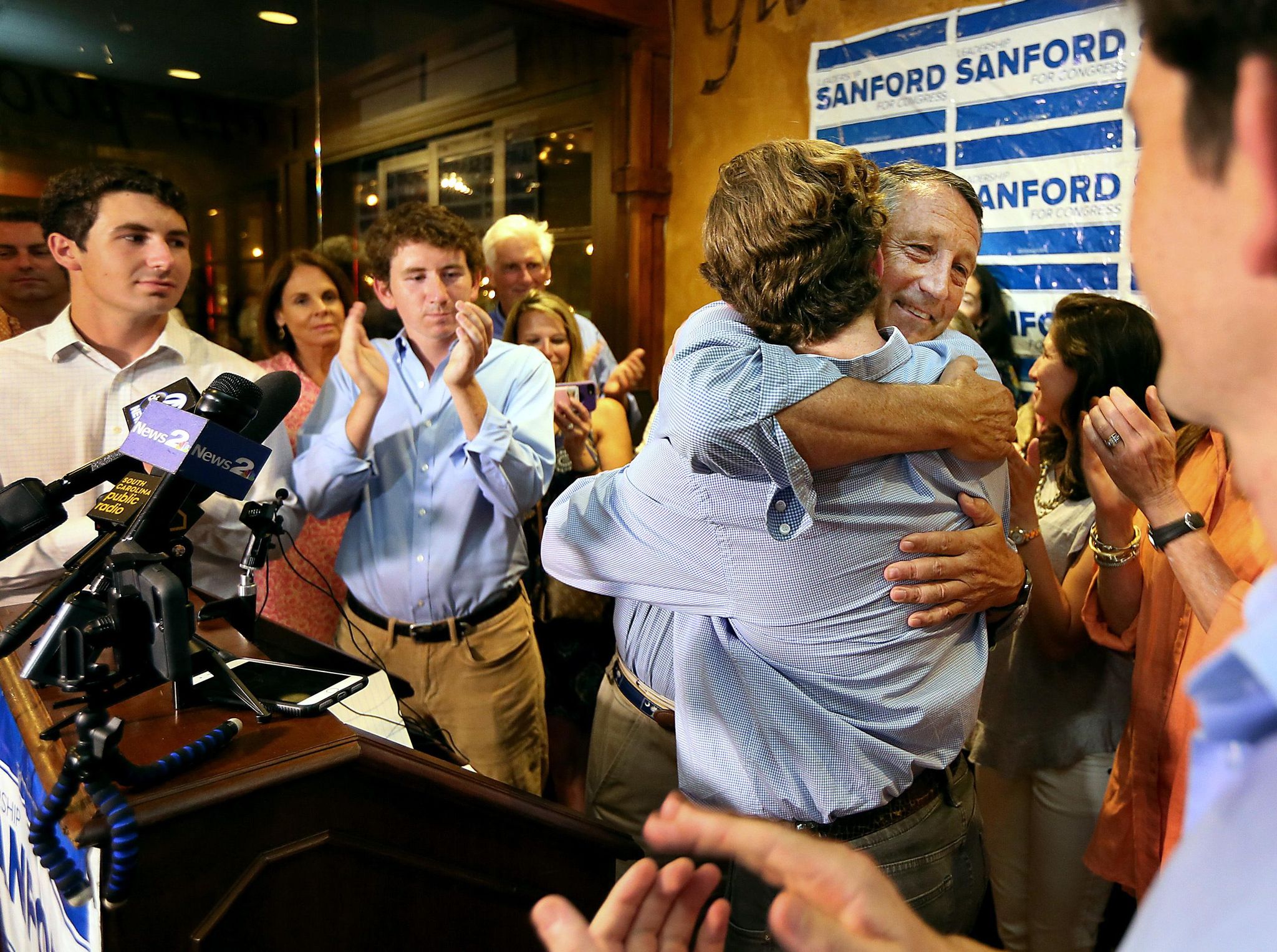
  • In SC primary, ardent Trump backer defeats Rep. Mark Sanford

    President Donald Trump is crediting his Election-Day tweet in part for the defeat of a South Carolina Republican congressman who has been critical of his administration.

    COLUMBIA, S.C. (AP) – President Donald Trump is crediting his Election-Day tweet in part for the defeat of a South Carolina Republican congressman who has been critical of his administration.

    Trump tweeted Wednesday that his advisers didn’t want him to get involved in the Republican primary, thinking Rep. Mark Sanford “would easily win.”

    But Trump says Rep. Katie Arrington “was such a good candidate, and Sanford was so bad, I had to give it a shot.”

    Arrington narrowly defeated Sanford after Trump tweeted that Sanford had been unhelpful, adding, “He is better off in Argentina.”

    That was a reference to Sanford’s surprise disappearance from the state as governor, which he later revealed was to further his affair with an Argentine woman.

    Sanford’s loss was perhaps the most dramatic result in primaries across five states Tuesday.

    He becomes the second incumbent House Republican to lose a primary this year – the latest victim of intense divisions among the GOP in the Trump era.

    Sanford’s voting record is generally conservative, but his criticism of Trump as unworthy and culturally intolerant made him a target of dedicated Trump supporters who often elevate loyalty over policy.

    Arrington blasted Sanford as a “Never Trumper,” and Trump tweeted a startlingly personal attack hours before polls closed, calling Sanford “MIA and nothing but trouble … he’s better off in Argentina.”

    Even for a political figure with no shortage of confidence in challenging party decision-making, the attack was a bold case of going after a sitting member of Congress. It’s almost certain to make other Republicans even more reluctant to take him on, even as Trump stirs divisions on trade, foreign policy and the Russia investigation.

    Sanford said Tuesday night that “I stand by every one of those decisions to disagree with the president.”

    Sanford had never lost a political race in South Carolina, and his defeat Tuesday came amid a roller-coaster political career. Despite the scandal over the affair, he completed his second term as governor and voters sent him to Congress two years later.

    In her victory speech, Arrington asked Republicans to come together, saying “We are the party of President Donald J. Trump.”

    Four other states voted Tuesday, including several races that will be key to determining which party controls the House of Representatives next year.

    In other races:

    __

    IN SOUTH CAROLINA, INCUMBENT GOVERNOR FACES RUN-OFF

    Sanford was not the only establishment Republican to face a challenge Tuesday. South Carolina Gov. Henry McMaster, a close ally of Trump, was forced into a runoff after failing to muster the required 50 percent vote to win outright.

    McMaster, an early supporter of the president’s 2016 campaign, had Trump’s full endorsement, marked by a weekend tweet.

    But while Trump remains very popular in the state, McMaster has been shadowed by a corruption probe involving a longtime political consultant. McMaster received the most votes of the four Republicans running, but will face Greenville businessman John Warren in a second contest June 26.

    McMaster, the former lieutenant governor, assumed the governorship last year after Nikki Haley resigned to become U.S. ambassador to the United Nations.

    ___

    GOP‘S ‘VICIOUS’ VIRGINIA VICTOR

    Trump is tweeting that people shouldn’t underestimate his loyalist Corey Stewart, who won Virginia’s Republican primary to face Democratic Sen. Tim Kaine. The president tweeted Wednesday that Stewart has “a major chance of winning!”

    Stewart, known for his ardent defense of Trump and of Confederate symbols, said he plans a “vicious” campaign against Kaine, who has a huge fundraising advantage going into the general election.

    Kaine gives passionate campaign speeches, but Trump’s tweet calls him a “total stiff.”

    As Trump’s top campaign aide in Virginia, Stewart accused the Republican Party of inadequately defending the candidate after the release of a recording in which Trump bragged about groping women.

    Stewart also has called efforts to remove Confederate monuments “an attempt to destroy traditional America.”

    ___

    A HOUSE BELLWETHER IN VIRGINIA

    Democratic State Sen. Jennifer Wexton was the clear winner in a six-way primary in a northern Virginia district considered key to the House battleground map this fall, and will challenge Republican Rep. Barbara Comstock.

    Democrats in two other districts they hope to retake nominated women: Abigail Spanberger in central Virginia and Elaine Luria in the district that includes Virginia Beach.

    In Comstock’s district, Wexton was the best-known in the field, and was viewed as the Democratic Party’s establishment choice. She had the endorsement of Democratic Gov. Ralph Northam.

    Comstock, a moderate Republican who easily beat back a challenge from conservative Shak Hill, is one of the Democrats’ top targets in November. The second-term House member’s district leans Republican, though Democrat Hillary Clinton received more votes there than Trump did in 2016.

    Though Wexton favors a ban on the sale of assault weapons, she defied what has been the tendency in some swing districts to nominate Democrats with liberal profiles on other key issues. She has not called for a single-payer, government-run health insurance system, as some Democratic House primary winners in California, Nebraska and Pennsylvania have.

    Democrats need to gain 23 seats to win the majority in the House.

    __

    TURNING THE LePAGE

    Maine voters are deciding on a successor to term-limited, conservative Republican Gov. Paul LePage. But first they had to wrestle with a new balloting system. Maine on Tuesday debuted its statewide ranked-choice voting , which allows voters to rank candidates first to last on their ballot.

    The system insured that counting was slow and winners difficult to call. But businessman Shawn Moody won the GOP nomination after midnight. He maintained a wide lead through the night, but risked not winning the race outright under the new rules.

    The Associated Press did not call the Democratic primary as none of the seven candidates was close to the majority needed to be declared the outright winner, so more tabulations are required next week under ranked-choice voting. Last-place candidates will be eliminated and votes reallocated until there is a winner, a process that may take more than a week.

    __

    NEVADA, NORTH DAKOTA: SEE YOU IN NOVEMBER

    Nevada and North Dakota are home to two of the most pivotal Senate races this year. What they didn’t have were competitive Senate primaries.

    Nevada Sen. Dean Heller, the only Republican seeking re-election in a state that Hillary Clinton carried in 2016, and Democratic Rep. Jacky Rosen sailed through their primaries, and already have begun focusing their criticism on each other in what is expected to be among the most competitive Senate races this year.

    There was also the return of Sharron Angle , the conservative who once ominously threatened to “take out” then-Sen. Harry Reid. Angle, who lost to Reid in her 2010 bid for Senate, lost her primary challenge to Rep. Mark Amodei on Tuesday.

    Centrist Steve Sisolak won a bruising battle between Clark County commissioners vying to be Nevada’s first Democratic governor in two decades. Fellow board member Chris Giunchigliani ran as a progressive, knocking Sisolak for his positive rating from the National Rifle Association in light of the mass shooting in Las Vegas in October. Republican Attorney General Adam Laxalt easily cleared the GOP field.

    Nevada election officials blamed new touch-screen voting machines for glitches that affected a small number of voters and delayed the count of ballots in rural Pershing County. In no case were voters unable to successfully cast a ballot, the Nevada Secretary of State’s office said.

    In North Dakota, GOP Rep. Kevin Cramer will face moderate Democratic Sen. Heidi Heitkamp . She is seeking re-election in a state Trump carried by 36 percentage points in 2016.

    __

    BROTHELS ON THE BALLOT

    Pimp Dennis Hof, the owner of half a dozen legal brothels in Nevada and star of the HBO adult reality series “Cathouse,” won a Republican primary for state Legislature, ousting a three-term lawmaker.

    Voters in November will also be voting on closing down brothels in at least one of the seven Nevada counties where they’re legally operating, and activists are trying to get the measure on the ballot in another district.

    __

    This story has been corrected to reflect that Sanford completed his second term as South Carolina governor and did not resign.

    __

    Associated Press writers Meg Kinnard and Christina Myers in Columbia, S.C.; Marine Villeneuve in Augusta, Maine; Patrick Whittle in Portland, Maine; Alan Suderman in Richmond, Va.; Matthew Barakat in McLean, Va.; Scott Sonner in Reno, Nev.; Michelle Price in Las Vegas; and James MacPherson in Bismarck, N.D., contributed to this report.

  • Iran deal comparisons cloud Trump’s North Korea summit

    President Donald Trump’s triumphant assertions about the success of the unprecedented Singapore summit are being met with skepticism and outright derision from critics seizing on the contradiction bet

    WASHINGTON (AP) – President Donald Trump’s triumphant assertions about the success of the unprecedented Singapore summit are being met with skepticism and outright derision from critics seizing on the contradiction between his withdrawal from the Iran nuclear deal and his willingness to accept vague pledges from North Korean leader Kim Jong Un.

    White House officials have repeatedly stressed that this week’s meeting in Singapore is the beginning, not the end, of a process that Trump’s team argues could have only been jump-started with the face-to-face meeting. The Singapore summit set out broad goals to be met in the coming months while the Iran deal, signed by President Barack Obama in 2015 and approved by seven nations, was an imperfect end to 18 months of negotiations, they say. Criticism that Tuesday’s commitment does not include specifics on denuclearization and verification is too early, they argue.

    “While I am glad the president and Kim Jong Un were able to meet, it is difficult to determine what of concrete nature has occurred,” said Sen. Bob Corker, R-Tenn., the chairman of the Senate Foreign Relations Committee. He said he wanted Secretary of State Mike Pompeo, who will lead the follow-on negotiations, to explain details of what the administration has in mind.

    The top Democrat on that panel, Sen. Bob Menendez of New Jersey, who also opposed the Iran deal, took issue with Trump’s zeal as well as his announcement of the suspension of U.S.-South Korea military exercises.

    “In exchange for selfies in Singapore, we have undermined our maximum pressure policy and sanctions,” Menendez said.

    For Iran deal proponents, though, the Singapore summit was evidence of Trump’s lack of preparedness and poor negotiating skills. Iran deal opponents, meanwhile, seemed willing to wait and see.

    Sen. Tom Cotton, R-Ark., a Trump advocate and fervent Iran deal foe, urged patience and sought to dispel suggestions that the president had unwisely plunged into a meeting with a dictator after having withdrawn from the accord with Tehran. He noted, as did other Trump allies, that North Korea already had nuclear weapons and the capability to deliver them whereas Iran did not.

    “There is a school of thought that … the United States president should not sit down with two-bit dictators,” Cotton told conservative commentator Hugh Hewitt. “I think there’s some validity to that school of thought with the exception (of) once those dictators have nuclear weapons.”

    “You know, countries like Iran and Cuba and other two-bit rogue regimes don’t have nuclear weapons, yet,” he said. “They can’t threaten the United States in that way. Once they have missiles that can deliver them to use, I would liken it to past presidents sitting down with Soviet dictators.”

    Victor Cha, a Georgetown University professor and former National Security Council director for Asia in President George W. Bush’s administration, lamented that the summit results “left a lot to be desired.” But he also maintained that the Trump-Kim meeting had reduced the chance of conflict even if it was only a “modest start.”

    “Despite its many flaws, the Singapore summit represents the start of a diplomatic process that takes us away from the brink of war,” Cha wrote in The New York Times in the immediate aftermath of the summit. “Mr. Trump’s unconventional approach leaves a lot to be desired in the foreign policy of the United States, but there was no other path to this less-than-satisfying but digestible outcome.”

    Kelsey Davenport, the nonproliferation policy director at the Arms Control Association, which supported the Iran deal, called the summit result “mediocre.”

    “The vague language on denuclearization is not a breakthrough, it is a boilerplate reiteration of past statements,” she said, adding: “It is far too early in the process for Trump to declare success.”

    In the case of the Iran deal, even the most generous assessors of the Singapore summit sought to remind the White House that intense diplomacy preceded the agreement with Tehran.

    “Pompeo will now have to undertake the kind of arduous, multiyear negotiations with Pyongyang that former secretary of state John Kerry undertook with Tehran,” Cha and Koreas expert Sue Mi Terry said in a paper for the Center for Strategic and International Studies. “Trump has assailed Obama’s deal with Iran as the ‘worst ever,’ but he now faces substantial challenges to achieve as much as Obama did.”

    Iran itself cautioned North Korea against taking Trump at his word.

    “We are facing a man who revokes his signature while abroad,” the semi-official Fars news agency quoted government spokesman Mohammad Bagher Nobakht as saying on Tuesday.

  • Officials say company in Cuba crash had safety complaints

    The Mexican charter company whose plane crashed in Havana, killing 110 people, has been the subject of two serious complaints about its crews’ performance over the last decade, according to authoritie

    HAVANA (AP) – The Mexican charter company whose plane crashed in Havana, killing 110 people, has been the subject of two serious complaints about its crews’ performance over the last decade, according to authorities in Guyana and a retired pilot for Cuba’s national airline.

    The plane was barred from Guyanese airspace last year after authorities discovered that its crew had been allowing dangerous overloading of luggage on flights to Cuba, Guyanese Civil Aviation Director Capt. Egbert Field told The Associated Press on Saturday.

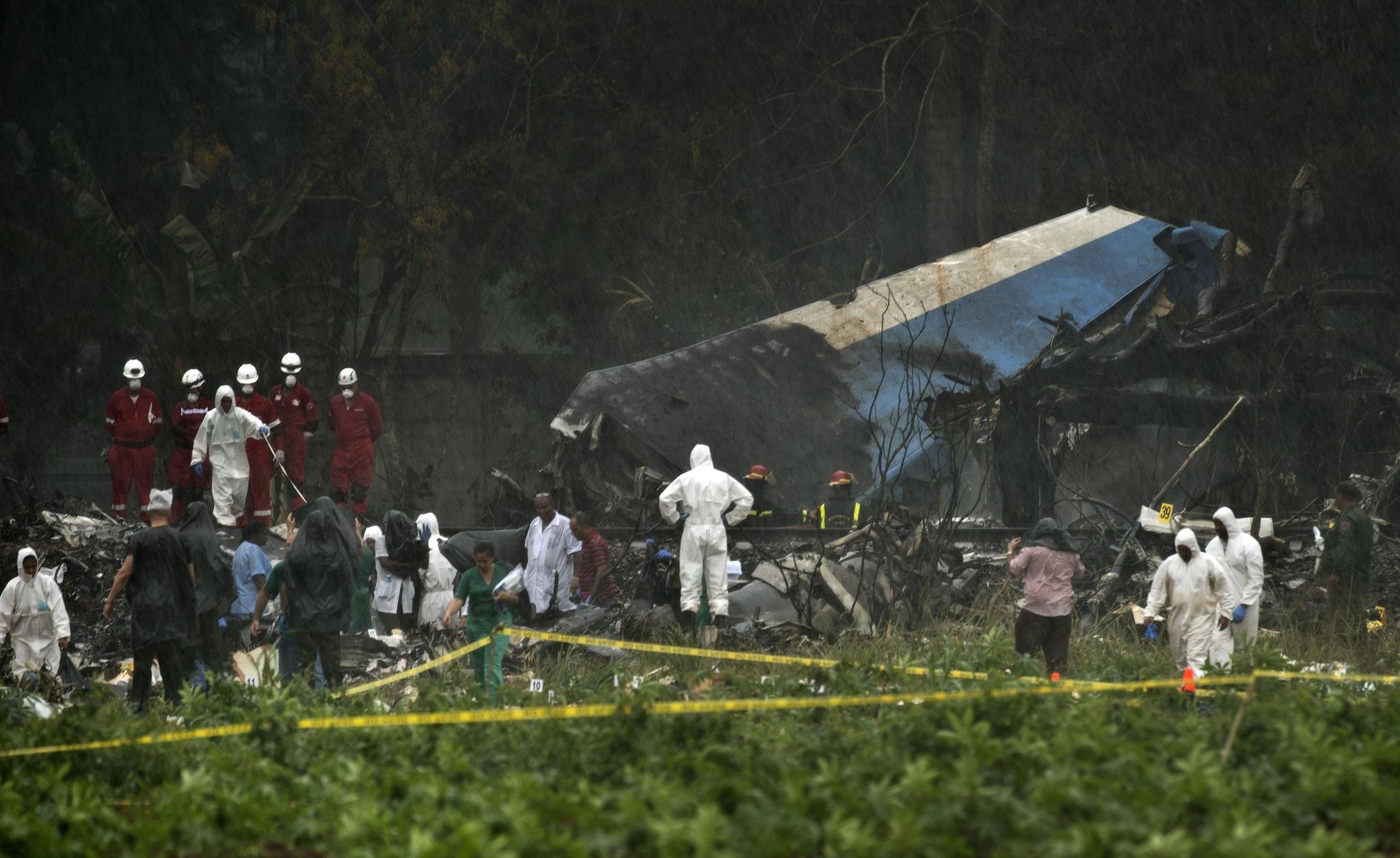
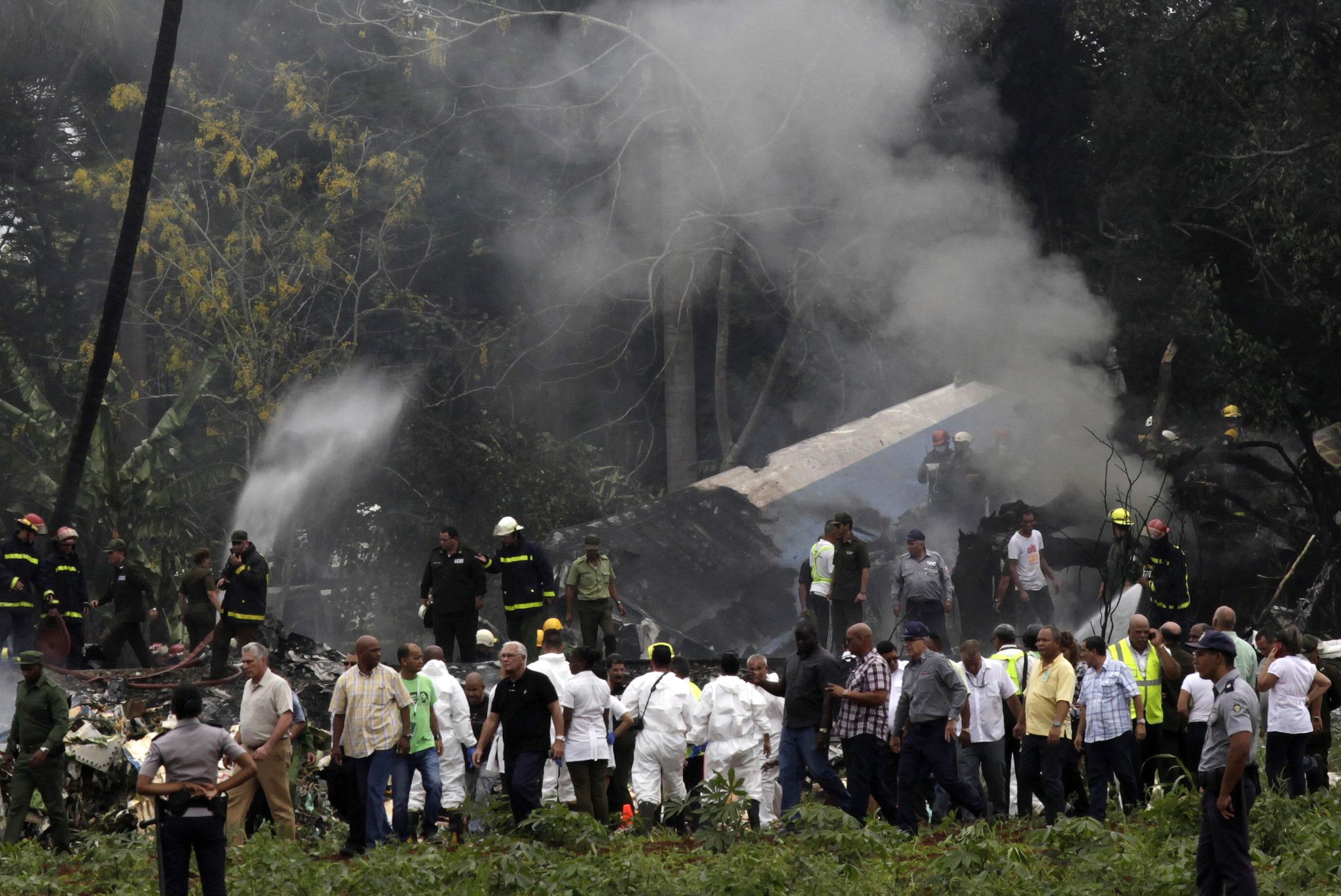
    The plane and crew were being rented from Mexico City-based Damojh airlines by EasySky, a Honduras-based low-cost airline. Cuba’s national carrier, Cubana de Aviacion, was also renting the Boeing 737 and crew in a similar arrangement known as a “wet lease” before the aircraft veered on takeoff to the eastern Cuban city of Holguin and crashed into a field just after noon Friday, according to Mexican aviation authorities.

    A Damojh employee in Mexico City declined to comment, saying the company would be communicating only through written statements. Mexican authorities said Damojh had permits needed to lease its aircraft and had passed a November 2017 verification of its maintenance program.

    Late Saturday, Mexico’s government released a statement saying its National Civil Aviation Authority will carry out a new “operational audit” of Damojh to see if its “current operating conditions continue meeting regulations, as well as collecting information to help the investigation.”

    Cuban Transportation Minister Adel Yzquierdo Rodriguez told reporters Saturday afternoon that Cubana had been renting the plane for less than a month under an arrangement in which the Mexican company was entirely responsible for maintenance of the aircraft. Armando Daniel Lopez, president of Cuba’s Institute of Civil Aviation, told the AP that Cuban authorities had not received any complaints about the plane in that month. He declined to comment further.

    Yzquierdo said it was routine for Cuba to rent planes under a variety of arrangements because of what he described as the country’s inability to purchase its own aircraft due to the U.S. trade embargo on the island. Cuba has been able to buy planes produced in other countries, including France and Ukraine, but has pulled many from service due to maintenance problems and other issues.

    “It’s normal for us to rent planes,” he said. “Why? Because it’s convenient and because of the problem of the blockade that we have. Sometimes we can’t buy the planes that we need, and we need to rent them.”

    He said that with Damojh, “the formula here is that they take care of the maintenance of the aircraft. That’s their responsibility.”

    He said Cuba didn’t have pilots certified to fly the Boeing, so it had hired the Mexican crew with the expectation that they were fully trained and certified by the proper authorities.

    Yzquierdo also said the jet’s “black box” voice recorder had been recovered and that Cuban officials had granted a U.S. request for investigators from Boeing to travel to the island.

    Eyewitness and private salon owner Rocio Martinez said she heard a strange noise and looked up to see the plane with a turbine on fire.

    “It had an engine on fire, in flames, it was falling toward the ground,” Martinez said, adding that the plane veered into the field where it crashed, avoiding potential fatalities in a nearby residential area.

    Field told AP that the Boeing 737 with tail number XA-UHZ had been flying four routes a week between Georgetown, Guyana, and Havana starting in October 2016. Cubans do not need visas to travel to Guyana, and the route was popular with Cubans working as “mules” to bring suitcases crammed with goods back home to the island, where virtually all consumer products are scarce and more expensive than in most other countries.

    After Easy Sky canceled a series of flights in spring 2017, leaving hundreds of Cubans stranded at Guyana’s main airport, authorities began inspecting the plane and discovered that crews were loading excessive amounts of baggage, leading to concerns the aircraft could be dangerously overburdened and unbalanced. In one instance, Guyanese authorities discovered suitcases stored in the plane’s toilet.

    “This is the same plane and tail number,” Guyanese Infrastructure Minister David Patterson said. He and other Guyanese authorities said they did not immediately know if the crew suspended last May was the same one that died in Friday’s crash. Damojh operates three Boeing 737s, two 737-300s and the 737-201 that crashed Friday, according to Mexican officials.

    Ovidio Martinez Lopez, a pilot for Cubana for over 40 years until he retired six years ago, wrote in a post on Facebook that a plane rented from the Mexican company by Cubana briefly dropped off radar while over the city of Santa Clara in 2010 or 2011, triggering an immediate response by Cuban aviation security officials. As a result, Cuban officials suspended a captain and co-pilot for “serious technical knowledge issues,” and Cuba’s Aviation Security authority issued a formal recommendation that Cubana stop renting planes and crews from Damojh, Martinez wrote.

    “They are many flight attendants and security personnel who refused to fly with this airline,” Martinez wrote. “On this occasion, the recommendation was overlooked and they rented from them again.”

    Contacted by AP in Havana, Martinez confirmed his Facebook account but declined to comment further.

    Mexican officials said the Boeing 737-201 was built in 1979.

    In November 2010 a Global Air flight originating in Mexico City made an emergency landing in Puerto Vallarta because its front landing gear did not deploy. The fire was quickly extinguished, and none of the 104 people aboard were injured. That plane was a 737 first put into service in 1975.

    Mexican aviation authorities said a team of experts would fly to Cuba on Saturday to take part in the investigation.

    ____

    Associated Press writers Andrea Rodriguez in Havana and Maria Verza in Mexico City contributed to this report.

  • Company in Cuba plane crash had received safety complaints

    The Mexican charter company whose 39-year-old plane crashed in Havana had been the subject of two serious complaints about its crews’ performance over the last decade, according to authorities in Guya

    HAVANA (AP) – The Mexican charter company whose 39-year-old plane crashed in Havana had been the subject of two serious complaints about its crews’ performance over the last decade, according to authorities in Guyana and a retired pilot for Cuba’s national airline.

    Mexico’s government said late Saturday that its National Civil Aviation Authority will carry out an operational audit of Damojh airlines to see if its “current operating conditions continue meeting regulations” and to help collect information for the investigation into Friday’s crash in Cuba that left 110 dead.

    The plane that crashed, a Boeing 737, was barred from Guyanese airspace last year after authorities discovered that its crew had been allowing dangerous overloading of luggage on flights to Cuba, Guyanese Civil Aviation Director Capt. Egbert Field told The Associated Press on Saturday.

    The plane and crew were being rented from Mexico City-based Damojh by EasySky, a Honduras-based low-cost airline. Cuba’s national carrier, Cubana de Aviacion, was also renting the plane and crew in a similar arrangement known as a “wet lease” before the aircraft veered on takeoff to the eastern Cuban city of Holguin and crashed into a field just after noon Friday, according to Mexican aviation authorities.

    A Damojh employee in Mexico City declined to comment, saying the company would be communicating only through written statements. Mexican authorities said Damojh had permits needed to lease its aircraft and had passed a November 2017 verification of its maintenance program. They announced a new audit late Saturday.

    Cuban Transportation Minister Adel Yzquierdo Rodriguez told reporters Saturday afternoon that Cubana had been renting the plane for less than a month under an arrangement in which the Mexican company was entirely responsible for maintenance of the aircraft. Armando Daniel Lopez, president of Cuba’s Institute of Civil Aviation, told the AP that Cuban authorities had not received any complaints about the plane in that month. He declined to comment further.

    Yzquierdo said it was routine for Cuba to rent planes under a variety of arrangements because of what he described as the country’s inability to purchase its own aircraft due to the U.S. trade embargo on the island. Cuba has been able to buy planes produced in other countries, including France and Ukraine, but has pulled many from service due to maintenance problems and other issues.

    “It’s normal for us to rent planes,” he said. “Why? Because it’s convenient and because of the problem of the blockade that we have. Sometimes we can’t buy the planes that we need, and we need to rent them.”

    He said that with Damojh, “the formula here is that they take care of the maintenance of the aircraft. That’s their responsibility.”

    He said Cuba didn’t have pilots certified to fly the Boeing, so it had hired the Mexican crew with the expectation that they were fully trained and certified by the proper authorities.

    Yzquierdo also said the jet’s “black box” voice recorder had been recovered and that Cuban officials had granted a U.S. request for investigators from Boeing to travel to the island.

    Eyewitness and private salon owner Rocio Martinez said she heard a strange noise and looked up to see the plane with a turbine on fire.

    “It had an engine on fire, in flames, it was falling toward the ground,” Martinez said, adding that the plane veered into the field where it crashed, avoiding potential fatalities in a nearby residential area.

    Field told AP that the Boeing 737 with tail number XA-UHZ had been flying four routes a week between Georgetown, Guyana, and Havana starting in October 2016. Cubans do not need visas to travel to Guyana, and the route was popular with Cubans working as “mules” to bring suitcases crammed with goods back home to the island, where virtually all consumer products are scarce and more expensive than in most other countries.

    After Easy Sky canceled a series of flights in spring 2017, leaving hundreds of Cubans stranded at Guyana’s main airport, authorities began inspecting the plane and discovered that crews were loading excessive amounts of baggage, leading to concerns the aircraft could be dangerously overburdened and unbalanced. In one instance, Guyanese authorities discovered suitcases stored in the plane’s toilet.

    “This is the same plane and tail number,” Guyanese Infrastructure Minister David Patterson said. He and other Guyanese authorities said they did not immediately know if the crew suspended last May was the same one that died in Friday’s crash. Damojh operates three Boeing 737s, two 737-300s and the 737-201 that crashed Friday, according to Mexican officials.

    Ovidio Martinez Lopez, a pilot for Cubana for over 40 years until he retired six years ago, wrote in a post on Facebook that a plane rented from the Mexican company by Cubana briefly dropped off radar while over the city of Santa Clara in 2010 or 2011, triggering an immediate response by Cuban aviation security officials. As a result, Cuban officials suspended a captain and co-pilot for “serious technical knowledge issues,” and Cuba’s Aviation Security authority issued a formal recommendation that Cubana stop renting planes and crews from Damojh, Martinez wrote.

    “They are many flight attendants and security personnel who refused to fly with this airline,” Martinez wrote. “On this occasion, the recommendation was overlooked and they rented from them again.”

    Contacted by AP in Havana, Martinez confirmed his Facebook account but declined to comment further.

    Mexican officials said the Boeing 737-201 was built in 1979.

    Mexican aviation authorities said a team of experts would fly to Cuba on Saturday to take part in the investigation.

    ____

    Associated Press writers Andrea Rodriguez in Havana and Maria Verza in Mexico City contributed to this report.

  • Prince Charles to walk Meghan Markle down the aisle

    Kensington Palace says Prince Charles will walk Meghan Markle down the aisle at the royal wedding.

    WINDSOR, England (AP) — Kensington Palace says Prince Charles will walk Meghan Markle down the aisle at the royal wedding.

    The father of groom Prince Harry stepped in after Markle’s dad fell ill days before the wedding and was unable to fly to Britain.

    Markle appealed for people to give Thomas Markle “the space he needs to focus on his health” amid reports he had had a heart procedure.

    The palace said Friday that Markle’s future father-in-law, the heir to the British throne, would walk Markle down the aisle at St. George’s Chapel in Windsor on Saturday. The palace says he “is pleased to be able to welcome Ms. Markle to the Royal Family in this way.”

  • South Korea downplays North Korea’s threats to cancel talks

    South Korea said Friday it believes North Korea remains committed to improving relations despite strongly criticizing Seoul over ongoing U.S.-South Korean military drills and insisting it will not ret

    SEOUL, South Korea (AP) — South Korea said Friday it believes North Korea remains committed to improving relations despite strongly criticizing Seoul over ongoing U.S.-South Korean military drills and insisting it will not return to talks unless its grievances are resolved.

    South Korean Unification Ministry spokesman Baek Tae-hyun said Seoul expects North Korea to faithfully abide by the agreements between its leader, Kim Jong-un, and South Korean President Moon Jae-in at their summit last month. The leaders issued a vague vow on the “complete denuclearization” of the peninsula and pledged permanent peace.

    “We are just at the starting point and we will not stop or waver as we move forward for peace in the Korean Peninsula,” Baek said.

    North Korea has taken repeated verbal shots at Washington and Seoul since canceling a high-level meeting with South Korea on Wednesday and threatening to scrap next month’s planned summit between Kim and U.S. President Donald Trump, saying it won’t be unilaterally pressured into relinquishing its nuclear weapons.

    The North’s threat cooled what had been an unusual flurry of diplomatic moves from a country that last year conducted a provocative series of weapons tests that had many fearing the region was on the edge of war. It also underscored South Korea’s delicate role as an intermediary between the U.S. and North Korea and raised questions over Seoul’s claim that Kim has a genuine interest in dealing away his nukes.

    Analysts said it’s unlikely that North Korea intends to scuttle all diplomacy. More likely, they said, is that it wants to gain leverage ahead of the talks between Kim and Trump, scheduled for June 12 in Singapore.

    Kim has declared his nuclear force is complete and announced a halt to nuclear and intercontinental ballistic missile tests while inviting foreign journalists to witness the dismantling of his nuclear test site between May 23 and 25. North Korea invited journalists from the United States, South Korea, China, Russia and Britain to witness the dismantling process, but on Friday it did not respond after Seoul sent a list of South Korean journalists who were picked to go, the Unification Ministry said.

    Baek spoke hours after Ri Son Gwon, chairman of a North Korean agency that deals with inter-Korean affairs, accused South Korea’s government of being “an ignorant and incompetent group devoid of the elementary sense of the present situation, of any concrete picture of their dialogue partner and of the ability to discern the present trend of the times.”

    In comments published by the North’s Korean Central News Agency, Ri said the “extremely adventurous” U.S.-South Korean military drills were practicing strikes on strategic targets in North Korea, and accused the South of allowing “human scum to hurt the dignity” of the North’s supreme leadership.

    Ri was apparently referring to a news conference held at South Korea’s National Assembly on Monday by Thae Yong Ho, a former senior North Korean diplomat who defected to the South in 2016. Thae said it’s highly unlikely that Kim would ever fully relinquish his nuclear weapons or agree to a robust verification regime.

    Ri said it will be difficult to resume talks with South Korea “unless the serious situation which led to the suspension of the North-South high-level talks is settled.”

    Senior officials from the two Koreas were to sit down at a border village on Wednesday to discuss how to implement their leaders’ agreements to reduce military tensions along their heavily fortified border and improve overall ties, but the North canceled the meeting.

    In Washington, Trump said Thursday that nothing has changed with respect to North Korea after its warning. He said North Korean officials are discussing logistical details of the meeting with the U.S. “as if nothing happened.”

    Trying to address the North Korean concerns, Trump said if Kim were to agree to denuclearize, “he’ll get protections that would be very strong.”

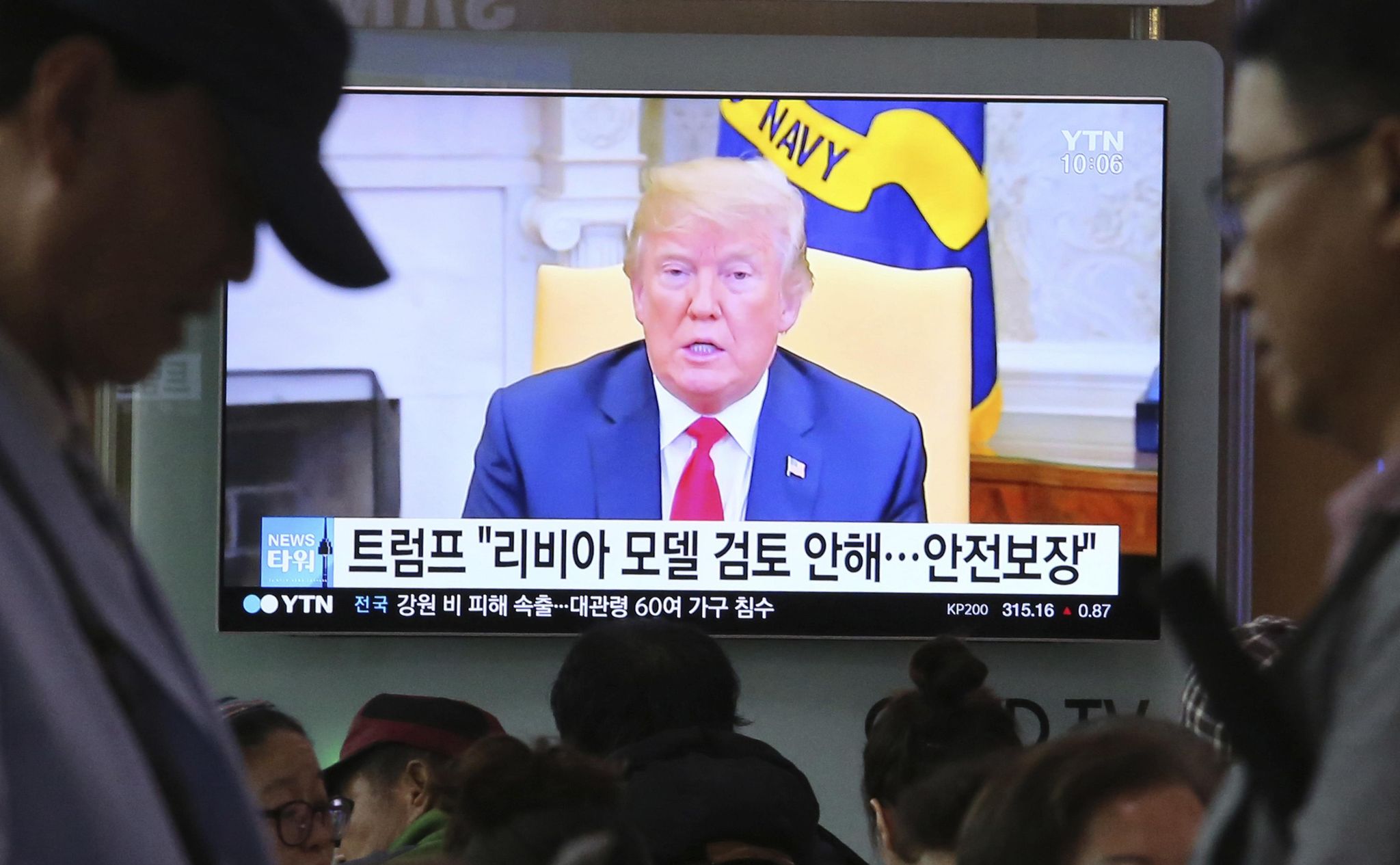
    But Trump warned that failure to make a deal could have grave consequences for Kim. Mentioning what happened in Libya when it gave up its nuclear program, Trump said, “That model would take place if we don’t make a deal.”

    “The Libyan model isn’t the model we have at all. In Libya we decimated that country.” Trump added. “There was no deal to keep Gadhafi.”

    Some analysts say bringing up Libya, which dismantled its rudimentary nuclear program in the 2000s in exchange for sanctions relief, jeopardizes progress in negotiations with the North.

    Kim took power weeks after former Libyan leader Moammar Gadhafi’s gruesome death at the hands of rebel forces amid a popular uprising in October 2011. North Korea has frequently used Gadhafi’s death to justify its own nuclear development in the face of perceived U.S. threats.

  • Argentina’s peso plunge incites frustation at Mauricio Macri

    The return of the pesos bears and a sharp rise in the U.S. dollar have left Argentina — and a number of developing countries including Brazil, Mexico, South Africa and Russia — reeling again, desper

    BUENOS AIRES — A shopping trip to Miami or a beach vacation in Brazil is far beyond Samuel Rivas’ budget. Nevertheless, the 57-year-old cabdriver was on a desperate hunt for foreign currency Wednesday in the Argentine capital’s financial district.

    “It’s the only way I can make my money count — by buying dollars,” Mr. Rivas explained below the red digits flashing the Maguitur exchange office’s current values. “Because the day I want to trade in my car, if I saved in pesos, it’ll be totally devalued.”

    His strategy — which has become a near-universal pastime in a country facing a 25 percent annual inflation rate and where everything including real estate and international airfare is priced in U.S. dollars — has turned into a crisis again in the past two weeks as the Argentine peso lost almost 18 percent of its value against the greenback.

    The frustration on the streets is compounded because many Argentines thought they put such indignities in the rearview mirror with the election of center-right businessman Mauricio Macri as president in late 2015.

    A 2001 government default was followed by 12 years of leftist rule that left Argentina struggling to rebuild its treasury and clean up its reputation in the global financial circle.

    But the return of the currency bears and a sharp rise in the U.S. dollar have left Argentina — and a number of developing countries including Brazil, Mexico, South Africa and Russia — reeling again, desperately trying to bolster the value of their currencies without undermining local growth.

    The issue has particular resonance here, with many Argentines talking of a “here we go again” feeling.

    The dollar, worth just short of 21 pesos at the end of April, was selling this week for about 25 pesos. The decline was so steep that it unnerved locals long accustomed to the ever-weakening currency, which was once pegged to U.S. tender. On the day Mr. Macri was elected in December 2015, the dollar was worth barely over 9 pesos.

    It also prompted a frenzied response from central bankers, who sought to prop up the peso by hiking interest rates by almost 13 points, to 40 percent, and by selling off some $9 billion in foreign currency reserves. The peso hit a historic low against the dollar on Monday, although there was faint sign it was firming up by Wednesday.

    With a booming U.S. economy and the Federal Reserve raising interest rates, investor money that flooded into emerging markets such as Argentina is heading back to the U.S., putting huge pressure on countries that failed to prepare.

    Carmen Reinhart, a Harvard economist specializing in international finance, turned heads this week when she told the Bloomberg News service that the emerging market economies are showing “more cracks now than they did five years ago and certainly at the time of the [2008] global financial crisis.”

    Mr. Macri, under increasing pressure 15 months ahead of a likely re-election bid, has acknowledged the anxiety, though he was quick to declare that the “currency turbulence” had been overcome.

    “Clearly, what happened this week is that the world has decided that the velocity at which we had committed to reducing the fiscal deficit is not enough,” Mr. Macri told reporters at the Olivos presidential residence on Wednesday. “So we’ll need to speed things up.”

    The president, a onetime business associate of Donald Trump whose acumen with money was supposed to be one of his strongest assets, has called for a grand bargain with opposition leftist lawmakers, governors and union leaders to further rein in deficit spending, which he insisted was the source of all of Argentina’s financial troubles.

    For all the efforts of Buenos Aires to set its house in order and restore its good credit, recent events have been a sharp reminder of the country’s vulnerability to trends and forces beyond its borders and beyond its control.

    Vulnerable

    “It’s a vulnerability because we depend on the world to lend us money, something we must change,” Mr. Macri said. “We Argentines have dragged along this problem, which weighs down all of society. So I believe it’s time to tell the truth: No more shortcuts, no more patches.”

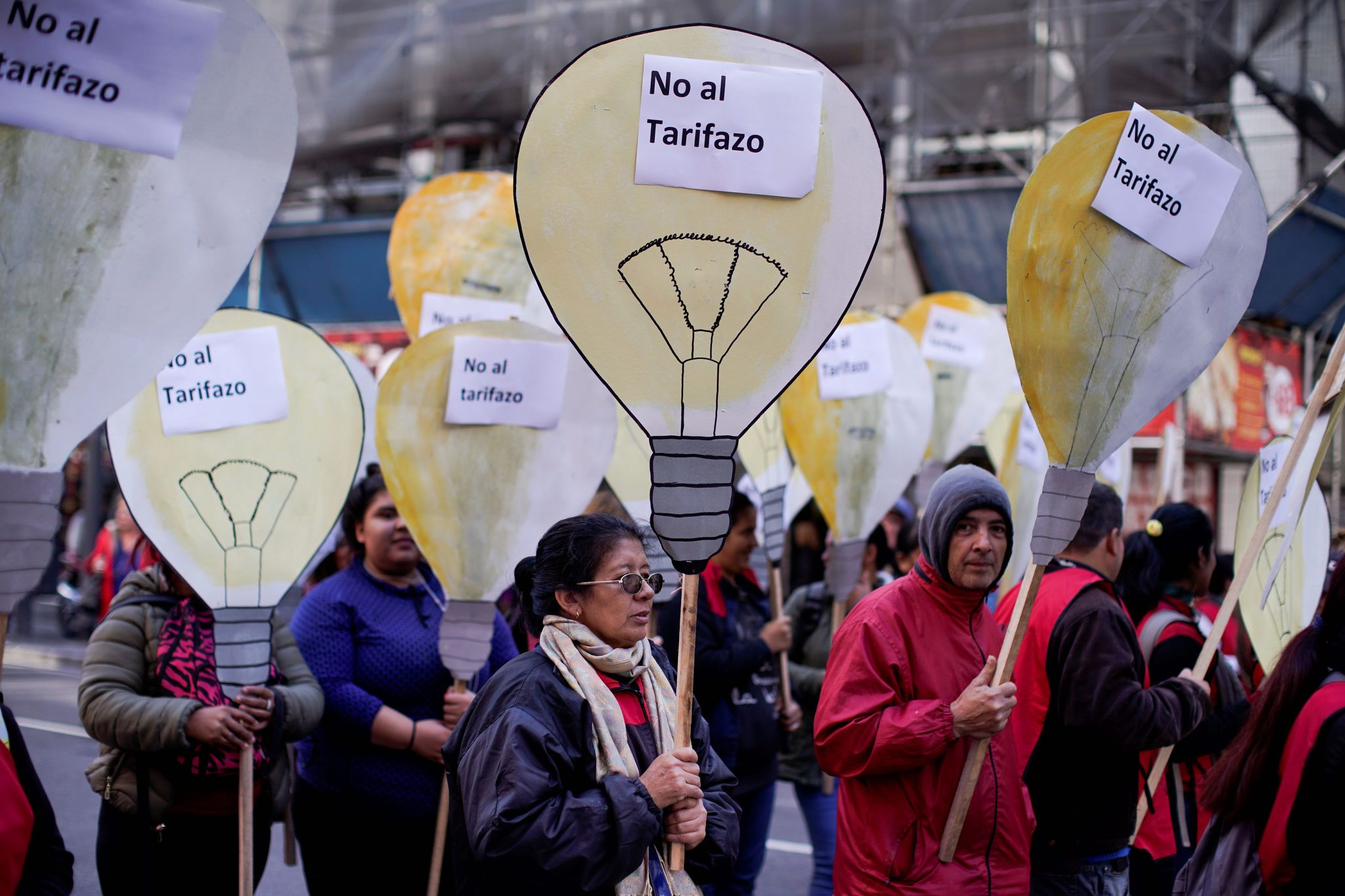
    Those words may well sound ominous to many overwhelmed Argentines who, in the wake of the administration’s cuts to government subsidies, have seen their utility bills and public transport costs triple or quadruple in a matter of months.

    Mr. Macri’s May 8 decision to ask the International Monetary Fund for a $30 billion line of credit, ostensibly intended to inspire confidence, seems to have done just the opposite given Argentina’s troubled history with international lenders.

    “It’s a sensitive topic [because] it reminds us … of somewhat traumatic experiences the country lived through,” said Mariano de Vedia, a political commentator for the La Nacion daily. “That doesn’t mean the [IMF] negotiations won’t be positive. But there’s an old saying: ‘He who scalded himself with milk cries when he sees a cow.’”

    Popular unease is not enough of a reason to seek financing elsewhere, Mr. Macri insisted, especially because it could mean an additional $1 billion in interest per year.

    “The [IMF] is a serious institution with which one makes good or bad deals; we’ll make a good deal,” Mr. Macri said. “We’re talking about hundreds of schools we can build, with the [savings] in interest, we’re talking about thousands of miles of freeway. … This must be a time of pragmatism.”

    But to Emilio Massucco, who owns a small electronics store a few blocks from the Maguitur office, there is nothing pragmatic about looking to international powers that be to fix Argentina’s problems.

    “I’d like for us to not depend on the dollar,” Mr. Massucco said while sitting in front of a rack adorned by a sizable Argentine flag. “I’d like for the country to be run in a way so as to not depend on the [IMF], of course, not depend on another country’s economy, especially that of the United States.”

    While Mr. Macri praised his economic advisers Wednesday, the peso meltdown was affecting the wallets of bargain hunters along Florida Street, the busting Buenos Aires shopping mile where dozens of unlicensed money changers offer their services with their trademark, high-decibel cries of “Cambio, cambio.”

    “You see it reflected in the value of a spare part of a cellphone, a tablet, whatever,” said Mr. Massucco, whose store sits inside the street’s Galeria Jardin electronics mall. “Buying from a wholesaler with a 30-day check means exacerbated dollar futures. … The dollar causes [price] hikes of all kinds.”

    A day after the government gained some breathing room by avoiding a feared sell-off of short-term Lebac bonds, the 45-year-old entrepreneur’s confidence in official assurances that the worst is over was limited at best.

    “The market has calmed down, and the Central Bank regulated things in some way,” Mr. Massucco said. “But even so, there still is latent instability and uncertainty.”

    All but certain, though, is that the government’s annual inflation target of 15 percent — already boosted from the 10 percent estimate — has become wholly illusory. Unidentified officials warned this week that 20 percent and even 25 percent were more realistic objectives.

    Amateur Milton Friedmans

    The close link to inflation — and thus the costs of everyday products — is why ordinary Argentines keep a close eye on dollar values.

    At the solidly named Sterling Cafe just five doors down from the Central Bank, Daniel Mendez Garcia sounded more like an economist than a coffee shop co-owner.

    “You know what’s happening? You spend more. You have new price tags and old salaries,” Mr. Mendez said as he chatted with one of his regulars, a retired central banker. “Money in the street contracts, so there’s less in sales. It’s math; no need to be a guru [like] Milton Friedman.”

    Unlike others, the 20-year coffee veteran insisted he won’t preemptively charge his customers more. But in a country with an $8 billion trade deficit, how much the peso is or isn’t worth will still make a difference.

    “We only change the menu prices when they raise prices for me,” Mr. Mendez said. “[But] coffee will get more expensive now because it’s imported. There’s nothing you can do about it.”

    In the meantime, halfhearted acknowledgments of errors — with Central Bank President Federico Sturzenegger conceding that markets were not “convinced” by his monetary policy and Mr. Macri faulting himself for being “too optimistic” — have done little to tame tempers.

    “The self-criticism helps if you can gain something for the future,” Mr. Mendez said. “Otherwise, you can just commit hara-kiri.”

    It’s advice Mr. Macri may want to heed if he wants to remain in office beyond October of next year, especially since voters have already shown an uncharacteristic amount of patience as they await his administration’s long-promised economic revival.

    “In a way, [he] has been weakened; it just so happens that no other sector, party or candidate has tapped into this situation,” said Mr. de Vedia, the La Nacion analyst. “The [peso crisis] further delays the recovery, and that causes frustration and dissatisfaction.”

    If any doubts remain as to just how present American legal tender is on Argentines’ minds, the president might do well do ditch his limousine and take a subway ride around Buenos Aires.

    “Just 20 pesos,” a street vendor hawking ballpoint pens yelled on Wednesday in a crowded B line wagon: “If the dollar keeps rising on me, I don’t know for how much longer I’ll be able to sell them at 20 pesos.”
  • Donald Trump to meet South Korean president amid uncertainty over Kim Jong-un summit

    President Trump will host South Korean President Moon Jae-in at the White House next week for a meeting expected to center on clarifying expectations for an upcoming summit with North Korea’s Kim Jong

    President Trump will host South Korean President Moon Jae-in at the White House next week for a meeting expected to center on clarifying and aligning the expectations that Washington and Seoul have for Mr. Trump’s upcoming summit with North Korea’s Kim Jong-un.

    The Moon visit Tuesday comes amid uncertainty over the planned June 12 summit after North Korea threatened this week to pull out amid anger over National Security Advisor John R. Bolton’s claims that Washington seeks a quick, verifiable, “Libya model” denuclearization from Pyongyang.

    President Trump walked back Mr. Bolton’s assertions Thursday, telling reporters “the Libyan model isn’t a model that we have at all when we’re thinking of North Korea,” and stressing that if Mr. Kim is serious about abandoning his nuclear program, Washington will provide the North Korean leader’s regime with “protections.”

    While those comments hang in the backdrop, national security sources say the White House is scrambling behind-the-scenes to nail down exactly what its expectations are for the highly-anticipated summit with Mr. Kim in Singapore.

    That’s where President Moon comes in, says Hak-Soon Paik, the head North Korea analyst at the Sejong Institute, a top South Korean think tank.

    Mr. Paik, who’s in Washington ahead of Mr. Moon’s visit to the White House, says it “comes at an opportune moment” for both South Korea and the U.S.

    “On the U.S. side, the administration has a chance to hear directly from the South Korean president what his views toward what Mr. Trump’s expectations should be for the upcoming summit with Kim,” Mr. Paik told The Washington Times on Friday.

    “For the South Korean side,” he said, “this is a moment to advise Mr. Trump directly on Seoul’s view of what would or would not amount to a successful [summit].”

    The Moon visit comes roughly a month after Mr. Trump held a similar meeting with Japanese Prime Minister Shinzo Abe to soak in his perspective on how a one-on-one with Mr. Kim should play out.

    A top aid to Mr. Abe said at the time that the Japanese premier told Mr. Trump to demand Mr. Kim meet a hard deadline of 2020 to permanently surrender his nuclear programs and that no sanctions relief for Pyongyang should be granted until the deadline is met.

    Katsuyuki Kawai, the special adviser for foreign affairs to Mr. Abe from Japan’s ruling Liberal Democratic Party, said Mr. Abe also pressed Mr. Trump to realize “America is in a stronger position than Chairman Kim” and that North Korean denuclearization has to occur before Mr. Trump faces a potentially difficult re-election campaign in just two years.

    Sources close to Mr. Moon have told The Times the South Korean president is likely to offer similar advice next week, with particular emphasis on the timeline the administration should demand for denuclearization.

    One source said Mr. Moon will attempt to make the case that at least a year, if not considerably longer, will be needed in order for any kind of successful, verifiable denuclearization to occur.

  • Ebola outbreak isn’t a global emergency yet: WHO

    The Ebola outbreak in the Democratic Republic of Congo is not considered a global health emergency — at least not yet, the World Health Organization announced Friday, saying it is hopeful it can stam

    The Ebola outbreak in the Democratic Republic of Congo is not considered a global health emergency — at least not yet, the World Health Organization announced Friday, saying it is hopeful it can stamp out the widening outbreak despite fear the disease will travel along the Congo River “highway” to major capitals.

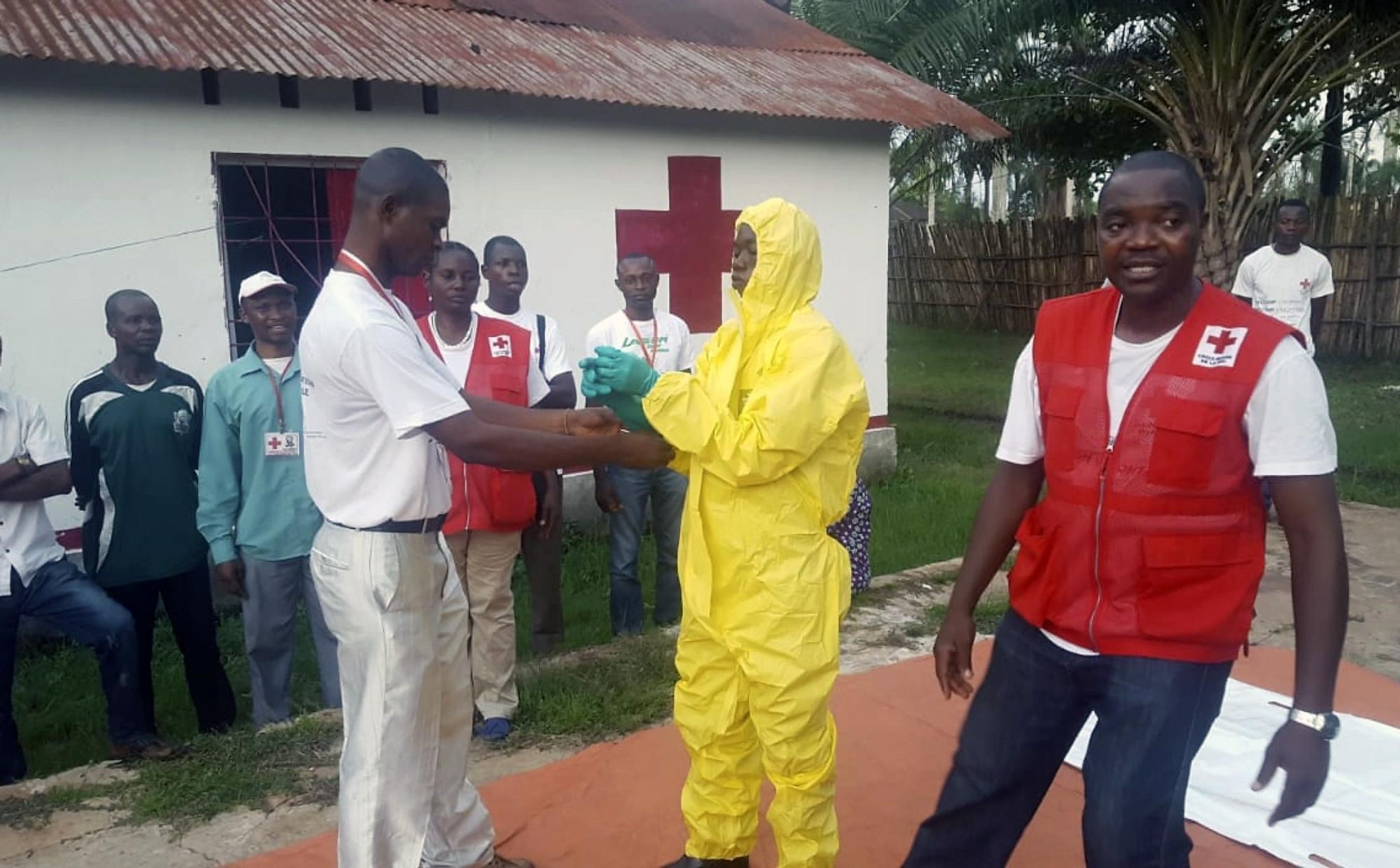
    In the U.S., meanwhile, the Centers for Disease Control and Prevention said it has a dozen disease fighters who are ready to help the ground effort, if needed.

    The outbreak in the DRC, where Ebola is endemic, has resulted in 45 reported cases, of which 14 have been confirmed, and 25 people have died. Three of the reported cases involve health care workers.

    However, the robust response on the ground provides “a strong reason to believe that this situation can be brought under control,” said Dr. Robert Steffen, the chairman of WHO’s emergency committee.

    Vaccination of people at risk of infection will begin Sunday, according to WHO.

    Director-General Tedros Adhanom Ghebreyesus said the shots flown in from Switzerland are just one part of the global response to the outbreak centered in the remote area of Bikoro, although one case appeared in Mbandaka, a city of more than 1 million people.

    Global responders are setting up mobile labs, isolating patients and tracking down contacts are risk of infection.

    “This is a vaccine that we believe can help us,” Dr. Ghebreyesus said. “But we will not just rely on the vaccine.”The CDC said it submitted the names of 12 people from its Atlanta headquarters to the Global Outbreak Alert and Response Network (GOARN), from which the WHO can draw personnel to support lab diagnostics, vaccinate “rings” of at-risk people and help local health workers protect themselves against infection.

    Logistics in the affected region are challenging, however, so responders on the ground will likely have to establish an aircraft link before drafting the CDC’s people. If that happens, WHO will pay for their activity through the response network.

    As it stands, the WHO is citing the swift response in declining to name the outbreak a public health emergency of international concern.

    To constitute such an emergency, it must be “serious, unusual or unexpected” situation that requires an international response to contain, and there must be a high risk of spread across borders.

    WHO said it could reconsider its determination if things worsen.

    It has warned nine neighboring countries to stiffen their defenses against Ebola — particularly the Central African Republic, the Republic of Congo and Angola, given river routes in the area.

    There are dozens of small ports along the Congo River, a major artery that flows from the affected area of DRC to its capital, Kinshasa, and Brazzaville, the capital of the Republic of Congo.

    “That, of course, has very significant traffic across very porous borders there,” Dr. Steffen said.

    Ebola is a serious illness that is transmitted to people from wild animals and spreads from human to human through the bodily fluids of people who exhibit symptoms. About half of those who contract Ebola die from it.

    WHO officials said they’re looking to avoid a repeat of the 2013-2016 outbreak that killed more than 11,000 people in West Africa.

    The organization, the public health arm of the U.N., was criticized for failing to react fast enough to that outbreak, before it spiraled out of control.

    Global responders quickly stamped out an Ebola outbreak in DRC last year, and front-line workers on the ground have been supportive during this latest round, according to WHO.

    Dr. Ghebreyesus said local officials in Bikoro were worried about WHO personnel who arrived. They thought they might catch Ebola, and didn’t expect the foreigners to be there.

    “We were really moved and touched, because they are not caring about their life — they were caring about our lives,” he said.

    Dr. Ghebreyesus praised the officials for being the ones on the front line.

    “We have to also share the risk,” he said.