Category: WORLDS

  • Trump team returning from China, won’t back down from trade-war threat, president says

    President Trump said Friday that he is not backing down from demands for fair trade with China, as top administration officials returned from the first round of trade talks in Beijing.

    President Trump said Friday that he is not backing down from demands for fair trade with China, as top administration officials returned from the first round of trade talks in Beijing.

    The two-day talks in Beijing did not produce major announcements, and the Trump administration is still threatening to impose tariffs on $150 billion worth of Chinese goods. But further rounds of negotiations were expected.

    “My people are coming right now from China, and we will be doing something one way or another with respect to what is happening in China,” Mr. Trump told reporters at the White House.

    He he said that he had been “nice” in the negotiations out of respect for Chinese President Xi Jinping, who has helped the U.S. apply pressure to bring North Korea to talks on giving up its nuclear weapons.

    “I have great respect for President Xi. That’s why we are being so nice, as we have a great relationship,” said Mr. Trump. “But we have to bring fairness into trade between the U.S. and China, and we will do it.”

    Beijing has said that it is open to improving access to U.S. business but also threaten to retaliate against U.S. tariffs, including targeting industries with big business in China such as agriculture and airplanes.

    The trade delegation was led by Treasury Secretary Steven T. Mnuchin and included Commerce Secretary Wilbur Ross, U.S. Trade Representative Robert Lighthizer, National Economic Council Director Larry Kudlow and U.S. Ambassador to China Terry Branstad.

    The White House talks as “frank discussions” about rebalancing trade.

    A chief aim of the Trump administration is to break down barriers to U.S. business in China and reduce America’s $375 billion annual trade deficit with China.

    “The United States delegation affirmed that fair trade will lead to faster growth for the Chinese, United States, and world economies,” the White House said in a statement.

    The size and high level of the delegation illustrated the importance that the Trump Administration places on securing fair trade and investment terms for American businesses and workers, said the statement.

    “There is consensus within the Administration that immediate attention is needed to bring changes to United States–China trade and investment relationship,” it said.

  • Senate Dems concerned Ukraine not cooperating with Mueller’s Russia probe

    Top Senate Democrats are pushing Ukrainian officials to explain allegations that they’re not cooperating with special counsel Robert Mueller’s investigation because they fear President Trump.

    Top Senate Democrats are pushing Ukrainian officials to explain allegations that they’re not cooperating with special counsel Robert Mueller’s investigation because they fear President Trump.

    The three senators — Robert Menendez of New Jersey, the top Democrat on the Senate Foreign Relations Committee, and Richard Durbin of Illinois and Patrick Leahy of Vermont — wrote a letter Friday to Ukraine Prosecutor General Yuriy Lutsenko, expressing concern about a recent New York Times report quoting Ukrainian government officials saying its relationship with the U.S. and Trump administration is too valuable to jeopardize in any way.

    “As strong advocates for a robust and close relationship with Ukraine, we believe that our cooperation should extend to such legal matters, regardless of politics,” the senators wrote. “Blocking cooperation with the Mueller probe potentially cuts off a significant opportunity for Ukrainian law enforcement to conduct a more thorough inquiry into possible crimes committed during the Yanukovich era.”

    Viktor Yanukovych served as Ukraine’s president from 2010 to 2014, when he was removed from power during the Ukrainian revolution. He is currently in exile in Russia.

    “This reported refusal to cooperate with the Mueller probe also sends a worrying signal — to the Ukrainian people as well as the international community — about your government’s commitment more broadly to support justice and the rule of law,” the senators wrote.

    The letter also includes questions the senators have about Mr. Lutsenko’s office allegedly preventing the issuing of subpoenas to collect evidence and interview witnesses in four open cases related to former Trump campaign chairman Paul Manafort.

    As part of the Mueller probe, Mr. Manafort has pleaded not guilty to conspiracy, money laundering and tax and bank fraud charges related to his lobbying work for Mr. Yanukovych.

  • King Tut’s tomb has no hidden rooms, Egypt says

    New radar scans have provided conclusive evidence that there are no hidden rooms inside King Tutankhamun’s burial chamber, Egypt’s antiquities ministry said Sunday, bringing a disappointing end to yea

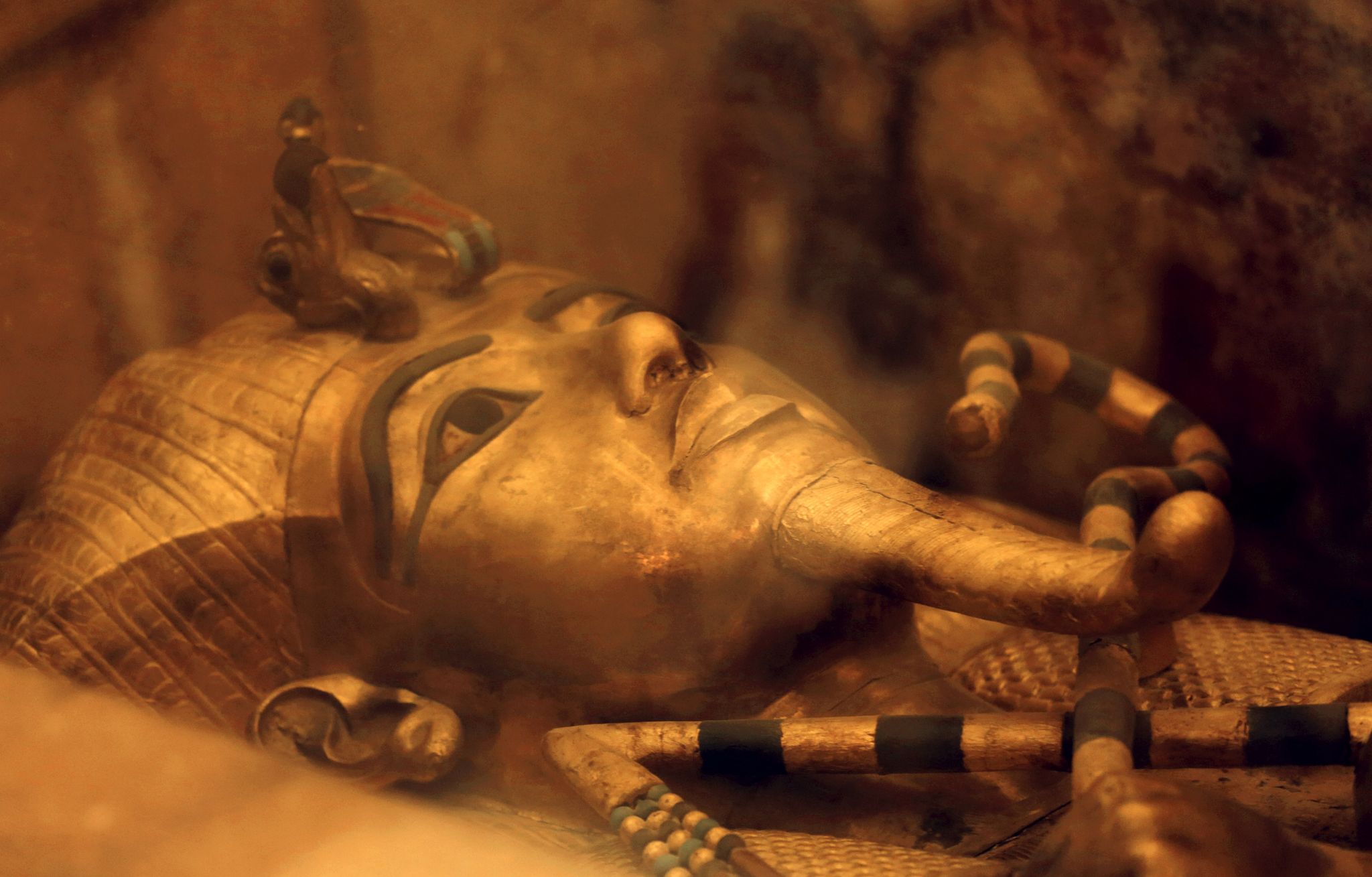
    CAIRO — New radar scans have provided conclusive evidence that there are no hidden rooms inside King Tutankhamun’s burial chamber, Egypt’s antiquities ministry said Sunday, bringing a disappointing end to years of excitement over the prospect.

    Mostafa Waziri, Secretary General of the Supreme Council of Antiquities, said an Italian team conducted extensive studies with ground-penetrating radar that showed the tomb did not contain any hidden, man-made blocking walls as was earlier suspected. Francesco Porcelli of the Polytechnic University of Turin presented the findings at an international conference in Cairo.

    In 2015, British Egyptologist Nicholas Reeves proposed, after analysis of high-definition laser scans, that queen Nefertiti’s tomb could be concealed behind wall paintings in the famed boy king’s burial chamber. The discovery ignited massive interest, with officials first rushing to support the theory but then later distancing themselves and ultimately rejecting it.

    The ministry says two previous scans by Japanese and American scientists had proved inconclusive, but insists this latest ground-penetrating radar data closes the lid on the tomb having such hidden secrets.

    “It is concluded, with a very high degree of confidence, said Dr. Porcelli, the hypothesis concerning the existence of hidden chambers or corridors adjacent to Tutankhamun’s tomb is not supported by the GPR data,” it said in its statement.

    The ministry has been gradually moving King Tut’s belongings to a new museum outside Cairo near the Giza Pyramids to undergo restoration before they are put on display. The transfer of the priceless belongings has become a particularly sensitive issue; In 2014 the beard attached to the ancient Egyptian monarch’s golden mask was accidentally knocked off and hastily reattached with an epoxy glue compound, sparking uproar among archaeologists.

    The fourth International Tutankhamun Conference in Cairo where Porcelli presented the findings, the most extensive radar survey of the site to date, was attended by a wide range of Egyptologists and archaeologists from the world over.

    During the conference, Antiquities Minister Khaled al-Anani said that the first phase of the new museum, including King Tut’s halls, will be completed by the end of this year but the date for the museum’s “soft opening” has yet to be decided. The museum currently hosts more than 43,200 artifacts of which over 4,500 belong to King Tut alone, and its grand opening is planned for 2022.

  • Thelma Aldana, Guatemala’s crusading prosecutor, exits amid praise, threats

    It’s been a long time since it was safe for Thelma Aldana to go out in public alone, and perhaps it never will be again.

    GUATEMALA CITY (AP) — It’s been a long time since it was safe for Thelma Aldana to go out in public alone, and perhaps it never will be again.

    As chief prosecutor for Guatemala, Aldana won plaudits at home and abroad as the woman who sent a president to prison and broke up a number of high-level corruption rings. But it came at a cost — her own personal safety — as her crusading angered some of the country’s most powerful and dangerous people, long accustomed to doing as they pleased with little or no consequences.

    The biggest trophy on her wall from four years in office: Taking down a network allegedly led by then-President Otto Perez Molina, who is accused of defrauding the state of millions of dollars.

    “In the Bible it says you shall know them by their fruits, and I gave my best effort,” Aldana said in a series of interviews with The Associated Press as she prepares to leave office when her term ends this month. “With all modesty, I leave with my head high.”

    Those close to her call the 62-year-old Aldana “the boss.” She is described as a strictly punctual person and a voracious reader. Appearing before news cameras to announce the latest corruption ring to fall, she typically appears calm, collected and intrepid. Her facial expression is often tough and inscrutable, making it difficult to guess what she is thinking.

    It seems the only one able to crack that demeanor is Toby, her 5-year-old Shih Tzu. Speaking to the AP in a small room at her offices decorated with recognitions where she likes to receive visitors, Aldana broke into a broad smile recalling how when she brings work home, Toby likes to rest in the cardboard box she uses to carry the same documents that could end up putting criminals and politicians behind bars.

    Aldana’s long path to becoming Guatemala’s top prosecutor began in 1981 as a low-level judicial counselor and progressed through a number of posts — including Supreme Court president in 2011. She holds a master’s degree in civil law and another pending that is related to women’s rights and gender issues.

    Perez Molina tapped her to be chief prosecutor in 2014, replacing Claudia Paz y Paz, who was the first woman to hold the job and who also angered influential interests and received threats for aggressively prosecuting corruption and human rights abuses dating to Guatemala’s 1960-1990 civil war.

    Perez Molina, who had been a powerful general in one of the region’s most feared armies during the conflict, likely never imagined that his downfall would come not on the battlefield but in a courtroom and at the hands of a woman he himself selected.

    Indeed, at the time many Guatemalans also thought it improbable that Aldana would investigate suspicions of corruption on the part of the man who picked her for the post.

    Ivan Velasquez, a Colombian lawyer, heads a U.N.-sponsored anti-corruption commission that has been a key partner with Aldana’s office in investigating corruption cases and bringing them to trial.

    Velasquez told the AP that trust did not come immediately between him and Aldana, but over time they developed a close working relationship where they were able to reconcile differences and reach consensus. What cemented his confidence was when she didn’t shy from going after Perez Molina.

    Aldana did not hesitate at “a very critical moment,” Velasquez said, praising her strength and valor in the job.

    Perez Molina, who denies wrongdoing, is currently behind bars along with his then vice president and others from his inner circle.

    In 2017 alone, Aldana’s office won 9,358 convictions. She has also made great strides in clearing what has been a crushing backlog: In 2014 prosecutors had 1,280,378 unresolved cases. Today that has been reduced by over half.

    Last year, Time magazine named her one of the world’s most influential people, along with the likes of NFL quarterback Colin Kaepernick, Academy Award-winning actor Viola Davis and Brazilian soccer star Neymar. She was named a recipient of the U.S. State Department’s 2016 International Women of Courage Award. But her personal favorite among dozens of other recognitions is a wand of authority presented to her by indigenous Guatemalan leaders.

    The work has been far from glamorous — more of a slow slog, she says.

    “Fighting corruption is a process, and it is not easy,” Aldana said.

    Aldana said the last four years had been by far the toughest of the 37 she has spent working in Guatemala’s judicial system.

    One of the hardest moments came when current President Jimmy Morales, whom she and Velasquez sought to investigate on suspicion of illegal campaign financing, seemed ready to expel Velasquez from the country. Aldana rallied to her colleague’s defense.

    “I announced that if he left, I would resign,” Aldana recalled.

    Along the way there have been numerous death threats, harassment and attempts to sully her character. In 2016 government officials confirmed that a criminal group had paid for a hit on Aldana that was never carried out.

    Today she lives under protective measures provided by the Inter-American Commission on Human Rights and has been forced to abandon the routines of daily life.

    “I practically do not go to public places and I cannot walk in the street. I always have to be accompanied by a security team,” Aldana said. “My way of life changed drastically. … We have investigated powerful criminal structures, and as a consequence I must behave with great caution.”

    She added that she worries about safety after she leaves office, saying, “It will be the responsibility of the Guatemalan state to protect my life, and that of my family.”

    Though the law did not bar Aldana from seeking a new term as prosecutor, she said she decided against it for security concerns and because she was convinced Morales would never have agreed for her to continue.

    On Thursday, Morales selected career jurist and Constitutional Court alternate magistrate Maria Consuelo Porras to replace Aldana effective May 17. Some civil society groups have expressed concern over Porras’ military ties, but institutions such as the U.N. commission and the Human Rights Prosecutor’s Office asked Guatemalans to give her the benefit of the doubt. At a news conference, Porras promised to work with the U.N. body.

    Asked how she wants to be remembered, Aldana expressed pride over spearheading efforts to raise national attention to violence against women and said she hopes she has proved to Guatemalans that an independent prosecutor’s office is possible.

    “It is a precious commodity,” she said.

    She confessed she feels she owes a debt to her family and hopes to make up for lost time with her two children, ages 21 and 24. In retirement, “the boss” hopes to become a professor, drawing on her career experience to teach a new generation about prosecuting crime and corruption.

    For now, Aldana has a more personal wish: To take in, on TV and in real time, the entirety of this summer’s World Cup, something that until now has been impossible due to the demands of office.

    “I have always had to watch it at night, delayed. But now I have a desire to watch it live.” she said. “After that I will see what to do with my professional life.”
  • Vladimir Putin promises economic reforms as he takes oath of office

    Vladimir Putin took the oath of office for his fourth term as Russian president on Monday and promised to pursue an economic agenda that would boost living standards across the country.

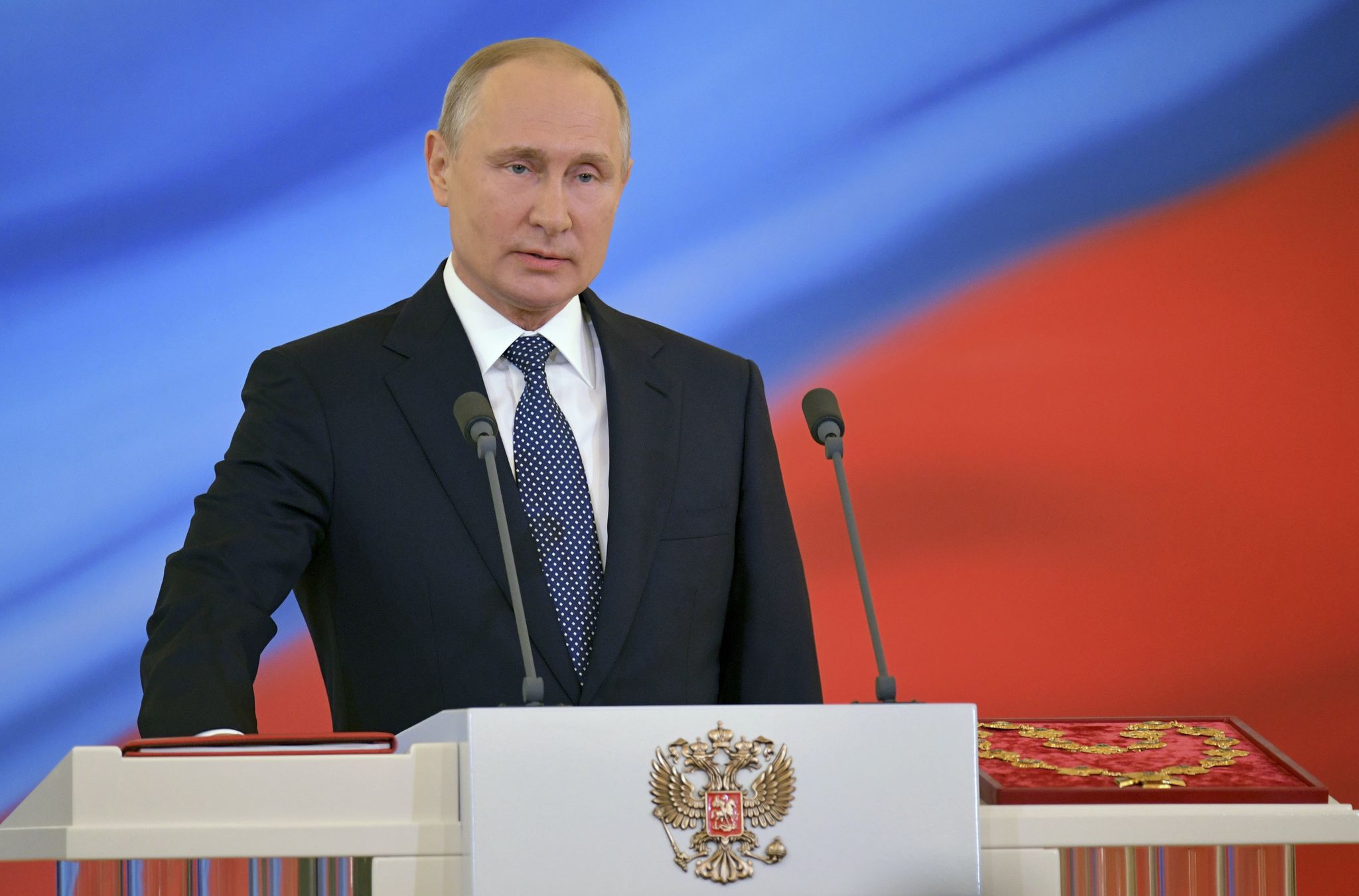
    MOSCOW (AP) — Vladimir Putin took the oath of office for his fourth term as Russian president on Monday and promised to pursue an economic agenda that would boost living standards across the country.

    In a ceremony in an ornate Kremlin hall, Putin said improving Russia’s economy following a recession partly linked to international sanctions would be a primary goal of his next six-year term.

    “Now, we must use all existing possibilities, first of all for resolving internal urgent tasks of development, for economic and technological breakthroughs, for raising competitiveness in those spheres that determine the future,” he said in his speech to thousands of guests standing in the elaborate Andreevsky Hall of the Grand Kremlin Palace and two adjacent halls.

    “A new quality of life, well-being, security and people’s health — that’s what’s primary today,” he said.

    Although Putin has restored Russia’s prominence on the world stage through military actions, he has been criticized for inadequate efforts to diversify Russia’s economy away from its dependence on oil and gas exports and to develop the manufacturing sector.

    Putin held onto the presidency in March’s election when he tallied 77 percent of the vote.

    Putin has effectively been the leader of Russia for all of the 21st century. He stepped down from the presidency in 2008 because of term limits, but was named prime minister and continued to steer the country until he returned as president in 2012.

  • Nicolas Maduro-Mauricio Marci feud defines foreign relations

    One is a former bus driver and union leader with a soft spot for Cuban-style fatigues and Cuban-style political authoritarianism. The other is a millionaire heir and soccer czar, a onetime business pa

    Buenos Aires | One is a former bus driver and union leader with a soft spot for Cuban-style fatigues and Cuban-style political authoritarianism. The other is a millionaire heir and soccer czar, a onetime business partner of Donald Trump who favors suits from this city’s finest tailors and policies to lift up the country’s once-battered private sector.

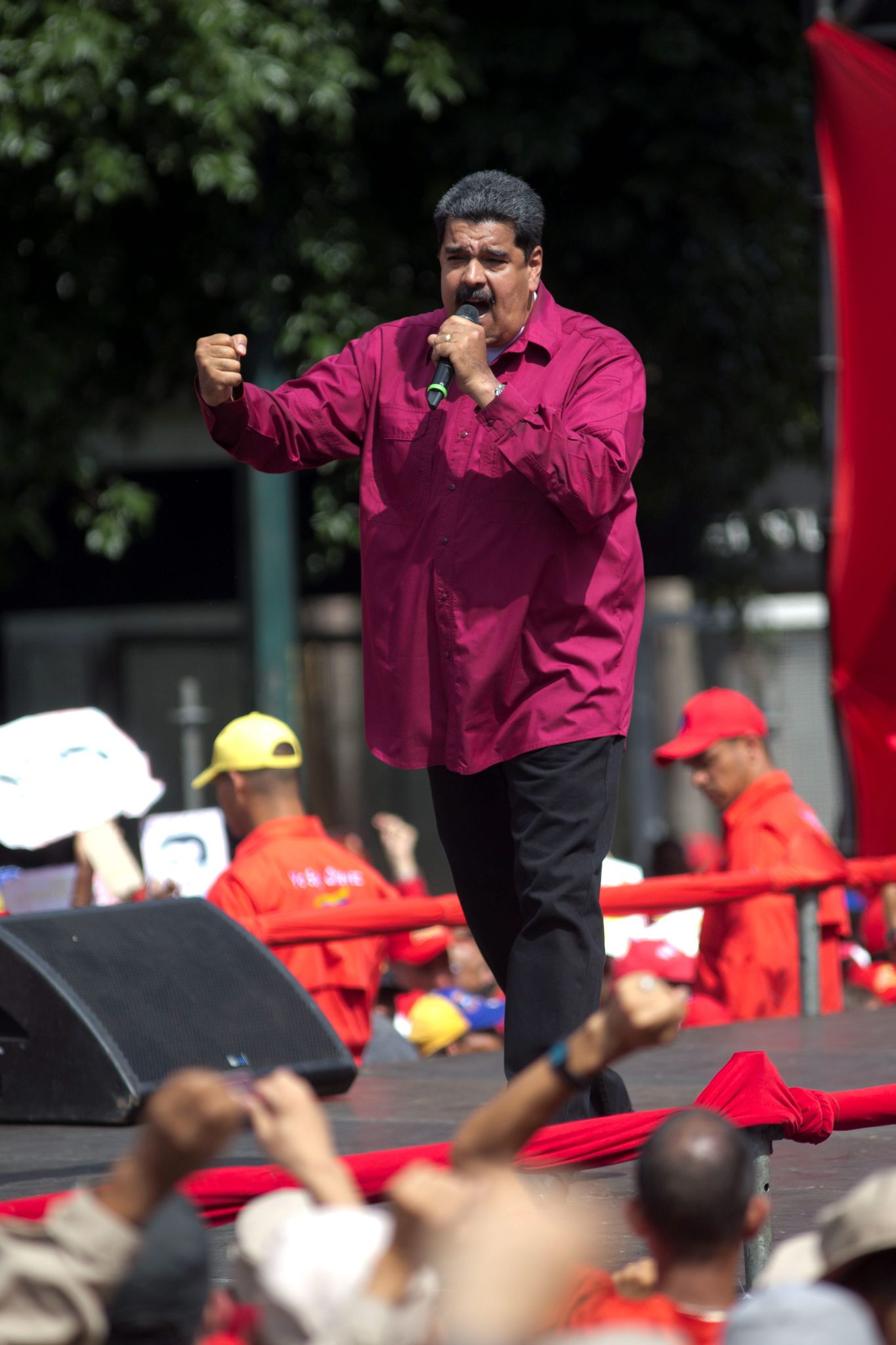
    And while they may share a title as presidents of their respective nations, the rift between Venezuela’s Nicolas Maduro and Argentina’s Mauricio Macri has never been greater, defining the ideological polarization that increasingly marks South American politics these days. With Brazil and Colombia in political limbo as they await national elections, the rebound of Mr. Macri and a number of center-right governments in South America is posing a direct challenge to the old-line leftism embodied by Mr. Maduro and his late predecessor and charismatic mentor, Hugo Chavez.

    The ideological divide is matched by a personal animosity. Mr. Macri’s disdain for the embattled Mr. Maduro was on full display late last month when he all but called for his counterpart’s ouster, telling reporters he wants “what’s happening in Venezuela to come to an end.”

    His comments came days after Argentina had announced it was joining Brazil, Chile, Colombia, Paraguay and Peru in pulling out of the Union of South American Nations, or UNASUR — a brainchild of Chavez.

    The final straw — largely symbolic as the bloc had effectively lain dormant for years — seems to have been Caracas’ refusal to accept Argentine diplomat Jose Octavio Bordon, a Macri nominee, as its next secretary-general.

    The volatile Mr. Maduro, facing a massive economic and demographic crisis at home as Venezuela’s oil-financed social welfare system nears collapse, meanwhile, characterized Mr. Macri and the region’s other center-right presidents as puppets of Washington.

    “Some leaders of the right let themselves be pressured by the U.S. government to destroy UNASUR,” he said en route to a meeting with new Cuban President Miguel Diaz-Canel. “[If] some right-wing government tries to stab it and let it bleed to death, we social movement and revolutionaries of South America will defend it.”

    Colorful as they may be, by Mr. Maduro’s standards, the comments were rather tame. In one of his infamous diatribes last year, Venezuela’s head of state had labeled Mr. Macri a “sewer rat” espousing to be the “godfather of the Venezuelan fascist right.”

    Imitating Chavez

    In lashing out, Mr. Maduro seeks to imitate his mentor Chavez, said veteran Venezuelan diplomat Oscar Hernandez Bernalette, though Mr. Maduro’s approval numbers lag his idol’s maximum popularity by some 40 percentage points.

    “Maduro’s attitude is little more than a bad copy of Chavez’s attitude when Chavez had an audience, but he doesn’t have that same audience,” said Mr. Hernandez Bernalette. “His rhetoric likely reaches — and pleases the ears of — his closest collaborators and the few who back him.”

    Most Venezuelans, though, are bewildered by the president’s crude rhetoric and intemperate attacks, said Mr. Hernandez Bernalette, now a prominent columnist for the El Nacional newspaper.

    “Mr. Maduro’s reaction always is to insult, to attack whatever president’s turn it is — in this case Macri,” he said. “Venezuelans overall are mortified every time the head of state, of whom one expects the highest levels of conduct, [does that].”

    But beyond personal grudges, Mr. Macri is carving out a role for himself as champion a more pragmatic, conservative South America that is not instinctively hostile to the private sector, said Gustavo Cardozo, an analyst at the Argentine Center of International Studies in Buenos Aires.

    “He [wants to] focus on trade relations untainted by the kind of extremist ideology the Maduro regime has laid out,” he said. “Maduro constantly attacks Europe and the United States, which are very important markets. Logically, you can’t be in sync with a regime that turns its back on international trade.”

    Mr. Macri’s domestic critics, meanwhile, see a conspiracy to reverse South American integration behind the UNASUR exit, as well as behind last year’s suspension of Venezuela from the Mercosur trade bloc.

    “All that was halted to return our country to the great powers’ axis of dependency,” said Alicia Castro, an Argentine ambassador to Venezuela under Mr. Kirchner and Ms. Fernandez. “The goal is very clear: to destroy our region’s economies.”

    “It’s regrettable that Argentina is aligning itself with Trump to harass and hit Venezuela,” she said. “In Venezuela, there is no ‘interruption of the democratic order’ — that’s Washington propaganda Macri repeats like a parrot.”

    With the rhetoric showing no signs of cooling, though, the next showdown between South America’s rival presidents is already under way, as Mr. Maduro’s plan to hold early presidential elections on May 20 — over the objections of the Venezuelan opposition parties — did not come without commentary from Buenos Aires.

    “We won’t accept the results because that election doesn’t have any validity, however much Mr. Maduro insults me,” Mr. Macri warned last month. “We won’t recognize [him] as a democratic president because there hasn’t been any democracy in Venezuela for quite a while.”

    “Who is Macri to determine what happens in Venezuela?” Mr. Maduro, predictably, shot back. “A dummy of imperialism.”

  • Donald Trump urged by U.K. not to nix Iran nuke deal

    U.K. Foreign Secretary Boris Johnson on Monday went on President Trump’s favorite TV show to urge him not to quit the Iran nuclear deal, although agreeing with the president’s assessment that it is a

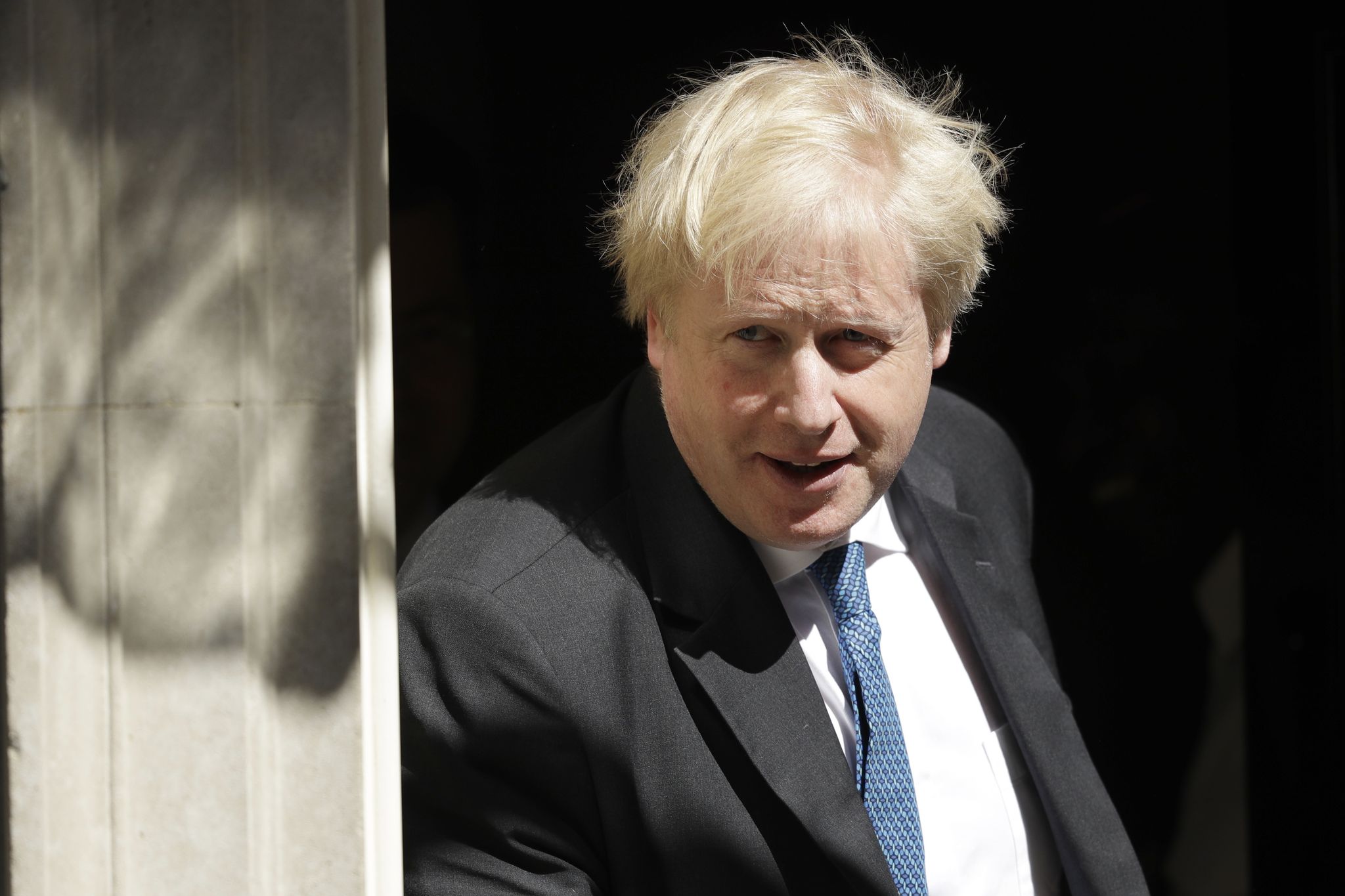
    U.K. Foreign Secretary Boris Johnson on Monday went on President Trump’s favorite TV show to urge him not to quit the Iran nuclear deal, although agreeing with the president’s assessment that it is a bad deal.

    He stressed that there was no “Plan B” if the U.S. nixes the deal.

    “The president has a legitimate point,” Mr. Johnson said on Fox News’ “Fox & Friends,” which Mr. Trump regularly views. “He set a challenge for the world. We think that what you can do is be tougher on Iran.”

    He said ripping up the Iran deal would be like “throwing the baby out with the bathwater.”

    Mr. Trump has set a Saturday deadline to decide whether to pull out of the Obama-era agreement that lifted economic sanctions on Iran in return for halting the Islamic regime’s nuclear program until 2025.

    Mr. Johnson is in Washington this week but will not meet with the president. He took to the airwaves to deliver his message to Mr. Trump.

    Similar appeals were delivered directly to Mr. Trump in visits last month by French President Emmanuel Macron and German Chancellor Angela Merkel. France, Germany and the U.K., as well as China and Russia, joined the U.S. in negotiating the deal.

    Mr. Trump’s concerns, from more rigorous inspections of Iran nuclear facilities to extending the moratorium beyond 2025, would be addressed by building on the current deal, Mr. Johnson said.

    “As I say, a Plan B does not seem to me to be particularly well developed at this stage,” the foreign secretary said.

    If Iran begins fast-tracking a nuclear weapon, the option of bombing its nuclear facilities or allowing a nuclear arms race in the volatile Middle East were both bad options, Mr. Johnson said.

    “At the moment there does not seem to be a viable military solution,” he said.

  • Richard Grenell: U.S. and Germany ‘on the same side’ despite differences

    U.S. Ambassador to Germany Richard Grenell said Monday that despite some differences President Trump and German Chancellor Angela Merkel are on the same side.

    U.S. Ambassador to Germany Richard Grenell said Monday that despite some differences, President Trump and German Chancellor Angela Merkel are on the same side.

    “I wish every American can see the way Donald Trump negotiates,” Mr. Grenell said on Fox News.

    He said Mr. Trump’s meeting with Ms. Merkel on Friday went well despite differences on the Iran nuclear agreement and trade policy.

    “He is a great negotiator and she — Angela Merkel — realizes that. They had a great give and take at the end of very tough negotiations. We have some difficult issues with Germany, but we’re totally on the same side,” he said.

    The two met just days after French President Emmanuel Macron came to the U.S. for Mr. Trump’s first official state visit. They also discussed the Iran deal and Mr. Trump criticized Germany for not paying enough in defense spending.

    “We need a reciprocal relationship, which we don’t have,” Mr. Trump said at a joint news conference. “We’re working on it. We have a far greater burden than we should have.”

  • ‪‪Donald Trump‬, ‪John F. Kelly‬, ‪Beyaz Saray‬‬

    White House Chief of Staff John F. Kelly on Monday denied that he said President Trump is an “idiot,” calling an NBC News story that said he had done so “total BS.”

    Kelly’s statement came about 45 minutes after NBC News published a report that described a number of fights between Trump and his embattled chief of staff. The outlet reported that Kelly often tells senior aides that they have to save the president from himself and his impulses — and that Trump does not understand policy.

    “He doesn’t even understand what DACA is. He’s an idiot,” Kelly told White House aides, according NBC News, which cites two White House officials present for the meeting. DACA refers to a program that protects from deportation young undocumented immigrants brought to the United States as children.

    “I spend more time with the President than anyone else and we have an incredibly candid and strong relationship. He always knows where I stand and he and I both know this story is total BS,” Kelly said in a statement released by the White House press office in response to the story.

  • Dust Storm Warning Issued for Eastern Nebraska

    Counties In Warning Area According to National Weather Service

    Monona-Harrison-Shelby-Pottawattamie-Mills-Montgomery-Fremont- Page-Thurston-Pierce-Wayne-Boone-Madison-Stanton-Cuming-Burt- Platte-Colfax-Dodge-Washington-Butler-Saunders-Douglas-Sarpy- Seward-Lancaster-Cass-Otoe-Saline-Jefferson-Gage-Johnson-Nemaha- Pawnee-Richardson-

    NWS SPECIAL WEATHER STATEMENT FOR BLOWING DUST

    Windy conditions this afternoon are producing blowing dust and reduced visibilities. Wind gusts to around 55 mph can be expected. These winds will continue through the afternoon and then diminish to 20 to 30 mph with gusts near 35 mph by 9 PM. Fields are being planted across much of the region and there are a number of active construction sites. These winds will create areas of blowing dust and dirt. This will result in localized areas of extremely low or near zero visibility. Drivers should use caution on Interstate 80…Highways 6 and 92…and all east-west oriented roads.