Category: WORLDS

  • Kim Jong-un to meet to discuss denuclearization

    North Korea has informed the U.S. in talks that it is willing to discuss denuclearization at an upcoming summit, a senior administration official confirmed Sunday.

    North Korea has informed the U.S. in talks that it is willing to discuss denuclearization at an upcoming summit, a senior administration official confirmed Sunday.

    “The United States and North Korea have been holding talks in preparation for a summit,” said the official, who spoke on condition of anonymity.

    The official also told The Washington Times that North Korea “has confirmed its willingness to talk about denuclearization.”

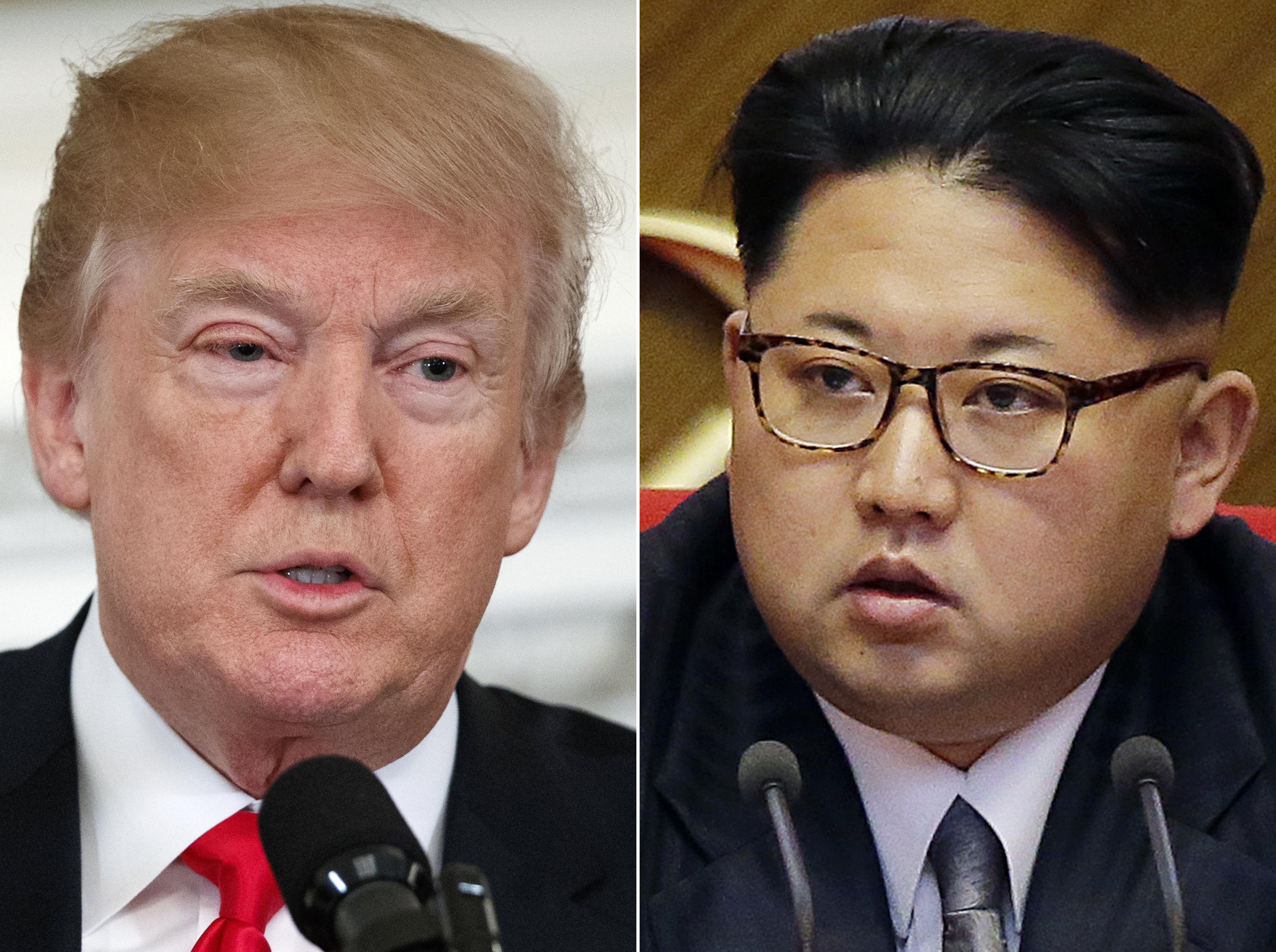
    The message comes as the two countries prepare for a historic meeting between President Trump and North Korean leader Kim Jong-un, probably in May. A date and location for the summit haven’t been announced.

    South Korean officials had told the U.S. weeks ago that North Korea was willing to discuss denuclearization with the Trump administration. But the development this weekend was the first time that U.S. officials heard the commitment directly from North Korea.

    The U.S. official didn’t say when and how the U.S.-North Korea communications had taken place. But the two sides had held multiple direct contacts, Reuters reported.

    Central Intelligence Agency Director Mike Pompeo and a team at the CIA have been working through intelligence back-channels to make preparations for the summit, CNN reported, citing administration officials.

    The report said U.S. and North Korean intelligence officials have spoken several times and have even met in a third country, with a focus on agreeing on a location for the talks.

    It’s not clear how North Korea defines “denuclearization,” although the Trump administration has said Pyongyang must abandon its nuclear weapons program. North Korea has pushed for the U.S. to remove its troops from the Korean peninsula as part of any agreement.

  • Israel bombed Hamas military positions

    The Israeli army bombed one of the positions of Hamas’s military wing Izzeddin al-Kassam Brigades yesterday evening. Israel has been identified in the Israeli authorities where the al-Kassam Brigades have not been involved in any rocket attacks in subsequent investigations despite the bombing of Gaza, as the Iron Dome defense systems gave a rocket attack alert from al-Qassam Brigades. & Nbsp; >

    On the other hand, it is reported that the Israeli Iron Dome defense system was acted upon by the al-Qassam Brigades in the city of Beyt Lahya in northern Gaza. & nbsp;

    Muhammed Rabah

  • Test of US cowboys with Turkish horses

    Five people from the culture embassy who came to introduce the cowboy culture learned to play oud and law in Bursa. The American cowboy gave a description of how to make good coffee.

    In order to promote the cowboy culture in the US, 5 cowboys from Bursa came to horse riding on a horse farm. Members of the growing group of farms in the Wyoming state of the United States continued to show their shows with traditional songs and dances followed by games with lasso-binding and horses.

    I was impressed with the Turkish culture

    > In Bursa, where they came to introduce the cowboy culture, they had the opportunity to examine musical instruments such as cowboys, law, ud and darbuka, who were fascinated by Turkish culture. The cowboys gave the recipe of making good coffee, indicating that cowboy coffee and Turkish coffee are very similar. The cowboys who lecture the ladder to the children and youngsters in the farm later stepped on. Admired by the horses on the farm, the cowboys had a hard time because the horses did not obey the obedience. & nbsp;

    Süleyman Aydın

  • Kosovo Ya illegal Serbian official detained

    The detention took place in the northern part of Serbia, where the majority of Serbs are located. Zeljko Jovic was also detained along with Djuric who entered illegally into Kosovo.

    Kosovo Serbs, gathered in the city center, were detained in Kosovo during a raid on a meeting hall by special operations units linked to the Kosovo police, after Djuric was taken into custody. The police threw slogans against him. The Serbs, protesting the arrest of Marko Djuric, by organizing action. Serbia’s Kosovo Office Chief Marko Djuric, who entered the northern unauthorized state despite all the excuses of the Kosovo Government, was brought to Pristina after his arrest by the special team. Djuric, who was brought to Pristina with high security measures, was detained in detention center. After the legal procedures, Serbian official Djuric was deported. & Nbsp;

    According to informed sources, Djuric entered Kosovo last night. Djuric was detained by the Kosovo police when he addressed representatives of the Serbian public in a meeting room in northern Mitrovica.

    While Kosovo President Hashim Thaci calls on the people to restraint, it is estimated that the detention will cause tensions between Kosovo and Serbia to become even more tense.

    Ercan Kasap

  • NATO annulls accreditation of 7 Russian diplomats

    In a statement made by the North Atlantic Treaty Organization (NATO), it has been reported that the seven Russian diplomats in the region have canceled accreditation. NATO Secretary General Jens Stoltenberg stated that the decision at the press conference was an open message to Russia and that the number of Russian employees in the alliance would be reduced from 30 to 20. Russian Foreign Minister Lavrov: Sure </ strong> March 27, 2018 16:42 </p>
<p> Russian Foreign Minister Sergey Lavrov said: “We will respond,” we will respond “width =” 150 “height =” 100 “/> , Saying that Russia will not approve the actions of the western sea and will respond. </ p> <img src =

    27 March 2018 14:02

    Support for Russia from Chinese Foreign Affairs: “We must give up building the front line” The Chinese Foreign Ministry spokesman said, “After the agent crisis, I would like to ask some countries to remove them from the countries of Russian diplomats.”

    The US, Germany and France declared that they will expel Russian diplomats in the country due to the agent crisis.

    Tags: agent crisis, NATO, russia < / p>

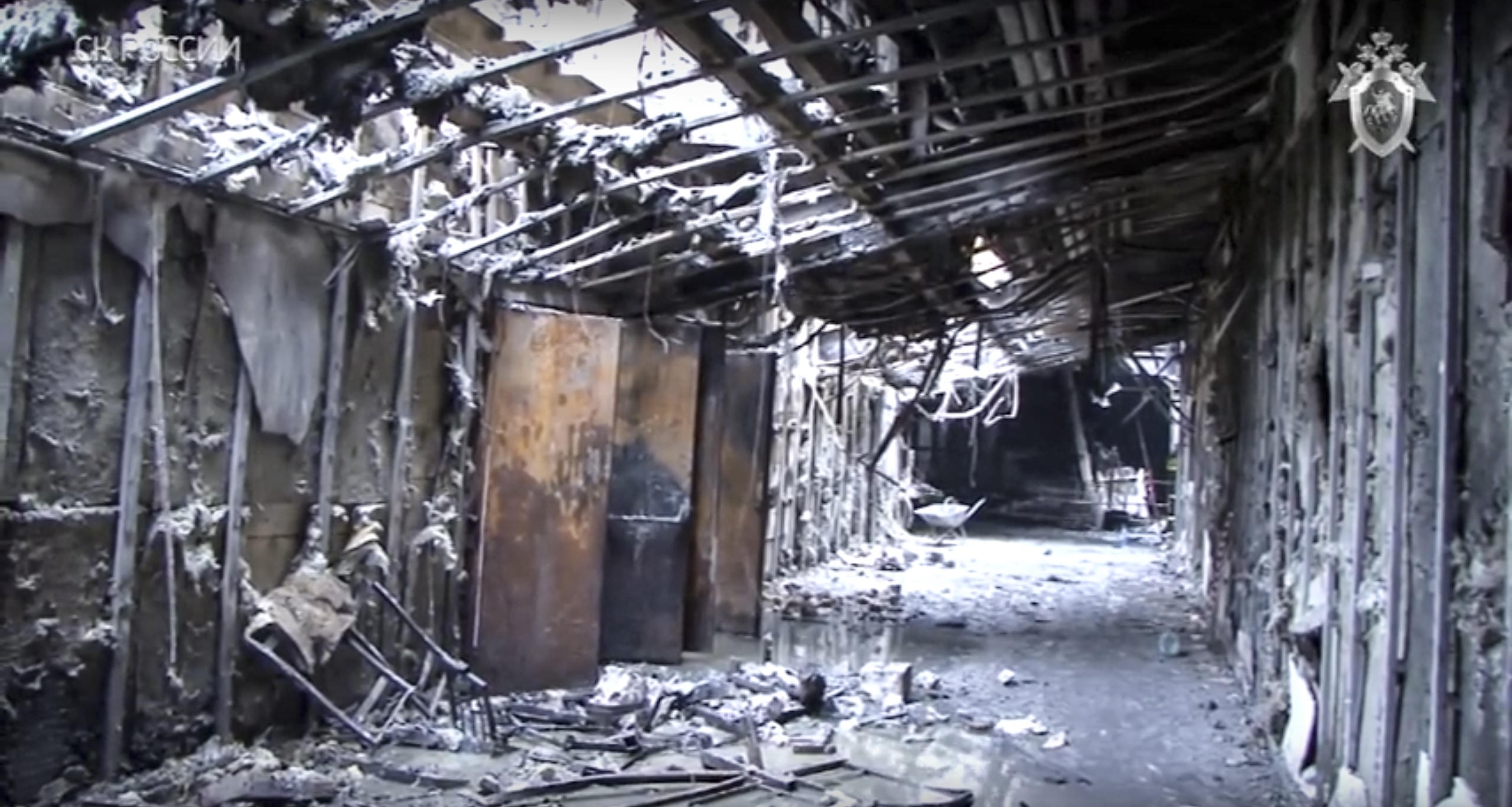
  • Russia mourns victims of deadly mall fire in Siberia

    Flags flew at half-staff across Russia on Wednesday as the country mourned 64 victims — many of them children — of a shopping mall fire in Siberia.

    MOSCOW (AP) — Flags flew at half-staff across Russia on Wednesday as the country mourned 64 victims — many of them children — of a shopping mall fire in Siberia.

    The blaze engulfed the four-story mall in the eastern city of Kemerovo on Sunday while it was packed with parents and children on the first weekend of the school recess.

    Investigators identified a short circuit as a possible cause and said the emergency exits were locked shut, hampering any evacuation. Some of the victims, many of them young children, died inside a locked movie theater.

    Wednesday was declared a day of mourning in Russia, and thousands of people have been bringing flowers and stuffed toys to makeshift memorials across the country.

    The bodies of all 64 victims have been recovered and no one is unaccounted-for, Deputy Emergency Situations Minister Vladlen Aksyonov told the RIA Novosti news agency.

    The investigators have released 21 bodies for burial. The first funerals for the victims were held Wednesday morning in Kemerovo, a city of half a million people 3,000 kilometers (1,900 miles) east of Moscow that has been paralyzed with grief.

    Among the first people buried were a grandmother and her two grandchildren— 8 and 10 — who died in the locked movie theater while watching cartoons. They were all buried in the same grave.

    Elsewhere in Kemerovo, residents were mourning English teacher Tatyana Darsaliya who also died in the fire. Deputy Principal Irina Borisova told the Tass news agency after the requiem service that Darsaliya was “much loved and pupils loved her classes.”

    On Tuesday, thousands of angry, distraught residents rallied on Kemerovo’s main square for 10 hours, demanding that local officials conduct a full and transparent probe of the tragedy. Some mistrust the official death toll of 64, saying it must be higher.

    A court in Kemerovo is expected to rule later Wednesday on the arrests of one of the mall’s tenants, the mall’s technical director, two employees of a company maintaining the fire alarm system and a security guard who the investigators said turned off the fire alarm.

    Speaking in court Wednesday, security guard Sergei Antyushin said in remarks carried by the Dozhd television station that the mall’s fire alarm did go off and that he called emergency services when it did. He did confirm, however, that the mall’s public announcement system has not been operational for two weeks.

  • Uhuru Kenyatta, Raila Odinga call truce in Kenya to heal divisions

    A bitterly contested presidential election appeared to be setting up a violent rerun of clashes between President Uhuru Kenyatta and longtime rival Raila Odinga. But an unexpected detente between the

    NAIROBI, Kenya | A bitterly contested presidential election appeared to be setting up a violent rerun of clashes between President Uhuru Kenyatta and longtime rival Raila Odinga. But an unexpected detente between the two has some hoping Kenya can avoid the partisan and tribal bloodshed that has marred past electoral crises.

    An unexpected calm has settled on most of the country after Mr. Kenyatta and Mr. Odinga agreed to work together to heal divisions arising from last year’s general elections.

    The followers of Mr. Odinga, in his third bid for the presidency and his second race against Mr. Kenyatta, had vowed never to accept the results of a chaotic pair of votes that gave Mr. Kenyatta another five-year term. They insisted that government election officials had rigged the results.

    Odinga supporters in January staged a mock inauguration for their candidate in central Nairobi. The government allowed the ceremony to proceed but blocked any national television coverage of the event and cracked down on politicians who took part.

    Two months later, shoppers are back in the markets and traffic fills the streets of the capital and other major towns that experienced sporadic chaos, violence and demonstrations since the first vote in August. Banks, hotels and foreign exchange bureaus are open for business as well.

    In the lakeside city of Kisumu, an opposition stronghold where more than 50 people died in civil unrest, banks, hotels and fishmongers who work on the banks of Lake Victoria are once again busy. Security officials have removed boulders that protesters used to block roads.

    “Life is now getting better,” said Eunice Achieng, a mother of five who sells fish in Kisumu. “We support the dialogue between President Uhuru and Raila because it’s bringing peace in this region. Business is now picking up well. You can see me readying my wares for the day.”

    Kenya has been in limbo since the original presidential results were nullified on Sept. 1 because of what the Supreme Court called “irregularities and illegalities” in the electronic transmission of results. The court ordered a rerun, which Mr. Odinga boycotted, saying Mr. Kenyatta needed to revamp the electoral commission before a new vote.

    Mr. Kenyatta won the second ballot with 98 percent of the vote, though less than a third of the electorate went to the polls, according to the electoral commission. The Supreme Court upheld Mr. Kenyatta’s victory, sparking violent protests among Odinga supporters.

    Human rights groups estimated that 100 people died in election-related violence since the initial vote.

    As the crisis worsened, the international community put pressure on the two longtime rivals to strike a deal. Led by U.S. Ambassador Robert Godec and U.K. envoy Nic Hailey, diplomats pushed for dialogue to put the country back on the right track.

    “As partners, we will do all we can to help, but only Kenyans can resolve the country’s problems,” they said in February, a week before then-U.S. Secretary of State Rex W. Tillerson arrived in Nairobi. “We again call for an immediate, sustained, open and transparent national conversation involving all Kenyans to build national cohesion, address long-standing issues and resolve the deep-seated divisions that the electoral process has exacerbated.”

    Tillerson’s role

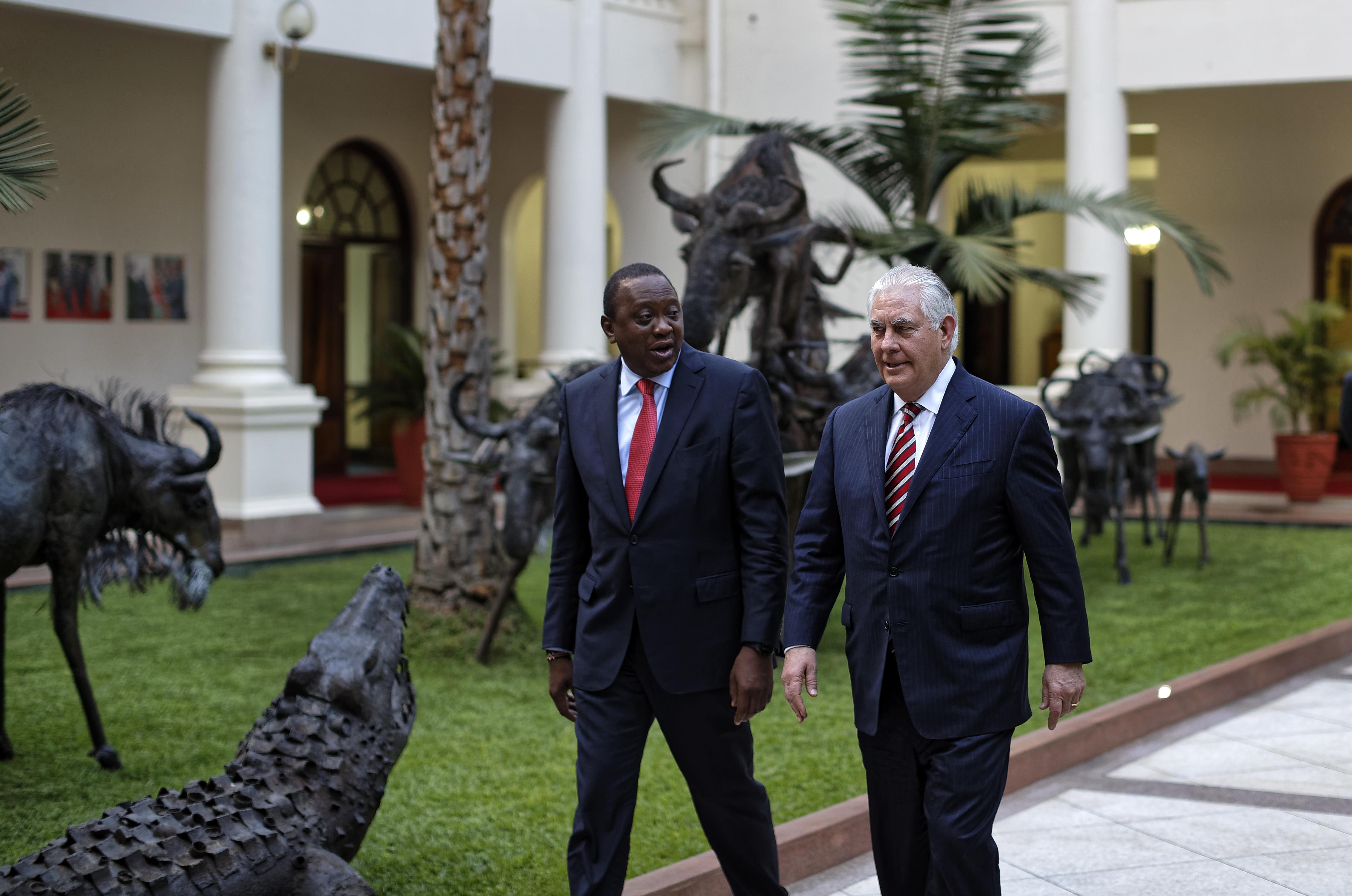
    Mr. Kenyatta and Mr. Odinga met on March 9 — the day Mr. Tillerson arrived in Nairobi — and declared they would work together to unite the country. It was one of Mr. Tillerson’s last official acts before President Trump dismissed him.

    “Leaders must come together to discuss their differences and what ails the country, like ethnic divisions,” Mr. Kenyatta said at a joint press conference with Mr. Odinga. “We have a responsibility to discuss and find solutions that will bind, unify and give a life cycle beyond the five years we have given ourselves. Elections come and go, but Kenya will remain.”

    His rival similarly appealed to Kenyan patriotism.

    “We refuse to allow our diversity to kill our nation,” Mr. Odinga said. “We need to save our children from ourselves. My brother and I have come together to say this dissent stops here.”

    The two shared a handshake in a gesture that has sparked a cottage industry of analysis over how firm, sincere and frank the clasping of hands appeared. Both men, especially Mr. Odinga, have faced a wave of skepticism in the days since over whether the political reconciliation was real and what backroom deals may have been cut.

    “The public camaraderie among Kenyan political leaders is just that — nothing more,” Sam Kanau, a lecturer at the Graduate School of Media and Communications at the Aga Khan University, told the Kenyan daily Star newspaper last week. “It means the underlying issues like feelings of exclusion, extreme poverty and electoral injustice will remain buried and unaddressed.”

    Mr. Odinga denied that any secret deals had been cut and pointed to an even more unlikely diplomatic pairing to justify his move.

    “What is wrong if Raila Odinga talks with President Kenyatta? It is the trend the world over,” the opposition leader told reporters after attending a church service over the weekend. “Even President Donald Trump is contemplating meeting North Korean leader Kim Jong-un.”

    The ethnic hatred between Mr. Odinga’s Luo tribe and Mr. Kenyatta’s Kikuyu tribe dates back to the colonial period. The fathers of the two candidates were allies in the struggle for Kenya’s independence from British colonial rule and then became political adversaries. The sons extended the family rivalry into the country’s ethnic allegiances.

    Now, observers say, the two leaders’ move could provide an unexpected force for stability in the country and, most important, the economy.

    “The unity between two leaders is for the benefit of Kenyans,” said Peter Wafula Wekesa, a political analyst from Kenyatta University in Nairobi. “It will bring unity among the tribes and stabilize the economy. The shilling has gained against the dollar, and the stock market is also recovering.”

    But Bonface Mwangi, who is involved in social-political activism through his initiative Team Courage, said the unity pact could give license to the opposition to receive ill-gotten benefits and not serve as a watchdog over the government’s rampant corruption and poor performance.

    “Will Raila continue to call out Uhuru on corruption, disregarding court orders and police brutality?” he asked. “Will Raila demand electoral justice, compensation for the victims killed by police in peaceful protests, or will he keep quiet?”

    Ms. Achieng said those fears were overblown. It’s time for Kenyans to come together and reconcile after a long political season, she said.

    “We need to forgive each other and live together,” she said. “People from other tribes had to flee this region because of fear of attack. We should support Uhuru and Odinga’s move to bring peace here.”

  • Liu Xiaobei heads China’s U.S. hacking operations

    The activities of one of China’s cyber spymasters has been revealed for the first time in a government report on Beijing’s unfair trade practices made public last week.

    The activities of one of China’s cyber spymasters has been revealed for the first time in a government report on Beijing’s unfair trade practices made public last week.

    The role of People’s Liberation Army (PLA) Maj. Gen. Liu Xiaobei, until recently the director of the Third Department of the PLA General Staff known as 3PLA, was disclosed. The Chinese military hacking group has been linked by U.S. intelligence agencies to massive cyberattacks and data theft from the U.S. government, military and private sector for more than a decade.

    Gen. Liu’s current status is not known, but 3PLA is now the core unit of a new service-level military organization known as the Strategic Support Force whose main component is called the Cyber Corps. The Cyber Corps also absorbed the PLA’s psychological warfare unit called 311 Base, which conducts information warfare — disinformation and influence activities.

    It was the first time the U.S. government publicly identified one of China’s senior military hackers, an indication that he may face U.S. sanctions in the future.

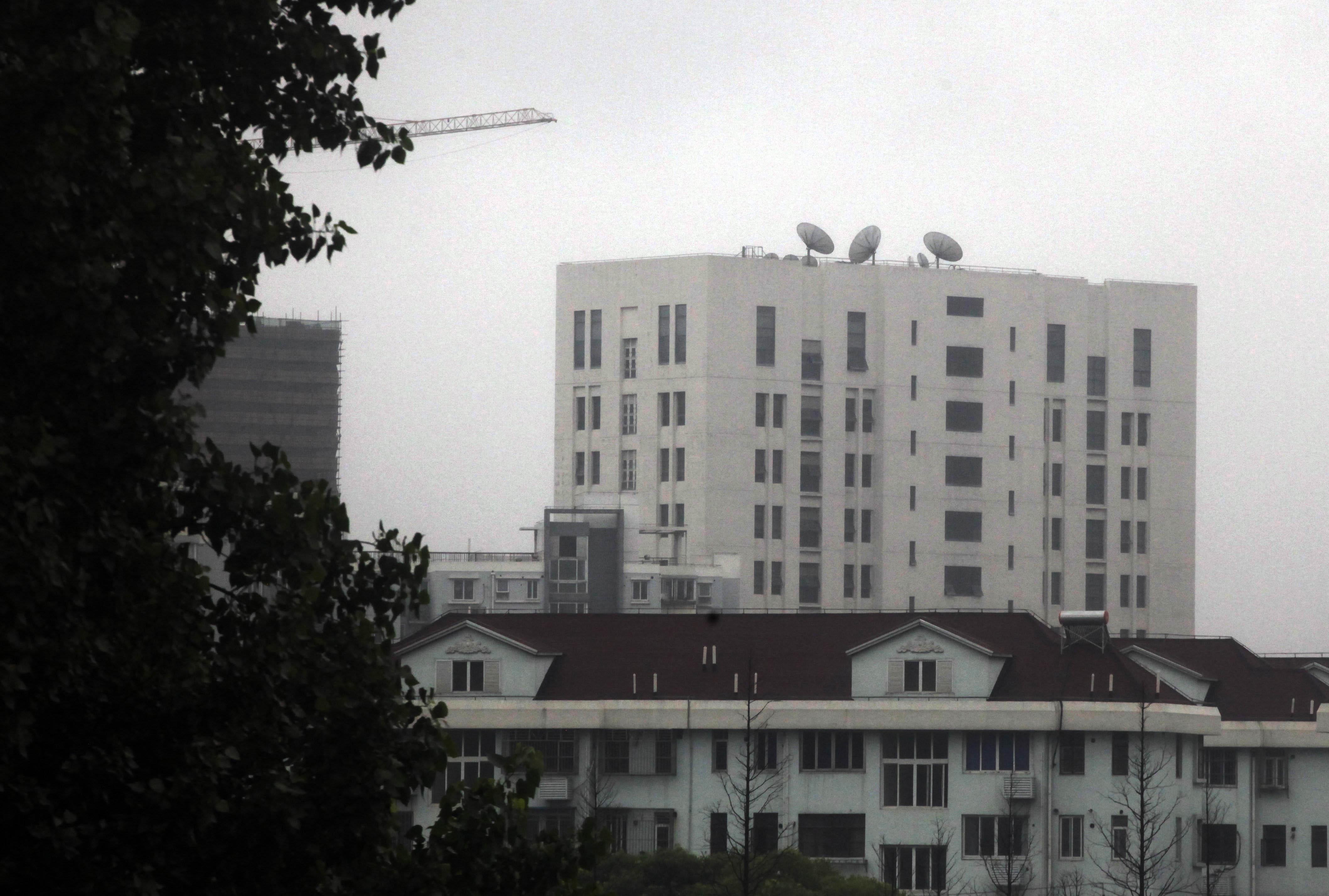
    Four years ago, the U.S. government indicted five midlevel PLA hackers who were part of a Shanghai-based group known as Unit 61398.

    The Cyber Corps is believed to employ 100,000 hackers, language specialists and analysts at its headquarters in the Haidian District of Beijing. Branch units are located in Shanghai, Qingdao, Sanya, Chengdu and Guangzhou.

    The recently published report by U.S. Trade Representative Robert Lighthizer highlights Beijing’s unfair trade practices and reveals that Gen. Liu directed cyberspying operations on U.S. companies during talks with officials from the state-owned China National Offshore Oil Corp. (CNOOC). The investigative report is the basis for Trump administration plans to impose tariffs on Chinese technology products and to curb investment by Chinese firms in the coming weeks.

    The detailed report, citing U.S. government information, says CNOOC ordered the 3PLA to spy on several U.S. oil and gas companies engaged in cutting-edge shale gas technology. The report outlines two cases involving U.S. companies that were hacked by 3PLA.

    The Chinese military hackers in one case broke into a U.S. company’s network and stole details of its plans for negotiating a deal with CNOOC.

    “CNOOC attributed their ultimate success in the negotiation with U.S. Company 1 to the information that CNOOC had received from the intelligence services,” the trade report said without identifying the American company.

    The report added that “senior Chinese intelligence officials, including a PLA director, Liu Xiaobei, endorsed the use of the intelligence information” in the talks between CNOOC and the company.

    CNOOC also employed the 3PLA in a second case to spy on five U.S. oil and natural gas companies, seeking key data relating to operations, asset management, the movements of senior company officials, shale gas technology, research on lab procedures, fracking technology and fracking formulas.

    “These examples illustrate how China uses the intelligence resources at its disposal to further the commercial interests of Chinese state-owned enterprises to the detriment of their foreign partners and competitors,” the report said.

    The Chinese are using cyberattacks as part of an industrial policy of supporting science and technology development.

    Former Pentagon China specialist Mark Stark in 2015 identified Gen. Liu as 3PLA director, a former deputy director and political commissar of the electronic spying agency often compared to the National Security Agency.

    An NSA document made public by renegade former contractor Edward Snowden revealed that 3PLA’s Technical Department is one of the Chinese government’s most aggressive cybertheft actors, with 19 confirmed and nine other possible cyberunits under its command, according to information as of 2013.

    The other major cyberspying organization is the Chinese Ministry of State Security, which runs six known and 22 suspected cyberspying units.

    China also has seven other Chinese-based cyberattack units that are listed by the NSA as “unattributed” to the Chinese government.

    Another leaked NSA document revealed the massive scope and costly damage inflicted by Chinese military cybertheft.

    Under the title “Chinese exfiltrated sensitive military technology,” the NSA lists radar design, including numbers and types of modules; detailed jet engine schematics such as the methods used to cool gases; aircraft wing leading and trailing edge treatments on stealth jets; and an aft deck heating contour map.

    “Many terabytes of data [have been] stolen,” the NSA stated.

    In a Chinese cybertheft operation code-named Byzantine Hades, the NSA in 2013 logged more than 30,000 incidents, 500 of which were described as significant intrusions of Pentagon computer systems. More than 1,600 network computers were penetrated, compromising 600,000 user accounts and causing over $100 million in damage to rebuild networks.

    A 2014 report by the CIA-based Open Source Enterprise identified Gen. Liu, 62, as an encryption specialist and director of Technical Reconnaissance Department, another term for the 3PLA. He was born in Hongan County, Hubei province, dubbed the “No. 1 country of generals” for the many famous PLA revolutionary-era generals who hail from there.

    In a political propaganda video in 2013 called “Silent Contest,” Gen. Liu said the United States is the main target of Chinese cyberoperations because it is the birthplace of the internet and controls its core resources.

    “The U.S. adopted a double standard regarding internet control: Internally, the U.S. implemented tight control, while externally, the U.S. wantonly expanded,” he said. “The U.S. took advantage of its absolute superiority of the internet and vigorously promoted network interventionism in order to reinforce ideological penetration, and it secretly supported hostile forces to create obstructions and conduct acts of sabotage.”

    Gen. Liu has accused the United States of trying to subvert Communist Party rule in China through influencing the Chinese public via the internet. He made clear in published interviews that China is engaged in information warfare against America.

    “The internet has become a new field and platform for ideological struggle,” he said. “Accordingly, we must not lower our guard; [we] must take control of the commanding height of the internet and maintain both the initiative and discourse power.”

    Gen. Liu, in another report, criticized the United States for suborning Chinese academics and targeting the PLA.

    “Recalling what the U.S. has done over the past 30 years, whether they win over academics by taking advantage of foundations or affect major decision-makers by utilizing ideological penetration, U.S. actions have enjoyed great success within China’s academic and ideological circles,” he said.

    “The last obstacle is China’s military,” he added. “Even if the U.S. cannot disintegrate China’s armed forces or turn China’s military against itself, the U.S. can at least suppress the combat wisdom and willpower of China’s armed forces.”

    CHINESE TECHNOLOGY THEFT COST

    Speaking of Chinese information thievery, the U.S. trade representative report on Chinese unfair trade practices estimates that Beijing’s intellectual property theft costs Americans $225 billion to $600 billion annually in lost information. The losses are one reason the Trump administration is imposing $50 billion to $60 billion in tariffs on imports from China.

    Those tariffs, however, do not cover the additional billions of dollars in losses caused by China’s cyberthefts, administration officials said.

    A new report by a commission of the National Bureau of Asian Research bolsters the U.S. trade representative’s report, noting that China is behind 87 percent of all intellectual property theft incidents globally.

    “The scourge of IP theft and cyber espionage likely continues to cost the U.S. economy hundreds of billions of dollars a year despite improved laws and regulations,” the report by the Commission on the Theft of American Intellectual Property states.

    CHINA’S FALLING SATELLITE

    Sometime this week, a bus-sized Chinese satellite is expected to fall out of orbit and come back to Earth. The impact area of the Tiangong-1 space station is expected to enter the atmosphere sometime from Saturday to Wednesday, and although it is expected to burn up, some pieces may reach the surface.

    The impact zone covers the entire continental United States.

    Defense analysts are calling on China to use one of its new anti-satellite missiles to destroy the falling space station to prevent any debris from posing a danger.

    That was what the Navy successfully did back in 2008 when a nonfunctioning National Reconnaissance Office satellite was destroyed with a modified Navy SM-3 anti-missile interceptor fired from a ship west of Hawaii.

    By exploding the falling NRO satellite, the blast created smaller pieces — all of which burned up in the atmosphere.

    • Contact Bill Gertz on Twitter at @BillGertz.
  • Narendra Modi blamed in rise of India’s Christian persecution

    Religious clashes in the troubled northern Indian state of Jamma and Kashmir are nothing new, but the riot that broke in January targeted an unexpected group: Christians.

    NEW DELHI — Religious clashes in the troubled northern Indian state of Jamma and Kashmir are nothing new, but the riot that broke in January targeted an unexpected group: Christians.

    While most of the state’s problems pit an Islamist separatist movement against India’s Hindu majority, Christianity was at the heart of the violence this time as a mob of thousands interrupted a burial ceremony to seize the body of the deceased for a Hindu cremation.

    Local Christians and international religious rights groups say anti-Christian incidents are on the rise, particularly since Prime Minister Narendra Modi’s Hindu nationalist Bharatiya Janata Party assumed power in 2014. They contend that the government’s failure to censure local leaders for inflammatory rhetoric and sectarian persecution has encouraged a culture of impunity for anti-minority violence — a charge the BJP denies.

    SEE ALSO: Christianity in India

    The Evangelical Fellowship of India documented some 350 cases of violence and other forms of persecution against Christians last year. That is more than double the rate compared with the 140 annually before the BJP assumed power and the highest level of violence since an anti-Christian pogrom that resulted in dozens of rapes and killings and the burning of hundreds of churches in the state of Odisha in 2008, said EFI Executive Director Vijayesh Lal.

    High points of the Christian liturgical year, such as the coming Easter celebrations, are proving times of particular peril.

    “It is distressing to see even private worship being attacked by Hindu right-wing activists violating the privacy and sanctity of an individual or a family and trampling upon their constitutional rights,” Mr. Lal said on releasing the organization’s 2017 survey last month. “The instances of attacks on churches on Sundays and other important days of worship such as Palm Sunday, Good Friday, Easter and Christmas have increased.”

    Based on voluntary reporting and investigations by civil society organizations, the EFI report documented attacks on churches, the unlawful detentions of children on their way to Bible camp and homicides.

    Even so, police registered complaints in fewer than 50 cases last year.

    “There are many reasons,” Mr. Lal said. “Fear is the most common. Victims don’t want to get caught in the whole web of the police and the courts. Refusal to file an [information report] on the part of the police is also very common.”

    The Ministry of Home Affairs, which is responsible for law and order, did not respond to questions about the EFI report or associated data by the U.S.-based Save the Persecuted Christians Coalition. Indian authorities do not track such incidents.

    More broadly, clashes among various ethnic and religious communities rose 28 percent from 2014 to 2017, according to an analysis of Home Affairs Ministry data by IndiaSpend, a nonprofit journalism initiative. But the BJP Minority Morcha, the party’s wing devoted to courting minority voters, insisted that neither the Modi government nor BJP policy is to blame.

    Violence and other forms of persecution may occur, said BJP Minority Morcha head Abdul Rasheed Ansari, “but it is never sponsored by the government or the political party.”

    Clashes over conversions

    It’s a thorny issue, analysts say.

    Almost 80 percent of India’s 1.3 billion people are Hindu. While just 14 percent of the population is Muslim, India boasts the world’s third-largest Muslim population. Christians make up about 2.3 percent of the population — nearly 30 million believers — and there are smaller communities of Sikhs, Buddhists and Jains.

    The U.S. Commission on International Religious Freedom in its 2017 global survey rated India as one of a dozen Tier-2 countries for religious restrictions, behind countries of top concern such as China, North Korea, Iran and Saudi Arabia but on par with Cuba, Iraq and Turkey.

    “While [Mr. Modi] spoke publicly about the importance of communal tolerance and religious freedom, members of the ruling party have ties to Hindu nationalist groups implicated in religious freedom violations, used religiously divisive language to inflame tensions, and called for additional laws that would restrict religious freedom,” the commission’s report noted.

    “Christian communities across many denominations reported numerous incidents of harassment and attacks in 2016, which they attribute to Hindu nationalist groups supported by the BJP.”

    The January incident in Jammu and Kashmir shined a spotlight on concerns across India about Christian proselytizing and religious conversion. In that case, the mob violence erupted over charges that the deceased, Seema Devi, had been forced to convert to Christianity by her husband and subsequently died from illness after he took her for “spiritual healing,” according to The Indian Express daily newspaper.

    Afterward, nearly 45 families from the village of Sehyal and the surrounding areas converted from Christianity to Hinduism as part of a “ghar wapsi” or “homecoming” program promoted by the local BJP member of the state legislative assembly. The few Christian holdouts are living under police protection.

    That assemblyman, Ravinder Raina, said Christian missionaries had converted “poor people through force and deceit,” echoing accusations that BJP legislators and others have used to introduce anti-conversion laws in nine of the country’s 29 states.

    Lawmakers in a 10th, the northern state of Uttarakhand, introduced a similar bill last week, suggesting a penalty of up to two years in prison for anyone seeking converts through force or “allurement” — which could include money, employment or any material benefit.

    Conversion is particularly contentious in India because the patronage-oriented political system courts voters based on their caste and religious identities, much the way American political parties target communities based on their race, income, gender or ethnic backgrounds. Hinduism over the centuries has faced a steady exodus of the erstwhile untouchables — now called Dalits — whom the tenets of the religion declare to be subhuman. The conversion of aboriginal tribes has also eroded Hindu dominance in some areas.

    Christian activists insist forcible conversions and allurement are myths invented by the Hindu nationalist right, and the associated push for anti-conversion laws has resulted in the rising climate of persecution.

    “When challenged in court, when challenged elsewhere, no government at the state level or the government in New Delhi has ever been able to accuse a single person of forced or induced conversion,” said John Dayal, secretary general of the All India Christian Council. “The most they can say is there has been a conversion. But conversions are not illegal. They are creating paranoia to develop a Hindu vote bank.”

    Mr. Ansari objected to that characterization and referred to an oft-repeated slogan of the prime minister, “Sabka saath, sabka vikas,” or “All together, all for development.”

    “All means all,” Mr. Ansari said, “including the minorities.”

  • Donald Trump says he’s looking forward to North Korea meeting

    President Trump said Wednesday that North Korea’s leader Kim Jong-un will do the right thing for his country and that China is helping with the denuclearization process.

    President Trump said Wednesday that North Korea’s leader Kim Jong-un will do the right thing for his country and that China is helping with the denuclearization process.

    “For years and through many administrations, everyone said that peace and the denuclearization of the Korean Peninsula was not even a small possibility. Now there is a good chance that Kim Jong Un will do what is right for his people and for humanity. Look forward to our meeting!” Mr. Trumptweeted.

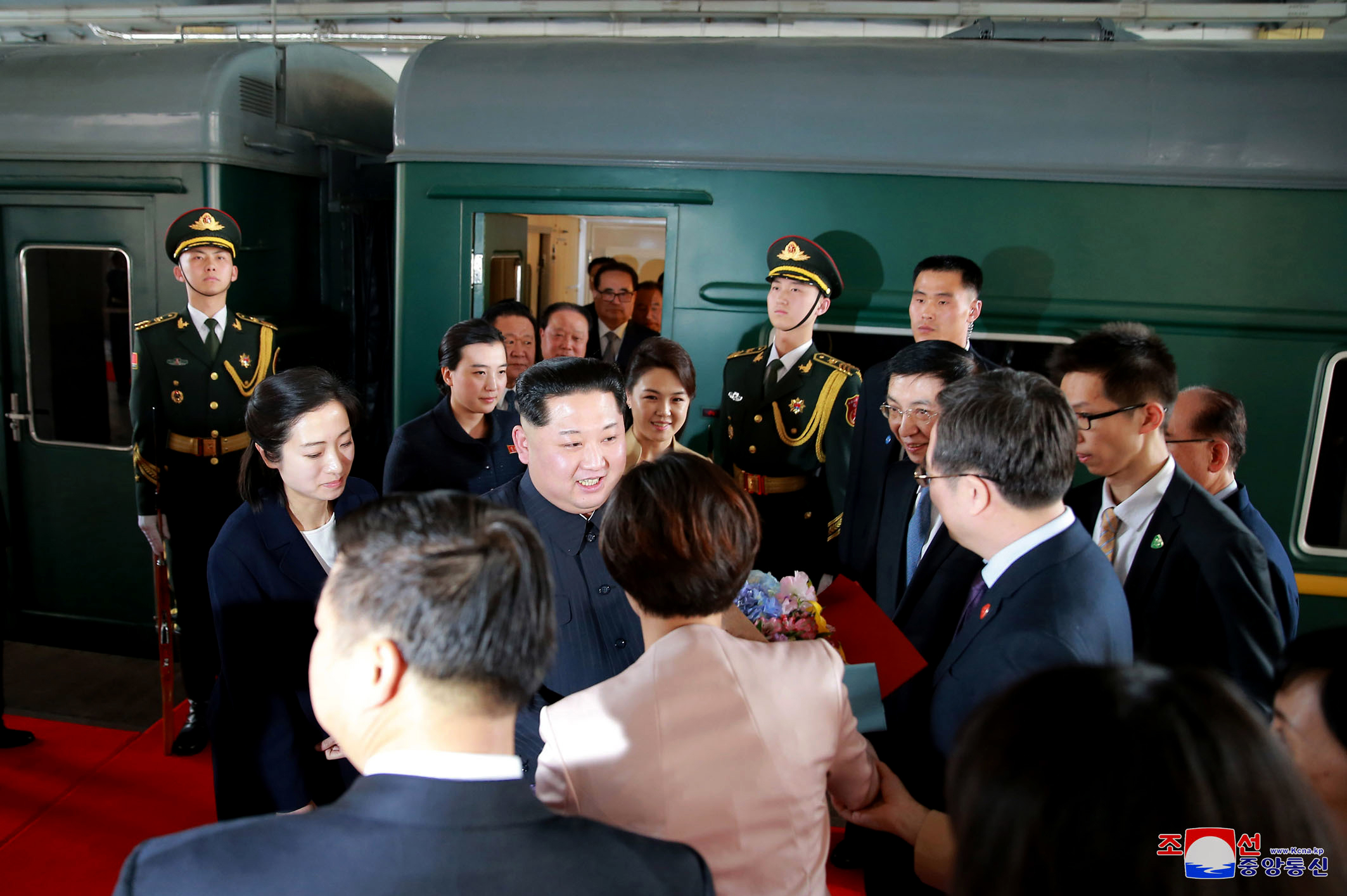
    He also said that Chinese President Xi Jinping said his meeting with the North Korean leader went well, and that a meeting with the U.S. was discussed. A diplomatic train arrived in Beijing on Tuesday, but it was unclear if Mr. Kim was on board. The Chinese later confirmed Mr. Kim’s presence, marking his first foreign visit since taking over in 2011.

    SEE ALSO: North Korean leader Kim Jong-un makes first visit to China, Beijing confirms

    “Received message last night from XI JINPING of China that his meeting with KIM JONG UN went very well and that KIM looks forward to his meeting with me. In the meantime, and unfortunately, maximum sanctions and pressure must be maintained at all cost!” he added.

    For years and through many administrations, everyone said that peace and the denuclearization of the Korean Peninsula was not even a small possibility. Now there is a good chance that Kim Jong Un will do what is right for his people and for humanity. Look forward to our meeting!

    — Donald J. Trump (@realDonaldTrump) March 28, 2018

    Received message last night from XI JINPING of China that his meeting with KIM JONG UN went very well and that KIM looks forward to his meeting with me. In the meantime, and unfortunately, maximum sanctions and pressure must be maintained at all cost!

    — Donald J. Trump (@realDonaldTrump) March 28, 2018