Category: WORLDS

  • John Bolton as Donald Trump national security adviser ‘a shame,’ Iran says

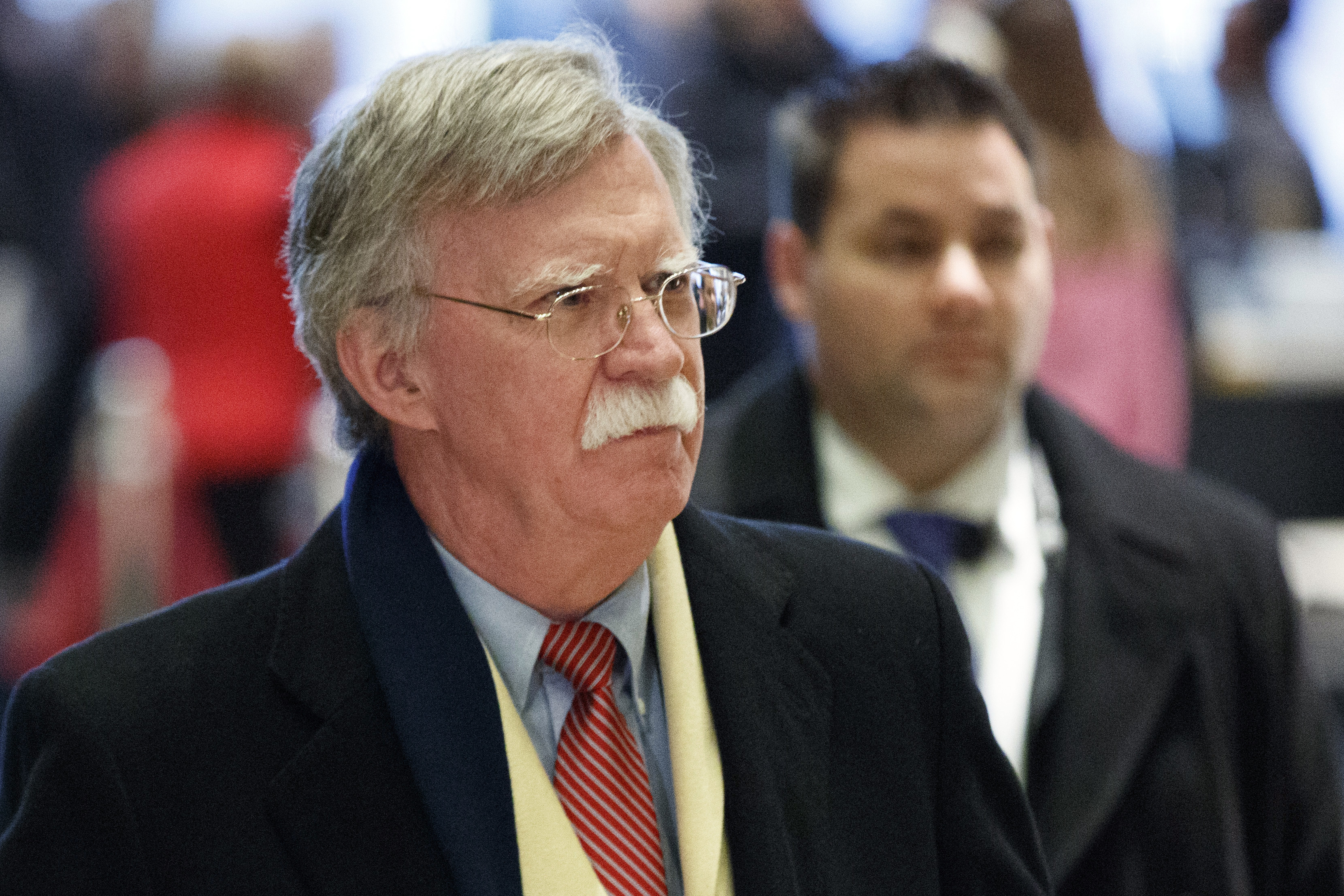
    Iran has called the appointment of the former U.N. Ambassador John Bolton to the role of National Security Adviser of the United States “a shame.”

    TEHRAN, Iran — Iran has called the appointment of the former U.N. Ambassador John Bolton to the role of National Security Adviser of the United States “a shame.”

    The Sunday report by the semi-official Fars news agency quotes Ali Shamkhani, secretary of the country’s Supreme National Security Council, as saying for an “apparent superpower it is a matter of shame that its national security adviser receives wages from a terrorist group,” referring to Bolton attending a gathering of the Iranian opposition group Mujahedeen-e-Khalq (MEK) group in 2017.

    The U.S. removed MEK from its list of foreign terrorist organizations in 2012.

    President Donald Trump said Thursday he would appoint Bolton to the post as his administration faces a key decision on whether to pull out of the Iran nuclear deal.

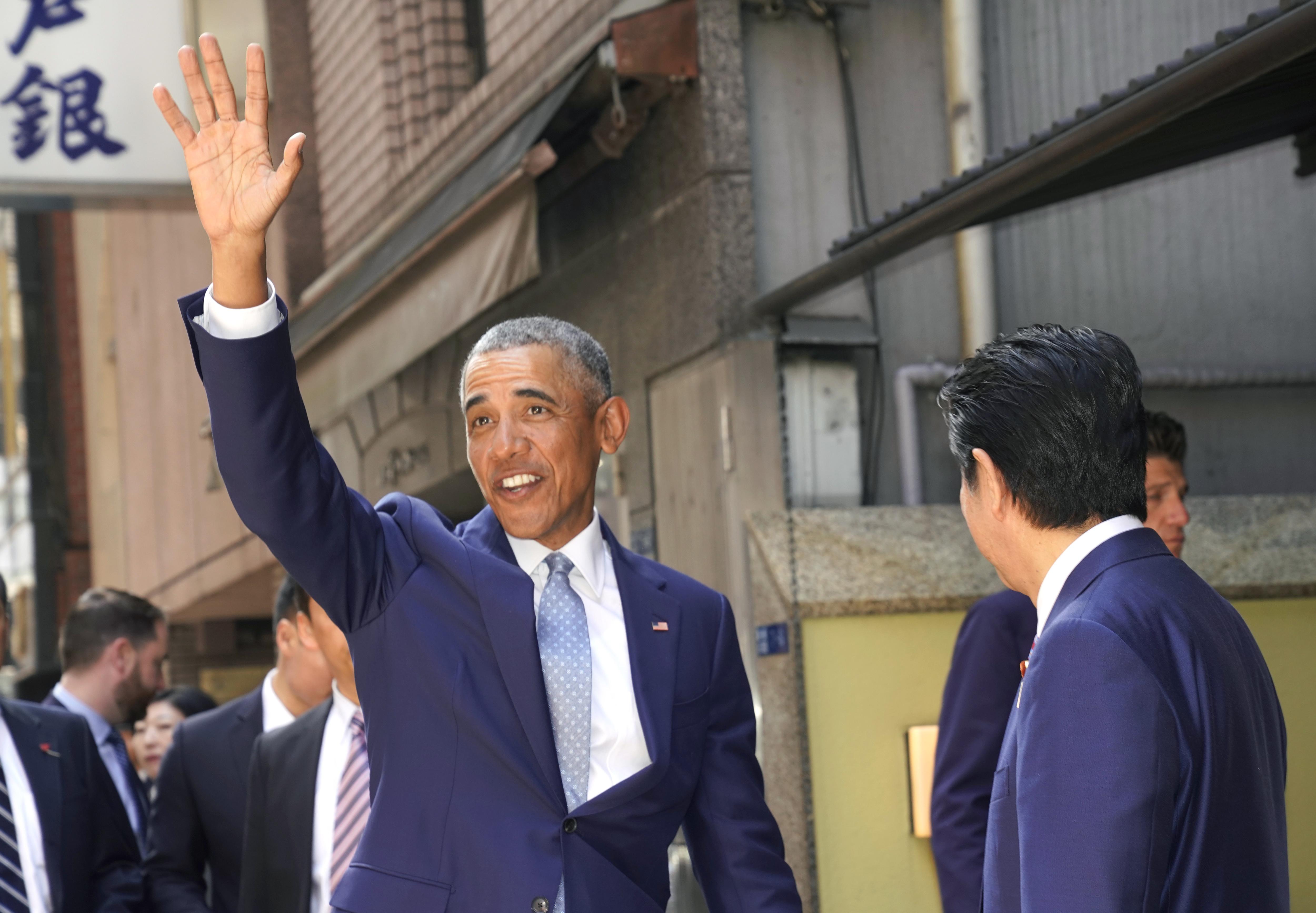
  • Obama, in Japan, says NKorea’s isolation means less leverage

    Former President Barack Obama said Sunday that negotiations with North Korea on its nuclear weapons program are difficult, partly because the country’s isolation minimizes possible leverage, such as t

    TOKYO (AP) – Former President Barack Obama said Sunday that negotiations with North Korea on its nuclear weapons program are difficult, partly because the country’s isolation minimizes possible leverage, such as trade and travel sanctions against Pyongyang.

    “North Korea is an example of a country that is so far out of the international norms and so disconnected with the rest of the world,” Obama told a packed hall in Tokyo.

    He stressed that the effort to get North Korea to give up nuclear weapons remains difficult, but said countries working together, including China, South Korea and Japan, to pressure the North is better than nations working alone.

    He noted that past U.S. efforts on Iran’s nuclear weapons were more successful because there was more leverage, but that there’s little commerce and travel with North Korea to being with.

    “That makes them less subject to these kinds of negotiations,” he said of North Korea.

    Obama was speaking at an event sponsored by a Japanese nonprofit group during an Asia-Pacific trip that included earlier stops in Singapore, New Zealand and Australia. Obama’s work after leaving office has been focused on nurturing young leaders.

    Obama, welcomed by a standing ovation, said that the U.S.-Japan alliance remains strong, and that the U.S. is committed to defending Japan.

    “North Korea is a real threat,” he said.

    “Our view has always been that we would prefer to resolve these issues peacefully,” he said, adding that otherwise “the cost in terms of human life would be significant.”

    He acknowledged that progress on a nuclear-free world will likely take a long time as long as Russia and the U.S. can’t agree to reduce their stockpiles.

    Obama also reflected on his 2016 visit to Hiroshima, one of two Japanese cities where the U.S. dropped atomic bombs in the closing days of World War II. His visit was the first by an American president.

    Almost all American presidents tend to be relatively popular in Japan, which views the U.S. as its most important ally. But many Japanese particularly appreciate Obama’s efforts on denuclearization and remember with fondness his trip to Hiroshima and his message of working toward a world without nuclear weapons.

    “It was an extraordinarily powerful moment for me,” Obama recalled.

    ___

    Follow Yuri Kageyama on Twitter at https://twitter.com/yurikageyama

    Her work can be found at https://www.apnews.com/search/yuri%20kageyama

  • Donald Trump hits China with $60 billion in tariffs

    President Trump signed an order Thursday that cracked down on China’s unfair trade practices and theft of U.S. intellectual property with $60 billion in tariffs on high-tech imports.

    President Trump socked China with up to $60 billion in proposed trade tariffs, investment restrictions and plans for a formal complaint to the World Trade Organization, drawing immediate threats of retaliation from Beijing and sending the stock market into an epic nosedive Thursday over fears that the globe’s two biggest economies were heading for a trade war.

    Following though on the tough talk on trade that helped put him in the White House, Mr. Trump said the U.S. was finally cracking down on decades of unfair trade practices and theft of intellectual property. U.S. officials say these Chinese practices contributed to bilateral trade deficits for the U.S. of hundreds of billions of dollars annually.

    “We are doing things for this country that should have been done for many, many years,” the president said as he signed an order for tariffs and other get-tough measures on China.

    In comments that unnerved investors, Mr. Trump added, “This is the first of many.”

    The tariffs instruct the Commerce Department to target Chinese information technology, consumer electronics and telecoms, imposing import costs of $50 billion to $60 billion that roughly equal the value of U.S. technology lost to China because of the country’s onerous trade rules.

    China vowed retaliation.

    “China is not afraid of and will not recoil from a trade war,” the Chinese Embassy in Washington said in a statement. It said Mr. Trump’s tariffs would backfire and “directly harm the interests of U.S. consumers, companies, and financial markets.”

    Despite its huge surpluses, China is not without weapons in a trade fight. Beijing has signaled that it could strike back by cutting its soybean purchases from U.S. farmers. China is the biggest market for soybeans and many other U.S. agricultural products and is a crucial market for American aircraft, cotton, electrical machinery, cars and trucks, corn and coal.

    China is also the world’s largest holder of U.S. government debt — a double-edged sword as any move to hurt U.S. government credit could undercut the value of Beijing’s holdings as well.

    The sell-off on Wall Street was deep and immediate. All 30 stocks in the Dow Jones lost ground, and investment safe havens such as gold and U.S. Treasury bonds jumped in value.

    The Dow Jones industrial average tumbled more than 724 points, or 2.93 percent, to fall below the 24,000 mark. The broader S&P 500 slipped more than 68 points, or 2.52 percent, and the Nasdaq fell more than 178 points, or 2.43 percent.

    It was the worst day for the Dow since a chaotic sell-off in February and the blue chip index’s worst March free fall in 17 years.

    “If the Dow is allowed to vote, you can see what their vote is today: They don’t like it,” Rick Helfenbein, president of American Apparel & Footwear Association, said on Fox Business Network.

    Like many U.S. industries still in the dark on where exactly the Trump administration’s tariffs will land, Mr. Helfenbein said he hoped the tariffs wouldn’t hit his sector.

    Trade moves

    The China decision came close on the heels of a string of other trade moves to implement Mr. Trump’s “America first” economic agenda and reverse what he sees as decades of misguided U.S. trade policy promoting open markets and multilateral trade agreements.

    The administration announced tariffs on steel and aluminum imports this month, although a number of markets, including Canada, Mexico, the European Union, South Korea and Australia, will be exempted initially from the tariffs. Mr. Trump since the beginning of the year has put tariffs on Chinese solar panels and South Korean washing machines. A week later, China’s biggest maker of solar panels announced plans to open a U.S. factory.

    The U.S. is also locked in lengthy talks with Canada and Mexico over Mr. Trump’s demand for a renegotiation of the North American Free Trade Agreement. The president has vowed to leave the 24-year-old pact if a new agreement is not reached.

    Commerce Secretary Wilbur L. Ross Jr., a prime advocate of the tariffs, acknowledged that China was likely to retaliate against American companies.

    Many expect Beijing to target states where the president is most popular, but Mr. Ross played down the prospect of an all-out trade war.

    “We will end up negotiating these things rather than fighting over them, in my view,” Mr. Ross told Bloomberg News.

    With U.S. companies long complaining about China’s failure to protect foreign investors’ intellectual property rights, the president’s order focused on technology imports. But the list of items subject to the tariff could expand to include such items as clothing and shoes.

    The tariffs are being imposed under Section 301 of the Trade Act of 1974 that authorizes the president to take action or retaliation against unjustified, unreasonable or discriminatory foreign trade laws that hurt U.S. commerce. They are part of a package of measures to combat Beijing’s aggressive trade tactics, including forced intellectual property transfers for U.S. companies as the price of doing business in China.

    The actions included:

    ⦁ Adding 25 percent to tariffs on products supported by China’s unfair industrial policy, including aerospace, cellphones, computers and machinery.

    ⦁ Opening a World Trade Organization case against China’s discriminatory technology licensing practices.

    ⦁ New restrictions on Chinese companies buying into U.S. technology business.

    At the White House signing ceremony, Mr. Trump was surrounded by former top national security officials and CEOs from defense companies Raytheon, Lockheed Martin, General Atomics and Leidos.

    Lockheed Martin CEO Marillyn Hewson called it a “very important moment for our country.”

    “We are addressing what is a critical area for the aerospace and defense industry, and that is protecting our intellectual property,” she said. “That is the lifeblood of our companies. And so we very much welcome this action on the part of the Trump administration and the president of the United States.”

    Corporate angst

    U.S. Trade Representative Robert Lighthizer, who spearheaded the action against China, said the Trump administration was moving to protect America’s future.

    “Technology is really the backbone of the future of the U.S. economy,” he said.

    Still, leaders from many business sectors overwhelmingly opposed the tariffs and warned that it would be a tax ultimately paid by U.S. consumers.

    “The internet industry has serious concerns with the impact of these tariffs — and potential retaliatory actions — on American jobs, consumers, and the digital economy,” said Melika Carroll of the Internet Association, an industry lobbying group.

    The Business Roundtable, an association of CEOs from the biggest U.S. companies, said in a statement that the Trump tariffs “will only raise prices in America, make American companies and products less competitive, and harm U.S. workers and consumers.”

    Mr. Trump brushed aside the concerns.

    Emphasizing that America’s $800 billion trade deficit with the world could not be allowed to continue, Mr. Trump said other trading partners such as South Korea and the European Union were begging to make deals in the face of his tough trade policies.

    The U.S. trade deficit with China topped $375 billion last year, but Mr. Trump cited calculations that put it over $500 billion.

    He said the tariffs, which do not take effect immediately, had already brought Beijing to the negotiating table. Since taking office, Mr. Trump has been pressing Chinese President Xi Jinping and other top officials to rein in unfair trade restrictions and lower the trade deficit by $100 billion.

    “We are in the midst of very major and very positive negotiations,” the president said.

    But pulling the trigger on tariffs could pressure Mr. Xi to respond at least as hard to show his own government that he can’t be bullied.
  • French hero officer who swapped himself for hostage dies

    A French police officer who offered himself up to an Islamic extremist gunman in exchange for a hostage has died, raising the death toll in the attack in southern France to four. He was honored Saturd

    TREBES, France (AP) — A French police officer who offered himself up to an Islamic extremist gunman in exchange for a hostage has died, raising the death toll in the attack in southern France to four. He was honored Saturday as a national hero of “exceptional courage and selflessness.”

    Lt. Col. Arnaud Beltrame, 44, was among the first officers to respond to the attack Friday on the supermarket in the southern French town of Trebes.

    Beltrame, who joined the elite police special forces in 2003 and served in Iraq in 2005, had organized a training session in the Aude region in December for just such a hostage situation. At the time, he armed his officers with paintball guns, according to the Depeche du Midi newspaper.

    “We want to be as close to real conditions as possible,” he said then.

    But when he went inside the supermarket, he gave up his own weapon and volunteered himself in exchange for a female hostage.

    Unbeknownst to the Morocco-born hostage-taker, he left his cellphone on so police outside could hear what was happening in the store. They stormed the building when they heard gunshots, officials said. Beltrame was fatally wounded.

    In addition to the four people killed by the gunman in his rampage Friday, the attacker was killed by police. Fifteen others were injured.

    “Arnaud Beltrame died in the service of the nation to which he had already given so much,” President Emmanuel Macron said. “In giving his life to end the deadly plan of a jihadi terrorist, he fell as a hero.”

    French police and soldiers have been a prime target of attacks by extremists, with 10 killed in recent years, including Beltrame. Other victims include three soldiers killed near Toulouse in 2012, three police officers shot to death in 2015, a police couple killed in their home in 2016 and a police officer killed on Paris‘ Champs-Elysees in 2017. Dozens of others have been wounded.

    According to Macron’s statement, Beltrame also served as a member of the presidential guard and in 2012 earned one of France’s highest honors, the Order of Merit. He was married with no children.

    Cedric Beltrame told RTL radio Saturday that his brother died “a hero.”

    “He was well aware he had almost no chance. He was very aware of what he was doing,” Cedric Beltrame said.

    Beltrame’s mother told RTL radio that, for her son, “to defend the homeland” was “his reason to live.”

    “He would have said to me, ‘I’m doing my job, Mom, nothing more,’” she said.

    People were placing flowers in front of the Gendarmerie headquarters in the French medieval city of Carcassone to pay tribute to Lt. Col. Beltrame. Flags at all gendarmeries were ordered to fly at half-staff.

    Macron says investigators will focus on establishing how the gunman, identified by prosecutors as Morocco-born Redouane Lakdim, 25, got his weapon and how he became radicalized.

    On Friday night, authorities searched a car and the apartment complex in central Carcassonne where Lakdim was believed to live. Two people were detained over alleged links with a terrorist enterprise, one woman close to Lakdim and a friend of his, a 17-year-old male, Paris prosecutor’s office said.

    Lakdim was known to police for petty crime and drug dealing. But he was also under surveillance and since 2014 was on the so-called Fiche S list, a government register of individuals suspected of being radicalized but who have yet to perform acts of terrorism.

    Despite this, Paris prosecutor Francois Molins said there was “no warning sign” that Lakdim would carry out an attack.

    The four-hour drama began at 10:13 a.m. when Lakdim hijacked a car near Carcassonne, killing one person in the car and wounding the other, the prosecutor said.

    Lakdim then fired six shots at police officers on their way back from jogging near Carcassonne, hitting one in the shoulder, said Yves Lefebvre of the SGP Police-FO police union.

    Lakdim then went to a Super U supermarket in nearby Trebes, 60 miles (100 kilometers) southeast of Toulouse, shooting and killing two people in the market and taking hostages. He shouted “Allahu akbar!” — the Arabic phrase for God is great — and said he was a “soldier of the Islamic State” as he entered the Super U, where about 50 people were inside, Molins said.

    Special police units converged on the scene while authorities blocked roads.

    “We heard an explosion — well, several explosions,” shopper Christian Guibbert told reporters. “I saw a man lying on the floor and another person, very agitated, who had a gun in one hand and a knife in the other.”

    Guibbert said he put his wife, sister-in-law and other shoppers in the meat locker for safety.

    The manager of the supermarket, who would identify herself only by her first name, Samia, was in her office when she heard the shots.

    “Call the gendarmes,” she told her employees. “There’s a terrorist in the store.”

    She said she helped evacuate as many people as possible.

    “It was terrifying,” Samia said.

    During the standoff, Lakdim requested the release of Salah Abdeslam, the sole surviving assailant of the Nov. 13, 2015, attacks in Paris that left 130 people dead. The interior minister suggested, however, that Abdeslam’s release wasn’t a key motive for the attack.

    The IS-linked Aamaq news agency said the attacker was responding to the group’s calls to target countries in the U.S.-led coalition carrying out airstrikes against IS militants in Syria and Iraq since 2014. France has been repeatedly targeted because of its participation.

    France has been on high alert since a series of extremist attacks in 2015 and 2016 that killed more than 200 people.

    ___

    Associated Press journalists Elaine Ganley. Thomas Adamson, Samuel Petrequin, Sylvie Corbet, Angela Charlton and Jerome Pugmire contributed to this report from Paris.

    ___

    This story has been corrected to show dead policeman’s rank was Lt. Col., not Col. An earlier version of this story incorrectly stated that the Islamic State group claimed responsibility for the attack. The IS-linked Aamaq news agency said the attacker was responding to the group’s calls to target countries in the U.S.-led coalition carrying out airstrikes against IS militants.

  • Russia retaliates against sanctions, puts more Americans on its ‘blacklist’

    Moscow is striking back against new U.S. sanctions by expanding the number of Americans on its “blacklist,” Russian Deputy Foreign Minister Sergei Ryabkov said Friday.

    Moscow is striking back against new U.S. sanctions by expanding the number of Americans on its “blacklist,” Russian Deputy Foreign Minister Sergei Ryabkov said Friday.

    “Those [American] politicians are playing with fire by destroying Russian-American relationship because simultaneously they shake global stability,” Mr. Ryabkov said, according to a report by the new service RIA.

    It is the first retaliation for the Trump administration slapping new sanctions on Russian individuals and entities, including Russian spy agencies, for meddling in the 2016 U.S. election and cyberattacks on the U.S.

    SEE ALSO: Russia will expel British diplomats in poisoning standoff

    Tension between the West and Russia reached the breaking point this month with a nerve-gas assassination attempt for a former double agent and his daughter in the U.K.

    U.S. national security officials cited the assassination attempt and cyberattacks, including a series of attacks on America’s power grid, nuclear power plants and aviation, as contributing to the sanction regime.

    Mr. Rybkov said adding more Americans to the “blacklist” would maintain Moscow’s policy of parity in sanctions.

    The Trump administration expanded sanctions against Russia by 19 individuals and five entities, Russian spy agency FSB and Russia’s military intelligence agency GRU.

    Russian President Vladimir Putin, who is expected to easily win re-election Sunday, has denied his country was involved in election meddling.

    Moscow also denies involvement in the nerve-agent attack in Britain.

  • Mystery surrounds how ex-Russian spy was poisoned in U.K.

    As British authorities investigate the poisoning of a former Russian spy and his daughter in England, there is much mystery about how exactly the brazen attack was carried out. Here are some of the un

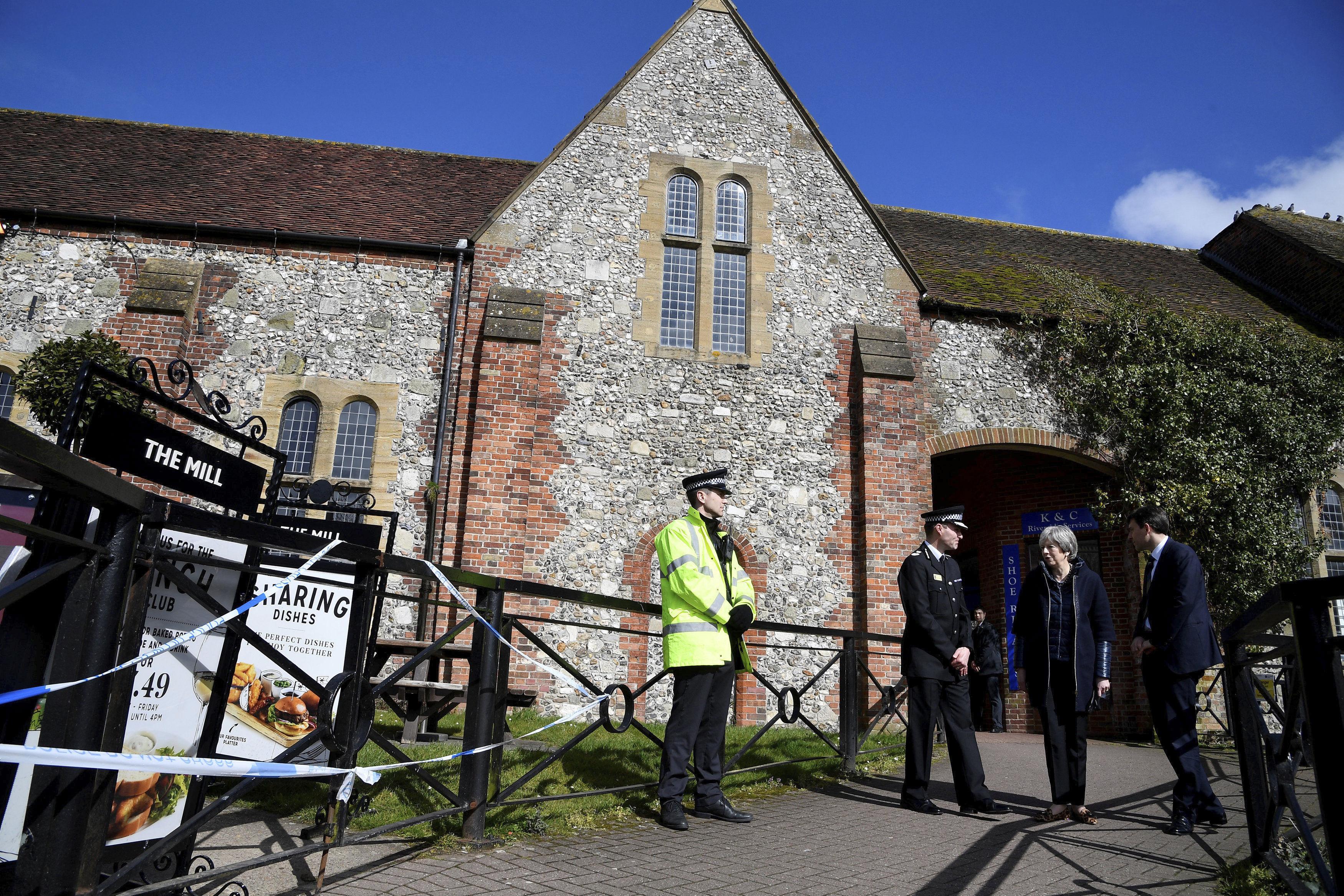
    LONDON (AP) — As British authorities investigate the poisoning of a former Russian spy and his daughter in England, there is much mystery about how exactly the brazen attack was carried out. Here are some of the unanswered questions that British officials are chasing:

    WHERE DID THE NERVE AGENT ORIGINATE?

    British Prime Minister Theresa May has declared that former Russian military intelligence officer Sergei Skripal and his daughter Yulia were poisoned March 4 in Salisbury with Novichok, a class of military-grade nerve agents developed by the Soviet Union at the end of the Cold War. They are both in critical condition.

    Hamish de Bretton-Gordon, an ex-commander of the British Army’s chemical, biological, radiation and nuclear regiment, said Novichok was only ever manufactured at one site, a military laboratory at Shikhany in central Russia.

    De Bretton-Gordon said there were rumors of a Novichok test in Uzbekistan in the 1980s but that any of the remaining nerve agent from that experiment would have lost its toxicity – and that the agent used to poison the Skripals was extremely toxic. He said it was “very unlikely” the Novichok used in Salisbury could have been lost or stolen in the years after the Soviet Union collapsed in 1991.

    Russia’s envoy at the international chemical weapons watchdog said Britain and the U.S. both had access to Novichok and that the nerve agent used to attack the Skripals could have come from either of their stockpiles.

    De Bretton-Gordon dismissed that claim as “complete hogwash.”

    According to the Organization for the Prohibition of Chemical Weapons, there is no record of Novichok nerve agents having been declared by any nation that signed the Chemical Weapons convention.

    ___

    HOW DID NOVICHOK ARRIVE IN BRITAIN?

    It’s unclear. Some British media, citing unnamed police sources, are reporting that Yulia Skripal unknowingly brought the Novichok nerve agent to Salisbury in her suitcase on a plane trip from Moscow, arriving in Britain the day before the attack.

    Some scientists say it’s feasible that the nerve agent could be made stable enough to travel and that various compounds could have been added to Novichok to make it a clear, colorless liquid resembling water, perfume or alcohol. The ingredients to make Novichok are relatively cheap and accessible, but mixing them together is extremely dangerous, which suggests the nerve agent was brought to the U.K. as a finished product.

    “The moment you mix this stuff up, it presents a high risk to you – and if you were to spill it, you’d be in terrible danger,” said Andrea Sella, a professor of inorganic chemistry at University College London.

    He said nerve agents like Novichok are usually highly unstable and degrade quickly in the presence of moisture, but that if the agent was sealed in a tight container “it ought to be able to hang around.”

    De Bretton-Gordon said it was possible that the Novichok arrived in Salisbury in Yulia Skripal’s suitcase, but said much could go wrong in such a scenario.

    “I think there must be somebody behind it who has delivered it,” he said.

    ___

    HOW WERE THE SKRIPALS EXPOSED TO THE NERVE AGENT?

    It’s thought the Skripals were exposed to Novichok at the elder Skripal’s home in Salisbury. But officials are struggling to explain why there appears to have been a significant delay between when they were exposed to the deadly agent and when they got sick.

    Yulia Skripal arrived in the U.K. on March 3 but it was not until the following day – after she and her father had eaten lunch and stopped at a pub – that they were found slumped over unconscious on a public bench. A police officer who then visited the Skripal residence was also later hospitalized for chemical poisoning. As of Friday he was still in serious condition.

    “The fact that both the father and daughter came down with very similar symptoms at a similar time suggests that the contact with Novichok was fairly close for both of them,” said Alastair Hay, a professor emeritus of environmental toxicology at the University of Leeds.

    Sella said it seemed unusual that neither of the Skripals appeared to have noticed their exposure to Novichok since they did not seek medical attention.

    “It seems like (the Novichok) was disguised incredibly cunningly, because if you suddenly realized there was this horrendous substance in something that you thought was innocuous, you would immediately raise the alarm,” he said. “But to all appearances, they had no real concerns: they went to lunch and they went to a pub.”

    ___

    Jill Lawless in London and Michael Corder in The Hague contributed to this report.

  • Donald Trump, South Korea prep for nuclear talks with the North

    President Trump spoke Friday with South Korea President Moon Jae-in about setting up denuclearization talks with the North, said the White House.

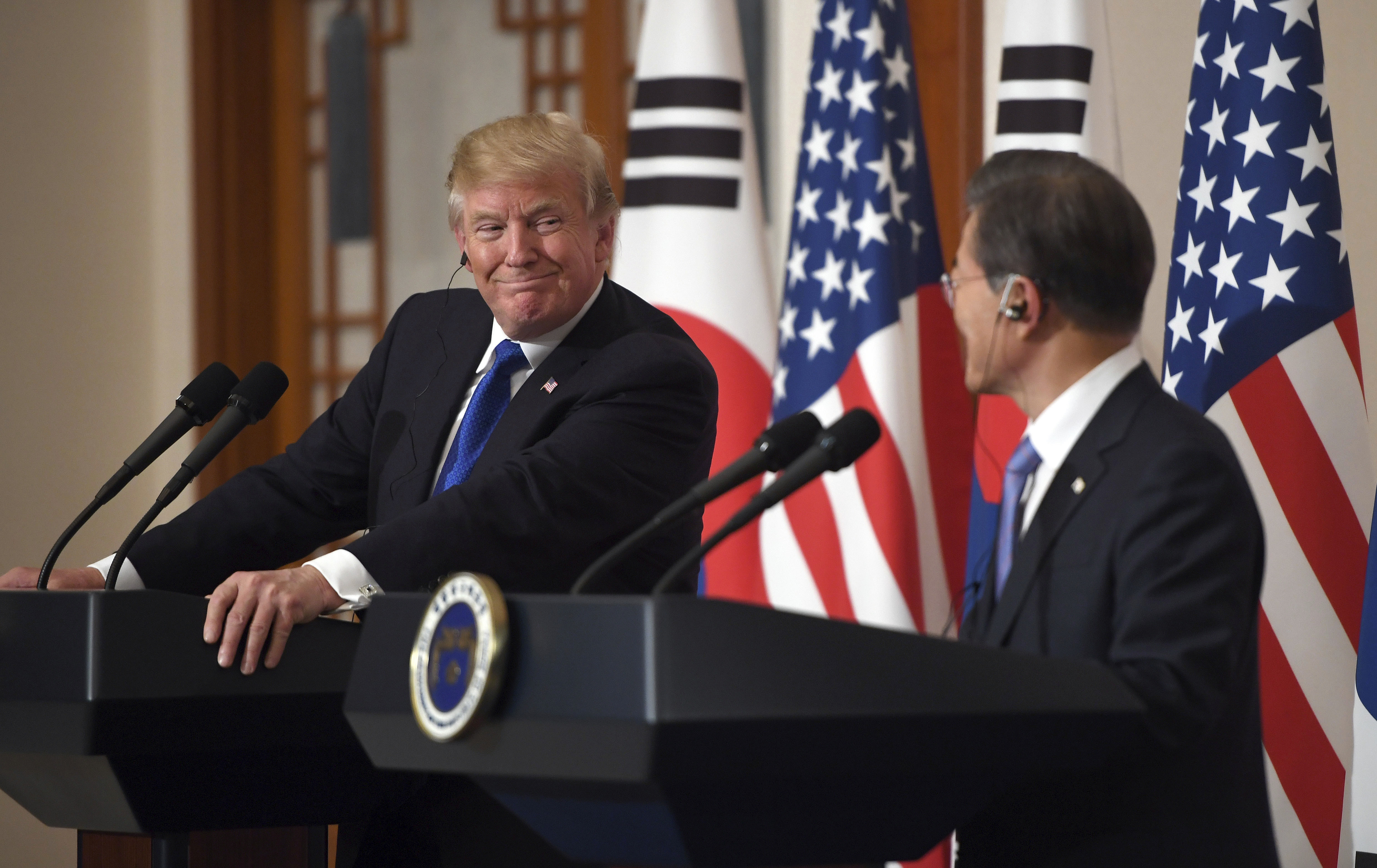
    President Trump spoke Friday with South Korea President Moon Jae-in about setting up denuclearization talks with the North, said the White House.

    Mr. Trump said he wants to hold the historic face-to-face talks with North Korea dictator Kim Jong-un before the end of May.

    “Both leaders affirmed the importance of learning from the mistakes of the past, and pledged continued, close coordination to maintain maximum pressure on the North Korean regime,” the White House said in a statement.

    Mr. Kim requested the talks, agreeing to cease nuclear weapons and missile tests, after severe economic sanctions were imposed on the Hermit Kingdom by the U.S. and other nations, including North Korea chief sponsor China.

    Mr. Trump has demanded North Korea demonstrate its willingness to stop nuclear test before opening talks, an issue that came up in the call Mr. Moon.

    “The two leaders agreed that concrete actions, not words, will be the key to achieving permanent denuclearization of the Korean Peninsula,” said the White House. “The two leaders expressed cautious optimism over recent developments and emphasized that a brighter future is available for North Korea, if it chooses the correct path.”

  • Vladimir Putin, emboldened by Russian elections, to expand influence abroad

    There’s little suspense about Sunday’s Russian presidential election, but a lot of questions — and concerns — over what Vladimir Putin might do next with another six-year term in his pocket and a st

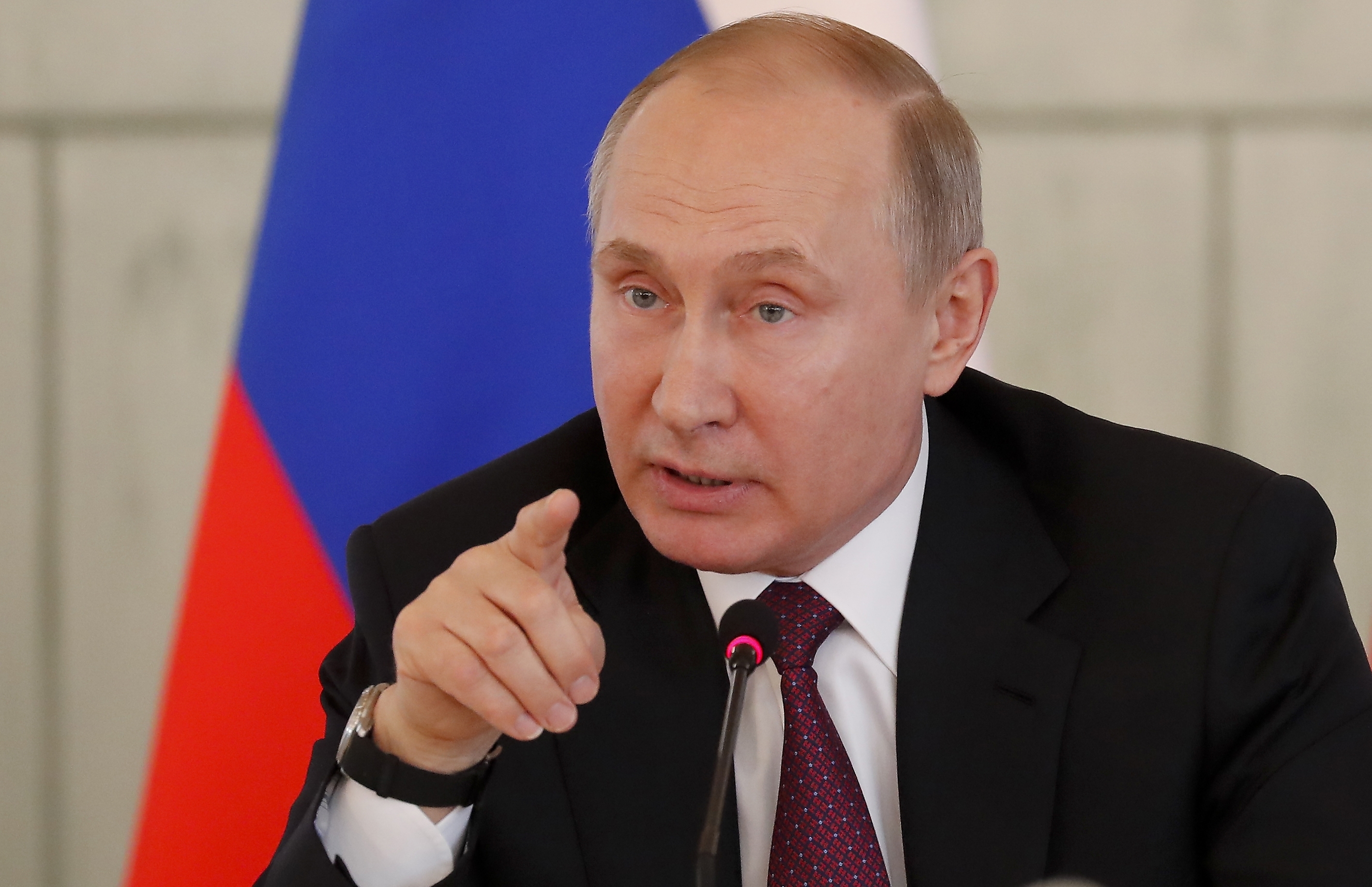
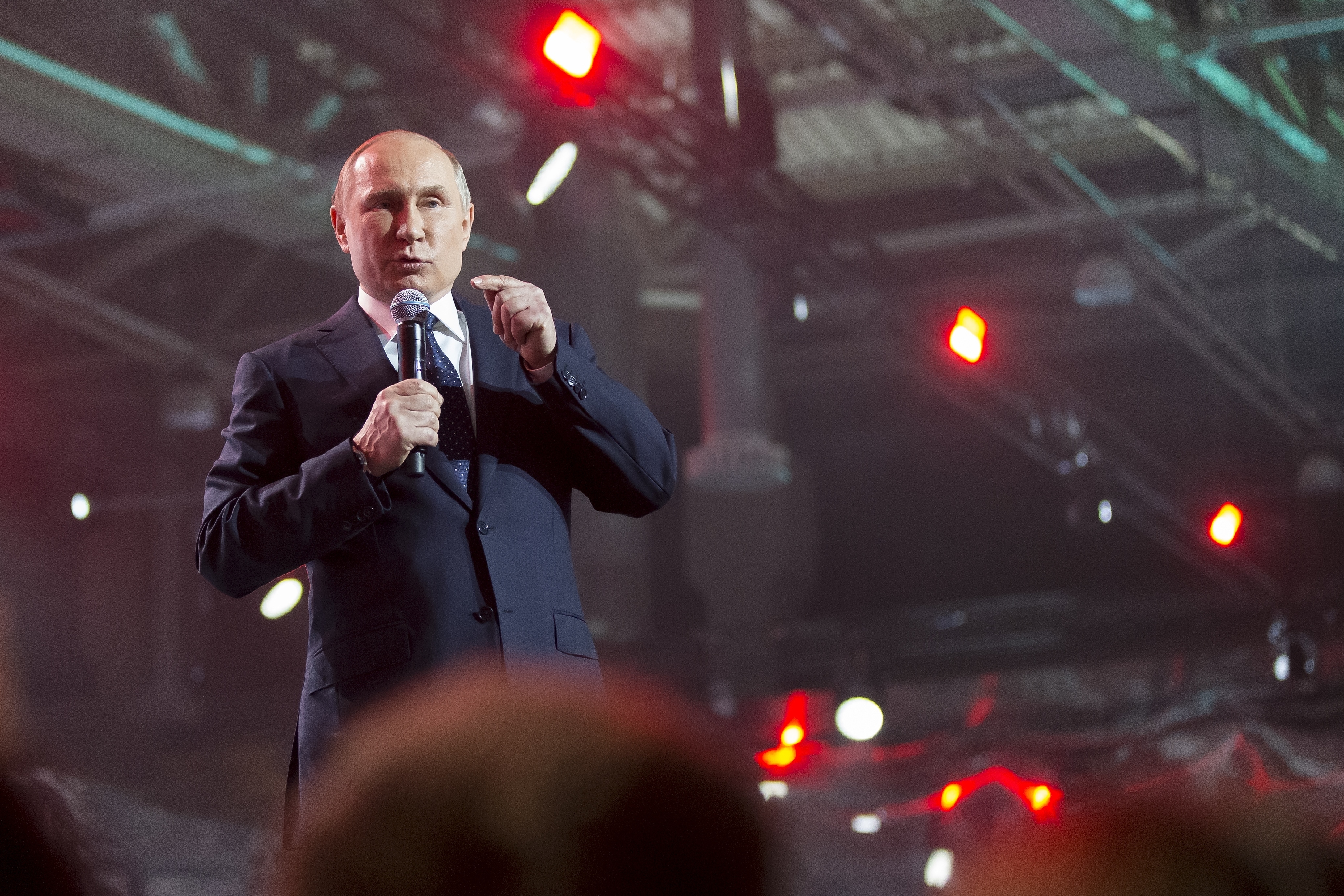
    There’s little suspense about Sunday’s Russian presidential election, but a lot of questions — and concerns — over what Vladimir Putin might do next with another six-year term in his pocket and a string of unresolved confrontations with the West.

    Across nine time zones, Russians are widely expected to give the 65-year-old former KGB officer a fourth term in office Sunday, at a time when tensions with the West have skyrocketed to levels not seen since the Cold War.

    The Kremlin is at odds with the U.S. and its allies over alleged election-meddling, the nerve gas attack on an ex-Russian spy living in Britain, the future of Syria, Ukraine and Iran. In his final campaign rallies, including one in the Crimean peninsula seized by Moscow from Ukraine four years ago, Mr. Putin showed little sign of pulling back after Sunday’s vote.

    “If one thought that perhaps Putin would try to de-escalate ahead of this weekend, we have only seen the opposite,” Boris Zilberman, a Russia expert at the Foundation for Defense of Democracies, said in an interview.

    The sense of foreboding is shared by U.S. allies across the Atlantic.

    “Given the trajectory of the last six years, the die is cast for what will happen the next six,” said Dr. Alan Mendoza, executive director of the British-based think tank the Henry Jackson Society. Mr. Putin “has sped up his meddling and pushed Russian influence even further afield. There are no signs this will change.”

    While some blame the West’s inability after the Cold War to establish a new international security system that firmly included Russia — Mr. Mendoza said blame is unimportant compared to future action.

    “The question,” he said, “is not, ‘What is Putin going to do?’, but how are we going to respond and push his face him down and put him back into his box?”

    Experts see two trends intertwining — Mr. Putin’s rejection of the Western-inspired reforms of his predecessor, Boris Yeltsin, and the expansion of an Russian foreign policy to mask social and economic weaknesses at home. Even now, many ordinary Russians see the authoritarian Mr. Putin as a calming presence in the aftermath of the chaotic and economically troubled Yeltsin years.

    “The fact of the matter is Putin’s continued adventurism abroad, brazen violations of international norms and rules, and disregard for rule of law will only ensure that the next 6 years will only be worse for the average Russian citizen.” said Mr. Zilberman.

    Many ordinary Russians say the country’s precarious international standing was just one more reason to stick with Mr. Putin.

    “We will withstand this onslaught,” Svetlana Andrus, a ribbon round her neck in the colors of the Russian flag, told the Reuters news agency during a rally in Moscow. “We will support our country and Vladimir Vladimirovich.”

    The brazen hit job on ex-Russian spy Sergei Skripal on March 4 in the provincial British city of Salisbury could be trivial compared with more audacious actions that Moscow may be planning if Mr. Putin is “emboldened” by a victory, an American national security source with more than two decades experience working in Russia and the former Soviet Union argued.

    “It’s not that Putin was exactly shackled before, but once he has the election victory behind him, it will be like a new mandate,” the source said. “He’ll be emboldened.”

    Challenging Mr. Putin may require tougher steps after Sunday’s election is past, Russia watchers say.

    Mr. Mendoza backed significantly harsher sanctions than those imposed after Russia’s annexation of Crimea, which analysts questioned given that Russian counter-sanctions damaged some European export industries.

    “While there has been some movement, we could really squeeze their access to capital market and starve their ability to fund themselves,” he said. “It’s a weak economy and if we hit it the right way, Mr. Putin will slink back to Moscow with his tail between his legs.”

    Economic woes

    Economically, Mr. Putin’s third term as president was a roller-coaster ride, only turning up markedly in recent months.

    In 2015 falling oil prices rattled the ruble and sent inflation soaring above 16 percent, triggering a roughly two-year recession. Western sanctions also cut into national growth, although local Russian producers rushed to fill some of the import markets.

    Late last year, however, Russia’s central bank announced inflation had dipped below its target of 4 percent and that final 2017 figures showed the economy was growing again.

    International economists credit the Kremlin with policies that helped stabilize the situation, but overall GDP growth also remains extremely sluggish. World Bank estimates place it around 2 percent this year and 1.8 percent per year in future years.

    Everyday Russians feel the stagnation — the reason why Mr. Putin boasts about Russia’s foreign successes instead of recent economic progress.

    “By continuing to focus the attention of Russians to external events and controversies Putin has not had to explain why the average Russian is worse off today than they were six years ago,” said Mr. Zilberman.

    Get out the vote

    Mr. Putin has towered over Russia’s political landscape for the past 18 years and polls give him a roughly 80 percent approval rating.

    But this year the Kremlin grew so worried about low voter turnout that the Central Election Commission budgeted $13 million for consultancy firms to pump out flamboyant TV ads featuring everything from sex to anxiety jokes to persuade voters to cast ballots.

    While official turnout for presidential elections since the Soviet Union’s collapse in 1991 has been between 64 and 69.7 percent, the parliamentary elections of 2016 saw fewer than 50 percent of voters go to the polls.

    Fearful of apathy — and a field of eight candidates who pose no real challenge — Mr. Putin ditched his United Russia party, ran as an independent candidate and spent the past three months traversing the massive Russian countryside on highly choreographed campaign stops to press the flesh at factories, schools and even the occasional mosque.

    Anti-corruption critic Alexei Navalny, seen as the greatest threat to Mr. Putin’s popularity, has also been banned from the race.

    “What is extraordinary about Putin’s conduct this election,” said Mr. Mendoza, “for someone who looks so confident from the outside, he still pushed out Navalny and made sure he is running against the seven dwarfs. It tells you something about his belief in his ability to have a fair fight and it makes one wonder what would happen if the heat was really turned up.”

    • Guy Taylor contributed to this article.

  • No survivors in U.S. helicopter crash in western Iraq

    The entire crew of a U.S. Air Force search-and-rescue helicopter were killed when their aircraft crashed in western Iraq, American commanders with the U.S.-led operation against the Islamic State in t

    The entire crew of a U.S. Air Force search-and-rescue helicopter were killed when their aircraft crashed in western Iraq, American commanders with the U.S.-led operation against the Islamic State in the country confirmed Friday.

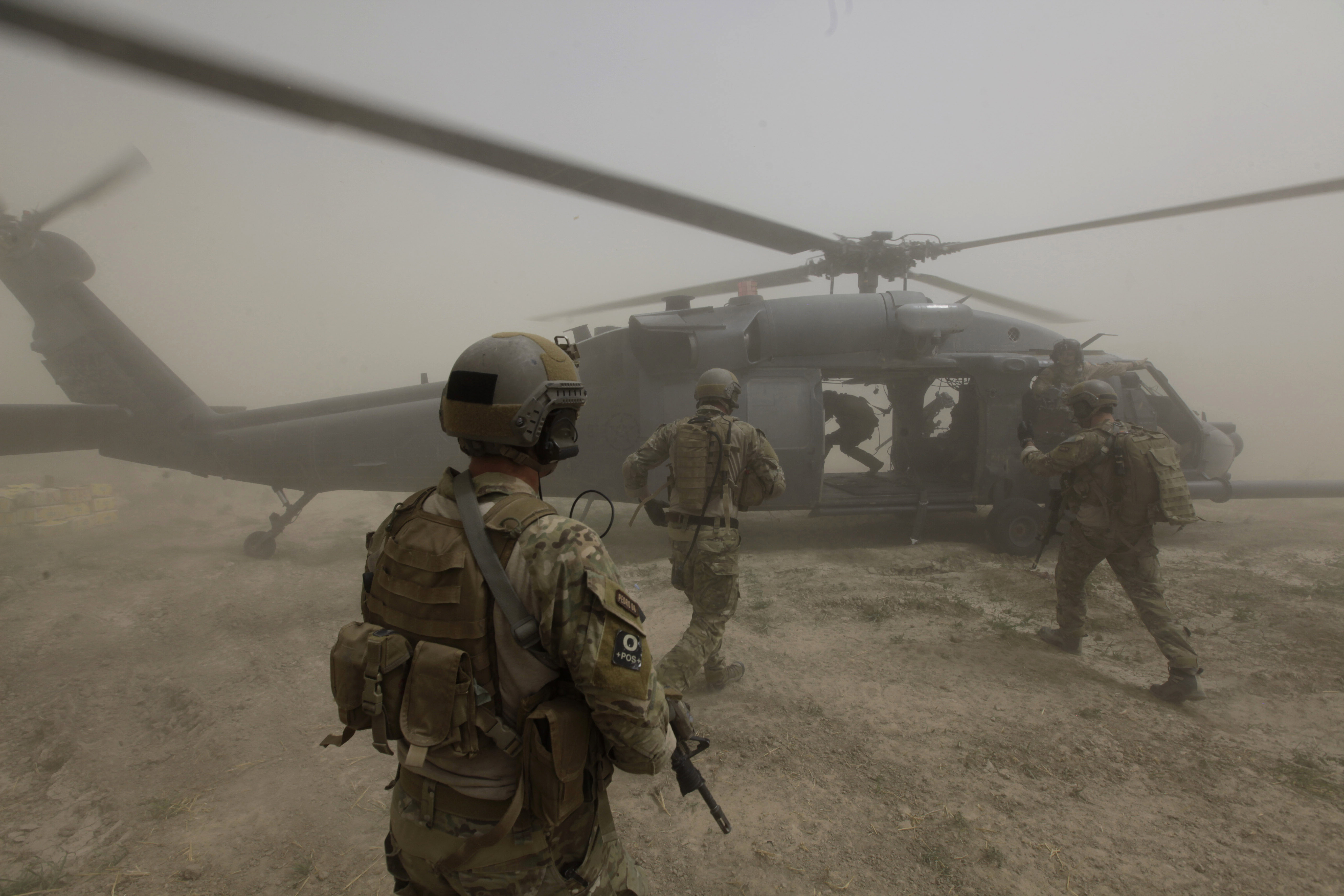
    The seven-member crew of the HH-60 Pave Hawk helicopter were conducting an operation near Al Qaim in Anbar Governorate, nearly 250 miles northwest of Baghdad along the Iraqi-Syrian border.

    “All personnel aboard were killed in the crash,” said Brig. Gen. Jonathan P. Braga, director of operations, said in a command statement.

    The operation was reportedly in support of the coalition effort to battle the terror group known as ISIS in Iraq, according to a statement issued by command officials at Operation Inherent Resolve.

    While the incident is still under investigation, there are no indications the helicopter was brought down as a result of enemy fire, Gen. Braga added in the statement issued early Friday.

    “This tragedy reminds us of the risks our men and women face every day in service of our nations. We are thinking of the loved ones of these service members today,” Gen. Braga said in Monday’s statement, refusing to disclose the identities of the slain service members.

  • Britain mulls hacking Russia in response to former spy’s poisoning

    Britain hasn’t ruled out conducting cyberattacks in retaliation for the recent poisoning of a former double agent and his daughter on U.K. soil, triggering a stern warning from Russia after Prime Mini

    Britain hasn’t ruled out conducting cyberattacks in retaliation for the recent poisoning of a former double agent and his daughter on U.K. soil, triggering a stern warning from Russia after Prime Minister Theresa May said Moscow was likely behind last week’s assassination attempt in the English city of Salisbury.

    “Not only is Russia groundlessly and provocatively accused of the Salisbury incident, but apparently, plans are being developed in the U.K. to strike Russia with cyber weapons,” Russia’s embassy in London said in a statement Tuesday.

    “Statements by a number of MPs, ‘Whitehall sources’ and ‘experts’ regarding a possible ‘deployment’ of ‘offensive cyber-capabilities’ cause serious concern,” the statement said. “We invite the British side to once again consider the consequences of such a reckless move.”

    Ms. May announced on Monday that Britain believed Russia was likely responsible for poisoning Sergei Skripal and his daughter Yulia, and that the U.K. will “take the full range of appropriate responses against those who would act against our country in this way.”

    “On Wednesday, we will consider in detail the response from the Russian State. Should there be no credible response, we will conclude that this action amounts to an unlawful use of force by the Russian State against the United Kingdom. And I will come back to this House and set out the full range of measures that we will take in response,” the Conservative Party leader told lawmakers.

    Addressing a question from a member of Parliament, Ms. May suggested cyberattacks could indeed be in the cards.

    “Can she confirm that if it is the conclusion of her majesty’s government that there was unlawful use of force by the Russian state, that we possess a considerable range of offensive cyber capabilities which we will not hesitate to deploy against that state if it is necessary to keep our country safe?” asked MP Mark Harper, a fellow Conservative.

    “We of course will look at responses across a number of areas of activity should it be, as he has said as I said in my statement, that we conclude that this action does amount to an unlawful use of force by the Russian state here in the U.K.,” Ms. May responded.

    The U.K.’s response could include hacking Russian targets including state-sponsored propaganda outlets and professional trolls linked to the Kremlin’s international meddling, British media reported citing unnamed sources.

    “Offensive cyber would be something in the arsenal. It would be considered or even likely” a government source told The Times of London.

    A former Russian intelligence colonel who later assisted British agents, Mr. Skripal and his daughter were discovered unconscious on a bench in Salisbury on March 4. Britain has since determined they were poisoned by a military-grade nerve agent developed by Russia, and Ms. May said Monday that Moscow was “highly likely” the culprit.

    “Russia is not guilty,” responded Sergei Lavrov, the Russian foreign ministry. “Russia is ready to cooperate according to the Chemical Weapons Convention, if Britain takes the trouble and condescends to carry out its international obligations according to the same document.”

    The U.K. Ministry of Defense warned in an unrelated announcement last week that Britain stands to wage cyberattacks if deemed necessary.

    Britain’s offensive cyber capabilities include the ability to retaliate after a cyberattack; the capability to deny, disrupt or degrade target communications or weapons systems; and capabilities to attack wider systems and infrastructure, according to a report released in December by the U.K. Parliament’s Intelligence and Security Committee.

    “Offensive cyber capabilities are usually highly tailored and system specific, as opposed to a one size fits all ‘cyber weapon,’” the report said.

    Russia, on its part, has been linked to an array of offensive cyber campaigns targeting the U.K and it’s allies, ranging from a wide-scale attack that debilitated Estonia in 2007, to the multi-pronged interference campaign waged against the 2016 U.S. presidential race and Democratic candidate Hillary Clinton.

    In the U.S., meanwhile, a bipartisan group of 14 senators wrote President Trump last week demanding he release a “cyber deterrence strategy” containing rules for responding to state-sponsored hackers.

    “Our adversaries need to understand the boundaries of what is acceptable in the cyber domain, as well as the circumstances under which we would utilize offensive capabilities to retaliate against cyberattacks,” the lawmakers wrote.