Category: WORLDS

  • Russia’s ‘Satan 2’ missile ready for next test, top general says

    A top Russian general says its feared “Satan 2” missile is ready for a second round of testing.

    A top Russian general says its feared “Satan 2” missile is ready for a second round of testing.

    Russian General Valery Gerasimov told the nation’s state-run media this week that a follow-up to December’s testing of the RS-28 Sarmat “Satan 2” — a rocket with a  range of nearly 7,000 miles and the ability to carry about to 16 warheads — will happen in soon. He told TASS news agency that preparations for a “pop-up test” are in “full-swing.”

    “With a mass of more than 200 tonnes it has a shorter active phase of flight and better ability to penetrate missile defenses and can carry warheads of larger mass and enormous yield,” Gen. Gerasimov said Tuesday.

    SEE ALSO: Russian unveils ‘Satan 2’ missile, capable of wiping out area the size of France

    “Ejection,” or pop-up launches, test the mechanism of a missile leaving its launch container, The Diplomat noted Tuesday.

    “If its military abilities are real, which is what everybody expects, it’s quite a formidable weapon,” CNN senior international correspondent Matthew Chance said in 2016 when details regarding the rocket were unveiled. “It’s powerful enough to destroy a country — a single missile — the size of France. It’s a pretty awesome sort of missile, but hopefully it won’t ever be used.”

    Russian President Vladimir Putin claimed March 1 during a State of the Nation speech that “Satan 2” is capable of circumventing missile defense systems.

  • Donald Trump inches closer to blaming Russia for poisoning ex-spy in the U.K.

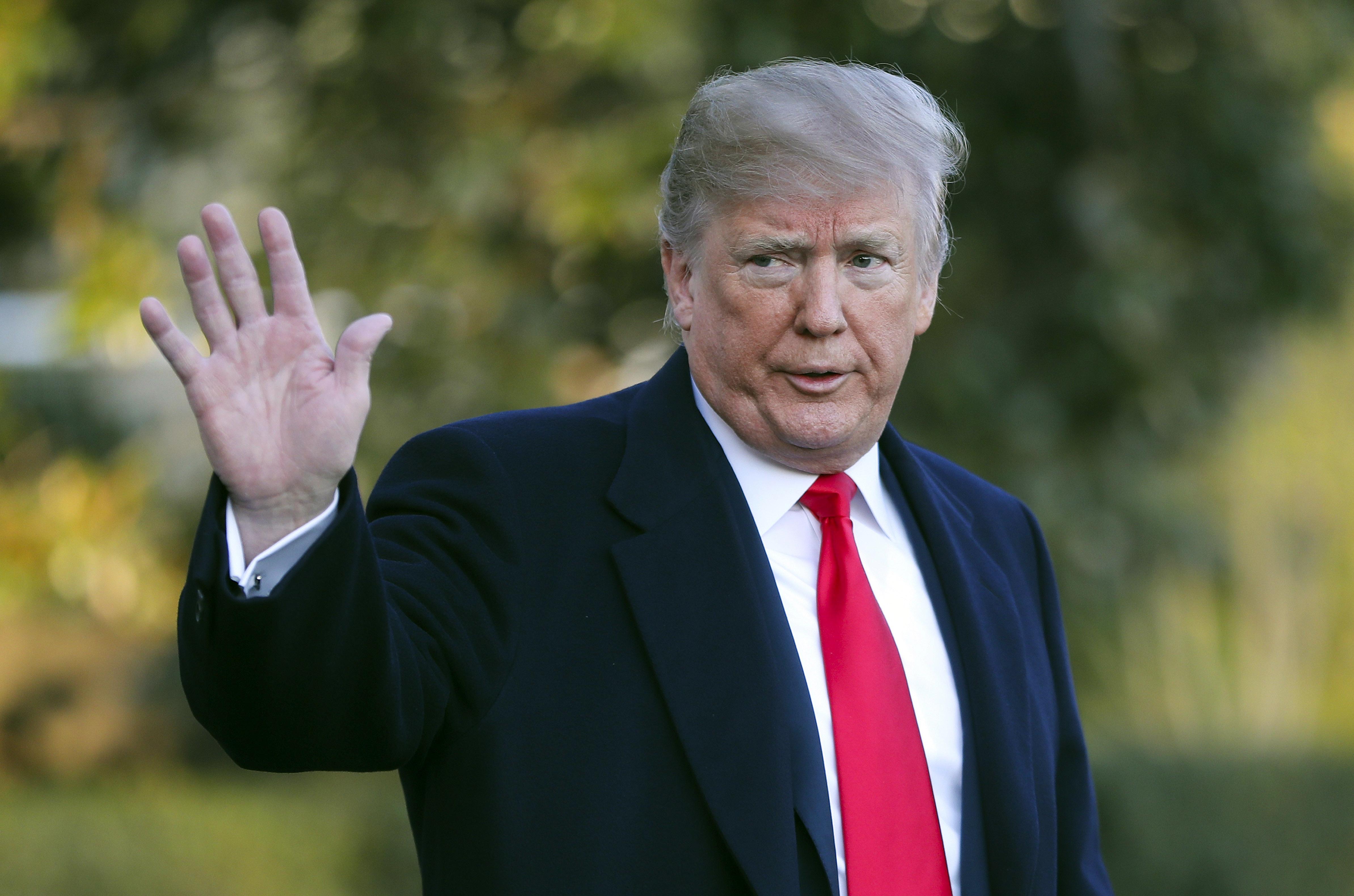
    President Trump said Tuesday that he was prepared to condemn Russia for the poisoning of a ex-British spy in the U.K., but he still wanted to have all the facts.

    President Trump said Tuesday that he was prepared to condemn Russia for the poisoning of a ex-British spy in the U.K., but he still wanted to have all the facts.

    A day earlier, the White House resisted blaming Russia for the attack despite British Prime Minister Theresa May saying it was “highly likely” that Moscow was behind the assassination attempt.

    “It sounds to me like it would be Russia based on all the evidence they have. I don’t know if they have come to a conclusion,” Mr. Trump said Tuesday.

    SEE ALSO: Trump ousts Tillerson, taps CIA Director Pompeo for State Dept.

    The president said that he planed to speak later in the day with Mrs. May.

    “As soon as we get the facts straight, if we agree with them, we will condemn Russia or whoever it may be,” Mr. Trump told reporters Tuesday.

    Former Russian intelligence officer Sergei Skripal, 66, and his daughter, Yulia Scribal, 33, were found collapsed on a city bench March 4 in Salisbury, England. They had been exposed to a military-grade nerve agents known as Novichok, according to British authorities.

    Mr. Skripal and his daughter remain in a critical but stable condition in the hospital.

    In 2004, Mr Skripal was convicted by the Russian government of spying for MI6. He was released to the U.K. in a spy swap in 2010.

    The White House resistance to blaming Russia was the final split between Mr. Trump and former Secretary of State Rex W. Tillerson, whose ouster was announced Monday.

    Mr. Tillerson said that Russia was “clearly” behind the poisoning.

  • Abdel-Fattah el-Sissi: Egypt hopes in Sinai Peninsula, troubled by swap talk

    Egyptians took to the streets last year to protest President Abdel-Fattah el-Sissi’s decision to give two strategically important Red Sea islands to Saudi Arabia.

    CAIRO — Egyptians took to the streets last year to protest President Abdel-Fattah el-Sissi’s decision to give two strategically important Red Sea islands to Saudi Arabia.

    But that protest — rare in a country where Mr. el-Sissi has clamped down on the political opposition — could pale in comparison with the backlash the government would face if Mr. el-Sissi agrees to a rumored American Arab-Israeli peace plan that would ask Cairo to give up some of the Sinai Peninsula as a new homeland for Palestinians. In turn, Palestinians would cede much of the West Bank to Israeli settlers.

    Naeem Gabr, 50, general coordinator of the North Sinai Tribes, bitterly rejects the proposed swap. His association represents 11 clans numbering about 400,000 people on the peninsula.

    “Sinai is the land of our ancestors,” he said. “Palestinian refugees can live in Jordan. That’s a solution that would not disturb or undermine the Egyptian side nor Sinai tribes.”

    The Sinai swap was one of the overlooked bits of reporting from journalist Michael Wolff’s White House insider tell-all book “Fire and Fury.” Most of the attention in the U.S. focused on domestic issues, tidbits about the backstage doings of the Trump administration, and the career self-immolation of former White House top adviser Steve Bannon for agreeing to talk to the author.

    But it was the Sinai passages that attracted all the attention in Egypt.

    Steeped in biblical history, strategically located between Cairo and Israel and divided between resorts on the sun-kissed south coast and Islamic State hideouts in the rugged interior, the Sinai Peninsula has become a battleground over the future of Egypt — whether or not Mr. Wolff’s account of a Trump peace plan is accurate.

    Mr. el-Sissi has launched a succession of military operations in the peninsula, which is roughly the size of West Virginia, with the aim of uprooting jihadi groups that have launched terrorist attacks against Egyptian security forces and Coptic Christians.

    Islamic State claimed responsibility for the October 2015 downing of a passenger jet taking off from Sharm el-Sheikh and bound for St. Petersburg, Russia. The attack in the Sinai resort town, which killed 224 people, gutted tourism, one of the Egyptian economy’s biggest foreign currency generators.

    The Egyptian military revealed late last week that 16 troops had been killed and 19 wounded since the broad-scale Sinai offensive was launched in February. The Associated Press, citing army spokesman Col. Tamer al-Rifai, reported that 105 militants had been killed and nearly 3,000 fighters detained.

    The jihadis’ penetration of Sinai led to a surge of coordination between Egyptian and Israeli militaries, including joint moves to destroy tunnels that the militants used to move men and supplies in and out of Hamas-controlled Gaza, as well as the deployments of Egyptian and Israeli fighter aircraft and drones against their common enemy.

    Despite an Egyptian-Israeli peace treaty dating back to the days of Anwar Sadat, direct cooperation with the Israelis remains controversial and the rumors have eroded Mr. el-Sissi’s support among Sinai’s 1.4 million inhabitants.

    “Hundreds of civilians have been killed, including men, women, children and even infants,” said Mohannad Sabry, a former Sinai resident and author of “Sinai: Egypt’s Linchpin, Gaza’s Lifeline, Israel’s Nightmare.” “Close to a dozen villages have been partially or fully destroyed by the military, and hundreds of thousands of productive trees, in farms owned by the locals, have been destroyed.”

    Reviving the economy

    Campaigning on his government’s investments in energy infrastructure and urban development, Mr. el-Sissi, a former army chief who first took power in a 2013 coup, is expected win re-election easily in the March 26-28 vote. In the face of criticism from human rights groups, many of the president’s best-known rivals have been blocked from running in the election.

    Sinai is crucial to Mr. el-Sissi’s plans to reinvigorate the economy. Egypt has deals with Israel and Cyprus that require a secure pipeline across the peninsula if the country is to capitalize on the 120 trillion cubic feet of gas discovered in the past decade in the eastern Mediterranean.

    Sinai residents killed a similar deal in January 2011, a month after the Tahrir Square revolution broke out in Cairo, by blowing up a pumping station in a El Arish. As a result, security in the region was called into question.

    Gila Gamliel, Israel’s minister of social equality, told Israel National News that she would prefer putting a Palestinian state in Sinai rather than squeezing one between Israel and Jordan, as Mr. Wolff describes in his book. She is responsible for the more than 200,000 Bedouin in Israel.

    “If it becomes clear that there is no alternative but to establish an actual Palestinian state, then this would be a regional problem, not just Israel’s,” Ms. Gamliel said in the Nov. 9 interview. “It is appropriate that parts of the Arab countries, such as the Sinai Peninsula, should be considered.”

    Israel has good reason to be concerned about Sinai.

    Radicalized Muslim Brotherhood supporters fled to the El Arish area after then-Gen. el-Sissi ousted Islamist President Mohammed Morsi in 2013. They found a place among the Bedouin and a mixed population of Egyptians and Palestinian refugees clustered along the coastal area bordering Hamas-controlled Gaza.

    The government’s military crackdown in the peninsula initially helped the Islamic State recruit supporters there.

    “The lack of real development in Sinai helped ISIS expand and establish a foothold recruiting citizens due to the marginalization they suffered along the years,” Mr. Gabr said.

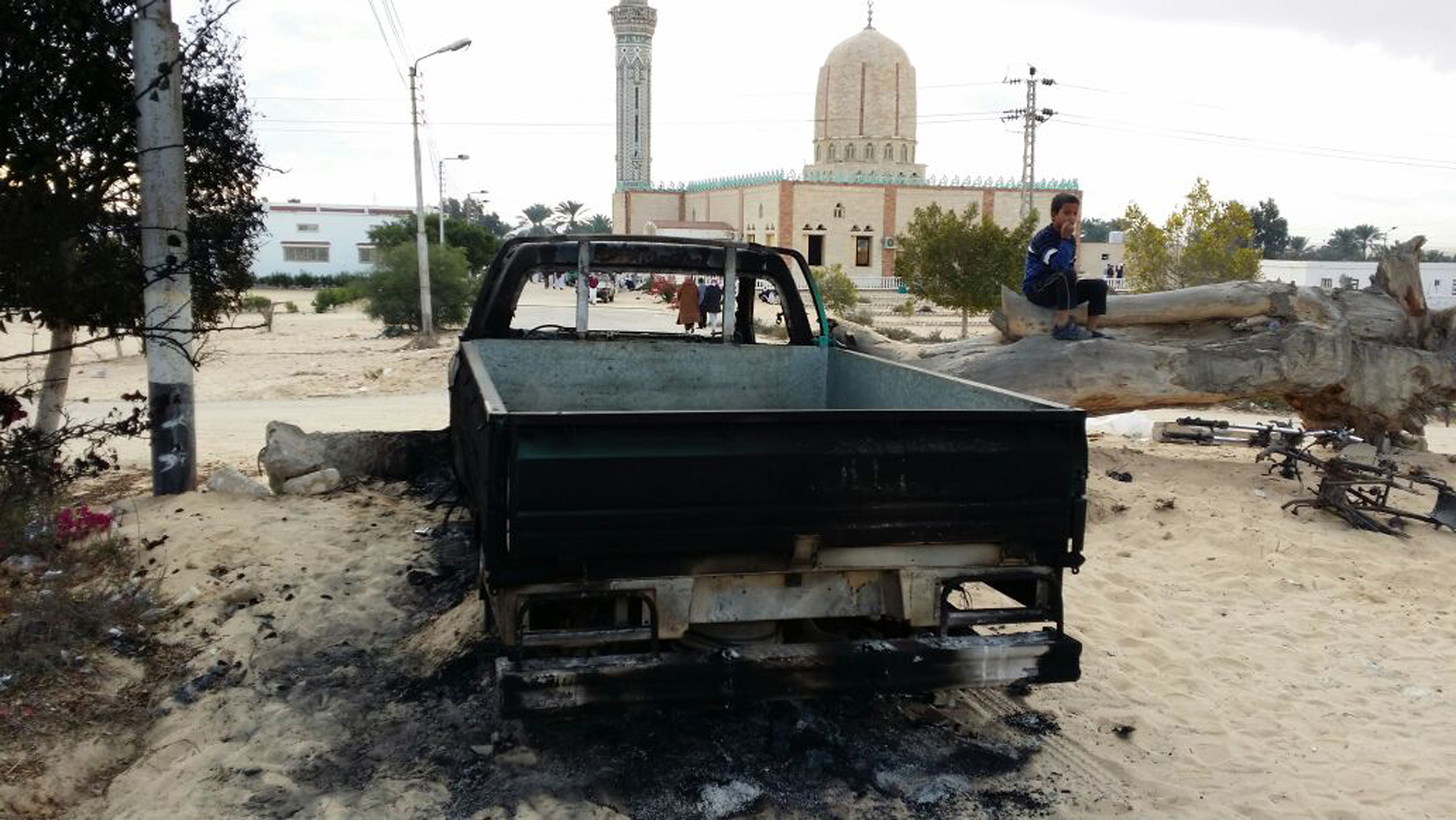
    But a deadly Islamic State attack on a mosque in the northern Sinai town of Al Rawda late last year damaged the group’s standing in the community.

    “We will not be consoled until each murderer in Sinai is eliminated, and no mercy will be shown,” said Eissa El Kareen, an elder in the El Romylat tribe who lost dozens of brothers and cousins in the massacre.

    The incident spurred Mr. el-Sissi to launch more military strikes in the region. “This attack will do nothing but make us stronger and more persistent in our effort to combat terrorism,” he said in public remarks after the unprecedented killings of 305 mostly Bedouin Muslim worshippers.

    Egypt could hardly hand over part of Sinai after such statements, said Tarek Fahmy, a professor who leads the political and strategic unit at the National Center for Middle East Studies in Cairo.

    “President el-Sissi … will not reclaim Sinai in order to leave it,” Mr. Fahmy said. “The idea is not an acceptable one for the Egyptian leadership.”
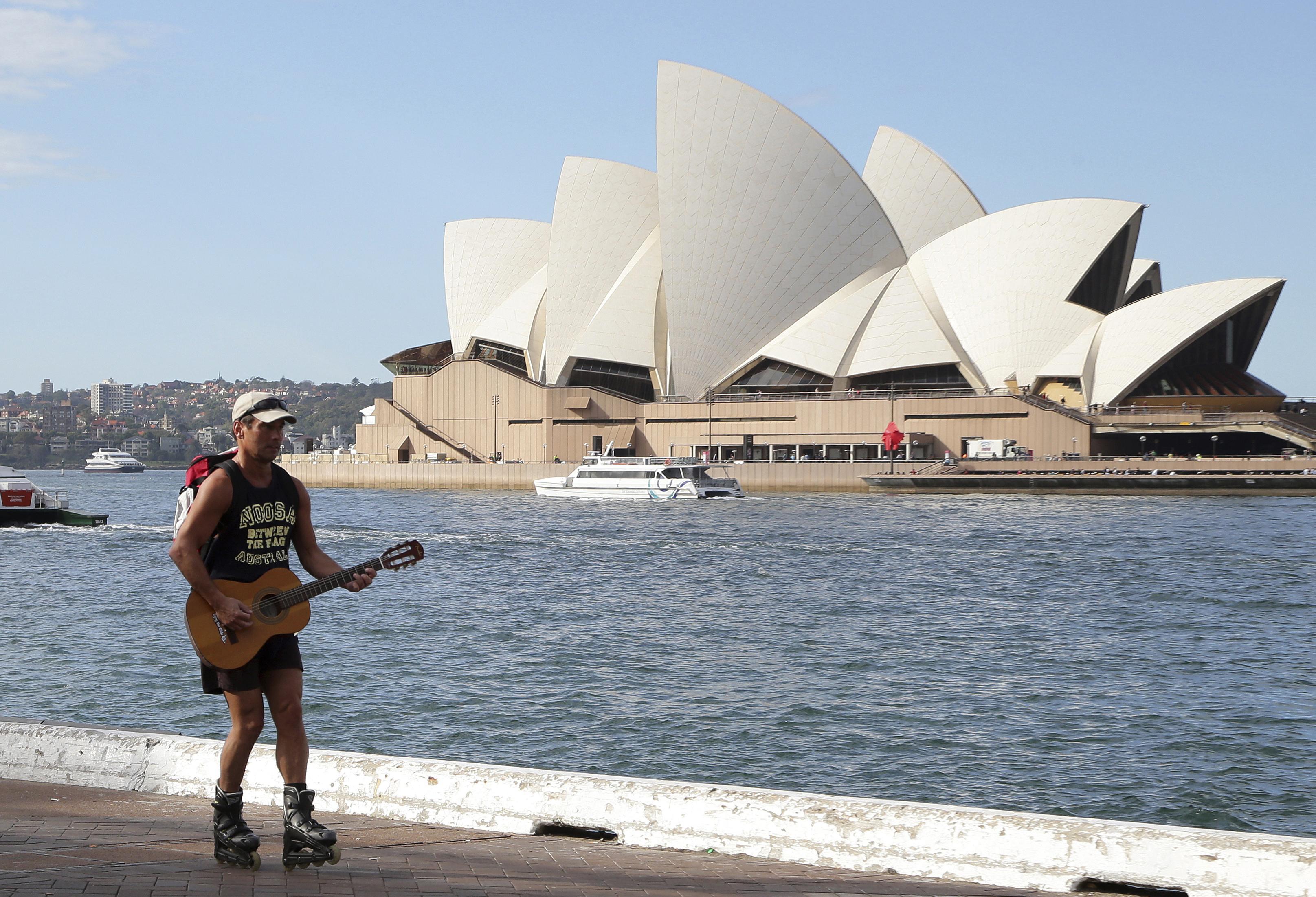
  • Zero mass shootings in Australia a result of legislation, not chance, researchers say

    A new study suggests that Australia’s lack of mass shootings over two decades has resulted from the country’s strict gun ownership laws, not luck.

    A new study suggests that Australia’s lack of mass shootings over two decades has resulted from the country’s strict gun ownership laws, not luck.

    The odds of random chance accounting for a 22-year absence in mass shootings in Australia is 1-in-200,000, researchers from the University of Sydney and Macquarie University calculated.

    In 1996, Australia implemented the National Firearms Agreement (NFA) in the wake of that country’s most deadly mass shooting, which resulted in the destruction of about a third of the guns in the country and the implementation of tighter restrictions on gun ownership.

    In the 18 years before the NFA, there were 13 gun-related homicides in which five or more people were killed, not including the perpetrator, the researchers noted. Since 1996, there have been no other similar events of that magnitude.

    “Most people hear these starkly contrasting numbers and conclude that Australia’s gun law reforms effectively stopped firearm massacres here,” Simon Chapman, lead author of the study and Meritus Professor at the University of Sydney, said in a statement. “However, some scholars and members of the gun lobby have argued that since mass shootings are relatively rare events, the concentration of incidents in one decade and their absence in another decade is merely a statistical anomaly.”

    The gun law was enacted in response to the Port Arthur massacre, in which a gunman killed 35 people and seriously wounded 23 others in Port Arthur, Tasmania, on April 28 and 29, 1996.

    Establishing a direct causal relationship between the NFA and the lack of gun violence wasn’t possible, the researchers wrote in the their paper, which was published Monday in the journal Annals of Internal Medicine. The only way to do so would be to conduct a randomized control trial of some populations that are living under the NFA and others that are not.

    Instead, the researchers sought to test a “null hypothesis,” that prolonged absence of mass gun violence was just a continuation of the rarity of such events. If this were true, the rate of mass shootings would be 16 incidences over the past 22 years, not zero.

    In a visit last month to the U.S., Australian Prime Minister Malcolm Turnbull was asked if he was planning to discuss his country’s success against gun violence with President Trump nine days after the shooting at Marjory Stoneman Douglas High School in Parkland, Florida, where 17 people were killed and 14 others wounded.

    Mr. Turnbull said he wasn’t in a position to comment on debates of internal U.S. policy, adding that what works in Australia is not necessarily applicable to America.

    “We are satisfied with our laws and we maintain them,” the prime minister said. “We certainly don’t presume to provide policy or political advice on that matter here. You have an amendment to your constitution that deals with gun ownership, you have a very, very different history and we’ll focus on our own political arguments and debates and wish you wise deliberation in your own.”

    Mr. Trump followed up, saying: “They’re very different countries with very different sets of problems. But I think we’re well on the way to solving that horrible problem that happens far too often in the United States.”

    Mr. Trump has been vocal on his ideas for gun legislation reform, which include permitting teachers to carry guns on school premises.

    On Sunday, Education Secretary Betsy DeVos announced next steps to address gun violence in schools, including setting up a commission to study ways to improve school safety and recommend policy changes.

    Last week, Florida Gov. Rick Scott signed a gun reform law in response to the Parkland massacre. The Marjory Stoneman Douglas High School Public Safety Act raises the purchasing age for a firearm from 18 to 21 and bars ownership for individuals formally judged to be mentally ill. It also establishes funding for projects to increase school safety.

  • Explosion strikes Palestinian prime minister’s convoy in Gaza

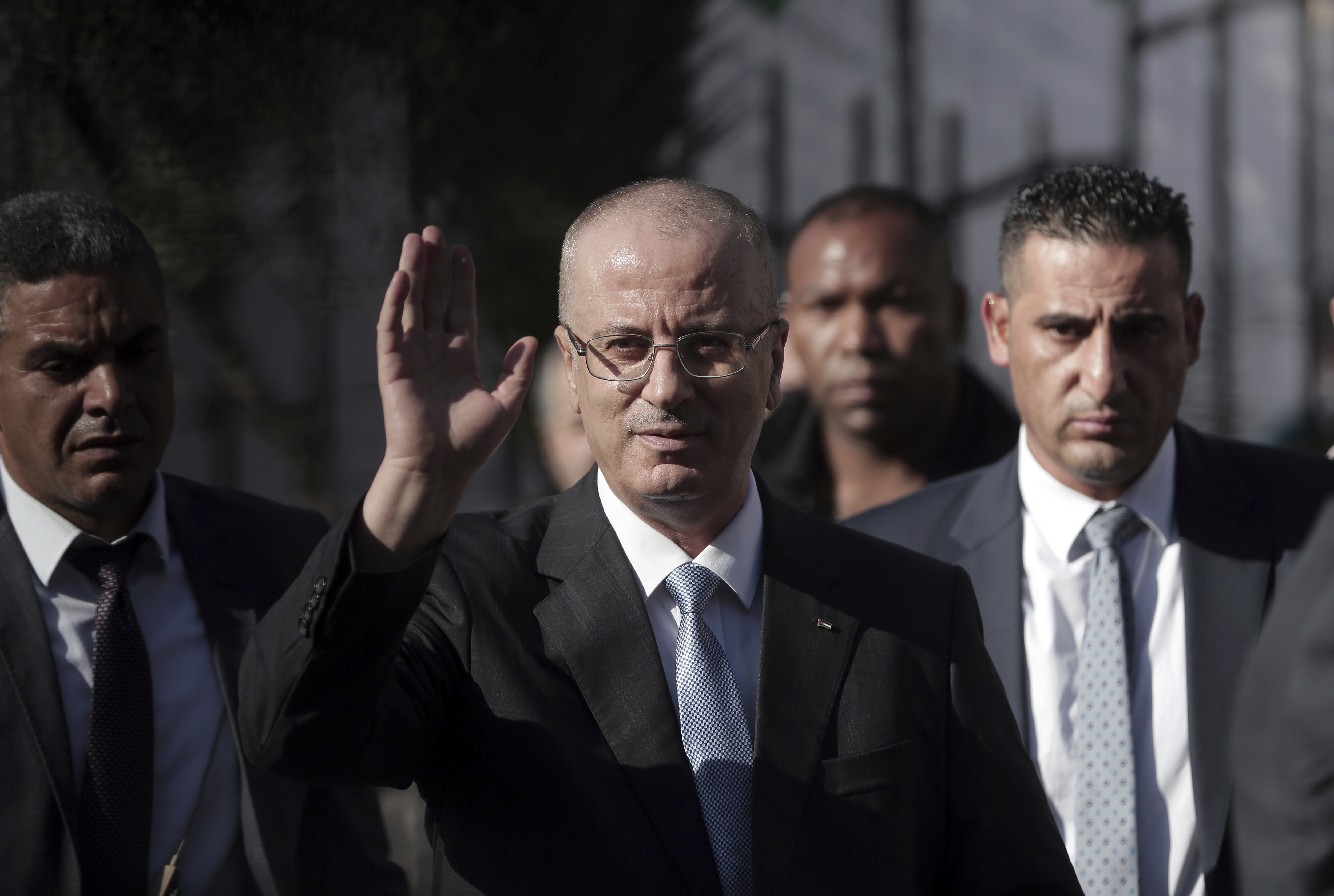
    An explosion struck the convoy of the Palestinian prime minister Tuesday as he was making a rare visit to Gaza, in what his Fatah party called an assassination attempt it blamed on Gaza militants.

    JABALIYA, Gaza Strip (AP) — An explosion struck the convoy of the Palestinian prime minister Tuesday as he was making a rare visit to Gaza, in what his Fatah party called an assassination attempt it blamed on Gaza militants.

    The explosion went off shortly after the convoy entered Gaza through the Erez crossing with Israel. Palestinian Prime Minister Rami Hamdallah was unharmed and went on to inaugurate a long-awaited sewage plant project in the northern part of the strip. But Fatah quickly held Gaza’s Islamic Hamas rulers responsible for the “cowardly attack” on the convoy, further escalating tensions between the bitter rival factions.

    Three of the vehicles in Hamdallah’s convoy were damaged, their windows blown out. One had signs of blood on the door.

    Hamas confirmed an explosion struck the convoy but said no injuries were reported. It condemned the Gaza explosion, calling it a crime and an attempt to “hurt efforts to achieve unity and reconciliation.” It promised an “urgent” investigation.

    While President Mahmoud Abbas blamed Hamas for the blast, his security chief Majed Farraj, who was in the convoy, said it was “too early” to say who was responsible.

    Hamdallah, who is based in the West Bank, arrived in Hamas-run Gaza to inaugurate the sewage plant and said there that the attack will “not deter from seeking to end the bitter split. We will still come to Gaza.”

    The rival factions have been trying to reconcile since 2007 when Hamas seized control of Gaza from Fatah forces and have suffered several setbacks in their efforts since. The takeover left the Palestinians with two rival governments, Hamas in Gaza and the Western-backed Palestinian Authority governing autonomous enclaves in the Israeli-occupied West Bank.

    In November, Hamas handed over control of Gaza’s border crossings to the Palestinian Authority. It was the first tangible concession in years of Egyptian-brokered reconciliation talks. But negotiations have bogged down since then.

    Hamdallah’s visit comes amid a time of crisis in Gaza, where the economy is devastated. The White House is hosting a gathering of international representatives Tuesday to discuss economic development and the dire humanitarian situation, which White House envoy Jason Greenblatt has blamed on Hamas‘ control.

    “The challenge will be determining which ideas can be realistically implemented in light of the fact that the Palestinians of Gaza continue to suffer under the authoritarian rule of Hamas,” he said in a statement.

    The plant in question was envisioned in 2007 after overburdened sewage reservoirs collapsed, killing five villagers.

    The World Bank, European Union and other European governments have paid nearly $75 million in funding. Hamas‘ takeover of Gaza from the Palestinian Authority in 2007 and the ensuing Israeli-Egyptian blockade, power shortages and conflicts delayed the opening of the project for four years.

    Besides the old reservoirs, the plant will receive wastewater from four towns and villages. After treatment, the water will be transferred for irrigation and the remainder will be safely dumped to the sea.

  • Putin claims that the US will be angry!

    ‘The US does not care about the indictment’

    In an interview with Russian President Putin on NBC television on Friday, the question of whether 13 Russian citizens and 3 Russian companies involved in the US indictment ignored the US election intervention questioned him, saying, “This claim does not excuse, because these people do not represent the government.” he answered.

    Maybe the Jews are interfering with the elections

    Putin said, “Perhaps these people are not even Russian, but Ukrainians, Tatars and Jews who are Russian citizens. At the same time, it should be checked whether these people have double citizenship, perhaps America has paid them for it. Where do you know? I do not know either. “

    The US is always interfering with Russian elections

    Putin, saying that Russia has no equipment or desire to intervene in US elections, stressed that the US has repeatedly and strongly rejected Russia’s attempts to establish a business alliance between the two countries on cybersecurity issues, “the US refuses to work this way, He’s throwing 13 rats. “

    “America is always interfering with the Russian elections, but it is impossible for us to do the same.”

    ‘We do not have the power to interfere with elections’

    Putin claimed that Russia does not have the equipment to intervene in the elections. “First, we have the principle of not confusing others with our internal affairs and not interfering with others’ internal affairs.” Second, we do not have the equipment to do this. “

    He invited the Congress to present solid evidence to make a fuss about elections

    Names will not be tampered with

    “Are you going to act on the names in the indictment?” As long as they do not violate the Russian laws, they will not be intervened.

  • Greek minister to Turkey from scandal allegations

    SCANDAL CLAIM: “TURKEY WANTS TO VIOLATION OF GREECE the”

    Greece between Turkey and Greece in front in the tense period continues to come incriminating statements.

    Speaking to Liberation newspaper published in France Kammenos, Turkey’s Aegean and in Cyprus, Syria, and that respect the borders of Iraq in the country, claiming that international acts contrary to the law, “Cyprus and Greece, the Middle East countries not. We are respectful of the international law as it is the laws of the sea and the laws of the sea. We want Turkey to do the same, “he said. & Nbsp;

    The European Union commissioning and bilateral or where the tripartite agreement Israel, Egypt, Jordan, the United Arab Emirates with the Lebanese minister of Greece, underlining that they tried to get the support of Turkey claimed that therefore Greece additional pressure on .

    SUPPORT FOR EU MEMBERSHIP

    claiming membership to the EU would remove Islam from Turkey, “We prefer a European Turkey an Islamic Turkey. We also support the EU membership for this reason. “

    TWO MILITARY AB’S PROBLEMS

    Kammenos says, “In fact, this problem does not concern only Greece. It also concerns the EU, “he said. Greece and the Greek minister recalled that Turkey’s NATO ally, in a peaceful manner such incidents should be resolved, he said.

  • Elizabeth Warren fears Trump to be ‘taken advantage of’ by Kim Jong-un

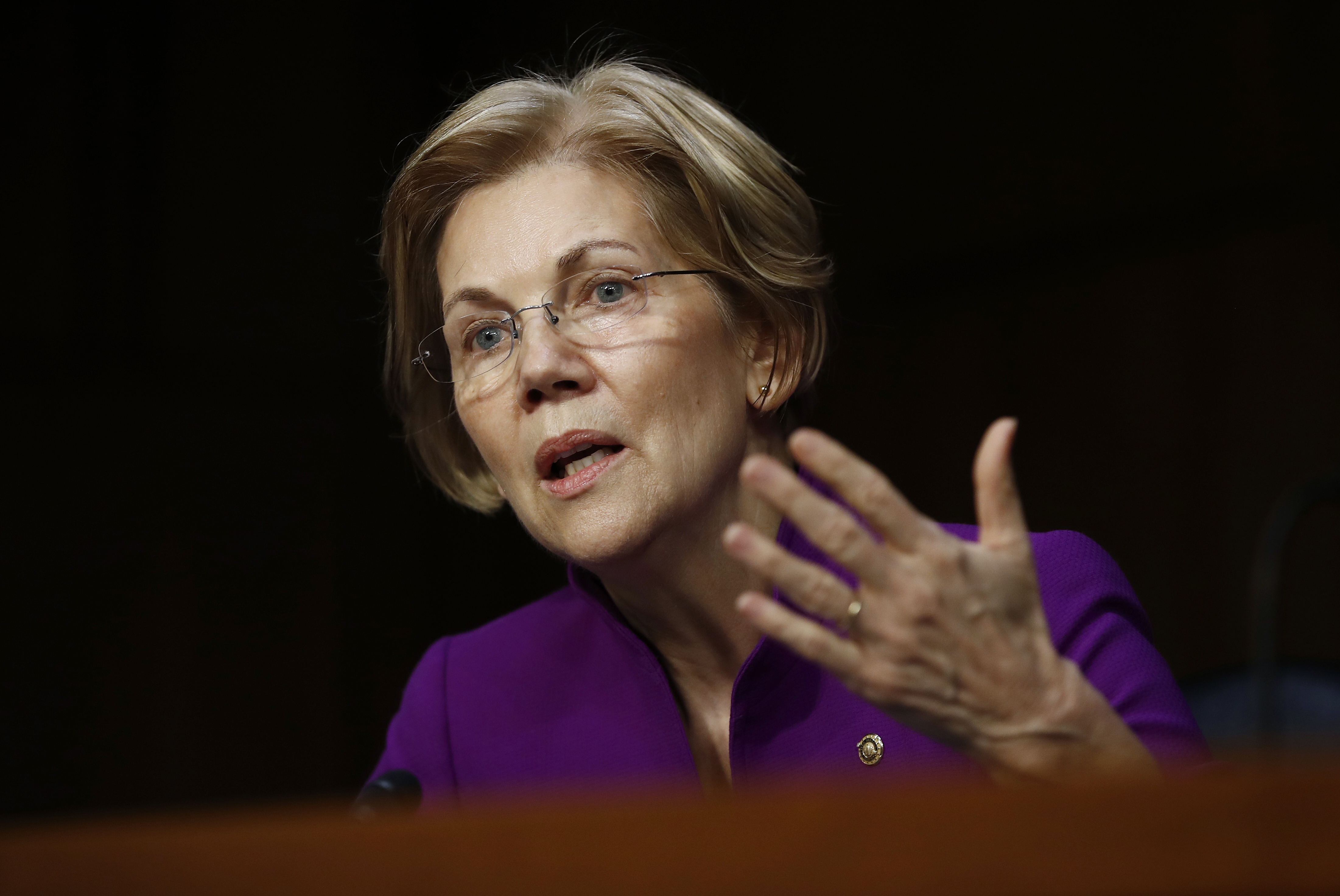
    Sen. Elizabeth Warren, Massachusetts Democrat, said she supported a “diplomatic approach” to North Korea but worried President Trump would be “taken advantage of” by Kim Jong-un.

    Senate Homeland Security Committee chairman Ron Johnson warned Sunday about being “snookered again” by North Korea after the White House agreed last week to denuclearization talks with leader Kim Jong-un.

    Citing previous deals that saw the United States give up more than it got, Mr. Johnson urged the administration to maintain its maximum-pressure policy on North Korea.

    “Again, you have that history. Let’s not be snookered again,” said Mr. Johnson on CNN’s “State of the Union.” “Let’s not be Charlie Brown to North Korea’s Lucy. We’ve seen this movie before; that’s why we’ve called on President Trump to make sure that we maintain the maximum-pressure campaign.”

    SEE ALSO: Elizabeth Warren: ‘I am not running for president’ in 2020

    The Wisconsin Republican added that, “If anything, I would continue to ratchet up sanctions until they again have complete, verifiable and irreversible denuclearization.”

    Sen. Elizabeth Warren, Massachusetts Democrat, said she supported the “diplomatic approach” but worried Mr. Trump would be “taken advantage of.”

    “Here’s what I’m concerned about: I want the president to succeed,” said Ms. Warren. “When the president succeeds in negotiations like this, the United States succeeds, it makes us safer, it makes whole world safer, but I am very worried he’s going to go into these negotiations and be taken advantage of.”

    .@SenWarren tells @Acosta she is “very glad” to see the Trump administration move towards diplomacy on North Korea#CNNSOTUhttps://t.co/yfyRAsNirk

    — State of the Union (@CNNSotu) March 11, 2018

    She cited concerns about staffing at the State Department, saying it had been “decimated.”

    “There are a lot of issues involved with them and our State Dept has just been decimated,” said Ms. Warren. “We don’t have an ambassador to South Korea. We don’t have an assistant secretary for the entire region. There are all kinds of spaces that are open at the State Department generally and particularly in this region, and that matters when you’re going into negotiations like this.”

    White House spokesman Raj Shah offered few details Sunday about the logistics of the summit, adding that “nothing’s been ruled out.”

    “It’s going to be a time and a place to be decided. We don’t have an announcement right now but we have accepted this offer and we hope that it can be part of an important breakthrough,” Mr. Shah told ABC’s “This Week.”

    Would Mr. Trump go to North Korea? “I don’t think that’s highly likely, but again, I’m not going to rule anything out,” Mr. Shah said.

    Could the meeting between Pres. Trump and North Korean leader Kim Jong Un take place at the White House? Deputy Press Sec. @RajShah45 tells @jonkarl: “Nothing’s being ruled out.” #ThisWeekpic.twitter.com/DafWPBZx5K

    — This Week (@ThisWeekABC) March 11, 2018

  • Trump says North Korea won’t test missiles before his meeting with Kim Jong Un

    President Trump said Saturday he’s counting on North Korea to refrain from any missile tests while he prepares for his first face-to-face meeting with North Korean leader Kim Jong-un.

    President Trump said Saturday he’s counting on North Korea to refrain from any missile tests while he prepares for his first face-to-face meeting with North Korean leader Kim Jong-un.

    Departing the White House for a campaign rally in Pennsylvania, Mr. Trump predicted “tremendous success” with his pending diplomacy in Asia.

    “I think North Korea is going to go very well,” the president told reporters. “I think this is going to be something very successful. We have a lot of support. The promise is they wouldn’t be shooting off missiles in the meantime, and they’re looking to de-nuke. So that’d be great.”

    Earlier, the president said on Twitter that he trusts Pyongyang to keep its commitments against provocation leading up to the talks.

    “North Korea has not conducted a Missile Test since November 28, 2017 and has promised not to do so through our meetings. I believe they will honor that commitment!” Mr. Trump tweeted.

    Pyongyang claimed after its most recent missile test in November that it has a new rocket capable of striking anywhere on the U.S. mainland, and declared itself a “complete” nuclear state.

    Earlier Saturday, Mr. Trump said that China’s president is pleased that Mr. Trump is pursuing diplomacy with North Korea instead of “the ominous alternative.”

    “Chinese President XI JINPING and I spoke at length about the meeting with KIM JONG UN of North Korea,” Mr. Trump tweeted about their phone call a day earlier. “President XI told me he appreciates that the U.S. is working to solve the problem diplomatically rather than going with the ominous alternative. China continues to be helpful!”

    Mr. Trump, who vowed last year to rain “fire and fury” on North Korea if it attacks the U.S., accepted an invitation from Mr. Kim to meet for talks within the next two months. The date and location haven’t been set.

    Chinese state media said Mr. Xi applauded the move by Mr. Trump as a “positive gesture.”

    “We hope that all relevant parties can make positive gestures and refrain from actions that prevent the situation on the Korean peninsula from calming down,” Mr. Xi was quoted as saying on state-run broadcaster CCTV.

    The White House said Friday that North Korea must demonstrate “concrete steps” toward denuclearization before the talks can go forward.

    China is North Korea’s most important trading partner. The president has been pushing Mr. Xi to exert more economic and diplomatic pressure on North Korea to scale back its nuclear weapons and ballistic missile programs.

    Mr. Trump also said that Japanese Prime Minister Shinzo Abe, with whom he spoke on Thursday, “is very enthusiastic about talks with North Korea.”

  • Aid delivered to Syria’s Ghouta amid renewed violence

    An aid convoy crossed into the embattled rebel-held suburbs of Damascus Friday, delivering desperately needed aid despite heavy fighting that broke out “extremely close” to the convoy and renewed airs

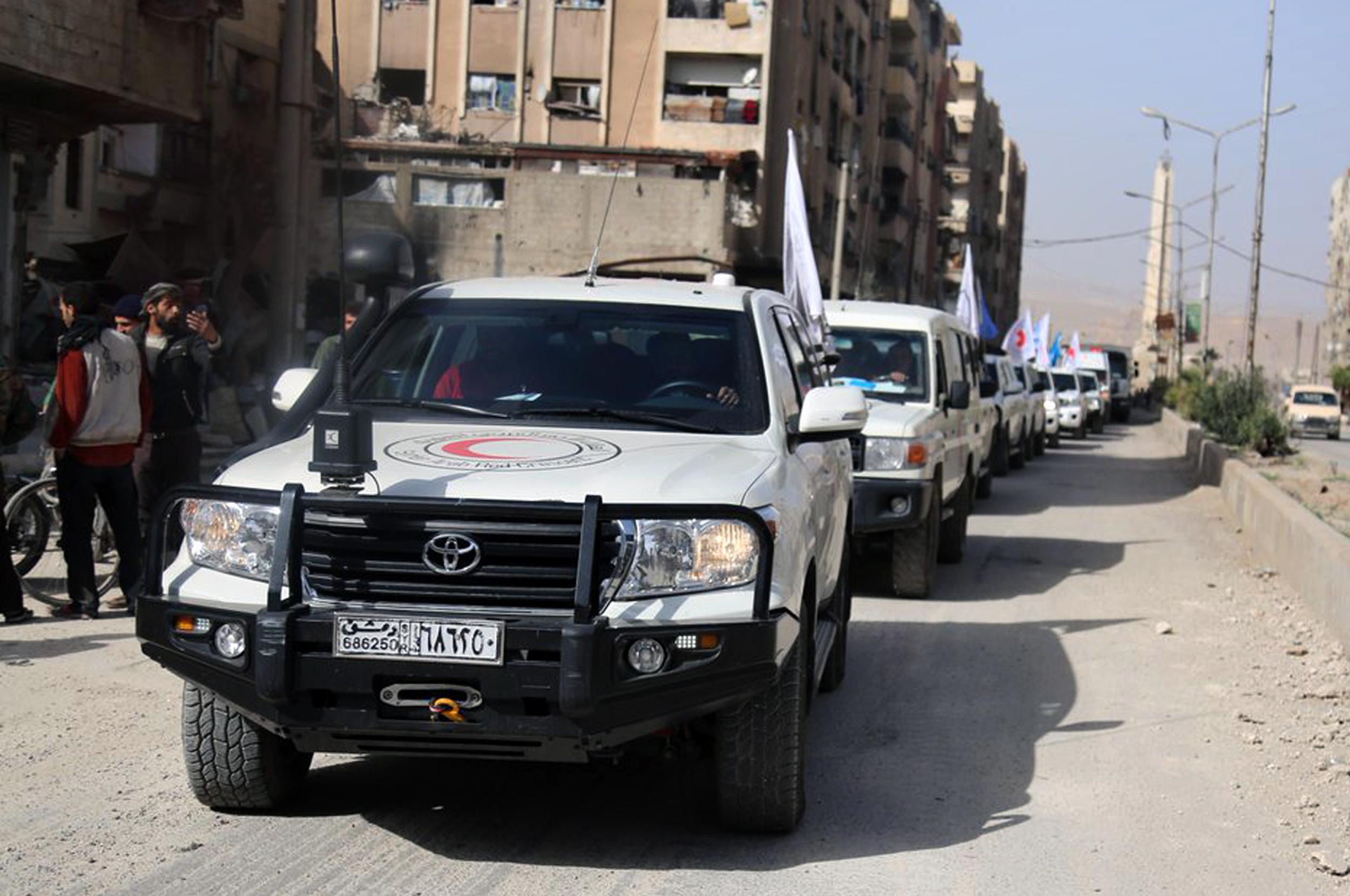
    BEIRUT (AP) — An aid convoy crossed into the embattled rebel-held suburbs of Damascus Friday, delivering desperately needed aid despite heavy fighting that broke out “extremely close” to the convoy and renewed airstrikes by the Syrian government.

    The International Committee of the Red Cross said the close-range fighting came despite security guarantees from the parties involved in the conflict that humanitarian aid could enter the town of Douma, in eastern Ghouta.

    “We were taken aback by the fighting that broke out despite guarantees from the parties involved in this conflict that humanitarians could enter Douma, in Eastern Ghouta,” said ICRC regional director Robert Mardini.

    “As more aid is needed in the coming days, it is absolutely critical that these assurances be renewed and respected in the future,” Mardini said. “Aid workers should not have to risk their lives to deliver assistance. The security of humanitarian workers, as well as that of civilians, must be guaranteed at all times.”

    ICRC said it delivered along with the U.N. and the Syrian Arab Red Crescent 2,400 food parcels that can sustain 12,000 people for one month, as well as 3,248 wheat flour bags.

    The delivery consists of supplies that were not offloaded during a mission to the enclave on Monday, which was cut short because of deteriorating security. The trucks had been stuck at the Wafideen crossing over the entire week, waiting to enter and deliver the remaining food parcels and flour bags.

    The ICRC said the aid was delivered in Douma — the largest and most populated town in the rebel-held eastern Ghouta, on the edge of the Syrian capital — earlier in the day. The convoy entered during a brief lull but the bombardment and fighting resumed after the convoy entered eastern Ghouta.

    Rami Abdurrahman, who heads the Britain-based Syrian Observatory for Human Rights, said Douma was shelled before the convoy went in. Once the relief workers arrived, Syrian government forces shelled the outskirts of the town, he said.

    Mohammed Alloush, the political chief of the Army of Islam rebel group, told The Associated Press that the as the convoy was inside Douma they were “being targeted by the regime although they have informed the Russians about their location.” Alloush’s group is the largest in eastern Ghouta and controls Douma.

    ICRC spokeswoman Ingy Sedky said aid workers went into eastern Ghouta “after getting security guarantees from all parties to make sure no incident will happen during the presence of our team” there.

    The attempt followed what opposition activists and the Observatory said was one of the quietest nights in eastern Ghouta since Syrian government forces escalated their assault on the rebellious region on Feb. 18.

    The government and its Russian backers, determined to wrest eastern Ghouta from rebel control after seven years of war, recently intensified the shelling and bombardment to clear the way for its troops to advance on the ground. Around 900 people have been killed in the past three weeks of relentless bombardment.

    Doctors Without Borders said Friday that between Feb. 18 and March 3 at least 1,005 people were killed and 4,829 wounded — or 71 killed and 344 wounded on average per day. The group known by its French acronym, MSF, said that the data was collected from 10 medical facilities that it fully supports and another 10 facilities it provides with emergency medical donations inside the eastern Ghouta enclave.

    “Two of these facilities have yet to submit data for March 3, so this is an underestimation,” MSF said. It added that 15 of the 20 hospitals and clinics that MSF supports have been hit by bombing or shelling, with varying degrees of damage.

    “The numbers alone speak volumes. But even more telling are the words we hear from the medics we are supporting on the ground,” said MSF Director General Meinie Nicolai. “Daily, we hear an increasing sense of hopelessness and despair, as our medical colleagues reach the limits of what a person can be expected to do.”

    Government forces this week advanced from the east and were less than a mile away from linking with forces on the western side of eastern Ghouta and cutting the rebel-held district in half.

    The military gains have caused wide-scale internal displacement as civilians flee government advances toward areas in the territory still held by the rebels.

    Nearly 400,000 people are believed to be inside eastern Ghouta. The most built-up and densely populated areas still under rebel control include the towns of Douma, Harasta, Jisreen, Kfar Batna, Saqba and Hammouriyeh.

    The Observatory reported airstrikes on Douma and Jisreen just before the 13-truck convoy arrived Friday, following an hourslong lull. It said the lull was result of local negotiations brokered by unnamed Damascus businessmen with the government to try and reach a solution that would secure the exit of fighters and civilians from eastern Ghouta.

    The Observatory and the opposition’s Syrian Civil Defense, also known as the White Helmets, reported that airstrikes and shelling resumed late Friday afternoon on eastern Ghouta. They said at least five people were killed in Friday’s bombardment of the town of Jisreen.

    The U.N. High Commissioner for Refugees, Filippo Grandi, said the United Nations has “failed spectacularly” when it comes to Syria.

    Speaking at a press conference in Beirut, he said people in eastern Ghouta are terrified.

    “They do not know anymore. Some say I want to stay, some say I want to go but both options have become dangerous, this is what makes me so anguished,” he said.

    State-run Syrian TV on Friday reported that “dozens of civilians” would likely get out of eastern Ghouta, in addition to 13 gunmen who had turned themselves in, via the Wafideen safe corridor designated by the government. The channel has been reporting since last week that rebels have prevented civilians from leaving.

    State TV later said that insurgents targeted the Wafideen corridor on Friday afternoon with bullets and mortar shells to prevent people from leaving.

    The Observatory, which monitors the Syria war through a network of activists on the ground, also reported that dozens of people from the town of Hammouriyeh in eastern Ghouta staged a demonstration, carrying Syrian government flags and calling for the end to the fighting in the area.

    There was no confirmation by any of the rebel groups based in eastern Ghouta of negotiations to leave eastern Ghouta.