Category: WORLDS

  • Angela Merkel, feminists spar over stripping ‘fatherland’ from German national anthem

    Angela Merkel attempted to avoid a political minefield this week when a member of her Social Democrat (SPD) coalition called for a gender-neutral version of the national anthem.

    Angela Merkel attempted to avoid a political minefield this week when a member of her Social Democrat (SPD) coalition called for a gender-neutral version of the national anthem.

    “Deutschlandlied” made global headlines in 2017 when the United States Tennis Association accidentally played a taboo verse of the song not used since World War II. The song made news again on Monday with a letter released to the media by Equality Commissioner Kristin Rose-Möhring.

    “Why don’t we make our national anthem gender sensitive?” Ms. Rose-Möhring wrote, the U.K. Telegraph reported. “It wouldn’t hurt, would it?”

    The official’s plan includes replacing the words “fatherland” with “homeland” and “brotherly” with “courageous.”

    A gender-neutral change would follow Canada’s lead, which recently altered “O Canada” to include the lyrics “in all of us command” instead of “true patriot love in all your sons command.”

    Steffen Seibert, a spokesman for Ms. Merkel, quickly released a statement saying, “the chancellor is very happy with our nice national anthem as it is in its traditional form and doesn’t see any need for change,” the newspaper reported.

    “Song of Germany” has been the nation’s anthem since 1922.

  • U.S. Navy carrier’s visit to Vietnam puts China on notice

    For the first time since the Vietnam War, a U.S. Navy aircraft carrier is paying a visit to a Vietnamese port, seeking to bolster both countries’ efforts to stem expansionism by China in the South Chi

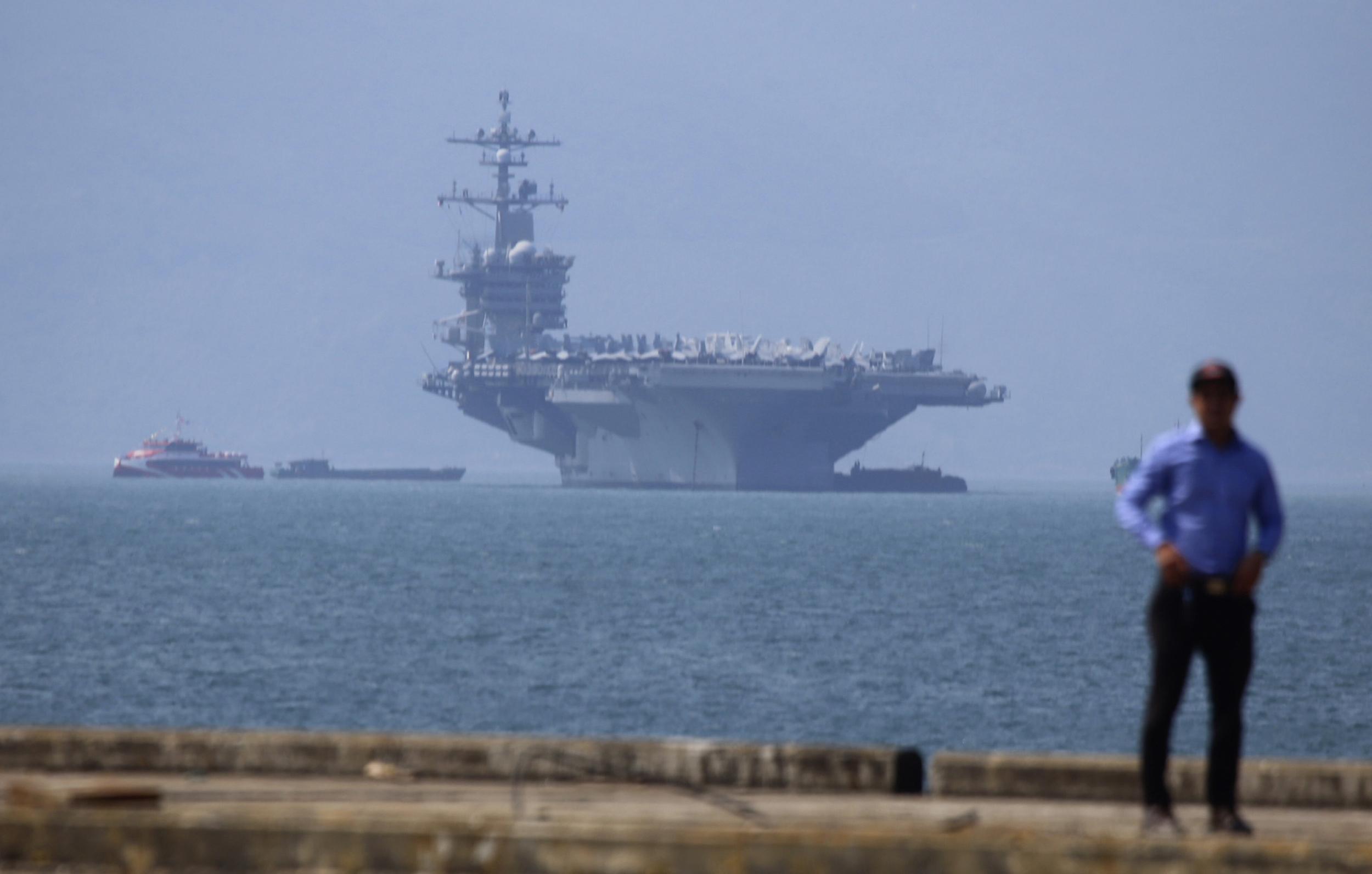
    DANANG, Vietnam (AP) — For the first time since the Vietnam War, a U.S. Navy aircraft carrier is paying a visit to a Vietnamese port, seeking to bolster both countries’ efforts to stem expansionism by China in the South China Sea.

    Monday’s visit by the USS Carl Vinson brings more than 5,000 crewmembers to the central coastal city of Danang, the largest such U.S. military presence in Vietnam since the Southeast Asian nation was unified under Communist leadership after the war ended in 1975.

    The Carl Vinson, accompanied by a cruiser and a destroyer, is visiting as China increases its military buildup in the Paracel islands and seven artificial islands in the Spratlys in maritime territory also claimed by Vietnam. China claims most of the South China Sea and has challenged traditional U.S. naval supremacy in the western Pacific.

    SEE ALSO: China’s influence to be major focus of Rex Tillerson’s Africa trip

    “The visit of aircraft carrier USS Carl Vinson to Vietnam signifies an increased level of trust between the two former enemies, a strengthened defense relationship between them, and reflects America’s continued naval engagement with the region,” said Le Hong Hiep, a research fellow at the Singapore-based ISEAS-Yusof Ishak Institute.

    The ship’s mission includes technical exchanges, sports matches and visits to an orphanage and a center for victims of Agent Orange, a toxic defoliant sprayed by U.S. forces to deny cover for Communist fighters during the war. It marks a fine-tuning, rather than a turning point, in relations. The U.S. Navy has staged activities in Vietnam for its Pacific Partnership humanitarian and civic missions in nine of the past 12 years.

    U.S. Ambassador Daniel Kritenbrink praised the carrier’s visit.

    “I think the visit by USS Carl Vinson demonstrates our commitment to the U.S- Vietnam partnership. It also demonstrates the dramatic progress we made in our bilateral relationship in recent years,” he said.

    The ambassador said the two countries share a range of interests that include “a desire to maintain peace, prosperity, unimpeded commerce, freedom of navigation upon which the region and its economies depend.”

    The United States normalized relations with Vietnam in 1995 and lifted an arms embargo in 2016, and the two former adversaries have steadily improved relations in all areas, including trade, investment and security.

    The visit of an aircraft carrier – a more than 100,000-ton manifestation of U.S. global military projection – reaffirms closer relations as Beijing flexes it political, economic and military muscle in Southeast Asia, and Washington seeks to re-establish its influence.

    “Although the visit is mainly symbolic and would not be able to change China’s behavior, especially in the South China Sea, it is still necessary in conveying the message that the U.S. will be there to stay,” Hiep said.

    Separately from this week’s mission, U.S. officials say American warships continue sailing without prior notice close to China-occupied islands and atolls, an aggressive way of signaling to Beijing that the U.S. does not recognize its sovereignty over those areas.

    Hiep said the Carl Vinson’s visit is likely to irritate China, but that Beijing will not take it too seriously.

    “They understand well the strategic rationale behind the rapprochement between Vietnam and the U.S., which was largely driven by China’s growing assertiveness in the South China Sea,” he said. “However, China also knows that Vietnam is unlikely to side with the U.S. militarily to challenge China.”

    Vietnam, while traditionally wary of its huge northern neighbor, shares China’s system of single-party rule and intolerance for political dissent.

    Economic relations with the United States in recent years have served as a counterbalance to Vietnam’s political affinity with China.

    “The United States now is a very important trading partner with Vietnam and it is the most important destination of Vietnam’s exports,” said Joseph Cheng, a professor of political science at the City University of Hong Kong. “In terms of security, both countries certainly share substantial common interest in the containment of China in view of the territorial dispute between China and Vietnam.”

    “However, it seems that Vietnam does not intend to become an ally of the United States. It is basically a kind of hedging strategy, a kind of balance of power strategy,” he said.

    The first U.S. Marines arrived in Danang in 1965, marking the beginning of large-scale American involvement in the Vietnam War. Some 58,000 American soldiers and an estimated 3 million Vietnamese were killed in the war.

    Danang, which was a major U.S. military base during the war, is now Vietnam’s third-largest city and is in the midst of a construction boom as dozens of resorts and hotels pop up along its scenic coastline.

    Several Danang residents said Monday that they welcomed the Navy visit.

    “During the war, I was scared when I saw American soldiers,” said Tran Thi Luyen, 55, who runs a small coffee shop in the city. “Now the aircraft carrier comes with a completely different mission, a mission of peace and promoting economic and military cooperation between the two countries.”

    Huynh Quang Nguyen, a taxi driver, echoed the sentiment.

    “I’m very happy and excited with the carrier’s visit,” he said. “Increased cooperation between the two countries in economic, diplomatic and military areas would serve as a counterbalance to Beijing’s expansionism.”

    ___

    This story has been corrected to show that ship has more than 5,000 crewmembers, not 6,000.

  • South Korea meeting thrusts North’s Kim into the limelight

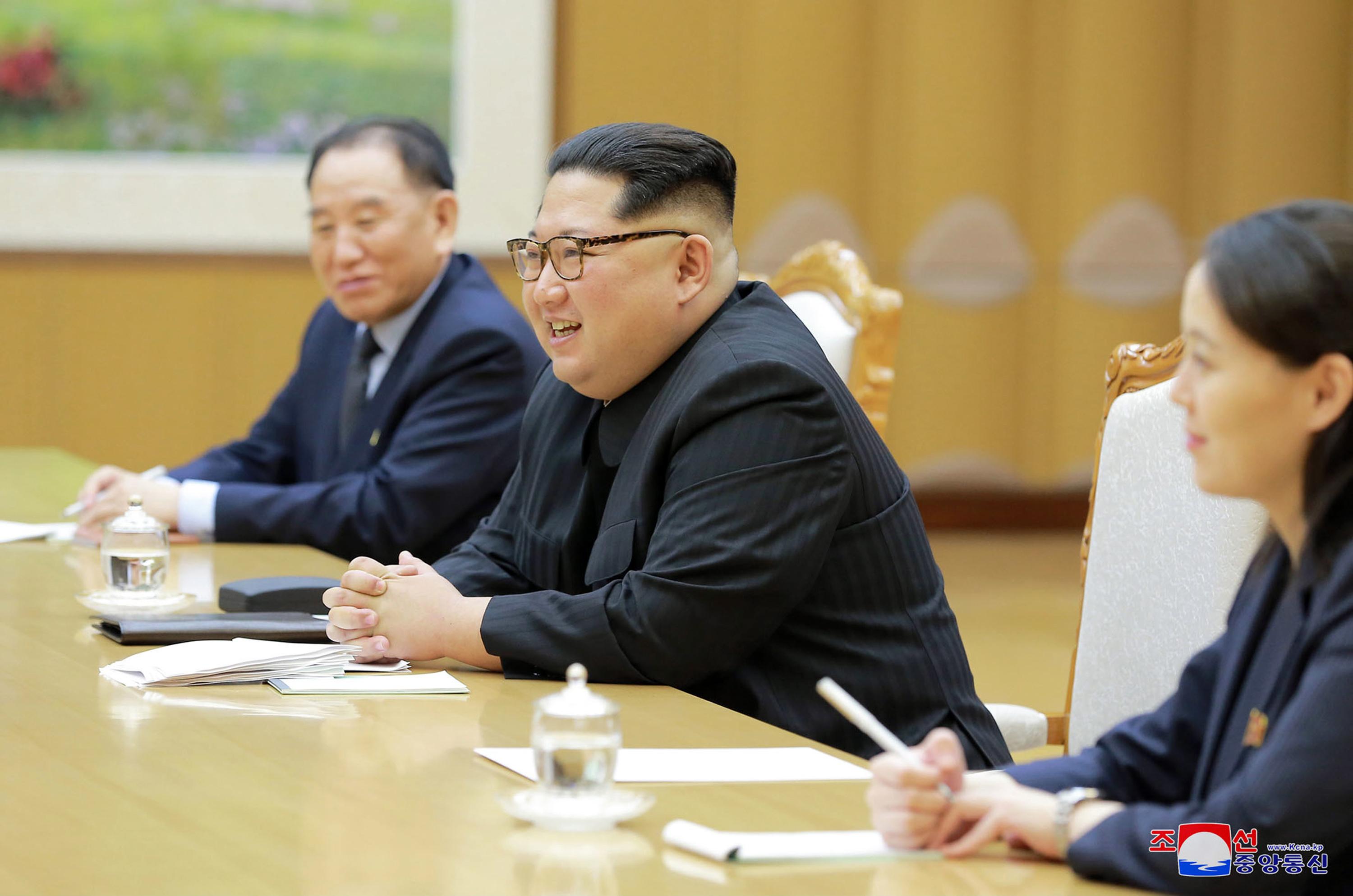
    North Korean leader Kim Jong Un grins, just on the verge of a belly laugh, as he grasps the hand of a visiting South Korean official. He sits at a wide conference table and beams as the envoys look on

    SEOUL, South Korea (AP) – North Korean leader Kim Jong Un grins, just on the verge of a belly laugh, as he grasps the hand of a visiting South Korean official. He sits at a wide conference table and beams as the envoys look on deferentially. He smiles broadly again at dinner, his wife at his side, the South Koreans seeming to hang on his every word.

    Kim is used to being the center of gravity in a country that his family has ruled with unquestioned power since 1948, but the chance to play the senior statesman on the Korean Peninsula with a roomful of visiting South Koreans has afforded the autocratic leader a whole new raft of propaganda and political opportunities.

    Photos released by North Korean state media Tuesday showing Kim meeting with the envoys are all the more remarkable coming just months after a barrage of North Korean weapons tests and threats against Seoul and Washington had many fearing war.

    It wasn’t immediately clear how the images were reported in the North, but they spread rapidly across the southern part of the peninsula a day after Pyongyang said Kim had an “openhearted talk” in Pyongyang with 10 envoys for South Korean President Moon Jae-in. Kim reportedly expressed his desire to “write a new history of national reunification” during a dinner that Seoul said lasted about four hours.

    The meeting Monday marked the first time South Korean officials have met with the young North Korean leader in person since he took power after his dictator father’s death in late 2011. It’s the latest sign that the Koreas are trying to mend ties after one of the tensest years in a region that seems to be permanently on edge.

    Given the robust history of bloodshed, threats and animosity on the Korean Peninsula, there is considerable skepticism over whether the Koreas’ apparent warming relations will lead to lasting peace. North Korea, some believe, is trying to use improved ties with the South to weaken U.S.-led international sanctions and pressure, and to provide domestic propaganda fodder for Kim.

    But each new development also raises the possibility that the rivals can use the momentum from the good feelings created during North Korea’s participation in the South’s Pyeongchang Winter Olympics last month to ease a standoff over North Korea’s nuclear ambitions and restart talks between Pyongyang and Washington.

    The role of a confident leader welcoming visiting, and lower-ranking, officials from the rival South is one Kim clearly relishes. Smiling for cameras, he posed with the South Koreans and presided over what was described by the North’s official Korean Central News Agency as a “co-patriotic and sincere atmosphere.”

    Many in Seoul and Washington will want to know if, the rhetoric and smiling images notwithstanding, there’s any possibility Kim will negotiate over the North’s breakneck pursuit of an arsenal of nuclear missiles that can viably target the U.S. mainland.

    The North has repeatedly and bluntly declared it will not give up its nuclear bombs. It also hates the annual U.S.-South Korean military exercises that were postponed because of the Olympics but will likely happen later this spring. And achieving its nuclear aims rests on the North resuming tests of missiles and bombs that set the region on edge.

    But there was nothing about the Koreas’ very real differences in the North Korean report. Kim was said to have offered his views on “activating the versatile dialogue, contact, cooperation and exchange” between the countries

    He was also said to have given “important instruction to the relevant field to rapidly take practical steps for” a summit with South Korean President Moon, which the North proposed last month.

    Moon, a liberal who is keen to engage the North, likely wants to visit Pyongyang. But he must first broker better ties between North Korea and Washington, Seoul’s top ally and its military protector.

    In the meantime, Moon sent his national security director, Chung Eui-yong, to head the 10-member South Korean delegation that was sent to Pyongyang. Chung’s trip is the first known high-level visit by South Korean officials to the North in about a decade.

    The South Korean delegates have another meeting with North Korean officials on Tuesday before returning home, but it’s unclear if Kim will be there.

    Kim was said to have expressed at the dinner his “firm will to vigorously advance the north-south relations and write a new history of national reunification by the concerted efforts of our nation to be proud of in the world.”

    There is speculation that better inter-Korean ties could pave the way for Washington and Pyongyang to talk about the North’s nuclear weapons. The United States, however, has made clear that it doesn’t want empty talks and that all options, including military measures, are on the table.

    Previous warming ties between the Koreas have come to nothing amid North Korea’s repeated weapons tests and the North’s claims that the annual U.S.-South Korean war games are a rehearsal for an invasion.

    Before leaving for Pyongyang, Chung said he would relay Moon’s hopes for North Korean nuclear disarmament and a permanent peace on the peninsula.

    Chung’s delegation includes intelligence chief Suh Hoon and Vice Unification Minister Chun Hae-sung. The South Korean presidential Blue House said the high-profile delegation is meant to reciprocate the Olympic trip by Kim Jong Un’s sister, Kim Yo Jong, who became the first member of the North’s ruling family to come to South Korea since the end of the 1950-53 Korean War.

    Kim Yo Jong, who also attended Monday’s dinner, and other senior North Korean officials met with Moon during the Olympics, conveyed Kim Jong Un’s invitation to visit Pyongyang and expressed their willingness to hold talks with the United States.

    After the Pyongyang trip, Chung’s delegation is scheduled to fly to the United States to brief officials about the outcome of the talks with North Korean officials.

    President Donald Trump has said talks with North Korea will happen only “under the right conditions.”

    If Moon accepts Kim’s invitation to visit Pyongyang, it would be the third inter-Korean summit talks. The past two summits, one in 2000 and the other in 2007, were held between Kim’s late father, Kim Jong Il, and two liberal South Korean presidents. They resulted in a series of cooperative projects between the Koreas that were scuttled during subsequent conservative administrations in the South.

    ___

    Associated Press writers Hyung-jin Kim and Kim Tong-hyung contributed to this report.

  • China’s Belt and Road investments divide EU

    China’s trillion-dollar Belt and Road initiative has taken Central Asia and Africa by storm, but the European Union and its prized purchasing power may be Beijing’s real endgame.

    WARSAW, Poland — China’s trillion-dollar Belt and Road initiative has taken Central Asia and Africa by storm as developing countries line up for Beijing’s money to break ground on pricey, China-backed and China-financed infrastructure projects.

    But some analysts say the European Union and its prized single market, the second-largest economy in the world in terms of purchasing power, is Beijing’s real endgame.

    As Beijing courts Eastern and Central European states in order to better access lucrative Western European markets, the European Union’s leading powers — France and Germany — are concerned that Chinese investment in the bloc’s newer and less-prosperous states will increase Beijing’s influence in the region and only widen the ideological rift between the eastern and western halves of the Continent.

    Hungary and Poland, already feuding with EU leaders in Brussels on such hot-button issues as immigration and civil liberties, may be drawn to China’s far less judgmental approach to investment and development.

    China’s Eastern European ambitions even have a bureaucratic base — the 16+1 Group linking China with 16 countries along Europe’s eastern flank from the Baltics to the Balkans. It includes 11 countries that are also members of the EU.

    Viktor Orban, the nationalist Hungarian prime minister who has feuded repeatedly with the EU’s western powers, hosted the 16+1 annual summit in Budapest in November. According to the Center for Strategic and International Studies in Washington, Chinese companies backed by government banks have announced plans for $15 billion in roads, railways, utility plants and other infrastructure since 2012 in the 16 countries.

    While many of the governments involved insist they are not seeking a break with the EU or the West, Mr. Orban recently told reporters that “the world’s economic center of gravity is shifting from west to east. While there is some denial of this in the Western world, that denial does not seem to be reasonable.”

    Stefan Meister, who heads the Robert Bosch Center for Central and Eastern Europe, Russia and Central Asia at the German Council for Foreign Relations in Berlin, said in an interview that “the main aim [for China] is not Central or Eastern Europe, but its completing the Belt and Road infrastructure via these countries.”

    “The side effect is that you can use all of the weak spots to block other decisions which are linked to China,” he said.

    Others say the fear is overblown. Despite the worried analyses of the past five years, Chinese direct investment in infrastructure — particularly in the region’s EU and NATO states — has been negligible. Despite the grandiose promises and ballyhooed rollouts, many of the most ambitious projects have yet to break ground.

    But the possibility of a continental divide spurred by the lure of easy Chinese financing has clearly caught the attention of the EU’s traditional powers.

    German Foreign Minister Sigmar Gabriel warned in a speech in September, “If we do not succeed in developing a single strategy towards China, then China will succeed in dividing Europe.”

    Launched in 2013 under increasingly powerful President Xi Jinping, China’s Belt and Road initiative has sought to develop modern transportation links throughout 64 countries, coming into contact with 60 percent of the world’s population and a third of its economy along the way.

    The project is the centerpiece of a multipronged effort by Mr. Xi to use China’s soaring economic clout as a means to reshape the global financial and political balance of power.

    China’s vast government currency reserve that can be used to underwrite overseas investments has been a prime engine of Beijing’s drive for greater prominence, giving it influence and leverage in Southeast Asia, Africa and Latin America.

    Last year alone, China put $81 billion into Europe in foreign direct investments, up 76 percent from 2016, according to a report by law firm Baker McKenzie.

    Britain, the Netherlands and Switzerland received the most Chinese capital last year, but some $9 billion has flowed through the EU’s eastern and central states as part of the Belt and Road initiative. Last year, China established an $11 billion investment fund for the region and promised an additional $3 billion at the November summit in Budapest.

    Projects underway

    The fruits of Chinese largesse in the region aren’t quite as visible as elsewhere in the world, but notable projects have already drawn attention.

    Seen as the “dragon head” of its Belt and Road initiative in Europe, China’s state-owned shipping firm, the China Ocean Shipping Co., agreed in 2016 to invest some $1.24 billion into Piraeus, Greece’s largest port. At the time of the announcement, the firm bought a 67 percent stake in Piraeus for $457.5 million and pledged $620.9 million to modernize shipping facilities over the course of time, according to reports.

    With Piraeus as China’s gateway to the Continent, goods will be shipped through Central and Eastern Europe via a proposed high-speed railway between Belgrade, Serbia, and Budapest, Hungary, estimated to cost $3.8 billion. Construction on the project broke ground in Belgrade in November thanks to a $297.6 million loan from the Export-Import Bank of China.

    Construction on the Hungarian portion expected to start in 2020. Ex-Im is providing 85 percent of the credit needed to fund the project.

    Such projects have been welcomed by Eastern and Central European states, where the infrastructure gap with the European Union’s western members is expansive and the EU hasn’t acted fast enough to bridge the divide, said Angela Stanzel, a policy fellow in the Asia and China program with the European Council on Foreign Relations in Berlin.

    Poland and Hungary in particular are hungry for investment and opportunity alternatives, officials say.

    “We are ready to be the gate to the West, first of all, from the economic viewpoint. This also includes China’s One Belt, One Road initiative,” Polish Prime Minister Mateusz Morawiecki said in October during an economic cooperation summit in Belarus, when he was Poland’s minister of economic development and finance. “Here, we can develop mutually beneficial cooperation for our countries and nations.”

    Even in countries like Romania, where Chinese investment has yet to be felt in a major way because of weak diplomacy and economic policy, links between former communist states and China can be exploited for both countries’ benefit, said Aurelian Dochia, a Romanian economist.

    “Romania didn’t make enough efforts and did not find the best way to convince the Chinese that their presence in Romania would be interesting,” he said. “I think it shows a weakness in Romania’s diplomacy and economic policy.”

    Even so, Romanians have been wary of the Chinese. As prime minister, Victor Ponta was heavily criticized in 2014 for a visit to China in an attempt to move closer to Beijing instead of focusing solely on Western Europe.

    Meanwhile, Beijing’s growing investments in the region have put pressure on recipients to get in line with Chinese policy initiatives, said Ms. Stanzel, even though Brussels has managed to patch things up within the bloc on most economic and sociopolitical issues involving China.

    “On the sensitive issues, the member states are already divided,” said Ms. Stanzel, noting that Greece and Hungary objected to strong language from the EU condemning China’s island-building and aggressive sovereignty claims in the South China Sea, and that a veto by Hungary last year stymied a common EU statement on China’s human rights abuses.

    “Now it seems as if there are very few countries, such as Germany and France, that keep sticking to mentioning the sensitive issues such as human rights, whereas all the others just don’t do that anymore,” she said.

    Challenging the EU

    Hungary and Greece, recipients of Belt and Road cash, have long been at odds with dominant powers within the EU: Greece for the austerity programs it was forced to adopt during its long, costly economic crisis, and Hungary for the country’s rightward, anti-immigrant swing under Mr. Orban. Meanwhile, the Czech Republic and Poland, strong European economies and benefactors of lucrative Chinese trade deals, have elected more nationalist, conservative leaders.

    These countries are using Chinese investments to say that “they’re sovereign states, that they have alternatives [to the EU],” said Mr. Meister. “In this way, it plays more into this narrative that these are problematic countries, that these are troublemakers, and now they’re even doing deals with China and even voting for China inside of the EU.”

    Jakub Jakobowski with the Center of Eastern Studies at the University of Warsaw, however, argued that it is the Western European member states that should rethink their attitudes toward China and Chinese foreign direct investment.

    “In Western Europe, they say big Chinese investment appeared in Eastern Europe and this makes the region more dependent on China, but this is not true,” he said. “Maybe this opinion stemmed from the fact they expected bigger capital to come to their region.

    “Presence of Chinese capital in the region … is even smaller, as we receive only a fraction of the investment which comes to France or Germany, for example,” Mr. Jakobowski said.

    Germany and France are huge recipients of Chinese investment, and their respective leaders have made numerous personal visits to China to attract business. Even so, both countries have remained steadfast in condemning what they say are unsavory global and domestic policies out of Beijing.

    “Mutual dependencies are increasing, and sometimes the balance of power shifts,” German Chancellor Angela Merkel told German weekly WirtschaftsWoche. “Europe must work hard to defend its influence, and above all it should speak with one voice to China.”

    But China’s push in Eastern Europe threatens to upset Franco-German economic and political dominance in the bloc at a time of heightened instability on the Continent, said Mr. Meister.

    “Germany is only very slowly understanding what is going on here and, at the same time, China is so important as a market also now for Germany that we have no interest in a huge conflict with the Chinese,” he said.

    But EU champions can’t afford to dawdle on the issue, Mr. Meister added.

    “This is about the future of Europe,” he said. “This is the future of our industries, our technology, and we’re already really too late. The Chinese are already in many areas.”

    ⦁ Austin Davis reported from Berlin. Vlad Odobescu contributed reporting from Bucharest.
  • US aides: Venezuela opens backchannel over jailed American

    Venezuelan President Nicolas Maduro welcomed a visit by a top-ranking Republican congressional staffer last month to discuss the possible release of a Utah man jailed for more than 20 months in this v

    CARACAS, Venezuela (AP) – Venezuelan President Nicolas Maduro welcomed a visit by a top-ranking Republican congressional staffer last month to discuss the possible release of a Utah man jailed for more than 20 months in this volatile South American nation, six U.S. congressional and administration aides told The Associated Press.

    It’s not known if there has been any progress in the backchannel talks to secure Joshua Holt’s freedom, but the mere fact that Maduro met with the staffer, and in turn sent an envoy of his own this week to Washington, may be a sign of movement in a case that has become a major irritant as tensions between the two countries rise.

    The unannounced discussions began when Caleb McCarry, a Republican aide on the Senate Foreign Relations Committee, traveled to Caracas in February and met with Maduro and first lady Cilia Flores to discuss Holt’s imprisonment, said the aides, who agreed to discuss the matter only if not quoted by name because the talks are sensitive.

    They said McCarry, who has known Maduro for more than 15 years, made the unusual visit at the request of Sen. Orrin Hatch, a Republican from Utah. While in Caracas, McCarry visited Holt in jail, delivering him a letter from Hatch.

    The Trump administration is said to be aware of McCarry’s lobbying, though there is no indication it has lent support to the effort. State Department spokeswoman Heather Nauert declined to comment Monday when asked about the informal talks, saying only: “We are disappointed Mr. Holt has still not been released on humanitarian grounds.”

    The behind-the-scenes dialogue prompted a surprise visit this week to Washington by a trusted ally of Maduro, Gov. Rafael Lacava of Carabobo state, to discuss Holt, three congressional aides familiar with the visit said.

    Holt, 25, traveled to Caracas in June 2016 to marry a fellow Mormon he met online practicing his Spanish. The couple was waiting for her U.S. visa when they were arrested during a police raid on the government-built housing complex where they were living in her apartment. Venezuelan authorities alleged Holt was stockpiling “weapons of war.”

    U.S. officials have repeatedly demanded Holt’s release on humanitarian grounds, considering the charges against him and his wife, Thamara Candelo, to be trumped up and politically motivated.

    His imprisonment while awaiting trial in a Caracas jail where some of Maduro’s chief opponents are being held has further strained relations already marred by U.S. sanctions and almost-daily accusations by Maduro that the U.S. is working with his opponents to topple his socialist administration. Secretary of State Rex Tillerson on a recent trip to South America warned that the U.S. may slap crippling oil sanctions on Venezuela and cheered on the prospect of the Venezuelan military overthrowing Maduro.

    The visit by Lacava, who traveled to Washington on Sunday after being granted a U.S. visa, has been met with hostility by Sen. Marco Rubio, a Florida Republican who is a harsh critic of Maduro and has President Donald Trump’s ear on policy toward Venezuela.

    Rubio, in an email sent by his office to fellow Republicans on the Foreign Relations Committee, decried Lacava’s visit as an attempt to negotiate Holt’s freedom in exchange for sanctions relief or the release of the first lady’s two nephews who were convicted last year in a New York federal court for drug trafficking.

    The message cites press reports about Lacava’s alleged involvement in money laundering and other criminal activity. It also says Rubio has received assurances from the White House and State Department that no one in the Trump administration will meet with Lacava.

    “The fact that Rafael Lacava is even coming to the U.S. to negotiate a sanctions-for-hostage deal proves that Holt is being held as leverage,” says the email, a copy of which was obtained by AP and whose authenticity was confirmed by Rubio’s office. “The very news of high-level meetings would be used by Maduro to sow confusion and doubt in the minds of our regional allies about the commitment of the United States to sanctions.”

    Lacava could not be reached and has not commented publicly since Rubio criticized him in a tweet Sunday. Venezuela’s Communications Ministry declined to comment.

    One congressional aide said that Lacava had only requested meetings on Capitol Hill and that the sole purpose of those meetings is to urge the release of Holt and not negotiate anything in exchange. Any discussion of sanctions relief that may be on Lacava’s agenda is unlikely to come up, since that is a matter for the administration to decide, the aide added.

    McCarry knows Maduro from their time together on the Boston Group, an informal gathering from across the political spectrum – Democrats, Republicans, socialists and capitalists – from both countries that worked discreetly to repair relations between the two countries following a brief coup in 2002 against then-President Hugo Chavez. The U.S. recognized the government that arose briefly from the failed coup.

    Maduro and Flores were members of the Venezuelan delegation of lawmakers that traveled to Massachusetts, along with U.S. representatives like then-Sen. John Kerry. McCarry at the time worked for one of the Republican founders of the now-defunct group and over the years has maintained ties to many Venezuelan officials. He also accompanied Sen. Bob Corker, a Tennessee Republican who is chairman of the Foreign Relations Committee, on a trip to Caracas in 2015.

    ___

    Joshua Goodman on Twitter: https://twitter.com/APjoshgoodman

  • Plan to open drilling off Pacific Northwest draws opposition

    The Trump administration’s proposal to expand offshore drilling off the Pacific Northwest coast is drawing vocal opposition in a region where multimillion-dollar fossil fuel projects have been blocked

    SEATTLE (AP) – The Trump administration’s proposal to expand offshore drilling off the Pacific Northwest coast is drawing vocal opposition in a region where multimillion-dollar fossil fuel projects have been blocked in recent years.

    The governors of Washington and Oregon, many in the state’s congressional delegation and other top state officials have criticized Interior Secretary Ryan Zinke’s plan to open 90 percent of the nation’s offshore reserves to development by private companies.

    They say it jeopardizes the environment and the health, safety and economic well-being of coastal communities.

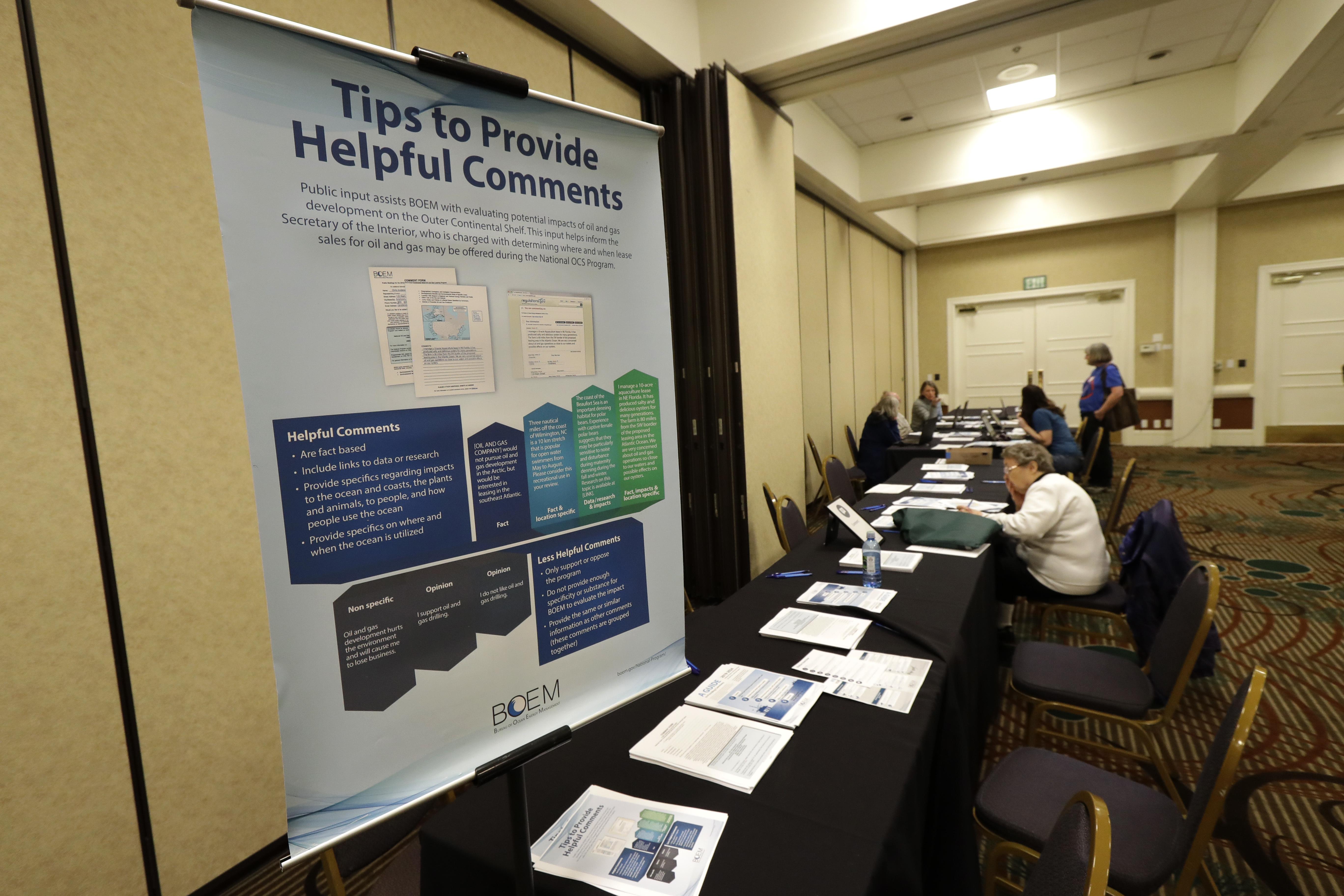
    Opponents spoke out Monday at a hearing that a coalition of groups organized in Olympia, Washington, on the same day as an “open house” hosted by the Bureau of Ocean Energy Management.

    Attorney General Bob Ferguson told dozens gathered – some wearing yellow hazmat suits and holding “Stop Trump’s Big Oil Giveways” signs – that he will sue if the plan is approved.

    “What this administration has done with this proposal is outrageous,” he said.

    Oil and gas exploration and drilling is not permitted in state waters.

    In announcing the plan to vastly open federal waters to oil and gas drilling, Zinke has said responsible development of offshore energy resources would boost jobs and economic security while providing billions of dollars to fund conservation along U.S. coastlines.

    His plan proposes 47 leases off the nation’s coastlines from 2019 to 2024, including one off Washington and Oregon.

    Oil industry groups have praised the plan, while environmental groups say it would harm oceans, coastal economies, public health and marine life.

    Washington Gov. Jay Inslee met with Zinke over the weekend while in D.C. for the National Governors Association conference and again urged him to remove Washington from the plan, Inslee spokeswoman Tara Lee said Monday.

    There hasn’t been offshore oil drilling in Washington or Oregon since the 1960s.

    There hasn’t been much interest in offshore oil and gas exploration in recent decades though technology has improved, said Washington’s state geologist David Norman.

    “It’s a very active place tectonically. We have a really complicated tough geology. It’s got really rough weather,” Norman said.

    There’s more potential for natural gas than oil off the Pacific Northwest, said BOEM spokesman John Romero. A 2016 assessment estimates undiscovered recoverable oil at fractions of the U.S. total.

    Proponents have backed the idea as a way to provide affordable energy, meet growing demands and to promote the U.S.’s “energy dominance.” Emails to representatives with the Western States Petroleum Association and the American Petroleum Institute were not immediately returned Monday.

    Sixteen members of Washington and Oregon’s congressional delegation last month wrote to Zinke to oppose the plan, saying gas drilling off the Northwest coastline poses a risk to the state’s recreational, fishing and maritime economy.

    Kyle Deerkop, who manages an oyster farm in Grays Harbor for Oregon-based Pacific Seafood, worried an oil spill would put jobs and the livelihood of people at risk.

    “We need to be worried,” he said in an interview, recalling a major 1988 oil spill in Grays Harbor. “It’s too great a risk.”

    Tribal members, business owners and environmentalists spoke at the so-called people’s hearing Monday organized by Stand Up To Oil coalition.

    The groups wanted to allow people to speak into a microphone before a crowd because the federal agency’s open house didn’t allow that. Instead the open house allowed people to directly talk to staff or submit comments using laptops provided.

    ___

    AP Photographer Ted S. Warren contributed to this report.

  • Alaska governor details plans for trade trip to China

    Alaska Gov. Bill Walker on Monday announced details of a spring trade mission to China that aims to build off existing relationships between the state and the Asian country.

    JUNEAU, Alaska (AP) – Alaska Gov. Bill Walker on Monday announced details of a spring trade mission to China that aims to build off existing relationships between the state and the Asian country.

    The announcement comes amid mounting trade tensions between the U.S. and China. The trip, which Walker first mentioned in his State of the State speech in January, is set for May.

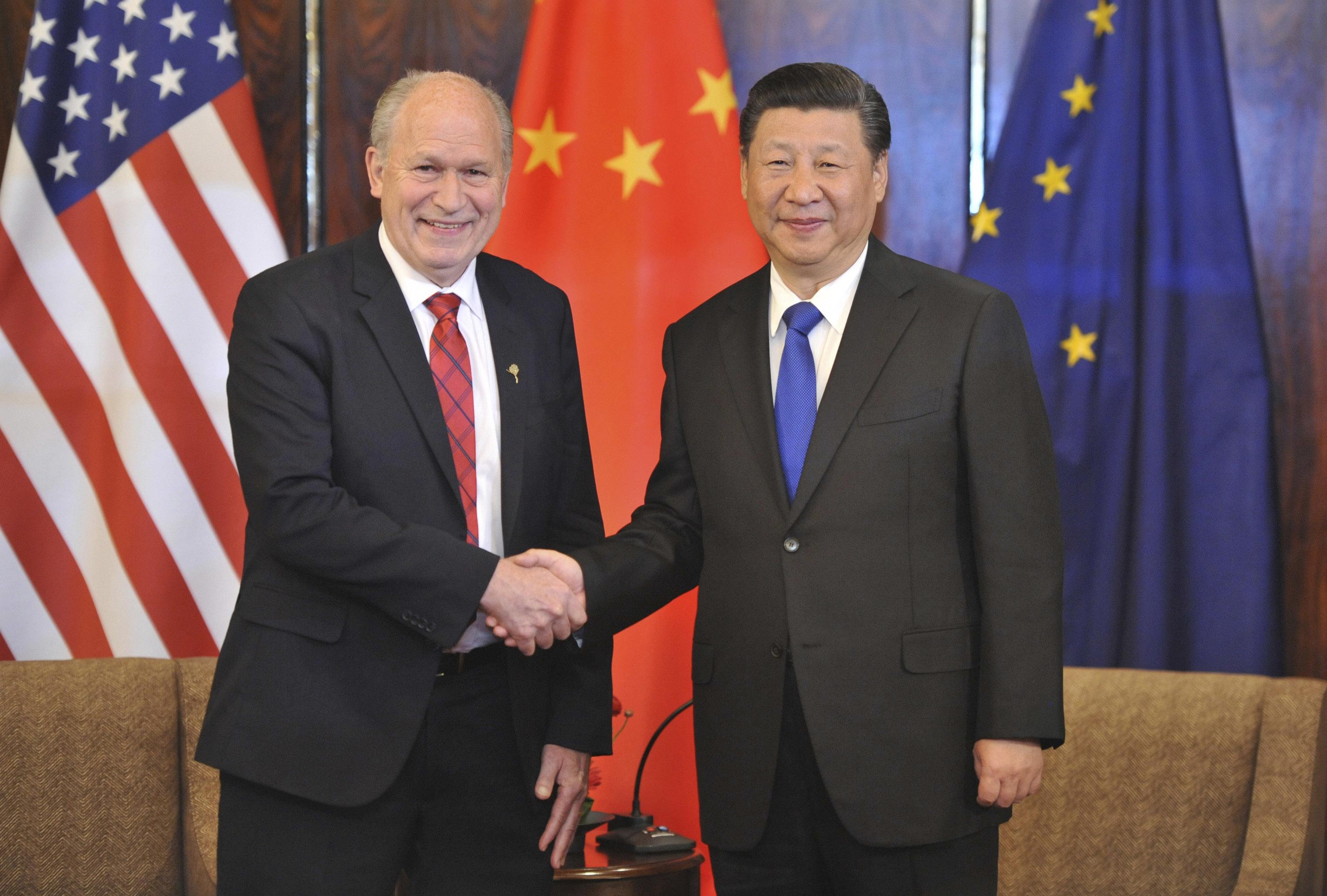
    China has been a top export market for Alaska goods, and the state has been working to strengthen ties with the country as it pursues potential partnerships for a natural gas line project. Walker, an independent, played host to China’s president in Anchorage last April.

    In November, Walker and Keith Meyer, president of the state-sponsored Alaska Gasline Development Corp., signed an agreement with leaders of China Investment Corp., the Bank of China and Sinopec, a major oil and gas company.

    The agreement calls for the parties to explore the feasibility of investing in the gas project, which proposes to move gas from Alaska’s North Slope to Asian markets, and pursue terms to advance the project, including the potential for Sinopec to be involved in engineering, construction and other aspects. The agreement does not obligate any party.

    Meyer downplayed the trade tensions between the U.S. and China and the pushback against China by President Donald Trump.

    “Really, the pushback is a message to buy more stuff from the United States. And, again, that’s where I think Alaska has the stuff that China wants,” Meyer told reporters from Anchorage Monday. “So I think the message is quite harmonious with our mission.”

    Walker’s office said the governor, his international trade director and Alaska’s commerce commissioner will travel with business representatives. The state plans a competitive application process for participants, who must pay their way.

    Alaska Senate Majority Leader Peter Micciche, a Republican, said lawmakers need a lot more information about the gas project before deciding whether they can support it.

  • NATO rejects Putin’s ‘unacceptable’ threats to target allies

    NATO says Russian President Vladimir Putin’s threat to target its members are unacceptable and that the military alliance will continue using its armed forces to deter aggression.

    BRUSSELS (AP) — NATO says Russian President Vladimir Putin’s threat to target its members are unacceptable and that the military alliance will continue using its armed forces to deter aggression.

    NATO spokeswoman Oana Lungescu said Friday that “Russian statements threatening to target allies are unacceptable and counterproductive.”

    Putin said Thursday that Moscow has tested an array of new strategic nuclear weapons that can’t be intercepted, telling the West: “You have failed to contain Russia.”

    Lungescu said NATO’s missile defense system is built to respond to attacks from outside Europe and North America and not directed against Russia.

    Noting Russia’s “aggressive actions” in Ukraine and military buildup around Europe, she said: “NATO is pursuing a twin-track approach to Russia: strong deterrence and defense, combined with meaningful dialogue.”

  • Germany downplays ‘acute’ cyberattack amid concerns of Russian meddling

    Germany’s interior ministry has downplayed a cyberattack that reportedly resulted in sensitive information being stolen from a government computer network.

    Germany’s interior ministry has downplayed a cyberattack that reportedly resulted in sensitive information being stolen from a government computer network.

    Ministry spokesman Johannes Dimroth told reporters Friday that authorities were monitoring the attack before it was revealed in the media this week, and that “acute danger was averted soon after it became known.”

    The attack affected Germany’s Informationsverbund Berlin-Bonn (IVBB), a federal computer network used to exchange sensitive but not highly classified documents, Mr. Dimroth told reporters, according to Reuters.

    The attack was first disclosed by German news outlets on Wednesday, prompting members of the German parliament’s intelligence oversight committee to convene a special session Thursday demanding details after having been left in the dark prior to recent media reporting.

    “It is a real cyberattack on parts of the government system. It’s an ongoing process, an ongoing attack,” Armin Schuster, a member of Chancellor Angela Merkel’s conservative party and the committee’s chairman, told reporters after being briefed on the attack. “The spilling of secrets caused considerable damage, but the government, as of today, is trying to limit the damage.”

    Authorities are investigating the leak, Mr. Dirmoth said Friday, and Germany’s chief federal prosecutor’s office said a preliminary probe is underway.

    Mr. Dirmoth declined to comment on whether authorities have linked the attack to Russia, notwithstanding media reports linking the incident to suspected state-sponsored hackers.

    German media reported earlier this week that security researchers believe the attack was waged by a hacking group known as “Snake” previously linked to Russian intelligence, drawing a reaction Friday from Kremlin spokesman Dmitry Peskov.

    “We note with regret that any hacking attacks in the world are associated with Russian hackers but that each time they (the allegations) are made without any tangible proof,” Mr. Peskov said during a conference call with reporters Friday.

    Like the U.S., Germany has blamed Russia before for instances of state-sponsored cyberattacks. The German Federal Office for Information Security previously said a 2015 attack against the Bundestag parliamentary network was likely waged by a hacking group known by names such as APT28, Fancy Bear and Sofacy. Security researchers have linked that group to Russian intelligence as well, including hacking campaigns waged against U.S. targets during the 2016 presidential election widely blamed on Russian operatives.

    The IVBB hack was “a technically sophisticated attack that had been planned for some time,” Interior Minister Thomas de Maizière said Thursday.

    If positively linked to Russia, the hacking will constitute “a form of warfare against Germany,” said Greens Party member Dieter Janacek, the head of the digital affairs committee, the Berliner Zeitung newspaper reported.

    German authorities discovered the IVBB hack in December, but the attackers may have been active at that point for upwards of a year already, according to media reports.

    A total of 17 computers are believed to have been affected, including at least one machine apparently belonging to an employee of the Federal Ministry of Defense, Germany’s NDR/WDR reported Friday. The attack was part of a global operation that also targeted computers Scandinavian, South American and Ukrainian computer systems, the report said.

    Palo Alto Networks, a U.S. cybersecurity firm, warned earlier this week that Fancy Bear hackers have been actively foreign affairs agencies and ministries in North America and Europe.

  • Explosions, gunfire rock Burkina Faso’s capital

    Gunfire and explosions rocked Burkina Faso’s capital early Friday in what the police said was a suspected attack by Islamic extremists.

    OUAGADOUGOU, Burkina Faso (AP) — Gunfire and explosions rocked Burkina Faso’s capital early Friday in what the police said was a suspected attack by Islamic extremists.

    By midday the gunfire became intermittent and helicopters flew over the French Embassy in Ouagadougou. Witnesses at the national television office which faces the French Embassy told The Associated Press that five people came in a pick-up truck in front of the embassy and started shooting after saying “Allahu Akhbar.” They then set fire to the truck and began shooting.

    Heavy smoke rose from the army joint chief of staff’s office in Ouagadougou, and witnesses said loud explosions were still heard around the military headquarters in the western part of the capital’s city center and far from the other area under attack that houses the embassies, the prime minister’s office and United Nations offices.

    Burkina Faso’s police director general Jean Bosco Kienou told AP “the form is that of a terrorist attack.”

    Plumes of black smoke could be seen above the army offices in western Ouagadougou where police and gendarmerie responded. Barricades were erected to keep people from all areas under assault.

    Burkina Faso’s police said the defense and security forces are responding to attacks around the Prime Minister’s office and the United Nations.

    France’s foreign affairs ministry published a message on their website warning of gunfire in the capital, and said that security forces are now intervening and enhanced security measures could be taken by authorities. It recommended people stay off the streets and remain in a safe place.

    Ouagadougou has been attacked by Islamic extremists targeting foreigners at least twice in the past few years.

    In August, extremists opened fire as patrons dined on a Sunday night at the Aziz Istanbul restaurant, killing at least 18 people. In January 2016, Islamic extremists attacked another cafe popular with foreigners in the capital, killing 30 people.

    Both times security forces have struggled to contain the violence, waiting for hours before intervening at the scene.

    Islamic extremist threats also moved into new parts of Burkina Faso earlier this month with an attack by 10 people in an eastern town that killed an officer and wounded two others. Increased attacks staged at the border with Mali have forced thousands to flee over the past year. An Australian doctor who had spent decades treating civilians was also abducted along this border and remains missing.

    The region is also now the home of a Burkina Faso extremist figure, Malam Dicko, who has collaborated with militants across the border in Mali. Among his objectives has been seeking to end the use of French, the former colonizer’s language, in regional schools. Burkinabe forces backed by French military counterparts have tried to capture Dicko but he remains at large.

    ___

    Associated Press writer Carley Petesch in Dakar, Senegal contributed to this report.