Category: WORLDS

  • Jamal Khashoggi: CIA ‘blames Saudi prince for murder’

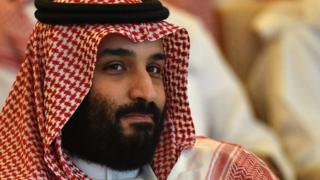
    Crown Prince Mohammed bin Salman Image copyright AFP Image caption Saudi Arabia says the crown prince knew nothing of plans for the killing

    The CIA believes that Saudi Crown Prince Mohammed bin Salman ordered the murder of journalist Jamal Khashoggi, in step with US media stories.

    Sources on the subject of the company said it had assessed the proof intimately.

    it is understood there is no “smoking gun” but US officers assume such an operation would want the prince’s approval.

    Saudi Arabia has called the declare false and insisted that the crown prince knew nothing approximately plans for the killing.

    It says Khashoggi was killed as a results of a “rogue operation”.

    In The Meantime, US Vice-President Mike Pence vowed on Saturday to hold Khashoggi’s killers to account.

    Speaking at the sidelines of a summit in Papua New Guinea, he mentioned the u.s. was once “determined to hold all of those responsible who are chargeable for that homicide”.

    Who was once Jamal Khashoggi? Saudi journalist’s death: Story thus far Is Saudi crown prince completed?

    The journalist used to be killed within the Saudi consulate in Istanbul on 2 October. His frame has now not been found.

    Turkey insists the order to kill him got here from the highest levels.

    The Washington Put Up, which Khashoggi worked for, says the CIA overview was once primarily based partially on a telephone name made via the crown prince’s brother, Prince Khaled bin Salman, the Saudi ambassador to the us.

    Prince Khaled allegedly called Khashoggi on the direction of his brother and gave him assurances that he could be safe to head to the consulate.
    Media playback is unsupported on your instrument

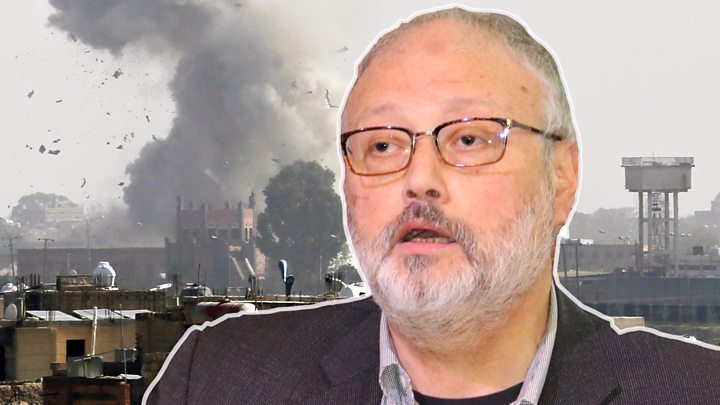
    Media captionHow has the demise of Jamal Khashoggi impacted the conflict in Yemen?

    Prince Khaled, now again in Saudi Arabia, said on Twitter that he had not been in contact with Khashoggi for nearly a yr. He said he had never urged Khashoggi – who had been in London for a conference until the day before his disappearance – will have to visit Turkey for any explanation why.

    This denial is being carried prominently in Saudi media, the BBC’s Sebastian Usher In Riyadh studies.

    Neither the White Area nor the u.s. State Division has commented on the stories, but sources say they have been knowledgeable of the CIA’s conclusions.

    it’s understood retailers have additionally tested a call made to a senior aide of Crown Prince bin Salman by way of the team that performed the killing.

    Sources quoted in the united states media stressed out that there has been no unmarried piece of evidence linking the crown prince on to the murder, however officers believe such an operation would have wanted his approval.

    “The everyday place is that there is no way this took place without him being mindful or concerned,” the Washington Publish quoted a supply as saying.

    What do the Saudis say happened to Khashoggi?

    At a news convention in Riyadh on Thursday, Deputy Public Prosecutor Shalaan bin Rajih Shalaan stated Khashoggi used to be given a lethal injection and his frame was dismembered throughout the consulate after his dying.

    The frame parts had been then handed over to a local “collaborator” out of doors the grounds, he brought. A composite sketch of the collaborator has been produced and investigations are continuing to locate the remains.

    Eleven people have been charged over the journalist’s loss of life and the prosecutor is looking for the loss of life penalty for 5 of them.

    Mr Shalaan didn’t identify any of these charged with the murder.

    Khashoggi, who wrote a per thirty days column within the Washington Put Up, disappeared after entering his country’s consulate in Istanbul to procure a marriage document.

    Turkish officials insist his homicide was once premeditated and carried out by means of a workforce of Saudi agents.

    On Friday, funeral prayers happened for the murdered creator in Saudi Arabia and Turkey.

    Khashoggi’s son, Salah, met mourners in Jeddah at the same time as loads attended prayers in the holy towns of Mecca and Medina, as well as in Istanbul.
    (more…)

  • As tensions rise, U.S. ends refueling of Saudi planes

    The Pentagon said late Friday the U.S. would no longer refuel planes for the Saudi Arabia-led coalition battling Houthi rebels in Yemen, suggesting the Trump administration may be taking concrete step

    The Pentagon said late Friday the U.S. would no longer refuel planes for the Saudi Arabia-led coalition battling Houthi rebels in Yemen, suggesting the Trump administration may be taking concrete steps to end support for the controversial war amid continued reports of high civilian casualties.

    The move also comes at tense time for Washington and Riyadh following the death of U.S.-based journalist Jamal Khashoggi, who was killed inside the Saudi consulate in Turkey last month. The incident has ratcheted up tensions between the two nations and sparked strong calls on Capitol Hill to cut off arms sales and military support for Saudi Arabia, along with imposing possible economic sanctions.

    On Yemen, top administration officials have said recently it’s time to end the conflict and move to a peaceful resolution.

    Both the U.S. and Saudi Arabia over the weekend tried to cast the decision to end refueling as a mutual one, though U.S. officials reportedly believed it was time to end the controversial policy that had faced intense international criticism as reports of civilian carnage rose.

    “We support the decision by the Kingdom of Saudi Arabia, after consultations with the U.S. government, to use the coalition’s own military capabilities to conduct inflight refueling in support of its operations in Yemen,” Defense Secretary James Mattis said in a statement late Friday night. “The U.S. and the Coalition are planning to collaborate on building up legitimate Yemeni forces to defend the Yemeni people, secure their country’s borders, and contribute to counter Al Qaeda and ISIS efforts in Yemen and the region.”

    “The U.S. will also continue working with the coalition and Yemen to minimize civilian casualties and expand urgent humanitarian efforts throughout the country,” he continued. “Recognizing continued bipartisan interest from Congress, the administration is appreciative of the continued dialogue we have had with key members on this issue and look forward to working together to support the United Nations’ ongoing efforts on this new phase in Yemen.”

    In its own statement, Riyadh said it simply no longer needs America’s help with refueling.

    “Recently the kingdom and the coalition has increased its capability to independently conduct inflight refueling in Yemen,” read a statement released on state-run Saudi television. “As a result, in consultation with the United States, the coalition has requested cessation of inflight refueling support for its operations in Yemen.”

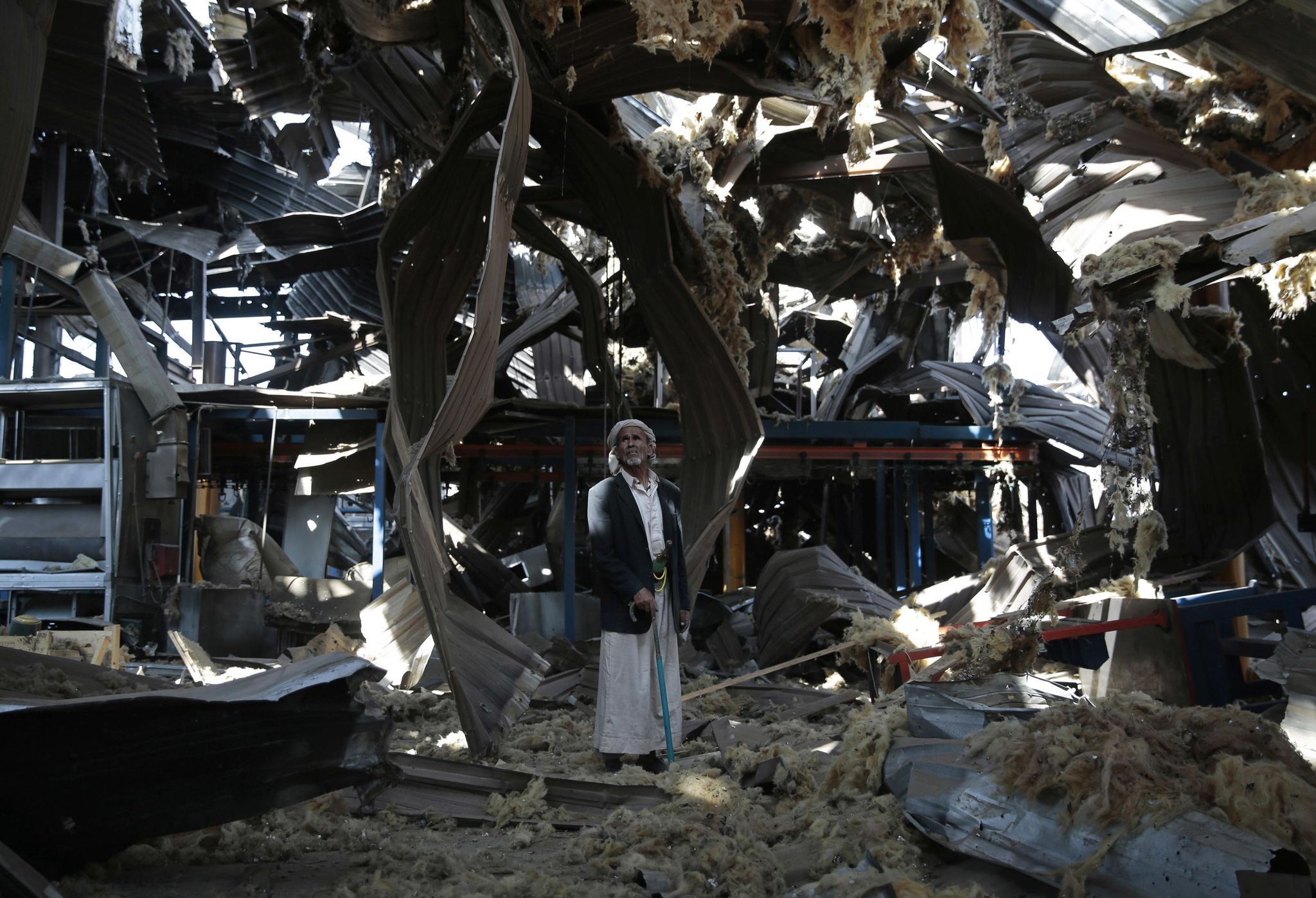
    While it’s unclear exactly what impact the policy change will have on the Saudi-led war in Yemen, what is clear is that the civilian death toll is rising. The Trump administration has repeatedly said it believes the Saudi-led coalition is doing all it can to reduce civilian casualties in the conflict, which is a key part of a broader proxy war between Saudi Arabia and Iran.

    But new figures show that civilian deaths are going up. Since the start of 2016, Saudi-led coalition airstrikes have killed at least 4,489 civilians, according to figures from the Armed Conflict Location & Event Data Project.

    So far this year, 1,254 civilians have been killed, a rate of about four people each day. Last year, 1,386 civilians were killed, or about 3.79 per day, meaning the frequency of civilian deaths is actually rising, not falling as U.S. officials claim.

    Administration officials have over the past several weeks publicly called for an end to the war.

    “It is time to end this conflict, replace conflict with compromise, and allow the Yemeni people to heal through peace and reconstruction,” Secretary of State Mike Pompeo said recently.

  • Donald Trump, Emanuel Macron dodge talk of ‘insult’ at Paris meet

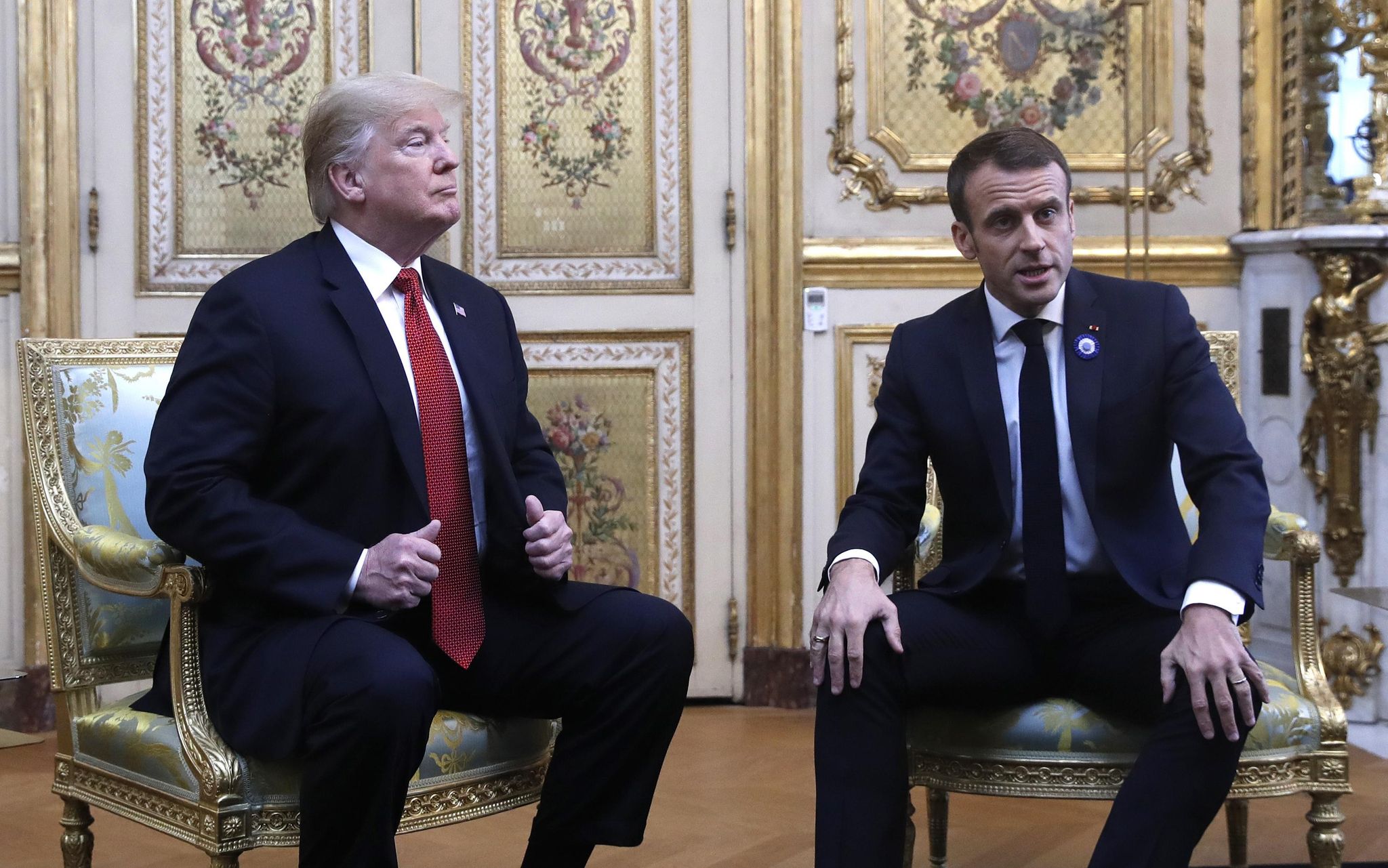
    President Trump met Saturday with French President Emanuel Macron in Paris, with both leaders avoiding public talk of Mr. Macron’s “insult” that the U.S. could pose a military threat.

    President Trump met Saturday with French President Emanuel Macron in Paris, with both leaders avoiding public talk of Mr. Macron’s “insult” that the U.S. could pose a military threat.

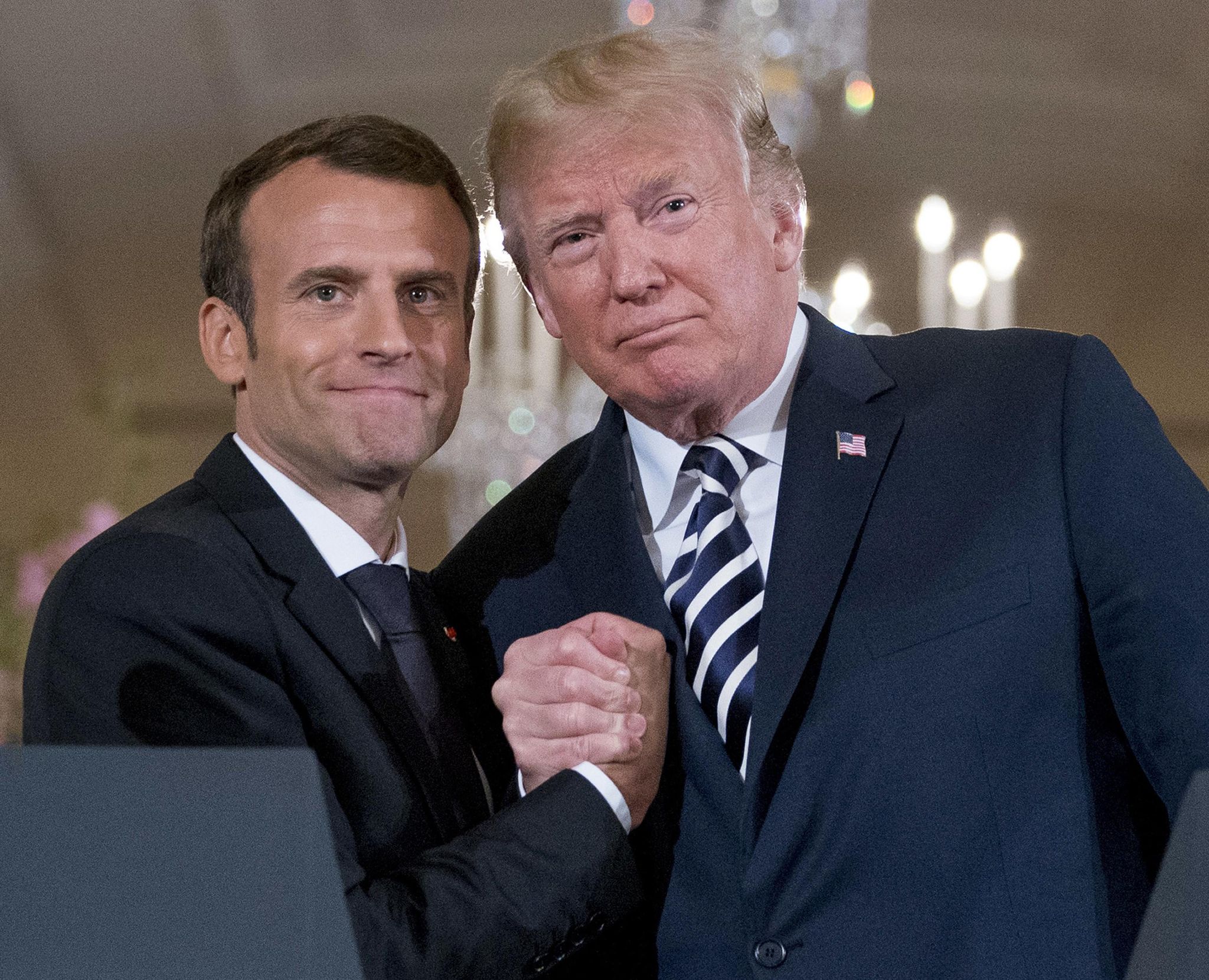
    They greeted each other with tight smiles at the Élysée Palace after Mr. Trump ruffling feathers upon arrival Friday in France by tweeting that it was very insulting that Mr. Macron said Europe needed stronger military defense against “China, Russia and even the United States.”

    Mr. Macron carefully avoided talking about it. He instead focused on NATO burden sharing, an area where he and Mr. Trump are on the same page and which bolsters his case for stronger French leadership in Europe.

    Mr. Trump played along.

    “We are getting along from the standpoint of fairness and to be fair, we want to help Europe but it has to be fair,” Mr. Trump said when a French reporter asked about the perceived insult. “The burden sharing has been largely on the United States, as the president will say.”

    Mr. Macron stressed the alliance between their countries, including military strikes in Syria and fighting terrorism in Africa.

    Mr. Trump is in France for events marking the 100th anniversary of the end of World War I. More than 60 world leaders are in France for the occasion.

    As soon as Mr. Trump arrived in France on Friday, he called out Mr. Macron.

    “President Macron of France has just suggested that Europe build its own military in order to protect itself from the U.S., China and Russia. Very insulting, but perhaps Europe should first pay its fair share of NATO, which the U.S. subsidizes greatly!” tweeted the president.

    In a recent radio interview, Mr. Macron said Europe needed a strong military to defend itself without relying on the U.S. But he also lumped the U.S. in with China and Russia as possible aggressor nations.

    When they met at the Élysée Palace, the official presidential residence, Mr. Macron glossed over the dust-up with Mr. Trump.

    “I do share President Trump’s views that we need better burden sharing with NATO and that’s why I believe my proposals for a European defense are consistent with that,” he said.

    He added, “When President Trump wants to defend one of the states of the United States, he doesn’t ask France or Germany or other government of Europe to finance it.”

    The two leaders early on shared an extremely friendly relationship that was on full display during a state visit in by Mr. Macron to the White House in April.

    The relationship hit the rocks over Mr. Trump’s pullout from the Iran nuclear deal and other policy clashes.

    “Our people are very proud to have you here,” Mr. Macron told Mr. Trump during their meeting.

    Mr. Trump touted their friendship.

    “We have become very good friends over the last couple of years,” he said. “We have much in common in many ways, perhaps more ways than people would understand but we are very much similar in our views.”

  • Trump slams France’s Macron over need for ‘European army’ to defend against Russia, China

    President Donald Trump took to social media Friday to chastise French President Emanuel Macron’s calls for a “true European army” to defend the continent against increasing threats from Russia, China

    President Donald Trump took to social media Friday to chastise French President Emanuel Macron’s calls for a “true European army” to defend the continent against increasing threats from Russia, China and other near-peer adversaries.

    In a Twitter post, Mr. Trump characterized Mr. Macron’s claims as “very insulting” to the long-standing mutual defense agreements between Washington and Paris, as part of the NATO alliance. In the Twitter posting, Mr. Trump also took France and other western European nations to task for not meeting the U.S. demand for NATO members to contribute two percent of their country’s gross domestic product to the alliance’s defense.

    “President Macron of France has just suggested that Europe build its own military in order to protect itself from the U.S., China and Russia. Very insulting,” Mr. Trump wrote. “But perhaps Europe should first pay its fair share of NATO, which the U.S. subsidizes greatly!” he added in the social media posting.

    Mr. Trump’s comments come days before he and Russian President Vladimir Putin are slated to meet with Mr. Macron in Paris, for commemoration ceremonies dedicated to end of World War I. Administration officials indicated Mr. Trump and Mr. Putin would hold a face-to-face meeting on the sidelines of the ceremonies, but that plan was later scrubbed by the White House.

    The young French leader voiced the need for a “true European Army” to fortify the continent’s eastern borders, during an interview with Europe 1 on Tuesday.

    “We have to protect ourselves with respect to China, Russia and even the United States of America,” Mr. Macron said, adding European leaders “will not protect the Europeans unless we decide to have a true European army.”

    Citing the Trump administration’s souring view on NATO, particularly its chastising of France, Germany and other alliance members for not paying their fair share toward Europe’s defense, Mr. Macron said western allies on the continent “need a Europe which defends itself better alone, without just depending on the United States, in a more sovereign manner.”

  • U.S. challenger Caruana saves draw in epic first game of chess title match

    World chess champion Magnus Carlsen of Norway pressed hard but could not crack the defenses of American challenger Fabiano Caruana, agreeing to a draw after a hard-fought 115 moves in the first game o

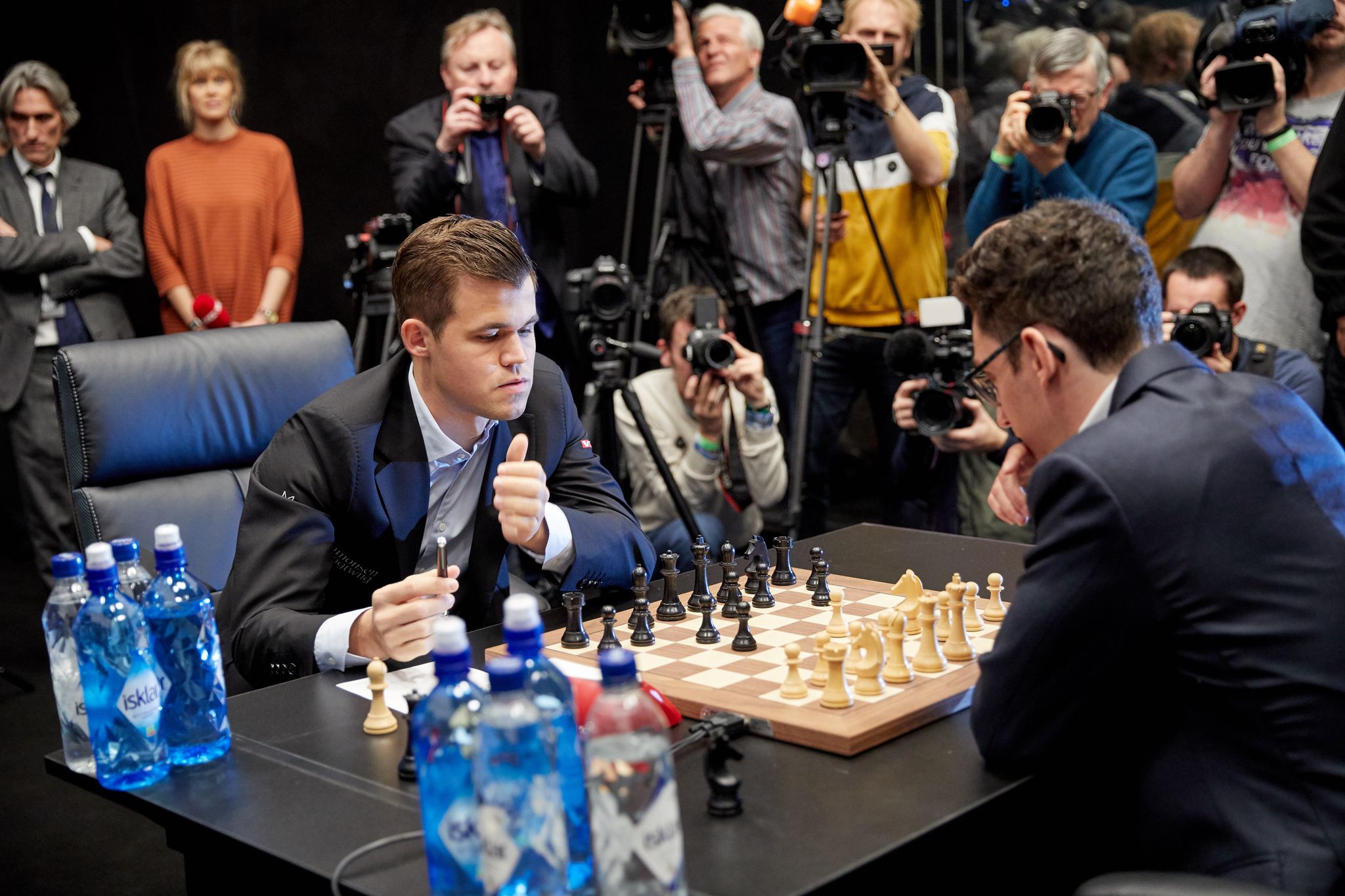
    World chess champion Magnus Carlsen of Norway pressed hard but could not crack the defenses of American challenger Fabiano Caruana, agreeing to a draw after a hard-fought 115 moves in the first game of their scheduled 12-game title match in London Friday.

    Even with the disadvantage of the black pieces, Mr. Carlsen held an edge for much of the game against Mr. Caruana, seeking to be the first U.S. world chess champion since Bobby Fischer. In the end, the champ had a rook and two pawns to the challenger’s rook and a single pawn, but could find no way to exploit his edge.

    Against Mr. Carlsen’s Sicilian Defense, Mr. Caruana played a relatively rare line but never established an advantage. With a bishop that dominated White’s knight, the Norwegian champion built up a strong initiative on the kingside, eventually forcing Mr. Caruana to give up a pawn to relieve the pressure.

    Chess analysts say the champion may have missed a win just at the 40-move time control, when he captured a pawn instead of invading White’s position with his queen. One of the best grinders in the history of chess, Mr. Carlsen pressed on several fronts for a breakthrough after that, but could never quite break the challenger’s fortress.

    The champion, who has held the title since 2013, will have the advantage of the White pieces in Game 2, which will be played Saturday.

    If the match is tied after 12 games, the two grandmasters will play a series of playoff games at faster time controls.

    Caruana-Carlsen, Game 1, World Chess Championship, London, November 2018

    1. e4 c5 2. Nf3 Nc6 3. Bb5 g6 4. Bxc6 dxc6 5. d3 Bg7 6. h3 Nf6 7. Nc3 Nd7 8. Be3 e5 9. O-O b6 10. Nh2 Nf8 11. f4 exf4 12. Rxf4 Be6 13. Rf2 h6 14. Qd2 g5 15. Raf1 Qd6 16. Ng4 O-O-O 17. Nf6 Nd7 18. Nh5 Be5 19. g4 f6 20. b3 Bf7 21. Nd1 Nf8 22. Nxf6 Ne6 23. Nh5 Bxh5 24. gxh5 Nf4 25. Bxf4 gxf4 26. Rg2 Rhg8 27. Qe2 Rxg2+ 28. Qxg2 Qe6 29. Nf2 Rg8 30. Ng4 Qe8 31. Qf3 Qxh5 32. Kf2 Bc7 33. Ke2 Qg5 34. Nh2 h5 35. Rf2 Qg1 36. Nf1 h4 37. Kd2 Kb7 38. c3 Be5 39. Kc2 Qg7 40. Nh2 Bxc3 41. Qxf4 Bd4 42. Qf7+ Ka6 43. Qxg7 Rxg7 44. Re2 Rg3 45. Ng4 Rxh3 46. e5 Rf3 47. e6 Rf8 48. e7 Re8 49. Nh6 h3 50. Nf5 Bf6 51. a3 b5 52. b4 cxb4 53. axb4 Bxe7 54. Nxe7 h2 55. Rxh2 Rxe7 56. Rh6 Kb6 57. Kc3 Rd7 58. Rg6 Kc7 59. Rh6 Rd6 60. Rh8 Rg6 61. Ra8 Kb7 62. Rh8 Rg5 63. Rh7+ Kb6 64. Rh6 Rg1 65. Kc2 Rf1 66. Rg6 Rh1 67. Rf6 Rh8 68. Kc3 Ra8 69. d4 Rd8 70. Rh6 Rd7 71. Rg6 Kc7 72. Rg5 Rd6 73. Rg8 Rh6 74. Ra8 Rh3+ 75. Kc2 Ra3 76. Kb2 Ra4 77. Kc3 a6 78. Rh8 Ra3+ 79. Kb2 Rg3 80. Kc2 Rg5 81. Rh6 Rd5 82. Kc3 Rd6 83. Rh8 Rg6 84. Kc2 Kb7 85. Kc3 Rg3+ 86. Kc2 Rg1 87. Rh5 Rg2+ 88. Kc3 Rg3+ 89. Kc2 Rg4 90. Kc3 Kb6 91. Rh6 Rg5 92. Rf6 Rh5 93. Rg6 Rh3+ 94. Kc2 Rh5 95. Kc3 Rd5 96. Rh6 Kc7 97. Rh7+ Rd7 98. Rh5 Rd6 99. Rh8 Rg6 100. Rf8 Rg3+ 101. Kc2 Ra3 102. Rf7+ Kd6 103. Ra7 Kd5 104. Kb2 Rd3 105. Rxa6 Rxd4 106. Kb3 Re4 107. Kc3 Rc4+ 108. Kb3 Kd4 109. Rb6 Kd3 110. Ra6 Rc2 111. Rb6 Rc3+ 112. Kb2 Rc4 113. Kb3 Kd4 114. Ra6 Kd5 115. Ra8 Draw agreed


  • Vittorio Dominelli, former Toronto cop, pleads guilty to eating marijuana chocolate on duty

    Vittorio Dominelli, a former officer for the Toronto Police Service, pleaded guilty Friday to obstruction of justice in connection with consuming a confiscated marijuana-infused chocolate bar while on

    Vittorio Dominelli, a former officer for the Toronto Police Service, pleaded guilty Friday to obstruction of justice in connection with consuming a confiscated marijuana-infused chocolate bar while on duty and then calling for backup.

    Dominelli, 36, entered the guilty plea in an Ontario courtroom along with a statement of facts recalling the embarrassing Jan. 28 incident, Canadian media reported.

    According to the statement read in court, Dominelli admittedly pocketed three marijuana-infused, hazelnut-flavored chocolate bars that had been confiscated during an early morning raid on a Toronto dispensary, outlets reported. He subsequently consumed one of the bars while on duty, fell ill and dialed for help.

    “My heart was pounding. I felt like it was going to come out of my mouth,” Dominelli said in a court document, The Toronto Star reported Friday. “I realized instantly what a stupid thing I had done … At that point, I did not care any more about the prospects of getting caught or the professional consequences, I just wanted medical help.”

    Dominelli dialed a dispatcher, reported an officer in need of assistance and requested an ambulance.

    “I think I’m going to pass out. … I’m just lightheaded,” Dominelli said during the phone call, the newspaper reported.

    Police were dispatched to the scene, but one of the responding officers slipped and fell and had to be hospitalized for a serious head injury, according to prosecutors.

    More than 10 months later, the injured police officer continues to suffer from “significant difficulties with speech and vision,” said Crown Prosecutor Philip Perlmutter, The Star reported.

    Dominelli indicated he “deeply regrets his actions,” the newspaper reported.

    Justice Mary Misener, meanwhile, called him a “complete idiot,” CTV News Toronto reported.

    “The conduct here, you can’t describe it as anything other than stupid,” she said, according to The Star’s report. “On the continuum, this is on the very low end, but nevertheless this is an evidence tampering case before me.

    A 13-year veteran of the force, Dominelli resigned from the department earlier this week.

    Dominelli “lost the trust of the policing community and the public to the point where he could no longer be a police officer,” said his lawyer, Peter Brauti, The Star reported.

    Prosecutors withdrew a separate charge of criminal breach of trust Friday, outlets reported.

    Sentencing details were not immediately clear.

    Jamie Young, a current Toronto police constable also charged in connection with the incident, is scheduled to appear in court Nov. 15 and remains suspended with pay, CTV reported.

    Canada legalized recreational marijuana last month, and provinces including Ontario have since implemented systems for legal pot sales.

    Toronto police officers can use marijuana, according to newly implemented policy, albeit no sooner than 28 days prior to reporting for duty, CTV reported previously.

  • CROSSTALK: Trump hitting reset buttons on Russia, China

    There are some truths that I strive to preach, for lack of a better word, in today’s information-culture wars propagated in our corrupt mainstream media. Here are a few: Nationalism is not racism, adh

    ANALYSIS/OPINION:

    There are some truths that I strive to preach, for lack of a better word, in today’s information culture wars propagated in our corrupt mainstream media. Here are a few: Nationalism is not racism, adherence to principles is not hate, masculinity is not toxic and there are only two sexes.

    However, there are obvious truths in geopolitics as well. Chief among these is the fact that standing up to tyranny is not an attempt to maintain “unipolar world” or “dominance.”

    Here are a few facts. The South China Sea is an international waterway that a large part of the world relies on for commerce. There are treaties that China has signed to protect right of passage in that area. However, China has decided to militarize it and seize that region of the world for itself.

    The United States will stand up for these rights of passage. The United States will stand up for our ally, Taiwan. These two facts have nothing to do with an “aggressive” United States that wants to take over the world.

    China wants to take over and be dominant in the world, not America.

    Michael Pillsbury, in his eye-opening book “The Hundred-Year Marathon: China’s Secret Strategy,” talks of China’s long-term strategy to achieve dominance over the West. “‘The Hundred-Year Marathon’ reveals China’s secret strategy to supplant the United States as the world’s dominant power, and to do so by 2049, the one-hundredth anniversary of the founding of the People’s Republic,” reads the intro. He also discusses in-depth the deceit and treachery China has used to achieve its goals in its relations with the United States over the decades.

    President Trump is the first American president to get this obvious fact, and has decided to confront China. He is the first president to use the full weight of American power to achieve this end — economic, military and political — to level the playing field with Beijing, to stop China from cheating on trade, forcing technology transfers and stealing intellectual property from American companies.

    China signed trade agreements, and entered the World Trade Organization, only to cheat.

    Mr. Trump is calling them out. That is not an attempt at American dominance; it is protecting American interests and national security.

    The Kremlin has also completely embraced the new information hybrid warfare. Russian generals have openly discussed using disinformation as the vanguard to kinetic conflict.

    Moscow has also signed agreements, like the INF treaty, the Chemical Warfare treaty and a promise to protect Ukraine’s integrity. They have broken all of them.

    Mr. Trump standing up to Russian deceit is not an attempt at world dominance either; it is protecting American national security.

    As far as a nuclear war goes; Russia does not have the conventional forces to match the U.S. in a sustained conflict outside its borders. No one believes NATO is going to invade the Russian Federation. The only card Moscow has to play therefore is the nuclear card, which it has begun to play often, to maintain its prominence on the world stage.

    We are not going to have a nuclear war. It was possible under President Obama as he was so weak. However, Mr. Trump is rapidly rebuilding our armed forces after the Obama capitulation. He is focusing on modernizing our nuclear deterrent.

    China and Russia have already militarized space. America protecting itself in this arena is again, not an agenda of world dominance; it is protecting American national security.

    The one thing I do agree with Ed Lozansky on is NATO enlargement. I have written about this subject on these pages. Pushing the alliance to Russia’s borders is madness and serves no purpose but to give President Putin an enemy for political use.

    No, President Trump doesn’t need to or will play the “China Card” in an attempt to split Moscow and Beijing. However, he can, and will, continue to confront China in its attempt to dominate the world economically and militarily. That does not mean to say he is reckless; he simply will put America’s interests first.

    The world is simply getting used to this new, real, “reset.”

    Thank God for Donald J. Trump.

    ⦁ L. Todd Wood is a former special operations helicopter pilot and Wall Street debt trader, and has contributed to Fox Business, The Moscow Times, National Review, The New York Post and many other publications.

  • CROSSTALK: US-Russia-China Big Three – or WW III?

    An expected meeting this weekend between President Trump and Russian President Vladimir Putin at a Paris commemoration of the end of World War I has been thrown into doubt, though a sideline encounter

    ANALYSIS/OPINION:

    An expected meeting this weekend between President Trump and Russian President Vladimir Putin at a Paris commemoration of the end of World War I has been thrown into doubt, though a sideline encounter may still take place. A more substantive discussion between the men who control the world’s biggest nuclear arsenals is expected at the G20 Buenos Aires summit later this month, when Mr. Trump will also meet with China’s President Xi Jinping.

    In view of the new reality in the House of Representatives, where the Democrats will definitely unleash a redoubled wave of anti-Trump investigations, many predict that Mr. Trump will have no time or energy to concentrate on foreign policy. However, it is actually in foreign policy where he cannot only turn the tables on his opponents but begin his 2020 re-election campaign — as well as saving all of us from a nuclear holocaust.

    In recent weeks, senior officials of both the Russian and Chinese governments have issued statements that should send chills into everyone. Andrei Belousov, deputy director of the Russian Foreign Ministry’s Department of Nonproliferation and Arms Control, said: “Yes, Russia is preparing for war, I can confirm it. Yes, we are preparing to defend our homeland, our territorial integrity, our principles, our values, our people. We are preparing for such a war.” Mr. Belousov’s words echo Mr. Putin’s own recent promise to use nuclear weapons if necessary: “Any aggressor should know that retribution will be inevitable and he will be destroyed. And since we will be the victims of his aggression, we will be going to heaven as martyrs. They will simply croak and won’t even have time to repent.”

    Similarly, Mr. Xi himself stated in reference to U.S. naval maneuvers in waters claimed by China, “We have to step up combat readiness exercises, joint exercises and confrontational exercises to enhance servicemen’s capabilities and preparation for war.”It is surprising how little attention these dire warnings have generated in the West. To the extent they have been noticed, they were dismissed as belligerent bluster from second-rate powers. To conclude that would be tragically wrong.

    It is a very long time since even U.S. diplomats — much less politicians and journalists — practiced the art of looking at things from “the other guy’s point of view” to understand how other countries might perceive what we regard as reasonable actions. From Russia’s and China’s perspective, there’s nothing reasonable about America’s seeking dominance in areas vital to their security but of negligible to nonexistent U.S. national interest.

    From their vantage point, the U.S. is seeking full-spectrum dominance right up to their borders and littoral waters: ever-increasing sanctions, militarization of outer space, the Arctic, Europe (withdrawal from the INF treaty), Syria, Ukraine, the South China Sea, the Taiwan Strait, Xinjiang, and elsewhere. Nowhere is there a hint that the U.S. concedes regional security to Russia or China — or really, any other country — of the kind the U.S. has claimed in our neighborhood for almost 200 years.

    Back to what Mr. Trump’s next move might be, there are some who suggest a “triangulation,” in which the U.S. would seek to enlist Russia as a counterweight to China. The pattern would be Henry Kissinger’s counsel to Richard Nixon in “playing the China card” against the USSR.Since, it is suggested, Russia is a declining power it makes sense to get them on our side against a rising China.

    The notion of playing the Russia card against China is an absurd fantasy. First, it’s impossible to woo Russia on the basis of unremitting hostility, threats and insults. That shows no sign of changing with new sanctions kicking in later this month.Second, any hints at a positive shift in U.S. behavior would not be taken seriously by Moscow, which remembers previous broken promises, such as NATO expansion or the ABM treaty abrogation. Third, Moscow has lots of good reasons to get along with a massive neighboring country that is inherently more important to Russia than the U.S. is or ever will be.

    The other option is to realize that a stable global order can only rest on a “troika” of the U.S., Russia and China, and personally on a Trump-Putin-Xi accord. This means abandoning the aspiration of U.S. unipolar, global domination and conceding that other countries have their own security interests as well.

    The remaining alternative is to seek to maintain a unipolar world at all costs. Judging from Mr. Trump’s pre-election pledges and speeches, he appreciates this point but his national security team — composed of the kind of neoconservatives, Bush-era globalists and other Swamp-critters whose disastrous handiwork Trump decried in 2016 — does not. Hence, the warnings cited in the headline.

    The U.S. now has a stark choice. We can go down the current road whose terrible end is all too clear. Or we may hope that the master of the “art of the deal” suggests a different road when he meets with his Russian and Chinese counterparts.

    ⦁ Edward Lozansky is founder and president of the American University in Moscow.

  • U.S, Chinese officials spar over South China Sea engagements

    Top U.S. and Chinese defense officials and diplomats traded rhetorical barbs over ongoing American and allied military operations in the South China Sea, undercutting the message of cooperation and un

    Top U.S. and Chinese defense officials and diplomats traded rhetorical barbs over ongoing American and allied military operations in the South China Sea, undercutting the message of cooperation and unity between the two world powers during bilateral talks held in Washington on Friday.

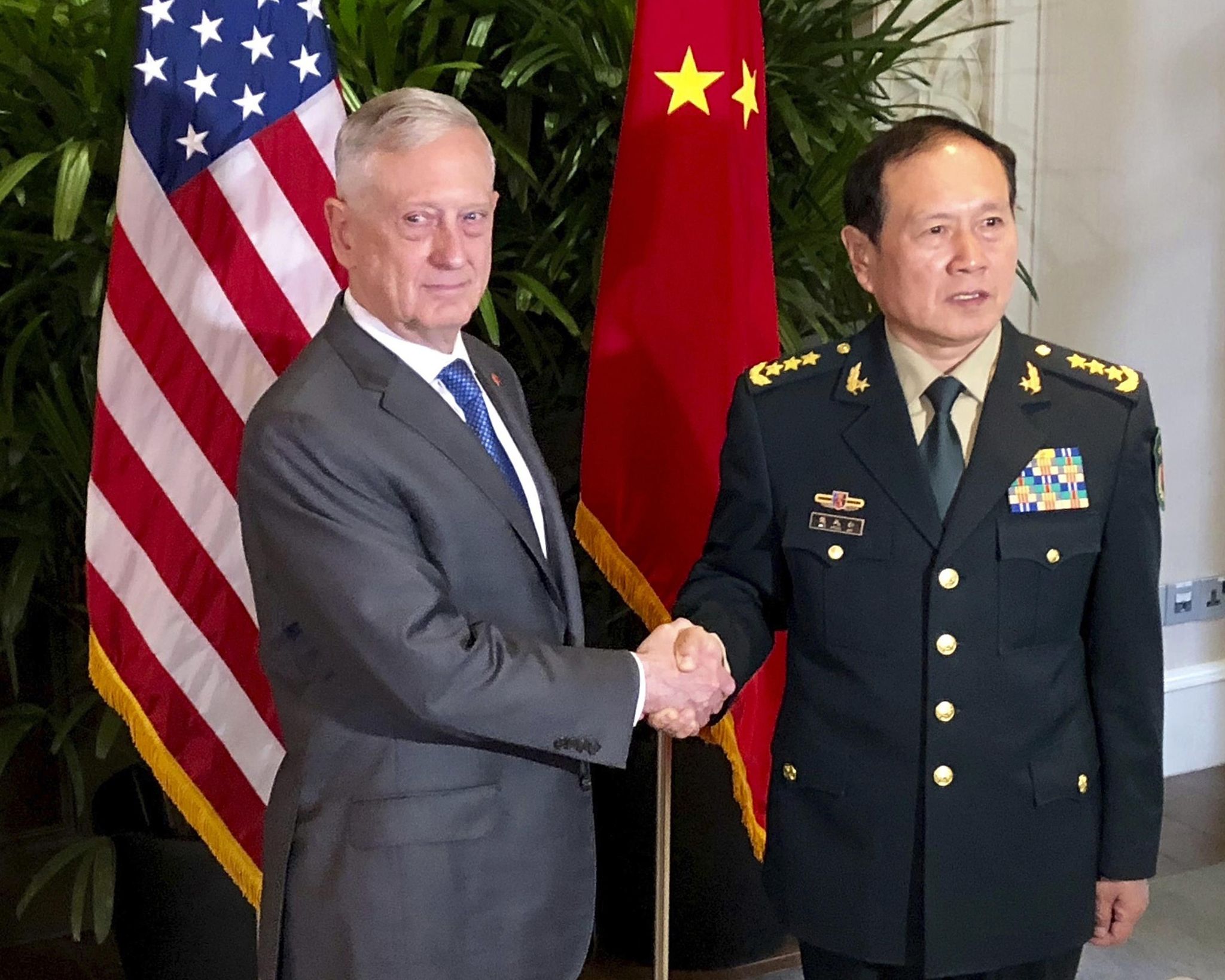
    Defense Secretary James N. Mattis reiterated Washington’s stance that U.S. fighters, bombers and warships would “continue to fly and sail wherever international law allows” in the South China Sea and elsewhere in the Pacific.

    “We continue to operate in international waters and airspace as all nations are entitled to,” Mr. Mattis said during a press conference at the State Department alongside Secretary of State Mike Pompeo, Director of the Office of Foreign Affairs of the Central Commission of the Communist Party of China Yang Jiechi and Chinese Defense Minister Wei Fenghe.

    His comments came after Mr. Yang claimed freedom of navigation through the contested waterways of the South China Sea, or or overflight across its airspace, is not being contested by Beijing, adding that any claim to the contrary and to use such claims as a reason for military action is “unacceptable”

    For his part, Mr. Wei said Washington and Beijing “stand to gain from cooperation and stand to lose from confrontation” in the South China Sea. “Confrontation and conflict … spells disaster for all,” he added.

    “The situation in the South China Sea is trending toward greater stability,” Mr. Wei noted, adding that Beijing continues to “urge the U.S. to play a constructive role” in maintaining that stability.

    Aside from Friday’s press conference at the State Department, Mr. Mattis and Mr. Wei are also scheduled to hold one-on-one talks Friday afternoon at the Pentagon.

    Discussions over a possible meeting between the two defense leaders had been percolating since October, when they held a sideline meeting during a regional national security conference in Singapore. But U.S.-China military relations quickly soured thereafter. Tensions reached a head when the White House nixed a previously scheduled visit by Mr. Mattis to Beijing that month.

    Friday’s meetings at the State Department and Pentagon were part of the second annual U.S.-China Diplomatic and Security Dialogue. Aside from the South China Sea, both sides sought to reinforce the notion of increasingly positive ties between the two countries.

    “The U.S. is not pursuing a Cold War or containment policy with China,” Mr. Pompeo said, adding “cooperation remains essential on many, many issues” ranging from a denuclearized North Korea to curbing Iranian influence across the globe.

    “The military-to-military relationship is moving forward and maintaining growth, despite some problems” between the U.S. and China, Mr. Wei said. China’s military buildup in the South China Sea “represents a growing force for world peace … and is transparent and for the protection of the Chinese people,” and is not a threat to the interests of the U.S. and its Pacific allies, he added.

  • Russian cybercrime suspect arrested in Bulgaria on U.S. hacking charges

    Bulgarian police have arrested a Russian citizen wanted by U.S. authorities in connection with a federal cybercrime case, spurring a new custody dispute between Moscow and Washington.

    Bulgarian police have arrested a Russian citizen wanted by U.S. authorities in connection with a federal cybercrime case, spurring a new custody dispute between Moscow and Washington.

    Identified by Russian media as Alexander Zh., 38, the suspected hacker is being held pending extradition to the U.S., where he has been charged with counts of computer fraud and conspiracy to commit computer fraud, the District Court of Varna, Bulgaria, said Thursday in a statement.

    The U.S. Department of Justice, as a matter of policy, “does not comment on extradition-related matters until a defendant is in the United States,” a DOJ spokesperson told The Washington Times Friday, adding: “There is nothing public at this time.”

    “We learnt about the arrest of the Russian citizen by the Bulgarian authorities from his wife,” said Vladimir Klimanov, Russia’s consular general in Varna, Bulgaria’s third largest city.

    “We haven’t received any official information,” Mr. Klimanov said Friday, Russian state media reported. “Under the circumstances, the Consulate General will take all the necessary measures.”

    Bulgarian authorities reported that the Russian is wanted in connection with allegedly causing at least $7 million in damages, and that he risks a maximum sentence of 20 years imprisonment if extradited to the U.S. and convicted.

    Russia does not have an extradition agreement with the U.S., meaning Moscow will not voluntarily surrender any citizens sought by Washington. Agreements exist between U.S. and other countries, however, and the Justice Department has more than once relied on authorities in allied countries apprehending Russian suspects traveling aboard.

    Yevgeny Nikulin, a Russian national accused of hacking U.S. companies including LinkedIn, was arrested in Prague in 2016 and was subsequently held by Czech authorities for 18 months while Washington and Moscow fought for custody. He was ultimately sent to the U.S. in April.