Category: WORLDS

  • Pittsburgh shooting: What we know so far

    First responders at the scene of a shooting at a Pittsburgh synagogue Image copyright Reuters Image caption Residents are still being advised to stay at home after the shooting

    A gunman has entered a Pittsburgh synagogue and opened fire, killing 11 people.

    Four officers are among six others injured at the Tree of Life Congregation in Squirrel Hill. The officers are in a stable condition.

    The suspect has been named as Robert Bowers, 46. He has been described as a heavy-set, bearded white man.

    Here’s what we know so far about the shooting.

    Warning: This story contains offensive language and anti-semitic quotes.
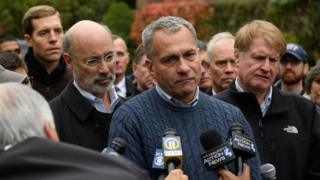
    Image copyright Getty Images Image caption Pittsburgh’s Public Safety Director Wendell Hissrich called the crime scene “horrific”

    A further two SWAT team members were hurt inside the building, clashing with the shooter.

    All four are in a stable condition, authorities said.

    A 61-year-old woman and a 70-year-old man are also currently being treated. The man had gunshot wounds to the torso and is in a critical condition.

    The gunman is now in custody after surrendering to the authorities.

    The crime scene was “horrific”, Pittsburgh’s Public Safety Director Wendell Hissrich told reporters. “One of the worst I’ve seen, and I’ve [worked] on some plane crashes. It’s very bad,” he added.

    What is the synagogue?

    The Tree of Life was set up more than 150 years ago, its website says.

    It merged with nearby Or L’Simcha congregation about five years ago, to form the Tree of Life – Or L’Simcha Congregation.

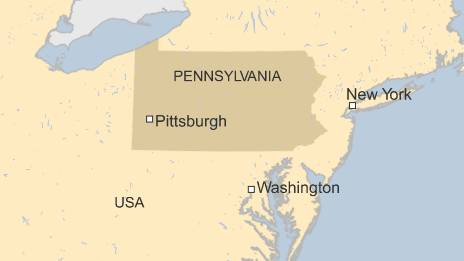
    The synagogue is in Pittsburgh’s east-end Squirrel Hill area, which has a large Jewish community dating back to the 1920s.

    The shooter entered the building during a baby naming ceremony.

    Image copyright Google Image caption The Tree of Life Congregation Synagogue in Pittsburgh

    The Jewish Federation of Greater Pittsburgh’s president Jeff Finkelstein told reporters up to 50 or 60 people regularly worshipped there on Saturday morning.

    According to the calendar on its website, Shabbat morning services were scheduled between 09:45 and 12:00.

    A Shabbat training programme for children “in kindergarten through 7th grade” was set to run from 10:15 to 11:45, at which attendees learn prayers, take part in the service and study the Torah.

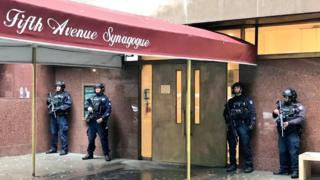
    New York has deployed police officers to guard synagogues in the city in the wake of the shooting

    What do we know about the gunman?

    The suspect has been named as Robert Bowers.

    FBI special agent Bob Jones said he did not know if Mr Bowers was known to authorities prior to events on Saturday.

    Mr Bowers has posted anti-Semitic content on social network Gab under the username “onedingo”.

    His bio on his account – now suspended – read: “Jews are the children of Satan”.

    On Saturday morning, he attacked refugee aid group Hebrew Immigrant Aid Society (HIAS) and said he could not “sit by and watch my people get slaughtered”.

    “Screw your optics, I’m going in,” he wrote.

    In earlier posts, he attacked US President Donald Trump and the Jewish community.

    “Trump is a globalist, not a nationalist,” he wrote. “There is no #MAGA as long as there is a kike infestation.”

    In another post, he said: “For the record, I did not vote for him [Trump] nor have I owned, worn or even touched a maga hat.”

    He also expressed support for the QAnon conspiracy – an unsubstantiated loose far-right fringe theory based on the belief that Mr Trump is organising a secret plan to investigate and arrest famous or politically elite child abusers.

    #QAnon: The pro-Trump conspiracy theory

    What is Gab?

    Gab is a social network site created in August 2016 as an alternative to Twitter.

    Founder Andrew Torba told Buzzfeed News he set it up as a response to the “entirely left-leaning Big Social monopoly”.

    Critics say it is a space for hate speech and people banned from mainstream social media. It was dubbed “the ultimate filter bubble” in a Wired editorial that attacked the network.

    However, Mr Torba stressed the site was not for any particular group or political supporters, and has reiterated this on his Gab page.

    The site’s guidelines state its mission is “to put people and free speech first” – although calling for violence, illegal pornography and posting confidential person information about users is prohibited.

    In the wake of the shooting, the website released a statement condemning the attack.

    “Gab unequivocally disavows and condemns all acts of terrorism and violence,” it read. “This has always been our policy.”

    The network says it promptly backed up all the data on the alleged shooter’s account, suspended it, and then contacted the FBI with the information.

  • Pittsburgh shooting: Multiple casualties at Squirrel Hill synagogue

    Image copyright Google Image caption The Tree of Life Congregation Synagogue in Pittsburgh

    Reports say he barricaded himself in a room at the synagogue when police approached.

    Emergency services arrived at the building at about 10:00 local time (14:00 GMT), and gunshots could be heard.

    Pittsburgh’s Public Safety Director Wendell Hissrich later confirmed Mr Bowers was in police custody and was being treated in hospital.

    The crime scene was “horrific”, he told reporters. “One of the worst I’ve seen, and I’ve [worked] on some plane crashes. It’s very bad,” he added.

    He said that two officers were injured in an “initial confrontation” and that a further two Swat officers were later hurt by the gunman when they entered the building. He said that no children were among the casualties.

    Image copyright Reuters Image caption Officers cordon off the area outside the synagogue
    What do we know about the gunman?

    US media said he had shouted “All Jews must die” as he carried out the attack.

    Social media posts by someone with the name Robert Bowers were also reported to be full of anti-Semitic comments.

    Pittsburgh FBI’s special agent in charge of the investigation, Bob Jones, told a press conference that he did not know if Mr Bowers was known to authorities prior to events on Saturday.

    He said that any motive remains unknown but that authorities believe he was acting alone.

    Mr Jones added that the investigation was “in the early stages”. “We will look at every aspect of the suspect’s life,” he said.

    Mr Bowers is receiving treatment for what has been described as multiple gunshot wounds.

    What has been President Trump’s reaction?

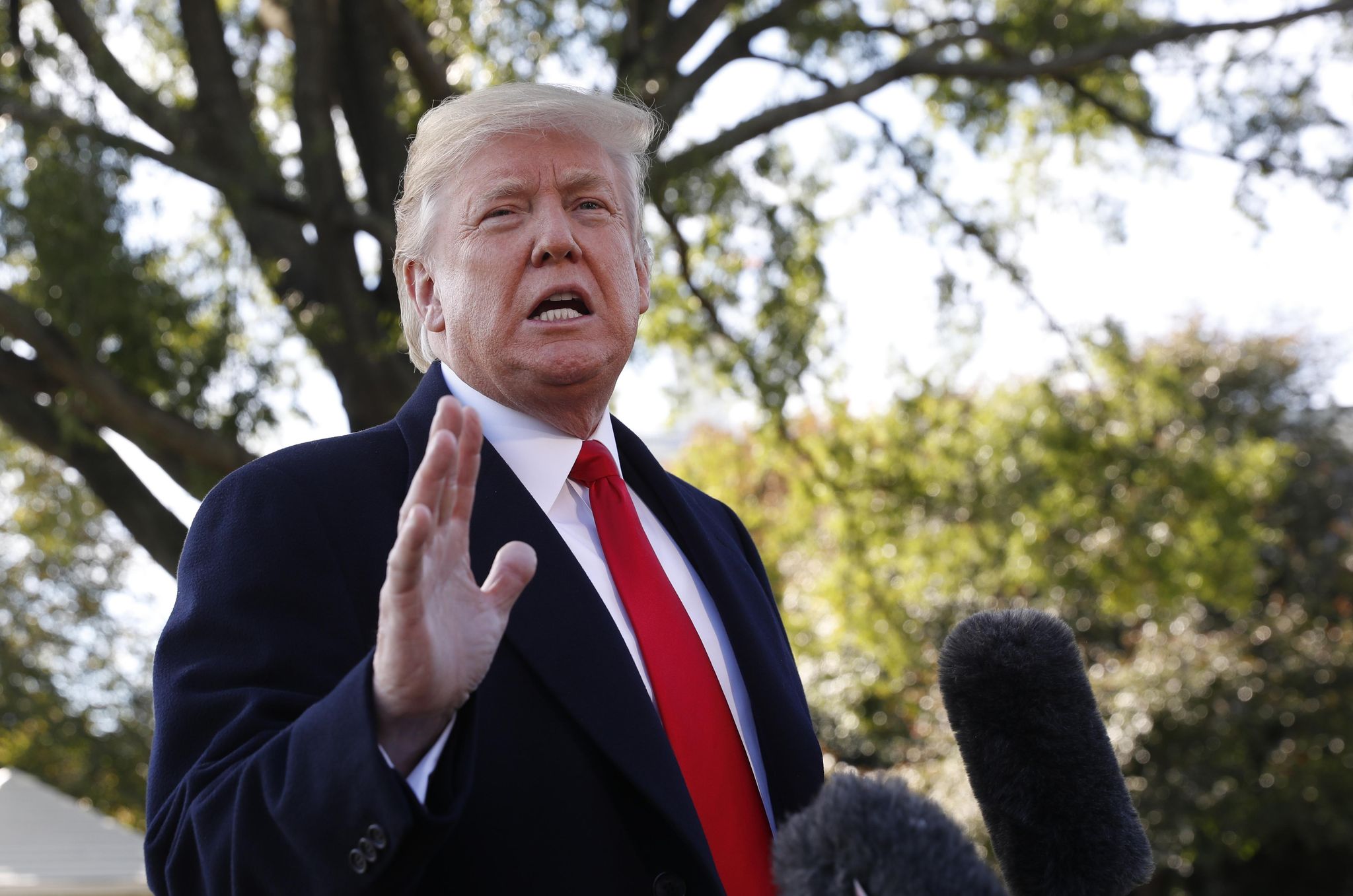
    He called the shooting a “terrible, terrible thing”.

    “To see this happen again and again, for so many years, it’s just a shame,” he told reporters on Saturday.

    He described the gunman as a “maniac” and suggested the US should “stiffen up our laws of the death penalty”.

    “These people should pay the ultimate price. This has to stop,” he said.

    Gun control around the world Fight or flight: Would you tackle a gunman?

    Mr Trump added that the incident had “little to do” with US gun laws. “If they had protection inside, maybe it could have been a different situation,” he said.

    The president later appeared at the Future Farmers of America Convention in Indianapolis, saying: “There must be no tolerance for anti-Semitism. It must be condemned and confronted everywhere and anywhere it appears.”

    Other world leaders to condemn the attack include Israeli Prime Minister Benjamin Netanyahu, who said he was “heartbroken and appalled”.

    “We stand together with the American people in the face of this horrendous anti-Semitic brutality,” he said in a video message.

    Canada’s Prime Minister Justin Trudeau said his country’s hearts “are with the Jewish community in Pittsburgh today”.

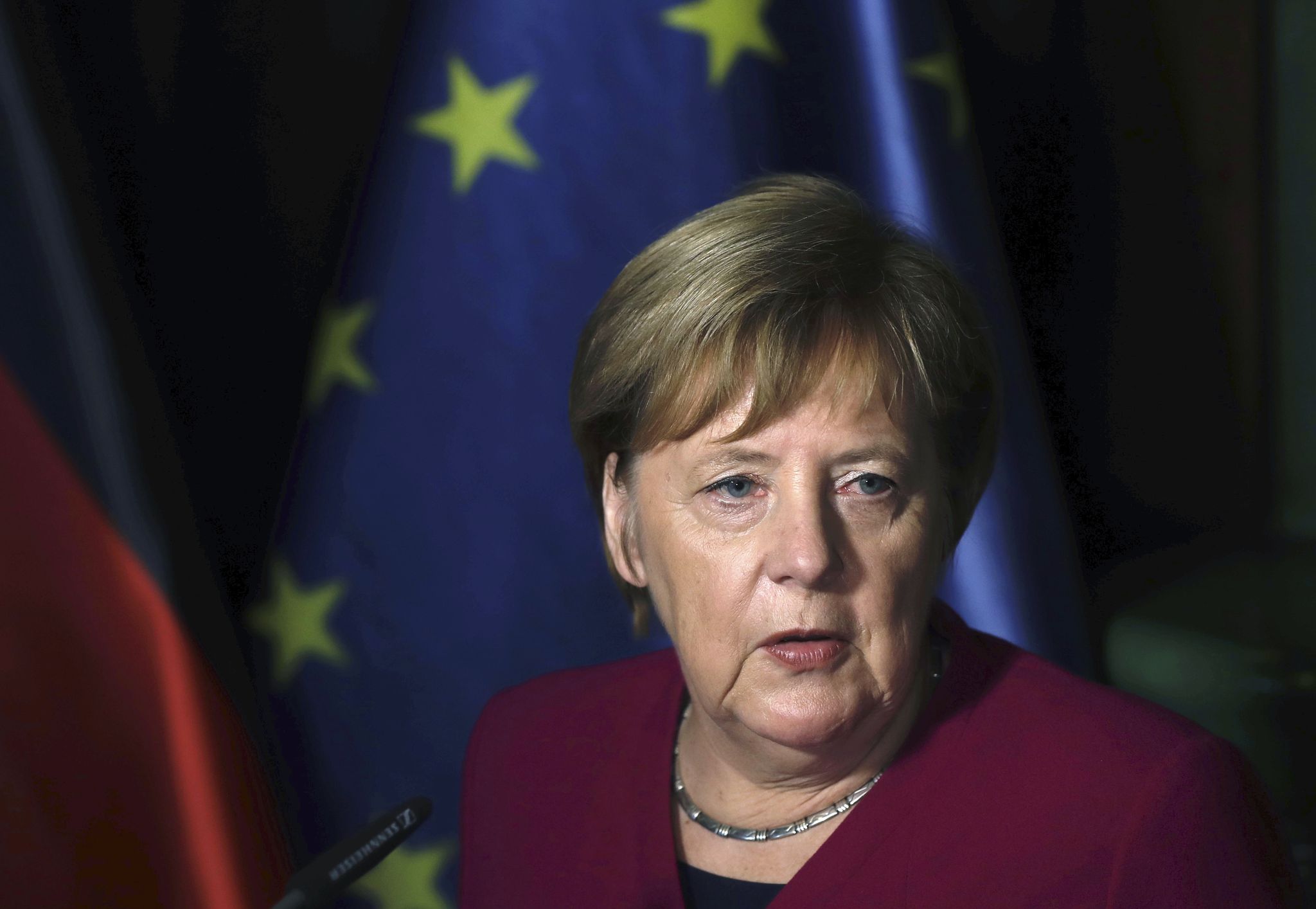
    German Chancellor Angela Merkel said: “We all have to stand up against anti-Semitism, everywhere.”

    The New York Police Department said it had deployed officers to synagogues throughout the city as a precaution.

    Image copyright NYPDCT Image caption Armed police are guarding synagogues in New York
    The BBC’s Dan Johnson in Washington says the shootings come at a tense time in the US, after a week in which mail bombs were sent to critics of Mr Trump, ahead of crucial mid-term elections next month.

    Are you in the area? Did you witness the incident? If it is safe to do, email haveyoursay@bbc.co.uk

    Please include a contact number if you are willing to speak to a BBC journalist. You can also contact us in the following ways:

    WhatsApp: +44 7555 173285 Tweet: @BBC_HaveYourSay Send pictures/video to yourpics@bbc.co.uk Upload your pictures / video here Text an SMS or MMS to 61124 or +44 7624 800 100 Please read our terms & conditions and privacy policy

    (more…)

  • Angela Merkel: Arms sales to Saudis are on hold

    German Chancellor Angela Merkel said Friday her country is not ready to export arms to Saudi Arabia until the killing of Saudi journalist Jamal Khashoggi is properly investigated.

    ISTANBUL (AP) — German Chancellor Angela Merkel said Friday her country is not ready to export arms to Saudi Arabia until the killing of Saudi journalist Jamal Khashoggi is properly investigated.

    Speaking in Prague through a translator after meeting her Czech counterpart Andrej Babis, Merkel said it’s necessary to clarify the background of the crime that took place in the Saudi Consulate in Istanbul.

    She said Germany has made it clear that until then, “we won’t deliver any arms to Saudi Arabia.”

    Merkel also again said that Saudi Arabia has to ensure access for humanitarian aid to get into Yemen, which has been ravaged by a 3½-year war between the Saudi-led alliance and Shite rebels.

  • U.K. opens all military jobs, including elite SAS, to women

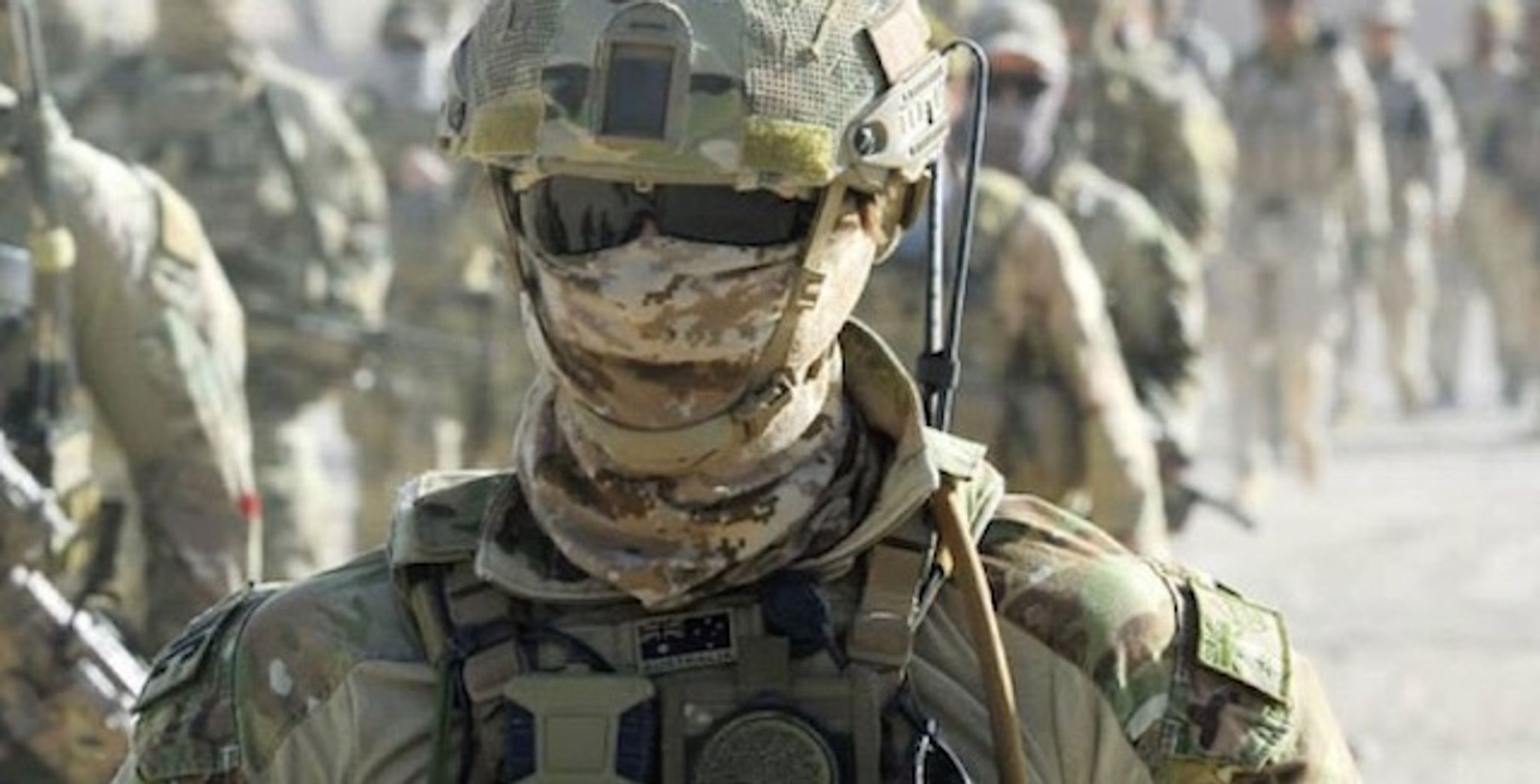
    U.K. officials cheered a military milestone this week: all armed forces roles are open to women.

    U.K. officials cheered a military milestone this week: all armed forces roles are now open to women.

    The elite Special Air Service (SAS) and the Royal Marines are looking to fill their ranks with women who are ready, willing and able.

    Defense Secretary Gavin Williamson made the announcement on Thursday.

    SEE ALSO: British SAS battle requires hand-to-hand combat; ISIS fighter drowned in puddle

    “Women have led the way with exemplary service in the armed forces for over 100 years, working in a variety of specialist and vital roles,” he said in a press release, Military Times reported. “So I am delighted that from today, for the first time in its history, our armed forces will be determined by ability alone and not gender.”

    The move fulfills an integration process that began in 2016 when combat field jobs were first made available to women.

    “We recognize people for their ability, not their gender, so any person with the right skills to be a Commando is welcome in the Royal Marines,” Maj. Gen. Charlie Stickland, commandant general Royal Marines, added in a press release.

    New recruits can apply for the positions in December. Existing personnel may immediately seek out a new military occupational specialty.

  • Julian Assange’s lawsuit against Ecuador halted over WikiLeaks publisher’s issue with translator

    WikiLeaks publisher Julian Assange complained that his court-appointed translator was “not good enough,” prompting a judge overseeing his lawsuit against Ecuador to put a pause on proceedings to find

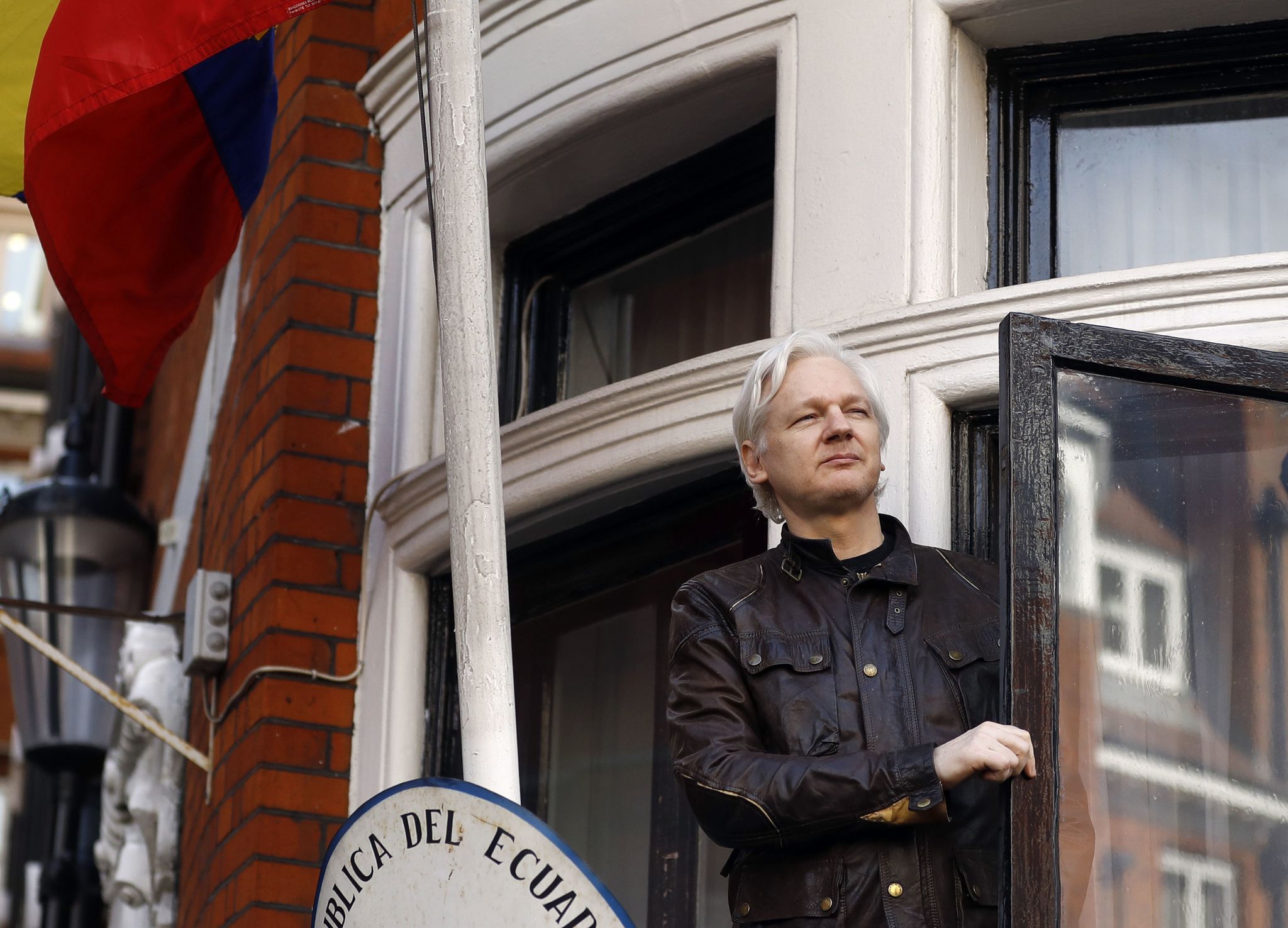
    WikiLeaks publisher Julian Assange complained that his court-appointed translator was “not good enough,” prompting a judge overseeing his lawsuit against Ecuador to put a pause on proceedings to find a replacement fluent in “Australian,” news outlets reported Friday.

    Judge Karina Martinez cut Thursday’s hearing short in response to Mr. Assange’s protest and ordered the appointment of a translator better equipped to interpret matters for the Australian-born fugitive, the Sydney Morning Herald first reported.

    Mr. Assange filed the lawsuit through an attorney last week in response to the Ecuadorian government imposing new conditions on his asylum status, and Thursday’s hearing in Quito, the nation’s capital, was the first to be held by the court considering his case.

    Speaking remotely from the Ecuadorian Embassy in London, Mr. Assange complained about the quality of the translation service prior to the judge agreeing to suspend proceedings, The Herald reported.

    The initial hearing last roughly 90 minutes prior to being suspended due to “communication problems,” Spanish media separately reported.

    WikiLeaks did not immediately return a message seeking comment.

    Mr. Assange, 46, entered the Ecuadorian Embassy in 2012 and was subsequently granted asylum, effectively protecting him against the possibility of being prosecuted in the U.S. in relation to releasing classified government material through the WikiLeaks website.

    His relationship with Ecuador has grown increasingly tense, however, and WikiLeaks lawyer Baltasar Garzon sued the nation’s foreign minister last week in response to new rules governing Mr. Assange’s conduct inside the embassy, including restrictions on his internet and phone access.

    “The protocol makes Assange’s political asylum contingent on censoring his freedom of opinion, speech and association,” WikiLeaks said in a statement announcing the suit.

    Responding in court Thursday, Ecuador’s vice minister of foreign affairs, Andrés Terán, said the lawsuit was “paradoxical,” “illogical” and filed with an “irresponsibility” toward the “democratic state that has welcomed him,” according to Agencia EFE, a Spanish news agency covering the proceedings.

    “He is (there) of his own free will and (…) he has to abide by the rules imposed by the asylum country, it is as simple as that!” said Mr. Terán, the outlet reported.

    British authorities have said that Mr. Assange will be arrested upon exiting the embassy, at which point he would risk being extradited to the U.S. and tried in relation to releasing classified documents including U.S. diplomatic and military secrets.

    Mr. Assange would possibly surrender to U.K. authorities if he is spared a trip abroad, another one of his lawyers said Friday.

    “In British justice, he could even be sentenced to three to six months’ imprisonment,” said the lawyer, Carlos Poveda, AFP reported. “But what is being requested from the legal team is that there is a necessary assurance that after that sentence he will not be extradited to the United States.”

  • Mike Pence outlines China’s election meddling strategy

    Vice President Mike Pence announced earlier this month that China is working to unseat President Trump and meddle in U.S. elections, revealing what he said was Beijing’s plan as outlined in an interna

    Vice President Mike Pence announced earlier this month that China is working to unseat President Trump and meddle in U.S. elections, revealing what he said was Beijing’s plan as outlined in an internal government propaganda directive.

    “In June, Beijing circulated a sensitive document, entitled ‘Propaganda and Censorship Notice,’ that laid out its strategy,” Mr. Pence said in an Oct. 4 speech outlining a tougher U.S. policy toward China.

    “It states that China must ‘strike accurately and carefully, splitting apart different domestic groups’ in the United States,” he noted.

    As part of the directive, “Beijing has mobilized covert actors, front groups and propaganda outlets to shift Americans’ perception of Chinese policies,” the vice president said, noting that a senior U.S. intelligence official told him that Russian election meddling “pales in comparison to what China is doing across this country.”

    White House officials said the document the vice president referred to is a confidential Chinese government directive that was published in the California-based China Digital Times.

    The censorship notice published online did not identify the government or Communist Party department that wrote the directive. But the notice directs China’s tightly controlled network of newspapers, television, radio and social media outlets to sharply restrict all reporting on the ongoing U.S.-Chinese trade dispute.

    The June 28 directive states that China’s most senior official in charge of the trade dispute, Vice Premier Liu He, has said that in the U.S.-Chinese “trade war,” the Chinese side must remain “calm and rational, strengthen interdepartmental coordination, [and] establish a coherent power in stabilizing market forecasts.”

    “We are done with talks, we must now not yield an inch, and formulate reciprocal measures,” the directive says, according to a translation different from the one the vice president used.

    “We must carefully control our propaganda tone, not to escalate, not to expand the scope. Instead, we must fire precision strikes, we must sow discord among different groups in the United States and make them collapse. Trade war is in reality a war against China’s rise. We must see who can last to the end, and we must never be weak and soft in action and in rhetoric.”

    In conducting trade war propaganda against the United States, Beijing created what it calls the Three Don’t Relays: “Don’t relay comments from Trump, from U.S. government spokespersons, or from U.S. officials,” according to the document.

    The notice also tells Chinese propaganda outlets not to “attack Trump’s vulgarity” and “Don’t make this a war of insults.”

    “All media should prepare well for protracted conflict,” the notice says. “Don’t follow the American side’s fluctuating declarations. Play down the correlations between the stock market and trade conflict.”

    The Chinese government is also ordering propaganda reports to play up “economic bright spots” that appear to show steadying improvements in the Chinese economy. Such stories are to be given “important page placement” in newspapers and timed to have maximum impact.

    “Interview experts recommended by each department; websites and Weibo and WeChat accounts must emphasize suitable forms of network propaganda,” said the directive, referring to two major Chinese microblogs.

    The document concludes with a warning not to mention China’s long-term strategy to corner world markets in high technology known as Made in China 2025, “or there will be consequences.”

    China is known to fire or imprison editors who fail to follow the directives of the Communist Party’s propaganda department, the likely origin of the directive.

    CHINA PROPAGANDA TARGETS HAWAII

    Two radio stations in Honolulu are broadcasting Chinese propaganda into Hawaii, location of the Pacific Command.

    The command views the two Chinese-language stations as supporting Beijing’s overall information operations against the United States that include “influence activities” in support of Beijing policies, espionage, identity theft and intellectual property theft.

    One of the stations was identified by military officials as KHCM, which broadcasts some programming directly supplied by China Radio International (CRI), the state-owned propaganda outlet for overseas broadcasts. CRI recently merged with China’s state television to create the China Media Group, also called the Voice of China.

    Disclosure of the Chinese radio propaganda in Hawaii comes as Hong Kong’s pro-Beijing Phoenix Television is seeking Federal Communications Commission approval to buy a radio station near Tijuana that critics say will be used to beam Chinese propaganda into Southern California, targeting the large Chinese-American community there.

    Radio Station XEWW-AM is being bought by the New York financial firm H&H Capital Partners, a firm that FCC documents indicate will shift the current Spanish-language radio station into a Mandarin broadcaster.

    “The Chinese Communist Party (CPC) is waging an information warfare campaign to undermine American democracy,” Sen. Ted Cruz, Texas Republican, said in a Sept. 11 letter opposing the sale to FCC Chairman Ajit Pai.

    “The decision before the commission risks allowing the CPC to broadcast government-approved propaganda into Southern California, one of the most densely populated regions in America of Mandarin speakers, to boost that warfare campaign.”

    Under an agreement with Mexico, the sale of any station in Mexico that broadcasts into the United States must be approved by the FCC.

    PENTAGON RAMPS UP HYPERSONIC MISSILE WORK

    The Pentagon’s Missile Defense Agency is joining efforts of the Army, Navy and Air Force to develop hypersonic missiles — ultra-high-speed weapons capable of maneuvering to avoid missile defenses.

    “MDA is actively participating in a department-wide Common Hypersonic Glide Body Memorandum of Agreement where we are participating in development efforts and leveraging investments in hypersonic technology across the department to advance our counter-hypersonic activities,” Air Force Lt. Gen. Samuel Greaves, the MDA director, said in a statement to Inside the Ring.

    The Common Hypersonic Glide Body is the name being used by the military for a triad of high-speed missile variants for the Army, Navy and Air Force.

    The three versions will be designed for firing from Army ground-based missiles, from Navy ship and submarine missile-launch tubes, and from Air Force bombers.

    The inclusion of the MDA in the hypersonic missile program was confirmed by Gen. Greaves after Aviation Week first reported on the collaboration this week.

    A defense official said the group effort will include pooling the research of weapons engineers for both missiles and missile defenses.

    “We’re trying to come up with anti-missile missiles. We want to knock down things like that,” the official said.

    MDA is the lead Pentagon unit for defenses against hypersonic missiles and will be involved in developing hypersonic missile defense interceptors and hypersonic target missiles. Hypersonic missiles currently are being developed rapidly by both China and Russia as key asymmetric warfare capabilities designed to strike with both conventional and nuclear warheads through advanced missile defense systems.

    “So we’re interested in how the missiles are made, how they fly and, of course, we’ll need targets to shoot at,” the official said.

    Congress directed the MDA in 2016 to set up a program focused on hypersonic missile defense. Current efforts include setting up a space-based network of sensors capable of detecting and tracking hypersonic maneuvering missiles.

    The glide body is being developed from a three-stage booster prototype built several years ago by Sandia National Laboratories.

    The Air Force weapon is called the Hypersonic Conventional Strike Weapon, and the Army missile is called the Long-Range Hypersonic Weapon. Both could be fielded by 2022.

    The Navy conducted a test of its version of the hypersonic missile, described only as Intermediate Range Conventional Prompt Strike Flight Experiment-1, in October 2017. The test utilized what the Navy said were “hypersonic boost-glide technologies.”

    The hypersonic missiles can be either gliders that maneuver at speeds of over 7,000 miles per hour after being launched atop another missile or high-speed flight powered by engines using scramjet — supersonic combustion ramjet — technology.

    Contact Bill Gertz on Twitter at @BillGertz.

  • Tim Cook, Apple CEO, backs privacy laws, warns data being ‘weaponized’

    The head of Apple on Wednesday endorsed tough privacy laws for both Europe and the U.S. and renewed the technology giant’s commitment to protecting personal data, which he warned was being “weaponized

    BRUSSELS (AP) — The head of Apple on Wednesday endorsed tough privacy laws for both Europe and the U.S. and renewed the technology giant’s commitment to protecting personal data, which he warned was being “weaponized” against users.

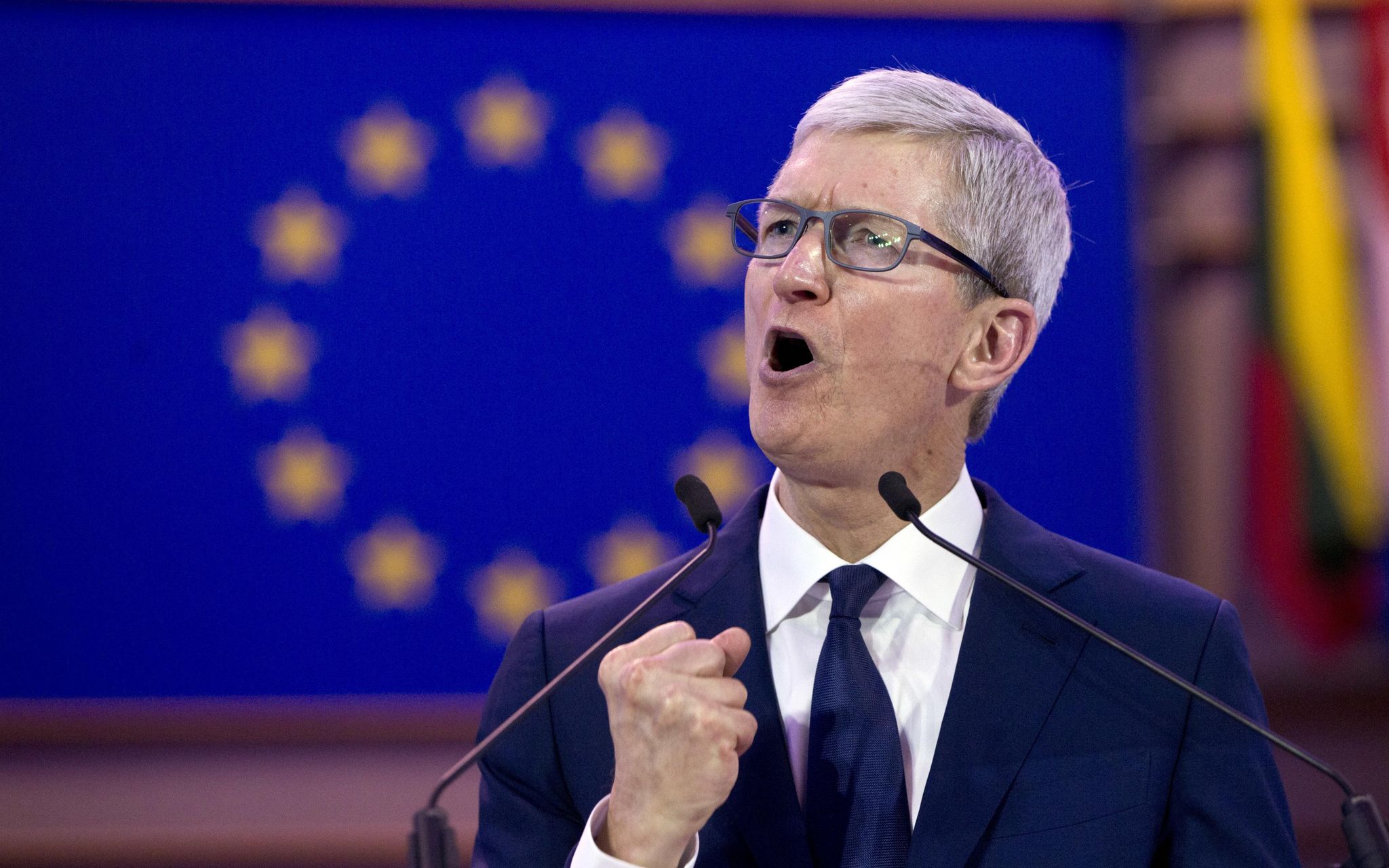
    Speaking at an international conference on data privacy, Apple CEO Tim Cook applauded European Union authorities for bringing in a strict new data privacy law in May and said the iPhone maker supports a U.S. federal privacy law.

    Cook’s speech, along with video comments from Google and Facebook top bosses, in the European Union’s home base in Brussels, underscores how the U.S. tech giants are jostling to curry favor in the region as regulators tighten their scrutiny.

    Data protection has become a major political issue worldwide, and European regulators have led the charge in setting new rules for the big internet companies. The EU’s new General Data Protection Regulation, or GDPR, requires companies to change the way they do business in the region, and a number of headline-grabbing data breaches have raised public awareness of the issue.

    “In many jurisdictions, regulators are asking tough questions. It is time for rest of the world, including my home country, to follow your lead,” Cook said.

    “We at Apple are in full support of a comprehensive federal privacy law in the United States,” he said, to applause from hundreds of privacy officials from more than 70 countries.

    In the U.S., California is moving to put in regulations similar to the EU’s strict rules by 2020 and other states are mulling more aggressive laws. That’s rattled the big tech companies, which are pushing for a federal law that would treat them more leniently.

    Cook warned that technology’s promise to drive breakthroughs that benefit humanity is at risk of being overshadowed by the harm it can cause by deepening division and spreading false information. He said the trade in personal information “has exploded into a data industrial complex.”

    “Our own information, from the everyday to the deeply personal, is being weaponized against us with military efficiency,” he said. Scraps of personal data are collected for digital profiles that let businesses know users better than they know themselves and allow companies to offer users “increasingly extreme content” that hardens their convictions, Cook said.

    “This is surveillance. And these stockpiles of personal data serve only to enrich the companies that collect them,” he said. “This should make us very uncomfortable. It should unsettle us.”

    Cook’s appearance was one-up on his tech rivals and showed off his company’s credentials in data privacy, which has become a weak point for both Facebook and Google. That is facilitated also by the fact that Apple makes most of its money by selling hardware like iPhones instead of ads based on user data.

    “With the spotlight shining as directly as it is, Apple have the opportunity to show that they are the leading player and they are taking up the mantle,” said Ben Robson, a lawyer at Oury Clark specializing in data privacy. Cook’s appearance “is going to have good currency,” with officials, he added.

    His speech comes a week after Apple unveiled expanded privacy protection measures for people in the U.S., Canada, Australia and New Zealand, including allowing them to download all personal data held by Apple. European users already had access to this feature after GDPR took effect. Apple plans to expand it worldwide.

    Facebook CEO Mark Zuckerberg and Google head Sundar Pichai sent brief video remarks to the annual meeting of global data privacy chiefs.

    Zuckerberg said the social network takes seriously its “basic ethical responsibility” to safeguard personal information but added that “the past year has shown we have a lot more work to do,” referring to a big data breach and the scandal over the misuse of data by political consultancy Cambridge Analytica.

    He also said the company is investing in measures to beef up protection, including building a new tool to let users clear their browsing activity and deploying artificial intelligence to detect fake accounts and take down extremist content.

    They both said they supported regulation, with Pichai noting Google recently proposed a legislative framework that would build on GDPR and extend many of its principles to users globally.

    The International Conference of Data Protection and Privacy Commissioners , held in a different city every year, normally attracts little attention but its Brussels venue this year takes on symbolic meaning as EU officials ratchet up their tech regulation.

    The 28-nation EU took on global leadership of the issue when it launched GDPR. The new rules require companies to justify the collection and use of personal data gleaned from phones, apps and visited websites. They must also give EU users the ability to access and delete data, and to object to data use.

    GDPR also allows for big fines benchmarked to revenue, which for big tech companies could amount to billions of dollars.

    In the first big test of the new rules, Ireland’s data protection commission, which is a lead authority for Europe as many big tech firms are based in the country, is investigating Facebook’s data breach, which let hackers access 3 million EU accounts.

    Google, meanwhile, shut down its Plus social network this month after revealing it had a flaw that could have exposed personal information of up to half a million people.

  • Italy budget: European Commission demands changes

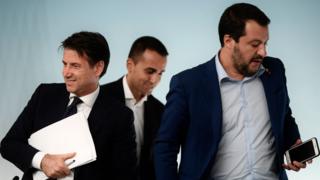
    Italy's Prime Minister, Giuseppe Conte; Deputy Prime Minister and Minister of Economic Development, Labour and Social Policies, Luigi Di Maio; and Deputy Prime Minister and Interior Minister, Matteo Salvini Image copyright AFP Image caption Prime Minister Giuseppe Conte (L) and his two deputies – Luigi Di Maio and Matteo Salvini (R) – have been told to revise their budget

    The European Commission has told Italy to revise its budget, an unprecedented move with regard to an EU member state.

    The Commission is worried about the impact of higher spending on already high levels of debt in Italy, the eurozone’s third-biggest economy.

    Italy’s governing populist parties have vowed to push ahead with campaign promises including a minimum income for the unemployed.

    The country now has three weeks to submit a new, draft budget to Brussels.

    The Commission said the first draft represented a “particularly serious non-compliance” with its recommendations.

    Italy won’t back down

    Kevin Connolly, BBC Europe correspondent

    Image copyright EPA Image caption Four week ago, cries of “We did it!” followed the budget’s approval in Italy
    Italy’ has put itself on a collision course with the EU. The dispute takes the eurozone into uncharted waters.

    The authorities in Brussels have the right to reject a budget and demand new proposals – and to impose fines – if its requests are ignored.

    This is the first time they’ve gone as far as this down that road and the EU has to weigh the prospect of taking firm measures to discourage other eurozone states from breaking the rules against the prospect of a drawn-out conflict with one of its largest member states at a time when its political energies are already absorbed by Brexit.

    The Italian government says its measures are necessary to restore growth and that it has no intention of backing down.

    How bad is Italy’s debt?

    Italy’s neutral Finance Minister, Giovanni Tria, and international observers had hoped the country would keep its deficit under 2% of GDP – and perhaps as low as 1.6%.

    While 2.4% falls well short of the 3% deficit limit under eurozone rules, Italy’s debt level is alarming.

    Click to see content: debt_ratios_Europe

    “For the first time the Commission is obliged to request a euro area country to revise its draft budgetary plan but we see no alternative than to request the Italian authorities to do so,” Mr Dombrovskis said.

    He pointed out that Italian taxpayers were having to spend as much servicing the national debt as on education.

    “Breaking rules can appear tempting at the first look – it can provide the illusion of breaking free,” he said.

    “It is tempting to try and cure debt with more debt. At some point, the debt weighs too heavy… you end up having no freedom at all.”

    After Italy announced its draft budget last month, weeks of market turmoil followed.

    Before the Commission announced its rejection of the Italian budget on Tuesday, European shares fell to their lowest levels in nearly two years.

    Following the announcement, the Italy-Germany 10-year bond yield gap, widely used as a relative yardstick of Italy’s position on the markets, widened to a new high of 314 points.

  • Saudi economic forum opens but many absent over Khashoggi

    A high-profile economic forum in Saudi Arabia began on Tuesday in Riyadh, the kingdom’s first major event on the world stage since the killing of writer Jamal Khashoggi at the Saudi Consulate in Istan

    RIYADH, Saudi Arabia (AP) — A high-profile economic forum in Saudi Arabia began on Tuesday in Riyadh, the kingdom’s first major event on the world stage since the killing of writer Jamal Khashoggi at the Saudi Consulate in Istanbul earlier this month.

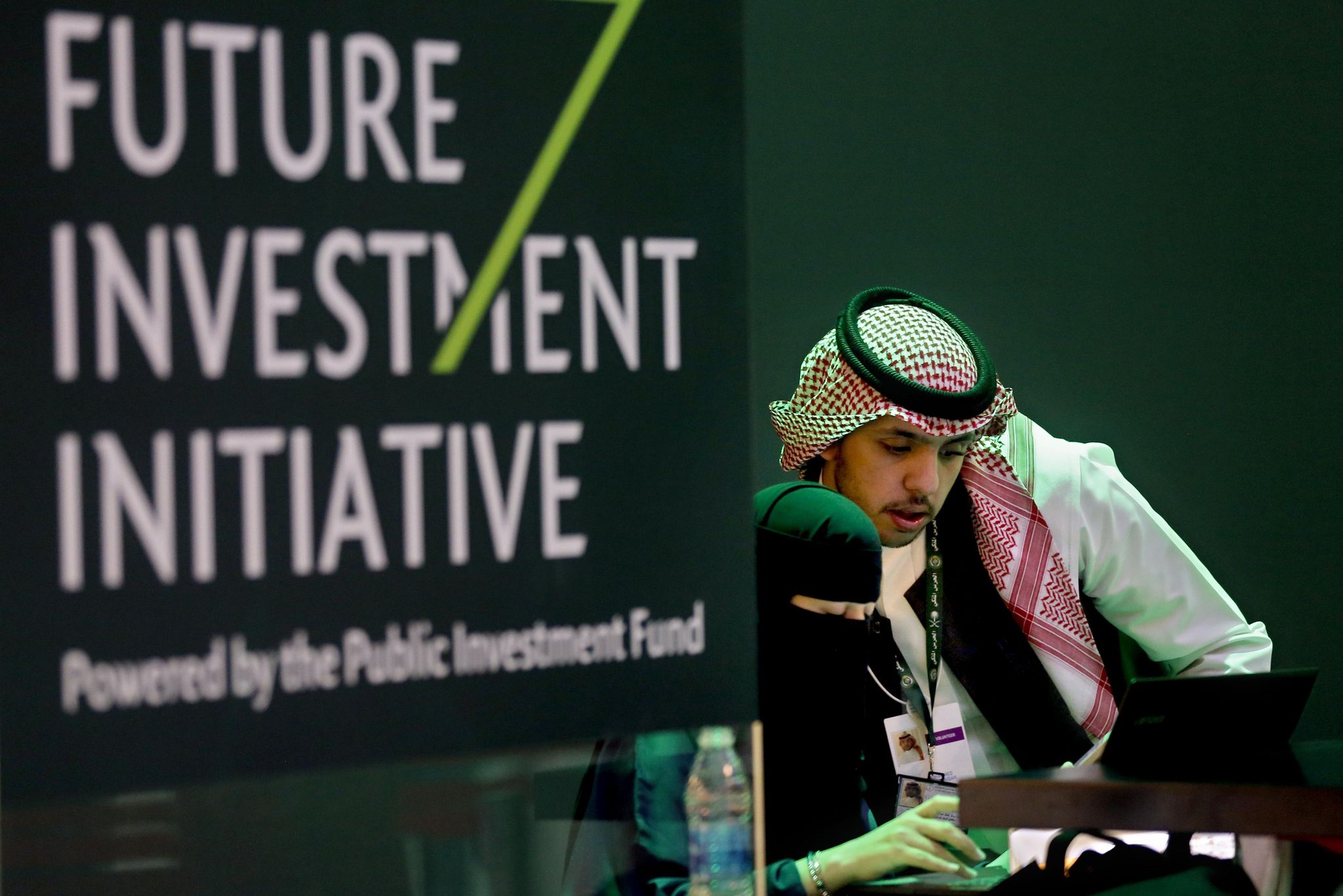
    The Future Investment Initiative forum is the brainchild of Saudi Crown Prince Mohammed bin Salman, aimed at drawing more foreign investment into the kingdom and to help create desperately needed jobs for its youthful population.

    Prince Mohammed was not immediately at the forum when it started.

    The forum last year proved to be a glitzy affair that drew more international business attention to the kingdom. This year’s event meanwhile has seen many top business leaders and officials drop out over Khashoggi’s Oct. 2 slaying.

    “As we gather here in Riyadh this morning, it is natural that our thoughts tend to focus on recent events surrounding the death of Jamal Khashoggi — a writer, a journalist and a Saudi journalist known to many of us,” said Lubna Olayan, a Saudi businesswoman moderating the forum’s first panel. “May he rest in peace.”

    She added that such “terrible acts reported in recent weeks are alien to our culture and DNA.”

    The killing of Khashoggi has marred the prince’s standing, especially amid Turkish media reports a member of his entourage on trips abroad allegedly took part in the slaying and made phone calls to the prince’s office.

    Saudi Arabia, which for weeks maintained Khashoggi had left the consulate, on Saturday acknowledged he had been killed there in a “fistfight.” Turkish media reports and officials maintain that a 15-member Saudi team flew to Istanbul on Oct. 2, knowing Khashoggi would enter the consulate to get a document he needed to get married. Once he was inside, the Saudis accosted Khashoggi, cut off his fingers, killed and dismembered the 59-year-old writer, according to Turkish media reports.

    The killing has also thrown into question whether Western executives will continue business as usual with the crown prince, who as King Salman’s favored son is the second most powerful man in the kingdom.

    Last year, the investment forum grabbed headlines when Prince Mohammed wowed the crowd of global business titans with pledges to lead the ultraconservative kingdom toward “moderate Islam.” He also announced plans to build a $500 billion futuristic city in the desert.

    He spoke on stage alongside Stephen Schwarzman of U.S. private equity firm Blackstone and Masayoshi Son of Japan’s technology conglomerate SoftBank.

    Schwarzman is among those who’ve backed out of attending this year. Others include U.S. Treasury Secretary Steven Mnuchin, who met with Prince Mohammed separately before the forum, according to Saudi state television.

    Among its many investments domestically and abroad, Saudi Arabia’s sovereign wealth fund, which the crown prince oversees, has invested $20 billion in a U.S.-focused infrastructure fund with Blackstone.

    The Public Investment Fund has also invested $3.5 billion in ride-sharing firm Uber, whose CEO also backed out of attending this year’s forum.

    Just days after last year’s forum, the emboldened prince launched a sweeping shakedown of Saudi Arabia’s wealthiest businessmen and top princes for alleged corruption, transforming the same Ritz-Carlton hotel that had earlier hosted the investment forum into a prison for the country’s elite.

    The crackdown — a surprise move by the prince, who’s upended the kingdom’s reputation for slow, cautions reforms — rattled investors.

    Alongside moves like allowing cinemas to open and lifting a ban on women driving, the crown prince has led a stifling crackdown on dissent. Dozens of critics and activists have been detained, including several women and their supporters who had long pushed for the right to drive.

  • Donald Trump threatens to pull out of Russia nuclear treaty

    Washington and Moscow returned to Cold War-style rhetoric Monday as President Trump ratcheted up his threat to unilaterally pull the U.S. out of a key agreement that has kept the nuclear arsenals of b

    Washington and Moscow returned to Cold War-style rhetoric Monday as President Trump ratcheted up his threat to unilaterally pull the U.S. out of a key agreement that has kept the nuclear arsenals of both sides in check since the Reagan era, as Russia demanded an explanation and analysts warned that the move could spur nuclear deployments around the globe.

    Mr. Trump revealed to reporters that he felt so strongly Russia was cheating on the deal that he didn’t bother to inform the Kremlin before making his decision.

    “Russia has not adhered to the agreement,” Mr. Trump said. “We have more money than anybody else by far. We’ll build it up until they come to their senses.”

    SEE ALSO: Trump promises nuclear buildup, warns Russia not to ‘play games’

    The high-stakes threats of a revived nuclear arms race were issued as White House National Security Adviser John R. Bolton prepares for a tense meeting with Russian President Vladimir Putin on Tuesday.

    Both sides have publicly declared that they will begin ramping up their missile capabilities. The meeting was scheduled before Mr. Trump said last week that he intended to withdraw the U.S. from the Intermediate-Range Nuclear Forces (INF) Treaty, a deal designed to limit the U.S. and Russia from building or deploying any missiles and launch systems with an “intermediate” range of 300 to 3,400 miles.

    Signed in 1987 by President Reagan and Soviet leader Mikhail Gorbachev, the INF cooled fears that a “limited” nuclear war short of an all-out exchange could erupt in Europe. Both sides dismantled huge caches of missiles as part of the agreement, which remained in place after the fall of the Soviet Union.

    But the U.S. and international partners such as NATO now say Moscow is in clear violation of the deal, and Mr. Trump on Monday offered a stern warning that Washington won’t allow it.

    The president also stressed that no other nation — including China, which isn’t bound by the treaty and has been building up its own arsenal as its economy modernizes — can compete with the U.S.

    “It’s a threat to whoever you want, and [that] includes China,” Mr. Trump told reporters as he left for a campaign trip to Texas. “It includes anybody else that wants to play that game. You can’t play that game on me.”

    The Kremlin said earlier Monday that if the INF collapses, then Russia will have no choice but to “restore balance” in the global power structure.

    “This is a question of strategic security. Such measures can make the world more dangerous,” Kremlin spokesman Dmitry Peskov said.

    “It means that the United States is not disguising, but is openly starting to develop these systems in the future, and if these systems are being developed, then actions are necessary from other countries, in this case Russia, to restore balance in this sphere,” he added.

    Breaking the deal

    Moscow denies that it violated the deal, but both the Obama and Trump administrations have accused Russia of breaking its promises. U.S. and international observers cite in particular the Russian 9M729 cruise missile system as their chief concern.

    The system — a U.S. assessment of which has not been made available publicly — is rumored to have a range of about 1,250 miles or more — clearly within the limits covered by the INF. The Obama administration first objected to the missile system in 2014 but opted to retain the treaty.

    NATO officials also have said the missile system violates the INF, and Russian aggression in Ukraine in recent years has spurred fears that Moscow once again could be eyeing the deployment of nuclear weapons into Eastern Europe.

    Russia has denied that the missile system violates the deal, but critics say the Kremlin has been unwilling to provide answers about the 9M729, what its purpose is and whether it’s fully operational. Some Russian military strategists have argued that the 1987 deal benefits the U.S. more than Russia because the U.S. faces no real strategic threat from its near neighbors, Canada and Mexico, the way Russia does all along its perimeter.

    “In the absence of any credible answer from Russia on this new missile, allies believe that the most plausible assessment would be that Russia is in violation of the INF Treaty,” NATO spokeswoman Oana Lungescu said Monday.

    Key U.S. allies, while divided over Mr. Trump’s decision to pull out of the deal entirely, were united in urging Russia to provide more answers. They said the burden lies with Mr. Putin to cool international tensions.

    “We of course want to see this treaty continue to stand, but it does require two parties to be committed to it, and at the moment you have one party that is ignoring it,” U.K. Defense Secretary Gavin Williamson told The Guardian newspaper. “It is Russia that is in breach, and it is Russia that needs to get its house in order.”

    The government of German Chancellor Angela Merkel took a more cautious stand, saying it regrets the U.S. decision while calling on Moscow to “dispel the serious doubts about its adherence to the treaty that had arisen as a result of a new type of Russian missile.”

    Foreign Minister Heiko Maas said Mr. Trump’s move poses “difficult questions for us and for Europe.”

    European Union officials took a more measured approach, urging the U.S. and Russia to negotiate in the hopes of preserving the agreement.

    There is a six-month waiting period after notification before either party can formally exit the deal. Russian officials said Monday afternoon that they had not received formal notification, though that could come Tuesday when Mr. Bolton meets with Mr. Putin.

    Rising China

    While the INF applies only to the U.S. and Russia, Mr. Trump’s comments Monday made clear that the White House sees China as a key part of the equation.

    “China is not included in the agreement. They should be included in the agreement,” the president told reporters.

    Analysts and U.S. officials said there is good reason for questions about China in the context of the INF.

    As Beijing upgrades its military presence, particularly in the South China Sea, the administration fears that the U.S.-Russia deal is giving China a free pass, potentially allowing the rising superpower to get a leg up militarily.

    Retired Navy Adm. Harry B. Harris Jr., formerly the head of U.S. forces in the Pacific and now the administration’s ambassador to South Korea, told lawmakers this year that the U.S. and Russia are limited by the deal, while China can essentially do whatever it wants.

    “Over 90 percent of China’s ground-based missiles would violate the treaty,” he told a House committee in February.

    Regional analysts say the Trump administration’s secondary motivation for scrapping the INF could be to give the Pentagon freedom to deploy missile systems to the Pacific to counter China.

    “Should Trump follow through on his threat to leave the INF, it would also open the door to potential nuclear build-up in East Asia, as Washington looks to counter growing Chinese presence. A deployment of missiles to Guam or allies Japan and Australia would not be out of the question, with uncertain consequences for the region,” David A. Wemer, an assistant director at the Atlantic Council, wrote Monday.

    The China state-controlled Global Times wrote a stinging editorial Monday condemning Mr. Trump’s INF decision, which it said was clearly made with Beijing in mind.

    “Although China has exercised restraint in developing strategic weaponry with no intention of nuclear power competition, the U.S. still fixes its eyes on China doubtfully …,” the editorial argued. “Military might and strategic nuclear power have never played an outstanding role in China’s foreign relations. But as the U.S. grows more skeptical about China, we face growing strategic risks and have become the main target of U.S. hegemony.”

    • Dave Boyer contributed to this report.