Category: WORLDS

  • Morocco country profile

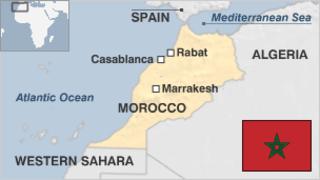
    Map of Morocco

    The Kingdom of Morocco is the most westerly of the North African countries known as the Maghreb – the “Arab West”. It has Atlantic and Mediterranean coastlines, a rugged mountain interior and a history of independence not shared by its neighbours.

    Its rich culture is a blend of Arab, Berber, European and African influences.

    Morocco was a French protectorate from 1912 to 1956, when Sultan Mohammed became king. He was succeeded in 1961 by his son, Hassan II, who ruled for 38 years and played a prominent role in the search for peace in the Middle East. He also ruthlessly suppressed domestic opposition.

    Read more country profiles – Profiles by BBC Monitoring

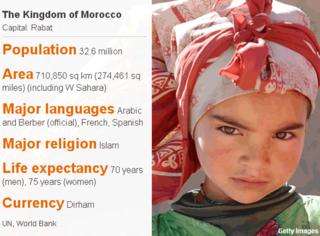
    FACTS
    LEADERS

    King: Mohammed VI
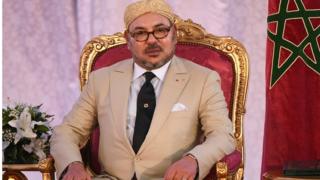
    Image copyright Getty Images

    Groomed for “kingship”, as his late father King Hassan II referred to his upbringing, Mohammed VI became monarch in 1999.
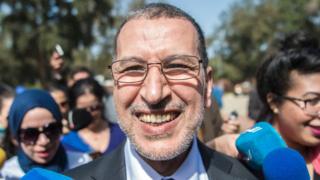
    Image copyright Getty Images

    Saad-Eddine El Othmani was appointed prime minister in March 2017 and asked to form a government by King Mohammed.

    A psychiatrist, Mr El Othmani was the Justice and Development Party’s secretary-general between 2004 and 2008, and the foreign minister in Abdelilah Benkirane’s first government between 2012 and 2013.

    He replaces Benkirane, who was dismissed by the king after failing to form a coalition government in the months following the 2016 elections.

    Benkirane had proposed rebuilding his outgoing coalition, but faced opposition from Aziz Akhannouch, a close ally of King Mohammed, and the resulting power struggle led to a political impasse.

    MEDIA
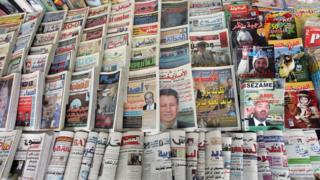
    Image copyright Getty Images

    The broadcast media are either dominated by the state or reflect the official line. However, the private press has succeeded in breaking taboos over some sensitive topics, including allegations of high-level corruption.

    Paris-based Reporters Without Borders notes that “religion, the king and the monarchy in general, the country and territorial integrity cannot be questioned.”

    The government owns, or has a stake in, RTM and 2M, Morocco’s main TV networks. Satellite dishes are widely used, giving access to French and pan-Arab stations.

    Read full media profile

    TIMELINE

    7th and 8th Centuries AD – Arab invasion; Idris founds the first major Muslim dynasty.
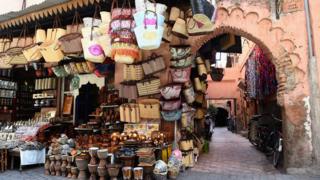
    Image copyright Getty Images Image caption A market in Marrakech

    10-17th Centuries – Dynasties and religious movements come and go, including the Almoravid movement which at its peak controlled Morocco and parts of present-day Algeria and Spain.

    1904 – France and Spain carve out zones of influence.

    1912 – Morocco becomes a French protectorate under the Treaty of Fez.

    1956 – End of French protectorate after unrest and strong nationalist sentiment. Spain keeps its two coastal enclaves. Sultan Mohammed becomes king in 1957.

    1961 – Death of King Mohammed; King Hassan II comes to power.

    1975-76 – Morocco annexes Western Sahara, but faces an ongoing guerrilla battle for independence from local Saharawi people.
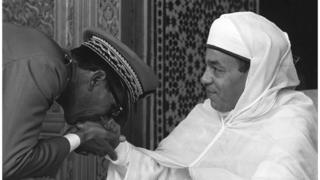
    Image copyright Getty Images Image caption King Hassan II of Morocco

    1998 – Morocco’s first opposition-led government comes to power.

    1999 – King Hassan II is succeeded by his son, Mohammed VI.

    Read full timeline
  • Six held in France over vegan attacks on Lille shops

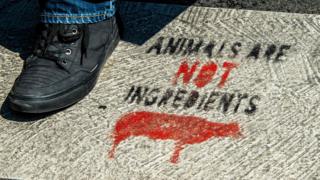
    Anti-meat graffiti in France Image copyright AFP/Getty Image caption There have been a spate of recent vegan activist incidents in France

    Six people have been held this week over a string of vegan activist attacks in the city of Lille, officials said.

    Nine businesses, including a butcher, fishmonger, cheese shop and a McDonald’s, have had windows smashed and fake blood thrown on their walls in recent months.

    Activists also spray-painted the slogan “Stop Speciesism”, a term denouncing unethical treatment of other species.

    Five of the six detained people have since been or will now be released.

    However, the Lille prosecutor’s office set a court date in December for a detained 21-year-old woman.

    Image copyright AFP/Getty Image caption The festival went ahead despite its initial cancellation
    The vast majority of French people eat meat, with vegans representing a tiny percentage of the population.

    According to a 2016 survey, only around 3% of French people are vegetarian.

    But a number of recent incidents have sparked debate in a country that has a long culinary tradition of eating meat.

    In March, a vegan activist received a suspended prison sentence for a Facebook post saying the killing of a butcher by an Islamist militant was “justice”.

    The French Federation of Butchers wrote to the government asking for protection against militant vegans, saying they aimed to “impose on the immense majority of people their lifestyle, or even their ideology”.

    The French government this year has introduced new regulations that ban vegetable-based food products in France from using words like “steak” and “sausage”.

    You may also be interested in:

    How a YouTube beef shook the vegan world ‘Vegans call me murderer and rapist’ The dad who feeds his son burgers almost every day

  • China: Car rams into Hunan square killing three

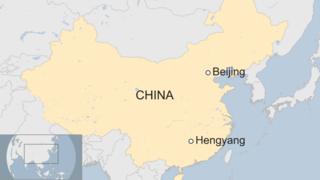
    Map of China showing Hengyang

    A man has driven a car into a busy square in southern China, killing at least three people and injuring 43, local government officials say.

    The car drove into the square in Hengyang city, Hunan province, at 19:40 local time (12:40 BST). Local media say that some victims appeared to have been stabbed.

    The driver, who has a criminal record, has been detained, officials say.

    Officials have not said whether the incident is terror related.

  • Morocco bans forced marriage and sexual violence

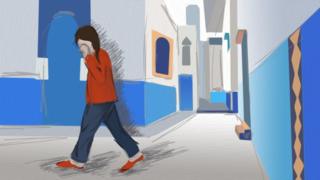
    An illustration Image caption The law was adopted in Morocco’s parliament in March
    Morocco’s law criminalising violence against women has come into force.

    The law includes a ban on forced marriage, sexual harassment in public places, and tougher penalties for certain forms of violence.

    It has been criticised by Human Rights Watch for not explicitly criminalising marital rape and lacking a precise definition of domestic violence.

    A government survey found that 63% of women between the ages of 18-65 had been victims of violence.

    Africa Live: Find out all the latest news from the continent Moroccan shock at ‘brutal rape ordeal’ Controversial Morocco rape law axed

    Samira Raiss, one of the main Moroccan campaigners for a law criminalising violence against women, said: “We will not stop here. This law is an asset but it has shortcomings that we have to work on.”

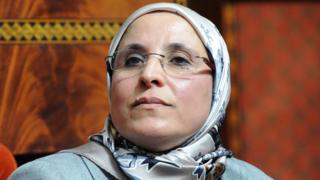
    Image copyright Getty Images Image caption Bassima Hakkaoui first drafted the law in 2013
    Human Rights Watch said the law has some positive aspects, “such as a definition of violence against women to mean ‘any act based on gender discrimination that entails physical, psychological, sexual, or economic harm to a woman’.”

    But it contains “major gaps and flaws that leave women at risk of domestic violence, including a lack of provisions to finance the reforms,” HRW says.

    Bouthaina Karouri, a member of the parliamentary committee that drafted the law, says these oversights can be fixed.

    “No law is perfect” Ms Karouri said.

    “Its effectiveness will depend on the approach adopted by the police and the judicial body. As it goes into effect, it is normal to discover some gaps but they can be amended in the future.”

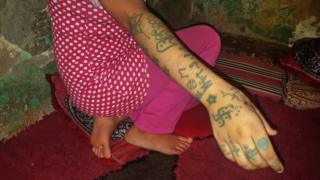
    Image copyright Getty Images Image caption Khadija said her captors forcibly tattooed her and burnt her with cigarettes
    The law comes into effect following last month’s massive outcry over the alleged rape, torture and kidnapping of a 17-year-old girl named as Khadija.

    Many went on social media, sharing the hashtag #JusticePourKhadija to describe their disgust and horror and calling on the authorities to take action.

    In 2014, Morocco’s parliament amended an article of the penal code that allowed rapists of underage girls to avoid prosecution by marrying their victims.

  • Reclassify cancers to improve treatment, researchers say

    Graphic of cancer Image copyright Getty Images

    Cancers should no longer be categorised by where they are first formed in the body, but instead by similarities in tumour types, researchers say.

    A US-led study of 33 cancer types from more than 10,000 patients found they could be reclassified into 28 clusters that shared similar molecules.

    Reclassification would ultimately lead to better, more targeted treatments, said the researchers.

    “It’s time to rewrite the textbooks on cancer,” one of the authors said.

    ‘One-stop shops’ for cancer diagnosis Rise in cancers ’caused by weight’

    ‘Break down silos’

    Cancers have traditionally been classed and treated according to the part of the body from which they originate, such as the breasts or lungs.

    Image copyright Getty Images Image caption Lung cancer is one area where treatment could be improved, researchers say
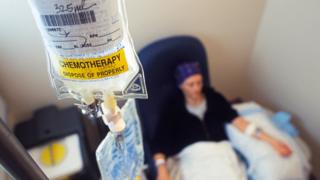
    Immunotherapy – where the body’s immune system is enlisted to help fight cancer – is one treatment that could potentially be rolled out more widely, Prof Benz said.

    Drugs used for the treatment of other conditions, such as rheumatoid arthritis, could also ultimately be repurposed to fight cancer.

    In other cases, cancers that are harder to treat might require a combination of medications.

    Lung and colorectal cancers are among those that would often benefit from more targeted treatment, Prof Benz said.

    But he explained that it could take up to a decade for new treatments to become available because of the difficulty in getting drugs approved.

    He called for oncology departments, which tend to focus on specific areas of the body, and drugs companies to work together better to improve care for patients.

    “It’s time to rewrite the textbooks on cancer, and it’s time to break down the silos in clinical oncology that make it difficult for patients to take advantage of this paradigm shift in cancer classification,” Prof Benz said.

    Dr Justine Alford, from Cancer Research UK, said: “By revealing the molecular groups that cancers tend to fall into, this research opens up new possibilities for patients who would traditionally be treated based on where in the body their cancer is.

    “Identifying patients most likely to benefit from a particular treatment could also help improve clinical trials.

    “The real test now will be to put this knowledge into practice and find out if this way of treating patients helps save more lives,” she added.

    The research was published in Cell.

    Follow Alex on Twitter.

  • What is chemotherapy?

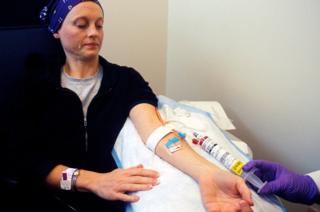
    A woman is treated with chemotherapy Image copyright Science Photo Library
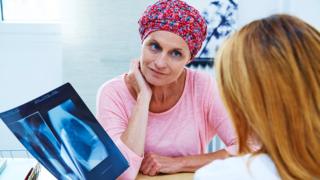
    Chemotherapy is drug treatment which is used to try and kill cancer cells or stop them from spreading.

    It is not the same treatment for every cancer – different cancer cells respond to different drugs.

    Sometimes as many as eight different drugs are used in combination to get the best effect, and doctors are constantly trying out new combinations to improve treatment.

    Chemotherapy is often associated with debilitating side effects, but many types of modern chemotherapy cause only mild problems.

    Fewer women will need chemotherapy Breast cancer screening ‘more harm than good’ Warning over late effects of chemo on young

    When is chemotherapy used?

    Because chemotherapy drugs are usually injected into the blood, they travel around the body and can attack cancer cells regardless of where they find them.

    Image copyright Science Photo Library

    Radiotherapy, which uses radiation to destroy cancer cells, can only be given to small areas of the body or it will cause damage to too many healthy cells.

    Often, after an operation to remove cancer, chemotherapy will be given to “mop up” any remaining cells.

    Some cancers, such as leukaemia, need chemotherapy because they involve cells which are found throughout the body.

    Chemotherapy can be given to shrink a tumour to make it easier for the surgeon to remove.

    It can also ease the symptoms of patients whose cancer is not curable.

    How does chemotherapy work?

    Chemotherapy, in its traditional sense, is a chemical which is poisonous to cancer cells and kills them.

    This is called a cytotoxic chemical – one very early chemotherapy was produced from mustard gas, which was used as chemical weaponry during World War One.

    However anything which is poisonous to cancer cells may also be poisonous to the body’s healthy cells, which it needs to survive.

    The trick with chemotherapy is to find a chemical which kills as many cancer cells as possible, and as few healthy cells.

    Image copyright Getty Images

    Doctors have been getting increasingly successful at developing such chemicals by spotting and exploiting the differences between the cancer cells and neighbouring normal cells.

    The principle difference between many cancer cells and normal cells is the speed at which they reproduce, or divide.

    Cancers tend to be dividing and growing faster than other cells in the body – which is why lumps or tumours sometimes appear.

    Other cancer cells may become more or less active in response to natural chemicals called hormones produced by the body.

    Some chemotherapy harnesses this reaction to control the growth of the cancer cells.

    Cancer cells are not attacked by the body’s own immune defence system because the immune system does not recognise them as foreign.

    Some chemotherapies try to programme the immune system to see the cancer cells as foreign so they can be attacked and destroyed.

    How is chemotherapy given?

    Normally chemotherapy is delivered by injection into a blood vein.

    In many cases, a saline drip will be set up to dilute the drug as it enters the body. This stops it harming the vein because it is so concentrated.

    If the patient needs frequent doses of different drugs, to avoid the discomfort of having to have separate injections every time, a tube is kept in the vein which attaches to the syringe. This is called a Hickman line when placed into a vein in the chest.

    Image copyright Science Photo Library

    Sometimes, a concentrated dose of chemotherapy is needed in a particular part of the body, and side effects can be lessened by injecting it directly into the cancerous area.

    For example, for some bladder cancers, the drug can be pumped into the bladder so it works directly on the tissue involved.

    How long chemotherapy courses last varies between different cancer types, with some being given intensively over a fortnight, normally in hospital, and some over a period of months.

    What side-effects can be expected?

    Because some chemotherapy targets fast-growing or fast-dividing cells, it is more likely to harm similar cells in the body.

    These include the cells in the hair follicles, which is why cancer treatment is often associated with hair loss, although hair does re-grow once treatment has ended.

    Other fast-dividing cells can be found in the stomach and bowel lining, which leads to nausea and diarrhoea.

    There are, however, drugs which help to control this, and timing meals to avoid having a full stomach when the drugs take effect can also help in some cases.

    Image copyright Science Photo Library

    Other types of normal cell that can suffer are the blood cells.

    Red cells are important to carry oxygen to keep other cells alive. Other blood cells help to stave off infection.

    As a result, chemotherapy patients may be more prone to infections and find them harder to fight off.

    Hospitals will take regular blood tests to monitor the levels of different cells. This is called a full blood count.

    Generally, patients on chemotherapy can expected to have less energy than usual, or even feel extreme fatigue.

    Chemotherapy can also affect the fertility of both men and women, and both can now freeze their sperm and eggs with the hope of using them to produce a test-tube baby.

  • Cancers ‘rising around the world’

    A woman is treated with chemotherapy Image copyright Science Photo Library
    There will be 18.1 million new cases of cancer and 9.6 million people will die with the disease this year worldwide, a report predicts.

    The rise, from 14.1 million cases and 8.2 million deaths in 2012, is partly due to a growing and ageing population.

    The figures suggest one in five men and one in six women will develop the disease in their lifetime.

    And as countries become wealthier, more people get cancers related to lifestyle rather than those linked to poverty.

    The International Agency for Research on Cancer provides regular snapshots of the scale of cancer around the world, looking closely at 36 different cancers in 185 countries.

    Researchers say while ways of measuring and collecting cancer data have improved over the years, the overall trend is that cancer rates and deaths have risen year on year.

    The latest report suggests lung cancer, female breast cancer, and bowel cancer are responsible for a third of all cancer cases and deaths worldwide.

    ‘Tobacco control’

    And the authors say lung cancer is now the leading cause of cancer death in women in 28 countries.

    The worst hit countries include the USA, Hungary, Denmark, China and New Zealand.

    George Butterworth, from the charity Cancer Research UK, said: “Tobacco is the single biggest reason why more women across the world are getting lung cancer than ever before.

    “In the UK smoking among women became more prolific later than it did for men, so it’s not surprising that we’re seeing increasing lung cancer rates now.

    “Similarly, cigarettes are now increasingly popular among women in low and middle income countries and the tobacco industry’s aggressive marketing to them is influencing this.”

    Meanwhile, Dr Freddie Bray, of the IARC, said: “The results highlight the need to continue to put in place targeted and effective tobacco control policies in every country in the he world.”

    ‘Extraordinary diversity’

    Overall, the report estimates, nearly half of all cases and most cancer deaths in the world this year will occur in Asia, partly because of the large numbers of people living in the continent and partly because some cancers with higher death rates are more common in this region.

    This includes, for example, high rates of liver cancer, which generally has a poor prognosis, in China.

    Beyond this, the authors say, there is “extraordinary diversity” in the types of cancer and patterns of illness around the world.

    They say because of this countries need to consider tailoring how they try to prevent and treat cancer.

  • What sanctions can the EU impose on Hungary?

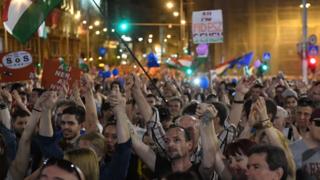
    Opposition protest in Budapest Image copyright Getty Images Image caption Opposition protesters take to the streets after elections in Hungary
    The European Parliament has voted to pursue disciplinary action against Hungary under Article 7 of the European Union treaty.

    The right-wing Hungarian government has been accused of attacks on the media, minorities and the rule of law – charges denied by Prime Minister Viktor Orban.

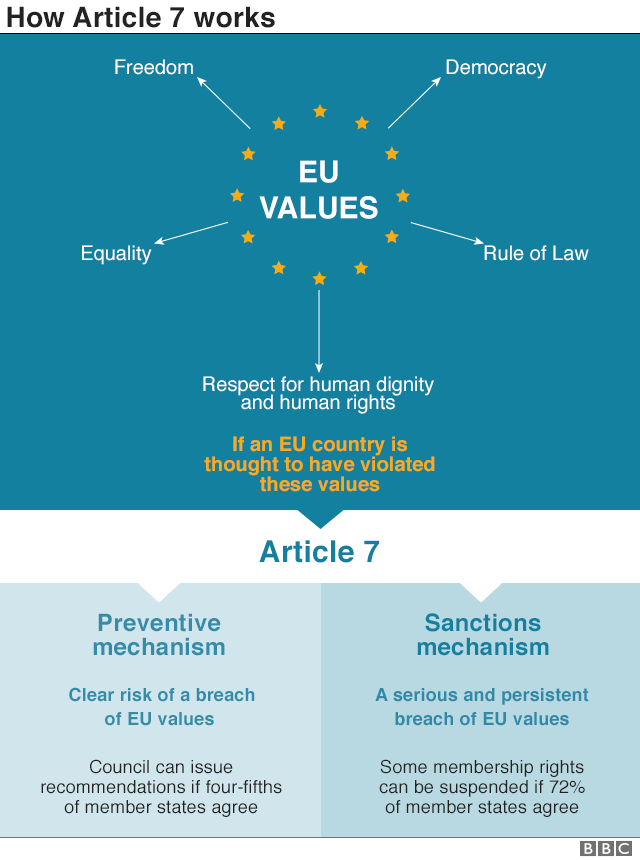
    Article 7 is designed to protect the European Union’s fundamental values.

    It sets out ways various EU bodies can act if they believe those values are at risk, or have been seriously breached.

    These values are founded on respect for:

    It highlighted concerns about freedom of expression, academic freedom, judicial independence, the electoral system and the treatment of minorities as well as asylum seekers and refugees.

    It described the country as being “at clear risk of a serious breach of EU values” and called for a full parliamentary vote on the matter.

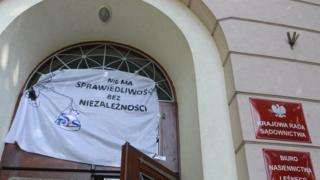
    The only other occasion the EU has formally resorted to Article 7 is over Poland, where there’s been an ongoing dispute with its authorities over judicial reforms – but there has been no parliamentary vote on the issue.

    EU votes for disciplinary action against Hungary In depth – Viktor Orban’s Hungary Nationalism in heart of Europe needles EU

    The EU had voiced concern about the independence of the courts following Polish government moves to change or remove judges.

    It was the executive, the EU Commission, which decided to act in that case, invoking Article 7 in December 2017 after concluding that there was “a clear risk of a serious breach of the rule of law in Poland”.

    The arguments with Poland are continuing.

    Image copyright EPA Image caption There’s been concern about changes to the judiciary in Poland

    Preventative action

    It’s important to make clear that Article 7 is a process rather than an end in itself.

    And the process is divided into separate parts, with one not necessarily dependent on the other.

    Under the preventative mechanism, the commission, the European Council or the Parliament can start the Article 7 process to determine whether there is a “clear risk of a serious breach of EU values”.

    The parliament has to agree by two-thirds of those MEPs who take part in the vote, which must also be an absolute majority of all MEPs, to start the process.

    It then goes to the EU Council – the heads of government of the member states.

    The council must agree by a four-fifths majority that there is a risk of breaching EU values (and then recommend specific actions to be taken by the country concerned).

    European Parliament sources say there is no particular timeframe for this process – and that, in theory, the council could do nothing and simply ignore the vote by the parliament.

    Sanctions

    Under the sanctions mechanism enshrined in Article 7, only the council or the commission can trigger the process.

    The council then has to decide unanimously that “a serious and persistent breach of EU values has taken place”.

    It has to also get the agreement of two-thirds of the parliament to this.

    Once that has been done, the council has the power to suspend some of the country’s membership rights – such as voting rights in the council itself.

    However, it is not clear what other rights can be suspended.

    And the council can only take this ultimate step by a qualified majority amounting to 72% of member states.

    At the moment, this is not the course of action being proposed in the case of Hungary, although in theory that route remains open to the EU at a later stage.

    Read more from Reality Check

    Send us your questions

    Follow us on Twitter

  • Nick Carter sexual assault charge dismissed

    Nick Carter Image copyright Getty Images Image caption Nick Carter’s assault charge has been dismissed
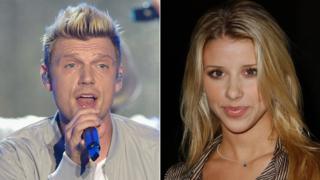
    Backstreet Boys star Nick Carter will not be charged for a sexual assault accusation from 2003.

    Melissa Schuman accused Carter of raping her and waved her anonymity by writing a blog in February.

    After being reviewed by prosecutors, the case was thrown out as the statute of limitations has passed.

    Carter’s lawyer Michael Holtz said he is “happy to put the matter behind him”.

    “Nick has denied these allegations ever since he first learned of them last year, and was confident the district attorney would conclude that there was no basis to pursue charges against him,” Holtz said in a statement.

    Image copyright Getty Images Image caption Carter recorded a duet with Schuman, pictured right in 2002.

    Schuman, 33, who was part of the teen girl band Dream, says she was 18 and a virgin at the time of the alleged attack, which she said took place after the pair recorded a duet.

    She decided to come forward after seeing an allegation against Carter from another woman last year.

    Carter, 38, feels vindicated that no charges will be brought against him, according to his lawyer.

    The statute of limitations refers to a set timeframe when legal action must be taken for proceedings to take place, but in this case that timeframe had expired in 2013.

    Prosecutors concluded that because of the amount of time that had passed, a proper analysis of strengths and weaknesses of evidence could not be achieved.

    Schuman told the Associated Press that more should be done to accommodate retroactive assault claims.

    She said she was “well aware of the likelihood that my case was not prosecutable”, but that it had provided her with “great solace” to know that prosecutors had looked into her case.

    “Speaking out was the best thing I could have ever done for myself,” she said.

    “I hope it inspires others to do the same if it feels right for them.”

    Follow us on Facebook, on Twitter @BBCNewsEnts, or on Instagram at bbcnewsents. If you have a story suggestion email entertainment.news@bbc.co.uk.

  • Algerian singer Rachid Taha dies aged 59 in Paris

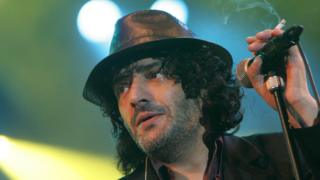
    Rachid Taha on stage in 2007 Image copyright AFP/Getty Image caption The singer died at his home on Tuesday night, his family said
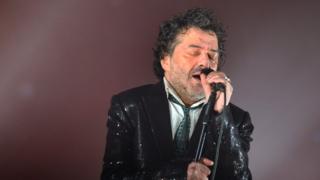
    Algerian-born singer Rachid Taha has died of a heart attack at home in Paris aged 59, his family said.

    Taha was born on Algeria’s north-west coast in 1958 and moved with his family to Lyon aged 10.

    He rose to prominence as the lead singer of Arabic-language group Carte de Séjour, which blended Western punk rock with Algerian Maghrebi music.

    Taha then went solo, and in 2004 covered The Clash’s song Rock the Casbah.

    His other famous songs include a version of Douce France with Carte de Séjour, as well as his cover of song Ya Rayah as a solo artist.

    Image copyright AFP/Getty Image caption Taha was reportedly working on a new album prior to his death

    Most famously, however, Taha cited cited British punk group The Clash as a major influence.

    He allegedly met them in 1981 and handed them a copy of his band’s demo tape – which he later suggested may have influenced one of their most famous tracks.

    “A few months [after giving them the tape], I heard Rock the Casbah,” he said in an interview with London-based newspaper The Guardian. “Maybe they did hear it after all.”

    He would go on to perform his own version of the song with The Clash’s Mick Jones years later.

    His work also appeared in several films.

    Barra Barra, a song from his album Made in Medina, notably appeared in the 2001 war film Black Hawk Down.