Category: WORLDS

  • Hurricane Florence: Mass evacuation from ‘storm of a lifetime’

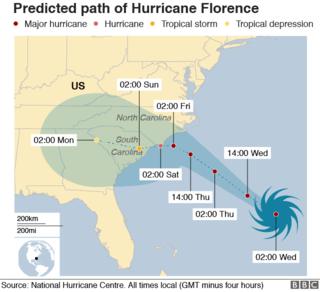
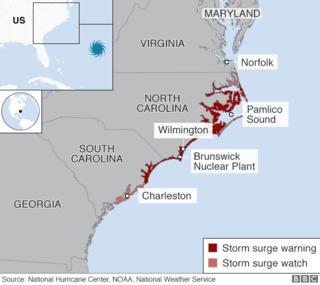
    Its projection suggested the storm could damage nearly 759,000 homes and businesses from Charleston, South Carolina, to Virginia Beach, Virginia.

    A National Weather Service forecaster in Wilmington, North Carolina, said: “This will likely be the storm of a lifetime for portions of the Carolina coast.

    “And that’s saying a lot given the impacts we’ve seen from Hurricanes Diana, Hugo, Fran, Bonnie, Floyd and Matthew.

    “I can’t emphasise enough the potential for unbelievable damage from wind, storm surge and inland flooding with this storm.”

    It is forecast to bring 20-40in (50-100cm) of rain and life-threatening storm surges of up to 13ft (4m).

    Hurricane force winds will emanate up to 70 miles from the centre of the storm, say meteorologists, meaning the impact may be felt on shore well before Florence makes landfall early on Friday.

    National Hurricane Center Director Ken Graham warned that rivers up to 40 miles inland may flood.

    Mr Graham said on Wednesday morning the Pamlico and Neuse rivers in North Carolina will see their flows “reversed” as storm surges push water back inland.

    He added that half of fatalities during hurricanes are caused by storm surges, and another quarter of deaths are due to inland rains and flooding.

    Are you in the area? How are you preparing for the hurricanes? Let us know by emailing haveyoursay@bbc.co.uk.

    Please include a contact number if you are willing to speak to a BBC journalist. You can also contact us in the following ways:

    WhatsApp: +447555 173285 Tweet: @BBC_HaveYourSay Send pictures/video to yourpics@bbc.co.uk Upload your pictures/video here Send an SMS or MMS to 61124 or +44 7624 800 100 Please read our terms and conditions and privacy policy

    (more…)

  • Australia country profile

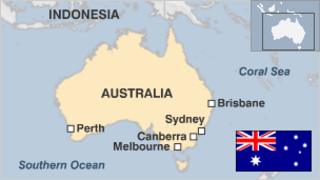
    Map of Australia

    Australia ranks as one of the best countries to live in the world by international comparisons of wealth, education, health and quality of life. The sixth-largest country by land mass, its population is comparatively small with most people living around the eastern and south-eastern coastlines.

    The country’s first inhabitants, the Aboriginal people, are believed to have migrated from Asia tens of thousands of years before the arrival of British settlers in 1788. They now make up less than 3% of Australia’s 23 million people.

    Years of mass immigration after the Second World War heralded sweeping demographic changes, making modern Australia one of the world’s most multicultural countries. But migration continues to be a sensitive issue politically.

    In shaping its foreign and economic policy, Australia first looked to Europe and the US but in the last 20 years has developed stronger ties with Asia. It has acted as peacekeeper in the region sending missions to Solomon Islands, East Timor and Papua New Guinea.

    Although Australia remains part of the Commonwealth, the future role of the monarchy has been a recurring issue in politics. An aging population, pressure on infrastructure and environmental concerns such as climate change are some of the long-term challenges facing the country.

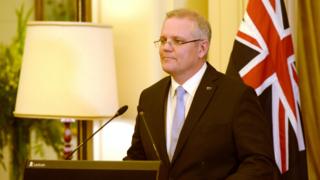
    Image copyright Martin Ollman/Getty Images Image caption Mr Morrison made his mark as immigration minister

    Treasurer (finance minister) Scott Morrison emerged victorious from a week of governing Liberal Party infighting in August 2018 to succeed Malcolm Turnbull as leader of Australia’s main conservative party and prime minister.

    The socially-liberal Mr Turnbull steered same-sex marriage among other measures through parliament after ousting his more conservative predecessor Tony Abbott in 2015, but his poor poll ratings spurred an unsuccessful right-wing challenge from Home Affairs Minister Peter Dutton.

    The weakened prime minister bowed out a few days later, allowing the socially-conservative but pragmatic Treasurer Morrison time to unite the party ahead of elections in 2019.

    As immigration minister under Tony Abbott in 2013-2014, Scott Morrison came to prominence for enforcing the policy of stopping boats run by people-smugglers from docking in Australia.

    MEDIA

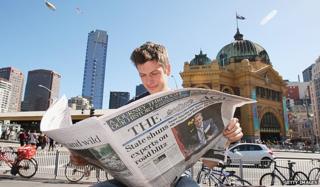
    Image copyright Getty Images Image caption Australia has a lively media scene and is considered to have a relatively free press

    Australia’s media scene is creatively, technologically and economically advanced. There is a traditoin of public broadcasting but privately-owned TV and radio enjoy the lion’s share of viewing and listening.

    Ownership of print and broadcast media is highly concentrated, with two companies – The Murdoch-owned News Corp and Fairfax Media accounting for some 85 per cent of newspaper sales.

    Around 19.5 million Australians are online.

    Read a full media profile

    TIMELINE

    Some key dates in Australia’s history:

    40,000 BC – The first Aborigines arrive from southeast Asia. By 20,000 BC they have spread throughout the mainland and Tasmania.

    1770 – Captain James Cook charts the east coast in his ship HM Endeavour and claims it as a British possession, naming it “New South Wales”.

    1901 – The Commonwealth of Australia comes into being.

    1914 – Australia commits hundreds of thousands of troops to the British war effort during World War 1. Their participation in the Gallipoli campaign leads to heavy casualties.

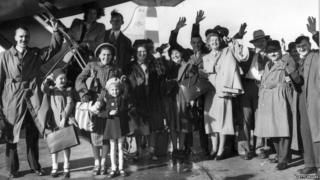
    Image copyright Getty Images Image caption “White Australia” policies restricted non-white immigration in the first half of the 20th century

    1948 – Australia launches a scheme for mass immigration from Europe.

    2002 – In Bali, 88 Australians are among 202 people killed when bombs go off in two nightclubs.

    2008 – Government makes a formal apology for past wrongs committed against the indigenous Aboriginal population.

    Read a full timeline

  • Why doesn’t Australia have an indigenous treaty?

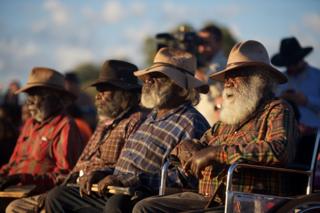
    Aboriginal elders at the opening ceremony of a summit at Uluru Image copyright Jimmy Widders Hunt Image caption Mutitjulu elders gather at Uluru for a historic summit this week

    The future of Australia’s relationship with its indigenous peoples could be significantly influenced by a meeting at Uluru this week. It will discuss changing the constitution, but may also include support for a treaty. Australia does not have one, unlike many nations, reports Trevor Marshallsea.

    In 1832, the governor of Van Diemen’s Land reflected ruefully on his colonial administration’s chaotic – and bloody – relationship with the island’s indigenous population.

    Amid a period of great conflict between white colonists and Aborigines known as the Black War, Governor George Arthur said it was “a fatal error” a treaty had not been entered into with the Aboriginal people of what’s now the Australian state of Tasmania, after white settlement had commenced some 30 years earlier.

    The absence of a treaty was cited by Mr Arthur as a crucial and aggravating factor in relations with the first inhabitants of the island, the scene of some of the worst treatment inflicted on Aborigines by British colonists.

    Almost 200 years later, Australia remains the only Commonwealth country to have never signed a treaty with its indigenous people. While treaties were established early on in other British dominions such as New Zealand, Canada and in the United States, the situation in Australia has been, often notoriously, different.
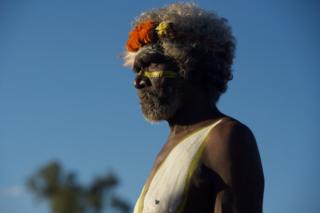
    Image copyright Jimmy Widders Hunt Image caption An Arnhem Land community leader at the opening ceremony of the First Nations Convention

    In 1988, then Prime Minister Bob Hawke was presented with “the Barunga Statement”, named after an Aboriginal community. Written on bark, it called for a treaty. The cause had been thrust forcefully into the public consciousness in the late 1980s in various ways. One was rock band Midnight Oil’s 1987 hit “Beds Are Burning”, which implored white Australia to “pay the rent, to pay our share”. Part-Aboriginal band Yothu Yindi had an international hit with “Treaty” a few years later.

    On receiving the Barunga Statement, which he had hung on a wall in Canberra’s Parliament House, Mr Hawke vowed there would be a treaty by 1990.

    In 1992, Prime Minister Paul Keating made a now-famous speech in the Aboriginal-centric Sydney suburb of Redfern, addressing harsh truths about the often brutal and murderous “dispossessing” of the country’s traditional owners.

    A year later came the watershed Native Title act, which threw out the historical view that Australia before European settlement in 1788 essentially belonged to no-one.

    And in 2008 Prime Minister Kevin Rudd delivered a long-awaited apology to Australia’s indigenous peoples, for policies that had inflicted suffering on them.

    Despite these words, acts and gestures, there is still no treaty. Also, there remain contentious sections of the nation’s constitution which are race-based, although two significant others were removed in the 1967 referendum.

    Section 25 still says states can disqualify people from voting in elections on account of their race. Section 51 (xxvi) empowers the government to legislate for “the people of any race for whom it is deemed necessary to make special laws”.
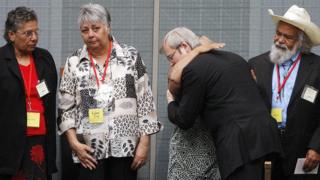
    Image copyright Getty Images Image caption Kevin Rudd hugs members of the Stolen Generations after his apology speech in 2008

    This week, marking the referendum’s 50th anniversary, an Aboriginal leaders’ summit at Uluru (formerly Ayers Rock) is hopeful of reaching consensus on whether – and how – the constitution should be changed. But some delegations are expected to make statements about the need for a treaty, and financial compensation.

    The meeting will also shine a light on white Australia’s troubled, and peculiar, historical attitude to the country’s first inhabitants.

    Australia’s distinct problem, historians say, took root from reports delivered back in England by the first white men to land on the east coast in 1770.

    “Captain James Cook and (botanist) Joseph Banks reported the Aborigines were few in number and were just wandering around the place,” says University of Sydney history professor Mark McKenna.

    Aboriginal leaders meet for historic talks Australia ‘failing’ on indigenous lives The people and history of the Torres Strait Islands

    “The perception was they had no recognisable agricultural system, and they were basically savages.”

    Thus when Admiral Arthur Phillip led the first fleet to begin the colony of New South Wales in 1788, Mr McKenna says, “there was no expectation any treaty with the locals would have to be signed. The way Australia was settled was in fact quite extraordinary.”

    Tasmanian Aboriginal writer and activist Michael Mansell told the BBC the English were deceived by their perceptions of Australian indigenous culture, including that they lived in small groups, by contrast to the large and seemingly more organised tribes of North America.
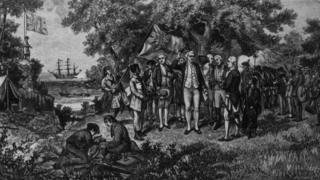
    Image copyright Getty Images Image caption The views of the first white visitors left a problematic legacy, historians say

    “To them, the Australian Aborigines didn’t display any of the trappings of a so-called noble culture,” Mr Mansell says.

    “They weren’t riding horses like the native North Americans. They didn’t have permanent dwellings. It was harder to discern who their leaders were. So they were regarded as a vulgar and backward people who could be treated as the invaders liked.

    “In 1840 colonial officials in New Zealand were sitting down with the Maoris to sign the Treaty of Waitangi. At the same time in Australia, Aborigines were being hunted down, shot and slaughtered.

    “All of this fostered a deeply entrenched cultural bias against Aboriginal people which, ever since, has been very hard to shake, both in attitudes and in a substantive way.”

    While provision was made for indigenous people in Canada’s constitution in 1867, Mr Mansell points out that “the only mention of Aborigines in Australia’s constitution of 1901 was to exclude us”.

    At that time, Australia’s first prime minister, Edmund Barton, said race-based clauses in the constitution allowed his government to “regulate the affairs of the people of coloured or inferior races who are in the Commonwealth”.

    Little changed in attitudes in the ensuing years. This, Mr Mansell says, was partly due to a widespread belief that the Aboriginal race would simply die out, and be bred in amongst the European community, and because of the country’s so-called “White Australia” policy on immigration. Existing in various forms from 1901 until 1973, the policy, though aimed at immigrants, did little to promote acceptance and cultural sensitivity.
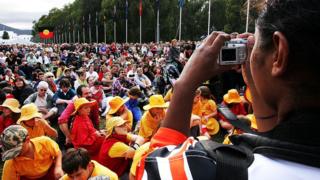
    Image copyright Getty Images Image caption A crowd watches the apology to the Stolen Generations in 2008

    While the 1980s and early 1990s brought attitudinal change, the plight of Aborigines was set back, Mr McKenna and Mr Mansell agree, under the conservative John Howard government of 1996-2007.

    Contrasting Mr Keating’s Redfern Speech, Mr Howard said he would not take a “black armband” view of Australia’s history on Aboriginal relations.

    In 2000 he said a country “does not make a treaty with itself”. And in 2004 he announced the abolition of the peak government body handling indigenous issues, the Aboriginal and Torres Strait Islander Commission (ATSIC), following corruption investigations.

    “John Howard shut the Aboriginal movement down completely,” Mr Mansell says. “ATSIC had its problems, but it was a sound moral concept. There’s been plenty of crooked MPs, but they don’t shut down parliament.”

    Still, despite Australia’s troubled past on indigenous matters, and fears from government and business on the implications of a treaty, of financial compensation, or of official recognition of Aboriginal sovereignty over Australian lands, Mr Mansell is “very optimistic” substantive change can be sparked by this week’s summit.

    “What we need is a clear plan capable of being adopted by governments which will not interfere with the rest of Australia but will give empowerment to Aborigines, and give land back to those who can’t get it under the Native Title Act,” Mr Mansell said.

    With Australia’s constitution difficult to change, many agree a more pressing need is the establishment of a national representative body allowing Aborigines to make their own decisions on matters affecting them, rather than have decisions forced on them from Canberra.

    “A treaty would break the 200-year-old cycle of governments not negotiating with the Aboriginal people,” says Mr McKenna, adding it would provide a framework for how negotiations are held on indigenous issues such as welfare, employment, education, health and land ownership.

    “It would say ‘we’re no longer just going to do things to them’, but that they’re included and empowered.”
  • Nationalism in heart of Europe needles EU

    Hungary border fence, Dec 2017 Image copyright AFP Image caption Hungary has built a formidable southern border fence to keep migrants out
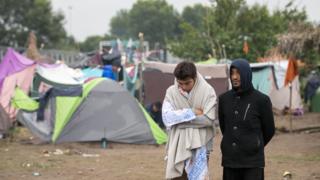
    Grinning cheerfully as he swipes his mop neatly across the glass front of an optician’s shop, Sandor the window cleaner tells me he doesn’t think much of Hungary’s ruling Fidesz party.

    “They may say the economy’s thriving but we don’t feel it,” he says. “The one thing they do right is to keep the migrants out.”

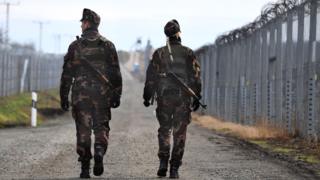
    Not far away, at Hungary’s southern border, the wind whips across the steppe, flattens the grass and whistles right up against the vast metal intricacy of Prime Minister Viktor Orban’s border fence.

    Few try to cross it these days. Even so a security patrol crawls, rather menacingly, along its barbed perimeter.

    What is, for some, all about internal security, also represents this country’s decision to prioritise national interest above that of the EU. It’s a symbol of defiance.

    Image copyright Getty Images Image caption The 2015 migrant crisis created a deep split between EU neighbours

    In spring 2015 the wave of refugees and migrants entering Central Europe via Hungary came as a kind of heavenly gift to Mr Orban and many other politicians in the region. They could exaggerate the potential immigration threats and then appear as saviours.

    Hungary, of course, wasn’t alone in its opposition. It decided, along with Poland, the Czech Republic and Slovakia, to reject EU migrant quotas, angering Brussels and earning the so-called Visegrad Four (V4) a reputation as the union’s troublemakers.

    Image copyright EPA Image caption The Visegrad Four are defying an EU agreement on migrant quotas
    But their resistance has shone a light on a profound and dangerous division within the club. Not so much a stand-off between East and West but between the older, established member states and the former communist countries which joined in 2004.

    Read more on this topic:

    Visegrad: The clash of the euro visions EU to sue member states over refugees The castle where a Central European bloc was born Slovak PM Fico threatens boycott of ‘rip-off’ EU food

    Resentment in Slovakia

    In the eerie, blue flashing light of a grimy factory in southern Slovakia, welders in overalls bend over huge chunks of metal. One lifts his protective mask to reveal a lined face.

    During the socialist era, journalist Tibor Macak says, there was more security, more certainty.

    And now? “Living standards aren’t the same as those in other member states. In Germany they earn four times what we get. If we’re talking about the European Union, it should be equal.”

    There is resentment, a sense of injustice here – although Slovakia represents the very least of Brussels’s problems.

    Its leader Robert Fico stands shoulder-to-shoulder with his Visegrad counterparts and declares: “I belong to a union of prime ministers who do not wish to see Muslim communities being created in our countries”. But that’s about as far as his anti-EU rhetoric goes.

    Conscious perhaps of the relative prosperity that EU membership has brought (French and German car manufacturers are among the foreign investors here), Slovakia is, officially at least, open to closer EU integration. Slovakia is the only member of the V4 in the eurozone.

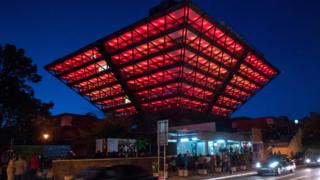
    Image copyright AFP Image caption The Slovak national radio building in Bratislava
    Inside the peculiar upside-down, concrete pyramid that houses Slovakia’s national radio station, Tibor Macak says: “Now is the big question: what happens if (German Chancellor) Angela Merkel and (French President) Emmanuel Macron put reform on the table? Slovakia in the majority supports that – it’s very clear.”

    Not so its Visegrad neighbours Hungary and Poland. There, further EU integration is viewed with suspicion and resistance.

    Polish patriots

    In Poland’s rural east, the women of Zambrow gather every week to practise the old village songs. Boots tap, long skirts sway.

    Jolanta shrugs back her flowered shawl and says: “The most important thing is to prioritise the interests of our fatherland, to support the interest of the Polish people.”

    She recently became a local councillor for the ruling Law and Justice Party (PiS). “Most importantly it was patriotism that drove me towards PiS, the patriotism I inherited from my grandparents and parents,” she says.

    PiS, endorsed (in part) by the powerful Catholic Church, has won popular support thanks to generous child benefits and a decision to lower the retirement age. As one mum told me: “All the other parties make promises but they don’t deliver. PiS kept their promises.”

    But PiS have enraged the EU and left their country horribly divided.

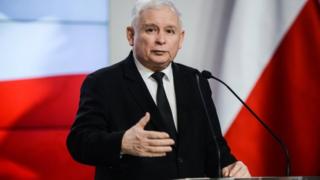
    Image copyright EPA Image caption Law and Justice (PiS) leader Jaroslaw Kaczynski espouses traditional conservative values

    The party’s attacks on press freedom, on access to abortion, its decision to continue logging in the ancient Bialowieza forest, in breach of EU law, horrify many Poles.

    But it was the government’s shake-up of the Polish judiciary which brought people out onto the streets in protest and stirred the European Commission into action, triggering Article Seven against a member state for the very first time. The article deals with adherence to the EU’s rule of law values.

    Renate Kim, a journalist based in Warsaw, said “I went to the United States for the elections and when I listened to people, how they believed in what Trump promised them, it was exactly the same as here – ‘we’ll make Poland strong again, we’ll make Poland great again’.”

    “People hear ‘we’ll be a big country with lots of pride, we won’t listen to Brussels and the leftist Brussels politicians’ and they like that, because they feel proud of their country again.”

    No wonder, perhaps, PiS MP Dominik Tarcynski said last week that the Polish government would not back down over the reforms, which the EU Commission and independent experts argue flout the rule of law.

    Brussels is unlikely to withdraw the country’s voting rights – it needs unanimous the approval of all member states and Hungary has signalled support for its neighbour.

    Viktor Orban’s increasingly authoritarian rule, his shift towards a self-styled “illiberal state”, also flies in the face of EU values.

    There are voices within the EU which hint at hitting both Poland and Hungary where it hurts most – by reducing their EU funding.

    This week Ms Merkel issued a veiled threat with regard to the next EU budget.

    “In the next distribution of structural funds,” she said, “we need to redefine the allocation criteria to reflect the preparedness of regions and authorities to receive and integrate migrants.”

  • European Parliament backs copyright changes

    Wyclef Jean Image copyright Getty Images Image caption The musician Wyclef Jean is among those who have opposed the copyright laws
    Controversial new copyright laws have been approved by members of the European Parliament.

    The laws had been changed since July when the first version of the copyright directive was voted down. Critics say they remain problematic.

    Many musicians and creators claim the reforms are necessary to fairly compensate artists.

    But opponents fear that the plans could destroy user-generated content, memes and parodies.

    Leaders of the EU’s member states still need to sign off on the rule changes before the individual countries have to draft local laws to put them into effect.

    The vote in Strasbourg was 438 in favour of the measures, 226 against and 39 abstentions.

    ‘Link tax’

    MEPs voted on a series of changes to the original directive, the most controversial parts are known as Article 13 and Article 11.

    Article 13 puts the onus on web giants to take measures to ensure that agreements with rights-holders for the use of their work are working.

    Critics say that would require all internet platforms to filter content put online by users, which many believe would be an excessive restriction on free speech.

    Article 11 is also controversial because it forces online platforms to pay news organisations before linking to their stories, something critics refer to a “link tax”.

    Axel Voss, the German MEPs in charge of overhauling the copyright rules has made his own amendments, including removing small tech firms from facing certain obligations when striking licensing agreements with rights-holders.

    He has also attempted to clarify how members countries would mediate between net firms and rights-holders when they flag infringements.

    Earlier this week YouTube weighed in on the debate. Its chief business officer Robert Kyncl said that the one of the most controversial elements of the law – Article 13 – risked “discouraging or even prohibiting platforms from hosting user-generated content”.

    Musician Wyclef Jean also spoke out against the directive, appealing to MEPs to “embrace and improve the internet, rather than attempt to block and hinder it”.

    But many other musicians, including Sir Paul McCartney had expressed their support for the changes.

  • Turkish intelligence ‘captures bombing suspect in Syria’

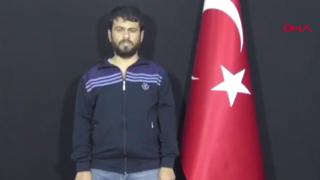
    A video broadcast by Turkish media showing a Turkish man, Yusuf Nazik, appearing to confess to his role in the 2013 Reyhanli bombings (12 September 2018) Image copyright AFP Image caption Turkish media broadcast “confession” by a man identified as Yusuf Nazik
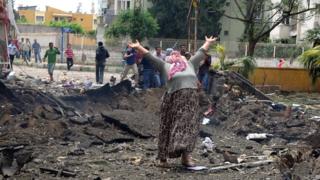
    A Turkish intelligence agency has captured in Syria the chief suspect in the 2013 twin bomb attack in the border town of Reyhanli, Turkish media report.

    State-run Anadolu news agency said the National Intelligence Organisation had apprehended Yusuf Nazik, a Turkish citizen, in the port city of Latakia.

    He had confessed to “acting on orders from Syrian intelligence”, it added.

    The Syrian government has denied that it played any role in the Reyhanli attack, which left 53 people dead.

    The Turkish and Syrian governments are fighting on opposing sides in Syria’s civil war, with Ankara backing rebel forces trying to oust President Bashar al-Assad.

    Image copyright AFP Image caption The car bomb attacks in Reyhanli on 11 May 2013 killed 53 people
    He then procured two vehicles to move the explosives, according to Anadolu.

    A video published by Anadolu showed Mr Nazik standing next to a Turkish flag and saying: “I was not able to escape from the Turkish state.”

    He also warned Syria’s government that Turkey would “make you pay eventually”.

    There was no immediate response from Syrian officials.

    Anadolu said that in February nine people were sentenced to life in prison after being convicted of involvement in the Reyhanli attack, and that 13 others were jailed for between 10 and 15 years.

  • Australian schoolgirl Harper Nielsen’s national anthem protest

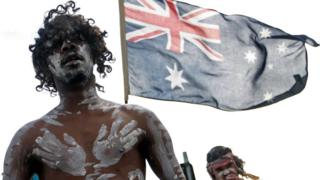
    Aboriginal performers guide the Indigenous and Torres Straight Islander war veteran march on ANZAC Day in Sydney's Redfern on April 25, 2008 Image copyright AFP Image caption An Australian schoolgirl claims the national anthem disregards the country’s indigenous people
    A nine-year-old girl has stirred controversy after refusing to stand for Australia’s national anthem in protest at alleged institutional racism.

    Harper Nielsen claimed the song “Advance Australia Fair” ignored the nation’s indigenous people.

    “When it says ‘we are young’ it completely disregards the Indigenous Australians who were here before us,” she told ABC news Australia.

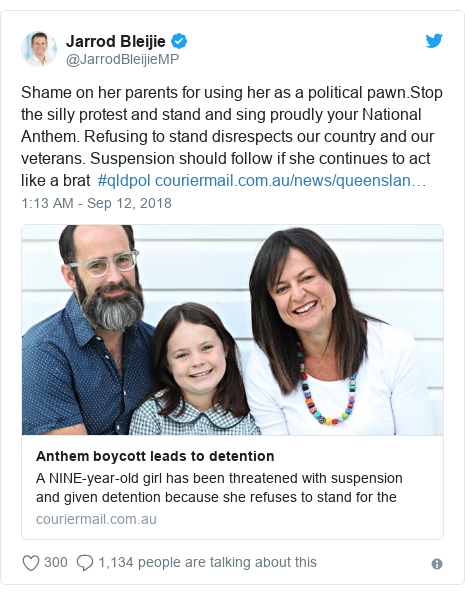
    Australian politician Pauline Hanson later labelled Harper a “brat”.

    The schoolgirl was given detention last week for “blatant disrespect” over her failure to participate with classmates during a rendition of the song at Kenmore South State School in Brisbane.

    Image Copyright @JarrodBleijieMP @JarrodBleijieMP
    Others, such as Australian journalist and television host Georgie Gardner, praised Harper for her “strength and character”.

    “I do applaud her for considering the words of the national anthem, a lot of people just rattle it off and don’t consider the meaning,” she said.

    On Twitter, users posted messages of support using the hashtag #HarperNielsen, calling the schoolgirl “Australia’s most fantastic and brilliant brat” and “the hero Australia doesn’t realise it needs”.

    Harper’s move echoes the controversial kneeling protests of NFL players during the national anthem in the US, which began with quarterback Colin Kaepernick.

    What is happening in Kaepernick row?

    A spokesperson for the Queensland state education department said the school had offered Harper the choice of remaining outside the hall during the anthem or simply not singing.

    In June, Australian states took steps towards the nation’s first treaties with Aboriginal and Torres Strait Islander peoples.

    Many indigenous Australians have cited a treaty or treaties as the best chance of bringing them substantive as well as symbolic recognition – the subject of a long-running national debate.

    Australia is the only Commonwealth country that does not have a treaty with its indigenous populations.

  • EU votes for disciplinary action against Hungary

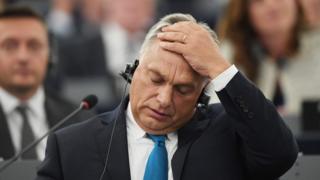
    Hungary's Prime Minister Viktor Orban places his hand on his head in an emotive gesture Image copyright AFP Image caption Vicktor Orban launched an impassioned defence of his country on Tuesday – but it was not enough
    The European Parliament has voted to pursue unprecedented disciplinary action against Hungary over alleged breaches of the EU’s core values.

    Prime Minister Viktor Orban’s government has been accused of attacks on the media, minorities, and the rule of law – charges which he denies.

    MEPs backed the vote by 448 to 197, giving it the two-thirds required for proceedings to go ahead.

    If also approved by national leaders, Hungary could face disciplinary action.

    Wednesday’s vote is the first time the European Parliament has voted to take such action against a member state under EU rules.

    Measures could include suspension of the country’s voting rights in Europe or other sanctions.

    Mr Orban personally spoke to the parliament on Tuesday in defence of his country, labelling the threat of censure as a form of “blackmail” and an insult to Hungary.

    He claimed a report by Dutch MEP Judith Sargentini was an “abuse of power”, and included “serious factual misrepresentations”.

    In depth – Viktor Orban’s Hungary Nationalism in heart of Europe needles EU

    Since coming to power, Mr Orban’s government has taken a hardline stance against immigration. It introduced a law which made it a criminal offence for lawyers and activists to aid asylum seekers, under the banner of “facilitating illegal immigration”.

    Ms Sargentini’s report into Hungary’s ruling Fidesz party alleged such actions were “a clear breach of the values of our union”.

    Under an EU rule called Article 7, breaching the union’s founding principles can lead to suspending a member state’s rights as a punitive measure.

    Suspension of Hungary’s voting rights is the most serious possible consequence – but is considered unlikely, as Poland’s nationalist government may support Hungary.

    Poland is itself facing disciplinary proceedings, launched by the European Commission in December last year. The case has yet to reach the European Parliament.

    The decision on Hungary will now be referred to the the EU’s 28 member states to consider.

  • Vietnamese capital Hanoi asks people not to eat dog meat

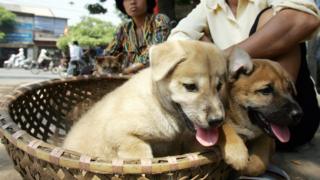
    Two women sit selling young dogs at a roadside in downtown Hanoi 11 October 2005 Image copyright Getty Images Image caption Over 1,000 stores in Hanoi still sell dog and cat meat

    Officials in Vietnam’s capital Hanoi are urging residents to stop eating dog meat as it could hurt the city’s reputation and lead to diseases like rabies.

    The Hanoi People’s Committee said the practice could tarnish the city’s image as a “civilised and modern capital”.

    The city office added that consuming the meat could lead to the spread of diseases like rabies and leptospirosis.

    Over 1,000 stores in Hanoi still sell dog and cat meat.

    The committee also urged residents to stop eating cat meat, which is less popular but still available. It highlighted the fact that many of the animals were cruelly killed.

    There are an estimated 490,000 dogs and cats in Hanoi – the majority of which are pets.

    What is rabies? The controversial Chinese dog meat festival Can you eat dogs in the UK?

    A growing number of people in Vietnam disapprove of eating dog meat but it still remains “very much a deep-rooted habit”, according to Linh Nguyen, a journalist with the BBC’s Vietnamese service.

    Even on social media, many people welcomed the decision, but there were some who argued it was a habit that many Vietnamese people could not easily give up.

    One Facebook user, Dang Ngoc Quang, argued that the dish should not be banned completely, as that amounted to deprivation of freedom.

    Instead, he suggested implementing a heavy tax on dog meat or allowing it only to be sold in specific areas.