Category: WORLDS

  • Juncker to unveil EU-Africa strategy in annual address

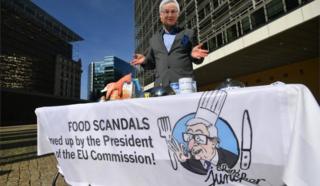
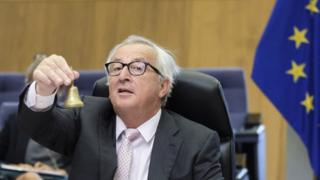
    Jean-Claude Juncker Image copyright EPA Image caption Jean-Claude Juncker is ringing time on his presidency – this is his last 12 months

    The European Commission’s president is to deliver his annual state of the union address and will propose a new Africa-Europe alliance.

    Jean-Claude Juncker will say it is time for the EU to take its place at the top table of global powers.

    He is also expected to predict the UK will have better relations with the EU than any other country after Brexit.

    This is Mr Juncker’s last 12 months in the role, with the problems of Brexit, migration and populism dominating.

    Who is Jean-Claude Juncker?Juncker’s stumbling ’caused by sciatica”I don’t own a smartphone’ – Juncker

    Mr Juncker’s speech in Strasbourg will be an attempt to turn the European Union into a serious player in global politics, the BBC’s Adam Fleming reports.

    Image copyright AFP Image caption Mr Juncker has any number of protests and crises on his agenda

    And he will urge countries to give up their national vetoes in some areas of foreign policy. One EU diplomat said this would be an attempt to prevent China – a growing force in Africa – from blocking European diplomacy with a call to just one of the member states.

    Although this is the final state of the union address before Brexit, our correspondent says Mr Juncker will not want the subject to dominate.

    At-a-glance: The UK’s four Brexit options Brexit: All you need to know

    It is unlikely he will shift the EU’s position towards the UK’s on access to the single market – but he will nod towards a future relationship that will be unlike any the EU has with another country.

    An EU diplomat said the message is: “Let’s be friends again.”

    On migration, there will be more details on EU plans to add 10,000 guards to the Frontex border agency by 2020.

    EU migration: Crisis in seven charts

    From the start of his commission’s mandate in 2014, migration his been a major crisis.

    It has sparked a rise in populism that has seen power shifts in Italy, Austria, Hungary and Poland, with Sweden the latest country to register a rise in anti-immigration votes in an election.

    Is Europe seeing a nationalist surge?

    Right after his speech, the EU parliament will decide whether to take disciplinary procedures against Hungary for breaching core democratic values.

    The commission has already launched disciplinary proceedings against Poland over reforms it says challenge the rule of law.

    The next elections to the European parliament are expected to be held in late May next year.

  • Lynette Dawson: Police begin dig in podcast-highlighted mystery

    Lynette Dawson holds one of her baby daughters Image copyright SUPPLIED Image caption Lynette Dawson, a mother of two, was last seen in 1982

    Australian police have begun digging at the former home of a Sydney woman whose disappearance in 1982 has recently attracted global attention.

    Lynette Dawson, a mother of two, vanished without a trace. Her husband, Chris Dawson, said she had left the family – perhaps for a religious group.

    Mr Dawson has denied murdering his wife after two coroners’ inquests found she had been killed by a “known person”.

    A popular podcast, The Teacher’s Pet, has brought wide attention to the case.

    On Wednesday, police said they had begun a five-day forensic search of the couple’s former home in the suburb of Bayview.

    Image copyright SUPPLIED Image caption Lynette Dawson’s disappearance has been given wider attention by a popular podcast

    An inquest in 2003 found Mr Dawson, a former rugby league star and high school teacher, had had sexual relationships with teenage students.

    One 16-year-old girl moved in with Mr Dawson’s within days of his wife’s disappearance. The pair later married, but have since separated.

    Two separate inquests recommended that murder charges be laid against a “known person”.

    ‘More extensive’ search

    Police have previously conducted digs on the property at Bayview. This time, they plan to excavate four sites on the property.

    “What’s different about this dig is it will be more extensive. We will go until we hit rock,” Supt Cook said.

    Since May, millions of people globally have downloaded The Teacher’s Pet podcast, which is produced by The Australian newspaper.

    Why 2018 is the year of the ‘podcast boom’ Are podcasts breaking through to the mainstream?

    It has highlighted the bungled handling of the case by police in the early years after Mrs Dawson’s disappearance, prompting an apology from the state’s current police commissioner.

  • Pro-whaling nations block plan to create sanctuary

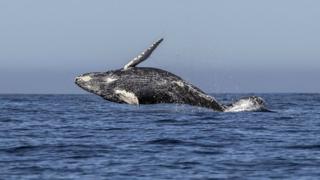
    A humpback whale (Megaptera novaeangliae) jumps out of the Pacific Ocean's waters in Los Cabos, Baja California Sur, Mexico on March 14, 2018 Image copyright Getty Images Image caption Commercial whaling is banned from whale sanctuaries

    A proposal to create a whale sanctuary in the South Atlantic Ocean has been defeated at an International Whaling Commission (IWC) meeting in Brazil.

    Japan and several other pro-whaling countries voted against the proposal, causing it to fall short of the two-thirds majority it needed to pass.

    Brazil’s Environment Minister, whose country proposed the creation of the sanctuary, said he was “disappointed”.

    Environmental campaigners are outraged at the outcome.

    The proposal was backed by 39 countries, with 25 countries voting against, including commercial whaling countries Iceland, Norway and Russia.

    Were Romans the first whale hunters? Whale spotted pushing dead calf for days

    But this is not the first time the proposal to build a whale sanctuary in the South Atlantic Ocean has failed.

    A similar proposal, tabled by Brazil, was defeated at an IWC meeting in Panama in 2012.

    Brazil’s Environment Minister Edson Duarte said he would not be deterred by the latest outcome.

    “We will work in other meetings of this commission this year to ensure that the sanctuary will finally be created,” he said.

    The IWC already recognises two whaling sanctuaries – one in the Indian Ocean and the other in the waters of the Southern Ocean around Antarctica.

    In 1986 it also agreed to a moratorium on hunting, which eventually became a quasi-permanent ban.

    But by using an exception in the ban that allows whaling for scientific purposes, Japan has still killed between 200 and 1,200 whales every year since, including young and pregnant animals.

    Could the ban on killing whales end? Why Japan keeps on whaling Japan and the whale

    And Japan is now looking to officially reinstate commercial whaling.

    The IWC will later this week give its verdict on whether it will overturn the ban on commercial whaling.

    Whaling in the 19th and early 20th Century brought the giant mammals to the brink of extinction.

  • Brazil’s Lula: Saint or sinner?

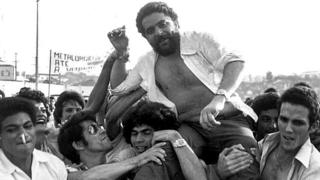
    This 22 March 1979 file photo shows Luiz Inacio Lula da Silva being lifted by metalworker colleagues after a union rally in Sao Bernardo do Campo, 55kms from Sao Paulo. Da Silva, presidential candidate for the Workers' Party, has been declared the winner of the presidential election run-off 27 October, 2002. Image copyright Getty Images Image caption Lula started his political career with the metalworkers’ union

    Luiz Inácio “Lula” da Silva is seen as much as a saviour as he is a sinner in Brazil: a man who came to power promising change yet ended up leaving politics with a very different legacy.

    His life mirrored that of many Brazilians. He was born in 1945 into a poor family in the north-east of Brazil and, by the time he was seven, his family had moved to São Paulo to find work – as many millions of Brazilians have done, before and after him.

    ‘Only death will take me off streets’

    Lula did not learn to read until he was 10. At the age of 14, he got his first job as a metal worker in the car factories on the outskirts of São Paulo.

    It was in those factories that he started getting involved in politics. By 1975, he was heading the metalworkers’ union and, throughout the 1970s and 80s, he helped organise major strikes in defiance of Brazil’s military rule.

    “The working class has never got anything in this world without a battle, without perseverance and without the will to fight until the end,” he told workers in April 1980.
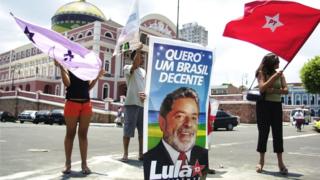
    Image copyright Getty Images Image caption Lula’s campaign slogan in 2002: “I want a decent Brazil”

    But it was a long struggle to the top. Lula ran for president unsuccessfully three times before eventually being elected in 2002.

    And when he was, he made history as Brazil’s first working-class president, who argued it was time for Brazil to turn a new page.

    “Change: that was the key word, that was the message from Brazilian society,” he said as he was sworn in, in January 2003. “Society decided it was time to forge a new path.”

    He led Brazil during a period of unprecedented economic growth. High prices for commodities meant that he had money to spend on social programmes.
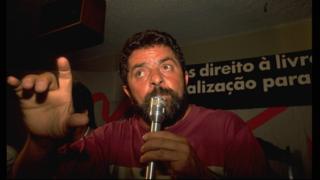
    Image copyright Getty Images Image caption Lula ran for the presidency three times before being elected in 2002

    One of his biggest legacies was lifting millions out of poverty, according to his former foreign minister, Celso Amorim.

    “Taking 30 to 40 million people out of poverty is fantastic,” says Mr Amorim.

    “They [Brazilians] identify with Lula because he’s one of them, coming from poorer parts, then becoming a metal worker, and then all the way to the presidency, without departing from these origins.”

    Spendthrift

    But he also faced criticism for spending money without addressing the core problems in society.

    “Everyone was happy because everyone had access to credit,” argues political analyst Thiago de Arago. “This is a mechanism that didn’t come from the brilliance of an economic plan but from the circumstance of the moment.”

    The good times could not last forever. After serving two consecutive terms in office, the maximum allowed under Brazil’s constitution, Lula stood down on 1 January 2011.
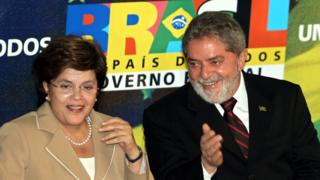
    Image copyright Getty Images Image caption Lula was Dilma Rousseff’s mentor and he made her his chief of cabinet

    His ally Dilma Rousseff succeeded him as president but as economic growth slowed, political dissatisfaction grew.

    In 2013, protests that started over a rise in bus fares grew into a widespread expression of anger with corrupt politicians, a situation that intensified with the start of Operation Car Wash in 2014, the biggest corruption investigation the country has ever seen.

    Brazil corruption scandals: All you need to know

    Lula was a man who said he would represent change, but in the end, he too was charged with corruption.

    ‘You can’t arrest my ideas’

    In 2017 he was sentenced to nearly a decade in prison over allegations he accepted a beachfront apartment in return for political favours from a construction company.

    In 2018, his sentence was extended to 12 years.
    Media playback is unsupported on your device

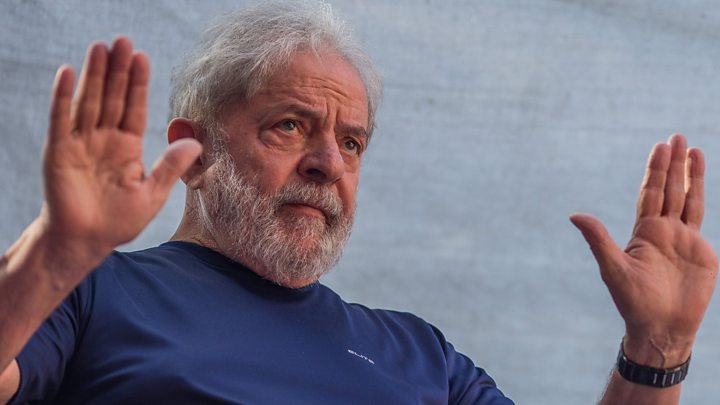
    Media captionLula forced his way through crowds of his supporters to turn himself in

    It is a charge that has divided Brazil between those who feel that he and his Workers’ Party have been unfairly treated and those who believe justice has been served.

    Lula’s legacy is mixed. “It proved that in a country like Brazil today, he cannot be protected just because of how big he was,” says Mr Arago. “I think this is a major legacy that Lula will leave for Brazilians: that no one is above the law.”

    For months, he fought to remain out of jail, but in April the Supreme Court said he had to start serving time.

    From the metalworkers’ union where he began his career, he gave his last speech: “There is no point in trying to end my ideas, they are already lingering in the air and you can’t arrest them. There is no point in trying to stop me from dreaming, because once I cease dreaming, I’ll keep dreaming through your minds and your dreams.”

    “They have to know that the death of a fighter cannot stop the revolution,” he said to the crowd.

    And even behind bars Lula has kept up the fight. But it is one he has finally lost and which has led to the fall from grace for the man who was once Brazil’s most popular politician.

    He is out of politics now but still in the minds of many and will continue to be formidable influence in Brazilian politics for a while to come.
    (more…)

  • Catalonia crisis in 300 words

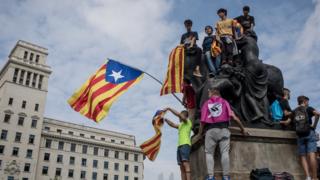
    Image shows supporters of Catalan independence gathering in Barcelona on 2 OctoberImage copyright Getty Images Image caption Supporters of Catalan independence in Barcelona
    The ongoing stand-off between Catalonia and the Spanish government in Madrid is complicated. Let’s break it down.

    What is Catalonia?

    Catalonia is a region in north-east Spain. It has its own language, parliament, flag and anthem. It even has its own police force and controls some of its own public services, such as schools and healthcare.

    It is one of Spain’s wealthiest and most productive regions and has a distinct history dating back almost 1,000 years.

    Why the controversy?

    The Catalan parliament approved an independence referendum which went ahead on 1 October despite being suspended by Spain’s Constitutional Court.

    The Spanish government tried to stop voting and hundreds of people were hurt in scuffles with police at polling stations.

    While Catalan authorities say just under 90% of voters backed independence, turnout was only 43%.

    Click to see content: Catalonia_vote

    What have both sides said?

    Catalan leaders declared an independent republic but immediately suspended its implementation.

    Catalan President Carles Puigdemont said he wanted negotiations on the region’s exit from Spain.

    Spain’s Prime Minister Mariano Rajoy has responded by asking the Catalan government to clarify whether or not it has declared actual independence.

    What happens next?

    Depending on the Catalan government’s answer, the government in Madrid could impose direct rule on the region.

    That would mean suspending Catalonia’s powers to make its own decisions on public services such as education and healthcare.

    Why does the crisis matter?

    There is no suggestion that the crisis could degenerate into an armed conflict but it could damage the region and Spain as a whole economically, bringing new instability to the eurozone.

    It could also set an example for other countries with secessionist movements in Europe.

    Want to know more?

    Catalan crisis: Six things you need to know What are the options for Spain now? Does Catalonia want to leave Spain? Could Catalonia make a success of independence? Spain’s distinctive north-eastern region

  • Thousands march in Barcelona streets

    Video Mass march in Barcelona streets

    (more…)

  • Controversial EU copyright change faces key vote

    A composite image shows the EU flag, with a copyright symbol embedded in the centre of its iconic ring of yellow stars Image copyright Getty Images Image caption The proposed reform has attracted enormous attention and fierce campaigning on both sides

    EU lawmakers are set to vote on a controversial copyright reform that could change how internet companies treat uploaded content from users.

    A version of the proposal was rejected in July after a grassroots campaign, and fierce campaigning on both sides.

    Critics fear the rules are too broad and could affect parodies, remixes, and even links to articles and websites.

    But many musicians, authors, and other creators back the reforms which they view as necessary to support artists.

    Hundreds of changes have been made since the July vote, but opponents say major issues remain.

    What is the controversy?

    The proposed copyright directive is supposed to protect creators by forcing payments to be made to them if their work is copied or linked to online.

    Most of it is not controversial, and the debate is centred around two sections: articles 11 and 13.

    Why Europe’s copyright plan was so controversial Copyright law could put end to net memes

    Article 13 has attracted the most attention, and been labelled an “upload filter” by critics.

    If a user tries to upload copyrighted music, photos, or anything else, it must be checked against a database – and filtered out if it contains copyrighted material.

    Effectively, it makes sites like Facebook and Youtube responsible for what its users upload.

    Skip Twitter post by @EDiMA_EU

    Did you know that memes containing copyrighted images will be blocked by automated filters under the copyright directive? #FixCopyrighthttps://t.co/p92ip1RPBd pic.twitter.com/BH6KzHrW9L

    — EDiMA (@EDiMA_EU) September 6, 2018

    Report

    End of Twitter post by @EDiMA_EU

    But with more than 400 hours of video uploaded to YouTube every minute, no human could do the job – filtering would need to be done automatically by computers.

    Such systems are both expensive and often criticised for being over-zealous and filtering anything that might be copyright-protected.

    For example, some people believe that background music playing in a family video could be filtered out, or that small samples of copyrighted content in a parody or internet meme image could be enough to trigger the automatic filter.

    The possibility has led to such systems being labelled “censorship machines” by some opponents. MEPs behind the directive say such claims are wrong, and have decried what they see as a misinformation campaign.

    The other debated section, article 11, seeks to grant new rights to news outlets and publishers, giving them a slice of revenue from aggregators like Google who link to their content.

    Skip Twitter post by @Senficon

    The amendment by @AxelVossMdEP proves this “mythbuster” wrong: If snippets were not affected, why would his new amendments only allow individual words to accompany a link? If you use more than that, like a headline, you have to pay. https://t.co/kZ7vUTur1A #SaveYourInternet

    — Julia Reda (@Senficon) September 10, 2018

    Report

    End of Twitter post by @Senficon

    But the broad nature of the rules led to fears that even simple hyperlinks or short “snippets” could be costly – potentially affecting a core part of how the world wide web functions.

    Who is for and against?

    Many creative industry associations continue to campaign for the directive to be implemented – including Britain’s record label group BPI and the Society of Authors.

    Supporters say the new rules will protect artists and creators, making it easier for them to earn a living – and that the amendments made since July should assuage concerns.

    Skip Twitter post by @Soc_of_Authors

    Nobody’s hearing about all the good things in the Directive – like the transparency triangle. Authors will get proper accounting of how well their work’s doing, and a proper share of the profits if they do well.

    — Society of Authors (@Soc_of_Authors) September 7, 2018

    Report

    End of Twitter post by @Soc_of_Authors

    Record labels have campaigned for the reform to go ahead, along with music titans like Sir Paul McCartney.

    Ahead of the July vote, some 1,300 musicians declared support for the changes, which would require websites like YouTube or Facebook to detect and delete user uploads of copyrighted music.

    But the divide between those for and against is not entirely clear-cut.

    Musician Wyclef Jean of the Fugees, for example, is in Strasbourg campaigning against the changes, which he believes will actually hurt musicians.

    And while some critics say the changes will hurt small businesses to the benefit of existing internet giants, those same giants – including Facebook and Google – also oppose the directive, which would make them liable for content uploaded by their users.

    What happens next?

    The July vote was defeated 318-278 after thousands of ordinary people contacted their European representatives following a grassroots campaign.

    But under European parliament rules, that meant it would be amended and debated before going for another vote, due on Wednesday.

    More than 250 changes to the original text have been proposed.

    “This vote is our best chance to prevent EU copyright reform from causing lasting harm to the open internet,” MEP Julia Reder said in a blog post criticising many of the proposed changes.

    Digital rights group the Electronic Frontier Foundation, meanwhile, said the proposal was “so terrible, it can only be called an extinction-level event for the internet as we know it”.

    French MEP Marc Joulaud told the AFP news agency, which also backs the measure: “The feeling of many in parliament is that on Wednesday we decide the life or death of the law.”

    “We can still finish on time if the text passes on Wednesday. This is the last slot,” he said.

  • Catalonia ‘National Day’ rally draws million

    Image copyright Reuters Image caption Red-shirted protesters blew whistles and banged drums in Barcelona

    Protesters formed human towers and demanded the release of separatist leaders who are in detention awaiting trial following the independence campaign.

    One elderly protester at the rally, Dolors Llauralo, told Reuters she would continue the battle.

    “I will demonstrate every year, as long as I can… I fight for [my children and grandchildren] so they will have a better life than the one we have had,” she said.

    Read more stories on the Catalonia crisis:

    Spanish direct rule ends in Catalonia Catalan crisis in 300 words Catalonia’s quarrel with Spain explained The man who wants to break up Spain

    More protests are planned on the key anniversary dates of the referendum and declaration of independence.

    However, opponents complained the Diada was being usurped as independence was not supported by all Catalans.

    Media playback is unsupported on your device

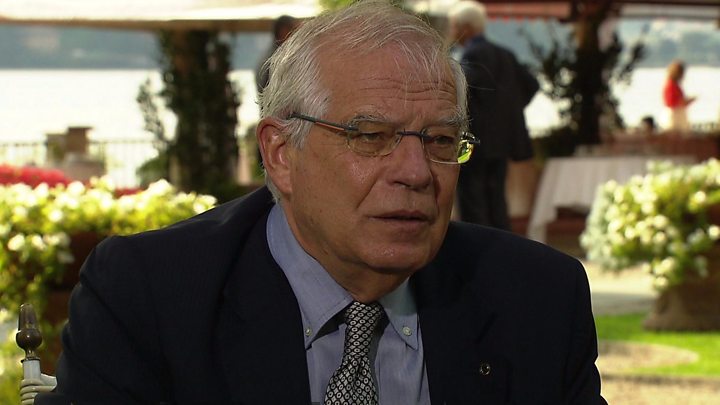
    Media captionCatalonia’s situation “not very serious”, says Josep Borrell

    Spanish Foreign Minister Josep Borrel, who is Catalan, said: “We Catalans should celebrate our national day and not just a call for independence that is shared by less than half of the population.”

    An opinion poll in July suggested 46.7% of Catalans favoured independence and 44.9% opposed it.

    (more…)

  • Trump’s claim of success in Puerto Rico hurricane response derided

    New York Democratic primary winner Alexandria Ocasio-Cortez, said: “Some of my [Puerto Rico] family just got power a few weeks ago. People are developing respiratory issues partly due to airborne fungal spores from lack of proper cleanup. The admin’s response to Puerto Rico has been a disaster.”

    Some Trump supporters on social media accepted there had been failures but said the president had done all he could and that it was Puerto Rican officials who were to blame.

    What happened in Hurricane Maria?

    Maria made landfall in mid-September last year having just been downgraded to a category four hurricane, with winds of 140 mph (225 km/h) and driving rain.

    It caused catastrophic damage to the north-eastern Caribbean and was the most intense cyclone worldwide in 2017.

    Six graphics that sum up Puerto Rico disaster

    Infrastructure was severely damaged in Puerto Rico and the territory struggled to make repairs to the power grid, only completing the work 11 months later.

    Maria was estimated to have caused $100bn (£77bn) in damage.

    For long the government there listed the death toll at only 64, although it acknowledged it was probably much higher.

    The island’s authorities finally accepted a revised toll of 2,975 after a government-commissioned report by experts from George Washington University.

    This counted those who died in the six months following the storm as a result of poor healthcare and a lack of electricity and clean water. Repeated power cuts also led to an increased number of deaths from diabetes and sepsis.

    The report said that those from poorer backgrounds in Puerto Rico were 45% more likely to have been killed in the aftermath of the hurricane.

    (more…)