Tag: Politics

  • Russia plotted sneaking Julian Assange out of Ecuadorian Embassy in London: Report

    Russian diplomats have secretly discussed extracting WikiLeaks founder Julian Assange from the Ecuadorian Embassy in London and escorting him out of the U.K. and beyond the reach of a potential U.S. e

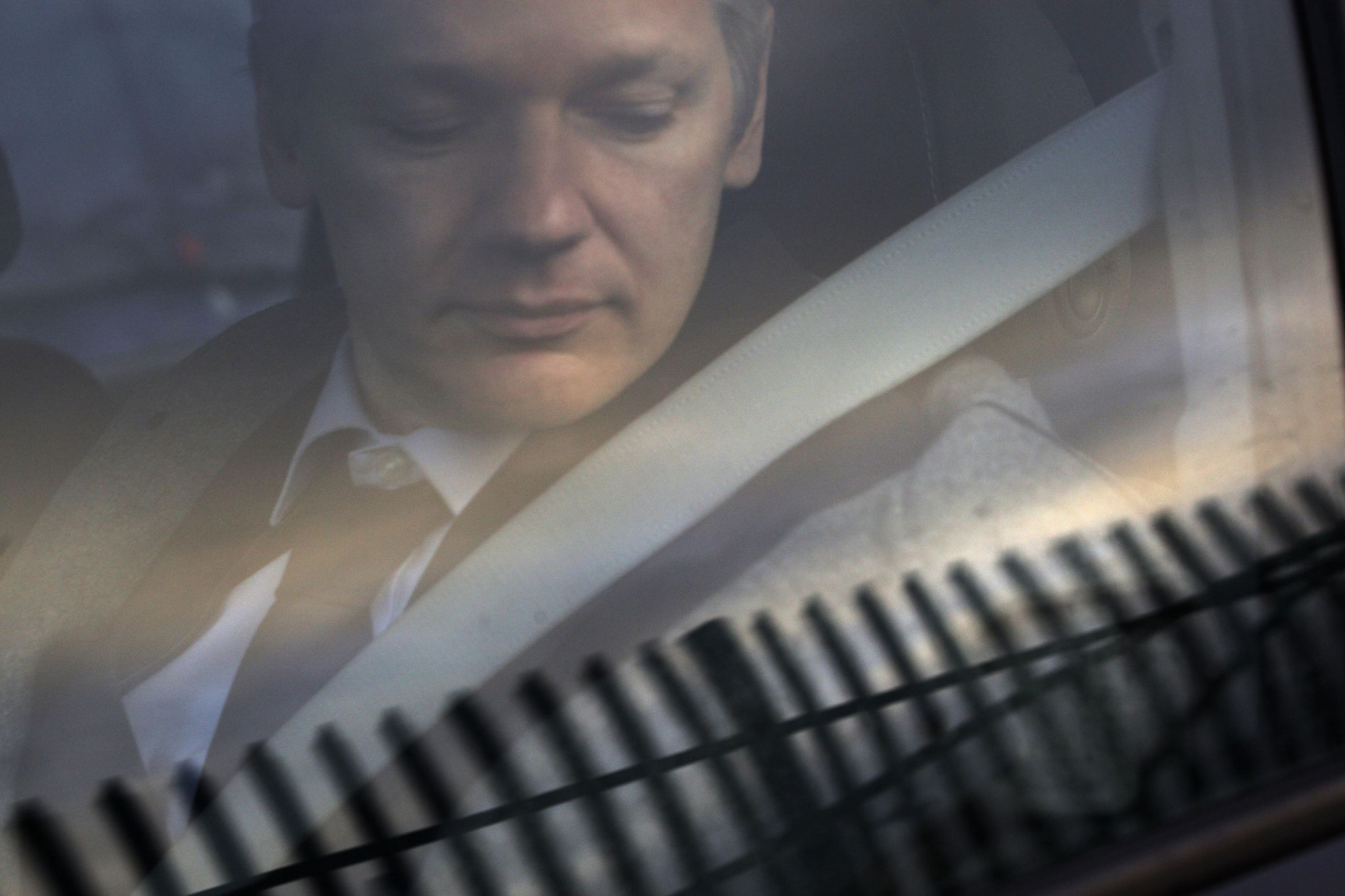
    Russian diplomats have secretly discussed extracting WikiLeaks founder Julian Assange from the Ecuadorian Embassy in London and escorting him out of the U.K. and beyond the reach of a potential U.S. extradition request, The Guardian reported Friday.

    Citing four sources, The Guardian said Russians held secret talks in London last year with people close to the Australian-born WikiLeaks publisher on the subject of potentially facilitating his safe exit from the embassy, his residence since 2012.

    One tentative plan involved smuggling Mr. Assange out of the embassy in a diplomatic vehicle on Christmas Eve and transporting him to another country, possibly Russia, where he stood a lesser risk of being extradited to the U.S. and tried on charges related to his WikiLeaks website, The Guardian reported.

    Another plan considered involved shipping Mr. Assange on a boat to Ecuador, the newspaper reported.

    “It is false that giving Julian Assange diplomatic status is news,” WikiLeaks responded through its Twitter account Friday. “It has been widely discussed for almost a year by Ecuador and the international bar and has nothing, whatsover [sic], to do with Russia.”

    Mr. Assange, 47, was granted asylum by Ecuador within weeks of seeking refuge in its London embassy more than six years ago, though an outstanding arrest warrant issued by U.K. authorities and the related risk of being extradited abroad have kept him from exiting ever since.

    Ecuador naturalized Mr. Assange in late 2017, but a subsequent attempt to grant him diplomatic status days later was quickly quashed by U.K. authorities.

    According to The Guardian, the aborted Christmas Eve escape plan involved utilizing the diplomatic protection Mr. Assange would have been granted had the request been accepted. Ecuador could have given Mr. Assange diplomatic documents, and he could have then been picked up from the embassy by Russians and taken away in diplomatic vehicle, the report said.

    The plan was ultimately deemed “too risky” and aborted, the report said.

    Reacting to the report through its Twitter account, the Russian embassy in London called the story “another example of disinformation and fake news from the British media.”

    Mr. Assange sought refuge from Ecuador amid being sought for questioning by Swedish prosecutors investigating allegations of sexual assault. Sweden dropped the probe in 2017, but a U.K. judge subsequently ruled that Mr. Assange breached related bail conditions by entering the embassy and should be arrested upon exiting.

    WikiLeaks has published throngs of classified U.S. military, diplomatic and intelligence community documents during the past decade, including Democratic Party documents in 2016 allegedly sourced by Russian state-sponsored hackers, according to U.S. federal intelligence and law enforcement officials.

    Mr. Assange has not been charged publicly by U.S. prosecutors, but Attorney General Jeff Sessions previously called his arrest a “priority.”

  • Theresa May ‘humiliated’ after EU trashes her Brexit plan: U.K. media

    British Prime Minister Theresa May’s Brexit blueprint is in tatters after it was rejected by the European Union at a summit the U.K. media branded a “humiliation.”

    LONDON (AP) — British Prime Minister Theresa May’s Brexit blueprint is in tatters after it was rejected by the European Union at a summit the U.K. media branded a “humiliation.”

    European Council President Donald Tusk said bluntly at a meeting in Salzburg, Austria, Thursday that parts of May’s plan simply “will not work,” while French President Emmanuel Macron called pro-Brexit U.K. politicians “liars.”

    A rattled May told reporters that Britain was prepared to walk away from the EU without a deal.

    The rocky summit dashed British hopes of a breakthrough in stalled divorce talks, with just six months to go until Britain leaves the bloc on March 29.

    The judgment of British newspapers on Friday was brutal. The left-leaning Guardian said “May humiliated,” while the right-of-center Sun branded bloc leaders “EU dirty rats.”

  • Understanding ‘illiberal democracy’ and the fight for the West

    Western leftists likes to mock Hungarian Prime Minister Viktor Orban when he infamously said that Hungary would pursue an “illiberal democracy” in opposition to Western European social democracy &mdas

    ANALYSIS/OPINION:

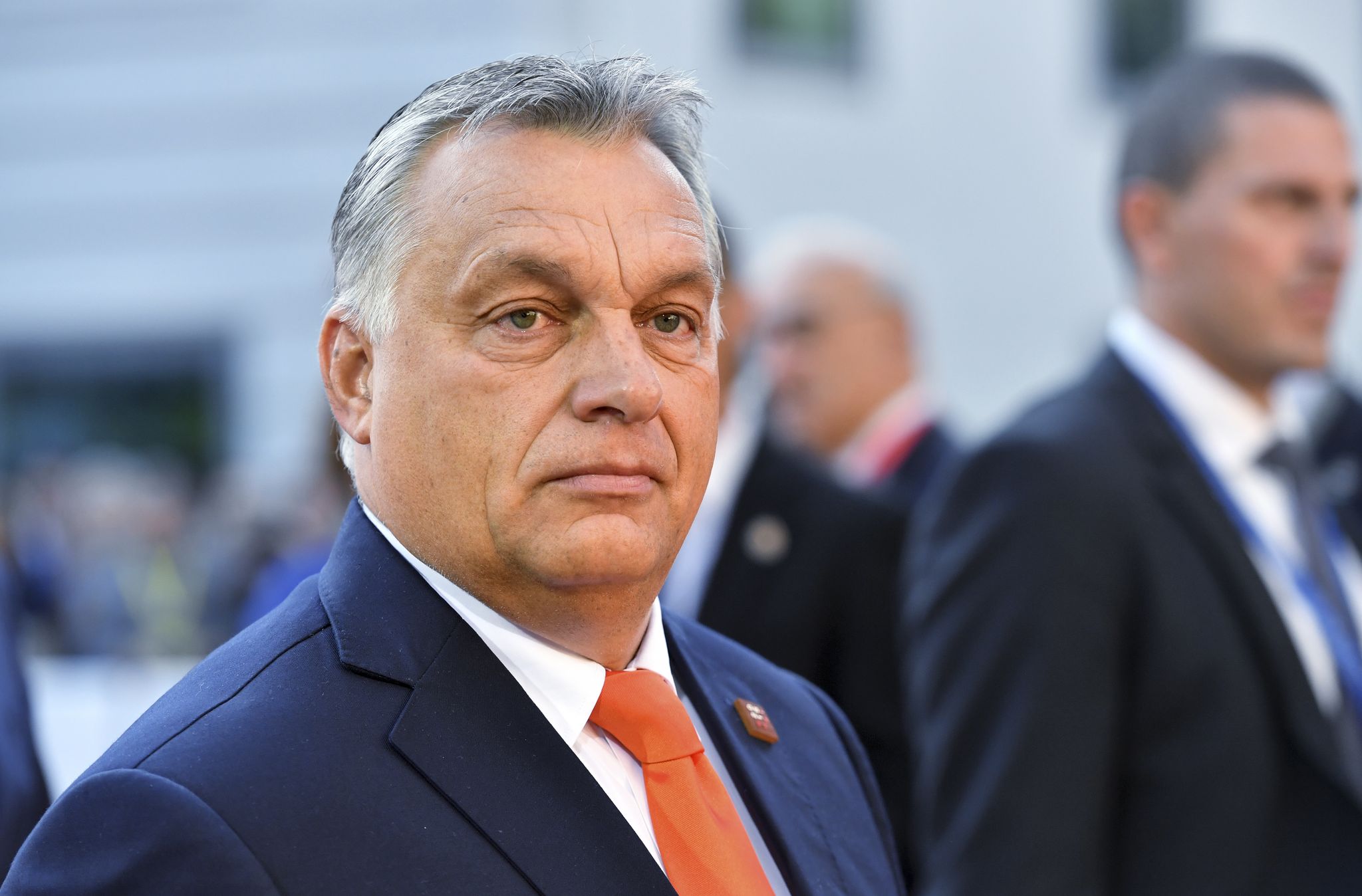
    Western leftists likes to mock Hungarian Prime Minister Viktor Orban when he infamously said that Hungary would pursue an “illiberal democracy” in opposition to Western European social democracy — which might more accurately be labeled as intolerant socialism. If one wants to be intellectually rigorous (not a virtue common among liberals), it’s necessary to dig deeper into Mr. Orban’s concept to see what he is actually talking about.

    The big beef that Hungary and other Central European nations have with European liberal democracies is that they are not liberal at all. They are totalitarian, especially if you do not share their views. Just ask Tommy Robinson, the right-wing activist sent to jail essentially for espousing his beliefs in public in the United Kingdom.

    The unelected leaders and bureaucrats within the European Union have taken it upon themselves to inflict their view of the world upon the continent and beyond. It’s a culturally Marxist agenda, one that threatens the very existence of nations as sovereign entities in Europe.

    This agenda includes the destruction of Europe’s Christian past; the welcoming of millions of migrants from North Africa and the Middle East who lack a common cultural heritage with Europe; the demonization of Israel; the suppression of free speech and freedom on the internet if they threaten liberal pieties; and the unconditional erasure of national borders and local control.

    This is not “liberalism” in any classic sense. It is much more accurately defined as elite control and supernationalist totalitarianism.

    The small countries of Central Europe, known as the Visegrad nations, have had enough. Of course they do not want this future for their children. Who would?

    When Mr. Orban and the Poland’s ruling Law and Justice Party talk of “illiberal democracy,” they are attacking the dangerous, undemocratic agenda of the George Soros-backed EU crowd who want to destroy the nations of Europe. Christian Central Europeans don’t want to be overrun and will not be bullied by Brussels. They will not be bought off with EU money.

    Luckily for Europe, this rejectionist viewpoint is starting to spread, as nations like Italy and Austria are also questioning the internationalist dogma and have recently elected right-of-center nationalist governments.

    Leftists try to dismiss any opposition to their agenda and narrative with epithets such as “far-right,” “Nazi” or “extremist.” But ordinary people are starting to see through this charade, and the name-calling doesn’t really work anymore.

    The NGOs that Hungary kicked out of the country were of course engaged in political agitation. These groups were enabling the migrant crisis into Europe for a reason. They did not care about these so-called “refugees.” They cared only for the undermining of European society as it once existed. It is the same agenda we see playing out in the United States, with President Trump’s critics pushing for unlimited immigration, open borders and giving the vote to illegal aliens.

    Those on the left know they cannot win elections on a sustainable basis with such an agenda. So, instead of trying to win over voters, they try to change the make-up of who gets to vote. Presto! Promise the migrants everything in exchange for the vote, while those evil white men will pay for everything.

    As Mr. Orban put it shortly after winning a third term in office this year, “We have replaced a shipwrecked liberal democracy with a 21st-century Christian democracy, which guarantees people’s freedom, security. … It supports the traditional family model of one man and one woman, keeps anti-Semitism at bay, and gives a chance for growth.”

    It is Mr. Orban’s critics who are being dishonest about their “progressive” agenda in Europe and what lies behind their definition of liberal democracy. I don’t support everything that Mr. Orban and some of his nationalist allies have done to restrict press freedom and the like, but as the saying goes, let those without sin cast the first stone. Hungary, Poland, and the Czech Republic are fighting the good fight against the leviathan of European socialism. They are trying to save their peoples from the destructive policies of Brussels.

    That may be liberal or illiberal, but the conversation in the media on the debate and the stakes could use a whole lot more honesty.

    L. Todd Wood is a former special operations helicopter pilot and Wall Street debt trader, and has contributed to Fox Business, The Moscow Times, National Review, The New York Post and many other publications. He can be reached at LToddWood.com.

  • Shinzo Abe of Japan re-elected as party head, to stay on as PM

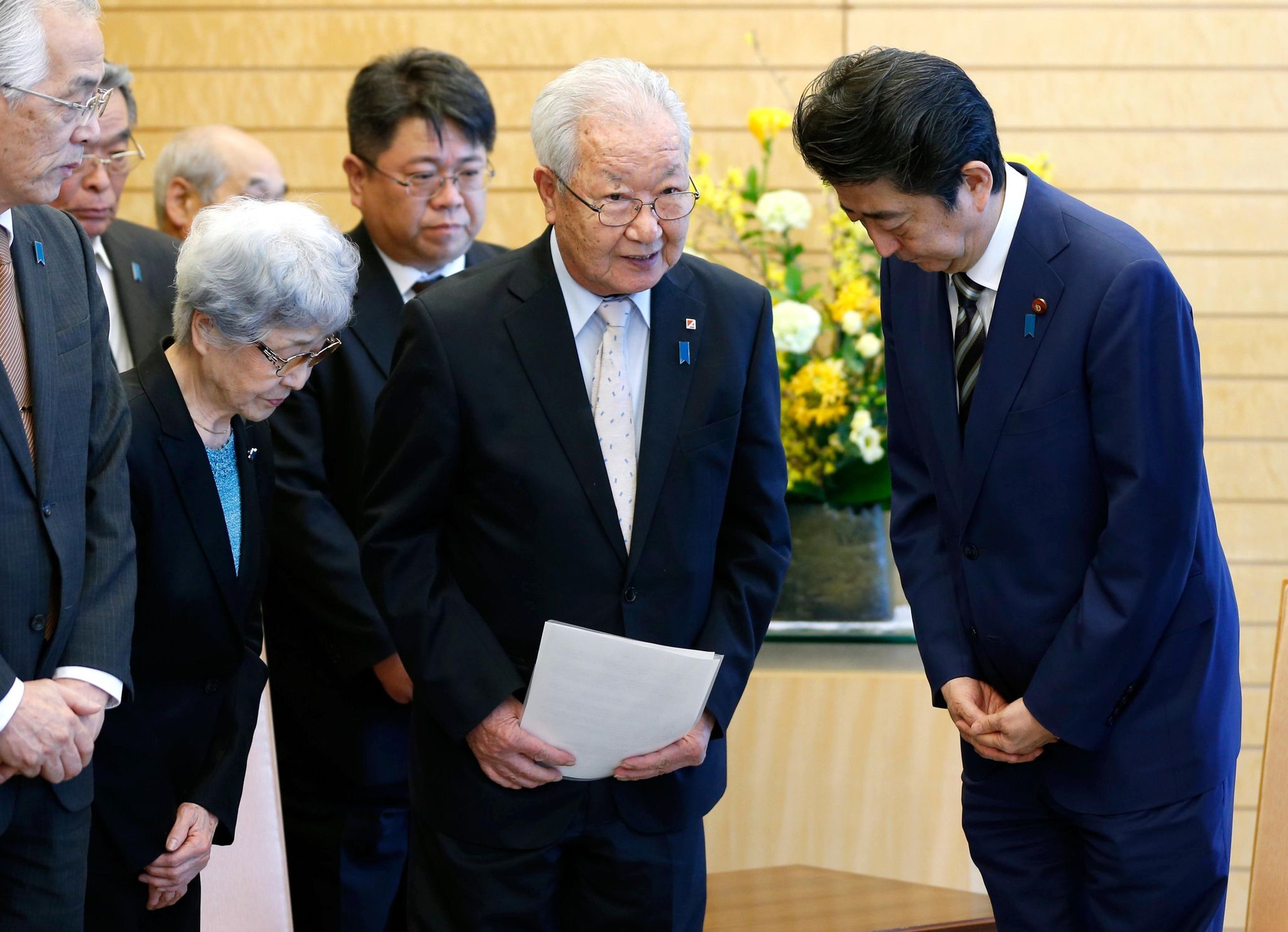
    Japanese Prime Minister Shinzo Abe was re-elected as head of his ruling Liberal Democratic Party in a landslide Thursday, paving the way for up to three more years as the nation’s leader.

    TOKYO (AP) — Japanese Prime Minister Shinzo Abe was re-elected as head of his ruling Liberal Democratic Party in a landslide Thursday, paving the way for up to three more years as the nation’s leader.

    The decisive victory may embolden Abe to pursue his long-sought revision to Japan’s U.S.-drafted pacifist constitution, although the hurdles remain high and doing so would carry political risks.

    “It’s time to tackle a constitutional revision,” Abe said in a victory speech. “Now the fight is over.”

    Abe said he’s determined to use his last term to pursue his policy goals to “sum up” Japan’s postwar diplomacy to ensure peace in the country.

    “Let’s work together to make a new Japan,” he said.

    Abe, who has been prime minister since December 2012, has cemented control of his party and received support from conservatives for bringing stability and continuity to economic and diplomatic policies. With a third term as party leader, Abe is poised to become Japan’s longest-serving leader in August 2021.

    Still, he faces several challenges, including dealing with Japan’s aging and declining population, a royal succession in the spring, and a consumption tax hike to 10 percent he has already delayed twice. He faces security concerns stemming from North Korea’s nuclear and missile threats, and China’s increasingly assertive activity in the region, as well as intensifying trade friction with the U.S. which could shake his friendly relations with President Donald Trump.

    Abe has said he is determined to push for a revision to the U.S.-drafted 1947 constitution, a decades-old pledge of the Liberal Democratic Party since its foundation in 1955 and a goal that none of Abe’s predecessors has been able to achieve.

    Abe has said he hopes his party could submit a draft constitution revision to a parliamentary session later this year ahead of a national referendum. Abe is proposing to add a clause to Article 9, which bans the use of force in settling international disputes, to explicitly permit the existence of Japan’s military, now called the Self-Defense Force.

    Many conservatives see the constitution as a humiliation imposed on Japan following its World War II defeat. Among them was Abe’s grandfather, Nobusuke Kishi, who served as prime minister 1957-1960. Kishi was imprisoned as a suspected war criminal during the U.S. occupation.

    Constitutional revision is divisive and it’s unclear whether Abe could get enough votes for passage.

    Abe and his senior party members want to rush a revision while their ruling coalition still holds two-thirds super majority in both houses – a requirement to propose a revision. The next parliamentary election is due next summer.

    For the public, the constitution is a lesser concern than issues such as pay, education and the high cost of child care, surveys show.

    If a revision is voted down in a national referendum, Abe would likely have to step down

    Abe has survived a series of scandals, including cronyism allegations against him and his wife. Despite attacks from opposition parties and criticism in the media, he has seen his support ratings bounce back to about 40 percent, considered high for a Japanese leader after nearly six years in office.

    An extended term for Abe is generally seen as good news for stability and continuity.

    “A stable government under a strong leader is good for the economy and diplomacy, and Prime Minister Abe has established a rather significant presence in diplomacy,” said Yu Uchiyama, a University of Tokyo politics professor.

    But his long and strong leadership has caused a lack of political competitiveness, Uchiyama said.

    “The biggest concern about Japanese politics is how to restore competition in politics and reactivate democracy,” Uchiyama said.

    In Thursday’s leadership vote, Abe handily defeated his sole challenger, Shigeru Ishiba, a former defense minister. Abe won 553, or about 70 percent, of 807 votes.

    Abe took 80 percent of parliamentarian votes, while support from regional rank-and-file party members was at 55 percent, though it fell within projections.

    Experts see the margin of victory in regional member votes as a more accurate indicator of general public sentiment than the parliamentarian votes. Abe’s softer showing there means he will have to be more mindful of voices coming from outside parliament.

    Abe’s dominance has been bolstered by the strengthening of the Prime Minister’s Office, allowing him and his party executives to monopolize decisions over policies and personnel affairs, experts say. The system has accommodated Abe’s long reign, as many lawmakers are primarily interested in getting Abe and other senior lawmakers’ backing in elections.

  • Kim Jong-un, Moon Jae-in join hands on peak of sacred North Korean volcano

    The leaders of the rival Koreas took to the road for the final day of their summit Thursday, standing on the peak of a beautiful volcano considered sacred in the North and a centerpiece of propaganda

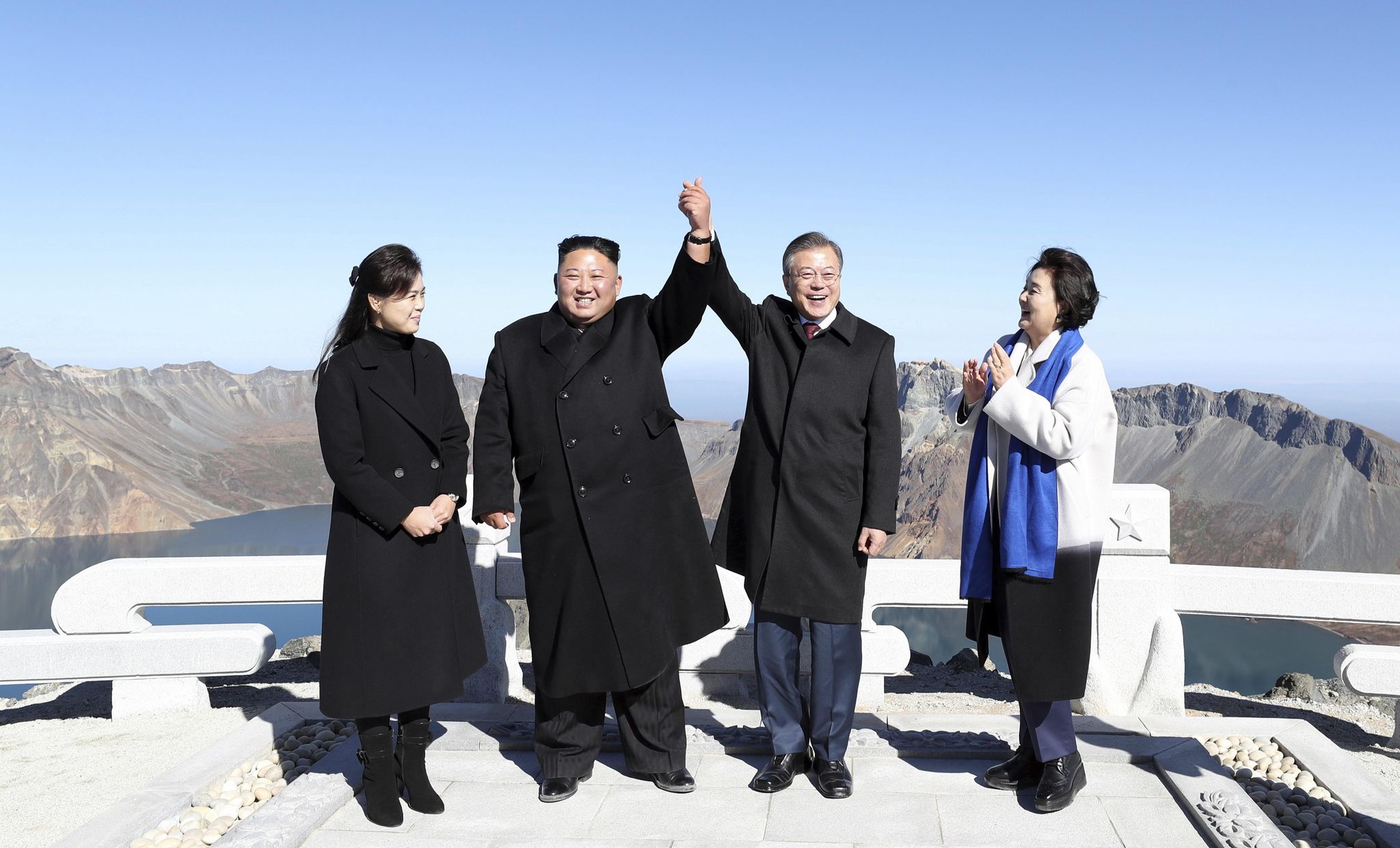
    PYONGYANG, North Korea (AP) — The leaders of the rival Koreas took to the road for the final day of their summit Thursday, standing on the peak of a beautiful volcano considered sacred in the North and a centerpiece of propaganda used to legitimize the Kim family’s rule, their hands clasped and raised in a pose of triumph. Their trip to the mountain on the North Korean-Chinese border, and the striking photo-op that will resonate in both Koreas, followed a day of wide-ranging agreements they trumpeted as a major step toward peace.

    However, their premier accord on the issue that most worries the world — the North’s pursuit of nuclear-tipped missiles that can accurately strike the U.S. mainland — contained a big condition: Kim Jong-un stated that he would permanently dismantle North Korea’s main nuclear facility only if the United States takes unspecified corresponding measures.

    Kim and South Korean President Moon Jae-in flew separately to an airport near Mount Paektu on Thursday morning where they then met up and drove to the mountain.

    Photos showed the leaders smiling broadly as they posed at the summit, their wives grinning at their sides, a brilliant blue sky and the deep crater lake that tops the volcano in the background; they also toured the shores of the lake. Members of the Kim family are referred to as sharing the “Paektu Bloodline,” and the volcano is emblazoned on the national emblem and lends its name to everything from rockets to power stations.

    Many South Koreans also feel drawn to the volcano, which, according to Korean mythology was the birthplace of Dangun, the founder of the first ancient Korean kingdom, and has long been considered one of the most beautiful places on the peninsula. Not everyone was pleased, though. About 100 anti-North Korea protesters rallied in central Seoul to express anger about the summit and displayed slogans that read, “No to SK-NK summit that benefits Kim Jong Un.”

    Moon arrived in South Korea later Thursday and was expected to brief the media.

    The leaders are basking in the glow of the joint statement they settled Wednesday. Compared to the vague language of their two earlier summits, Kim and Moon seem to have agreed on an ambitious program meant to tackle soaring tensions last year that had many fearing war as the North tested a string of increasingly powerful weapons.

    Kim promised to accept international inspectors to monitor the closing of a key missile test site and launch pad and to visit Seoul soon, and both leaders vowed to work together to try to host the Summer Olympics in 2032.

    But while containing several tantalizing offers, their joint statement appeared to fall short of the major steps many in Washington have been looking for – such as a commitment by Kim to provide a list of North Korea’s nuclear facilities, a solid step-by-step timeline for closing them down, or an agreement to allow international inspectors to assess progress or discover violations.

    It also was unclear what “corresponding steps” North Korea wants from the U.S. to dismantle its nuclear site.

    The question is whether it will be enough for President Donald Trump to pick up where Moon has left off. Trump told reporters Wednesday that the outcome of the summit was “very good news” and that “we’re making tremendous progress” with North Korea. He didn’t indicate in his brief remarks whether the U.S. would be willing to take further steps to encourage North Korean action on denuclearization.

    Declaring they had made a major step toward peace, Moon and Kim stood side by side Wednesday as they announced their agreement.

    “We have agreed to make the Korean Peninsula a land of peace that is free from nuclear weapons and nuclear threat,” Kim said. “The road to our future will not always be smooth and we may face challenges and trials we can’t anticipate. But we aren’t afraid of headwinds because our strength will grow as we overcome each trial based on the strength of our nation.”

    Moon urged unity for all Koreans in a speech he gave Wednesday night to the crowd gathered for North Korea’s signature mass games. “We have lived together for 5,000 years and lived in separation for 70 years. I now propose that we completely eliminate the hostility of the past 70 years and take a big step forward in peace so that we can become one again.”

    Historians say the 5,000-year timeline of Korean history is a groundless claim that became part of South Korea’s official narrative after being inserted in school textbooks during the rule of former dictator Chun Doo-hwan.

    This week’s summit comes as Moon is under increasing pressure from Washington to find a path forward in efforts to get Kim to completely – and unilaterally – abandon his nuclear arsenal.

    Trump has maintained that he and Kim have a solid relationship, and both leaders have expressed interest in a follow-up summit to their meeting in June in Singapore. North Korea has been demanding a declaration formally ending the Korean War, which was stopped in 1953 by a cease-fire, but neither leader mentioned it Wednesday as they read the joint statement.

    In the meantime, however, Moon and Kim made concrete moves of their own to reduce tensions on their border.

    According to a statement signed by the countries’ defense chiefs, the two Koreas agreed to establish buffer zones along their land and sea borders to reduce military tensions and prevent accidental clashes. They also agreed to withdraw 11 guard posts from the Demilitarized Zone by December and to establish a no-fly zone above the military demarcation line that bisects the two Koreas that will apply to planes, helicopters and drones.

    Other agreements aimed at removing some longstanding irritants from their relations, such as allowing more contact between families divided by the Korean War. Moon also appeared to be making good on his proposals to help build up the North’s infrastructure and open cross-border rail links.

    ___

    Klug reported from Seoul. Associated Press writers Hyung-jin Kim and Kim Tong-hyung in Seoul contributed to this report.

  • Donald Trump drive to slash Iranian oil exports draws strong global reaction

    The Trump administration’s push to reduce Iranian oil exports to zero by strangling Tehran with sanctions stirred admiration, worry and bewilderment across the world stage this week.

    The Trump administration’s push to reduce Iranian oil exports to zero by strangling Tehran with sanctions stirred admiration, worry and bewilderment across the world this week.

    Since withdrawing the U.S. from the 2015 Obama-era nuclear agreement with Tehran in May, Washington has reimposed sanctions on the Islamic Republic. Even harsher penalties are set to start on on November 4 aimed at punishing countries who buy Iranian oil by blocking their access to U.S. markets and financial institutions.

    The White House’s aggressive measures have been potent, energy analysts agree, with data showing Iranian oil exports plunging about 35 percent since April.

    The New York Times business section acknowledged the successful strategy with a headline: “Trump Hit Iran With Oil Sanctions. So Far, They’re Working”.

    “Nearly two months before American oil sanctions go into effect, Iran’s crude exports are plummeting,” the frequent critic of Mr. Trump wrote this week. “International oil companies, including those from countries that are still committed to the nuclear agreement, are bailing out of deals with Tehran.”

    The New York Times added: “And remarkably, the price of oil in the United States has risen only modestly while gasoline prices have essentially remained flat. The current global oil price hovers around $80 a barrel, $60 below the highs of a decade ago.”

    Israel’s leading paper, Haaretz, took another angle, in an opinion: “Trump’s Iran Sanctions Policy Is Working, but America Could Regret It”.

    Haaretz economics editor David Rosenberg argued that pushing Iran’s daily oil exports down and rattling its economy is a “very dangerous game” because its Revolutionary Guard and hardline Mullahs “have a high level of tolerance for economic distress” and are unlikely to be pushed into negotiations.

    The alternative and Washington’s goal, Mr. Rosenberg contends, is regime change, which is tricky.

    “Trouble is that regime change is a risky business that can end in unexpected ways,” he wrote. “If that is what the Trump administration really wants, it is playing a very dangerous game, especially with a country as big as Iran.”

    On Thursday, Mr. Trump acknowledged a critical piece of the “Zero Iran Oil Exports” plan: Beckoning OPEC to play its part in keeping the world oil markets stable as Iran’s contribution dwindles. Iran is the group’s third largest oil producer.

    “Monopoly [OPEC] must get prices down now,” the president tweeted before the cartel’s meeting this weekend.

    An opinion for Bloomberg Markets criticized the White House’s approach in a piece on Friday: “Trump’s OPEC Tweets Mix Fear and Delusion: It’s not a monopoly, and he’s as much to blame for high prices as anybody.”

    Bloomberg’s Liam Denning said that while U.S. sanctions appear to be throttling Iran, Mr. Trump also looks nervous about oil price stability as American voters ready for November’s midterm elections.

    “Blaming OPEC is nice and, importantly, fits well inside 280 characters. But it isn’t reality,” Mr. Denning wrote.

  • Diane Abbott unveils Labour’s new immigration policy

    Diane Abbott

    A Labour government would bring in a simplified visa system for foreign workers with “bona fide skills”, Diane Abbott has said.

    The shadow home secretary said the party would also scrap the government’s “bogus” net migration target.

    She set out plans for a “flexible work visa” to end the “idiocy” of medical staff not being able to take up jobs.

    Migrants from outside the EU should be treated with the same “fairness” as EU migrants after Brexit, she added.

    Do we really know how many people come to the UK? Migration from EU to UK continues to fall Windrush compensation ‘could be capped’ Diane Abbott: Labour would close two immigration detention centres

    The Conservatives said Labour’s new policy would “tear up the rules for people coming from outside the EU which would allow more low-skilled immigration”.

    Image copyright Getty Images Image caption Labour wants to “simplify” the immigration system
    Ms Abbott vowed to scrap the government’s target of reducing net migration – the difference between those arriving in the UK and leaving – to below 100,000 a year.

    “The target had never been met and never will be met,” she told the BBC, and called for “a new conversation about migration that is not fixated on numbers”.

    She vowed to scrap the minimum income requirement for non-EU migrants and to give people “more rights of family reunion”.

    What the party’s policy towards migrants from the EU would be after Brexit would depend on what the current government agreed in Brussels, she told the BBC, but she wanted to see “fairness” between the two categories.

    “We want an immigration system which is fair, and which is managed, in the interests of the economy and the community as a whole,” she added.

    The shadow home secretary is also pledging that Labour will abolish the Immigration Act 2014 and end the “hostile environment” policy deployed by the government, which she said had led to the Windrush scandal.

    But she insisted Labour would act against illegal immigration and “make the system of deportation of overseas criminals much easier and smoother”.

    “If a judge issues a recommendation for deportation for serious criminals post-sentence, that should be carried out as a matter of routine. From the prison to the airport,” she said in her speech.

    Immigration minister Caroline Nokes said Labour had “no interest in getting control of our borders as we leave the EU”.

    “Only the Conservatives will end free movement and build a fair and controlled immigration system,” she added.

  • Kofi Annan’s funeral: World leaders bid farewell to ex-UN chief

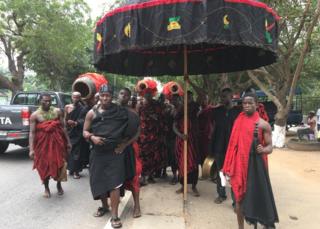
    Ashanti chiefs join local chiefs, politicians and extended family members to pay their respects to Kofi Annan, Ghanaian diplomat and former Secretary General of United Nations who died on August 18 at the age of 80 after a short illness, at the entrance of Accra International Conference Centre in Accra on September 12, 2018 Image copyright AFP Image caption Funeral ceremonies in Ghana are usually elaborate affairs
    World leaders and royalty have paid their respects to one of Africa’s most famous diplomats, Kofi Annan, at his funeral in his home country of Ghana.

    It is the climax of three days of mourning which saw thousands of Ghanaians file past his coffin as it lay in state in the capital, Accra.

    Annan died on 18 August in Switzerland at the age of 80.

    He was UN secretary-general from 1997 to 2006, the first black African to hold the world’s top diplomatic post.

    He was awarded the Nobel Peace Prize in 2001 for helping to revitalise the international body, during a period that coincided with the Iraq War and the HIV/Aids pandemic.

    Africa Live: More updates on funeral The human side of a UN chief The lessons Annan learnt in boarding school Militaries guard the coffin of Kofi Annan, Ghanaian diplomat and former Secretary General of United Nations who died on August 18 at the age of 80 after a short illness, at the Accra International Conference Centre in Accra ahead of his funeral on September 12, 2018. Image copyright AFP Image caption Mr Annan’s body lay in state after it was brought from Switzerland

    Speaking at the funeral, current UN secretary-general Antonio Guterres said Annan was an exceptional leader who saw the UN as a force for good.

    “As we face the headwinds of our troubled and turbulent times, let us always be inspired by the legacy of Kofi Annan,” Mr Guterres said.

    “Our world needs it now more than ever,” he added.

    Presentational grey line

    ‘Irresistible aura’

    By Mayeni Jones, BBC News, Accra

    Media playback is unsupported on your device

    Media captionBBC Africa looks back at the career of the former UN secretary-general Kofi Annan.

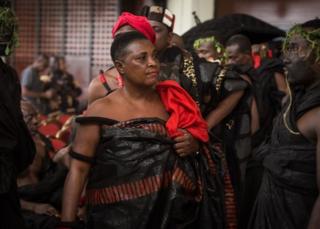
    Mourners in traditional black and red attire filled the main hall of the Accra Conference Centre, which sits about 4,000 people. More are watching proceedings on a giant screen in an auditorium just outside the hall.

    There have been hymns and a performance by soprano and human rights campaigner Barbara Hendricks.

    Annan’s nephew Kojo Amoo-Gottfried read a eulogy, describing how he had led a hunger strike in his secondary school to protest against the quality of food in the dining hall.

    There were also a moving tribute by his wife, Swedish lawyer and artist Nane Maria Annan. She described how her husband was always excited to return home, and thanked Ghana for giving the world such an extraordinary man.

    She said her husband had an irresistible aura of radiant warmth.

    “His legacy would live on through his foundation and through all of us,” she concluded.

    Presentational grey line A boy dances as drummers in traditional dress perform at the Accra International Conference centre where the body of the late Kofi Annan has been laid in state in Accra, Ghana, 11 September 2018 Image copyright EPA Image caption Drumming echoed through the funeral venue as Ghanaians celebrated Mr Annan’s life
    The former queen of the Netherlands, Princess Beatrix, and her daughter-in-law Princess Mabel, who were close friends of Annan, were among the mourners.

    The king of Ghana’s Asante people, Otumfuo Nana Osei Tutu II, awarded Annan the title Busumuru in 2012 to honour his role as an international diplomat.

    Busumuru is one of the swords attached to the monarch’s Golden Stool, or throne.

    Paramount chiefs' magnificent ceremonial umbrellas at Annan's funeral Image copyright Ayo Bello/BBC Image caption Ghana’s traditional rulers came with magnificent ceremonial umbrellas to pay their respects
    The Anglican bishop of Annan’s home city of Kumasi in central Ghana, the Most Reverend Daniel Sarfo, said: “Today history is being made in Ghana. One of our illustrious sons is lying here.

    “But we are grateful that God used him over the years to work for humanity, for peace. Today, as he lies here, he has finished his work.”

    Local chiefs, politicians and extended family members wait to pay their respects to Kofi Annan, Ghanaian diplomat and former Secretary General of United Nations who died on August 18 at the age of 80 after a short illness, at the entrance of Accra International Conference Centre in Accra on September 12, 2018. Image copyright AFP Image caption Ghanaians were extremely proud of Mr Annan’s achievements
    All pictures subject to copyright

    (more…)

  • Karen Bradley comment taken ‘out of context’

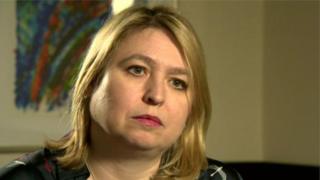
    Karen Bradley Image caption Secretary of State Karen Bradley was appointed to the post in January

    The Secretary of State has said that her recent comments regarding Northern Ireland’s voting patterns were “taken out of context”.

    Karen Bradley said that she did not understand that nationalists did not vote for unionist parties during elections.

    The original comment was made during an interview with The House Magazine.

    Mrs Bradley said she did not comprehend that campaigns are generally fought within each part of the community.

    Karen Bradley ‘did not understand’ NI voting patternsJames Brokenshire to step down on medical reasons

    She told the magazine that it was “a very different world from the world I came from”

    She added: “I didn’t understand things like when elections are fought for example in Northern Ireland – people who are nationalists don’t vote for unionist parties and vice-versa.”

    Mrs Bradley was appointed in January to replace James Brokenshire.

    “I am here doing the job”

    Mrs Bradley defended her comment on Wednesday while taking a walk in Belfast City Centre to see the damage caused by the Primark fire.

    She said: “One thing from the interview was taken out of context.

    “The whole point is that I am here as the Secretary of State doing the job, here on the ground, meeting people, dealing with people, listening to businesses and individuals living in Northern Ireland and really focusing on getting that devolved government back up and running.”

    When asked about possible funding from the Treasury to help revitalise Belfast, Mrs Bradley said she was looking at the best way to deal with the situation and could make no commitments at this stage.