Tag: Donald Trump

  • Border arrest video inflames debate ahead of Trump visit

    The illegal immigrant whose arrest by Border Patrol in southern California has gone viral online was a fairly high-level operator in an alien smuggling ring affiliated with a cartel, sources told The

    The illegal immigrant whose arrest by Border Patrol in southern California has gone viral online was a fairly high-level operator in an alien smuggling ring affiliated with a cartel, sources told The Washington Times.

    The woman, Perla Morales-Luna, was nabbed by agents last week while walking with her daughters, according to videos of the arrest posted on Facebook Thursday.

    The videos garnered more than 10 million views in less than 24 hours and ignited a searing debate over immigration enforcement just days before President Trump is due to visit the area to look at prototypes of his planned border wall.

    Immigrant-rights groups said the video of agents separating the woman from her children is evidence of an immigration operation run amok, spreading fear in communities.

    Activists said these kinds of cases aren’t singular — but this time there were several bystanders who caught it on video.

    Pedro Rios, program director at the American Friends Service Committee’s San Diego office, said it showed “the level of impunity that agents operate with.”

    “When agents essentially snatch a mother from her children without any consideration of welfare and safety, knowing they’re being videotaped, I think there is a level of comfort that the enforcement agencies have in operating in this way,” he said.

    Several Border Patrol sources said Ms. Morales was being mistakenly portrayed. They said she was not a low-level cartel flunky but was “intimately involved” in human smuggling operations, which made her a priority target for agents.

    “They were looking for her,” one source said.

    In an official statement, U.S. Customs and Border Protection said Ms. Morales was arrested “for being in the country illegally” as part of a targeted operation.

    She was being held by Homeland Security pending deportation proceedings.

    William Baker, her lawyer, told The Times that they’ll ask for her to be released and reunited with her three U.S. citizen daughters while she fights the deportation case against her.

    And he said the fact that the Border Patrol is pursuing immigration proceedings against her rather than charging her with smuggling crimes undercuts the agents’ claims of criminal behavior.

    “A mom walking with children on the street shouldn’t be treated in that matter,” he said.

    The video made the rounds of social media Thursday and Friday, and sparked outrage from Latino advocates and anti-Trump progressive activists.

    “Your tax dollars at work,” said Frank Sharry, executive director of America’s Voice, on Twitter. “Mother ripped away from her crying daughters by Border Patrol agents on a Southern California street corner. America in the age of Trump. Meanwhile, Congress on verge of giving Trump’s deportation force billions more.”

    Mr. Trump has proposed $25 billion to build new and replacement fencing along the U.S.-Mexico border, and to hire more agents and expand technology to stop migrants attempting to sneak in.

    The plans have stalled in Congress, where Democrats who just five years ago voted for a massive wall-building campaign now oppose it. Mr. Trump has insisted his wall, as well as major policy changes to legal immigration, must be part of any deal to legalize illegal immigrant “Dreamers.”

  • Donald Trump to meet with Kim Jong-un in May

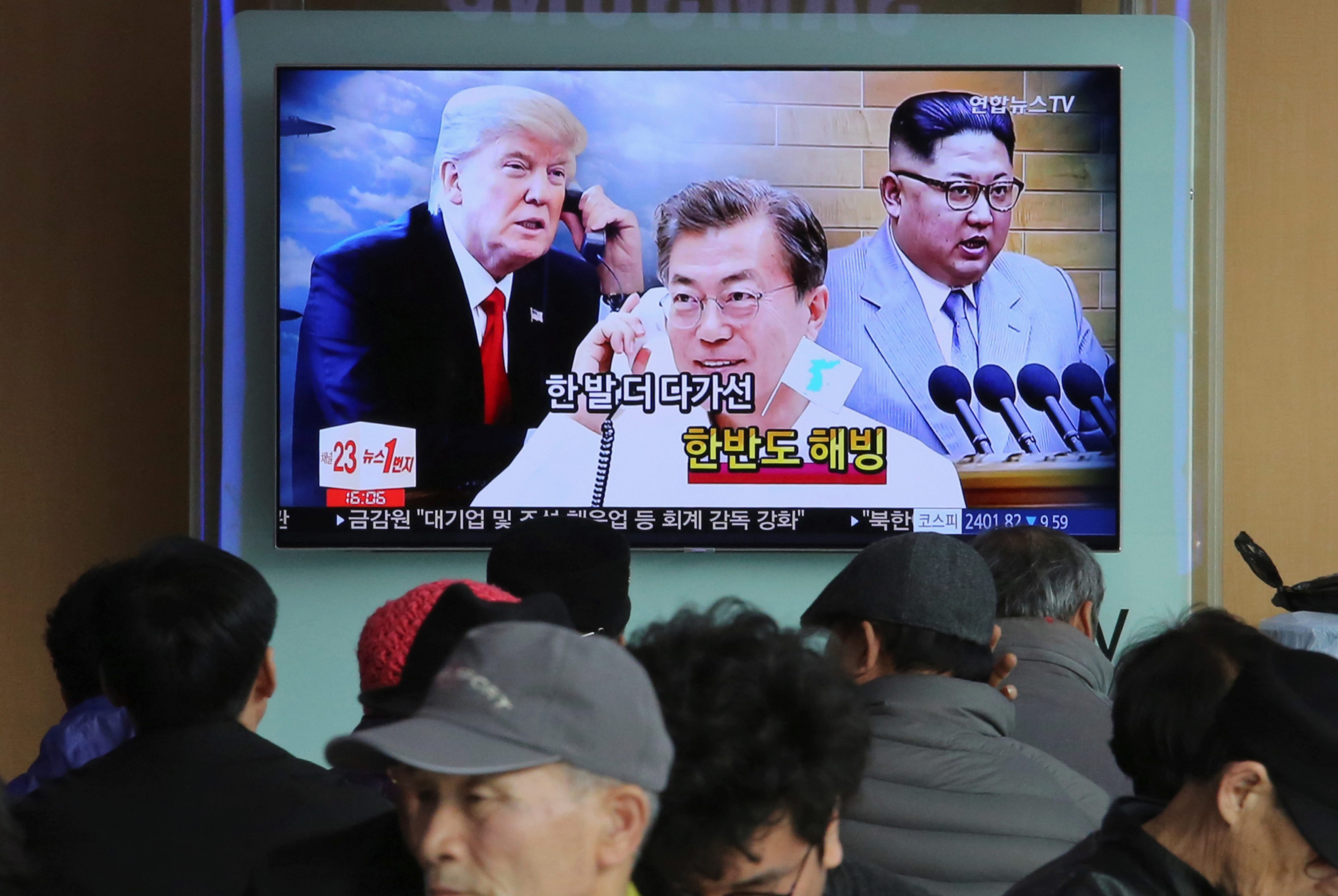
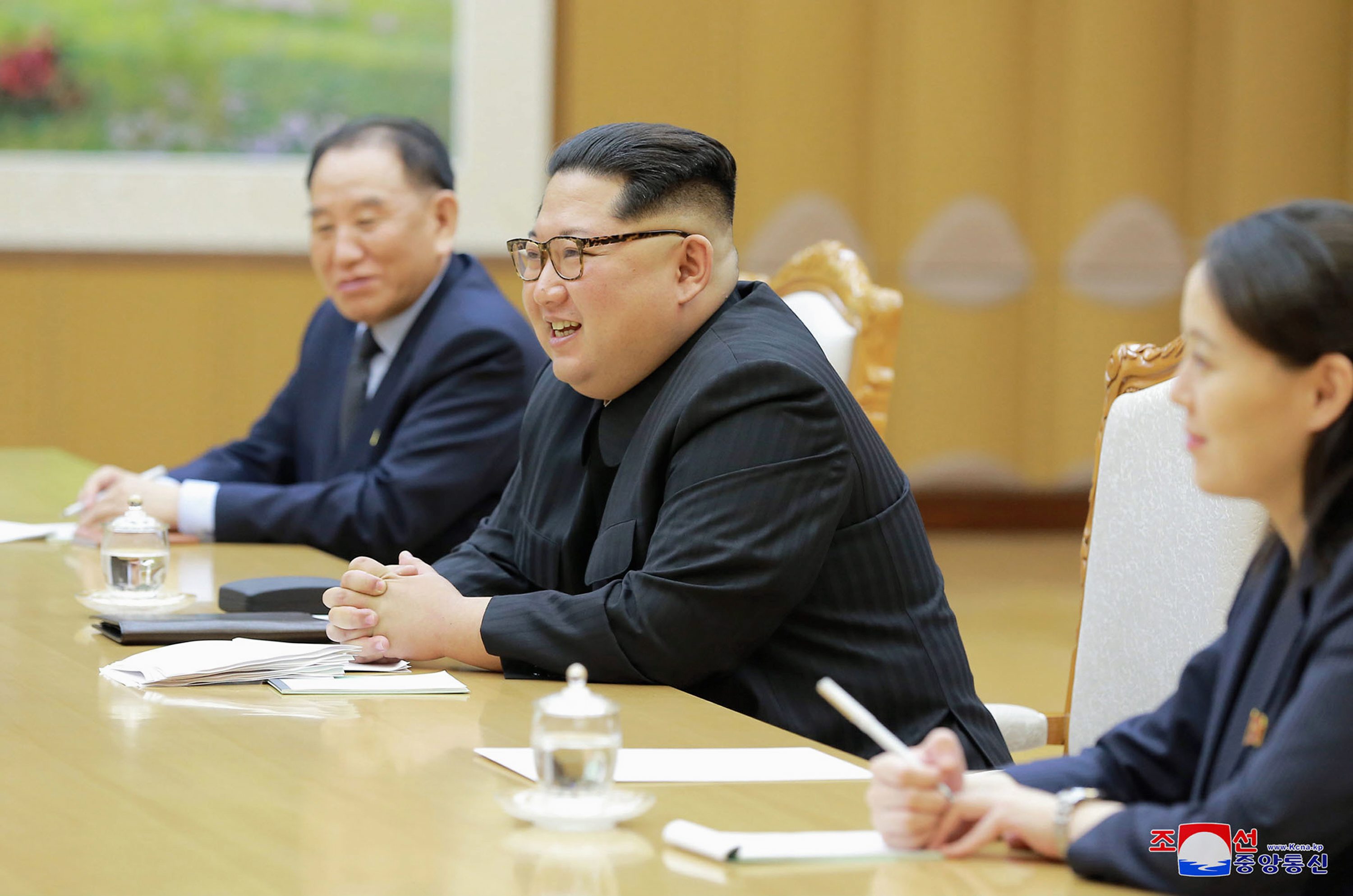
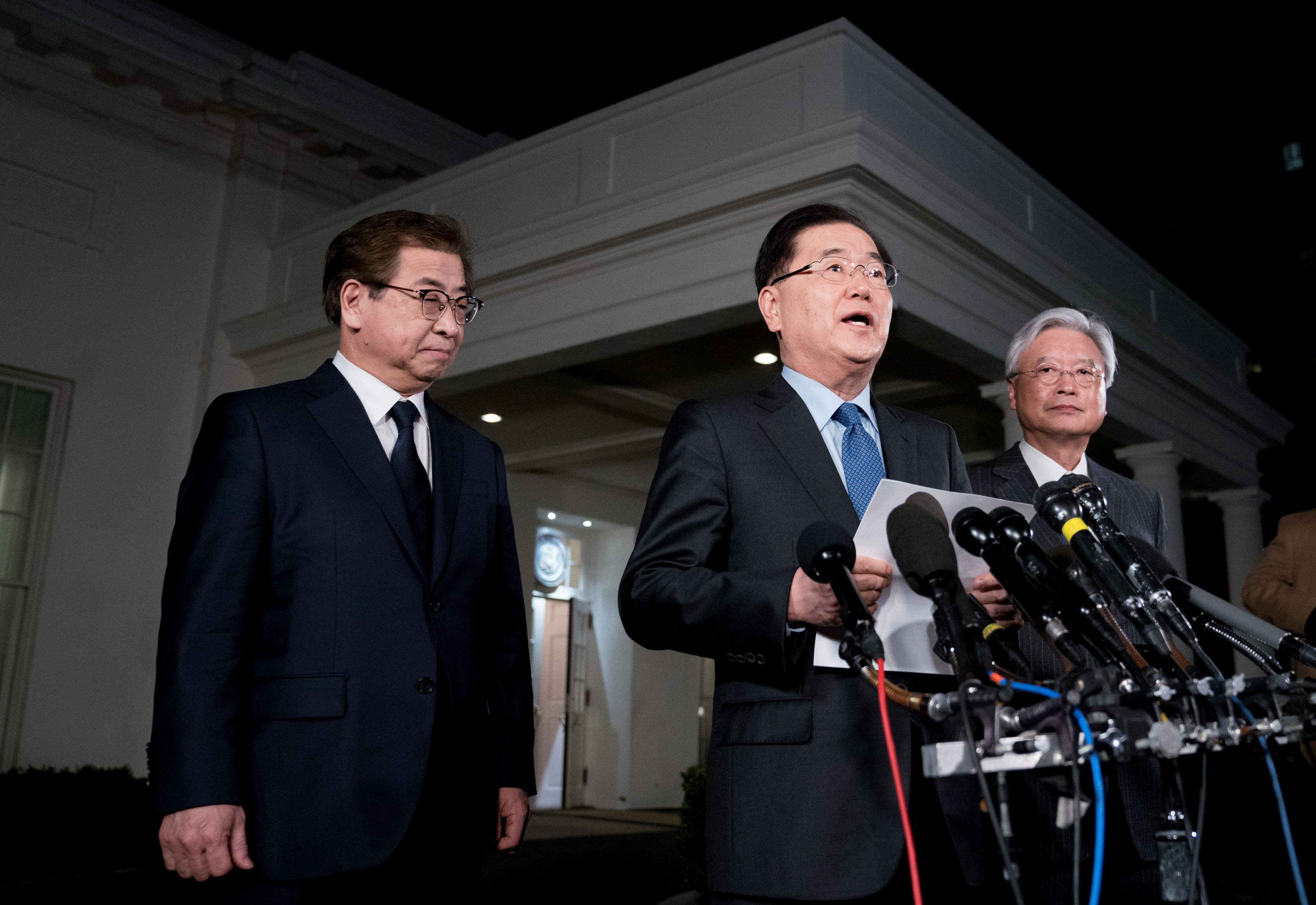
    President Trump has agreed to meet with North Korean leader Kim Jong-un by May for historic talks on denuclearization, a senior South Korean official announced Thursday night.

    President Trump has agreed to meet with North Korean leader Kim Jong-un by May for historic talks on denuclearization, a senior South Korean official announced Thursday night.

    South Korean National Security Adviser Chung Eui-yong told reporters at the White House that Mr. Kim conveyed the invitation for a meeting with Mr. Trump after breakthrough talks this week between the North and South in Pyongyang.

    Mr. Trump called the development “great progress” but vowed that the U.S. would not lift sanctions on North Korea while diplomacy is under way.

    Mr. Chung said the North Korean leader “expressed his eagerness to meet President Trump as soon as possible.”

    South Korean President Moon Jae-in already had been scheduled to meet with the North Korean leader at a summit in April at the Demilitarized Zone between the two Koreas. Mr. Chung is part of a South Korean delegation visiting Washington following the talks this week in Pyongyang.

    Mr. Chung said the North Korean leader is “committed to denuclearization” and that he pledged to refrain from any further nuclear weapons or ballistic missile tests. He said Mr. Kim also has accepted that the U.S. and South Korea will proceed with “routine” military exercises scheduled for next month.

    “I explained to President Trump that his leadership and his maximum pressure policy, together with international solidarity, brought us to this juncture,” Mr. Chung said, adding that he expressed Mr. Moon’s “personal gratitude” for Mr. Trump’s leadership on confronting Pyongyang.

    Mr. Trump tweeted Thursday night about the sudden announcement: “Kim Jong Un talked about denuclearization with the South Korean Representatives, not just a freeze. Also, no missile testing by North Korea during this period of time. Great progress being made but sanctions will remain until an agreement is reached. Meeting being planned!”

    There has never been a face-to-face meeting between the leaders of the U.S. and North Korea. A senior administration official said Mr. Kim conveyed the message by word of mouth through the South Koreans that he wants to meet with Mr. Trump “as quickly as possible.”

    The South Korean officials briefed Mr. Trump in the Oval Office on Thursday, with National Security Adviser H.R. McMaster, Defense Secretary James Mattis, White House Chief of Staff John F. Kelly and other U.S. officials present.

    The official said Mr. Trump agreed to meet with Mr. Kim “in a matter of a couple of months.”

    While the U.S. has often made concessions to North Korea in return for lower-level talks, the official said that keeping sanctions in place “is what differentiates the president’s policy from the policies of the past.”

    “President Trump has been very clear from the beginning that he is not prepared to reward North Korea in exchange for talks,” the aide said.

    White House press secretary Sarah Huckabee Sanders confirmed that Mr. Trump will meet with Mr. Kim “at a place and time to be determined.”

    “We look forward to the denuclearization of North Korea. In the meantime, all sanctions and maximum pressure must remain,” she said.

    Mrs. Sanders said the president “greatly appreciates the nice words of the South Korean delegation and President Moon.”

    Mr. McMaster is to brief U.N. Security Council envoys on North Korea on Monday, Reuters reported.

    As the prospect of direct Trump-Kim talks has risen, analysts and U.S. intelligence officials have noted that the North Korean dictator, in his mid-30s, has had hardly any interactions with high-profile Americans. The exception is multiple meetings in recent years with former basketball star Dennis Rodman.

    It’s a factor that has made it hard for U.S. intelligence to predict how Mr. Kim might behave in a meeting with Mr. Trump and created a challenge for officials tasked with briefing the president on what to expect.

    Some analysts warned Thursday night that the risks remain incredibly high that hopes for diplomacy could fizzle on both the U.S. and North Korean side.

    “We’d expect such an unprecedented meeting to happen after some concrete deliverables were in hand, not before,” said Suzanne DiMaggio, a senior fellow with the New America think tank in Washington.

    While Ms. DiMaggio said that if the developments evolve into “a process for serious, sustained negotiations,” then Mr. Trump’s willingness to embrace North Korea’s reported offer will turn out to be a “positive move.”

    “But it will have to be managed very carefully with a great deal of preparatory work,” she told The Times on Thursday night. “Otherwise, it runs the risk of being more spectacle than substance. Right now, Kim Jong-un is setting the agenda and the pace, and the Trump administration is reacting.”

    “The administration needs to move quickly to change this dynamic,” Ms. DiMaggio said.

    Analysts have also warned that there has yet to be an official offer for talks directly from the Kim regime — that all of the latest news developments on the situation have come through the South Korean government.

    As of early Friday, Korean time, the North’s official Korean Central News Agency had not mentioned the events in Washington.

    “There seems to be no direct message from North Korea to the U.S. government,” Michael Pillsbury, a Mandarin-speaking Pentagon consultant and head of Chinese strategy at the Hudson Institute in Washington, noted on Wednesday.

    “This is all being filtered through the South Korean government,” said Mr. Pillsbury, adding that Chinese officials, who are generally regarded to be far more in touch than anyone else with goings-on in Pyongyang, have also been unsure about the South Korean claims of Mr. Kim’s eagerness to talk with Mr. Trump.

    The Chinese government has yet to make an official statement on the situation, and the de facto newspaper of the ruling Communist Party in Beijing went so far as to question whether Mr. Kim’s offer to Mr. Trump really happened.

    “North Korea still has not confirmed the South’s version of events,” stated an editorial in the Global Times, which also pointed out that Pyongyang’s official state newspaper, the Rodong Sinmun, had asserted in its editorial that the Kim regime plans to proceed with the “advance” of the nation’s “nuclear weaponry.”

    Earlier Thursday, Secretary of State Rex W. Tillerson played down hopes for a breakthrough on North Korea’s nuclear program, saying the U.S. is a long way from negotiations after the country’s leader offered to give up his weapons in exchange for security guarantees.

    “We’re a long way from negotiations; we just need to be very clear-eyed and realistic about it,” Mr. Tillerson said during a stop in Addis Ababa, Ethiopia.

    Mr. Moon’s office said Tuesday that the North had expressed a “willingness to hold a heartfelt dialogue with the United States on the issues of denuclearization” and “made it clear that while dialogue is continuing, it will not attempt any strategic provocations, such as nuclear and ballistic missile tests.”

    China barely reacted to word of a possible thawing of relations.

    U.S. officials believe that sanctions against North Korea are beginning to sting the communist country, which has staged multiple nuclear and ballistic missile tests in violation of U.N. Security Council resolutions.

    Administration officials also have repeatedly pointed out that Mr. Kim has gone through the motions of talks with the U.S. previously, all the while continuing to refine his weapons programs.

    Rep. Edward R. Royce, California Republican and House Foreign Affairs Committee chairman, said Mr. Kim’s desire for talks “shows sanctions the administration has implemented are starting to work.”

    “We can pursue more diplomacy as we keep applying pressure ounce by ounce,” Mr. Royce said. “Remember, North Korean regimes have repeatedly used talks and empty promises to extract concessions and buy time. North Korea uses this to advance its nuclear and missile programs. We’ve got to break this cycle.”

    Part of what made the announcement so unexpected is that from the start of his presidency, Mr. Trump has determined to take a more aggressive approach to North Korea than his predecessors.

    He has taunted Mr. Kim on Twitter as “Little Rocket Man” and vowed last year that Pyongyang would be met with “fire and fury” if Mr. Kim followed through on threats to attack the U.S. mainland or its territories. Mr. Trump also has pressed China to adhere to harsh economic sanctions.

    That history prompted one key Democrat to warn the U.S. president about diplomacy by Twitter.

    Mr. Trump needs to “abandon his penchant for unscripted remarks and bombastic rhetoric to avoid derailing this significant opportunity for progress,” said Sen. Edward J. Markey of Massachusetts, the top Democrat on the East Asia panel of the Senate Foreign Relations Committee.

    “And if the talks between the two leaders do not go well, it is not an excuse to justify military action for a situation that has no military solution,” Mr. Markey said.

    Retired Rear Adm. John Kirby, who was a spokesman for the Pentagon and State Department in the Obama administration, said on CNN. “It certainly does feel like a different moment.”

    He said Mr. Trump deserves credit for the announcement, though he also cited Seoul, saying Mr. Moon may be the most eager South Korean leader ever to produce a breakthrough with the North.

    Kevin Martin, president of Peace Action, said Mr. Kim’s reported commitment not to test nuclear weapons or ballistic missiles during diplomacy “is excellent news, as is President Trump accepting Kim’s invitation to meet in person for the first time.”

    “North Korea is putting virtually all topics of concerns on the table,” Mr. Martin said. “Trump now has the opportunity to achieve what no president has been able to achieve in seven decades of U.S.-North Korea relations: make real strides towards lasting peace on the Korean Peninsula.”

    • Guy Taylor contributed to this article.

  • China tries to gauge North Korea nuclear offer

    President Trump praised China for helping drive North Korean leader Kim Jong Un’s toward potential denuclearization talks with Washington, but a cautious Beijing has barely even reacted to reports thi

    President Trump praised China for helping drive North Korean leader Kim Jong Un’s toward potential denuclearization talks with Washington, but a cautious Beijing has barely even reacted to reports this week that Mr. Kim is offering to halt all nuclear and missile tests while such negotiations play out.

    Despite its status as the North’s ally and main link to the outside world, the Chinese government has not made an official statement on the claim by South Korean officials that Mr. Kim made the offer during talks with them this week, and the newspaper of the ruling Communist party even questioned whether the offer really happened.

    “North Korea still has not confirmed the South’s version of events,” stated an editorial in the Global Times, noting that Pyongyang’s own official state newspaper, the Rodong Sinmun, had said Pyongyang’s actual plan is to proceed with the “advance” of the nation’s “nuclear weaponry.”

    U.S. officials said the editorials underscored ongoing “puzzlement” inside the White House over the true nature of the offer South Korean officials claim Mr. Kim made with regard to missile and nuclear tests.

    South Korean President Moon Jae-in’s office said in a statement Tuesday the North in direct talks had expressed a “willingness to hold a heartfelt dialogue with the United States on the issues of denuclearization” and “made it clear that while dialogue is continuing, it will not attempt any strategic provocations, such as nuclear and ballistic missile tests.”

    But Mr. Moon on Wednesday tried to tamp down expectations for the detente and ease fears that the talks could separate Seoul from Washington and other allies urging a hard line on the North’s nuclear and missile programs. He noted many of the sanctions of the North were imposed by the U.S. or through the United Nations, and would only be eased by “substantive progress” on denuclearization.

    “These international efforts cannot be loosened by inter-Korean dialogue,” Mr. Moon told a meeting of South Korean party leaders in Seoul. “We don’t aim for that to happen and it’s also impossible.”

    The issue, according to Michael Pillsbury, a Mandarin-speaking Pentagon consultant and head of Chinese strategy at the Hudson Institute in Washington, is that “that there seems to be no direct message from North Korea to the U.S. government.”

    “This is all being filtered through the South Korean government,” Mr. Pillsbury said, adding that Chinese officials, who are generally regarded as having better sources on the inner workings of the Pyongyang regime, are still unsure about what is on the table.

    According to the Global Times editorial, the Chinese government so far “does not see a major shift in North Korea’s negotiating position,” said Mr. Pillsbury, who warned in an interview that “there is often a price to pay just to learn that North Korea has not made any real concessions.”

    Joseph DeTrani, a former CIA official who served as the State Department’s special envoy to the North Korean talks that broke down in 2009, said the Chinese have appeared to be “as surprised as everyone else” about South Korea’s claim that Mr. Kim has offered to halt tests and discuss denuclearization with Washington.

    “We’ve got to sit down with the North Koreans and not have anything go through filters,” said Mr. DeTrani. “It’s got to be direct so we can figure out what’s going on, what does Kim Jong Un want, and does he know what he’s doing?”

    President Trump has expressed guarded optimism about the prospect for such talks, but it’s not clear when and whether the talks will occur. South Korean officials said they hope details could take shape during a direct meeting slated for late-April between the North and South Korean presidents.

    Some analysts say Beijing is poised to claim credit for any future progress on U.S.-North Korea talks and may even seek concessions from Washington in exchange for influencing the regime in Pyongyang. The North Korean offer came at the same time Mr. Trump was putting the finishing touches on steel and aluminum tariffs that administration officials were primarily sparked by massive Chinese overproduction and dumping abroad.

    Patrick Cronin, who heads the Asia-Pacific Security Program at the Center for a New American Security in Washington, said Tuesday that if the talks turn out to be successful, “China will then be seeking to extract favors and take credit for it.”

    “The Chinese are all over us on this,” Mr. Cronin said, asserting that Beijing will want concessions from Washington “on trade” relating to everything from “solar panels to aluminum and steel.”

    Seth McLaughlin contributed to this article.

  • Donald Trump considering tariff exemptions for Canada, Mexico

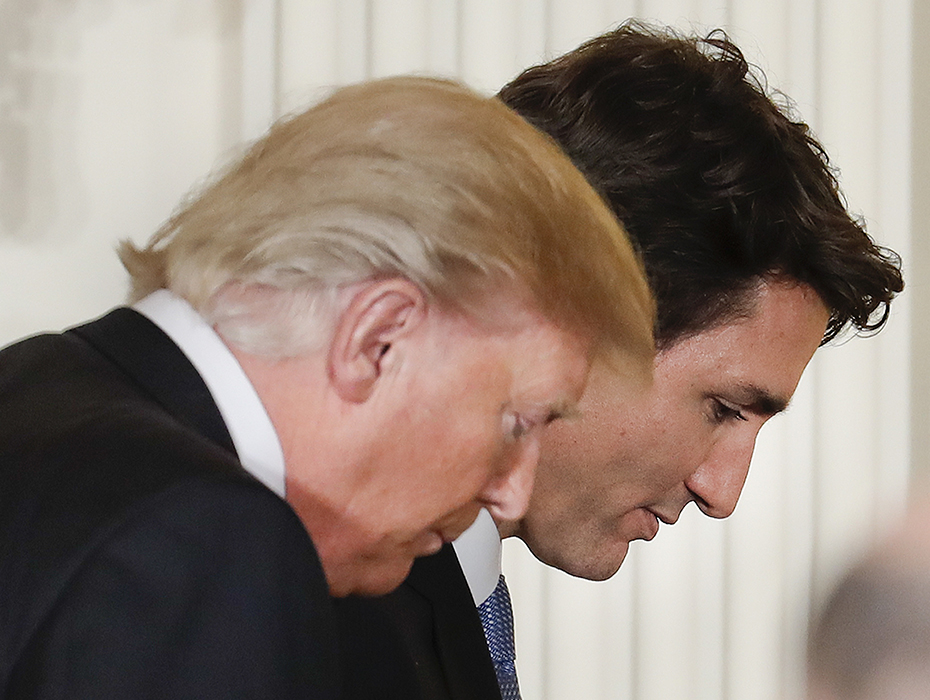
    The White House opened the door Wednesday to exempting Canada and Mexico from the proposed tariffs on steel and aluminum, the first pullback from a plan that critics say will spark a trade war.

    The White House opened the door Wednesday to exempting Canada and Mexico from the proposed tariffs on steel and aluminum, the first pullback from a plan that critics say will spark a trade war.

    Much of the pressure to carve out Canada from President Trump’s big tariffs came from within the U.S. steel industry, which shares ownership in steel mills across the Great White North and reaps hefty profits from cross-border trade.

    A tariff exemption for Canada, Mexico and possibly other countries could help tamp down fears about a trade war, but it definitely promises to further boost profits for U.S. steel companies, analysts say.

    “The U.S. steel industry has had a long history of pursuing cartel-enhancing trade policies,” said Thomas Prusa, an international trade policy scholar at Rutgers University. “In most cases, the steel executives would benefit from exclusions because it would allow the [multinational corporations] to continue to maximize global profits.”

    Some of the largest steel conglomerates, including Arcelor Mittal and Nucor, operate in both the U.S. and Canada.

    Canada is the No. 1 supplier of steel imported by the U.S. It supplied about 16 percent of the 26.9 million tons of steel imported last year. Canada also buys more U.S. steel than any other country, accounting for half of U.S. exports.

    Other top steel suppliers to the U.S. are the European Union, Brazil, South Korea, Japan and Mexico. Many have threatened to retaliate against Mr. Trump’s tariffs by taxing such U.S. goods as bluejeans, bourbon and motorcycles.

    China supplies about 2 percent of steel to the U.S., ranking it as the No. 11 supplier. The country’s steel is also subject to anti-dumping and countervailing duties.

    Mr. Trump argues that China supplies much more steel to the U.S. by transshipping, or disguising the origin of the steel by shipping it through other countries.

    The president had repeatedly voiced opposition to granting exemptions to his proposed tariffs — 25 percent on steel and 10 percent on aluminum.

    He said this week that the tariffs could be adjusted as part of the ongoing renegotiations of the North American Free Trade Agreement among the U.S., Canada and Mexico. The tariffs, however, are a relatively small issue within that massive trade deal.

    A redo of NAFTA and slapping tariffs on steel were prominent campaign promises from Mr. Trump.

    White House press secretary Sarah Huckabee Sanders made the pivot to potential exemptions.

    “There are potential carve-outs for Mexico and Canada based on national security, and possibly other countries as well based on that process,” she said.

    She said the exemptions for Canada, Mexico and possibly other countries would be on “case-by-case and country-by-country basis, but it would be determined whether there is a national security exemption.”

    The pullback came a day after the resignation of Gary Cohn, the president’s top economic adviser who was fiercely opposed to the tariffs. His resignation was blamed on his clash with Mr. Trump over the tariff plan.

    The Commerce Department recommended the tariffs based on an investigation that determined there was a national security risk from U.S. reliance on imported steel and aluminum, which are used extensively in military goods.

    Mr. Trump also has been under intense pressure from Capitol Hill Republicans and free trade conservatives who want him to narrowly target tariffs at bad actors such as China.

    House Ways and Means Committee Chairman Kevin Brady of Texas and 106 fellow House Republicans sent Mr. Trump a letter arguing for exceptions to the tariff, including grandfathering current contracts for imports and a process to exempt countries.

    “We support your resolve to address distortions caused by China’s unfair practices, and we are committed to acting with you and our trading partners on meaningful and effective action. But we urge you to reconsider the idea of broad tariffs to avoid unintended negative consequences to the U.S. economy and its workers,” they wrote.

    Despite the alterations to the plan, Mr. Trump is still expected to sign the order by the end of the week, Mrs. Sanders said.

    “Look, it’s a lengthy process finalizing the details,” she said. “It’s a complicated process, and we want to make sure we every i’s dotted and all t’s are crossed.”

  • Donald Trump right on immigration, gang violence, Sweden finds

    Sweden’s prime minister, who criticized President Trump last year for blaming Swedish violence on Muslim refugees, said Tuesday that he’s cracking down on immigration and gang violence to make Sweden

    Sweden’s prime minister, who criticized President Trump last year for blaming Swedish violence on Muslim refugees, said Tuesday that he’s cracking down on immigration and gang violence to make Sweden great again.

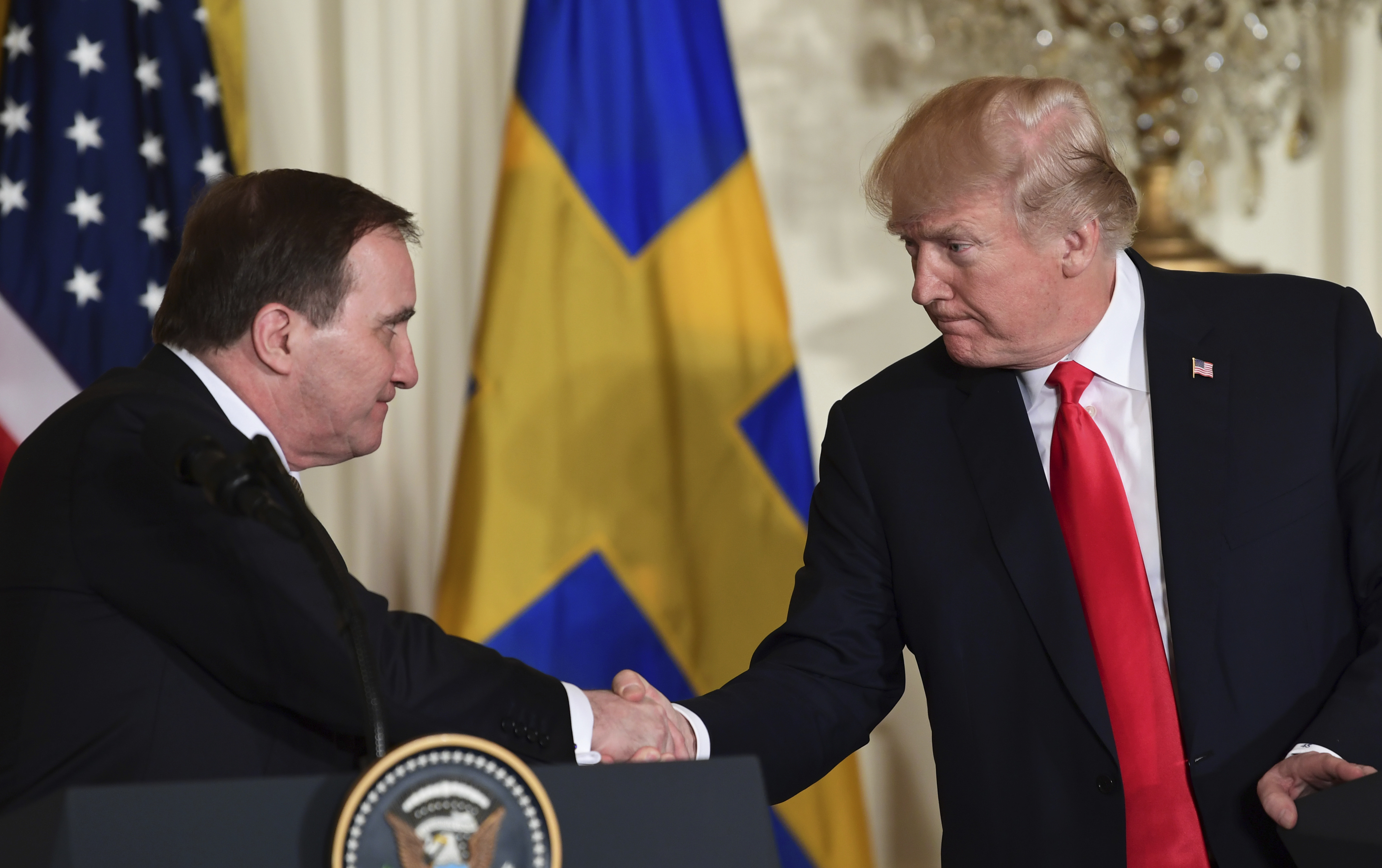
    At a White House news conference with Mr. Trump at his side, Prime Minister Stefan Löfven spoke of his own Trump-like agenda of implementing tougher laws on immigration and crime, and of spending more money on law enforcement.

    “We have our share of domestic challenges, no doubt about that,” Mr. Lofven said. “We are dealing with it every day, allocating more resources to the police, more resources to the security police, tougher laws on crime, tougher laws on terrorism.”

    Not only that, he said Sweden’s crackdown on immigration and gangs is working.

    “We can see some results now in our three major cities, decrease in shootings because we’re attacking the organized crime very tough,” the prime minister said. “And we’ll keep on doing that. There is no space in Sweden for organized crime. They decrease freedom for ordinary people.”

    It sounded very much like Mr. Trump’s rhetoric against the MS-13 gang members that he seeks to deport in larger numbers, and his policies to limit migration from certain Muslim-majority countries until better screening is in place to weed out potential terrorists.

    The president, who enjoys being right as much as anyone, told the audience in the East Room that he had been correct about Sweden all along.

    “Certainly you have a problem with immigration, it’s caused problems in Sweden,” Mr. Trump told a Swedish journalist. “I was one of the first ones to say it. I took a little heat, but that was OK. I proved to be right. But you do have a problem. I know the problem will slowly disappear, hopefully rapidly disappear.”

    A year ago, soon after Mr. Trump took office, he was roundly criticized in the U.S. media and in Europe for blaming a rise in crime in Sweden on an influx of Muslim refugees.

    “You look at what’s happening last night in Sweden,” the president said back then at a rally in Florida. “Sweden. Who would believe this? Sweden. They took in large numbers. They’re having problems like they never thought possible.”

    At the time, Swedish officials said they didn’t know what Mr. Trump was talking about. Some people accused Mr. Trump of responding to an erroneous news report.

    A year ago, Mr. Lofven chided Mr. Trump publicly, saying “We must all take responsibility for using facts correctly and for verifying anything we spread.”

    But on Tuesday at the White House, the prime minister had changed his tune. He noted that Sweden had received 163,000 refugees in 2015, with most arriving in a span of a few months.

    “We inherited a legislation that was not sustainable, legislation on migration,” Mr. Lofven said. “We changed the legislation, so now we have decreased the number of refugees, and we’re also putting pressure on the other European Union countries to take their share of the responsibility.”

    The New York Times reported last weekend that Sweden has experienced a rise in clan-like violence, including gangs using hand grenades, that accompanied an influx of immigrants from certain parts of Europe and the Middle East. There have been more than 100 incidents involving military-grade explosives in the Stockholm metro area, which police have attributed to an “arms race” among immigrant gangs, the paper reported.

    The story said there were few such incidents in Sweden until 2014, but since then, the number of explosions and seizures of grenades has risen.

    Mr. Lofven refuted recent reports that immigrant-related crime in Sweden had become so bad that authorities had designated “no-go zones” deemed too dangerous to enter.

    “We also have problems with organized crime in Sweden, shootings,” he said. “But it’s not like you have these ‘no-go’ zones.”

    Until recently, Sweden had the most generous immigration laws in Europe. Former Prime Minister Fredrik Reinfeldt in 2014 made a famous speech urging Swedes to “open their hearts” to refugees seeking shelter.

    But in 2016, as problems grew, Sweden enacted a law valid for three years that makes family reunification of refugees more difficult. The law stopped recent immigrants with residency permits from bringing their immediate family members to Sweden.

    In the U.S., Mr. Trump wants to end so-called “chain migration,” which he says has allowed an immigrant to sponsor numerous relatives to follow him or her, with not enough vetting of the family members.

    Mr. Lofven, again sounding a lot like Mr. Trump, said Sweden is overcoming its immigration and crime problems with a thriving economy.

    “Sweden has high growth,” he said. “Unemployment is going down. We have high investment rates. We have a strong, strong economy.”

  • Donald Trump takes credit for Kim Jong-un’s desire for talks

    President Trump on Tuesday credited his campaign of maximum pressure — coupled with “great help” from China — for driving North Korean leader Kim Jong-un’s sudden decision to raise the prospect of t

    President Trump on Tuesday credited his campaign of maximum pressure — coupled with “great help” from China — for driving North Korean leader Kim Jong-un’s sudden decision to raise the prospect of talks with Washington about his nation’s nuclear arsenal and to halt nuclear and missile tests while such negotiations play out.

    In stunningly swift thawing of tensions on the Korean Peninsula, Mr. Kim told a visiting South Korean delegation Tuesday that he was ready to hold a “candid discussion” with the Trump administration on denuclearization, that Pyongyang would freeze its nuclear and missile programs as the talks began, and that he was willing to join South Korean President Moon Jae-in next month for the first face-to-face meeting between the nations’ leaders in more than a decade.

    With critical details of the North’s offer still to be nailed down, Mr. Trump expressed cautious optimism. He said he believed Mr. Kim’s overture during a meeting with South Korean officials was sincere, but he stressed that it “may be a false hope” to think Pyongyang would truly agree to give up its nuclear security blanket.

    “We have come certainly a long way, at least rhetorically, with North Korea,” a cautious Mr. Trump said at a joint White House press conference with visiting Swedish Prime Minister Stefan Lofven. “It’d be a great thing for the world, would be a thing great for North Korea, it would be a great thing for the peninsula. But we’ll see what happens.”

    National security insiders said it’s too early to know whether Mr. Kim is just trying to buy time to complete Pyongyang’s covert nuclear program or whether Mr. Trump’s bare-knuckle policy approach — coupled with a U.S.-organized set of international sanctions that show signs of truly hurting the North’s economy — has produced unexpected progress.

    One caveat evident in the text of the six-point accord brought back by the South Korean envoys: North Korea said it would have no need for nuclear weapons “as long as military threats to the North are eliminated and the regime’s security is guaranteed,” which could call into question the U.S.-South Korean military alliance and the huge U.S. troop presence in the South.

    “Does the Trump administration deserve credit for sticking to a policy of maximum pressure while remaining open to engagement? Yes,” said Patrick Cronin, who heads the Asia-Pacific Security Program at the Center for a New American Security in Washington. “But the cause and effect here is not necessarily something you want to take credit for until you see how it turns out.”

    The White House last month announced the sharpest U.S. sanctions to date against Pyongyang. While the increased pressure may have inspired Mr. Kim’s growing eagerness for talks, some point to other important factors at play.

    “One is the progress that North Korea has made on its nuclear program …,” said Suzanne DiMaggio, a senior fellow with the New America think tank in Washington. “Kim Jong-un has declared the completion of his nuclear force and believes he now has the capacity to deter an attack by the U.S.

    “So in terms of timing,” she said, “it makes great sense that the North Koreans are now ready to return to talks with Washington.”

    The shift in Pyongyang

    The South Korean president’s office said in a statement Tuesday that the Kim regime had expressed a willingness to denuclearization and to halt nuclear tests in order to get talks underway with Washington.

    Chung Eui-yong, South Korea’s presidential national security director and head of the delegation that met with Mr. Kim, said the late-April summit will be held in Panmunjom, the tense border village where the two hostile Koreas have faced off since the inconclusive end of the Korean War in the 1950s.

    The developments, which follow a flurry of North-South diplomacy that surrounded last month’s Winter Olympics in the South, appeared to mark a major shift from Pyongyang, which long refused to discuss its nuclear arsenal or missile programs.

    The Trump administration had vacillated on whether it would be willing to engage in direct talks with North Korea if the Kim regime did not first commit to abandoning the programs. As recently as this past weekend, the North Korean Foreign Ministry had criticized Washington for clinging to the idea of denuclearization as a precondition for direct talks.

    Efforts to rein in the isolated North’s military programs have repeatedly ended in failure.

    Negotiations with Pyongyang broke down in 2009 amid a flurry of North Korean missile tests in violation of U.N. Security Council resolutions. At the height of the talks in 2005, Pyongyang signed an agreement with the U.S., Japan, China, Russia and South Korea stating that it was “committed to abandoning all nuclear weapons and existing nuclear programs.”

    The White House offered a sober message on the denuclearization issue Tuesday, asserting that it is in no hurry to ease its campaign of maximum pressure and sanctions.

    “Whichever direction talks with North Korea go, we will be firm in our resolve,” said Vice President Mike Pence. “All options are on the table, and our posture toward the regime will not change until we see credible, verifiable and concrete steps toward denuclearization.”

    The comments coincided cautious but optimistic posturing from Mr. Trump. “We will see what happens!” the president tweeted.

    The U.S. government, Mr. Trump added in an early morning tweet, “is ready to go hard in either direction!”

    ‘Me’

    The president said there was little doubt that his combination of tough, even bellicose rhetoric and coordinated economic pressure had helped change the dynamic of the Korean Peninsula stalemate.

    Asked at the White House briefing who was responsible for the North’s apparent turnaround, he responded: “Me.”

    “I think [the North Koreans] are sincere also because the sanctions and what we are doing to North Korea, including the great help we’ve gotten from China,” he added.

    Mr. Cronin said in an interview that Mr. Trump would be “right to dampen expectations and take it step by step in order to assess what North Korea’s real intentions are here.”

    The North’s offer also put pressure on Washington to calibrate its own response, he said.

    “The ball is in the president’s court at this point,” Mr. Cronin said.

    Bruce Klingner, a former CIA division chief for the Koreas and a fellow at the conservative Heritage Foundation, was among those who urged extreme caution on North Korea’s sudden willingness to talk about the future of its nuclear weapons.

    “What we do know about North Korea,” Mr. Klingner wrote in an analysis Tuesday, “is that past offers of dialogue frequently prove to be a fig leaf for ulterior purposes.

    “The real question: Is this a diplomatic breakthrough, or the setup of a Red Wedding?” said Mr. Klingner, referring to the famous massacre episode of the TV drama “Game of Thrones.”

    The road ahead

    The challenge for the Trump administration, said Mr. Cronin, is to keep the pressure on the Kim regime “while engagement takes a bigger step in this process.”

    “Can we walk and chew gum at the same time? By all means, we have to,” he said. “We have to show agility because Kim has become more agile diplomatically.”

    Director of National Intelligence Daniel Coats told a congressional hearing Tuesday that U.S. intelligence officials are still trying to determine the sincerity of the North’s offer and Mr. Kim’s willingness to consider giving up his nuclear arsenal.

    “We have seen nothing to indicate … that he would be willing to give up those weapons,” Mr. Coats told the Senate Armed Services Committee. He said he could not adequately assess the South’s account of the Pyongyang talks until the South Koreans have provided a full briefing, The Associated Press reported.

    Ms. DiMaggio said Mr. Trump is hampered by a “very thin diplomatic bench” in any coming talks. There is no permanent ambassador in Seoul, the State Department point man on the North Korean crisis retired last week, and there’s been a “hollowing out” of State Department specialists on the region.

    “If we head down this road of talks with North Koreans,” she said, “it’s going to be very challenging because we don’t have seasoned diplomats in place to carry it out.”

    While the denuclearization issue could take years to fully resolve, Ms. DiMaggio said, the administration should seize on the opening for talks on a range of other issues, such as getting assurances from the Kim regime that it won’t sell chemical, biological or nuclear weapons material to U.S. enemies or terrorist groups.

    “North Korea is the only nuclear-armed country with which the U.S. doesn’t have direct discussions,” she said. “Can we have talks on avoiding an accidental military conflict? That should top the agenda.”

    • Dave Boyer contributed to this article.

  • ‘Dreamers’ turn ire on Democrats as DACA deadline passes

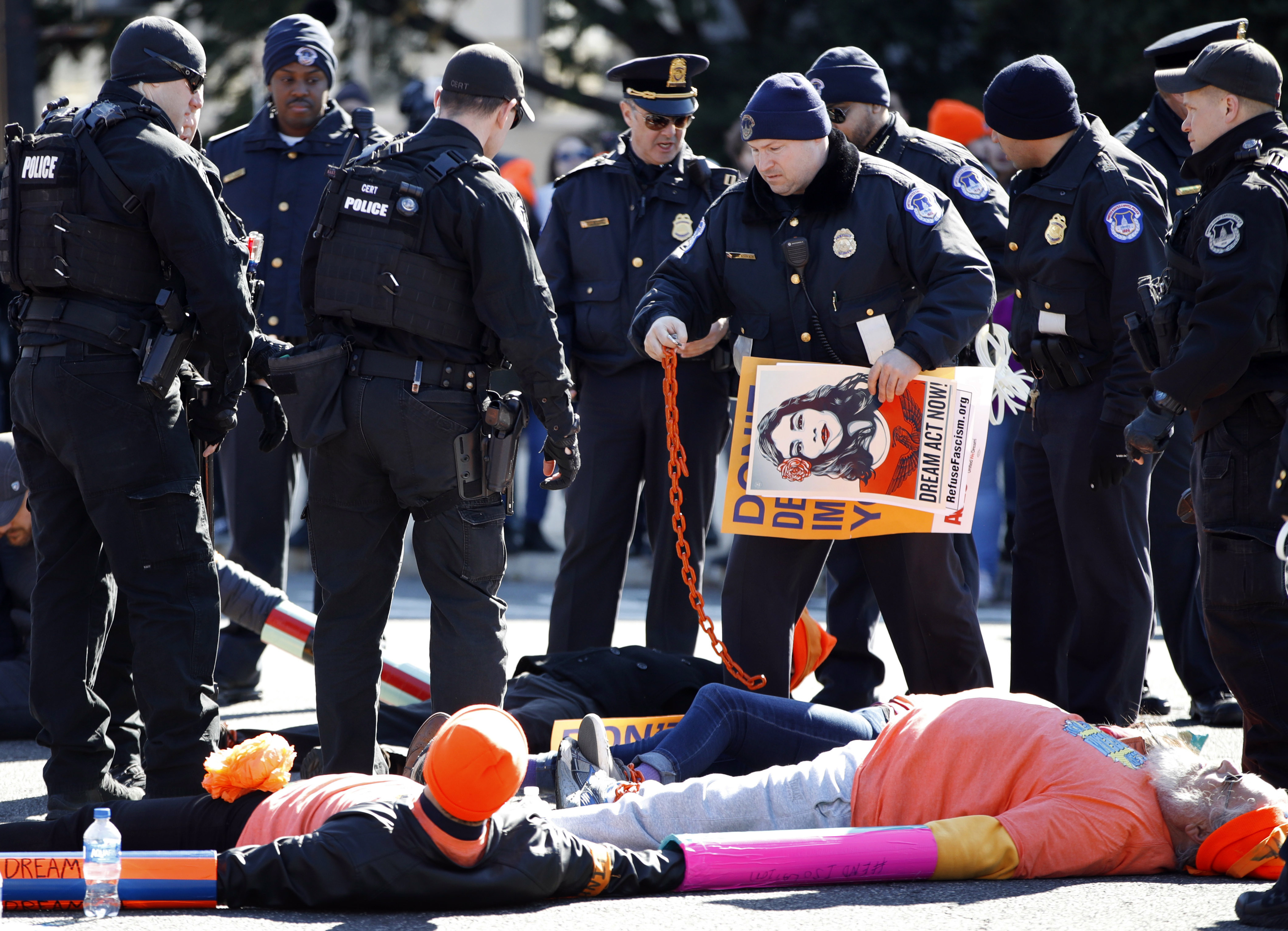
    Illegal immigrant Dreamers descended on Democrats’ national headquarters in Washington on Monday, staging a sit-in and vowing to make sure the party gets at least some of the blame as Congress slipped

    Illegal immigrant Dreamers descended on Democrats’ national headquarters in Washington on Monday, staging a sit-in and vowing to make sure the party gets at least some of the blame as Congress slipped past President Trump’s March 5 deadline for action on DACA.

    While the deadline lacked the urgency it once had, thanks to several court decisions keeping the Obama-era tentative deportation amnesty going, it maintains much of its political salience.

    The protesters who blocked the doors to the Democratic National Committee on Monday said there is blame to spread around, but they wanted to make sure Democrats felt much of the pressure, accusing the party’s leaders of a decade of betrayal culminating in this week’s failure.

    SEE ALSO: Judge rules Trump’s DACA phaseout legal

    “This party has shown me nothing but pain,” said Maria Duarte, a DACA recipient dressed in pink Hello Kitty pajamas and clutching a stuffed animal as she blocked the doors. She was choked with emotion as she shouted through a bullhorn, saying she “lost family members” to enforcement under the Obama administration.

    President Obama created the Deferred Action for Childhood Arrivals program in June 2012 as he was campaigning for re-election. The protesters said the move was designed to stave off potential electoral disaster.

    More than 800,000 people won protection over the years, and some 683,000 people are currently protected. They have renewable two-year stays of deportation and are entitled to work permits, which can earn them driver’s licenses, Social Security numbers and even some taxpayer benefits.

    But the program was legally suspect. Facing threats of a lawsuit, Mr. Trump last year announced a phaseout, giving Congress six months to come up with a more permanent solution.

    Now it’s the phaseout that is legally troubled. Two federal courts have ordered Mr. Trump to keep processing renewal applications, making the March 5 deadline less critical.

    Yet a third federal judge ruled late Monday, upholding Mr. Trump’s phaseout. For now, the decision does not surmount the original two court rulings, but Judge Roger W. Titus’ 30-page opinion does give some legal heft as the Justice Department defends the president’s decisions in higher courts.

    Activists, meanwhile, said March 5 remained the critical political deadline, serving as a milepost with midterm elections looming and both sides looking to avoid blame on an issue where an overwhelming majority of voters believe the Dreamers deserve legal status.

    DNC Chairman Tom Perez said it was Mr. Trump’s “cruel and reckless decision” to phase out DACA that spurred “an unnecessary crisis.”

    “And now his arbitrary deadline has passed without any action from the president or Republicans in Congress,” Mr. Perez said.

    Indeed, most immigrant rights groups, while wishing Democrats had fought more strenuously, do place blame on Mr. Trump and defend a program that they used to decry as a Band-Aid solution.

    But the activists who protested outside DNC headquarters Monday said Democrats missed too many chances to help.

    “You are losing people in this party,” said Roberto Juarez, an organizer with the Seed Project, which staged Monday’s protest. He held up his voter registration card and recounted his days of working to elect Mr. Obama in 2008.

    “I lied to my community because I told them we could pass immigration reform in the first 100 days if we voted him in,” Mr. Juarez said. “What happened? More deportations than any other president.”

    Protesters said Democrats had multiple chances to force the issue over the past few months by holding up government funding until legal status was granted.

    Democrats did force a brief government shutdown in January but quickly relented in exchange for promises of a Senate debate.

    When that debate began, however, it was anticlimactic. Democrats first blocked the freewheeling floor fight all sides had expected, and every plan was defeated when the voting finally began.

    The most promising option, a proposal negotiated by moderates from both parties and embraced as Democrats’ leading option, fell six votes shy of the 60 needed to overcome a filibuster. That plan would have coupled a generous pathway to citizenship and a tentative deportation amnesty for all 11 million illegal immigrants with border wall funding and small limits on chain migration.

    The House, meanwhile, has shunned a floor debate altogether.

    A group of conservatives, led by Rep. Bob Goodlatte, Virginia Republican and chairman of the House Judiciary Committee, has written a bill that offers a continuation of the DACA program — with critical congressional approval — in exchange for major enforcement enhancements and changes to legal immigration policy.

    But House Republican leaders who tested the bill’s popularity among their ranks say it’s short of the support needed and it’s unclear whether they can bridge the gap.

    Democrats predict that if Republicans relented and brought up one of several bipartisan bills, such as a proposal to extend a generous pathway to citizenship in exchange for promises of future border security, there would be majority support to pass it.

    At a press conference Monday, members of the Congressional Hispanic Caucus said it was “shameful” for Republican leaders not to hold votes. They also predicted that Mr. Trump would take the brunt of the blame.

    “Let’s all be clear that President Trump ended DACA. The responsibility lies on his shoulders,” Rep. Raul Ruiz, California Democrat, told reporters at the press conference.

    The White House said Mr. Trump has done his part, pointing to his middle-ground proposal that coupled citizenship rights for up to 1.8 million illegal immigrants with a plan to build his border wall, limit the chain of family migration and change the law to allow for faster deportations of new illegal immigrants.

    Democrats, though, called the enforcement changes too harsh, while House conservatives said the amnesty was too generous.

    White House press secretary Sarah Huckabee Sanders said it was “absolutely terrible that Congress has failed to act.”

    “The president gave Congress six months, and he also gave them a plan,” she said. “They claim to want to fix DACA. The president laid out a pathway and an exact way to do that. They failed to address it, but we’re still hopeful that Congress will actually do their jobs, show up and get something done and fix this problem, not kick it down the road and not continue to ignore it.”

  • Angela Merkel, Donald Trump discuss Syrian cease-fire, Vladimir Putin’s new weapons

    German Chancellor Angela Merkel has spoken with U.S. President Donald Trump about Syria, and both sides agreed that Syrian government forces and their Russian and Iranian allies must abide by a U.N. S

    BERLIN (AP) — German Chancellor Angela Merkel has spoken with U.S. President Donald Trump about Syria, and both sides agreed that Syrian government forces and their Russian and Iranian allies must abide by a U.N. Security Council cease-fire resolution, her office said Friday.

    Following their call Thursday, Merkel and Trump urged Russia to stop participating in the bombardment of Damascus’ rebel-held suburbs known as eastern Ghouta, according to her office.

    “The five-hour cease-fire announced by the Russian side isn’t being adhered to. The Syrian regime in particular is constantly breaking it,” Merkel’s spokesman, Steffen Seibert, told reporters.

    Germany appeals “to all parties to the conflict to fully implement this U.N. resolution and we see a particular responsibility on the part of Russia,” he added.

    Seibert said attacks should stop for 48 to 72 hours in order for aid to be effectively delivered to civilians. He called it “particularly cynical that the regime in Damascus used chlorine gas against its own population again just one day after the passing of the U.N. resolution.”

    According to Merkel’s office, both she and Trump also expressed concern about Russian President Vladimir Putin’s unveiling of new weapons systems Thursday “and their negative consequences for international arms control efforts.”

    Seibert said Germany watched Putin’s announcement with concern, noting the Russia’s military modernization program and what he described as doubts about Moscow’s adherence to international treaties, its annexation of Crimea and threats against some of its neighbors.

    Still, Seibert said Berlin was always ready to talk with the Kremlin even when the two sides differ significantly on the issues.