Tag: Politics

  • Rand Paul: Republicans are for a balanced budget ‘in the abstract’

    Sen. Rand Paul said Friday that part of the reason he forced a vote on his proposal to balance the budget was to show who among Republicans actually supports fiscal responsibility.

    Sen. Rand Paul said Friday that part of the reason he forced a vote on his proposal to balance the budget was to show who among Republicans actually supports fiscal responsibility.

    “Republicans are, in the abstract, for balanced budgets. But as you saw yesterday, the majority of the Republican senators are really not for the balanced budget. They’re only for it in the abstract,” Mr. Paul, Kentucky Republican, said on Fox Business.

    He said the growing debt is becoming a national security concern and added that being in debt to countries like China makes the U.S. dependent.

    “We also need to be concerned that they have a trillion of our debt. And my concern with security is that we need to be not so dependent on countries that hold so much of our debt,” Mr. Paul explained.

    The senator said the solution for this pending crisis is to have less debt, which is also why he put forward the proposal to cut spending. An overwhelming majority of the Senate voted against the measure.

  • Kirsten Gillibrand: New abortion restriction should ‘enrage’ the public

    Sen. Kristen Gillibrand said Friday that President Trump’s proposal to restrict family planning groups from providing abortions in the same establishments as federally funded grants is an attack on wo

    Sen. Kristen Gillibrand said Friday that President Trump’s proposal to restrict family planning groups from providing abortions in the same establishments as federally funded grants is an attack on women’s rights.

    “I think this is an issue that should enrage the American public, particularly women, because it’s an attack on them,” Ms. Gillibrand, New York Democrat, said on CNN.

    The administration is expected to introduce the proposal on Friday. The Hyde Amendment currently prohibits groups like Planned Parenthood from using federal funds for abortions. These groups currently use federal funds for other health services and use private funds for abortions, but do not always have separate facilities for each service, which the new proposal would require. 

    “It’s really important that this is something we fight,” Ms. Gillibrand said, adding that this is an issue that will drive people to the ballot box.

  • President Trump calls reports of FBI informant on campaign ‘biggest political scandal’

    President Trump tweeted Friday that there was a report that an FBI informant was placed on his campaign.

    President Trump tweeted Friday that there was a report that an FBI informant was placed on his campaign.

    “Reports are there was indeed at least one FBI representative implanted, for political purposes, into my campaign for president. It took place very early on, and long before the phony Russia Hoax became a “hot” Fake News story. If true – all time biggest political scandal!” Mr. Trumptweeted.

    Mr. Giuliani addressed the New York Times report that there was a government informant that met with Trump campaign representatives Carter Page and George Papadopoulos. The former New York mayor said neither he nor the president knew for sure if there was an informant.

    “Here’s the issue that I really feel strongly about with this informant, if there is one. First of all, I don’t know for sure, nor does the president, if there really was. We’re told that,” he said on CNN earlier on Friday.

    He said the Times report correlates with what Mr. Trump’s legal team has been told off the record, but he added he’s still not sure if those reports are accurate.

  • House votes down $868 billion farm bill

    The House on Friday voted down Republicans’ $868 billion farm bill, dealing GOP leaders a notable defeat after negotiations over a separate immigration issue hit an impasse.

    The House on Friday voted down Republicans’ $868 billion farm bill, dealing GOP leaders a notable defeat after negotiations over a separate immigration issue hit an impasse.

    Conservative Republicans said they couldn’t support the bill without assurances they’d get a speedy vote on an enforcement-heavy immigration bill as well. When leaders were unable to meet their demands, a number of the conservatives, plus some moderates, voted against the farm bill, joining Democrats to defeat the measure, 213-198.

    It marked a significant blow to House Speaker Paul D. Ryan, who’d made several personal pitches for the legislation as part of his pro-work, anti-poverty agenda.

    Mr. Ryan, Majority Leader Kevin McCarthy and Whip Steve Scalise feverishly worked the chamber floor Friday morning hoping to salvage a victory, to no avail.

    Agriculture Committee Chairman Mike Conaway described the vote as a “setback.”

    “We may be down, but we are not out,” said Mr. Conaway, Texas Republican. “We will deliver a strong, new farm bill on time as the president of the United States has called on us to do. Our nation’s farmers and ranchers and rural America deserve nothing less.”

    Rep. Scott Perry of Pennsylvania said GOP leaders took a gamble and lost, but that he’s ready to move onto immigration and then get back to the farm bill.

    “They rolled the dice,” said Mr. Perry, one of 30 Republican “no” votes on the bill. “Look, I get it. I don’t begrudge them that, but these are the pitfalls with rolling the dice.”

    After the bill’s defeat, Mr. Ryan entered a motion that could allow for a do-over vote later, though it’s not clear when that would happen or whether he will be able to strike a deal that wins over conservatives.

    Rep. Mark Meadows, chairman of the House Freedom Caucus, which was pushing for the immigration vote, said he hopes to continue negotiations on immigration going forward.

    “Anytime a bill goes down, I don’t know that you could look at it necessarily as successful,” said Mr. Meadows, North Carolina Republican. “As much as it is, it’s where we are right now and hopefully we’ll get a farm bill in the very near future.”

    The conservatives want to see the House take up a bill sponsored by Rep. Robert Goodlatte, which would crack down on sanctuary cities, speed up deportations, and extend the Obama-era DACA program with no special pathway to citizenship for illegal immigrant “Dreamers” brought into the country as children.

    Those negotiations were taking place amid the backdrop of a petition drive from moderate Republicans and Democrats to pass a bill with more generous protections for the Dreamers, but without the enforcement provisions favored by conservatives and President Trump.

    Republican leaders said they wanted to give conservatives a vote on the Goodlatte bill, even though it would likely fail, but that they wanted to press forward first on the farm bill, which is a top priority for Mr. Ryan.

    Still, not all of the Republican opposition came from hardline conservatives.

    Rep. Leonard Lance, New Jersey Republican, called the bill “fiscally irresponsible” and said it didn’t do enough to help local farmers.

    “A more fiscally responsible farm bill with stronger and fairer reforms would have earned my support,” Mr. Lance said.

    The farm bill would reauthorize federal crop subsidies, agricultural supports and government food programs through 2023. The current bill is due to expire at the end of September, giving lawmakers time to regroup and try again.

    The farm bill typically unites a broad swath of Congress, but Republicans ended up having to negotiate with their own members after Democrats pledged to oppose the bill over new work requirements for food stamp recipients.

    No Democrats voted for the bill.

    “Republicans wrote a cruel, destructive farm bill that abandoned farmers and producers amid plummeting farm prices and the self-inflicted damage of President Trump’s trade brinkmanship,” said House Minority Leader Nancy Pelosi.

    Mrs. Pelosi said Republicans should now come to the table and negotiate “in good faith” with Democrats.
  • Democrats call for multi-agency investigation into Russian sanctions

    Three top Democratic senators have called for multi-agency inspectors general investigations into what they argue is a failure by the Trump administration to fully implement congressionally mandated s

    Three top Democratic senators have called for multi-agency inspectors general investigations into what they argue is a failure by the Trump administration to fully implement congressionally mandated sanctions against Russia.

    Last year Congress voted nearly unanimously to create the Countering America’s Adversaries Through Sanctions Act (CAATSA) in order to pressure President Trump to clamp down on Russia in response to Kremlin meddling in the 2016 presidential election.

    In a May 18 letter to the inspectors general of the State and Treasury Departments as well as the U.S. Intelligence Community, the three senators argue the Trump administration has sent mixed signals, or been inactive in implementing seven mandatory CAATSA provisions, despite evidence of sanctionable activity.

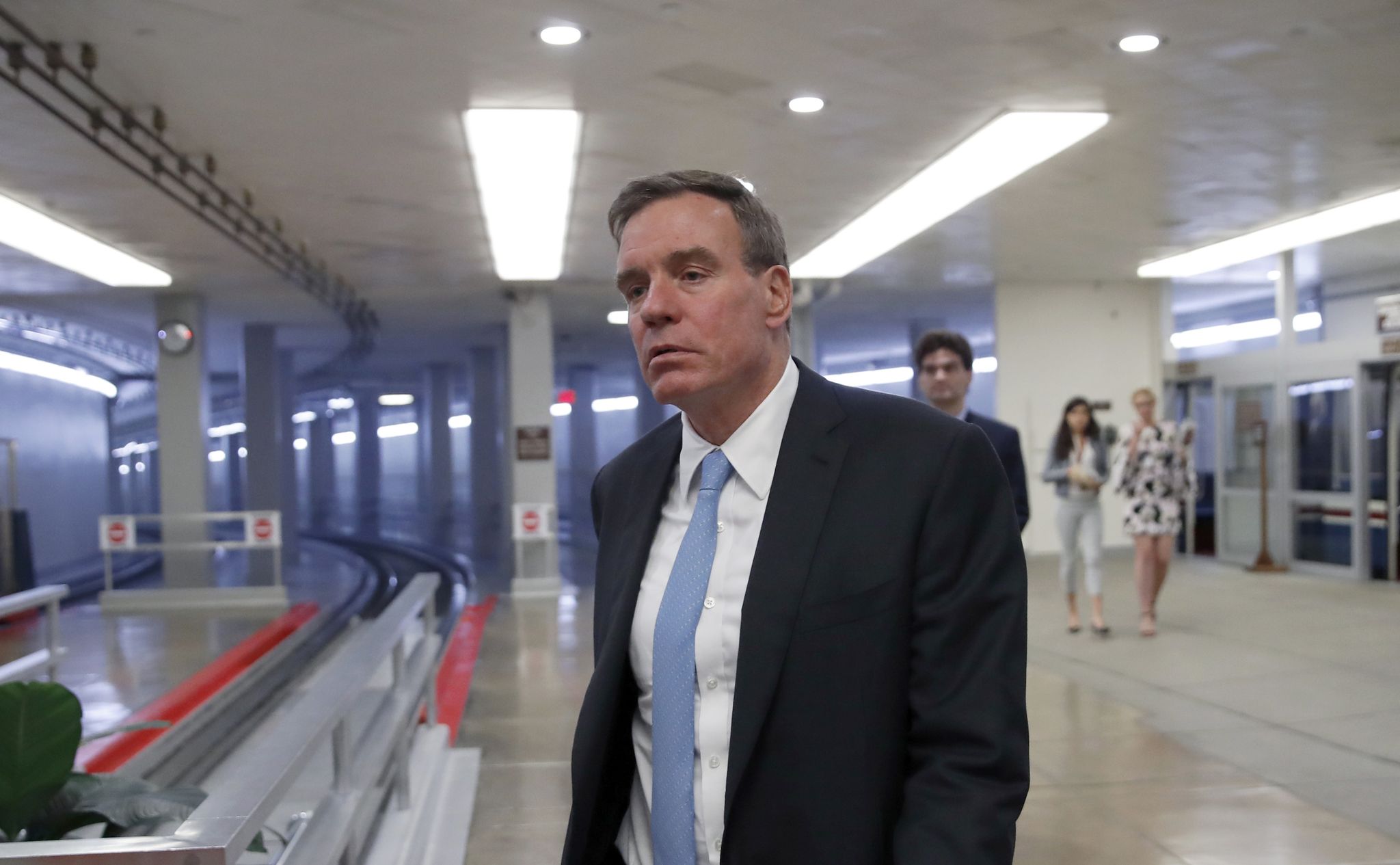
    “Several mandatory provisions of the law have not been implemented by the administration, despite strong evidence that actions taken by or on behalf of the Russian government are in violation of the CAATSA sanctions law and applicable executive orders codified by CAATSA,” Sen. Bob Menendez, New Jersey, Sen. Mark Warner, Virginia and Sen. Sherrod Brown, Ohio wrote on Friday.

    Mr. Menendez, Mr. Warner and Mr. Brown are the top Democrats on the Senate’s foreign relations, intelligence, and banking committees, respectively.

    CAATSA primarily targets Russia’s defense and intelligence sectors and those who do business with them. The senators also say the Trump White House has not followed through addressing related sanctions and penalties.

    “We also remain concerned that the administration has not formally determined whether individuals are conducting significant transactions with the Russian defense and intelligence sectors under Section 231 [part of CAATSA],” they wrote. “Without such determinations, it is impossible to ascertain whether individuals are substantially reducing significant transactions with these entities as outlined in the law.”

    The senators also argue the administration did not follow through last month with additional sanctions against Russia for supporting Syrian President Bashar al-Assad despite Nikki Haley, the U.S. ambassador to the United Nations, having announced new sanctions would be forthcoming.

    Senior Trump administration officials maintain they are pushing back harder on Russian President Vladimir Putin than the Obama administration, while Democrats say Mr. Trump has shown a reluctance to use the full force of CAATSA.

  • Trump proposes changes to Title X funding, targeting Planned Parenthood

    The Trump administration proposed rules Friday that create a firewall between federal funds for family planning and abortion services, effectively targeting Planned Parenthood.

    The Trump administration proposed rules Friday that create a firewall between federal funds for family planning and abortion services, effectively targeting Planned Parenthood.

    The Health and Human Services Department sent its proposed rule to the White House to kick-start the regulatory process, which could take months, without offering many details.

    Yet Capitol Hill lawmakers and advocates say the proposed rule change to Title X — a $260 million federal program for contraception and other services — revives a Reagan-era interpretation of the 1970 law that bars clinics from referring patients to abortion services.

    It also says clinics that perform abortions under the same roof as other family planning services should not receive Title X money. That means Planned Parenthood, the nation’s largest abortion provider and a frequent target for Republicans, would have to rearrange its operations or risk being carved out of the program.

    Federal funding cannot be used for abortion, though Title X grants assist low-income Americans in getting things such as birth control and other reproductive health services.

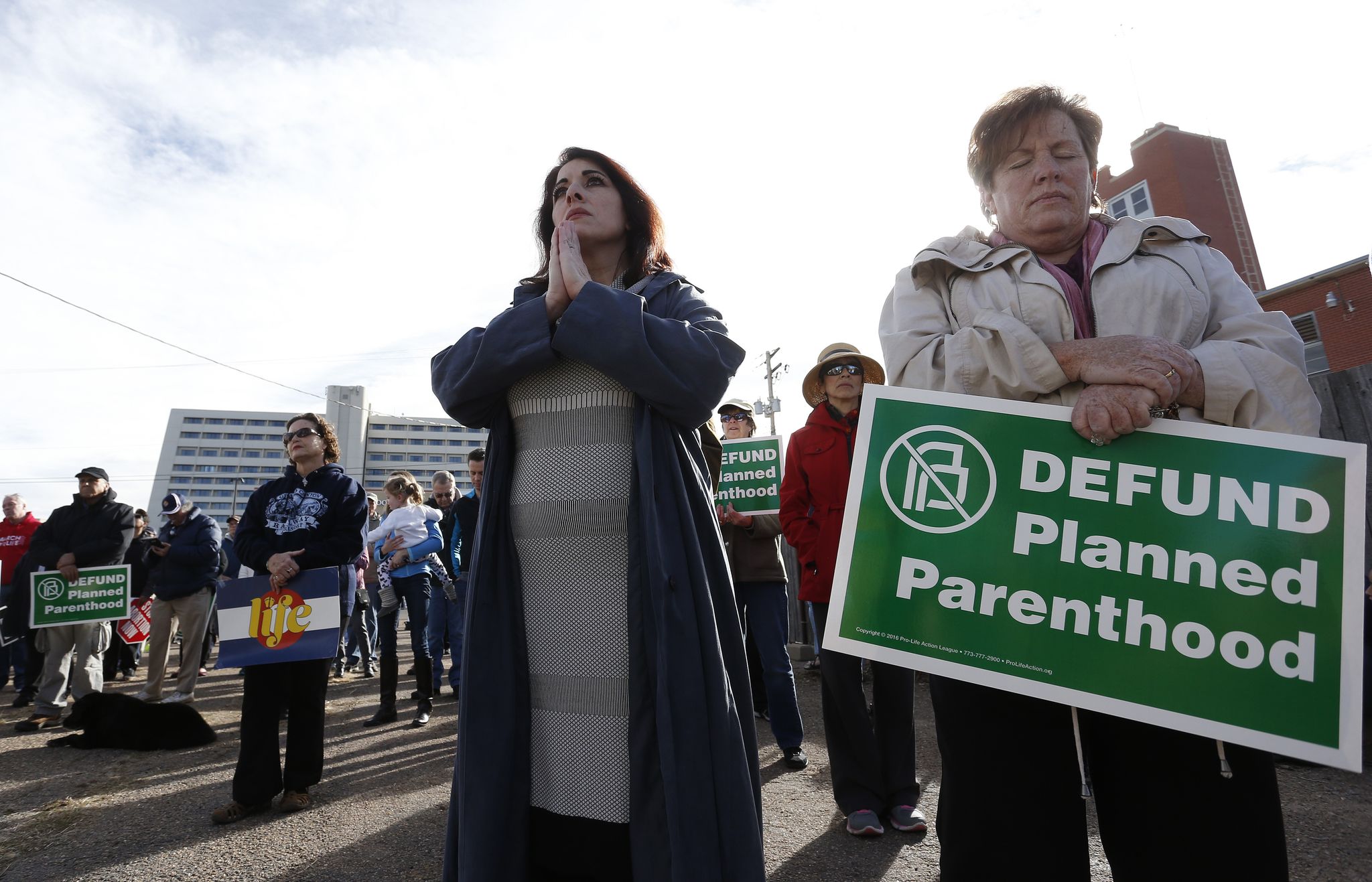
    Mr. Trump’s conservative base has railed against any public funding for Planned Parenthood, saying money is fungible, so taxpayers are propping up the abortion side of their business.

    The White House said Friday night that the move fulfills Mr. Trump’s promise “to continue to improve women’s health and ensure that federal funds are not used to fund the abortion industry in violation of the law.”

    “This important proposal would ensure compliance with the program’s existing statutory prohibition on funding programs in which abortion is a method of family planning,” the White House said. “The new proposed rule would not cut funds from the Title X program. Instead, it would ensure that taxpayers do not indirectly fund abortions.”

    Congressional Republicans cheered Mr. Trump’s proposal, saying it’s important to put keep taxpayers out of the abortion business.

    “There are plenty of health care providers, such as community and rural health centers, that provide the family planning needs of women and will be better stewards of the people’s tax dollars,” Rep. Robert B. Aderholt, Alabama Republican, said.

    From the other side, Planned Parenthood said the proposal “takes away people’s access to health care and infringes on women’s right to safe, legal abortion.”

    Its Democratic allies, meanwhile, called it a “gag rule” that will harm needy women and limit their health care choices.

    Planned Parenthood provides contraception services for an estimated 40 percent of the 4 million covered by Title X. Many of them don’t have a backup, Democrats say, so cutting it out of Title X will leave them in the lurch.

    “With this decision, President Trump is standing right between millions of American women and their doctors,” said Senate Minority Leader Charles E. Schumer.

    Pro-life groups such as the Susan B. Anthony List said there is no “gag rule” — the rule would still allow clinics to counsel women on abortion, just not require them to offer the counseling or refer them for the procedure.

    — Dave Boyer contributed to this report.

  • Cambridge Analytica files for bankruptcy following Facebook data scandal

    Cambridge Analytica LLC, the American branch of the embattled British-based data broker and political consultancy firm hired by President Trump’s 2016 election campaign, has filed for bankruptcy in th

    Cambridge Analytica LLC, the American branch of the embattled British-based data broker and political consultancy firm hired by President Trump’s 2016 election campaign, has filed for bankruptcy in the United States after coming under fire for collecting the personal information of millions of Facebook users without their knowledge.

    Along with a related company, SCL USA, Cambridge Analytica filed for Chapter 7 bankruptcy in federal court late Thursday, two months after news reports first revealed that the firm had quietly obtained the personal data of about 87 million Facebook users through a purported online personality quiz.

    Cambridge Analytica’s filing listed assets totally between $100,001 and $500,000, and debts ranging between $1 million and $10 million to dozens of different creditors, including Comcast, Verizon Wireless, the Federal Election Commission, the Securities and Exchange Commission and Senate Commerce Committee Chairman Sen. John Thune, South Dakota Republican, among others.

    “As one of multiple government investigators listed in the bankruptcy filing as a creditor (including the US Securities and Exchange Commission and Federal Election Commission), the Senate Commerce Committee has an outstanding request for information from Cambridge Analytica,” a spokesman for Mr. Thune said in a statement.

    Cambridge Analytica has faced heightened scrutiny from regulators in the U.S. and abroad after it was reported in March that the company had quietly amassed the personal information of millions of Facebook users through “ThisIsYourDigitalLife,” an online quiz developed by data scientist Aleksandr Kogan, and subsequently exploited that information during the course while conducting business for political clients.

    The Federal Trade Commission previously announced it was investigating Facebook’s privacy policies as a result of the Cambridge Analytica scandal, and the U.K.’s data watchdog raided the firm’s London office in March as part of a probe concerning “the use of personal data and analytics by political campaigns, parties, social media companies and other commercial actors.”

    Mr. Trump’s 2016 presidential campaign paid Cambridge Analytica at least $5.9 million between July and December 2016, and the president’s former chief strategist, Stephen Bannon, previously served as the firm’s vice president.

    Cambridge Analyrica’s filing was signed on behalf of the firm’s board by Rebekah and Jennifer Mercer, the daughters of Robert Mercer, a hedge fund manager and major contributor to Mr. Trump’s 2016 presidential campaign.

    The firm initiated bankruptcy proceedings in the U.K. earlier this month, citing a loss of business blamed on recently media coverage. 

  • Donald Trump to rally in Tennessee, boost GOP Senate candidate

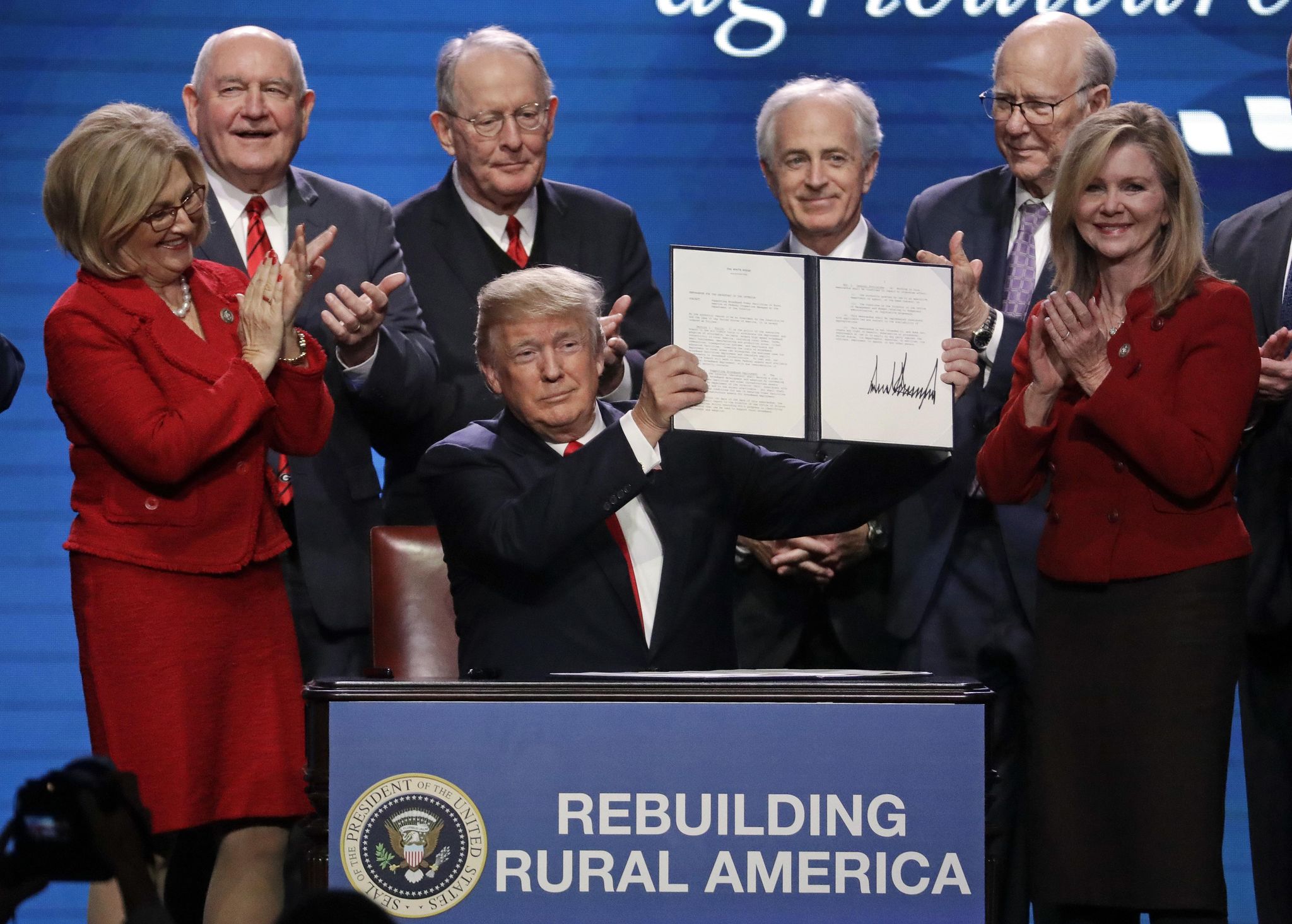
    President Trump is swooping in with a campaign rally in Tennessee to bolster the Senate campaign of Republican Rep. Marsha Blackburn, who is locked in a tight race against Democrat Phill Bredesen, a f

    President Trump is swooping in with a campaign rally in Tennessee to bolster the Senate campaign of Republican Rep. Marsha Blackburn, who is locked in a tight race against Democrat Phill Bredesen, a former governor.

    Mr. Trump will hold the “Make America Great Again” rally May 29 in Nashville, Tennessee, his campaign announced Saturday.

    “The President looks forward to being with patriotic Tennesseans once again as he celebrates this booming economy that’s helping families throughout the state thanks to his historic tax cuts and job-creating policies,” said Michael S. Glassner, CEO of Mr. Trump’s reelection campaign.

    The rally will be held in Nashville Municipal Auditorium, according to the campaign.

    After a string of visits to key states where Republicans are looking to pick up Senate seats in the midterm elections, Mr. Trump is veering to Tennessee to play defense in the fight to keep GOP control of the narrowly-divided upper chamber.

    Republicans have held on to Tennessee’s two Senate seats since 1995, but recent polling suggests a tight race this November.

    Mrs. Blackburn trailed Mr. Bredesen 46 percent to 43 percent last month in a Mason-Dixon poll. What’s more, a Vanderbilt University poll last week found independent voters had a more positive view of Mr. Bredesen than Mrs. Blackburn, and a majority of Republicans also said they have a favorable view of the former governor.

    Overall, 67 percent of Tennessee voters had a positive opinion of Mr. Bredesen, compared to 49 percent who said that about Mrs. Blackburn.

    Mrs. Blackburn has been running as a Trump Republican. A the visit by the president, who has endorsed her, will reinforce that message.

    Mr. Trump won Tennessee by a 26-point margin in 2016.

  • Russia eyes closer Iran ties, more trade if Trump nixes nuclear deal

    A top Russian official said bilateral relations and trade with Iran could actually be enhanced if President Trump follows through on a threat to take the United States out of the 2015 nuclear deal wit

    A top Russian official said bilateral relations and trade with Iran could actually be enhanced if President Trump follows through on a threat to take the United States out of the 2015 nuclear deal with Tehran next week.

    Vladimir Yermakov, head of arms control and nonproliferation for the Russian Foreign Ministry, told reporters Friday that a U.S. withdrawal would not kill the deal, which Iran signed with the Obama administration and five international powers — Russia, China, Britain, France and Germany.

    The European allies have lobbied heavily for Mr. Trump not to withdraw from the deal, fearing that the reimposition of American economic and financial sanctions could cast a heavy cloud over their own business dealings with Tehran.

    But Mr. Yermakov argued the deal, which curbed Iranian nuclear programs in exchange for an end to international sanctions, would survive even without U.S. participation, according to the Moscow Times. He spoke to reporters at a nuclear nonproliferation summit in Geneva.

    “It might even be easier for us on the economic front, because we won’t have any limits on economic cooperation with Iran,” he said. “We would develop bilateral relations in all areas — energy, transport, high-tech, medicine.”

    Iranian officials have said they would not be bound by the nuclear restrictions in the deal if the U.S. withdrew, and have rejected any attempt to re-write its terms. But they have stopped short of saying the entire agreement would be void if the U.S. pulled out.

    Mr. Yermakov said Friday it would be smarter for Tehran to stay in the deal and honor its commitments not to seek nuclear weapons.

    “It’s not in anybody’s interest that Iran goes back to the kind of development of its nuclear program that all states would be concerned about,” he said. “But Iran is fully entitled to develop peaceful nuclear energy.”

    China this week also said it continued to support the nuclear accord and called on all sides to honor their commitments.

    The U.N. nuclear watchdog agency says Iran has met its commitments under the deal, but Mr. Trump and other critics say the accord has failed to restrain Iran’s other military programs and its moves to destabilize other states in the region. Many of the restrictions on Iran’s nuclear programs in the deal are also set to expire in just seven years.

  • Trump exit from Iran nuclear deal enters uncharted territory

    It’s not as simple as just saying “we’re out” of the Iran nuclear deal.

    WASHINGTON (AP) – It’s not as simple as just saying “we’re out” of the Iran nuclear deal.

    If President Donald Trump follows through on his threat to pull the U.S. out of the Iran nuclear deal on May 12, the rest of the world will be thrust into uncharted territory, forced to navigate a complex web of U.S. sanctions that were lifted under the landmark accord but would ostensibly be put back in place.

    Would Trump re-impose sanctions on those who do business with Iran? How quickly? And would Europe follow suit? How would Iran respond? And what happens to Iran’s pre-existing obligations to allow nuclear inspections?

    “It’s going to be very complicated,” said Ama Adams, who advises clients on international sanctions compliance at the law firm Ropes & Gray. “There are lots of opportunities to trip up and make mistakes. It’s going to be a period of a lot of activity and flurry.”

    A look at possible scenarios for what stays and goes if Trump exits the accord:

    U.S. SANCTIONS

    Under the 2015 deal, the United States issued waivers to longstanding sanctions punishing Iran for its nuclear program. Iran, in turn, restricted its program and allowed more inspections.

    Trump has essentially two options for re-imposing sanctions.

    On May 12, he faces a deadline on whether to renew the waivers that eased one basket of sanctions: those on Iran’s central bank, intended to hit Iranian oil exports. Another basket of sanctions waivers are up for renewal on July 11, focusing on more than 400 specific Iranian companies, individuals and business sectors.

    One of Trump’s options, being called “the nuclear option” by some experts, would re-impose all the sanctions at once – even those not scheduled for renewal until July. That would put the U.S. in immediate violation of the deal’s terms, which say sanctions remain lifted as long as Iran is complying with its terms. So far, the International Atomic Energy Agency, the U.N.’s nuclear monitoring agency, has said Iran is complying, and Secretary of State Mike Pompeo agrees.

    A second option: re-imposing only the central bank sanctions. That would start a 180-day clock in which companies or countries would be expected to reduce their purchases of oil from Iran. Those that don’t would ultimately be penalized by Washington.

    Why not restore all the sanctions at once? Proponents of doing it piece by piece say it would give the U.S. more leverage to bring about a “fix” to the deal so that Trump could stay in after all. Trump has long said the deal needed to be strengthened or abandoned, but efforts with European allies to strengthen it haven’t yet succeeded. With sanctions about to kick in again in 180 days, there might be enough pressure on the Iranians, the Europeans and other members of the deal to give in to Trump’s demands, proponents say.

    But supporters of the nuclear deal say that’s not a viable option because the U.S., by starting the 180-day clock, would have already breached the deal. And as soon as Trump announces sanctions will be coming back, companies will immediately start shutting down their business with Iran. That means Iran would suffer from lost business and could decide to walk away from the deal itself.

    Adams, the sanctions attorney, said some companies have already started winding down business in anticipation that Trump may re-impose sanctions.

    __

    THE REST OF THE WORLD

    What would Europe do? Germany, France and the U.K. have suggested they have no intention of leaving the deal, even if the U.S. withdraws. But it might not matter much. The global financial system is so interconnected and so tied to New York that it would be almost impossible for anyone anywhere in the world to continue their business with Iran without risk of violating U.S. sanctions. For example, Europe businesses owned or controlled by American parent companies would breach the sanctions if they didn’t cut off Iran.

    It’s a major dilemma for European businesses, made even more complicated if the European Union decides to invoke a measure put in place in the 1990s to counter the U.S. embargo on Cuba. The EU can use those regulations to prohibit European companies from complying with some U.S. sanctions. That puts businesses in the position of choosing whether to defy the United States or the EU.

    __

    IRAN‘S RESPONSE

    Iran’s leaders have been coy, although Foreign Minister Mohammad Javad Zarif told The Associated Press last week Iran would “most likely” abandon the deal if Trump withdraws. Yet the key question is whether Iran would resume nuclear activities, such as enrichment and processing, beyond the limits that were imposed by the deal – and how aggressively.

    How would the world even know? If the deal collapses, Iran would no longer be bound by the rigorous inspections regime by the IAEA that it agreed to in the deal. That regime included the so-called Additional Protocol, which expanded the IAEA’s access to sites in Iran, including giving inspectors insight into all parts of the nuclear fuel cycle, access on short notice to all buildings at an acknowledged nuclear site, and the right to obtain samples from military sites.

    Even without the nuclear deal, Iran would still be required to allow a more limited regime of inspections required by the Nuclear Nonproliferation Treaty, which Iran has signed. But it’s unclear how rigorously Iran would comply. After all, alleged cheating and delay tactics by Iran were a major concern prior to the 2015 deal. And Iranian officials haven’t explicitly ruled out the possibility that if Trump blows up the nuclear deal, Iran may also leave the Nonproliferation Treaty.

    Then there’s the question of whether Iran, feeling swindled on a deal the U.S. itself brokered, would take other steps to retaliate – such as ballistic missile tests or more support for militant groups abroad.