Tag: Politics

  • Candidates compete for schools chief, lieutenant governor

    Voters will choose candidates for lieutenant governor, schools chief and other statewide offices in California’s June 5 primary. The race for superintendent of public education is shaping up to be an

    SACRAMENTO, Calif. (AP) – Voters will choose candidates for lieutenant governor, schools chief and other statewide offices in California’s June 5 primary. The race for superintendent of public education is shaping up to be an expensive showdown between unions and charter school advocates. In the crowded contest to become California’s next lieutenant governor, several Democrats have emerged as front-runners. Five candidates are vying to replace the state’s outgoing treasurer. Meanwhile, incumbents are trying to hold onto their offices in the races for secretary of state and controller.

    Below is an overview of those five down-ballot races:

    SUPERINTENDENT OF PUBLIC INSTRUCTION

    With wealthy donors on both sides of the charter school debate throwing their weight behind candidates, the race for Superintendent of Public Instruction promises to be an expensive contest.

    Assemblyman Tony Thurmond, backed by teachers unions, and former Los Angeles schools executive Marshall Tuck, backed by pro-charter donors, are front-runners in the race to be the state’s top public education official.

    Tuck and Thurmond both want to spend more on public schools and ban for-profit charter schools. Thurmond has also stressed opposing the Trump administration’s agenda, including proposals to transfer money from traditional public schools to charter schools. Tuck has emphasized giving families choice in the schools their children attend, including nonprofit charter schools.

    Tuck’s donors include charter school advocates such as Netflix CEO Reed Hastings, former New York Mayor Michael Bloomberg and KB Home founder Eli Broad. Thurmond’s top donors are teachers unions and labor groups.

    Thurmond and Tuck are Democrats, but the race is nonpartisan and their party affiliation won’t appear on the ballot.

    Lily Ploski, an educator and former college administrator, and Steven Ireland, a parent, are also running.

    If any candidate wins more than 50 percent of the vote in June, he or she will win the race outright. Otherwise, the top two candidates advance to the November general election.

    Tuck ran for the seat unsuccessfully in 2014. Incumbent Tom Torlakson beat him with backing from unions.

    LIEUTENANT GOVERNOR

    Three Democrats are leading the cash race to be California’s next No. 2 executive.

    The lieutenant governor serves as a University of California regent, a California State University trustee and as a state lands commissioner overseeing conservation and public access. He or she also acts as governor when the top executive is away.

    There’s little difference among state Sen. Ed Hernandez and former diplomats Eleni Kounalakis and Jeff Bleich when it comes to policy. All three say they want to lower college costs and oppose oil drilling off the California coast.

    They have tried to differentiate themselves by experience.

    If elected, Kounalakis would be the first woman to hold the position. She emphasizes her background as a developer and former ambassador to Hungary.

    Hernandez, chair of the Senate Health Committee, authored a bill increasing transparency around drug pricing last year. It passed over opposition from pharmaceutical companies.

    Bleich, a former aide to President Barack Obama and ambassador to Australia, has touted his experience as a California State University trustee and as a lawyer on civil rights and immigration cases.

    As of the April campaign finance filing deadline, Bleich had raised roughly $2 million, Hernandez about $2.6 million and Kounalakis nearly $3 million.

    Republican Cole Harris also has a sizeable war chest after putting $2 million into his own campaign.

    Three other Republicans – Lydia Ortega, David Fennell and David Hernandez – are running, along with Democrat Cameron Gharabiklou. Two no-party-preference candidates – Gayle McLaughlin and Danny Thomas – are also on the ballot.

    California’s current lieutenant governor, Gavin Newsom, is running for governor.

    TREASURER

    Five candidates are vying to replace Treasurer John Chiang, who is running for governor.

    The treasurer manages the state’s money and sits on the boards of California’s public employee pension funds.

    Democrat Fiona Ma has the most political experience and the biggest fundraising haul. The State Board of Equalization member and former assemblywoman says she would make socially responsible investments with the state’s money.

    One of her challengers is Gov. Jerry Brown aide Vivek Viswanathan, a Democrat who says he won’t take corporate money.

    Two Republicans are running: Cudahy City Councilman Jack Guerrero, who says he would push for lower taxes, and businessman Greg Conlon, who challenged Chiang in the last general election.

    Peace and Freedom candidate Kevin Akin is also running.

    SECRETARY OF STATE

    Secretary of State Alex Padilla faces seven primary challengers in his re-election bid.

    Republican attorney Mark Meuser is challenging Padilla on a platform of modernizing California elections. He advocates purging voter rolls of people who have moved or died and conducting audits to ensure ineligible people aren’t registered to vote.

    Padilla has emphasized his record of sparring with the Trump administration. He often denounces the president’s unsubstantiated claims of widespread voter fraud in the state. Padilla also refused to comply with the administration’s requests to hand over data on California voters, arguing it was politically motivated.

    Democrat Ruben Major, Green Party candidates Michael Feinstein and Erik Rydberg, Libertarian Gail Lightfoot and Peace and Freedom candidate C.T. Weber will also appear on the ballot.

    CONTROLLER

    Controller Betty Yee faces a Republican challenger in her re-election campaign.

    The California controller serves as the state’s top accountant and audits various state programs. They sit on several state boards and the State Lands Commission.

    Entrepreneur Konstantinos Roditis says he would advocate cutting government spending and auditing high-speed rail, a project Republicans frequently criticize because of rising costs.

    Yee says she has promoted tax policies that are equitable for vulnerable populations, including people living in poverty and LGBT people, specifically supporting equal taxation for same-sex couples before gay marriage was legalized.

    Peace and Freedom candidate Mary Lou Finley is also running for the office.
  • Iranian dissidents call for Trump to ‘rip up’ nuclear deal

    Thousands of supporters of Iranian opposition groups rallied just blocks from the White House on Saturday for the downfall of Tehran’s theocratic government and to invite President Trump to “rip up” t

    Thousands of supporters of Iranian opposition groups rallied just blocks from the White House on Saturday for the downfall of Tehran’s theocratic government and to invite President Trump to “rip up” the Iran nuclear deal.

    The rally came one week before Mr. Trump’s May 12 deadline to decide whether to pull out of the Obama-era Iranian nuclear deal that saw the U.S., Britain, France, Germany, Russia and China ease sanctions on Tehran in exchange for limits to its nuclear program. Mr. Trump has criticized the 2015 accord since it took effect.

    “What do you think is going to happen to that nuclear agreement?” former New York City Mayor Rudolph Giuliani yelled to a packed conference hall at the Grand Hyatt Hotel.

    A longtime ally of Iranian dissidents, Mr. Giuliani just joined Mr. Trump’s personal legal team. Holding a piece of paper in his hands, he drove the rally wild by pretending to rip it apart.

    “We do not want President Trump to renegotiate, we want him to rip it up,” said Shirin Nariman, a spokeswoman for the Organization of Iranian American Communities (OIAC) and an event organizer.

    Saturday’s rally saw organizers gather more than 1,000 Iranian delegates from across the U.S. for a rowdy flag ceremony, fiery speeches and music. In addition to criticizing the nuclear deal, dissidents blasted the Islamic Republic’s human rights record, and argued for a free, democratic and secular Iran.

    Several speakers zeroed-in current unrest across Iran. Protests are still underway after a major uprising that erupted in 142 cities across in January, the largest since 2009.

    Some analysts believe the demonstrations began as an attempt by hard-line conservatives in the regime to undercut President Hassan Rouhani, a relatively moderate cleric who strongly backed the nuclear deal and just won a second four-year term.

    Mr. Rouhani has claimed that one of the exiled opposition groups involved in organizing Saturday’s rally — the Mujahedeen-e-Khalq (MEK) — was inciting the violence.

    The MEK has close ties to a Paris-based organization, the National Council of Resistance (NCRI) of Iran. The NCRI holds an annual rally in France that draws tens of thousands to call for the downfall of Iran’s mullah-led government and has deep sources in Iran.

    The group is credited with exposing secretive Iranian nuclear facilities in the early 2000s. It also has had a contentious relationship with Washington, and was listed it as a terrorist organization by the State Department until 2012.

    Many prominent U.S. politicians from both sides of the aisle, including Mr. Giuliani, have long spoken out in support of the NCRI and the MEK, claiming the latter was wrongly put on the terror list.

    NCRI President-elect Maryam Rajavi addressed the rally via video link from Paris.

    “At no time has the regime been so engulfed in crisis, and at no time has the time been so ripe to organize and expand the uprising,” she said.

    Mrs. Rajavi, who also called for the end of the Iranian death penalty, which has been liberally used as a scare tactic to subdue protests, also voiced opposition to the nuclear deal. She urged the international community to abandon the agreement and instead conduct unconditional inspections of Iran’s nuclear weapons and ballistic missiles program.

    Former U.S. Energy Secretary and New Mexico Gov. Bill Richardson, a longtime MEK and NCRI supporter, fired up the convention hall.

    “The regime is on the ropes as they say with boxers,” he said. “The debate is no longer the hard liners against the reformers. It is now the entire people against the regime.”

    Mr. Richardson also praised OIAC, MEK and NCRI as “leadership that is willing to sacrifice and take risks.”

    When Mr. Giuliani noted that Mr. Trump backed the Iranian protests earlier this year with the words “we support their fight for freedom,” the crowd erupted.

    All speakers predicted regime change is coming soon, with Ms. Nariman noting that one of the organization’s most prominent Washington supporters, John R. Bolton, is Mr. Trump’s new national security adviser.

    Secretary of State Mike Pompeo also supports regime change.

    Ms. Nariman expressed hope that this group, in addition to Mr. Giuliani and Mr. Trump, would soon bring about change.

  • Airplane and oil deals at risk in Trump pullout of Iran deal

    From airplanes to oilfields, billions of dollars are on the line for international corporations as President Donald Trump weighs whether to pull America out of Iran’s nuclear deal with world powers.

    DUBAI, United Arab Emirates (AP) – From airplanes to oilfields, billions of dollars are on the line for international corporations as President Donald Trump weighs whether to pull America out of Iran’s nuclear deal with world powers.

    Regardless of where they are headquartered, virtually all multinational corporations do business or banking in the U.S., meaning any return to pre-deal sanctions could torpedo deals made after the 2015 agreement came into force.

    That threat alone has been enough to scare risk-averse firms, like Boeing Co., into slow-walking deals agreed to months ago. A complete pullout by the U.S. would wreak further havoc and likely frighten off those considering making the plunge.

    “I absolutely think those on the fence will not jump in,” said Richard Nephew, a former sanctions expert at the U.S. State Department who worked on the nuclear deal and now is at New York’s Columbia University. “The only ones who will, will be those who see tremendous monetary benefit and no U.S. risk.”

    The 2015 Iran nuclear deal lifted crippling economic sanctions that had locked Iran out of international banking and the global oil trade. In return, Tehran limited its enrichment of uranium, reconfigured a heavy-water reactor so it couldn’t produce plutonium and reduced its uranium stockpile and supply of centrifuges.

    For Western businesses, the deal meant access to Iran’s largely untapped market of 80 million people. Most prominently, airplane manufacturers rushed in to replace the country’s dangerously dilapidated civilian fleet.

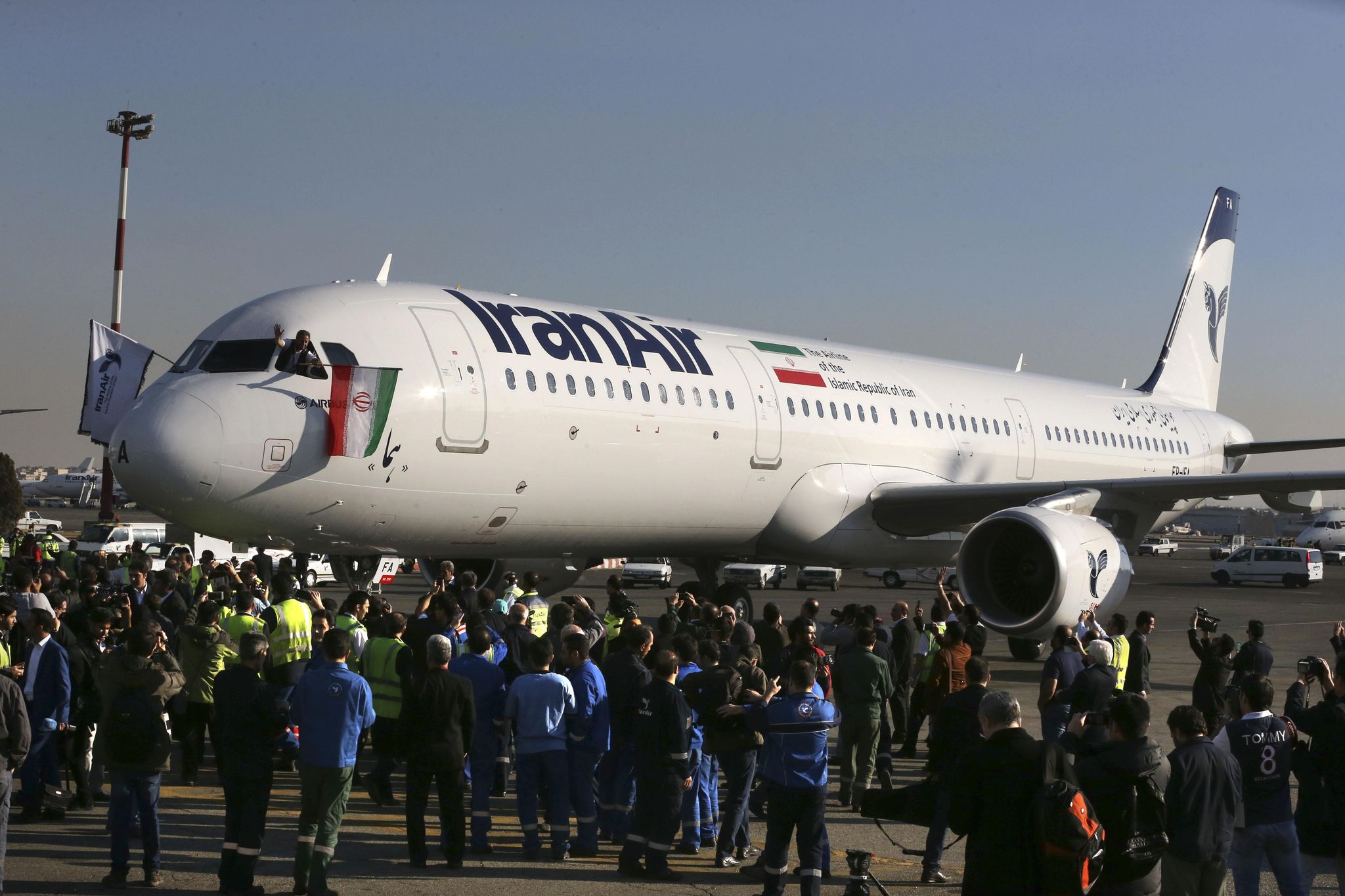
    In December 2016, Airbus Group signed a deal with Iran’s national carrier, IranAir, to sell it 100 airplanes for around $19 billion at list prices. Boeing later struck its own deal with IranAir for 80 aircraft with a list price of some $17 billion, promising that deliveries would begin in 2017 and run until 2025. Boeing separately struck another 30-airplane deal with Iran’s Aseman Airlines for $3 billion at list prices.

    But Boeing has yet to deliver a single aircraft to Iran. The Chicago-based company’s CEO recently stressed it understands the “risks and implications around the Iranian aircraft deal,” which would be the biggest business agreement between an American company and Iran since the 1979 Islamic Revolution and U.S. Embassy takeover.

    “We continue to follow the U.S. government’s lead here and everything is being done per that process,” Dennis Muilenburg said during a quarterly earnings conference call on April 25. “We have no Iranian deliveries that are scheduled or part of the skyline this year, so those have been deferred again in line with the U.S. government process.”

    Airbus, a European airline consortium based in Toulouse, France, likewise continues its sales at the discretion of the American government. At least 10 percent of its aircraft components are of American origin, meaning it requires permission from the U.S. Treasury for its sales to Iran. Airbus has already delivered two A330-200s and one A321 to Iran.

    Airbus declined to comment when asked by The Associated Press about its possible plans ahead of Trump’s decision.

    European airplane manufacturer ATR struck a $536-million deal with IranAir for at least 20 aircraft last year. It’s already has delivered eight of its twin-engine turboprops to Tehran after earlier winning permission from the U.S. Treasury.

    “To date, we are on track to deliver the remaining ATR aircraft in due time, before the end of the year,” ATR spokesman David Vargas told the AP.

    The speed at which Western airplane manufacturers went into Iran is contrasted by a slow start by Western energy firms despite the country’s vast oil and gas wealth. The exception is French oil giant Total SA, which in July signed a $5 billion, 20-year agreement with Iran and a Chinese oil company to develop the country’s massive South Pars offshore natural gas field. The natural gas pumped by the deal will go toward Iran’s domestic market.

    The deal marked a return to Iran for Total, which pulled out of the country in 2008 as Western sanctions over its nuclear program began to ramp up. Total did not respond to requests for comment, though its CEO Patrick Pouyanne reportedly told Trump in February to stick with the deal.

    “If the framework, the rules of the game, change, of course we will have to re-evaluate,” Pouyanne told the Financial Times.

    French carmaker PSA Peugeot Citroen reached a deal in 2016 to open a plant producing 200,000 vehicles annually in Iran. Peugeot, once a major player in Iran’s car market before sanctions, did not respond to a request for comment.

    Meanwhile, fellow French automobile manufacturer Groupe Renault signed a $778-million deal to build 150,000 cars a year at a factory outside of Tehran.

    “The Renault Group is closely monitoring the evolution of the diplomatic situation,” the company said in a statement to the AP, without elaborating.

    Volkswagen also began exporting cars to Iran.

    “Currently we are tracking and examining the development of the political and economic environment in the region very closely,” the German carmaker said in a statement. “In principle, Volkswagen adheres to all applicable national and international laws and export regulations.”

    Nuclear deal co-signers Britain, France and Germany, which have urged Trump to preserve the deal, may seek exemptions to protect their companies if the U.S. snaps back sanctions, said Ellie Geranmayeh, a senior policy fellow studying Iran at the European Council on Foreign Relations.

    “This should include a series of exemptions and carve-outs for European companies already involved in strategic areas of trade and investment with Iran, with the priority being to limit the immediate shock to Iranian oil exports,” she wrote Wednesday.

    ___

    Follow Jon Gambrell on Twitter at www.twitter.com/jongambrellap . His work can be found at http://apne.ws/2galNpz .

  • Chelsea Manning: Insurgent bid for US Senate is genuine

    Chelsea Manning is no longer living as a transgender woman in a male military prison, serving the lengthiest sentence ever for revealing U.S. government secrets. She’s free to grow out her hair, trave

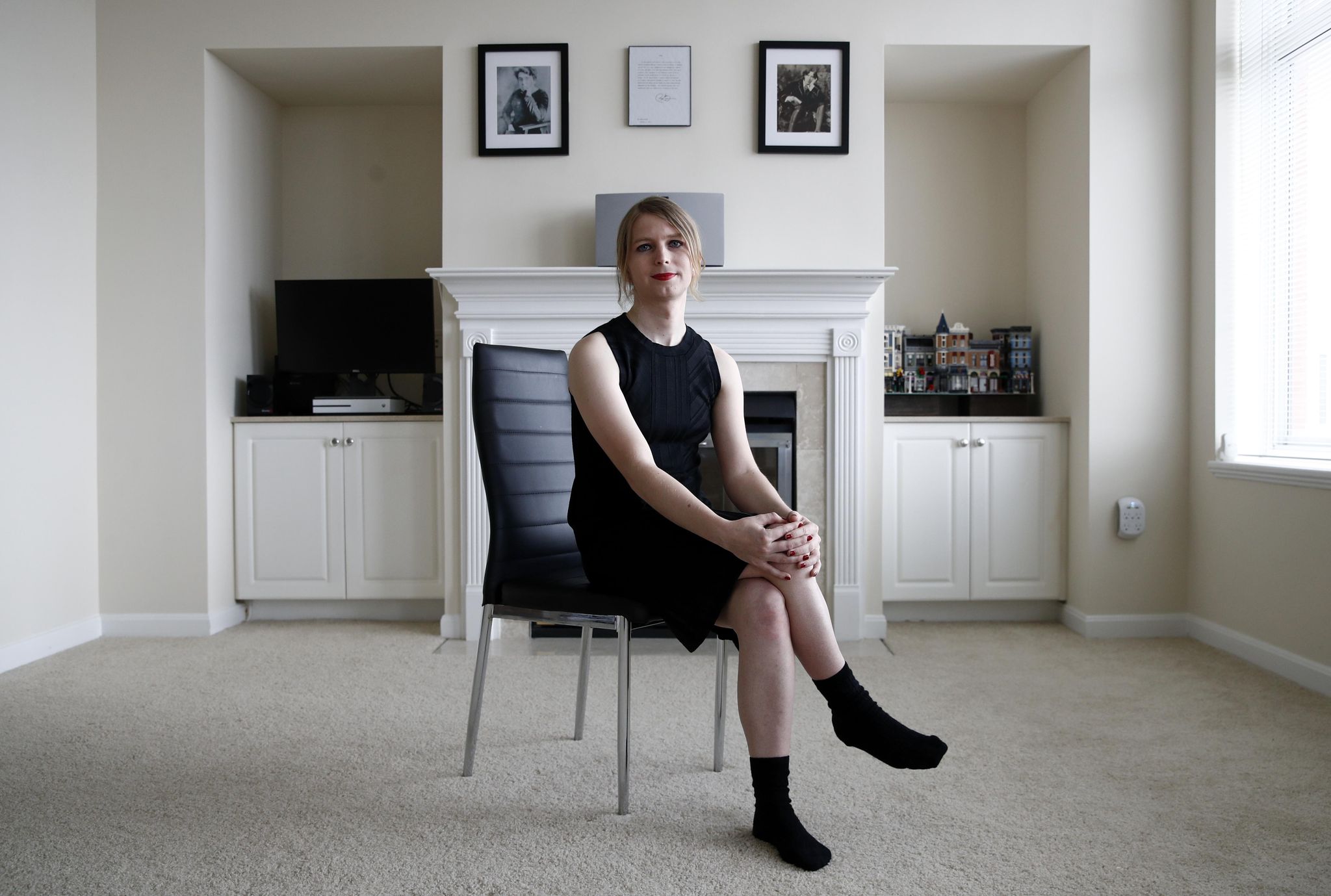
    NORTH BETHESDA, Md. (AP) – Chelsea Manning is no longer living as a transgender woman in a male military prison, serving the lengthiest sentence ever for revealing U.S. government secrets. She’s free to grow out her hair, travel the world, and spend time with whomever she likes.

    But a year since former President Barack Obama commuted Manning’s 35-year sentence, America’s most famous convicted leaker isn’t taking an extended vacation. Far from it: The Oklahoma native has decided to make an unlikely bid for the U.S. Senate in her adopted state of Maryland.

    Manning, 30, filed to run in January and has been registered to vote in Maryland since August. She lives in North Bethesda, not far from where she stayed with an aunt while awaiting trial. Her aim is to unseat Sen. Ben Cardin, a 74-year-old Maryland Democrat who is seeking his third Senate term and previously served 10 terms in the U.S. House.

    Manning, who also has become an internationally recognized transgender activist, said she’s motivated by a desire to fight what she sees as a shadowy surveillance state and a rising tide of nightmarish repression.

    “The rise of authoritarianism is encroaching in every aspect of life, whether it’s government or corporate or technological,” Manning told The Associated Press during an interview at her home in an upscale apartment tower. On the walls of her barely furnished living room hang Obama’s commutation order, and photos of U.S. anarchist Emma Goldman and British playwright Oscar Wilde.

    Manning’s longshot campaign for the June 26 primary would appear to be one of the more unorthodox U.S. Senate bids in recent memory, and the candidate is operating well outside the party’s playbook. She says she doesn’t, in fact, even consider herself a Democrat, but is motivated by a desire to shake up establishment Democrats who are “caving in” to President Donald Trump’s administration. She vows she won’t run as an independent if her primary bid fails.

    She’s certainly got an eye-catching platform: Close prisons and free inmates; eliminate national borders; restructure the criminal justice system; provide universal health care and basic income. The top of her agenda? Abolish the U.S. Immigration and Customs Enforcement, a federal agency created in 2003 that Manning asserts is preparing for an “ethnic cleansing.”

    Manning ticks off life experiences she believes would make her an effective senator: a stint being homeless in Chicago, her wartime experiences as a U.S. Army intelligence analyst in Iraq – even her seven years in prison. She asserts she’s got a “bigger vision” than establishment politicians.

    But political analysts suspect the convicted felon is not running to win.

    “Manning is running as a protest candidate, which has a long lineage in American history, to shine light on American empire,” said Daniel Schlozman, a political science professor at Johns Hopkins University. “That’s a very different goal, with a very different campaign, than if she wanted to beat Ben Cardin.”

    Manning’s insurgent candidacy thus far has been a decidedly stripped-down affair, with few appearances and a campaign website that just went up. In recent days, she approached an anti-fracking rally in Baltimore almost furtively, keeping to herself for much of the demonstration. But when it was her turn to address the small group, her celebrity status was evident. People who never met her called her by her first name and eagerly took photos.

    Manning has acknowledged leaking more than 700,000 military and State Department documents to anti-secrecy site WikiLeaks in 2010. She said her motivation was a desire to spark debate about U.S. foreign policy, and she has been portrayed as both a hero and a traitor.

    Known as Bradley Manning at the time of her arrest, she came out as transgender after her 2013 court-martial. She was barred from growing her hair long in prison, and was approved for hormone therapy only after litigation. She spent long stints in solitary confinement, and twice tried to kill herself.

    The Pentagon, which has repeatedly declined to discuss Manning’s treatment in military prison, is also staying mum about her political ambitions. Democratic Party officials say they have no comment, citing a policy not to weigh in on primaries. Republican operatives are quiet.

    In Maryland, a blue state that’s home to tens of thousands of federal employees and defense contractors, it appears Manning’s main supporters are independents or anti-politics, making them unlikely to coalesce politically. She recently reported contributions of $72,000 on this year’s first quarterly finance statement, compared with Cardin’s $336,000.

    The candidate has barely made an effort at tapping sources of grassroots enthusiasm outside of activism circles. And it’s easy to find Democrats who feel her candidacy is just a vehicle to boost her profile.

    “It feels to me almost like it’s part of a book tour – that this is her moment after being released from prison,” said Dana Beyer, a transgender woman who leads the Gender Rights Maryland nonprofit and is a Democratic candidate for state senate. “I don’t think this is a serious effort.”

    Manning is indeed working on a book about her dramatic life. For now, she says she supports herself with income from speaking engagements. She’s spoken at various U.S. colleges and is due to take the stage at a Montreal conference later this month.

    Last week, she appeared at a tech conference in Germany’s capital of Berlin, arriving to cheers from the audience of several thousand people. She told attendees she’s still struggling to adjust to life after prison and hasn’t gotten used to her celebrity status yet.

    “There’s been a kind of cult of personality that is really intimidating and that is overwhelming for me,” she said in Berlin.

    At her Maryland apartment, Manning told the AP she occasionally wakes up panicked that she’s back in the cage in Kuwait where she was first jailed, or incarcerated at the Marine base at Quantico, Virginia, where a U.N. official concluded she’d been subjected to “cruel, inhuman and degrading treatment.” She works hard to overcome anxiety, centering herself with yoga, breathing exercises, and reading.

    “I’ve been out for almost a year now and it’s becoming increasingly clear to me just how deep the wounds are,” she said in her Spartan living room.

    Asked how she would define success, Manning responded with passionate intensity: “Success for me is survival.”

    ___

    Associated Press writer Frank Jordans in Berlin contributed to this report.

    ___

    Follow McFadden on Twitter at https://twitter.com/dmcfadd

  • Donald Trump to host South Korea’s Moon Jae-in ahead of summit with North Korea’s Kim Jong-un

    South Korean President Moon Jae-in will visit President Trump at the White House later this month ahead of Mr. Trump’s historic summit with North Korea’s leader on the pivotal issue of denuclearizatio

    South Korean President Moon Jae-in will visit President Trump at the White House later this month ahead of Mr. Trump’s historic summit with North Korea’s leader on the pivotal issue of denuclearization.

    The White House said Friday that Mr. Trump will host Mr. Moon on May 22, their third meeting since Mr. Trump took office.

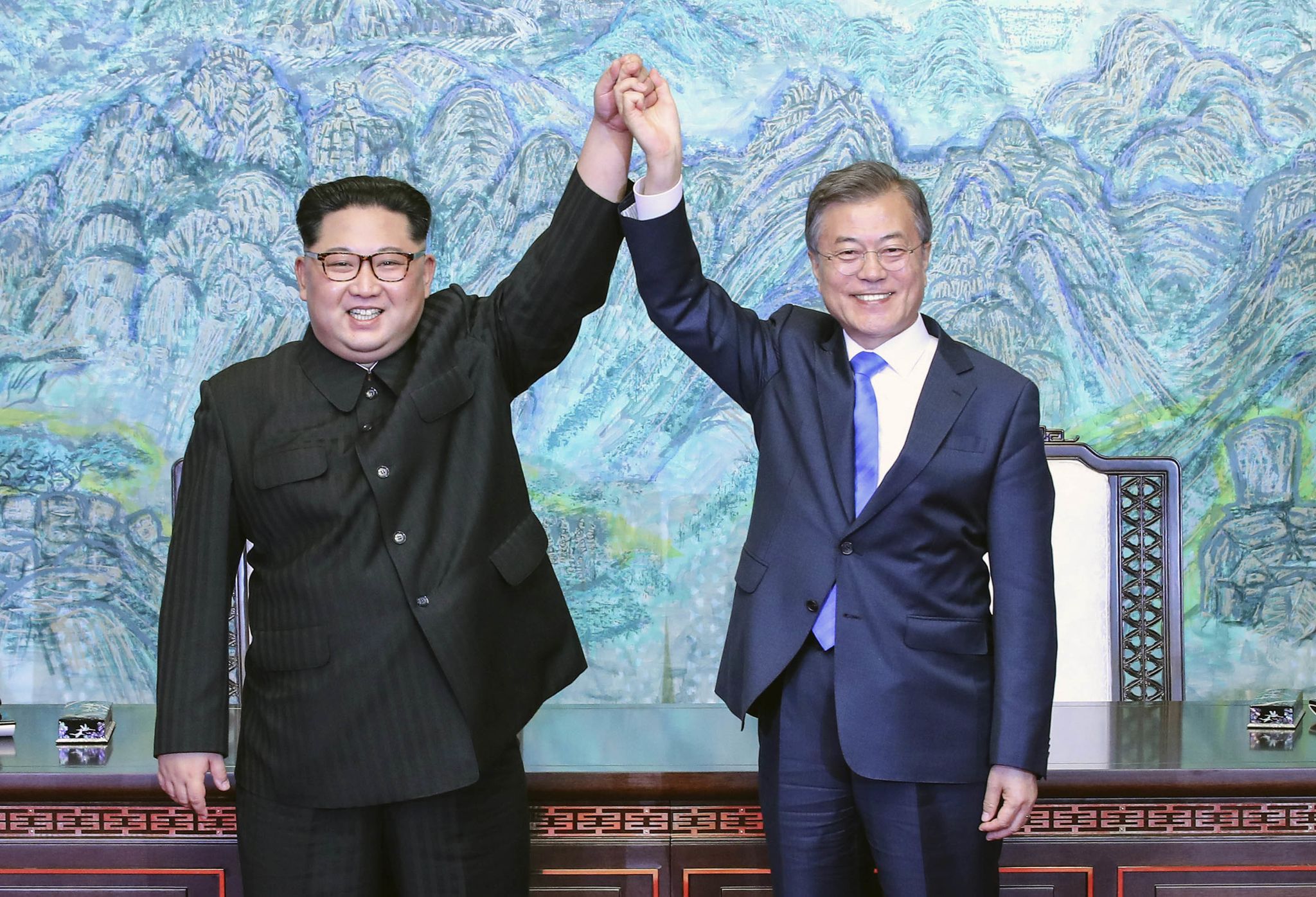
    White House press secretary Sarah Huckabee Sanders said Mr. Trump’s upcoming meeting with North Korean leader Kim Jong-un will be high on the agenda, following Mr. Moon’s first meeting with Mr. Kim on April 27.

    “President Trump and President Moon will continue their close coordination on developments regarding the Korean Peninsula,” she said. “This third summit between the two leaders affirms the enduring strength of the United States–Republic of Korea alliance and the deep friendship between our two countries.”

    Mr. Trump said Friday that the U.S. and North Korea have agreed on the date and location of their summit, but he didn’t disclose the details. Among the locations under consideration are Singapore, Mongolia and the demilitarized zone between North and South Korea.

  • Trump team returning from China, won’t back down from trade-war threat, president says

    President Trump said Friday that he is not backing down from demands for fair trade with China, as top administration officials returned from the first round of trade talks in Beijing.

    President Trump said Friday that he is not backing down from demands for fair trade with China, as top administration officials returned from the first round of trade talks in Beijing.

    The two-day talks in Beijing did not produce major announcements, and the Trump administration is still threatening to impose tariffs on $150 billion worth of Chinese goods. But further rounds of negotiations were expected.

    “My people are coming right now from China, and we will be doing something one way or another with respect to what is happening in China,” Mr. Trump told reporters at the White House.

    He he said that he had been “nice” in the negotiations out of respect for Chinese President Xi Jinping, who has helped the U.S. apply pressure to bring North Korea to talks on giving up its nuclear weapons.

    “I have great respect for President Xi. That’s why we are being so nice, as we have a great relationship,” said Mr. Trump. “But we have to bring fairness into trade between the U.S. and China, and we will do it.”

    Beijing has said that it is open to improving access to U.S. business but also threaten to retaliate against U.S. tariffs, including targeting industries with big business in China such as agriculture and airplanes.

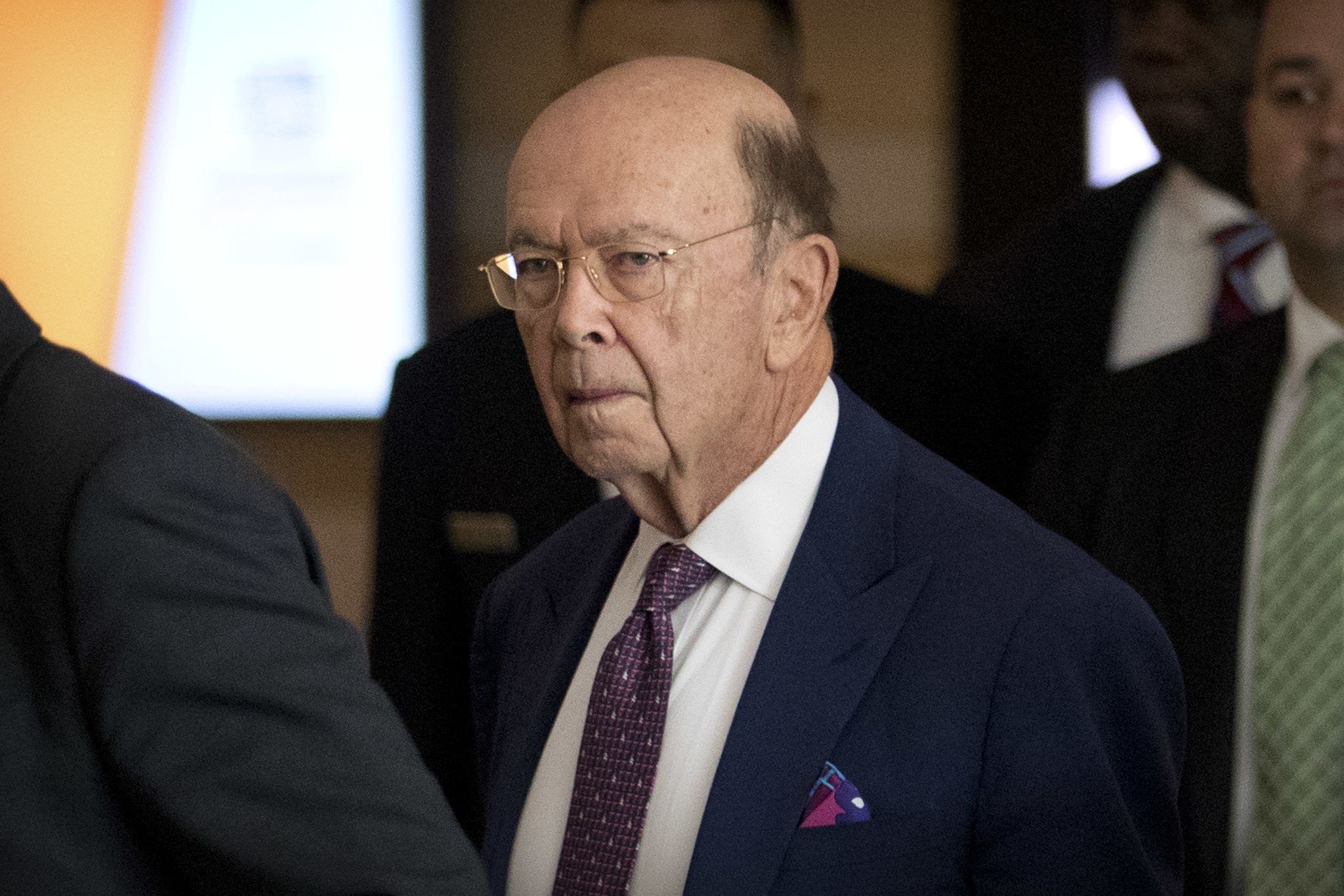
    The trade delegation was led by Treasury Secretary Steven T. Mnuchin and included Commerce Secretary Wilbur Ross, U.S. Trade Representative Robert Lighthizer, National Economic Council Director Larry Kudlow and U.S. Ambassador to China Terry Branstad.

    The White House talks as “frank discussions” about rebalancing trade.

    A chief aim of the Trump administration is to break down barriers to U.S. business in China and reduce America’s $375 billion annual trade deficit with China.

    “The United States delegation affirmed that fair trade will lead to faster growth for the Chinese, United States, and world economies,” the White House said in a statement.

    The size and high level of the delegation illustrated the importance that the Trump Administration places on securing fair trade and investment terms for American businesses and workers, said the statement.

    “There is consensus within the Administration that immediate attention is needed to bring changes to United States–China trade and investment relationship,” it said.

  • Senate Dems concerned Ukraine not cooperating with Mueller’s Russia probe

    Top Senate Democrats are pushing Ukrainian officials to explain allegations that they’re not cooperating with special counsel Robert Mueller’s investigation because they fear President Trump.

    Top Senate Democrats are pushing Ukrainian officials to explain allegations that they’re not cooperating with special counsel Robert Mueller’s investigation because they fear President Trump.

    The three senators — Robert Menendez of New Jersey, the top Democrat on the Senate Foreign Relations Committee, and Richard Durbin of Illinois and Patrick Leahy of Vermont — wrote a letter Friday to Ukraine Prosecutor General Yuriy Lutsenko, expressing concern about a recent New York Times report quoting Ukrainian government officials saying its relationship with the U.S. and Trump administration is too valuable to jeopardize in any way.

    “As strong advocates for a robust and close relationship with Ukraine, we believe that our cooperation should extend to such legal matters, regardless of politics,” the senators wrote. “Blocking cooperation with the Mueller probe potentially cuts off a significant opportunity for Ukrainian law enforcement to conduct a more thorough inquiry into possible crimes committed during the Yanukovich era.”

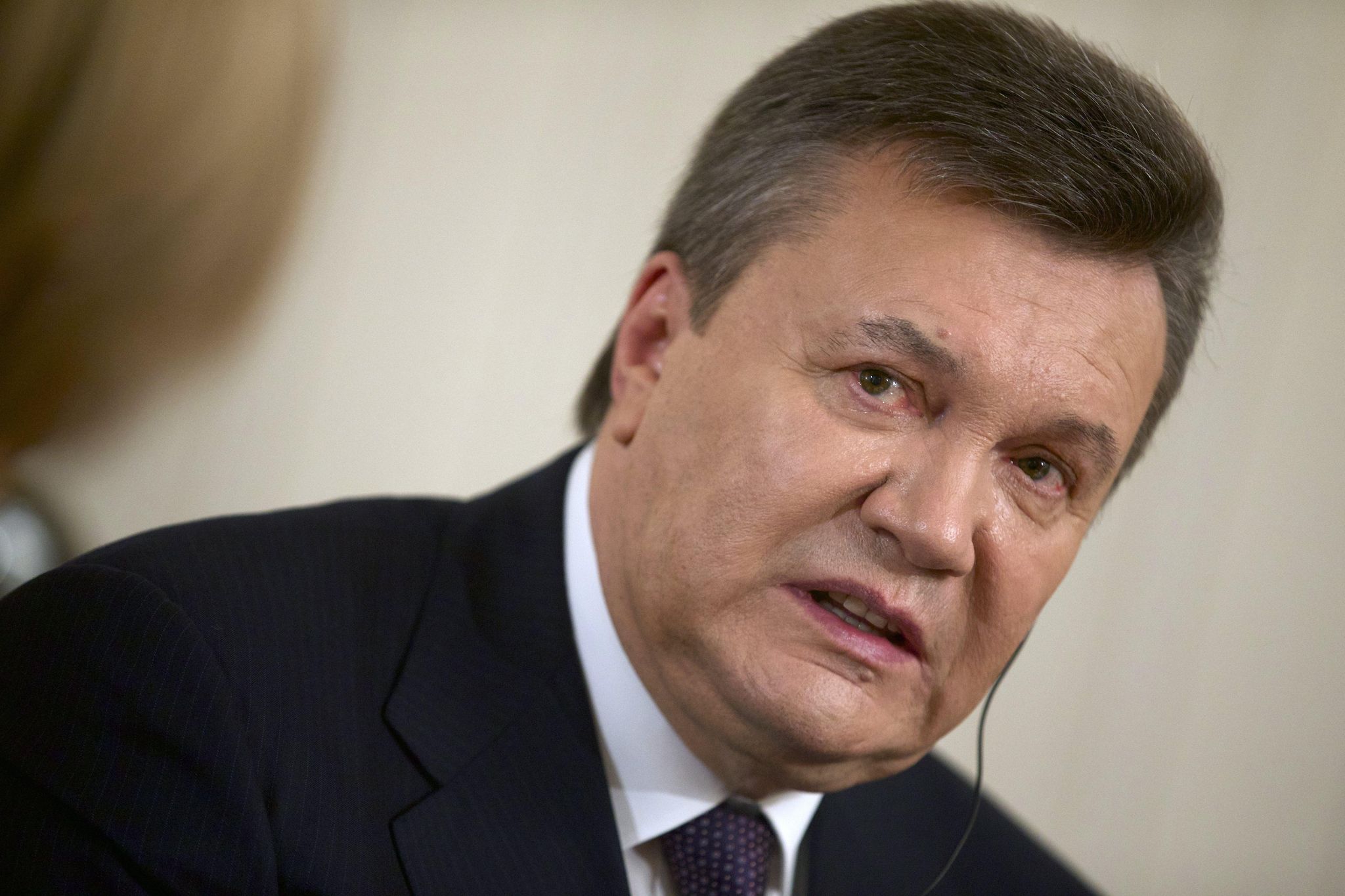
    Viktor Yanukovych served as Ukraine’s president from 2010 to 2014, when he was removed from power during the Ukrainian revolution. He is currently in exile in Russia.

    “This reported refusal to cooperate with the Mueller probe also sends a worrying signal — to the Ukrainian people as well as the international community — about your government’s commitment more broadly to support justice and the rule of law,” the senators wrote.

    The letter also includes questions the senators have about Mr. Lutsenko’s office allegedly preventing the issuing of subpoenas to collect evidence and interview witnesses in four open cases related to former Trump campaign chairman Paul Manafort.

    As part of the Mueller probe, Mr. Manafort has pleaded not guilty to conspiracy, money laundering and tax and bank fraud charges related to his lobbying work for Mr. Yanukovych.

  • Vladimir Putin promises economic reforms as he takes oath of office

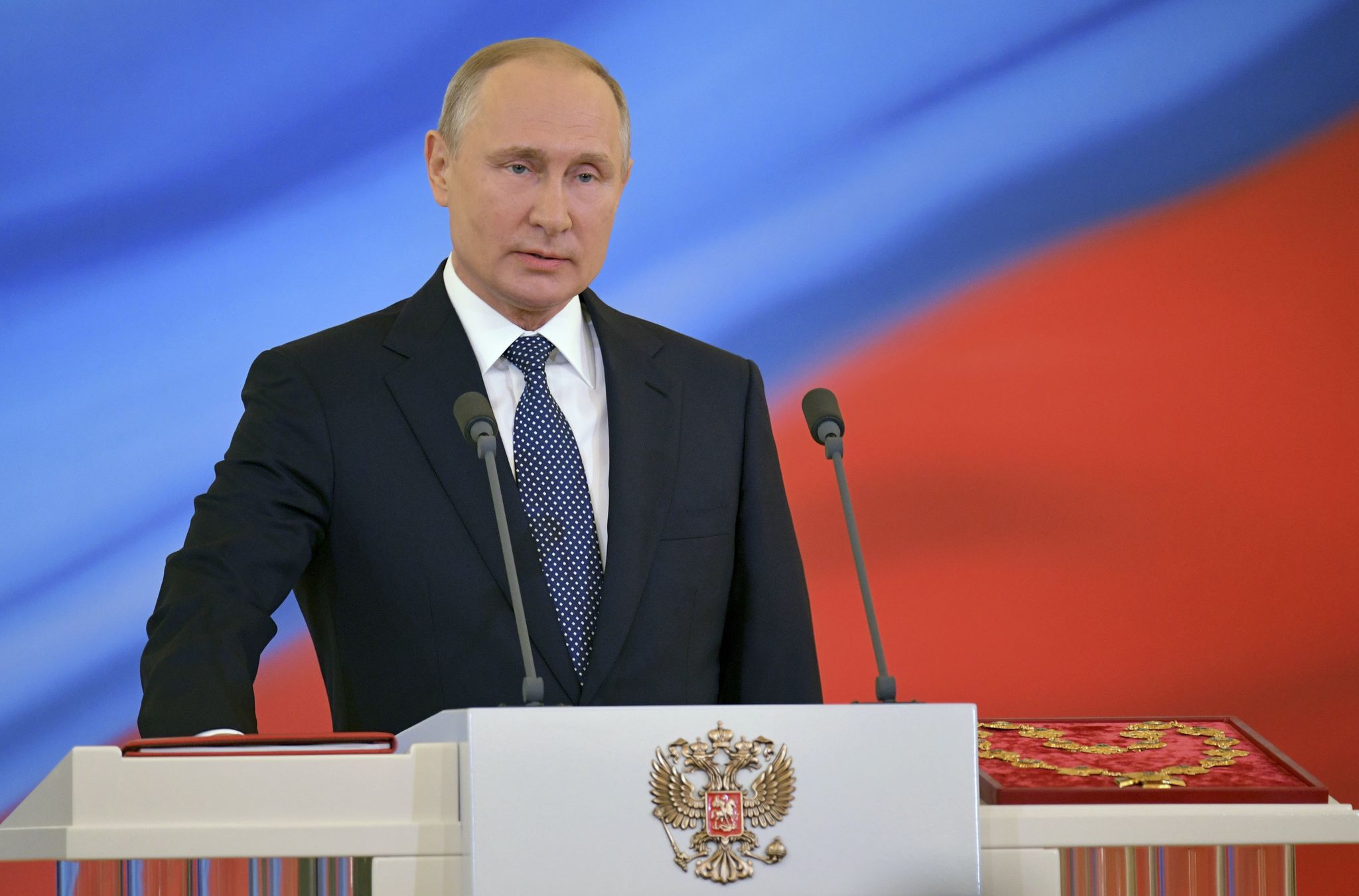
    Vladimir Putin took the oath of office for his fourth term as Russian president on Monday and promised to pursue an economic agenda that would boost living standards across the country.

    MOSCOW (AP) — Vladimir Putin took the oath of office for his fourth term as Russian president on Monday and promised to pursue an economic agenda that would boost living standards across the country.

    In a ceremony in an ornate Kremlin hall, Putin said improving Russia’s economy following a recession partly linked to international sanctions would be a primary goal of his next six-year term.

    “Now, we must use all existing possibilities, first of all for resolving internal urgent tasks of development, for economic and technological breakthroughs, for raising competitiveness in those spheres that determine the future,” he said in his speech to thousands of guests standing in the elaborate Andreevsky Hall of the Grand Kremlin Palace and two adjacent halls.

    “A new quality of life, well-being, security and people’s health — that’s what’s primary today,” he said.

    Although Putin has restored Russia’s prominence on the world stage through military actions, he has been criticized for inadequate efforts to diversify Russia’s economy away from its dependence on oil and gas exports and to develop the manufacturing sector.

    Putin held onto the presidency in March’s election when he tallied 77 percent of the vote.

    Putin has effectively been the leader of Russia for all of the 21st century. He stepped down from the presidency in 2008 because of term limits, but was named prime minister and continued to steer the country until he returned as president in 2012.

  • Nicolas Maduro-Mauricio Marci feud defines foreign relations

    One is a former bus driver and union leader with a soft spot for Cuban-style fatigues and Cuban-style political authoritarianism. The other is a millionaire heir and soccer czar, a onetime business pa

    Buenos Aires | One is a former bus driver and union leader with a soft spot for Cuban-style fatigues and Cuban-style political authoritarianism. The other is a millionaire heir and soccer czar, a onetime business partner of Donald Trump who favors suits from this city’s finest tailors and policies to lift up the country’s once-battered private sector.

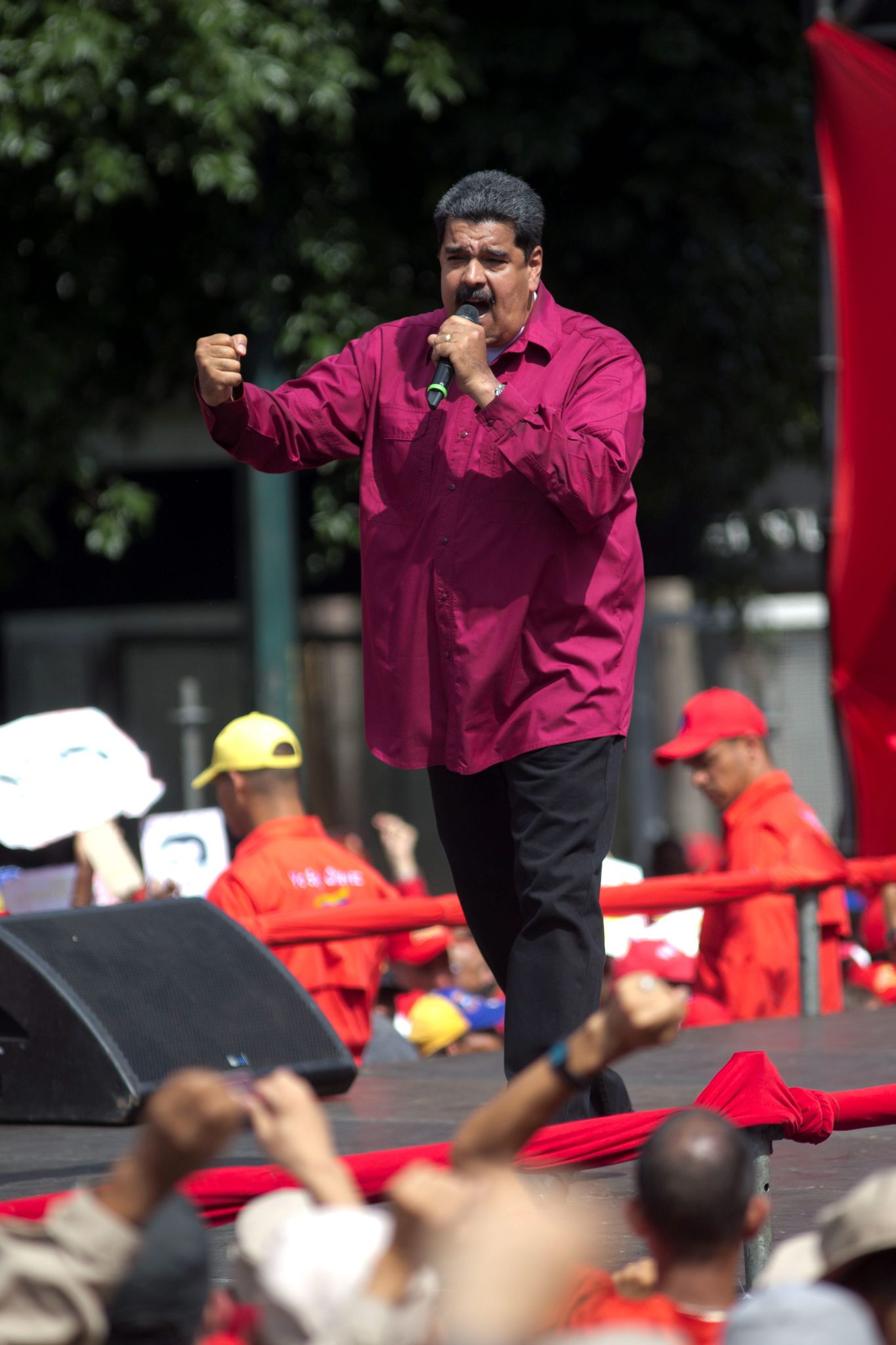
    And while they may share a title as presidents of their respective nations, the rift between Venezuela’s Nicolas Maduro and Argentina’s Mauricio Macri has never been greater, defining the ideological polarization that increasingly marks South American politics these days. With Brazil and Colombia in political limbo as they await national elections, the rebound of Mr. Macri and a number of center-right governments in South America is posing a direct challenge to the old-line leftism embodied by Mr. Maduro and his late predecessor and charismatic mentor, Hugo Chavez.

    The ideological divide is matched by a personal animosity. Mr. Macri’s disdain for the embattled Mr. Maduro was on full display late last month when he all but called for his counterpart’s ouster, telling reporters he wants “what’s happening in Venezuela to come to an end.”

    His comments came days after Argentina had announced it was joining Brazil, Chile, Colombia, Paraguay and Peru in pulling out of the Union of South American Nations, or UNASUR — a brainchild of Chavez.

    The final straw — largely symbolic as the bloc had effectively lain dormant for years — seems to have been Caracas’ refusal to accept Argentine diplomat Jose Octavio Bordon, a Macri nominee, as its next secretary-general.

    The volatile Mr. Maduro, facing a massive economic and demographic crisis at home as Venezuela’s oil-financed social welfare system nears collapse, meanwhile, characterized Mr. Macri and the region’s other center-right presidents as puppets of Washington.

    “Some leaders of the right let themselves be pressured by the U.S. government to destroy UNASUR,” he said en route to a meeting with new Cuban President Miguel Diaz-Canel. “[If] some right-wing government tries to stab it and let it bleed to death, we social movement and revolutionaries of South America will defend it.”

    Colorful as they may be, by Mr. Maduro’s standards, the comments were rather tame. In one of his infamous diatribes last year, Venezuela’s head of state had labeled Mr. Macri a “sewer rat” espousing to be the “godfather of the Venezuelan fascist right.”

    Imitating Chavez

    In lashing out, Mr. Maduro seeks to imitate his mentor Chavez, said veteran Venezuelan diplomat Oscar Hernandez Bernalette, though Mr. Maduro’s approval numbers lag his idol’s maximum popularity by some 40 percentage points.

    “Maduro’s attitude is little more than a bad copy of Chavez’s attitude when Chavez had an audience, but he doesn’t have that same audience,” said Mr. Hernandez Bernalette. “His rhetoric likely reaches — and pleases the ears of — his closest collaborators and the few who back him.”

    Most Venezuelans, though, are bewildered by the president’s crude rhetoric and intemperate attacks, said Mr. Hernandez Bernalette, now a prominent columnist for the El Nacional newspaper.

    “Mr. Maduro’s reaction always is to insult, to attack whatever president’s turn it is — in this case Macri,” he said. “Venezuelans overall are mortified every time the head of state, of whom one expects the highest levels of conduct, [does that].”

    But beyond personal grudges, Mr. Macri is carving out a role for himself as champion a more pragmatic, conservative South America that is not instinctively hostile to the private sector, said Gustavo Cardozo, an analyst at the Argentine Center of International Studies in Buenos Aires.

    “He [wants to] focus on trade relations untainted by the kind of extremist ideology the Maduro regime has laid out,” he said. “Maduro constantly attacks Europe and the United States, which are very important markets. Logically, you can’t be in sync with a regime that turns its back on international trade.”

    Mr. Macri’s domestic critics, meanwhile, see a conspiracy to reverse South American integration behind the UNASUR exit, as well as behind last year’s suspension of Venezuela from the Mercosur trade bloc.

    “All that was halted to return our country to the great powers’ axis of dependency,” said Alicia Castro, an Argentine ambassador to Venezuela under Mr. Kirchner and Ms. Fernandez. “The goal is very clear: to destroy our region’s economies.”

    “It’s regrettable that Argentina is aligning itself with Trump to harass and hit Venezuela,” she said. “In Venezuela, there is no ‘interruption of the democratic order’ — that’s Washington propaganda Macri repeats like a parrot.”

    With the rhetoric showing no signs of cooling, though, the next showdown between South America’s rival presidents is already under way, as Mr. Maduro’s plan to hold early presidential elections on May 20 — over the objections of the Venezuelan opposition parties — did not come without commentary from Buenos Aires.

    “We won’t accept the results because that election doesn’t have any validity, however much Mr. Maduro insults me,” Mr. Macri warned last month. “We won’t recognize [him] as a democratic president because there hasn’t been any democracy in Venezuela for quite a while.”

    “Who is Macri to determine what happens in Venezuela?” Mr. Maduro, predictably, shot back. “A dummy of imperialism.”

  • Donald Trump urged by U.K. not to nix Iran nuke deal

    U.K. Foreign Secretary Boris Johnson on Monday went on President Trump’s favorite TV show to urge him not to quit the Iran nuclear deal, although agreeing with the president’s assessment that it is a

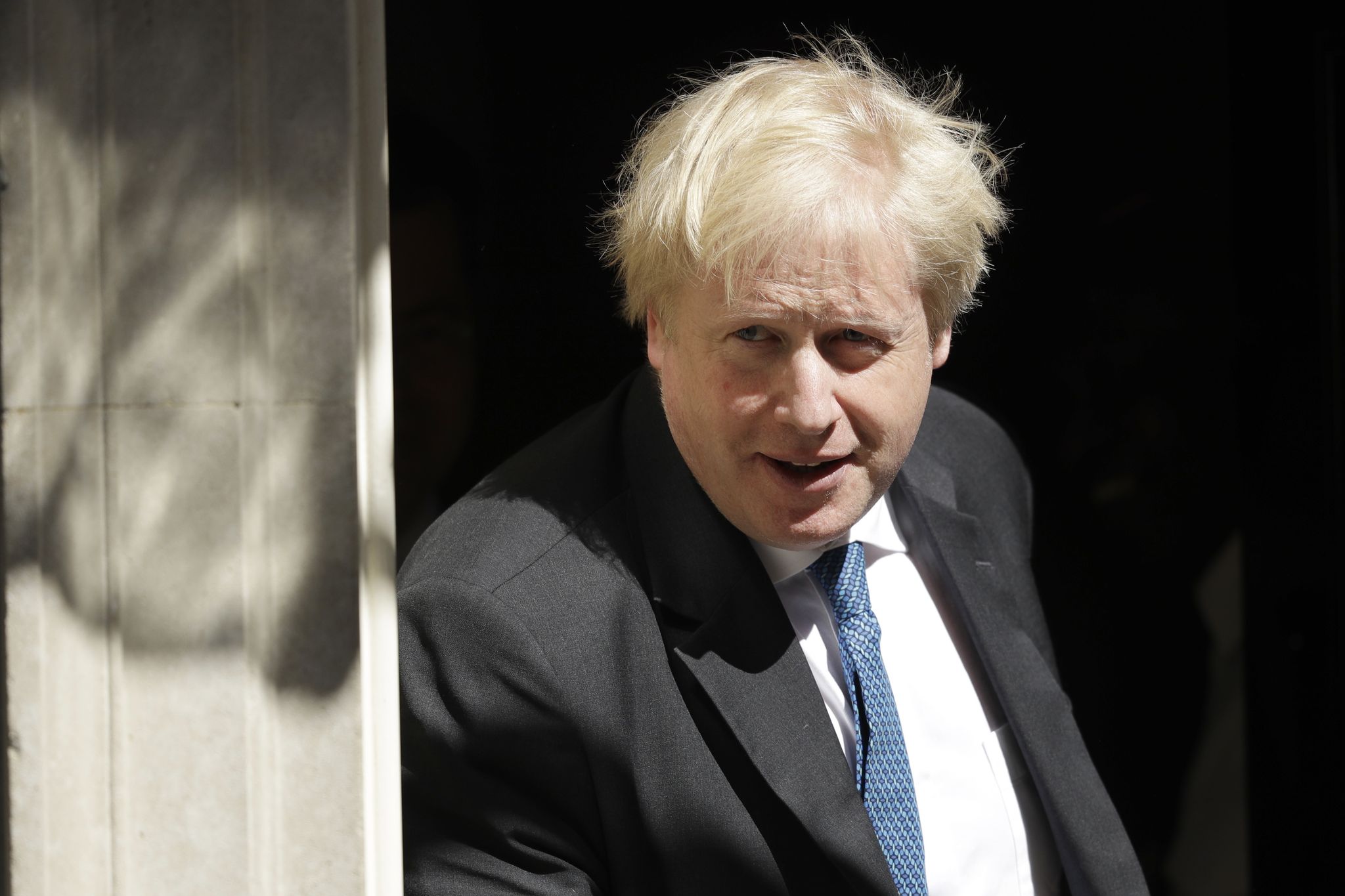
    U.K. Foreign Secretary Boris Johnson on Monday went on President Trump’s favorite TV show to urge him not to quit the Iran nuclear deal, although agreeing with the president’s assessment that it is a bad deal.

    He stressed that there was no “Plan B” if the U.S. nixes the deal.

    “The president has a legitimate point,” Mr. Johnson said on Fox News’ “Fox & Friends,” which Mr. Trump regularly views. “He set a challenge for the world. We think that what you can do is be tougher on Iran.”

    He said ripping up the Iran deal would be like “throwing the baby out with the bathwater.”

    Mr. Trump has set a Saturday deadline to decide whether to pull out of the Obama-era agreement that lifted economic sanctions on Iran in return for halting the Islamic regime’s nuclear program until 2025.

    Mr. Johnson is in Washington this week but will not meet with the president. He took to the airwaves to deliver his message to Mr. Trump.

    Similar appeals were delivered directly to Mr. Trump in visits last month by French President Emmanuel Macron and German Chancellor Angela Merkel. France, Germany and the U.K., as well as China and Russia, joined the U.S. in negotiating the deal.

    Mr. Trump’s concerns, from more rigorous inspections of Iran nuclear facilities to extending the moratorium beyond 2025, would be addressed by building on the current deal, Mr. Johnson said.

    “As I say, a Plan B does not seem to me to be particularly well developed at this stage,” the foreign secretary said.

    If Iran begins fast-tracking a nuclear weapon, the option of bombing its nuclear facilities or allowing a nuclear arms race in the volatile Middle East were both bad options, Mr. Johnson said.

    “At the moment there does not seem to be a viable military solution,” he said.