Tag: Politics

  • The Latest: Panel approves Pompeo for secretary of state

    The Latest on the nomination of Mike Pompeo as secretary of state (all times local):

    WASHINGTON (AP) – The Latest on the nomination of Mike Pompeo as secretary of state (all times local):

    6:30 p.m.

    President Donald Trump’s choice for secretary of state, Mike Pompeo, has cleared the Senate Foreign Relations Committee with a favorable recommendation, narrowly avoiding a rare rebuke as his confirmation heads to the full Senate.

    Democrats put up stiff resistance and voted against Pompeo, who is now the CIA director. Only a last-minute switch from Kentucky Republican Rand Paul – whom Trump called before the vote – enabled Pompeo to win committee approval.

    It would have been the first time since the committee starting keeping records in 1925 that a secretary of state nominee faced an unfavorable report.

    Pompeo’s nomination now goes to the full Senate, where votes are tallying in his favor. Senate Majority Leader Mitch McConnell says he looks forward to voting to confirm Pompeo this week.

    ___

    5:25 p.m.

    Sen. Rand Paul says he now supports Mike Pompeo as secretary of state.

    The Kentucky Republican announced his position after talking with President Donald Trump moments before the Senate Foreign Relations Committee was set to consider the nominee. Pompeo hasn’t had sufficient support from the panel for a favorable recommendation, but Paul’s support could change that outcome.

    Paul says on Twitter that after talking with Trump and meeting with the nominee he received assurances that Pompeo believes the Iraq war “was a mistake, that regime change has destabilized the region, and that we must end our involvement with Afghanistan.”

    With those assurances, the senator says he has “decided to support his nomination to be our next secretary of state.”

    ___

    3:40 p.m.

    Senate Majority Leader Mitch McConnell says he’s looking forward to voting to confirm President Donald Trump’s nominee for secretary of state, Mike Pompeo, later this week in the Senate.

    McConnell is making the upbeat assessment after two more Democratic senators announced support for Pompeo, now the CIA director, despite steep opposition expected Monday evening at the Senate Foreign Relations Committee. The panel is unlikely to have the votes to give a favorable recommendation, but the nominee is expected to find wider support in the full Senate.

    McConnell says that with Pompeo, “the United States will have a chief diplomat who enjoys the total confidence of the president.”

    The Republican leader says he looks “forward to upholding the tradition of this body and voting to confirm him this week.”

    ___

    1:30 p.m.

    Mike Pompeo’s nomination for secretary of state has received a boost because two Democratic senators announced they would support his confirmation before the full Senate.

    Sen. Joe Manchin of West Virginia and Sen. Joe Donnelly of Indiana both backed Pompeo when he was confirmed as CIA director. But other Democrats have been peeling away, and Pompeo is not likely to have enough support Monday for a favorable recommendation from the Senate Foreign Relations Committee.

    Neither Manchin nor Donnelly is on the panel, but their votes will help push Pompeo’s nomination before the full Senate vote expected later this week.

    Manchin says “during this sensitive diplomatic time, it’s important our next secretary of state understands the grave threats facing our nation and can offer diplomatic solutions to avoid conflict, as soon as possible.”

    ___

    9:30 a.m.

    President Donald Trump is attacking Democrats as he seeks Senate confirmation of Mike Pompeo as secretary of State.

    Trump says on Twitter Monday: “Hard to believe Obstructionists May vote against Mike Pompeo for Secretary of State. The Dems will not approve hundreds of good people, including the Ambassador to Germany. They are maxing out the time on approval process for all, never happened before. Need more Republicans!”

    Pompeo’s nomination faces serious opposition from key Democrats and at least one Republican. The Senate Foreign Relations Committee may not have enough votes to recommend him for confirmation.

    The full Senate is still expected to consider Pompeo’s nomination later this week. But the rebuke from the panel would be the first time in years a nominee for the position did not receive a favorable vote.

    ___

    President Donald Trump’s nominee for secretary of State, Mike Pompeo, is facing serious opposition before the Senate Foreign Relations Committee.

    The panel may not have enough votes to recommend him for confirmation Monday as all Democrats, and at least one Republican, have said they will oppose him.

    The full Senate is still expected to consider Pompeo’s nomination later this week. But the rare rebuke from the panel, even after Pompeo’s recent visit with North Korean leader Kim Jong Un, would be the first time in years a nominee for the high-level Cabinet position did not receive a favorable vote.

    The chairman of the committee, Republican Sen. Bob Corker, blames partisan politics for opposition to Pompeo, saying the CIA chief is just as qualified as past nominees for secretary of state.
  • Kim Jong-un summit threatened by Trump’s bid to end Iran nuclear deal

    President Trump’s determination to undermine the Iran nuclear deal could undercut his hopes for quick success in the upcoming summit with North Korean leader Kim Jong-un, many in South Korea fear.

    SEOUL — President Trump’s determination to undermine the Iran nuclear deal could undercut his hopes for quick success in the upcoming summit with North Korean leader Kim Jong-un, many in South Korea fear.

    Former high-level South Korean officials and analysts say Mr. Kim will be far less likely to abandon his nuclear and missile programs if the U.S. pulls out of the 2015 multilateral agreement meant to curb Tehran’s nuclear programs in exchange for relief from international economic sanctions.

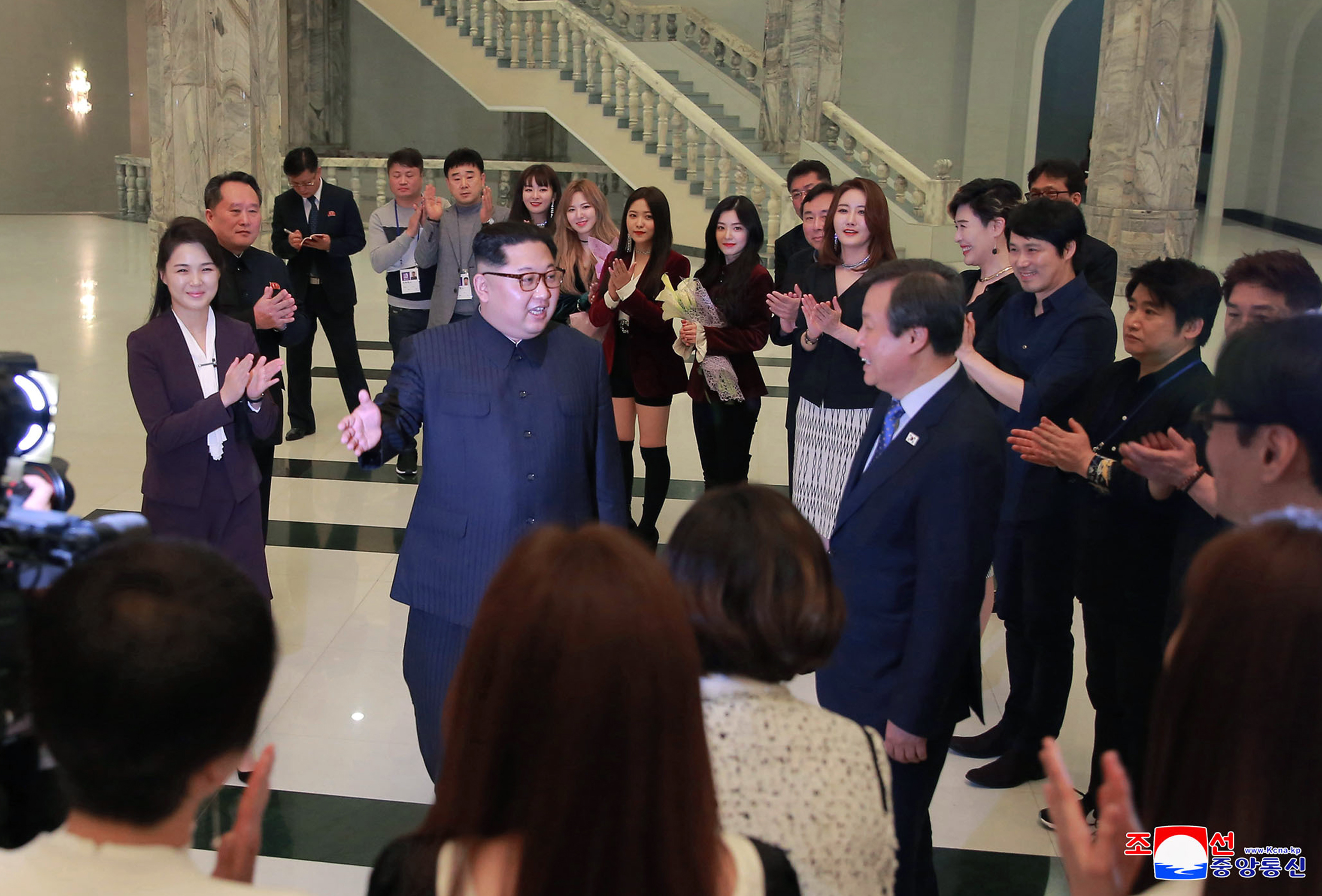
    Mr. Kim plans a one-on-one summit with South Korean President Moon Jae-in on April 27 and is set to meet Mr. Trump next month or in early June at a still-to-be-determined location. The Trump administration has said the goal of the high-risk meeting will be to get the North to agree to eventually give up its nuclear programs.

    But the prospect of a U.S. pullout from the Iran deal casts a shadow over the talks.

    “It will have a very negative influence on North Korea’s decision of whether or not to come out with a strong denuclearization statement or to make any serious concessions during a summit with President Trump,” said Paik Hak-soon, a top North Korea analyst with the Sejong Institute think tank in the South.

    The Iran agreement and the Korean Peninsula talks “are quite closely connected in the perception of the North Korean leadership,” Mr. Paik said in an interview. “Trashing the Iran deal will have a very souring effect.”

    Many here see Mr. Trump’s appointment of John R. Bolton as his national security adviser, a sharp critic of the Obama administration’s Iran deal and a past proponent of regime change in Iran, as an indication that Washington is bent on pulling fully out of the accord.

    Under the Iran deal’s terms, U.S., China, Russia, Britain and France gave billions of dollars in sanctions relief to Iran in exchange for sharp curbs and intrusive inspections of Tehran’s nuclear programs.

    Other signatories to the deal say they want to preserve it, but Iranian officials have said they will not be bound by the nuclear restrictions if the U.S. says it no longer is part of the agreement.

    Mr. Trump decertified the Iran deal as in the U.S. national interest in October — a mainly rhetorical step that sets the stage for a full withdrawal. Critics of the agreement say Iran has violated the letter and the spirit of the deal by testing a string of long-range ballistic missiles and continuing to threaten Israel and U.S. Sunni Arab allies in the region through a network of proxy forces such as Lebanon’s Hezbollah.

    The president has issued an ultimatum to Britain, France and Germany. If they don’t join Washington in fixing “terrible flaws” in the deal, Mr. Trump said, he will move to unilaterally reimpose U.S. sanctions on Iran by May 12, the next deadline for him to renew sanctions relief that Washington has been giving Iran for the past three years. There has been little indication of progress on a revised deal with exactly a month to go.

    State Department Policy Planning Director Brian Hook told reporters last month that the goal is to get the Europeans to agree to collective new sanctions against Iran if it tests long-range missiles or evades inspections of its remaining nuclear facilities.

    Echoes across Asia

    But the Iran debate is having clear echoes on the other side of Asia as Mr. Trump pursues his “deal on the de-nuking of North Korea.”

    “I see a very close correlation with the Iran agreement, and I am concerned that if the agreement is not [upheld], it will have an impact on the nuclear issue on the Korean Peninsula,” said retired South Korean Army Lt. Gen. Chun In-bum, an analyst on the North Korean threat.

    “It’s going to make the negotiations between the United States and North Korea more difficult,” said Jun Bong-geun, the head of security and unification studies at the Korea National Diplomatic Academy in Seoul. “North Korea may want more assurances from Washington, and they may want to hide more.

    “It might send a message that if changing administrations can change a deal, what does that mean for [Pyongyang]? It will probably make it harder for the North Koreans to trust a deal with the U.S.,” Gen. Chun said in an interview.

    The Moon government has remained mum on the Iran issue, but one former official told The Times that there “definitely is concern” inside the administration.

    Given the skepticism Mr. Trump and his advisers have about Iran’s compliance, the bar may be even higher for Mr. Kim. U.S. security officials say North Korea has routinely violated international accords meant to stop it from obtaining nuclear weapons and the missiles to hit the U.S. and its East Asian allies.

    The Trump administration has indicated that denuclearization — not just a declaration by Pyongyang but verifiable abandonment of the nuclear program — is a precondition for negotiations toward lifting sanctions on North Korea.

    Uncertainty looms, however, over the administration’s game plan for the Trump-Kim summit.

    Just days after he was appointed as national security adviser last month, Mr. Bolton told Radio Free Asia that the administration should follow the “Libyan Model” with North Korea. The George W. Bush administration struck a relatively quick deal in December 2003 with Libyan dictator Moammar Gadhafi to give up his nuclear materials in exchange for sanctions relief and the promise of normalized relations with the West.

    But South Korean sources say the mention of Libya likely angered Pyongyang, which has long pointed to Gadhafi’s death at the hands of U.S.-backed rebels during the 2011 Arab Spring as an example of why a smaller state should never surrender its nuclear arsenal.

    “We all know the Gadhafi case is something the North Koreans point to repeatedly to demonstrate that their behavior will not be decided by anybody, let alone by the United States, the way Gadhafi’s was,” said Mr. Paik. “And I think you can compare the collapse of the Iran deal, if America pulls out of it, to the Gadhafi case.”

    If Mr. Trump keeps the U.S. in the Iran deal, however, “the North Koreans could more comfortably come to the table with the United States.”

    “Bolton clearly has a very narrow view of the Libya case,” said the former official, who spoke on background with The Times, arguing that the U.S.-Libya detente in 2006 depended heavily on the involvement of Britain as an intermediary and that no such intermediary exists vis-a-vis the potential U.S.-North Korean negotiations.

    The uncertainty, many here say, means that the fate of any Trump-Kim summit will depend heavily on what comes from a summit between Mr. Kim and Mr. Moon.

    Mr. Paik believes one of Mr. Moon’s goals may be to get such a statement from Mr. Kim on denuclearization. At a minimum, he said, Mr. Moon is “trying to persuade Kim Jong-un with maximum effort to keep his commitment to denuclearize when he comes to the U.S.-North Korea summit talks.”

  • Russia says Syrian government now in control of rebel town

    The Russian military announced on Thursday that the Syrian government is now in full control of the last rebel-held town on the outskirts of Damascus that was the site of a suspected chemical attack o

    BEIRUT (AP) — The Russian military announced on Thursday that the Syrian government is now in full control of the last rebel-held town on the outskirts of Damascus that was the site of a suspected chemical attack over the weekend.

    The development would mark a major victory for the Syrian President Bashar Assad as the United States and allies consider punitive military attacks against Syria following the suspected chemical attack that killed 40 people.

    However, there was no official announcement by Damascus, and no indication that Syrian government forces had entered the town of Douma on Thursday. One government flag was raised in the town, a war monitoring group said.

    SEE ALSO: National security team springs to action after Trump warns of Syria strike

    Syrian TV stations showed civilians in vehicles carrying the Syrian flag crossing from Damascus into Douma.

    Douma and the enclave of eastern Ghouta, just east of Damascus, was a significant rebel stronghold during Syria’s civil war, now in its eighth year. Its effective surrender to government forces comes after years of siege by Assad’s troops and a months-long, intense military offensive.

    Meanwhile, Syrians are bracing for a possible U.S. attack in retaliation for Saturday’s alleged chemical assault in Douma. The Foreign Ministry in Damascus has denounced President Donald Trump’s threat to attack the country as “reckless” and a danger to international peace and security.

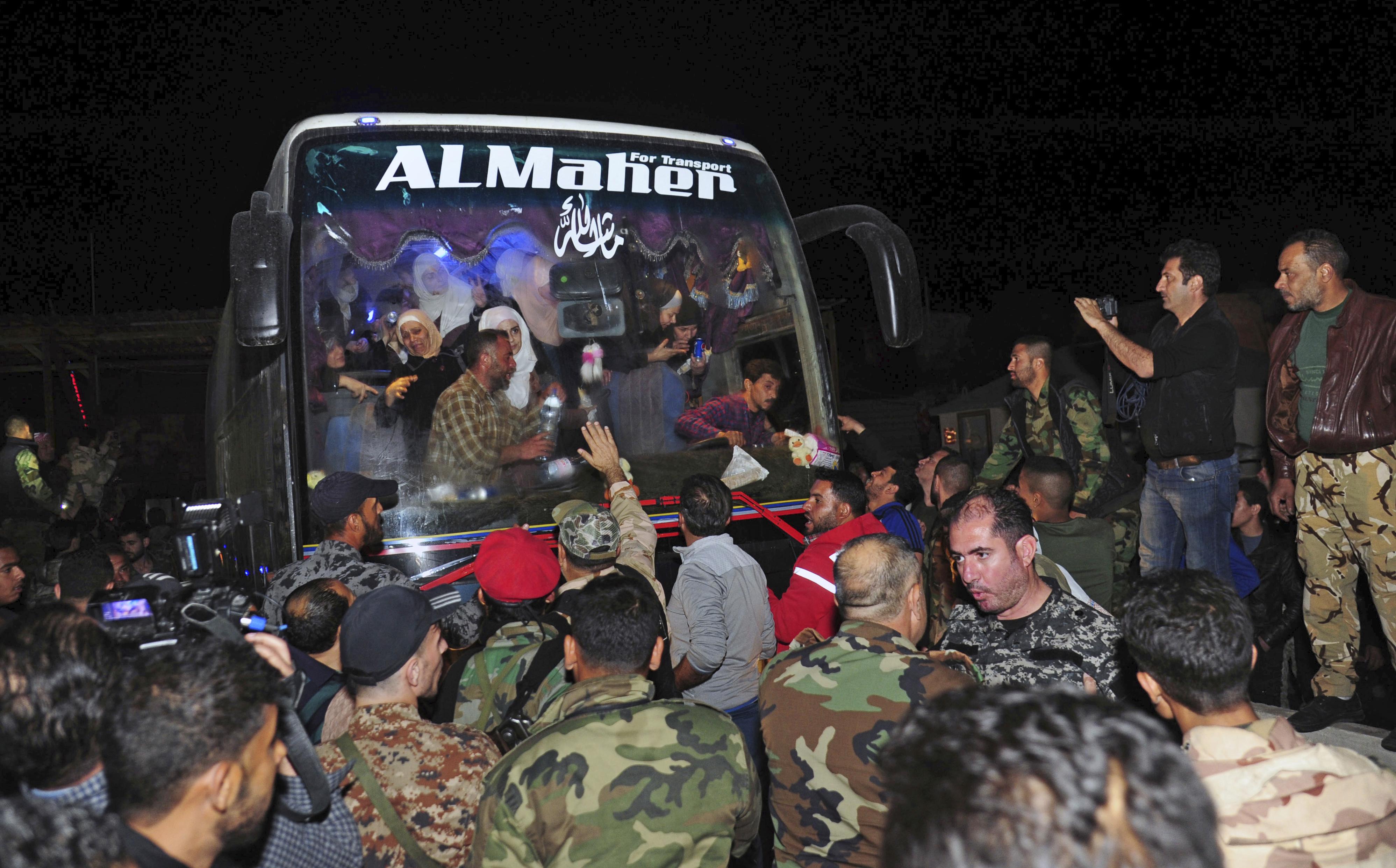
    Under an evacuation deal for eastern Ghouta that was mediated by Russia, Assad’s top ally, no Syrian troops are expected to enter Douma, only police. Another police force, incorporating former rebels, is also to be formed and deployed in Douma.

    Evacuation of armed gunmen and civilians who refuse the deal is still underway. According to the Syrian Observatory for Human Rights, which monitors the war through activists on the ground, there were still rebel fighters inside Douma on Thursday.

    But the leaders of Jaish al-Islam, or Army of Islam, the strongest rebel group in eastern Ghouta that controlled Douma, have all evacuated. It is not clear if any of the remaining rebel fighters will evacuate or hand in their weapons and take part in the new policing force.

    The Russian Defense Ministry statement followed a chaotic day in Douma that saw rebels there open fire as opposition fighters were leaving with families under the deal. It appeared designed to quell the tension and ensure the deal, which has been fraught with bumps, remains on track.

    The Russian ministry said the situation in Douma was “normalizing.” The Observatory said the Russian military is deploying to reassure thousands of remaining civilians in Douma.

    Wednesday’s turmoil in Douma came during the evacuation of the latest batch of civilians and rebels after pro-government supporters attempted to raise government flags over buildings and chanted in support of Assad.

    Some Russian journalists who had entered the town with a reconciliation delegation were wounded in the melee. The Observatory said more evacuations would take place on Thursday.

    Amid earlier disagreements, a truce collapsed last week and the Syrian government pressed ahead with its offensive.

    Then came Saturday’s suspected chemical attack in Douma, followed by international condemnation and threats of military action. Syria and Russia deny the attack took place.

    The evacuation deal called for the formation of a local council to administer Douma. Thousands of civilians are staying in Douma, and some fighters are also expected to stay, on condition that they hand in their weapons. More than 13,500 Syrian rebel fighters and their families left Douma this month.

    ___

    Vasilyeva reported from Moscow.

  • Donald Trump no longer an honorary Cossack

    Some Russians aren’t sitting back as they await President Trump’s promised strike via Twitter on their Syrian ally over a suspected chemical weapons attack.

    Some Russians aren’t sitting back as they await President Trump’s promised strike via Twitter on their Syrian ally over a suspected chemical weapons attack.

    The Irbis Cossacks, the St. Petersburg branch of the legendary Russian warrior clan, announced Wednesday it was stripping Mr. Trump of his status as an “honorary Cossack” and now say they will burn the American president in effigy for his menacing words.

    Andrei Polyakov, the ataman, or leader, of the Irbis Cossacks, told the Russian news website Rosbalt.ru that the move was made because of Mr. Trump’s “insults against the state, which cannot be tolerated.”

    The group first offered Mr. Trump honorary membership shortly after his 2016 election, citing his comments questioning the value of the NATO alliance and seeking to repair frayed U.S.-Russian ties. The relationship persisted despite the U.S. airstrikes Mr. Trump ordered in 2017 against a Syrian airbase over a previous suspected use of chemical weapons.

    “Political events began to unfold not as pleasantly as we’d like,” Ataman Polyakov told the website, according to The Moscow Times. “Realizing that we were mistaken, we made a decision to demote Trump and expel him from the organization in disgrace.”

    The Rosbalt account can be found here.

  • Russia issues more warnings against airstrikes on Syria

    Russian lawmakers have warned the United States that Moscow would view an airstrike on Syria as a war crime, saying it could trigger a direct military clash between the two former Cold War adversaries

    BEIRUT (AP) — Russian lawmakers have warned the United States that Moscow would view an airstrike on Syria as a war crime, saying it could trigger a direct military clash between the two former Cold War adversaries.

    Russia’s ambassador to Lebanon went even further, saying any missiles fired at Syria would be shot down and the launching sites targeted — a stark warning of a potential major confrontation in Syria.

    U.S. President Donald Trump threatened military action after last weekend’s suspected chemical attack on a rebel-held town near Damascus, which activists and rescuers say killed at least 40 people. The Syrian government and its ally Russia deny that such an attack happened.

    SEE ALSO: Trump cancels South America trip in sign Syria military strike imminent

    State news agency RIA Novosti on Wednesday quoted Andrei Krasov, deputy chairman of the State Duma’s defense committee, as saying that Russia will treat a U.S. airstrike on Syria “not just as an act of aggression but a war crime of the Western coalition.”

    Vladimir Shamanov, a retired general who heads the defense affairs committee in the lower house of parliament, said in televised remarks Tuesday that a U.S. strike in Syria could hurt Russian servicemen and trigger retaliation.

    He said that Russia has “the necessary means for that, and the Americans and their allies know that quite well.”

    Shamanov emphasized that a retaliatory Russian strike could target U.S. navy ships and aircraft. He added that the use of nuclear weapons is “unlikely.”

    Russian Ambassador to Lebanon Alexander Zasypkin, meanwhile, told Hezbollah’s Al-Manar TV station that any missiles fired at Syria would be shot down. He said he was referring to a statement by Russian President Vladimir Putin and the Russian armed forces chief of staff.

    “If there is a strike by the Americans, then… the missiles will be downed and the source of the missiles targeted,” Zasypkin said.

    Meanwhile, European airspace authorities warned aircraft to be careful over the coming days when flying close to Syria because of possible military action against President Bashar Assad’s forces.

    The Eurocontrol airspace organization said that the European Aviation Safety Agency had sent a “Rapid Alert Notification” that flight operators needed to consider the possibility of air or missile strikes into Syria.

    U.S. officials have consulted with global allies on a possible joint military response to Syria’s alleged poison gas attack.

    In a notice posted to Eurocontrol’s website, EASA said: “Due to the possible launch of air strikes into Syria with air-to-ground and/or cruise missiles within the next 72 hours, and the possibility of intermittent disruption of radio navigation equipment, due consideration needs to be taken.”

  • praised for Russian sanctions

    U.S. lawmakers on Sunday applauded the Trump administration’s most recent move to sanction Russian oligarchs for the country’s “malign” influence around the globe and said the economic pressure is esp

    U.S. lawmakers on Sunday applauded the Trump administration’s most recent move to sanction Russian oligarchs for the country’s “malign” influence around the globe and said the economic pressure is especially important now in the wake of an apparent chemical attack in Syria — a key Russian ally.

    Sen. Benjamin L. Cardin, Maryland Democrat, said that although the president could have acted faster on the sanctions, the targeting of oligarchs was “very important.”

    “I really applaud the people in the State Department and in Treasury for taking this action,” said Mr. Cardin, his party’s ranking member on the Senate Foreign Relations Committee.

    The Trump administration Friday slapped sanctions on Russian senior officials, oligarchs and the companies they own, going after those closest to President Vladimir Putin to punish Moscow’s activities around the world.

    In a significant escalation of the sanctions, President Trump targeted oligarchs and companies in the energy sector, which is the lifeblood of the Russian economy.

    Sen. Susan M. Collins, Maine Republican, said that stepping up pressure on Russia is particularly important after images shot around the world of a suspected chemical weapons attack that killed dozens of people in Syria over the weekend.

    Russia is a key ally of Syrian President Bashar Assad, whose government has been battling rebel forces in a bloody civil war in the country for seven years.

    “Last time this happened, the president did a targeted attack to take out some of the facilities — that may be an option that we should consider now,” Ms. Collins said on CNN’s “State of the Union.”

    “But it is further reason why it is so important that the president ramp up the pressure and the sanctions on the Russian government, because, without the support of Russia, I do not believe that Assad would still be in office,” she said.

    The sanctions also hit Mr. Putin’s son-in-law, who became a major energy sector player after marrying into the Putin family.

    The sanctions froze all assets for seven Russian oligarchs and 12 companies they own or control, 17 senior Russian government officials, and a state-owned Russian weapons trading company and its banking subsidiary.

    The Trump administration said the sanctions are intended to punish Russian oligarchs and elites who profit from the country’s “corrupt” system.

    They follow sanctions on Russian officials and expulsions of 60 Russian diplomats last month over Moscow’s nerve agent assassination attempt in Britain on a former Russian double agent and his daughter.

    The U.S. now has hit around 200 Russian individuals and entities with various sanctions.

    The latest sanctions brought a swift condemnation from senior Russian officials, who accused the Trump administration of lashing out to mask America’s own mounting problems.

    The Russian Foreign Ministry is looking at possible responses to the sanctions, said spokeswoman Maria Zakharova.

    “The response will be given. We always do it. We have drawn an entire list of possible measures we are looking at,” she said, according to the state-owned Tass news agency.

    “It has nothing to do with some virtual meddling with elections, it has nothing to do with either Crimea or Ukraine. It is a strategy, a knock-down-Russia game,” Ms. Zakharova said Sunday in an interview on Rossiya-1 TV.

    Before the sanctions were officially announced, Kremlin spokesman Dmitry Peskov called the phrase “Russian oligarchs” inappropriate.

    “It’s been a long time since Russia had oligarchs. There are no oligarchs in Russia,” he said, according to The Moscow Times.

    Mr. Trump, dogged by special counsel Robert Mueller’s Russia investigation, also has struggled to shake the perception that he is soft on Mr. Putin, though he did criticize the Russian president by name on Sunday for supporting the Assad regime.

    “President Putin, Russia and Iran are responsible for backing Animal Assad,” the president tweeted.

    Mr. Cardin said on CBS’s “Face the Nation” that he was pleased by the president’s Syria tweets. He said the specific mention of Mr. Putin’s name was a significant change for Mr. Trump.

    “He has not done that in regards to the sanctions imposed against the oligarchs. And he certainly has not done that in regards to Mr. Putin’s interference in our own country,” Mr. Cardin said.

    The administration would not say why Mr. Putin was not included on the sanctions list but stressed that he would feel the impact.

    “This will be noticed far and wide,” said a senior administration official.

    The Treasury has been preparing the sanctions for a long time, and they are directed at the “full range of Russian activities,” said another senior official.

    The official said the moves are not a direct response to the recent assassination attempt in Britain, which triggered punitive action from governments around the world.

  • Kim Jong-un to meet to discuss denuclearization

    North Korea has informed the U.S. in talks that it is willing to discuss denuclearization at an upcoming summit, a senior administration official confirmed Sunday.

    North Korea has informed the U.S. in talks that it is willing to discuss denuclearization at an upcoming summit, a senior administration official confirmed Sunday.

    “The United States and North Korea have been holding talks in preparation for a summit,” said the official, who spoke on condition of anonymity.

    The official also told The Washington Times that North Korea “has confirmed its willingness to talk about denuclearization.”

    The message comes as the two countries prepare for a historic meeting between President Trump and North Korean leader Kim Jong-un, probably in May. A date and location for the summit haven’t been announced.

    South Korean officials had told the U.S. weeks ago that North Korea was willing to discuss denuclearization with the Trump administration. But the development this weekend was the first time that U.S. officials heard the commitment directly from North Korea.

    The U.S. official didn’t say when and how the U.S.-North Korea communications had taken place. But the two sides had held multiple direct contacts, Reuters reported.

    Central Intelligence Agency Director Mike Pompeo and a team at the CIA have been working through intelligence back-channels to make preparations for the summit, CNN reported, citing administration officials.

    The report said U.S. and North Korean intelligence officials have spoken several times and have even met in a third country, with a focus on agreeing on a location for the talks.

    It’s not clear how North Korea defines “denuclearization,” although the Trump administration has said Pyongyang must abandon its nuclear weapons program. North Korea has pushed for the U.S. to remove its troops from the Korean peninsula as part of any agreement.

  • Saudi Arabia 9/11 lawsuit can proceed, judge rules

    A lawsuit accusing the Saudi Arabian government of complicity in the Sept. 11 terrorist attacks, and seeking billions of dollars in damages, can go forward, a judge ruled Wednesday.

    A lawsuit accusing the Saudi Arabian government of complicity in the Sept. 11 terrorist attacks, and seeking billions of dollars in damages, can go forward, a judge ruled Wednesday.

    U.S. District Judge George Daniels in Manhattan dismissed Saudi Arabia’s motion to dismiss the case on the grounds of lack of proof of official complicity.

    But Judge Daniels said the plaintiffs — victims’ relatives and their families — can “narrowly articulate a reasonable basis for this Court to assume jurisdiction under [the Justice Against Sponsors of Terrorism Act] over Plaintiffs’ claims against Saudi Arabia.”

    Judge Daniels said he would “allow Plaintiffs limited jurisdictional discovery” of evidence against Saudi Arabia.

    JASTA, passed by Congress in 2016 over President Barack Obama’s veto and Saudi warnings of damage to international relations, created an exception under U.S. law to claims of sovereign immunity by foreign governments. The new law allows U.S. citizens to sue foreign governments in federal court for acts that kill Americans on U.S. soil.

    James Kreindler, a lawyer for many of the plaintiffs, told Reuters news agency he was “delighted” by the judge’s letting the lawsuit go ahead.

    “We have been pressing to proceed with the case and conduct discovery from the Kingdom of Saudi Arabia, so that the full story can come to light, and expose the Saudi role in the 9/11 attacks,” he told the British wire service.

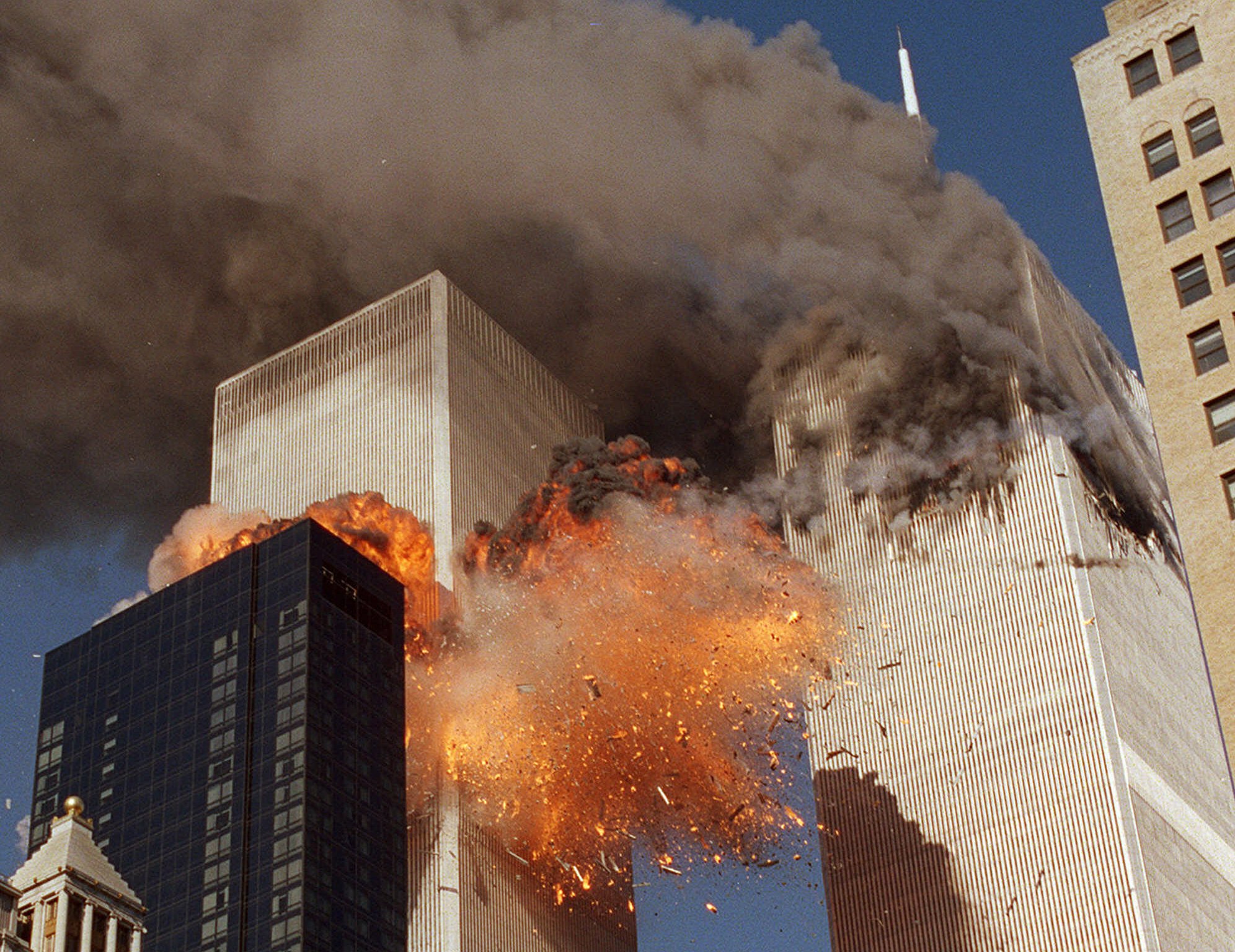
    On Sept. 11, 2001, 19 Al Qaeda terrorists — 15 of them Saudi citizens — hijacked four planes and slammed two of them into the World Trade Center and one into the Pentagon. One crashed into a field in Pennsylvania, apparently ditching a planned attack on Congress because of a passenger uprising. All told, nearly 3,000 people were killed.

    The 9-11 Commission absolved the Saudi government of official or direct complicity in the attacks, but said it could not rule out the possibility that “charities with significant Saudi government sponsorship diverted funds to Al-Qaeda.”

    Judge Daniels did limit the plaintiffs’ case on the facts though.

    He said he would allow the 9-11 families to argue that Saudi Arabia was responsible for the activities of an imam at King Fahd Mosque in California, and Omar al-Bayoumi, said to be an intelligence officer.

    Mr. al-Bayoumi and imam Fahad al Thumairy purportedly helped two of the terrorists integrate into U.S. life and prepare for the attacks.

    But he threw out as beyond his jurisdiction claims that two Saudi banks — National Commercial Bank and Al Rajhi Bank — and the construction company owned by the estranged family of al-Qaeda chief Osama bin Laden, had helped finance the attacks.

  • Uhuru Kenyatta, Raila Odinga call truce in Kenya to heal divisions

    A bitterly contested presidential election appeared to be setting up a violent rerun of clashes between President Uhuru Kenyatta and longtime rival Raila Odinga. But an unexpected detente between the

    NAIROBI, Kenya | A bitterly contested presidential election appeared to be setting up a violent rerun of clashes between President Uhuru Kenyatta and longtime rival Raila Odinga. But an unexpected detente between the two has some hoping Kenya can avoid the partisan and tribal bloodshed that has marred past electoral crises.

    An unexpected calm has settled on most of the country after Mr. Kenyatta and Mr. Odinga agreed to work together to heal divisions arising from last year’s general elections.

    The followers of Mr. Odinga, in his third bid for the presidency and his second race against Mr. Kenyatta, had vowed never to accept the results of a chaotic pair of votes that gave Mr. Kenyatta another five-year term. They insisted that government election officials had rigged the results.

    Odinga supporters in January staged a mock inauguration for their candidate in central Nairobi. The government allowed the ceremony to proceed but blocked any national television coverage of the event and cracked down on politicians who took part.

    Two months later, shoppers are back in the markets and traffic fills the streets of the capital and other major towns that experienced sporadic chaos, violence and demonstrations since the first vote in August. Banks, hotels and foreign exchange bureaus are open for business as well.

    In the lakeside city of Kisumu, an opposition stronghold where more than 50 people died in civil unrest, banks, hotels and fishmongers who work on the banks of Lake Victoria are once again busy. Security officials have removed boulders that protesters used to block roads.

    “Life is now getting better,” said Eunice Achieng, a mother of five who sells fish in Kisumu. “We support the dialogue between President Uhuru and Raila because it’s bringing peace in this region. Business is now picking up well. You can see me readying my wares for the day.”

    Kenya has been in limbo since the original presidential results were nullified on Sept. 1 because of what the Supreme Court called “irregularities and illegalities” in the electronic transmission of results. The court ordered a rerun, which Mr. Odinga boycotted, saying Mr. Kenyatta needed to revamp the electoral commission before a new vote.

    Mr. Kenyatta won the second ballot with 98 percent of the vote, though less than a third of the electorate went to the polls, according to the electoral commission. The Supreme Court upheld Mr. Kenyatta’s victory, sparking violent protests among Odinga supporters.

    Human rights groups estimated that 100 people died in election-related violence since the initial vote.

    As the crisis worsened, the international community put pressure on the two longtime rivals to strike a deal. Led by U.S. Ambassador Robert Godec and U.K. envoy Nic Hailey, diplomats pushed for dialogue to put the country back on the right track.

    “As partners, we will do all we can to help, but only Kenyans can resolve the country’s problems,” they said in February, a week before then-U.S. Secretary of State Rex W. Tillerson arrived in Nairobi. “We again call for an immediate, sustained, open and transparent national conversation involving all Kenyans to build national cohesion, address long-standing issues and resolve the deep-seated divisions that the electoral process has exacerbated.”

    Tillerson’s role

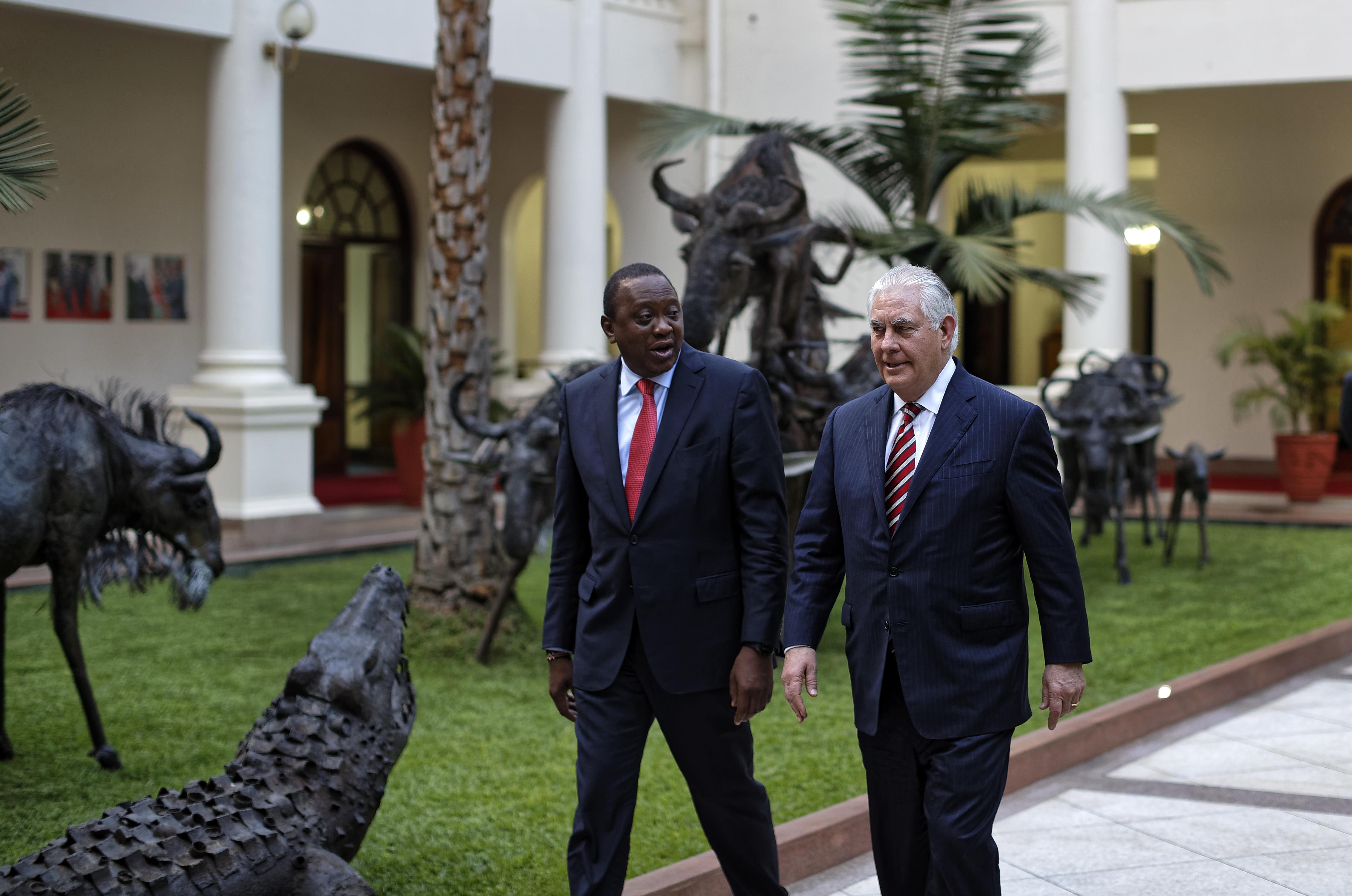
    Mr. Kenyatta and Mr. Odinga met on March 9 — the day Mr. Tillerson arrived in Nairobi — and declared they would work together to unite the country. It was one of Mr. Tillerson’s last official acts before President Trump dismissed him.

    “Leaders must come together to discuss their differences and what ails the country, like ethnic divisions,” Mr. Kenyatta said at a joint press conference with Mr. Odinga. “We have a responsibility to discuss and find solutions that will bind, unify and give a life cycle beyond the five years we have given ourselves. Elections come and go, but Kenya will remain.”

    His rival similarly appealed to Kenyan patriotism.

    “We refuse to allow our diversity to kill our nation,” Mr. Odinga said. “We need to save our children from ourselves. My brother and I have come together to say this dissent stops here.”

    The two shared a handshake in a gesture that has sparked a cottage industry of analysis over how firm, sincere and frank the clasping of hands appeared. Both men, especially Mr. Odinga, have faced a wave of skepticism in the days since over whether the political reconciliation was real and what backroom deals may have been cut.

    “The public camaraderie among Kenyan political leaders is just that — nothing more,” Sam Kanau, a lecturer at the Graduate School of Media and Communications at the Aga Khan University, told the Kenyan daily Star newspaper last week. “It means the underlying issues like feelings of exclusion, extreme poverty and electoral injustice will remain buried and unaddressed.”

    Mr. Odinga denied that any secret deals had been cut and pointed to an even more unlikely diplomatic pairing to justify his move.

    “What is wrong if Raila Odinga talks with President Kenyatta? It is the trend the world over,” the opposition leader told reporters after attending a church service over the weekend. “Even President Donald Trump is contemplating meeting North Korean leader Kim Jong-un.”

    The ethnic hatred between Mr. Odinga’s Luo tribe and Mr. Kenyatta’s Kikuyu tribe dates back to the colonial period. The fathers of the two candidates were allies in the struggle for Kenya’s independence from British colonial rule and then became political adversaries. The sons extended the family rivalry into the country’s ethnic allegiances.

    Now, observers say, the two leaders’ move could provide an unexpected force for stability in the country and, most important, the economy.

    “The unity between two leaders is for the benefit of Kenyans,” said Peter Wafula Wekesa, a political analyst from Kenyatta University in Nairobi. “It will bring unity among the tribes and stabilize the economy. The shilling has gained against the dollar, and the stock market is also recovering.”

    But Bonface Mwangi, who is involved in social-political activism through his initiative Team Courage, said the unity pact could give license to the opposition to receive ill-gotten benefits and not serve as a watchdog over the government’s rampant corruption and poor performance.

    “Will Raila continue to call out Uhuru on corruption, disregarding court orders and police brutality?” he asked. “Will Raila demand electoral justice, compensation for the victims killed by police in peaceful protests, or will he keep quiet?”

    Ms. Achieng said those fears were overblown. It’s time for Kenyans to come together and reconcile after a long political season, she said.

    “We need to forgive each other and live together,” she said. “People from other tribes had to flee this region because of fear of attack. We should support Uhuru and Odinga’s move to bring peace here.”

  • Narendra Modi blamed in rise of India’s Christian persecution

    Religious clashes in the troubled northern Indian state of Jamma and Kashmir are nothing new, but the riot that broke in January targeted an unexpected group: Christians.

    NEW DELHI — Religious clashes in the troubled northern Indian state of Jamma and Kashmir are nothing new, but the riot that broke in January targeted an unexpected group: Christians.

    While most of the state’s problems pit an Islamist separatist movement against India’s Hindu majority, Christianity was at the heart of the violence this time as a mob of thousands interrupted a burial ceremony to seize the body of the deceased for a Hindu cremation.

    Local Christians and international religious rights groups say anti-Christian incidents are on the rise, particularly since Prime Minister Narendra Modi’s Hindu nationalist Bharatiya Janata Party assumed power in 2014. They contend that the government’s failure to censure local leaders for inflammatory rhetoric and sectarian persecution has encouraged a culture of impunity for anti-minority violence — a charge the BJP denies.

    SEE ALSO: Christianity in India

    The Evangelical Fellowship of India documented some 350 cases of violence and other forms of persecution against Christians last year. That is more than double the rate compared with the 140 annually before the BJP assumed power and the highest level of violence since an anti-Christian pogrom that resulted in dozens of rapes and killings and the burning of hundreds of churches in the state of Odisha in 2008, said EFI Executive Director Vijayesh Lal.

    High points of the Christian liturgical year, such as the coming Easter celebrations, are proving times of particular peril.

    “It is distressing to see even private worship being attacked by Hindu right-wing activists violating the privacy and sanctity of an individual or a family and trampling upon their constitutional rights,” Mr. Lal said on releasing the organization’s 2017 survey last month. “The instances of attacks on churches on Sundays and other important days of worship such as Palm Sunday, Good Friday, Easter and Christmas have increased.”

    Based on voluntary reporting and investigations by civil society organizations, the EFI report documented attacks on churches, the unlawful detentions of children on their way to Bible camp and homicides.

    Even so, police registered complaints in fewer than 50 cases last year.

    “There are many reasons,” Mr. Lal said. “Fear is the most common. Victims don’t want to get caught in the whole web of the police and the courts. Refusal to file an [information report] on the part of the police is also very common.”

    The Ministry of Home Affairs, which is responsible for law and order, did not respond to questions about the EFI report or associated data by the U.S.-based Save the Persecuted Christians Coalition. Indian authorities do not track such incidents.

    More broadly, clashes among various ethnic and religious communities rose 28 percent from 2014 to 2017, according to an analysis of Home Affairs Ministry data by IndiaSpend, a nonprofit journalism initiative. But the BJP Minority Morcha, the party’s wing devoted to courting minority voters, insisted that neither the Modi government nor BJP policy is to blame.

    Violence and other forms of persecution may occur, said BJP Minority Morcha head Abdul Rasheed Ansari, “but it is never sponsored by the government or the political party.”

    Clashes over conversions

    It’s a thorny issue, analysts say.

    Almost 80 percent of India’s 1.3 billion people are Hindu. While just 14 percent of the population is Muslim, India boasts the world’s third-largest Muslim population. Christians make up about 2.3 percent of the population — nearly 30 million believers — and there are smaller communities of Sikhs, Buddhists and Jains.

    The U.S. Commission on International Religious Freedom in its 2017 global survey rated India as one of a dozen Tier-2 countries for religious restrictions, behind countries of top concern such as China, North Korea, Iran and Saudi Arabia but on par with Cuba, Iraq and Turkey.

    “While [Mr. Modi] spoke publicly about the importance of communal tolerance and religious freedom, members of the ruling party have ties to Hindu nationalist groups implicated in religious freedom violations, used religiously divisive language to inflame tensions, and called for additional laws that would restrict religious freedom,” the commission’s report noted.

    “Christian communities across many denominations reported numerous incidents of harassment and attacks in 2016, which they attribute to Hindu nationalist groups supported by the BJP.”

    The January incident in Jammu and Kashmir shined a spotlight on concerns across India about Christian proselytizing and religious conversion. In that case, the mob violence erupted over charges that the deceased, Seema Devi, had been forced to convert to Christianity by her husband and subsequently died from illness after he took her for “spiritual healing,” according to The Indian Express daily newspaper.

    Afterward, nearly 45 families from the village of Sehyal and the surrounding areas converted from Christianity to Hinduism as part of a “ghar wapsi” or “homecoming” program promoted by the local BJP member of the state legislative assembly. The few Christian holdouts are living under police protection.

    That assemblyman, Ravinder Raina, said Christian missionaries had converted “poor people through force and deceit,” echoing accusations that BJP legislators and others have used to introduce anti-conversion laws in nine of the country’s 29 states.

    Lawmakers in a 10th, the northern state of Uttarakhand, introduced a similar bill last week, suggesting a penalty of up to two years in prison for anyone seeking converts through force or “allurement” — which could include money, employment or any material benefit.

    Conversion is particularly contentious in India because the patronage-oriented political system courts voters based on their caste and religious identities, much the way American political parties target communities based on their race, income, gender or ethnic backgrounds. Hinduism over the centuries has faced a steady exodus of the erstwhile untouchables — now called Dalits — whom the tenets of the religion declare to be subhuman. The conversion of aboriginal tribes has also eroded Hindu dominance in some areas.

    Christian activists insist forcible conversions and allurement are myths invented by the Hindu nationalist right, and the associated push for anti-conversion laws has resulted in the rising climate of persecution.

    “When challenged in court, when challenged elsewhere, no government at the state level or the government in New Delhi has ever been able to accuse a single person of forced or induced conversion,” said John Dayal, secretary general of the All India Christian Council. “The most they can say is there has been a conversion. But conversions are not illegal. They are creating paranoia to develop a Hindu vote bank.”

    Mr. Ansari objected to that characterization and referred to an oft-repeated slogan of the prime minister, “Sabka saath, sabka vikas,” or “All together, all for development.”

    “All means all,” Mr. Ansari said, “including the minorities.”