Tag: Donald Trump

  • Trump threatens new automobile tariffs after GM closures

    Donald Trump Symbol copyright Getty Images

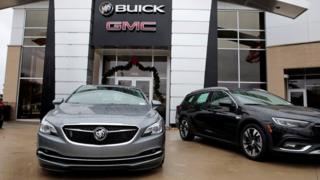
    Donald Trump has renewed threats to impose tariffs on imported automobiles after Normal Automobiles announced job cuts and plant closures.

    the us President tweeted that tariffs have been “being studied” and that tasks will have stopped the GM closures.

    One After The Other, the Trump administration warned it will lift tariffs on Chinese Language automobile imports.

    The fresh industry threats come as Mr Trump prepares to satisfy his opposite numbers on the G20 summit.

    the united states president has lashed out at GM over its plan to chop greater than 14,000 jobs and shut factories in North America.

    GM’s determination to halt production at factories within the US and Canada has angered many politicians.

    For Mr Trump in particular, the cuts are a blow, as he has made rebuilding the united states car business one of his administration’s priorities.

    Symbol copyright Reuters Symbol caption GM plans to forestall making a couple of models in North America, including the Buick LaCrosse

    While his latest comments mark an escalation in frustration over GM’s restructuring plan, the management has lengthy been taking into consideration implementing new price lists on vehicle imports.

    In May, Mr Trump asked the department to determine the effect of imports of cars and automotive parts on national safety. a similar procedure led to new price lists on international metal and aluminium this spring.

    The thought to position tariffs on international cars and car parts in the name of national safety has been widely criticised, each in Congress and within the business world.

    China tariff threat

    One By One, US business representative Robert Lighthizer stated he was examining choices to lift US tariffs on Chinese vehicles to FORTY% – the extent Beijing fees on US-made automobiles.

    “China’s insurance policies are especially egregious with respect to automobile price lists,” Mr Lighthizer said.

    Car price lists on either side have greater in the US-China industry battle.

    the united states imposed a 25% tariff on Chinese Language vehicles, on best of the 2.5% already in place. China imposed a 40% tariff on US vehicle imports – a lot higher than the 15% it puts on different buying and selling companions.

    a quick guide to the united states-China business struggle

    “because the president has time and again stated, China’s competitive, state-directed industrial policies are inflicting critical hurt to US workers and producers,” Mr Lighthizer said.

    It comes an afternoon prior to a extremely expected assembly among Mr Trump and Chinese Language President Xi Jinping.

    The pair are expected to talk on the sidelines of the G20 summit in Argentina, in a gathering in an effort to be closely watched for any growth on their sour trade dispute.

  • Ivanka Trump says her private emails in contrast to Clinton’s

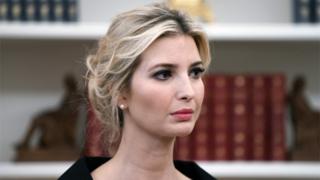
    Ms Trump at White House Symbol copyright AFP Symbol caption A public data request ended in the discovery of Ms Trump’s personal email use

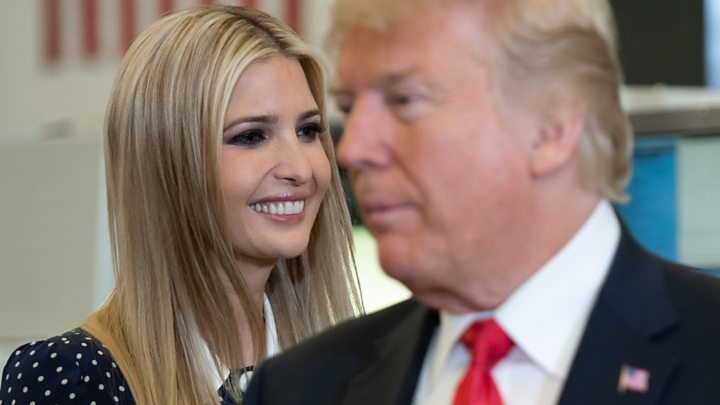
    US President Donald Trump’s daughter and adviser Ivanka has defended her use of an individual e mail account, saying it was once nothing like Hillary Clinton’s.

    “There Is Not Any equivalency,” she stated in an ABC interview aired on Wednesday.

    The first daughter came underneath fireplace this month while it emerged that she had used a private e-mail to message officers on White Area trade remaining year.

    Mr Trump had lambasted his presidential opponent Mrs Clinton for her use of a private email server for respectable work.

    During his 2016 marketing campaign, Mr Trump suggested the former secretary of state should be jailed after it emerged the FBI had discovered categorized information in a few emails from her personal server.

    “individuals who need to see it because the related see it because the same,” Ms Trump delivered. “However The truth is that we all have personal emails and personal emails to co-ordinate with our circle of relatives.”

    The senior White Space adviser additionally stated that there is “no prohibition from the use of non-public electronic mail as long as it’s archived” and accommodates no categorized information.

    It is not unlawful for White House officers to make use of a personal e mail, however they should ahead any reputable messages to a central authority account inside 20 days for preservation, and there are laws in opposition to sharing classified knowledge on private money owed.

    Media playback is unsupported to your device

    Media captionPresident Trump insists Ivanka’s emails are ‘not like Hillary’s’

    Ms Trump mentioned the emails despatched to her non-public account were mainly relating to scheduling and logistics to balance her house and work life.

    Last week, officials showed that Ms Trump had used a private email account to send hundreds of messages discussing respectable White Area industry.

    The White Area responded via announcing Ms Trump had performed so before being briefed at the laws and had not sent any labeled knowledge.

    In Mrs Clinton’s case, she had set up a private electronic mail server at her house in Ny that she used for all work and personal emails right through her 4 years as secretary of state.

    An FBI investigation sooner or later concluded that Mrs Clinton is not going to face fees, but mentioned she and her aides have been “extremely careless” in their dealing with of categorised data.

    (more…)

  • Donald Trump, Emanuel Macron dodge talk of ‘insult’ at Paris meet

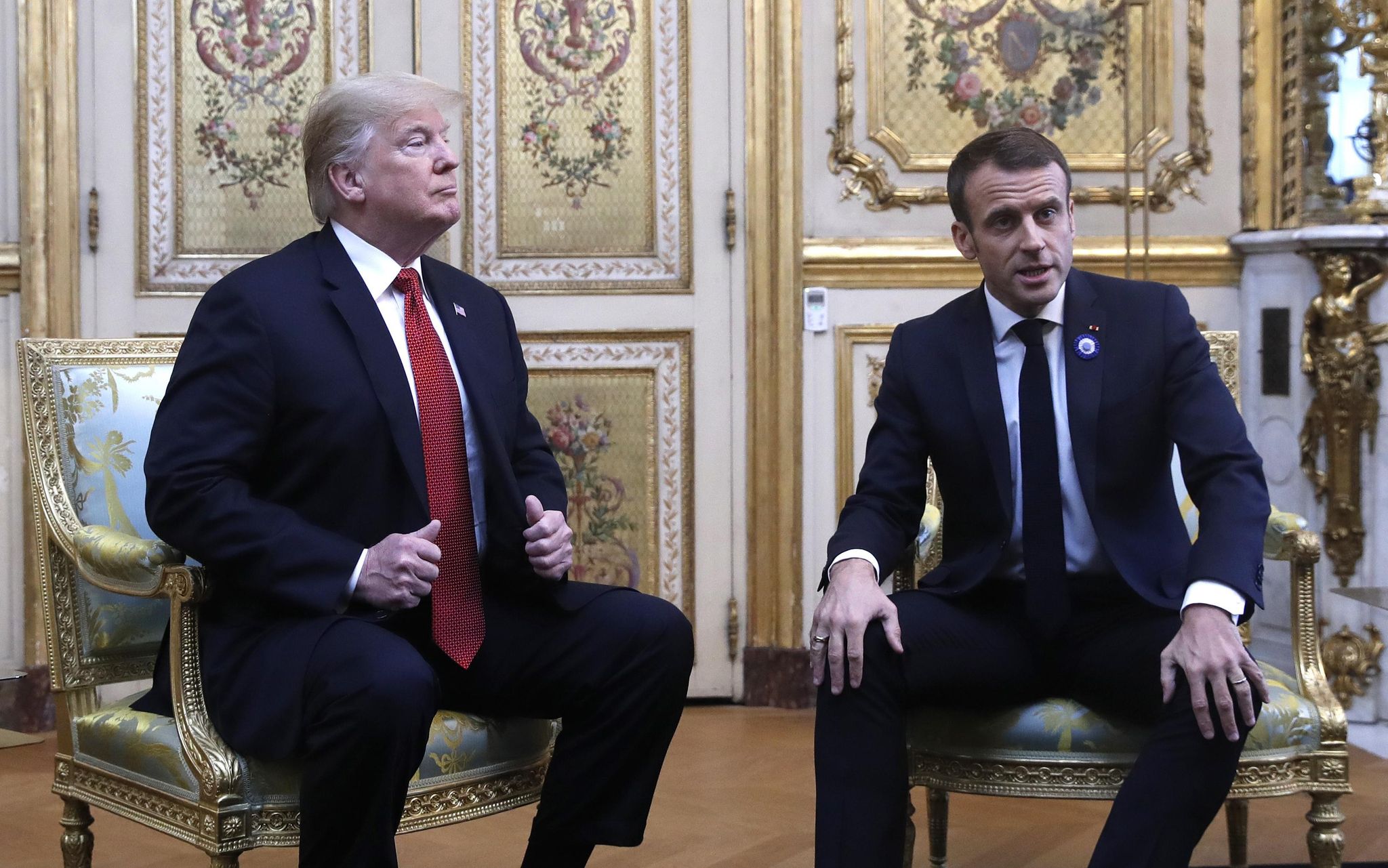
    President Trump met Saturday with French President Emanuel Macron in Paris, with both leaders avoiding public talk of Mr. Macron’s “insult” that the U.S. could pose a military threat.

    President Trump met Saturday with French President Emanuel Macron in Paris, with both leaders avoiding public talk of Mr. Macron’s “insult” that the U.S. could pose a military threat.

    They greeted each other with tight smiles at the Élysée Palace after Mr. Trump ruffling feathers upon arrival Friday in France by tweeting that it was very insulting that Mr. Macron said Europe needed stronger military defense against “China, Russia and even the United States.”

    Mr. Macron carefully avoided talking about it. He instead focused on NATO burden sharing, an area where he and Mr. Trump are on the same page and which bolsters his case for stronger French leadership in Europe.

    Mr. Trump played along.

    “We are getting along from the standpoint of fairness and to be fair, we want to help Europe but it has to be fair,” Mr. Trump said when a French reporter asked about the perceived insult. “The burden sharing has been largely on the United States, as the president will say.”

    Mr. Macron stressed the alliance between their countries, including military strikes in Syria and fighting terrorism in Africa.

    Mr. Trump is in France for events marking the 100th anniversary of the end of World War I. More than 60 world leaders are in France for the occasion.

    As soon as Mr. Trump arrived in France on Friday, he called out Mr. Macron.

    “President Macron of France has just suggested that Europe build its own military in order to protect itself from the U.S., China and Russia. Very insulting, but perhaps Europe should first pay its fair share of NATO, which the U.S. subsidizes greatly!” tweeted the president.

    In a recent radio interview, Mr. Macron said Europe needed a strong military to defend itself without relying on the U.S. But he also lumped the U.S. in with China and Russia as possible aggressor nations.

    When they met at the Élysée Palace, the official presidential residence, Mr. Macron glossed over the dust-up with Mr. Trump.

    “I do share President Trump’s views that we need better burden sharing with NATO and that’s why I believe my proposals for a European defense are consistent with that,” he said.

    He added, “When President Trump wants to defend one of the states of the United States, he doesn’t ask France or Germany or other government of Europe to finance it.”

    The two leaders early on shared an extremely friendly relationship that was on full display during a state visit in by Mr. Macron to the White House in April.

    The relationship hit the rocks over Mr. Trump’s pullout from the Iran nuclear deal and other policy clashes.

    “Our people are very proud to have you here,” Mr. Macron told Mr. Trump during their meeting.

    Mr. Trump touted their friendship.

    “We have become very good friends over the last couple of years,” he said. “We have much in common in many ways, perhaps more ways than people would understand but we are very much similar in our views.”

  • CROSSTALK: US-Russia-China Big Three – or WW III?

    An expected meeting this weekend between President Trump and Russian President Vladimir Putin at a Paris commemoration of the end of World War I has been thrown into doubt, though a sideline encounter

    ANALYSIS/OPINION:

    An expected meeting this weekend between President Trump and Russian President Vladimir Putin at a Paris commemoration of the end of World War I has been thrown into doubt, though a sideline encounter may still take place. A more substantive discussion between the men who control the world’s biggest nuclear arsenals is expected at the G20 Buenos Aires summit later this month, when Mr. Trump will also meet with China’s President Xi Jinping.

    In view of the new reality in the House of Representatives, where the Democrats will definitely unleash a redoubled wave of anti-Trump investigations, many predict that Mr. Trump will have no time or energy to concentrate on foreign policy. However, it is actually in foreign policy where he cannot only turn the tables on his opponents but begin his 2020 re-election campaign — as well as saving all of us from a nuclear holocaust.

    In recent weeks, senior officials of both the Russian and Chinese governments have issued statements that should send chills into everyone. Andrei Belousov, deputy director of the Russian Foreign Ministry’s Department of Nonproliferation and Arms Control, said: “Yes, Russia is preparing for war, I can confirm it. Yes, we are preparing to defend our homeland, our territorial integrity, our principles, our values, our people. We are preparing for such a war.” Mr. Belousov’s words echo Mr. Putin’s own recent promise to use nuclear weapons if necessary: “Any aggressor should know that retribution will be inevitable and he will be destroyed. And since we will be the victims of his aggression, we will be going to heaven as martyrs. They will simply croak and won’t even have time to repent.”

    Similarly, Mr. Xi himself stated in reference to U.S. naval maneuvers in waters claimed by China, “We have to step up combat readiness exercises, joint exercises and confrontational exercises to enhance servicemen’s capabilities and preparation for war.”It is surprising how little attention these dire warnings have generated in the West. To the extent they have been noticed, they were dismissed as belligerent bluster from second-rate powers. To conclude that would be tragically wrong.

    It is a very long time since even U.S. diplomats — much less politicians and journalists — practiced the art of looking at things from “the other guy’s point of view” to understand how other countries might perceive what we regard as reasonable actions. From Russia’s and China’s perspective, there’s nothing reasonable about America’s seeking dominance in areas vital to their security but of negligible to nonexistent U.S. national interest.

    From their vantage point, the U.S. is seeking full-spectrum dominance right up to their borders and littoral waters: ever-increasing sanctions, militarization of outer space, the Arctic, Europe (withdrawal from the INF treaty), Syria, Ukraine, the South China Sea, the Taiwan Strait, Xinjiang, and elsewhere. Nowhere is there a hint that the U.S. concedes regional security to Russia or China — or really, any other country — of the kind the U.S. has claimed in our neighborhood for almost 200 years.

    Back to what Mr. Trump’s next move might be, there are some who suggest a “triangulation,” in which the U.S. would seek to enlist Russia as a counterweight to China. The pattern would be Henry Kissinger’s counsel to Richard Nixon in “playing the China card” against the USSR.Since, it is suggested, Russia is a declining power it makes sense to get them on our side against a rising China.

    The notion of playing the Russia card against China is an absurd fantasy. First, it’s impossible to woo Russia on the basis of unremitting hostility, threats and insults. That shows no sign of changing with new sanctions kicking in later this month.Second, any hints at a positive shift in U.S. behavior would not be taken seriously by Moscow, which remembers previous broken promises, such as NATO expansion or the ABM treaty abrogation. Third, Moscow has lots of good reasons to get along with a massive neighboring country that is inherently more important to Russia than the U.S. is or ever will be.

    The other option is to realize that a stable global order can only rest on a “troika” of the U.S., Russia and China, and personally on a Trump-Putin-Xi accord. This means abandoning the aspiration of U.S. unipolar, global domination and conceding that other countries have their own security interests as well.

    The remaining alternative is to seek to maintain a unipolar world at all costs. Judging from Mr. Trump’s pre-election pledges and speeches, he appreciates this point but his national security team — composed of the kind of neoconservatives, Bush-era globalists and other Swamp-critters whose disastrous handiwork Trump decried in 2016 — does not. Hence, the warnings cited in the headline.

    The U.S. now has a stark choice. We can go down the current road whose terrible end is all too clear. Or we may hope that the master of the “art of the deal” suggests a different road when he meets with his Russian and Chinese counterparts.

    ⦁ Edward Lozansky is founder and president of the American University in Moscow.

  • U.S. reimposes Iran sanctions in ‘maximum pressure’ campaign


    The Trump administration on Monday reimposed sweeping sanctions on Iran, targeting its financial sector and oil industry to pressure the Islamic regime to cease nuclear weapon development and sponsori

    The Trump administration on Monday reimposed sweeping sanctions on Iran, targeting its financial sector and oil industry to pressure the Islamic regime to cease nuclear weapon development and sponsoring terrorism.

    The rollout was the largest ever single-day action targeting the Iranian regime and a crucial ste in President Trump’s pullout from the Iran nuclear deal that was announced in May.

    “Treasury’s imposition of unprecedented financial pressure on Iran should make clear to the Iranian regime that they will face mounting financial isolation and economic stagnation until they fundamentally change their destabilizing behavior,” Treasury Secretary Steven T. Mnuchin said.

    SEE ALSO: Iran’s president warns of ‘war situation’ as sanctions resume

    He called on Iran’s leaders to immediately give up support for terrorism, stop proliferating ballistic missiles, end destructive regional meddling and abandon their nuclear ambitions in order to escape the crushing sanctions.

    “The maximum pressure exerted by the United States is only going to mount from here. We are intent on making sure the Iranian regime stops siphoning its hard currency reserves into corrupt investments and the hands of terrorists,” Mr. Mnuchin said.

    Iran remained defiant, greeting the renewed U.S. sanctions with air defense drills and a warning from President Hassan Rouhani that the nation faces a “war situation.”

    “We are in the economic war situation. We are confronting a bullying enemy. We have to stand to win,” Mr. Rouhani said in a statement.

    He also vowed to keep selling the oil that is the country’s economic lifeblood.

    The sanctions end all economic benefits the United States had granted Tehran for its 2015 nuclear deal with world powers, though Iran for now continues to abide by the accord that saw it limit its enrichment of uranium.

    The restored sanctions hit list includes:

    • 50 Iranian banks and their foreign and domestic subsidiaries.

    • More than 400 targets, including over 200 persons and vessels in Iran’s shipping and energy sectors.

    • Iran Air and more than 65 of the airline’s aircraft.

    • Nearly 250 persons and associated property returned to the list of Specially Designated Nationals and Blocked Persons.

    Mr. Trump called the Obama-era nuclear deal with Iran the “worst ever” agreement stuck by the U.S. But the other parties to the deal — Britain, France, Germany, China and Russia — stuck with it.

    The European Union, France, Germany and Britain said they regretted the renewed U.S. sanctions and would try to protect their companies doing legitimate business with Tehran.

    Iran is already in the grip of an economic crisis. Its national currency, the rial, now trades at 150,000 to one U.S. dollar, down from when it traded around 40,500 to $1 a year ago. The economic chaos sparked mass anti-government protests at the end of last year which resulted in nearly 5,000 reported arrests and at least 25 people being killed. Sporadic demonstrations still continue.

    Mr. Trump stressed that the sanctions target the Iranian regime, not the Iranian people. He said the goal is curbing the government’s bad behavior, not regime change.

    “I don’t want to totally destroy their country. I don’t want to do that,” Mr. Trump said last week in an interview with The Washington Times.

    The Treasury said its Office of Foreign Assets Control will continue to maintain humanitarian authorizations and exceptions that allow for the sale of agricultural commodities, food, medicine, and medical devices to Iran.

    The administration also granted eight countries a six-month exemption from penalties for buying Iranian crude. Exempted countries are top Iranian oil importers China, India, South Korea, Turkey, Italy, United Arab Emirates and Japan, as well as occasional oil customer Taiwan.

    Asked about the eight exempted countries, White House press secretary Sarah Huckabee Sanders said the U.S. was exerting intense pressure on Iran.

    “We are going to make sure we are putting it where it hurts in these financial sectors and the oil industry. This is where they feel it, and it’s exactly why the sanctions have been targeted in those places,” she told Fox News’ “Fox & Friends.”

    • This article was based in part on wire service reports.

  • Saudi stock market plunges after Donald Trump threat over Jamal Khashoggi disappearance

    The Saudi stock market plunged Sunday after President Donald Trump threatened “severe punishment” over the disappearance of Washington Post contributor Jamal Khashoggi.

    DUBAI, United Arab Emirates — The Saudi stock market plunged Sunday after President Donald Trump threatened “severe punishment” over the disappearance of Washington Post contributor Jamal Khashoggi.

    The Tadawul exchange in Riyadh dropped over 6 percent in the week’s first day of trading, with 182 of its 186 listed stocks showing losses by the early afternoon.

    Turkish officials say they fear Saudi agents killed and dismembered Khashoggi after he entered the Saudi Consulate in Istanbul on Oct. 2, saying they have audio and video recordings of it that they have not released. The kingdom has called the allegations “baseless,” but has offered no evidence the writer ever left the consulate.

    In an interview to be aired Sunday, Trump told CBS’ “60 Minutes” that the consequences of Saudi Arabia being involved would be “severe.”

    “There’s something really terrible and disgusting about that, if that was the case, so we’re going to have to see,” Trump said. “We’re going to get to the bottom of it and there will be severe punishment.”

    However, Trump in the same interview said: “As of this moment, they deny it and they deny it vehemently. Could it be them? Yes.”

    Saudi officials had no immediate comment on the selloff, though state television aired an interview with an analyst who blamed it on weaker markets in the U.S. However, other stock exchanges in the Mideast saw far less volatility Sunday. U.S. markets have been rattled by rising interest rates, signs of a slowdown in the global economy and the U.S.-China trade dispute.

    Saudi Crown Prince Mohammed bin Salman has aggressively pitched the kingdom as a destination for foreign investment. But Khashoggi’s disappearance, and suspicions he may have been targeted over his criticism of the crown prince, have led several business leaders and media outlets to back out of an upcoming high-profile investment conference in Riyadh.

    Trump also said “we would be punishing ourselves” by canceling arms sales to Saudi Arabia, which his administration touted on his first overseas trip. The sale is a “tremendous order for our companies,” and if the kingdom doesn’t buy its weaponry from the United States, they will buy it from others, he said. Trump said he would meet with Khashoggi’s family.

    American lawmakers in both parties have been more critical of Saudi Arabia, with several suggesting officials in the kingdom could be sanctioned if they were found to be involved in Khashoggi’s disappearance and alleged killing.

    Khashoggi, who was considered close to the Saudi royal family, had become a critic of the current government and Prince Mohammed, the 33-year-old heir apparent who has shown little tolerance for criticism.

    As a contributor to the Post, Khashoggi has written extensively about Saudi Arabia, including criticism of its war in Yemen, its recent diplomatic spat with Canada and its arrest of women’s rights activists after the lifting of a ban on women driving.

    Those policies are all seen as initiatives of the crown prince, who has also presided over a roundup of activists and businessmen.

  • Saudi Arabia rejects ‘threats’ over Jamal Khashoggi after Trump warning sinks stock market

    Saudi Arabia warned Sunday it will respond to any “threats” against it as its stock market plunged following President Donald Trump’s warning of “severe punishment” over the disappearance of U.S.-base

    Saudi Arabia warned Sunday it will respond to any “threats” against it as its stock market plunged following President Donald Trump’s warning of “severe punishment” over the disappearance of U.S.-based Saudi journalist Jamal Khashoggi.

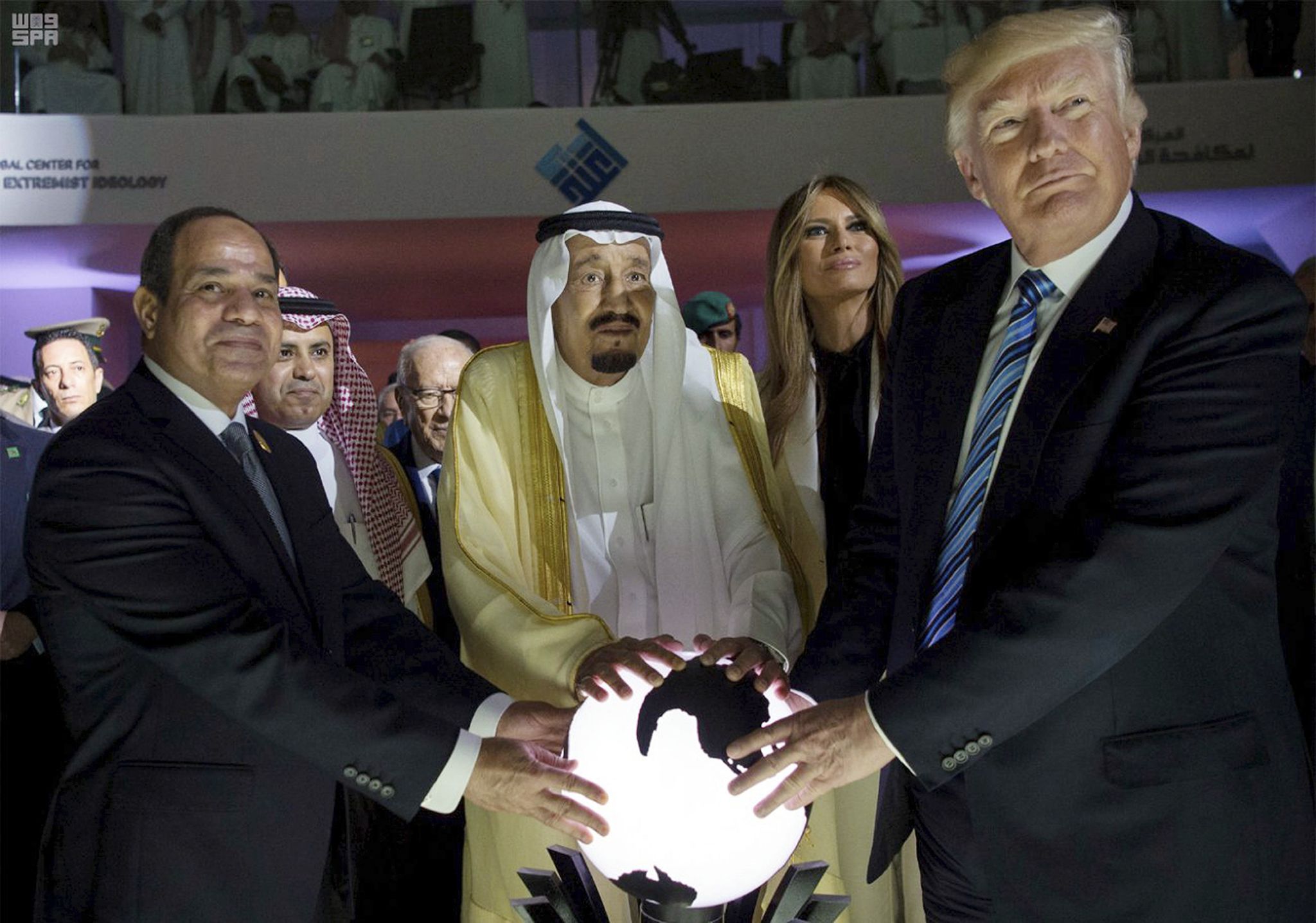
    Mr. Trump made a point of visiting the kingdom on his first overseas trip as president and has touted arms sales to Saudi Arabia.

    But both the White House and the kingdom are under mounting pressure as concern grows over the fate of the veteran journalist and critic of the Saudi government, who vanished Oct. 2 after visiting the Saudi consulate in Istanbul.

    SEE ALSO: Trump threat sends Saudi stock market tumbling

    Already, international business leaders are pulling out of the kingdom’s upcoming investment forum, a high-profile event known as “Davos in the Desert.”

    “The kingdom affirms its total rejection of any threats and attempts to undermine it, whether by threatening to impose economic sanctions, using political pressures or repeating false accusations,” said the statement published by the state-run Saudi Press Agency on Sunday.

    “The kingdom also affirms that if it receives any action, it will respond with greater action, and that the kingdom’s economy has an influential and vital role in the global economy.”

    The statement from the world’s top oil exporter came after the Tadawul exchange in Riyadh dropped by 7 percent at one point during the week’s first day of trading, with 182 of its 186 listed stocks showing losses by the early afternoon. The market clawed back some of the losses, closing down 3.5 percent for the day.

    Turkish officials say they fear Saudi agents killed and dismembered Mr. Khashoggi after he entered the consulate, saying they have audio and video recordings of it that they have not released.

    The kingdom has called the allegations “baseless,” but has offered no evidence the writer ever left the consulate.

    But Turkish Foreign Minister Mevut Cavusoglu has said Saudi officials have thus far not cooperated with their investigation despite a statement from Saudi Interior Minister Prince Abdulaziz bin Saud bin Naif bin Abdulaziz vowing to uncover “the whole truth.”

    Mr. Cavusoglu has urged Saudi officials to allow Turkish authorities to enter the consulate.

    Severe consequences

    According to the Associated Press, in an interview to be aired Sunday, Mr. Trump told CBS’ “60 Minutes” that the consequences of Saudi Arabia being involved would be “severe.”

    “There’s something really terrible and disgusting about that, if that was the case, so we’re going to have to see,” he said. “We’re going to get to the bottom of it and there will be severe punishment.”

    However, Mr. Trump in the same interview said: “As of this moment, they deny it and they deny it vehemently. Could it be them? Yes.”

    Other stock exchanges in the Mideast saw far less volatility Sunday. U.S. markets have been rattled by rising interest rates, signs of a slowdown in the global economy and the U.S.-China trade dispute.

    Saudi Crown Prince Mohammed bin Salman has aggressively pitched the kingdom as a destination for foreign investment. But Mr. Khashoggi’s disappearance, and suspicions he may have been targeted over his criticism of the crown prince, have led several business leaders and media outlets to back out of an upcoming high-profile investment conference in Riyadh.

    Mr. Trump also said “we would be punishing ourselves” by canceling arms sales to Saudi Arabia, which his administration touted on his first overseas trip. The sale is a “tremendous order for our companies,” and if the kingdom doesn’t buy its weaponry from the U.S., they will buy it from others, he said. Mr. Trump said he would meet with Khashoggi’s family.

    American lawmakers in both parties have been more critical of Saudi Arabia, with several suggesting officials in the kingdom could be sanctioned if they were found to be involved in Mr. Khashoggi’s disappearance and alleged killing.

    On Sunday, Sen. Marco Rubio, Florida Republican, said the Trump administration should skip the Saudi’s upcoming international investors conference.

    Treasury Secretary Steven Mnuchin is scheduled to attend the meeting this month in Riyadh.

    “I don’t think he should go,” Mr. Rubio said on CNN’s “State of the Union.” “I don’t think any of our government officials should be going and pretending it’s business as usual until we know what’s happened here.”

    Larry Kudlow, director of the White House National Economic Council, said Mr. Mnuchin still plans to attend the conference, which he described as a meeting on stopping terrorist financing.

    Mr. Rubio added that Congress would respond strongly no matter how the administration may react.

    Sen. Bernard Sanders, Vermont independent, echoed the outrage over the possibility that Mr. Khashoggi may have been murdered.

    “We cannot have an ally who murders in cold blood in their own consulate,” said Mr. Sanders.

    Former CIA Director and one-time Saudi Arabia station chief John Brennan, added that the Saudi’s “denials ring hollow.”

    “Their [Saudi] denials ring hollow,” Mr. Brennan said on NBC’s Meet the Press. “It would be inconceivable that such an operation would be run by the Saudis without the knowledge of the day-to-day decision-maker of Saudi Arabia. That’s Crown Prince Mohammed bin Salman.”

    Mr. Khashoggi, who was considered close to the Saudi royal family, had become a critic of the current government and Prince Mohammed, the 33-year-old heir apparent who has shown little tolerance for criticism.

    As a journalist, Mr. Khashoggi has written extensively about Saudi Arabia, including criticism of its war in Yemen, its recent diplomatic spat with Canada and its arrest of women’s rights activists after the lifting of a ban on women driving.

    Those policies are all seen as initiatives of the crown prince, who has also presided over a roundup of activists and businessmen.

    Mr. Trump has repeatedly criticized Saudi Arabia and King Salman over rising global oil prices. Benchmark Brent crude now trades above $80 and U.S. gasoline prices have risen ahead of the midterm elections.

    Earlier this month, Mr. Trump suggested Saudi Arabia’s king “might not be there for two weeks” without U.S. military support.

    • Valerie Richardson contributed to this article, which is based in part on wire service reports.
  • Papaz Brunson evine döndü

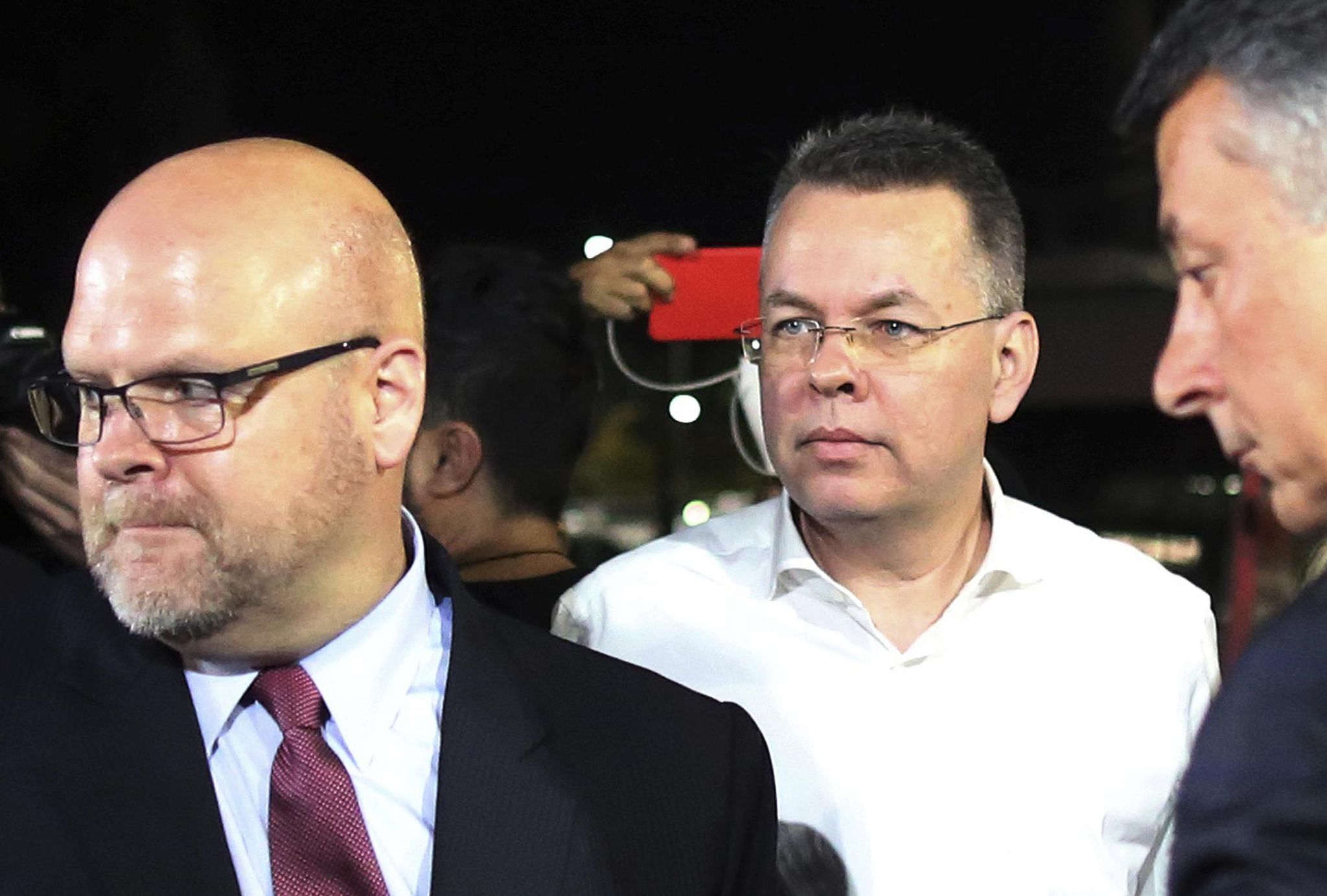
    At a campaign rally in Ohio, President Trump on Friday whipped up the crowd by announcing that American Pastor Andrew Brunson had been freed from a Turkish prison.

    At a campaign rally in Ohio, President Trump on Friday whipped up the crowd by announcing that American Pastor Andrew Brunson had been freed from a Turkish prison.

    “He is now free from jail and he is in the air heading to Germany where he will get off for a brief check and I think he is going to be in great shape,” Mr. Trump said to cheers from the crowd in Lebanon, Ohio.

    “He is coming to Washington D.C. tomorrow and we will say hello to him,” said the president. “He went through a lot but now he is on his way back.”

    Mr. Brunson was arrested by the Turkish government more than a year ago on charges related to terrorism and espionage. The government argued that the American pastor was involved in the failed 2016 military coup, which Mr. Brunson and the U.S. denied.

    Mr. Trump said that securing Mr. Brunson’s release followed his other in freeing American’s unjustly imprisoned overseas.

    He noted the release earlier this year of three Americans from a North Korean prison and the release of an Egyptian American charity worker locked up in Egypt for nearly five years.

    “We had a lot of success,” said Mr. Trump.

    Mr. Brunson will undergo a medical exam at the U.S. Air Force’s Ramstein Air Base in Germany.

    He will return to the U.S. on an Air Force plane Saturday afternoon. He is expected then to meet with Mr. Trump at the White House.

    “He is now free from jail and he is in the air heading to Germany where he will get off for a brief check and I think he is going to be in great shape,” Mr. Trump said to cheers from the crowd in Lebanon, Ohio.

    “He is coming to Washington D.C. tomorrow and we will say hello to him,” said the president. “He went through a lot but now he is on his way back.”

    Mr. Brunson was arrested by the Turkish government more than a year ago on charges related to terrorism and espionage. The government argued that the American pastor was involved in the failed 2016 military coup, which Mr. Brunson and the U.S. denied.

    Mr. Trump said that securing Mr. Brunson’s release followed his other in freeing American’s unjustly imprisoned overseas.

    He noted the release earlier this year of three Americans from a North Korean prison and the release of an Egyptian American charity worker locked up in Egypt for nearly five years.

    “We had a lot of success,” said Mr. Trump.

    Mr. Brunson will undergo a medical exam at the U.S. Air Force’s Ramstein Air Base in Germany.

    He will return to the U.S. on an Air Force plane Saturday afternoon. He is expected then to meet with Mr. Trump at the White House.

  • Donald Trump opposes ban on arm sales to Saudi Arabia over journalist’s disappearance

    President Trump said Thursday he does not favor stopping arms sales to Saudi Arabia in retaliation for the suspected murder of a Saudi journalist who has been critical of the government.

    President Trump said Thursday he does not favor stopping arms sales to Saudi Arabia in retaliation for the suspected murder of a Saudi journalist who has been critical of the government.

    “They’re spending $110 billion on military equipment,” Mr. Trump told reporters at the White House. “I don’t like stopping the investment. They’re going to take that money and spend it on Russia or China. What good does that do us?”

    The U.S. is investigating the disappearance of journalist Jamal Khashoggi, a columnist for The Washington Post who disappeared after entering the Saudi Consulate in Istanbul, Turkey, for a meeting.

    Mr. Trump said of the Saudi journalist’s suspected murder, “We’re taking it very seriously. Something like that should not be allowed to happen.”

    But he said there are “certainly other ways of handling this situation” besides stopping arm sales, if Saudi Arabia’s government is implicated in Mr. Khashoggi’s disappearance.

    “That doesn’t help us, not when it comes to jobs. There are other things we can do. We’re looking for the answer,” he said. “What happened is a terrible thing, assuming that happened. Maybe we’ll be pleasantly surprised, but somehow I doubt it.”

  • Beijing’s bravado betrays growing case of nerves

    Chinese state media has just announced the imminent test flight of a new long-range stealth bomber called the Hong-20. A “military expert” told reporters that “usually, the development of equipment an

    ANALYSIS/OPINION:

    Chinese state media has just announced the imminent test flight of a new long-range stealth bomber called the Hong-20. A “military expert” told reporters that “usually, the development of equipment and weaponry of the People’s Liberation Army is highly confidential.”

    Revealing the bomber name before trials shows the Chinese aviation industry is gaining more confidence, the expert boasted.

    If there was ever an example of “projection,” this is it. The Chinese are not “confident;” they are scared.

    The communist regime, which by the way just confirmed it is holding over 1 million of its citizens in ‘re-education’ camps in the restive western region of Xinjiang, is acting like a deer in the headlights. In the face of real “Trumpian” confidence radiating from Washington, China’s leaders are acting like the schoolyard bully who for the first time just got punched in the face, and figured out they don’t like it one bit.

    President Trump has done the one thing Beijing thought would never happen — he is using the full weight of American power for the first time since World War II, economic, political, moral and yes, even military power. And it’s working.

    We should expect more bravado and parading of weapons from China, which is desperate to turn American public opinion against Mr. Trump’s hard line. There has been lots of love shared between the American elites and those in Beijing over the last few decades. That is over now. The globalist game is over. The hollowing out of America is over.

    I don’t believe the narrative in the mainstream U.S. media created about the People’s Republic. I have never believed the Wall Street apologists for the dictators.

    The experts claim that China’s economy is well on its way to surpassing the United States in terms of GDP. But, that was before Mr. Trump stopped letting Beijing treat trade as a one-way street. China’s economy is actually a house of cards, propped up by uncollectable debts and exploitative trade practices. The government has to build empty “ghost cities” just to keep people employed and not rioting. Did I mention the re-education camps? That all doesn’t sound like a stable, growing society to me.

    Meanwhile, in the U.S., we are in the midst of a real reset, one that will benefit the country in the long run. There will be some short-term pain — as we are seeing in the American stock market — as we forge new expectations and the old ways of doing business pass by the wayside.

    We’ve just learned that China is trying to influence next month’s midterm elections. They must be thinking, “For God’s sake we can’t let Trump consolidate power, or we are finished!”

    We should expect more malign behavior, more fear-mongering in the South China Sea, more spy technology embedded in our communications equipment, more military parades, and more general Chinese chest-thumping.

    The Chinese will continue to lash out, as cornered creatures tend to do, and now the leadership’s deceptions are being exposed for all the world to see. President Trump is threatening the very hold on power of the Chinese Communist Party. In their world, they cannot allow this to happen.

    Ronald Reagan won the Cold War and tore down the Iron Curtain.

    Donald Trump may be doing the same thing, only this time in the Pacific, frustrating the insidious Chinese plan to undermine America without firing a shot, and threatening the communists’ hold on power in Beijing.

    L. Todd Wood is a former special operations helicopter pilot and Wall Street debt trader, and has contributed to Fox Business, The Moscow Times, National Review, The New York Post and many other publications. He can be reached at LToddWood.com.