Tag: Politics

  • North Korea agrees to a moratorium on nuclear and missile tests, will hold landmark summit in April

    North Korean leader Kim Jong-un has agreed to stop nuclear and missile tests if his country holds talks with the United States on denuclearizing the Korean peninsula.

    North Korean leader Kim Jong-un has agreed to stop nuclear and missile tests if his country holds talks with the United States on denuclearizing the Korean peninsula.

    The breakthrough was announced Tuesday by Chung Eui-yong, South Korea’s presidential national security director, after a rare visit to Pyongyang.

    “The North expressed its willingness to hold a heartfelt dialogue with the United States on the issues of denuclearization and normalizing relations with the United States,” he said in a statement. “It made it clear that while dialogue is continuing, it will not attempt any strategic provocations, such as nuclear and ballistic missile tests.”

    PHOTOS: South Korea meeting thrusts North’s Kim into the limelight

    The promising move followed a flurry of cooperative steps taken by the Koreas during last month’s Winter Olympic games in Pyeongchang, South Korea.

    President Trump welcomed the turn of events with a note of caution.

    “We will see what happens!” he tweeted.

    In a later tweet, he described it as “possible progress being made in talks with North Korea.”

    “For the first time in many years, a serious effort is being made by all parties concerned. The World is watching and waiting! May be false hope, but the U.S. is ready to go hard in either direction!” wrote the president.

    The shift from the North also follows increasing pressure from the United States. The Trump administration has ratcheted up economic sanctions, while Mr. Trump took a hard line and demanded a nuclear-free Korean peninsula in exchange for talks.

    The standoff was repeatedly punctuated by Mr. Trump and Mr. Kim trading insults, including the U.S. president taunting his foe as “Little Rocket Man.”

    The North had steadfastly refused to even consider surrendering its nuclear arsenal or missile program, now capable of hitting the U.S. mainland and heralded by Mr. Kim as an essential deterrent against American invasion plans.

    Vice President Mike Pence, who led the U.S. delegation to the Olympic opening ceremony and avoided interaction there with North Korea officials, vowed to keep pressure on Mr. Kim’s rogue regime.

    “Whichever direction talks with North Korea go, we will be firm in our resolve,” he said. “All options are on the table and our posture toward the regime will not change until we see credible, verifiable and concrete steps toward denuclearization.”

    Mr. Chung led a 10-member South Korean delegation that met with Mr. Kim during a two-day visit to Pyongyang, North Korea’s capital. They returned on Tuesday.

    The two Koreas also agreed to hold their third-ever summit at a tense border village in late April.

    Mr. Chung said the leaders will establish a “hotline” communication channel to lower military tensions and would speak together before the planned summit.

    The two past summits, in 2000 and 2007, were held between Mr. Kim’s late father, Kim Jong-il, and two liberal South Korean presidents. They resulted in a series of cooperative projects between the Koreas that were scuttled during subsequent conservative administrations in South Korea.

    Mr. Chung said North Korea agreed to suspend nuclear and missile tests for as long as it holds talks with the United States.

    North Korea also made it clear that it would not need to keep its nuclear weapons if military threats against it are removed and it receives a credible security guarantee, Mr. Chung said.

    • This story is based in part on wire service reports.

  • Donald Trump takes credit for Kim Jong-un’s desire for talks

    President Trump on Tuesday credited his campaign of maximum pressure — coupled with “great help” from China — for driving North Korean leader Kim Jong-un’s sudden decision to raise the prospect of t

    President Trump on Tuesday credited his campaign of maximum pressure — coupled with “great help” from China — for driving North Korean leader Kim Jong-un’s sudden decision to raise the prospect of talks with Washington about his nation’s nuclear arsenal and to halt nuclear and missile tests while such negotiations play out.

    In stunningly swift thawing of tensions on the Korean Peninsula, Mr. Kim told a visiting South Korean delegation Tuesday that he was ready to hold a “candid discussion” with the Trump administration on denuclearization, that Pyongyang would freeze its nuclear and missile programs as the talks began, and that he was willing to join South Korean President Moon Jae-in next month for the first face-to-face meeting between the nations’ leaders in more than a decade.

    With critical details of the North’s offer still to be nailed down, Mr. Trump expressed cautious optimism. He said he believed Mr. Kim’s overture during a meeting with South Korean officials was sincere, but he stressed that it “may be a false hope” to think Pyongyang would truly agree to give up its nuclear security blanket.

    “We have come certainly a long way, at least rhetorically, with North Korea,” a cautious Mr. Trump said at a joint White House press conference with visiting Swedish Prime Minister Stefan Lofven. “It’d be a great thing for the world, would be a thing great for North Korea, it would be a great thing for the peninsula. But we’ll see what happens.”

    National security insiders said it’s too early to know whether Mr. Kim is just trying to buy time to complete Pyongyang’s covert nuclear program or whether Mr. Trump’s bare-knuckle policy approach — coupled with a U.S.-organized set of international sanctions that show signs of truly hurting the North’s economy — has produced unexpected progress.

    One caveat evident in the text of the six-point accord brought back by the South Korean envoys: North Korea said it would have no need for nuclear weapons “as long as military threats to the North are eliminated and the regime’s security is guaranteed,” which could call into question the U.S.-South Korean military alliance and the huge U.S. troop presence in the South.

    “Does the Trump administration deserve credit for sticking to a policy of maximum pressure while remaining open to engagement? Yes,” said Patrick Cronin, who heads the Asia-Pacific Security Program at the Center for a New American Security in Washington. “But the cause and effect here is not necessarily something you want to take credit for until you see how it turns out.”

    The White House last month announced the sharpest U.S. sanctions to date against Pyongyang. While the increased pressure may have inspired Mr. Kim’s growing eagerness for talks, some point to other important factors at play.

    “One is the progress that North Korea has made on its nuclear program …,” said Suzanne DiMaggio, a senior fellow with the New America think tank in Washington. “Kim Jong-un has declared the completion of his nuclear force and believes he now has the capacity to deter an attack by the U.S.

    “So in terms of timing,” she said, “it makes great sense that the North Koreans are now ready to return to talks with Washington.”

    The shift in Pyongyang

    The South Korean president’s office said in a statement Tuesday that the Kim regime had expressed a willingness to denuclearization and to halt nuclear tests in order to get talks underway with Washington.

    Chung Eui-yong, South Korea’s presidential national security director and head of the delegation that met with Mr. Kim, said the late-April summit will be held in Panmunjom, the tense border village where the two hostile Koreas have faced off since the inconclusive end of the Korean War in the 1950s.

    The developments, which follow a flurry of North-South diplomacy that surrounded last month’s Winter Olympics in the South, appeared to mark a major shift from Pyongyang, which long refused to discuss its nuclear arsenal or missile programs.

    The Trump administration had vacillated on whether it would be willing to engage in direct talks with North Korea if the Kim regime did not first commit to abandoning the programs. As recently as this past weekend, the North Korean Foreign Ministry had criticized Washington for clinging to the idea of denuclearization as a precondition for direct talks.

    Efforts to rein in the isolated North’s military programs have repeatedly ended in failure.

    Negotiations with Pyongyang broke down in 2009 amid a flurry of North Korean missile tests in violation of U.N. Security Council resolutions. At the height of the talks in 2005, Pyongyang signed an agreement with the U.S., Japan, China, Russia and South Korea stating that it was “committed to abandoning all nuclear weapons and existing nuclear programs.”

    The White House offered a sober message on the denuclearization issue Tuesday, asserting that it is in no hurry to ease its campaign of maximum pressure and sanctions.

    “Whichever direction talks with North Korea go, we will be firm in our resolve,” said Vice President Mike Pence. “All options are on the table, and our posture toward the regime will not change until we see credible, verifiable and concrete steps toward denuclearization.”

    The comments coincided cautious but optimistic posturing from Mr. Trump. “We will see what happens!” the president tweeted.

    The U.S. government, Mr. Trump added in an early morning tweet, “is ready to go hard in either direction!”

    ‘Me’

    The president said there was little doubt that his combination of tough, even bellicose rhetoric and coordinated economic pressure had helped change the dynamic of the Korean Peninsula stalemate.

    Asked at the White House briefing who was responsible for the North’s apparent turnaround, he responded: “Me.”

    “I think [the North Koreans] are sincere also because the sanctions and what we are doing to North Korea, including the great help we’ve gotten from China,” he added.

    Mr. Cronin said in an interview that Mr. Trump would be “right to dampen expectations and take it step by step in order to assess what North Korea’s real intentions are here.”

    The North’s offer also put pressure on Washington to calibrate its own response, he said.

    “The ball is in the president’s court at this point,” Mr. Cronin said.

    Bruce Klingner, a former CIA division chief for the Koreas and a fellow at the conservative Heritage Foundation, was among those who urged extreme caution on North Korea’s sudden willingness to talk about the future of its nuclear weapons.

    “What we do know about North Korea,” Mr. Klingner wrote in an analysis Tuesday, “is that past offers of dialogue frequently prove to be a fig leaf for ulterior purposes.

    “The real question: Is this a diplomatic breakthrough, or the setup of a Red Wedding?” said Mr. Klingner, referring to the famous massacre episode of the TV drama “Game of Thrones.”

    The road ahead

    The challenge for the Trump administration, said Mr. Cronin, is to keep the pressure on the Kim regime “while engagement takes a bigger step in this process.”

    “Can we walk and chew gum at the same time? By all means, we have to,” he said. “We have to show agility because Kim has become more agile diplomatically.”

    Director of National Intelligence Daniel Coats told a congressional hearing Tuesday that U.S. intelligence officials are still trying to determine the sincerity of the North’s offer and Mr. Kim’s willingness to consider giving up his nuclear arsenal.

    “We have seen nothing to indicate … that he would be willing to give up those weapons,” Mr. Coats told the Senate Armed Services Committee. He said he could not adequately assess the South’s account of the Pyongyang talks until the South Koreans have provided a full briefing, The Associated Press reported.

    Ms. DiMaggio said Mr. Trump is hampered by a “very thin diplomatic bench” in any coming talks. There is no permanent ambassador in Seoul, the State Department point man on the North Korean crisis retired last week, and there’s been a “hollowing out” of State Department specialists on the region.

    “If we head down this road of talks with North Koreans,” she said, “it’s going to be very challenging because we don’t have seasoned diplomats in place to carry it out.”

    While the denuclearization issue could take years to fully resolve, Ms. DiMaggio said, the administration should seize on the opening for talks on a range of other issues, such as getting assurances from the Kim regime that it won’t sell chemical, biological or nuclear weapons material to U.S. enemies or terrorist groups.

    “North Korea is the only nuclear-armed country with which the U.S. doesn’t have direct discussions,” she said. “Can we have talks on avoiding an accidental military conflict? That should top the agenda.”

    • Dave Boyer contributed to this article.
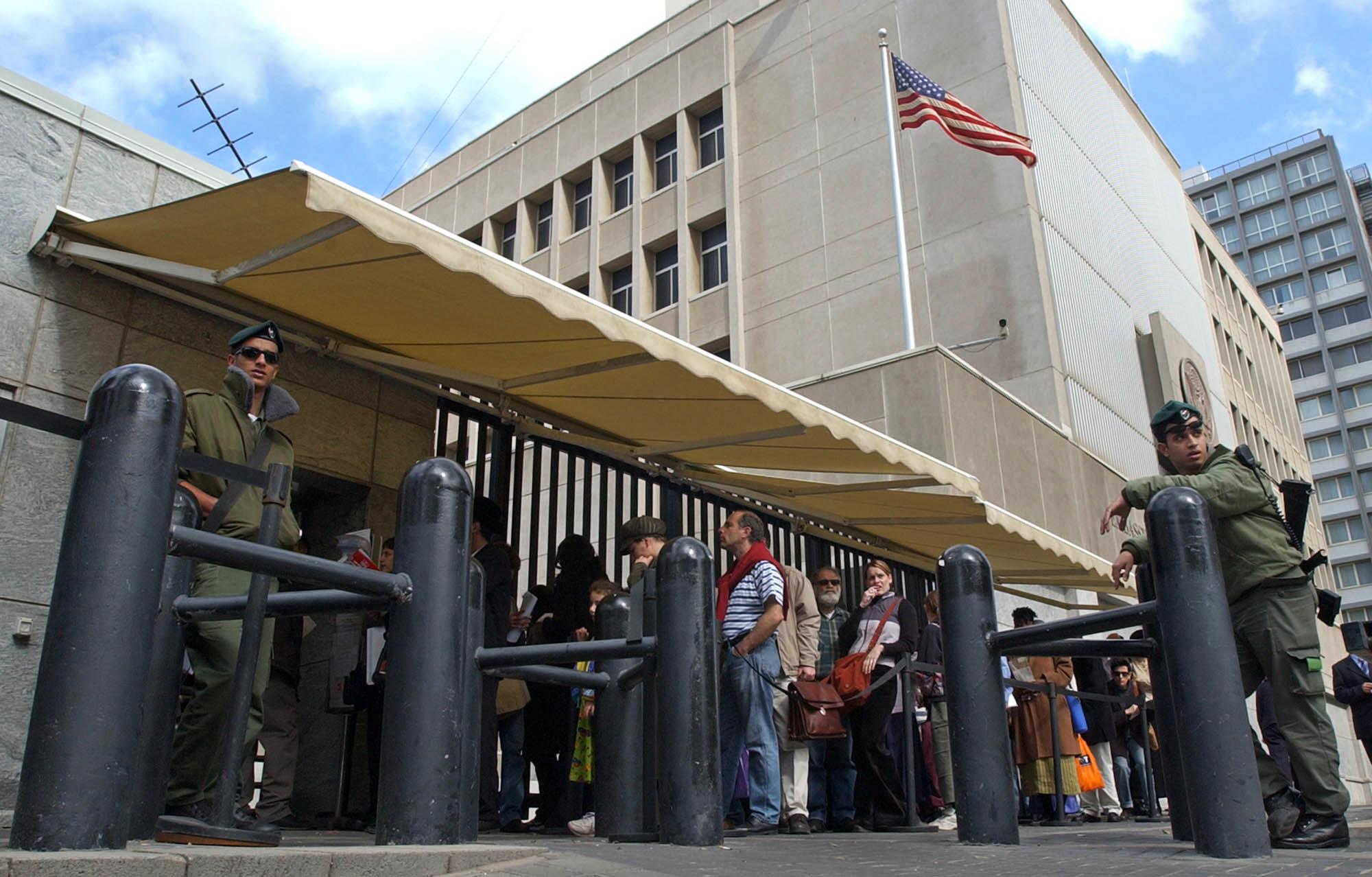
  • Jerusalem mayor assures Congress city is safe enough to move U.S. Embassy there

    The mayor of Jerusalem has assured U.S. Congress that America faces no additional terrorist threat by moving its embassy from Tel Aviv to the ancient city despite opposition from Palestinians and the

    The mayor of Jerusalem has assured U.S. Congress that America faces no additional terrorist threat by moving its embassy from Tel Aviv to the ancient city despite opposition from Palestinians and the greater Muslim world.

    “The importance of the move to Jerusalem is second to nothing else,” Nir Barkat told members of the House Committee on Oversight and Government Reform on Tuesday while visiting Washington. “God forbid if there is a security challenge, I assure you we will not shy away from it.”

    On Monday, President Trump told Israeli Prime Minister Benjamin Netanyahu that he may visit Israel for the opening of the embassy, slated for early May.

    “We’re going to have it built very quickly and very inexpensively,” Mr. Trump said to reporters before a meeting with Mr. Netanyahu. “While not making any specific commitments, we’re looking at coming … If I can, I will.”

    On Tuesday, Mr. Barkat discussed the history of Jerusalem during a roundtable gathering hosted by House Committee on Oversight and Government Reform member Rep. Ron DeSantis. The Florida Republican played a key role on Capitol Hill advocating for the move, including scouting possible sites for the new facility while visiting Israel.

    Mr. Barkat also praised Mr. Trump for his “boldness and leadership” on the issue and noted that Israelis deeply appreciate the historical significance of the White House’s decision to recognize Jerusalem as a capital, and move the embassy there, 70 years after President Harry Truman recognized Israel as a sovereign state.

    On Monday, Mr. Netanyahu, who was visiting Washington to address the pro-Israel group AIPAC, sang similar praises for the Trump Administration’s Jerusalem decision.

    “Mr. President, this will be remembered by our people, throughout the ages,” the prime minister said. “And as you just said, others talked about it; you did it.”

    Palestinians, meanwhile, have lashed out the decision and argue that it negates the United States as a credible negotiator in peace talks.

    From a local security standpoint, Mr. Barkat told lawmakers that the Israeli government would dedicate all possible resources to protecting the new embassy. He also pointed out that Washington has a murder rate 15 times higher than Jerusalem.

    “So,” he joked, “whenever I fly to D.C., I pray to come back to Jerusalem safely.

  • Violence halts rare aid delivery to Syria’s eastern Ghouta

    The first aid delivery in weeks to reach the besieged eastern suburbs of Damascus was cut short after Syrian government forces began shelling the area while aid workers were still inside, a local coun

    BEIRUT (AP) — The first aid delivery in weeks to reach the besieged eastern suburbs of Damascus was cut short after Syrian government forces began shelling the area while aid workers were still inside, a local council said on Tuesday.

    Monday’s shipment was the first to enter eastern Ghouta amid weeks of a crippling siege and a government assault that has killed hundreds of civilians since February 18.

    The International Committee for the Red Cross confirmed that its joint convoy with the United Nations had to leave before offloading all its supplies on account of the deteriorating security situation.

    Ingy Sedky, the ICRC spokeswoman in Syria, said most of the aid from a 46-truck convoy was delivered to the town of Douma in eastern Ghouta but the mission was cut short before the rest of the supplies could be unloaded.

    Iyad Abdelaziz, a member of the Douma Local Council, said nine aid trucks had to leave the area after government shelling and airstrikes intensified in the evening.

    At least 50 civilians were killed Monday by shelling and airstrikes in eastern Ghouta as the Syrian government, backed by Russia’s military, showed no signs of easing its assault on the beleaguered region, despite a U.N. Security Council resolution passed Feb. 25 demanding a 30-day cease-fire.

    The convoy that reached Douma on Monday carried only a fraction of the relief needed for the estimated 400,000 people trapped under the government’s siege. The U.N.’s humanitarian office said the convoy carried food for 27,500 people.

    But it said the Syrian government offloaded 70 percent of the health supplies, including trauma and surgical kits and insulin, before allowing the convoy to enter eastern Ghouta.

    The government routinely removes lifesaving medical supplies from aid convoys, in a pattern of denying such aid to civilians living in opposition areas. U.N. officials have complained for years about such actions by the Syrian government.

  • Donald Trump’s steel, aluminum tariffs to proceed despite criticism

    Trump administration officials said on Sunday that the president will press forward with his plans to impose new tariffs on steel and aluminum imports, amid growing criticism from some quarters overse

    Trump administration officials said on Sunday that the president will press forward with his plans to impose new tariffs on steel and aluminum imports, amid growing criticism from some quarters overseas and on Capitol Hill that the move could plunge the U.S. headlong into an unwinnable trade war.

    British Prime Minister Theresa May and other European officials — along with Democratic and Republican lawmakers in Congress — said the tariffs will cause far-reaching damage and the last thing the global economy needs is a trade war.

    But the administration says Mr. Trump is merely following through on his tough campaign talk on trade and is predicting a negligible overall impact on U.S. consumers.

    “This is an action, basically, to protect our national security and economic security,” White House trade adviser Peter Navarro said on CNN’s “State of the Union.”

    “We can’t have a country that can defend itself and prosper without an aluminum and steel industry,” he said.

    Mr. Trump said last week that he plans to roll out tariffs of 25 percent on steel imports and 10 percent on aluminum imports. Mr. Navarro predicted concrete action as soon as this week.

    He said some businesses could be exempted but no country would be excluded from the tariffs despite criticism from key U.S. allies such as Canada and Britain.

    “As soon as you exempt one country, then you have to exempt another country,” he said.

    Commerce Secretary Wilbur L. Ross Jr. said the announcement shouldn’t have been shocking given Mr. Trump’s rhetoric on trade during the 2016 campaign, when he repeatedly criticized multilateral pacts such as the North American Free Trade Agreement.

    “I think you have to take the president at his word. He made campaign promises. He’s pretty well-proven so far. He intends to keep his campaign promises,” Mr. Ross said on NBC’s “Meet the Press.”

    “I have no reason to believe he’s going to change his mind,” Mr. Ross said.

    Mr. Ross acknowledged that foreign officials have threatened to retaliate through tariffs of their own but said the $9 billion of tariffs in question is a fraction of 1 percent of the whole U.S. economy.

    “What the European Union has talked about is some $3 billion or so of potential retaliation. That’s an even smaller fraction of 1 percent of the economy,” he said.

    Jean-Claude Juncker, who heads the European Commission, warned that the EU might impose its own taxes on items such as Harley-Davidson motorcycles and bourbon — products that are near and dear to the economies of Wisconsin and Kentucky, the respective home states of House Speaker Paul D. Ryan and Senate Majority Leader Mitch McConnell.

    “We will not sit idly while our industry is hit with unfair measures that put thousands of European jobs at risk,” he said.

    Mrs. May also raised concerns about the plans with Mr. Trump in a Sunday phone call, and Canadian Prime Minister Justin Trudeau said the steel and aluminum tariffs would be “absolutely unacceptable.”

    The announcement also sparked divisions within Mr. Trump’s administration and prompted speculation that economic adviser Gary Cohn — who opposed the tariffs — could resign as a result.

    Mr. Ross said he didn’t know anything about rumors of Mr. Cohn’s resignation.

    “Gary was certainly part of the interagency process,” he said. “The president likes to have dissenting views, likes to hear every side of everything because that way he makes sure that his final decision is the best-informed.”

    The president’s announcement also prompted strong pushback from Republicans and Democrats on Capitol Hill.

    Sen. Lindsey Graham, South Carolina Republican, said Sunday that Mr. Trump is going about things the wrong way if his goal is to target Chinese flooding of the worldwide steel market.

    “You’re letting China off the hook. You’re punishing the American consumer and our allies. You’re making a huge mistake,” Mr. Graham said on CBS’s “Face the Nation.” “Go after China, not the rest of the world.”

    Sen. Christopher Murphy, Connecticut Democrat, said the president’s enthusiasm for opening a trade war with Europe is a gift to Russia, which would welcome conflict between the U.S. and its European allies.

    “So I just think the president needs to understand that there are times when these targeted sanctions are necessary, but you’ve got to do it at the right moment and you have to realize that none of it takes place in a vacuum,” Mr. Murphy said on ABC’s “This Week.”

    The move has won praise from some union groups and Democrats, though, who say the president is right to try to punish countries acting in bad faith when it comes to trade issues.

    “I like where the president is going on this. I really do,” Sen. Joe Manchin III, West Virginia Democrat, said on CBS.

    “We’re talking about fair trade,” Mr. Manchin said. “Free trade hasn’t worked well for West Virginia. It really hasn’t. We have lost thousands of jobs. And we’re [talking] about a fairness to the system.”

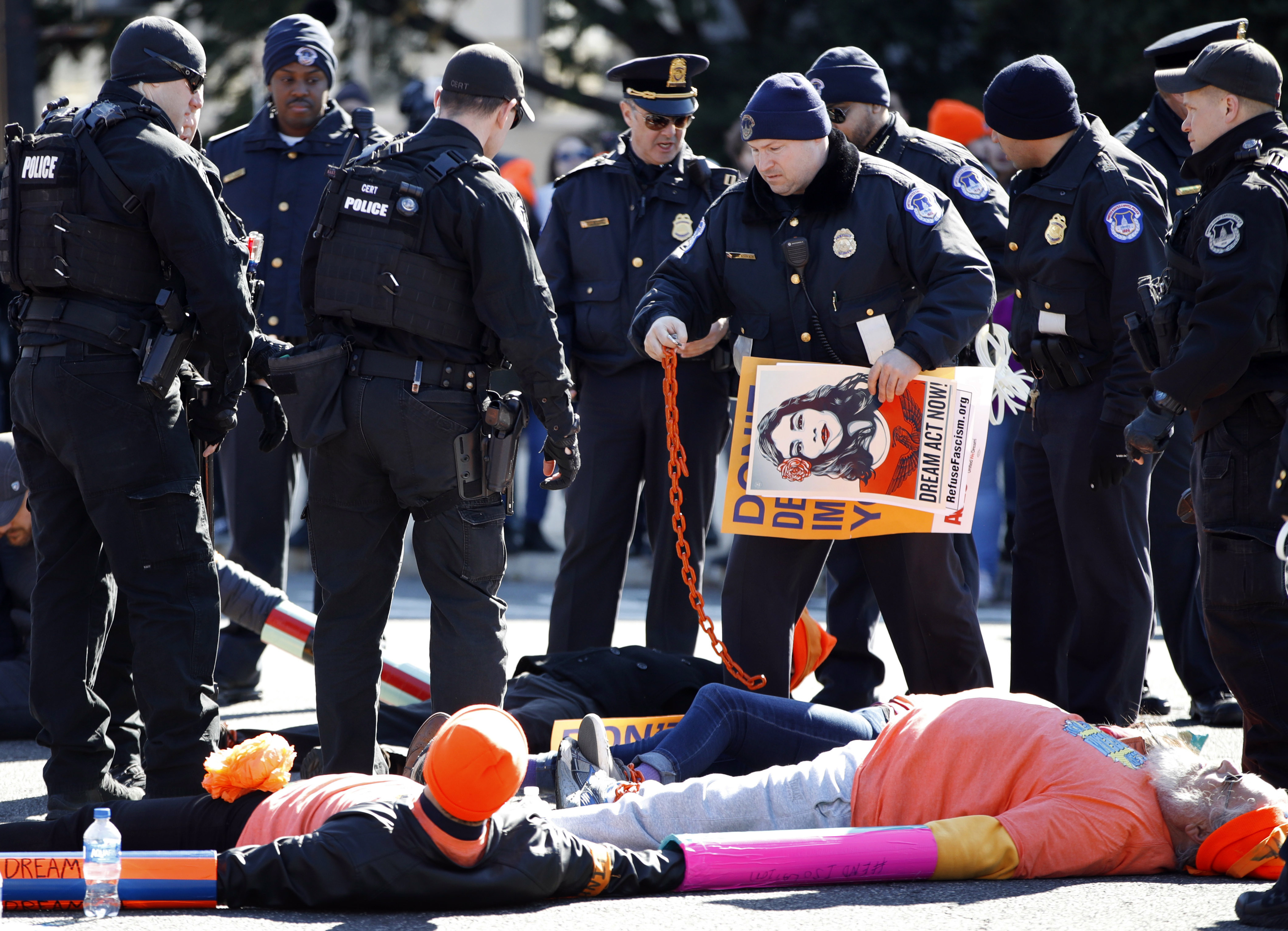
  • ‘Dreamers’ turn ire on Democrats as DACA deadline passes

    Illegal immigrant Dreamers descended on Democrats’ national headquarters in Washington on Monday, staging a sit-in and vowing to make sure the party gets at least some of the blame as Congress slipped

    Illegal immigrant Dreamers descended on Democrats’ national headquarters in Washington on Monday, staging a sit-in and vowing to make sure the party gets at least some of the blame as Congress slipped past President Trump’s March 5 deadline for action on DACA.

    While the deadline lacked the urgency it once had, thanks to several court decisions keeping the Obama-era tentative deportation amnesty going, it maintains much of its political salience.

    The protesters who blocked the doors to the Democratic National Committee on Monday said there is blame to spread around, but they wanted to make sure Democrats felt much of the pressure, accusing the party’s leaders of a decade of betrayal culminating in this week’s failure.

    SEE ALSO: Judge rules Trump’s DACA phaseout legal

    “This party has shown me nothing but pain,” said Maria Duarte, a DACA recipient dressed in pink Hello Kitty pajamas and clutching a stuffed animal as she blocked the doors. She was choked with emotion as she shouted through a bullhorn, saying she “lost family members” to enforcement under the Obama administration.

    President Obama created the Deferred Action for Childhood Arrivals program in June 2012 as he was campaigning for re-election. The protesters said the move was designed to stave off potential electoral disaster.

    More than 800,000 people won protection over the years, and some 683,000 people are currently protected. They have renewable two-year stays of deportation and are entitled to work permits, which can earn them driver’s licenses, Social Security numbers and even some taxpayer benefits.

    But the program was legally suspect. Facing threats of a lawsuit, Mr. Trump last year announced a phaseout, giving Congress six months to come up with a more permanent solution.

    Now it’s the phaseout that is legally troubled. Two federal courts have ordered Mr. Trump to keep processing renewal applications, making the March 5 deadline less critical.

    Yet a third federal judge ruled late Monday, upholding Mr. Trump’s phaseout. For now, the decision does not surmount the original two court rulings, but Judge Roger W. Titus’ 30-page opinion does give some legal heft as the Justice Department defends the president’s decisions in higher courts.

    Activists, meanwhile, said March 5 remained the critical political deadline, serving as a milepost with midterm elections looming and both sides looking to avoid blame on an issue where an overwhelming majority of voters believe the Dreamers deserve legal status.

    DNC Chairman Tom Perez said it was Mr. Trump’s “cruel and reckless decision” to phase out DACA that spurred “an unnecessary crisis.”

    “And now his arbitrary deadline has passed without any action from the president or Republicans in Congress,” Mr. Perez said.

    Indeed, most immigrant rights groups, while wishing Democrats had fought more strenuously, do place blame on Mr. Trump and defend a program that they used to decry as a Band-Aid solution.

    But the activists who protested outside DNC headquarters Monday said Democrats missed too many chances to help.

    “You are losing people in this party,” said Roberto Juarez, an organizer with the Seed Project, which staged Monday’s protest. He held up his voter registration card and recounted his days of working to elect Mr. Obama in 2008.

    “I lied to my community because I told them we could pass immigration reform in the first 100 days if we voted him in,” Mr. Juarez said. “What happened? More deportations than any other president.”

    Protesters said Democrats had multiple chances to force the issue over the past few months by holding up government funding until legal status was granted.

    Democrats did force a brief government shutdown in January but quickly relented in exchange for promises of a Senate debate.

    When that debate began, however, it was anticlimactic. Democrats first blocked the freewheeling floor fight all sides had expected, and every plan was defeated when the voting finally began.

    The most promising option, a proposal negotiated by moderates from both parties and embraced as Democrats’ leading option, fell six votes shy of the 60 needed to overcome a filibuster. That plan would have coupled a generous pathway to citizenship and a tentative deportation amnesty for all 11 million illegal immigrants with border wall funding and small limits on chain migration.

    The House, meanwhile, has shunned a floor debate altogether.

    A group of conservatives, led by Rep. Bob Goodlatte, Virginia Republican and chairman of the House Judiciary Committee, has written a bill that offers a continuation of the DACA program — with critical congressional approval — in exchange for major enforcement enhancements and changes to legal immigration policy.

    But House Republican leaders who tested the bill’s popularity among their ranks say it’s short of the support needed and it’s unclear whether they can bridge the gap.

    Democrats predict that if Republicans relented and brought up one of several bipartisan bills, such as a proposal to extend a generous pathway to citizenship in exchange for promises of future border security, there would be majority support to pass it.

    At a press conference Monday, members of the Congressional Hispanic Caucus said it was “shameful” for Republican leaders not to hold votes. They also predicted that Mr. Trump would take the brunt of the blame.

    “Let’s all be clear that President Trump ended DACA. The responsibility lies on his shoulders,” Rep. Raul Ruiz, California Democrat, told reporters at the press conference.

    The White House said Mr. Trump has done his part, pointing to his middle-ground proposal that coupled citizenship rights for up to 1.8 million illegal immigrants with a plan to build his border wall, limit the chain of family migration and change the law to allow for faster deportations of new illegal immigrants.

    Democrats, though, called the enforcement changes too harsh, while House conservatives said the amnesty was too generous.

    White House press secretary Sarah Huckabee Sanders said it was “absolutely terrible that Congress has failed to act.”

    “The president gave Congress six months, and he also gave them a plan,” she said. “They claim to want to fix DACA. The president laid out a pathway and an exact way to do that. They failed to address it, but we’re still hopeful that Congress will actually do their jobs, show up and get something done and fix this problem, not kick it down the road and not continue to ignore it.”

  • Christopher McCray guilty of taking kickbacks from Afghanistan business

    A former government contractor pleaded guilty Monday to accepting illegal kickbacks from an Afgahn company in exchange for assistance in obtaining U.S. government subcontracts, the Department of Justi

    A former government contractor pleaded guilty Monday to accepting illegal kickbacks from an Afghan company in exchange for assistance in obtaining U.S. government subcontracts, the Department of Justice said.

    Christopher McCray, 55, of Jonesboro, Georgia and Chattanooga, Tennessee, pleaded guilty to one count of accepting illegal kickbacks. He entered his plea before U.S. District Judge Mark H. Cohen of the Northern District of Georgia.

    McCray will be sentenced on June 14.

    As part of the plea deal, McCray admitted that he managed subcontracts for an American company that moved cargo for the Army and Air Force from Bagram Airfield to military bases throughout Afghanistan. When the contractor needed McCray to take a bigger role in the distribution, he could influence the choice of subcontractor picked for the job, the Justice Department said.

    McCray’s employer eventually entered into an agreement with an Afghan company that secretly agreed to kick back to McCray 15 percent of the revenues it would receive on the contract, court documents alleged.

    McCray admitted that he received secret payments from December 2012 to May 2014 and that he and the Afghan trucking company maintained separate invoices so the deal could not be detected.

    The company paid McCray in cash, then by wires sent to his bank in Atlanta and then by Western Union payments to his mother, who would deposit the payments as cash into McCray’s bank account.

    The FBI, Air Force, and Army investigated the case.

  • Moscow lawmaker: ‘Death penalty’ for anyone interfering in Russian election

    The outspoken deputy of Russia’s communist party said Monday that any foreign official — including from the United States — found guilty of “interfering” in Russia’s upcoming presidential election s

    The outspoken deputy of Russia’s communist party said Monday that any foreign official — including from the United States — found guilty of “interfering” in Russia’s upcoming presidential election should face the death penalty or up to 25 years in prison.

    “That’s the worst crime that there is, other than rape and murder,” said Leonid Kalashnikov, who’s also a key committee chief in Russia’s State Duma or lower house of parliament, according to news reports in Moscow.

    While the death penalty has been constitutionally banned in Russia since 1996, Mr. Kalashnikov suggested in an interview with the state-run RIA Novosti news agency that a “constitutional order” may be needed to restore it and deal with any foreign meddling in the election slated for March 18.

    Russian President Vladimir Putin is seeking a second consecutive — and fourth overall — term in the election, which will be the first of its kind in Russia since 2012.

    According to a report by The Moscow Times, Mr. Kalashnikov’s comments came as a top Russian diplomat claimed Monday to have evidence of ongoing U.S. attempts to undermine the electoral process.

    Deputy Russian Foreign Minister Sergey Rybakov made the assertion at a meeting of the Russian Federation Council or upper house of parliament, during which he claimed that Moscow is ramping up its efforts to identify and block the alleged “interference” by U.S.-backed operatives.

    “The Russian Foreign Ministry streamlined efforts to collect the relevant information,” Mr. Rybakov said according to the state-owned Tass news agency in Moscow. “That concerns both attempts to meddle in our affairs and broader detrimental efforts of this kind that the U.S. stoops to committing.”

    While few details were given on the actual nature or goals of the alleged U.S.-backed meddling, Mr. Rybakov claimed broadly that “opponents” of Russia are attempting to “sway young people and work in the regions.”

    “The focus of this struggle will center on the information space,” he said. “Information warfare will grow far bitterer, and that’s something we will have to live with during the upcoming period.”

    The Tass news agency claimed to have obtained an annual assessment Monday by an upper house “commission on the protection of state sovereignty” that exposed “numerous signs of interference from abroad” in Russia’s electoral process between 2011 and 2017.

    Kremlin spokesman Dmitry Peskov, meanwhile, made international headlines Monday by asserting that the United States has a “rich tradition” of interfering in the internal affairs of Russia and other nations around the world.

    The flurry of allegations from Moscow come amid ongoing federal government investigations in Washington over accusations that Russian operatives engaged in an expansive hacking and digital propaganda campaign aimed at undermining the 2016 U.S. presidential election.

    Last month saw the U.S. Justice Department level indictments against 13 Russian citizens and two entities on charges their meddling activities amounted to conspiracy to defraud the United States.

    Mr. Putin said in an interview with NBC News that aired Sunday that Russia will “never” extradite the 13 individuals charged, even as he insisted they didn’t act on behalf of his government.

    The Associated Press noted that the United States has no extradition treaty with Moscow and can’t compel it to hand over citizens, and a provision in Russia’s constitution prohibits extraditing its citizens to foreign countries.

  • U.S. Navy carrier’s visit to Vietnam puts China on notice

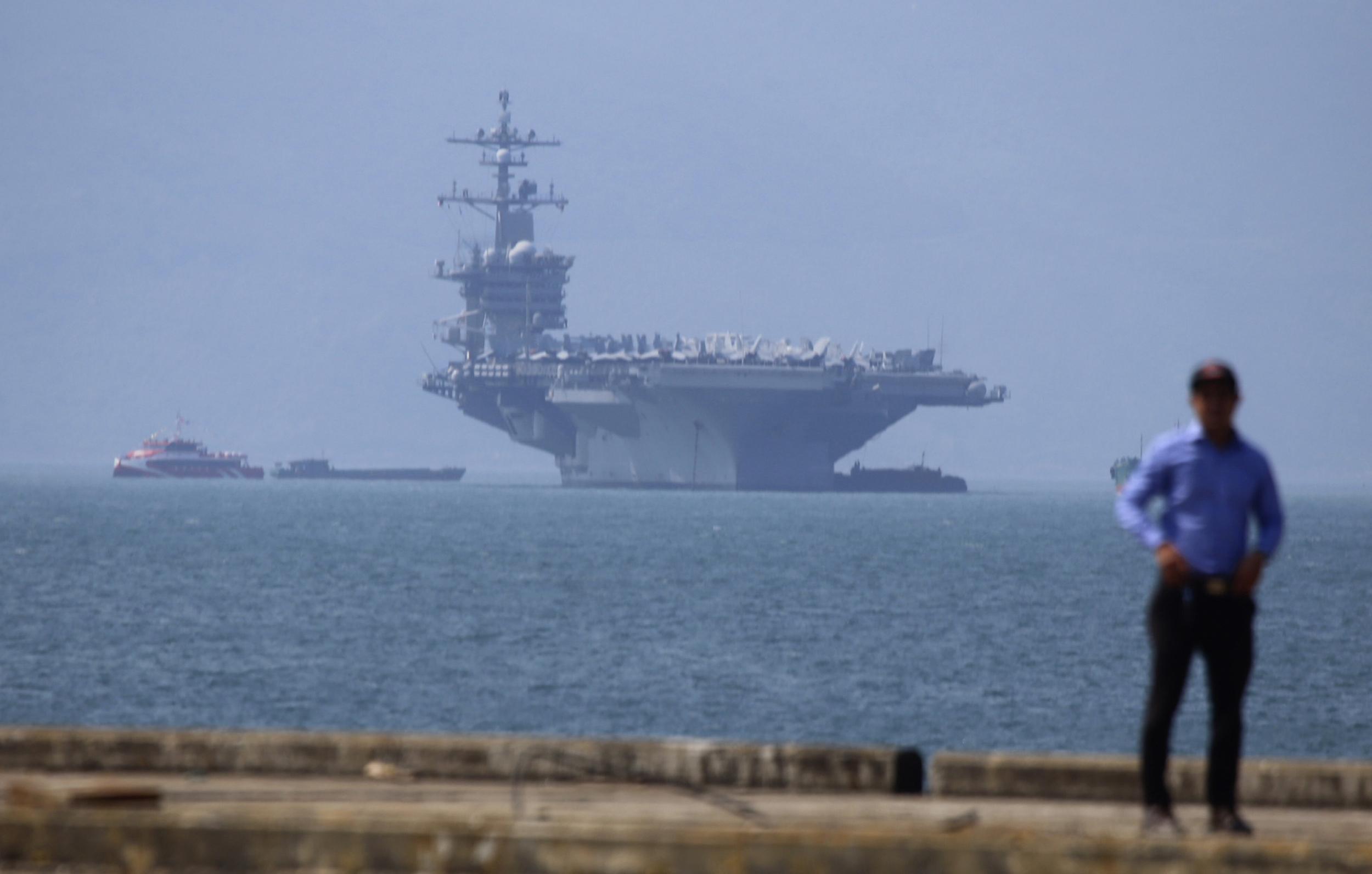
    For the first time since the Vietnam War, a U.S. Navy aircraft carrier is paying a visit to a Vietnamese port, seeking to bolster both countries’ efforts to stem expansionism by China in the South Chi

    DANANG, Vietnam (AP) — For the first time since the Vietnam War, a U.S. Navy aircraft carrier is paying a visit to a Vietnamese port, seeking to bolster both countries’ efforts to stem expansionism by China in the South China Sea.

    Monday’s visit by the USS Carl Vinson brings more than 5,000 crewmembers to the central coastal city of Danang, the largest such U.S. military presence in Vietnam since the Southeast Asian nation was unified under Communist leadership after the war ended in 1975.

    The Carl Vinson, accompanied by a cruiser and a destroyer, is visiting as China increases its military buildup in the Paracel islands and seven artificial islands in the Spratlys in maritime territory also claimed by Vietnam. China claims most of the South China Sea and has challenged traditional U.S. naval supremacy in the western Pacific.

    SEE ALSO: China’s influence to be major focus of Rex Tillerson’s Africa trip

    “The visit of aircraft carrier USS Carl Vinson to Vietnam signifies an increased level of trust between the two former enemies, a strengthened defense relationship between them, and reflects America’s continued naval engagement with the region,” said Le Hong Hiep, a research fellow at the Singapore-based ISEAS-Yusof Ishak Institute.

    The ship’s mission includes technical exchanges, sports matches and visits to an orphanage and a center for victims of Agent Orange, a toxic defoliant sprayed by U.S. forces to deny cover for Communist fighters during the war. It marks a fine-tuning, rather than a turning point, in relations. The U.S. Navy has staged activities in Vietnam for its Pacific Partnership humanitarian and civic missions in nine of the past 12 years.

    U.S. Ambassador Daniel Kritenbrink praised the carrier’s visit.

    “I think the visit by USS Carl Vinson demonstrates our commitment to the U.S- Vietnam partnership. It also demonstrates the dramatic progress we made in our bilateral relationship in recent years,” he said.

    The ambassador said the two countries share a range of interests that include “a desire to maintain peace, prosperity, unimpeded commerce, freedom of navigation upon which the region and its economies depend.”

    The United States normalized relations with Vietnam in 1995 and lifted an arms embargo in 2016, and the two former adversaries have steadily improved relations in all areas, including trade, investment and security.

    The visit of an aircraft carrier – a more than 100,000-ton manifestation of U.S. global military projection – reaffirms closer relations as Beijing flexes it political, economic and military muscle in Southeast Asia, and Washington seeks to re-establish its influence.

    “Although the visit is mainly symbolic and would not be able to change China’s behavior, especially in the South China Sea, it is still necessary in conveying the message that the U.S. will be there to stay,” Hiep said.

    Separately from this week’s mission, U.S. officials say American warships continue sailing without prior notice close to China-occupied islands and atolls, an aggressive way of signaling to Beijing that the U.S. does not recognize its sovereignty over those areas.

    Hiep said the Carl Vinson’s visit is likely to irritate China, but that Beijing will not take it too seriously.

    “They understand well the strategic rationale behind the rapprochement between Vietnam and the U.S., which was largely driven by China’s growing assertiveness in the South China Sea,” he said. “However, China also knows that Vietnam is unlikely to side with the U.S. militarily to challenge China.”

    Vietnam, while traditionally wary of its huge northern neighbor, shares China’s system of single-party rule and intolerance for political dissent.

    Economic relations with the United States in recent years have served as a counterbalance to Vietnam’s political affinity with China.

    “The United States now is a very important trading partner with Vietnam and it is the most important destination of Vietnam’s exports,” said Joseph Cheng, a professor of political science at the City University of Hong Kong. “In terms of security, both countries certainly share substantial common interest in the containment of China in view of the territorial dispute between China and Vietnam.”

    “However, it seems that Vietnam does not intend to become an ally of the United States. It is basically a kind of hedging strategy, a kind of balance of power strategy,” he said.

    The first U.S. Marines arrived in Danang in 1965, marking the beginning of large-scale American involvement in the Vietnam War. Some 58,000 American soldiers and an estimated 3 million Vietnamese were killed in the war.

    Danang, which was a major U.S. military base during the war, is now Vietnam’s third-largest city and is in the midst of a construction boom as dozens of resorts and hotels pop up along its scenic coastline.

    Several Danang residents said Monday that they welcomed the Navy visit.

    “During the war, I was scared when I saw American soldiers,” said Tran Thi Luyen, 55, who runs a small coffee shop in the city. “Now the aircraft carrier comes with a completely different mission, a mission of peace and promoting economic and military cooperation between the two countries.”

    Huynh Quang Nguyen, a taxi driver, echoed the sentiment.

    “I’m very happy and excited with the carrier’s visit,” he said. “Increased cooperation between the two countries in economic, diplomatic and military areas would serve as a counterbalance to Beijing’s expansionism.”

    ___

    This story has been corrected to show that ship has more than 5,000 crewmembers, not 6,000.

  • South Korea meeting thrusts North’s Kim into the limelight

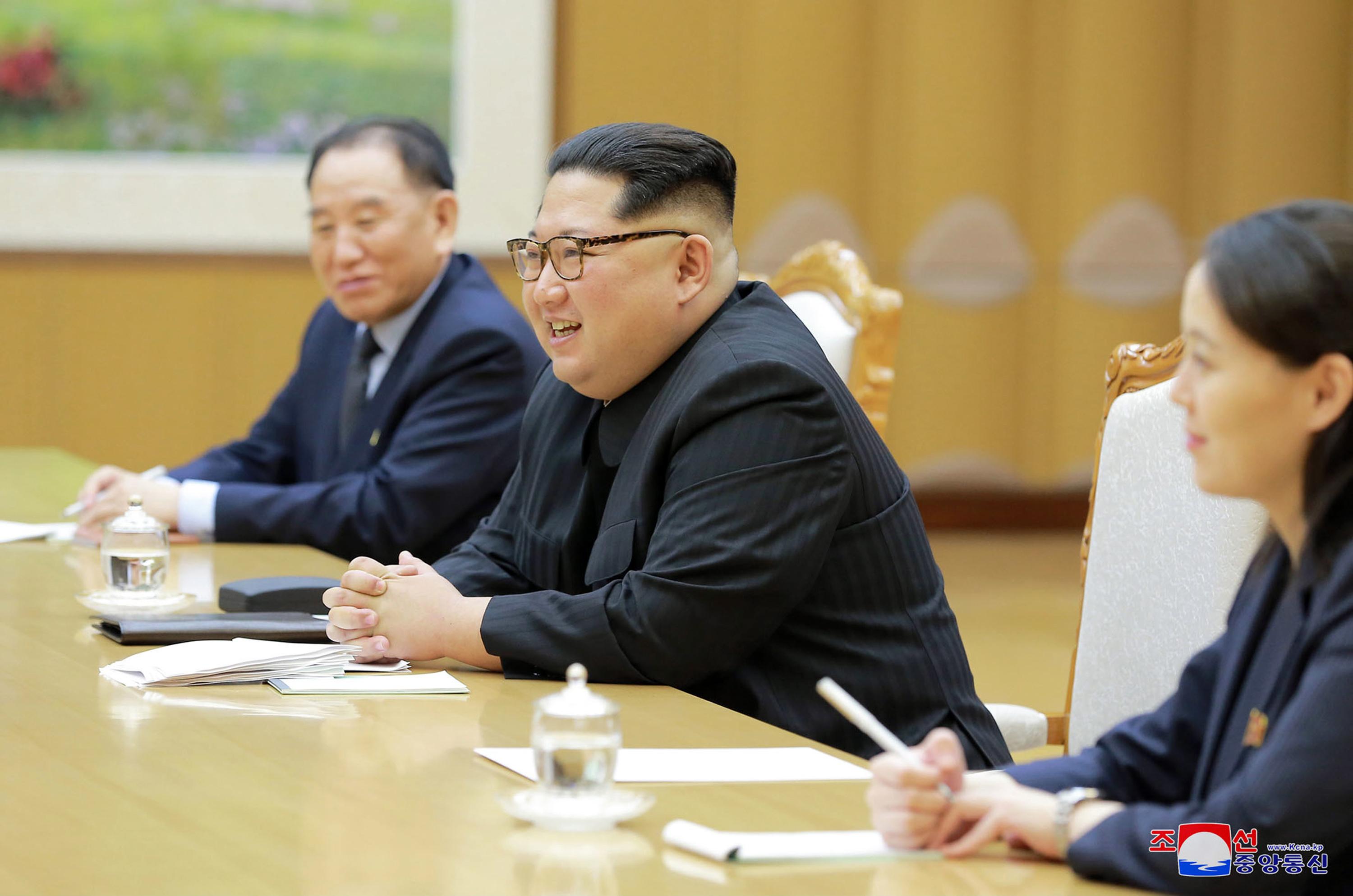
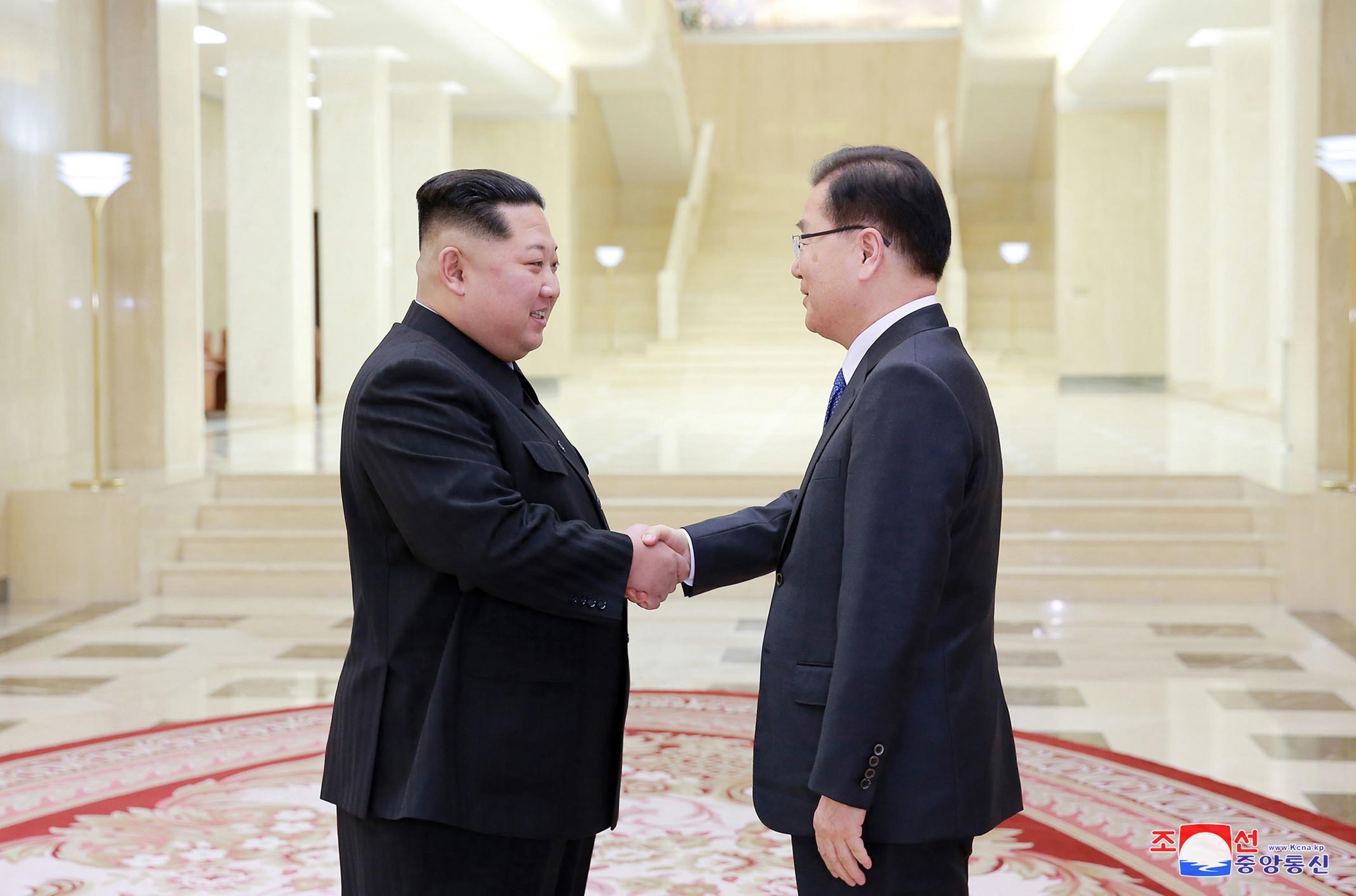
    North Korean leader Kim Jong Un grins, just on the verge of a belly laugh, as he grasps the hand of a visiting South Korean official. He sits at a wide conference table and beams as the envoys look on

    SEOUL, South Korea (AP) – North Korean leader Kim Jong Un grins, just on the verge of a belly laugh, as he grasps the hand of a visiting South Korean official. He sits at a wide conference table and beams as the envoys look on deferentially. He smiles broadly again at dinner, his wife at his side, the South Koreans seeming to hang on his every word.

    Kim is used to being the center of gravity in a country that his family has ruled with unquestioned power since 1948, but the chance to play the senior statesman on the Korean Peninsula with a roomful of visiting South Koreans has afforded the autocratic leader a whole new raft of propaganda and political opportunities.

    Photos released by North Korean state media Tuesday showing Kim meeting with the envoys are all the more remarkable coming just months after a barrage of North Korean weapons tests and threats against Seoul and Washington had many fearing war.

    It wasn’t immediately clear how the images were reported in the North, but they spread rapidly across the southern part of the peninsula a day after Pyongyang said Kim had an “openhearted talk” in Pyongyang with 10 envoys for South Korean President Moon Jae-in. Kim reportedly expressed his desire to “write a new history of national reunification” during a dinner that Seoul said lasted about four hours.

    The meeting Monday marked the first time South Korean officials have met with the young North Korean leader in person since he took power after his dictator father’s death in late 2011. It’s the latest sign that the Koreas are trying to mend ties after one of the tensest years in a region that seems to be permanently on edge.

    Given the robust history of bloodshed, threats and animosity on the Korean Peninsula, there is considerable skepticism over whether the Koreas’ apparent warming relations will lead to lasting peace. North Korea, some believe, is trying to use improved ties with the South to weaken U.S.-led international sanctions and pressure, and to provide domestic propaganda fodder for Kim.

    But each new development also raises the possibility that the rivals can use the momentum from the good feelings created during North Korea’s participation in the South’s Pyeongchang Winter Olympics last month to ease a standoff over North Korea’s nuclear ambitions and restart talks between Pyongyang and Washington.

    The role of a confident leader welcoming visiting, and lower-ranking, officials from the rival South is one Kim clearly relishes. Smiling for cameras, he posed with the South Koreans and presided over what was described by the North’s official Korean Central News Agency as a “co-patriotic and sincere atmosphere.”

    Many in Seoul and Washington will want to know if, the rhetoric and smiling images notwithstanding, there’s any possibility Kim will negotiate over the North’s breakneck pursuit of an arsenal of nuclear missiles that can viably target the U.S. mainland.

    The North has repeatedly and bluntly declared it will not give up its nuclear bombs. It also hates the annual U.S.-South Korean military exercises that were postponed because of the Olympics but will likely happen later this spring. And achieving its nuclear aims rests on the North resuming tests of missiles and bombs that set the region on edge.

    But there was nothing about the Koreas’ very real differences in the North Korean report. Kim was said to have offered his views on “activating the versatile dialogue, contact, cooperation and exchange” between the countries

    He was also said to have given “important instruction to the relevant field to rapidly take practical steps for” a summit with South Korean President Moon, which the North proposed last month.

    Moon, a liberal who is keen to engage the North, likely wants to visit Pyongyang. But he must first broker better ties between North Korea and Washington, Seoul’s top ally and its military protector.

    In the meantime, Moon sent his national security director, Chung Eui-yong, to head the 10-member South Korean delegation that was sent to Pyongyang. Chung’s trip is the first known high-level visit by South Korean officials to the North in about a decade.

    The South Korean delegates have another meeting with North Korean officials on Tuesday before returning home, but it’s unclear if Kim will be there.

    Kim was said to have expressed at the dinner his “firm will to vigorously advance the north-south relations and write a new history of national reunification by the concerted efforts of our nation to be proud of in the world.”

    There is speculation that better inter-Korean ties could pave the way for Washington and Pyongyang to talk about the North’s nuclear weapons. The United States, however, has made clear that it doesn’t want empty talks and that all options, including military measures, are on the table.

    Previous warming ties between the Koreas have come to nothing amid North Korea’s repeated weapons tests and the North’s claims that the annual U.S.-South Korean war games are a rehearsal for an invasion.

    Before leaving for Pyongyang, Chung said he would relay Moon’s hopes for North Korean nuclear disarmament and a permanent peace on the peninsula.

    Chung’s delegation includes intelligence chief Suh Hoon and Vice Unification Minister Chun Hae-sung. The South Korean presidential Blue House said the high-profile delegation is meant to reciprocate the Olympic trip by Kim Jong Un’s sister, Kim Yo Jong, who became the first member of the North’s ruling family to come to South Korea since the end of the 1950-53 Korean War.

    Kim Yo Jong, who also attended Monday’s dinner, and other senior North Korean officials met with Moon during the Olympics, conveyed Kim Jong Un’s invitation to visit Pyongyang and expressed their willingness to hold talks with the United States.

    After the Pyongyang trip, Chung’s delegation is scheduled to fly to the United States to brief officials about the outcome of the talks with North Korean officials.

    President Donald Trump has said talks with North Korea will happen only “under the right conditions.”

    If Moon accepts Kim’s invitation to visit Pyongyang, it would be the third inter-Korean summit talks. The past two summits, one in 2000 and the other in 2007, were held between Kim’s late father, Kim Jong Il, and two liberal South Korean presidents. They resulted in a series of cooperative projects between the Koreas that were scuttled during subsequent conservative administrations in the South.

    ___

    Associated Press writers Hyung-jin Kim and Kim Tong-hyung contributed to this report.