Blog

  • Red Cross worker killed in Yemen highlights danger in world’s worst humanitarian crisis: U.N.

    A Red Cross employee was shot and killed in the Taiz Governorate in Yemen last week, which international organizations are condemning as a targeted killing on a humanitarian aid worker.

    A Red Cross employee was shot and killed in the Taiz Governorate in Yemen last week, which international organizations are condemning as a targeted killing on a humanitarian aid worker.

    Hanna Lahoud, a Lebanese national, was gunned down by unknown assailants while traveling as a member and with other workers of the International Committee of the Red Cross.

    He was traveling for a detention visit to check conditions and well-being of prisoners when he was attacked, the ICRCsaid in a statement. Lahoud was taken to the hospital where he died of his injuries. Other colleagues in the car were unharmed.

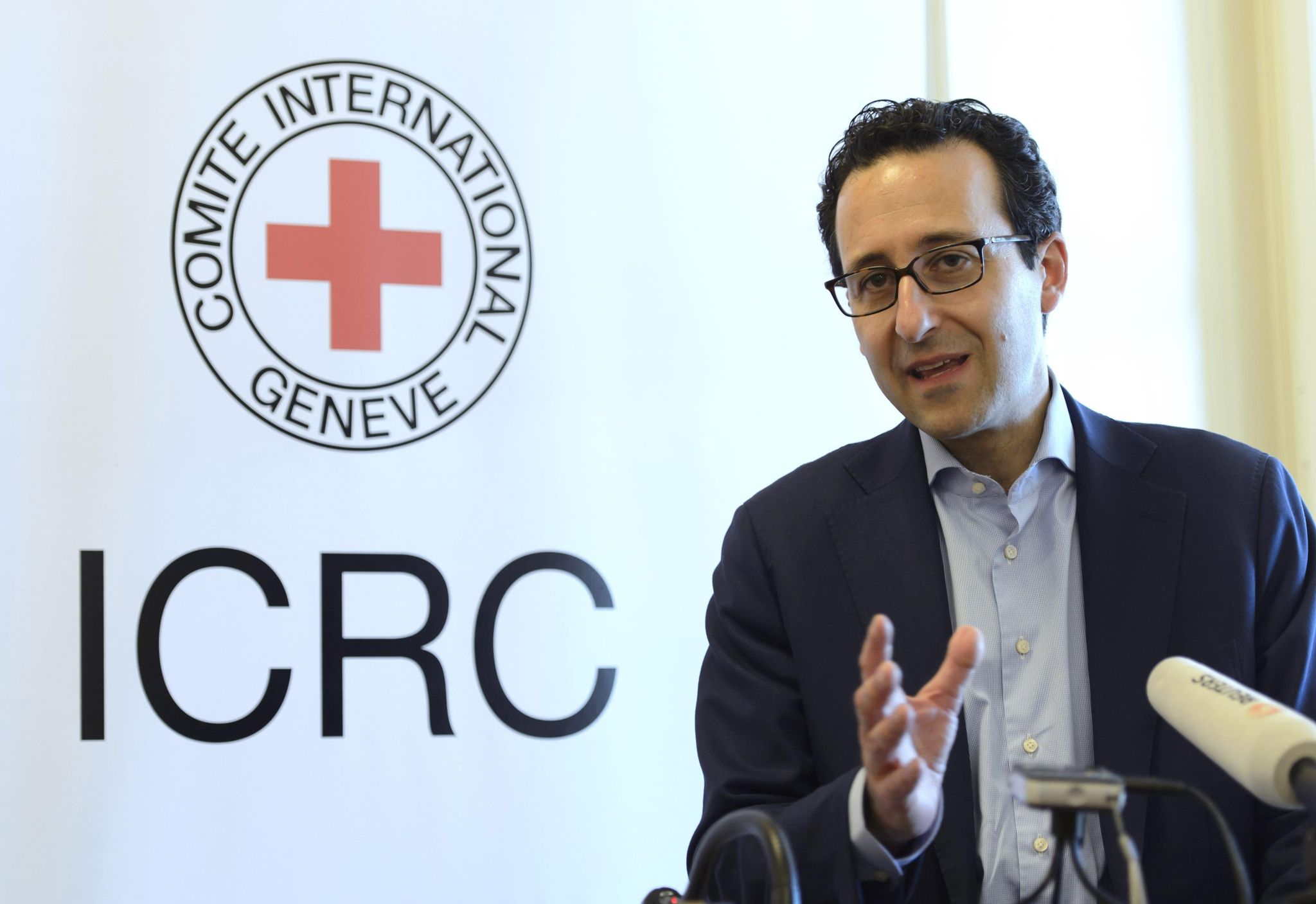
    “We condemn this brutal and apparently deliberate attack on a dedicated humanitarian worker,” Robert Mardini, the ICRC’s Middle East director, said in a statement.

    “We are all in shock. Hanna was a young man full of life and was widely known and liked. Nothing can justify Hanna’s murder and we are in deep mourning for our dear friend and colleague. Our hearts and thoughts are with Hanna’s loved ones and friends.”

    Lahoud had worked for the ICRC for about eight years, the organization said. Before joining the ICRC he was a first aid volunteer and staff with the Lebanese Red Cross.

    Ralph El Have, a spokesman for the ICRC, told the BBC that not all Red Cross vehicles are marked but that “everyone knows who we are.”

    “… Attacks on humanitarian workers, whether they are intended towards humanitarian workers or whether they are just intended against any civilian or any person who happens to be at the wrong place or the wrong time, they continue to happen in war-torn countries,” he told the radio service.

    Mr. El Have described Taiz as one of the most devastated cities and provinces in Yemen, with active fighting between different parties and individuals.

    “Proliferation of arms has unfortunately come to an extent you don’t know who is an armed man or an armed person part of an organized group,” he said.

    The ICRC goes to great lengths to maintain its neutrality in conflict zones, dismissing outright the idea of arming their staff or providing armed security. They’ll instead remove their aid workers for a time if they can’t guarantee their safety.

    On Sunday, a spokesman for the United Nations Secretary-General issued a statement condemning the killing and emphasized that all parties to the conflict protect aid workers servicing an estimated 22 million people in the war-torn country.

    Yemen is in the third year of a brutal civil war between Iranian-backed Houthi rebel extremists in the north of the country, against government forces backed by Saudi Arabia and the U.S. in the South.

    The conflict has plunged the Middle East’s poorest country into the world’s worst humanitarian crisis, with three-quarters of the population needing aid and protection, according to the U.N.

    At least 60 percent of the population are food insecure with 8.4 million people not knowing where their next meal is coming from.

    Less than 50 percent of health facilities are functioning and 18 percent of districts have no doctors — 16 million people do not have regular access to basic healthcare.

    Fifty percent of all children are stunted from lack of adequate nutrition.

    A cholera outbreak has largely come under control, but at least 55 percent of the population does not have regular access to safe water and basic hygiene.
  • Business and pleasure on menu for Macron’s second day in US

    A sit-down between President Donald Trump and French President Emmanuel Macron followed by a joint news conference highlight the business portion of the French leader’s second day in Washington.

    WASHINGTON (AP) – A sit-down between President Donald Trump and French President Emmanuel Macron followed by a joint news conference highlight the business portion of the French leader’s second day in Washington.

    The pageantry of Macron’s official state visit, the first of the Trump presidency, comes Tuesday night with a lavish state dinner at the White House. About 150 guests are expected to dine on rack of lamb and nectarine tart and enjoy an after-dinner performance by the Washington National Opera.

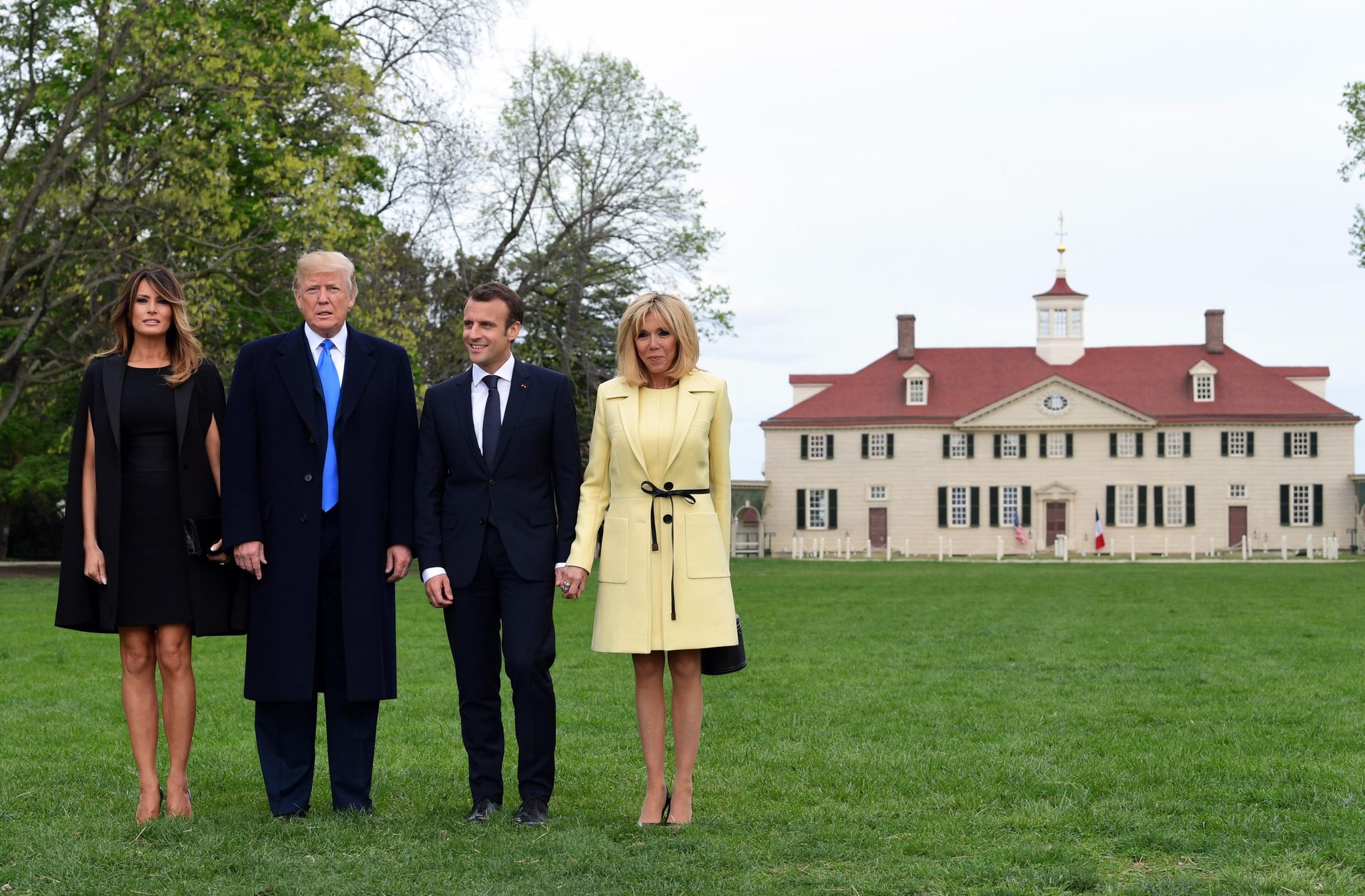
    Monday night was more relaxed, featuring a helicopter tour of Washington landmarks and a trip to the Potomac River home of George Washington with their wives for dinner. The presidents and their spouses hopped on a helicopter bound for Mount Vernon, Washington’s historic riverside home, for a private dinner one night before the leaders sit down for talks on a weighty agenda including security, trade and the Iran nuclear deal.

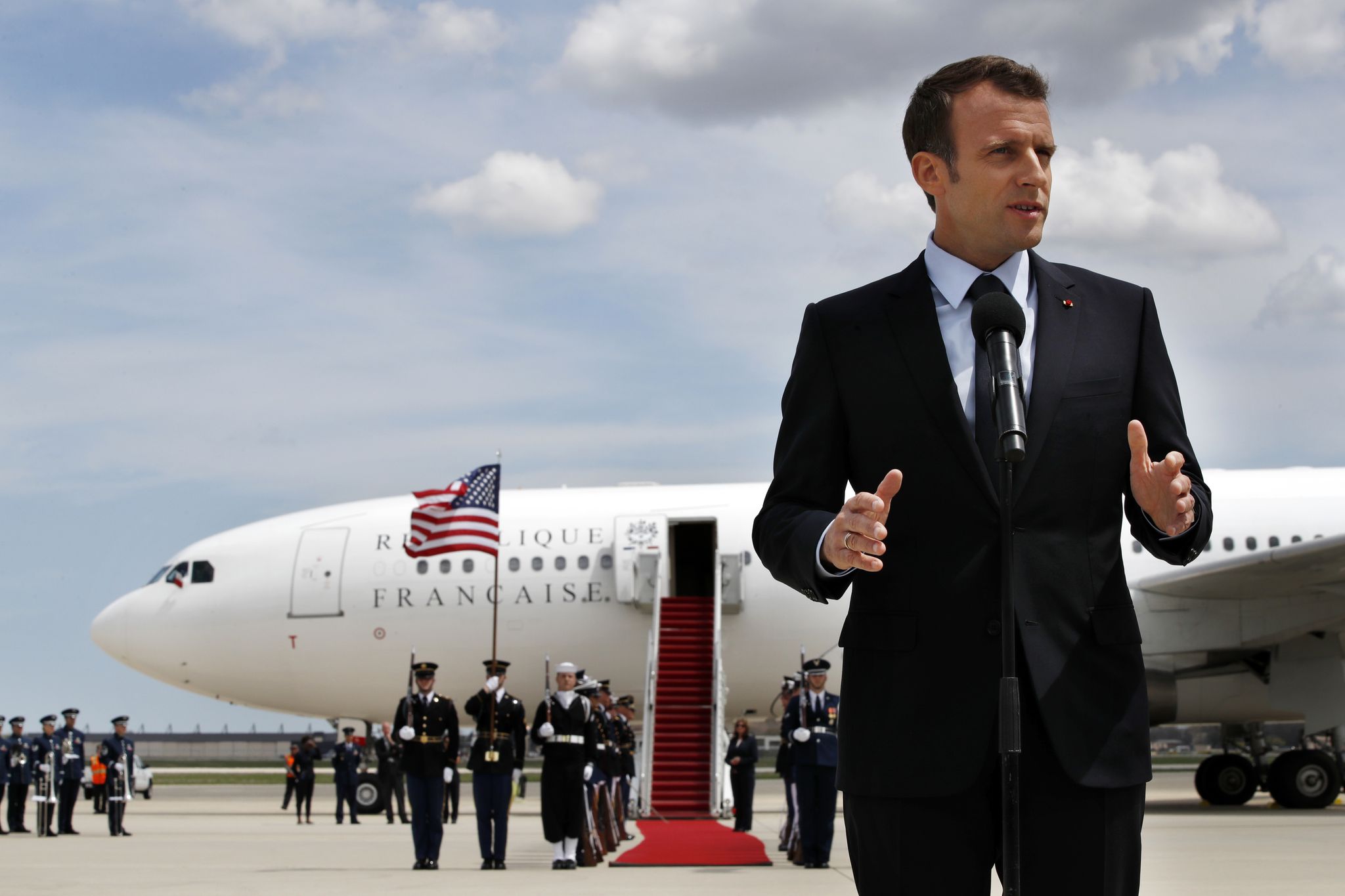
    “This is a great honor and I think a very important state visit given the moment of our current environment,” Macron said Monday after his plane landed at a U.S. military base near Washington.

    Macron’s pomp-filled three-day state visit to Washington underscores the importance that both sides attach to the relationship: Macron, who calls Trump often, has emerged as something of a “Trump whisperer” at a time when the American president’s relationships with other European leaders are more strained. Trump, who attaches great importance to the optics of pageantry and ceremony, chose to honor Macron with the first state visit of his administration as he woos the French president.

    For all their camaraderie, Macron and Trump disagree on some fundamental issues, including the multinational nuclear deal, which is aimed at restricting Iran’s development of nuclear weapons. Trump, skeptical of the pact’s effectiveness, has been eager to pull out as a May 12 deadline nears. Macron says he is not satisfied with the situation in Iran and thinks the agreement is imperfect, but he has argued for the U.S. sticking with the deal on the grounds that there is not yet a “Plan B.”

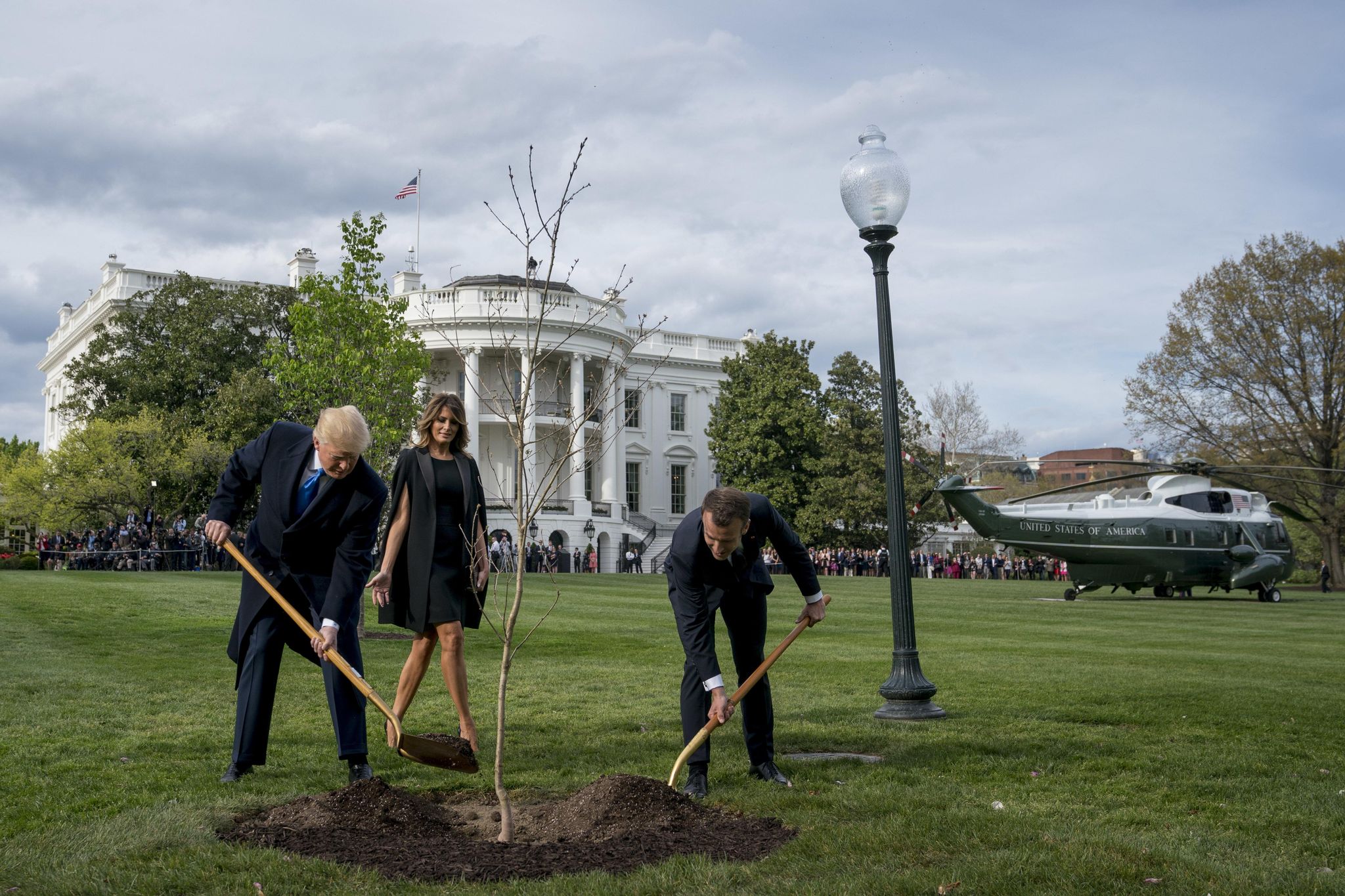
    The Trumps and Macrons helped plant a tree on the White House grounds together before boarding Trump’s Marine One helicopter for a scenic tour of monuments built in the capital city designed by French-born Pierre L’Enfant as they flew south to Mount Vernon, the first U.S. president’s home along the Potomac River.

    The young oak is an environmentally friendly gift to the White House from Macron, and one that also bears historical significance. It sprouted at a World War I site in France, the Battle of Belleau Wood, that became part of U.S. Marine Corps lore.

    After Trump’s helicopter landed at Mount Vernon, the two presidents, each holding his wife’s hand, walked a short distance and posed for pictures before they boarded golf carts that ferried them to the front door of Washington’s plantation house. The couples were led on a brief outdoor tour before they entered the pale yellow building for dinner of Dover sole, pasta stuffed with lemon ricotta, and chocolate souffle and cherry vanilla ice cream.

    Trump declared the dinner “really fantastic” before returning to the White House.

    He ended his first year in office without receiving a foreign leader on a state visit, the first president in nearly 100 years to fail to do so. He was Macron’s guest last July at the annual Bastille Day military parade in the center of Paris. Macron and his wife also took Trump and America’s first lady on a tour of Napoleon’s tomb and whisked them up in the Eiffel Tower for dinner overlooking the City of Light.

    Macron will be welcomed back to the White House on Tuesday with a traditional arrival ceremony featuring nearly 500 members of the U.S. military and a booming 21-gun salute. The state visit also offers Macron his first Oval Office sit-down with Trump and a joint White House news conference. There’s also a State Department lunch hosted by Vice President Mike Pence.

    The French president’s White House day will be capped Tuesday night with a state dinner, the highest social tribute a president bestows on an ally and partner.

    Melania Trump played an active role in every detail of the visit, said White House spokeswoman Sarah Huckabee Sanders.

    The first lady settled on a state dinner menu of rack of lamb and nectarine tart, along with after-dinner entertainment provided by the Washington National Opera for about 150 guests. On Monday, she released details of the glitzy affair being planned to dazzle Macron and his wife, Brigitte.

    Dinner will be served in the State Dining Room, which will feature more than 2,500 stems of white sweet pea flowers and nearly 1,000 stems of white lilac. Separately, more than 1,200 branches of cherry blossoms will adorn the majestic Cross Hall.

    The first lady opted for a cream-and-gold color scheme, and will use a mix of china services from the presidencies of Bill Clinton and George W. Bush.

    State dinner tickets are highly sought after by Washington’s political and business elite. A few of those expected to attend: Christine Lagarde, head of the International Monetary Fund and a former top French government official; House Speaker Paul Ryan, R-Wis.; Treasury Secretary Steven Mnuchin and his wife, Louise Linton; Defense Secretary Jim Mattis, Sen. Bill Cassidy, R-La., and Mike Pompeo, Trump’s choice to be the next secretary of state.

    In a break with tradition, Trump has invited no congressional Democrats or journalists, said a White House official who was not authorized to discuss the arrangements publicly. But some Democrats did make the cut, including Louisiana Gov. John Bel Edwards, whose office confirmed his attendance.

    ___

    Follow Darlene Superville on Twitter: http://www.twitter.com/dsupervilleap

  • The Latest: Macron, Trump plant tree together at White House

    The Latest on the state visit by President Emmanuel Macron of France (all times local):

    WASHINGTON (AP) – The Latest on the state visit by President Emmanuel Macron of France (all times local):

    6 p.m.

    President Donald Trump and French President Emmanuel Macron have ceremonially planted a tree together on the South Lawn of the White House as they kick off the first state visit of the Trump presidency.

    Holding brass shovels, the two leaders threw dirt onto the newly installed tree, a European Sessile Oak from Belleau Woods, where thousands of U.S. Marines died in a 1918 battle during World War I.

    Trump told reporters on Monday that France is “a very special country,” adding, “I love the tree.”

    Trump, Macron and their wives are taking Marine One from the White House to George Washington’s Mount Vernon for a private dinner Monday ahead of a formal day of business events Tuesday.

    ___

    5:35 p.m.

    French President Emmanuel Macron has arrived at the White House at the start of his meetings with President Donald Trump.

    Macron and his wife, Brigitte, were embraced by the president and first lady Melania Trump when their car pulled into the West Wing driveway Monday. The handshakes and pleasantries kicked off Macron’s state visit to Washington with Trump.

    The Macrons took an unscheduled walk along Pennsylvania Avenue earlier in the day.

    The two planned to present the Trumps with a tree on the South Lawn of the White House and then were flying aboard Marine One for dinner at Mount Vernon, George Washington’s historic riverside home.

    ___

    2:40 p.m.

    French President Emmanuel Macron is taking a stroll around the White House before he is set to kick off his state visit to Washington with President Donald Trump Monday evening.

    Macron says in a Monday afternoon tweet: “Before our first work meetings, let’s have a walk on Washington’s streets.”

    Moments earlier, Secret Service officers and agents rushed to keep up with his entourage as Macron departed Blair House for an unscheduled walk, greeting well-wishers along Pennsylvania Avenue. Macron is joined by his wife, Brigitte Macron, on the walk.

    The Macrons are being received by Trump and First Lady Melania Trump at the White House later Monday, before flying aboard Marine One for dinner at Mount Vernon. Following business meetings Tuesday morning, Macron will be the guest of honor at the Trump’s first State Dinner Tuesday evening at the White House.

    ___

    1:55 p.m.

    President Emmanuel Macron of France has arrived on a state visit to the United States. It’s the first such visit of President Donald Trump’s administration.

    Macron said after his plane landed Monday at a U.S. military base near Washington that he and Trump will discuss issues important to their countries.

    Macron calls the visit a “great honor.” It’s his first trip to Washington since his election last year.

    Trump and first lady Melania Trump are taking Macron and his wife, Brigitte, to dinner Monday at Mount Vernon, George Washington’s home along the Potomac River.

    On Tuesday at the White House, Macron will be treated to a military arrival ceremony, Oval Office time with Trump, a joint news conference and a glitzy state dinner with nearly 150 guests.

    ___

    12:05 p.m.

    Melania Trump is serving rack of lamb and nectarine tart at Tuesday’s White House state dinner for President Emmanuel Macron of France.

    It’s the first state dinner of President Donald Trump’s administration.

    The first lady also chose the Washington National Opera to entertain the approximately 150 guests after dinner.

    Mrs. Trump’s office on Monday released details of the affair being planned to dazzle Macron and his wife, Brigitte. House Speaker Paul Ryan, Defense Secretary Jim Mattis and Louisiana Gov. John Bel Edwards are among those who have said they are attending.

    The first lady has saved a few choice details for the last minute. They include the full guest list and what she’s wearing.

  • US won’t ease sanctions without action by NKorea on nukes

    The White House said Monday North Korea won’t get sanctions relief until it takes “concrete action” toward denuclearization, the goal of President Donald Trump’s planned summit with Kim Jong Un.

    WASHINGTON (AP) – The White House said Monday North Korea won’t get sanctions relief until it takes “concrete action” toward denuclearization, the goal of President Donald Trump’s planned summit with Kim Jong Un.

    Press secretary Sarah Huckabee Sanders’ comments appeared to leave open the possibility of easing the U.S.-led “maximum pressure” campaign before North Korea had completely given up its nuclear weapons.

    But Sanders said the U.S. wouldn’t make the mistake of past administrations in taking the North Koreans “simply at their word.” She said, “We’ve seen some steps in the right direction but we have a long way to go.”

    On Saturday, North Korea announced it will close its nuclear testing facility and suspend nuclear and intercontinental ballistic missile tests – a move welcomed by Trump as “big progress.” The North stopped short of suggesting it will give up its nuclear weapons or scale back its production of missiles and their related components.

    Asked if the suspension of tests was a positive sign, Defense Secretary Jim Mattis said Monday, “Right now, I think there (are) a lot of reasons for optimism that the negotiations will be fruitful and we’ll see.”

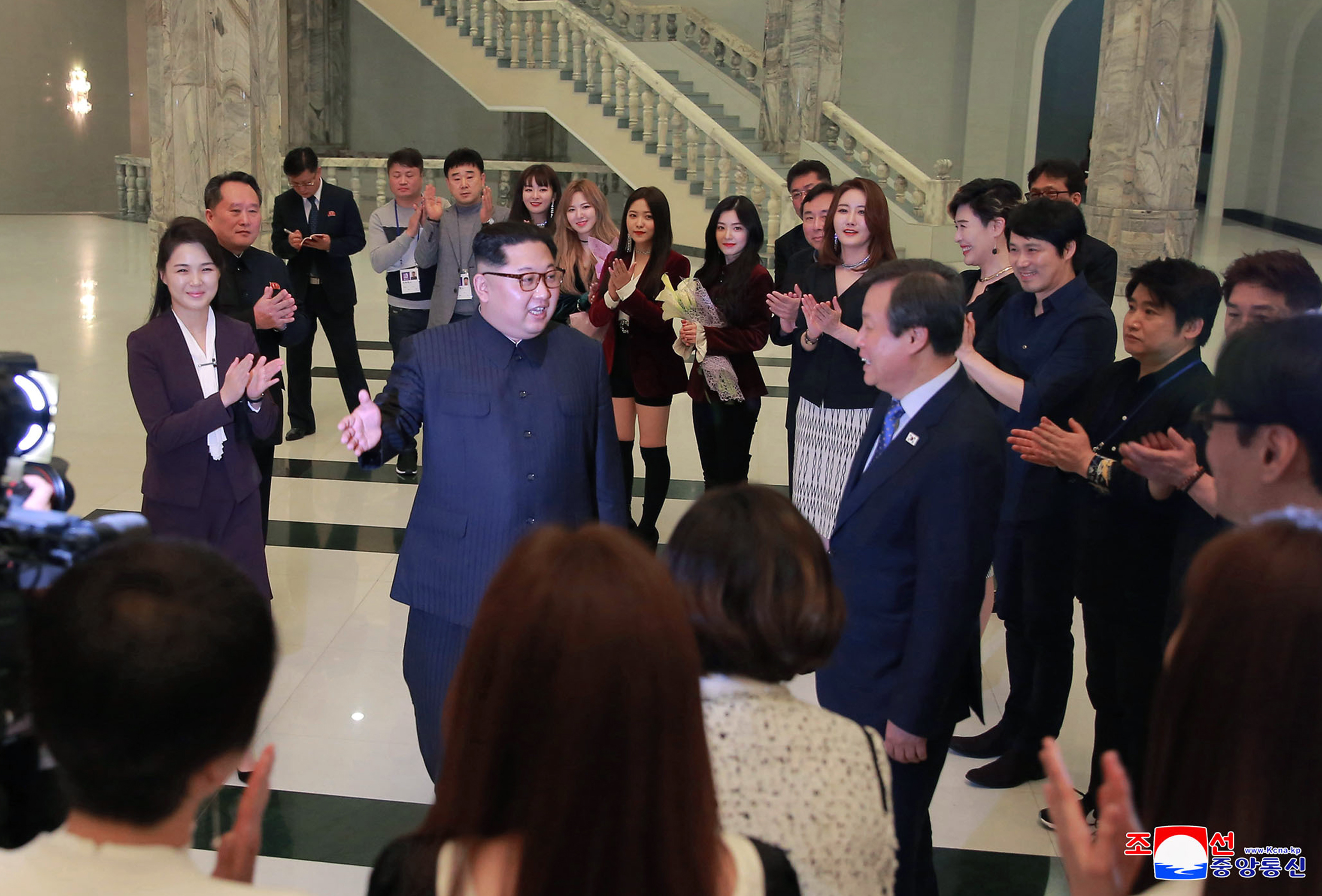
    This Friday, U.S.-allied South Korean President Moon Jae-in and Kim will hold a summit in the demilitarized zone between the Koreas that could lay the ground for Trump’s planned meeting with the North Korean dictator in May or early June. The leaders of the U.S. and North Korea have never met during six decades of hostility since the Korean War.

    Sanders said the U.S. goal was the complete denuclearization of the Korean Peninsula. When asked if the president was willing to accept anything short of that goal before lifting sanctions or was willing to go incrementally, she told reporters: “Certainly no sanctions lifted until we see concrete actions taken by North Korea to denuclearize.”

    Last year, the U.S. spearheaded through the U.N. Security Council the toughest international sanctions yet against North Korea in response to three long-range missile launches and its most powerful nuclear test explosion yet. The Trump administration supplemented those restrictions with unilateral U.S. sanctions against firms that had conducted illicit trade with the North.

    This year, Kim has pivoted from confrontation to diplomacy and, according to South Korea and China, has expressed a commitment to denuclearization. There is still uncertainty about what he seeks in return.

    Three weeks ago, Trump’s pick to be the next secretary of state, CIA Director Mike Pompeo, became the most senior U.S. official to travel to North Korea in nearly two decades, but the content of his discussions with Kim has not been made public.

    The last nuclear talks between the U.S. and North Korea collapsed in 2012. The two nations also remain in a technical state of war as the 1950-53 Korean War ended with an armistice not a peace treaty.

  • Trump firmly against Iran nuke deal, ready for French President Macron’s pro-deal pitch

    President Trump isn’t backing off his opposition to the Iran nuclear deal, the White House said Monday of the international agreement that is expected to be a top issue during the state visit by Frenc

    President Trump isn’t backing off his opposition to the Iran nuclear deal, the White House said Monday of the international agreement that is expected to be a top issue during the state visit by French President Emmanuel Macron.

    Mr. Trump has threatened to pull out of the Obama-era deal. Mr. Macron and others, including Iranian officials, have urged him to reconsider.

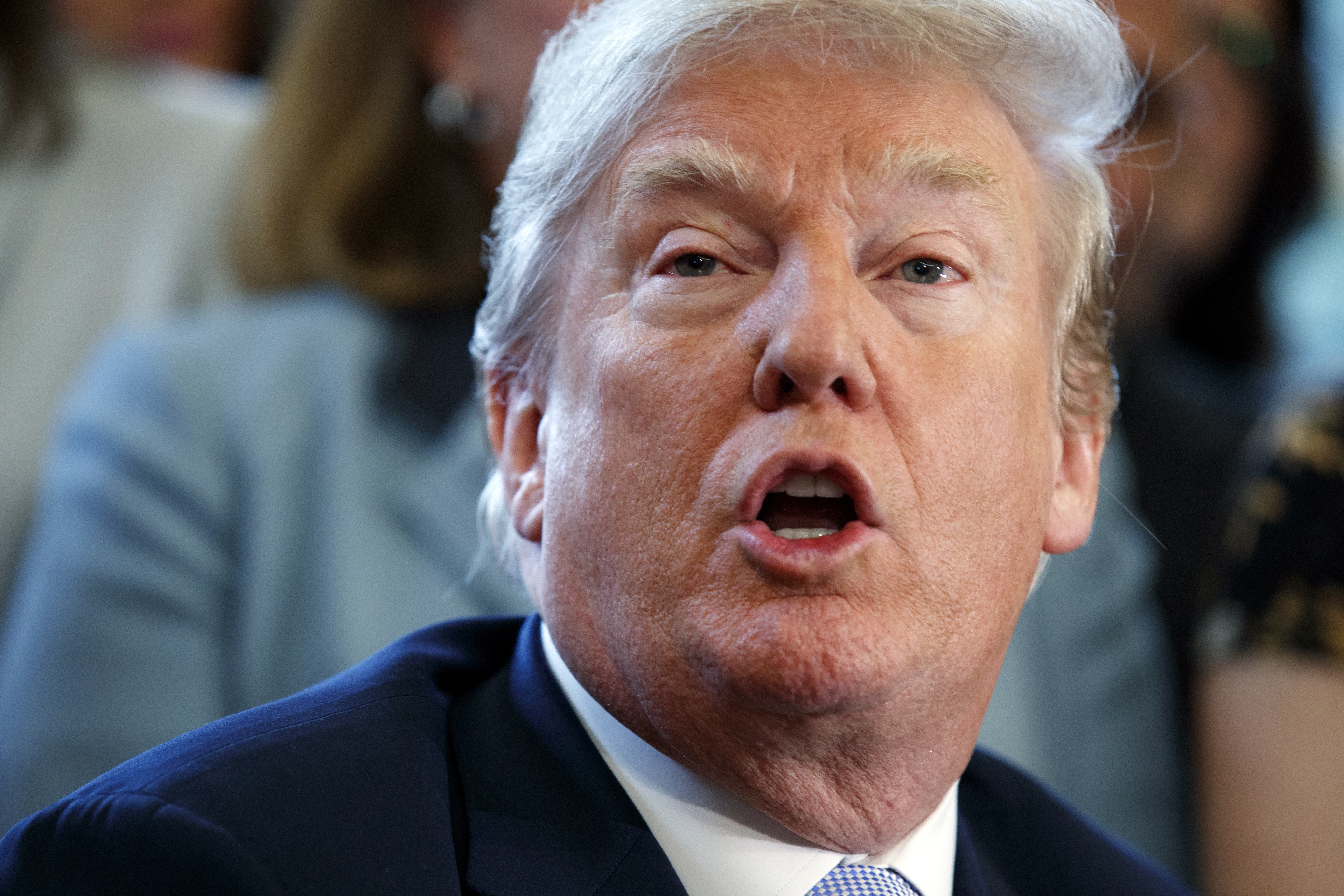
    “The president has been extremely clear that he thinks it is a bad deal. That certainly hasn’t changed,” said White House press secretary Sarah Huckabee Sanders.

    Mr. Trump can nix the deal May 12, when he has the choice whether to extend sanctions relief under the deal or reimpose sanctions on Iran.

    Still, Ms. Sanders said the president always welcomed discussions about making deals that he thinks would benefit the American people.

    “I’m confident we have a great negotiator at the table,” she said, adding that her statement did not discount Mr. Macron’s negotiating skills.

    The president is hosting Mr. Macron in the first state visit of the Trump administration, with three days of events that begin Monday and include a state dinner Tuesday.

  • Etiquette and protocol highlights for royal wedding guests

    Grab those nude stockings, ladies. You’ll be at a royal wedding, after all.

    NEW YORK (AP) – Grab those nude stockings, ladies. You’ll be at a royal wedding, after all.

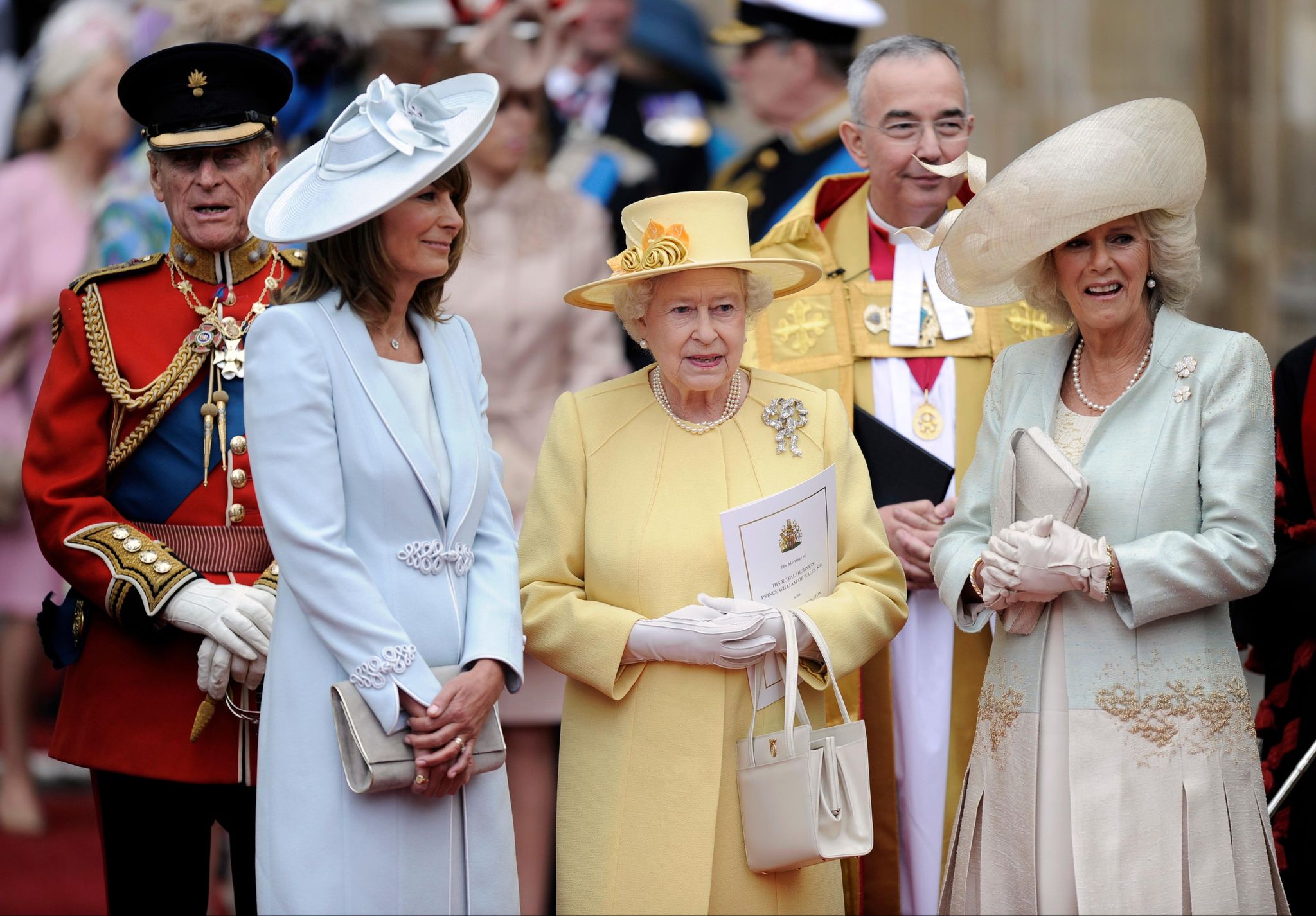
    While the May 19 nuptials of Prince Harry and Meghan Markle will be a lower key affair than those of Will and Kate, guests at St. George’s Chapel will still be expected to follow church and royal protocol, or at the very least basic British tradition, etiquette pros said.

    The invitations to 600 guests described the high church dress code thusly: For men, military uniforms, morning coats or lounge suits, otherwise known as business suits in not-wacky colors. For women, “day dress with hat.”

    The edicts leave plenty of room for faux pas. They also leave room for honoring age-old but not widely known customs, such as choosing straw as the material for hats after Easter.

    Some fashion and style etiquette fit for a queen:

    DAYWEAR HEMS AND SHOULDERS

    Etiquette expert Myka Meier, who trained in London under a former member of the royal household, said dressing for such an occasion in Britain and elsewhere can be very different things.

    Women’s shoulders should be covered. It’s the Church of England, and the groom’s grandmother is the head of that institution, FYI. Hemlines shouldn’t be shorter than the longest finger when arms are held at the side, and no longer than mid-calf, Meier said.

    “You won’t see cleavage. You won’t see a lot of skin,” she said. “At least you shouldn’t. It would be seen as disrespectful.”

    Dresses that are mostly black or mostly white are no-nos. White is reserved for the bride, and perhaps the bridal party. Black remains a color of mourning. Accents, patterns or smaller pops of those colors are fine.

    Light prints and patterns are likely, but big and blocky prints are unacceptable, Meier said. It’s a spring wedding so expect plenty of pastels and traditional seasonal prints such as florals.

    International guests clearly are welcome to wear their country’s equivalents.

    “At the end of the day you just want to match the formality of the event you’re attending,” Meier said.

    HATS: BIGGER ISN’T ALWAYS BETTER

    Royal weddings can seem like a hat free-for-all.

    “Hats are a sign of festivity for a British wedding. They are kept on inside the church, but people should be careful of the people sitting behind them,” said Meier, who specializes in international social and business etiquette and protocol.

    “It’s not the Kentucky Derby. No huge brims. Nothing too high,” she said.

    Fascinators – headpieces decorated with bows, flowers and more – are popular and perfectly acceptable, lending an air of whimsy.

    “Whimsy as opposed to crazy is fine,” said celebrity and society stylist Diane Lloyde Roth, who has been dressing Americans for European formal events for more than 30 years.

    Meier said women often start with the hat when planning their outfits. A rule of thumb from Lloyde Roth: “Make sure your hat and your outfit are going to the same event.”

    The huge hat worn by Princess Beatrice to the wedding of Harry’s brother, Prince William, and Kate Middleton lives on as a cautionary tale. Royal watcher Anne Chertoff called the high bow on Beatrice’s fascinator “ridiculous in so many ways, but at least you could see through it.”

    SHOES MATTER

    The wedding is a formal church affair but also a day event. That doesn’t mean anything goes on the feet. This isn’t a garden party.

    Forget open toes and wedges. Slingbacks are also considered too informal, Meier said.

    “You want something that is about 4 inches maximum,” she said. “The walk in is not going to be easy. There are lots of cobblestones even though there will be different types of carpeting.”

    And stilettos? Forget about it.

    HANDBAGS

    They should be small.

    “There are about 800 seats in St. George’s Chapel but it’s very tight seating. There isn’t any place to put large bags,” Meier said.

    Clutches or other handbags that fit easily on laps or just slightly to the side will rule the day.

    Kate Middleton rolls that way routinely. The queen also doesn’t tote around a tote.

    THE MEN

    Most will be in morning suits, Meier said. They have coattails and they often come in grey, navy and black. There’s also a waistcoat, like a vest, and a regular tie. Pinstripes are sometimes involved in trousers.

    As for lounge suits, the darker they are the more formal, which is true for morning suits as well. No linen suits, guys.

    Shoes will be polished like they’ve never been polished before. And the men will likely play with color and patterns in ties, pocket squares and socks. But no brown belts or brown shoes, considered less formal than black ones.

    Medals for those wearing dress military uniforms are common. So are medals of distinction of other kinds pinned to morning suits.

    DON’T OVERDO

    “Americans forget that sometimes,” said Lloyde Roth, based in New Canaan, Connecticut. “You’re not the princess.”

    Makeup should be minimal, along with accessories. Savvy guests will let the hat do the talking, she said.

    “Do a great bold lip with the hat. That balances everything,” Lloyde Roth suggested.

    In terms of accessorizing, she offered the wise words of Coco Chanel: “Before you leave the house, look in the mirror and take one thing off.”

    THE HOLLYWOOD FACTOR

    “The only way there will be a culture clash would be if the Hollywood contingent tried to out-royal the royals,” Lloyde Roth said. “They should remember, this is the upper crust. They own their jewels and the clothing they’re wearing. They don’t turn back into mice at the stroke of midnight.”

    It is said the queen is not fond of skinny straps on dresses or revealing attire. Guests won’t change for a castle reception immediately following the wedding, but there is a private evening party at Frogmore House just south of Windsor Castle. If it’s black tie, as was the night party for Will and Kate, floor-length gowns are called for.

    “They can be strapless or sleeveless or long sleeves, based on the personal style preference of the woman,” Meier said.

    Chertoff agreed, predicting fabulousness of all kinds come nightfall, including plunging necklines and high slits.

    The queen skipped the evening reception for Will and Kate. She’ll likely do the same this time, so no trigger alerts there. What happens at Frogmore House stays at Frogmore House.

    “The cameras will be off,” Chertoff said. “It’s all behind closed doors.”

    ___

    For complete coverage of the royal wedding, see: https://apnews.com/tag/Royalweddings

    ___

    Follow Leanne Italie on Twitter @litalie

  • The Latest: Panel approves Pompeo for secretary of state

    The Latest on the nomination of Mike Pompeo as secretary of state (all times local):

    WASHINGTON (AP) – The Latest on the nomination of Mike Pompeo as secretary of state (all times local):

    6:30 p.m.

    President Donald Trump’s choice for secretary of state, Mike Pompeo, has cleared the Senate Foreign Relations Committee with a favorable recommendation, narrowly avoiding a rare rebuke as his confirmation heads to the full Senate.

    Democrats put up stiff resistance and voted against Pompeo, who is now the CIA director. Only a last-minute switch from Kentucky Republican Rand Paul – whom Trump called before the vote – enabled Pompeo to win committee approval.

    It would have been the first time since the committee starting keeping records in 1925 that a secretary of state nominee faced an unfavorable report.

    Pompeo’s nomination now goes to the full Senate, where votes are tallying in his favor. Senate Majority Leader Mitch McConnell says he looks forward to voting to confirm Pompeo this week.

    ___

    5:25 p.m.

    Sen. Rand Paul says he now supports Mike Pompeo as secretary of state.

    The Kentucky Republican announced his position after talking with President Donald Trump moments before the Senate Foreign Relations Committee was set to consider the nominee. Pompeo hasn’t had sufficient support from the panel for a favorable recommendation, but Paul’s support could change that outcome.

    Paul says on Twitter that after talking with Trump and meeting with the nominee he received assurances that Pompeo believes the Iraq war “was a mistake, that regime change has destabilized the region, and that we must end our involvement with Afghanistan.”

    With those assurances, the senator says he has “decided to support his nomination to be our next secretary of state.”

    ___

    3:40 p.m.

    Senate Majority Leader Mitch McConnell says he’s looking forward to voting to confirm President Donald Trump’s nominee for secretary of state, Mike Pompeo, later this week in the Senate.

    McConnell is making the upbeat assessment after two more Democratic senators announced support for Pompeo, now the CIA director, despite steep opposition expected Monday evening at the Senate Foreign Relations Committee. The panel is unlikely to have the votes to give a favorable recommendation, but the nominee is expected to find wider support in the full Senate.

    McConnell says that with Pompeo, “the United States will have a chief diplomat who enjoys the total confidence of the president.”

    The Republican leader says he looks “forward to upholding the tradition of this body and voting to confirm him this week.”

    ___

    1:30 p.m.

    Mike Pompeo’s nomination for secretary of state has received a boost because two Democratic senators announced they would support his confirmation before the full Senate.

    Sen. Joe Manchin of West Virginia and Sen. Joe Donnelly of Indiana both backed Pompeo when he was confirmed as CIA director. But other Democrats have been peeling away, and Pompeo is not likely to have enough support Monday for a favorable recommendation from the Senate Foreign Relations Committee.

    Neither Manchin nor Donnelly is on the panel, but their votes will help push Pompeo’s nomination before the full Senate vote expected later this week.

    Manchin says “during this sensitive diplomatic time, it’s important our next secretary of state understands the grave threats facing our nation and can offer diplomatic solutions to avoid conflict, as soon as possible.”

    ___

    9:30 a.m.

    President Donald Trump is attacking Democrats as he seeks Senate confirmation of Mike Pompeo as secretary of State.

    Trump says on Twitter Monday: “Hard to believe Obstructionists May vote against Mike Pompeo for Secretary of State. The Dems will not approve hundreds of good people, including the Ambassador to Germany. They are maxing out the time on approval process for all, never happened before. Need more Republicans!”

    Pompeo’s nomination faces serious opposition from key Democrats and at least one Republican. The Senate Foreign Relations Committee may not have enough votes to recommend him for confirmation.

    The full Senate is still expected to consider Pompeo’s nomination later this week. But the rebuke from the panel would be the first time in years a nominee for the position did not receive a favorable vote.

    ___

    President Donald Trump’s nominee for secretary of State, Mike Pompeo, is facing serious opposition before the Senate Foreign Relations Committee.

    The panel may not have enough votes to recommend him for confirmation Monday as all Democrats, and at least one Republican, have said they will oppose him.

    The full Senate is still expected to consider Pompeo’s nomination later this week. But the rare rebuke from the panel, even after Pompeo’s recent visit with North Korean leader Kim Jong Un, would be the first time in years a nominee for the high-level Cabinet position did not receive a favorable vote.

    The chairman of the committee, Republican Sen. Bob Corker, blames partisan politics for opposition to Pompeo, saying the CIA chief is just as qualified as past nominees for secretary of state.

  • Kim Jong-un summit threatened by Trump’s bid to end Iran nuclear deal

    President Trump’s determination to undermine the Iran nuclear deal could undercut his hopes for quick success in the upcoming summit with North Korean leader Kim Jong-un, many in South Korea fear.

    SEOUL — President Trump’s determination to undermine the Iran nuclear deal could undercut his hopes for quick success in the upcoming summit with North Korean leader Kim Jong-un, many in South Korea fear.

    Former high-level South Korean officials and analysts say Mr. Kim will be far less likely to abandon his nuclear and missile programs if the U.S. pulls out of the 2015 multilateral agreement meant to curb Tehran’s nuclear programs in exchange for relief from international economic sanctions.

    Mr. Kim plans a one-on-one summit with South Korean President Moon Jae-in on April 27 and is set to meet Mr. Trump next month or in early June at a still-to-be-determined location. The Trump administration has said the goal of the high-risk meeting will be to get the North to agree to eventually give up its nuclear programs.

    But the prospect of a U.S. pullout from the Iran deal casts a shadow over the talks.

    “It will have a very negative influence on North Korea’s decision of whether or not to come out with a strong denuclearization statement or to make any serious concessions during a summit with President Trump,” said Paik Hak-soon, a top North Korea analyst with the Sejong Institute think tank in the South.

    The Iran agreement and the Korean Peninsula talks “are quite closely connected in the perception of the North Korean leadership,” Mr. Paik said in an interview. “Trashing the Iran deal will have a very souring effect.”

    Many here see Mr. Trump’s appointment of John R. Bolton as his national security adviser, a sharp critic of the Obama administration’s Iran deal and a past proponent of regime change in Iran, as an indication that Washington is bent on pulling fully out of the accord.

    Under the Iran deal’s terms, U.S., China, Russia, Britain and France gave billions of dollars in sanctions relief to Iran in exchange for sharp curbs and intrusive inspections of Tehran’s nuclear programs.

    Other signatories to the deal say they want to preserve it, but Iranian officials have said they will not be bound by the nuclear restrictions if the U.S. says it no longer is part of the agreement.

    Mr. Trump decertified the Iran deal as in the U.S. national interest in October — a mainly rhetorical step that sets the stage for a full withdrawal. Critics of the agreement say Iran has violated the letter and the spirit of the deal by testing a string of long-range ballistic missiles and continuing to threaten Israel and U.S. Sunni Arab allies in the region through a network of proxy forces such as Lebanon’s Hezbollah.

    The president has issued an ultimatum to Britain, France and Germany. If they don’t join Washington in fixing “terrible flaws” in the deal, Mr. Trump said, he will move to unilaterally reimpose U.S. sanctions on Iran by May 12, the next deadline for him to renew sanctions relief that Washington has been giving Iran for the past three years. There has been little indication of progress on a revised deal with exactly a month to go.

    State Department Policy Planning Director Brian Hook told reporters last month that the goal is to get the Europeans to agree to collective new sanctions against Iran if it tests long-range missiles or evades inspections of its remaining nuclear facilities.

    Echoes across Asia

    But the Iran debate is having clear echoes on the other side of Asia as Mr. Trump pursues his “deal on the de-nuking of North Korea.”

    “I see a very close correlation with the Iran agreement, and I am concerned that if the agreement is not [upheld], it will have an impact on the nuclear issue on the Korean Peninsula,” said retired South Korean Army Lt. Gen. Chun In-bum, an analyst on the North Korean threat.

    “It’s going to make the negotiations between the United States and North Korea more difficult,” said Jun Bong-geun, the head of security and unification studies at the Korea National Diplomatic Academy in Seoul. “North Korea may want more assurances from Washington, and they may want to hide more.

    “It might send a message that if changing administrations can change a deal, what does that mean for [Pyongyang]? It will probably make it harder for the North Koreans to trust a deal with the U.S.,” Gen. Chun said in an interview.

    The Moon government has remained mum on the Iran issue, but one former official told The Times that there “definitely is concern” inside the administration.

    Given the skepticism Mr. Trump and his advisers have about Iran’s compliance, the bar may be even higher for Mr. Kim. U.S. security officials say North Korea has routinely violated international accords meant to stop it from obtaining nuclear weapons and the missiles to hit the U.S. and its East Asian allies.

    The Trump administration has indicated that denuclearization — not just a declaration by Pyongyang but verifiable abandonment of the nuclear program — is a precondition for negotiations toward lifting sanctions on North Korea.

    Uncertainty looms, however, over the administration’s game plan for the Trump-Kim summit.

    Just days after he was appointed as national security adviser last month, Mr. Bolton told Radio Free Asia that the administration should follow the “Libyan Model” with North Korea. The George W. Bush administration struck a relatively quick deal in December 2003 with Libyan dictator Moammar Gadhafi to give up his nuclear materials in exchange for sanctions relief and the promise of normalized relations with the West.

    But South Korean sources say the mention of Libya likely angered Pyongyang, which has long pointed to Gadhafi’s death at the hands of U.S.-backed rebels during the 2011 Arab Spring as an example of why a smaller state should never surrender its nuclear arsenal.

    “We all know the Gadhafi case is something the North Koreans point to repeatedly to demonstrate that their behavior will not be decided by anybody, let alone by the United States, the way Gadhafi’s was,” said Mr. Paik. “And I think you can compare the collapse of the Iran deal, if America pulls out of it, to the Gadhafi case.”

    If Mr. Trump keeps the U.S. in the Iran deal, however, “the North Koreans could more comfortably come to the table with the United States.”

    “Bolton clearly has a very narrow view of the Libya case,” said the former official, who spoke on background with The Times, arguing that the U.S.-Libya detente in 2006 depended heavily on the involvement of Britain as an intermediary and that no such intermediary exists vis-a-vis the potential U.S.-North Korean negotiations.

    The uncertainty, many here say, means that the fate of any Trump-Kim summit will depend heavily on what comes from a summit between Mr. Kim and Mr. Moon.

    Mr. Paik believes one of Mr. Moon’s goals may be to get such a statement from Mr. Kim on denuclearization. At a minimum, he said, Mr. Moon is “trying to persuade Kim Jong-un with maximum effort to keep his commitment to denuclearize when he comes to the U.S.-North Korea summit talks.”

  • Donald Trump denies forewarning of missile strike in Syria

    President Trump said Thursday that he did not forewarn the Russians and Syrians of an upcoming missile strike in his Wednesday tweet.

    President Trump said Thursday that he did not forewarn the Russians and Syrians of an upcoming missile strike in his Wednesday tweet.

    “Never said when an attack on Syria would take place. Could be very soon or not so soon at all! In any event, the United States, under my Administration, has done a great job of ridding the region of ISIS. Where is our “Thank you America?” Mr. Trump tweeted.

    On Wednesday, the president sent another tweet warning Russia that missiles “will be coming” earning him much criticism for tipping off the Russian-backed Assad regime.

    After new reports of chemical weapons by Syrian President Bashar Assad, the U.S. and other world leaders are trying to decide what to do next about the situation in Syria. Last spring, Mr. Trump ordered missile strikes after photos of children killed or severely injured by gas agents surfaced.

    The Assad regime and Russians both deny any use of chemical weapons.

    Russia vows to shoot down any and all missiles fired at Syria. Get ready Russia, because they will be coming, nice and new and “smart!” You shouldn’t be partners with a Gas Killing Animal who kills his people and enjoys it!

    — Donald J. Trump (@realDonaldTrump) April 11, 2018

    Never said when an attack on Syria would take place. Could be very soon or not so soon at all! In any event, the United States, under my Administration, has done a great job of ridding the region of ISIS. Where is our “Thank you America?”

    — Donald J. Trump (@realDonaldTrump) April 12, 2018

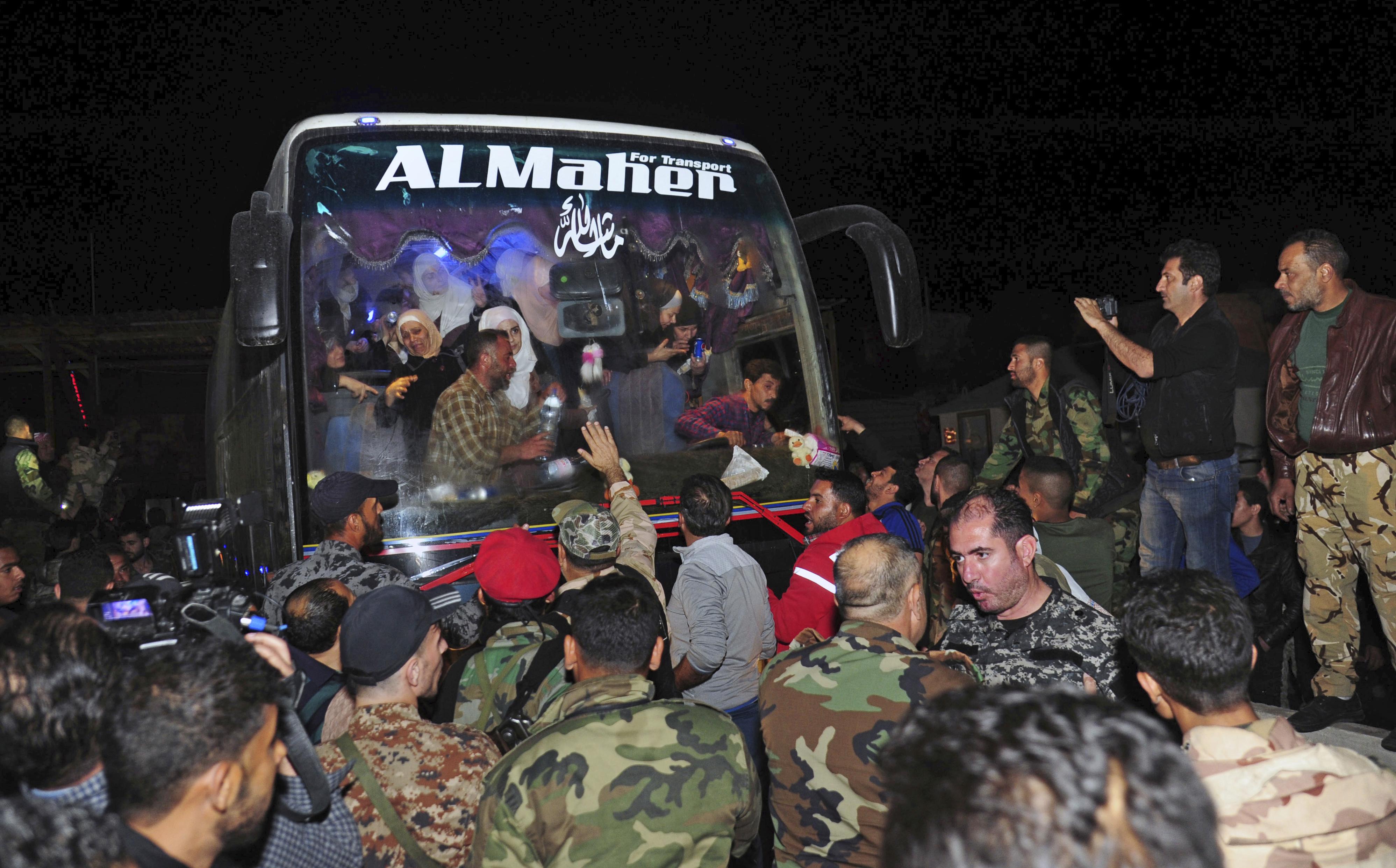
  • Russia says Syrian government now in control of rebel town

    The Russian military announced on Thursday that the Syrian government is now in full control of the last rebel-held town on the outskirts of Damascus that was the site of a suspected chemical attack o

    BEIRUT (AP) — The Russian military announced on Thursday that the Syrian government is now in full control of the last rebel-held town on the outskirts of Damascus that was the site of a suspected chemical attack over the weekend.

    The development would mark a major victory for the Syrian President Bashar Assad as the United States and allies consider punitive military attacks against Syria following the suspected chemical attack that killed 40 people.

    However, there was no official announcement by Damascus, and no indication that Syrian government forces had entered the town of Douma on Thursday. One government flag was raised in the town, a war monitoring group said.

    SEE ALSO: National security team springs to action after Trump warns of Syria strike

    Syrian TV stations showed civilians in vehicles carrying the Syrian flag crossing from Damascus into Douma.

    Douma and the enclave of eastern Ghouta, just east of Damascus, was a significant rebel stronghold during Syria’s civil war, now in its eighth year. Its effective surrender to government forces comes after years of siege by Assad’s troops and a months-long, intense military offensive.

    Meanwhile, Syrians are bracing for a possible U.S. attack in retaliation for Saturday’s alleged chemical assault in Douma. The Foreign Ministry in Damascus has denounced President Donald Trump’s threat to attack the country as “reckless” and a danger to international peace and security.

    Under an evacuation deal for eastern Ghouta that was mediated by Russia, Assad’s top ally, no Syrian troops are expected to enter Douma, only police. Another police force, incorporating former rebels, is also to be formed and deployed in Douma.

    Evacuation of armed gunmen and civilians who refuse the deal is still underway. According to the Syrian Observatory for Human Rights, which monitors the war through activists on the ground, there were still rebel fighters inside Douma on Thursday.

    But the leaders of Jaish al-Islam, or Army of Islam, the strongest rebel group in eastern Ghouta that controlled Douma, have all evacuated. It is not clear if any of the remaining rebel fighters will evacuate or hand in their weapons and take part in the new policing force.

    The Russian Defense Ministry statement followed a chaotic day in Douma that saw rebels there open fire as opposition fighters were leaving with families under the deal. It appeared designed to quell the tension and ensure the deal, which has been fraught with bumps, remains on track.

    The Russian ministry said the situation in Douma was “normalizing.” The Observatory said the Russian military is deploying to reassure thousands of remaining civilians in Douma.

    Wednesday’s turmoil in Douma came during the evacuation of the latest batch of civilians and rebels after pro-government supporters attempted to raise government flags over buildings and chanted in support of Assad.

    Some Russian journalists who had entered the town with a reconciliation delegation were wounded in the melee. The Observatory said more evacuations would take place on Thursday.

    Amid earlier disagreements, a truce collapsed last week and the Syrian government pressed ahead with its offensive.

    Then came Saturday’s suspected chemical attack in Douma, followed by international condemnation and threats of military action. Syria and Russia deny the attack took place.

    The evacuation deal called for the formation of a local council to administer Douma. Thousands of civilians are staying in Douma, and some fighters are also expected to stay, on condition that they hand in their weapons. More than 13,500 Syrian rebel fighters and their families left Douma this month.

    ___

    Vasilyeva reported from Moscow.