See the most reliable weapons in the US combat arsenal
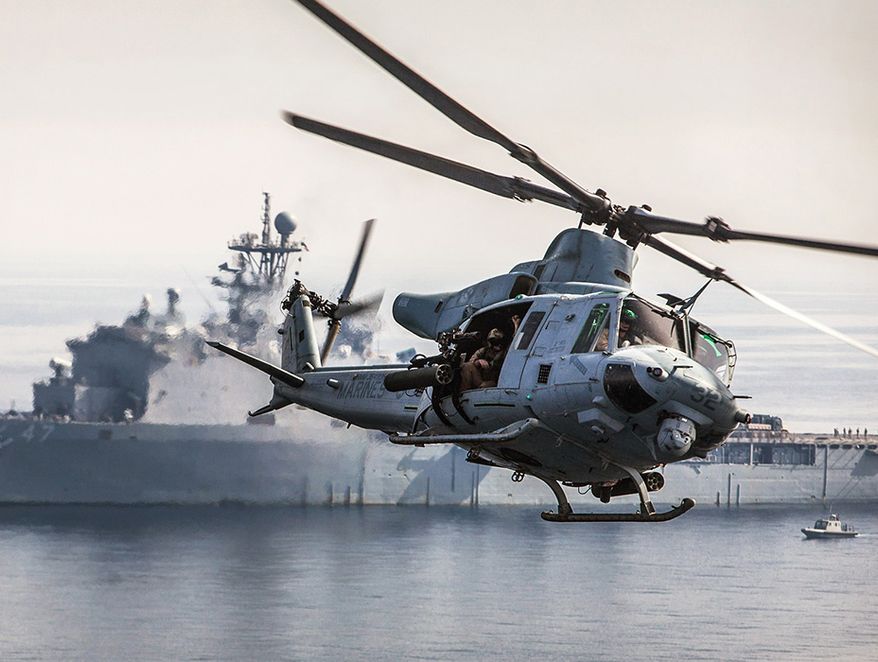
UH-1 Huey is a utility military helicopter powered by a single turboshaft engine, with two-blade main and tail rotors. The first member of the prolific Huey family, it was developed by Bell Helicopter to meet a United States Army’s 1952 requirement for a medical evacuation and utility helicopter, and first flew in 1956. The UH-1 was the first turbine-powered helicopter to enter production in 1960 for the United States military, and more than 16,000 have been built since. The UH-1 was originally designated HU-1, hence the Huey nickname, which has remained in common use, despite the official redesignation to UH-1 in 1962. The UH-1 first saw service in combat operations during the Vietnam War, with around 7,000 helicopters deployed. (U.S. Marine Corps photo by Cpl. Bobby J. Gonzalez)
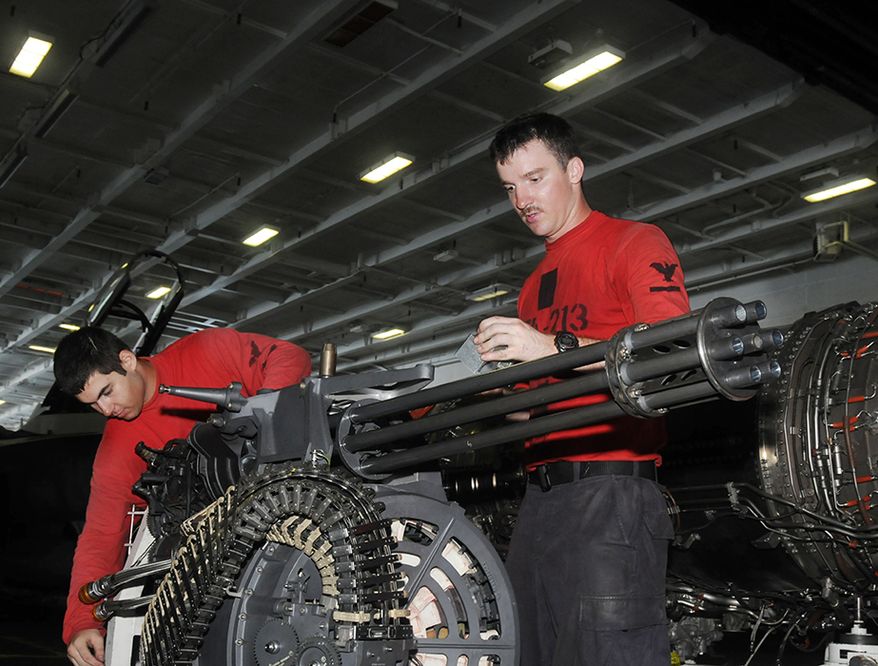 M61 Vulcan is a hydraulically or pneumatically driven, six-barrel, air-cooled, electrically fired Gatling-style rotary cannon which fires 20 mm rounds at a rate of about 6,000 rounds per minute. The Vulcan entered service in 1959. The M61 and its derivatives have been the principal cannon armament of United States military fixed-wing aircraft for fifty years. (U.S. Navy photo by Mass Communication Specialist 3rd Class Kasey Krall/Released)
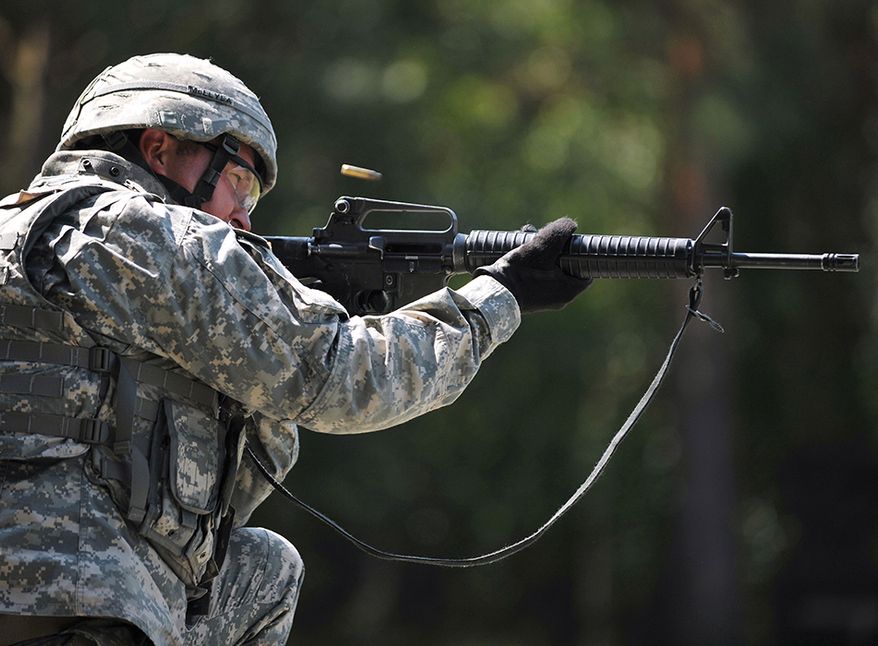 The M16 entered U.S. military service in 1964 and the following year was deployed for jungle warfare operations during the Vietnam War. In 1969, the M16A1 replaced the M14 rifle to become the U.S. military’s standard service rifle. The M16A1 improvements include a bolt-assist, chrome plated bore and a new 30-round magazine. In 1983, the U.S. Marine Corps adopted the M16A2 rifle and the U.S. Army adopted it in 1986. The M16A2 fires the improved 5.56×45mm NATO (M855/SS109) cartridge and has a new adjustable rear sight, case deflector, heavy barrel, improved handguard, pistol grip and buttstock, as well as a semi-auto and three-round burst only fire selector. Adopted in 1998, the M16A4 is the fourth generation of the M16 series. It is equipped with a removable carrying handle and Picatinny rail for mounting optics and other ancillary devices. The M16 has also been widely adopted by other militaries around the world. Total worldwide production of M16s has been approximately 8 million, making it the most-produced firearm of its 5.56 mm caliber.
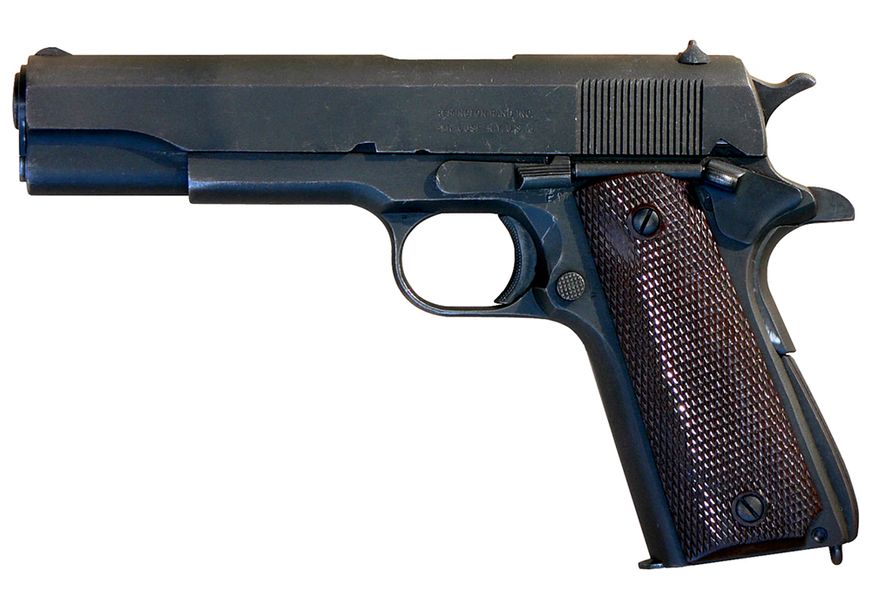 M1911 is a single-action, semi-automatic, magazine-fed, recoil-operated pistol chambered for the .45 ACP cartridge. It served as the standard-issue sidearm for the United States Armed Forces from 1911 to 1986. It was widely used in World War I, World War II, the Korean War, and the Vietnam War. The pistol’s formal designation as of 1940 was Automatic Pistol, Caliber .45, M1911 for the original model of 1911 or Automatic Pistol, Caliber .45, M1911A1 for the M1911A1, adopted in 1924. The designation changed to Pistol, Caliber .45, Automatic, M1911A1 in the Vietnam War era. The U.S. procured around 2.7 million M1911 and M1911A1 pistols in military contracts during its service life. The M1911 was replaced by the 9mm Beretta M9 pistol as the standard U.S. sidearm in October 1986, but due to its popularity among users, it has not been completely phased out. Modernized derivative variants of the M1911 are still in use by some units of the U.S. Army Special Forces, the U.S. Navy and U.S. Marine Corps. Designed by John Browning, the M1911 is the best-known of his designs to use the short recoil principle in its basic design. The pistol was widely copied, and this operating system rose to become the preeminent type of the 20th century and of nearly all modern centerfire pistols.
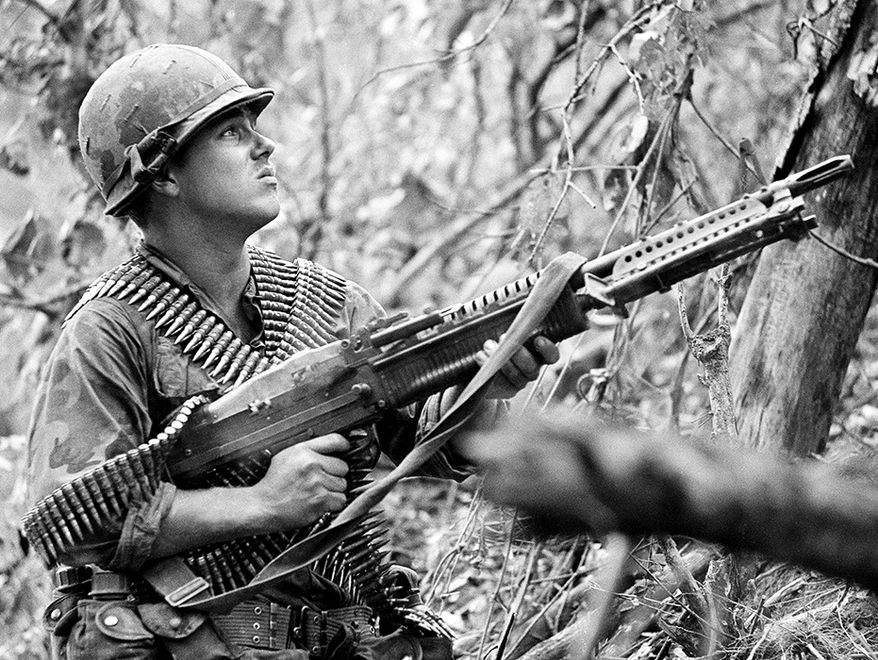 M60 is a family of general-purpose machine guns firing 7.62 × 51 mm NATO cartridges from a disintegrating belt of M13 links. There are several types of ammunition approved for use in the M60, including ball, tracer, and armor-piercing rounds. Introduced in 1957, it has served with every branch of the U.S. military and still serves with other armed forces. Its manufacture and continued upgrade for military and commercial purchase continues into the 21st century, although it has been replaced or supplemented in most roles by other designs, most notably the M240 machine gun in U.S. service. (AP Photo)
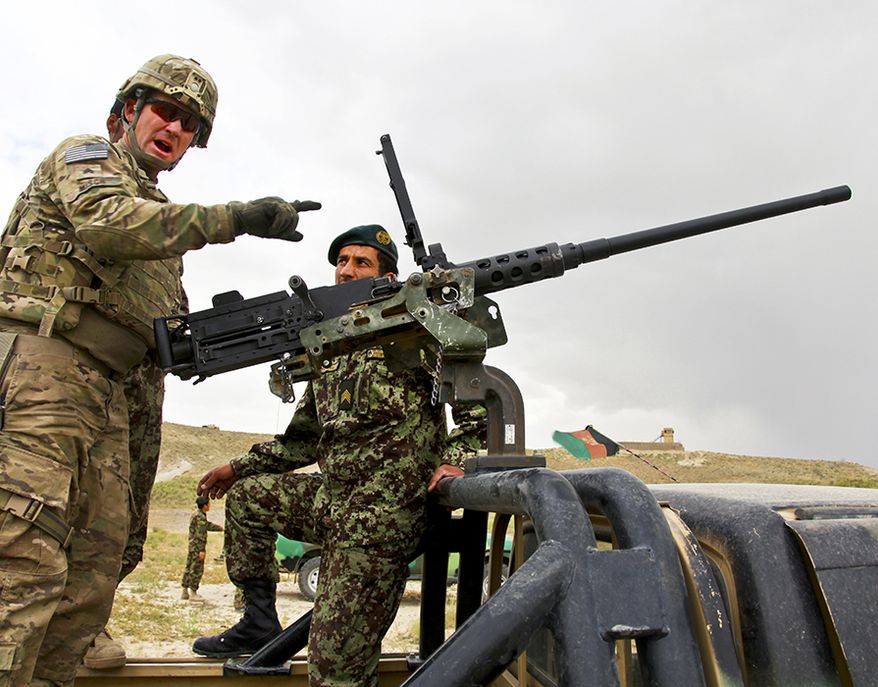 The M2 Machine Gun or Browning .50 Caliber Machine Gun is a heavy machine gun designed toward the end of World War I by John Browning. Its design is similar to Browning‘s earlier M1919 Browning machine gun, which was chambered for the .30-06 cartridge. The M2 uses the much larger and much more powerful .50 BMG cartridge, which was developed alongside and takes its name from the gun itself. The design has had many specific designations; the official designation for the current infantry type is Browning Machine Gun, Cal. .50, M2, HB, Flexible. It is effective against infantry, unarmored or lightly armored vehicles and boats, light fortifications and low-flying aircraft. The M2 has been produced longer than any other machine gun. The M2 .50 caliber machine gun has been used extensively as a vehicle weapon and for aircraft armament by the United States from the 1930s to the present. It was heavily used during World War II, the Korean War, the Vietnam War, the Falklands War, the Gulf War, the Iraq War and the War in Afghanistan in the 2000s and 2010s. It is the primary heavy machine gun of NATO countries, and has been used by many other countries as well. The M2 has been in use longer than any other firearm in U.S. inventory except the .45 ACP M1911 pistol, also designed by John Browning. (SPC. DAVID J. BARNES)
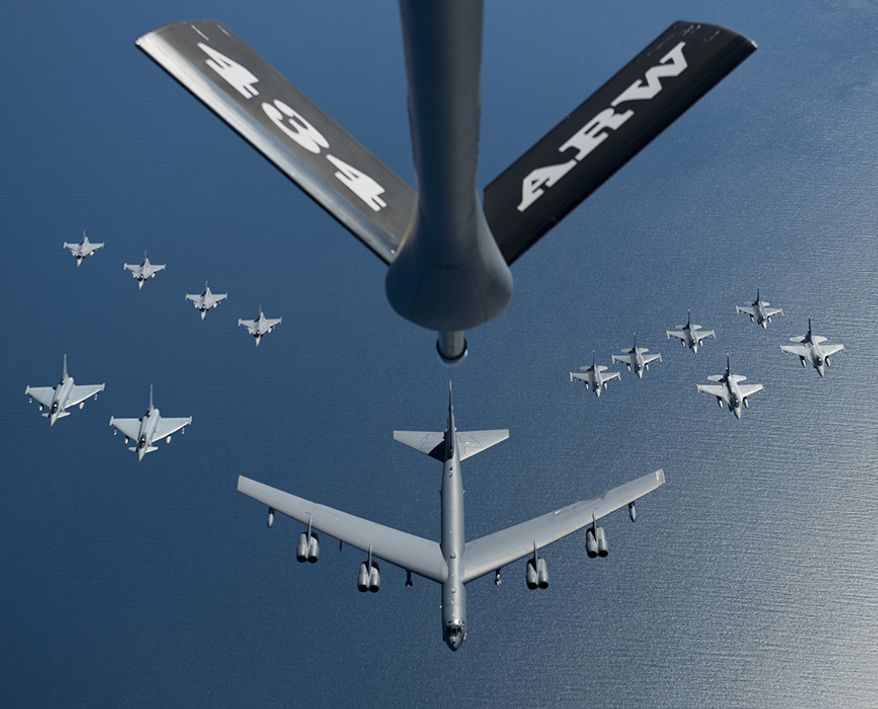 B-52 Stratofortress is a long-range, subsonic, jet-powered strategic bomber. The B-52 was designed and built by Boeing, which has continued to provide support and upgrades. It has been operated by the United States Air Force since the 1950s. The bomber is capable of carrying up to 70,000 pounds of weapons, and has a typical combat range of more than 8,800 miles without aerial refueling. Beginning with the successful contract bid in June 1946, the B-52 design evolved from a straight wing aircraft powered by six turboprop engines to the final prototype YB-52 with eight turbojet engines and swept wings. The B-52 took its maiden flight in April 1952. Built to carry nuclear weapons for Cold War era deterrence missions, the B-52 Stratofortress replaced the Convair B-36. A veteran of several wars, the B-52 has dropped only conventional munitions in combat. The B-52 has been in active service with the USAF since 1955. As of December 2015, 58 were in active service with 18 in reserve. The bombers flew under the Strategic Air Command until it was disestablished in 1992 and its aircraft absorbed into the Air Combat Command; in 2010 all B-52 Stratofortresses were transferred from the ACC to the newly created Air Force Global Strike Command. Superior performance at high subsonic speeds and relatively low operating costs have kept the B-52 in service despite the advent of later, more advanced aircraft, including the canceled Mach3 B-70 Valkyrie, the variable-geometry B-1 Lancer, and the stealth B-2 Spirit. The B-52 completed sixty years of continuous service with its original operator in 2015. After being upgraded between 2013 and 2015, it is expected to serve into the 2040s. The B-52s are expected to reach the end of their service lives by 2045, and be replaced by B-21 Raiders. (U.S. Air Force photo/Senior Airman Erin Babis)
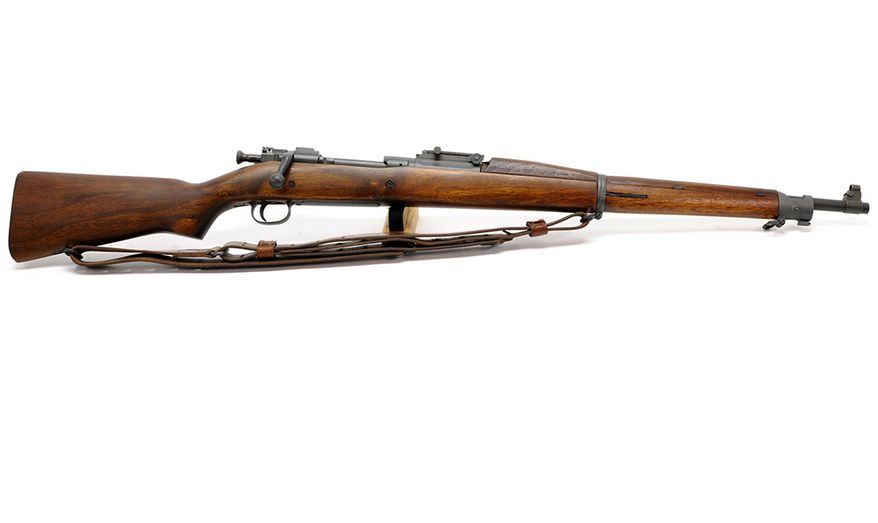 M1903 Springfield, formally the United States Rifle, Caliber .30-06, Model 1903, is a five-round magazine fed, bolt-action service repeating rifle, used primarily during the first half of the 20th century. It was officially adopted as a United States military bolt-action rifle on June 19, 1903, and saw service in World War I. It was officially replaced as the standard infantry rifle by the faster-firing semi-automatic eight-round M1 Garand starting in 1936. However, the M1903 Springfield remained in service as a standard issue infantry rifle during World War II, since the U.S. entered the war without sufficient M1 rifles to arm all troops. It also remained in service as a sniper rifle during World War II, the Korean War, and even in the early stages of the Vietnam War. It remains popular as a civilian firearm, historical collector’s piece, and as a military drill rifle.
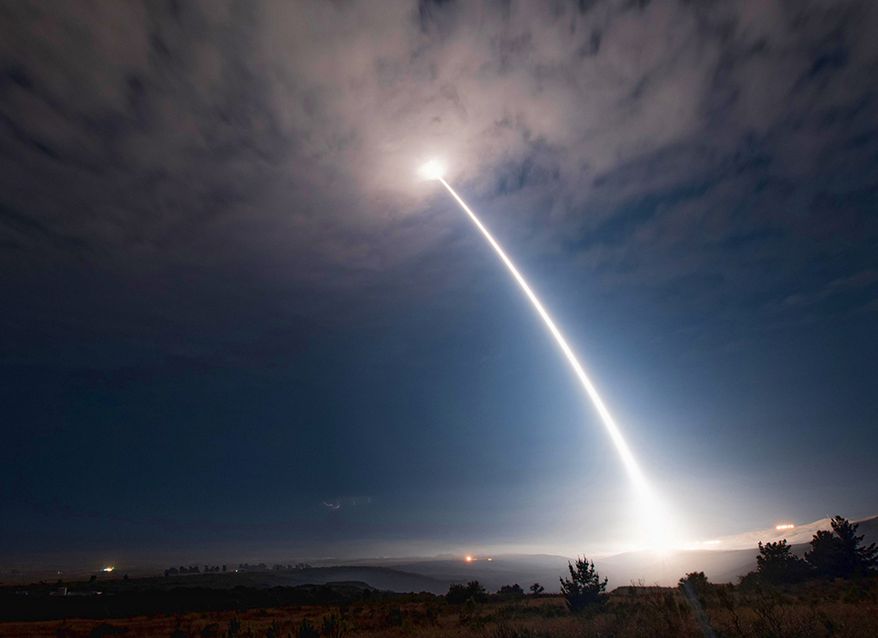 LGM-30 Minuteman is a land-based intercontinental ballistic missile, in service with the Air Force Global Strike Command. Development of the Minuteman began in the mid-1950s as the outgrowth of basic research into solid fuel rocket motors which indicated an ICBM based on solids was possible. Such a missile could stand ready for extended periods of time with little maintenance, and then launch on command. In comparison, existing U.S. missile designs using liquid rocket propellant required a lengthy fueling process immediately before launch, which left them open to the possibility of surprise attack. This potential for immediate launch gave the missile its name; like the Revolutionary War’s Minutemen, the Minuteman was designed to be launched on a moment’s notice. Minuteman entered service in 1962 as a weapon tasked primarily with the deterrence role, threatening Soviet cities with a second strike countervalue counterattack if the U.S. was attacked. However, the development of the U.S. Navy’s Polaris missile, which addressed the same role, allowed the Air Force to modify Minuteman into a weapon with much greater accuracy with the specific intent of allowing it to attack hardened military targets, including Soviet missile silos. The Minuteman-II entered service in 1965 with a host of upgrades to improve its accuracy and survivability in the face of an anti-ballistic missile system the Soviets were known to be developing. Minuteman-III followed in 1970, using three smaller warheads instead of one large one, which made it difficult to attack because the ABMs would have to hit all three widely separated warheads to be effective. Minuteman-III was the first multiple independently targetable reentry vehicle ICBM to be deployed. Each missile can carry up to three thermonuclear weapons, which have a yield in the range of 300 to 500 kilotons. Peaking at 1,000 missiles in the 1970s, the current U.S. force consists of 399 Minuteman-III missiles as of September 2017, deployed in
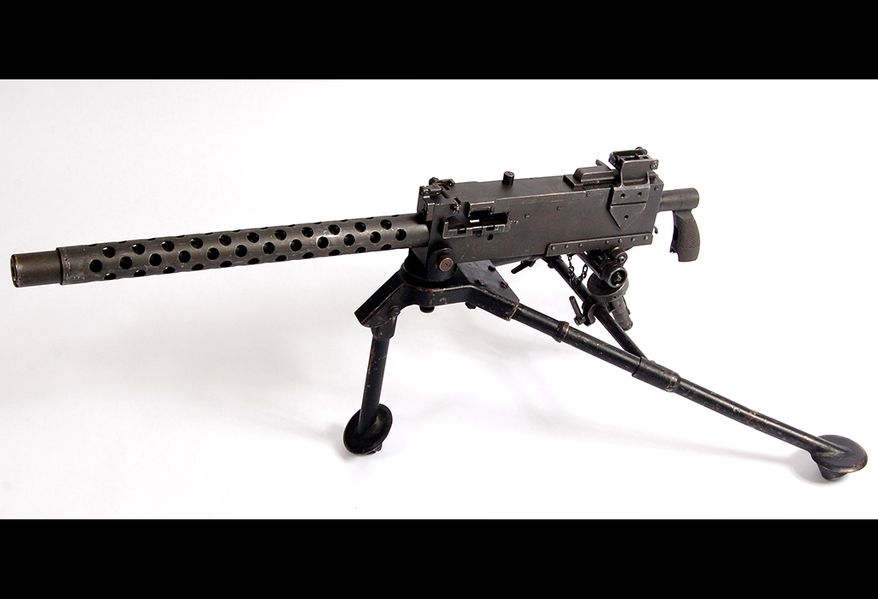 M1919 .30 caliber medium machine gun that was widely used during the 20th century, especially during World War II, the Korean War, and the Vietnam War. The M1919 saw service as a light infantry, coaxial, mounted, aircraft, and anti-aircraft machine gun by the U.S. and many other countries. Many M1919s were rechambered for the new 7.62×51mm NATO round and remain in service to this day. The M1919 was an air-cooled development of the standard US machine gun of World War I, the John M. Browning-designed water-cooled M1917. The emergence of general-purpose machine guns in the 1950s pushed the M1919 into secondary roles in many cases, especially after the arrival of the M60 in US Army service. The United States Navy also converted many to 7.62mm NATO, and designated them Mk 21 Mod 0; they were commonly used on river craft in the 1960s and 1970s in Vietnam. Many NATO countries also converted their examples to 7.62, and these remained in service well into the 1990s, as well as up to the present day in some countries. A similar conversion of the M1917 also produced the larger M2 Machine Gun, using the same basic operating principles and layout but firing the much more powerful .50 caliber (12.7mm) ammunition. The M1919 is distinguished by its smaller size and the use of a pierced cheese-grater-like jacket around the barrel used on most versions.
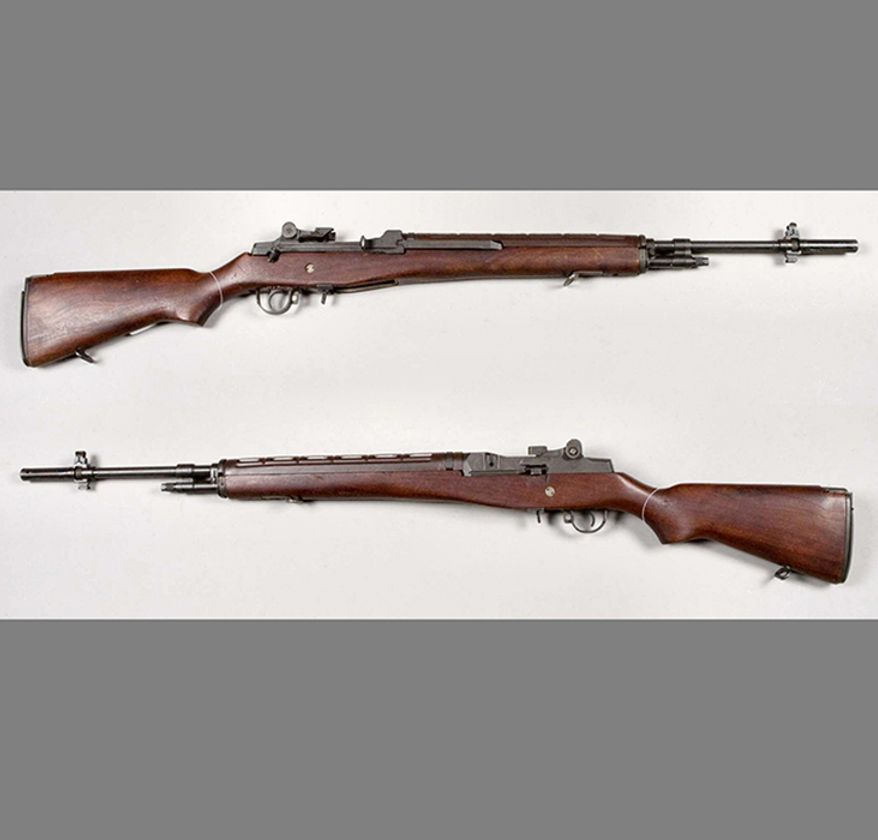 The M14 rifle is a selective fire automatic rifle that fires 7.62 × 51 mm NATO ammunition. It gradually replaced the M1 Garand rifle in U.S. Army service by 1961 and in U.S. Marine Corps service by 1965. It was the standard issue infantry rifle for U.S. military personnel in the contiguous United States, Europe, and South Korea from 1959 until the M16 rifle began replacing it in 1964. The M14 was used for U.S. Army, Navy and Marine Corps basic and advanced individual training from the mid-1960s to the early 1970s. The M14 was the last American battle rifle issued in quantity to U.S. military personnel. The rifle remains in limited service in all branches of the U.S. military as an accurized competition weapon, a ceremonial weapon by honor guards, color guards, drill teams, and ceremonial guards, and sniper rifle/designated marksman rifle.