Tag: Politics

  • Mike Pompeo heads to Riyadh as Jamal Khashoggi mystery deepens

    Saudi Arabia on Monday allowed Turkish investigators to search its consulate in Istanbul for clues in the case of missing Saudi journalist Jamal Khashoggi on Monday, in a bid to bring some clarity to

    Saudi Arabia on Monday allowed Turkish investigators to search its consulate in Istanbul for clues in the case of missing Saudi journalist Jamal Khashoggi, in a bid to bring some clarity to an incident that has mushroomed into a diplomatic and political crisis for both Riyadh and Washington.

    Amid reports the Saudis may be considering admitting at least partial fault in the disappearance — and perhaps murder — of the Washington-based writer, President Trump caused a stir by floating the notion that “rogue killers” — not Saudi government operatives suspected by Turkey — may have murdered the journalist two weeks ago.

    With Secretary of State Mike Pompeo dispatched Monday to Saudi Arabia to try to clarify what happened, Mr. Trump told reporters at the White House that Saudi King Salman had “firmly denied any knowledge” of a plot against Mr. Khashoggi, a Saudi citizen and known critic of the kingdom’s ambitious and powerful young Crown Prince Mohammed bin Salman.

    “I don’t want to get into his mind,” said Mr. Trump, “but it sounded to me like maybe these could have been rogue killers. Who knows?”

    The comments drew immediate criticism in Washington, where some quickly accused Mr. Trump of being spun by the 82-year-old king in order to protect a key ally.

    “Been hearing the ridiculous ‘rogue killers’ theory was where the Saudis would go with this,” tweeted Sen. Chris Murphy, Connecticut Democrat and a member of the Senate Foreign Relations Committee. “Absolutely [extraordinary] they were able to enlist the president of the United States as their PR agent to float it.”

    The confusion highlighted the difficult situation caused by the case for the White House, which has spent considerable capital over the past year cozying up to Riyadh as a prime customer of American arms and a go-to ally against the Mideast’s other major power, Iran.

    But support for Riyadh is far softer on Capitol Hill, where lawmakers from both parties were calling for punitive action — including sanctions and a cut in U.S. military sales to Riyadh — if the Saudis are found responsible for Mr. Khashoggi’s death.

    Media frenzy

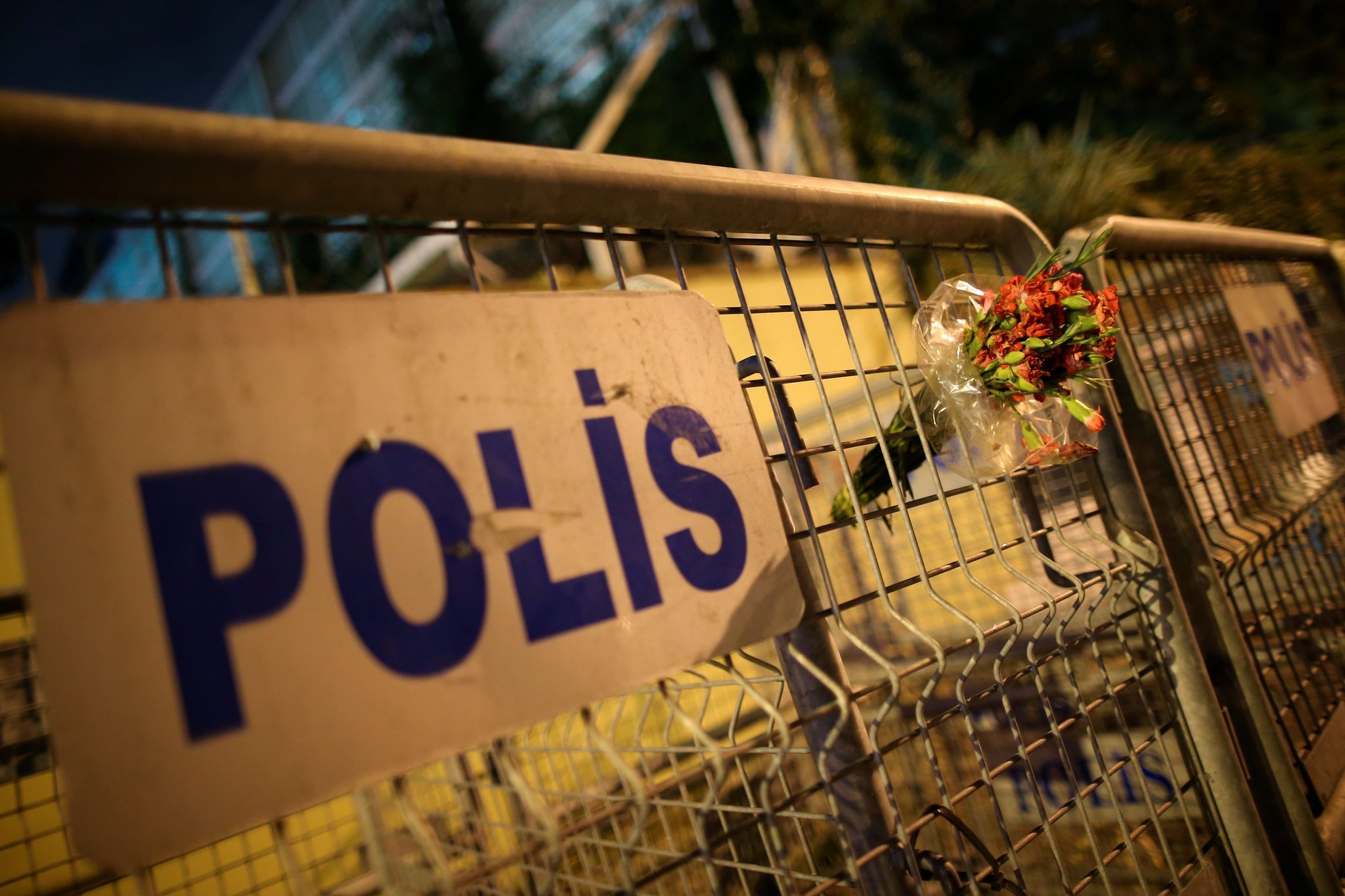
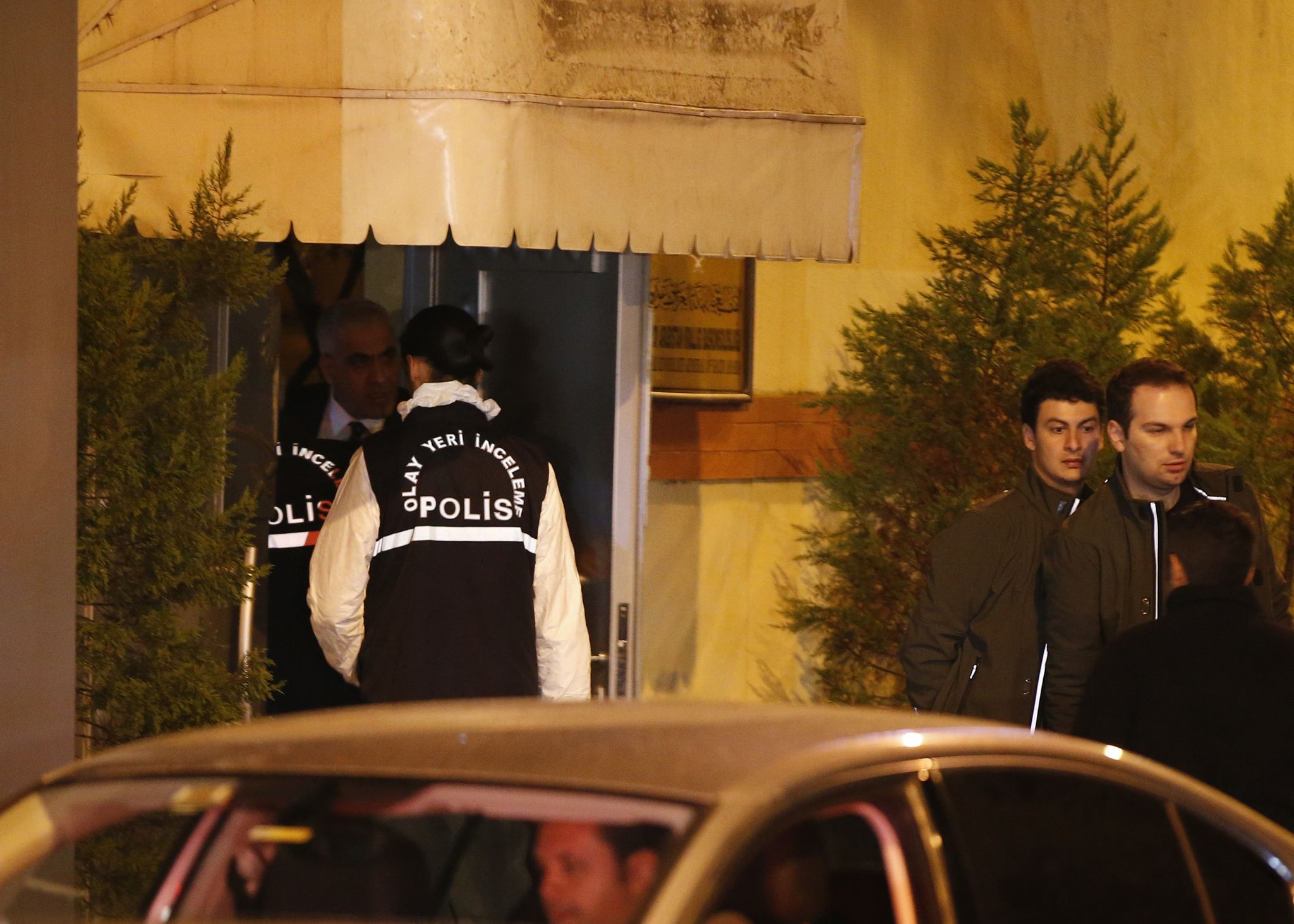
    In Istanbul, a media frenzy ensued around the Saudi consulate building Monday, with Turkish crime scene investigators dressed in coveralls and gloves going into the consulate for the first time since Mr. Khashoggi entered the building Oct. 2 seeking papers he needed to marry his Turkish fiancee. Prior to the arrival of the Turkish investigators, journalists photographed a cleaning crew with mops, trash bags and what appeared to be bottles of bleach walking into the consulate.

    Searches of such diplomatic posts, otherwise considered foreign soil under international law, are extraordinary and Monday’s development showed the delicate mix of cooperation and rivalry that has marked the Saudi relationship with Turkish President Recep Tayyip Erdogan.

    Turkish officials sent shock waves around the world last week by claiming to have audio and video evidence Mr. Khashoggi was killed and dismembered while visiting the consulate on Oct. 2, allegedly by what Turkish media leaks called a 15-member Saudi “hit team,” a team that left the country shortly after Mr. Khashoggi disappeared. Saudi officials rejected the allegation as “baseless,” but have yet to produce hard evidence that Mr. Khashoggi ever left the consulate.

    Mr. Khashoggi’s background has only added to intrigue surrounding the case. While he has spent much of the past year writing opinion columns for The Washington Post critical of the Saudi ruling family, he is reported to have had a long career working on and off for the Saudi government, and as an independent journalist in the kingdom. As a younger journalist, he first drew international attention for interviewing a young Osama bin Laden and was reportedly for a member of the Muslim Brotherhood, a controversial Islamist organization known for espousing anti-Western views.

    Anthony Cordesman, a Middle East expert at the Center for Strategic and International Studies, said in an analysis Monday that “it seems likely that this was as much the result of a botched kidnapping or a too violent interrogation as a deliberate killing.”

    Others have cast doubt on Turkish media reports of a Saudi hit squad targeting the journalist.

    Steven Cook, a senior fellow specializing on the Middle East at the Council on Foreign Relations, wrote on ForeignPolicy.com last week that the “uncorroborated” account was “quickly accepted as fact.”

    “This does not mean that they are untrue, but Turkey is a country with a poor record of press freedom, and its leaders and their supporters have embraced disinformation as a political strategy and a tool of foreign policy,” Mr. Cook wrote.

    Mr. Cordesman wrote that Turkey’s real motive “was to attack Saudi Arabia’s position and seek to undermine its influence relative to Turkey — as well as improve its own position in the United States.”
  • Honduras migrant caravan crosses Guatemala border, heads for U.S.

    A caravan of hundreds of Honduran migrants surged over the Guatemalan border under a broiling sun Monday hoping to make it to new lives in the United States, far from the poverty and violence of their

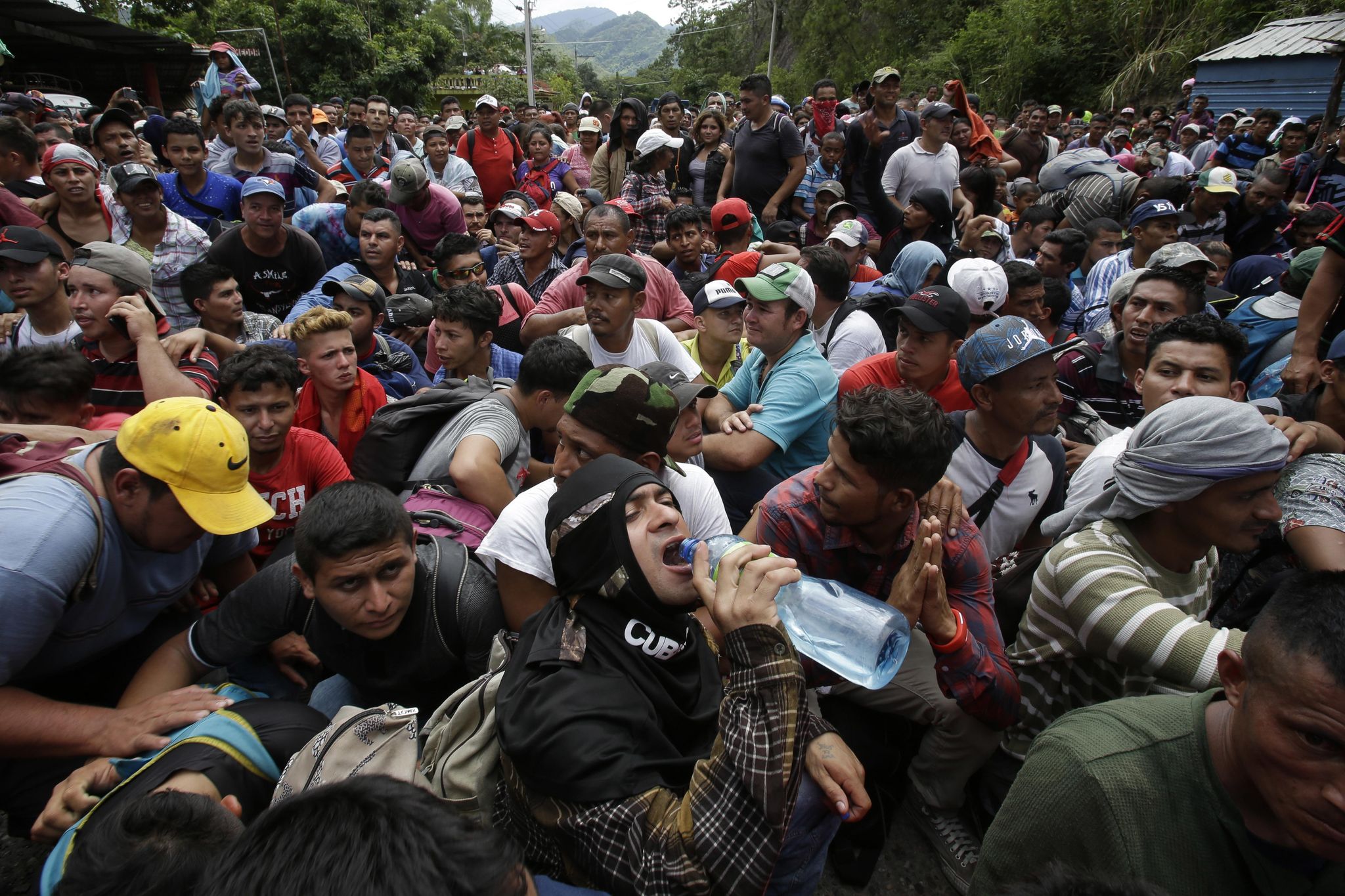
    ESQUIPULAS, Guatemala — A caravan of hundreds of Honduran migrants surged over the Guatemalan border under a broiling sun Monday hoping to make it to new lives in the United States, far from the poverty and violence of their home nation.

    Police stopped the migrants at a roadblock outside Esquipulas for several hours in the afternoon, but the travelers refused to return to the border and were eventually allowed to pass.

    Singing the Honduran national anthem, praying and chanting, “Yes, we can,” the group estimated at 1,600 or more had earlier defied an order by the Guatemalan government that they not be allowed to pass.

    “We have rights,” the migrants shouted.

    Keilin Umana, a 21-year-old who is two months pregnant, said she was moved to migrate to save herself and her unborn child after she was threatened with death.

    Umana, a nurse, said she had been walking for four days. “We are not criminals – we are migrants,” she said.

    Many in the caravan traveled light, with just backpacks and bottles of water. Some pushed toddlers in strollers or carried them on their shoulders.

    Carlos Cortez, a 32-year-old farmer traveling on foot with his 7-year-old son, said poverty back home made it impossible to support a family.

    “Every day I earn about $5,” Cortez said. “That isn’t enough to feed my family.”

    The caravan was met at the border by about 100 Guatemalan police officers. After a standoff of about two hours, the migrants began walking again. Outnumbered, the police did nothing to stop them and accompanied them several miles (kilometers) into Guatemalan territory.

    Officers then set up the roadblock about a mile (2 kilometers) outside the city of Esquipulas, where the migrants had planned to spend the night.

    The migrants were stuck for about three hours. About 250 police kept them from advancing and told them they had to return to the border to go through immigration. The migrants refused to budge and it appeared they would likely sleep on the highway.

    But the migrants begged police to let them continue, saying they weren’t criminals. Eventually officers let them pass and they planned to sleep in Esquipulas before continuing Tuesday.

    Some police and Guatemalan civilians offered the migrants water, and some locals drove Hondurans part of the way. Red Cross workers gave medical attention to some migrants who fainted in the heat.

    The caravan began as about 160 people who first gathered early Friday to depart from San Pedro Sula, one of Honduras’ most dangerous places, figuring that traveling as a group would make them less vulnerable to robbery, assault and other dangers common on the migratory path through Central America and Mexico.

    Local media coverage prompted hundreds more to join, and Dunia Montoya, a volunteer assisting the migrants, estimated Sunday that the group had grown to at least 1,600 people. Police gave their own estimate of around 2,000 on Monday.

    The caravan formed a day after U.S. Vice President Mike Pence urged the presidents of Honduras, El Salvador and Guatemala to persuade their citizens to stay home and not put their families in danger by undertaking the risky journey to the United States.

    In April, President Donald Trump threatened in April to withdraw foreign aid from Honduras and countries that allowed transit for a similar caravan that set out from the Central American country. That caravan dwindled as the group approached the U.S. border, with some giving up along the way and others splitting off to try to cross on their own.

    Historian Dana Frank, an expert on human rights and U.S. policy in Honduras, said the caravan could have political implications in the United States less than a month before the midterm elections.

    “Whatever the caravan’s origins, some in the United States will be quick to raise alarms about a supposed dangerous immigrant invasion, and use that to try to influence the upcoming U.S. elections,” Frank said. “Others will view these migrants with compassion and as further evidence of the need for comprehensive immigration reform … .”

    Frank added that the caravan’s rapid growth “underscores quite how desperate the Honduran people are – that they’d begin walking toward refuge in the United States with only a day back full of belongings.”

    In San Pedro Sula, where the procession started, sociologist Jenny Arguello said authorities wanted to make the mass migration out to be a political event, but it was just poor people fleeing violence.

    “From my community 20 went and one neighbor came back sad with his little backpack because when he arrived they had already left,” Arguello said. “You see that the need to leave is the priority. The people have already made up their minds and just hearing of the possibility they take off.”

    Honduras is largely dominated by murderous gangs that prey on families and businesses, and routinely sees homicide rates that are among the highest in the world.

    • Associated Press writers Maria Verza in San Pedro Sula and Martha Mendoza in Santa Cruz, California, contributed to this report.

  • Jamal Khashoggi crisis threatens U.S.-Saudi Arabia oil ties

    While investigators in Turkey searched the Saudi Consulate in Istanbul seeking clues to the fate of missing Saudi journalist Jamal Khashoggi and Secretary of State Mike Pompeo was heading to Riyadh se

    A diplomatic crisis engulfing the world’s most critical oil supplier was the last thing the Trump administration needed.

    While investigators in Turkey searched the Saudi Consulate in Istanbul seeking clues to the fate of missing Saudi journalist Jamal Khashoggi and Secretary of State Mike Pompeo was heading to Riyadh seeking answers of his own, the bigger question for the Trump administration was how to manage an incident that could irrevocably tarnish a critical ally at a critical time.

    The Khashoggi crisis has erupted as the U.S. tries to enforce a total ban next month on oil exports by Saudi archrival Iran, a critical part of the strategy to pressure Tehran after President Trump’s withdrawal from the 2015 nuclear deal still backed by most other countries. That means the U.S. needs Saudi Arabian petroleum more than ever, narrowing America’s options to punish the kingdom for its suspected role in Mr. Khashoggi’s disappearance.

    Regional analysts say a U.S. move to impose economic sanctions over allegations that Mr. Khashoggi was tortured, killed and dismembered inside the Saudi Consulate could send world oil prices surging to a record high.

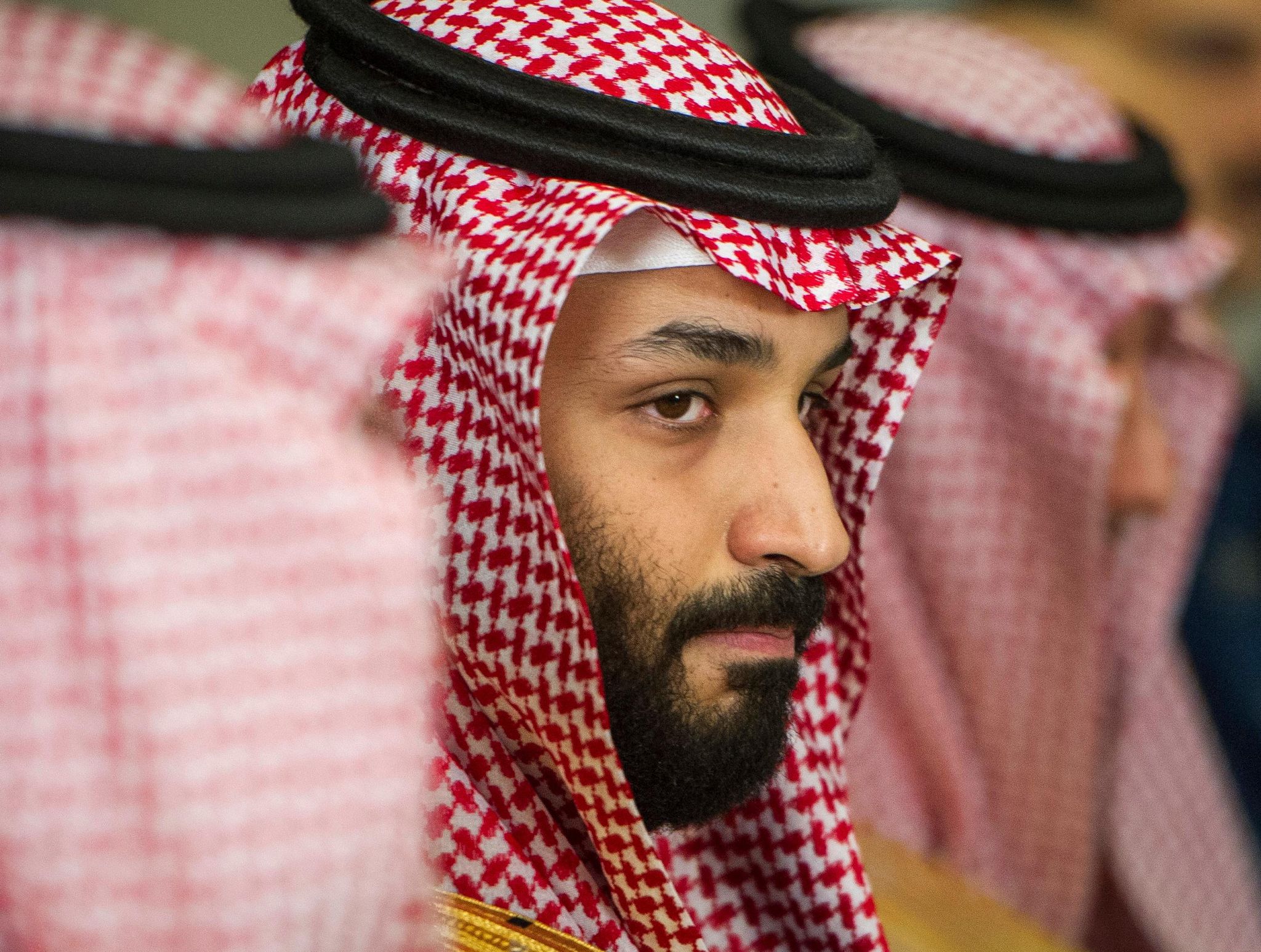
    Saudi Arabia’s global image overhaul, spearheaded by the young, ambitious — and some say reckless — Crown Prince Mohammed bin Salman, stands at a crossroads.

    The prince’s modernizing agenda is clouded by self-inflicted crises in Yemen and Qatar, a struggle for regional dominance with Iran, and the challenge of loosening political and social controls without threatening the royal family’s rule.

    As always, the kingdom’s vast crude oil reserves give it leverage and many cards to play in any high-stakes negotiation with Washington.

    “I would not say that [the Saudis] have the U.S. over a barrel, but it is certainly a symbiotic relationship,” said Sanam Vakil, a senior Middle East and North Africa analyst at the British-based Chatham House think tank.

    Mr. Trump also has cited Riyadh as a major customer of U.S. military exports, but oil is key in the end.

    Since Mr. Trump withdrew the U.S. from the Obama-era Iran nuclear accord in May, the White House has pressured the kingdom to increase its daily oil production by 2 million barrels a day to make up any shortfall when energy sanctions on Iran take effect Nov. 4. The U.S. goal, restated by top State Department officials on a visit to Europe this week — to drive Iran’s oil exports down to “zero” and starve the Islamic republic of a critical source of funding.

    Petroleum Minister Khalid al-Falih announced Monday that Saudi Arabia expects to ramp up production next month, but he was vague about how much more oil would flow.

    “Saudi Arabia has the capacity to produce 12 million [barrels per day] and is currently producing 10.7 million bpd and production will rise further next month,” Mr. al-Falih said on the sidelines of an India Energy Forum after meeting with Indian Prime Minister Narendra Modi.

    Untested capacity

    According to energy analysts, Saudi’s maximum sustainable capacity of 12 million barrels per day has never been tested, sparking major debate about what such an effort would realistically look like.

    More questions also are swirling around the 33-year-old crown prince, who has powerful allies in Washington, including presidential adviser and son-in-law Jared Kushner.

    Initially welcomed in Washington foreign policy circles as a progressive reformer, the crown prince is increasingly seen as reckless, impetuous and authoritarian, said Gerald Feinstein of the Middle Eastern Institute think tank in Washington.

    Mr. Feinstein said Monday that “continuing frustration over the conflict in Yemen, the confrontation with Qatar and human rights violations at home” — all initiatives undertaken by the crown prince — made him “too toxic for Western governments and international business to deal with.”

    But Ms. Vakil said Saudis hold leverage not only in global oil markets but also at U.S. gas pumps and that the White House is showing signs of nervousness over rising gasoline prices as the Nov. 6 critical midterm congressional elections approach.

    While the U.S. has moved away from Saudi oil over the past two decades, the kingdom remains America’s No. 2 foreign oil source, supplying 9 percent of the roughly 10.14 million barrels of American imports per day, according to the U.S. Energy Information Administration.

    Treasury Department officials also note that Saudi Arabia now holds about $166.8 billion in Treasury securities, making Riyadh the 10th-largest foreign holder of U.S. government bonds.

    “The relationship does begin with oil,” Ms. Vakil said on the phone from London. “But the kingdom is also heavily invested in U.S. debt and bonds. They definitely have some leverage over Washington, and people realize that.”

    If Riyadh decided to dump a massive amount of U.S. debt, it could send shock waves across the Treasury markets and possibly destabilize the world’s wider financial markets.

    Trillions of dollars of more murky Saudi investments also stretch across U.S. real estate, the stock markets and the opaque world of American private equity.

    James Phillips, senior research fellow for Middle Eastern affairs at The Heritage Foundation, said Saudi leverage is being taken into consideration as the administration mulls its response in the Khashoggi case.

    “There are a lot of levels of response that could be taken,” he said. “We could recall an ambassador or call the Saudi ambassador to the State Department. Or we could enact sanctions that do not rise to the level of impacting arms sales but clearly state that extrajudicial killings are unacceptable.”

    For now, the Khashoggi case has sparked far more questions than answers, with all sides strategically leaking as facts trickle out.

    “What we have now is a war of disinformation,” Mr. Phillips said. “It is an extremely strange case, and we need some real facts to emerge.”

  • Myanmar demonstrators condemn foreign intervention

    Several thousand pro-military and nationalist demonstrators marched through Yangon on Sunday, voicing their support for Myanmar’s armed forces and government while condemning foreign involvement in th

    YANGON, Myanmar (AP) – Several thousand pro-military and nationalist demonstrators marched through Yangon on Sunday, voicing their support for Myanmar’s armed forces and government while condemning foreign involvement in the country’s affairs.

    The march led to a stage lined with portraits of Senior Gen. Min Aung Hlaing, where speakers addressed a flag-waving crowd and condemned the international community’s involvement in Myanmar, claiming groups would “fight back” against international bodies who have called for the investigation and prosecution of the country’s top generals.

    “We, the people of Myanmar, strongly denounce and condemn any intervention or intrusion by the foreign countries, international communities and various organizations which unrightfully manipulate our nation and our Myanmar armed forces,” proclaimed one of the speakers of the event, reading from a prepared statement.

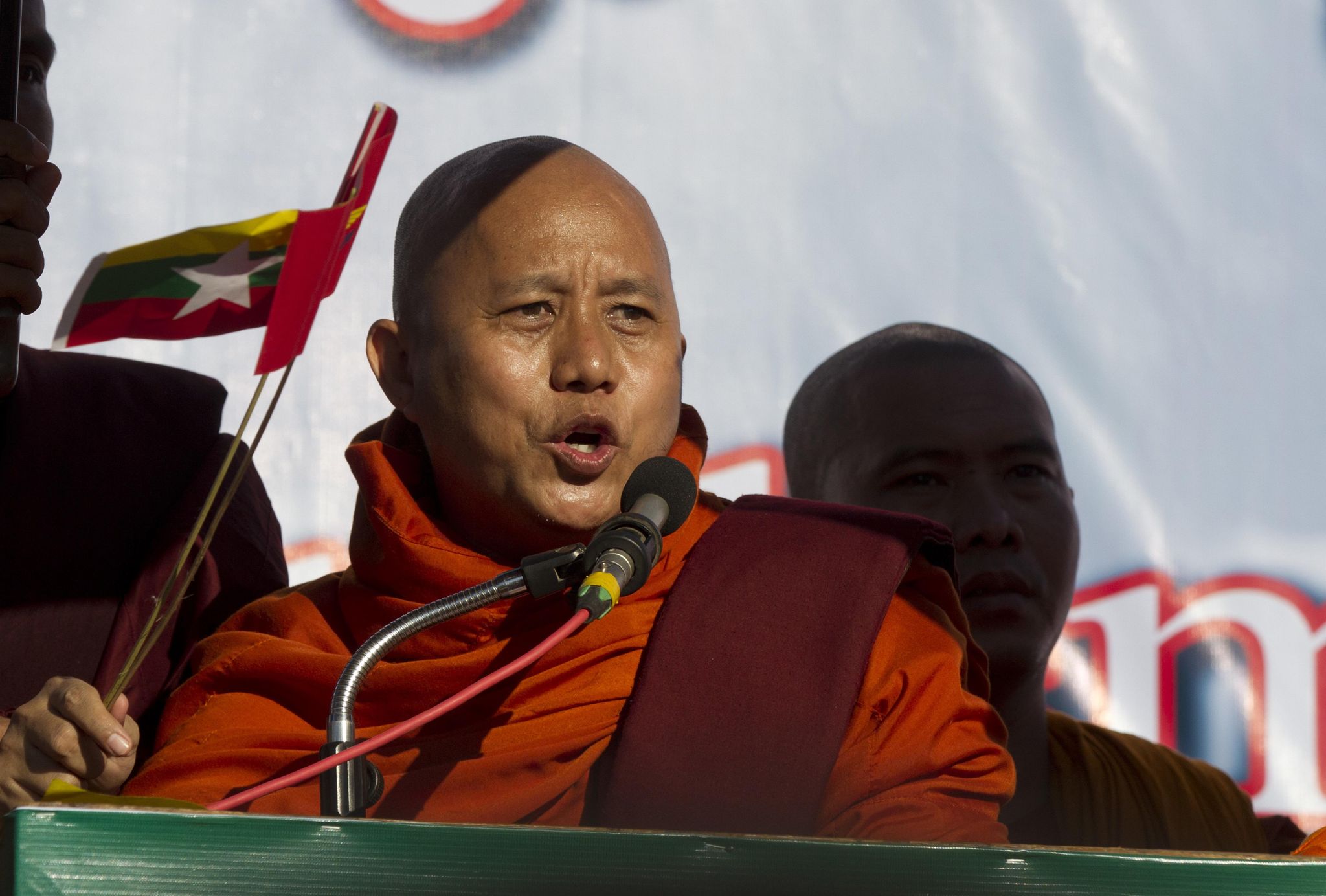
    Nationalist monk Wirathu also gave a speech calling for the international community to stay out of Myanmar’s national affairs.

    “The day the International Criminal Court comes to our country, that’s the day R2P (responsibility to protect) comes to our country. That’ll be the day that Wirathu picks up a gun,” Wirathu said.

    A United Nations fact-finding mission reported last month that Myanmar’s military systematically killed thousands of Rohingya Muslim civilians, burned hundreds of their villages and engaged in ethnic cleansing and mass rape. It called for top generals to be investigated and prosecuted for genocide.

    Myanmar government spokesman Zaw Htay was unable to be reached for comment Sunday.

    ___

    This story has been corrected to show that “R2P” refers to “responsibility to protect.”

  • Nepal blocks 25,000 websites in porn ban

    Nepalese internet providers have begun blocking thousands of pornographic websites as part of a government directive aimed at stopping sexual violence, officials said Sunday.

    KATHMANDU, Nepal — Nepalese internet providers have begun blocking thousands of pornographic websites as part of a government directive aimed at stopping sexual violence, officials said Sunday.

    The government issued new criminal and civil codes this year that include regulations against the use, broadcast and publication of pornographic materials with punishment for violators of up to one year in prison.

    Min Prasad Aryal of the Nepal Telecom Authority said Sunday that more than 25,000 websites have been blocked under the campaign.

    “This is only the start, but a very good start,” Aryal said, adding that a team of officials are monitoring internet service providers to ensure the order is followed.

    He said those providers who refuse or fail to comply face a fine of up to $4,200 and risk losing their operating license.

    Internet service providers say they are complying with the government order but say it would be impossible to weed out and block all such sites.

    “We are following the government order and have blocked the list of websites that was provided. However, it is not practical and technically not possible to block every pornographic website,” said Binay Bohra of Vianet Communications.

    Bohra said they feared that with the new law service providers could easily be punished.

    Media rights groups have also expressed concern at the blanket ban of websites.

    “This opens up the path for the government to block any websites in the future, saying they have obscene content. This order was issued without clarifying what is obscene and why or without doing any proper study,” said Taranath Dahal, who heads the Freedom Forum, a Nepal-based media rights group.

    Dahal said there should be clear regulations from the government on what content is considered obscene and pornographic and what aged users should be barred.

    The government issued a similar ban in 2011, but this time there are more serious punishments for violations.

  • David Davis, former Brexit secretary, urges Theresa May cabinet rebellion in Sunday Times

    Britain’s former Brexit secretary is urging members of Prime Minister Theresa May’s cabinet to rebel against her proposed deal with the European Union over the terms of Britain’s departure from the bl

    LONDON — Britain’s former Brexit secretary is urging members of Prime Minister Theresa May’s cabinet to rebel against her proposed deal with the European Union over the terms of Britain’s departure from the bloc.

    David Davis wrote in the Sunday Times that May’s plans for some continued ties with the EU under her Chequers plan is “completely unacceptable” and must be stopped. The fellow Conservative Party member said the time has come for ministers to shoot down May’s plan.

    “It is time for the cabinet to exert their collective authority,” he said. “This week the authority of our constitution is on the line.”

    May is struggling to build a consensus behind her Brexit plans ahead of a cabinet meeting Tuesday that will be followed by an EU summit Wednesday in Brussels.

    If Davis’ call for a rebellion is effective, the cabinet meeting Tuesday would be a likely place for opposition to surface.

    Davis and former Foreign Secretary Boris Johnson resigned from the cabinet this summer to protest May’s Brexit blueprint. Both have become vocal opponents of her plan, calling it a betrayal of the Brexit vote that would leave Britain in a weakened position.

    May also faces obstacles from the Democratic Unionist Party in Northern Ireland, which has played a crucial role in propping up her minority government in Parliament.

    DUP leader Arlene Foster remains opposed to any Brexit plan that would require checks on goods traveling between Northern Ireland and Britain, as some EU leaders have suggested as part of a “backstop” plan.

    The Chequers plan has also been questioned by some opposition Labour Party lawmakers, further complicating the prime minister’s hopes of winning parliamentary backing for any Brexit deal she reaches with EU officials.


  • Saudi Arabia rejects ‘threats’ over Jamal Khashoggi after Trump warning sinks stock market

    Saudi Arabia warned Sunday it will respond to any “threats” against it as its stock market plunged following President Donald Trump’s warning of “severe punishment” over the disappearance of U.S.-base

    Saudi Arabia warned Sunday it will respond to any “threats” against it as its stock market plunged following President Donald Trump’s warning of “severe punishment” over the disappearance of U.S.-based Saudi journalist Jamal Khashoggi.

    Mr. Trump made a point of visiting the kingdom on his first overseas trip as president and has touted arms sales to Saudi Arabia.

    But both the White House and the kingdom are under mounting pressure as concern grows over the fate of the veteran journalist and critic of the Saudi government, who vanished Oct. 2 after visiting the Saudi consulate in Istanbul.

    SEE ALSO: Trump threat sends Saudi stock market tumbling

    Already, international business leaders are pulling out of the kingdom’s upcoming investment forum, a high-profile event known as “Davos in the Desert.”

    “The kingdom affirms its total rejection of any threats and attempts to undermine it, whether by threatening to impose economic sanctions, using political pressures or repeating false accusations,” said the statement published by the state-run Saudi Press Agency on Sunday.

    “The kingdom also affirms that if it receives any action, it will respond with greater action, and that the kingdom’s economy has an influential and vital role in the global economy.”

    The statement from the world’s top oil exporter came after the Tadawul exchange in Riyadh dropped by 7 percent at one point during the week’s first day of trading, with 182 of its 186 listed stocks showing losses by the early afternoon. The market clawed back some of the losses, closing down 3.5 percent for the day.

    Turkish officials say they fear Saudi agents killed and dismembered Mr. Khashoggi after he entered the consulate, saying they have audio and video recordings of it that they have not released.

    The kingdom has called the allegations “baseless,” but has offered no evidence the writer ever left the consulate.

    But Turkish Foreign Minister Mevut Cavusoglu has said Saudi officials have thus far not cooperated with their investigation despite a statement from Saudi Interior Minister Prince Abdulaziz bin Saud bin Naif bin Abdulaziz vowing to uncover “the whole truth.”

    Mr. Cavusoglu has urged Saudi officials to allow Turkish authorities to enter the consulate.

    Severe consequences

    According to the Associated Press, in an interview to be aired Sunday, Mr. Trump told CBS’ “60 Minutes” that the consequences of Saudi Arabia being involved would be “severe.”

    “There’s something really terrible and disgusting about that, if that was the case, so we’re going to have to see,” he said. “We’re going to get to the bottom of it and there will be severe punishment.”

    However, Mr. Trump in the same interview said: “As of this moment, they deny it and they deny it vehemently. Could it be them? Yes.”

    Other stock exchanges in the Mideast saw far less volatility Sunday. U.S. markets have been rattled by rising interest rates, signs of a slowdown in the global economy and the U.S.-China trade dispute.

    Saudi Crown Prince Mohammed bin Salman has aggressively pitched the kingdom as a destination for foreign investment. But Mr. Khashoggi’s disappearance, and suspicions he may have been targeted over his criticism of the crown prince, have led several business leaders and media outlets to back out of an upcoming high-profile investment conference in Riyadh.

    Mr. Trump also said “we would be punishing ourselves” by canceling arms sales to Saudi Arabia, which his administration touted on his first overseas trip. The sale is a “tremendous order for our companies,” and if the kingdom doesn’t buy its weaponry from the U.S., they will buy it from others, he said. Mr. Trump said he would meet with Khashoggi’s family.

    American lawmakers in both parties have been more critical of Saudi Arabia, with several suggesting officials in the kingdom could be sanctioned if they were found to be involved in Mr. Khashoggi’s disappearance and alleged killing.

    On Sunday, Sen. Marco Rubio, Florida Republican, said the Trump administration should skip the Saudi’s upcoming international investors conference.

    Treasury Secretary Steven Mnuchin is scheduled to attend the meeting this month in Riyadh.

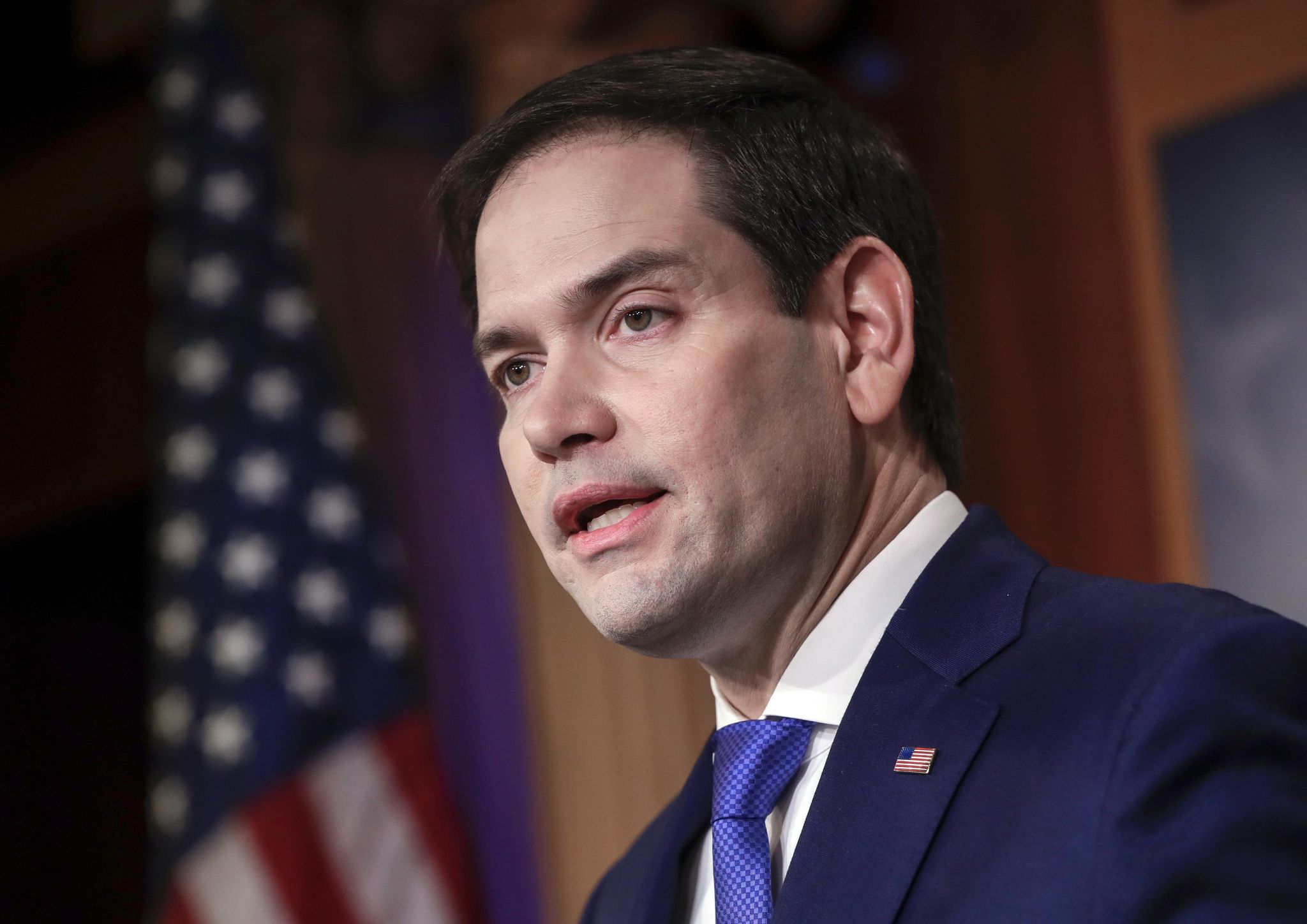
    “I don’t think he should go,” Mr. Rubio said on CNN’s “State of the Union.” “I don’t think any of our government officials should be going and pretending it’s business as usual until we know what’s happened here.”

    Larry Kudlow, director of the White House National Economic Council, said Mr. Mnuchin still plans to attend the conference, which he described as a meeting on stopping terrorist financing.

    Mr. Rubio added that Congress would respond strongly no matter how the administration may react.

    Sen. Bernard Sanders, Vermont independent, echoed the outrage over the possibility that Mr. Khashoggi may have been murdered.

    “We cannot have an ally who murders in cold blood in their own consulate,” said Mr. Sanders.

    Former CIA Director and one-time Saudi Arabia station chief John Brennan, added that the Saudi’s “denials ring hollow.”

    “Their [Saudi] denials ring hollow,” Mr. Brennan said on NBC’s Meet the Press. “It would be inconceivable that such an operation would be run by the Saudis without the knowledge of the day-to-day decision-maker of Saudi Arabia. That’s Crown Prince Mohammed bin Salman.”

    Mr. Khashoggi, who was considered close to the Saudi royal family, had become a critic of the current government and Prince Mohammed, the 33-year-old heir apparent who has shown little tolerance for criticism.

    As a journalist, Mr. Khashoggi has written extensively about Saudi Arabia, including criticism of its war in Yemen, its recent diplomatic spat with Canada and its arrest of women’s rights activists after the lifting of a ban on women driving.

    Those policies are all seen as initiatives of the crown prince, who has also presided over a roundup of activists and businessmen.

    Mr. Trump has repeatedly criticized Saudi Arabia and King Salman over rising global oil prices. Benchmark Brent crude now trades above $80 and U.S. gasoline prices have risen ahead of the midterm elections.

    Earlier this month, Mr. Trump suggested Saudi Arabia’s king “might not be there for two weeks” without U.S. military support.

    • Valerie Richardson contributed to this article, which is based in part on wire service reports.

  • Hassan Rouhani accuses U.S. of seeking ‘regime change’ in Iran

    Iranian President Hassan Rouhani on Sunday accused the United States of seeking regime change in the Islamic Republic.

    Iranian President Hassan Rouhani on Sunday accused the United States of seeking regime change in the Islamic Republic.

    In a speech broadcast on Iranian state TV, Mr. Rouhani used the English phrase “regime change” to emphasize his point, and added that “in the past 40 years there has not been a more spiteful team than the current U.S. government toward Iran, Iranians and the Islamic Republic.”

    During the speech, which marked the start of the academic year at Tehran University, Mr. Rouhani also claimed that Washington was now engaged in psychological and economic warfare against Tehran.

    “Reducing the legitimacy of the system is their final goal,” Mr. Rouhani said. “When they say getting rid of, regime change in their own words, how does regime change happen? Through reducing legitimacy, otherwise a regime doesn’t change.”

    Since May, when President Trump withdrew the U.S. from the 2015 multilateral deal that eased global sanctions in exchange for curbs on Iran’s suspect nuclear programs, tensions have dramatically escalated between Washington and Tehran.

    In a bid to curb its aggressive behavior across the Middle East, the U.S. reimposed sanctions on the Islamic Republic with even harsher penalties set to start on Nov. 4, punishing countries who buy Iranian oil by blocking their access to U.S. markets and financial institutions.

    The moves have rocked Iran’s economy, as a steady stream of foreign partners have canceled deals and investments. Unemployment is high and the U.S. pressure campaign has sent the value of the Iranian rial plummeting.

    Mr. Trump and National Security Adviser John Bolton have both singled out Iran in recent speeches, with the president urging other member nations at the United Nations General Assembly late last month to “isolate Iran’s regime as long as its aggression continues.”

  • Marco Rubio calls on White House to boycott Saudi conference over missing journalist

    Sen. Marco Rubio said Sunday that the Trump administration should skip an international investors conference in Saudi Arabia until more is known about what happened to missing journalist Jamal Khashog

    Sen. Marco Rubio said Sunday that the Trump administration should skip an international investors conference in Saudi Arabia until more is known about what happened to missing journalist Jamal Khashoggi.

    Treasury Secretary Steven Mnuchin this month is scheduled attend the event in Riyadh known as “Davos in the Desert,” even as corporate leaders are pulling out over concerns about the fate of Mr. Khashoggi, a critic of the Saudi regime.

    “I don’t think he should go,” Mr. Rubio said on CNN’s “State of the Union.” “I don’t think any of our government officials should be going and pretending it’s business as usual until we know what’s happened here.”

    The Florida Republican also said that Congress would respond strongly no matter how the administration may react.

    “I believe the Trump administration will do something, the president said that, but if he doesn’t, Congress will, that I can tell you with 100 percent certainty,” said Mr. Rubio.

    “With almost full unanimity across the board, Republicans and Democrats, there will be a very strong congressional response if in fact the Saudis lured him into that consulate, murdered him, cut up his body, and disposed of it,” he said.

    .@marcorubio to @jaketapper on Secretary Mnuchin attending economic summit in Saudi Arabia: “I don’t think we should continue as business as usual until we know exactly what’s happened here… I don’t think he should go.” #CNNSOTUpic.twitter.com/8U28j5jZlk

    — State of the Union (@CNNSotu) October 14, 2018

    Mr. Khashoggi, a columnist for The Washington Post, has not been seen since Oct. 2, when he walked into the Saudi consulate in Istanbul, Turkey. His disappearance has touched off a diplomatic crisis amid fears that he may have been killed at the behest of Saudi Crown Prince Mohammed bin Salman.

    The White House has come under pressure to impose economic sanctions and halt arms sales to Saudi Arabia. President Trump has said “we would be punishing ourselves” by canceling arm sales.

    Larry Kudlow, director of the White House National Economic Council, said Sunday that Mr. Mnuchin still plans to attend the conference, which he described as a meeting on stopping terrorist financing.

    “I spoke to him last evening, and at the moment he’s intending to go because of the importance of the issue of ending terrorist financing,” Mr. Kudlow said on ABC’s “This Week.”

    .@GStephanopoulos: Is it appropriate for Treasury Secretary Mnuchin to attend the investor conference in Saudi Arabia?Director of White House National Economic Council Larry Kudlow: “He’s intending to go because of the importance of the issue of ending terrorist financing” pic.twitter.com/5HNdzO7rvH

    — This Week (@ThisWeekABC) October 14, 2018

    “But along with the president and the general investigation, Mr. Mnuchin will make up his mind as the week progresses and as new information surfaces,” Mr. Kudlow said.

    Sen. Bernard Sanders, Vermont independent, also expressed outrage over the possibility that Mr. Khashoggi may have been murdered.

    “We cannot have an ally who murders in cold blood in their own consulate,” said Mr. Sanders.


  • Kevin McCarthy, House GOP leader, announces get-tough immigration bill

    House Majority Leader Kevin McCarthy announced Friday a new get-tough immigration bill that would build the rest of President Trump’s border wall, punish sanctuary cities and stiffen penalties on repe

    House Majority Leader Kevin McCarthy announced Friday a new get-tough immigration bill that would build the rest of President Trump’s border wall, punish sanctuary cities and stiffen penalties on repeat-illegal immigrants.

    The bill is unlikely to see action in the near future but instead serves as a marker for House Republicans as they prepare for what’s likely to be a renewed immigration debate in December or, should Democrats win control of the House, early next year.

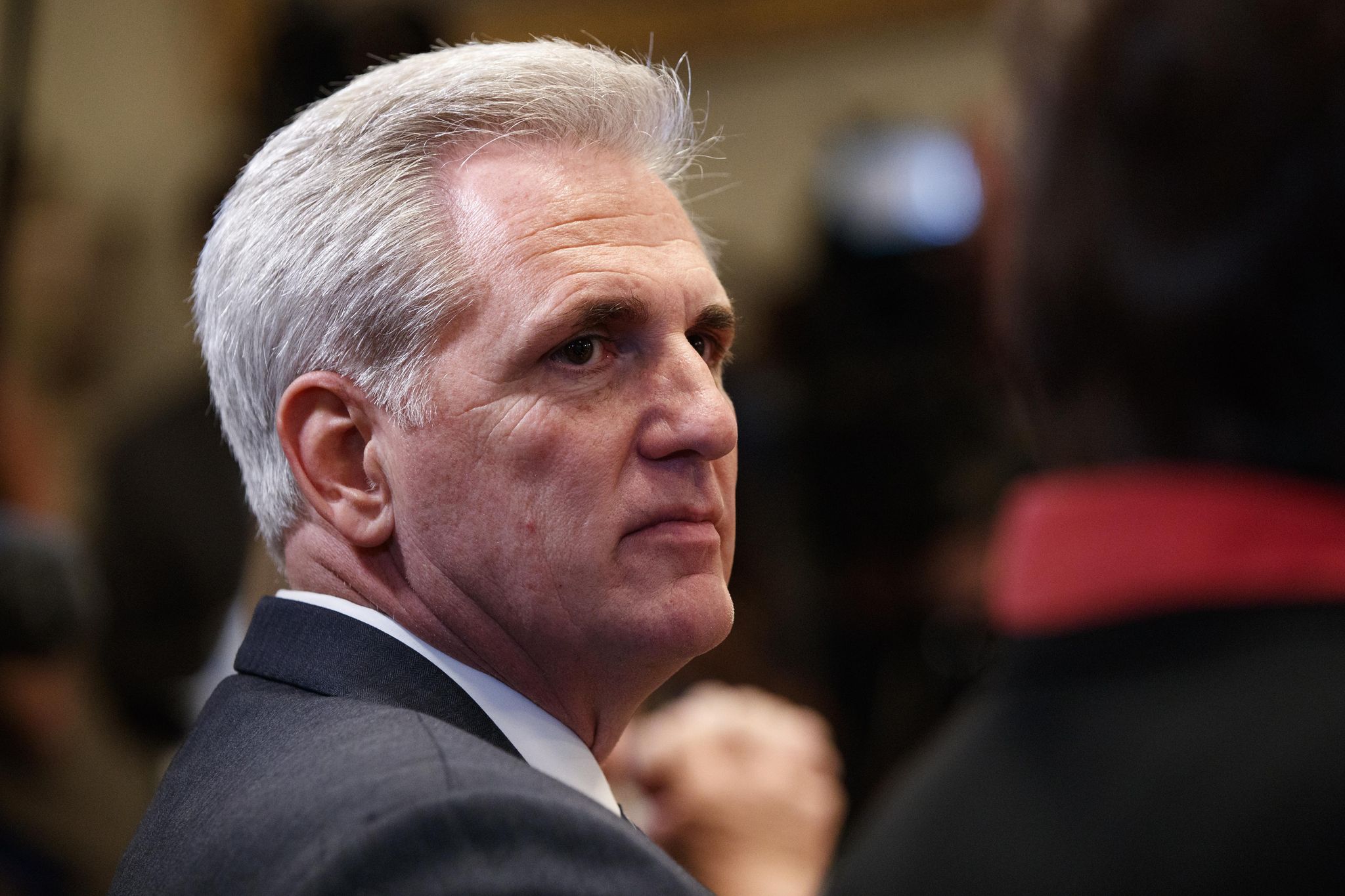
    “Maintaining strong borders is one of the basic responsibilities of any nation. For too long, America has failed in this responsibility,” Mr. McCarthy said in announcing the bill.

    Mr. Trump is likely to be most excited about the wall funding, which is symbolically important to fulfilling a campaign pledge, but the more substantive parts of the bill deal with withholding federal money from sanctuary cities, shrinking several categories of humanitarian relief and boosting jail time for illegal immigrants who amass serious criminal records.

    The bill does not cover illegal immigrant “Dreamers.”

    An earlier GOP push this year for a crackdown strategy toward illegal immigration faltered after a number of Republicans were unable to back the legislation because it didn’t include full citizenship rights for millions of illegal immigrants.