Tag: Politics

  • Hillary Clinton lost security clearance

    Hillary Clinton has given up her security clearance in the wake of the scandal over her handling of secret information on her email server, the Senate Judiciary Committee revealed Friday.

    Hillary Clinton has given up her security clearance in the wake of the scandal over her handling of secret information on her email server, the Senate Judiciary Committee revealed Friday.

    Chairman Charles E. Grassley also revealed top Clinton aide Cheryl Mills and four others no longer have clearance.

    Mrs. Clinton’s clearance expired at the end of August. The others lost their access privileges in September.

    The State Department, in a letter to Mr. Grassley, had said Mrs. Clinton and her aides retained clearance in order to conduct research after she left office.

    The names of the four additional aides besides Ms. Mills were redacted from the State Department letter that the committee released.

  • Washington Post says Turkey has proof Saudi writer was killed

    Turkey’s government has told U.S. officials it has audio and video proof that missing Saudi Arabian writer Jamal Khashoggi was killed and dismembered in the Saudi Consulate in Istanbul, the Washington

    ANKARA, Turkey (AP) — Turkey’s government has told U.S. officials it has audio and video proof that missing Saudi Arabian writer Jamal Khashoggi was killed and dismembered in the Saudi Consulate in Istanbul, the Washington Post reported Friday.

    The newspaper, for which Khashoggi is a columnist, cited anonymous officials as saying the recordings show a Saudi security team detained the writer when he went to the consulate on Oct. 2 to pick up a document for his upcoming wedding.

    The Associated Press was not immediately able to confirm the report, and Turkish officials would not comment.

    A delegation from Saudi Arabia arrived in Turkey Friday as part of an investigation into the writer’s disappearance, Turkey’s state-run news agency Anadolu said.

    Saudi Arabia has called the allegation it abducted or harmed Khashoggi “baseless.” However, it has offered no evidence to support its claim he left the consulate and vanished despite his fiance waiting outside.

    Anadolu Agency said the delegation would hold talks with Turkish officials over the weekend. It did not provide further details.

    On Thursday, Turkish presidential spokesman Ibrahim Kalin said Turkey and Saudi Arabia would form a “joint working group” to look into Khashoggi’s disappearance.

    The 59-year-old journalist, who was considered close to the Saudi royal family, had became a critic of the current government and Crown Prince Mohammed bin Salman, the 33-year-old heir apparent who has introduced reforms but shown little tolerance for criticism.

    Khashoggi had been living in self-imposed exile in the United States since last year. As a contributor to the Washington Post, he has written extensively about Saudi Arabia, including criticism of its war in Yemen, its recent diplomatic spat with Canada and its arrest of women’s rights activists after the lifting of a ban on women driving.

    Those policies are all seen as initiatives of the crown prince, who has also presided over a roundup of activists and businessmen.

  • Papaz Brunson evine döndü

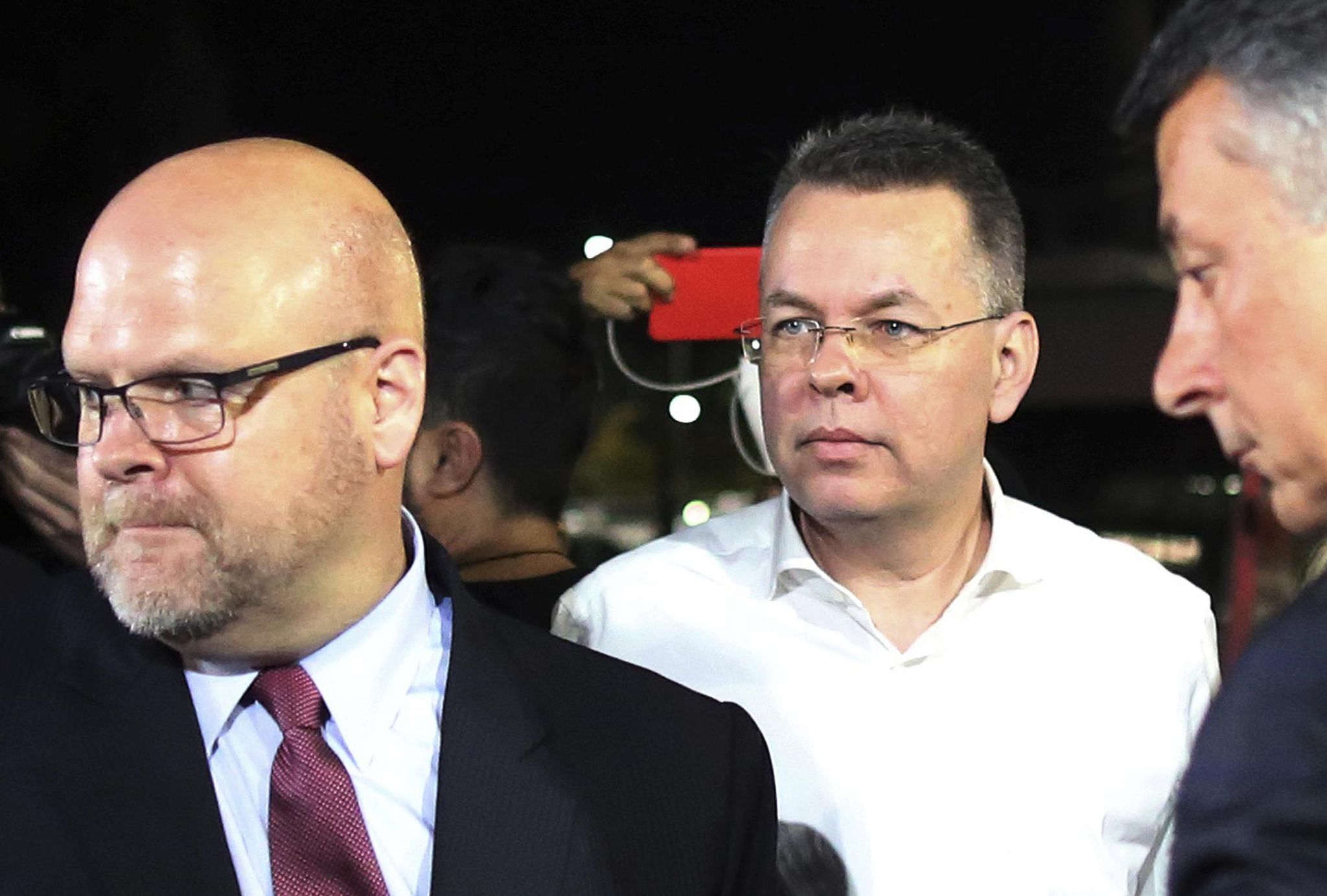
    At a campaign rally in Ohio, President Trump on Friday whipped up the crowd by announcing that American Pastor Andrew Brunson had been freed from a Turkish prison.

    At a campaign rally in Ohio, President Trump on Friday whipped up the crowd by announcing that American Pastor Andrew Brunson had been freed from a Turkish prison.

    “He is now free from jail and he is in the air heading to Germany where he will get off for a brief check and I think he is going to be in great shape,” Mr. Trump said to cheers from the crowd in Lebanon, Ohio.

    “He is coming to Washington D.C. tomorrow and we will say hello to him,” said the president. “He went through a lot but now he is on his way back.”

    Mr. Brunson was arrested by the Turkish government more than a year ago on charges related to terrorism and espionage. The government argued that the American pastor was involved in the failed 2016 military coup, which Mr. Brunson and the U.S. denied.

    Mr. Trump said that securing Mr. Brunson’s release followed his other in freeing American’s unjustly imprisoned overseas.

    He noted the release earlier this year of three Americans from a North Korean prison and the release of an Egyptian American charity worker locked up in Egypt for nearly five years.

    “We had a lot of success,” said Mr. Trump.

    Mr. Brunson will undergo a medical exam at the U.S. Air Force’s Ramstein Air Base in Germany.

    He will return to the U.S. on an Air Force plane Saturday afternoon. He is expected then to meet with Mr. Trump at the White House.

    “He is now free from jail and he is in the air heading to Germany where he will get off for a brief check and I think he is going to be in great shape,” Mr. Trump said to cheers from the crowd in Lebanon, Ohio.

    “He is coming to Washington D.C. tomorrow and we will say hello to him,” said the president. “He went through a lot but now he is on his way back.”

    Mr. Brunson was arrested by the Turkish government more than a year ago on charges related to terrorism and espionage. The government argued that the American pastor was involved in the failed 2016 military coup, which Mr. Brunson and the U.S. denied.

    Mr. Trump said that securing Mr. Brunson’s release followed his other in freeing American’s unjustly imprisoned overseas.

    He noted the release earlier this year of three Americans from a North Korean prison and the release of an Egyptian American charity worker locked up in Egypt for nearly five years.

    “We had a lot of success,” said Mr. Trump.

    Mr. Brunson will undergo a medical exam at the U.S. Air Force’s Ramstein Air Base in Germany.

    He will return to the U.S. on an Air Force plane Saturday afternoon. He is expected then to meet with Mr. Trump at the White House.

  • WannaCry cyberattack cost British government over $120 million: Report

    British health officials incurred over $120 million in costs related to the WannaCry virus that infected the U.K.’s hospital system in 2017, a government report said Thursday.

    British health officials incurred over $120 million in costs related to the WannaCry virus that infected the U.K.’s hospital system in 2017, a government report said Thursday.

    WannaCry cost the U.K. National Health Service roughly £92 million, or about $121.74 million, the Department of Health report concluded.

    Services at one-third of the agency’s hospital trusts were disrupted as a result of WannaCry, and ultimately the virus was responsible for causing the cancellation of over 19,000 medical appointments, health officials determined.

    “While this may only be a small proportion of overall NHS activity, it represents disruption to the care of a significant number of patients,” the report said.

    WannaCry claimed victims in over 150 countries upon being unleashed in May 2017, including NHS computers in addition to machines used by the likes of Boeing, FedEx and Honda, among others.

    The U.S. and U.K. government have both blamed the outbreak on North Korea, and last month the Trump administration charged a suspected state-sponsored hacker, Park Jin Hyok, accused of participating in the creation of WannaCry at Pyongyang’s behest.

    North Korea has previously denied involvement in WannaCry, and last month a government official described Mr. Park as “a nonexistent entity.”

    WannaCry exploited a critical vulnerability affecting Microsoft Windows computers that had been previously discovered by the U.S. National Security Agency. Known as EternalBlue, that vulnerability and others were leaked online months earlier by the Shadow Brokers, a mysterious entity that has repeatedly published powerful hacking tools allegedly pilfered from the NSA.

    Marcus Hutchins, a British security researcher credited with activating a “kill switch” that effectively ended the WannaCry outbreak, was subsequently indicted by U.S. prosecutors on unrelated hacking charges and has pleaded not guilty.

  • Inside the Ring: China’s ‘Belt and Road’ propaganda for U.S.

    The Pentagon’s Pacific Command is pushing back against China’s attempt to relabel its global infrastructure development initiative to make it more palatable for strategic messaging in support of Beiji

    The Pentagon’s Pacific Command is pushing back against China’s attempt to relabel its global infrastructure development initiative to make it more palatable for strategic messaging in support of Beijing’s drive for global hegemony.

    The initiative is Chinese President Xi Jinping’s $1 trillion infrastructure investment plan, mostly in the underdeveloped world, that U.S. officials have said is part of Beijing’s drive to expand global influence and military power-projection capabilities.

    The initiative until recently was known in English as the “One Belt, One Road Initiative.”

    However, when Chinese leaders realized use of the word “one” two times in the name might signal to international audiences that China is using the effort to supplant the United States around the world, the translation of the term was changed — but only in English.

    To make the initiative sound less threatening, China changed the name to the shorter “Belt and Road Initiative.”

    The Chinese government then set into motion a Mighty Wurlitzer of propaganda and media outlets — including the Xinhua News Agency internally and the Voice of China international cable and radio outlets — to erase all references to One Belt, One Road.

    After the English rebranding was revealed during a three-star Pacific Command briefing, the command and all U.S. government agencies were urged to stop assisting Chinese propaganda and strategic messaging by avoiding all use of the Beijing-authorized term Belt and Road Initiative.

    The concern is that using the term will fuel international support for Beijing’s narrative that China’s economic system of socialism with Chinese characteristics and its political ideology of one-party communist rule are preferred options for a China-led new world order.

    China’s infrastructure program, along with the Beijing-funded Confucius Institutes on American and foreign college campuses, are being used by Beijing to exploit and gain leverage over free nations.

    China continues to show its disregard for international rules by ignoring U.N. resolutions on North Korea and the Permanent Court of Arbitration ruling denying Beijing’s sovereignty claims to own 90 percent of the South China Sea.

    Randy Schriver, assistant defense secretary for Asian and Pacific security affairs, said last month that China’s military is a key player in the Belt and Road Initiative.

    “The military is supportive of a comprehensive strategy that in many ways the leading edge is the predatory economics,” Mr. Schriver said in an interview. “And they’re supportive and complementary of one another. Where China is using economic tools, they’re often doing so in order to create access, potential bases and the like.”

    NORTH KOREA HYBRID WARFARE

    North Korea is engaged in low-intensity conflict that has been dubbed “gray zone” warfare that shifts between periods of virulent anti-U.S. hostility and charm offenses, according to military sources.

    The regime of Kim Jong-un has two overriding strategic goals that are the driving forces behind its hybrid warfare programs: keeping the regime in power and seeking international legitimacy for the regime.

    As part of this information warfare, North Korean operations swing like a pendulum between hostility and charm offensives.

    Two phases of the hybrid warfare were visible over the past several years, when North Korea targeted the United States and South Korea with cyberattacks and other covert efforts that the sources said ultimately led to the impeachment and imprisonment of conservative former South Korean President Park Geun-hye.

    Then after the election of President Trump in 2016 and South Korean President Moon Jae-in, North Korea launched a major charm offensive that is ongoing and seeks to exploit the Trump administration’s desire to negotiate the denuclearization of North Korea.

    “They have been able to go from the brink of war in 2017 with the U.S. and [South Korea] to four historic peace summits all within one year, with all the strategic players vying for their attention,” said one military source.

    The hostility phase, dubbed the “harm campaign,” stretched from 2014 to 2016 and involved antagonistic polices and rhetoric and confrontation, pushing the notion that the United States was preparing for a nuclear war against North Korea. A key characteristic of this phase was missile and nuclear testing.

    In South Korea, the North Koreans used information operations to portray the Park administration as corrupt and in league with a hostile United States and that the government in Seoul had pursued policies that harmed the South Korean people.

    Globally, North Korea stepped up cyberattacks against government and private institutions, notably spreading the WannaCry malware and stealing millions of dollars from banks. By March 2017, North Korea was linked to cyberattacks in 150 nations.

    “From the [North Korean] and Kim Jong-un’s perspective, the impeachment and imprisonment of President Park could be seen as the total success of the [information operations] campaign,” the source said.

    By late 2017, with the election of Mr. Trump and Mr. Moon, North Korea quickly shifted from hostility to engagement, promoting a new propaganda narrative using concepts of “peace, unification and economic cooperation.”

    The new charm campaign was kicked off by North Korea’s participation in the Winter Olympics in South Korea and reached a high point with the summit in Singapore between Mr. Trump and Mr. Kim.

    As a result of the new campaign, North Korea halted its virulent anti-America propaganda inside the country and began promoting closer economic ties with South Korea.

    Missile and nuclear tests also were halted, although cyberattacks, including those involving theft of funds from banks, are continuing.

    North Korea’s goals of regime survival and international acceptance remain unchanged by the shifting hybrid warfare approaches.

    MATTIS TALKS INF WITH NATO

    Defense Secretary Jim Mattis recently held discussions with NATO allies on what to do about Russia’s breaking of the 1987 Intermediate-Range Nuclear Forces treaty that bans medium-range nuclear missiles.

    Russia violated the INF treaty by building and deploying large numbers of a new intermediate-range ground-launched cruise missile designated the SSC-8.

    Moscow so far is refusing to give up the illegal missile, and Congress has mandated that the Pentagon begin research into new U.S. intermediate-range missiles that, if deployed, would violate INF limits.

    Mr. Mattis said in Paris earlier this month that for four years the U.S. government discussed the INF violation with Russia with the goal of bringing Moscow back into compliance.

    “This is a treaty that is only signed between Russia and the United States, but it has very, very strong links to the security of Europe and the security of NATO,” he said.

    Mr. Mattis said he sought advice while in Europe on “what do we do with a treaty that two nations entered into, one is still living by — that’s us, the United States — and Russia is not?”

    “I cannot forecast where it will go,” Mr. Mattis said. “It’s a decision for the president. But I can tell you that both on Capitol Hill and in the State Department, there’s a lot of concern about the situation. And I’ll return with the advice of our allies and engage that discussion to determine the way ahead.”

    There is mounting pressure on regional military commanders to jettison the INF treaty.

    In Asia, recently retired Pacific Command commander Adm. Harry Harris, now the U.S. ambassador to South Korea, said he favors getting rid of the INF treaty because of China’s large force of intermediate-range missiles.

    “We have no ground-based capability that can threaten China because of, among other things, our rigid adherence, and rightfully so, to the treaty that we signed onto, the INF treaty,” he said.

    Adm. Harris said the U.S. military is at a disadvantage because of the threat of Chinese missile attacks against both bases and ships.

    The military’s European Command could use new intermediate-range missiles to counter the threat posed by Russia’s illegal SSC-8.

    An administration official said that Mr. Mattis does not favor pulling out of the INF treaty.

    However, Marine Corps Gen. Joseph Dunford, chairman of the Joint Chiefs of Staff, is said to favor ending the INF treaty and moving ahead with building a new intermediate-range missile force.

    Contact Bill Gertz on Twitter at @BillGertz.

  • Jamal Khashoggi disappearance after Saudi Consulate visit creates diplomatic crisis

    International intrigue deepened Wednesday over the disappearance of a prominent U.S.-based Saudi journalist after a visit last week to the Saudi Consulate in Turkey, as suspicions that he had been kil

    International intrigue deepened Wednesday over the disappearance of a prominent U.S.-based Saudi journalist after a visit last week to the Saudi Consulate in Turkey, as suspicions that he had been killed or kidnapped by a team of Saudi operatives threatened to spiral into a major diplomatic crisis.

    President Trump and his top security aides, who have cultivated a close relationship with hard-charging Saudi Crown Prince Mohammad bin Salman, pressed Riyadh for answers Wednesday to what happened to Jamal Khashoggi, a frequent critic of the regime who has not been seen or heard from since visiting the Saudi Consulate in Istanbul.

    “The Saudis have a lot of explaining to do because all indications are that they have been involved at minimum with his disappearance,” Senate Foreign Relations Committee Chairman Bob Corker, Tennessee Republican, told The Associated Press. “Everything points to them.”

    The Saudis deny any role in Mr. Khashoggi’s disappearance. Prince Khalid bin Salman bin Abdulaziz, Riyadh’s ambassador to Washington, denounced what he called “malicious leaks and grim rumors” of Saudi culpability.

    One thing, however, is certain: If Mr. Khashoggi, who has written critically of the crown prince, was silenced — perhaps permanently — by a Saudi intelligence operation, the fallout will be severe for the Trump administration, which has spent more than a year cozying up to Riyadh as its go-to ally against the Middle East’s other major power, Iran.

    “We accuse the Iranians of exporting terrorism,” said longtime regional analyst Joshua Landis, who heads the Center for Middle East Studies at the University of Oklahoma. “Well, this looks an awful lot like the Saudis are exporting terrorism, and that puts a bone in the craw of the Trump administration’s whole narrative that it’s better to be friends with Saudi Arabia than Iran.”

    The incident is likely to cool even further the frosty relations between Saudi Arabia and Turkey, battered by Ankara’s decision to side with Qatar in a diplomatic feud with Saudi Arabia and other Gulf allies. Turkish President Recep Tayyip Erdogan has described Mr. Khashoggi as a “personal friend” and has issued increasingly harsh public statements demanding that the Saudis clarify what happened to him.

    Video evidence

    A New York Times report said top Turkish security officials now believe the journalist was assassinated in the Saudi Consulate on orders from Riyadh.

    Citing an unidentified official, the paper said Turkish investigators had uncovered a complex operation in which Mr. Khashoggi, 59, was killed within two hours of his arrival at the consulate in Istanbul on Oct. 2 by a team of 15 Saudi agents, who then dismembered his body with a bone saw they brought for the purpose — an account the Saudis strenuously deny.

    Several Turkish news outlets broadcast a montage of surveillance videos on Tuesday and Wednesday purporting to expose how Mr. Khashoggi was the target of an elite Saudi “assassination squad.”

    The leaked videos do not offer definitive proof about Mr. Khashoggi’s fate but claim to show a team of 15 Saudis arriving and leaving Istanbul via private jets, and visiting the Saudi Consulate just as Mr. Khashoggi disappeared there. Turkish media identified some of the men as either members of Saudi intelligence or the kingdom’s military special forces.

    The Washington Post, where Mr. Khashoggi has written columns since last year, reported that intercepted communications showed Saudi officials wanted to lure Mr. Khashoggi back to Saudi Arabia. The paper said it was not clear whether the agents intended to kill Mr. Khashoggi or whether U.S. officials had warned him he was a target.

    President Trump has been under increasing pressure to respond to the incident. Vice President Mike Pence told a radio appearance that “violence against journalists should be condemned.”

    “It’s a very serious situation for us,” Mr. Trump told reporters in the Oval Office. “We do not like seeing what’s going on. Now, as you know, they’re saying, ‘We had nothing to do with it.’ But so far, everyone’s saying they had nothing to do with it.”

    The White House later said National Security Adviser John R. Bolton, Secretary of State Mike Pompeo and White House senior adviser Jared Kushner had all spoken with Salman to ask “for more details and for the Saudi government to be transparent.” It was not disclosed what they were told by the prince.

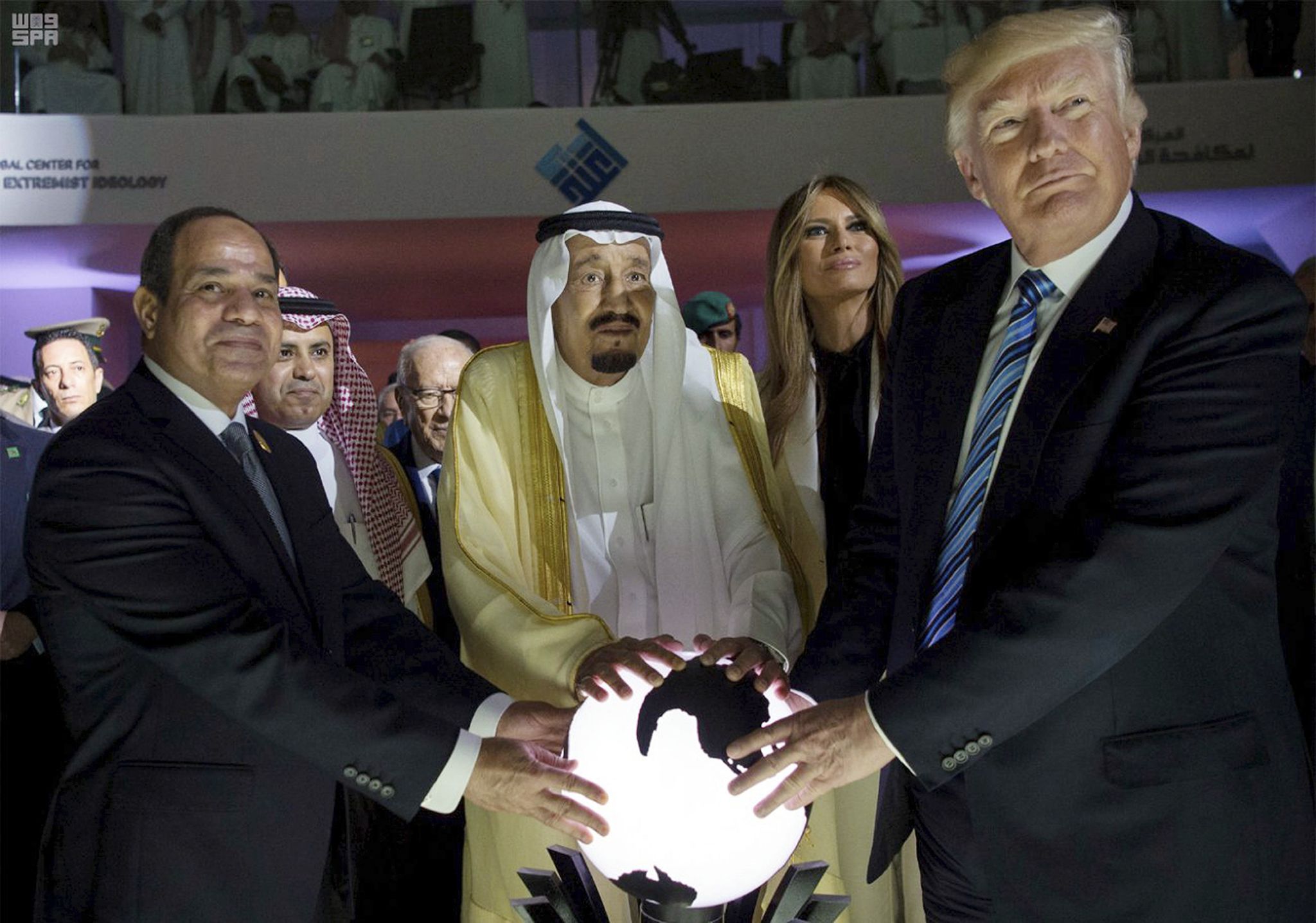
    Mr. Trump made his first overseas trip as U.S. president to Saudi Arabia, whose friendship and willingness to take direct military action against Iran-backed militants in Yemen has factored heavily into the administration’s overall Middle East strategy.

    A critic of the prince

    Mr. Khashoggi was at the Istanbul consulate seeking to fill out forms ahead of his wedding to his Turkish fiancee, Hatice Cengiz. Surveillance images capture him entering the consulate but never emerging, while his fiancee is seen waiting listlessly for him outside.

    “Images in the media point to the possibility of an abduction or an assassination. I hope that it does not turn out to be murder, as alleged by these images,” Ms. Cengiz said in a statement to CNN on Wednesday. “Until official statements are made, it makes more sense to wait a bit longer and to see the final result as opposed to making a bold comment.”

    Mr. Trump has said he intends to meet with Ms. Cengiz, who appealed to the president for help, at the White House in the near future.

    Ms. Cengiz has written that Mr. Khashoggi sought to become a U.S. citizen after living in self-imposed exile since last year, fearing repercussions for his criticism of the Saudi leadership.

    She also wrote that Mr. Khashoggi felt concern that he “could be in danger” during the days leading up to Oct. 2, but that he needed to visit the consulate in Istanbul to obtain the necessary paperwork so the couple could be married.

    Mr. Khashoggi has written columns over the past year arguing that despite the crown prince’s image as a reformer and modernizer of Saudi Arabia’s deeply conservative society, oppression of intellectuals and religious leaders has spiraled in recent years.

    The prince has won favor with the Trump administration while leading a widely publicized drive to reform Saudi Arabia’s Sunni monarchy. But he has also presided over the arrests of large numbers of rights activists and businessmen in the kingdom.

    But sources close to the government in Riyadh say it is hard to believe that the young prince would risk an international incident and embarrass Mr. Trump and Mr. Erdogan by ordering the assassination of a journalist critic on foreign soil.

    “Saudi policy toward a critic like this is always to buy people off, try to bring them back into the fold,” one source told The Washington Times. “An act like this is totally out of character for the royal family. If it happened, it would be because it was a total [mess]-up by some people and there will be consequences.”

    But the prince has proved an audacious, risk-taking leader at home and abroad. He drew global attention as he consolidated power last year by engineering a nearly three-month-long house arrest of dozens of the kingdom’s most powerful people, including several older princes within the ruling royal family.

    He has also spearheaded a bloody intervention into the civil war in neighboring Yemen and has vowed to fight Iran and its regional proxies in the struggle for dominance in the region.

    A revenge hit?

    Mr. Landis said the prince has ushered in a sharp shift in the way Riyadh conducts itself on the world stage.

    “The Saudis may have used money, not force, for decades to get their way with bribes, but that all changed with Mohammad bin Salman,” Mr. Landis said. “Frankly, I don’t put it past him to have put out an order for [Mr. Khashoggi] to be whacked in the same way [Russian President Vladimir Putin] is whacking opponents overseas because it sends a message and intimidates critics.

    “Every Saudi who might be thinking about speaking up is going to be quiet,” he added, asserting that the risks are high for the Trump administration to continue with what has been over the past year a policy of increased weapons sales and diplomatic chumminess toward the crown prince.

    “The administration has been running around hanging America’s hat on Mohammad bin Salman,” Mr. Landis said. “That hat hook just fell off the wall.”

    The Trump White House’s efforts to cultivate Saudi Arabia are complicated by a far less friendly attitude among many lawmakers on Capitol Hill — of both parties. Sen. Rand Paul, Kentucky Republican, has called for a halt in arms sales to Riyadh until the Khashoggi mystery in cleared up, and some Capitol Hill Democrats were pouncing Wednesday on the White House’s slow response to the incident.

    “If the allegations are true, I hope this is a serious wake-up call to the Trump administration and D.C. more broadly that we need a complete re-evaluation of our relationship with Saudi Arabia,” said Rep. Ro Khanna, California Democrat. “This is what happens when you embolden authoritarian dictators around the world.”

  • Donald Trump opposes ban on arm sales to Saudi Arabia over journalist’s disappearance

    President Trump said Thursday he does not favor stopping arms sales to Saudi Arabia in retaliation for the suspected murder of a Saudi journalist who has been critical of the government.

    President Trump said Thursday he does not favor stopping arms sales to Saudi Arabia in retaliation for the suspected murder of a Saudi journalist who has been critical of the government.

    “They’re spending $110 billion on military equipment,” Mr. Trump told reporters at the White House. “I don’t like stopping the investment. They’re going to take that money and spend it on Russia or China. What good does that do us?”

    The U.S. is investigating the disappearance of journalist Jamal Khashoggi, a columnist for The Washington Post who disappeared after entering the Saudi Consulate in Istanbul, Turkey, for a meeting.

    Mr. Trump said of the Saudi journalist’s suspected murder, “We’re taking it very seriously. Something like that should not be allowed to happen.”

    But he said there are “certainly other ways of handling this situation” besides stopping arm sales, if Saudi Arabia’s government is implicated in Mr. Khashoggi’s disappearance.

    “That doesn’t help us, not when it comes to jobs. There are other things we can do. We’re looking for the answer,” he said. “What happened is a terrible thing, assuming that happened. Maybe we’ll be pleasantly surprised, but somehow I doubt it.”

  • IMF plans talks with Pakistan on debt help

    A team of experts from the International Monetary Fund will travel to Islamabad in the coming weeks to discuss a possible financial assistance package for Pakistan — despite warnings from U.S. lawmak

    A team of experts from the International Monetary Fund will travel to Islamabad in the coming weeks to discuss a possible financial assistance package for Pakistan — despite warnings from U.S. lawmakers and the Trump administration that the money would be used to pay off massive debts Pakistan has run up with China.

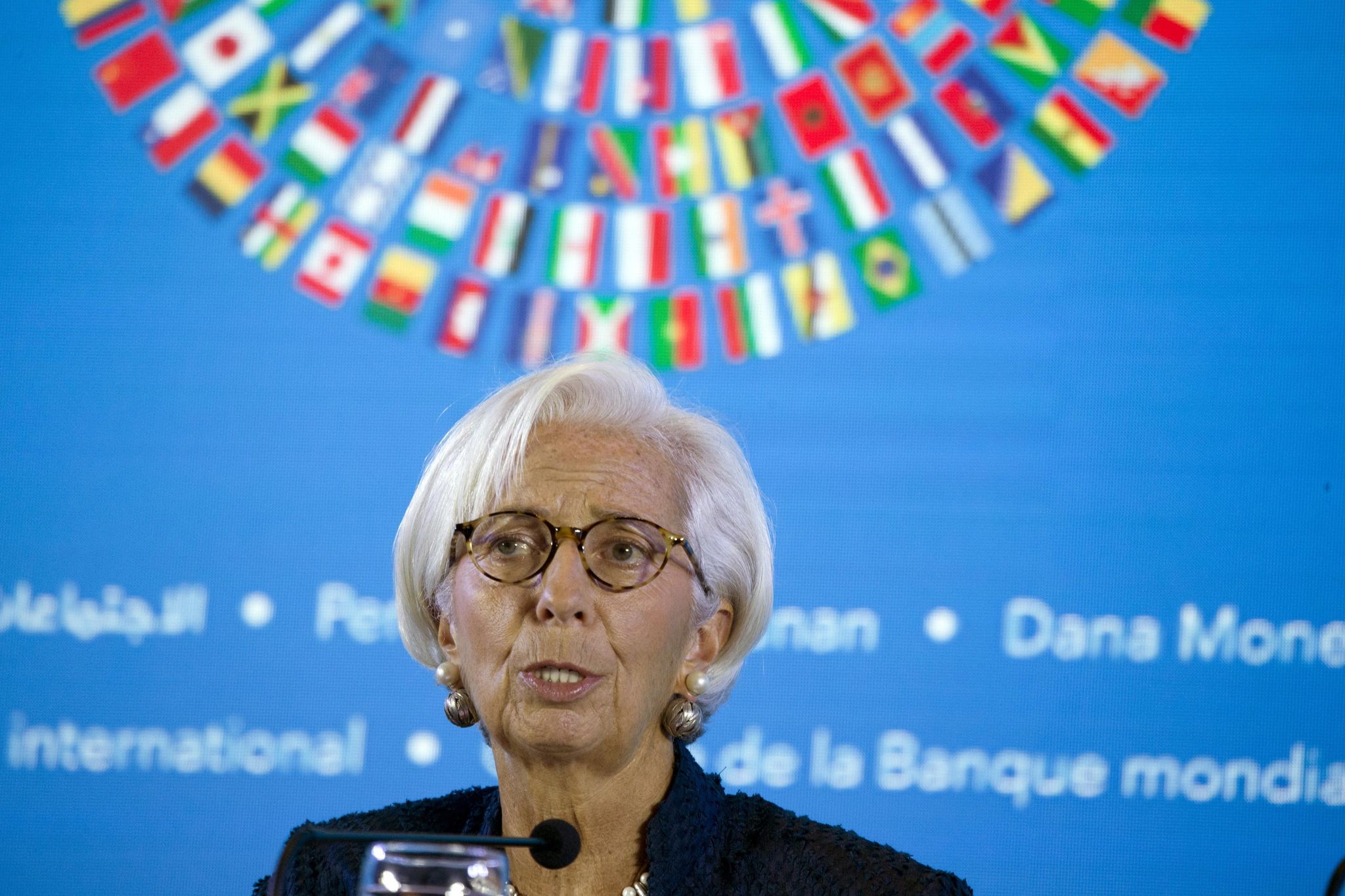
    IMF Managing Director Christine Lagarde said in a statement Thursday she had met with top officials of the new government of Pakistani Prime Minister Imran Khan, including Finance Minister Asad Umar, on the sidelines of the global finance body’s annual meeting now underway in Bali, Indonesia.

    The delegation “requested financial assistance from the IMF to help address Pakistan’s economic challenge,” Ms. Lagardesaid in a statement.

    “An IMF team will visit Islamabad in the coming weeks to initiate discussions for a possible IMF-supported economic program,” the IMF chief said, adding, “We look forward to our continuing partnership.”

    Pakistan has been a prime recipient of funds and infrastructure financing from China’s ambitious $1 trillion-plus “Belt and Road Initiative,” including the construction of highways, bridges and the strategically located port of Gwadar on the Arabian Sea.

    Secretary of State Mike Pompeo on an Asian tour this summer said the Trump administration would “be watching” closely any IMF negotiation with Pakistan.

    “There’s no rationale for IMF tax dollars — and associated with that American dollars that are part of the IMF funding — … to go to bail out Chinese bondholders or China itself,” Mr. Pompeo told the financial network CNBC in July.

    Pakistan officials later claimed they had received assurances from Washington that the Trump administration would not veto an IMF financial package.

  • Andrew Brunson, U.S. pastor jailed in Turkey, may be coming home after secret deal: Report

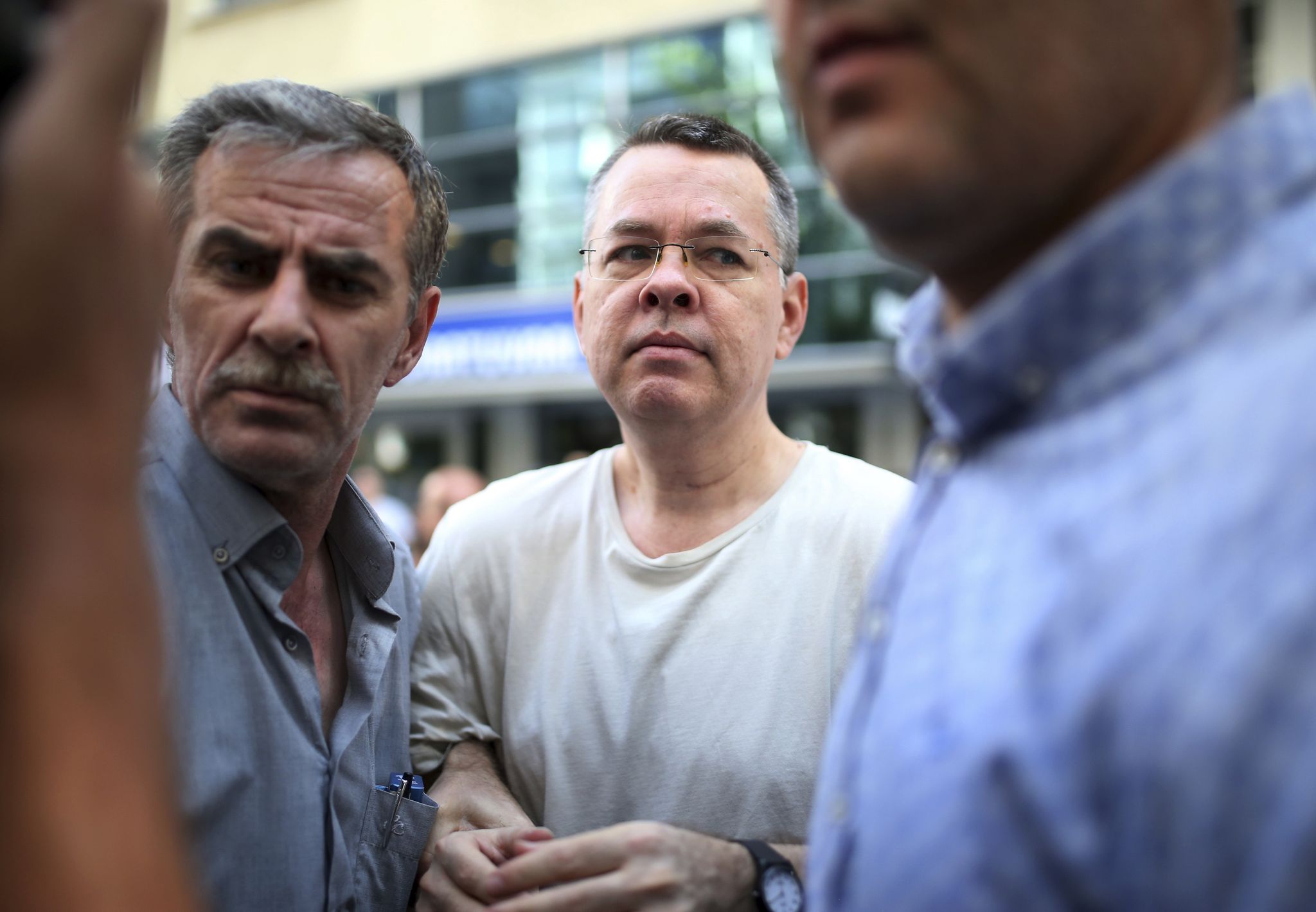
    American Pastor Andrew Brunson may return to the U.S. soon after a secret deal was made between the U.S. and Turkey, NBC News reported on Thursday.

    American Pastor Andrew Brunson may return to the U.S. soon after a secret deal was made between the U.S. and Turkey, NBC News reported on Thursday.

    Two unnamed senior administration officials and a third person briefed told NBC that the U.S. and Turkey reached a deal to secure Mr. Brunson’s return home. The charges against him should be dropped at his next court date on Friday.

    NBC’s sources explained that much of the deal is unknown, but it will require the U.S. to back down on economic pressures.

    The deal would be a step toward easing the growing tension between the two NATO allies, which has been mounting as the White House demanded that Mr. Brunson be released. He has been forced to remain in Turkey for the past two years.

    Turkey arrested Mr. Brunson on terrorism charges after accusing him of having a hand in the failed 2016 military coup. The U.S. and Mr. Brunson deny he had anything to do with it.

    President Recep Tayyip Erdoğan told journalists on Monday that his country’s court rulings apply to everyone, the Turkish newspaper Hurriyet reported.

    “I am not in a position to intervene [in Mr. Brunson’s case] with the judiciary since Turkey is a constitutional state,” he said.

    • David Sands contributed to this report.

  • Angela Merkel’s Germany immigration policies set for referendum in Bavaria elections

    When it comes to regional politics here, no state is more influential than Bavaria, the nation’s economic powerhouse and an unabashed conservative stronghold often described as Germany’s Texas. But th

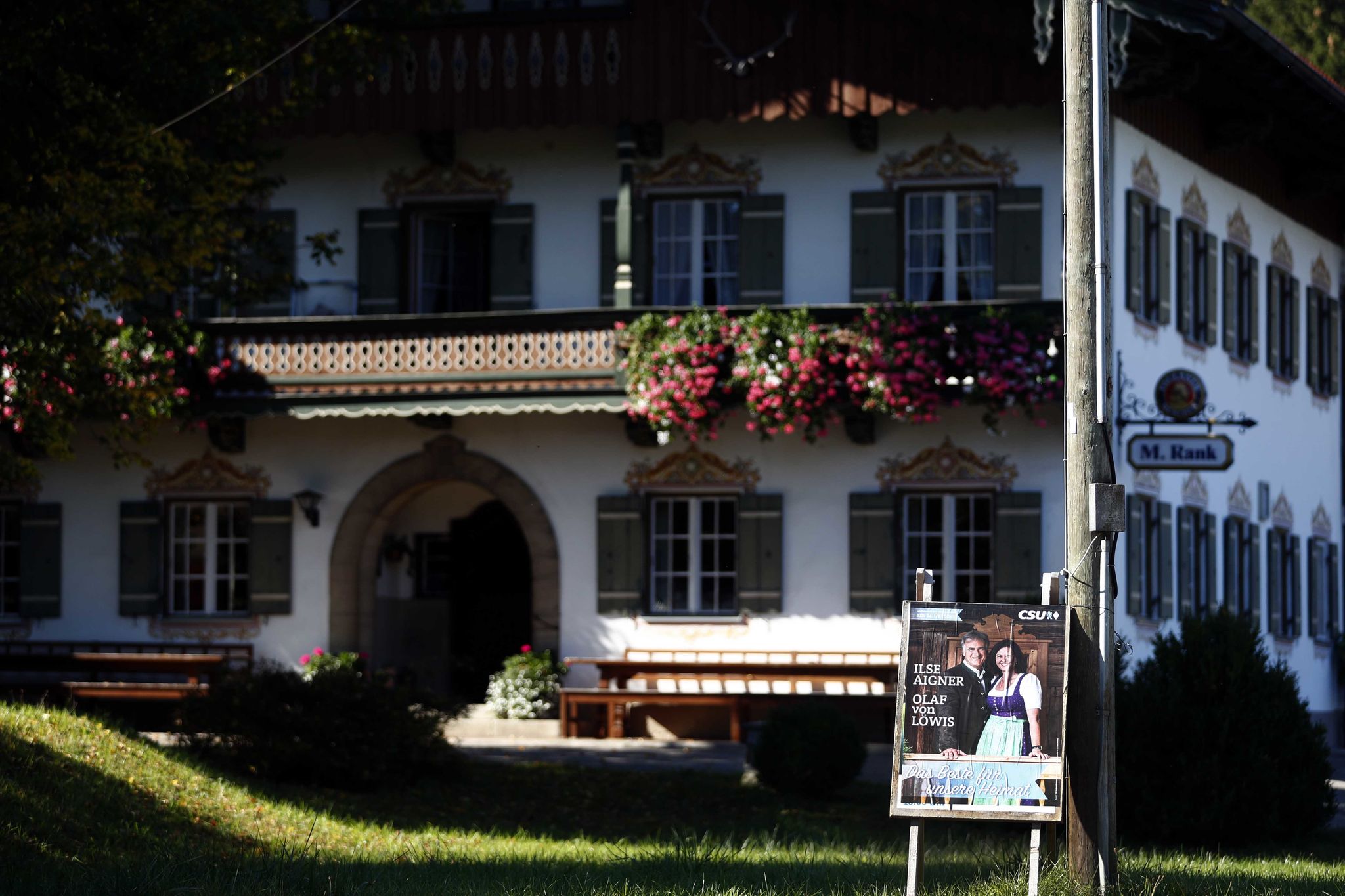
    BERLIN — When it comes to regional politics here, no state is more influential than Bavaria, the nation’s economic powerhouse and an unabashed conservative stronghold often described as Germany’s Texas.

    But the elections Sunday in Bavaria are expected to represent a referendum on center-right Chancellor Angela Merkel’s policies over the past few years and on her conservative allies to the south, who have repeatedly caused trouble for her since her decision to allow more than 1 million refugees into the country three years ago.

    In fact, for the first time in decades, Bavaria’s conservative Christian Social Union finds itself under threat in its own backyard from the Germany’s resurgent far right — and from the left.

    “They tried to fight fire with fire at the beginning of the year with regard to the migration crisis,” said Olaf Boehnke, a senior adviser in Berlin with Rasmussen Global, a Brussels-based think tank, referring to Bavaria’s conservatives. “But they’re realizing that if you try to be more extreme than the extremists, it’s a lost cause.”

    For 12 of the past 13 elections in Bavaria, the Christian Social Union (CSU), the conservative sister party of Ms. Merkel’s Christian Democrats (CDU), has ruled with an absolute majority — a rarity in German politics, where compromise and coalition-building between parties is the norm. The party has held an absolute majority in the state legislature for all but five years over the past six decades.

    That has allowed the CSU in Bavaria, home to automotive giant BMW and the Oktoberfest, to create a conservative, semiautonomous cultural and political bubble in Germany’s south. The state, for example, recently enacted laws mandating that crosses be hung in all administrative buildings, much to the ire of Berlin.

    But the elections Sunday will likely rock the political impregnability of the CSU. The party is polling only at 33 percent, according to German broadcaster ZDF, down a whopping 15 percent from 2013, when Bavaria held its last state elections. In the stable world of German democracy, such a decline amounts to an electoral earthquake.

    Meanwhile, the environmentalist Greens are polling second at 18 percent and the far-right, anti-immigrant Alternative for Germany (AfD), once a fringe party that didn’t run a single candidate in 2013, is at 10 percent, according to the ZDF poll.

    Regional elections in Germany can have huge impacts on national politics, though election outcomes typically reflect a mix of local and national factors, Carsten Brzeski, chief economist for ING Germany, wrote in an analysis of the upcoming election.

    But this time, the reason for the decline of the CSU in Bavaria is clear.

    “The CSU tried to make the election a kind of referendum on Merkel’s stance on refugees,” Mr. Brzeski said. “The continuous nagging and trouble-seeking in Berlin, initiated by the CSU, has completely turned this around.”

    Ms. Merkel’s conservative bloc lost over 1 million votes to the AfD in last year’s federal elections, a development largely connected to popular unhappiness with her 2015 decision to open the nation’s borders to over 1 million, mostly Muslim refugees fleeing violence in the Middle East and elsewhere.

    Bavarian backlash

    It was a decision that particularly affected Bavaria, a Catholic stronghold that served as the main entry point for those who traveled through the Balkans to reach Germany, Mr. Boehnke said.

    That gave Bavaria and the CSU “a special role to play as to how to cope with this,” he said. “They not only reject free-floating migration, but also were the first victims who were subject to this new trend.”

    With refugee policy a hot-button issue in the state and the AfD gaining ground, the CSU — which forms a “grand coalition” government in Berlin with Ms. Merkel’s CDU and the center-left Social Democrats (SPD) — sought to move refugee and immigration policy to the right to protect their political base.

    In doing so, however, they almost toppled Ms. Merkel’s fragile coalition multiple times in recent months.

    In June, Interior Minister Horst Seehofer, who is also the CSU’s party chairman, threatened to order German police to turn away refugees at the Bavarian-Austrian border, with or without the federal government’s blessing. Such a move would have undermined Ms. Merkel’s authority and shattered her coalition. She was forced to hold an emergency summit on asylum policy with European partners in order to calm her unruly coalition partner.

    Intergovernmental tensions spiked again in September, when two refugees were accused of killing a German-Cuban man in the eastern city of Chemnitz, prompting riots and right-wing violence that lasted for a week.

    Some of the violence was caught on video but dismissed by the head of the nation’s domestic security unit, sparking public outrage and calls for his resignation. Being a close ally of Mr. Seehofer’s, however, he was instead given an interior ministry posting — once again demonstrating, Mr. Brzeski said, the CSU’s ability and willingness to “hijack” the government in Berlin in an effort to win back votes locally.

    But the abysmal poll numbers ahead of the Sunday elections indicate that voters are tired of the CSU’s political maneuvering in Berlin — a positive signal for an embattled Ms. Merkel as she struggles to keep her government together, Mr. Boehnke said.

    “They cannot play the blame-Merkel card too excessively,” he said. “They tried to make her a bogeyman, but there’s not much to this.”

    But the anticipated outcome of the elections is also indicative of a larger trend of political fragmentation in Germany, said Georg Neugebauer, a political scientist at Berlin Free University.

    With the leftist Greens and the ultraconservative AfD exploiting voter dissatisfaction with mainstream parties, a more segmented political environment is taking hold and ultimately will put Germany in the same precarious political situation as once-stable nations such as Sweden and Austria.

    That would mark a sharp change for Germany under Ms. Merkel, which had come to be seen as a rock of stability and the economic powerhouse of the European Union during her 13 years in power.

    “We’re currently seeing a breakdown of society, or at the very least in this case a breakdown of large political milieus into many smaller ones,” Mr. Neugebauer said.

    Such a consequential political trend has expanded the scope of how elections in Germany’s Texas can impact the nation and beyond.

    “Things are changing on a bigger scale, and Bavaria is a perfect example,” said Mr. Boehnke. “The political system is on the move.”