Tag: Politics

  • U.S. gives warning of Iran efforts to evade sanctions

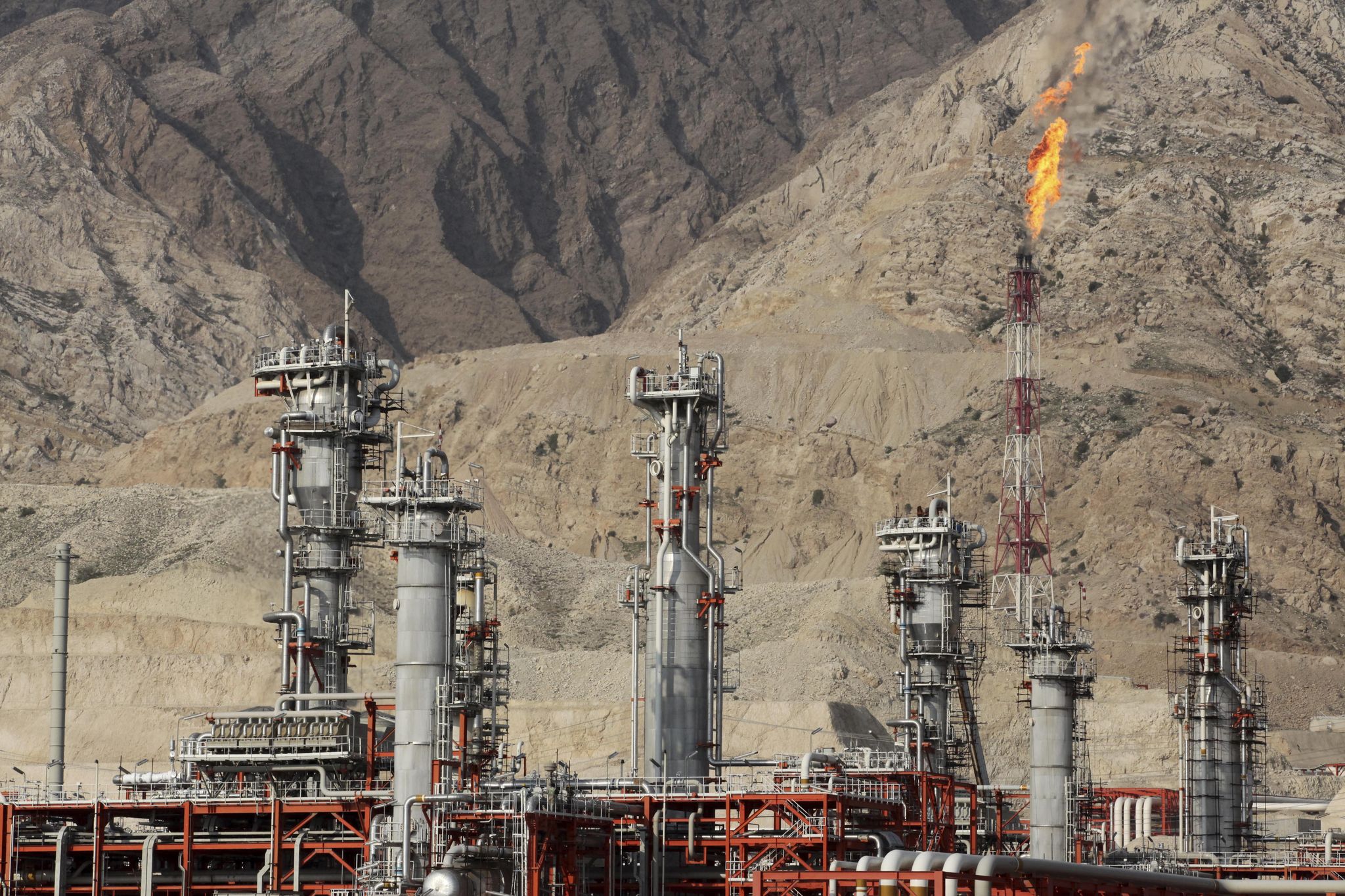
    With unprecedented U.S. sanctions against Iran’s oil industry set to kick in next month, the Treasury Department is warning the rest of the world to beware of dodgy money fleeing the Islamic Republic.

    With unprecedented U.S. sanctions against Iran’s oil industry set to kick in next month, the Treasury Department is warning the rest of the world to beware of dodgy money fleeing the Islamic Republic.

    Washington and Tehran are in a battle of wills over oil exports, which the U.S. is trying to cut off in the wake of President Trump’s decision in May to pull out of the 2015 multilateral deal that eased global sanctions in exchange for curbs on Iran’s suspect nuclear programs.

    “Any country that allows its central bank to be involved in deception in support of [Iranian] terrorism requires the highest levels of scrutiny, particularly when the country itself is the world’s largest state sponsor of terrorism,” Treasury Undersecretary for Terrorism and Financial Intelligence Sigal Mandelker said Thursday.

    The Financial Crimes Enforcement Network (FinCEN) issued the advisory “to help financial institutions better detect and report potentially illicit transactions related to the Islamic Republic of Iran.”

    Iran and the other signatories to the deal, including Russia, China and several European allies, are trying to keep the nuclear deal alive and to make an end-run around the U.S. sanctions, but a number of major corporations have already ended this Iranian dealings for fear of losing access to the much larger American market. Even harsher penalties are set to start on Nov. 4, punishing countries who buy Iranian oil.

    On Sunday, Iran’s parliament approved a bill to tighten its laws against money laundering and terror financing, in a bid to strengthen its case that the U.S. moves are unjust. A U.N. watchdog agency has repeatedly said Iran has so far lived up to its commitments under the nuclear deal, although Washington argues Iran has pursued aggressive moves against U.S. and allied interests beyond the agreement.

    The move was strongly opposed by hardline conservatives in Tehran, who argue the provisions will hamstring the Iran’s ability to support its regional allies, including the Lebanese Shiite group Hezbollah.

    But the remaining partners from the Iran nuclear deal, have insisted that Tehran conform with the U.N.’s Terrorism Financing Conventions — the international Financial Action Task Force (FATF) standards — if there is any change to continue doing business under the nuclear deal.

    The partners all fear U.S. sanctions, which warn other countries to be aware of Iranian “deceptive practices” to move around assets, including front companies and fraudulent documents manipulated by the Iranian Revolutionary Guards Corps and top executives at the Central Bank of Iran.

    Iran is OPEC’s second largest exporter and the world’s fourth largest oil producer, but the Trump administration says it wants to completely cut off its exports.

    Some Iranian oil buyers, such as South Korea and France, have halted their purchases completely while China and India, the biggest buyers of Iranian crude, are now buying far fewer barrels.

    Iran is reportedly exploring way to subvert the U.S. restrictions, including the use of “ghost tankers” who turn off the tracking systems before entering international waters.
  • Kavanaugh impartiality to be tested in blue state lawsuits

    Brett Kavanaugh’s confirmation to the U.S. Supreme Court has put a spotlight on the dozens of federal cases pitting the Trump administration against Democratic-leaning states, on issues including auto

    Brett Kavanaugh’s confirmation to the U.S. Supreme Court has put a spotlight on the dozens of federal cases pitting the Trump administration against Democratic-leaning states, on issues including auto emission standards, immigration and a free-flowing internet.

    He lashed out against “left-wing opposition groups” and others during the recent Senate hearing over a high school-era sexual assault allegation, raising questions about whether he can be impartial deciding cases that revolve around Democratic policies or that directly involve Democratic officials.

    Kavanaugh already was known as a conservative judge. But his partisan rhetoric created new worries for some who will bring or support cases that eventually could come before the nation’s highest court.

    “I have even greater concerns about his judicial temperament and his ability to independently weigh cases that may involve the Trump administration,” said Oregon Attorney General Ellen Rosenblum, a Democrat who has joined more than a dozen lawsuits against the administration.

    Democratic states are in scores of legal battles with the Trump administration over health care, the environment, consumer protections, immigration and other issues. Marquette University political scientist Paul Nolette has tallied 61 times that states have banded together in lawsuits against the Trump administration.

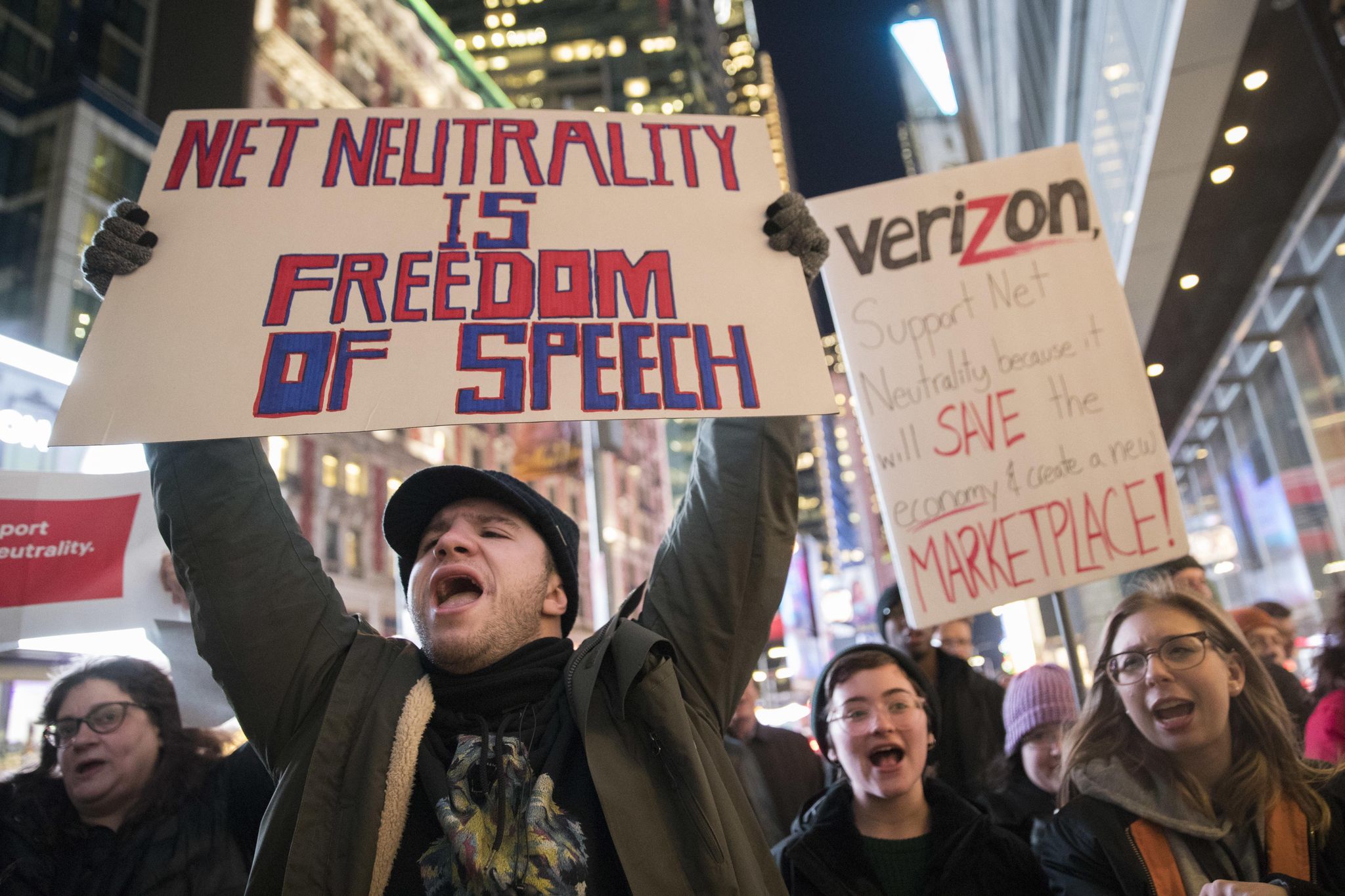
    Trump’s Department of Justice also has initiated legal action against blue states. Most recently, the department sued California just hours after Gov. Jerry Brown signed a law requiring internet neutrality that runs counter to actions taken by the administration.

    Questions about Kavanaugh’s ability to remain impartial and give a fair hearing to such cases escalated after his defiant statement Sept. 27 to the Senate Judiciary Committee.

    He railed against the sexual assault accusations as being orchestrated by Democrats, saying: “This whole two-week effort has been a calculated and orchestrated political hit, fueled with apparent pent-up anger about President Trump and the 2016 election, fear that has been unfairly stoked about my judicial record, revenge on behalf of the Clintons and millions of dollars in money from outside left-wing opposition groups.”

    Kavanaugh, who denied the assault allegation, also said that “in the United States political system of the early 2000s, what goes around comes around” – a statement some observers took to be a threat. But Kavanaugh also said he would not be “swayed by public or political pressure.”

    Since then, he wrote in a Wall Street Journal op-ed that “an independent and impartial judiciary is essential” and that he will “keep an open mind in every case.”

    Lawsuits between the states and the Trump administration could test that.

    Pat Gallagher, director of the legal program at the Sierra Club, said he expects Kavanaugh would oppose environmental regulation regardless of who calls for it – as he has often done as an appeals court judge.

    With his confirmation, Gallagher said, “we’re going to have to find ways to keep cases away from the Supreme Court.”

    Despite questions about Kavanaugh’s objectivity, many of the lawsuits involving blue states do not align neatly with partisan ideology. The core question is who has the power to regulate in that area – the federal government or the states?

    California’s newly signed internet neutrality law is a prime example. It prohibits internet service providers from favoring specific websites or online content by cutting access or charging more for some than others. The state adopted the law last month in response to a Federal Communications Commission policy change earlier this year that ended a similar federal requirement.

    “The California legislature has enacted an extreme and illegal state law attempting to frustrate federal policy,” U.S. Attorney General Jeff Sessions said in a statement announcing a lawsuit against the state.

    California has sued – and been sued – multiple times since Trump took office. Its attorney general, Democrat Xavier Becerra, declined to comment, as did several other attorneys general involved in lawsuits against the administration.

    Similar questions over state vs. federal authority are in play in the Trump administration challenge of a law that set up California as a “sanctuary state” unwilling to cooperate with federal authorities in certain immigration matters.

    Thomas Saenz, president of MALDEF, a Latino civil rights organization, said Kavanaugh’s hearing reinforced what he believed after studying the judge’s previous rulings that touched on immigration.

    “The concern is that partisan ideology came first and then judicial philosophy, rather than the other way around,” he said.

    The group is involved in legal battles over immigrants brought to the country illegally as children.

    Legal experts said it makes sense for blue states to keep pushing back against the administration, in part because not every case will reach the Supreme Court. Lawsuits can delay federal policies or force compromise.

    Both happened with the Trump administration’s ban on travel to the U.S. from a group of Muslim-majority countries. After lower courts knocked it back and forced delays, the administration modified the policy. A ban is now in effect and has been upheld by the Supreme Court, but it’s not as tough as Trump’s first version.

    Some advocates have suggested that Kavanaugh should step aside on cases involving the administration and those he criticized during his confirmation hearing. Doing so is rare, though.

    “Justices don’t recuse themselves simply because they’ve taken ideological or partisan positions in the past that might favor one side or the other,” said Anthony Johnstone, a University of Montana law professor and former state solicitor. “Part of what presidents get with their Supreme Court nominations is their views.”

    ___

    Follow Mulvihill at http://www.twitter.com/geoffmulvihill

  • Mauricio Macri downplays Argentina’s economy problems

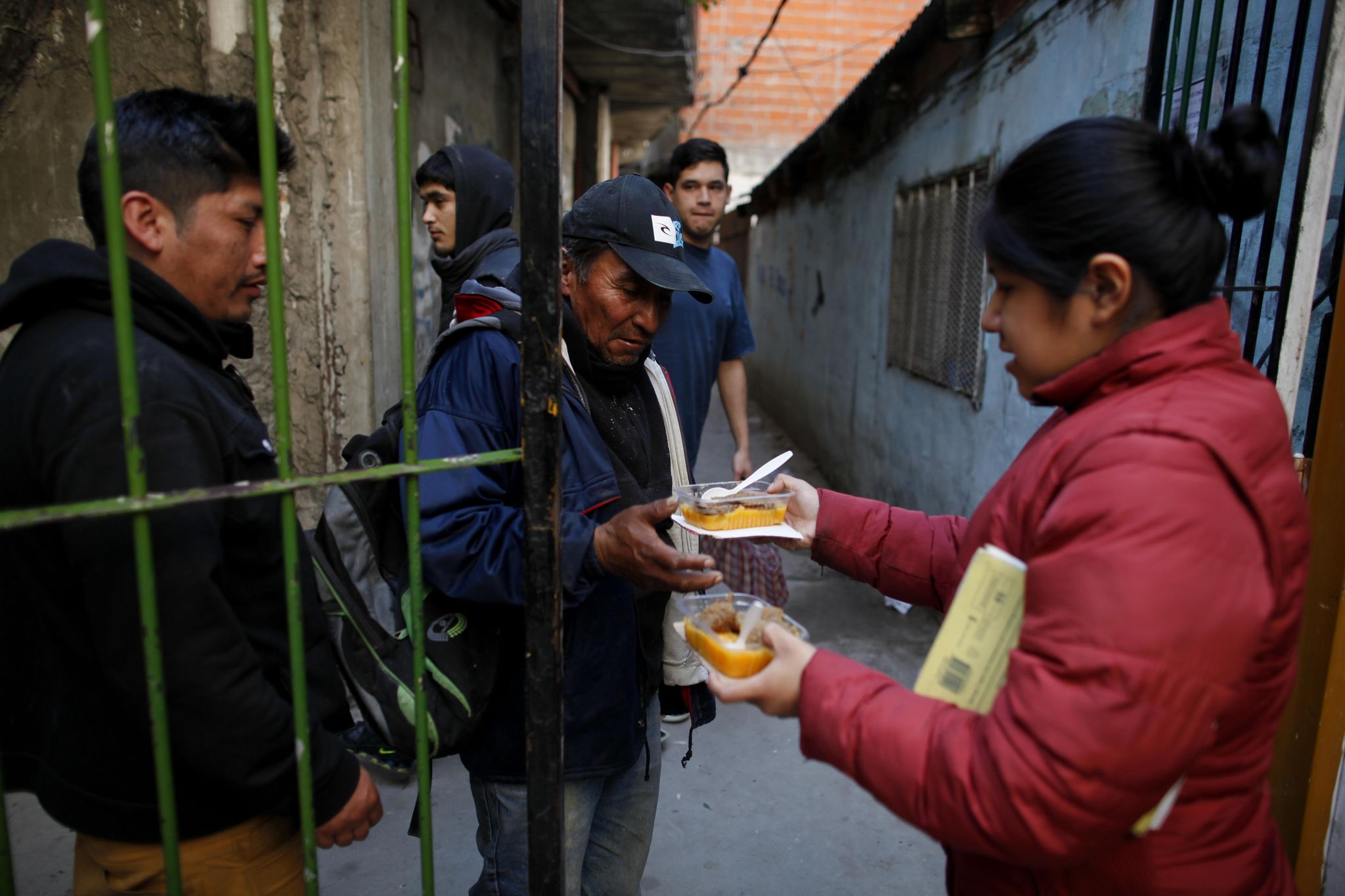
    Having emerged from one of the world’s worst currency implosions of the new century, Argentine consumers are suddenly confronting a reprise.

    BUENOS AIRES — For ordinary Argentines, it has been a shocking return to the bad old days, a deja vu of shortages, job losses and bailouts that many thought the country had finally ended.

    Facing a national election a year away, the ever-upbeat President Mauricio Macri never tires of reassuring Argentines that they are on “the right path” out of a “storm.”

    But to local economists, even those friendly to the conservative Mr. Macri’s pro-business bent, his imagery doesn’t quite capture the state of an economy predicted to shrink by 2.4 percent this year and had to be propped up just last week by an expanded $57 billion line of credit from the International Monetary Fund. Having emerged from one of the world’s worst currency implosions of the new century, consumers are suddenly confronting a reprise.

    Things aren’t nearly as dire as the post-2001 years, and a more apt metaphor, former National Bank board member Facundo Martinez Maino said, might be that of a car-wreck victim hospitalized after a head-on collision.

    “Right now, staying alive is all that matters,” said Mr. Martinez Maino, now the chief economist at a prominent local consulting firm. “You’re in a totally sterile room, under controlled temperature, and you can’t venture out or eat [without] a feeding tube.”

    It’s a grim picture reflected by key indicators — Argentina’s inflation rate is now topped around the world only by those of Venezuela, Sudan and South Sudan — and painful even for the urban middle class, a key component of Mr. Macri’s political base.

    “The situation is critical, unfortunately,” Graciela Clouet, a 66-year-old lawyer, said last week as she shopped for groceries in an upscale Buenos Aires neighborhood. “You don’t know where we’re headed, and you worry.”

    Prices are constantly being hiked, Ms. Clouet said, while the decline of the peso, which has already lost more than half its value this year, is having ripple effects on the rising cost of gasoline and consumer goods across the board.

    But what bothers her the most, she said, is the sense of uncertainty, which Mr. Macri’s repeatedly unkept promises that “the worst is over” have done little to ease.

    “I want there to be a direction … for us to go toward someplace,” Ms. Clouet said. “I feel like we’re improvising.”

    For market movers and shakers, the chaotic state of the economy has long contrasted with the president’s near-dogmatic confidence and, worse, conjured up memories of those crises past — including Argentina’s cataclysmic 2001 default and social meltdown.

    “We have gotten to a situation that, as a snapshot, is one of the worst since 2001 in terms of devaluation, inflation, recession and economic perspectives,” Mr. Martinez Maino said. “We’re in one of the worst situations since that collapse.”

    He added, though, that the two scenarios are vastly different in causes and scope.

    Fears of a rerun

    Even the sense that the country may be headed down a similar road is precisely what Mr. Macri — and anybody else interested in stabilizing the economy — is desperately hoping to avoid, said Mariano de Vedia, a political analyst for the La Nacion daily.

    “There’s an old saying here in Argentina: ‘He who burns himself with milk sees a cow and cries …,’” Mr. de Vedia said. “Already, salaries are worth less and less, layoffs are beginning to happen and the dollar heads to the skies.”

    For Argentina’s lower and middle classes, meanwhile, keeping up with ever-increasing food, utility and transportation costs is becoming increasingly difficult, economic analyst Jose Luis Espert said.

    “This year, with an inflation between 40 and 50 percent and salaries that rise between 25 and 30 percent, the real-wage drop is 15 percent,” Mr. Espert said. “Companies are closing, stores are closing, and there is a very, very violent drop in consumption.”

    For Roberto Rodriguez, who co-owns a florist shop on a lively Buenos Aires street corner, that means business has been “totally paralyzed.”

    “You notice it in the stores around,” he said. “[This is] a spot with pretty good purchasing power, and even so, we’re feeling it.”

    Mr. Rodriguez said he still plans to back Mr. Macri if he runs for re-election next year, hinting that he favors the president’s “change” agenda over the often inflexible protectionism of his predecessor, leftist Cristina Fernandez.

    Although Ms. Fernandez may have handed over a bloated government whose coffers had been emptied by populist spending and corruption, most commentators agree that, three years into his term, Mr. Macri shares a large chunk of the blame for the country’s predicament.

    By hastily eliminating currency controls, insisting on unrealistic inflation goals and taking on debt in an undisciplined and unsavvy manner, Mr. Macri committed key errors from the get-go, Mr. Martinez Maino said.

    “Today, we’re faced more with macroeconomic problems generated by this administration than with inherited problems, which we’re also faced with,” he said. “All three elements failed: diagnosis, policies and management.”

    To Mr. Espert, the president’s latest attempt to turn things around with a dual commitment to a no-deficit budget and steady money supply thanks to the expanded IMF credit line likely comes a day late and a peso short.

    “If ‘zero deficit’ and ‘zero issuance’ had been announced [in 2015], rejecting [Ms. Fernandez’s] inheritance, it would have been one thing,” he said. “Today, almost three years later … and a year before the elections, it lacks credibility.”

    If Mr. Macri really wants to turn things around, Mr. Espert said, his focus will need to be less about political calculus a year before Argentines head to the polls.

    “This administration should forget about the elections [and] take some risks today to get the economy moving by doing some bold things,” he said. “For example, go see [President] Trump and propose a free trade agreement.”

    Ironically, the troubling economy may have boxed in the ruling Cambiemos coalition, even though Mr. Macri has yet to formally announce that he will be seeking a second term, Mr. de Vedia said.

    “The situation is forcing them to ratify the president’s re-election [bid],” he said, “because, otherwise, it’s a recognition of his failure.”

    If a showdown next year between Mr. Macri and Ms. Fernandez takes place in the midst of a recession, the political analysts mused, then the outcome would be unpredictable.

    “People could easily say ‘no’ to the administration and also say ‘no’ to Cristina,” Mr. de Vedia said. “It’s not necessarily one or the other.”

  • Mike Pompeo: North Korea talks progress

    Secretary of State Mike Pompeo on Sunday trumpeted progress in U.S.-North Korean relations on a slew of issues, from efforts to persuade Pyongyang to abandon nuclear weapons to closing in on details f

    Secretary of State Mike Pompeo on Sunday trumpeted progress in U.S.-North Korean relations on a slew of issues, from efforts to persuade Pyongyang to abandon nuclear weapons to closing in on details for a second Trump-Kim Jong-un summit.

    Mr. Pompeo arrived in Seoul hours after wrapping up his fourth visit to North Korea on Sunday, telling reporters it was a “good trip” and that he and Mr. Kim made strides on the initiatives discussed at June’s historic summit in Singapore between the North Korean leader and President Trump.

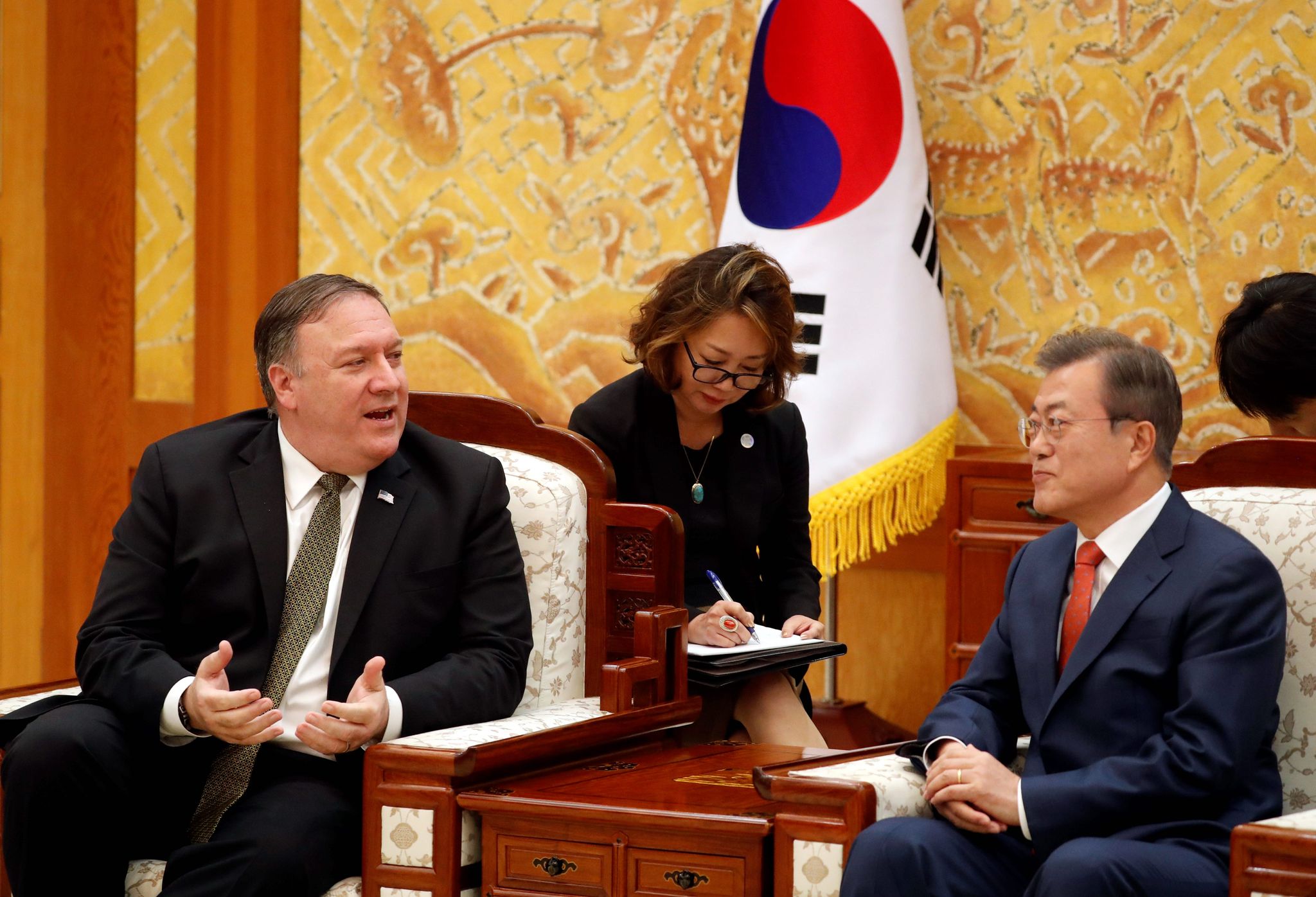
    “We had a good, productive conversation,” Mr. Pompeo said during a joint briefing with South Korean President Moon Jae-in. “As President Trump said, there are many steps along the way, and we took one of them today. It was another step forward. So this is, I think, a good outcome for all of us.”

    According to Associated Press reports, Mr. Kim echoed Mr. Pompeo’s optimism. “It’s a very nice day that promises a good future for both countries,” Mr. Kim said as he, Mr. Pompeo and their respective entourages met for a 90-minute working lunch at the Paekhwawon State Guest House in the North Korean capital.

    Prior to the lunch, Mr. Kim and Mr. Pompeo held closed-door talks for roughly 3 hours. Stephen Biegun, U.S. special envoy for North Korea, and Andrew Kim, head of the Korea working group at the CIA, attended as part of the U.S. delegation. Mr. Kim was accompanied by his sister, Kim Yo-jong, and Kim Yong-chol, the North’s former top intelligence official and the main conduit for talks between the regime and Mr. Pompeo.

    Despite the goodwill expressed by both sides, neither Mr. Pompeo nor Mr. Kim opted to disclose details. During the joint press conference in Seoul, Mr. Moon attempted to press Mr. Pompeo to shed a little light on Sunday’s talks.

    “Since we have the media present here, I would like to ask you to disclose anything that you can open to the public here,” Mr. Moon said. Mr. Pompeo politely declined, telling the South Korean leader, “I don’t have much to add but we had a good, productive conversation.”

    White House critics argue that Mr. Kim and the regime in the North have leveraged Mr. Trump’s efforts to engage with Pyongyang to earn legitimacy in the international community while harboring no real intention to follow through on major U.S. initiatives, such as denuclearization on the Korean Peninsula.

    However, administration officials argue that Mr. Trump has broken through decades of diplomatic impasses that have stymied previous efforts to establish ties with Pyongyang. But officials have acknowledged the road to reconciliation for North Korea, the U.S. and the international community remains long.

    Bilateral talks between North Korea and Washington faltered recently, and Mr. Trump canceled an earlier round of meetings. Sunday’s talks marked the first breakthrough in that impasse since Singapore.

    Mr. Pompeo’s visit to North Korea was “better than the last time [but] it’s going to be a long haul” to get Mr. Kim to acquiesce to Washington’s demands, a U.S. official tied to Mr. Pompeo’s delegation told Fox News on Sunday.

    While details were scarce on Sunday’s meeting, U.S. officials said the visit focused on the nuts and bolts of the denuclearization process, proffered by the Trump administration in June, as well as the diplomatic parameters for a proposed second summit between Mr. Trump and Mr. Kim.

    In Washington, Mr. Trump indicated his willingness to hold a second face-to-face summit with the North Korean leader.

    “I look forward to seeing Chairman Kim again, in the near future,” Mr. Trump tweeted Sunday, citing the progress he and Mr. Kim made in Singapore, just as Mr. Pompeo was wrapping up his visit in Pyongyang.

    Analysts in the U.S. were upbeat but cautious.

    “While there is no way Secretary of State Mike Pompeo in roughly 210 minutes with Chairman Kim Jong-un achieved any major breakthroughs Sunday, [he] may have achieved his goal nonetheless: exploring the timing and possible locations for a second U.S.-North Korea summit,” said Harry Kazianis, head of defense studies at the Washington-based Center for the National Interest.

    Mr. Trump’s willingness to secure a second summit with North Korea could lead to an offer to officially end the Korean War, Mr. Kazianis said, in exchange “for a big action towards denuclearization.”

    “Trump will likely be tempted to hold such a summit quickly, and possibly even in the North Korean capital of Pyongyang, to make history and drive headlines, pointing to another success right before the midterm elections,” he said.

    The administration has resisted efforts to officially end the war between North and South Korea — the two countries are technically under a 1953 cease-fire agreement — out of concern that a peace deal would increase pressure on the U.S. to remove troops from South Korea.

    But Mr. Moon and Mr. Kim have pushed for the end-of-war declaration by December. Mr. Moon has argued that he and Mr. Kim have agreed that such a “political declaration” wouldn’t require the pullout of 28,500 U.S. troops stationed in South Korea.

  • Mike Pompeo seeks allied unity in dealing with North Korea

    America’s top diplomat left Tokyo for Pyongyang on Sunday after pledging that the U.S. will coordinate with allies Japan and South Korea on efforts to persuade North Korea to give up its nuclear weapo

    TOKYO (AP) — America’s top diplomat left Tokyo for Pyongyang on Sunday after pledging that the U.S. will coordinate with allies Japan and South Korea on efforts to persuade North Korea to give up its nuclear weapons.

    On the eve of his fourth visit to North Korea, U.S. Secretary of State Mike Pompeo met Saturday with Japanese Prime Minister Shinzo Abe to try to unify the countries’ positions as he looks to arrange a second summit between President Donald Trump and North Korean leader Kim Jong-un and chart a path toward denuclearization.

    Japan has been wary of Trump’s initiative, fearing it could affect its long-standing security relationship with the U.S.

    Pompeo said it was important to hear from the Japanese leader “so we have a fully coordinated and unified view.” Pompeo also pledged that during his meeting with Kim on Sunday, he would raise the cases of Japanese citizens abducted by North Korea.

    Pompeo later planned stops in South Korea and China to review the negotiations.

    “It is important for us to hear from you as I travel to Pyongyang to make sure that we are fully in sync with respect to missile programs, (chemical and biological weapons) programs,” Pompeo told Abe. “We will bring up the issue of the abductees as well and then we will share with you how we hope to proceed when we are in Pyongyang tomorrow.”

    Trump is pressing to meet with Kim for a second time after their June summit in Singapore produced a vague agreement on denuclearization with few, if any, specifics. Despite the historic meeting, the two sides are deadlocked over how to achieve that goal. Trump canceled Pompeo’s initial planned return to North Korea last month.

    In contrast with South Korea, where President Moon Jae-in has been at the forefront of encouraging Trump’s rapprochement with the North, Japan has been decidedly cautious, insisting its interests and concerns be addressed.

    Abe did not speak of differences but highlighted the importance of demonstrating to the world that the U.S.-Japan alliance is “more robust than ever” and stressing the importance of “thorough coordination” with Washington on all aspects of North Korea policy.

    Pompeo has repeatedly refused to discuss details of negotiations, including a U.S. position on North Korea’s demand for a declared end to the Korean War and a proposal from Seoul for such a declaration to be accompanied by a shutdown of the North’s main known nuclear facility.

    The U.S. and Japan have pushed for the North to compile and turn over a detailed list of its nuclear sites to be dismantled as a next step in the process; the North has rejected that.

    Japan’s foreign minister, Taro Kano, said the accounting continues to be a priority for his country.

    “Disclosing all nuclear inventories is the first step toward denuclearization,” he told reporters after Pompeo wrapped up his meeting in Tokyo.

    Kono also said he and Pompeo didn’t go into details of a possible war-end declaration because it’s premature while there is virtually no progress in denuclearization. “We are not even talking about whether to do it or not,” he said. “It’s not an issue that we are even considering.”

    Many believe such a declaration could reinforce North Korea’s demands for the U.S. to withdraw its forces from South Korea and Japan.

    While traveling to Asia, Pompeo said his mission was to “make sure that we understand what each side is truly trying to achieve … and how we can deliver against the commitments that were made” in Singapore. He said they would develop options, if not finalize, the location and timing of a second Trump-Kim summit.

    He has also distanced himself from an earlier stated goal of achieving North Korea’s nuclear weapons abandonment by the end of Trump’s term in January 2021.

    Since the effort got underway with a secret visit to the North by then-CIA chief Pompeo in April, there has been only limited progress.

    North Korea so far has suspended nuclear and missile tests, freed three American prisoners and dismantled parts of a missile engine facility and tunnel entrances at a nuclear test site. It has not taken any steps to halt nuclear weapons or missile development.

    The North also has accused Washington of making “unilateral and gangster-like” demands on denuclearization and insisted that sanctions should be lifted before any progress in nuclear talks. U.S. officials have thus far said sanctions will remain in place until the North’s denuclearization is fully verified.

    ___

    AP Diplomatic Writer Matthew Lee in Seoul, South Korea, contributed to this report.

  • Russia readying election observers to monitor U.S. midterms

    Russian election officials are headed to the United States to prepare for monitoring next month’s midterms, a former member of Moscow’s Central Election Commission said Friday.

    Russian election officials are headed to the United States to prepare for monitoring next month’s midterms, a former member of Moscow’s Central Election Commission said Friday.

    Members of Russia’s federal elections agency will travel to the U.S. on Sunday in order to monitor the upcoming midterms as part of a mission being organized by the Organization for Security and Cooperation in Europe, or OSCE, an intergovernmental group that lists both nations among its member states, said Vasily Likhachev, a former member of CEC.

    The team of six Russians, including “two CEC members … and representatives of Russian civic organizations related to the field of electoral technologies,” will spend five weeks in the U.S. participating in the mission, Mr. Likhachev told TASS, a state-run newswire.

    “These six people were chosen based on the criteria developed together with the U.S.,” said Mr. Likhachev, and their participation is based on both OSCE regulations and the United Nation’s principles of cooperation, he told the outlet

    “There is not much positive in Russian-U.S. relations at the moment, but this is a positive thing that will help improve relations. Our citizens will abide by the OSCE rules and U.S. laws,” he added.

    The mission is a part of by OSCE’s Office for Democratic Institutions and Human Rights, or ODIHR, a Poland-based division of the group that has monitored elections in the U.S. since 2002, and led by Tana de Zulueta, a former member of the Italian Parliament, the group said earlier this week.

    Thirteen international experts will be stationed in Washington, D.C., and 36 long-term observers from 16 participating states will be deployed throughout the country in teams of two, OSCE said Wednesday.

    Russia interfered in the 2016 U.S. election by deploying state-sponsored computer hackers, propagandists and professional internet trolls, and Moscow similarly stands to meddle in next month’s midterms, U.S. officials said previously.

    Indeed, several alleged Russian military officers criminally charged earlier this year by the U.S. Department of Justice in connection with interfering in the 2016 race were accused of new hacking crimes Thursday related to an international cyber-espionage spree that was active as recently as May 2018.

    Russia has repeatedly denied hacking U.S. victims or interfering in the 2016 race.

  • Treasury warns U.S. banks to watch for corrupt cash from Nicaragua

    The U.S. has ratcheted up the pressure on Nicaragua’s leftist government for its crackdown on political opponents, with Treasury Department officials warning American banks to be wary of corrupt offic

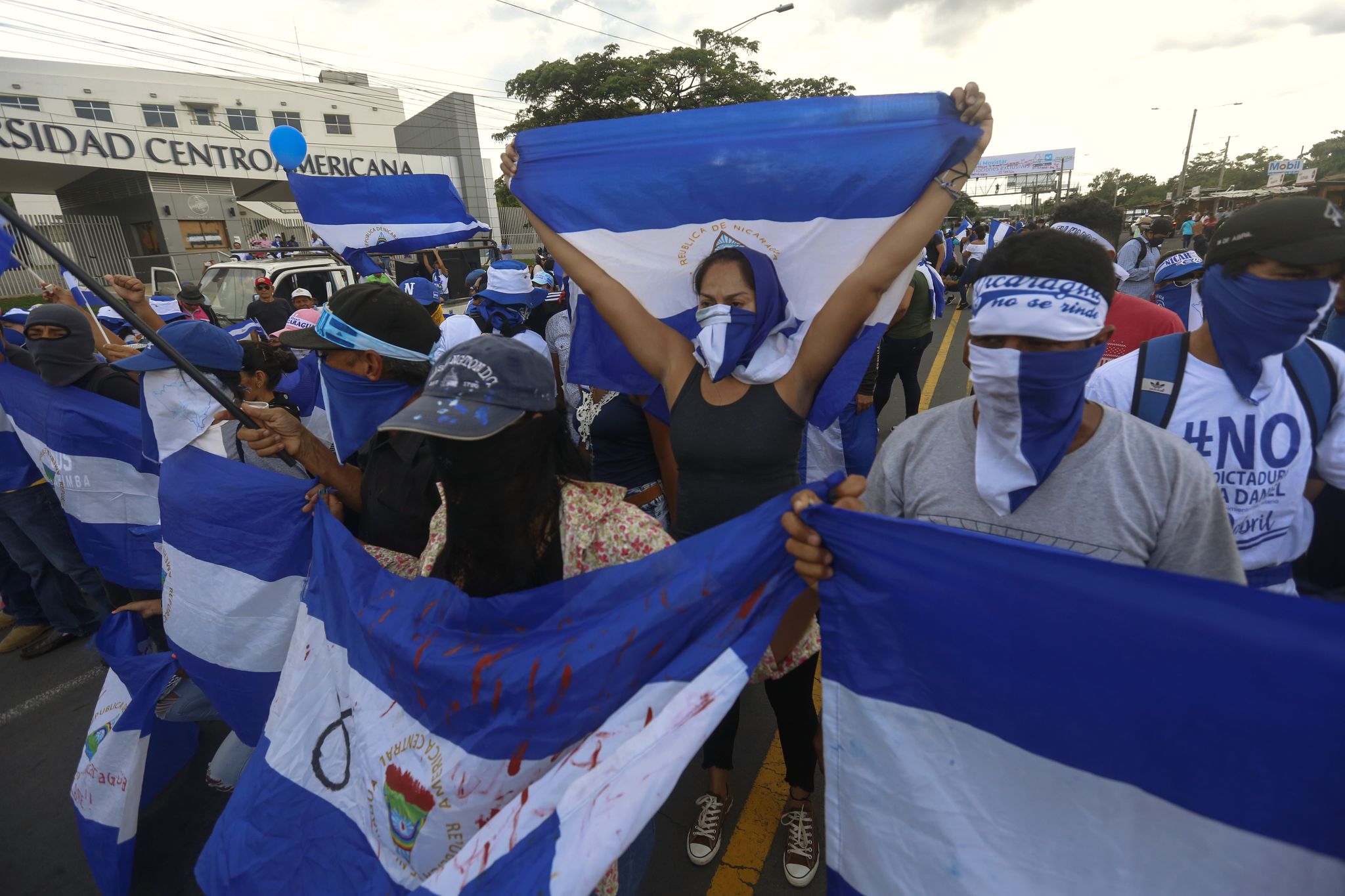
    The U.S. has ratcheted up the pressure on Nicaragua’s leftist government for its crackdown on political opponents, with Treasury Department officials warning American banks to be wary of corrupt officials moving cash from the embattled Central American country into the U.S. financial system.

    Specifically, Treasury’s Financial Crimes Enforcement Network (FinCEN) has advised financial institutions to watch for senior members of President Daniel Ortega’s government or people acting on their behalf illegally transferring assets to the U.S..

    “Given the oppressive and corrupt conduct of the Ortega regime and resulting unrest in Nicaragua, people and companies associated with or linked to the Ortega regime may try to move corruption-related assets out of Nicaragua,” FinCEN Director Kenneth A. Blanco said in the press release Thursday.

    “U.S. financial institutions are an important line of defense against corrupt and bloodstained money flowing through our system, and we are advising our partners in the financial sector to be on high alert,” Mr. Blanco said.

    Mr. Ortega, a former Marxist guerrilla leader, has lost control over most of the country since April when peaceful demonstrations morphed into a revolt against his government and its allies, with more than 300 reported dead in clashes since then.

    The Trump administration has already levied sanctions against three allies of Mr. Ortega, targeting them in July for alleged human-rights abuses and corruption. A fourth official was blacklisted by Treasury for allegedly amassing huge wealth while earning a meager government salary.

  • Meng Hongwei, Interpol president, reported missing after trip to China

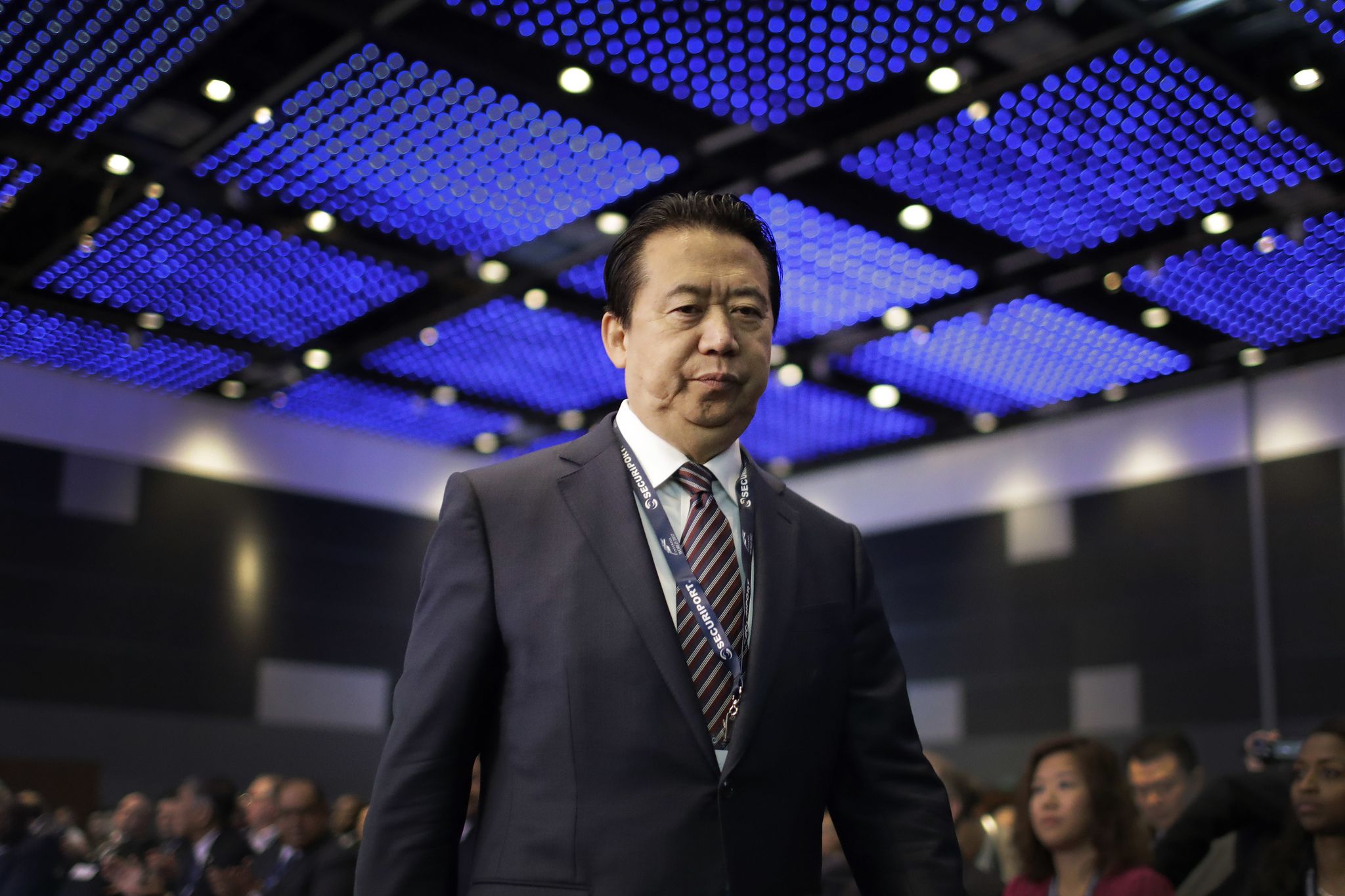
    A French judicial official says the president of Interpol has been reported missing after traveling to China.

    PARIS (AP) — A French judicial official says the president of Interpol has been reported missing after traveling to China.

    The official, who spoke on condition of anonymity for an ongoing investigation, said Meng Hongwei’s wife reported him missing on Friday.

    The official said the Interpol chief left France, where the international police organization is based, and arrived in China at the end of September. She said there had been no news of him since.

    The 64-year-old Meng Hongwei was elected president of Interpol in November 2016. His term is due to run until 2020.

    A vice minister of public security in China, he previously served as vice chairman of the national narcotics control commission and director of the National Counter-Terrorism Office for China.

  • India has signed a $5 billion deal to buy Russian S-400s

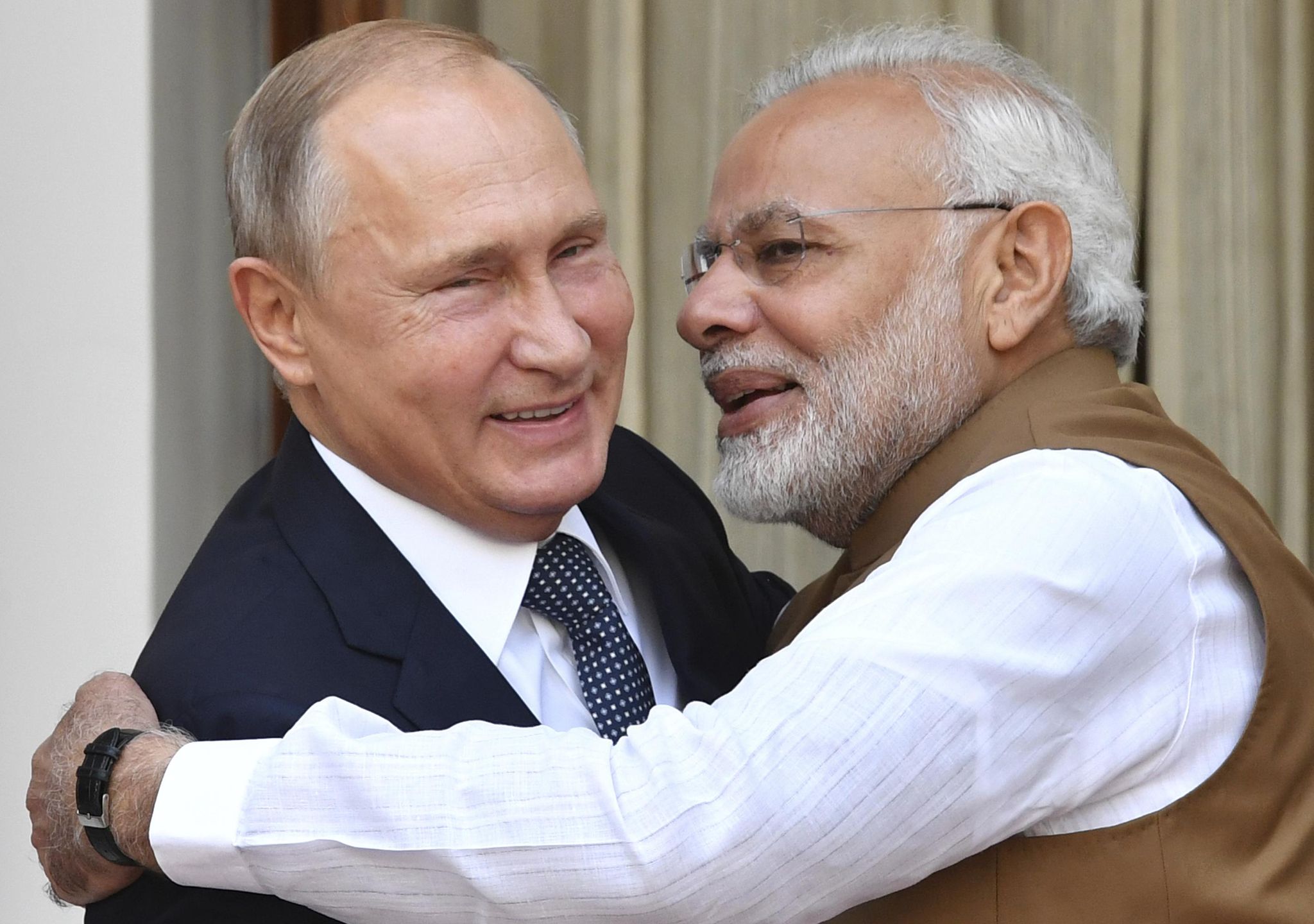
    India has signed a $5 billion deal to buy five Russian S-400 air defense systems despite a looming threat of U.S. sanctions on countries that trade with Russia’s defense and intelligence sectors.

    NEW DELHI (AP) — India has signed a $5 billion deal to buy five Russian S-400 air defense systems despite a looming threat of U.S. sanctions on countries that trade with Russia’s defense and intelligence sectors.

    Russian President Vladimir Putin and India’s Prime Minister Narendra Modi signed the deal in New Delhi on Friday and discussed nuclear energy, space exploration and economics.

    India has requested a waiver from U.S. sanctions intended to punish Russia for its annexation of Crimea and alleged interference in the 2016 US elections.

    The U.S. did not spare China from sanctions last month for purchasing Russian S-400 surface-to-air missile systems and fighter jets.

    Officials confirmed the deal was signed after Putin and Modi made no reference to it during a news conference following their talks.

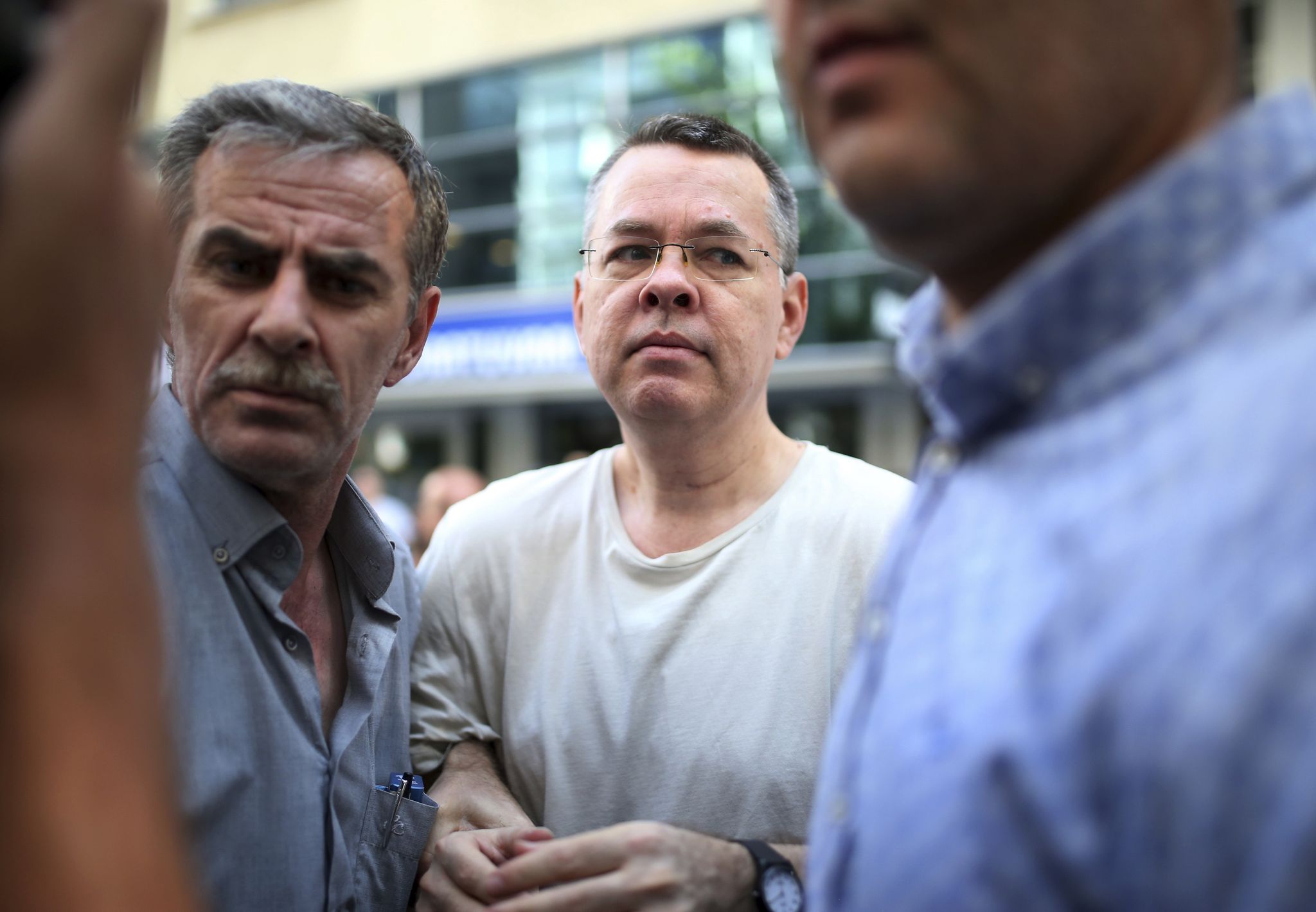
  • Andrew Brunson’s lawyer filed an appeal to Turkey’s highest court

    Andrew Brunson’s lawyer filed an appeal on Wednesday to Turkey’s highest national court requesting his client be released from house arrest, Reuters reported.

    Andrew Brunson’s lawyer filed an appeal on Wednesday to Turkey’s highest court requesting his client be released from house arrest, Reuters reported.

    Mr. Brunson’s next court date is on October 12th, and he’s been under arrest for over a year.

    The American evangelical pastor’s plight has sparked a tense economic relationship between two NATO allies, with the U.S. slapping sanctions on top Turkish officials in response to the arrest.

    Mr. Brunson was arrested on terrorism charges after the Turkish government accused him of being involved with the attempted coup in 2016, but the U.S. denies the accusation.

    The Trump administration has repeatedly called for Mr. Brunson’s release.

    A total disgrace that Turkey will not release a respected U.S. Pastor, Andrew Brunson, from prison. He has been held hostage far too long. @RT_Erdogan should do something to free this wonderful Christian husband & father. He has done nothing wrong, and his family needs him!

    — Donald J. Trump (@realDonaldTrump) July 19, 2018