Video Michelle on Barack, parents and the varsity run
Tag: travel
-
UK driving licence ‘may not be valid in EU’ after no-deal Brexit
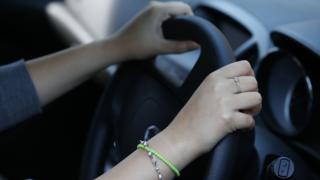 Image copyright Jonathan Brady
UK drivers may have to get an international driving permit if they want to drive in European countries after a no-deal Brexit.
The government says that after March 2019 “your driving licence may no longer be valid by itself” in the EU, in its latest no-deal planning papers.
It also warns that Britons travelling to the EU may need to make sure their passports have six months left to run.
International permits cost £5.50 and are available at some post offices.
The cabinet met earlier for a “no deal” planning session. Brexit Secretary Dominic Raab told the BBC that the government was aiming to get a Brexit deal with Brussels by mid-November at the latest but was stepping up contingency planning in case that did not happen.
After the meeting, ministers published the latest series of papers outlining the work it has done to prepare.
While UK driving licences are currently valid in the EU, the papers say if no deal is reached, an international driving permit may be required – as it is currently to drive in Japan, some US states and other countries.
There are two types of permit, depending on which EU state you are driving in. The government says the current process for getting one type of permit over the counter at the 90 post offices it is available at “takes around five minutes on a turn-up-and-go basis”.
It says it will start providing both types permits itself from February and applications will be made at 2,500 post offices across the UK.
-
Prime Minister’s Questions: The key bits and the verdict
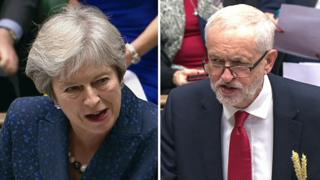 Image copyright HoC
Theresa May went head-to-head with Jeremy Corbyn in the House of Commons. Here’s what happened.
Passions were running high in the Commons at the final Prime Minister’s Questions before the party conference season gets under way.
But Jeremy Corbyn began in a low-key way, with a riddle designed to knock Theresa May off balance.
What did the National Farmers’ Union, the Federation of Small Businesses, the National Audit Office, the National Housing Federation, Gingerbread and the Royal Society of Arts all have in common, he asked.
A grinning Mrs May was momentarily flummoxed, perhaps thinking he was trying to lay a Brexit trap for her.

All MPs were aware of the “pain” Universal Credit was causing from people at their advice surgeries, said Mr Corbyn. Did she agree with the National Audit Office that it would create hardship, force more people to use food banks and “could end up costing the system even more”.
Mrs May said she remembered from years back a constituent, a single mother, who had been told by the job centre that she would be “better off on benefits”. That was the last Labour government’s legacy, she told him.
The Labour leader accused the government of putting vulnerable people at risk with its benefit changes, something immediately denied by the PM.
It was Labour that was “speaking up for the poorest in this country”, shouted a visibly angry Mr Corbyn amid a growing wall of noise from MPs on all sides.
“The government’s Brexit negotiations are an abject failure – I can see that by the sullen faces behind her, and that’s not just the ERG group it’s the whole lot of them,” he cried.
“The prime minister is not challenging the burning injustices in our society. She is pouring petrol on them. When will she stop inflicting misery on the people of this country?”
Mrs May launched into a full-throated defence of her own record on “burning injustice” such as the government’s “racial disparity audit” and a crackdown on stop and search (“that was me as home secretary”).
Then, knowing that Mr Corbyn would not get a comeback, she laid into Labour’s recent internal troubles, ending with a quote from Labour MP Chuka Umunna, who had claimed his party was “institutionally racist”. This left Conservative MPs baying loudly for “more”.
What else came up?
The SNP’s leader at Westminster, Ian Blackford, called on the PM to “end her austerity programme or admit that her party is unfit to govern”.
Skip Twitter post 3 by @BBCPolitics“The PM is unfit to govern, she is incapable of leadership” – Leader of SNP at Westminster Ian Blackford highlights anniversary of #FinancialCrisis saying “people are poorer” and could suffer if there is a no deal #Brexit https://t.co/QUP3a2ywxi #PMQs pic.twitter.com/t4RZYGDMfb
— BBC Politics (@BBCPolitics) September 12, 2018
ReportEnd of Twitter post 3 by @BBCPolitics
The Verdict
Here is BBC Political Editor Laura Kuenssberg’s take on the session:
Skip Twitter post 4 by @BBCPolitics“By the end of their exchanges, Theresa May looked absolutely furious, just as Jeremy Corbyn had done in his last question to her” @bbclaurak on #pmqs#politicslive https://t.co/qOzgoqYVDb pic.twitter.com/vJqqZgBivE
— BBC Politics (@BBCPolitics) September 12, 2018
ReportEnd of Twitter post 4 by @BBCPolitics
BBC parliamentary correspondent Mark D’Arcy’s verdict:
Well that was nasty. Shouty, a bit more personal and very, very loud. This finger-jabbing, heckle-heavy PMQs demonstrated the rising political temperature in Parliament.
Pre-prepared attack lines were deployed and the respective parties howled their delight, but no-one was trounced, or even bruised in the encounters between the main players.
It was telling that, either from herd instinct or conscious organisation, there was quite an effort to provide the PM with helpful questions which allowed her to pivot to good news stories. One way or another loyalist Tories are coming to their leader’s assistance.
Maybe the hyper-partisan atmosphere deterred any MPs from the various rebel factions on the Tory and Labour benches from breaking ranks.
The most telling moment came when former Army officer Jonny Mercer raised the continuing historic investigations into military veterans over allegations dating from the Iraq war or the Northern Ireland troubles.
Mr Mercer has irritated Downing Street with his continuing parliamentary campaign on this issue, and on veterans’ mental health, which stretch back to his maiden speech in 2015 – and here he was again with a critical question to the PM.
Her answer using terms like “flawed” and “disproportionate” seemed to hint at a softening of the Government’s position, and Mr Mercer’s frown in response suggests he will be following up to pin down exactly what she might mean.
-
Why doesn’t Australia have an indigenous treaty?
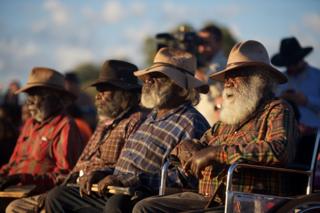 Image copyright Jimmy Widders Hunt Image caption Mutitjulu elders gather at Uluru for a historic summit this week
The future of Australia’s relationship with its indigenous peoples could be significantly influenced by a meeting at Uluru this week. It will discuss changing the constitution, but may also include support for a treaty. Australia does not have one, unlike many nations, reports Trevor Marshallsea.
In 1832, the governor of Van Diemen’s Land reflected ruefully on his colonial administration’s chaotic – and bloody – relationship with the island’s indigenous population.
Amid a period of great conflict between white colonists and Aborigines known as the Black War, Governor George Arthur said it was “a fatal error” a treaty had not been entered into with the Aboriginal people of what’s now the Australian state of Tasmania, after white settlement had commenced some 30 years earlier.
The absence of a treaty was cited by Mr Arthur as a crucial and aggravating factor in relations with the first inhabitants of the island, the scene of some of the worst treatment inflicted on Aborigines by British colonists.
Almost 200 years later, Australia remains the only Commonwealth country to have never signed a treaty with its indigenous people. While treaties were established early on in other British dominions such as New Zealand, Canada and in the United States, the situation in Australia has been, often notoriously, different.
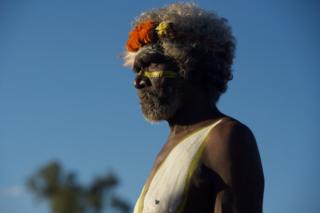 Image copyright Jimmy Widders Hunt Image caption An Arnhem Land community leader at the opening ceremony of the First Nations Convention
 In 1988, then Prime Minister Bob Hawke was presented with “the Barunga Statement”, named after an Aboriginal community. Written on bark, it called for a treaty. The cause had been thrust forcefully into the public consciousness in the late 1980s in various ways. One was rock band Midnight Oil’s 1987 hit “Beds Are Burning”, which implored white Australia to “pay the rent, to pay our share”. Part-Aboriginal band Yothu Yindi had an international hit with “Treaty” a few years later.
On receiving the Barunga Statement, which he had hung on a wall in Canberra’s Parliament House, Mr Hawke vowed there would be a treaty by 1990.
In 1992, Prime Minister Paul Keating made a now-famous speech in the Aboriginal-centric Sydney suburb of Redfern, addressing harsh truths about the often brutal and murderous “dispossessing” of the country’s traditional owners.
A year later came the watershed Native Title act, which threw out the historical view that Australia before European settlement in 1788 essentially belonged to no-one.
And in 2008 Prime Minister Kevin Rudd delivered a long-awaited apology to Australia’s indigenous peoples, for policies that had inflicted suffering on them.
Despite these words, acts and gestures, there is still no treaty. Also, there remain contentious sections of the nation’s constitution which are race-based, although two significant others were removed in the 1967 referendum.
Section 25 still says states can disqualify people from voting in elections on account of their race. Section 51 (xxvi) empowers the government to legislate for “the people of any race for whom it is deemed necessary to make special laws”.
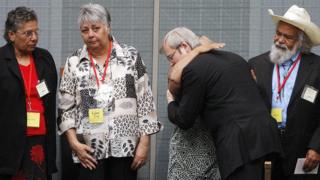 Image copyright Getty Images Image caption Kevin Rudd hugs members of the Stolen Generations after his apology speech in 2008
 This week, marking the referendum’s 50th anniversary, an Aboriginal leaders’ summit at Uluru (formerly Ayers Rock) is hopeful of reaching consensus on whether – and how – the constitution should be changed. But some delegations are expected to make statements about the need for a treaty, and financial compensation.
The meeting will also shine a light on white Australia’s troubled, and peculiar, historical attitude to the country’s first inhabitants.
Australia’s distinct problem, historians say, took root from reports delivered back in England by the first white men to land on the east coast in 1770.
“Captain James Cook and (botanist) Joseph Banks reported the Aborigines were few in number and were just wandering around the place,” says University of Sydney history professor Mark McKenna.
Aboriginal leaders meet for historic talks Australia ‘failing’ on indigenous lives The people and history of the Torres Strait Islands
“The perception was they had no recognisable agricultural system, and they were basically savages.”
Thus when Admiral Arthur Phillip led the first fleet to begin the colony of New South Wales in 1788, Mr McKenna says, “there was no expectation any treaty with the locals would have to be signed. The way Australia was settled was in fact quite extraordinary.”
Tasmanian Aboriginal writer and activist Michael Mansell told the BBC the English were deceived by their perceptions of Australian indigenous culture, including that they lived in small groups, by contrast to the large and seemingly more organised tribes of North America.
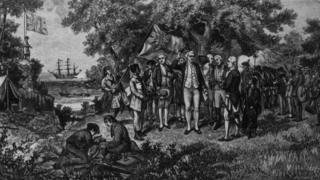 Image copyright Getty Images Image caption The views of the first white visitors left a problematic legacy, historians say
 “To them, the Australian Aborigines didn’t display any of the trappings of a so-called noble culture,” Mr Mansell says.
“They weren’t riding horses like the native North Americans. They didn’t have permanent dwellings. It was harder to discern who their leaders were. So they were regarded as a vulgar and backward people who could be treated as the invaders liked.
“In 1840 colonial officials in New Zealand were sitting down with the Maoris to sign the Treaty of Waitangi. At the same time in Australia, Aborigines were being hunted down, shot and slaughtered.
“All of this fostered a deeply entrenched cultural bias against Aboriginal people which, ever since, has been very hard to shake, both in attitudes and in a substantive way.”
While provision was made for indigenous people in Canada’s constitution in 1867, Mr Mansell points out that “the only mention of Aborigines in Australia’s constitution of 1901 was to exclude us”.
At that time, Australia’s first prime minister, Edmund Barton, said race-based clauses in the constitution allowed his government to “regulate the affairs of the people of coloured or inferior races who are in the Commonwealth”.
Little changed in attitudes in the ensuing years. This, Mr Mansell says, was partly due to a widespread belief that the Aboriginal race would simply die out, and be bred in amongst the European community, and because of the country’s so-called “White Australia” policy on immigration. Existing in various forms from 1901 until 1973, the policy, though aimed at immigrants, did little to promote acceptance and cultural sensitivity.
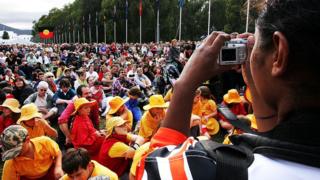 Image copyright Getty Images Image caption A crowd watches the apology to the Stolen Generations in 2008
 While the 1980s and early 1990s brought attitudinal change, the plight of Aborigines was set back, Mr McKenna and Mr Mansell agree, under the conservative John Howard government of 1996-2007.
Contrasting Mr Keating’s Redfern Speech, Mr Howard said he would not take a “black armband” view of Australia’s history on Aboriginal relations.
In 2000 he said a country “does not make a treaty with itself”. And in 2004 he announced the abolition of the peak government body handling indigenous issues, the Aboriginal and Torres Strait Islander Commission (ATSIC), following corruption investigations.
“John Howard shut the Aboriginal movement down completely,” Mr Mansell says. “ATSIC had its problems, but it was a sound moral concept. There’s been plenty of crooked MPs, but they don’t shut down parliament.”
Still, despite Australia’s troubled past on indigenous matters, and fears from government and business on the implications of a treaty, of financial compensation, or of official recognition of Aboriginal sovereignty over Australian lands, Mr Mansell is “very optimistic” substantive change can be sparked by this week’s summit.
“What we need is a clear plan capable of being adopted by governments which will not interfere with the rest of Australia but will give empowerment to Aborigines, and give land back to those who can’t get it under the Native Title Act,” Mr Mansell said.
With Australia’s constitution difficult to change, many agree a more pressing need is the establishment of a national representative body allowing Aborigines to make their own decisions on matters affecting them, rather than have decisions forced on them from Canberra.
“A treaty would break the 200-year-old cycle of governments not negotiating with the Aboriginal people,” says Mr McKenna, adding it would provide a framework for how negotiations are held on indigenous issues such as welfare, employment, education, health and land ownership.
“It would say ‘we’re no longer just going to do things to them’, but that they’re included and empowered.”
-
China arrests over Tang Dynasty relic thefts
 Image copyright AFP Symbol caption Historic relics had been stolen from a Tang Dynasty burial web site, Chinese Language police say
Chinese police have arrested 26 other people suspected of stealing relics from an historical burial web site.
The gang allegedly seized virtually 650 gadgets, including gold and silver cutlery and jewelry, from the Dulan Tombs, which lie at the historical Silk Road in northwest China.
The stolen pieces date again to the 7th Century, the Chinese Language Ministry of Public Safety mentioned in a statement.
The suspects allegedly attempted to sell them for approximately $11m (£7.8m).
The items were mentioned to had been illegally excavated from the tombs, situated within the north-western province of Qinghai.
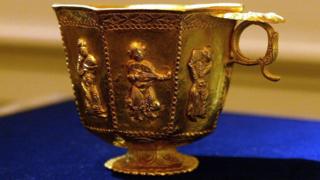 Image copyright AFP Image caption The Tang dynasty is famous for its gold and silver ware
 Silk, gold, silver, bronze ware and other pieces have been unearthed at the tombs, of which there are greater than 2,000, because 1982.
Experts consider that lots of the items are of huge ancient value as they display cultural exchanges and interactions among East and West throughout the early Tang Dynasty (618-907).
Following the arrests, police will increase their crackdown on cultural relics crimes to higher offer protection to the country’s cultural history, the Chinese Language govt mentioned.

you can also also be fascinated about:
China’s quest to rebuild the Silk Street Cheese discovered in Historic Egypt tomb How a espresso in LA sparked a diplomatic row
-
costliest town for expats discovered
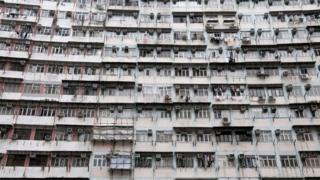 Symbol copyright Getty Images Symbol caption Hong Kong has a few of probably the most crowded housing on the planet
Hong Kong is back in best spot as essentially the most expensive town to live in the global as an expat, according to research.
The town of skyscrapers had dropped to 2nd place final year behind Luanda, the capital of Angola.
But it now heads the Asia-dominated checklist once more, according to the 24th annual cost of dwelling survey performed by advisory firm Mercer.
The survey covers prices starting from housing and clothes to bread and beer.
It examines the fee of TWO HUNDRED items in each and every area, including lodging, shipping, garments, meals and entertainment, evaluating prices comparable to a cinema price ticket, a pair of denims, a litre of water, a cup of espresso, a litre of petrol and a litre of milk.
Mercer defines expatriates, also known as assignees, as employees of an company who’re assigned to work in a unique united states than her or his authentic us of a of employment for a certain period of time.
In this yr’s ratings, Tokyo is the second one costliest city followed via Zurich and Singapore, with Seoul in 5th. this means that four out of five of the world’s most expensive towns for expatriates are actually in Asia, consistent with the survey.
The most sensible 10 is completed, in order, by Luanda, Shanghai, N’Djamena, Beijing and Bern.
The international’s most cost-effective city for expats is Tashkent, sitting in 209th place within the Mercer checklist, beneath Tunis and Bishkek.
 Media playback is unsupported for your instrument
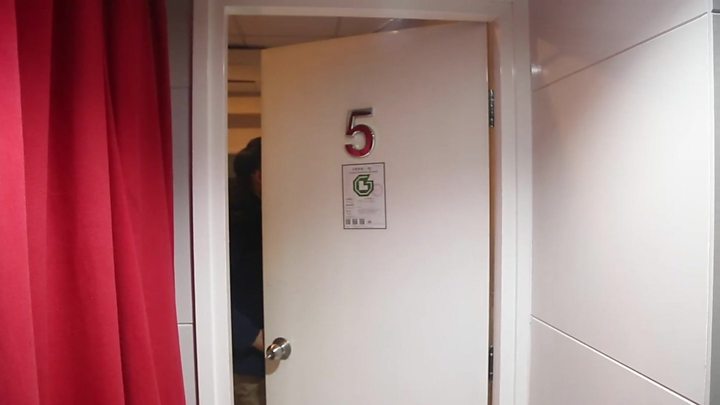
Media captionNo space for love in Hong Kong
Mercer makes use of The Big Apple as its benchmark for comparing the prices of residing in different cities, and measures foreign money movements in opposition to the us buck.
As a consequence, the renewed energy of the pound towards the greenback led to London emerging 10 puts to 19th at the list.
Also in the UK, Birmingham went up 19 places from last yr to 128th and Belfast climbed 18 spots to 152nd. Aberdeen rose by means of 12 puts to 134th.
Western Ecu cities have all risen in the ranking typically owing to currency actions against the dollar to boot as inflation. Frankfurt (68th) and Berlin (71st) climbed by way of FORTY NINE puts and Munich (57th) rose through 41.
Different towns that rose considerably included Paris (thirty fourth), up 28 puts from ultimate year, Rome (46th), up 34 spots, Madrid (64th), up via FORTY SEVEN places, and Vienna (thirty ninth) up by means of 39 spots. Moscow (seventeenth), St. Petersburg (forty ninth), and Kiev (173rd) all dropped down the checklist.
-
town ranked because the most habitable within the global
 Image copyright Getty Photographs
Austrian capital, Vienna, has crushed Australia’s Melbourne to be named the world’s such a lot habitable city.
It’s the primary time a eu city has topped the scores of the Economist Intelligence Unit annual world survey.
the worldwide league table ranks A HUNDRED AND FORTY towns on a range of things, including political and social stability, crime, education and access to healthcare.
In the survey, Manchester noticed the largest improvement of any European town, rising via SIXTEEN places to rank thirty fifth.
Manchester’s upward push puts it sooner than London in the rankings by THIRTEEN places, the widest hole between the two cities since the survey started two decades in the past.
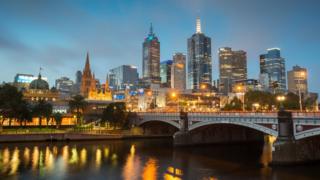 Symbol copyright Getty Photographs Symbol caption Melbourne had up to now come top for seven years operating
 in keeping with the survey, just about 1/2 the towns have noticed their liveability score fortify over the previous 12 months.
Melbourne, which used to be ranked 2d on this 12 months’s international scores, had prior to now come top for seven years operating.
different Australian cities also made this yr’s top ten: Sydney and Adelaide.
at the other finish of the scale, struggle-torn Damascus in Syria was ranked the least liveable city, carefully followed through Dhaka in Bangladesh and Lagos in Nigeria.
The Economist stated that crime, civil unrest, terrorism or war performed a “sturdy position” in the ten-lowest scoring cities.
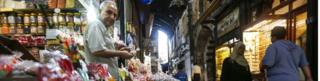 Image copyright Getty Pictures
 The 10 such a lot liveable cities in 2018
1. Vienna, Austria
2. Melbourne, Australia
3. Osaka, Japan
4. Calgary, Canada
5. Sydney, Australia
6. Vancouver, Canada
7. Tokyo, Japan
8. Toronto, Canada
9. Copenhagen, Denmark
10. Adelaide, Australia
The Ten least habitable towns 2018
1. Damascus, Syria
2. Dhaka, Bangladesh
3. Lagos, Nigeria
4. Karachi, Pakistan
5. Port Moresby, Papua New Guinea
6. Harare, Zimbabwe
7. Tripoli, Libya
8. Douala, Cameroon
9. Algiers, Algeria
10. Dakar, Senegal
-
In photos: Australia’s drought observed from the air
Parts of jap Australia are struggling their worst drought in dwelling reminiscence as a lack of rainfall in iciness hits farms badly.
Reuters photographer David Gray captured the view of the dried earth from the air, finding a regularly surprising collage of colours.
 Image copyright Reuters
 A lone tree is the one signal of lifestyles near a water trough on a farm out of doors Walgett in New South Wales. Farm proprietor May McKeown mentioned she had no longer noticed a lot rain considering the fact that 2010.
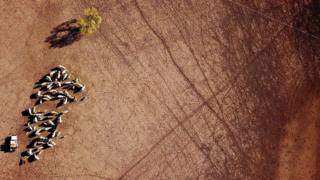 Image copyright Reuters
 Approximately NINETY EIGHT% of recent South Wales is drought-bothered, and -thirds of neighbouring Queensland. As a consequence, farmers are having to reserve in food for their cattle, which increases their prices significantly.
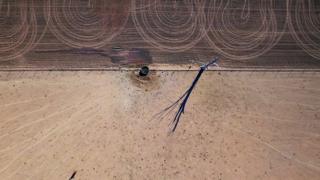 Image copyright Reuters
 A cow walks clear of a water tank in Tamworth, New South Wales. “I cant appear to give you the chance to do anything else except for simply feed, and stay things going,” farmer Tom Wollaston stated. “The drought turns out to be one step ahead of me all the time.”
 Symbol copyright Reuters
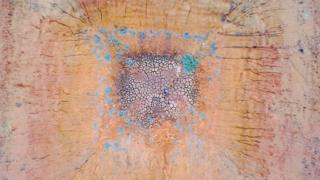
 A dried-up dam near Gunnedah in New South Wales. The government’s aid for drought-hit farmers has now crowned A$1bn (£564m; $738m). “I’VE been here all my existence, and this drought is feeling adore it will be round some time,” farmer Ash Whitney mentioned.
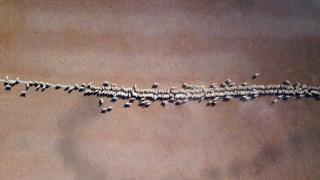 Image copyright Reuters
 Sheep eat grain outdoor Tamworth. Govt assist comprises funding against higher psychological health services and products for struggling farmers.
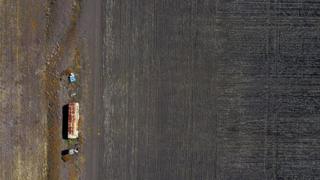 Symbol copyright Reuters
 Portions of Australia noticed the second one warmest summer time on record among December and February, and the country as a complete noticed its driest July for the reason that 2002.
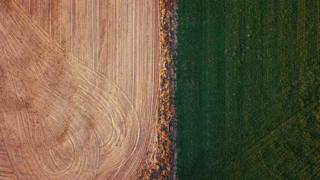 Image copyright Reuters
 An irrigated paddock next to 1 that has not been watered. about a quarter of Australia’s agricultural output comes from New South Wales, so the drought has hit the trade specifically arduous.
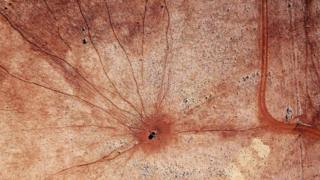 Image copyright Reuters
 Whilst traveling the worst-hit areas in June, PM Malcolm Turnbull said there was a transparent hyperlink to climate modification. “i do not recognize many people in rural New South Wales that I check with that don’t assume the climate is getting drier and rainfall is turning into more risky.”
All interviews by way of Reuters
-
Lombok earthquake: 543 hikers evacuated from Mt Rinjani
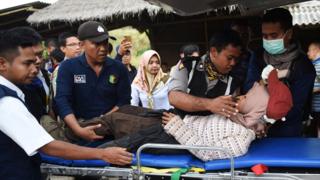 Image copyright Reuters Image caption Some hikers wanted clinical remedy
Crisis company spokesman Sutopo Purwo Nugroho advised AFP that 543 people had arrived again at the foot of the mountain via Monday night.
I Gusti Lanang Wiswananda, a spokesman for Mataram seek and rescue company, informed AFP that they had been all “tired however in good condition”.
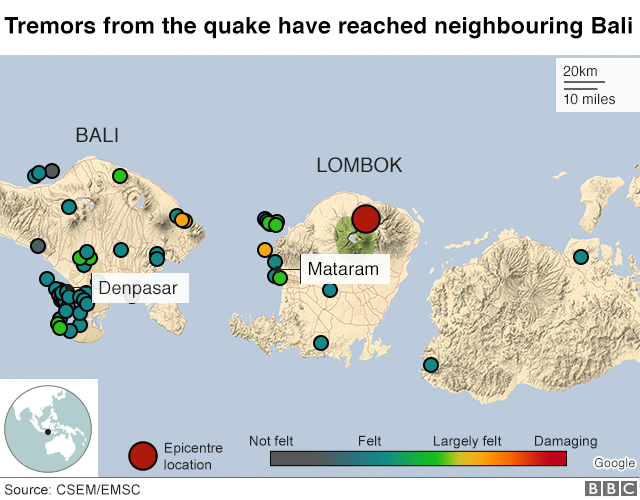
Hundreds of people in Lombok had been left homeless and are staying in temporary camps amid proceeding aftershocks.
Indonesia is at risk of earthquakes as it lies at the Ring of fireplace – the line of common quakes and volcanic eruptions that circles nearly all the Pacific rim.
-
Malaria professionals fear disease’s resurgence
 Image copyright Technology Photograph Library
For the first time in 10 years, world malaria cases aren’t any longer falling, sparking considerations a few resurgence of the too often deadly illness.
Professionals, and philanthropist Bill Gates, are urging u . s . leaders collecting at the Commonwealth summit in London to pledge more cash to combat the illness.
In 2016, nearly half the world’s population was once in danger of malaria.
There have been 216 million instances of malaria in 91 countries, an increase of 5 million when compared with 2015.
Without more funding and preventive action, lets see much more malaria and emerging deaths, mavens warn.
Malaria circumstances were increasing in some portions of the Americas, South-East Asia, Western Pacific and Africa, although in many different regions infections are strong or happening.
‘Drugs prevent working’
Speaking on the These Days programme, on Radio 4, Bill Gates mentioned the mosquitoes had began adapting however the function used to be still to chop circumstances in half.
“If we stand still, the pesticides we use forestall running, the medication stop working because the parasite itself evolves around that, so that is a game where you are either falling in the back of or getting ahead.”
He mentioned that with new cash, better surveillance and “great scientists” working on the way to combat the illness, there has been wish.
“This kills hundreds of thousands of kids in Africa so except we make massive growth here we won’t be doing what we owe Africa,” Mr Gates stated.
‘Malaria killed my daughter, I Am protective others now’
Part of the problem is that the mosquitoes and parasites that cause and spread malaria are developing resistance to the weapons we use to fight them – insecticides and antimalarial medication.
New remedies are at the horizon.
the primary malaria vaccine, Mosquirix, will likely be used to protect babies in decided on spaces of three African countries, that is home to 90% of malaria circumstances and 91% of malaria deaths.
But tendencies take time and cash – and world funding to battle malaria has plateaued.
a new commitment to halve malaria cases over the next five years may store 650,000 lives around the Commonwealth, according to mavens.
Ending malaria
The UNITED KINGDOM govt has said it’s going to invest £500m a 12 months for the next 3 years to assist struggle malaria. The Bill & Melinda Gates Foundation will extend its investments in malaria by way of an extra $1bn (£700m) through to 2023.
Prime Minister Theresa May said: “The process is not yet done. Today there are hundreds of thousands still at risk, economies held back and a child’s lifestyles needlessly taken each and every two mins from this illness. that is why i’m championing a new Commonwealth dedication to halve malaria across member international locations by means of 2023.”
James Whiting, from Malaria No More UK, said: “The malaria campaign is at a crossroads.
“it is a disease that has almost definitely killed extra people than any in history.
“Malaria isn’t something that stands nonetheless.”