Tag: Social Issues

  • Texas shooting renews debate about American school design

    Just hours after the nation’s latest school shooting, the debate began anew: Are American schools built in a way that makes them easy targets? Are there too many windows, too many entrances and exits

    Just hours after the nation’s latest school shooting, the debate began anew: Are American schools built in a way that makes them easy targets? Are there too many windows, too many entrances and exits and too few security features?

    The questions expose yet another divide, with Second Amendment activists and some security experts calling for safer school designs and some gun-control advocates saying it’s a distracting side issue that avoids more meaningful action.

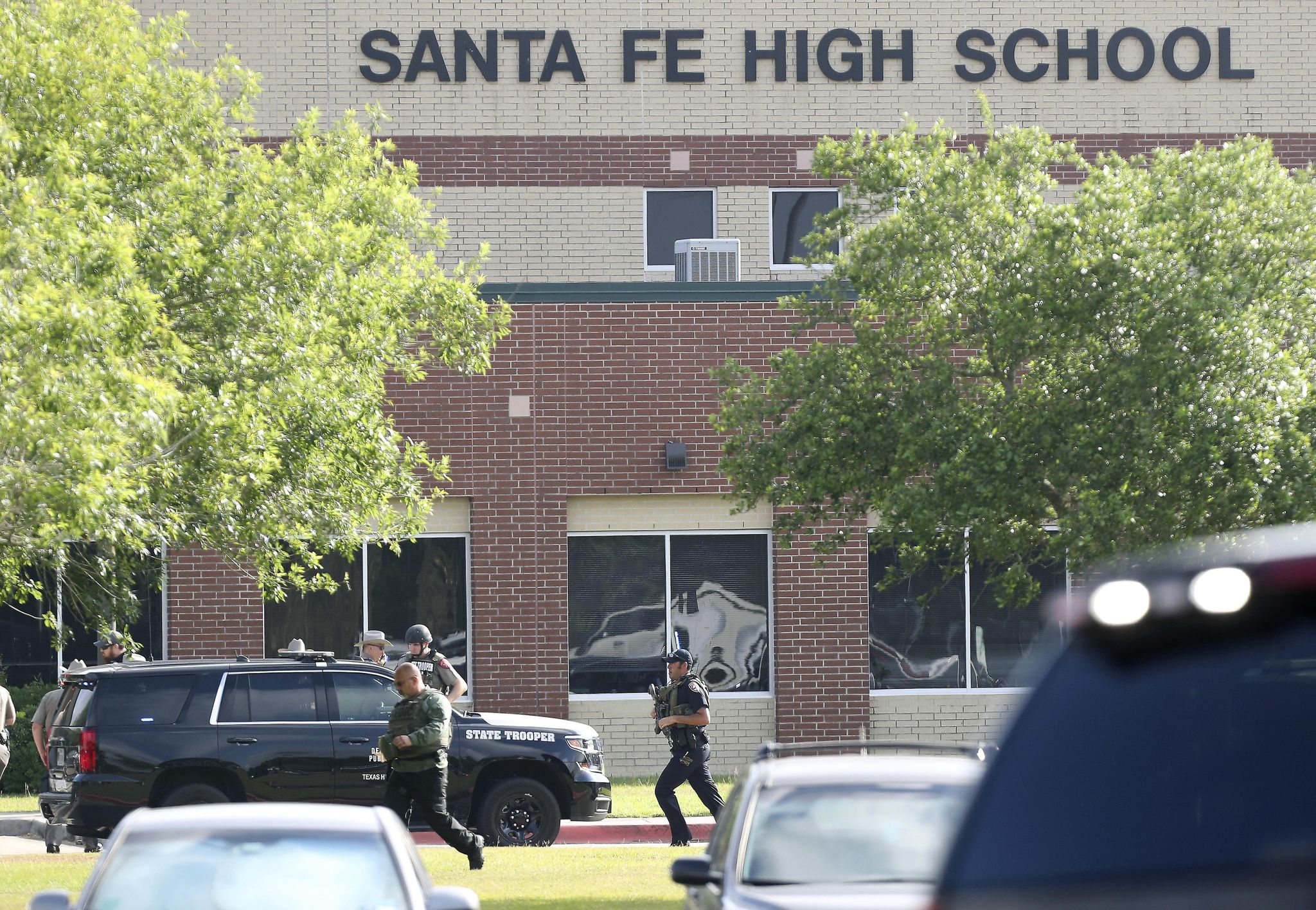
    The debate began after the 1999 mass shooting at Columbine High School in Colorado and gained more attention in the aftermath of the 2012 shooting at Sandy Hook Elementary School in Newtown, Connecticut. On Friday, in the hours after a student shot and killed 10 people at a high school in Santa Fe, Texas, the state’s lieutenant governor suggested again that it was time to examine school layouts.

    “There are too many entrances and too many exits to our over 8,000 campuses in Texas,” Lt. Gov. Dan Patrick said, explaining that those points can’t all be guarded.

    Gun-rights activists, led by the National Rifle Association, have pushed for a “hardening” of schools, including training and arming educators and even keeping shrubbery and landscaping farther away from school buildings so there are fewer blocked viewpoints. Reducing the number of entrances is considered another way to prevent shooters from getting inside undetected.

    According to a report last year in Education Week, a trade publication, the average age of an American school is 44 years with major renovations dating back more than a decade. Older buildings were designed without today’s worries of active shooters and terrorism.

    They have lots of “nooks and crannies,” isolated areas that are difficult to supervise, as well as old hardware on classroom doors and main offices that aren’t located near the main entrance. Other problems include old public-address systems and no telephones in classrooms, said Kenneth Trump, president of the National School Safety and Security Services, a Cleveland-based consulting firm.

    When it comes to designing schools, educational considerations create some natural tension with security needs. Studying in places with lots of light, for example, is thought to improve learning. That was the philosophy behind one school constructed just last year with floor-to-ceiling windows, Trump said. But those same windows could make students and staff easy targets for a gunman.

    He agrees that a large number of entrances can make a school vulnerable. More doors bring a greater risk that someone will prop one open or that mechanical issues will prevent a door from being closed or locked. It’s also harder to monitor who is coming and going.

    And even if a front entrance is fortified with security systems, there are usually other ways in, such as the cafeteria where food deliveries are made or the gym.

    Still, Trump said, no amount of architectural planning or design will replace mental health treatment, emergency drills and training and the ability to identify potential school shooters ahead of time.

    It’s simplistic to think that layouts and building features alone will make schools safer, he said, and politically expedient to tout only architectural design and construction.

    Focusing solely on exits and entrances can create a host of other issues, cautioned Gregory Shaffer, a security consultant and retired FBI agent.

    Having metal detectors at the entrance creates long lines, which means schools have to start earlier and hire more staff to screen students. “And if you have long lines going into the school, that makes it a target as well. That is a shooter’s ideal location,” he said.

    For gun-control advocates, it’s galling to focus on structural issues. They see frequent school shootings as evidence of the nation’s unwillingness to take other steps to stop gun violence.

    “I often find that the discussion of how to do it is really a smoke screen,” said David Chipman, formerly of the Bureau of Alcohol, Tobacco, Firearms and Explosives and now a senior policy adviser with the gun safety organization founded by former Rep. Gabby Giffords, who was gravely wounded in a shooting in 2012. “How to do it isn’t really the issue. It’s do we want to do it and are we willing to pay the money.”

    After the 9/11 terror attacks, the United States took steps to secure government and public buildings – from airports to concert halls. It’s routine now to go through a metal detector before entering. Yet those same steps aren’t common in public schools, making them, he said, more dangerous than prisons.

    “There are some places that we’ve decided as a nation that we will not allow violence to ever occur,” Chipman said. “But school is not one of them yet.”

  • Donald Trump stands by calling MS-13 ‘animals’

    President Trump said Friday that he was referring to MS-13 gang members as “animals” and not illegal immigrants as a whole in comments he made earlier this week.

    President Trump said Friday that he was referring to MS-13 gang members as “animals” and not illegal immigrants as a whole in comments he made earlier this week.

    “Fake News Media had me calling Immigrants, or Illegal Immigrants, ‘Animals.’ Wrong! They were begrudgingly forced to withdraw their stories. I referred to MS 13 Gang Members as ‘Animals,’ a big difference – and so true. Fake News got it purposely wrong, as usual!” Mr. Trumptweeted.

    The comments were in response to a sheriff who mentioned MS-13 to which the president responded, “These aren’t people, these are animals.”

    Democrats quickly jumped on the remarks with immigration groups calling Mr. Trump a “racist.”

    Fake News Media had me calling Immigrants, or Illegal Immigrants, “Animals.” Wrong! They were begrudgingly forced to withdraw their stories. I referred to MS 13 Gang Members as “Animals,” a big difference – and so true. Fake News got it purposely wrong, as usual!

    — Donald J. Trump (@realDonaldTrump) May 18, 2018

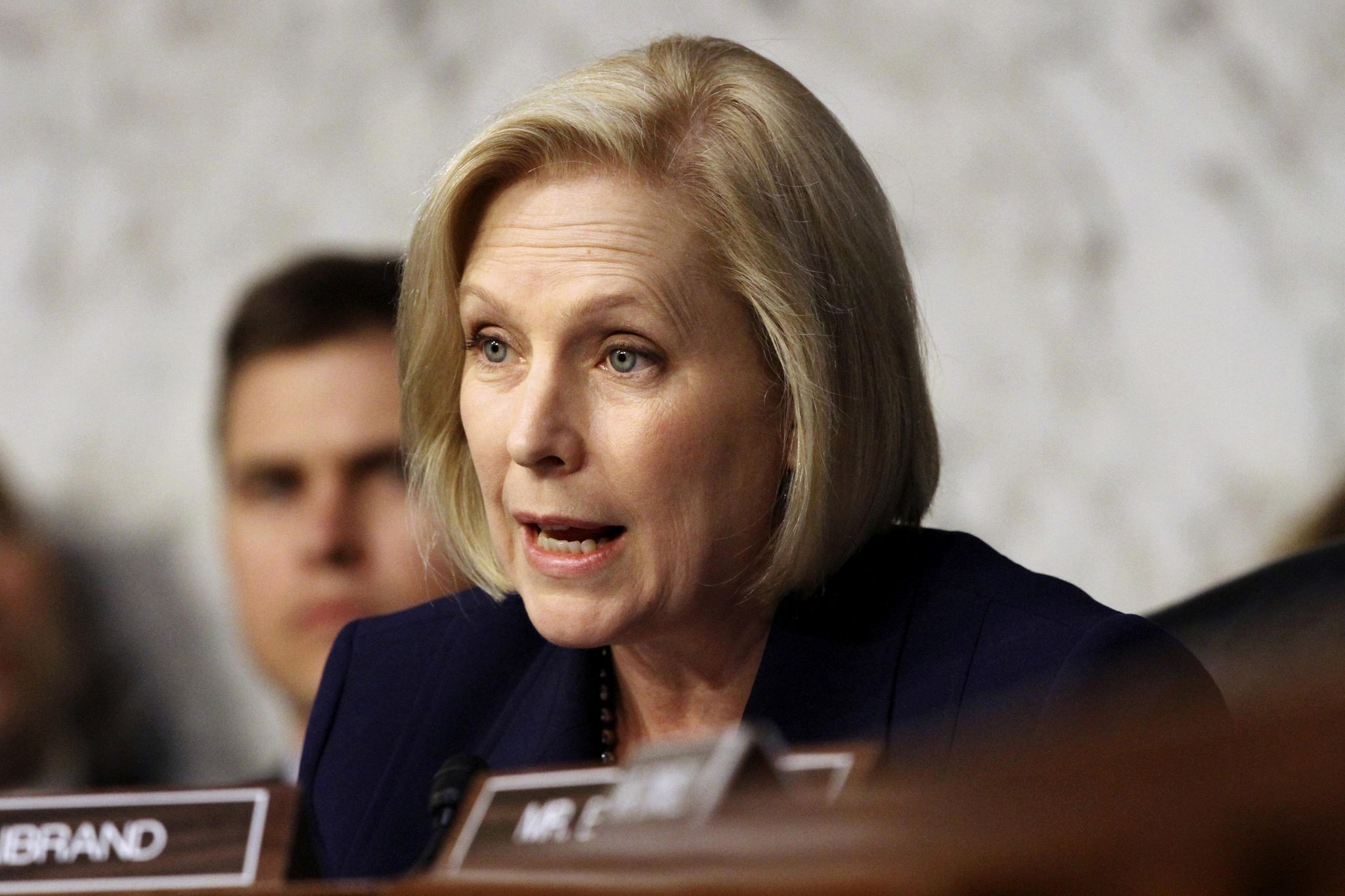
  • Kirsten Gillibrand: New abortion restriction should ‘enrage’ the public

    Sen. Kristen Gillibrand said Friday that President Trump’s proposal to restrict family planning groups from providing abortions in the same establishments as federally funded grants is an attack on wo

    Sen. Kristen Gillibrand said Friday that President Trump’s proposal to restrict family planning groups from providing abortions in the same establishments as federally funded grants is an attack on women’s rights.

    “I think this is an issue that should enrage the American public, particularly women, because it’s an attack on them,” Ms. Gillibrand, New York Democrat, said on CNN.

    The administration is expected to introduce the proposal on Friday. The Hyde Amendment currently prohibits groups like Planned Parenthood from using federal funds for abortions. These groups currently use federal funds for other health services and use private funds for abortions, but do not always have separate facilities for each service, which the new proposal would require. 

    “It’s really important that this is something we fight,” Ms. Gillibrand said, adding that this is an issue that will drive people to the ballot box.

  • House votes down $868 billion farm bill

    The House on Friday voted down Republicans’ $868 billion farm bill, dealing GOP leaders a notable defeat after negotiations over a separate immigration issue hit an impasse.

    The House on Friday voted down Republicans’ $868 billion farm bill, dealing GOP leaders a notable defeat after negotiations over a separate immigration issue hit an impasse.

    Conservative Republicans said they couldn’t support the bill without assurances they’d get a speedy vote on an enforcement-heavy immigration bill as well. When leaders were unable to meet their demands, a number of the conservatives, plus some moderates, voted against the farm bill, joining Democrats to defeat the measure, 213-198.

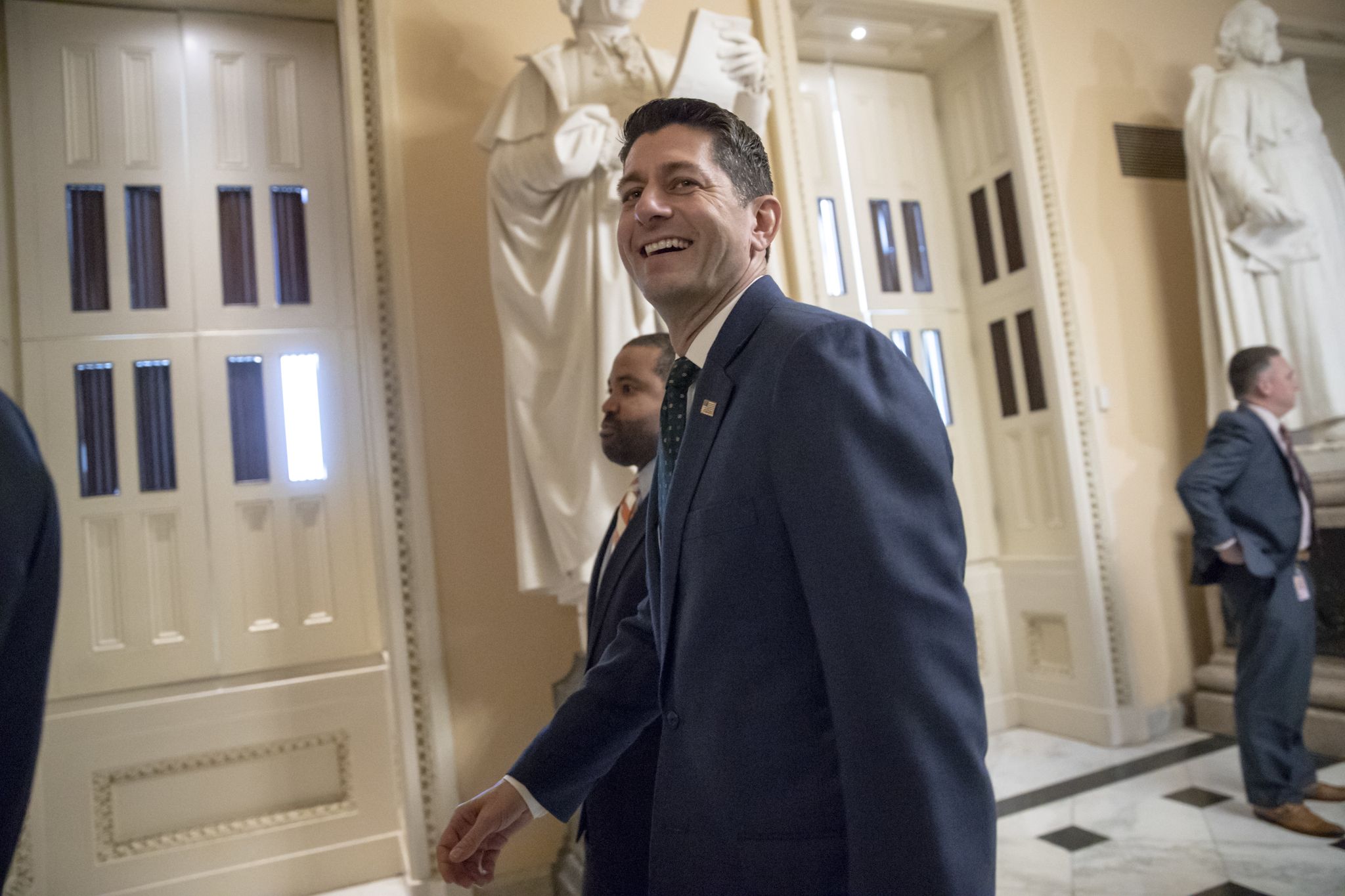
    It marked a significant blow to House Speaker Paul D. Ryan, who’d made several personal pitches for the legislation as part of his pro-work, anti-poverty agenda.

    Mr. Ryan, Majority Leader Kevin McCarthy and Whip Steve Scalise feverishly worked the chamber floor Friday morning hoping to salvage a victory, to no avail.

    Agriculture Committee Chairman Mike Conaway described the vote as a “setback.”

    “We may be down, but we are not out,” said Mr. Conaway, Texas Republican. “We will deliver a strong, new farm bill on time as the president of the United States has called on us to do. Our nation’s farmers and ranchers and rural America deserve nothing less.”

    Rep. Scott Perry of Pennsylvania said GOP leaders took a gamble and lost, but that he’s ready to move onto immigration and then get back to the farm bill.

    “They rolled the dice,” said Mr. Perry, one of 30 Republican “no” votes on the bill. “Look, I get it. I don’t begrudge them that, but these are the pitfalls with rolling the dice.”

    After the bill’s defeat, Mr. Ryan entered a motion that could allow for a do-over vote later, though it’s not clear when that would happen or whether he will be able to strike a deal that wins over conservatives.

    Rep. Mark Meadows, chairman of the House Freedom Caucus, which was pushing for the immigration vote, said he hopes to continue negotiations on immigration going forward.

    “Anytime a bill goes down, I don’t know that you could look at it necessarily as successful,” said Mr. Meadows, North Carolina Republican. “As much as it is, it’s where we are right now and hopefully we’ll get a farm bill in the very near future.”

    The conservatives want to see the House take up a bill sponsored by Rep. Robert Goodlatte, which would crack down on sanctuary cities, speed up deportations, and extend the Obama-era DACA program with no special pathway to citizenship for illegal immigrant “Dreamers” brought into the country as children.

    Those negotiations were taking place amid the backdrop of a petition drive from moderate Republicans and Democrats to pass a bill with more generous protections for the Dreamers, but without the enforcement provisions favored by conservatives and President Trump.

    Republican leaders said they wanted to give conservatives a vote on the Goodlatte bill, even though it would likely fail, but that they wanted to press forward first on the farm bill, which is a top priority for Mr. Ryan.

    Still, not all of the Republican opposition came from hardline conservatives.

    Rep. Leonard Lance, New Jersey Republican, called the bill “fiscally irresponsible” and said it didn’t do enough to help local farmers.

    “A more fiscally responsible farm bill with stronger and fairer reforms would have earned my support,” Mr. Lance said.

    The farm bill would reauthorize federal crop subsidies, agricultural supports and government food programs through 2023. The current bill is due to expire at the end of September, giving lawmakers time to regroup and try again.

    The farm bill typically unites a broad swath of Congress, but Republicans ended up having to negotiate with their own members after Democrats pledged to oppose the bill over new work requirements for food stamp recipients.

    No Democrats voted for the bill.

    “Republicans wrote a cruel, destructive farm bill that abandoned farmers and producers amid plummeting farm prices and the self-inflicted damage of President Trump’s trade brinkmanship,” said House Minority Leader Nancy Pelosi.

    Mrs. Pelosi said Republicans should now come to the table and negotiate “in good faith” with Democrats.

  • Trump proposes changes to Title X funding, targeting Planned Parenthood

    The Trump administration proposed rules Friday that create a firewall between federal funds for family planning and abortion services, effectively targeting Planned Parenthood.

    The Trump administration proposed rules Friday that create a firewall between federal funds for family planning and abortion services, effectively targeting Planned Parenthood.

    The Health and Human Services Department sent its proposed rule to the White House to kick-start the regulatory process, which could take months, without offering many details.

    Yet Capitol Hill lawmakers and advocates say the proposed rule change to Title X — a $260 million federal program for contraception and other services — revives a Reagan-era interpretation of the 1970 law that bars clinics from referring patients to abortion services.

    It also says clinics that perform abortions under the same roof as other family planning services should not receive Title X money. That means Planned Parenthood, the nation’s largest abortion provider and a frequent target for Republicans, would have to rearrange its operations or risk being carved out of the program.

    Federal funding cannot be used for abortion, though Title X grants assist low-income Americans in getting things such as birth control and other reproductive health services.

    Mr. Trump’s conservative base has railed against any public funding for Planned Parenthood, saying money is fungible, so taxpayers are propping up the abortion side of their business.

    The White House said Friday night that the move fulfills Mr. Trump’s promise “to continue to improve women’s health and ensure that federal funds are not used to fund the abortion industry in violation of the law.”

    “This important proposal would ensure compliance with the program’s existing statutory prohibition on funding programs in which abortion is a method of family planning,” the White House said. “The new proposed rule would not cut funds from the Title X program. Instead, it would ensure that taxpayers do not indirectly fund abortions.”

    Congressional Republicans cheered Mr. Trump’s proposal, saying it’s important to put keep taxpayers out of the abortion business.

    “There are plenty of health care providers, such as community and rural health centers, that provide the family planning needs of women and will be better stewards of the people’s tax dollars,” Rep. Robert B. Aderholt, Alabama Republican, said.

    From the other side, Planned Parenthood said the proposal “takes away people’s access to health care and infringes on women’s right to safe, legal abortion.”

    Its Democratic allies, meanwhile, called it a “gag rule” that will harm needy women and limit their health care choices.

    Planned Parenthood provides contraception services for an estimated 40 percent of the 4 million covered by Title X. Many of them don’t have a backup, Democrats say, so cutting it out of Title X will leave them in the lurch.

    “With this decision, President Trump is standing right between millions of American women and their doctors,” said Senate Minority Leader Charles E. Schumer.

    Pro-life groups such as the Susan B. Anthony List said there is no “gag rule” — the rule would still allow clinics to counsel women on abortion, just not require them to offer the counseling or refer them for the procedure.

    — Dave Boyer contributed to this report.

  • Top GOP gubernatorial candidates focus on vision in debate

    Idaho’s top Republican candidates for governor gave voters three distinct options to choose from Monday during their second televised debate, which included plenty of jabs at each other’s campaign tac

    BOISE, Idaho (AP) – Idaho’s top Republican candidates for governor gave voters three distinct options to choose from Monday during their second televised debate, which included plenty of jabs at each other’s campaign tactics.

    U.S. Rep. Raul Labrador, a four-term congressman, pushed his aggressive economic plan to cut nearly a $1 billion of the state’s taxes, or roughly 30 percent of the state’s annual general fund budget.

    “We have $3 billion in tax loopholes, some of those benefit the state, most of those do not benefit the state,” Labrador said. “You can actually do a tax shift. That’s what tax reform is.”

    Labrador added that he was opposed to the state picking “winners and losers,” and said he was against the state’s current structure to help incentivize business to move to or expand in Idaho because it harmed the current businesses in the state.

    Meanwhile, Boise developer and first-time political candidate Tommy Ahlquist said he would apply a business model in order to find and eliminate wasteful government spending, as well as bring fresh ideas to a state that has long been run by the political establishment.

    Unlike Labrador, who said he would require all agency directors to reapply for the positions, Ahlquist said if elected he anticipated keeping both new and old director heads to oversee the state’s agencies.

    “You can have all the plans you want in life, you can have all the task forces, but if you don’t have action, if you don’t follow through, you won’t get anywhere,” Ahlquist said, who has previously promised that unlike Gov. C.L. “Butch” Otter, he would not create any task forces if elected.

    “We need to change the status quo,” Ahlquist added.

    Lt. Gov. Brad Little maintained that Idaho was on the right path to continue growing and attracting new businesses, but his experience working with Otter and the Idaho Legislature was needed to ensure the state’s future success.

    Little proposed tax cut plan would cost Idaho around $116 million in its first year, which includes reducing the general fund by $27.9 million to lower the top personal and corporate income tax rates by a tenth of a percent and $9 million for the business equipment property tax break.

    “We’ve had revenue over these past two years that went up $400 million, I don’t think it’s a stretch at all to give the taxpayers during these good times half of their money back,” Little said, returning to his previous campaign promise that he would cut $350 million in income taxes over the next several years but not at the expense of cutting education.

    All three candidates once came out again in support of eliminating the sales tax on groceries. On education, all three shied away from endorsing a path to a government-funded preschool – which Idaho currently does not fund.

    Labrador was the only candidate to come out against changing Idaho’s laws that allow families to cite religious reasons for medical decisions without fear of being charged with neglect or abuse. Little and Ahlquist said they would have to consider the legislation before weighing in on the issue.

    Ahlquist refused to answer directly if he would sign legislation allowing women to be prosecuted if they had an abortion, saying he didn’t want to participate in a “theoretical” situation. Little and Labrador both agreed that while they opposed abortion, they thought charging women with first-degree murder – which would allow for the death penalty – went too far.

    In between talking about policy positions, the candidates took time to critique each other’s attack ads.

    “Probably one of the most disturbing ones was I was driving my 15-year-old daughter a couple of weeks ago and she pulled up an ad that was being run by one of my opponents with me dressed in a Ku Klux Klan outfit saying that I was a dirty, filthy racist,” said Ahlquist.

    Labrador quickly responded that while the claim came from one his supporters, he did not support the ad and neither was his campaign involved in the ad.

    “My campaign had nothing to do with that blog and I actually asked him to take down that picture because I found it to be offensive,” said Labrador, who then accused Ahlquist of lying about Labrador’s support of President Donald Trump and his immigration involvement.

    Little said the biggest lie that’s been spread about him so far during the campaign was by Ahlquist’s campaign that he was not a conservative and that he would raise taxes.

    “I’ve governed, whether I was serving the Senate or as lieutenant governor, with the lightest possible hand of government,” he said.

  • Opioid treatment gap in Medicare: methadone clinics

    One in three older Americans with Medicare drug coverage is prescribed opioid painkillers, but for those who develop a dangerous addiction there is one treatment Medicare won’t cover: methadone.

    One in three older Americans with Medicare drug coverage is prescribed opioid painkillers, but for those who develop a dangerous addiction there is one treatment Medicare won’t cover: methadone.

    Methadone is the oldest, and experts say, the most effective of the three approved medications used to treat opioid addiction. It eases cravings without an intense high, allowing patients to work with counselors to rebuild their lives.

    Federal money is flowing to states to open new methadone clinics through the 21st Century Cures Act, but despite the nation’s deepening opioid crisis, the Medicare drug program for the elderly covers methadone only when prescribed for pain.

    Joseph Purvis, a former heroin and prescription painkiller user, said he went into a depressive tailspin because he initially feared he might have to stop methadone treatment when he went on Medicare at 65.

    “I was terrified that I might have to leave the program. There’s no way I wanted to go back to addiction on the streets,” said Purvis, 66, of Gaithersburg, Maryland.

    Methadone doesn’t meet the requirement of Medicare’s Part D drug program because it can’t be dispensed in a retail pharmacy.

    Instead, in the highly regulated methadone system, patients first are assessed by a doctor, then show up daily at federally certified methadone clinics to take their doses of the pink liquid. Or, like Purvis in Maryland, they prove through repeated urine screens that they have earned the right to weekly take-home doses.

    In Congress, a Senate panel looking for ways to counter the opioid epidemic is considering allowing Medicare to cover methadone treatment. Legislation has been introduced in the House, and a White House commission on the opioid epidemic also recommended the change.

    The epidemic is “affecting all populations, including our seniors,” said Rep. George Holding, R-North Carolina, a sponsor of the House bill. “Medicare beneficiaries have among the highest and fastest growing rate of opioid use disorder, but they don’t currently have coverage for the most effective treatment.”

    An estimated 300,000 Medicare patients have been diagnosed with opioid addiction, and health officials estimate nearly 90,000 are at high risk for opioid misuse or overdose.

    Buprenorphine, a more expensive and slightly less regulated treatment drug, is covered by Medicare but few doctors who accept new Medicare patients have obtained federal waivers to prescribe it. A recent study of Medicare claims found prescriptions for buprenorphine for only 81,000 patients.

    More evidence that the crisis affects seniors: Opioid overdoses killed 1,354 Americans ages 65 and older in 2016, about 3 percent of the 42,000 opioid overdoses that year.

    Medicare’s policy means clinics often scramble to keep older patients in treatment if they’ve had commercial insurance that covered their care before turning 65, said counselor Angela Caldwell of Montgomery Recovery Services in Rockville, Maryland.

    A national organization for methadone clinics says the clinics now have 25,000 Medicare beneficiaries who are either paying out of pocket (about $80 per week) or getting care through state-run Medicaid or block grant programs.

    Mark Parrino, president of the American Association for the Treatment of Opioid Dependence, thinks more people would seek methadone treatment if Medicare covered it.

    Many older patients rely on surprisingly high doses of opioids for pain relief, which can turn into addiction, said Dr. Anna Lembke, an addiction specialist at Stanford University School of Medicine.

    One of her addiction patients, a woman in her mid-70s, was referred to her because her daily dose of opioids had climbed over the years to many times more potent than that of a typical heroin user, Lembke said.

    “She’s had a gradual development of tolerance over many decades and now is on an astronomical dose,” Lembke said. “If you took any random person and gave them (that much) they would die.”

    Lembke said she normally wouldn’t consider methadone for this patient because of the stigma associated with the clinics. But Medicare coverage might make them more acceptable, Lembke said, and her patient “might actually do better with methadone.”

    In Maryland, Purvis remained on methadone treatment because his income is low enough that he qualifies for the state-federal Medicaid insurance coverage for the poor and disabled. Medicaid covers methadone treatment in Maryland and about 35 other states.

    Purvis, who used heroin for more than a decade in his youth, later took opioids prescribed by specialists for back pain. After his pain doctor’s office was shut down for overprescribing, he started methadone treatment.

    “Some people think of methadone as a crutch for addiction but it’s not,” Purvis said. “It’s a tool that allows people to live a somewhat normal life.”

    ___

    AP writer Ricardo Alonso-Zaldivar in Washington contributed to this report.

    ___

    Follow AP Medical Writer Carla K. Johnson on Twitter: @CarlaKJohnson

    ___

    The Associated Press Health & Science Department receives support from the Howard Hughes Medical Institute’s Department of Science Education. The AP is solely responsible for all content.

  • Facebook hate speech, censorship policies upset both sides

    Under more scrutiny than ever, Facebook finds itself caught in a no-man’s land between activists who say it needs to adopt much stricter definitions governing hate speech and critics on the right who

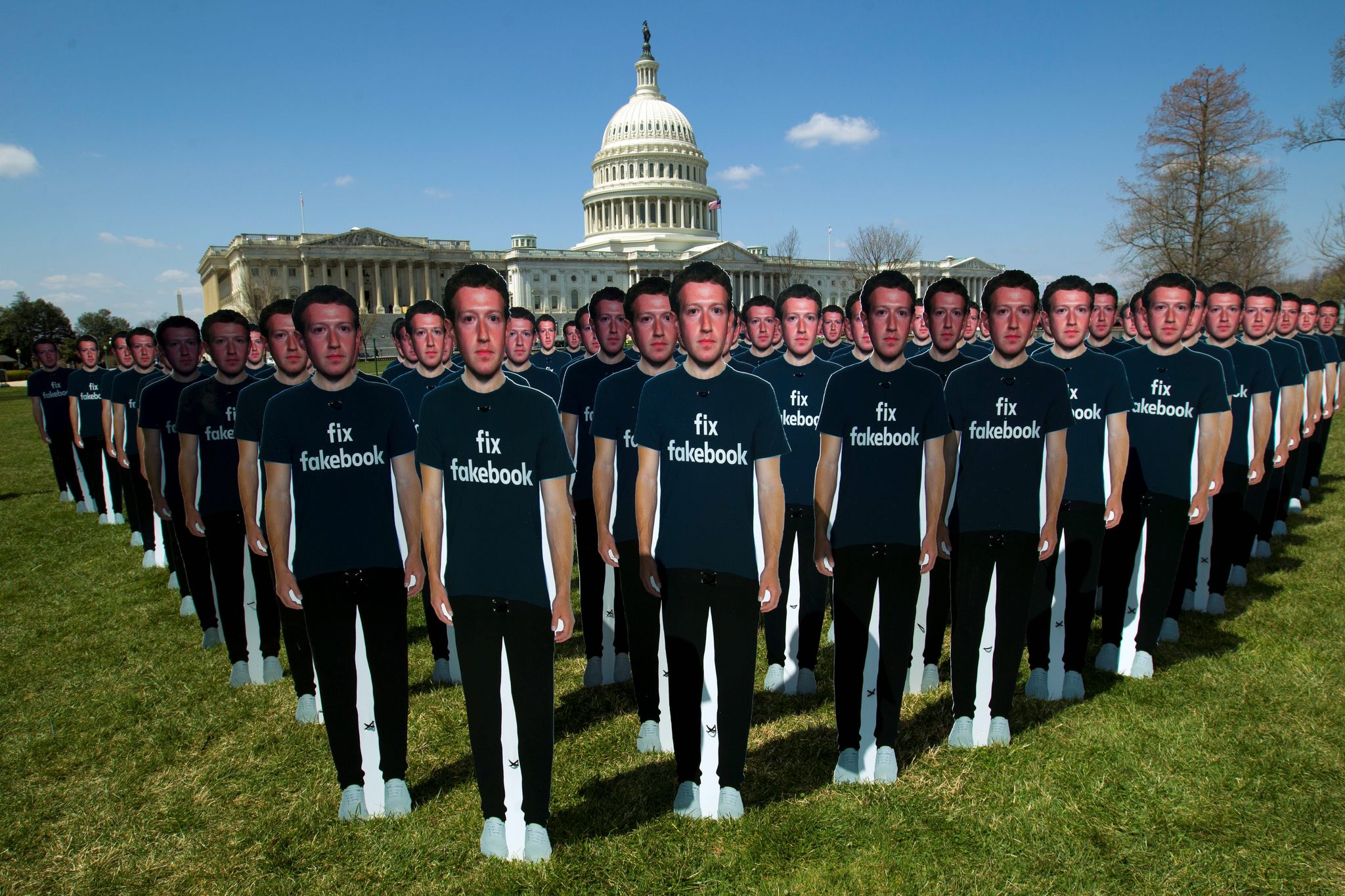
    Under more scrutiny than ever, Facebook finds itself caught in a no-man’s land between activists who say it needs to adopt much stricter definitions governing hate speech and critics on the right who feel the social media giant is censoring conservative voices.

    The company’s policy now largely depends on humans reviewing content flagged by others as offensive — a system Facebook CEO Mark Zuckerberg told Congress he hopes to change within 10 years by integrating artificial intelligence that can identify questionable content immediately.

    By some accounts, the current policy has been a failure, and Mr. Zuckerberg’s claim that the site doesn’t house hateful posts is simply wrong. They also contend that Facebook needs to become much more aggressive, perhaps tying its definition of hate speech to the one used by the controversial Southern Poverty Law Center.

    “We’re shocked by Zuckerberg’s claim that Facebook does not allow any hate groups on their platform. For years, civil rights groups have been urging Facebook to address the discrimination and bigotry on its platform, and, for years, the company has done little to meaningfully address our concerns,” said Madihha Ahussain, special counsel for anti-Muslim bigotry at Muslim Advocates.

    “Today, to our knowledge, at least 23 of them are still organizing on Facebook,” she said. “That list only accounts for Southern Poverty Law Center’s compilation of anti-Muslim groups and doesn’t include the thousands of others organized to hate against other communities.”

    But conservatives say adopting the Southern Poverty Law Center’s definition of a hate group would lead to even bigger problems and more bias. The organization, for example, classifies the Family Research Council as a hate group because of its stand on same-sex marriage and other LGBT issues.

    Using that definition would deepen the fear and anger among conservatives toward the Silicon Valley behemoth. Facebook already has faced intense criticism from the political right for suspected censoring of posts from the popular pro-Trump duo Diamond and Silk, among a host of other content that Republicans say is filtered on solely political grounds.

    Diamond and Silk, whose posts in the past have been considered “unsafe” by Facebook, will appear Thursday before the House Judiciary Committee.

    Facebook’s handling of the duo has become a rallying point for conservative critics, and it was the latest in a string of controversial steps. The company two years ago came under fire for appearing to suppress conservative news sources in its trending topics feed, and its actions since then have done little to calm those who say Facebook’s liberal bias is out of control.

    “I think this is going to be a controversial topic perpetually, for several reasons. First and foremost, they can’t get out of their own bubble, and until they do they won’t even realize they have a problem,” said Christie-Lee McNally, founder of the conservative group Free Our Internet and a former Trump campaign official who believes Facebook’s human review system is inherently flawed because of the company’s progressive leanings.

    On Capitol Hill, the issue of whether Facebook suppresses conservative content has raised the ire of Republican lawmakers, some of whom argue that Facebook has become so big and powerful that its handling of speech — such as what to censor and what to allow — creates ripples across the American cultural and political landscape.

    “If they’re behaving like Big Brother and censoring political speech, I think that raises very serious legal questions that I expect to see a whole lot more scrutiny devoted to,” Sen. Ted Cruz, Texas Republican, said last week.

    Facebook says it defines hate speech as “content that attacks people based on their actual or perceived race, ethnicity, national origin, religion, sex, gender or gender identity, sexual orientation, disability or disease.”

    It specifies that it does allow satire, comedy, music and other types of performance art that some people may find offensive.

    Issues arise, of course, because what some consider to be offensive, racially tinged attacks are seen by others as political statements. Rhetoric surrounding illegal immigration, for example, often falls into that category.

    “At the end of the day, it will be tough to keep 2 billion people happy all of the time,” said Emma Llanso, director of the Freedom of Expression Project at the Center for Democracy and Technology.

    Ms. Llanso said she believes that Facebook and other massive social media firms that have become ubiquitous parts of pop culture may end up adopting more stringent standards on speech, while other companies could cast themselves as more open and, in some cases, willfully controversial.

    “I’d rather see a situation with multiple different competing platforms that each have their own tailor-made content policies,” she said. “I feel like that creates less of a risk that an entire group of speakers or topic won’t find anywhere on the internet that will host their speech.”

    Mr. Zuckerberg told lawmakers that the human element of flagging offensive content will be removed within the next decade, though that doesn’t mean Facebook’s automated system won’t also ruffle feathers.

    “Hate speech — I’m optimistic that over a five, 10-year period we will have AI tools that get into some of the nuances, the linguistic nuances, of different types of content to be more accurate in flagging things for our systems,” he said this month. “But today we’re just not there on that, so a lot of this is still reactive. People flag it to us, we have people look at it, we have policies to try and make it as not subjective as possible, but until we get it more automated there’s a higher error rate than I’m happy with.”

  • Trump: DHS instructed to halt ‘caravans’ into the U.S., may make border agreement part of NAFTA

    President Trump said Monday that he has instructed the Department of Homeland Security not to allow the reported caravans of people traveling through Mexico to be admitted to the U.S.

    President Trump said Monday that he has instructed the Department of Homeland Security not to allow the reported caravans of people traveling through Mexico to be admitted to the U.S.

    “Despite the Democrat inspired laws on Sanctuary Cities and the Border being so bad and one sided, I have instructed the Secretary of Homeland Security not to let these large Caravans of people into our Country. It is a disgrace. We are the only Country in the World so naive! WALL,” Mr. Trumptweeted.

    A few weeks ago, multiple reports of caravans carrying up to 1,500 people from Central America dominated headlines. Those groups were apparently headed for the U.S., but several hundred decided to stop in Mexico and remain there. Some did want to continue on to the U.S., which prompted Mr. Trump to request that National Guard troops be sent down to assist border agents.

    The president said Mexico needs to be more of a help to the U.S. in preventing illegal border crossings.

    “Mexico, whose laws on immigration are very tough, must stop people from going through Mexico and into the U.S. We may make this a condition of the new NAFTA Agreement. Our Country cannot accept what is happening! Also, we must get Wall funding fast,” Mr. Trumpadded in a follow up tweet.

    The president has long said he intends to negotiate the North American Free Trade Agreement, known as NAFTA, between Canada, Mexico and the U.S., and now may decide to make immigration issues part of the deal.

    Despite the Democrat inspired laws on Sanctuary Cities and the Border being so bad and one sided, I have instructed the Secretary of Homeland Security not to let these large Caravans of people into our Country. It is a disgrace. We are the only Country in the World so naive! WALL

    — Donald J. Trump (@realDonaldTrump) April 23, 2018

    Mexico, whose laws on immigration are very tough, must stop people from going through Mexico and into the U.S. We may make this a condition of the new NAFTA Agreement. Our Country cannot accept what is happening! Also, we must get Wall funding fast.

    — Donald J. Trump (@realDonaldTrump) April 23, 2018

  • Supreme Court ruling on travel ban case to affect Trump’s agenda

    What the Supreme Court does with President Trump’s travel ban case, which reaches the justices this week, is likely to determine whether courts across the country give him the usual deference due a pr

    What the Supreme Court does with President Trump’s travel ban case, which reaches the justices this week, is likely to determine whether courts across the country give him the usual deference due a president and allow him leeway to pursue his immigration crackdown — or whether they join the anti-Trump resistance determined to thwart him at every turn.

    From battles in California, Illinois and Pennsylvania over sanctuary cities, to illegal immigrant teens gaining abortion rights, to the border wall, to Mr. Trump’s attempts to limit some paths to legal immigration and to cancel the Obama-era Deferred Action for Childhood Arrivals program for illegal immigrant Dreamers, immigration rights activists and the administration have been battling on nearly every front of the issue.

    Perhaps a dozen potentially major cases are working their way through the district and appeals courts. The president has not fared particularly well, with judges peering through his tweets, guessing at his motives and generally siding with the anti-Trump resistance.

    Mr. Trump is looking to get back on track with the justices because much of his agenda is riding on the outcome.

    Josh Blackman, a professor at the South Texas College of Law, said if the justices decide to read into Mr. Trump’s past statements and use them against him, given his prolific caustic remarks, “he should just resign because the courts can enjoin everything he does.”

    “If you don’t give the president the presumption of regularity that he’s due, the administration is done. It’s like impeachment without impeachment,” Mr. Blackman said.

    He has urged judges to be cautious in going down that route.

    Others cheer the judges who have used Mr. Trump’s words and actions against him.

    “By and large, the court decisions have pretty much stopped any kind of abuses from the Trump administration,” said David Leopold, a former president of the American Immigration Lawyers Association. “The courts have done very good in standing up for the rule of law in the face of all-out assaults on immigrants’ rights, and the rights of state and local officials to self-govern.”

    Indeed, the most recent appeals court ruling, last week’s decision tying Mr. Trump’s hands on sanctuary cities, used some of the strongest language yet. The three-judge panel, all appointed by Republican presidents, castigated the president for bordering on “tyranny.”

    That panel, of the 7th U.S. Circuit Court of Appeals, said the administration’s effort to add conditions to sanctuary cities applying for federal grant money was illegal because Congress has the power to control the purse strings and lawmakers didn’t include those conditions in the law.

    Similar issues are at play in the high court this week. Oral arguments are slated for Wednesday on whether Congress granted Mr. Trump powers to halt most migration and visits from countries he deems unsafe.

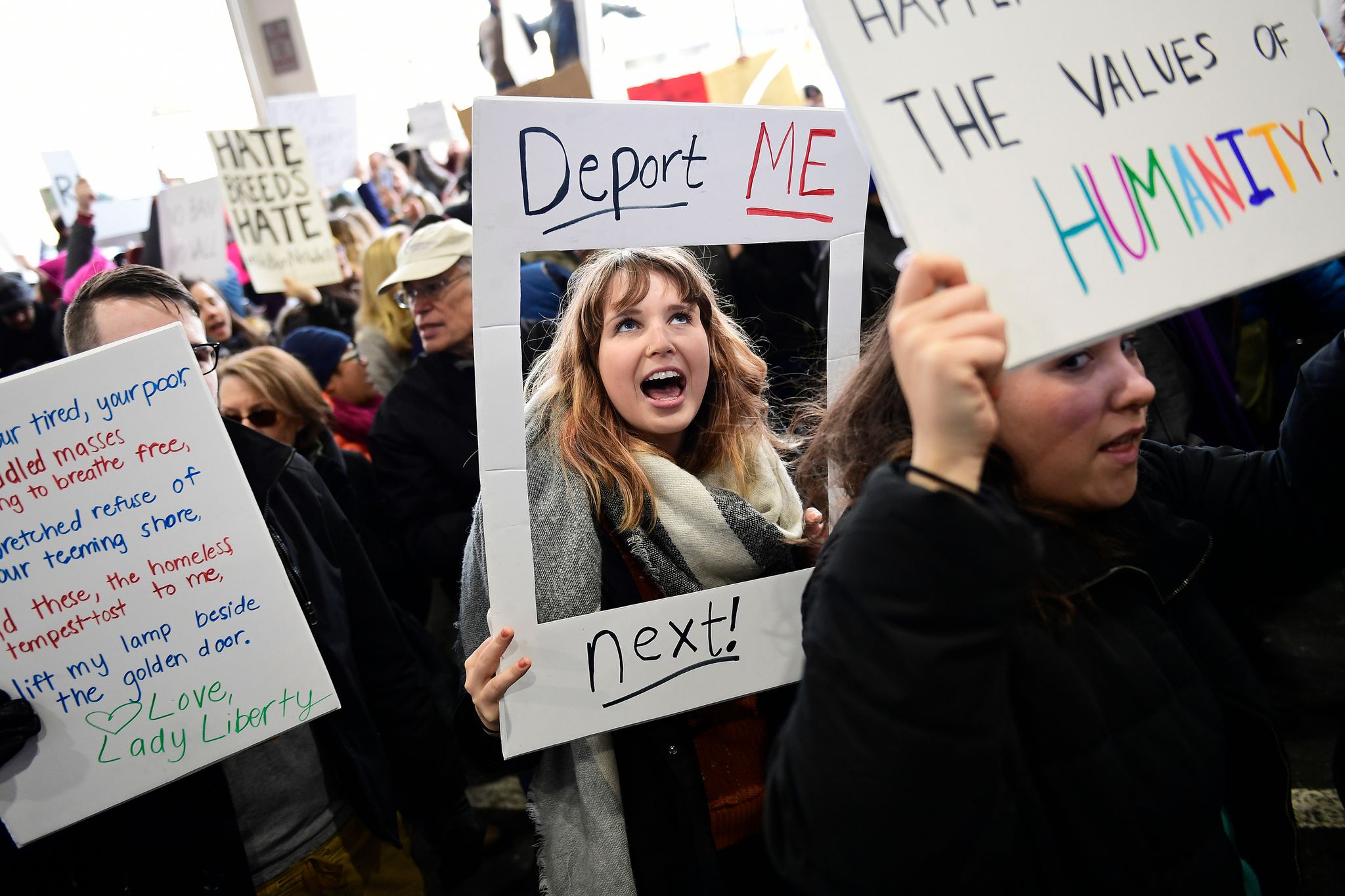
    The case involves the third version of the travel restrictions, which Mr. Trump describes as “extreme vetting” and opponents say is his campaign promise for a “Muslim ban.”

    Under the first policy, visitors and migrants from seven majority-Muslim countries identified by the Obama administration and Congress were almost completely banned from entering the U.S. That policy met with resistance from the courts, as did a follow-up second version that drew a slightly narrower net around who was banned.

    The third version involved a long review of travel conditions, and the State and Homeland Security departments came up with a list of Muslim and non-Muslim countries that either don’t share data with the U.S. or are otherwise unable to validate who their citizens are. Those people are severely restricted from entering the U.S.

    In briefing papers, Hawaii, which is leading the challenge, argued that Mr. Trump showed clear religious animus toward Muslims during the 2016 election and again while in office, which the state says should taint all of his actions in this sphere.

    But Solicitor General Noel Francisco says the legality of Mr. Trump’s actions should be judged on their merits, not on what he says.

    Even if the justices do refuse to look at Mr. Trump’s tweets — they didn’t use them in an order last year dealing with version 2.0 of the travel ban — they could conclude that the administration didn’t properly make the case that national security required such a broad travel ban.

    Those on both sides of the issue are looking for big signals.

    “In many ways, some of the biggest questions will be what the justices say about these fundamental separation of powers issues and where’s the line between what the president can do, or do these huge transformative policies he’s trying to put in play flout the will of Congress?” said David Gans, director of the citizenship program at the Constitutional Accountability Center.

    Those on both sides of the issue said the surge of immigration lawsuits against Mr. Trump over the past 15 months is unprecedented.

    “There’s no question about it,” said Mr. Leopold.

    He said Mr. Trump has spurred the litigation by being more aggressive than either President George W. Bush or President Obama in pushing the boundaries of immigration law. He also said activists have nowhere else to turn.

    “Congress has not been helpful. The courts have been the place. From the moment the travel ban hit until now — whether it’s sanctuary cities, whether it’s temporary protected status, whether it’s administrative decisions by [U.S. Citizenship and Immigration Services],” he said.

    He said he expects more to come.

    Already pending before the justices is a case involving pregnant illegal immigrant teens who jumped the border traveling alone and are in government custody. The American Civil Liberties Union has launched a class-action lawsuit arguing that the government has been hindering their right to have abortions.

    The justices have been staring at that case for three months but have not said whether they will hear it.

    Last week’s sanctuary city ruling could also tee up another case for the justices.

    Meanwhile, the high court tossed back to the appeals courts the DACA cases.

    About the only area where Mr. Trump has had success at the lower courts is on his proposed border wall, which a federal district judge this year ruled was legal and didn’t violate environmental laws. That case has been sent to the 9th U.S. Circuit Court of Appeals.

    Beneath the big constitutional and policy issues are dozens of smaller individual cases in which immigrants have challenged their deportations. Those cases used to generally be fought out in immigration courts, but regular Article III judges are increasingly intervening in those disputes — usually to Mr. Trump’s detriment.

    The judges’ determination to inject themselves could also be tested by the high court.

    “Historically, immigration decisions were just not subject to review,” Mr. Blackman said. “The courts are pushing the boundaries of what prudential merits are of reviewing immigration decisions.”