
Another slew of technical notices aimed at providing guidance to the public and businesses on how to prepare for a no-deal Brexit were released by the government on Thursday.
Ministers say it is an “unlikely” scenario and the UK and EU are working on getting an agreement finalised.
But what detail has come out of the 28 papers?
Here is a summary:
Driving
 Image copyright Science Photo Library
Mobiles
Last year, travellers were delighted as Brussels quashed roaming charges for phones used inside the European Union.
Rather than massive bills for calling back home or posting snaps on social networks, the mobile networks were forced to treat use in other EU countries the same as if the customer was at home.
A no-deal Brexit means free roaming can no longer be guaranteed.
The government has tried to put minds at rest, saying it will legislate to include a cap on data roaming charges.
However, that is not quite the same as being able to use a UK phone in the EU with no additional costs.
Irish citizens
As the rules currently stand, UK citizens can cross the border between Northern Ireland and the Irish Republic without any checks, and vice versa.
That is because of the Common Travel Area (CTA) – which allows for passport-free travel between the UK, Irish Republic, Jersey, Guernsey, and the Isle of Man.
But what happens if there is a no-deal Brexit?
The government has said there will be “no practical changes” to their approach and “no routine immigration controls on journeys from within the CTA to the UK”.
But with no deal agreed, it is not clear what the EU will say to that.
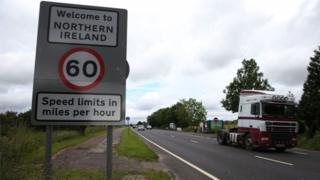 Image copyright PA
Passports
Ensuring your passport up-to-date is the message from this paper.
Anyone who wants to travel to the EU after Brexit is told to have at least six months left on their document – or they won’t be allowed to travel.
And those expecting to get their hands on a blue passport soon will have to wait a little longer.
Initially, burgundy will still be the colour of choice, although the cover will no longer carry the words “European Union”.
But if you want the blue passport, ministers say they will be issued in late 2019.
Firearms
Currently, EU citizens are allowed to travel with firearms between member states.
This requires a “European Firearms Pass”, and if you have one, you can go back and forth with it.
However, in a no-deal scenario, people from the UK will not be able to get one of these passes and will have to check with the country they are travelling to what the rules are.
The rules won’t change for EU citizens though, whose passes will still be accepted in the UK.
Safety standards for goods
One of the things offered by the EU’s single market are common regulations for goods.
It means, whether you have tomatoes from Spain or sausages from Germany, they all have to adhere to a strict set of rules for quality.
But, come 29 March 2019, there could be problems.
If there is a no-deal, goods from the UK would not be covered by the regulations and businesses wanting to export their products would have to check on legislation in each country before they sent them there.
Also, goods tested by a UK body – say cosmetics or bathroom products – would no longer be recognised by the EU, so would have to go through checks again – by a European Union-approved body – to make sure they meet the bloc’s minimum safety requirements.
Cars
As with food and make up, car manufacturers are going to face similar regulation issues.
If a car is made in the UK, or the parts are, a no-deal Brexit means firms will have to apply to the EU for what is called “type approval” – which shows they comply with EU safety and environmental standards.
Without this green light, they won’t be able to sell their cars and parts in the 27 member states.
The paper says that for a time-limited period, perhaps two years, the UK will automatically convert EU approvals into UK approvals – meaning there would be no problem for EU manufacturers wanting to sell their cars in the UK.
But, without a deal, there is no guarantee the EU would give Britain the same in return.
 Image copyright Getty Images
Broadcasting
As it stands, broadcasters in the EU can show their channels in any of the member states, but they only have to come under the scrutiny of one.
For example, the BBC can show BBC programmes in France, but it only answers to Ofcom’s code, not the French equivalent.
This “country of origin” principle, however, will disappear with a no-deal Brexit.
That means broadcasters will have to abide by the regulations in each individual country they want to show their content in.
Personal data
You will remember earlier this year that inboxes were flooded with emails about “GDPR”.
The General Data Protection Regulation applies to all organisations that handle European Union citizens’ data.
When the rules came in, they gave consumers new rights, such as finding out what data is being held on them, and getting firms to delete that information, unless they had a good reason to keep it.
Part of the regulation also meant companies were only able to transfer personal data outside of the EU if there was a legal basis for doing so – but they could send it anywhere within the bloc.
The UK is going to keep the same standard, so there would be no immediate impact there.
However, if a deal wasn’t agreed, British companies could face problems getting data from member states, as they would no longer be party to it.
Environment/pollution
There is a lot of law that has been made in the EU when it comes to protecting the environment and, in turn, the health of citizens.
Targets to reduce air, water, and land pollution are set by the bloc, as well as emissions from vehicles and industry.
The UK has pledged to keep these standards, and perhaps raise them higher, but in a no-deal scenario, there may have to be interim measures while we wait for the government to get their new rules through Parliament.
Also, when it comes to products using damaging chemicals, the companies who make and sell them may need two different permits – one for the UK and one for the EU – giving them more red tape to wade through.
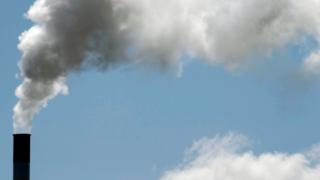 Image copyright Reuters
Drugs
Drug precursors are chemicals that can be used in the illicit manufacture of narcotics.
But they can also be used for more legitimate means, such as in medicines, perfumes or for plastics.
Trading these materials is easy enough as a member of the EU.
But if you are on the outside, it comes at a cost – a license to sell into the block that could cost thousands of pounds.
So, a no-deal would put firms in that position straight away.
Space
The UK is part of a number of joint European space programmes.
These include Galileo, a satellite project for GPS systems, Copernicus, which carries out earth observations, and EU space surveillance.
These are important for a range of UK businesses, from telecoms firms to universities.
But whilst the average smartphone user won’t feel the effect, companies, academics and researchers will no longer play a part in developing the systems and will be unable to bid for future contracts.
The government has promised to invest £92 million from its “Brexit readiness” to design its own UK Global Navigation Satellite System, but many in the sector have expressed fears of dropping out of the existing EU version.
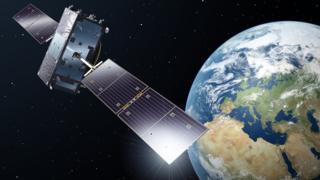 Image copyright European Space Agency
Grants
The UK can apply for a number of different grants from the EU to fund projects across the country.
This can range from cash for transport projects and superfast broadband rollouts, through to help for disadvantaged communities, like schemes to create jobs or teach skills.
But if there is a no-deal Brexit, the cash these things rely on could be cut off early.
In July, the government promised to fund billions of pounds of programmes until the end of 2020 in the event of a no-deal.
But there will be some caveats involved, such as collaborations with other member states getting the axe, and changes in line with other public spending.
Business and investment
The EU has long held big companies to account when it comes to competition.
The idea is it stops companies abusing a dominant market position.
So, when Google was putting its own shopping service ads at the top of search results or when Microsoft promoted its web browser on computers running Windows, the EU gave levied hefty fines and imposed new rules.
The UK has seen those rules duplicated here – Microsoft introducing a Browser Choice Screen pop-up for example – but if no-deal happens, the same rules won’t apply.
The government says the UK Competition and Markets Authority will take on responsibility for this role, but it will not be bound by EU law – so outcomes could be different.
Shipping
We are an island, and as such, shipping has always played a key role in the economy.
But a no-deal Brexit could lead to some trouble on the high seas.
If a ship from a non-EU country wants to enter an EU port, it has to submit security information and get an exemption before docking.
Of course, members of the EU don’t need to worry about this.
But, a no-deal UK on the outside would have to apply.
The papers also reveal crew members from the UK may be affected as they would no longer hold the correct certificates to work on EU vessels.
The UK has said it will continue to recognise EU certificates for European workers on British boats – but it is up to the EU to reciprocate that.
 Image copyright École Émile-Cohl Image caption The original, undoctored image as posted on the college’s website

 Image copyright Reuters Image caption David Keyes (R) was appointed Benjamin Netanyahu’s foreign media spokesman in 2016
 Image copyright PA
 Image copyright PA
  Image copyright AFP Image caption Those charged are accused of taking bribes in return for lucrative PDVSA contracts
 Image copyright Reuters