Blog

  • Suspension of U.S. military drills with South Korea hurt readiness, says top general

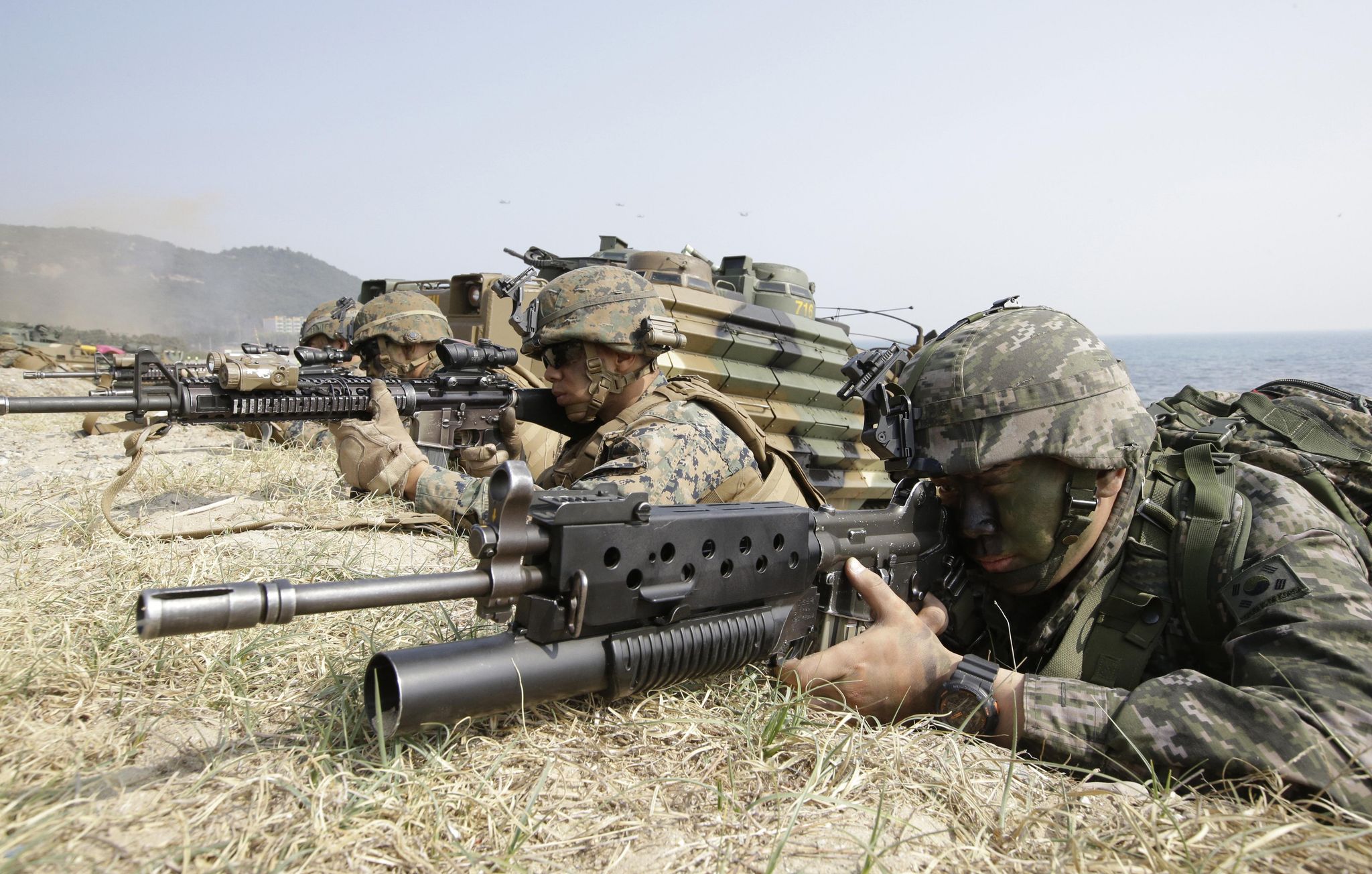
    The Trump White House’s decision to suspend several, large-scale military exercises with South Korea earlier this year harmed U.S. readiness to respond to potential conflicts on the peninsula.

    The Trump White House’s decision to suspend several, large-scale military exercises with South Korea earlier this year harmed U.S. readiness to respond to potential conflicts on the peninsula.

    Army Gen. Robert Abrams, the administration’s pick to become the new top U.S. commander in South Korea, told lawmakers Tuesday the decision had degraded the ability for American forces to coordinate with their counterparts in Seoul, should hostilities break out between North Korea and the South.

    Gen. Abrams, who is slated to replace current U.S. Forces-Korea Commander Gen. Vincent Brooks, made his comments on the effect of the suspended military drills during his confirmation hearing before the Senate Armed Services Committee, the Associated Press reports.

    U.S. military leaders on the peninsula are in the midst of setting up several, smaller bilateral drills with South Korean forces, in an attempt to rebuild the lost readiness capabilities due to the suspended exercises, he told panel members alongside Navy Vice Adm. Craig Faller. Adm. Faller has been nominated to take over U.S. Southern Command.

    Planning for next year’s iteration of the South Korean drills suspended this year is also ongoing, Gen. Abrams said, noting that no decision has been made by the White House or the Defense Department on whether those exercises would go forward.

    Commanders are planning a number of smaller staff exercises to rebuild the ability of U.S. and allied forces to work together. He says planning is ongoing for large exercises next year, but alliance leaders will decide if they are canceled or not.

    The move to indefinitely suspend large-scale war games between the U.S. and Seoul was ordered by the Trump White House shortly after the landmark deunclearization summit with the North in June. The decision was intended as an olive branch to Pyongyang, in an attempt to coerce the North Korean regime to embrace efforts to eliminate their nuclear capabilities.

    But the State Department and Pentagon had been seemingly caught unaware of Mr. Trump’s cancellation of U.S. military drills on the peninsula, until the White House’s announcement. It came just as U.S. defense officials were in the midst of planning for one of those major exercise, dubbed Ulchi Freedom Guardian, which had been slated to begin in July.

    Mr. Trump characterized the drills as “provocative” and a costly byproduct of the Cold War-era strategy being imparted by U.S. military leaders on the peninsula. Mr. Kim and others in the North Korean regime have repeatedly cited the provocative nature of the exercises, in its criticism of U.S. military operations in the region.
  • Donald Trump laughed at by world leaders as he boasted of his accomplishments

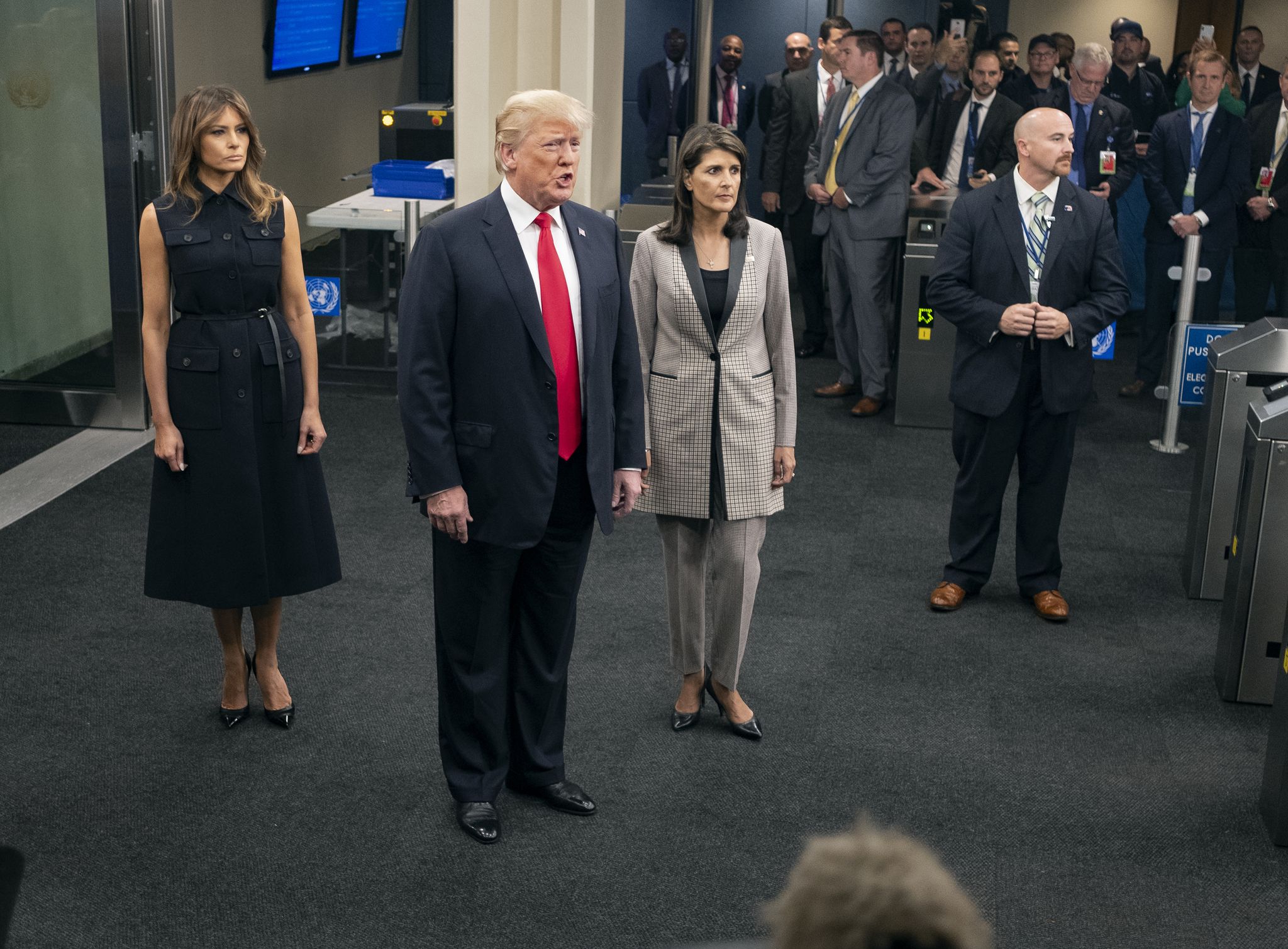
    President Donald Trump is highlighting U.S. gains under his watch as he opens his address to the U.N. General Assembly — and is getting a laugh.

    President Donald Trump is highlighting U.S. gains under his watch as he opens his address to the U.N. General Assembly — and is getting a laugh.

    Trump told leaders from around the world Tuesday the American economy is “booming like never before” and his administration has accomplished more in less than two years than almost any other administration. His boast elicited laughter from the scores of heads of state and delegates in the audience for the speech.

    Trump responded by saying, “I didn’t expect that reaction, but that’s OK.”

    Trump says the U.S. is a “stronger, safer and richer country” than when he took office in January 2017. He says “we are standing up for America and for the American people, and we are also standing up for the world.”

  • Trump teams with U.N. to battle drugs: ‘We commit to fighting the drug epidemic together’

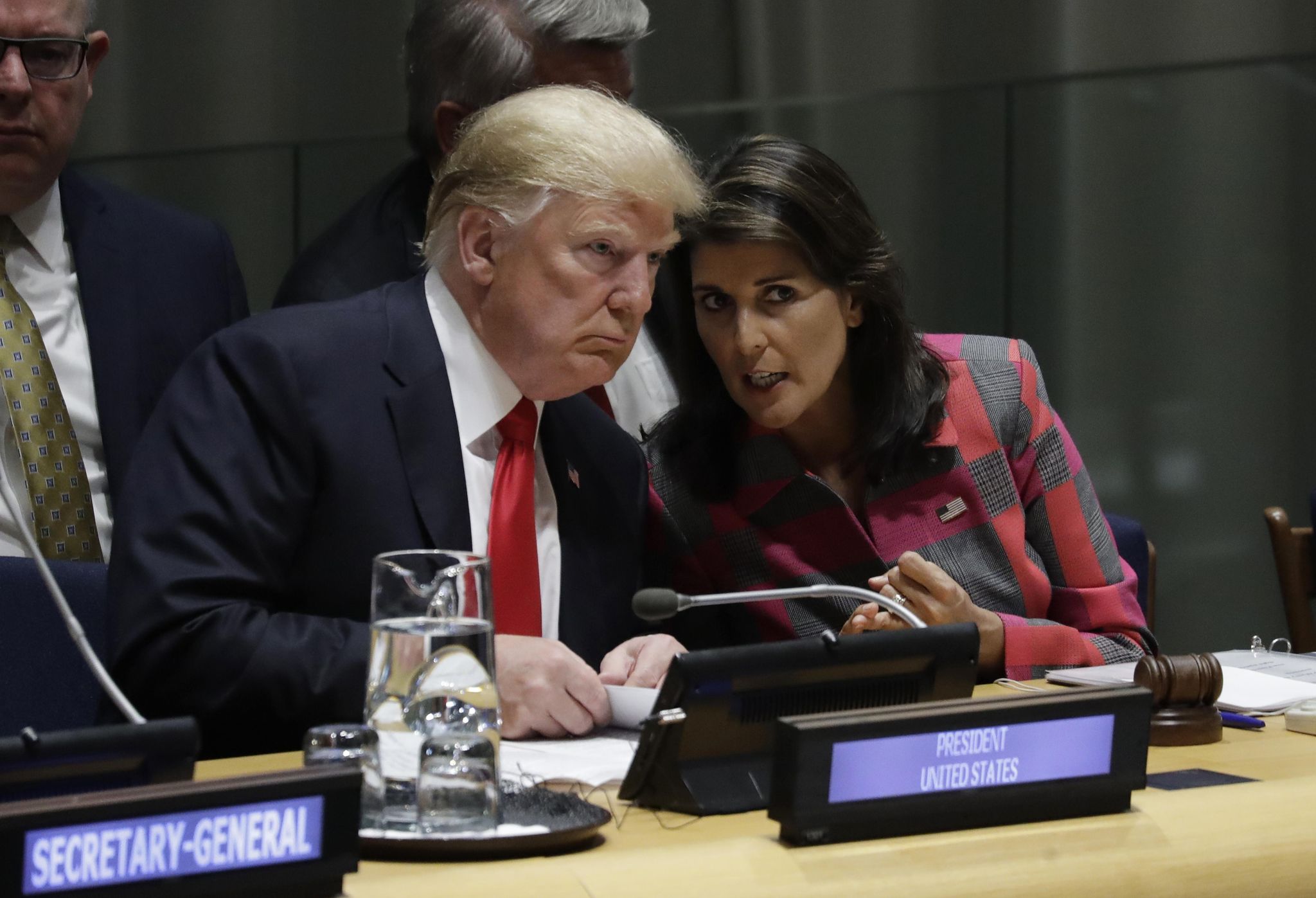
    President Trump on Monday led a United Nation’s panel on combating the world drug crisis, saying a robust international effort could save millions of lives.

    President Trump on Monday led a United Nation’s panel on combating the world drug crisis, saying a robust international effort could save millions of lives.“Today we commit to fighting the drug epidemic together,” Mr. Trump told the panel, part of the U.N. General Assembly meeting in New York this week.Mr. Trump often clashes with the U.N. but the fight against illegal drug trafficking was an area where he sees eye-to-eye with the international body.The Trump administration pulled out of the U.N.’s Human Rights Council and the UNESCO cultural program.“I’ve always said the United Nations has tremendous potential and that potential is being met. Slowly but surely it is being met,” the president said.The president noted that cocaine and opium production reached an all-time high and the number of drug-related deaths around the world increased 60 percent between 2000 and 2015.He called the death toll “absolutely terrible.”“As we know, illicit drugs are linked to organized crime, illegal financial flows, corruption and terrorism,” he said. “It is vital for public health and national security that we fight drug addiction and stop all forms of trafficking and smuggling that provide the financial lifeblood for vicious transnational cartels.”

  • Moscow floods advanced anti-aircraft systems into Syria, days after shoot down of Russian aircraft

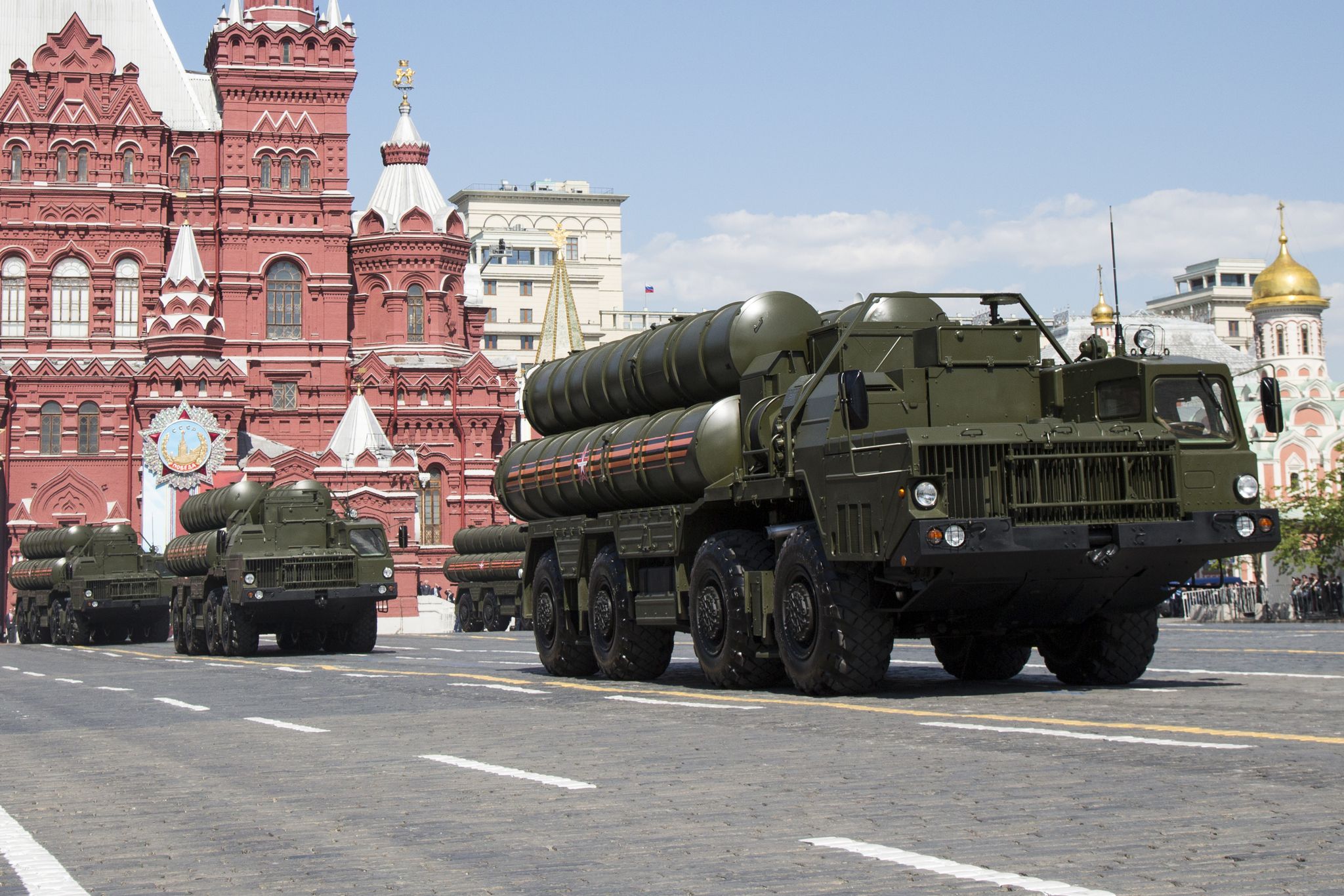
    Russian defense officials have ordered emergency deployments of its advanced S-300 anti-aircraft systems into Syria, days after Moscow claimed Israeli forces prompted the shoot down of one of its surv

    Russian defense officials have ordered emergency deployments of its advanced S-300 anti-aircraft systems into Syria, days after Moscow claimed Israeli forces prompted the shoot down of one of its surveillance aircraft, conducting intelligence operations in support of the Syrian regime.

    The S-300 air defense systems will be in the hands of Syrian forces loyal to President Bashar Assad within the next two weeks, Russian Defense Minister Sergei Shoigu said in a statement released Monday. The new air defense systems will be directly linked to Russian outposts scattered throughout Syria, to “guarantee that Russian aircraft are identified by Syrian air defenses,” he said.

    In addition, “Russia will jam satellite navigation, on-board radars and communication systems of combat aircraft, which attack targets in the Syrian territory, in the regions over waters of the Mediterranean Sea bordering with Syria,” he added in Monday’s statement. The new S-300 deployments come in addition to the reported S-400 long-range anti-aircraft and missile defense systems already in the field in Syria.

    Defense Secretary James Mattis said Monday that there had been no communication between either the Pentagon or U.S. Central Command and their Russian counterparts on the decision to deploy the S-300 systems, prior to Monday’s announcement by Moscow.

    “Any additional weapons going in keeps [President Bashar Assad] in a position to threaten the region,” Mr. Mattis told reporters at the Defense Department. “Anything like this puts him in a position as an obstruction to peace” in the war-torn nation, the defense chief added.

    The shoot-down of the Russian I1-20 reconnaissance plane, which kicked off a chain of claims and counterclaims between Moscow, Damascus and Tel Aviv, took place late last week. The Assad regime’s bloody campaign to quash rebel forces in the country has been largely sustained by Russian air power and Iranian-backed paramilitary forces on the ground.

    Israeli commanders sent in four bombers into Syrian airspace to take out a nearby Syrian weapons facility, housing weapons that Israel argued argue would have ultimately been transferred to the terrorist group Hezbollah. During the bombing raid, Syrian forces launched anti-aircraft missiles to take out the Israeli fighters but apparently struck the Russian plane instead, downing it into the sea and killing everyone on board. Moscow immediately laid blame for the attack on Israel.

    “The Israeli pilots were using the Russian aircraft as a shield and pushed it into the line of fire of the Syrian defense,” said Russian Defense Ministry spokesman Maj. Gen. Igor Konashenkov in a statement at the time.

    Israel Defense Forces blamed Mr. Assad and expressed “sorrow” for the Russians killed in the incident, while Secretary of State Mike Pompeo expressed his regret for the incident, saying the deaths of the 15 crewmen underscored the need to bring the Syrian conflict to a peaceful resolution.

    On Monday, Mr. Mattis placed the blame for the ongoing violence in Syria’s civil war squarely on the shoulders of Moscow, adding the S-300 deployments only add fuel to that fire.

    “This tragedy … would have ended long ago” if not for Russian and Iranian interference in the conflict, he said.

  • Beijing accuses White House of trade bullying as new U.S. tariffs take effect

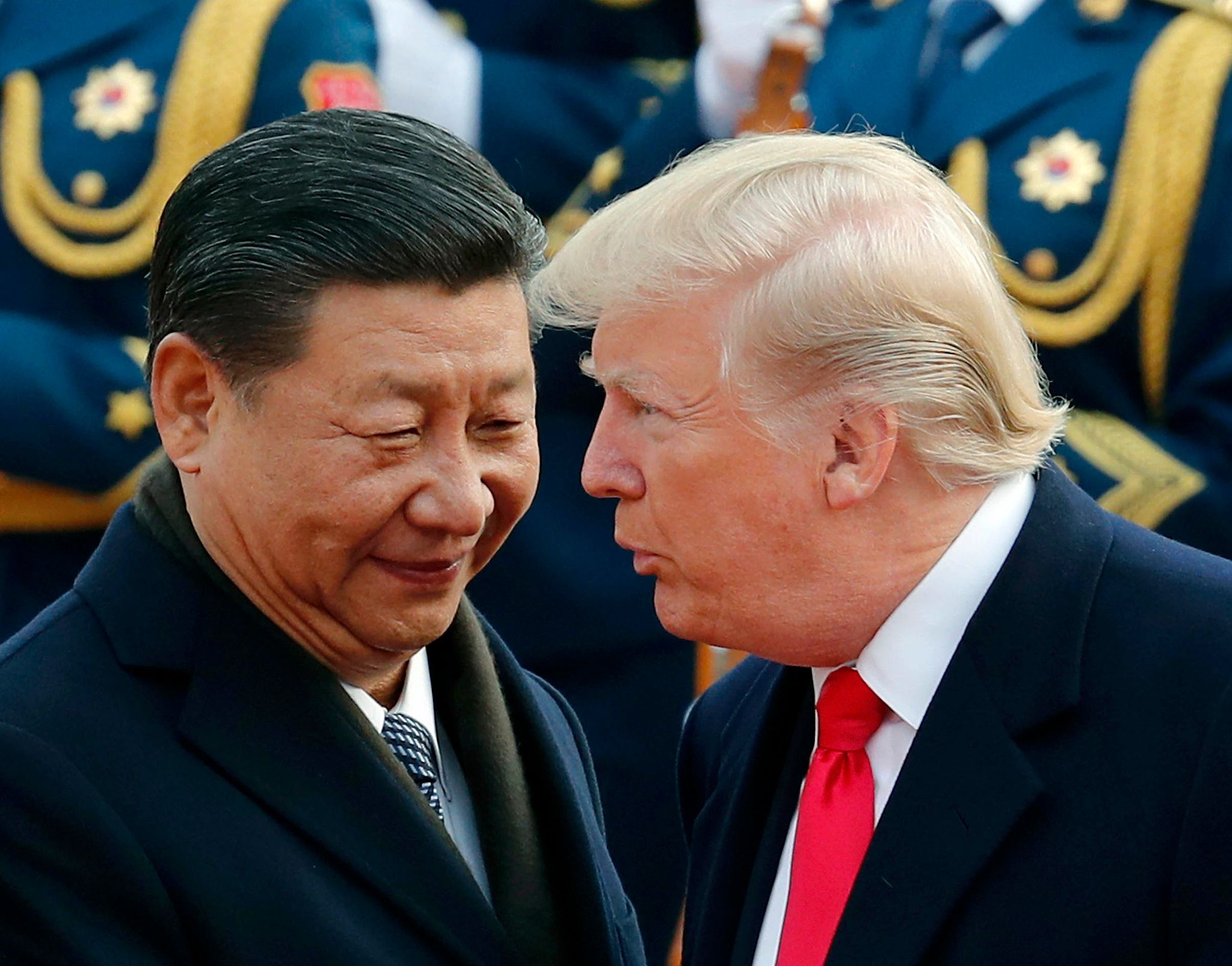
    In the latest escalation of the U.S.-China trade war, Beijing on Monday accused Washington of “economic bullying” just as trade tariffs on $200 billion of Chinese made goods came into effect.

    In the latest escalation of the U.S.-China trade war, Beijing on Monday accused Washington of “economic bullying” just as trade tariffs on $200 billion worth of Chinese made goods came into effect.

    The hard-hitting attack on President Trump was delivered in an official white paper released by the Xinhua news agency and features Beijing’s argument that the U.S. is intimidating other countries through economic measures, damaging the global economy and using “trade bullyism practices.”

    Considered Beijing’s most comprehensive public statement in the tariff war thus far, the white paper, which runs 36,000 words, keeps with Beijing’s stance of not personalizing the conflict by never mentioning Mr. Trump by name.

    It does, however, lash out at his administration’s “America first” economic policies, criticizing them for threatening the world’s established multilateral free trade agreements and restating Beijing’s position that the only way to stop the battle is through cooperation.

    “Cooperation is the only right option and only win-win cooperation can lead to a better future,” the white paper said.

    To justify the trade war, Mr. Trump has long accused China of stealing technologies from America and unfairly subsidizing Chinese state-owned enterprises.

    To punish them, Mr. Trump has argued for the U.S. to clamp down on Chinese imports and since July, roughly half of all Chinese good shipped to the U.S. have become subject to new duties.

    The latest round of tariffs, which kicked in at 12 p.m. Monday, Beijing time, target almost 6,000 Chinese imports, including bicycles, furniture, handbags, rice and textiles, with smartwatches and high chairs reportedly exempt.

    China, meanwhile, has responded by slapping tariffs on more than 5,000 U.S. goods, from honey to industrial chemicals, worth an estimated $110 billion.

    Over the weekend, China recalled its naval chief from the U.S. to protest sanctions Washington slapped on Chinese entities for procuring Russian-made military equipment.

    Chinese Vice-Premier Liu He, who is leading trade talks with the U.S., also cancelled a trip to Washington in protest of the tariffs.

  • Rebel attack disrupts Ebola response in Africa

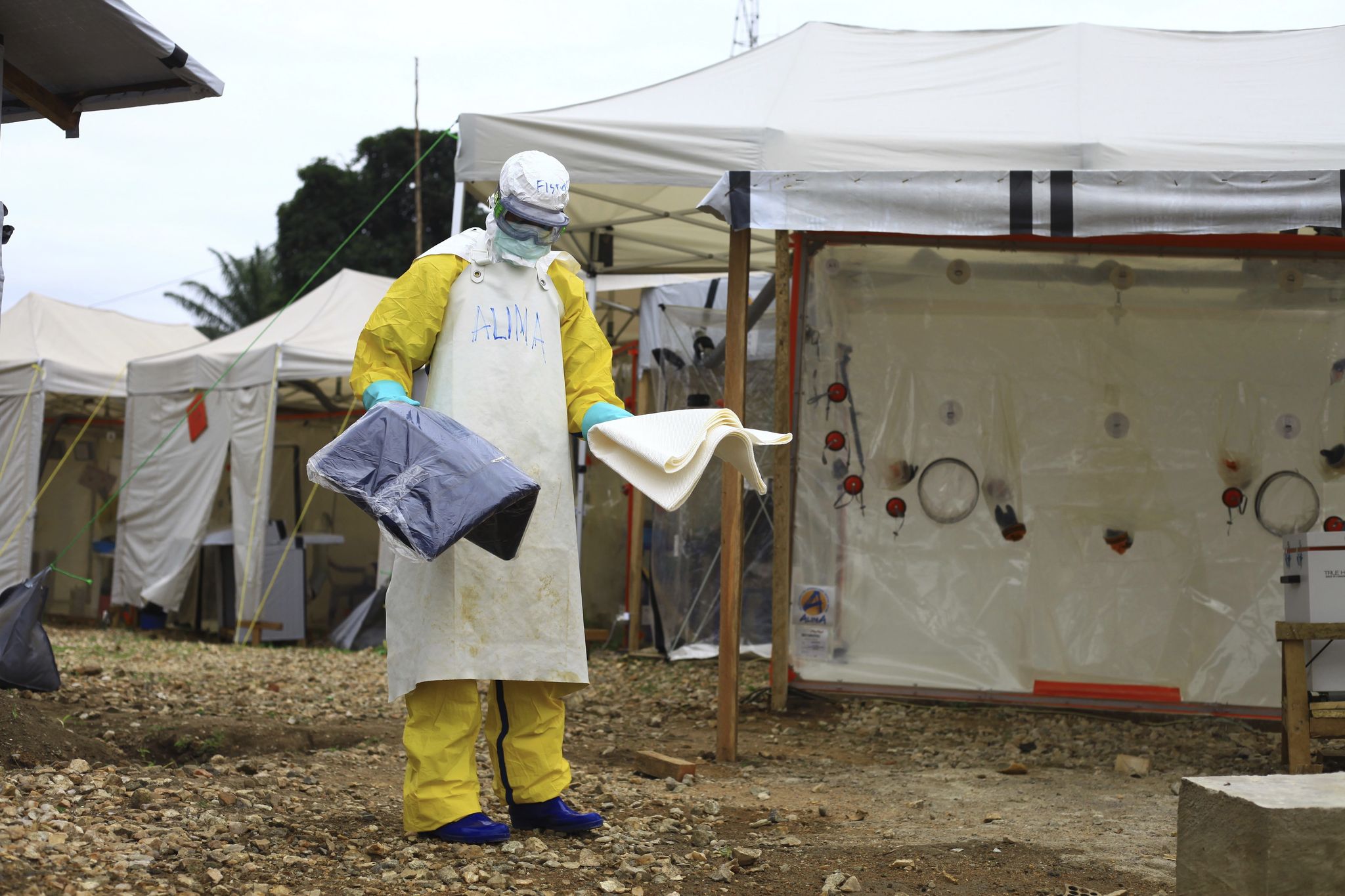
    Aid groups on Monday said a rebel attack near a city in the Democratic Republic of Congo has disrupted efforts to respond to an Ebola outbreak that’s now killed 100 people.

    Aid groups on Monday said a rebel attack near a city in the Democratic Republic of Congo has disrupted efforts to respond to an Ebola outbreak that’s now killed 100 people.

    The violence near Beni, in North Kivu province, forced World Health Organization responders into “lockdown, unable to move because of security concerns following violence by armed rebel groups over the weekend when many civilians were killed,” WHO’s emergencies director, Peter Salama, said on Twitter.

    The attack began Saturday afternoon, lasted several hours and resulted in the death of 18 people, including 14 civilians, according to the BBC.

    The Norwegian Refugee Council and other aid groups suspended their field activities, including vaccination, due to the violence.

    “It’s a worst-case scenario for any aid group to have to suspend relief work that helps communities in need,” NRC area manager Stephen Lamin said. “But this weekend’s attack on Beni town has left us in an impossible position.”

    The NRC said the suspension reflects an “increasingly worrisome security situation” in the country, since food aid will also be disrupted.

    “The recent attack has made the situation even worse as families have had to flee from their homes with nothing but the clothes on their backs,” Mr. Lamin said. “Donor countries must open their purse strings as rapidly as possible to help stem a humanitarian situation that is quickly getting out of control.”

    The Ebola outbreak in the region has resulted in nearly 150 cases and had been linked to 100 deaths as of Saturday, Dr. Salama said in a series of Twitter posts Monday.

    The outbreak is the country’s 10th since Ebola was discovered in the 1970s and second this year. A previous outbreak in a remote part of northwestern part of the country near the Congo River was stamped out after a massive response, yet the ongoing outbreak was discovered about a week later, in early August.

    For weeks, the WHO and other responders have openly worried about insecurity in North Kivu — a mineral-rich part of DRC riven by decades of conflict between government forces and militant groups that have multiplied or splintered over the past two decades.

    As a result of the unrest, the population in Ebola-affected towns are highly migratory, sparking fears that deadly virus could spread further or spill into neighboring Uganda.

    Dr. Salama said an infected person, who evaded response teams and refused care, introduced the disease into a previously unaffected area near the Ugandan border. WHO sent a response team to the area on Sunday.

  • Worlds Apart

    …Aisling and Danielle struggle with the new normality of being apart. Aisling’s had her soul sucked out of her by the small town of Mallow for an entire summer. In Vancouver, Danielle’s wish of a life in Canada with more art and less…
  • Wolfblood

    …Fantasy drama following teenagers Rhydian and Maddy and their secret lives as wolfbloods. They have razor-sharp senses, are incredibly fast and superstrong but change into wolves every full moon. Ceri unexpectedly turns up at the caravan…
  • Why young people are now less likely to smoke

     Image copyright iStock

    All age groups in the UK are smoking less – but the largest decrease is among 18- to 24-year-olds, according to the Office of National Statistics. Why is that?

    Fewer start smoking

    The latest figures, for 2015, suggest one in every five (20.7%) 18- to 24-year-olds is a smoker.

    In 2010, this figure was one in every four (25.8%).

    Today, about 70% of 16- to 24-year-olds have never started smoking cigarettes in the first place, the data suggests – up from 46% in 1974, when records began.

    And even among the age group most likely to smoke, 24- to 35-year-olds, about 60% – up from 35% in 1974 – have never picked up the habit.

    Image copyright iStock

    More are quitting

    The new data suggests 23.3% of 16- to 24-year-olds quit smoking in 2015, compared with 21.4% in 2010 and 13.4% in 1974.

    Ash says this has been “achieved through a combination of effective legislation, policy and support for adults to quit over many decades – much of which has had a big impact on youth uptake as well as quitting”.

    Policy director Hazel Cheeseman says: “Creating an environment in which fewer young people try smoking and more smokers quit will protect the health of future generations and avoid hundreds and thousands of premature deaths.

    “However, the achievements made to date are at risk.

    “The government must urgently publish a new tobacco control plan for England and ensure this is properly funded.”

    Image copyright PA

    The rise of vaping

    In 2015, three out of every 100 16- to 24-year-olds used electronic cigarettes, up from one in every 100 in 2014, the new data suggests.

    And, in total, 2.3 million people in the UK are using them – half in order to stop smoking.

    But some are concerned vaping could prove a gateway to smoking for teenagers.

    And critics say the fruit flavours of some e-cigarettes could make them more appealing to children.

    In December 2016, the US Surgeon General said the use of e-cigarettes by children was “a major public health concern”.

    But Ash says the latest figures “confirm that most users are smokers or ex-smokers”.

    “The figures also highlight that most users are seeking to improve their health, with the most common reason for use being as an aid to quit smoking,” it says.

    “Where smokers make a complete switch, they can expect to significantly reduce their exposure to harmful chemicals which cause cancer and other smoking-related illnesses.”

    Paul Hunt, managing director of e-cigarette manufacturer V2Cigs.co.uk, said: “E-cigarettes are supporting thousands of people in quitting smoking every day.

    “Information from the NHS states that people who use e-cigarettes to quit smoking can expect similar or better results than when using other nicotine replacement therapies.”

    “Of those people who combined NHS stop smoking support with e-cigarettes, two out of three were successful in quitting.”

    “As they eliminate chemicals found in regular cigarettes, such as tar, and allow people control over the amount of nicotine they’re consuming, e-cigarettes are a great tool in overcoming smoking addiction.”

  • The Latest: EU’s Tusk says Brexit compromise still possible

    The Latest on Brexit, the political divorce between Britain and the rest of the European Union (all times local):

    LONDON (AP) – The Latest on Brexit, the political divorce between Britain and the rest of the European Union (all times local):

    6:30 p.m.

    EU Council President Donald Tusk says he remains convinced that a Brexit compromise that is “good for all, is still possible.”

    His comments come a day after a clear lack of progress at an EU leaders summit in the Austrian city of Salzburg and hours after Prime Minister Theresa May rebuked the EU for damning her Brexit proposals. The Brexit talks, she said, have hit at an “impasse.”

    In a statement, Tusk said “the U.K. stance presented just before and during the Salzburg meeting was surprisingly tough and in fact uncompromising.”

    In spite of that viewpoint, he insisted he remained “a close friend of the U.K. and a true admirer of PM May.”

    Ahead of the summit, Tusk said some parts of May’s plan were a step in the right direction, even though the Irish border and the economic cooperation proposals need to be reworked.

    ___

    4:15 p.m.

    British Prime Minister Theresa May’s parliamentary allies welcomed her assurances that Northern Ireland would avoid a hard border – even as they urged her to stand up for the interests of the entire country in talks on leaving the European Union.

    Nigel Dodds, a senior leader in the Democratic Unionist Party, says May’s remarks on Friday show “she is not going to be pushed around by Europe.”

    By contrast, the president of the Irish nationalist party, Sinn Fein, argued May’s comments were “an exercise in tired rhetoric.”

    Mary Lou McDonald says that rather than accept her plan has failed to resolve fundamental issues, May’s “focus has unfortunately remained on infighting within her own party and her pact with the DUP, instead of coming to an acceptable negotiating position.”

    ___

    3:05 p.m.

    The pound has fallen further after British Prime Minister Theresa May took a tougher line in the Brexit talks.

    The currency was down a sharp 1.5 percent at $1.3066 after May said Brexit negotiations are “at an impasse” after the European Union rejected her proposals for leaving the bloc.

    The proposal was to keep the U.K. in the EU single market for goods, but not services, to ensure free trade with the bloc and an open border between the U.K.’s Northern Ireland and EU member Ireland.

    EU officials dismissed the plan, saying Britain can’t “cherry-pick” elements of membership in the bloc.

    The disagreement raises the risk of Britain leaving the EU without any deal on future trade relations after Brexit day on March 29, which would mean tariffs on exports and disruptions to commerce, travel and other activities.

    ___

    2:30 p.m.

    British Prime Minister Theresa May has sought to reassure European Union citizens living in the U.K., saying they will retain their rights in case the country leaves the European Union without a deal.

    May issued an update Friday on the ongoing Brexit negotiations in the wake of the rejection of her plans by EU leaders in Salzburg – a situation she says might cause concern among the 3 million EU citizens who live in Britain.

    May says told those worried about their future that “you are our friends, our neighbors, our colleagues. We want you to stay.”

    She also addressed the other thorny issue in the talks: the border with Northern Ireland. May says that in the event of no deal, “we will do everything in our power to prevent a return to a hard border.”

    ___

    2:15 p.m.

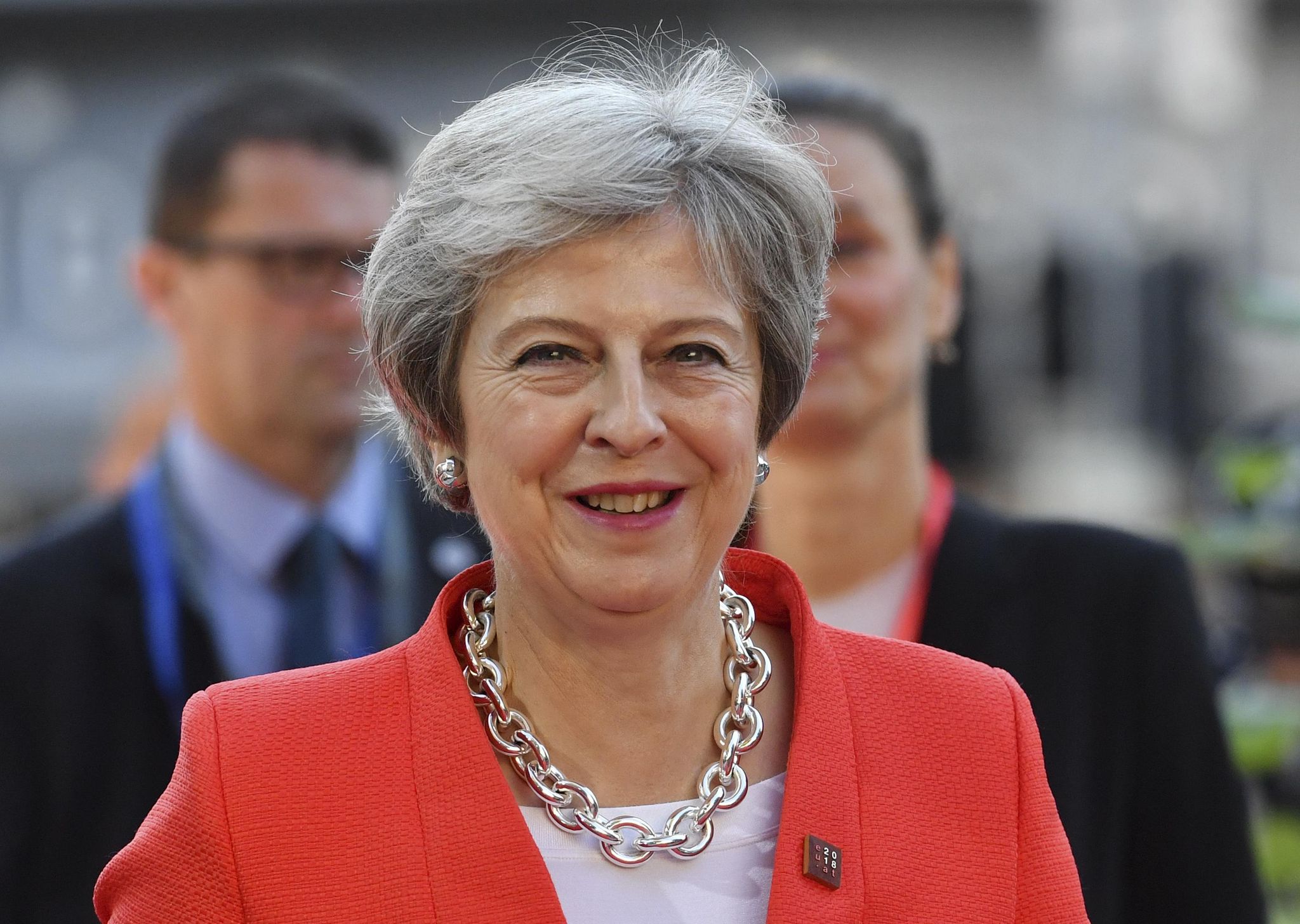
    British Prime Minister Theresa May says Brexit negotiations are “at an impasse” after the European Union rejected her proposals for leaving the bloc.

    Speaking at 10 Downing St. in London, May said it was “not acceptable” that the EU had rejected her plan without offering alternatives.

    EU chief Donald Tusk said at a summit in Salzburg that May’s plan would not work.

    May says both sides want a deal, but remain far apart on key issues of future trade relations and the Irish border. She called for “serious engagement” to solve the problems.

    The pound fell on May’s comments, trading down a sharp 1.2 percent on the day to $1.3104.

    ___

    9:30 p.m.

    The British government on Friday accused the European Union of slamming the handbrake on Brexit negotiations, after the bloc said Prime Minister Theresa May’s blueprint was unworkable.

    European Council President Donald Tusk said bluntly at a meeting in Salzburg, Austria on Thursday that parts of May’s plan simply “will not work,” while French President Emmanuel Macron called pro-Brexit U.K. politicians “liars” who had misled the country about the costs of leaving the 28-nation bloc.

    A rattled May insisted that her plan was the only one on the table – and that Britain was prepared to walk away from the EU without a deal if it was rejected.

    The rebuff sparked British headlines saying May had been “humiliated,” and a strong response from the U.K. government.

    Brexit Secretary Dominic Raab accused the EU of rejecting Britain’s proposals without offering “credible alternatives” and said the bloc had “yanked up the handbrake” on negotiations.