Blog

  • Leah Aldridge: Police find body parts of baby killed in 2002

    Leah Aldridge Image copyright Police handout Image caption Leah Aldridge died on Christmas Day in 2002

    Three funerals had to be held for a baby girl killed by her father after police twice found they had retained body parts, it has emerged.

    The family of Leah Aldridge had “no confidence” in Greater Manchester Police after some of her remains were found for the second time, Bolton West MP Chris Green told Parliament.

    Leah, from Atherton, near Manchester, died aged five weeks old in 2002.

    Mr Green asked the prime minister to launch a public inquiry.

    Speaking at Prime Minister’s Questions he said: “[Leah’s family] have no confidence in Greater Manchester Police or the police and crime commissioner, the mayor of Greater Manchester [Andy Burnham], that they now have finally allowed the family to lay their daughter Leah to rest.”

    Image copyright Police handout Image caption Andrew Ashurst was jailed for three years for manslaughter

    Her body was initially returned to her family for a funeral but in 2017 the police discovered they had returned some of Leah’s body parts.

    These were returned to the family for a second funeral.

    “Only a few weeks ago yet more body parts were discovered by the police and the family had to go through the ordeal of a third funeral,” Mr Green told the house.

    Theresa May said it was an “absolutely terrible case” and expressed her sympathies to Leah’s family for their “prolonged trauma”.

    She said she understood the deputy mayor of Greater Manchester had been in touch with the Human Tissue Authority about the case to evaluate what went wrong.

    ‘Deeply distressing’

    “Officials in the Home Office will meet both the Greater Manchester police and the National Police Chiefs’ Council to further address the issue of historically held human tissue. I will ensure that the relevant Home Office Minister updates my honourable friend on the outcome of those meetings,” she said.

    A spokesman from the mayor’s office said it was a “tragic and deeply distressing matter”.

    He said the mayor was contacted about the case in August and has discussed it with the deputy mayor and the chief constable, and has written to Leah’s family to offer his full support.

    “This is being treated with the upmost seriousness and the mayor and deputy mayor’s firm focus continues to be supporting the family until they get the answers they need,” he said.

    Greater Manchester Police has been approached for comment.

  • Reclassify cancers to improve treatment, researchers say

    Graphic of cancer Image copyright Getty Images

    Cancers should no longer be categorised by where they are first formed in the body, but instead by similarities in tumour types, researchers say.

    A US-led study of 33 cancer types from more than 10,000 patients found they could be reclassified into 28 clusters that shared similar molecules.

    Reclassification would ultimately lead to better, more targeted treatments, said the researchers.

    “It’s time to rewrite the textbooks on cancer,” one of the authors said.

    ‘One-stop shops’ for cancer diagnosis Rise in cancers ’caused by weight’

    ‘Break down silos’

    Cancers have traditionally been classed and treated according to the part of the body from which they originate, such as the breasts or lungs.

    Image copyright Getty Images Image caption Lung cancer is one area where treatment could be improved, researchers say

    Immunotherapy – where the body’s immune system is enlisted to help fight cancer – is one treatment that could potentially be rolled out more widely, Prof Benz said.

    Drugs used for the treatment of other conditions, such as rheumatoid arthritis, could also ultimately be repurposed to fight cancer.

    In other cases, cancers that are harder to treat might require a combination of medications.

    Lung and colorectal cancers are among those that would often benefit from more targeted treatment, Prof Benz said.

    But he explained that it could take up to a decade for new treatments to become available because of the difficulty in getting drugs approved.

    He called for oncology departments, which tend to focus on specific areas of the body, and drugs companies to work together better to improve care for patients.

    “It’s time to rewrite the textbooks on cancer, and it’s time to break down the silos in clinical oncology that make it difficult for patients to take advantage of this paradigm shift in cancer classification,” Prof Benz said.

    Dr Justine Alford, from Cancer Research UK, said: “By revealing the molecular groups that cancers tend to fall into, this research opens up new possibilities for patients who would traditionally be treated based on where in the body their cancer is.

    “Identifying patients most likely to benefit from a particular treatment could also help improve clinical trials.

    “The real test now will be to put this knowledge into practice and find out if this way of treating patients helps save more lives,” she added.

    The research was published in Cell.

    Follow Alex on Twitter.

  • What is chemotherapy?

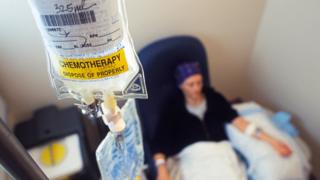
    A woman is treated with chemotherapy Image copyright Science Photo Library

    Chemotherapy is drug treatment which is used to try and kill cancer cells or stop them from spreading.

    It is not the same treatment for every cancer – different cancer cells respond to different drugs.

    Sometimes as many as eight different drugs are used in combination to get the best effect, and doctors are constantly trying out new combinations to improve treatment.

    Chemotherapy is often associated with debilitating side effects, but many types of modern chemotherapy cause only mild problems.

    Fewer women will need chemotherapy Breast cancer screening ‘more harm than good’ Warning over late effects of chemo on young

    When is chemotherapy used?

    Because chemotherapy drugs are usually injected into the blood, they travel around the body and can attack cancer cells regardless of where they find them.

    Image copyright Science Photo Library

    Radiotherapy, which uses radiation to destroy cancer cells, can only be given to small areas of the body or it will cause damage to too many healthy cells.

    Often, after an operation to remove cancer, chemotherapy will be given to “mop up” any remaining cells.

    Some cancers, such as leukaemia, need chemotherapy because they involve cells which are found throughout the body.

    Chemotherapy can be given to shrink a tumour to make it easier for the surgeon to remove.

    It can also ease the symptoms of patients whose cancer is not curable.

    How does chemotherapy work?

    Chemotherapy, in its traditional sense, is a chemical which is poisonous to cancer cells and kills them.

    This is called a cytotoxic chemical – one very early chemotherapy was produced from mustard gas, which was used as chemical weaponry during World War One.

    However anything which is poisonous to cancer cells may also be poisonous to the body’s healthy cells, which it needs to survive.

    The trick with chemotherapy is to find a chemical which kills as many cancer cells as possible, and as few healthy cells.
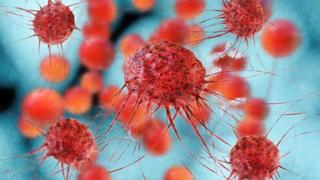
    Image copyright Getty Images

    Doctors have been getting increasingly successful at developing such chemicals by spotting and exploiting the differences between the cancer cells and neighbouring normal cells.

    The principle difference between many cancer cells and normal cells is the speed at which they reproduce, or divide.

    Cancers tend to be dividing and growing faster than other cells in the body – which is why lumps or tumours sometimes appear.

    Other cancer cells may become more or less active in response to natural chemicals called hormones produced by the body.

    Some chemotherapy harnesses this reaction to control the growth of the cancer cells.

    Cancer cells are not attacked by the body’s own immune defence system because the immune system does not recognise them as foreign.

    Some chemotherapies try to programme the immune system to see the cancer cells as foreign so they can be attacked and destroyed.

    How is chemotherapy given?

    Normally chemotherapy is delivered by injection into a blood vein.

    In many cases, a saline drip will be set up to dilute the drug as it enters the body. This stops it harming the vein because it is so concentrated.

    If the patient needs frequent doses of different drugs, to avoid the discomfort of having to have separate injections every time, a tube is kept in the vein which attaches to the syringe. This is called a Hickman line when placed into a vein in the chest.
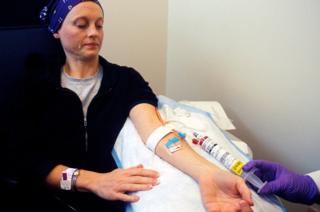
    Image copyright Science Photo Library

    Sometimes, a concentrated dose of chemotherapy is needed in a particular part of the body, and side effects can be lessened by injecting it directly into the cancerous area.

    For example, for some bladder cancers, the drug can be pumped into the bladder so it works directly on the tissue involved.

    How long chemotherapy courses last varies between different cancer types, with some being given intensively over a fortnight, normally in hospital, and some over a period of months.

    What side-effects can be expected?

    Because some chemotherapy targets fast-growing or fast-dividing cells, it is more likely to harm similar cells in the body.

    These include the cells in the hair follicles, which is why cancer treatment is often associated with hair loss, although hair does re-grow once treatment has ended.

    Other fast-dividing cells can be found in the stomach and bowel lining, which leads to nausea and diarrhoea.

    There are, however, drugs which help to control this, and timing meals to avoid having a full stomach when the drugs take effect can also help in some cases.
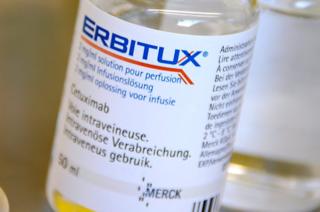
    Image copyright Science Photo Library

    Other types of normal cell that can suffer are the blood cells.

    Red cells are important to carry oxygen to keep other cells alive. Other blood cells help to stave off infection.

    As a result, chemotherapy patients may be more prone to infections and find them harder to fight off.

    Hospitals will take regular blood tests to monitor the levels of different cells. This is called a full blood count.

    Generally, patients on chemotherapy can expected to have less energy than usual, or even feel extreme fatigue.

    Chemotherapy can also affect the fertility of both men and women, and both can now freeze their sperm and eggs with the hope of using them to produce a test-tube baby.
  • Cancers ‘rising around the world’

    A woman is treated with chemotherapy Image copyright Science Photo Library

    There will be 18.1 million new cases of cancer and 9.6 million people will die with the disease this year worldwide, a report predicts.

    The rise, from 14.1 million cases and 8.2 million deaths in 2012, is partly due to a growing and ageing population.

    The figures suggest one in five men and one in six women will develop the disease in their lifetime.

    And as countries become wealthier, more people get cancers related to lifestyle rather than those linked to poverty.

    The International Agency for Research on Cancer provides regular snapshots of the scale of cancer around the world, looking closely at 36 different cancers in 185 countries.

    Researchers say while ways of measuring and collecting cancer data have improved over the years, the overall trend is that cancer rates and deaths have risen year on year.

    The latest report suggests lung cancer, female breast cancer, and bowel cancer are responsible for a third of all cancer cases and deaths worldwide.

    ‘Tobacco control’

    And the authors say lung cancer is now the leading cause of cancer death in women in 28 countries.

    The worst hit countries include the USA, Hungary, Denmark, China and New Zealand.

    George Butterworth, from the charity Cancer Research UK, said: “Tobacco is the single biggest reason why more women across the world are getting lung cancer than ever before.

    “In the UK smoking among women became more prolific later than it did for men, so it’s not surprising that we’re seeing increasing lung cancer rates now.

    “Similarly, cigarettes are now increasingly popular among women in low and middle income countries and the tobacco industry’s aggressive marketing to them is influencing this.”

    Meanwhile, Dr Freddie Bray, of the IARC, said: “The results highlight the need to continue to put in place targeted and effective tobacco control policies in every country in the he world.”

    ‘Extraordinary diversity’

    Overall, the report estimates, nearly half of all cases and most cancer deaths in the world this year will occur in Asia, partly because of the large numbers of people living in the continent and partly because some cancers with higher death rates are more common in this region.

    This includes, for example, high rates of liver cancer, which generally has a poor prognosis, in China.

    Beyond this, the authors say, there is “extraordinary diversity” in the types of cancer and patterns of illness around the world.

    They say because of this countries need to consider tailoring how they try to prevent and treat cancer.

  • What sanctions can the EU impose on Hungary?

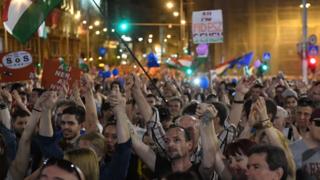
    Opposition protest in Budapest Image copyright Getty Images Image caption Opposition protesters take to the streets after elections in Hungary
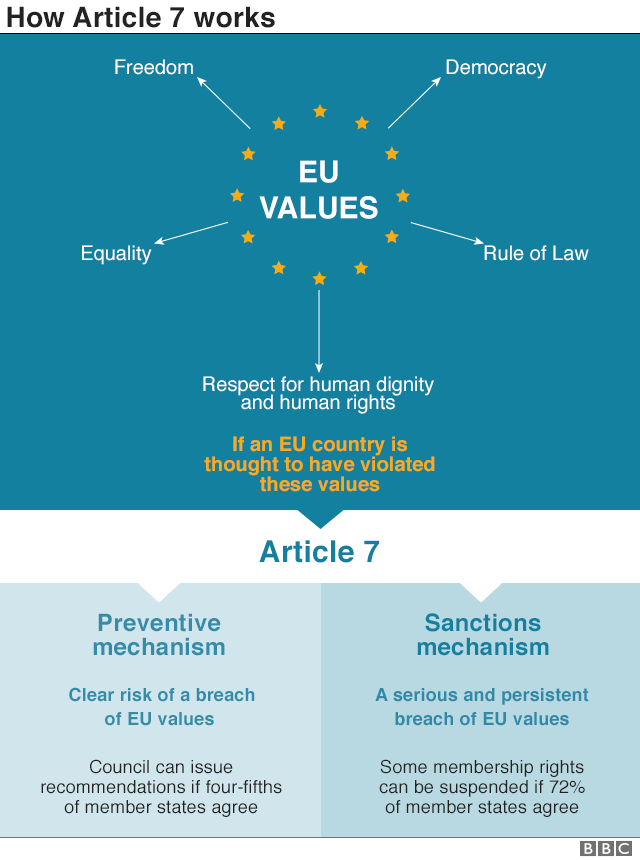

    The European Parliament has voted to pursue disciplinary action against Hungary under Article 7 of the European Union treaty.

    The right-wing Hungarian government has been accused of attacks on the media, minorities and the rule of law – charges denied by Prime Minister Viktor Orban.

    Article 7 is designed to protect the European Union’s fundamental values.

    It sets out ways various EU bodies can act if they believe those values are at risk, or have been seriously breached.

    These values are founded on respect for:

    It highlighted concerns about freedom of expression, academic freedom, judicial independence, the electoral system and the treatment of minorities as well as asylum seekers and refugees.

    It described the country as being “at clear risk of a serious breach of EU values” and called for a full parliamentary vote on the matter.

    The only other occasion the EU has formally resorted to Article 7 is over Poland, where there’s been an ongoing dispute with its authorities over judicial reforms – but there has been no parliamentary vote on the issue.

    EU votes for disciplinary action against Hungary In depth – Viktor Orban’s Hungary Nationalism in heart of Europe needles EU

    The EU had voiced concern about the independence of the courts following Polish government moves to change or remove judges.

    It was the executive, the EU Commission, which decided to act in that case, invoking Article 7 in December 2017 after concluding that there was “a clear risk of a serious breach of the rule of law in Poland”.

    The arguments with Poland are continuing.

    Image copyright EPA Image caption There’s been concern about changes to the judiciary in Poland

    Preventative action

    It’s important to make clear that Article 7 is a process rather than an end in itself.

    And the process is divided into separate parts, with one not necessarily dependent on the other.

    Under the preventative mechanism, the commission, the European Council or the Parliament can start the Article 7 process to determine whether there is a “clear risk of a serious breach of EU values”.

    The parliament has to agree by two-thirds of those MEPs who take part in the vote, which must also be an absolute majority of all MEPs, to start the process.

    It then goes to the EU Council – the heads of government of the member states.

    The council must agree by a four-fifths majority that there is a risk of breaching EU values (and then recommend specific actions to be taken by the country concerned).

    European Parliament sources say there is no particular timeframe for this process – and that, in theory, the council could do nothing and simply ignore the vote by the parliament.

    Sanctions

    Under the sanctions mechanism enshrined in Article 7, only the council or the commission can trigger the process.

    The council then has to decide unanimously that “a serious and persistent breach of EU values has taken place”.

    It has to also get the agreement of two-thirds of the parliament to this.

    Once that has been done, the council has the power to suspend some of the country’s membership rights – such as voting rights in the council itself.

    However, it is not clear what other rights can be suspended.

    And the council can only take this ultimate step by a qualified majority amounting to 72% of member states.

    At the moment, this is not the course of action being proposed in the case of Hungary, although in theory that route remains open to the EU at a later stage.

    Read more from Reality Check

    Send us your questions

    Follow us on Twitter

  • Brexit: Theresa May will reconsider £39bn bill if there’s no deal

    Till with sterling and euro notes Image copyright Reuters

    Theresa May has said she will reconsider paying the £39bn Brexit divorce bill if the UK is unable to reach a deal with the EU.

    Speaking in Parliament, she said the UK was a law-abiding nation which would honour its international commitments.

    But asked by Tory MP Chris Philp what would happen in the event of a no deal, she said the “position changes”.

    “The specific offer was made in the spirit of our desire to reach an agreement with the EU,” she added.

    The proposed financial settlement is part of the withdrawal negotiations that both sides hope to complete by November at the latest ahead of the UK’s exit next March.

    The UK and EU agreed in principle in December that the UK would pay about £39bn to cover outstanding financial obligations and future liabilities arising from its EU membership.

    Mrs May was asked by Chris Philp whether the payment was dependent on reaching an agreement on the UK’s future relations with the EU that was “satisfactory” to MPs.

    He also urged the prime minister not to be “locked into” any financial agreement unless there were guarantees the UK would be free to work on new trade agreements during the proposed transition period ending in December 2020 and to sign them the moment it leaves.

    In response, Mrs May said the negotiations were being conducted on the basis that “nothing is agreed until everything is agreed”.

    “We are very clear we need to have a link between the future relationship and the withdrawal agreement.”

    Tory MPs have expressed concerns that the UK could find itself paying the money with no guarantees over its future trade relationship, Boris Johnson suggesting the UK has agreed to “hand over £40bn of taxpayers’ money for two-thirds of diddly squat”.