Blog

  • Australian schoolgirl Harper Nielsen’s national anthem protest

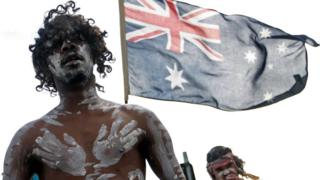
    Aboriginal performers guide the Indigenous and Torres Straight Islander war veteran march on ANZAC Day in Sydney's Redfern on April 25, 2008 Image copyright AFP Image caption An Australian schoolgirl claims the national anthem disregards the country’s indigenous people

    A nine-year-old girl has stirred controversy after refusing to stand for Australia’s national anthem in protest at alleged institutional racism.

    Harper Nielsen claimed the song “Advance Australia Fair” ignored the nation’s indigenous people.

    “When it says ‘we are young’ it completely disregards the Indigenous Australians who were here before us,” she told ABC news Australia.

    Australian politician Pauline Hanson later labelled Harper a “brat”.

    The schoolgirl was given detention last week for “blatant disrespect” over her failure to participate with classmates during a rendition of the song at Kenmore South State School in Brisbane.
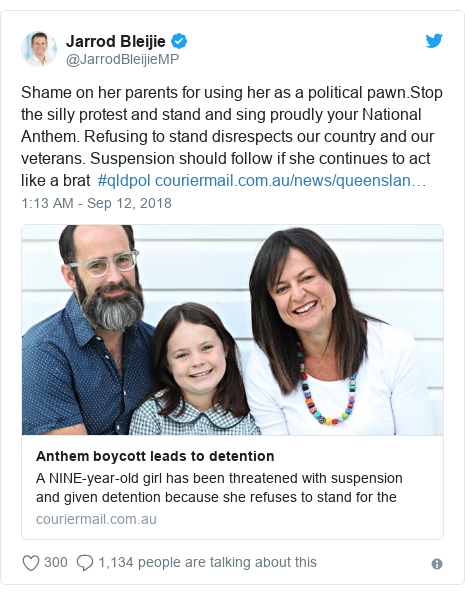
    Image Copyright @JarrodBleijieMP @JarrodBleijieMP

    Others, such as Australian journalist and television host Georgie Gardner, praised Harper for her “strength and character”.

    “I do applaud her for considering the words of the national anthem, a lot of people just rattle it off and don’t consider the meaning,” she said.

    On Twitter, users posted messages of support using the hashtag #HarperNielsen, calling the schoolgirl “Australia’s most fantastic and brilliant brat” and “the hero Australia doesn’t realise it needs”.

    Harper’s move echoes the controversial kneeling protests of NFL players during the national anthem in the US, which began with quarterback Colin Kaepernick.

    What is happening in Kaepernick row?

    A spokesperson for the Queensland state education department said the school had offered Harper the choice of remaining outside the hall during the anthem or simply not singing.

    In June, Australian states took steps towards the nation’s first treaties with Aboriginal and Torres Strait Islander peoples.

    Many indigenous Australians have cited a treaty or treaties as the best chance of bringing them substantive as well as symbolic recognition – the subject of a long-running national debate.

    Australia is the only Commonwealth country that does not have a treaty with its indigenous populations.
  • EU votes for disciplinary action against Hungary

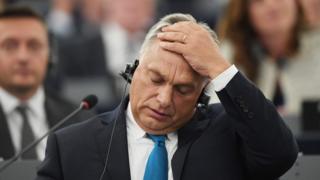
    Hungary's Prime Minister Viktor Orban places his hand on his head in an emotive gesture Image copyright AFP Image caption Vicktor Orban launched an impassioned defence of his country on Tuesday – but it was not enough

    The European Parliament has voted to pursue unprecedented disciplinary action against Hungary over alleged breaches of the EU’s core values.

    Prime Minister Viktor Orban’s government has been accused of attacks on the media, minorities, and the rule of law – charges which he denies.

    MEPs backed the vote by 448 to 197, giving it the two-thirds required for proceedings to go ahead.

    If also approved by national leaders, Hungary could face disciplinary action.

    Wednesday’s vote is the first time the European Parliament has voted to take such action against a member state under EU rules.

    Measures could include suspension of the country’s voting rights in Europe or other sanctions.

    Mr Orban personally spoke to the parliament on Tuesday in defence of his country, labelling the threat of censure as a form of “blackmail” and an insult to Hungary.

    He claimed a report by Dutch MEP Judith Sargentini was an “abuse of power”, and included “serious factual misrepresentations”.

    In depth – Viktor Orban’s Hungary Nationalism in heart of Europe needles EU

    Since coming to power, Mr Orban’s government has taken a hardline stance against immigration. It introduced a law which made it a criminal offence for lawyers and activists to aid asylum seekers, under the banner of “facilitating illegal immigration”.

    Ms Sargentini’s report into Hungary’s ruling Fidesz party alleged such actions were “a clear breach of the values of our union”.

    Under an EU rule called Article 7, breaching the union’s founding principles can lead to suspending a member state’s rights as a punitive measure.

    Suspension of Hungary’s voting rights is the most serious possible consequence – but is considered unlikely, as Poland’s nationalist government may support Hungary.

    Poland is itself facing disciplinary proceedings, launched by the European Commission in December last year. The case has yet to reach the European Parliament.

    The decision on Hungary will now be referred to the the EU’s 28 member states to consider.

  • Labour’s Tom Watson ‘reversed’ type-2 diabetes through diet and exercise

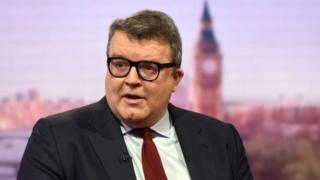
    Tom Watson Image copyright PA

    Labour’s deputy leader Tom Watson has revealed he was diagnosed with type-2 diabetes but has “reversed” the condition through diet and exercise.

    He has now come off medication after losing seven stone (44.5kg) since last summer.

    He cut out junk food, starchy carbohydrates and refined sugar and took up cycling and running.

    The MP has vowed to launch a crusade against diabetes if Labour wins power at the next election.

    “I feel great. I feel absolutely fantastic. Chilled out, I feel like my IQ has gone up. I feel younger. It’s a great feeling,” he told BBC Radio 4’s Today programme.

    Image caption Mr Watson says he reached 22 stone before he began his diet

    After researching the subject, he started a diet by “giving up sugar” and cut out beer and curry. He then began to exercise, starting with walking then cycling, running, boxing and weight-training.

    About four million people in the UK have diabetes, with the condition accounting for 10% of all NHS spending.

    Poor diet and a lack of exercise mean it’s possible a million more people in this country could be diagnosed with diabetes over the next 20 years, according to a report by Public Health England.

    What is type-2 diabetes?

    Type-2 diabetes is a chronic condition associated with obesity and family history and is more likely to be diagnosed in older people. It’s more common than type-1 diabetes.

    It is caused by problems with controlling blood sugar levels – either because the pancreas does not produce enough insulin, or if a body’s cells do not react to insulin as they should.

    The condition is treated by medication or controlling a person’s diet.

    Diabetes UK offers advice on preventing and coping with type-2 diabetes.

    The changes that could prevent diabetes

    Mr Watson has vowed to set up an independent, cross-party commission to investigate ways of preventing the condition if Labour wins power, with the aim of eliminating the estimated rise in cases within five years.

    “I think a lot of people feel shame when they are diagnosed with it because you kind of know, you get warning signs,” he told Today.

    “But for many millions of people, it’s an entirely preventable and reversible condition” with “the right nutrition and exercise”.

    “It is a public health scandal that so many millions of people are having to suffer this condition when they don’t have to,” he added.

    One of the most important risk factors for type-2 diabetes is being overweight or obese.

    According to a World Health Organization report, the UK is the third fattest among 53 countries in Europe, with heavy drinking a key cause.

    The United Nations body found 27.8% of adults in the UK are obese compared with 32.1% of people in Turkey and 28.9% in Malta.

    Those whose body mass index is at least 30 are deemed to be obese.

  • Brexit: Tory MPs say technology key to avoiding hard Irish border

    A Northern Ireland border sign Image copyright Getty Images Image caption The future management of the Irish border is one of three main priorities in UK-EU Brexit talks
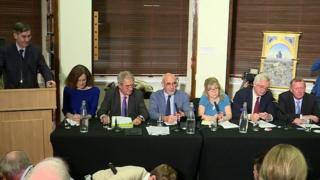
    A hard border on the island of Ireland can be avoided by using “established” technology and “modifying” existing arrangements, Brexiteer Tory MPs say.

    The European Research Group said the issue had been allowed to “frame” the talks but need not block a trade deal.

    They call for “effective co-operation” between Belfast and Dublin to address smuggling concerns and extra customs forms to be included in VAT returns.

    The EU has insisted on a “backstop” to ensure the single market is protected.

    Both the UK and the EU want to avoid a return to physical checks at the Northern Ireland border, but have yet to agree how this can be achieved.

    Image caption Two former Northern Ireland secretaries were among Tory MPs endorsing the proposals
    The report acknowledges a range of new checks will be needed on goods passing across the 310 mile border between Northern Ireland and the Republic of Ireland after Brexit, including extra customs declarations and declarations of origin as well as sanitary, phytosanitary and product compliance procedures.

    Among the proposals put forward in the document to deal with these are:

    Extra customs declarations should be incorporated into existing system of VAT returns Simplified customs procedures for the majority of cross-border trade Trusted trader-type schemes for large companies Equivalence of UK and EU regulations for agricultural produce Declaring the island of Ireland a Common Biosecurity Zone

    The report concluded: “The proposals can be realised within the existing legal and operational frameworks of the UK and EU, based on the mutual trust on which regular trade depends.

    “They do nothing to alter the constitutional position of Northern Ireland and do not violate the principle of consent of the enshrined in the Belfast Agreement.”

    Are Tory MPs set to move against Theresa May?

    By BBC political editor Laura Kuenssberg

    There is massive frustration with her leadership, her position on Chequers and the way her proposals tuck the UK closely into the EU in perpetuity. And yes, there are some MPs who want to see her gone immediately.

    However senior voices in the European Research Group – yes them – are adamant that it is not the time to try to oust the PM. It would be “stupid”, one told me last night.

    Imagine in these critical weeks of the Brexit negotiations if the UK started to try to change the prime minister.

    Right now those jostling to remove her know they don’t have any guarantees they would have the numbers to force her out, even though they may well be able to pull together enough MPs to submit letters to the chair of 1922 committee to trigger a contest.

    Read Laura’s blog

    John Campbell, the BBC’s Northern Ireland business and economics editor, said the document offered more detail than before and put forward a number of “plausible technocratic solutions”.

    But he said they placed a lot of store on the EU agreeing to mutual recognition of standards and the UK having access to its VAT system – which was far from clear.

    Former Northern Ireland First Minister Lord Trimble dismissed suggestions the Good Friday agreement could be put in peril by Brexit, saying fears of a “reversion to violence were wrong”.

    “There is no serious threat from violence because we have sorted that issue,” he said.

    Former Brexit Secretary David Davis said the proposals were “fabulously practical” and could “unlock” the current dispute over the PM’s Chequers proposals – which scores of Tory MPs have said they cannot support.

    Both Mr Davis and Jacob Rees-Mogg, the ERG’s chair, dismissed talk of a leadership challenge to the prime minister – after it emerged the issue was discussed openly by Tory MPs at a meeting on Tuesday night.

    “We’ve got a very good prime minister,” Mr Davis said.

    “I disagree with her on one issue, it’s this issue. She should stay in place because we need stability, and we need decent government as the backdrop for what we’re doing in the coming next six months.”

    (more…)

  • Hampden: ‘Where is the grand plan & finance to redevelop the national stadium?’

    Sport ‘Where is the grand plan & finance to redevelop Hampden?’
  • Egg freezing in your 40s ‘not sensible’

    Anxious woman Image copyright Getty Images

    Clinics must make it clear that there is little point in women over 40 freezing their eggs, because the odds of a future pregnancy are very slim, says UK fertility regulator the HFEA.

    Fertility declines with age, so the optimum time for egg freezing is before a woman turns 35, it says.

    Yet data shows that the most common age at which women are treated is 38, with many freezing eggs into their 40s.

    NHS clinics usually have a younger cut-off age, but private ones may not.

    The women who empty their savings to freeze their eggs Should I freeze my eggs for my 30th birthday? Why I chose to freeze my eggs

    Women can only get egg freezing on the NHS if it is for medical reasons, such as needing a cancer treatment which may cause them later fertility problems.

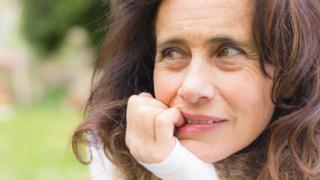
    Image copyright Getty Images Image caption The singer Rita Ora froze her eggs in her early 20s
    Around 890 of all the treatments were for women aged 35 and over, compared with 419 treatments for women younger than this.

    The HFEA says it is not clear why patients of this age are freezing eggs. Most women freezing eggs using NHS funding were aged below 35, with 89% below 38.

    It says women must be given clear information about the risks, costs and likely success rates of egg freezing, which is becoming an increasingly popular “fertility insurance” back-up plan.

    Egg freezing facts

    Success rates can be low Egg quality and number naturally drops as a woman gets older It is not a simple fix for delaying motherhood NHS funding may be available if you are having medical treatment that affects your fertility Frozen eggs can usually only be stored for 10 years (although there are some exceptions for medical reasons)

    Egg freezing costs anywhere between £2,720 and £3,920 per go.

    Most clinics will include a couple of years of storage in that price, but there may be an extra annual charge of up to £350 for that service.

    The complete cost if you then opt to thaw and use your eggs in a future treatment, is £7,000 to £8,000.

    Birth rates from frozen own eggs are increasing but remain below that of conventional IVF treatment cycles, being successful one in every five times, on average, compared to around one in three for “fresh egg” IVF.

    While a woman’s age at thaw has relatively little impact on a woman’s chances of success, the age at freeze does, with evidence suggesting that if eggs are frozen below the age of 35, the chances of success will be higher than the natural conception rate as the woman gets older, says the HFEA.

    HFEA Chair Sally Cheshire said: “Clinics have an ethical responsibility to be clear that egg freezing below the age of 35 offers women their best chance of creating their much longed-for family.”

    Aileen Feeney from Fertility Network said women should know their fertility “vital statistics” 28:35:42: “By 28, female fertility has already begun to fall; 35, female fertility plummets; 42, your chance of becoming a biological mother is vanishingly small.”

    Prof Simon Fishel, from the independent IVF provider CARE Fertility Group, said women face a hard choice, knowing that if they freeze eggs early they can still only be stored for 10 years.

  • Are Eurosceptic Tories really ready to move against May?

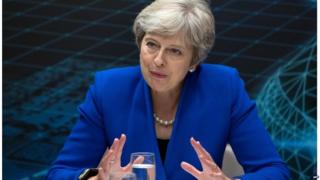
    Theresa May Image copyright AFP

    As the BBC has been reporting, conversations about how and when to remove Theresa May took place with deadly seriousness last night among a group of Eurosceptic MPs.

    There is massive frustration with her leadership, her position on Chequers and the way her proposals tuck the UK closely into the EU in perpetuity. And yes, there are some MPs who want to see her gone immediately.

    However senior voices in the European Research Group – yes them – are adamant that it is not the time to try to oust the PM. It would be “stupid”, one told me last night.

    Imagine in these critical weeks of the Brexit negotiations if the UK started to try to change the prime minister.

    Right now those jostling to remove her know they don’t have any guarantees they would have the numbers to force her out, even though they may well be able to pull together enough MPs to submit letters to the chair of 1922 committee to trigger a contest.

    So are the Eurosceptics coldly gaming the options for how to get their way? Does that include discussing if, when and how, they could try to push the prime minister out of office? Absolutely.

    But does it mean we are on the verge of a coup being launched against Number 10? Things can change very fast these days. But don’t be so sure.

  • Vietnamese capital Hanoi asks people not to eat dog meat

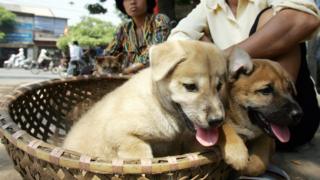
    Two women sit selling young dogs at a roadside in downtown Hanoi 11 October 2005 Image copyright Getty Images Image caption Over 1,000 stores in Hanoi still sell dog and cat meat

    Officials in Vietnam’s capital Hanoi are urging residents to stop eating dog meat as it could hurt the city’s reputation and lead to diseases like rabies.

    The Hanoi People’s Committee said the practice could tarnish the city’s image as a “civilised and modern capital”.

    The city office added that consuming the meat could lead to the spread of diseases like rabies and leptospirosis.

    Over 1,000 stores in Hanoi still sell dog and cat meat.

    The committee also urged residents to stop eating cat meat, which is less popular but still available. It highlighted the fact that many of the animals were cruelly killed.

    There are an estimated 490,000 dogs and cats in Hanoi – the majority of which are pets.

    What is rabies? The controversial Chinese dog meat festival Can you eat dogs in the UK?

    A growing number of people in Vietnam disapprove of eating dog meat but it still remains “very much a deep-rooted habit”, according to Linh Nguyen, a journalist with the BBC’s Vietnamese service.

    Even on social media, many people welcomed the decision, but there were some who argued it was a habit that many Vietnamese people could not easily give up.

    One Facebook user, Dang Ngoc Quang, argued that the dish should not be banned completely, as that amounted to deprivation of freedom.

    Instead, he suggested implementing a heavy tax on dog meat or allowing it only to be sold in specific areas.

  • Apple launch: Bigger! Faster! Pricier! Innovative?

    Image copyright Getty Images Image caption Apple’s launch event is being held on Wednesday

    Apple has given the Oval Office a run for its money in the past few weeks – we’ve had an unprecedented number of leaks ahead of the firm’s annual product launch.

    So, barring any surprises – a Steve Jobs-esque “one more thing” – we have a pretty good idea of what to expect when Tim Cook heads out on stage on Wednesday. He’ll do it as the chief executive of the first US company to reach a value of $1tn (£768bn). To keep it that way, Apple will be building on past successes rather than introducing anything dramatically new.

    We’ll likely see three new iPhones, a revamped Apple Watch, and maybe some new iPads. Later in the year, rumour suggests a budget laptop may be on the way.

    What we won’t see, however, are some of the innovative leaps being promised by some of Apple’s competitors.

    Samsung plans a device with a flexible display by the end of the year. OnePlus said its next phone will have a fingerprint sensor built into the screen. Huawei, which recently overtook Apple in global smartphone sales, has said it is working on a flexible device of its own.

    How were the Apple leaks found?

    Several rumour sites compete for tidbits of information about Apple’s forthcoming products and often manage to share details before the tech giant would like them to be disclosed.

    Content is not available

    But at the end of last month, 9to5Mac’s publication of what appeared to be official marketing images of one of the new iPhones and a new Apple Watch was a real coup for the site.

    “To my memory, this is unprecedented,” wrote the veteran Apple commentator John Gruber.

    After much speculation about how he achieved his scoop, 9to5Mac’s Guilherme Rambo has now revealed the technique he used via his Twitter account.

    Content is not available

    He wrote that he had studied the web addresses that Apple had used to host images of products announced at its last “special event” and deduced what the equivalents might be this time round.

    He said he had not expected to find anything when he typed in the addresses, but was successful on his first attempt.

    “Looking at the naming for past events, sometimes they combine multiple things into one recap image, which makes them harder to guess,” he explained.

    “We managed to guess the iPhone and Watch ones because they are ‘hero’ shots.”

    “Apple took them down immediately after we published,” he added.

    The iPhone-maker is likely to keep its secrets more closely guarded next time round.

    Content is not available

    Content is not available

    _____

    Follow Dave Lee on Twitter @DaveLeeBBC

    Do you have more information about this or any other technology story? You can reach Dave directly and securely through encrypted messaging app Signal on: +1 (628) 400-7370