Blog

  • Dog dies in overhead bin on United Airlines flight

    A dog died on a United Airlines plane after a flight attendant ordered its owner to put the animal in the plane’s overhead bin.

    A dog died on a United Airlines plane after a flight attendant ordered its owner to put the animal in the plane’s overhead bin.

    United said Tuesday that it took full responsibility for the incident on the Monday night flight from Houston to New York.

    In a statement, United called it “a tragic accident that should never have occurred, as pets should never be placed in the overhead bin.”

    The dog was in a small pet carrier designed to fit under an airline seat.

    Passengers reported that they heard barking during the flight and didn’t know that the dog had died until the plane landed at LaGuardia Airport.

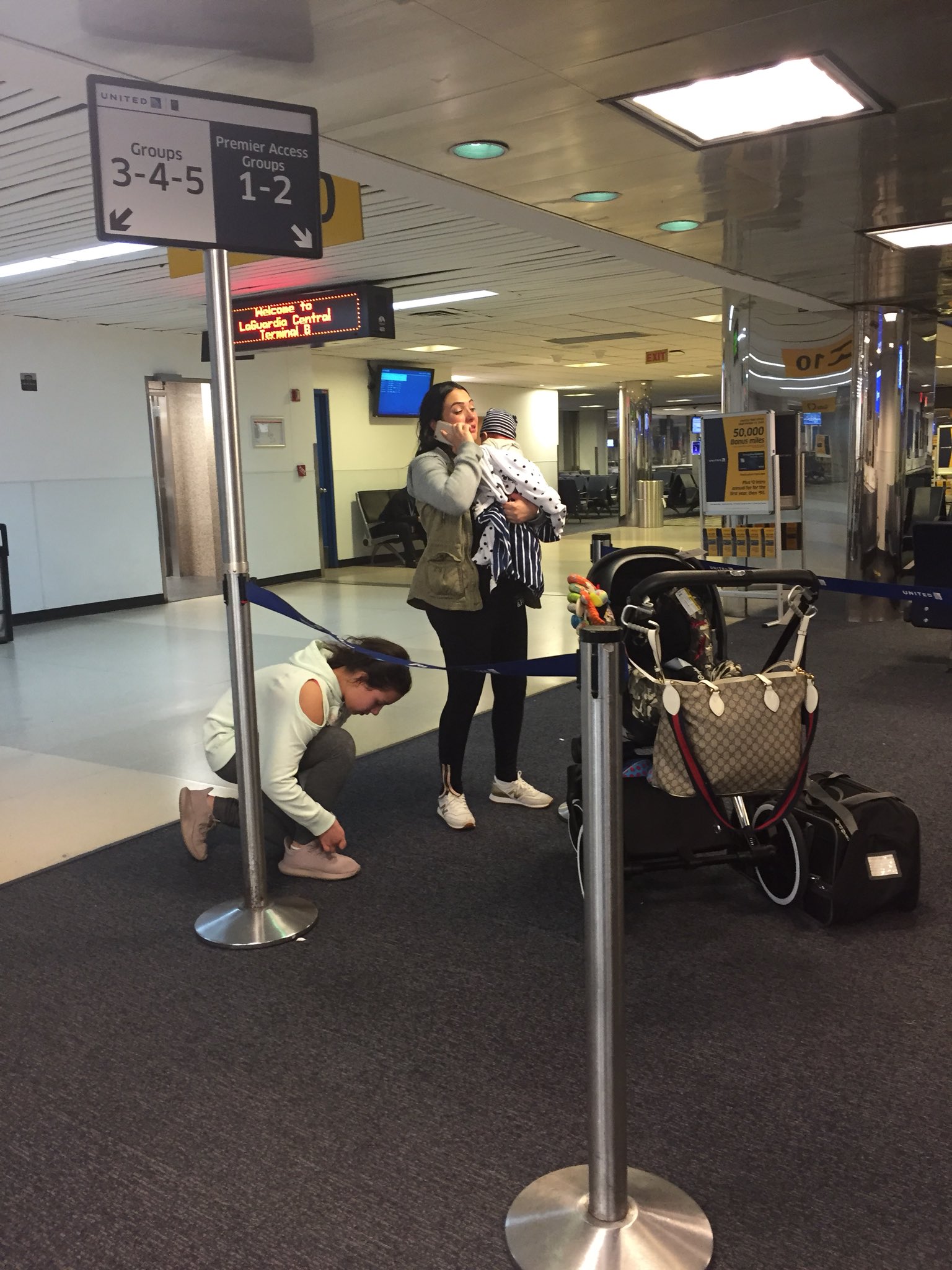
    Passenger Maggie Gremminger posted a photo on Twitter of the dog’s owner and children after the flight. “I want to help this woman and her daughter. They lost their dog because of an (at) united flight attendant. My heart is broken,” she wrote.

    United spokesman Charles Hobart said the flight attendant told the dog’s owner to put the pet carrier in the overhead bin because the bag was partly obstructing the aisle. It is unclear why the carrier was not placed under a seat, he said.

    Hobart said United is investigating the incident and talking to the flight attendant, whom he declined to identify. He said the airline refunded the tickets purchased for the dog owner and her two children and the fee that they paid to bring a pet on board – typically $200.

    The cause of the dog’s death was not immediately known. The spokesman said Chicago-based United offered to pay for a necropsy.

    Last year, 18 animals died while being transported on United – there were six cases on all other U.S. carriers combined, according to the Department of Transportation.

    United has suffered a string of incidents that generated bad publicity in the last two years, including the violent removal of a passenger from a United Express plane to make room for a crew member, and the death of a giant rabbit – its Iowa owners sued the airline, which they said cremated the animal to destroy evidence about the cause of death.

  • Donald Trump, Texas sanctuary city fight backed by appeals court

    States have the power to punish sanctuary cities within their borders and to force local police and sheriff’s departments to cooperate in turning illegal immigrants over to the federal government for

    States have the power to punish sanctuary cities within their borders and to force local police and sheriff’s departments to cooperate in turning over illegal immigrants to the federal government for deportation, an appeals court ruled Tuesday in upholding a Texas law.

    The 3-0 decision by a panel of the 5th U.S. Circuit Court of Appeals marks a major victory for President Trump, who has demanded punishment for sanctuary cities that thwart the federal government to protect illegal immigrants.

    The judges didn’t go that far, but they did say the federal government’s detainer requests, which ask local governments to hold illegal immigrants for pickup, are legal. Localities can refuse based on their own resources, the court ruled — but the detainer requests are legal, the judges said.

    Texas Gov. Greg Abbott, a Republican, praised the ruling.

    “Law is in effect,” he said on Twitter.

    Known as SB4, the legislation Mr. Abbott signed last year requires police to determine the legal status of those they encounter during their duties.

    The law also punished local elected officials, police chiefs and other law enforcement leaders who enacted or carried out sanctuary policies that refused cooperation with U.S. Immigration and Customs Enforcement.

    The law explicitly said local jurisdictions should comply with detainer requests.

    Immigrant rights advocates and a number of Texas cities objected. They said detainers forced state or local police to hold illegal immigrants beyond their usual release time, infringing on their Fourth Amendment rights.

    But Judge Edith H. Jones, writing the court’s opinion, said it’s not clear that illegal immigrants are covered by the Fourth Amendment. Beyond that, she said, federal detainer requests are legitimate.

    She said that under the Trump administration’s policy, ICE officers must issue administrative warrants to accompany their detainer requests. Those warrants serve as statements of probable cause that local police can rely on to hold someone — just as they would do for any other police officer who makes a valid request.

    “Here the ICE-detainer mandate itself authorizes and requires state officers to carry out federal detention requests,” Judge Jones wrote.

    The court did rule part of Texas’ law that prohibited local elected officials from endorsing sanctuary policies to be problematic because it could be seen as an infringement on the officials’ free speech rights. But she said the state can prevent a locality from adopting or enforcing a sanctuary policy and can impose penalties on officials who attempt to create sanctuaries.

    Sanctuary cities are jurisdictions that have policies limiting or, in their more extreme forms, thwarting cooperation with ICE deportation efforts.

    The Obama administration opposed sanctuary cities, but Mr. Trump took that policy to a new level by going to war with sanctuaries, particularly in California.

    His administration filed a lawsuit last week challenging three California sanctuary laws. On Tuesday, Mr. Trump — while visiting San Diego to tour prototypes of his border wall — said he wants Congress to strip federal grant money from sanctuaries in the upcoming spending bill.

    Mr. Trump’s threats have been unpersuasive. The number of sanctuaries has expanded dramatically during his first 14 months in office.

    Texas, however, had been a rare bright spot for the Trump administration. State officials have moved to back him up in opposing sanctuaries.

    SB4 had been slated to go into effect Sept. 1, just days after a federal district judge issued a broad injunction.

    Judge Orlando Garcia asserted that the law would erode trust between police and immigrant communities, making them less safe.

    “The mandates, penalties and exacting punishments under SB4 upset the delicate balance between federal enforcement and local cooperation and violate the United States Constitution,” Judge Garcia wrote.

    The 5th Circuit last year quickly stayed much of Judge Garcia’s blockade, and Tuesday’s ruling was an even bigger spanking for the Clinton-appointed judge.

    Lee Gelernt, an American Civil Liberties Union lawyer who appeared before the 5th Circuit during oral arguments, said the court did leave open the possibility that Texas law could be illegal as it was carried out.

    “We are exploring all legal options going forward. The court made clear that we remain free to challenge the manner in which the law is implemented, so we will be monitoring the situation on the ground closely,” he said.

    He said localities can still object to detainer requests based on a lack of resources or other nonimmigration restraints.

    Andre Segura, legal director of the ACLU of Texas, said illegal immigrants still have the right to remain silent when questioned about their immigration status.

  • Britain mulls hacking Russia in response to former spy’s poisoning

    Britain hasn’t ruled out conducting cyberattacks in retaliation for the recent poisoning of a former double agent and his daughter on U.K. soil, triggering a stern warning from Russia after Prime Mini

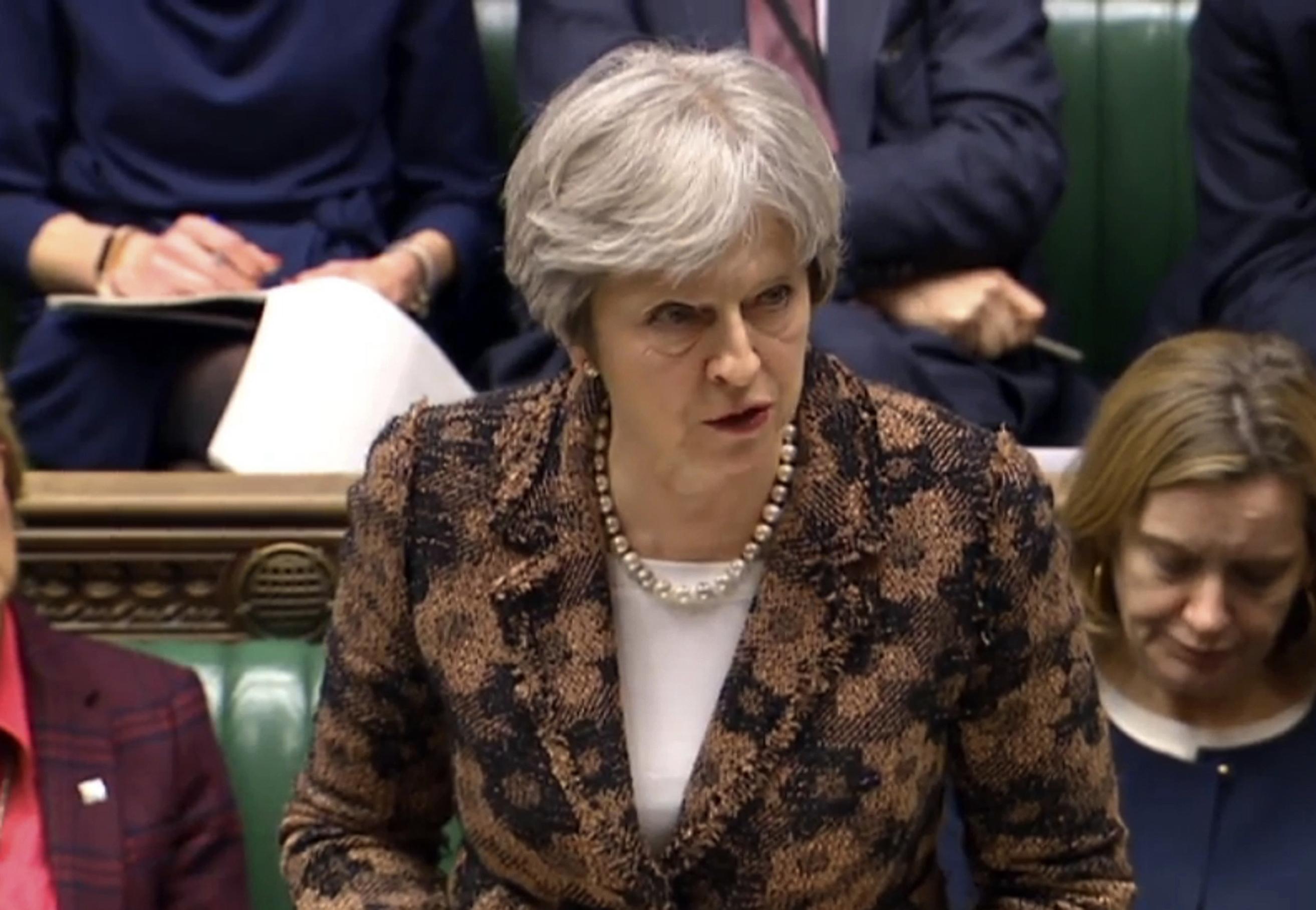
    Britain hasn’t ruled out conducting cyberattacks in retaliation for the recent poisoning of a former double agent and his daughter on U.K. soil, triggering a stern warning from Russia after Prime Minister Theresa May said Moscow was likely behind last week’s assassination attempt in the English city of Salisbury.

    “Not only is Russia groundlessly and provocatively accused of the Salisbury incident, but apparently, plans are being developed in the U.K. to strike Russia with cyber weapons,” Russia’s embassy in London said in a statement Tuesday.

    “Statements by a number of MPs, ‘Whitehall sources’ and ‘experts’ regarding a possible ‘deployment’ of ‘offensive cyber-capabilities’ cause serious concern,” the statement said. “We invite the British side to once again consider the consequences of such a reckless move.”

    Ms. May announced on Monday that Britain believed Russia was likely responsible for poisoning Sergei Skripal and his daughter Yulia, and that the U.K. will “take the full range of appropriate responses against those who would act against our country in this way.”

    “On Wednesday, we will consider in detail the response from the Russian State. Should there be no credible response, we will conclude that this action amounts to an unlawful use of force by the Russian State against the United Kingdom. And I will come back to this House and set out the full range of measures that we will take in response,” the Conservative Party leader told lawmakers.

    Addressing a question from a member of Parliament, Ms. May suggested cyberattacks could indeed be in the cards.

    “Can she confirm that if it is the conclusion of her majesty’s government that there was unlawful use of force by the Russian state, that we possess a considerable range of offensive cyber capabilities which we will not hesitate to deploy against that state if it is necessary to keep our country safe?” asked MP Mark Harper, a fellow Conservative.

    “We of course will look at responses across a number of areas of activity should it be, as he has said as I said in my statement, that we conclude that this action does amount to an unlawful use of force by the Russian state here in the U.K.,” Ms. May responded.

    The U.K.’s response could include hacking Russian targets including state-sponsored propaganda outlets and professional trolls linked to the Kremlin’s international meddling, British media reported citing unnamed sources.

    “Offensive cyber would be something in the arsenal. It would be considered or even likely” a government source told The Times of London.

    A former Russian intelligence colonel who later assisted British agents, Mr. Skripal and his daughter were discovered unconscious on a bench in Salisbury on March 4. Britain has since determined they were poisoned by a military-grade nerve agent developed by Russia, and Ms. May said Monday that Moscow was “highly likely” the culprit.

    “Russia is not guilty,” responded Sergei Lavrov, the Russian foreign ministry. “Russia is ready to cooperate according to the Chemical Weapons Convention, if Britain takes the trouble and condescends to carry out its international obligations according to the same document.”

    The U.K. Ministry of Defense warned in an unrelated announcement last week that Britain stands to wage cyberattacks if deemed necessary.

    Britain’s offensive cyber capabilities include the ability to retaliate after a cyberattack; the capability to deny, disrupt or degrade target communications or weapons systems; and capabilities to attack wider systems and infrastructure, according to a report released in December by the U.K. Parliament’s Intelligence and Security Committee.

    “Offensive cyber capabilities are usually highly tailored and system specific, as opposed to a one size fits all ‘cyber weapon,’” the report said.

    Russia, on its part, has been linked to an array of offensive cyber campaigns targeting the U.K and it’s allies, ranging from a wide-scale attack that debilitated Estonia in 2007, to the multi-pronged interference campaign waged against the 2016 U.S. presidential race and Democratic candidate Hillary Clinton.

    In the U.S., meanwhile, a bipartisan group of 14 senators wrote President Trump last week demanding he release a “cyber deterrence strategy” containing rules for responding to state-sponsored hackers.

    “Our adversaries need to understand the boundaries of what is acceptable in the cyber domain, as well as the circumstances under which we would utilize offensive capabilities to retaliate against cyberattacks,” the lawmakers wrote.

  • Russia’s ‘Satan 2’ missile ready for next test, top general says

    A top Russian general says its feared “Satan 2” missile is ready for a second round of testing.

    A top Russian general says its feared “Satan 2” missile is ready for a second round of testing.

    Russian General Valery Gerasimov told the nation’s state-run media this week that a follow-up to December’s testing of the RS-28 Sarmat “Satan 2” — a rocket with a  range of nearly 7,000 miles and the ability to carry about to 16 warheads — will happen in soon. He told TASS news agency that preparations for a “pop-up test” are in “full-swing.”

    “With a mass of more than 200 tonnes it has a shorter active phase of flight and better ability to penetrate missile defenses and can carry warheads of larger mass and enormous yield,” Gen. Gerasimov said Tuesday.

    SEE ALSO: Russian unveils ‘Satan 2’ missile, capable of wiping out area the size of France

    “Ejection,” or pop-up launches, test the mechanism of a missile leaving its launch container, The Diplomat noted Tuesday.

    “If its military abilities are real, which is what everybody expects, it’s quite a formidable weapon,” CNN senior international correspondent Matthew Chance said in 2016 when details regarding the rocket were unveiled. “It’s powerful enough to destroy a country — a single missile — the size of France. It’s a pretty awesome sort of missile, but hopefully it won’t ever be used.”

    Russian President Vladimir Putin claimed March 1 during a State of the Nation speech that “Satan 2” is capable of circumventing missile defense systems.

  • Donald Trump inches closer to blaming Russia for poisoning ex-spy in the U.K.

    President Trump said Tuesday that he was prepared to condemn Russia for the poisoning of a ex-British spy in the U.K., but he still wanted to have all the facts.

    President Trump said Tuesday that he was prepared to condemn Russia for the poisoning of a ex-British spy in the U.K., but he still wanted to have all the facts.

    A day earlier, the White House resisted blaming Russia for the attack despite British Prime Minister Theresa May saying it was “highly likely” that Moscow was behind the assassination attempt.

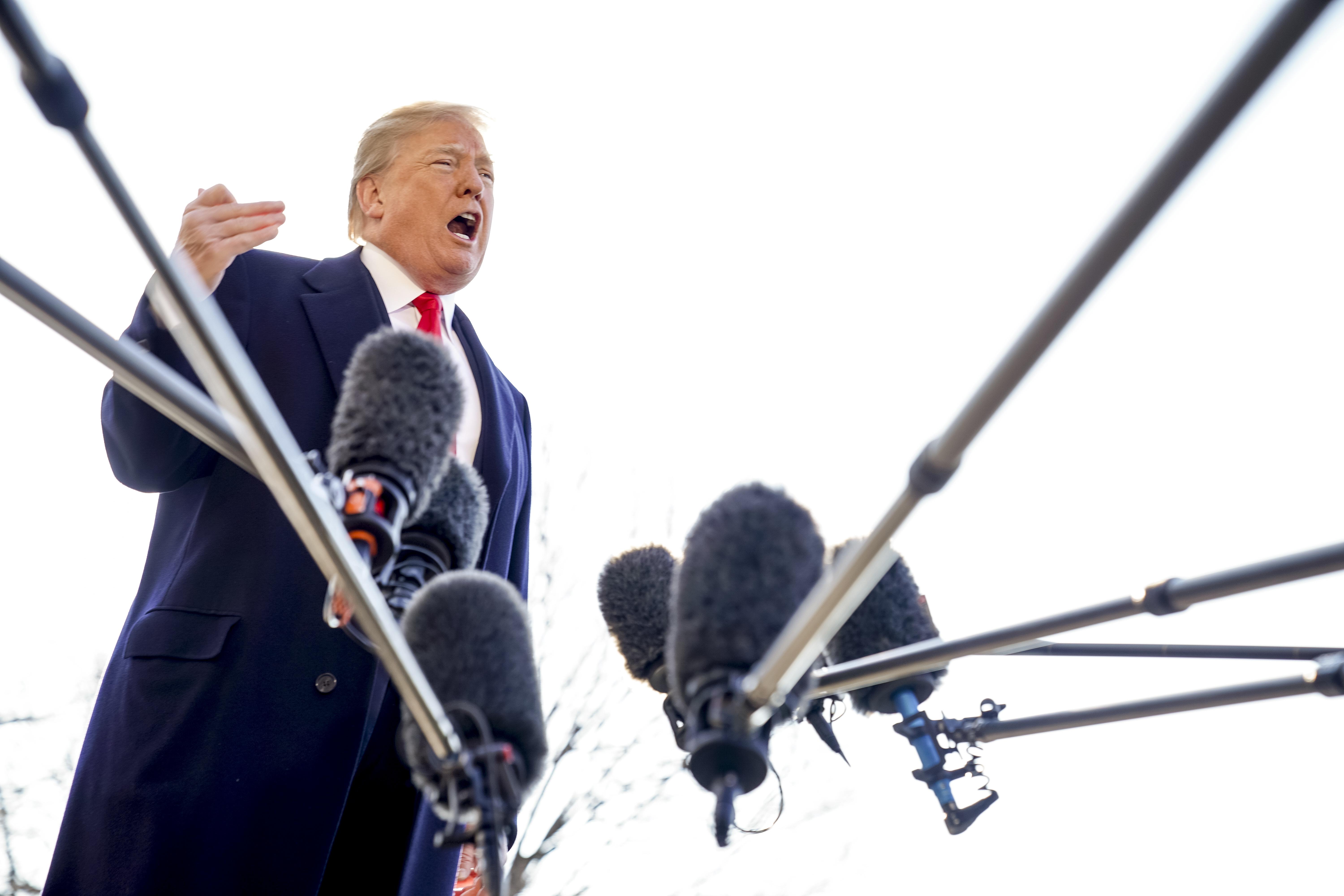
    “It sounds to me like it would be Russia based on all the evidence they have. I don’t know if they have come to a conclusion,” Mr. Trump said Tuesday.

    SEE ALSO: Trump ousts Tillerson, taps CIA Director Pompeo for State Dept.

    The president said that he planed to speak later in the day with Mrs. May.

    “As soon as we get the facts straight, if we agree with them, we will condemn Russia or whoever it may be,” Mr. Trump told reporters Tuesday.

    Former Russian intelligence officer Sergei Skripal, 66, and his daughter, Yulia Scribal, 33, were found collapsed on a city bench March 4 in Salisbury, England. They had been exposed to a military-grade nerve agents known as Novichok, according to British authorities.

    Mr. Skripal and his daughter remain in a critical but stable condition in the hospital.

    In 2004, Mr Skripal was convicted by the Russian government of spying for MI6. He was released to the U.K. in a spy swap in 2010.

    The White House resistance to blaming Russia was the final split between Mr. Trump and former Secretary of State Rex W. Tillerson, whose ouster was announced Monday.

    Mr. Tillerson said that Russia was “clearly” behind the poisoning.

  • Abdel-Fattah el-Sissi: Egypt hopes in Sinai Peninsula, troubled by swap talk

    Egyptians took to the streets last year to protest President Abdel-Fattah el-Sissi’s decision to give two strategically important Red Sea islands to Saudi Arabia.

    CAIRO — Egyptians took to the streets last year to protest President Abdel-Fattah el-Sissi’s decision to give two strategically important Red Sea islands to Saudi Arabia.

    But that protest — rare in a country where Mr. el-Sissi has clamped down on the political opposition — could pale in comparison with the backlash the government would face if Mr. el-Sissi agrees to a rumored American Arab-Israeli peace plan that would ask Cairo to give up some of the Sinai Peninsula as a new homeland for Palestinians. In turn, Palestinians would cede much of the West Bank to Israeli settlers.

    Naeem Gabr, 50, general coordinator of the North Sinai Tribes, bitterly rejects the proposed swap. His association represents 11 clans numbering about 400,000 people on the peninsula.

    “Sinai is the land of our ancestors,” he said. “Palestinian refugees can live in Jordan. That’s a solution that would not disturb or undermine the Egyptian side nor Sinai tribes.”

    The Sinai swap was one of the overlooked bits of reporting from journalist Michael Wolff’s White House insider tell-all book “Fire and Fury.” Most of the attention in the U.S. focused on domestic issues, tidbits about the backstage doings of the Trump administration, and the career self-immolation of former White House top adviser Steve Bannon for agreeing to talk to the author.

    But it was the Sinai passages that attracted all the attention in Egypt.

    Steeped in biblical history, strategically located between Cairo and Israel and divided between resorts on the sun-kissed south coast and Islamic State hideouts in the rugged interior, the Sinai Peninsula has become a battleground over the future of Egypt — whether or not Mr. Wolff’s account of a Trump peace plan is accurate.

    Mr. el-Sissi has launched a succession of military operations in the peninsula, which is roughly the size of West Virginia, with the aim of uprooting jihadi groups that have launched terrorist attacks against Egyptian security forces and Coptic Christians.

    Islamic State claimed responsibility for the October 2015 downing of a passenger jet taking off from Sharm el-Sheikh and bound for St. Petersburg, Russia. The attack in the Sinai resort town, which killed 224 people, gutted tourism, one of the Egyptian economy’s biggest foreign currency generators.

    The Egyptian military revealed late last week that 16 troops had been killed and 19 wounded since the broad-scale Sinai offensive was launched in February. The Associated Press, citing army spokesman Col. Tamer al-Rifai, reported that 105 militants had been killed and nearly 3,000 fighters detained.

    The jihadis’ penetration of Sinai led to a surge of coordination between Egyptian and Israeli militaries, including joint moves to destroy tunnels that the militants used to move men and supplies in and out of Hamas-controlled Gaza, as well as the deployments of Egyptian and Israeli fighter aircraft and drones against their common enemy.

    Despite an Egyptian-Israeli peace treaty dating back to the days of Anwar Sadat, direct cooperation with the Israelis remains controversial and the rumors have eroded Mr. el-Sissi’s support among Sinai’s 1.4 million inhabitants.

    “Hundreds of civilians have been killed, including men, women, children and even infants,” said Mohannad Sabry, a former Sinai resident and author of “Sinai: Egypt’s Linchpin, Gaza’s Lifeline, Israel’s Nightmare.” “Close to a dozen villages have been partially or fully destroyed by the military, and hundreds of thousands of productive trees, in farms owned by the locals, have been destroyed.”

    Reviving the economy

    Campaigning on his government’s investments in energy infrastructure and urban development, Mr. el-Sissi, a former army chief who first took power in a 2013 coup, is expected win re-election easily in the March 26-28 vote. In the face of criticism from human rights groups, many of the president’s best-known rivals have been blocked from running in the election.

    Sinai is crucial to Mr. el-Sissi’s plans to reinvigorate the economy. Egypt has deals with Israel and Cyprus that require a secure pipeline across the peninsula if the country is to capitalize on the 120 trillion cubic feet of gas discovered in the past decade in the eastern Mediterranean.

    Sinai residents killed a similar deal in January 2011, a month after the Tahrir Square revolution broke out in Cairo, by blowing up a pumping station in a El Arish. As a result, security in the region was called into question.

    Gila Gamliel, Israel’s minister of social equality, told Israel National News that she would prefer putting a Palestinian state in Sinai rather than squeezing one between Israel and Jordan, as Mr. Wolff describes in his book. She is responsible for the more than 200,000 Bedouin in Israel.

    “If it becomes clear that there is no alternative but to establish an actual Palestinian state, then this would be a regional problem, not just Israel’s,” Ms. Gamliel said in the Nov. 9 interview. “It is appropriate that parts of the Arab countries, such as the Sinai Peninsula, should be considered.”

    Israel has good reason to be concerned about Sinai.

    Radicalized Muslim Brotherhood supporters fled to the El Arish area after then-Gen. el-Sissi ousted Islamist President Mohammed Morsi in 2013. They found a place among the Bedouin and a mixed population of Egyptians and Palestinian refugees clustered along the coastal area bordering Hamas-controlled Gaza.

    The government’s military crackdown in the peninsula initially helped the Islamic State recruit supporters there.

    “The lack of real development in Sinai helped ISIS expand and establish a foothold recruiting citizens due to the marginalization they suffered along the years,” Mr. Gabr said.

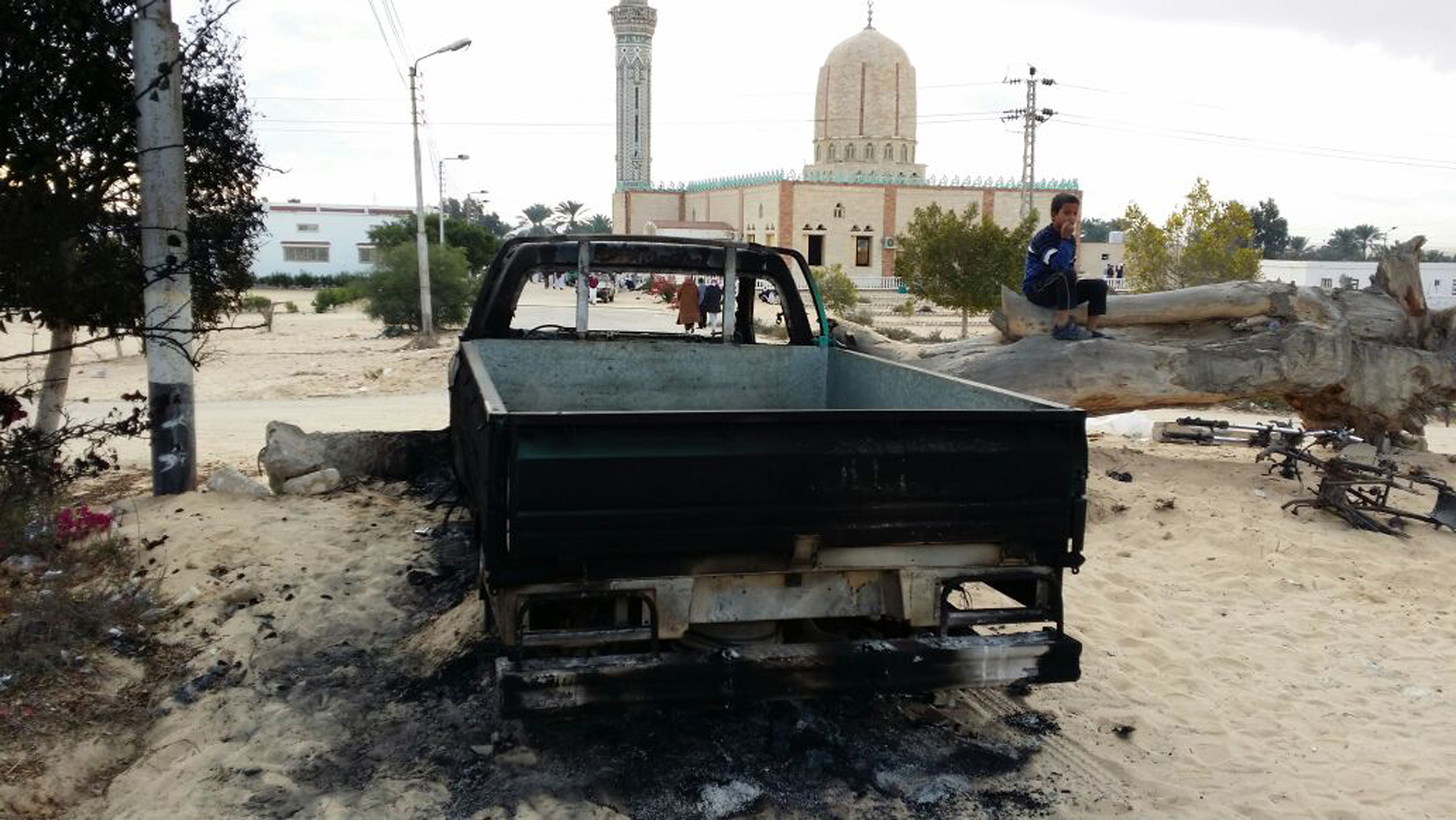
    But a deadly Islamic State attack on a mosque in the northern Sinai town of Al Rawda late last year damaged the group’s standing in the community.

    “We will not be consoled until each murderer in Sinai is eliminated, and no mercy will be shown,” said Eissa El Kareen, an elder in the El Romylat tribe who lost dozens of brothers and cousins in the massacre.

    The incident spurred Mr. el-Sissi to launch more military strikes in the region. “This attack will do nothing but make us stronger and more persistent in our effort to combat terrorism,” he said in public remarks after the unprecedented killings of 305 mostly Bedouin Muslim worshippers.

    Egypt could hardly hand over part of Sinai after such statements, said Tarek Fahmy, a professor who leads the political and strategic unit at the National Center for Middle East Studies in Cairo.

    “President el-Sissi … will not reclaim Sinai in order to leave it,” Mr. Fahmy said. “The idea is not an acceptable one for the Egyptian leadership.”
  • Zero mass shootings in Australia a result of legislation, not chance, researchers say

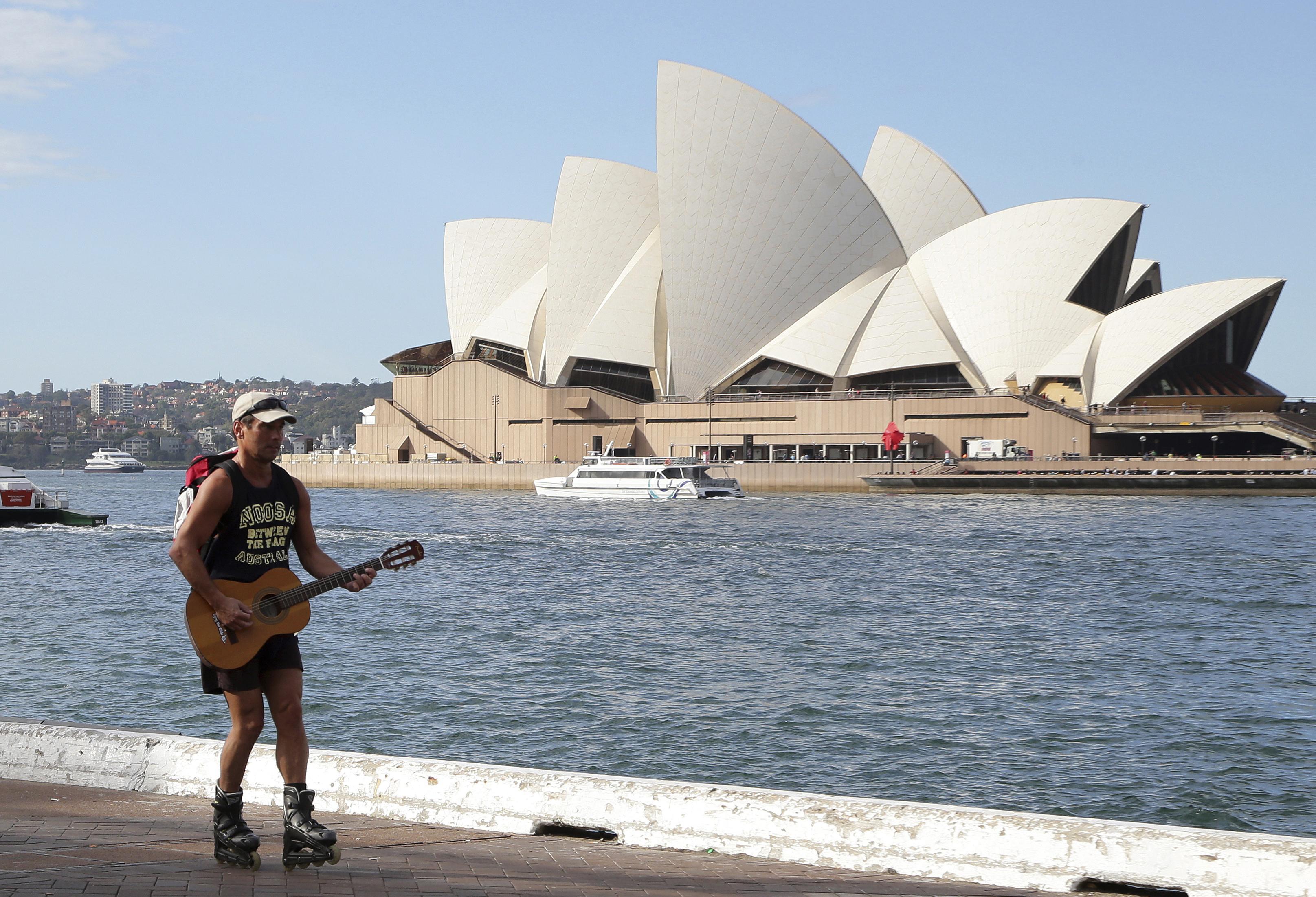
    A new study suggests that Australia’s lack of mass shootings over two decades has resulted from the country’s strict gun ownership laws, not luck.

    A new study suggests that Australia’s lack of mass shootings over two decades has resulted from the country’s strict gun ownership laws, not luck.

    The odds of random chance accounting for a 22-year absence in mass shootings in Australia is 1-in-200,000, researchers from the University of Sydney and Macquarie University calculated.

    In 1996, Australia implemented the National Firearms Agreement (NFA) in the wake of that country’s most deadly mass shooting, which resulted in the destruction of about a third of the guns in the country and the implementation of tighter restrictions on gun ownership.

    In the 18 years before the NFA, there were 13 gun-related homicides in which five or more people were killed, not including the perpetrator, the researchers noted. Since 1996, there have been no other similar events of that magnitude.

    “Most people hear these starkly contrasting numbers and conclude that Australia’s gun law reforms effectively stopped firearm massacres here,” Simon Chapman, lead author of the study and Meritus Professor at the University of Sydney, said in a statement. “However, some scholars and members of the gun lobby have argued that since mass shootings are relatively rare events, the concentration of incidents in one decade and their absence in another decade is merely a statistical anomaly.”

    The gun law was enacted in response to the Port Arthur massacre, in which a gunman killed 35 people and seriously wounded 23 others in Port Arthur, Tasmania, on April 28 and 29, 1996.

    Establishing a direct causal relationship between the NFA and the lack of gun violence wasn’t possible, the researchers wrote in the their paper, which was published Monday in the journal Annals of Internal Medicine. The only way to do so would be to conduct a randomized control trial of some populations that are living under the NFA and others that are not.

    Instead, the researchers sought to test a “null hypothesis,” that prolonged absence of mass gun violence was just a continuation of the rarity of such events. If this were true, the rate of mass shootings would be 16 incidences over the past 22 years, not zero.

    In a visit last month to the U.S., Australian Prime Minister Malcolm Turnbull was asked if he was planning to discuss his country’s success against gun violence with President Trump nine days after the shooting at Marjory Stoneman Douglas High School in Parkland, Florida, where 17 people were killed and 14 others wounded.

    Mr. Turnbull said he wasn’t in a position to comment on debates of internal U.S. policy, adding that what works in Australia is not necessarily applicable to America.

    “We are satisfied with our laws and we maintain them,” the prime minister said. “We certainly don’t presume to provide policy or political advice on that matter here. You have an amendment to your constitution that deals with gun ownership, you have a very, very different history and we’ll focus on our own political arguments and debates and wish you wise deliberation in your own.”

    Mr. Trump followed up, saying: “They’re very different countries with very different sets of problems. But I think we’re well on the way to solving that horrible problem that happens far too often in the United States.”

    Mr. Trump has been vocal on his ideas for gun legislation reform, which include permitting teachers to carry guns on school premises.

    On Sunday, Education Secretary Betsy DeVos announced next steps to address gun violence in schools, including setting up a commission to study ways to improve school safety and recommend policy changes.

    Last week, Florida Gov. Rick Scott signed a gun reform law in response to the Parkland massacre. The Marjory Stoneman Douglas High School Public Safety Act raises the purchasing age for a firearm from 18 to 21 and bars ownership for individuals formally judged to be mentally ill. It also establishes funding for projects to increase school safety.

  • Explosion strikes Palestinian prime minister’s convoy in Gaza

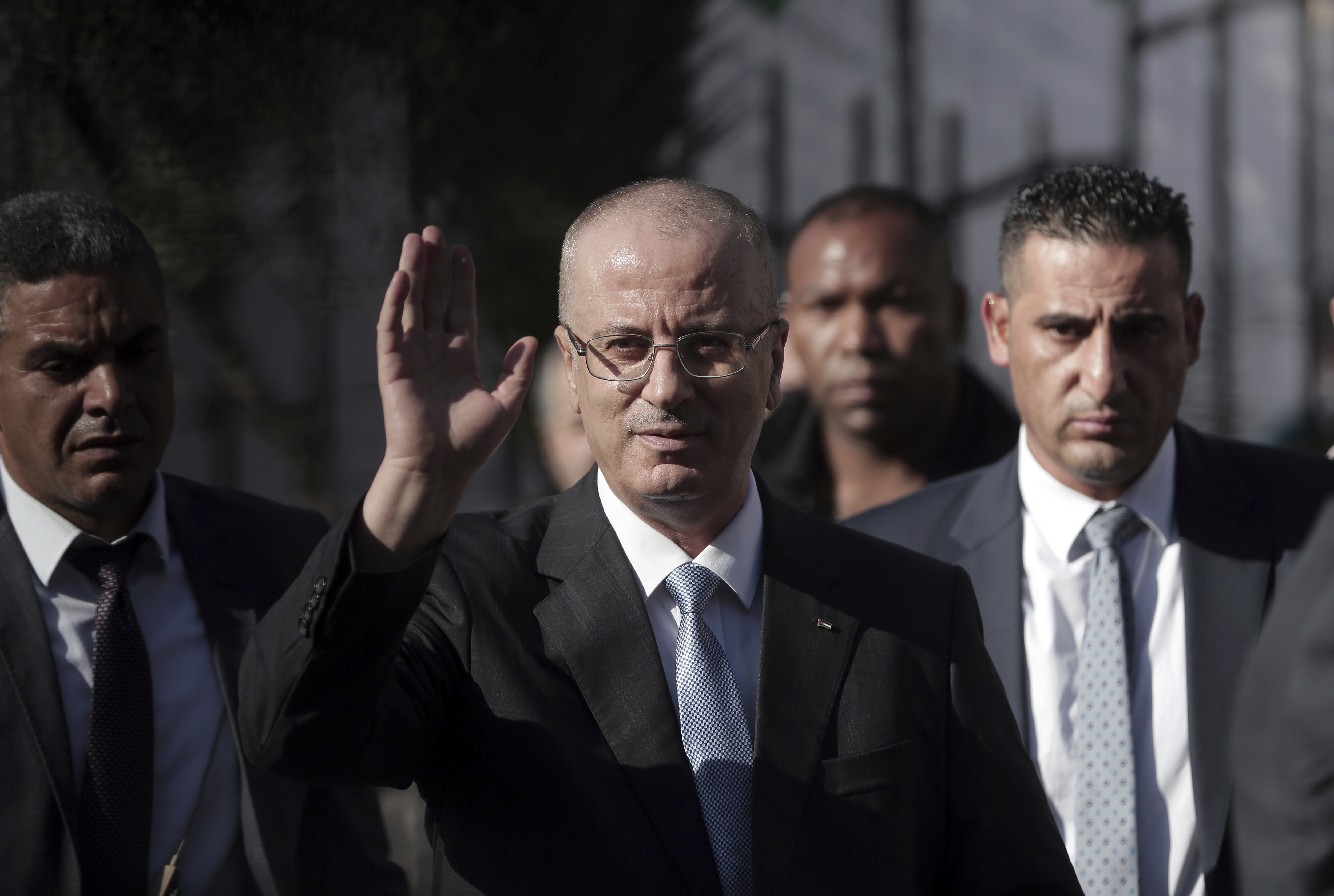
    An explosion struck the convoy of the Palestinian prime minister Tuesday as he was making a rare visit to Gaza, in what his Fatah party called an assassination attempt it blamed on Gaza militants.

    JABALIYA, Gaza Strip (AP) — An explosion struck the convoy of the Palestinian prime minister Tuesday as he was making a rare visit to Gaza, in what his Fatah party called an assassination attempt it blamed on Gaza militants.

    The explosion went off shortly after the convoy entered Gaza through the Erez crossing with Israel. Palestinian Prime Minister Rami Hamdallah was unharmed and went on to inaugurate a long-awaited sewage plant project in the northern part of the strip. But Fatah quickly held Gaza’s Islamic Hamas rulers responsible for the “cowardly attack” on the convoy, further escalating tensions between the bitter rival factions.

    Three of the vehicles in Hamdallah’s convoy were damaged, their windows blown out. One had signs of blood on the door.

    Hamas confirmed an explosion struck the convoy but said no injuries were reported. It condemned the Gaza explosion, calling it a crime and an attempt to “hurt efforts to achieve unity and reconciliation.” It promised an “urgent” investigation.

    While President Mahmoud Abbas blamed Hamas for the blast, his security chief Majed Farraj, who was in the convoy, said it was “too early” to say who was responsible.

    Hamdallah, who is based in the West Bank, arrived in Hamas-run Gaza to inaugurate the sewage plant and said there that the attack will “not deter from seeking to end the bitter split. We will still come to Gaza.”

    The rival factions have been trying to reconcile since 2007 when Hamas seized control of Gaza from Fatah forces and have suffered several setbacks in their efforts since. The takeover left the Palestinians with two rival governments, Hamas in Gaza and the Western-backed Palestinian Authority governing autonomous enclaves in the Israeli-occupied West Bank.

    In November, Hamas handed over control of Gaza’s border crossings to the Palestinian Authority. It was the first tangible concession in years of Egyptian-brokered reconciliation talks. But negotiations have bogged down since then.

    Hamdallah’s visit comes amid a time of crisis in Gaza, where the economy is devastated. The White House is hosting a gathering of international representatives Tuesday to discuss economic development and the dire humanitarian situation, which White House envoy Jason Greenblatt has blamed on Hamas‘ control.

    “The challenge will be determining which ideas can be realistically implemented in light of the fact that the Palestinians of Gaza continue to suffer under the authoritarian rule of Hamas,” he said in a statement.

    The plant in question was envisioned in 2007 after overburdened sewage reservoirs collapsed, killing five villagers.

    The World Bank, European Union and other European governments have paid nearly $75 million in funding. Hamas‘ takeover of Gaza from the Palestinian Authority in 2007 and the ensuing Israeli-Egyptian blockade, power shortages and conflicts delayed the opening of the project for four years.

    Besides the old reservoirs, the plant will receive wastewater from four towns and villages. After treatment, the water will be transferred for irrigation and the remainder will be safely dumped to the sea.

  • Putin claims that the US will be angry!

    ‘The US does not care about the indictment’

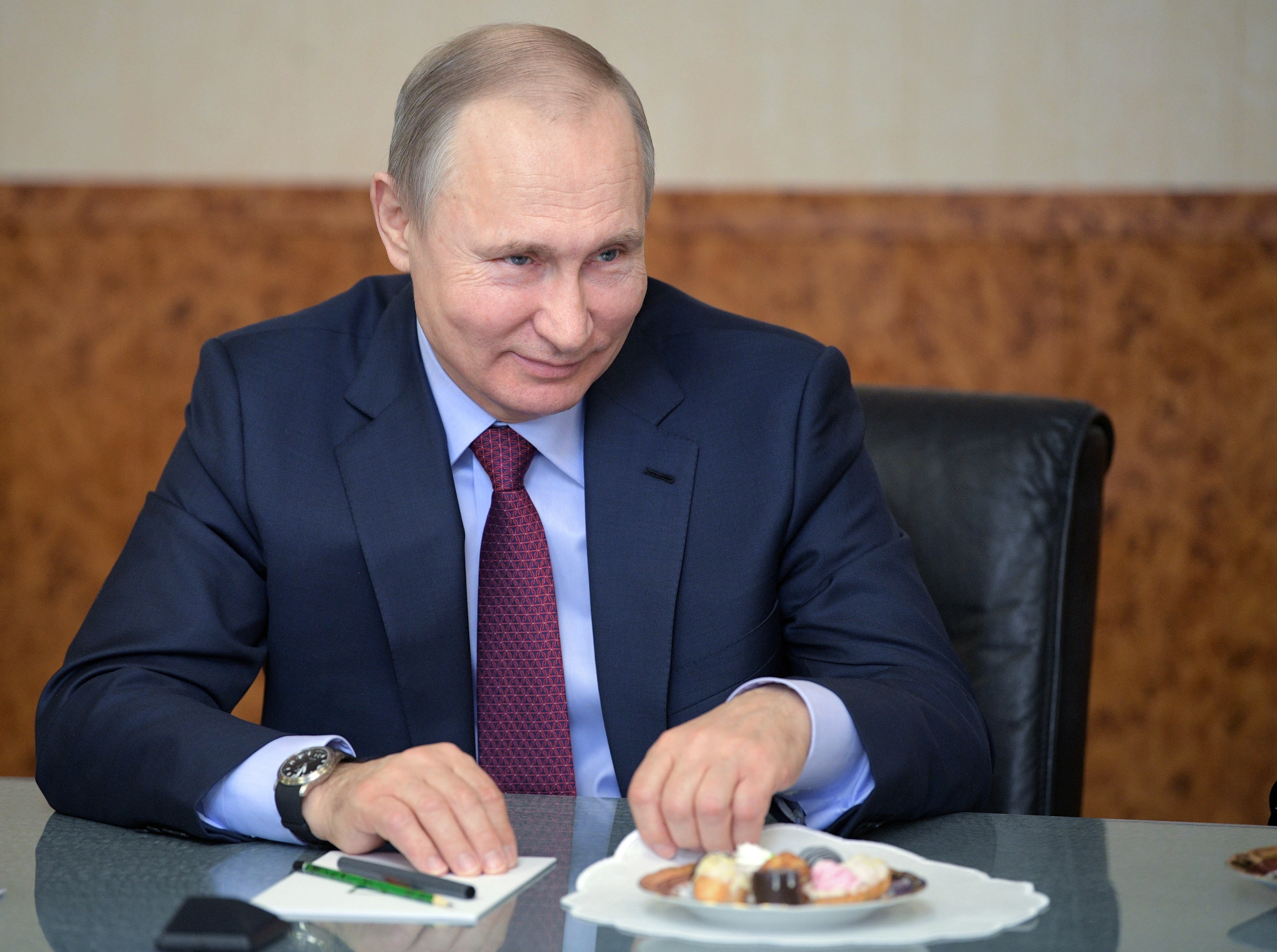
    In an interview with Russian President Putin on NBC television on Friday, the question of whether 13 Russian citizens and 3 Russian companies involved in the US indictment ignored the US election intervention questioned him, saying, “This claim does not excuse, because these people do not represent the government.” he answered.

    Maybe the Jews are interfering with the elections

    Putin said, “Perhaps these people are not even Russian, but Ukrainians, Tatars and Jews who are Russian citizens. At the same time, it should be checked whether these people have double citizenship, perhaps America has paid them for it. Where do you know? I do not know either. “

    The US is always interfering with Russian elections

    Putin, saying that Russia has no equipment or desire to intervene in US elections, stressed that the US has repeatedly and strongly rejected Russia’s attempts to establish a business alliance between the two countries on cybersecurity issues, “the US refuses to work this way, He’s throwing 13 rats. “

    “America is always interfering with the Russian elections, but it is impossible for us to do the same.”

    ‘We do not have the power to interfere with elections’

    Putin claimed that Russia does not have the equipment to intervene in the elections. “First, we have the principle of not confusing others with our internal affairs and not interfering with others’ internal affairs.” Second, we do not have the equipment to do this. “

    He invited the Congress to present solid evidence to make a fuss about elections

    Names will not be tampered with

    “Are you going to act on the names in the indictment?” As long as they do not violate the Russian laws, they will not be intervened.

  • Greek minister to Turkey from scandal allegations

    SCANDAL CLAIM: “TURKEY WANTS TO VIOLATION OF GREECE the”

    Greece between Turkey and Greece in front in the tense period continues to come incriminating statements.

    Speaking to Liberation newspaper published in France Kammenos, Turkey’s Aegean and in Cyprus, Syria, and that respect the borders of Iraq in the country, claiming that international acts contrary to the law, “Cyprus and Greece, the Middle East countries not. We are respectful of the international law as it is the laws of the sea and the laws of the sea. We want Turkey to do the same, “he said. & Nbsp;

    The European Union commissioning and bilateral or where the tripartite agreement Israel, Egypt, Jordan, the United Arab Emirates with the Lebanese minister of Greece, underlining that they tried to get the support of Turkey claimed that therefore Greece additional pressure on .

    SUPPORT FOR EU MEMBERSHIP

    claiming membership to the EU would remove Islam from Turkey, “We prefer a European Turkey an Islamic Turkey. We also support the EU membership for this reason. “

    TWO MILITARY AB’S PROBLEMS

    Kammenos says, “In fact, this problem does not concern only Greece. It also concerns the EU, “he said. Greece and the Greek minister recalled that Turkey’s NATO ally, in a peaceful manner such incidents should be resolved, he said.