Blog

  • New opening from the Suudi Prince: Women are soldiers

    Six people were killed and 15 injured in the bombed car attack in Ceradel of northern Syria.

    According to the information obtained from local sources, a bomb-loaded vehicle was attacked at the police point in Cerablus, where the terrorist organization DEAŞ was rescued from the terrorist organization DEAŞ in the operation of the Firat Kalkanı at about 14.30 pm.

    Six people were killed in the attack, 15 people were injured, including women and children. It was stated that the condition of the 3 of the injured was heavy.

    The attack has not been undertaken yet.

    Local security sources are concerned about the possibility that the attack was organized by the terrorist organization PYD / PKK.

    One of the civilians died and five civilians were injured in a bomb-loaded car attack near the police station yesterday.

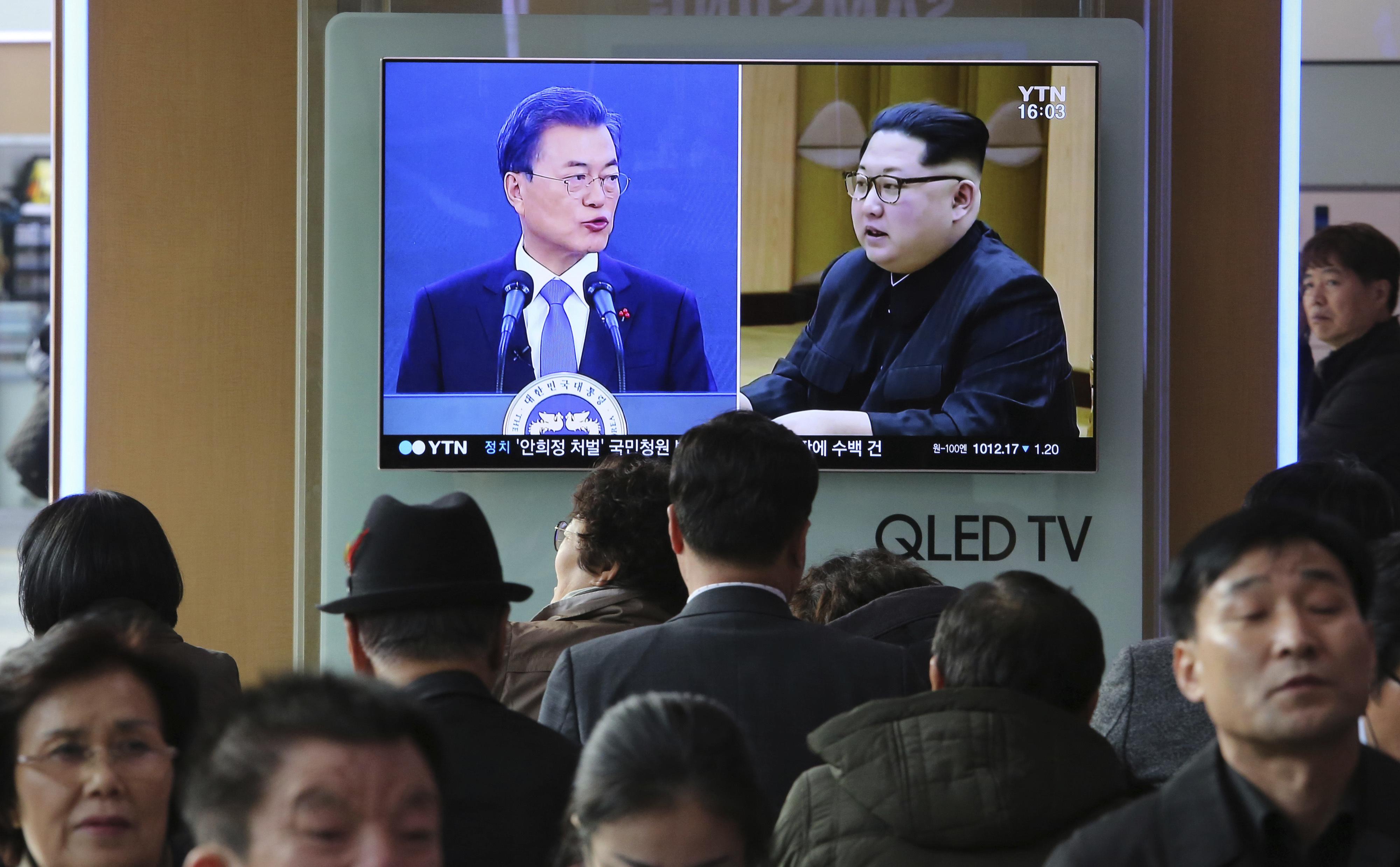
  • Moon Jae-in, South Korean president, says talks won’t ease pressure on North

    South Korean President Moon Jae-in on Wednesday downplayed concerns that the resumption of inter-Korean dialogue will be accompanied by an easing of international sanctions and pressure on North Korea

    SEOUL, South Korea (AP) — South Korean President Moon Jae-in on Wednesday downplayed concerns that the resumption of inter-Korean dialogue will be accompanied by an easing of international sanctions and pressure on North Korea over its nuclear program.

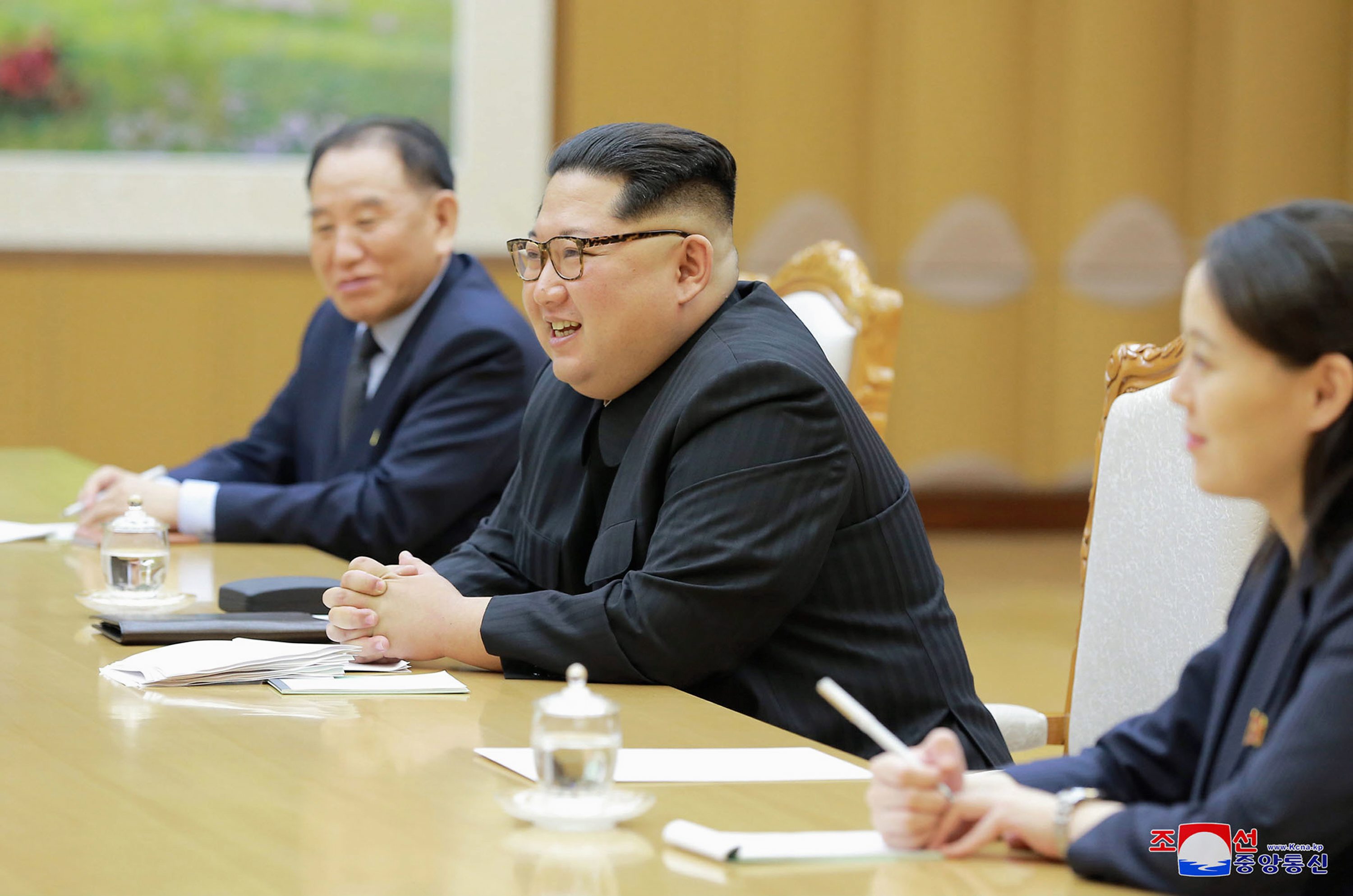
    Moon made the comments in a meeting with political party leaders a day after South Korea announced an agreement with the North to hold a rare summit in April. Senior South Korean officials who met with North Korean leader Kim Jong Un in Pyongyang on Monday also said the North expressed a willingness to hold talks with the United States on denuclearization and normalizing ties.

    Conservative opposition leaders expressed concern during Wednesday’s meeting at Seoul’s presidential palace that North Korea could use the talks as a way to reduce the pressure, and also questioned whether the North in genuinely interested in abandoning its nuclear weapons.

    SEE ALSO: Trump takes credit for Kim Jong-un’s sudden shift on talks

    “The sanctions and pressure on North Korea aren’t maintained by South Korea alone — these are actions based on U.N. Security Council resolutions, and then there are strong unilateral sanctions imposed by the United States,” Moon said, added that the pressure on the North could only be reduced by “substantive progress” on denuclearization.

    “These international efforts (to pressure the North) cannot be loosened by inter-Korean dialogue. We don’t aim for that to happen and it’s also impossible.”

    Moon’s presidential national security director, Chung Eui-yong, who led the South Korean delegation that met with Kim, is to leave for the United States on Thursday to brief U.S. officials on the outcome of his trip to the North. Chung told reporters on Tuesday that he received a message from North Korea intended for the United States, but didn’t disclose what it was.

    Japan has responded cautiously to the South Korean announcement of summit talks, saying Tokyo’s policy of keeping maximum pressure on North Korea is unchanged.

    Chief Cabinet Secretary Yoshihide Suga said Wednesday that dialogue for dialogue’s sake is meaningless and that the allies “should fully take into consideration lessons from our past dialogues with the North, none of which achieved denuclearization.” He said Japan is on the same page as the United States, citing U.S. Vice President Mike Pence as saying Washington’s pressure campaign is unchanged, with all options still on the table.

    China, which is North Korea’s only major ally, cheered the exchanges between the Koreas and called for a return to six-nation talks on denuclearization that it previously hosted.

    Foreign ministry spokesman Geng Shuang told reporters Wednesday that China was “pleased to see the positive outcomes from those exchanges and interactions between the two sides. … We hope the North and South will earnestly implement their consensuses and proceed with the process of reconciliation and cooperation.”

    ___

    Associated Press writers Mari Yamaguchi in Tokyo and Chris Bodeen in Beijing contributed to this report.

  • Pakistan official: U.S. should end Afghanistan war with Taliban

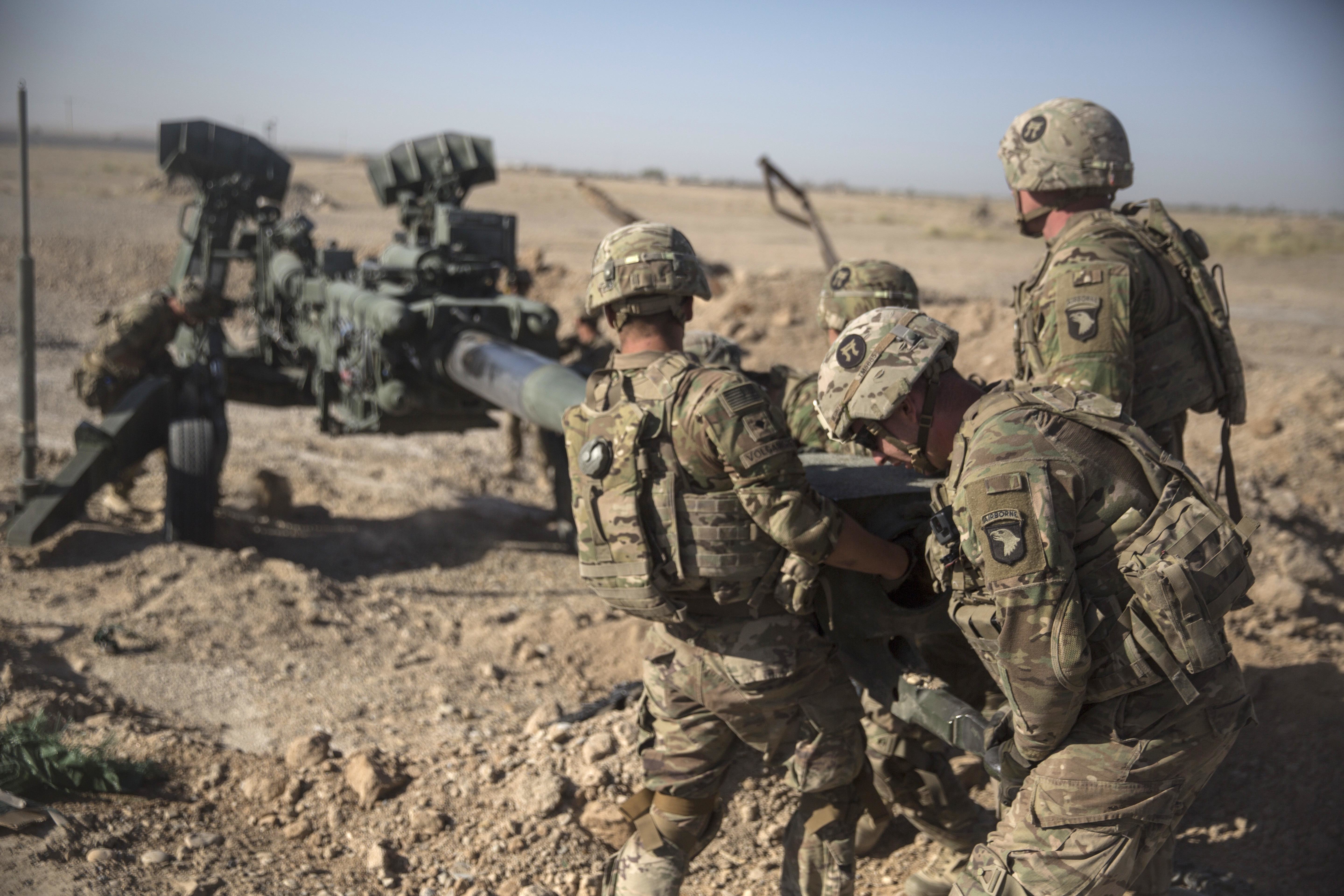
    The United States must abandon any hope of winning the war in Afghanistan on the battlefield and seek a peace deal with the Taliban, Pakistan’s top national security official said Tuesday.

    ISLAMABAD, Pakistan — The United States must abandon any hope of winning the war in Afghanistan on the battlefield and seek a peace deal with the Taliban, Pakistan’s top national security official said Tuesday.

    “End the suffering of Afghanistan and of its people. Let us seek the closure of the conflict instead of winning it,” Pakistani National Security Adviser Nasser Khan Janjua, a former army general, said during an exclusive roundtable with reporters in the Pakistani capital.

    President Trump’s blueprint released last summer for the Afghanistan conflict, now in its 17th year, called for an escalated American military effort to force the radical Islamist Taliban to the bargaining table, but Mr. Trump questioned the idea of negotiations after a string of deadly Taliban and Islamic State strikes this year.

    The State Department says the U.S. government backs a peace process proposed by Afghan President Ashraf Ghani Feb. 28 that would allow the Taliban to organize as a political party if it agrees to end its insurgency and joins the political process. The U.S. has consistently rejected the Taliban’s demands for direct talks between Washington and the terrorist group and the immediate withdrawal of U.S. and NATO troops from Afghanistan.

    Mr. Janjua called for the U.S. to forgo any hope of military victory amid reports that the U.S.-backed government in Kabul controls less than 60 percent of the war-torn country in the face of a resurgent Taliban.

    “It is not possible for the U.S. to win back 44 percent of Afghanistan,” he said, speaking at Pakistan’s National Security Division headquarters. “Let us resolve [the war] politically. Let us reconcile. How long do we want to continue to fight in Afghanistan?”

    Tensions between Islamabad and Washington soared in recent months in the aftermath of the Trump administration’s hard-line rhetoric against Pakistan’s role in the war on terrorist groups in South Asia, capped by a sharp cut in U.S. aid and military support programs in January.

    Members of the Financial Action Task Force, an international regulatory group combating terrorism financing, last month voted to put Pakistan on its watch list over its inability to curtail known terrorist groups’ funding and operations. The move could severely restrict foreign investment and movement of capital in and out of the country, Islamabad argues.

    Pakistan has rejected the criticism, citing its aggressive, costly four-year counterterrorism campaign against extremist groups along the volatile Afghanistan-Pakistan border.

    “We have already paid a heavy price,” Mr. Janjua said.

    Pakistan wants to repair relations with the Trump administration, he said, but is also prepared to take a step back from the U.S. and its regional goals in South Asia should the White House impose further economic sanctions or restrictions on the country’s armed forces.

    “Any unilateral action by the U.S. against Pakistan will create a huge, huge difficulty for us, and we will not be able to support the U.S.” in Afghanistan and the region, he said. Conversely, the White House’s embrace of a new peace road map in Afghanistan could bring the two longtime allies closer together.

    “Peace in Afghanistan means peace in Pakistan. Both countries have been suffering,” Mr. Janjua said. “This is the way forward. This is way to reduce the violence.”

    Mr. Ghani, who faces a national election in July, said late last month that he was ready to offer the Taliban a political role in the Afghan government, including the establishment of a political office in Kabul, should the organization’s leaders join stalled peace talks, an approach Mr. Janjua said was long overdue.

    “Why could he not have done this three years before?” he asked. “Ashraf Ghani has done a great thing” with the peace offer.

    While supporting Afghanistan peace talks that include the Taliban, Alice Wells, the State Department’s top diplomat on South and Central Asian affairs, flatly ruled out any support for bilateral talks between the Taliban and Washington.

    Mr. Ghani’s plan “is not a surrender that’s being offered to the Taliban, but a dignified process for reaching a political framework,” she told a group of reporters Tuesday, according to Radio Free Europe/Radio Liberty.

    Mr. Janjua urged Washington to be more flexible in dealing with the Taliban.

    “That is the U.S. way of thinking, so what can we do?” Mr. Janjua said regarding Washington’s opposition to face-to-face talks with the Taliban.

    An Afghanistan peace conference has been scheduled for late March in the Uzbek capital of Tashkent.

  • Donald Trump right on immigration, gang violence, Sweden finds

    Sweden’s prime minister, who criticized President Trump last year for blaming Swedish violence on Muslim refugees, said Tuesday that he’s cracking down on immigration and gang violence to make Sweden

    Sweden’s prime minister, who criticized President Trump last year for blaming Swedish violence on Muslim refugees, said Tuesday that he’s cracking down on immigration and gang violence to make Sweden great again.

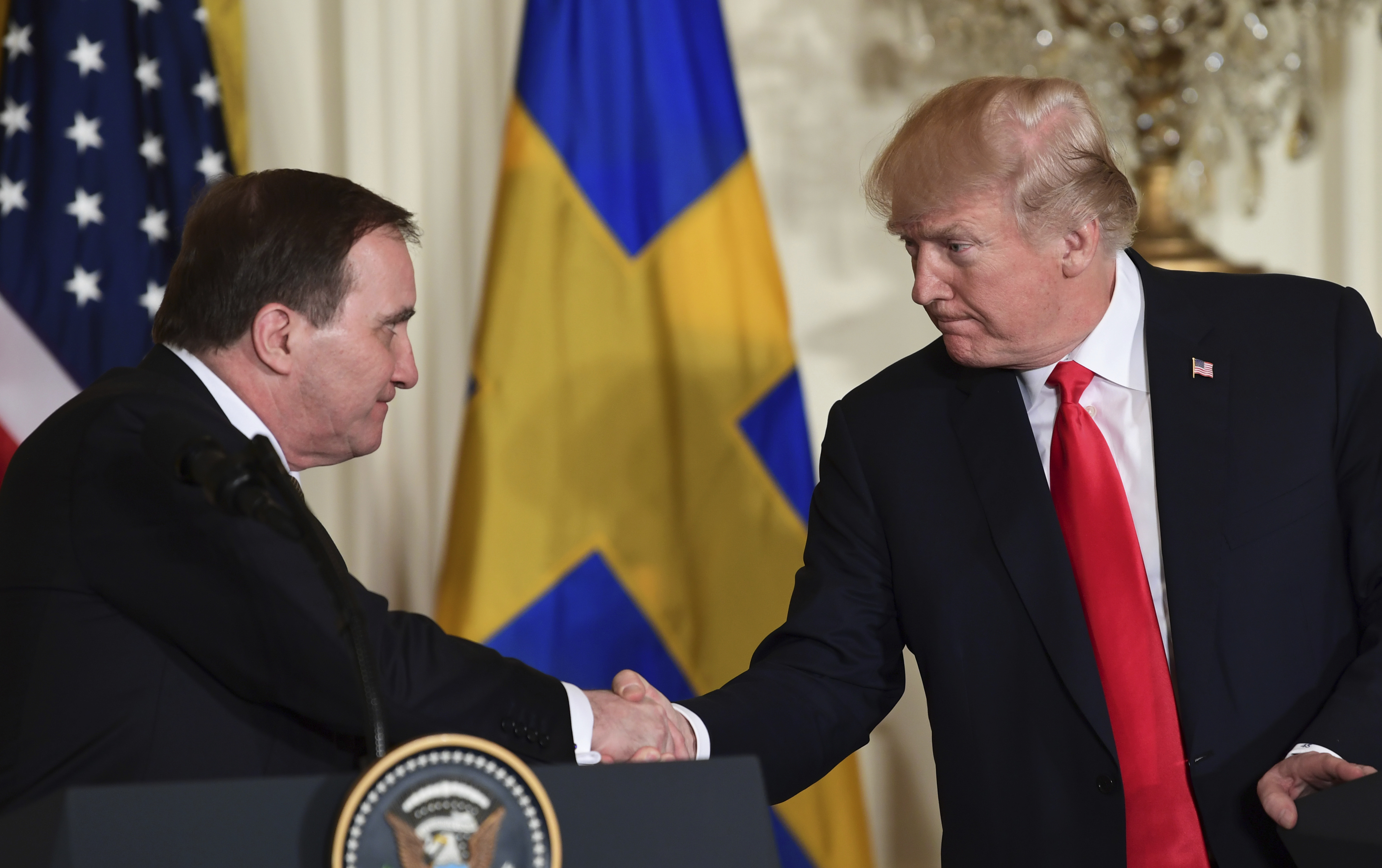
    At a White House news conference with Mr. Trump at his side, Prime Minister Stefan Löfven spoke of his own Trump-like agenda of implementing tougher laws on immigration and crime, and of spending more money on law enforcement.

    “We have our share of domestic challenges, no doubt about that,” Mr. Lofven said. “We are dealing with it every day, allocating more resources to the police, more resources to the security police, tougher laws on crime, tougher laws on terrorism.”

    Not only that, he said Sweden’s crackdown on immigration and gangs is working.

    “We can see some results now in our three major cities, decrease in shootings because we’re attacking the organized crime very tough,” the prime minister said. “And we’ll keep on doing that. There is no space in Sweden for organized crime. They decrease freedom for ordinary people.”

    It sounded very much like Mr. Trump’s rhetoric against the MS-13 gang members that he seeks to deport in larger numbers, and his policies to limit migration from certain Muslim-majority countries until better screening is in place to weed out potential terrorists.

    The president, who enjoys being right as much as anyone, told the audience in the East Room that he had been correct about Sweden all along.

    “Certainly you have a problem with immigration, it’s caused problems in Sweden,” Mr. Trump told a Swedish journalist. “I was one of the first ones to say it. I took a little heat, but that was OK. I proved to be right. But you do have a problem. I know the problem will slowly disappear, hopefully rapidly disappear.”

    A year ago, soon after Mr. Trump took office, he was roundly criticized in the U.S. media and in Europe for blaming a rise in crime in Sweden on an influx of Muslim refugees.

    “You look at what’s happening last night in Sweden,” the president said back then at a rally in Florida. “Sweden. Who would believe this? Sweden. They took in large numbers. They’re having problems like they never thought possible.”

    At the time, Swedish officials said they didn’t know what Mr. Trump was talking about. Some people accused Mr. Trump of responding to an erroneous news report.

    A year ago, Mr. Lofven chided Mr. Trump publicly, saying “We must all take responsibility for using facts correctly and for verifying anything we spread.”

    But on Tuesday at the White House, the prime minister had changed his tune. He noted that Sweden had received 163,000 refugees in 2015, with most arriving in a span of a few months.

    “We inherited a legislation that was not sustainable, legislation on migration,” Mr. Lofven said. “We changed the legislation, so now we have decreased the number of refugees, and we’re also putting pressure on the other European Union countries to take their share of the responsibility.”

    The New York Times reported last weekend that Sweden has experienced a rise in clan-like violence, including gangs using hand grenades, that accompanied an influx of immigrants from certain parts of Europe and the Middle East. There have been more than 100 incidents involving military-grade explosives in the Stockholm metro area, which police have attributed to an “arms race” among immigrant gangs, the paper reported.

    The story said there were few such incidents in Sweden until 2014, but since then, the number of explosions and seizures of grenades has risen.

    Mr. Lofven refuted recent reports that immigrant-related crime in Sweden had become so bad that authorities had designated “no-go zones” deemed too dangerous to enter.

    “We also have problems with organized crime in Sweden, shootings,” he said. “But it’s not like you have these ‘no-go’ zones.”

    Until recently, Sweden had the most generous immigration laws in Europe. Former Prime Minister Fredrik Reinfeldt in 2014 made a famous speech urging Swedes to “open their hearts” to refugees seeking shelter.

    But in 2016, as problems grew, Sweden enacted a law valid for three years that makes family reunification of refugees more difficult. The law stopped recent immigrants with residency permits from bringing their immediate family members to Sweden.

    In the U.S., Mr. Trump wants to end so-called “chain migration,” which he says has allowed an immigrant to sponsor numerous relatives to follow him or her, with not enough vetting of the family members.

    Mr. Lofven, again sounding a lot like Mr. Trump, said Sweden is overcoming its immigration and crime problems with a thriving economy.

    “Sweden has high growth,” he said. “Unemployment is going down. We have high investment rates. We have a strong, strong economy.”

  • North Korea agrees to a moratorium on nuclear and missile tests, will hold landmark summit in April

    North Korean leader Kim Jong-un has agreed to stop nuclear and missile tests if his country holds talks with the United States on denuclearizing the Korean peninsula.

    North Korean leader Kim Jong-un has agreed to stop nuclear and missile tests if his country holds talks with the United States on denuclearizing the Korean peninsula.

    The breakthrough was announced Tuesday by Chung Eui-yong, South Korea’s presidential national security director, after a rare visit to Pyongyang.

    “The North expressed its willingness to hold a heartfelt dialogue with the United States on the issues of denuclearization and normalizing relations with the United States,” he said in a statement. “It made it clear that while dialogue is continuing, it will not attempt any strategic provocations, such as nuclear and ballistic missile tests.”

    PHOTOS: South Korea meeting thrusts North’s Kim into the limelight

    The promising move followed a flurry of cooperative steps taken by the Koreas during last month’s Winter Olympic games in Pyeongchang, South Korea.

    President Trump welcomed the turn of events with a note of caution.

    “We will see what happens!” he tweeted.

    In a later tweet, he described it as “possible progress being made in talks with North Korea.”

    “For the first time in many years, a serious effort is being made by all parties concerned. The World is watching and waiting! May be false hope, but the U.S. is ready to go hard in either direction!” wrote the president.

    The shift from the North also follows increasing pressure from the United States. The Trump administration has ratcheted up economic sanctions, while Mr. Trump took a hard line and demanded a nuclear-free Korean peninsula in exchange for talks.

    The standoff was repeatedly punctuated by Mr. Trump and Mr. Kim trading insults, including the U.S. president taunting his foe as “Little Rocket Man.”

    The North had steadfastly refused to even consider surrendering its nuclear arsenal or missile program, now capable of hitting the U.S. mainland and heralded by Mr. Kim as an essential deterrent against American invasion plans.

    Vice President Mike Pence, who led the U.S. delegation to the Olympic opening ceremony and avoided interaction there with North Korea officials, vowed to keep pressure on Mr. Kim’s rogue regime.

    “Whichever direction talks with North Korea go, we will be firm in our resolve,” he said. “All options are on the table and our posture toward the regime will not change until we see credible, verifiable and concrete steps toward denuclearization.”

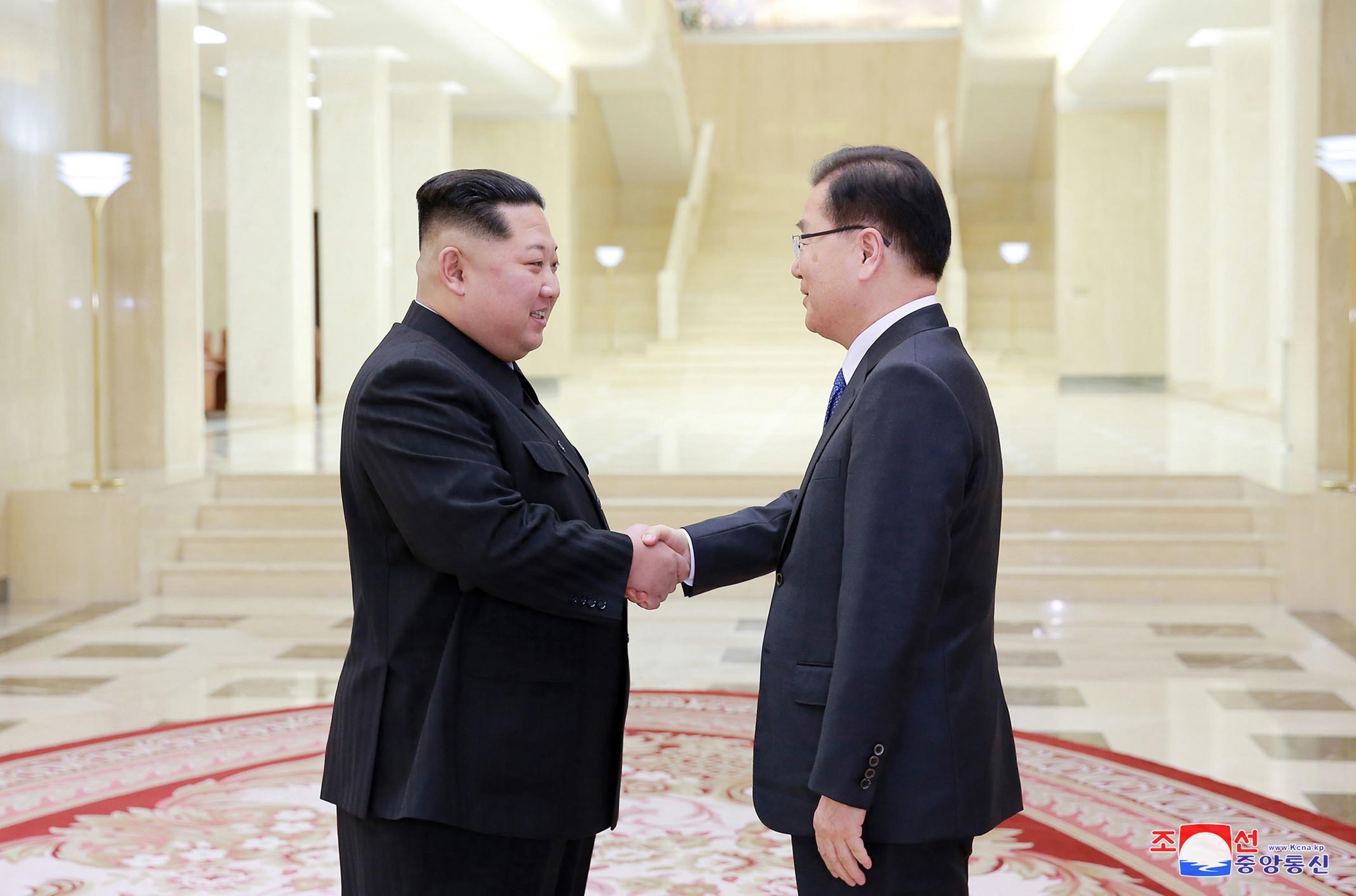
    Mr. Chung led a 10-member South Korean delegation that met with Mr. Kim during a two-day visit to Pyongyang, North Korea’s capital. They returned on Tuesday.

    The two Koreas also agreed to hold their third-ever summit at a tense border village in late April.

    Mr. Chung said the leaders will establish a “hotline” communication channel to lower military tensions and would speak together before the planned summit.

    The two past summits, in 2000 and 2007, were held between Mr. Kim’s late father, Kim Jong-il, and two liberal South Korean presidents. They resulted in a series of cooperative projects between the Koreas that were scuttled during subsequent conservative administrations in South Korea.

    Mr. Chung said North Korea agreed to suspend nuclear and missile tests for as long as it holds talks with the United States.

    North Korea also made it clear that it would not need to keep its nuclear weapons if military threats against it are removed and it receives a credible security guarantee, Mr. Chung said.

    • This story is based in part on wire service reports.

  • Donald Trump takes credit for Kim Jong-un’s desire for talks

    President Trump on Tuesday credited his campaign of maximum pressure — coupled with “great help” from China — for driving North Korean leader Kim Jong-un’s sudden decision to raise the prospect of t

    President Trump on Tuesday credited his campaign of maximum pressure — coupled with “great help” from China — for driving North Korean leader Kim Jong-un’s sudden decision to raise the prospect of talks with Washington about his nation’s nuclear arsenal and to halt nuclear and missile tests while such negotiations play out.

    In stunningly swift thawing of tensions on the Korean Peninsula, Mr. Kim told a visiting South Korean delegation Tuesday that he was ready to hold a “candid discussion” with the Trump administration on denuclearization, that Pyongyang would freeze its nuclear and missile programs as the talks began, and that he was willing to join South Korean President Moon Jae-in next month for the first face-to-face meeting between the nations’ leaders in more than a decade.

    With critical details of the North’s offer still to be nailed down, Mr. Trump expressed cautious optimism. He said he believed Mr. Kim’s overture during a meeting with South Korean officials was sincere, but he stressed that it “may be a false hope” to think Pyongyang would truly agree to give up its nuclear security blanket.

    “We have come certainly a long way, at least rhetorically, with North Korea,” a cautious Mr. Trump said at a joint White House press conference with visiting Swedish Prime Minister Stefan Lofven. “It’d be a great thing for the world, would be a thing great for North Korea, it would be a great thing for the peninsula. But we’ll see what happens.”

    National security insiders said it’s too early to know whether Mr. Kim is just trying to buy time to complete Pyongyang’s covert nuclear program or whether Mr. Trump’s bare-knuckle policy approach — coupled with a U.S.-organized set of international sanctions that show signs of truly hurting the North’s economy — has produced unexpected progress.

    One caveat evident in the text of the six-point accord brought back by the South Korean envoys: North Korea said it would have no need for nuclear weapons “as long as military threats to the North are eliminated and the regime’s security is guaranteed,” which could call into question the U.S.-South Korean military alliance and the huge U.S. troop presence in the South.

    “Does the Trump administration deserve credit for sticking to a policy of maximum pressure while remaining open to engagement? Yes,” said Patrick Cronin, who heads the Asia-Pacific Security Program at the Center for a New American Security in Washington. “But the cause and effect here is not necessarily something you want to take credit for until you see how it turns out.”

    The White House last month announced the sharpest U.S. sanctions to date against Pyongyang. While the increased pressure may have inspired Mr. Kim’s growing eagerness for talks, some point to other important factors at play.

    “One is the progress that North Korea has made on its nuclear program …,” said Suzanne DiMaggio, a senior fellow with the New America think tank in Washington. “Kim Jong-un has declared the completion of his nuclear force and believes he now has the capacity to deter an attack by the U.S.

    “So in terms of timing,” she said, “it makes great sense that the North Koreans are now ready to return to talks with Washington.”

    The shift in Pyongyang

    The South Korean president’s office said in a statement Tuesday that the Kim regime had expressed a willingness to denuclearization and to halt nuclear tests in order to get talks underway with Washington.

    Chung Eui-yong, South Korea’s presidential national security director and head of the delegation that met with Mr. Kim, said the late-April summit will be held in Panmunjom, the tense border village where the two hostile Koreas have faced off since the inconclusive end of the Korean War in the 1950s.

    The developments, which follow a flurry of North-South diplomacy that surrounded last month’s Winter Olympics in the South, appeared to mark a major shift from Pyongyang, which long refused to discuss its nuclear arsenal or missile programs.

    The Trump administration had vacillated on whether it would be willing to engage in direct talks with North Korea if the Kim regime did not first commit to abandoning the programs. As recently as this past weekend, the North Korean Foreign Ministry had criticized Washington for clinging to the idea of denuclearization as a precondition for direct talks.

    Efforts to rein in the isolated North’s military programs have repeatedly ended in failure.

    Negotiations with Pyongyang broke down in 2009 amid a flurry of North Korean missile tests in violation of U.N. Security Council resolutions. At the height of the talks in 2005, Pyongyang signed an agreement with the U.S., Japan, China, Russia and South Korea stating that it was “committed to abandoning all nuclear weapons and existing nuclear programs.”

    The White House offered a sober message on the denuclearization issue Tuesday, asserting that it is in no hurry to ease its campaign of maximum pressure and sanctions.

    “Whichever direction talks with North Korea go, we will be firm in our resolve,” said Vice President Mike Pence. “All options are on the table, and our posture toward the regime will not change until we see credible, verifiable and concrete steps toward denuclearization.”

    The comments coincided cautious but optimistic posturing from Mr. Trump. “We will see what happens!” the president tweeted.

    The U.S. government, Mr. Trump added in an early morning tweet, “is ready to go hard in either direction!”

    ‘Me’

    The president said there was little doubt that his combination of tough, even bellicose rhetoric and coordinated economic pressure had helped change the dynamic of the Korean Peninsula stalemate.

    Asked at the White House briefing who was responsible for the North’s apparent turnaround, he responded: “Me.”

    “I think [the North Koreans] are sincere also because the sanctions and what we are doing to North Korea, including the great help we’ve gotten from China,” he added.

    Mr. Cronin said in an interview that Mr. Trump would be “right to dampen expectations and take it step by step in order to assess what North Korea’s real intentions are here.”

    The North’s offer also put pressure on Washington to calibrate its own response, he said.

    “The ball is in the president’s court at this point,” Mr. Cronin said.

    Bruce Klingner, a former CIA division chief for the Koreas and a fellow at the conservative Heritage Foundation, was among those who urged extreme caution on North Korea’s sudden willingness to talk about the future of its nuclear weapons.

    “What we do know about North Korea,” Mr. Klingner wrote in an analysis Tuesday, “is that past offers of dialogue frequently prove to be a fig leaf for ulterior purposes.

    “The real question: Is this a diplomatic breakthrough, or the setup of a Red Wedding?” said Mr. Klingner, referring to the famous massacre episode of the TV drama “Game of Thrones.”

    The road ahead

    The challenge for the Trump administration, said Mr. Cronin, is to keep the pressure on the Kim regime “while engagement takes a bigger step in this process.”

    “Can we walk and chew gum at the same time? By all means, we have to,” he said. “We have to show agility because Kim has become more agile diplomatically.”

    Director of National Intelligence Daniel Coats told a congressional hearing Tuesday that U.S. intelligence officials are still trying to determine the sincerity of the North’s offer and Mr. Kim’s willingness to consider giving up his nuclear arsenal.

    “We have seen nothing to indicate … that he would be willing to give up those weapons,” Mr. Coats told the Senate Armed Services Committee. He said he could not adequately assess the South’s account of the Pyongyang talks until the South Koreans have provided a full briefing, The Associated Press reported.

    Ms. DiMaggio said Mr. Trump is hampered by a “very thin diplomatic bench” in any coming talks. There is no permanent ambassador in Seoul, the State Department point man on the North Korean crisis retired last week, and there’s been a “hollowing out” of State Department specialists on the region.

    “If we head down this road of talks with North Koreans,” she said, “it’s going to be very challenging because we don’t have seasoned diplomats in place to carry it out.”

    While the denuclearization issue could take years to fully resolve, Ms. DiMaggio said, the administration should seize on the opening for talks on a range of other issues, such as getting assurances from the Kim regime that it won’t sell chemical, biological or nuclear weapons material to U.S. enemies or terrorist groups.

    “North Korea is the only nuclear-armed country with which the U.S. doesn’t have direct discussions,” she said. “Can we have talks on avoiding an accidental military conflict? That should top the agenda.”

    • Dave Boyer contributed to this article.
  • Jerusalem mayor assures Congress city is safe enough to move U.S. Embassy there

    The mayor of Jerusalem has assured U.S. Congress that America faces no additional terrorist threat by moving its embassy from Tel Aviv to the ancient city despite opposition from Palestinians and the

    The mayor of Jerusalem has assured U.S. Congress that America faces no additional terrorist threat by moving its embassy from Tel Aviv to the ancient city despite opposition from Palestinians and the greater Muslim world.

    “The importance of the move to Jerusalem is second to nothing else,” Nir Barkat told members of the House Committee on Oversight and Government Reform on Tuesday while visiting Washington. “God forbid if there is a security challenge, I assure you we will not shy away from it.”

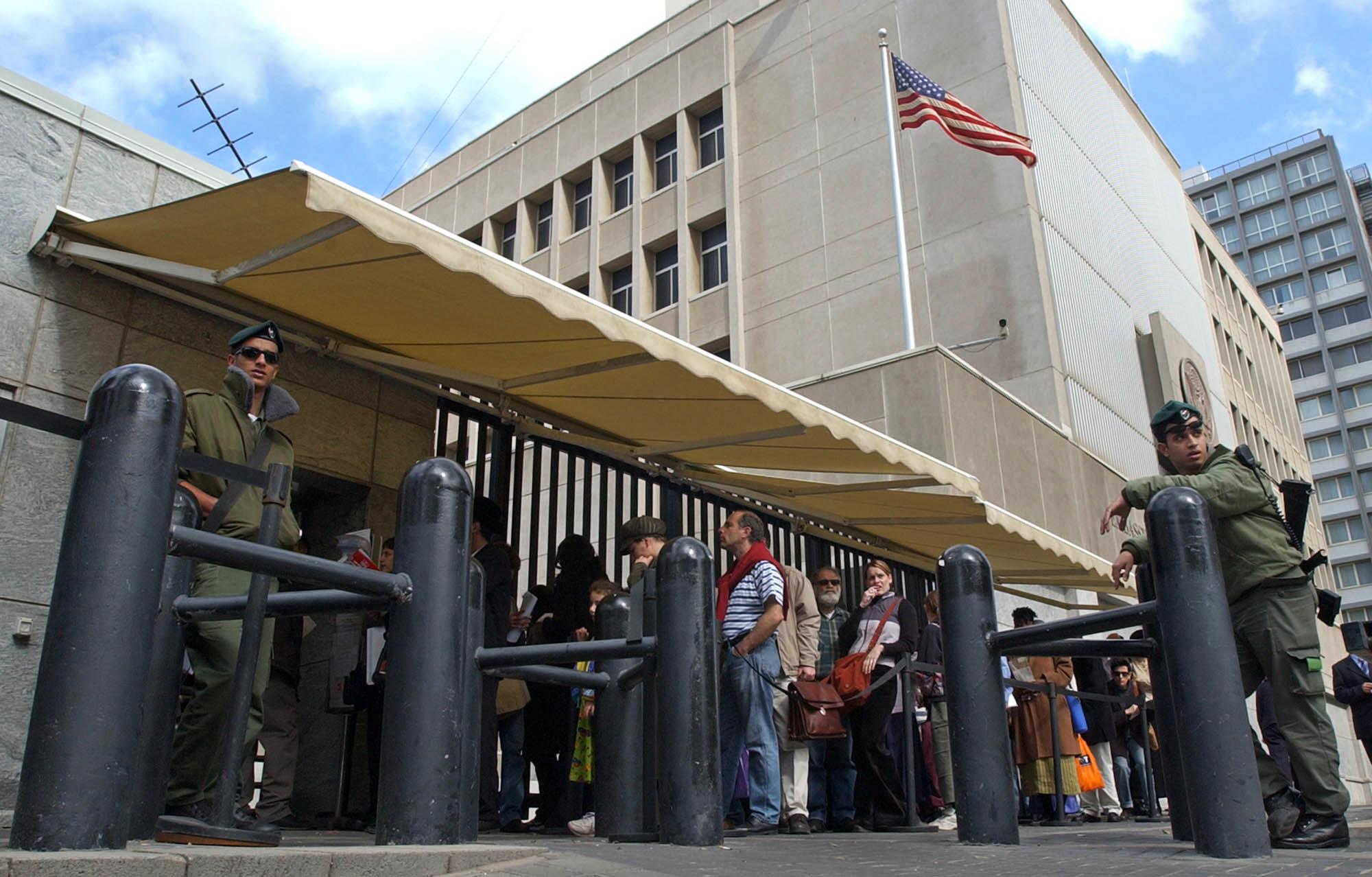
    On Monday, President Trump told Israeli Prime Minister Benjamin Netanyahu that he may visit Israel for the opening of the embassy, slated for early May.

    “We’re going to have it built very quickly and very inexpensively,” Mr. Trump said to reporters before a meeting with Mr. Netanyahu. “While not making any specific commitments, we’re looking at coming … If I can, I will.”

    On Tuesday, Mr. Barkat discussed the history of Jerusalem during a roundtable gathering hosted by House Committee on Oversight and Government Reform member Rep. Ron DeSantis. The Florida Republican played a key role on Capitol Hill advocating for the move, including scouting possible sites for the new facility while visiting Israel.

    Mr. Barkat also praised Mr. Trump for his “boldness and leadership” on the issue and noted that Israelis deeply appreciate the historical significance of the White House’s decision to recognize Jerusalem as a capital, and move the embassy there, 70 years after President Harry Truman recognized Israel as a sovereign state.

    On Monday, Mr. Netanyahu, who was visiting Washington to address the pro-Israel group AIPAC, sang similar praises for the Trump Administration’s Jerusalem decision.

    “Mr. President, this will be remembered by our people, throughout the ages,” the prime minister said. “And as you just said, others talked about it; you did it.”

    Palestinians, meanwhile, have lashed out the decision and argue that it negates the United States as a credible negotiator in peace talks.

    From a local security standpoint, Mr. Barkat told lawmakers that the Israeli government would dedicate all possible resources to protecting the new embassy. He also pointed out that Washington has a murder rate 15 times higher than Jerusalem.

    “So,” he joked, “whenever I fly to D.C., I pray to come back to Jerusalem safely.

  • China’s investment in Greece tangles Europe relations

    Since 2008, Chinese business leaders have agreed to almost $9 billion worth of infrastructure and business deals — equivalent to about 5 percent of Greek gross domestic product — involving ports, te

    ATHENS, Greece — Unlike many in Europe, Chinese investors saw the Greek economic crisis of the past decade not as a disaster but as an opportunity.

    Since 2008, Chinese business leaders have agreed to almost $9 billion worth of infrastructure and business deals — equivalent to about 5 percent of Greek gross domestic product — involving ports, telecommunications companies, energy facilities, real estate and tourism, according to the American Enterprise Institute.

    For many, it’s a case study of how Chinese investment dollars lead to political payoffs. As Greek political leaders feuded with principal members of the European Union — notably Germany — over an imposed policy of harsh austerity, China offered an economic lifeline. In return, Greece became a leading voice inside the EU to take a softer line on China’s political failings and to offer a warmer welcome to Chinese investments.

    SEE ALSO: China’s foothold in Europe

    “The Greek economy is thirsty for investments, and the presence of Chinese companies is important and we welcome it,” Greek Prime Minister Alexis Tsipras said in September during a business conference in Thessaloniki that featured representatives of Chinese business.

    Although the economic situation has improved, Greece remains mired in a decade of economic turmoil. The unemployment rate still tops 20 percent, growth lags and punitive high taxes are necessary to pay off a debt burden that amounts to 180 percent of GDP.

    The Institute of International Economic Relations, in a major survey of the burgeoning Sino-Greek economic relations released in December, noted that “Greece’s debt crisis has definitely contributed to the rapprochement between Athens and Beijing.”

    SEE ALSO: China’s involvement in Piraeus, Greece

    Chinese officials have openly played on the tensions between Greece and its fellow EU states. The state-controlled Chinese news site Global Times noted in an editorial that “different from the EU, which has treated Athens as a delinquent borrower, Beijing designates the country as a ‘trusted partner.’”

    At a popular level, Greeks are split. Many are thankful that China invested at a time when few other foreigners would take a chance and say Greece badly needed the cash and the jobs. A Pew Research Center survey in early 2017 found that 50 percent of Greeks had a positive attitude toward China, compared with 40 percent negative. The Greek pollster Kapa Research last year found China behind only Russia among countries that Greeks would most like to see closer bilateral relations.

    Culture clash 

    But others are concerned about Chinese influence and Chinese-style management in a southern European country, where management traditionally respects labor rights and workplace conditions.

    China Ocean Shipping Co., or COSCO, a state-owned company, purchased a majority stake in the port of Piraeus from the Greek government in 2016 for $456 million — the largest Chinese investment in Greece to date. The port is now a major node in China’s $1 trillion Belt and Road initiative, a system of trade routes and infrastructure projects that follow the old Silk Road and maritime passages through the Indian Ocean and Suez Canal.

    Labor unions negotiating a new contract with COSCO are likely to have to accept lower wages. Since 2009, when a COSCO subsidiary purchased two piers at Piraeus, workers lost overtime and faced pay cuts of 30 percent.

    “This deal shouldn’t make the port into a Chinese colony,” said Giorgos Gogos, secretary of the Piraeus dockworkers union. “It’s important to secure good labor conditions and make sure the state actually profits from the investment.”

    As real estate prices in Greece continue to fall, 850 Chinese nationals have purchased properties worth more than $310,000, making them eligible for Golden Visas that allow them to travel within 26 European countries that have eliminated internal border controls. Golden Visas have generated more than $500 million in revenue for Athens, according to Enterprise Greece, a state economic development agency.

    Even so, Chinese money is raising political questions about Beijing’s influence in Greece and its long-term ambitions for countries all along Europe’s eastern flank.

    In June, Greece’s left-wing government surprised European leaders by blocking a critical EU statement at the U.N. Summit on China’s human rights record. A year earlier, Greece, Croatia and Hungary — where Chinese investments are also extensive — opposed a joint EU statement on China’s military expansion in the South China Sea. Without the required consensus, the EU statement was blocked.

    “China uses Greece in order to have a strong foothold in the European Union,” said Michael Tsinisizelis, a professor of international and European studies at the University of Athens.

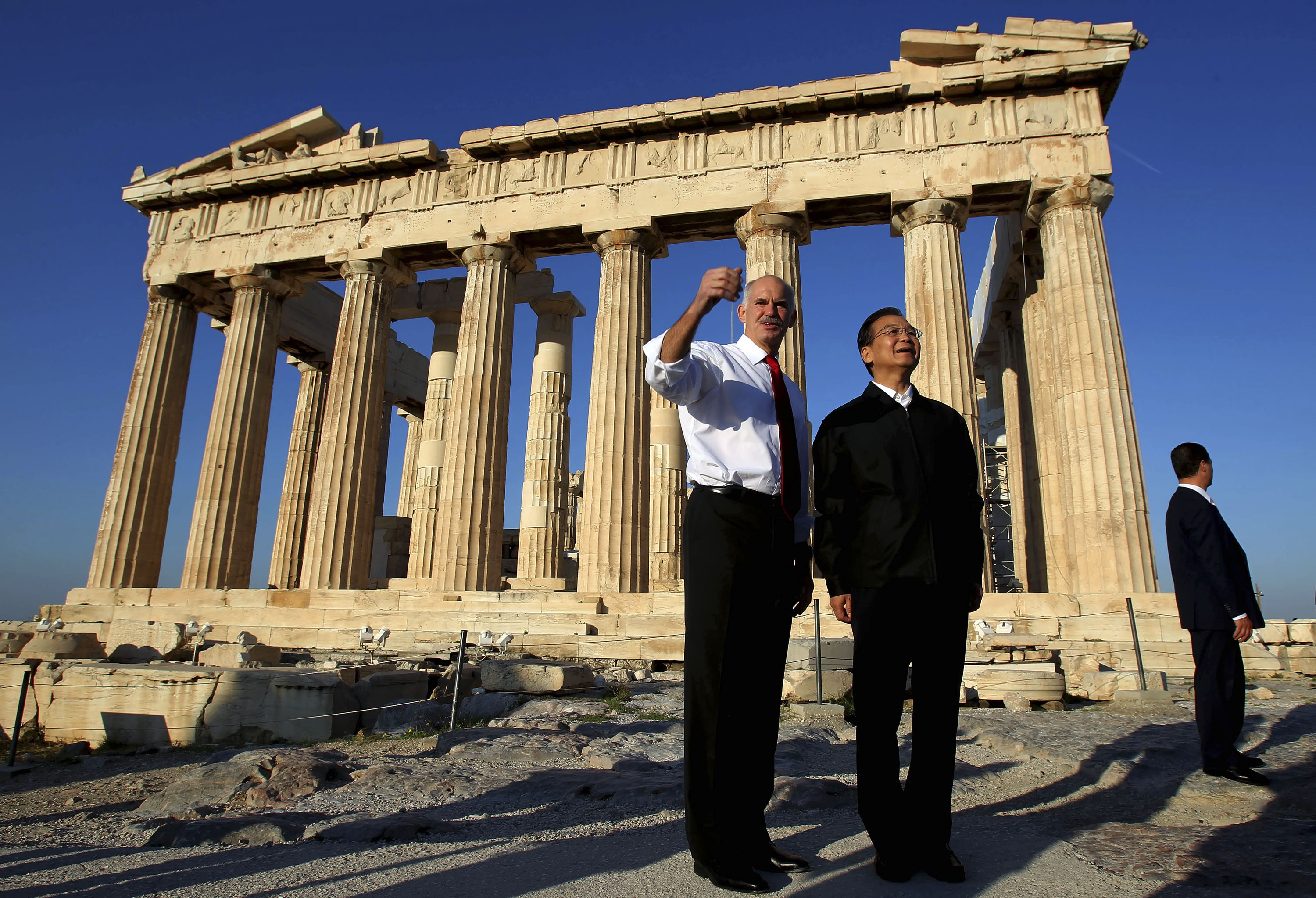
    Greece is in line for membership in Beijing’s Asian Infrastructure Investment Bank. In November, the government sent a delegation to the so-called 16+1 annual summit of China with 16 Eastern and Central European nations. Athens and Beijing in May signed a three-year action plan to guide investment and trade deals. In December, French President Emmanuel Macron delivered an ardent speech under the Acropolis, where he expressed concern about Greek and European economic weaknesses that Beijing could target and keep the bloc from speaking with a united voice about global issues.

    “Our European sovereignty is what will enable us to be digital champions, build a strong economy, and make us an economic power in this changing world and not be subjected to the law of the fittest — the Americans and, soon, the Chinese — but our own law,” he said.

    China is now the EU’s second-biggest trading partner behind the United States. In 2016, China spent $40 billion compared with $23 billion in the prior year.

    Regulation

    While COSCO is expanding its footprint at Piraeus, among the world’s fastest-growing ports, the EU is looking to closely regulate foreign investments in European strategic assets, including ports.

    “There’s a general uneasiness in the EU concerning Chinese investments,” said Polyxeni Davarinou, a researcher at the Institute of International Economic Relations in Athens. “The EU wants to have a better control. At the same time, though, Greece and Eastern European countries really need these Chinese investments.”

    She said Greece and Europe have the power to contain Chinese influence if leaders enact bold rules to monitor foreign investment.

    “There are voices in Europe that believe Greece is too close to China, and that’s because we’ve given them reasons to see it that way,” she said. “Greece’s problem is how to develop a clear and steady strategy.”

    The survey by the Institute of International Economic Relations noted that Greece is still emerging from a period when it could hardly afford to be choosy about who invested in its beleaguered domestic economy.

    “It is an indisputable fact that, trapped in its severe fiscal and economic predicament, Greece is not in a position to discourage foreign investment from any legitimate source,” the report concluded. “In fact, a certain diversification of foreign investment from countries outside the EU is even welcome.”

    But the survey also cautions that, “engulfed by its economic woes and disenchantment with the EU, Greece welcomes China with a coherent strategy.”

    In Piraeus, meanwhile, cranes are offloading shipping containers from huge cargo ships around the clock. COSCO is planning to invest an extra $372 million to build three five-star hotels and a new dock that can accommodate 14 cruise ships.

    Still, Mr. Gogos, the union leader, is pessimistic about Greece’s recovery. No matter how much Chinese money flows into Greece, he said, the country is still laboring to repay its debts. Greeks won’t see the benefits of their hard work for generations, he said.

    “Nothing will change for Greece,” Mr. Gogos said. “All the money ends up in the country’s black hole, repaying its humongous public debt instead of rebuilding the economy.”

  • Violence halts rare aid delivery to Syria’s eastern Ghouta

    The first aid delivery in weeks to reach the besieged eastern suburbs of Damascus was cut short after Syrian government forces began shelling the area while aid workers were still inside, a local coun

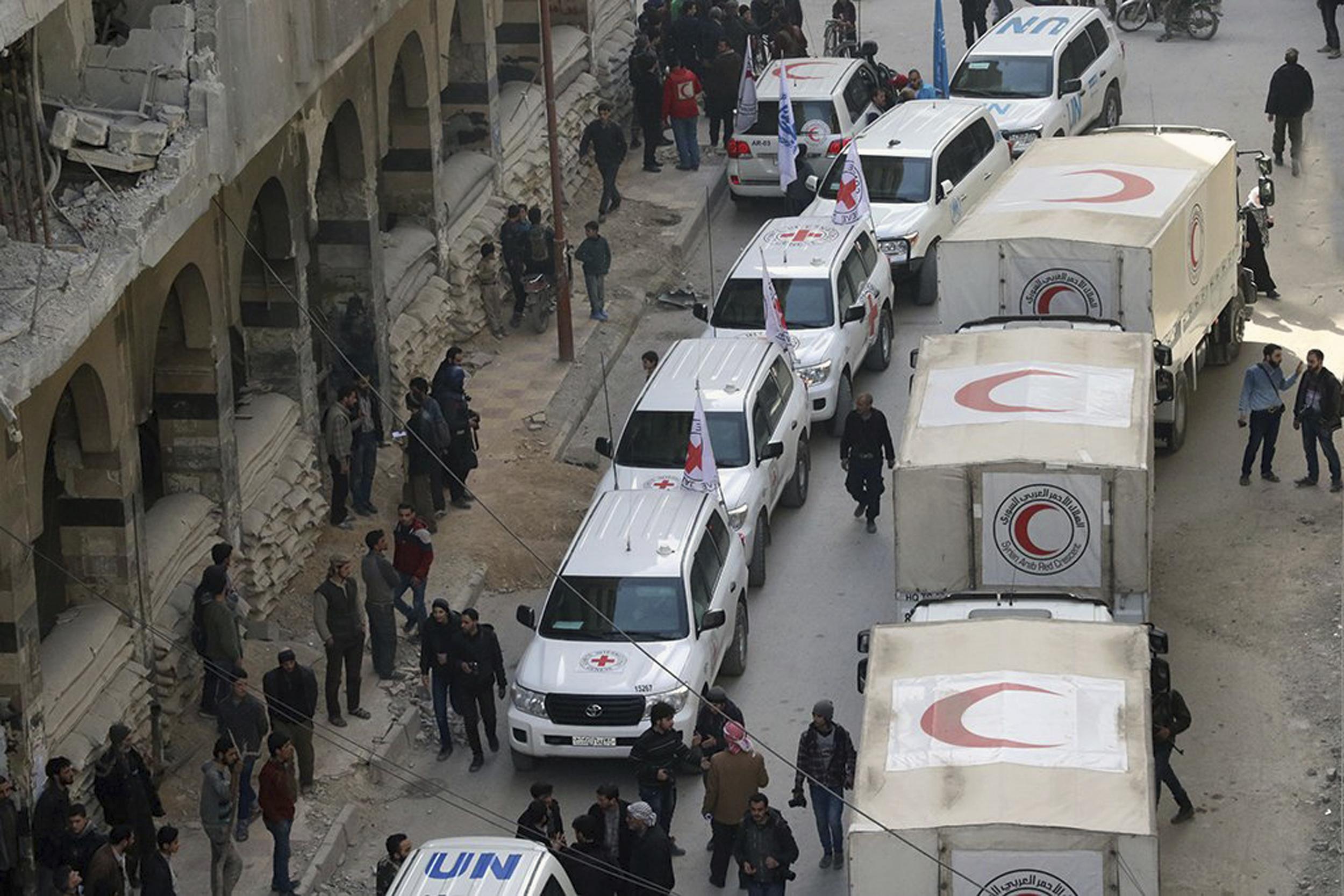
    BEIRUT (AP) — The first aid delivery in weeks to reach the besieged eastern suburbs of Damascus was cut short after Syrian government forces began shelling the area while aid workers were still inside, a local council said on Tuesday.

    Monday’s shipment was the first to enter eastern Ghouta amid weeks of a crippling siege and a government assault that has killed hundreds of civilians since February 18.

    The International Committee for the Red Cross confirmed that its joint convoy with the United Nations had to leave before offloading all its supplies on account of the deteriorating security situation.

    Ingy Sedky, the ICRC spokeswoman in Syria, said most of the aid from a 46-truck convoy was delivered to the town of Douma in eastern Ghouta but the mission was cut short before the rest of the supplies could be unloaded.

    Iyad Abdelaziz, a member of the Douma Local Council, said nine aid trucks had to leave the area after government shelling and airstrikes intensified in the evening.

    At least 50 civilians were killed Monday by shelling and airstrikes in eastern Ghouta as the Syrian government, backed by Russia’s military, showed no signs of easing its assault on the beleaguered region, despite a U.N. Security Council resolution passed Feb. 25 demanding a 30-day cease-fire.

    The convoy that reached Douma on Monday carried only a fraction of the relief needed for the estimated 400,000 people trapped under the government’s siege. The U.N.’s humanitarian office said the convoy carried food for 27,500 people.

    But it said the Syrian government offloaded 70 percent of the health supplies, including trauma and surgical kits and insulin, before allowing the convoy to enter eastern Ghouta.

    The government routinely removes lifesaving medical supplies from aid convoys, in a pattern of denying such aid to civilians living in opposition areas. U.N. officials have complained for years about such actions by the Syrian government.

  • Sergei Skripal case: U.K. counter-terror specialists offer help after ex-Russian spy collapses

    British counter-terror specialists offered expertise Tuesday to police in southern England Tuesday as they sought to unravel the mystery of why a former Russian spy fell critically ill following expos

    SALISBURY, England (AP) — British counter-terror specialists offered expertise Tuesday to police in southern England Tuesday as they sought to unravel the mystery of why a former Russian spy fell critically ill following exposure to an “unknown substance.”

    Authorities maintained a cordon near the spot — a bench near a shopping mall — where former double agent Sergei Skripal and an unidentified woman collapsed Sunday in Salisbury, 90 miles (145 kilometers) southwest of London. British media reported that the woman was Skirpal’s daughter.

    Though authorities are trying to keep an open mind, the incident drew parallels to the death of former Russian agent Alexander Litvinenko, who was poisoned with radioactive polonium 11 years ago in London.

    “I think we have to remember that Russian exiles are not immortal, they do all die and there can be a tendency for some conspiracy theories,” Metropolitan Police assistant commissioner Mark Rowley told the BBC.

    “But likewise we have to be alive to the fact of state threats as illustrated by the Litvinenko case.”

    Skripal, 66, who was convicted in Russia on charges of spying for Britain and sentenced in 2006 to 13 years in prison. He was freed in 2010 as part of a spy swap, which followed the exposure of a ring of Russian sleeper agents in the United States.

    The Kremlin said Russia has not been approached by British authorities to help in the investigation. But Dimitry Peskov, President Vladimir Putin’s spokesman, said Tuesday at a daily conference call with media in Russia that “Moscow is always ready to cooperate.”

    Wiltshire Police, which is responsible for the Salisbury area, said the man and woman appeared to know one another and had no visible injuries.

    “They are currently being treated for suspected exposure to an unknown substance. Both are currently in a critical condition in intensive care,” police said in a statement.

    The discovery led to a dramatic decontamination effort. Crews in billowing yellow moon suits worked into the night spraying down the street, and the Salisbury hospital’s emergency room was closed.

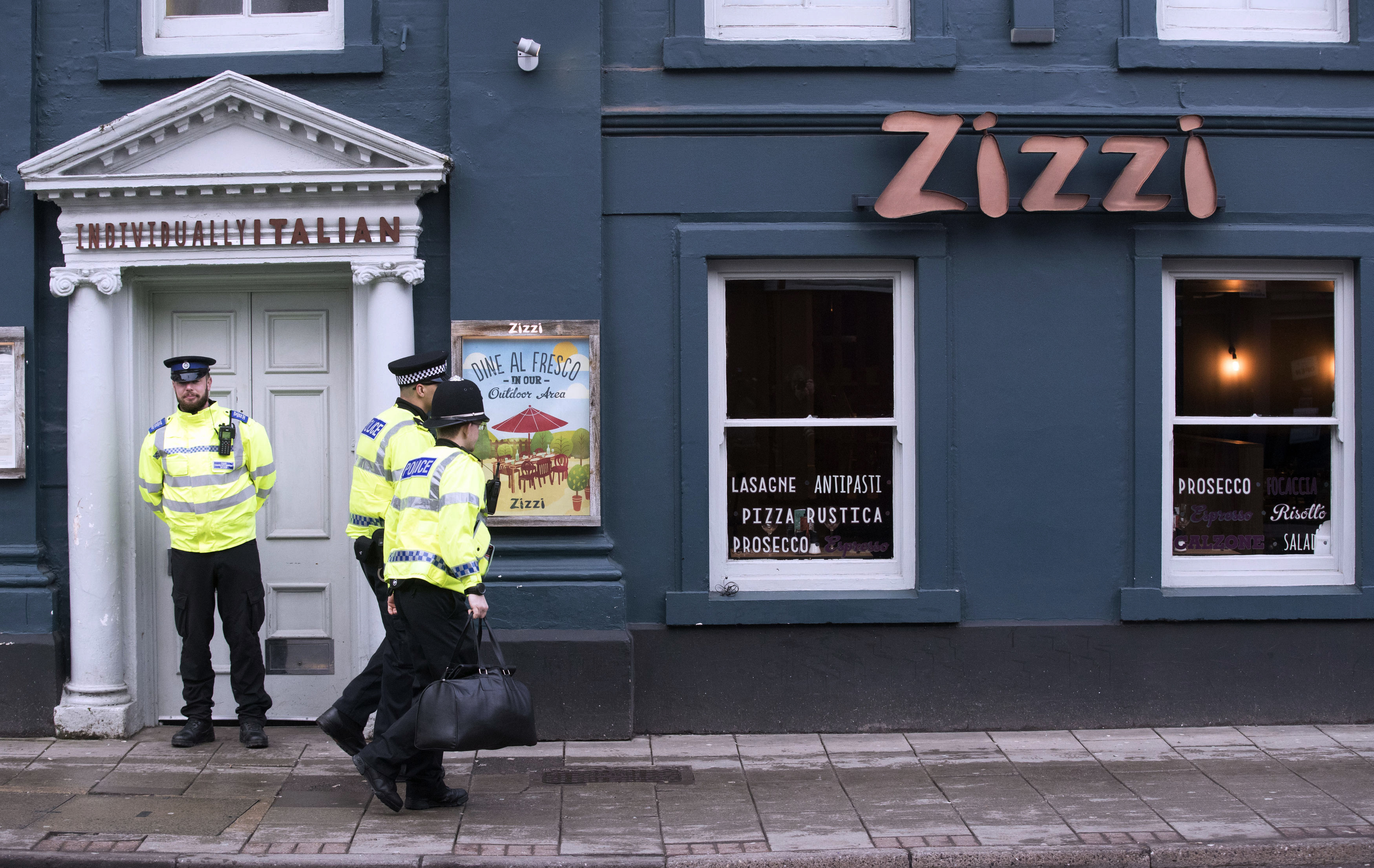
    A closed circuit television image of a man and woman walking through an alleyway connecting the Zizzi restaurant and the bench where Skripal and the woman were found is believed to be of interest to police.

    “Police had a good look at the footage and were interested in these two people. It was the only image they took away,” said Cain Prince, 28, the manager of a nearby gym. “They wanted a list of everyone in the gym between 3 p.m. and 4 p.m. as well.”

    Public records list Skripal as having an address in Salisbury.

    Skripal served with Russia’s military intelligence, often known by its Russian-language acronym GRU, and retired in 1999. He then worked at the Foreign Ministry until 2003 and later became involved in business.

    After his 2004 arrest in Moscow, he confessed to having been recruited by British intelligence in 1995 and said he provided information about GRU agents in Europe, receiving over $100,000 in return.

    At the time of Skripal’s trial, the Russian media quoted the FSB domestic security agency as saying that the damage from his activities could be compared to harm inflicted by Oleg Penkovsky, a GRU colonel who spied for the United States and Britain. Penkovsky was executed in 1963.

    The circumstances surrounding Sunday’s incident were still murky and police urged the public not to speculate. But few could avoid invoking the name of Litvinenko — the former Russian agent who died after drinking polonium-210-laced tea in a swanky London hotel in 2006.

    His illness was initially treated as unexplained; evidence eventually emerged indicating he had been deliberately poisoned with the radioactive material.

    A British judge wrote in a 2016 report that Litvinenko’s death was an assassination carried out by Russia’s security services — with the likely approval of Putin. The Russian government has denied any responsibility.