Blog

  • Probe finds deadly Niger mission lacked proper approval

    A military investigation into the Niger attack that killed four American service members concludes the team didn’t get required senior command approval for their risky mission to capture a high-level

    WASHINGTON (AP) — A military investigation into the Niger attack that killed four American service members concludes the team didn’t get required senior command approval for their risky mission to capture a high-level Islamic State militant, several U.S. officials familiar with the report said. It doesn’t point to that failure as a cause of the deadly ambush.

    Initial information suggested the Army Special Forces team set out on its October mission to meet local Nigerien leaders, only to be redirected to assist a second unit hunting for Doundou Chefou, a militant suspected of involvement in the kidnapping of an American aid worker. Officials say it now appears the team went after Chefou from the onset, without outlining that intent to higher-level commanders.

    As a result, commanders couldn’t accurately assess the mission’s risk, according to the officials who spoke on condition of anonymity to discuss the results of the investigation before they’re publicly released. The finding will likely increase scrutiny on U.S. military activity in Africa, particularly the role of special operations forces who’ve been advising and working with local troops on the continent for years.

    Four U.S. soldiers and four Nigerien troops were killed Oct. 4 about 120 miles (200 kilometers) north of Niamey, Niger’s capital, when they were attacked by as many as 100 Islamic State-linked militants traveling by vehicle and carrying small arms and rocket-propelled grenade launchers. Two other American soldiers and eight Nigerien forces were wounded.

    The investigation finds no single point of failure leading to the attack, which occurred after the soldiers learned Chefou had left the area, checked his last known location and started for home. It also draws no conclusion about whether villagers in Tongo Tongo, where the team stopped for water and supplies, alerted IS militants to American forces in the area. Still, questions remain about whether higher-level commanders – if given the chance – would have approved or adjusted the mission, or provided additional resources that could have helped repel the ambush.

    Army Col. Rob Manning, a Pentagon spokesman, wouldn’t comment on the investigation, beyond saying it’s now complete and being reviewed by Defense Secretary Jim Mattis and other senior leaders.

    The other U.S. officials said the final report could have consequences for U.S. military operations in Africa.

    Gen. Thomas Waldhauser, the Africa Command’s leader, is expected to recommend greater oversight to ensure proper mission approval and risk assessment, they said. Waldhauser isn’t expected to scale back missions in Africa or remove commanders’ authorities to make decisions. He is slated to testify before a House committee Tuesday.

    The incident is likely to trigger discussions about improved security measures, too, including heavier armored vehicles, better communications and improved individual trackers to make it easier to find missing troops.

    Top Africa Command officials, led by its chief of staff, Maj. Gen. Roger Cloutier Jr., have spent months trying to unravel the complex incident, conducting dozens of interviews across the U.S., Europe and Africa.

    U.S. and Nigerien officials say the troops received intelligence about Chefou’s location and acted on what was likely considered a fleeting chance to get him, or at least gather valuable intelligence on the American hostage.

    It’s unclear where Chefou was believed to be. But before arriving at that location, the U.S.-Nigerien team learned he had left. The troops traveled on to the site to collect any remaining information there. A second U.S. commando team assigned to the mission was unable to go because of weather problems.

    One Nigerien official said the troops that reached the destination found food and a motorcycle. They destroyed the motorcycle. The team then headed home, the official said, but stopped in Tongo Tongo to get supplies.

    The U.S. investigation notes the team stayed at Tongo Tongo longer than normal, but says there is no compelling evidence to conclude a villager or anyone else deliberately delayed their departure or betrayed them by alerting militants.

    The Nigerien official said Abou Walid Sahraoui, an IS leader in the region, heard the team had visited the site of Chefou’s last known location. He then dispatched about 20 fighters to pursue the U.S. and Nigerien troops. A larger group of militants followed later, said the official, who also would only discuss the matter on condition of anonymity. U.S. officials couldn’t corroborate that information.

    Shortly after leaving Tongo Tongo, U.S. and Nigerien forces were attacked and eventually overrun by the IS ambush. Army Sgt. La David T. Johnson, 25, of Miami Gardens, Florida, became separated from the others as he fought and ran for cover in the brush. He was gunned down, but his body wasn’t found until two days later.

    The other three Americans killed were Staff Sgt. Bryan C. Black, 35, of Puyallup, Washington; Staff Sgt. Jeremiah W. Johnson, 39, of Springboro, Ohio; and Staff Sgt. Dustin M. Wright, 29, of Lyons, Georgia. Black and Wright were Army Special Forces. Johnson and Johnson weren’t Green Berets; the others were.

    The U.S. troops called for help using the code “Broken Arrow,” which signals they were in imminent danger, officials said. They then followed procedures and shut down their radios to prevent the enemies from using them. As a result, they couldn’t communicate quickly with French aircraft sent in to rescue them. Some footage of the gruesome battle, taken off one of the U.S. soldier’s helmet cameras, surfaced in recent days in an IS propaganda video posted online.

    Officials said the procedural breakdown meant the overall mission lacked the higher-level command approval necessary to go after a senior militant. Such missions require approval by senior Special Operations Command officers who would’ve been in Chad or at Africa Command’s headquarters in Germany.

    The reporting failure meant those commanders lacked a complete picture of what the unit was doing, so concluded the mission was unlikely to encounter enemy forces. Had the unit gotten proper oversight and approvals, officials said, it might have been better equipped or included additional personnel more capable of sustaining a fight.

    ___

    Baba Ahmed in Bamako, Mali, contributed to this report.

  • General Mills, Annie’s Mac & Cheese tap South Dakota farm

    General Mills announced a deal Tuesday to create South Dakota’s largest organic crop farm as the food giant works to secure enough organic ingredients to meet growing consumer demand worldwide.

    MINNEAPOLIS (AP) – General Mills announced a deal Tuesday to create South Dakota’s largest organic crop farm as the food giant works to secure enough organic ingredients to meet growing consumer demand worldwide.

    Gunsmoke Farms will convert 34,000 acres – more than 53 square miles – near Pierre to organic by 2020, giving it enough space for all the organic wheat needed to make General Mills‘ popular Annie’s Macaroni & Cheese line.

    General Mills, which is guaranteeing a market for the wheat, is working with Madison, Wisconsin-based Midwestern BioAg to develop the crop rotation and soil-building program needed for such a large farm to go organic.

    “We’re kind of obsessed with soil,” Carla Vernon, president of General Mills‘ Annie’s unit in Berkeley, California, told The Associated Press ahead of the announcement. “And that’s because we know the power of soil is big.”

    Golden Valley, Minnesota-based General Mills, like many other food companies, has ambitious environmental goals, and like other big industry players it has bought smaller brands and tweaked its own products to appeal to consumers who want more organic and natural products. It wants to double its organic acreage by 2020 and to cut greenhouse gas emissions 28 percent by 2025 throughout its supply chain all the way down to consumers, because it believes climate change will be bad for business. The company’s chief sustainability officer, Jerry Lynch, said it’s on pace to meet its organic acreage goal well ahead of schedule.

    Lynch said the project is one of several sites where General Mills is pilot-testing the same regenerative practices. The company will measure results in sequestering carbon in the soil, increasing biodiversity on the landscape and bringing socio-economic benefits to local communities.

    Gunsmoke Farms will also carve out around 3,000 acres of pollinator habitat in cooperation with the Portland, Oregon-based Xerces Society. General Mills and Xerces announced a partnership in 2016 to add more than 100,000 acres of bee and butterfly habitat on or near existing crop lands.

    General Mills bought Annie’s – a brand known for its rabbit logo and bunny-shaped snacks – in 2014 for $820 million. While Gunsmoke Farms will become a huge supplier, Vernon pointed out that Annie’s also works with small farms. It’s partnering now with two farmers in Montana who use regenerative practices, and it will roll out single-source, limited-edition organic macaroni and cheese and bunny graham crackers this month.

    South Dakota doesn’t have much organic agriculture now – just 86 certified farms with 115,780 total acres during the 2016 growing season, according to U.S. Department of Agriculture statistics. And a little more than half that is pasture or rangeland rather than crop acres.

    Gunsmoke Farms is owned by San Francisco-based TPG, a private global investment company with an interest in sustainability. TPG bought the farm recently from Fargo, North Dakota-based R.D. Offutt Co, best known as a potato company, which used it primarily to grow conventional wheat, corn, soybeans and sunflowers. Midwestern BioAg will work with local managers on the three-year process of converting the land to organic.

    Gary Zimmer, founder of Midwestern BioAg, said it’s his biggest project yet in 30 years of converting land to organic. He said the land at Gunsmoke Farms needs natural waterways re-established, as well as cover crops, no-till practices and the addition of lots of trace minerals.

    Since the area is fairly dry, he said, it needs deeply rooted plants to trap rainwater and to build up organic matter in the soil. The crop rotation will include legumes such as peas, clover and alfalfa, which add nitrogen to fertilize the soil.

    “I think everybody’s going to be watching it, so we have to make sure we do a lot of things right,” he said.

  • Donald Trump may reconsider tariff on aluminum and steel in exchange for new terms on NAFTA

    President Trump said Monday that he’ll reconsider tariffs on aluminum and steel if Canada and Mexico agree to new terms on NAFTA.

    President Trump said Monday that he’ll reconsider tariffs on aluminum and steel if Canada and Mexico agree to new terms on NAFTA.“We have large trade deficits with Mexico and Canada. NAFTA, which is under renegotiation right now, has been a bad deal for U.S.A. Massive relocation of companies & jobs. Tariffs on Steel and Aluminum will only come off if new & fair NAFTA agreement is signed. Also, Canada must..” Mr. Trumptweeted.

    “…treat our farmers much better. Highly restrictive. Mexico must do much more on stopping drugs from pouring into the U.S. They have not done what needs to be done. Millions of people addicted and dying,” he added.

    Trade has been an issue that Mr. Trump has focused on since the early days of his campaign, including a promise to renegotiate the North American Free Trade Agreement, known as NAFTA.

    SEE ALSO: Trump won’t back down on tariffs despite widespread fears of trade war

    The president first proposed the idea of higher tariffs on aluminum and steel last week. He said this will help those industries in the U.S. regain jobs and treat workers better.

    We have large trade deficits with Mexico and Canada. NAFTA, which is under renegotiation right now, has been a bad deal for U.S.A. Massive relocation of companies & jobs. Tariffs on Steel and Aluminum will only come off if new & fair NAFTA agreement is signed. Also, Canada must..

    — Donald J. Trump (@realDonaldTrump) March 5, 2018

    …treat our farmers much better. Highly restrictive. Mexico must do much more on stopping drugs from pouring into the U.S. They have not done what needs to be done. Millions of people addicted and dying.

    — Donald J. Trump (@realDonaldTrump) March 5, 2018

    To protect our Country we must protect American Steel! #AMERICA FIRST

    — Donald J. Trump (@realDonaldTrump) March 5, 2018

  • Donald Trump’s steel, aluminum tariffs to proceed despite criticism

    Trump administration officials said on Sunday that the president will press forward with his plans to impose new tariffs on steel and aluminum imports, amid growing criticism from some quarters overse

    Trump administration officials said on Sunday that the president will press forward with his plans to impose new tariffs on steel and aluminum imports, amid growing criticism from some quarters overseas and on Capitol Hill that the move could plunge the U.S. headlong into an unwinnable trade war.

    British Prime Minister Theresa May and other European officials — along with Democratic and Republican lawmakers in Congress — said the tariffs will cause far-reaching damage and the last thing the global economy needs is a trade war.

    But the administration says Mr. Trump is merely following through on his tough campaign talk on trade and is predicting a negligible overall impact on U.S. consumers.

    “This is an action, basically, to protect our national security and economic security,” White House trade adviser Peter Navarro said on CNN’s “State of the Union.”

    “We can’t have a country that can defend itself and prosper without an aluminum and steel industry,” he said.

    Mr. Trump said last week that he plans to roll out tariffs of 25 percent on steel imports and 10 percent on aluminum imports. Mr. Navarro predicted concrete action as soon as this week.

    He said some businesses could be exempted but no country would be excluded from the tariffs despite criticism from key U.S. allies such as Canada and Britain.

    “As soon as you exempt one country, then you have to exempt another country,” he said.

    Commerce Secretary Wilbur L. Ross Jr. said the announcement shouldn’t have been shocking given Mr. Trump’s rhetoric on trade during the 2016 campaign, when he repeatedly criticized multilateral pacts such as the North American Free Trade Agreement.

    “I think you have to take the president at his word. He made campaign promises. He’s pretty well-proven so far. He intends to keep his campaign promises,” Mr. Ross said on NBC’s “Meet the Press.”

    “I have no reason to believe he’s going to change his mind,” Mr. Ross said.

    Mr. Ross acknowledged that foreign officials have threatened to retaliate through tariffs of their own but said the $9 billion of tariffs in question is a fraction of 1 percent of the whole U.S. economy.

    “What the European Union has talked about is some $3 billion or so of potential retaliation. That’s an even smaller fraction of 1 percent of the economy,” he said.

    Jean-Claude Juncker, who heads the European Commission, warned that the EU might impose its own taxes on items such as Harley-Davidson motorcycles and bourbon — products that are near and dear to the economies of Wisconsin and Kentucky, the respective home states of House Speaker Paul D. Ryan and Senate Majority Leader Mitch McConnell.

    “We will not sit idly while our industry is hit with unfair measures that put thousands of European jobs at risk,” he said.

    Mrs. May also raised concerns about the plans with Mr. Trump in a Sunday phone call, and Canadian Prime Minister Justin Trudeau said the steel and aluminum tariffs would be “absolutely unacceptable.”

    The announcement also sparked divisions within Mr. Trump’s administration and prompted speculation that economic adviser Gary Cohn — who opposed the tariffs — could resign as a result.

    Mr. Ross said he didn’t know anything about rumors of Mr. Cohn’s resignation.

    “Gary was certainly part of the interagency process,” he said. “The president likes to have dissenting views, likes to hear every side of everything because that way he makes sure that his final decision is the best-informed.”

    The president’s announcement also prompted strong pushback from Republicans and Democrats on Capitol Hill.

    Sen. Lindsey Graham, South Carolina Republican, said Sunday that Mr. Trump is going about things the wrong way if his goal is to target Chinese flooding of the worldwide steel market.

    “You’re letting China off the hook. You’re punishing the American consumer and our allies. You’re making a huge mistake,” Mr. Graham said on CBS’s “Face the Nation.” “Go after China, not the rest of the world.”

    Sen. Christopher Murphy, Connecticut Democrat, said the president’s enthusiasm for opening a trade war with Europe is a gift to Russia, which would welcome conflict between the U.S. and its European allies.

    “So I just think the president needs to understand that there are times when these targeted sanctions are necessary, but you’ve got to do it at the right moment and you have to realize that none of it takes place in a vacuum,” Mr. Murphy said on ABC’s “This Week.”

    The move has won praise from some union groups and Democrats, though, who say the president is right to try to punish countries acting in bad faith when it comes to trade issues.

    “I like where the president is going on this. I really do,” Sen. Joe Manchin III, West Virginia Democrat, said on CBS.

    “We’re talking about fair trade,” Mr. Manchin said. “Free trade hasn’t worked well for West Virginia. It really hasn’t. We have lost thousands of jobs. And we’re [talking] about a fairness to the system.”

  • L.L. Bean raises age to 21 to buy rifles

    Outdoor retailer L.L. Bean will no longer sell rifles to anyone under 21.

    SEATTLE (AP) — Outdoor retailer L.L. Bean will no longer sell rifles to anyone under 21.

    The company joined retail heavyweights Walmart and Dick’s Sporting Goods in changing policies in the wake of the Florida school massacre.

    L.L. Bean said in a statement late Thursday that it will no longer sell guns or ammunition to anyone under the age of 21.

    Company spokeswoman Carolyn Beem says L.L. Bean only sells firearms at its flagship store in Maine and only guns specific to hunting and target shooting.

    She says L.L. Bean does not carry assault-style firearms, high-capacity firearms, bump stocks or handguns of any kind.

    The announcements come two weeks after a teenager killed 17 students and educators with an AR-15 rifle in Florida.

  • Washington becomes 1st state to approve net-neutrality rules

    Setting up a likely legal fight with the Trump administration, Washington has become the first state to enact its own net-neutrality requirements after U.S. regulators repealed Obama-era rules designe

    OLYMPIA, Wash. (AP) – Setting up a likely legal fight with the Trump administration, Washington has become the first state to enact its own net-neutrality requirements after U.S. regulators repealed Obama-era rules designed to keep the internet an even playing field.

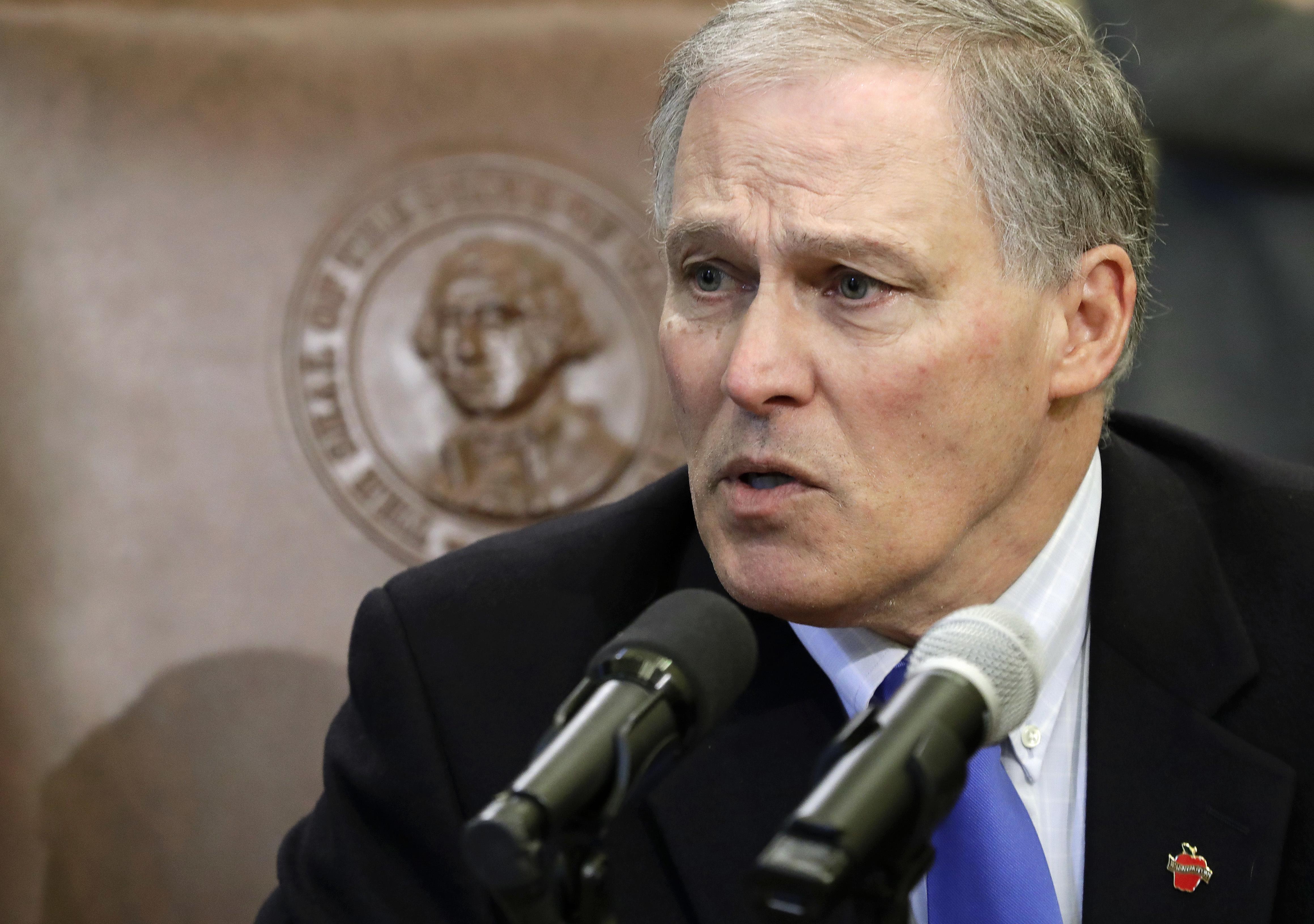
    “We know that when D.C. fails to act, Washington state has to do so,” Gov. Jay Inslee said Monday before signing the bipartisan measure that banned internet providers from blocking content or interfering with online traffic.

    The new law also requires internet providers to disclose information about their management practices, performance and commercial terms. Violations would be enforceable under the state’s Consumer Protection Act.

    The Federal Communications Commission voted in December to gut U.S. rules that meant to prevent broadband companies such as Comcast, AT&T; and Verizon from exercising more control over what people watch and see on the internet. The regulations also prohibited providers from favoring some sites and apps over others.

    Because the FCC prohibited state laws from contradicting its decision, opponents of the Washington law have said it would lead to lawsuits. Inslee said he was confident of its legality, saying “the states have a full right to protect their citizens.”

    As he has done frequently over the past year, Inslee took aim at President Donald Trump’s administration, saying the decision by the Federal Communications Commission was “a clear case of the Trump administration favoring powerful corporate interests over the interests of millions of Washingtonians and Americans.”

    While several states introduced similar measures this year seeking to protect net neutrality, so far only Oregon and Washington have passed legislation. But Oregon’s measure wouldn’t put any new requirements on internet providers.

    It would stop state agencies from buying internet service from any company that blocks or prioritizes specific content or apps, starting in 2019. It’s unclear when Oregon’s measure would be signed into law.

    Washington state was among more than 20 states and the District of Columbia that sued in January to try and block the FCC’s action. There are also efforts by Democrats to undo the move in Congress.

    Governors in five states – Hawaii, New Jersey, New York, Montana and Vermont – have signed executive orders related to net-neutrality issues, according to the National Conference of State Legislatures.

    Montana’s order, for instance, bars telecommunications companies from receiving state contracts if they interfere with internet traffic or favor higher-paying sites or apps.

    Big telecom companies have said net neutrality rules could undermine investment in broadband and introduce uncertainty about what are acceptable business practices. Net-neutrality advocates say the FCC decision harms innovation and make it harder for the government to crack down on internet providers who act against consumer interests.

    The FCC’s new rules are not expected to go into effect until later this spring. Washington’s law will take effect in June.

    Ron Main, executive director of the Broadband Communications Association of Washington, which opposed the bill, said the cable companies his group represents have already pledged not to block legal content or engage in paid prioritization.

    He said that because the internet is an interstate service, only Congress can pass legislation “that gives all consumers and internet services providers the clarity and consistency needed for a free and open internet.”

    “There should not be a state-by-state patchwork of differing laws and regulations,” he said in a written statement.

  • ‘Dreamers’ turn ire on Democrats as DACA deadline passes

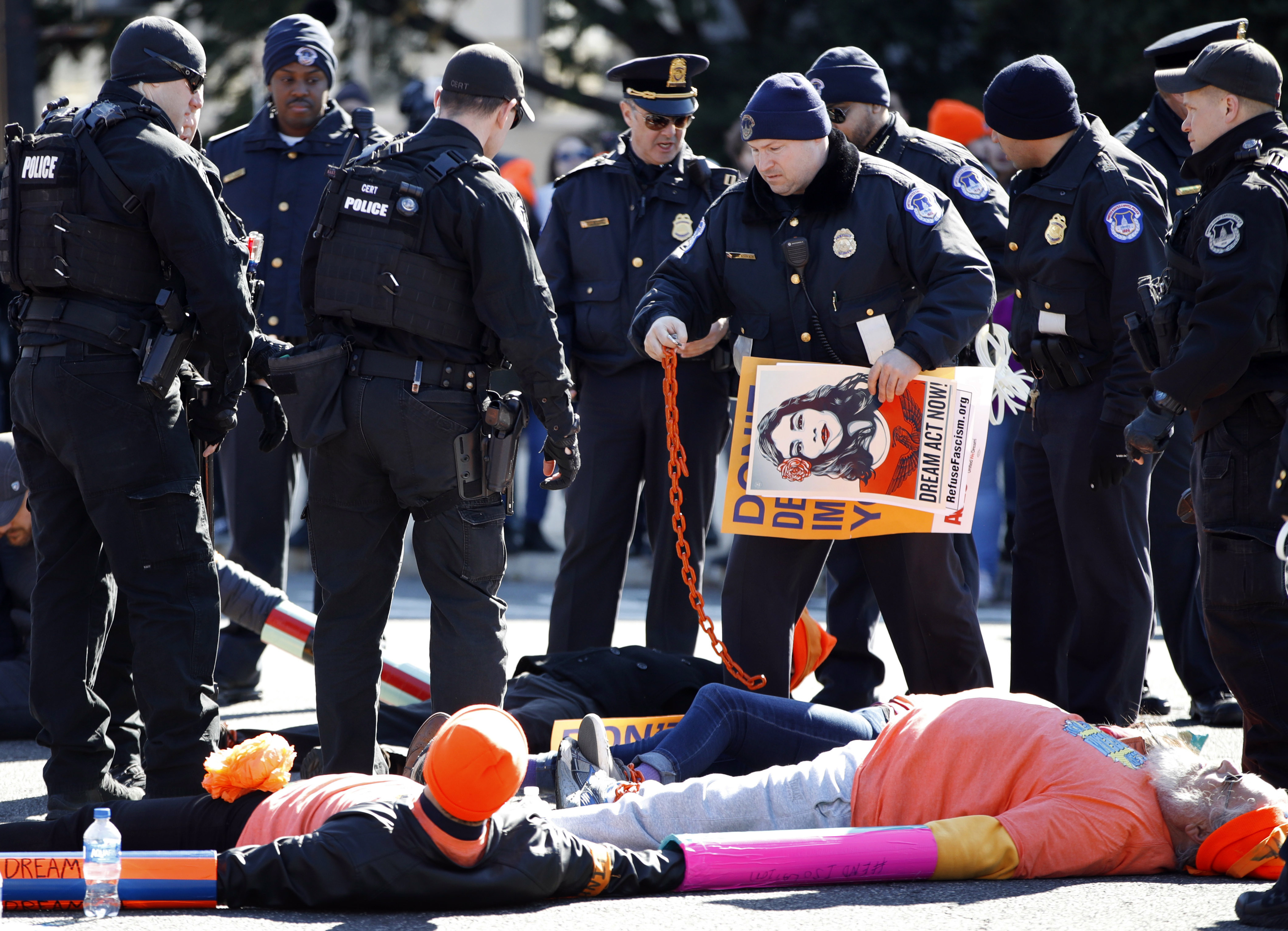
    Illegal immigrant Dreamers descended on Democrats’ national headquarters in Washington on Monday, staging a sit-in and vowing to make sure the party gets at least some of the blame as Congress slipped

    Illegal immigrant Dreamers descended on Democrats’ national headquarters in Washington on Monday, staging a sit-in and vowing to make sure the party gets at least some of the blame as Congress slipped past President Trump’s March 5 deadline for action on DACA.

    While the deadline lacked the urgency it once had, thanks to several court decisions keeping the Obama-era tentative deportation amnesty going, it maintains much of its political salience.

    The protesters who blocked the doors to the Democratic National Committee on Monday said there is blame to spread around, but they wanted to make sure Democrats felt much of the pressure, accusing the party’s leaders of a decade of betrayal culminating in this week’s failure.

    SEE ALSO: Judge rules Trump’s DACA phaseout legal

    “This party has shown me nothing but pain,” said Maria Duarte, a DACA recipient dressed in pink Hello Kitty pajamas and clutching a stuffed animal as she blocked the doors. She was choked with emotion as she shouted through a bullhorn, saying she “lost family members” to enforcement under the Obama administration.

    President Obama created the Deferred Action for Childhood Arrivals program in June 2012 as he was campaigning for re-election. The protesters said the move was designed to stave off potential electoral disaster.

    More than 800,000 people won protection over the years, and some 683,000 people are currently protected. They have renewable two-year stays of deportation and are entitled to work permits, which can earn them driver’s licenses, Social Security numbers and even some taxpayer benefits.

    But the program was legally suspect. Facing threats of a lawsuit, Mr. Trump last year announced a phaseout, giving Congress six months to come up with a more permanent solution.

    Now it’s the phaseout that is legally troubled. Two federal courts have ordered Mr. Trump to keep processing renewal applications, making the March 5 deadline less critical.

    Yet a third federal judge ruled late Monday, upholding Mr. Trump’s phaseout. For now, the decision does not surmount the original two court rulings, but Judge Roger W. Titus’ 30-page opinion does give some legal heft as the Justice Department defends the president’s decisions in higher courts.

    Activists, meanwhile, said March 5 remained the critical political deadline, serving as a milepost with midterm elections looming and both sides looking to avoid blame on an issue where an overwhelming majority of voters believe the Dreamers deserve legal status.

    DNC Chairman Tom Perez said it was Mr. Trump’s “cruel and reckless decision” to phase out DACA that spurred “an unnecessary crisis.”

    “And now his arbitrary deadline has passed without any action from the president or Republicans in Congress,” Mr. Perez said.

    Indeed, most immigrant rights groups, while wishing Democrats had fought more strenuously, do place blame on Mr. Trump and defend a program that they used to decry as a Band-Aid solution.

    But the activists who protested outside DNC headquarters Monday said Democrats missed too many chances to help.

    “You are losing people in this party,” said Roberto Juarez, an organizer with the Seed Project, which staged Monday’s protest. He held up his voter registration card and recounted his days of working to elect Mr. Obama in 2008.

    “I lied to my community because I told them we could pass immigration reform in the first 100 days if we voted him in,” Mr. Juarez said. “What happened? More deportations than any other president.”

    Protesters said Democrats had multiple chances to force the issue over the past few months by holding up government funding until legal status was granted.

    Democrats did force a brief government shutdown in January but quickly relented in exchange for promises of a Senate debate.

    When that debate began, however, it was anticlimactic. Democrats first blocked the freewheeling floor fight all sides had expected, and every plan was defeated when the voting finally began.

    The most promising option, a proposal negotiated by moderates from both parties and embraced as Democrats’ leading option, fell six votes shy of the 60 needed to overcome a filibuster. That plan would have coupled a generous pathway to citizenship and a tentative deportation amnesty for all 11 million illegal immigrants with border wall funding and small limits on chain migration.

    The House, meanwhile, has shunned a floor debate altogether.

    A group of conservatives, led by Rep. Bob Goodlatte, Virginia Republican and chairman of the House Judiciary Committee, has written a bill that offers a continuation of the DACA program — with critical congressional approval — in exchange for major enforcement enhancements and changes to legal immigration policy.

    But House Republican leaders who tested the bill’s popularity among their ranks say it’s short of the support needed and it’s unclear whether they can bridge the gap.

    Democrats predict that if Republicans relented and brought up one of several bipartisan bills, such as a proposal to extend a generous pathway to citizenship in exchange for promises of future border security, there would be majority support to pass it.

    At a press conference Monday, members of the Congressional Hispanic Caucus said it was “shameful” for Republican leaders not to hold votes. They also predicted that Mr. Trump would take the brunt of the blame.

    “Let’s all be clear that President Trump ended DACA. The responsibility lies on his shoulders,” Rep. Raul Ruiz, California Democrat, told reporters at the press conference.

    The White House said Mr. Trump has done his part, pointing to his middle-ground proposal that coupled citizenship rights for up to 1.8 million illegal immigrants with a plan to build his border wall, limit the chain of family migration and change the law to allow for faster deportations of new illegal immigrants.

    Democrats, though, called the enforcement changes too harsh, while House conservatives said the amnesty was too generous.

    White House press secretary Sarah Huckabee Sanders said it was “absolutely terrible that Congress has failed to act.”

    “The president gave Congress six months, and he also gave them a plan,” she said. “They claim to want to fix DACA. The president laid out a pathway and an exact way to do that. They failed to address it, but we’re still hopeful that Congress will actually do their jobs, show up and get something done and fix this problem, not kick it down the road and not continue to ignore it.”

  • Donald J. Trump National Parks Highway clears hurdle in Utah

    A plan to name a Utah highway after President Donald Trump is getting a nod of approval from Utah lawmakers.

    SALT LAKE CITY — A plan to name a Utah highway after President Donald Trump is getting a nod of approval from Utah lawmakers.

    Republican sponsor Rep. Mike Noel said Monday he wants to recognize Trump’s decision to shrink two national monuments that had been fiercely opposed by state leaders. They say the designations wrongly limited what can be done with the land.

    The Sierra Club, though, says Trump’s move was an attack on protections for public lands with rich natural and archaeological resources. The organization was among those saying Trump isn’t worthy of the honor.

    The proposal would rename National Parks Highway, which overlaps several roads to connect well-known parks like Zion, Arches and Bryce.

    If the bill becomes law, the name Donald J. Trump National Parks Highway would appear on road signs and maps.

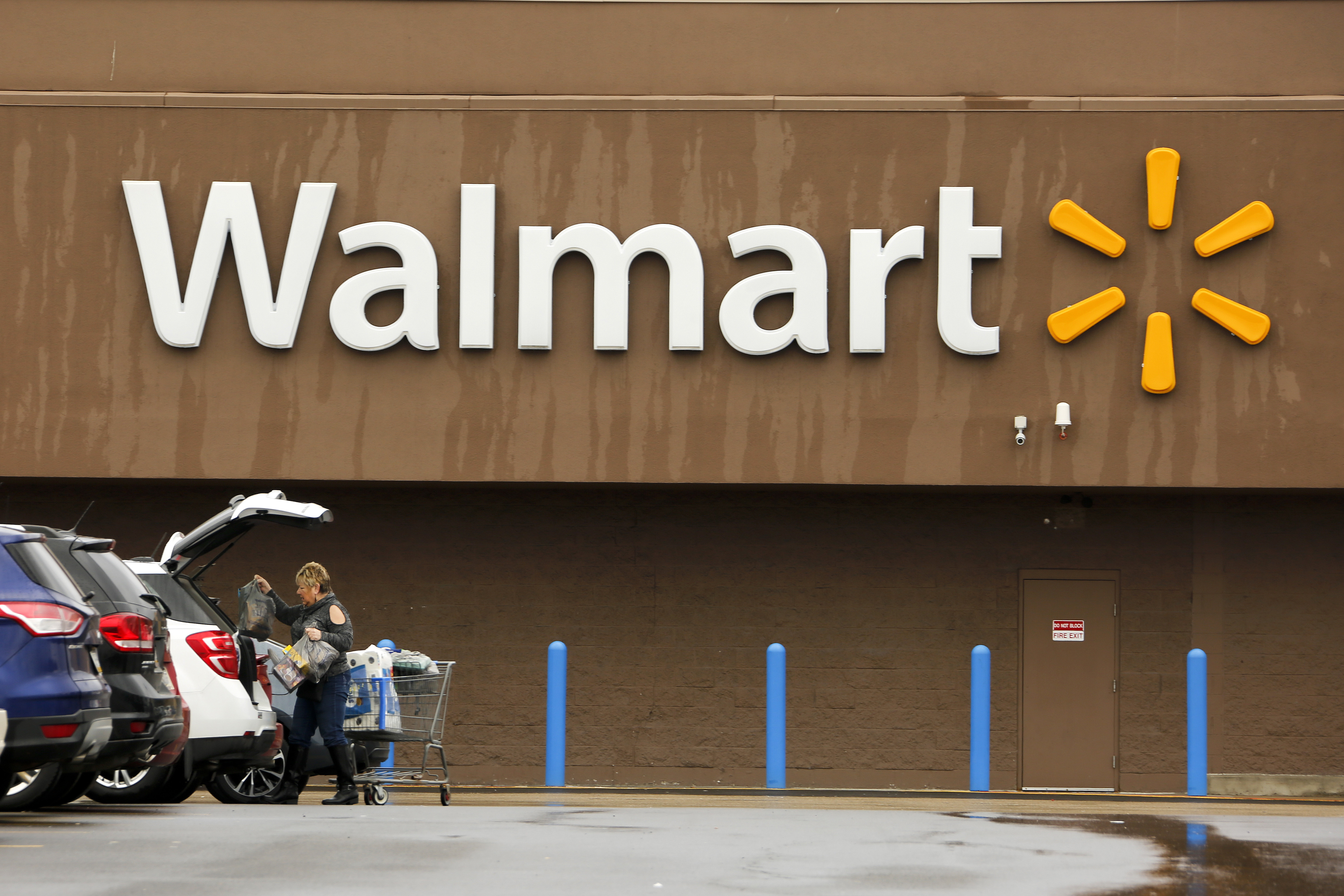
  • Tyler Watson, Oregon man, sues Walmart, Dick’s Sporting Goods over gun policies

    Tyler Watson’s lawsuit filed Monday claims he faced age discrimination when he tried to buy a rifle in February at a store owned by Dick’s in Medford.

    PORTLAND, Ore. — A 20-year-old man in southern Oregon has filed a lawsuit against Dick’s Sporting Goods and Walmart after he says they refused to sell him a rifle.

    The Oregonian/OregonLive reports Tyler Watson’s lawsuit filed Monday claims he faced age discrimination when he tried to buy a rifle in February at a store owned by Dick’s in Medford.

    Watson says he was also refused when he attempted to buy a gun at the Grants Pass Walmart.

    Dick’s and Walmart restricted gun sales in the wake of the Feb. 14 Florida high school massacre. The lawsuit is believed to be the first filed over the new gun policies.

    Oregon law allows residents to buy shotguns or rifles starting at age 18.

    Walmart spokesman Randy Hargrove told The Oregonian/OregonLive that the retailer will defend its new policy. A representative from Dick’s hasn’t responded to a request for comment.

  • Rhode Island bill would require $20 fee to access online porn

    The bill would require that Internet providers block “sexual content and patently offensive material.” To get around that block, computer users must pay a $20 fee that the provider must then pass on t

    Some Rhode Island legislators want the Ocean State to get its cut of the porn racket.

    A bill introduced in the state Senate last week by Democratic Sens. Frank Ciccone of Providence and Hanna Gallo of Cranston would put the tax man in the bedroom (or at least the computer room).

    The bill would require that Internet providers block “sexual content and patently offensive material.” To get around that block, computer users must pay a $20 fee that the provider must then pass on to the state treasurer.

    The bill’s language, according to the Providence Journal, would require that the money go to the state’s Council on Human Trafficking.

    The proposal, which was referred to the Senate Judiciary Committee, would impose crippling fines — $500 per pornographic image — on any provider who didn’t set up the filter, the Journal reported.