Blog

  • Washington approves own net neutrality rules

    Washington became the first state Monday to set up its own net-neutrality requirements after U.S. regulators repealed Obama-era rules that banned internet providers from blocking content or interferin

    OLYMPIA, Wash. — Washington became the first state Monday to set up its own net-neutrality requirements after U.S. regulators repealed Obama-era rules that banned internet providers from blocking content or interfering with online traffic.

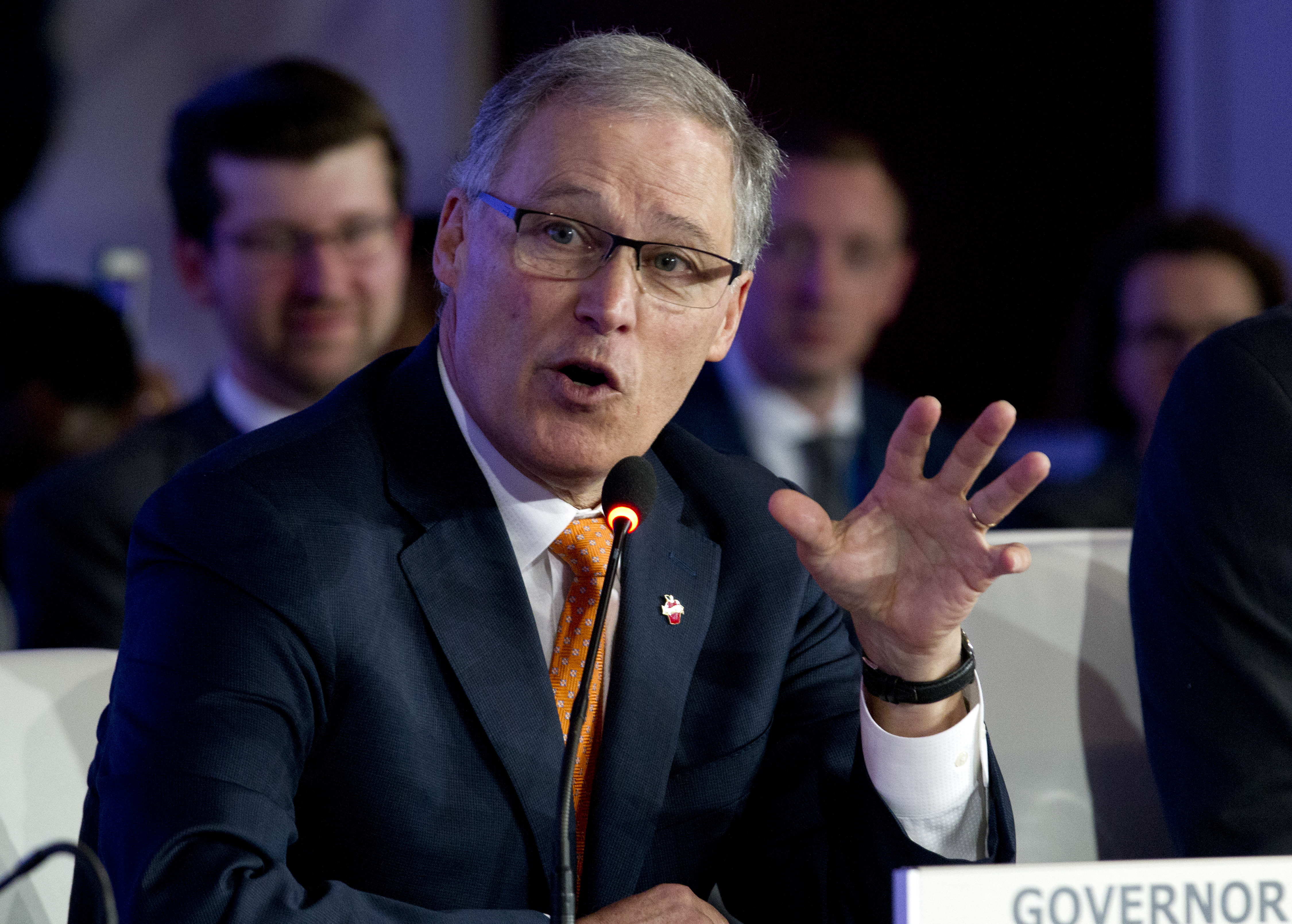
    “We know that when D.C. fails to act, Washington state has to do so,” Gov. Jay Inslee said before signing the measure that lawmakers passed with bipartisan support. “We know how important this is.”

    As he has done frequently over the past year, Inslee took aim at President Donald Trump’s administration, saying the decision by the Federal Communications Commission was “a clear case of the Trump administration favoring powerful corporate interests over the interests of millions of Washingtonians and Americans.”

    The FCC voted in December to gut U.S. rules that meant to prevent broadband companies such as Comcast, AT&T and Verizon from exercising more control over what people watch and see on the internet. The regulations also prohibited providers from favoring some sites and apps over others.

    Because the FCC prohibited state laws from contradicting its decision, opponents of the Washington law have said it would lead to lawsuits.

    Inslee said he was confident of its legality, saying “the states have a full right to protect their citizens.”

    The new law also requires internet providers to disclose information about their management practices, performance and commercial terms. Violations would be enforceable under the state’s Consumer Protection Act.

    While several states introduced similar measures this year seeking to protect net neutrality, so far only Oregon and Washington have passed legislation. But Oregon’s measure wouldn’t put any new requirements on internet providers.

    It would stop state agencies from buying internet service from any company that blocks or prioritizes specific content or apps, starting in 2019. It’s unclear when Oregon’s measure would be signed into law.

    Washington state was among more than 20 states and the District of Columbia that sued in January to try and block the FCC’s action. There are also efforts by Democrats to undo the move in Congress.

    Governors in five states – Hawaii, New Jersey, New York, Montana and Vermont – have signed executive orders related to net-neutrality issues, according to the National Conference of State Legislatures.

    Montana’s order, for instance, bars telecommunications companies from receiving state contracts if they interfere with internet traffic or favor higher-paying sites or apps.

    Big telecom companies have said net neutrality rules could undermine investment in broadband and introduce uncertainty about what are acceptable business practices. Net-neutrality advocates say the FCC decision harms innovation and make it harder for the government to crack down on internet providers who act against consumer interests.

    The FCC’s new rules are not expected to go into effect until later this spring. Washington’s law will take effect in June.

    Ron Main, executive director of the Broadband Communications Association of Washington, which opposed the bill, said the cable companies his group represents have already pledged not to block legal content or engage in paid prioritization.

    He said that because the internet is an interstate service, only Congress can pass legislation “that gives all consumers and internet services providers the clarity and consistency needed for a free and open internet.”

    “There should not be a state-by-state patchwork of differing laws and regulations,” he said in a statement.

  • Protesters clash with police at Richard Spencer white nationalist speech

    Protesters have clashed with police and supporters of white nationalist Richard Spencer during his visit to Michigan State University.

    EAST LANSING, Mich. – Protesters have clashed with police and supporters of white nationalist Richard Spencer during his visit to Michigan State University.

    Police say at least a dozen people were arrested Monday. Michigan State allowed Spencer to appear, but the venue was an auditorium at a remote end of campus.

    Students are on spring break. But hundreds of protesters turned out, shouting profanities at Spencer supporters and police. Officers formed lines outside the auditorium to try to keep the peace and protect people who had tickets as they entered the event. The officers wore helmets and clutched batons.

    Spencer popularized the term “alt-right” to refer to a fringe movement that’s a mix of white nationalist and anti-Semitic beliefs.

    Katie Kuhn of Lansing led some anti-Spencer chants. She says there’s too much “hate and fear.”

  • San Francisco to remove ‘Early Days’ native american statue

    San Francisco arts commissioners have voted to remove a statue that shows a Native American man at the feet of a conquering Spanish cowboy and Catholic missionary.

    SAN FRANCISCO — San Francisco arts commissioners have voted to remove a statue that shows a Native American man at the feet of a conquering Spanish cowboy and Catholic missionary. 

    Monday’s vote by the San Francisco Arts Commission was unanimous and is the final word on the removal of “Early Days.” The sculpture is part of the Pioneer Monument cluster near City Hall that depicts the founding of California. 

    Native Americans and others have long wanted to remove the statue which they say is racist and demeaning. Advocates for removal clapped and cheered after the voice vote. 

    The arts commission started the removal process after demonstrators clashed over the removal of a Confederate statue in Charlottesville, Virginia, last August. 

    Other statues in the cluster would not be affected. 

  • Christopher McCray guilty of taking kickbacks from Afghanistan business

    A former government contractor pleaded guilty Monday to accepting illegal kickbacks from an Afgahn company in exchange for assistance in obtaining U.S. government subcontracts, the Department of Justi

    A former government contractor pleaded guilty Monday to accepting illegal kickbacks from an Afghan company in exchange for assistance in obtaining U.S. government subcontracts, the Department of Justice said.

    Christopher McCray, 55, of Jonesboro, Georgia and Chattanooga, Tennessee, pleaded guilty to one count of accepting illegal kickbacks. He entered his plea before U.S. District Judge Mark H. Cohen of the Northern District of Georgia.

    McCray will be sentenced on June 14.

    As part of the plea deal, McCray admitted that he managed subcontracts for an American company that moved cargo for the Army and Air Force from Bagram Airfield to military bases throughout Afghanistan. When the contractor needed McCray to take a bigger role in the distribution, he could influence the choice of subcontractor picked for the job, the Justice Department said.

    McCray’s employer eventually entered into an agreement with an Afghan company that secretly agreed to kick back to McCray 15 percent of the revenues it would receive on the contract, court documents alleged.

    McCray admitted that he received secret payments from December 2012 to May 2014 and that he and the Afghan trucking company maintained separate invoices so the deal could not be detected.

    The company paid McCray in cash, then by wires sent to his bank in Atlanta and then by Western Union payments to his mother, who would deposit the payments as cash into McCray’s bank account.

    The FBI, Air Force, and Army investigated the case.

  • Moscow lawmaker: ‘Death penalty’ for anyone interfering in Russian election

    The outspoken deputy of Russia’s communist party said Monday that any foreign official — including from the United States — found guilty of “interfering” in Russia’s upcoming presidential election s

    The outspoken deputy of Russia’s communist party said Monday that any foreign official — including from the United States — found guilty of “interfering” in Russia’s upcoming presidential election should face the death penalty or up to 25 years in prison.

    “That’s the worst crime that there is, other than rape and murder,” said Leonid Kalashnikov, who’s also a key committee chief in Russia’s State Duma or lower house of parliament, according to news reports in Moscow.

    While the death penalty has been constitutionally banned in Russia since 1996, Mr. Kalashnikov suggested in an interview with the state-run RIA Novosti news agency that a “constitutional order” may be needed to restore it and deal with any foreign meddling in the election slated for March 18.

    Russian President Vladimir Putin is seeking a second consecutive — and fourth overall — term in the election, which will be the first of its kind in Russia since 2012.

    According to a report by The Moscow Times, Mr. Kalashnikov’s comments came as a top Russian diplomat claimed Monday to have evidence of ongoing U.S. attempts to undermine the electoral process.

    Deputy Russian Foreign Minister Sergey Rybakov made the assertion at a meeting of the Russian Federation Council or upper house of parliament, during which he claimed that Moscow is ramping up its efforts to identify and block the alleged “interference” by U.S.-backed operatives.

    “The Russian Foreign Ministry streamlined efforts to collect the relevant information,” Mr. Rybakov said according to the state-owned Tass news agency in Moscow. “That concerns both attempts to meddle in our affairs and broader detrimental efforts of this kind that the U.S. stoops to committing.”

    While few details were given on the actual nature or goals of the alleged U.S.-backed meddling, Mr. Rybakov claimed broadly that “opponents” of Russia are attempting to “sway young people and work in the regions.”

    “The focus of this struggle will center on the information space,” he said. “Information warfare will grow far bitterer, and that’s something we will have to live with during the upcoming period.”

    The Tass news agency claimed to have obtained an annual assessment Monday by an upper house “commission on the protection of state sovereignty” that exposed “numerous signs of interference from abroad” in Russia’s electoral process between 2011 and 2017.

    Kremlin spokesman Dmitry Peskov, meanwhile, made international headlines Monday by asserting that the United States has a “rich tradition” of interfering in the internal affairs of Russia and other nations around the world.

    The flurry of allegations from Moscow come amid ongoing federal government investigations in Washington over accusations that Russian operatives engaged in an expansive hacking and digital propaganda campaign aimed at undermining the 2016 U.S. presidential election.

    Last month saw the U.S. Justice Department level indictments against 13 Russian citizens and two entities on charges their meddling activities amounted to conspiracy to defraud the United States.

    Mr. Putin said in an interview with NBC News that aired Sunday that Russia will “never” extradite the 13 individuals charged, even as he insisted they didn’t act on behalf of his government.

    The Associated Press noted that the United States has no extradition treaty with Moscow and can’t compel it to hand over citizens, and a provision in Russia’s constitution prohibits extraditing its citizens to foreign countries.

  • Collapsed building in Poland may have been blown up

    An “intentional” attack could be the reason an apartment building collapsed in western Poland, leaving five people dead and 21 injured, a prosecutors’ spokeswoman said Monday.

    WARSAW, Poland (AP) — An “intentional” attack could be the reason an apartment building collapsed in western Poland, leaving five people dead and 21 injured, a prosecutors’ spokeswoman said Monday.

    The building with 18 apartments collapsed early Sunday in the western city of Poznan, most probably as a result of an explosion, authorities said.

    Magdalena Mazur-Prus, a spokesman for the regional prosecutors’ office, would not confirm unofficial media reports, including by the state PAP agency, that one of the victims had been murdered before the collapse and that explosives might have been used to cover up the crime.

    Still, she would not exclude that the building could have faced an “intentional” attack.

    The news outlet wPolityce.pl said, citing anonymous sources, that a woman had been decapitated some time before the building crumbled.

    Earlier Monday, firefighters found the body of a fifth victim in the rubble and rescued a little dog. Rescuers with trained dogs have been searching in sub-freezing temperatures through the debris since the building collapsed.

    Mazur-Prus said three women and two men had died in the destroyed building. Forensics experts were performing post-mortems.

    The explosion of a gas cylinder was considered to be a possible reason why the building was destroyed. Gas service to the site was cut off and the remaining part of the building was closed.

    City authorities said 21 people were injured in the blast, four of whom remain hospitalized.

    Prime Minister Mateusz Morawiecki sent his sympathies to the families of the victims and wishes of a quick recovery to the injured.

  • Angela Merkel, feminists spar over stripping ‘fatherland’ from German national anthem

    Angela Merkel attempted to avoid a political minefield this week when a member of her Social Democrat (SPD) coalition called for a gender-neutral version of the national anthem.

    Angela Merkel attempted to avoid a political minefield this week when a member of her Social Democrat (SPD) coalition called for a gender-neutral version of the national anthem.

    “Deutschlandlied” made global headlines in 2017 when the United States Tennis Association accidentally played a taboo verse of the song not used since World War II. The song made news again on Monday with a letter released to the media by Equality Commissioner Kristin Rose-Möhring.

    “Why don’t we make our national anthem gender sensitive?” Ms. Rose-Möhring wrote, the U.K. Telegraph reported. “It wouldn’t hurt, would it?”

    The official’s plan includes replacing the words “fatherland” with “homeland” and “brotherly” with “courageous.”

    A gender-neutral change would follow Canada’s lead, which recently altered “O Canada” to include the lyrics “in all of us command” instead of “true patriot love in all your sons command.”

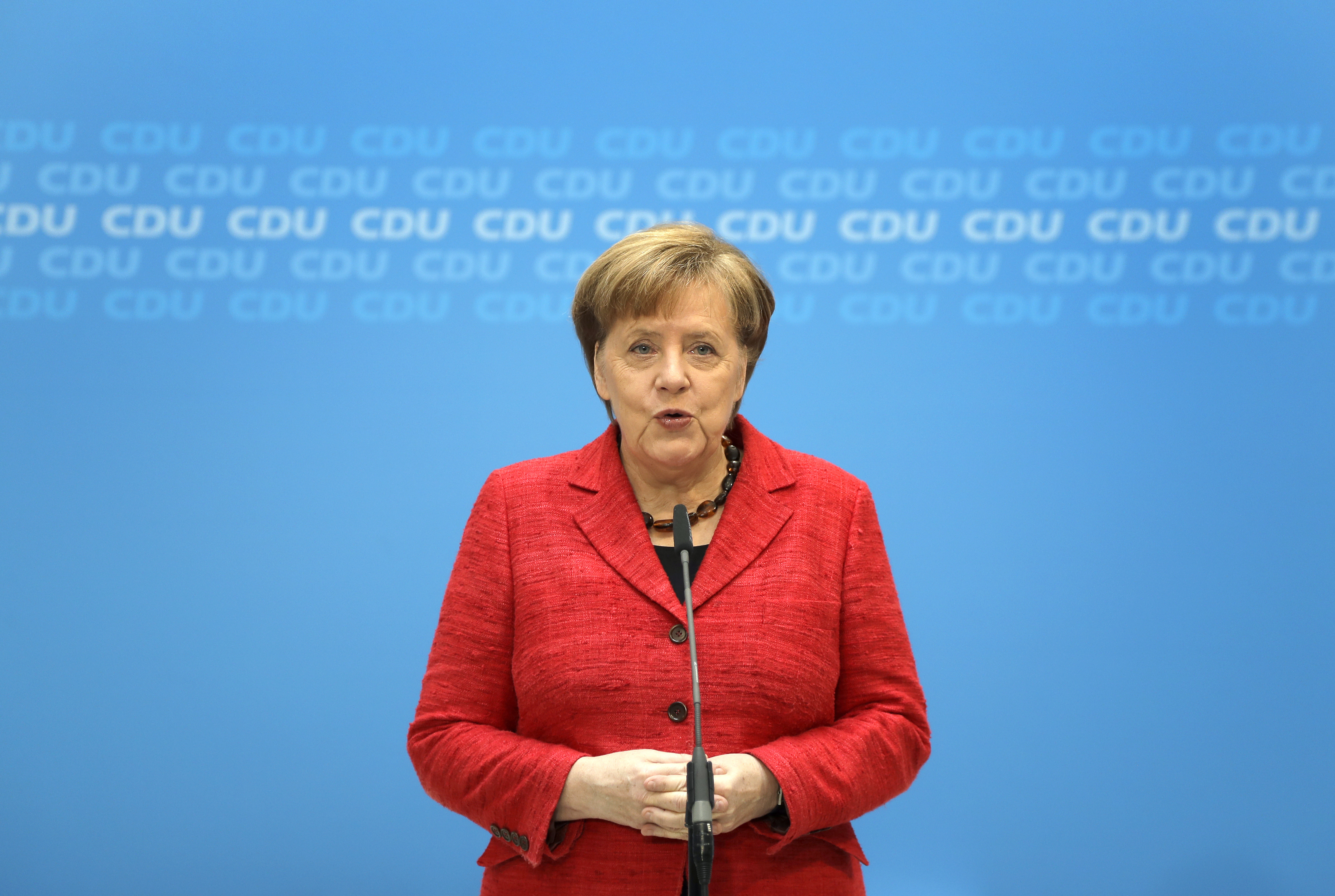
    Steffen Seibert, a spokesman for Ms. Merkel, quickly released a statement saying, “the chancellor is very happy with our nice national anthem as it is in its traditional form and doesn’t see any need for change,” the newspaper reported.

    “Song of Germany” has been the nation’s anthem since 1922.

  • U.S. Navy carrier’s visit to Vietnam puts China on notice

    For the first time since the Vietnam War, a U.S. Navy aircraft carrier is paying a visit to a Vietnamese port, seeking to bolster both countries’ efforts to stem expansionism by China in the South Chi

    DANANG, Vietnam (AP) — For the first time since the Vietnam War, a U.S. Navy aircraft carrier is paying a visit to a Vietnamese port, seeking to bolster both countries’ efforts to stem expansionism by China in the South China Sea.

    Monday’s visit by the USS Carl Vinson brings more than 5,000 crewmembers to the central coastal city of Danang, the largest such U.S. military presence in Vietnam since the Southeast Asian nation was unified under Communist leadership after the war ended in 1975.

    The Carl Vinson, accompanied by a cruiser and a destroyer, is visiting as China increases its military buildup in the Paracel islands and seven artificial islands in the Spratlys in maritime territory also claimed by Vietnam. China claims most of the South China Sea and has challenged traditional U.S. naval supremacy in the western Pacific.

    SEE ALSO: China’s influence to be major focus of Rex Tillerson’s Africa trip

    “The visit of aircraft carrier USS Carl Vinson to Vietnam signifies an increased level of trust between the two former enemies, a strengthened defense relationship between them, and reflects America’s continued naval engagement with the region,” said Le Hong Hiep, a research fellow at the Singapore-based ISEAS-Yusof Ishak Institute.

    The ship’s mission includes technical exchanges, sports matches and visits to an orphanage and a center for victims of Agent Orange, a toxic defoliant sprayed by U.S. forces to deny cover for Communist fighters during the war. It marks a fine-tuning, rather than a turning point, in relations. The U.S. Navy has staged activities in Vietnam for its Pacific Partnership humanitarian and civic missions in nine of the past 12 years.

    U.S. Ambassador Daniel Kritenbrink praised the carrier’s visit.

    “I think the visit by USS Carl Vinson demonstrates our commitment to the U.S- Vietnam partnership. It also demonstrates the dramatic progress we made in our bilateral relationship in recent years,” he said.

    The ambassador said the two countries share a range of interests that include “a desire to maintain peace, prosperity, unimpeded commerce, freedom of navigation upon which the region and its economies depend.”

    The United States normalized relations with Vietnam in 1995 and lifted an arms embargo in 2016, and the two former adversaries have steadily improved relations in all areas, including trade, investment and security.

    The visit of an aircraft carrier – a more than 100,000-ton manifestation of U.S. global military projection – reaffirms closer relations as Beijing flexes it political, economic and military muscle in Southeast Asia, and Washington seeks to re-establish its influence.

    “Although the visit is mainly symbolic and would not be able to change China’s behavior, especially in the South China Sea, it is still necessary in conveying the message that the U.S. will be there to stay,” Hiep said.

    Separately from this week’s mission, U.S. officials say American warships continue sailing without prior notice close to China-occupied islands and atolls, an aggressive way of signaling to Beijing that the U.S. does not recognize its sovereignty over those areas.

    Hiep said the Carl Vinson’s visit is likely to irritate China, but that Beijing will not take it too seriously.

    “They understand well the strategic rationale behind the rapprochement between Vietnam and the U.S., which was largely driven by China’s growing assertiveness in the South China Sea,” he said. “However, China also knows that Vietnam is unlikely to side with the U.S. militarily to challenge China.”

    Vietnam, while traditionally wary of its huge northern neighbor, shares China’s system of single-party rule and intolerance for political dissent.

    Economic relations with the United States in recent years have served as a counterbalance to Vietnam’s political affinity with China.

    “The United States now is a very important trading partner with Vietnam and it is the most important destination of Vietnam’s exports,” said Joseph Cheng, a professor of political science at the City University of Hong Kong. “In terms of security, both countries certainly share substantial common interest in the containment of China in view of the territorial dispute between China and Vietnam.”

    “However, it seems that Vietnam does not intend to become an ally of the United States. It is basically a kind of hedging strategy, a kind of balance of power strategy,” he said.

    The first U.S. Marines arrived in Danang in 1965, marking the beginning of large-scale American involvement in the Vietnam War. Some 58,000 American soldiers and an estimated 3 million Vietnamese were killed in the war.

    Danang, which was a major U.S. military base during the war, is now Vietnam’s third-largest city and is in the midst of a construction boom as dozens of resorts and hotels pop up along its scenic coastline.

    Several Danang residents said Monday that they welcomed the Navy visit.

    “During the war, I was scared when I saw American soldiers,” said Tran Thi Luyen, 55, who runs a small coffee shop in the city. “Now the aircraft carrier comes with a completely different mission, a mission of peace and promoting economic and military cooperation between the two countries.”

    Huynh Quang Nguyen, a taxi driver, echoed the sentiment.

    “I’m very happy and excited with the carrier’s visit,” he said. “Increased cooperation between the two countries in economic, diplomatic and military areas would serve as a counterbalance to Beijing’s expansionism.”

    ___

    This story has been corrected to show that ship has more than 5,000 crewmembers, not 6,000.

  • China’s Belt and Road investments divide EU

    China’s trillion-dollar Belt and Road initiative has taken Central Asia and Africa by storm, but the European Union and its prized purchasing power may be Beijing’s real endgame.

    WARSAW, Poland — China’s trillion-dollar Belt and Road initiative has taken Central Asia and Africa by storm as developing countries line up for Beijing’s money to break ground on pricey, China-backed and China-financed infrastructure projects.

    But some analysts say the European Union and its prized single market, the second-largest economy in the world in terms of purchasing power, is Beijing’s real endgame.

    As Beijing courts Eastern and Central European states in order to better access lucrative Western European markets, the European Union’s leading powers — France and Germany — are concerned that Chinese investment in the bloc’s newer and less-prosperous states will increase Beijing’s influence in the region and only widen the ideological rift between the eastern and western halves of the Continent.

    Hungary and Poland, already feuding with EU leaders in Brussels on such hot-button issues as immigration and civil liberties, may be drawn to China’s far less judgmental approach to investment and development.

    China’s Eastern European ambitions even have a bureaucratic base — the 16+1 Group linking China with 16 countries along Europe’s eastern flank from the Baltics to the Balkans. It includes 11 countries that are also members of the EU.

    Viktor Orban, the nationalist Hungarian prime minister who has feuded repeatedly with the EU’s western powers, hosted the 16+1 annual summit in Budapest in November. According to the Center for Strategic and International Studies in Washington, Chinese companies backed by government banks have announced plans for $15 billion in roads, railways, utility plants and other infrastructure since 2012 in the 16 countries.

    While many of the governments involved insist they are not seeking a break with the EU or the West, Mr. Orban recently told reporters that “the world’s economic center of gravity is shifting from west to east. While there is some denial of this in the Western world, that denial does not seem to be reasonable.”

    Stefan Meister, who heads the Robert Bosch Center for Central and Eastern Europe, Russia and Central Asia at the German Council for Foreign Relations in Berlin, said in an interview that “the main aim [for China] is not Central or Eastern Europe, but its completing the Belt and Road infrastructure via these countries.”

    “The side effect is that you can use all of the weak spots to block other decisions which are linked to China,” he said.

    Others say the fear is overblown. Despite the worried analyses of the past five years, Chinese direct investment in infrastructure — particularly in the region’s EU and NATO states — has been negligible. Despite the grandiose promises and ballyhooed rollouts, many of the most ambitious projects have yet to break ground.

    But the possibility of a continental divide spurred by the lure of easy Chinese financing has clearly caught the attention of the EU’s traditional powers.

    German Foreign Minister Sigmar Gabriel warned in a speech in September, “If we do not succeed in developing a single strategy towards China, then China will succeed in dividing Europe.”

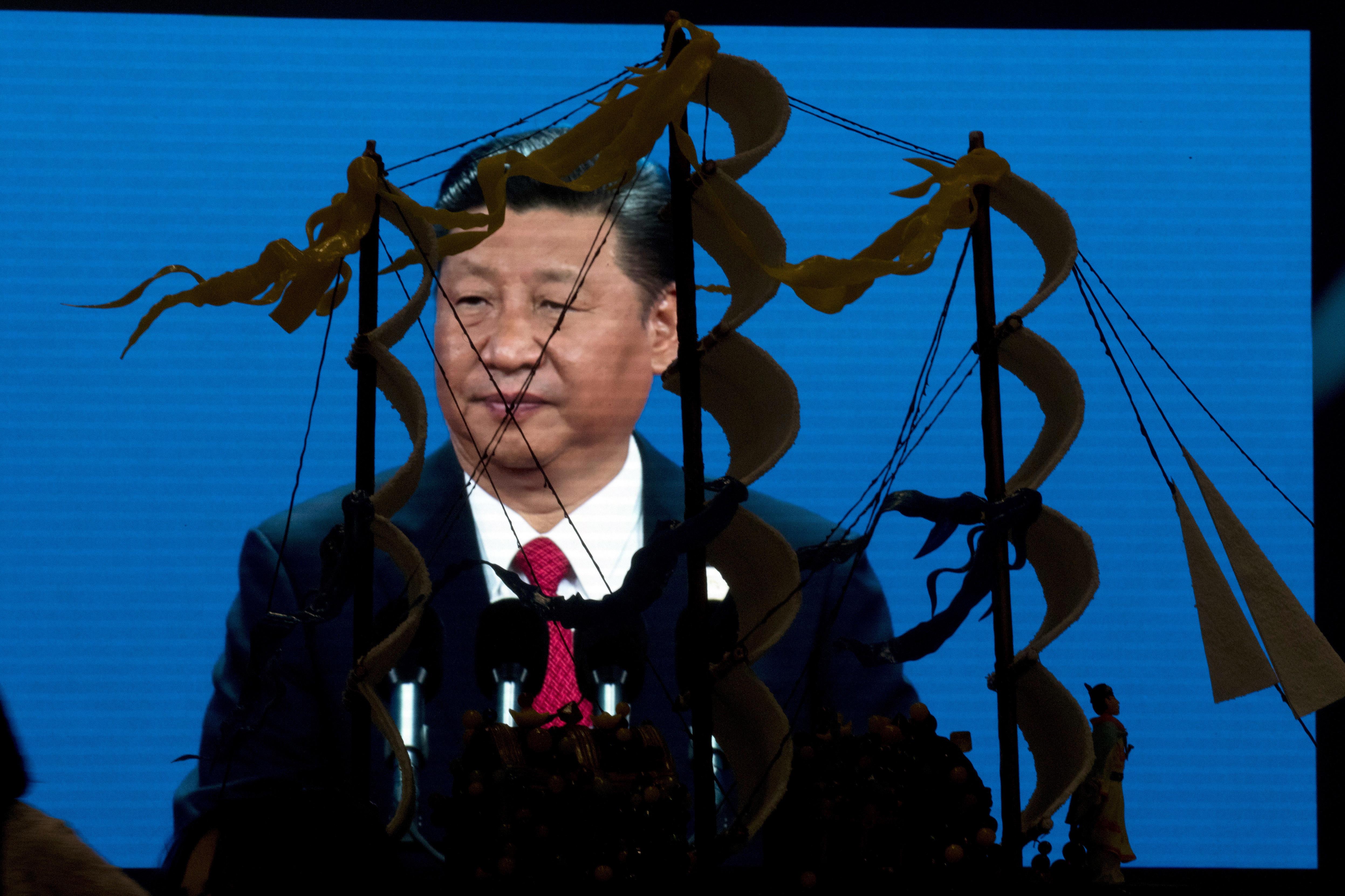
    Launched in 2013 under increasingly powerful President Xi Jinping, China’s Belt and Road initiative has sought to develop modern transportation links throughout 64 countries, coming into contact with 60 percent of the world’s population and a third of its economy along the way.

    The project is the centerpiece of a multipronged effort by Mr. Xi to use China’s soaring economic clout as a means to reshape the global financial and political balance of power.

    China’s vast government currency reserve that can be used to underwrite overseas investments has been a prime engine of Beijing’s drive for greater prominence, giving it influence and leverage in Southeast Asia, Africa and Latin America.

    Last year alone, China put $81 billion into Europe in foreign direct investments, up 76 percent from 2016, according to a report by law firm Baker McKenzie.

    Britain, the Netherlands and Switzerland received the most Chinese capital last year, but some $9 billion has flowed through the EU’s eastern and central states as part of the Belt and Road initiative. Last year, China established an $11 billion investment fund for the region and promised an additional $3 billion at the November summit in Budapest.

    Projects underway

    The fruits of Chinese largesse in the region aren’t quite as visible as elsewhere in the world, but notable projects have already drawn attention.

    Seen as the “dragon head” of its Belt and Road initiative in Europe, China’s state-owned shipping firm, the China Ocean Shipping Co., agreed in 2016 to invest some $1.24 billion into Piraeus, Greece’s largest port. At the time of the announcement, the firm bought a 67 percent stake in Piraeus for $457.5 million and pledged $620.9 million to modernize shipping facilities over the course of time, according to reports.

    With Piraeus as China’s gateway to the Continent, goods will be shipped through Central and Eastern Europe via a proposed high-speed railway between Belgrade, Serbia, and Budapest, Hungary, estimated to cost $3.8 billion. Construction on the project broke ground in Belgrade in November thanks to a $297.6 million loan from the Export-Import Bank of China.

    Construction on the Hungarian portion expected to start in 2020. Ex-Im is providing 85 percent of the credit needed to fund the project.

    Such projects have been welcomed by Eastern and Central European states, where the infrastructure gap with the European Union’s western members is expansive and the EU hasn’t acted fast enough to bridge the divide, said Angela Stanzel, a policy fellow in the Asia and China program with the European Council on Foreign Relations in Berlin.

    Poland and Hungary in particular are hungry for investment and opportunity alternatives, officials say.

    “We are ready to be the gate to the West, first of all, from the economic viewpoint. This also includes China’s One Belt, One Road initiative,” Polish Prime Minister Mateusz Morawiecki said in October during an economic cooperation summit in Belarus, when he was Poland’s minister of economic development and finance. “Here, we can develop mutually beneficial cooperation for our countries and nations.”

    Even in countries like Romania, where Chinese investment has yet to be felt in a major way because of weak diplomacy and economic policy, links between former communist states and China can be exploited for both countries’ benefit, said Aurelian Dochia, a Romanian economist.

    “Romania didn’t make enough efforts and did not find the best way to convince the Chinese that their presence in Romania would be interesting,” he said. “I think it shows a weakness in Romania’s diplomacy and economic policy.”

    Even so, Romanians have been wary of the Chinese. As prime minister, Victor Ponta was heavily criticized in 2014 for a visit to China in an attempt to move closer to Beijing instead of focusing solely on Western Europe.

    Meanwhile, Beijing’s growing investments in the region have put pressure on recipients to get in line with Chinese policy initiatives, said Ms. Stanzel, even though Brussels has managed to patch things up within the bloc on most economic and sociopolitical issues involving China.

    “On the sensitive issues, the member states are already divided,” said Ms. Stanzel, noting that Greece and Hungary objected to strong language from the EU condemning China’s island-building and aggressive sovereignty claims in the South China Sea, and that a veto by Hungary last year stymied a common EU statement on China’s human rights abuses.

    “Now it seems as if there are very few countries, such as Germany and France, that keep sticking to mentioning the sensitive issues such as human rights, whereas all the others just don’t do that anymore,” she said.

    Challenging the EU

    Hungary and Greece, recipients of Belt and Road cash, have long been at odds with dominant powers within the EU: Greece for the austerity programs it was forced to adopt during its long, costly economic crisis, and Hungary for the country’s rightward, anti-immigrant swing under Mr. Orban. Meanwhile, the Czech Republic and Poland, strong European economies and benefactors of lucrative Chinese trade deals, have elected more nationalist, conservative leaders.

    These countries are using Chinese investments to say that “they’re sovereign states, that they have alternatives [to the EU],” said Mr. Meister. “In this way, it plays more into this narrative that these are problematic countries, that these are troublemakers, and now they’re even doing deals with China and even voting for China inside of the EU.”

    Jakub Jakobowski with the Center of Eastern Studies at the University of Warsaw, however, argued that it is the Western European member states that should rethink their attitudes toward China and Chinese foreign direct investment.

    “In Western Europe, they say big Chinese investment appeared in Eastern Europe and this makes the region more dependent on China, but this is not true,” he said. “Maybe this opinion stemmed from the fact they expected bigger capital to come to their region.

    “Presence of Chinese capital in the region … is even smaller, as we receive only a fraction of the investment which comes to France or Germany, for example,” Mr. Jakobowski said.

    Germany and France are huge recipients of Chinese investment, and their respective leaders have made numerous personal visits to China to attract business. Even so, both countries have remained steadfast in condemning what they say are unsavory global and domestic policies out of Beijing.

    “Mutual dependencies are increasing, and sometimes the balance of power shifts,” German Chancellor Angela Merkel told German weekly WirtschaftsWoche. “Europe must work hard to defend its influence, and above all it should speak with one voice to China.”

    But China’s push in Eastern Europe threatens to upset Franco-German economic and political dominance in the bloc at a time of heightened instability on the Continent, said Mr. Meister.

    “Germany is only very slowly understanding what is going on here and, at the same time, China is so important as a market also now for Germany that we have no interest in a huge conflict with the Chinese,” he said.

    But EU champions can’t afford to dawdle on the issue, Mr. Meister added.

    “This is about the future of Europe,” he said. “This is the future of our industries, our technology, and we’re already really too late. The Chinese are already in many areas.”

    ⦁ Austin Davis reported from Berlin. Vlad Odobescu contributed reporting from Bucharest.
  • South Korea meeting thrusts North’s Kim into the limelight

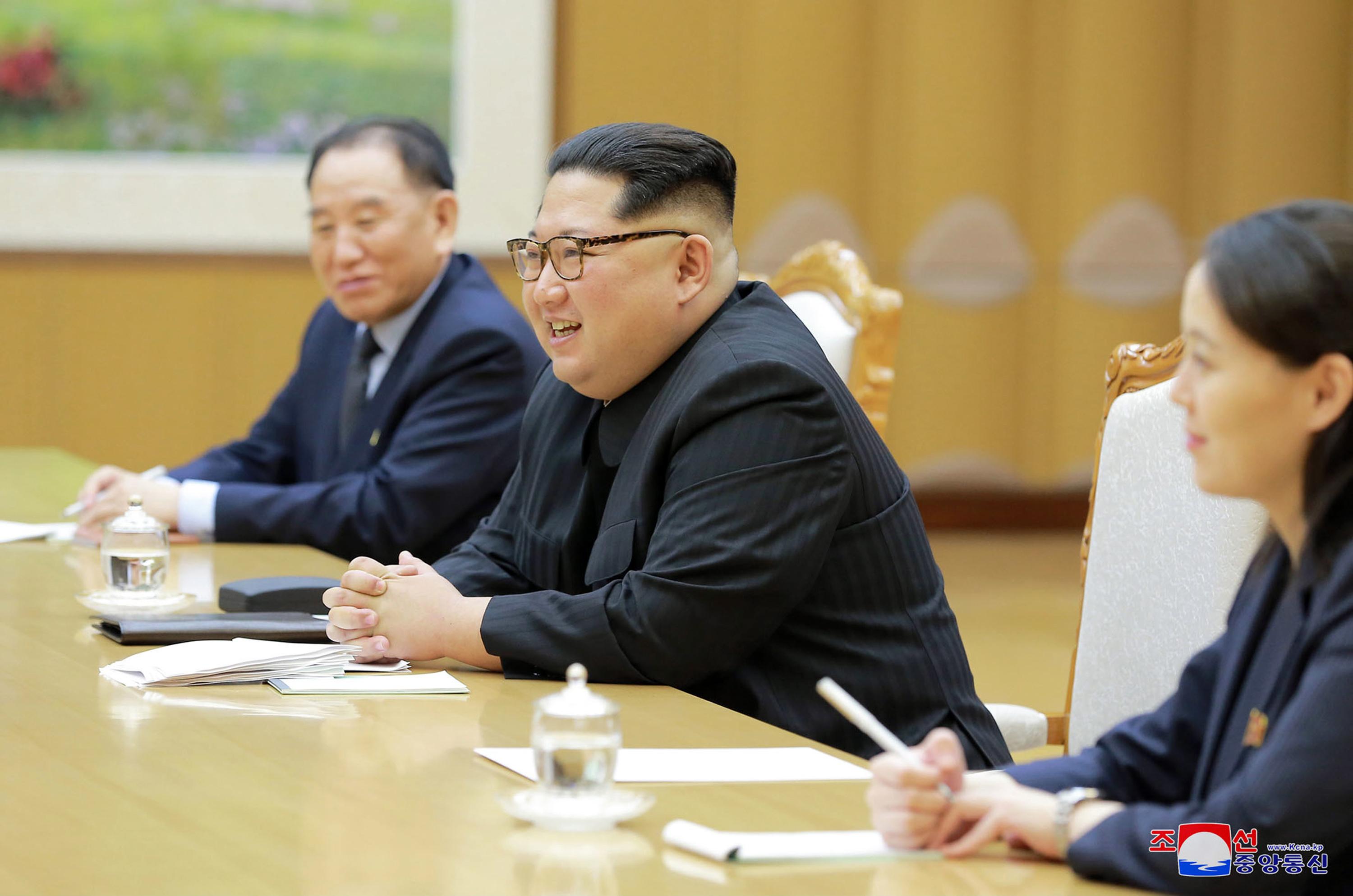
    North Korean leader Kim Jong Un grins, just on the verge of a belly laugh, as he grasps the hand of a visiting South Korean official. He sits at a wide conference table and beams as the envoys look on

    SEOUL, South Korea (AP) – North Korean leader Kim Jong Un grins, just on the verge of a belly laugh, as he grasps the hand of a visiting South Korean official. He sits at a wide conference table and beams as the envoys look on deferentially. He smiles broadly again at dinner, his wife at his side, the South Koreans seeming to hang on his every word.

    Kim is used to being the center of gravity in a country that his family has ruled with unquestioned power since 1948, but the chance to play the senior statesman on the Korean Peninsula with a roomful of visiting South Koreans has afforded the autocratic leader a whole new raft of propaganda and political opportunities.

    Photos released by North Korean state media Tuesday showing Kim meeting with the envoys are all the more remarkable coming just months after a barrage of North Korean weapons tests and threats against Seoul and Washington had many fearing war.

    It wasn’t immediately clear how the images were reported in the North, but they spread rapidly across the southern part of the peninsula a day after Pyongyang said Kim had an “openhearted talk” in Pyongyang with 10 envoys for South Korean President Moon Jae-in. Kim reportedly expressed his desire to “write a new history of national reunification” during a dinner that Seoul said lasted about four hours.

    The meeting Monday marked the first time South Korean officials have met with the young North Korean leader in person since he took power after his dictator father’s death in late 2011. It’s the latest sign that the Koreas are trying to mend ties after one of the tensest years in a region that seems to be permanently on edge.

    Given the robust history of bloodshed, threats and animosity on the Korean Peninsula, there is considerable skepticism over whether the Koreas’ apparent warming relations will lead to lasting peace. North Korea, some believe, is trying to use improved ties with the South to weaken U.S.-led international sanctions and pressure, and to provide domestic propaganda fodder for Kim.

    But each new development also raises the possibility that the rivals can use the momentum from the good feelings created during North Korea’s participation in the South’s Pyeongchang Winter Olympics last month to ease a standoff over North Korea’s nuclear ambitions and restart talks between Pyongyang and Washington.

    The role of a confident leader welcoming visiting, and lower-ranking, officials from the rival South is one Kim clearly relishes. Smiling for cameras, he posed with the South Koreans and presided over what was described by the North’s official Korean Central News Agency as a “co-patriotic and sincere atmosphere.”

    Many in Seoul and Washington will want to know if, the rhetoric and smiling images notwithstanding, there’s any possibility Kim will negotiate over the North’s breakneck pursuit of an arsenal of nuclear missiles that can viably target the U.S. mainland.

    The North has repeatedly and bluntly declared it will not give up its nuclear bombs. It also hates the annual U.S.-South Korean military exercises that were postponed because of the Olympics but will likely happen later this spring. And achieving its nuclear aims rests on the North resuming tests of missiles and bombs that set the region on edge.

    But there was nothing about the Koreas’ very real differences in the North Korean report. Kim was said to have offered his views on “activating the versatile dialogue, contact, cooperation and exchange” between the countries

    He was also said to have given “important instruction to the relevant field to rapidly take practical steps for” a summit with South Korean President Moon, which the North proposed last month.

    Moon, a liberal who is keen to engage the North, likely wants to visit Pyongyang. But he must first broker better ties between North Korea and Washington, Seoul’s top ally and its military protector.

    In the meantime, Moon sent his national security director, Chung Eui-yong, to head the 10-member South Korean delegation that was sent to Pyongyang. Chung’s trip is the first known high-level visit by South Korean officials to the North in about a decade.

    The South Korean delegates have another meeting with North Korean officials on Tuesday before returning home, but it’s unclear if Kim will be there.

    Kim was said to have expressed at the dinner his “firm will to vigorously advance the north-south relations and write a new history of national reunification by the concerted efforts of our nation to be proud of in the world.”

    There is speculation that better inter-Korean ties could pave the way for Washington and Pyongyang to talk about the North’s nuclear weapons. The United States, however, has made clear that it doesn’t want empty talks and that all options, including military measures, are on the table.

    Previous warming ties between the Koreas have come to nothing amid North Korea’s repeated weapons tests and the North’s claims that the annual U.S.-South Korean war games are a rehearsal for an invasion.

    Before leaving for Pyongyang, Chung said he would relay Moon’s hopes for North Korean nuclear disarmament and a permanent peace on the peninsula.

    Chung’s delegation includes intelligence chief Suh Hoon and Vice Unification Minister Chun Hae-sung. The South Korean presidential Blue House said the high-profile delegation is meant to reciprocate the Olympic trip by Kim Jong Un’s sister, Kim Yo Jong, who became the first member of the North’s ruling family to come to South Korea since the end of the 1950-53 Korean War.

    Kim Yo Jong, who also attended Monday’s dinner, and other senior North Korean officials met with Moon during the Olympics, conveyed Kim Jong Un’s invitation to visit Pyongyang and expressed their willingness to hold talks with the United States.

    After the Pyongyang trip, Chung’s delegation is scheduled to fly to the United States to brief officials about the outcome of the talks with North Korean officials.

    President Donald Trump has said talks with North Korea will happen only “under the right conditions.”

    If Moon accepts Kim’s invitation to visit Pyongyang, it would be the third inter-Korean summit talks. The past two summits, one in 2000 and the other in 2007, were held between Kim’s late father, Kim Jong Il, and two liberal South Korean presidents. They resulted in a series of cooperative projects between the Koreas that were scuttled during subsequent conservative administrations in the South.

    ___

    Associated Press writers Hyung-jin Kim and Kim Tong-hyung contributed to this report.