Blog

  • Israel retaliates on Hamas targets in Zeitoun, Tel Al-Hawa

    From certain parts of this crowded city, one doesn’t hear rockets like the salvo fired from the Gaza Strip in the twilight hours of Wednesday morning, nor the more than two dozen retaliatory strikes b

    GAZA CITY, Gaza — From certain parts of this crowded city, one doesn’t hear rockets like the salvo fired from the Gaza Strip in the twilight hours of Wednesday morning, nor the more than two dozen retaliatory strikes by the Israeli Defense Forces shortly after.

    The electricity was out in the hotel across from the sea, a regular occurrence. The street was quiet, and there was no internet service, limiting what residents here can learn of the violence raging just blocks away.

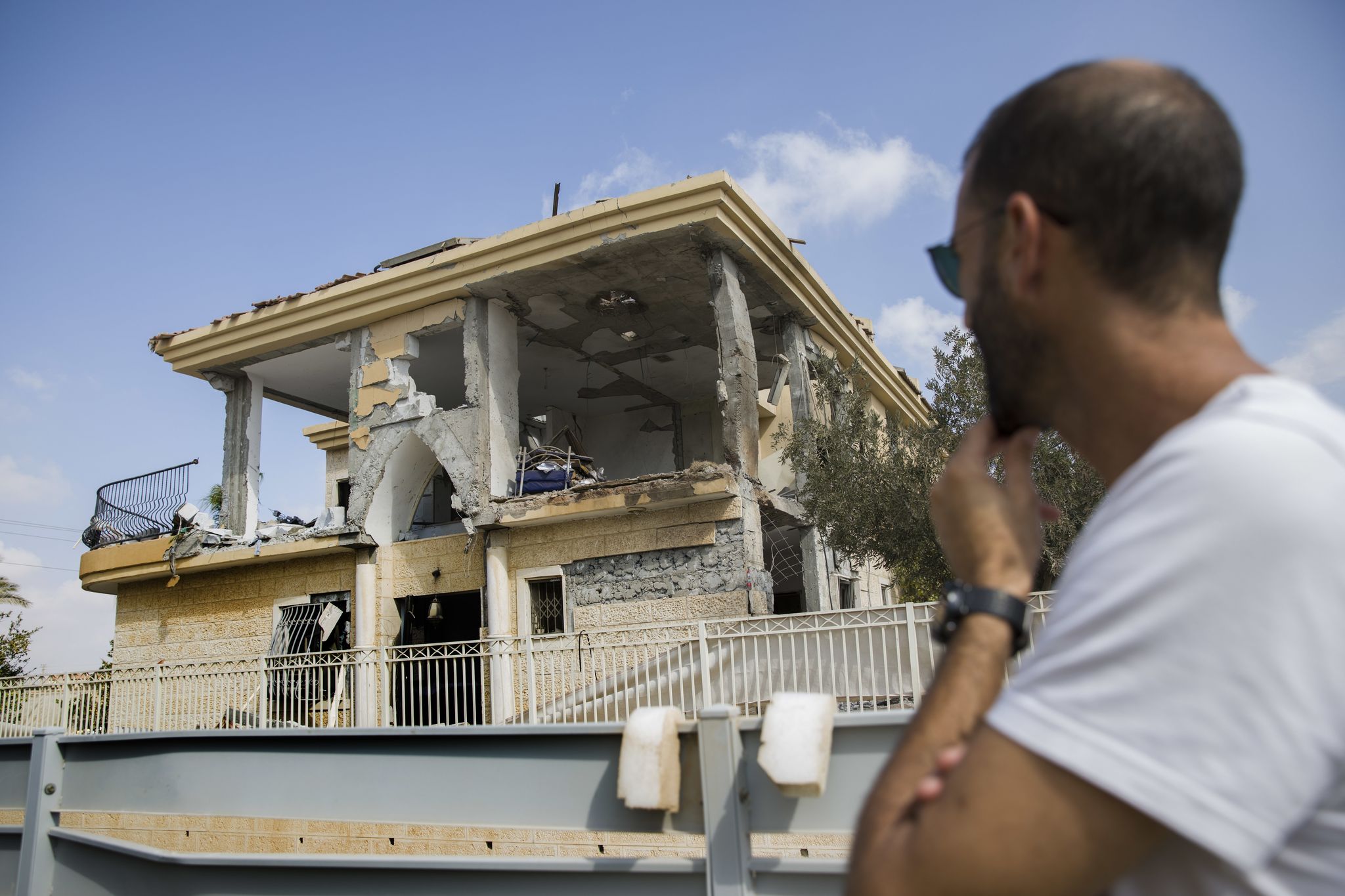
    In the early morning hours of Wednesday, Hamas terrorists fired a rocket towards Israel and made a direct hit on a home in the city of Beersheva, gutting the second floor. While there were no injuries, a mother and her children who had hid in their bomb shelter were treated for “shock” — an all-encompassing term for the nervous breakdown that occurs for people in this area experiencing frequent near-death experiences.

    In retaliation, Israeli fighter jets targeted at least 12 Hamas military targets in the Tel Al-Hawa neighborhood and Zeitoun, close to Gaza City. The targets included tunnel-digging sites and a factory used for the manufacturing of aerial weaponry, according to the office of the Israeli Defense Forces (IDF) spokesman.

    In the south of the Strip, the IDF targeted tunnel digging sites and a maritime terror tunnel shaft in Khan Yunis, and weapon manufacturing factories in Rafah, the Gazan city on the border with Egypt.

    The IDF also released video footage Wednesday showing a strike on a terrorist squad that attempted to launch rockets at an Israeli community in the Hof Ashkelon Regional Council, an area that borders Gaza to the north.

    In the video, a man in sandals, white pants and a long sleeve shirt is seen setting up a launching pad for a rocket. Another man with blue jeans, a black shirt and a gray vest is seen loading a rocket into a launcher before the entire site explodes with the IDF attack.

    “This, sadly, is the normal here in Gaza — and there’s no major impact other than it just keeps the level of anxiety and nervousness very high,” said Matthias Schamle, the director of operations for UNRWA Gaza, the troubled U.N. agency that aids Palestinian refugees, in an interview. As Mr. Schamle spoke in his office in Gaza City, Hamas members milled about outside.

    Border closings at Erez, the main crossing point in the north, and Kerem Shalom in the south, can affect the delivery of needed materials from Israel into the Gaza Strip, he said.

    “I keep saying, more broadly, that things remain tense here and that we don’t think anyone wants war — on either the Israeli or Palestinian side here — but incidents by hotheads, if I may call it this way, on either side could trigger a war,” he said.

    Border closings and the threat of a war could complicate travel around the Gaza Strip, complicating efforts by a reporter to get a full picture of the conflict.

    An Israeli press office in Jerusalem confirms the closure of the border but offers no information on when it would be open.

    “That’s above my pay grade,” said one IDF spokesman.

    Electricity was inconsistent on a three-day visit to the densely populated Palestinian enclave, a reality Gazans have become accustomed to and a challenge by shop, restaurant and cafe owners meet with their own generators.

    By mid-morning after the exchange of fire, the streets of Gaza City were packed with cars and people — young men and women heading to the Islamic University of Gaza and Al-Azhar University. An email from the Israeli Government Press Office announced that the Erez crossing had re-opened, but only until 3:30 p.m.

    Without electricity, no stoplights work and people tend to drive through intersections with little regard for stopping, making the drive to the crossing before it closed a hazard in itself.

    At the Erez crossing, the first checkpoint on the Gaza side is controlled by Hamas.

    In October 2017, a little over a year to the day, the Palestinian government in Ramallah signed a reconciliation agreement with Hamas that would slowly transfer governing authority of the Gaza Strip back to the recognized PA government. The first step, in those early days, was for PA security forces to take over the Erez crossing.

    But that arrangement quickly broke down, as Hamas officals — distrusting the P.A. — set up their own makeshift checkpoint, complete with desks, laptops, and photocopy machines inside two office trailers.

    After a few minutes of conversation, a reporter was allowed to proceed through a gate, but still needed to take a $5 taxi ride half a mile to the Palestinian Authority checkpoint. The second check goes more quickly and border-crossers leave with no stamps in their passport.

    The Israeli checkpoint was still another mile to travel. A young Palestinian with a motorcycle and a trailer gave offered a lift. At the Israeli entrance were six heavy metal sliding doors, which remained shut and monitored by a security camera

    The hulking concrete of the security fence erected by Israel stretches out into the distance on either side of the crossing terminal. After a few minutes the doors creaked, slid open, and a traveler was back in Israel.
  • Jamal Khashoggi killing sparked by Muslim Brotherhood ties

    The prevailing narrative about the bizarre case of U.S.-based Saudi journalist Jamal Khashoggi is that Saudi Arabia’s hard-charging young crown prince ordered him kidnapped and perhaps killed in order

    The prevailing narrative about the bizarre case of U.S.-based Saudi journalist Jamal Khashoggi is that Saudi Arabia’s hard-charging young crown prince ordered him kidnapped and perhaps killed in order to silence a particularly effective critic who wrote widely read, disparaging columns about the royal family and the crown prince’s own ambitious reform agenda.

    But Middle East insiders say some deeper subplots played into Mr. Khashoggi’s disappearance — stemming from his long career of political activism, ties to Saudi intelligence and Mr. Khashoggi’s past relationship with the Islamist group the Muslim Brotherhood.

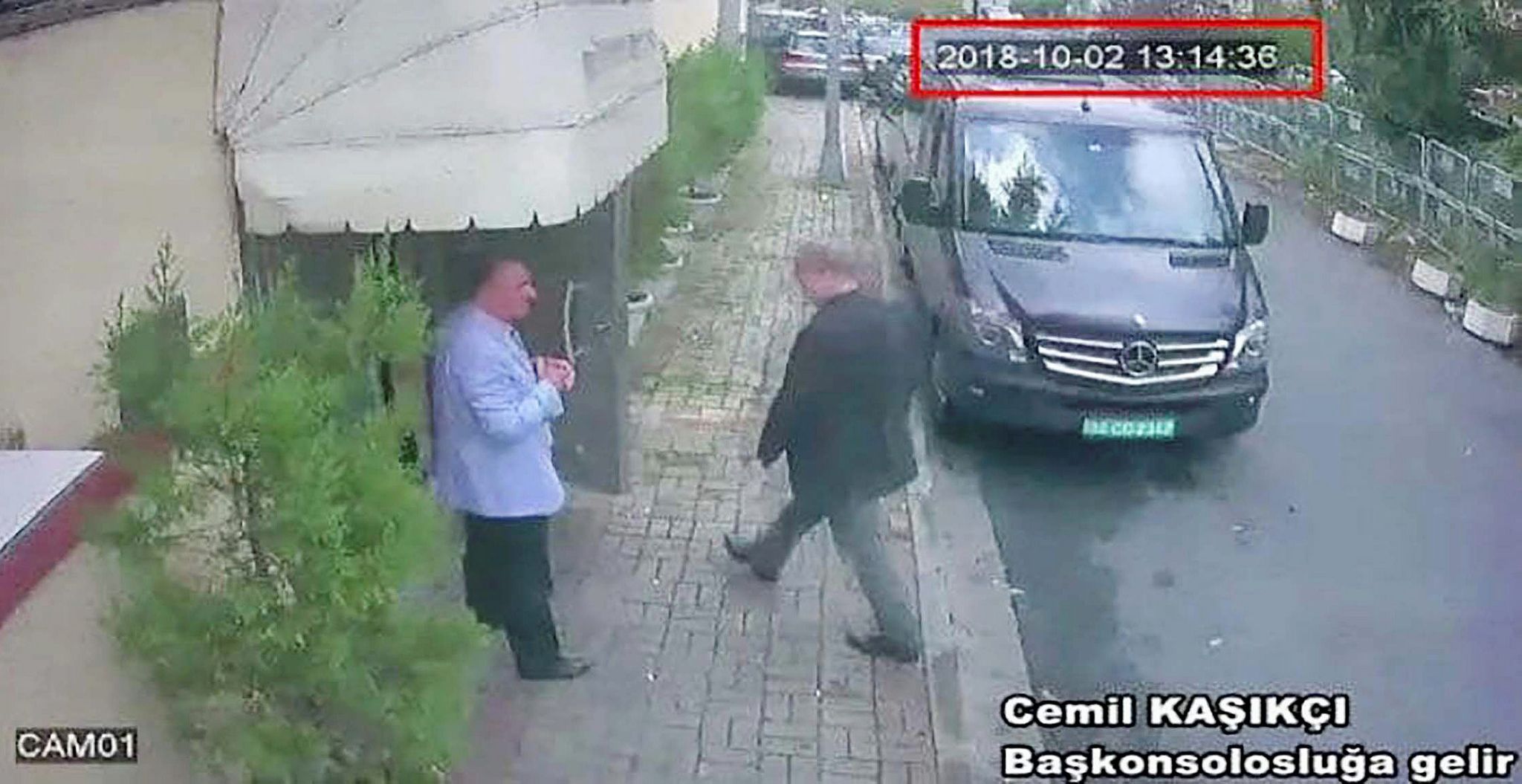
    Mr. Khashoggi, who was 59 when he disappeared at the Saudi Consulate in Istanbul on Oct. 2, is said to have withdrawn years ago from any formal affiliation with the Brotherhood, but his past ties to the transnational Islamist group are believed to have been a source of distrust for Saudi Crown Prince Mohammed bin Salman.

    The 33-year-old prince branded the Brotherhood a terrorist organization, and one of his signature moves as heir to the Saudi throne was to cut off all ties with the rival Gulf nation of Qatar. The prince blames Doha for financing the Muslim Brotherhood to foment unrest against the powers that be across the Arab world, in particular Saudi Arabia.

    Since leaving Saudi Arabia for self-imposed exile in the U.S. last year, Mr. Khashoggi has worked to create an advocacy group called Democracy for the Arab World Now (DAWN) to promote Arab Spring-style freedom movements across the Middle East.

    Some say Mohammed, who has a reputation for quickly identifying and crushing any threats to his authority, was well aware of Mr. Khashoggi’s political activities and likely more concerned about them than his journalistic efforts as a columnist for The Washington Post.

    Longtime regional analyst and former Wall Street Journal publisher Karen Elliott House said in the newspaper this week: “Those who watch the crown prince closely say he is determined to pre-empt any hint of possible disruption before it can materialize.

    “So Mr. Khashoggi’s decision to register in the U.S. a new political organization, perhaps funded by Saudi regional rivals, might have triggered this action,” wrote Ms. House, who is also the author of an influential 2012 book on Saudi Arabia.

    The New York Times, citing interviews with longtime friends of Mr. Khashoggi, reported that he was in the midst of raising money for DAWN when he disappeared in Turkey, whose own government is a rival to Saudi Arabia in the Muslim world and has close ties to Qatar and to the Muslim Brotherhood.

    Qatar has not commented on claims by Turkish officials that Mr. Khashoggi was killed by a Saudi “hit squad.” The crown prince, meanwhile, has denied any knowledge of what happened and has pledged to support a transparent investigation into the journalist’s disappearance.

    Meeting bin Laden

    Mr. Khashoggi had a long and varied career in Saudi affairs before he became a U.S.-based opinion writer, including working on and off for the Saudi government.

    The Khashoggi name was well-known in U.S. government circles long before Jamal Khashoggi came onto the scene. His uncle Adnan Khashoggi was a noted global arms dealer implicated in the Reagan administration’s Iran-Contra scandal.

    Jamal Khashoggi reportedly engaged in occasional work for Saudi intelligence during the era of Prince Turki al-Faisal, who headed Riyadh’s spy agencies from 1979 until just before the terrorist attacks of Sept. 11, 2001.

    As a younger man in Saudi Arabia, Mr. Khashoggi considered himself a member of the Muslim Brotherhood, which analysts often describe as a foundational group behind the emergence of al Qaeda.

    In his 30s, Mr. Khashoggi drew international attention for interviewing Osama bin Laden. According to the 2007 book “The Looming Tower: Al Qaeda and the Road to 9/11,” Mr. Khashoggi met with the emerging terrorist leader in Sudan in 1995 and pressured him to disavow violence.

    “I was aware of Jamal for many years, during his tenure as a reporter and editor,” Warren David, the founder of the U.S.-based media organization Arab America, wrote on the organization’s website Wednesday.

    Mr. David described Mr. Khashoggi as a “man of principle and integrity” who believed in the promotion of democracy in the Arab world and as someone steeped in the challenges of navigating the tumultuous media scene in Saudi Arabia and across the Middle East.

    “Jamal could speak from experience. He was the editor-in-chief of the Al-Arab News Channel, owned by Saudi prince and philanthropist, Al Waleed bin Talal Abdulaziz al Saud,” Mr. David wrote. “After the Arab Spring uprisings of 2011, Prince Waleed founded the channel which would focus on freedom of speech and democratic media.

    “In February of 2015, Al-Arab News Channel debuted in Bahrain under the leadership of Jamal Khashoggi. On the first day of broadcast, the opposition leader of Bahrain’s uprisings was interviewed,” wrote Mr. David. “Shockingly, within a couple of hours, the channel’s closure was announced. After searching for a new location, and securing a home for the network in Qatar, Jamal was ready to initiate broadcasting with the new network but was informed by Prince Al Waleed in February 2017 that the channel would never open.”

    ‘Putin-style’ whacking?

    While Mr. Khashoggi often and ironically expressed support for the crown prince’s social and economic reforms, he made no secret of his disgust with Mohammed’s crackdown of perceived critics.

    “With young Crown Prince Mohammed bin Salman’s rise to power, he … spoke of making our country more open and tolerant,” Mr. Khashoggi wrote in September 2017. “But all I see now is the recent wave of arrests. … The arrested are accused of being recipients of Qatari money and part of a grand Qatari-backed conspiracy.”

    Although the columns were often critical, analysts are at a loss to explain why the Saudi leadership would risk geopolitical blowback and the strains on U.S.-Saudi ties that would result from an operation to kidnap or kill him. Many say Crown Prince Mohammed simply underestimated the reaction the mission would spark.

    Mr. Khashoggi’s “ties to the Muslim Brotherhood do not seem to have involved any links to extremism,” said Anthony Cordesman, an analyst at the Center for Strategic and International Studies. “His criticisms of the Saudi government seem to have been limited to the kinds of reforms the kingdom will eventually have to make.

    “In fact, a more enlightened and pragmatic Saudi crown prince might have seen them as actually helping in the near term by acting as a counterweight to the hard-line Saudi conservatives that challenge every [reform],” Mr. Cordesman wrote this week.

    But others say Mr. Khashoggi crossed a line in his columns for The Post.

    David Ottaway, a Middle East fellow at the Wilson Center who knew Mr. Khashoggi for more than 20 years, wrote in The Post on Wednesday that “Khashoggi’s unpardonable sin was to call for debate not about the crown prince’s social reforms, which he wholeheartedly supported, but about the crown prince’s stifling intolerance for anyone who cast even a speck of dirt on his highly polished image as the kingdom’s long-awaited savior.”

    But sources close to the Saudi government insist the crown prince would never go so far as to order an assassination.

    “Saudi policy toward a critic like this is always to buy people off, try to bring them back into the fold,” one source told The Washington Times. “An act like this is totally out of character for the royal family. If it happened, it would be because it was a total [mistake] by some people and there will be consequences.”

    Still others say the prince is a new kind of leader for the tradition-bound, hierarchical kingdom, one who drew global attention last year by engineering a nearly three-month-long house arrest of dozens of fellow princes and leading business figure, including several older relatives within the royal family.

    Joshua Landis, who heads the Center for Middle East Studies at the University of Oklahoma, said the prince has ushered in a sharp shift in the way Riyadh conducts itself on the world stage.

    “The Saudis may have used money, not force, for decades to get their way with bribes, but that all changed with Mohammed bin Salman,” Mr. Landis said. “Frankly, I don’t put it past him to have put out an order for [Mr. Khashoggi] to be whacked in the same way [Russian President Vladimir] Putin is whacking opponents overseas, because it sends a message and intimidates critics.

    “Every Saudi who might be thinking about speaking up,” he added, “is [now] going to be quiet.”

  • Mike Pompeo heads to Riyadh as Jamal Khashoggi mystery deepens

    Saudi Arabia on Monday allowed Turkish investigators to search its consulate in Istanbul for clues in the case of missing Saudi journalist Jamal Khashoggi on Monday, in a bid to bring some clarity to

    Saudi Arabia on Monday allowed Turkish investigators to search its consulate in Istanbul for clues in the case of missing Saudi journalist Jamal Khashoggi, in a bid to bring some clarity to an incident that has mushroomed into a diplomatic and political crisis for both Riyadh and Washington.

    Amid reports the Saudis may be considering admitting at least partial fault in the disappearance — and perhaps murder — of the Washington-based writer, President Trump caused a stir by floating the notion that “rogue killers” — not Saudi government operatives suspected by Turkey — may have murdered the journalist two weeks ago.

    With Secretary of State Mike Pompeo dispatched Monday to Saudi Arabia to try to clarify what happened, Mr. Trump told reporters at the White House that Saudi King Salman had “firmly denied any knowledge” of a plot against Mr. Khashoggi, a Saudi citizen and known critic of the kingdom’s ambitious and powerful young Crown Prince Mohammed bin Salman.

    “I don’t want to get into his mind,” said Mr. Trump, “but it sounded to me like maybe these could have been rogue killers. Who knows?”

    The comments drew immediate criticism in Washington, where some quickly accused Mr. Trump of being spun by the 82-year-old king in order to protect a key ally.

    “Been hearing the ridiculous ‘rogue killers’ theory was where the Saudis would go with this,” tweeted Sen. Chris Murphy, Connecticut Democrat and a member of the Senate Foreign Relations Committee. “Absolutely [extraordinary] they were able to enlist the president of the United States as their PR agent to float it.”

    The confusion highlighted the difficult situation caused by the case for the White House, which has spent considerable capital over the past year cozying up to Riyadh as a prime customer of American arms and a go-to ally against the Mideast’s other major power, Iran.

    But support for Riyadh is far softer on Capitol Hill, where lawmakers from both parties were calling for punitive action — including sanctions and a cut in U.S. military sales to Riyadh — if the Saudis are found responsible for Mr. Khashoggi’s death.

    Media frenzy

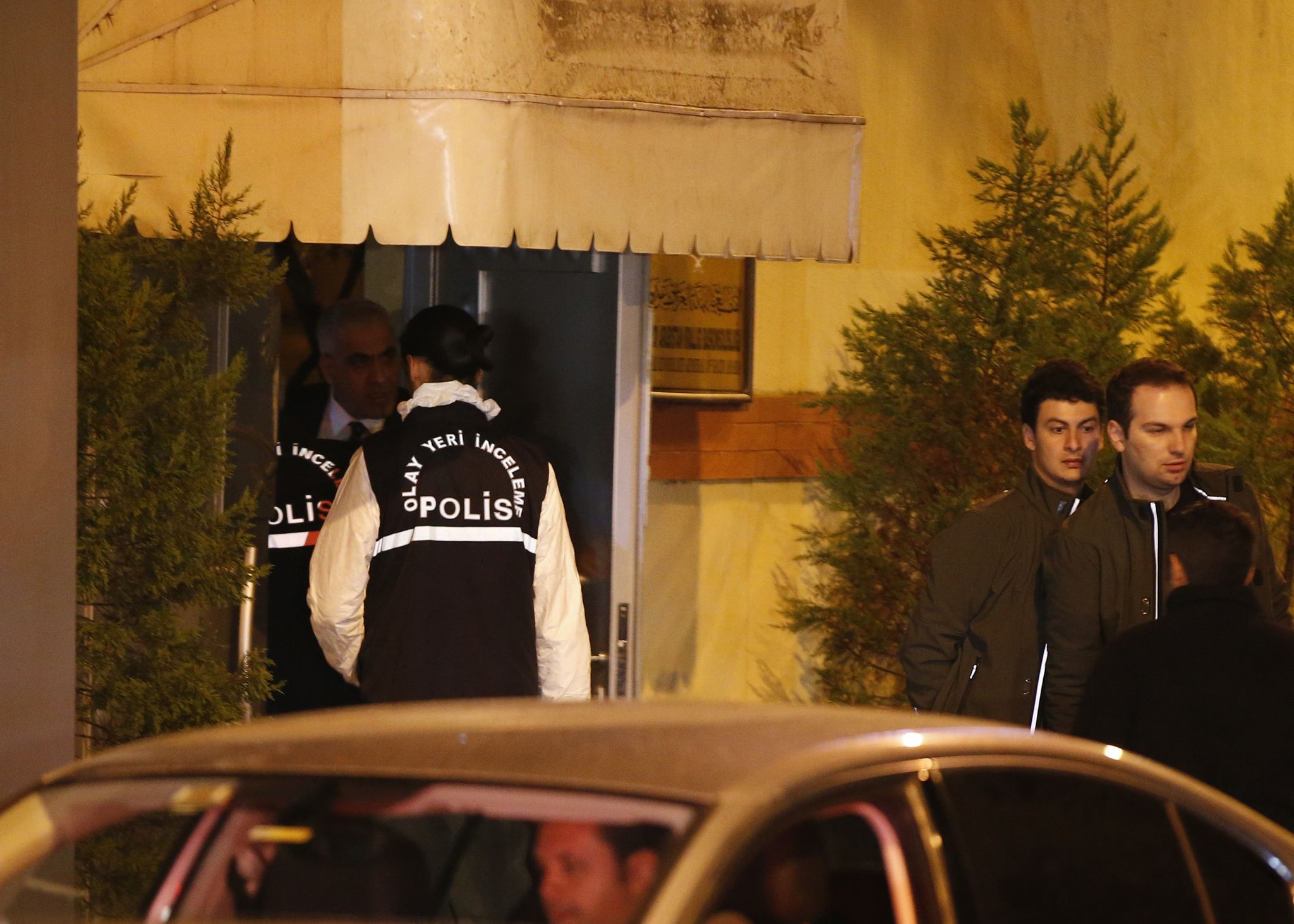
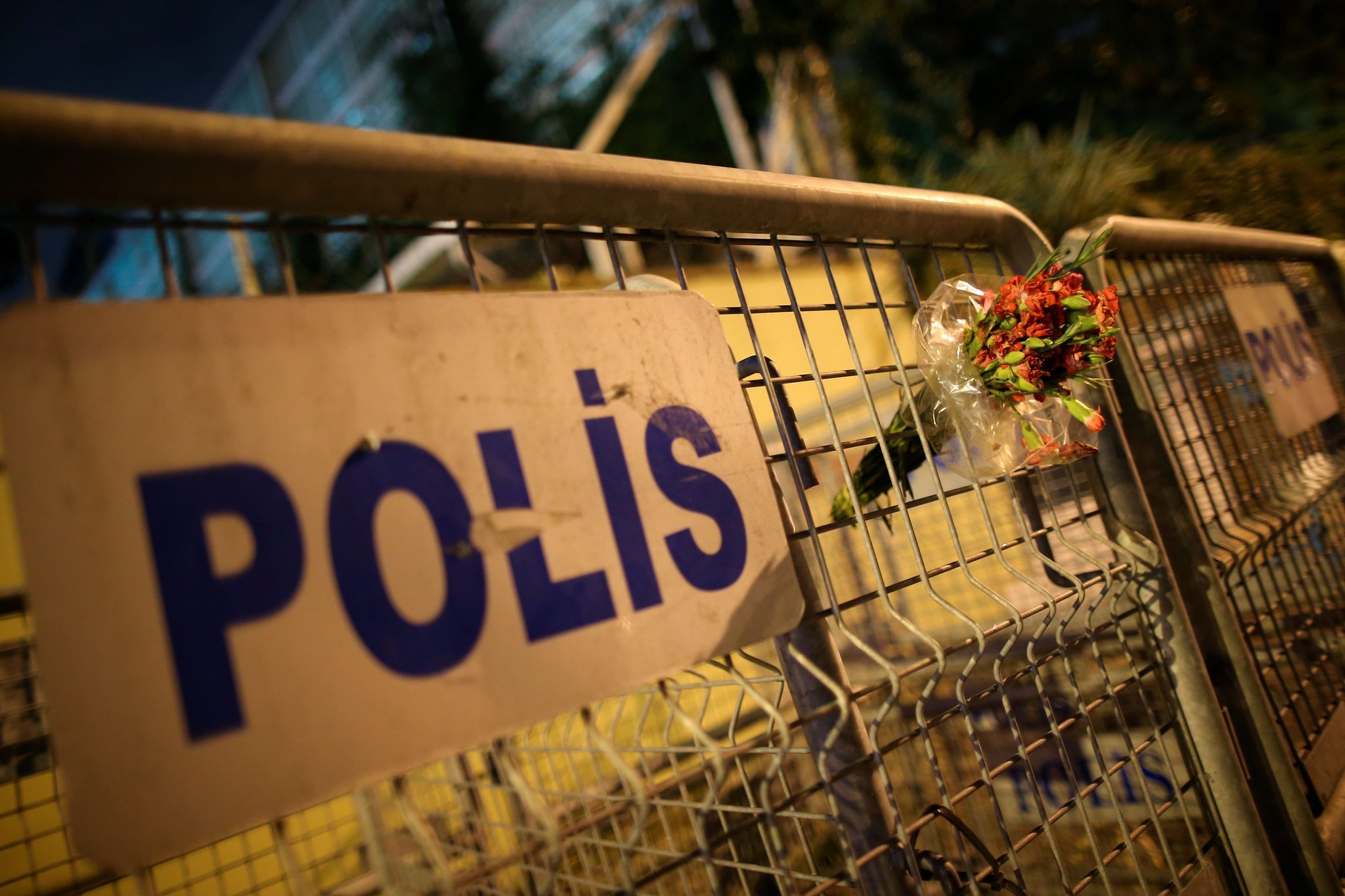
    In Istanbul, a media frenzy ensued around the Saudi consulate building Monday, with Turkish crime scene investigators dressed in coveralls and gloves going into the consulate for the first time since Mr. Khashoggi entered the building Oct. 2 seeking papers he needed to marry his Turkish fiancee. Prior to the arrival of the Turkish investigators, journalists photographed a cleaning crew with mops, trash bags and what appeared to be bottles of bleach walking into the consulate.

    Searches of such diplomatic posts, otherwise considered foreign soil under international law, are extraordinary and Monday’s development showed the delicate mix of cooperation and rivalry that has marked the Saudi relationship with Turkish President Recep Tayyip Erdogan.

    Turkish officials sent shock waves around the world last week by claiming to have audio and video evidence Mr. Khashoggi was killed and dismembered while visiting the consulate on Oct. 2, allegedly by what Turkish media leaks called a 15-member Saudi “hit team,” a team that left the country shortly after Mr. Khashoggi disappeared. Saudi officials rejected the allegation as “baseless,” but have yet to produce hard evidence that Mr. Khashoggi ever left the consulate.

    Mr. Khashoggi’s background has only added to intrigue surrounding the case. While he has spent much of the past year writing opinion columns for The Washington Post critical of the Saudi ruling family, he is reported to have had a long career working on and off for the Saudi government, and as an independent journalist in the kingdom. As a younger journalist, he first drew international attention for interviewing a young Osama bin Laden and was reportedly for a member of the Muslim Brotherhood, a controversial Islamist organization known for espousing anti-Western views.

    Anthony Cordesman, a Middle East expert at the Center for Strategic and International Studies, said in an analysis Monday that “it seems likely that this was as much the result of a botched kidnapping or a too violent interrogation as a deliberate killing.”

    Others have cast doubt on Turkish media reports of a Saudi hit squad targeting the journalist.

    Steven Cook, a senior fellow specializing on the Middle East at the Council on Foreign Relations, wrote on ForeignPolicy.com last week that the “uncorroborated” account was “quickly accepted as fact.”

    “This does not mean that they are untrue, but Turkey is a country with a poor record of press freedom, and its leaders and their supporters have embraced disinformation as a political strategy and a tool of foreign policy,” Mr. Cook wrote.

    Mr. Cordesman wrote that Turkey’s real motive “was to attack Saudi Arabia’s position and seek to undermine its influence relative to Turkey — as well as improve its own position in the United States.”

  • Honduras migrant caravan crosses Guatemala border, heads for U.S.

    A caravan of hundreds of Honduran migrants surged over the Guatemalan border under a broiling sun Monday hoping to make it to new lives in the United States, far from the poverty and violence of their

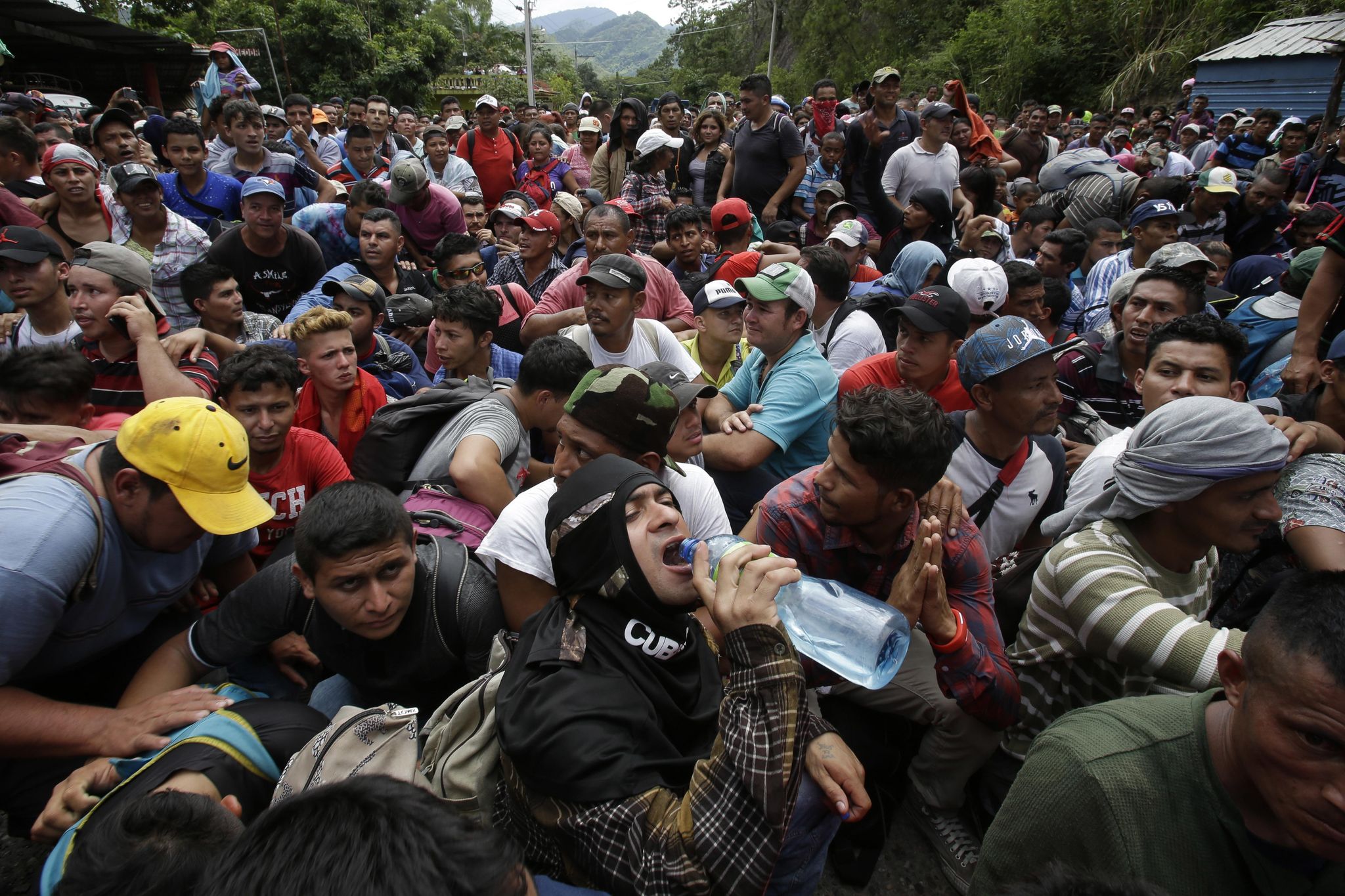
    ESQUIPULAS, Guatemala — A caravan of hundreds of Honduran migrants surged over the Guatemalan border under a broiling sun Monday hoping to make it to new lives in the United States, far from the poverty and violence of their home nation.

    Police stopped the migrants at a roadblock outside Esquipulas for several hours in the afternoon, but the travelers refused to return to the border and were eventually allowed to pass.

    Singing the Honduran national anthem, praying and chanting, “Yes, we can,” the group estimated at 1,600 or more had earlier defied an order by the Guatemalan government that they not be allowed to pass.

    “We have rights,” the migrants shouted.

    Keilin Umana, a 21-year-old who is two months pregnant, said she was moved to migrate to save herself and her unborn child after she was threatened with death.

    Umana, a nurse, said she had been walking for four days. “We are not criminals – we are migrants,” she said.

    Many in the caravan traveled light, with just backpacks and bottles of water. Some pushed toddlers in strollers or carried them on their shoulders.

    Carlos Cortez, a 32-year-old farmer traveling on foot with his 7-year-old son, said poverty back home made it impossible to support a family.

    “Every day I earn about $5,” Cortez said. “That isn’t enough to feed my family.”

    The caravan was met at the border by about 100 Guatemalan police officers. After a standoff of about two hours, the migrants began walking again. Outnumbered, the police did nothing to stop them and accompanied them several miles (kilometers) into Guatemalan territory.

    Officers then set up the roadblock about a mile (2 kilometers) outside the city of Esquipulas, where the migrants had planned to spend the night.

    The migrants were stuck for about three hours. About 250 police kept them from advancing and told them they had to return to the border to go through immigration. The migrants refused to budge and it appeared they would likely sleep on the highway.

    But the migrants begged police to let them continue, saying they weren’t criminals. Eventually officers let them pass and they planned to sleep in Esquipulas before continuing Tuesday.

    Some police and Guatemalan civilians offered the migrants water, and some locals drove Hondurans part of the way. Red Cross workers gave medical attention to some migrants who fainted in the heat.

    The caravan began as about 160 people who first gathered early Friday to depart from San Pedro Sula, one of Honduras’ most dangerous places, figuring that traveling as a group would make them less vulnerable to robbery, assault and other dangers common on the migratory path through Central America and Mexico.

    Local media coverage prompted hundreds more to join, and Dunia Montoya, a volunteer assisting the migrants, estimated Sunday that the group had grown to at least 1,600 people. Police gave their own estimate of around 2,000 on Monday.

    The caravan formed a day after U.S. Vice President Mike Pence urged the presidents of Honduras, El Salvador and Guatemala to persuade their citizens to stay home and not put their families in danger by undertaking the risky journey to the United States.

    In April, President Donald Trump threatened in April to withdraw foreign aid from Honduras and countries that allowed transit for a similar caravan that set out from the Central American country. That caravan dwindled as the group approached the U.S. border, with some giving up along the way and others splitting off to try to cross on their own.

    Historian Dana Frank, an expert on human rights and U.S. policy in Honduras, said the caravan could have political implications in the United States less than a month before the midterm elections.

    “Whatever the caravan’s origins, some in the United States will be quick to raise alarms about a supposed dangerous immigrant invasion, and use that to try to influence the upcoming U.S. elections,” Frank said. “Others will view these migrants with compassion and as further evidence of the need for comprehensive immigration reform … .”

    Frank added that the caravan’s rapid growth “underscores quite how desperate the Honduran people are – that they’d begin walking toward refuge in the United States with only a day back full of belongings.”

    In San Pedro Sula, where the procession started, sociologist Jenny Arguello said authorities wanted to make the mass migration out to be a political event, but it was just poor people fleeing violence.

    “From my community 20 went and one neighbor came back sad with his little backpack because when he arrived they had already left,” Arguello said. “You see that the need to leave is the priority. The people have already made up their minds and just hearing of the possibility they take off.”

    Honduras is largely dominated by murderous gangs that prey on families and businesses, and routinely sees homicide rates that are among the highest in the world.

    • Associated Press writers Maria Verza in San Pedro Sula and Martha Mendoza in Santa Cruz, California, contributed to this report.

  • Jamal Khashoggi crisis threatens U.S.-Saudi Arabia oil ties

    While investigators in Turkey searched the Saudi Consulate in Istanbul seeking clues to the fate of missing Saudi journalist Jamal Khashoggi and Secretary of State Mike Pompeo was heading to Riyadh se

    A diplomatic crisis engulfing the world’s most critical oil supplier was the last thing the Trump administration needed.

    While investigators in Turkey searched the Saudi Consulate in Istanbul seeking clues to the fate of missing Saudi journalist Jamal Khashoggi and Secretary of State Mike Pompeo was heading to Riyadh seeking answers of his own, the bigger question for the Trump administration was how to manage an incident that could irrevocably tarnish a critical ally at a critical time.

    The Khashoggi crisis has erupted as the U.S. tries to enforce a total ban next month on oil exports by Saudi archrival Iran, a critical part of the strategy to pressure Tehran after President Trump’s withdrawal from the 2015 nuclear deal still backed by most other countries. That means the U.S. needs Saudi Arabian petroleum more than ever, narrowing America’s options to punish the kingdom for its suspected role in Mr. Khashoggi’s disappearance.

    Regional analysts say a U.S. move to impose economic sanctions over allegations that Mr. Khashoggi was tortured, killed and dismembered inside the Saudi Consulate could send world oil prices surging to a record high.

    Saudi Arabia’s global image overhaul, spearheaded by the young, ambitious — and some say reckless — Crown Prince Mohammed bin Salman, stands at a crossroads.

    The prince’s modernizing agenda is clouded by self-inflicted crises in Yemen and Qatar, a struggle for regional dominance with Iran, and the challenge of loosening political and social controls without threatening the royal family’s rule.

    As always, the kingdom’s vast crude oil reserves give it leverage and many cards to play in any high-stakes negotiation with Washington.

    “I would not say that [the Saudis] have the U.S. over a barrel, but it is certainly a symbiotic relationship,” said Sanam Vakil, a senior Middle East and North Africa analyst at the British-based Chatham House think tank.

    Mr. Trump also has cited Riyadh as a major customer of U.S. military exports, but oil is key in the end.

    Since Mr. Trump withdrew the U.S. from the Obama-era Iran nuclear accord in May, the White House has pressured the kingdom to increase its daily oil production by 2 million barrels a day to make up any shortfall when energy sanctions on Iran take effect Nov. 4. The U.S. goal, restated by top State Department officials on a visit to Europe this week — to drive Iran’s oil exports down to “zero” and starve the Islamic republic of a critical source of funding.

    Petroleum Minister Khalid al-Falih announced Monday that Saudi Arabia expects to ramp up production next month, but he was vague about how much more oil would flow.

    “Saudi Arabia has the capacity to produce 12 million [barrels per day] and is currently producing 10.7 million bpd and production will rise further next month,” Mr. al-Falih said on the sidelines of an India Energy Forum after meeting with Indian Prime Minister Narendra Modi.

    Untested capacity

    According to energy analysts, Saudi’s maximum sustainable capacity of 12 million barrels per day has never been tested, sparking major debate about what such an effort would realistically look like.

    More questions also are swirling around the 33-year-old crown prince, who has powerful allies in Washington, including presidential adviser and son-in-law Jared Kushner.

    Initially welcomed in Washington foreign policy circles as a progressive reformer, the crown prince is increasingly seen as reckless, impetuous and authoritarian, said Gerald Feinstein of the Middle Eastern Institute think tank in Washington.

    Mr. Feinstein said Monday that “continuing frustration over the conflict in Yemen, the confrontation with Qatar and human rights violations at home” — all initiatives undertaken by the crown prince — made him “too toxic for Western governments and international business to deal with.”

    But Ms. Vakil said Saudis hold leverage not only in global oil markets but also at U.S. gas pumps and that the White House is showing signs of nervousness over rising gasoline prices as the Nov. 6 critical midterm congressional elections approach.

    While the U.S. has moved away from Saudi oil over the past two decades, the kingdom remains America’s No. 2 foreign oil source, supplying 9 percent of the roughly 10.14 million barrels of American imports per day, according to the U.S. Energy Information Administration.

    Treasury Department officials also note that Saudi Arabia now holds about $166.8 billion in Treasury securities, making Riyadh the 10th-largest foreign holder of U.S. government bonds.

    “The relationship does begin with oil,” Ms. Vakil said on the phone from London. “But the kingdom is also heavily invested in U.S. debt and bonds. They definitely have some leverage over Washington, and people realize that.”

    If Riyadh decided to dump a massive amount of U.S. debt, it could send shock waves across the Treasury markets and possibly destabilize the world’s wider financial markets.

    Trillions of dollars of more murky Saudi investments also stretch across U.S. real estate, the stock markets and the opaque world of American private equity.

    James Phillips, senior research fellow for Middle Eastern affairs at The Heritage Foundation, said Saudi leverage is being taken into consideration as the administration mulls its response in the Khashoggi case.

    “There are a lot of levels of response that could be taken,” he said. “We could recall an ambassador or call the Saudi ambassador to the State Department. Or we could enact sanctions that do not rise to the level of impacting arms sales but clearly state that extrajudicial killings are unacceptable.”

    For now, the Khashoggi case has sparked far more questions than answers, with all sides strategically leaking as facts trickle out.

    “What we have now is a war of disinformation,” Mr. Phillips said. “It is an extremely strange case, and we need some real facts to emerge.”

  • Myanmar demonstrators condemn foreign intervention

    Several thousand pro-military and nationalist demonstrators marched through Yangon on Sunday, voicing their support for Myanmar’s armed forces and government while condemning foreign involvement in th

    YANGON, Myanmar (AP) – Several thousand pro-military and nationalist demonstrators marched through Yangon on Sunday, voicing their support for Myanmar’s armed forces and government while condemning foreign involvement in the country’s affairs.

    The march led to a stage lined with portraits of Senior Gen. Min Aung Hlaing, where speakers addressed a flag-waving crowd and condemned the international community’s involvement in Myanmar, claiming groups would “fight back” against international bodies who have called for the investigation and prosecution of the country’s top generals.

    “We, the people of Myanmar, strongly denounce and condemn any intervention or intrusion by the foreign countries, international communities and various organizations which unrightfully manipulate our nation and our Myanmar armed forces,” proclaimed one of the speakers of the event, reading from a prepared statement.

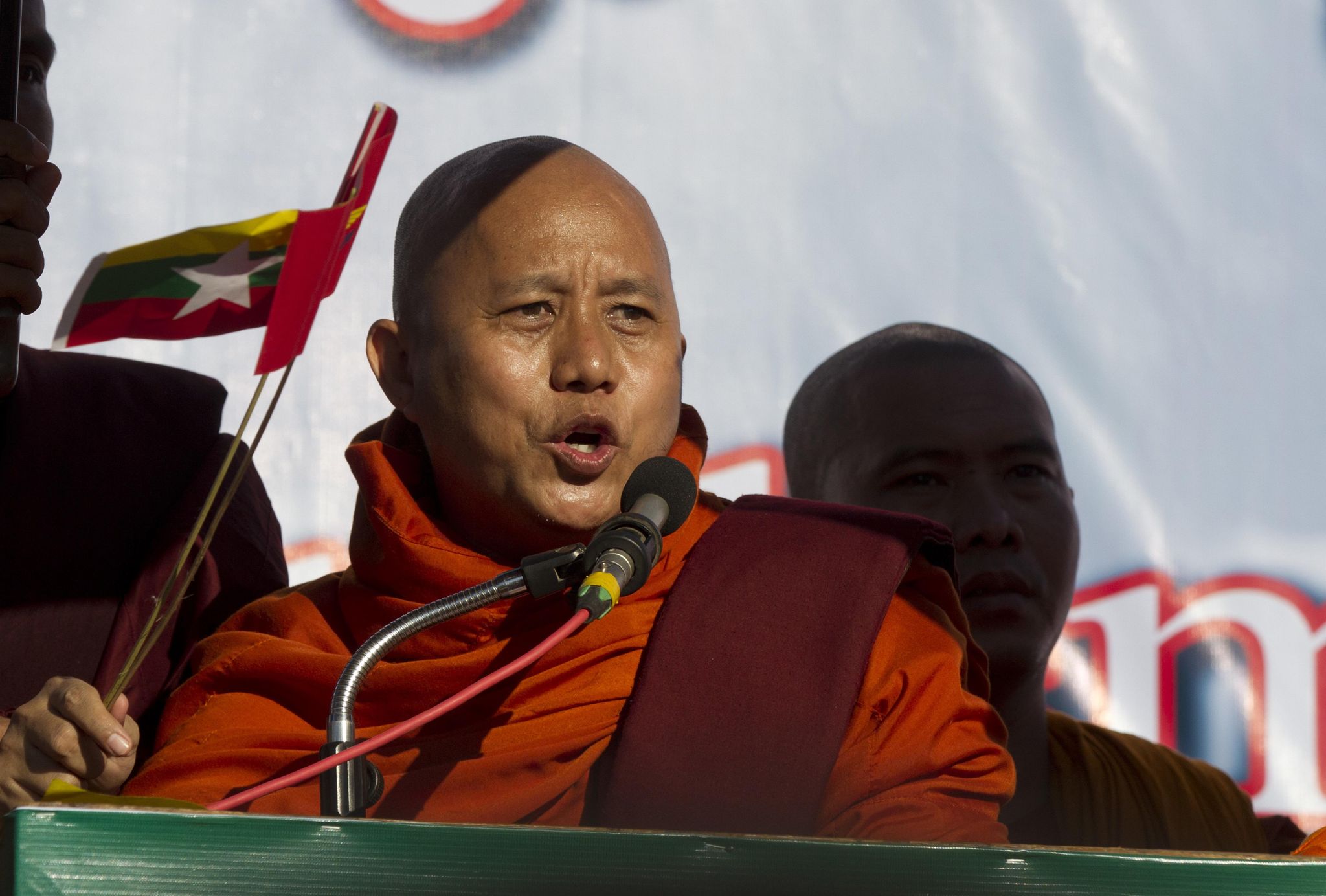
    Nationalist monk Wirathu also gave a speech calling for the international community to stay out of Myanmar’s national affairs.

    “The day the International Criminal Court comes to our country, that’s the day R2P (responsibility to protect) comes to our country. That’ll be the day that Wirathu picks up a gun,” Wirathu said.

    A United Nations fact-finding mission reported last month that Myanmar’s military systematically killed thousands of Rohingya Muslim civilians, burned hundreds of their villages and engaged in ethnic cleansing and mass rape. It called for top generals to be investigated and prosecuted for genocide.

    Myanmar government spokesman Zaw Htay was unable to be reached for comment Sunday.

    ___

    This story has been corrected to show that “R2P” refers to “responsibility to protect.”

  • Battles over safe Ebola burials complicate work in Congo

    A runaway hearse carrying an Ebola victim has become the latest example of sometimes violent community resistance complicating efforts to contain a Congo outbreak – and causing a worrying new rise in

    BENI, Congo (AP) — A runaway hearse carrying an Ebola victim has become the latest example of sometimes violent community resistance complicating efforts to contain a Congo outbreak – and causing a worrying new rise in cases.

    The deadly virus’ appearance for the first time in the far northeast has sparked fear. Suspected contacts of infected people have tried to slip away. Residents have assaulted health teams. The rate of new Ebola cases has more than doubled since the start of this month, experts say.

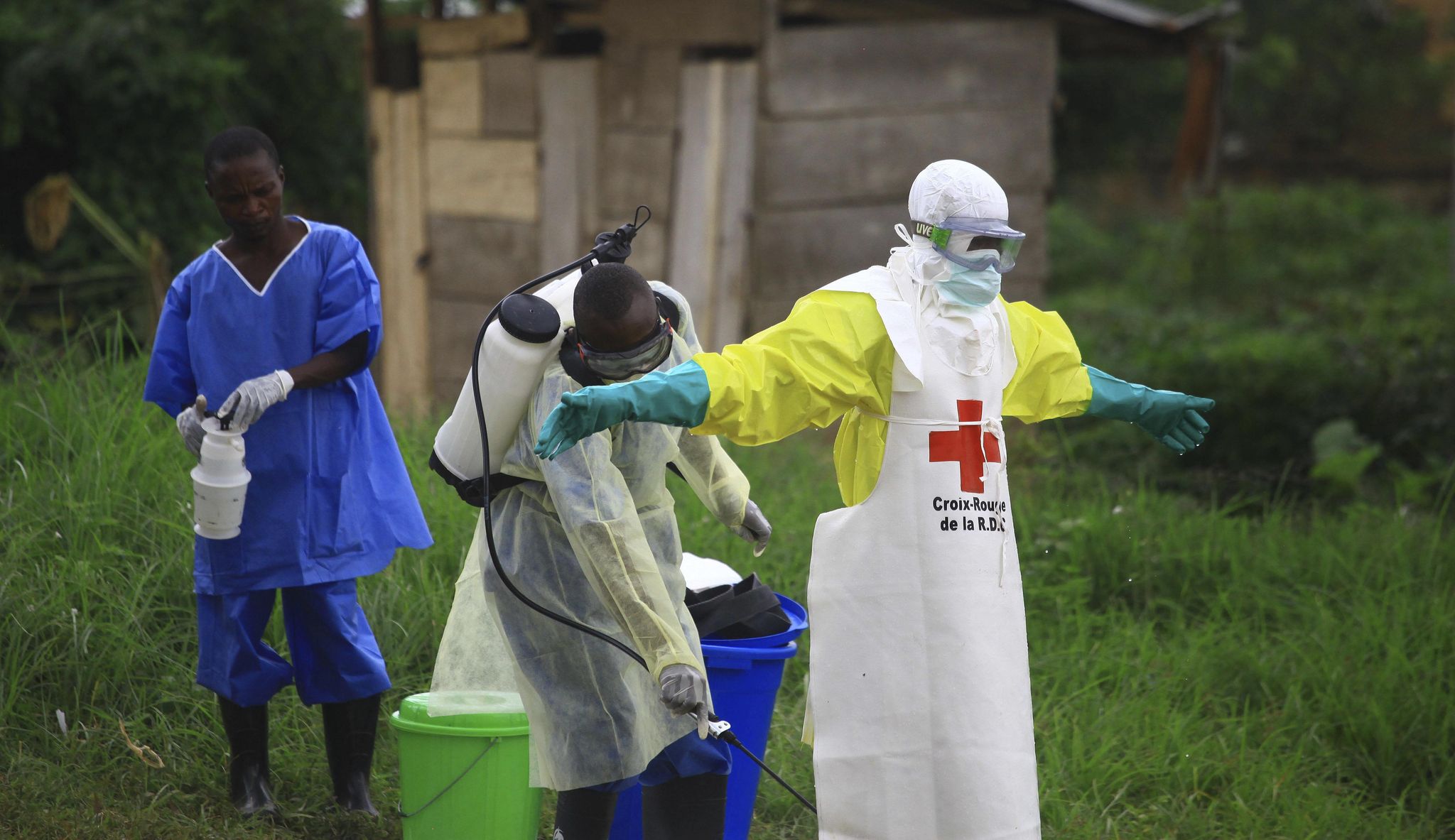
    Safe burials are particularly sensitive as some outraged family members reject the intervention of health workers in the deeply personal moment, even as they put their own lives at risk.

    On Wednesday, a wary peace was negotiated over the body of an Ebola victim, one of 95 deaths among 170 confirmed cases so far, Congo’s health ministry said. Her family demanded that an acquaintance drive the hearse, while they agreed to wear protective gear to carry the casket. A police vehicle would follow.

    On the way to the cemetery, however, the hearse peeled away “at full speed,” the ministry said. A violent confrontation followed with local youth once the hearse was found at the family’s own burial plot elsewhere. The procession eventually reached the cemetery by day’s end.

    The next day, with a better understanding of what was at stake, several family members appeared voluntarily at a hospital for Ebola vaccinations, the ministry said.

    “They swore no one had manipulated the corpse,” it added. Ebola spreads via bodily fluids of those infected, including the dead.

    The Beni community where the confrontation occurred is at the center of Ebola containment efforts. To the alarm of the World Health Organization and others, it is also where community resistance has been the most persistent – and where many of the new cases are found.

    So far, the Ebola work in Beni has been suspended twice since the outbreak was declared on Aug. 1. A “dead city” of mourning in response to a rebel attack caused the first. Wednesday’s violence caused the second. With each pause, crucial efforts to track thousands of possible Ebola contacts can slide, risking further infections.

    Defending themselves, Beni residents have pointed out the shock of having one of the world’s most notorious diseases appear along with strangers in biohazard suits who tell them how to say goodbye to loved ones killed by the virus.

    “Until now we didn’t know enough about Ebola and we felt marginalized when Red Cross agents came in and took the corpse and buried it without family members playing a role,” Beni resident Patrick Kyana, who said a friend lost his father to the virus, told The Associated Press. “It’s very difficult. Imagine that your son dies and someone refuses to let you assist in his burial. In Africa we respect death greatly.”

    Until recently many people in Beni didn’t believe that Ebola existed, thinking it was a government plot to further delay presidential elections, Kizito Hangi, president of Beni’s civil society, told the AP.

    Now the population has started to catch on and cooperate, Hangi said. “The problem was that the health workers all came from outside, but local specialists have been included to persuade and inform people in local languages.”

    The head of emergency Ebola operations with the International Federation of Red Cross and Red Crescent Societies, Jamie LeSueur, acknowledged the problem. In early October two Red Cross volunteers were severely injured in an attack during safe burials in the community of Butemo. Another volunteer was injured in September by people throwing stones.

    “It raised a lot of questions for all of us. Where is the violence coming from?” he said. They have stepped up efforts to collaborate with communities and be clearer about messaging while working within cultural norms as best as possible.

    “Of course there are limitations,” LeSueur said. “Some people like to view the corpse as it is buried but with Ebola it is difficult to open up the body bag.” In the emotionally charged environment where families have lost loved ones, a misstep could quickly raise tensions.

    While Congo’s government is acting to give more protection to its own safe burial teams in Beni, LeSueur noted that the “militarization” of similar efforts in the far deadlier Ebola outbreak in West Africa a few years ago led some residents to hide or not report deaths from the virus.

    “I don’t think that will be the case in this event” but everyone remembers that lesson, he said.

    With its position of neutrality the Red Cross doesn’t use armed guards in any case, LeSueur added. “Community acceptance, that’s our security.”

    ___

    Anna reported from Johannesburg.

    ___

    Follow Africa news at https://twitter.com/AP_Africa

  • Polish police use tear gas to protect gay rights march

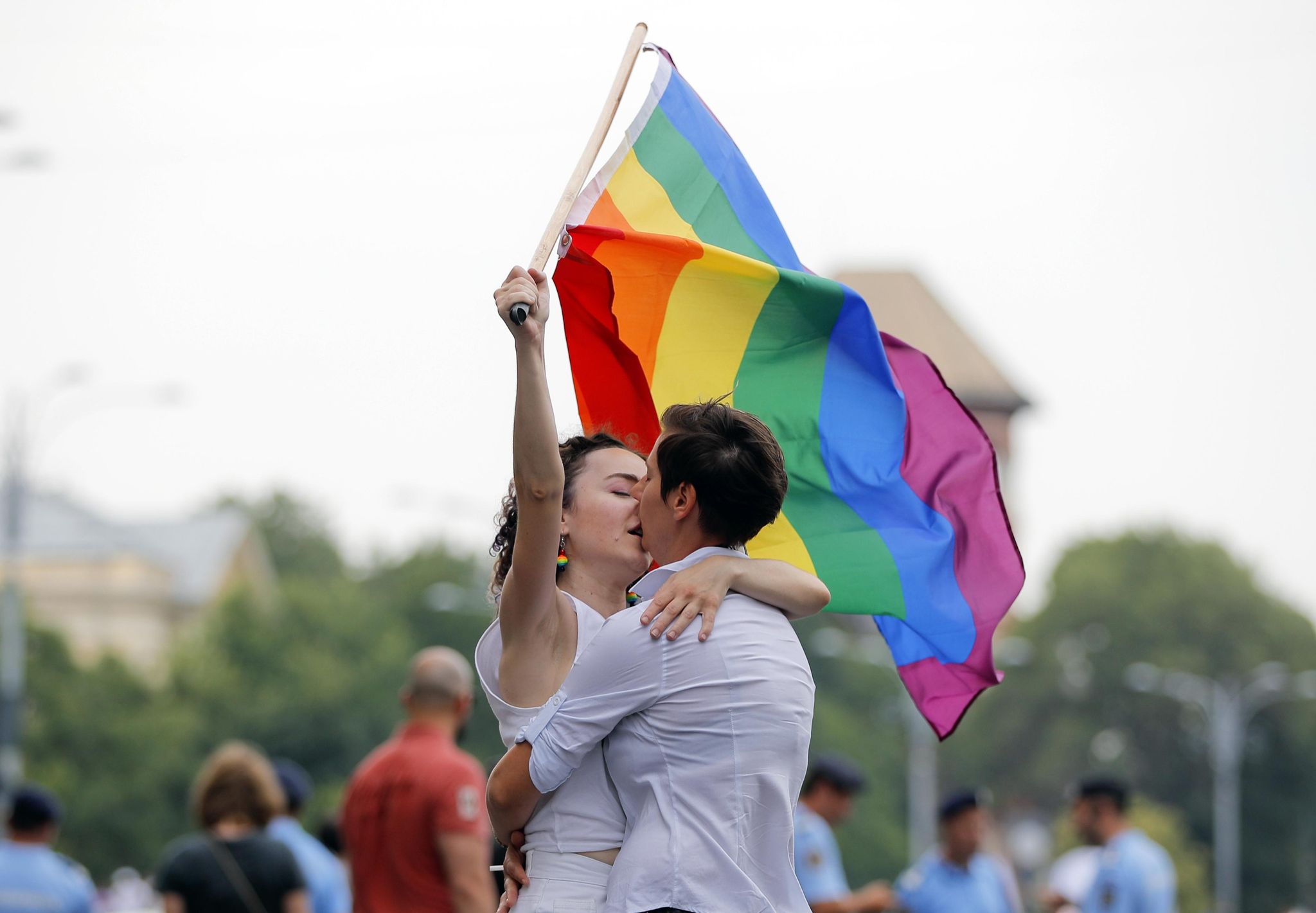
    Polish police used tear gas and a water cannon Saturday against right-wing extremists who were trying to block the first equality parade in the city of Lublin in eastern Poland.

    WARSAW, Poland (AP) — Polish police used tear gas and a water cannon Saturday against right-wing extremists who were trying to block the first equality parade in the city of Lublin in eastern Poland.

    More than 1,000 lesbian, gay, bisexual and transgender rights activists with rainbow-colored flags and banners gathered Saturday in Lublin for the parade, while around 300 right-wing opponents stood in the march’s way. Police used tear gas, concussion grenades and high-pressured water to disperse them.

    The right-wing protesters pelted police with stones and dispersed, but some small groups tried to get through the police cordon that was protecting the march.

    The colorful parade then proceeded undisturbed.

    The march took place after Lublin’s Court of Appeals on Friday overruled a ban by Mayor Krzysztof Zuk, who had cited security concerns as his reason for banning the parade.

    Gay rights parades have been taking place for years in Warsaw, the capital, and many other cities in predominantly Catholic Poland, but the ruling conservative party is not supportive of gay rights groups.

    __

    This story has been corrected to show that 300 right-wing extremists tried to block the parade, not 3,000.

  • Saudi stock market plunges after Donald Trump threat over Jamal Khashoggi disappearance

    The Saudi stock market plunged Sunday after President Donald Trump threatened “severe punishment” over the disappearance of Washington Post contributor Jamal Khashoggi.

    DUBAI, United Arab Emirates — The Saudi stock market plunged Sunday after President Donald Trump threatened “severe punishment” over the disappearance of Washington Post contributor Jamal Khashoggi.

    The Tadawul exchange in Riyadh dropped over 6 percent in the week’s first day of trading, with 182 of its 186 listed stocks showing losses by the early afternoon.

    Turkish officials say they fear Saudi agents killed and dismembered Khashoggi after he entered the Saudi Consulate in Istanbul on Oct. 2, saying they have audio and video recordings of it that they have not released. The kingdom has called the allegations “baseless,” but has offered no evidence the writer ever left the consulate.

    In an interview to be aired Sunday, Trump told CBS’ “60 Minutes” that the consequences of Saudi Arabia being involved would be “severe.”

    “There’s something really terrible and disgusting about that, if that was the case, so we’re going to have to see,” Trump said. “We’re going to get to the bottom of it and there will be severe punishment.”

    However, Trump in the same interview said: “As of this moment, they deny it and they deny it vehemently. Could it be them? Yes.”

    Saudi officials had no immediate comment on the selloff, though state television aired an interview with an analyst who blamed it on weaker markets in the U.S. However, other stock exchanges in the Mideast saw far less volatility Sunday. U.S. markets have been rattled by rising interest rates, signs of a slowdown in the global economy and the U.S.-China trade dispute.

    Saudi Crown Prince Mohammed bin Salman has aggressively pitched the kingdom as a destination for foreign investment. But Khashoggi’s disappearance, and suspicions he may have been targeted over his criticism of the crown prince, have led several business leaders and media outlets to back out of an upcoming high-profile investment conference in Riyadh.

    Trump also said “we would be punishing ourselves” by canceling arms sales to Saudi Arabia, which his administration touted on his first overseas trip. The sale is a “tremendous order for our companies,” and if the kingdom doesn’t buy its weaponry from the United States, they will buy it from others, he said. Trump said he would meet with Khashoggi’s family.

    American lawmakers in both parties have been more critical of Saudi Arabia, with several suggesting officials in the kingdom could be sanctioned if they were found to be involved in Khashoggi’s disappearance and alleged killing.

    Khashoggi, who was considered close to the Saudi royal family, had become a critic of the current government and Prince Mohammed, the 33-year-old heir apparent who has shown little tolerance for criticism.

    As a contributor to the Post, Khashoggi has written extensively about Saudi Arabia, including criticism of its war in Yemen, its recent diplomatic spat with Canada and its arrest of women’s rights activists after the lifting of a ban on women driving.

    Those policies are all seen as initiatives of the crown prince, who has also presided over a roundup of activists and businessmen.

  • Nepal blocks 25,000 websites in porn ban

    Nepalese internet providers have begun blocking thousands of pornographic websites as part of a government directive aimed at stopping sexual violence, officials said Sunday.

    KATHMANDU, Nepal — Nepalese internet providers have begun blocking thousands of pornographic websites as part of a government directive aimed at stopping sexual violence, officials said Sunday.

    The government issued new criminal and civil codes this year that include regulations against the use, broadcast and publication of pornographic materials with punishment for violators of up to one year in prison.

    Min Prasad Aryal of the Nepal Telecom Authority said Sunday that more than 25,000 websites have been blocked under the campaign.

    “This is only the start, but a very good start,” Aryal said, adding that a team of officials are monitoring internet service providers to ensure the order is followed.

    He said those providers who refuse or fail to comply face a fine of up to $4,200 and risk losing their operating license.

    Internet service providers say they are complying with the government order but say it would be impossible to weed out and block all such sites.

    “We are following the government order and have blocked the list of websites that was provided. However, it is not practical and technically not possible to block every pornographic website,” said Binay Bohra of Vianet Communications.

    Bohra said they feared that with the new law service providers could easily be punished.

    Media rights groups have also expressed concern at the blanket ban of websites.

    “This opens up the path for the government to block any websites in the future, saying they have obscene content. This order was issued without clarifying what is obscene and why or without doing any proper study,” said Taranath Dahal, who heads the Freedom Forum, a Nepal-based media rights group.

    Dahal said there should be clear regulations from the government on what content is considered obscene and pornographic and what aged users should be barred.

    The government issued a similar ban in 2011, but this time there are more serious punishments for violations.