Blog

  • Beijing’s bravado betrays growing case of nerves

    Chinese state media has just announced the imminent test flight of a new long-range stealth bomber called the Hong-20. A “military expert” told reporters that “usually, the development of equipment an

    ANALYSIS/OPINION:

    Chinese state media has just announced the imminent test flight of a new long-range stealth bomber called the Hong-20. A “military expert” told reporters that “usually, the development of equipment and weaponry of the People’s Liberation Army is highly confidential.”

    Revealing the bomber name before trials shows the Chinese aviation industry is gaining more confidence, the expert boasted.

    If there was ever an example of “projection,” this is it. The Chinese are not “confident;” they are scared.

    The communist regime, which by the way just confirmed it is holding over 1 million of its citizens in ‘re-education’ camps in the restive western region of Xinjiang, is acting like a deer in the headlights. In the face of real “Trumpian” confidence radiating from Washington, China’s leaders are acting like the schoolyard bully who for the first time just got punched in the face, and figured out they don’t like it one bit.

    President Trump has done the one thing Beijing thought would never happen — he is using the full weight of American power for the first time since World War II, economic, political, moral and yes, even military power. And it’s working.

    We should expect more bravado and parading of weapons from China, which is desperate to turn American public opinion against Mr. Trump’s hard line. There has been lots of love shared between the American elites and those in Beijing over the last few decades. That is over now. The globalist game is over. The hollowing out of America is over.

    I don’t believe the narrative in the mainstream U.S. media created about the People’s Republic. I have never believed the Wall Street apologists for the dictators.

    The experts claim that China’s economy is well on its way to surpassing the United States in terms of GDP. But, that was before Mr. Trump stopped letting Beijing treat trade as a one-way street. China’s economy is actually a house of cards, propped up by uncollectable debts and exploitative trade practices. The government has to build empty “ghost cities” just to keep people employed and not rioting. Did I mention the re-education camps? That all doesn’t sound like a stable, growing society to me.

    Meanwhile, in the U.S., we are in the midst of a real reset, one that will benefit the country in the long run. There will be some short-term pain — as we are seeing in the American stock market — as we forge new expectations and the old ways of doing business pass by the wayside.

    We’ve just learned that China is trying to influence next month’s midterm elections. They must be thinking, “For God’s sake we can’t let Trump consolidate power, or we are finished!”

    We should expect more malign behavior, more fear-mongering in the South China Sea, more spy technology embedded in our communications equipment, more military parades, and more general Chinese chest-thumping.

    The Chinese will continue to lash out, as cornered creatures tend to do, and now the leadership’s deceptions are being exposed for all the world to see. President Trump is threatening the very hold on power of the Chinese Communist Party. In their world, they cannot allow this to happen.

    Ronald Reagan won the Cold War and tore down the Iron Curtain.

    Donald Trump may be doing the same thing, only this time in the Pacific, frustrating the insidious Chinese plan to undermine America without firing a shot, and threatening the communists’ hold on power in Beijing.

    L. Todd Wood is a former special operations helicopter pilot and Wall Street debt trader, and has contributed to Fox Business, The Moscow Times, National Review, The New York Post and many other publications. He can be reached at LToddWood.com.
  • Angela Merkel’s Germany immigration policies set for referendum in Bavaria elections

    When it comes to regional politics here, no state is more influential than Bavaria, the nation’s economic powerhouse and an unabashed conservative stronghold often described as Germany’s Texas. But th

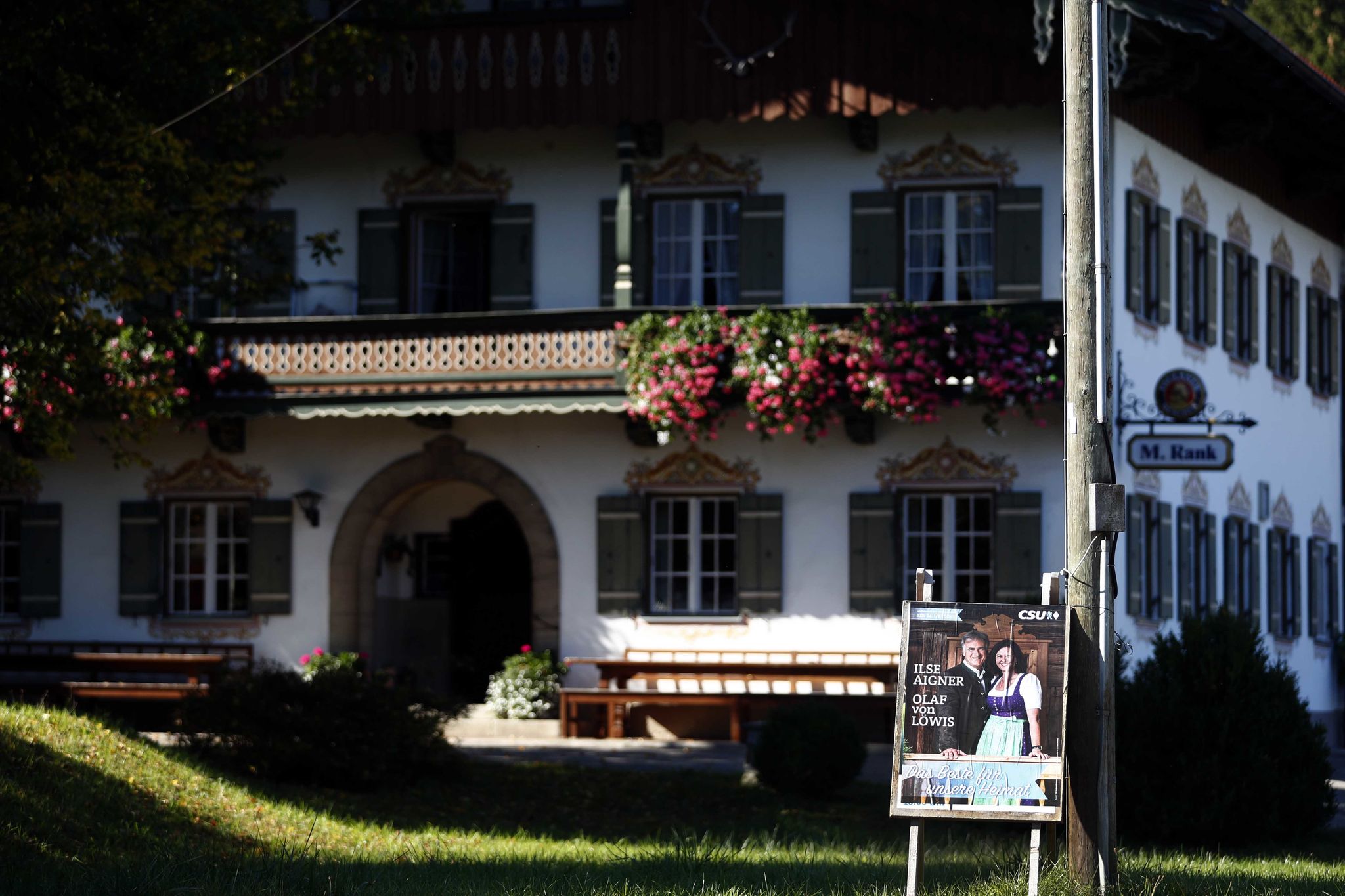
    BERLIN — When it comes to regional politics here, no state is more influential than Bavaria, the nation’s economic powerhouse and an unabashed conservative stronghold often described as Germany’s Texas.

    But the elections Sunday in Bavaria are expected to represent a referendum on center-right Chancellor Angela Merkel’s policies over the past few years and on her conservative allies to the south, who have repeatedly caused trouble for her since her decision to allow more than 1 million refugees into the country three years ago.

    In fact, for the first time in decades, Bavaria’s conservative Christian Social Union finds itself under threat in its own backyard from the Germany’s resurgent far right — and from the left.

    “They tried to fight fire with fire at the beginning of the year with regard to the migration crisis,” said Olaf Boehnke, a senior adviser in Berlin with Rasmussen Global, a Brussels-based think tank, referring to Bavaria’s conservatives. “But they’re realizing that if you try to be more extreme than the extremists, it’s a lost cause.”

    For 12 of the past 13 elections in Bavaria, the Christian Social Union (CSU), the conservative sister party of Ms. Merkel’s Christian Democrats (CDU), has ruled with an absolute majority — a rarity in German politics, where compromise and coalition-building between parties is the norm. The party has held an absolute majority in the state legislature for all but five years over the past six decades.

    That has allowed the CSU in Bavaria, home to automotive giant BMW and the Oktoberfest, to create a conservative, semiautonomous cultural and political bubble in Germany’s south. The state, for example, recently enacted laws mandating that crosses be hung in all administrative buildings, much to the ire of Berlin.

    But the elections Sunday will likely rock the political impregnability of the CSU. The party is polling only at 33 percent, according to German broadcaster ZDF, down a whopping 15 percent from 2013, when Bavaria held its last state elections. In the stable world of German democracy, such a decline amounts to an electoral earthquake.

    Meanwhile, the environmentalist Greens are polling second at 18 percent and the far-right, anti-immigrant Alternative for Germany (AfD), once a fringe party that didn’t run a single candidate in 2013, is at 10 percent, according to the ZDF poll.

    Regional elections in Germany can have huge impacts on national politics, though election outcomes typically reflect a mix of local and national factors, Carsten Brzeski, chief economist for ING Germany, wrote in an analysis of the upcoming election.

    But this time, the reason for the decline of the CSU in Bavaria is clear.

    “The CSU tried to make the election a kind of referendum on Merkel’s stance on refugees,” Mr. Brzeski said. “The continuous nagging and trouble-seeking in Berlin, initiated by the CSU, has completely turned this around.”

    Ms. Merkel’s conservative bloc lost over 1 million votes to the AfD in last year’s federal elections, a development largely connected to popular unhappiness with her 2015 decision to open the nation’s borders to over 1 million, mostly Muslim refugees fleeing violence in the Middle East and elsewhere.

    Bavarian backlash

    It was a decision that particularly affected Bavaria, a Catholic stronghold that served as the main entry point for those who traveled through the Balkans to reach Germany, Mr. Boehnke said.

    That gave Bavaria and the CSU “a special role to play as to how to cope with this,” he said. “They not only reject free-floating migration, but also were the first victims who were subject to this new trend.”

    With refugee policy a hot-button issue in the state and the AfD gaining ground, the CSU — which forms a “grand coalition” government in Berlin with Ms. Merkel’s CDU and the center-left Social Democrats (SPD) — sought to move refugee and immigration policy to the right to protect their political base.

    In doing so, however, they almost toppled Ms. Merkel’s fragile coalition multiple times in recent months.

    In June, Interior Minister Horst Seehofer, who is also the CSU’s party chairman, threatened to order German police to turn away refugees at the Bavarian-Austrian border, with or without the federal government’s blessing. Such a move would have undermined Ms. Merkel’s authority and shattered her coalition. She was forced to hold an emergency summit on asylum policy with European partners in order to calm her unruly coalition partner.

    Intergovernmental tensions spiked again in September, when two refugees were accused of killing a German-Cuban man in the eastern city of Chemnitz, prompting riots and right-wing violence that lasted for a week.

    Some of the violence was caught on video but dismissed by the head of the nation’s domestic security unit, sparking public outrage and calls for his resignation. Being a close ally of Mr. Seehofer’s, however, he was instead given an interior ministry posting — once again demonstrating, Mr. Brzeski said, the CSU’s ability and willingness to “hijack” the government in Berlin in an effort to win back votes locally.

    But the abysmal poll numbers ahead of the Sunday elections indicate that voters are tired of the CSU’s political maneuvering in Berlin — a positive signal for an embattled Ms. Merkel as she struggles to keep her government together, Mr. Boehnke said.

    “They cannot play the blame-Merkel card too excessively,” he said. “They tried to make her a bogeyman, but there’s not much to this.”

    But the anticipated outcome of the elections is also indicative of a larger trend of political fragmentation in Germany, said Georg Neugebauer, a political scientist at Berlin Free University.

    With the leftist Greens and the ultraconservative AfD exploiting voter dissatisfaction with mainstream parties, a more segmented political environment is taking hold and ultimately will put Germany in the same precarious political situation as once-stable nations such as Sweden and Austria.

    That would mark a sharp change for Germany under Ms. Merkel, which had come to be seen as a rock of stability and the economic powerhouse of the European Union during her 13 years in power.

    “We’re currently seeing a breakdown of society, or at the very least in this case a breakdown of large political milieus into many smaller ones,” Mr. Neugebauer said.

    Such a consequential political trend has expanded the scope of how elections in Germany’s Texas can impact the nation and beyond.

    “Things are changing on a bigger scale, and Bavaria is a perfect example,” said Mr. Boehnke. “The political system is on the move.”

  • U.S. gives warning of Iran efforts to evade sanctions

    With unprecedented U.S. sanctions against Iran’s oil industry set to kick in next month, the Treasury Department is warning the rest of the world to beware of dodgy money fleeing the Islamic Republic.

    With unprecedented U.S. sanctions against Iran’s oil industry set to kick in next month, the Treasury Department is warning the rest of the world to beware of dodgy money fleeing the Islamic Republic.

    Washington and Tehran are in a battle of wills over oil exports, which the U.S. is trying to cut off in the wake of President Trump’s decision in May to pull out of the 2015 multilateral deal that eased global sanctions in exchange for curbs on Iran’s suspect nuclear programs.

    “Any country that allows its central bank to be involved in deception in support of [Iranian] terrorism requires the highest levels of scrutiny, particularly when the country itself is the world’s largest state sponsor of terrorism,” Treasury Undersecretary for Terrorism and Financial Intelligence Sigal Mandelker said Thursday.

    The Financial Crimes Enforcement Network (FinCEN) issued the advisory “to help financial institutions better detect and report potentially illicit transactions related to the Islamic Republic of Iran.”

    Iran and the other signatories to the deal, including Russia, China and several European allies, are trying to keep the nuclear deal alive and to make an end-run around the U.S. sanctions, but a number of major corporations have already ended this Iranian dealings for fear of losing access to the much larger American market. Even harsher penalties are set to start on Nov. 4, punishing countries who buy Iranian oil.

    On Sunday, Iran’s parliament approved a bill to tighten its laws against money laundering and terror financing, in a bid to strengthen its case that the U.S. moves are unjust. A U.N. watchdog agency has repeatedly said Iran has so far lived up to its commitments under the nuclear deal, although Washington argues Iran has pursued aggressive moves against U.S. and allied interests beyond the agreement.

    The move was strongly opposed by hardline conservatives in Tehran, who argue the provisions will hamstring the Iran’s ability to support its regional allies, including the Lebanese Shiite group Hezbollah.

    But the remaining partners from the Iran nuclear deal, have insisted that Tehran conform with the U.N.’s Terrorism Financing Conventions — the international Financial Action Task Force (FATF) standards — if there is any change to continue doing business under the nuclear deal.

    The partners all fear U.S. sanctions, which warn other countries to be aware of Iranian “deceptive practices” to move around assets, including front companies and fraudulent documents manipulated by the Iranian Revolutionary Guards Corps and top executives at the Central Bank of Iran.

    Iran is OPEC’s second largest exporter and the world’s fourth largest oil producer, but the Trump administration says it wants to completely cut off its exports.

    Some Iranian oil buyers, such as South Korea and France, have halted their purchases completely while China and India, the biggest buyers of Iranian crude, are now buying far fewer barrels.

    Iran is reportedly exploring way to subvert the U.S. restrictions, including the use of “ghost tankers” who turn off the tracking systems before entering international waters.

  • Kavanaugh impartiality to be tested in blue state lawsuits

    Brett Kavanaugh’s confirmation to the U.S. Supreme Court has put a spotlight on the dozens of federal cases pitting the Trump administration against Democratic-leaning states, on issues including auto

    Brett Kavanaugh’s confirmation to the U.S. Supreme Court has put a spotlight on the dozens of federal cases pitting the Trump administration against Democratic-leaning states, on issues including auto emission standards, immigration and a free-flowing internet.

    He lashed out against “left-wing opposition groups” and others during the recent Senate hearing over a high school-era sexual assault allegation, raising questions about whether he can be impartial deciding cases that revolve around Democratic policies or that directly involve Democratic officials.

    Kavanaugh already was known as a conservative judge. But his partisan rhetoric created new worries for some who will bring or support cases that eventually could come before the nation’s highest court.

    “I have even greater concerns about his judicial temperament and his ability to independently weigh cases that may involve the Trump administration,” said Oregon Attorney General Ellen Rosenblum, a Democrat who has joined more than a dozen lawsuits against the administration.

    Democratic states are in scores of legal battles with the Trump administration over health care, the environment, consumer protections, immigration and other issues. Marquette University political scientist Paul Nolette has tallied 61 times that states have banded together in lawsuits against the Trump administration.

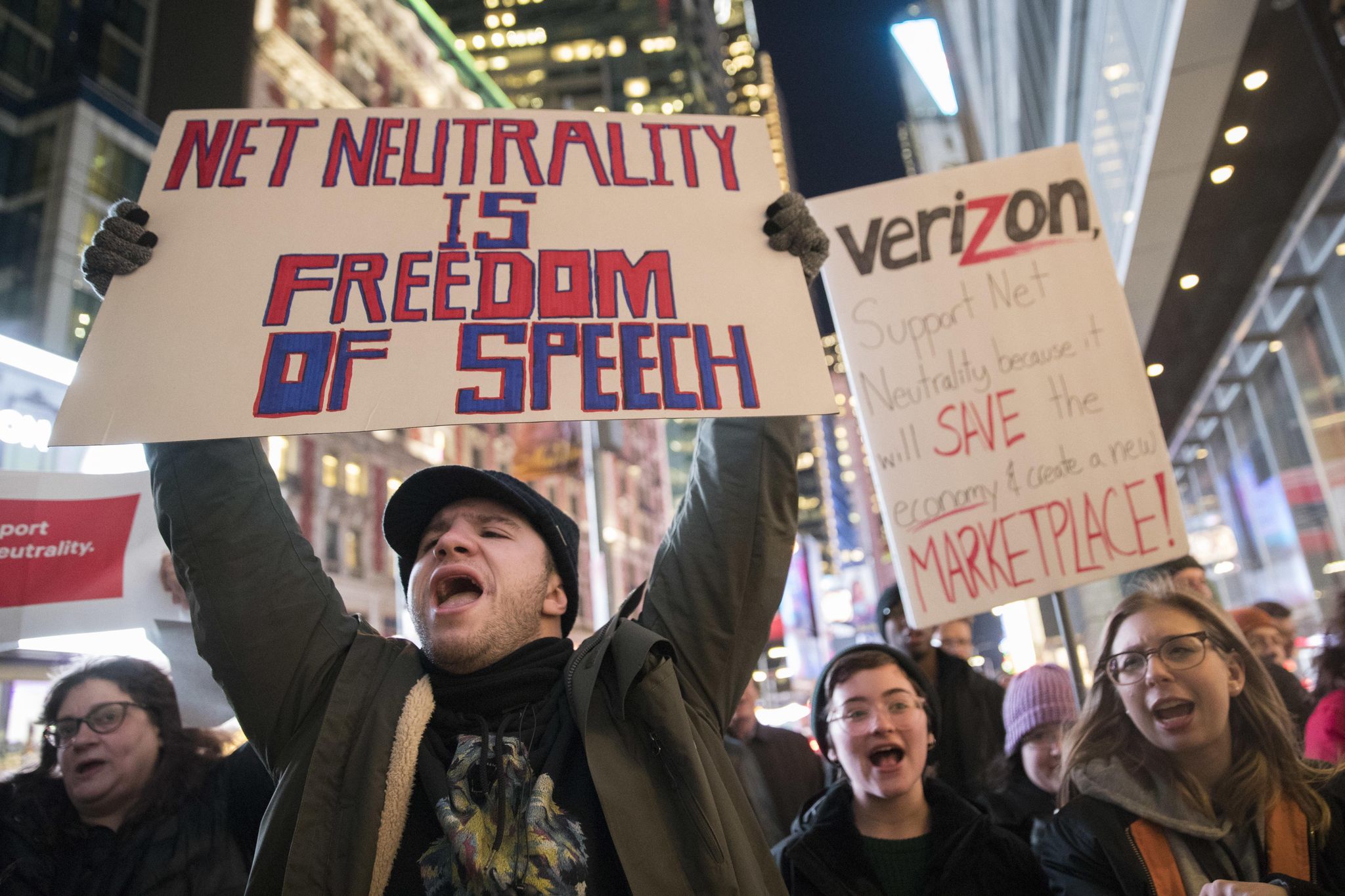
    Trump’s Department of Justice also has initiated legal action against blue states. Most recently, the department sued California just hours after Gov. Jerry Brown signed a law requiring internet neutrality that runs counter to actions taken by the administration.

    Questions about Kavanaugh’s ability to remain impartial and give a fair hearing to such cases escalated after his defiant statement Sept. 27 to the Senate Judiciary Committee.

    He railed against the sexual assault accusations as being orchestrated by Democrats, saying: “This whole two-week effort has been a calculated and orchestrated political hit, fueled with apparent pent-up anger about President Trump and the 2016 election, fear that has been unfairly stoked about my judicial record, revenge on behalf of the Clintons and millions of dollars in money from outside left-wing opposition groups.”

    Kavanaugh, who denied the assault allegation, also said that “in the United States political system of the early 2000s, what goes around comes around” – a statement some observers took to be a threat. But Kavanaugh also said he would not be “swayed by public or political pressure.”

    Since then, he wrote in a Wall Street Journal op-ed that “an independent and impartial judiciary is essential” and that he will “keep an open mind in every case.”

    Lawsuits between the states and the Trump administration could test that.

    Pat Gallagher, director of the legal program at the Sierra Club, said he expects Kavanaugh would oppose environmental regulation regardless of who calls for it – as he has often done as an appeals court judge.

    With his confirmation, Gallagher said, “we’re going to have to find ways to keep cases away from the Supreme Court.”

    Despite questions about Kavanaugh’s objectivity, many of the lawsuits involving blue states do not align neatly with partisan ideology. The core question is who has the power to regulate in that area – the federal government or the states?

    California’s newly signed internet neutrality law is a prime example. It prohibits internet service providers from favoring specific websites or online content by cutting access or charging more for some than others. The state adopted the law last month in response to a Federal Communications Commission policy change earlier this year that ended a similar federal requirement.

    “The California legislature has enacted an extreme and illegal state law attempting to frustrate federal policy,” U.S. Attorney General Jeff Sessions said in a statement announcing a lawsuit against the state.

    California has sued – and been sued – multiple times since Trump took office. Its attorney general, Democrat Xavier Becerra, declined to comment, as did several other attorneys general involved in lawsuits against the administration.

    Similar questions over state vs. federal authority are in play in the Trump administration challenge of a law that set up California as a “sanctuary state” unwilling to cooperate with federal authorities in certain immigration matters.

    Thomas Saenz, president of MALDEF, a Latino civil rights organization, said Kavanaugh’s hearing reinforced what he believed after studying the judge’s previous rulings that touched on immigration.

    “The concern is that partisan ideology came first and then judicial philosophy, rather than the other way around,” he said.

    The group is involved in legal battles over immigrants brought to the country illegally as children.

    Legal experts said it makes sense for blue states to keep pushing back against the administration, in part because not every case will reach the Supreme Court. Lawsuits can delay federal policies or force compromise.

    Both happened with the Trump administration’s ban on travel to the U.S. from a group of Muslim-majority countries. After lower courts knocked it back and forced delays, the administration modified the policy. A ban is now in effect and has been upheld by the Supreme Court, but it’s not as tough as Trump’s first version.

    Some advocates have suggested that Kavanaugh should step aside on cases involving the administration and those he criticized during his confirmation hearing. Doing so is rare, though.

    “Justices don’t recuse themselves simply because they’ve taken ideological or partisan positions in the past that might favor one side or the other,” said Anthony Johnstone, a University of Montana law professor and former state solicitor. “Part of what presidents get with their Supreme Court nominations is their views.”

    ___

    Follow Mulvihill at http://www.twitter.com/geoffmulvihill

  • DHS says China-linked hackers behind active espionage campaign targeting critical U.S. sectors

    Critical infrastructure sectors in the U.S. and abroad have been targeted by an active cyber-espionage campaign previously traced by private security researchers to China, the Trump administration sai

    Critical infrastructure sectors in the U.S. and abroad have been targeted by an active cyber-espionage campaign previously traced by private security researchers to China, the Trump administration said Wednesday.

    The Department of Homeland Security warned that actors associated with an advanced persistent threat, or APT – a label applied to sophisticated, typically state-sponsored hacking groups – have set their sights on potential victims in the U.S. information technology, energy, healthcare, communications and critical manufacturing sectors.

    Known by names such as APT10 and “MenuPass,” the group was the subject of a previous alert issued by DHS in April 2017 that warned of an emerging, sophisticated hacking campaign that had compromised victims including IT service providers, putting its perpetrators in place to possible leverage that access for subsequent attacks.

    Eighteen months later, DHS said in a pair of advisories that the same hacking group is conducting an ongoing campaign specifically targeting global managed service providers (MSPs), or companies that offer online cloud-based services, and that it was actively using stolen credentials to “expand unauthorized access, maintain persistence and exfiltrate data from targeted organizations.”

    “Given the increasingly important role that managed services providers play in supporting business processes and operations in today’s business environment, a threat affecting one entity can have cascading effects across many sectors,” said Christopher Krebs, the National Protection and Programs Directorate undersecretary in charge of NCCIC.

    “These cyber threat actors are still active and we strongly encourage our partners in government and industry to work together to defend against this threat,” he said in a statement.

    The campaign is being conducted specifically for the purposes of cyber espionage and intellectual property theft, and DHS is aware of a limited number of U.S. victims, the agency said.

    According to DHS, APT10 hackers can remain undetected after breaching targets including global IT networks by using legitimate credentials to masquerade their activity. Once inside, the hackers can then implant malware or use other means to exfiltrate data.

    “By using compromised legitimate MSP credentials (e.g., administration, domain, user), APT actors can move bidirectionally between an MSP and its customers’ shared networks,” said one of the advisories. “Bidirectional movement between networks allows APT actors to easily obfuscate detection measures and maintain a presence on victims’ networks.”

    Following publication of the initial DHS report in 2017, security researchers for companies including Accenture, FireEye, PwC and BAE Systems connected the hacking group to China. CrowdStrike, a Silicon Valley company that reached a similar conclusion, previously linked APT10 to the Chinese Ministry of State Security, a foreign intelligence agency akin to the U.S. National Security Agency.

  • Mauricio Macri downplays Argentina’s economy problems

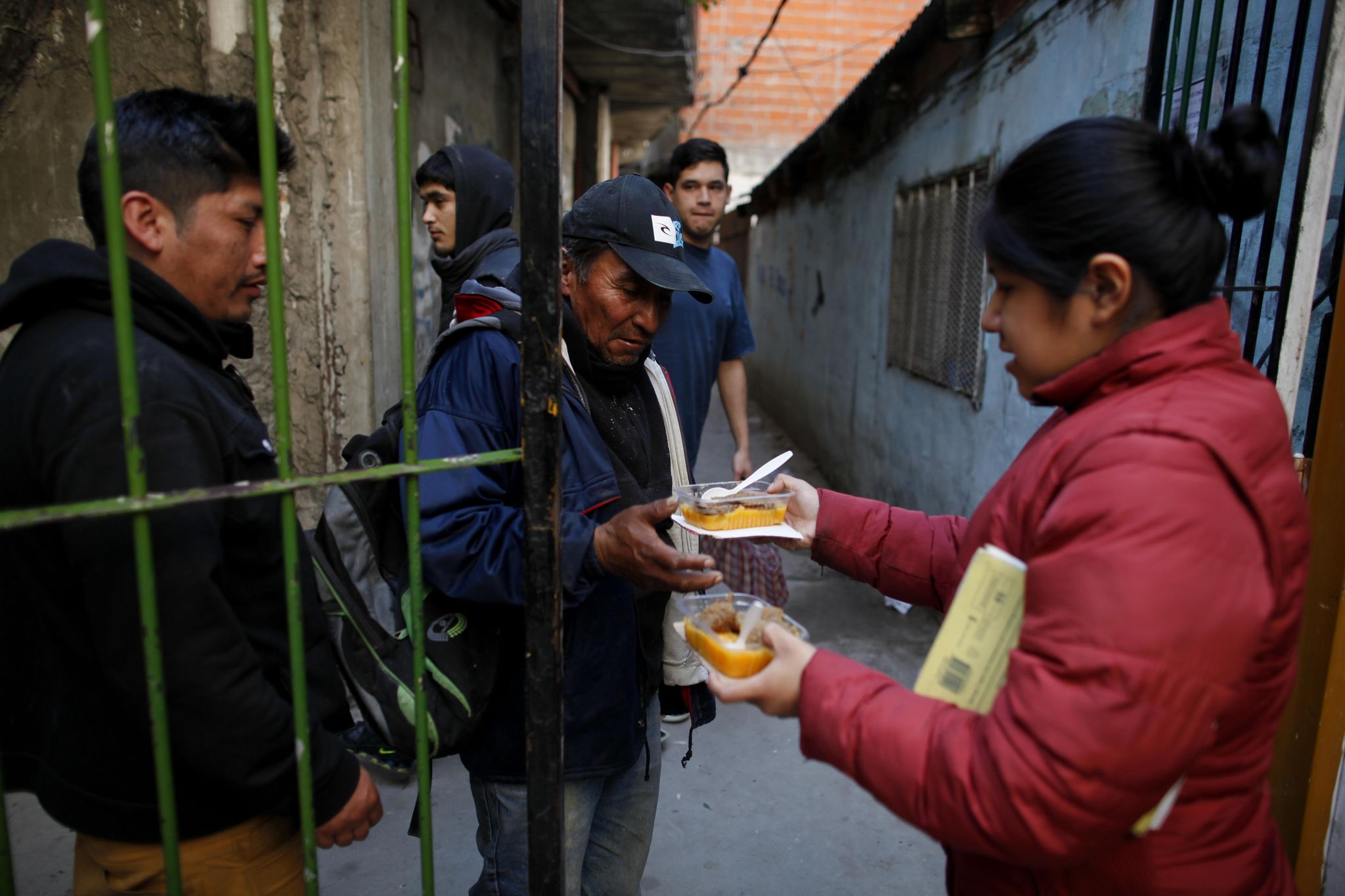
    Having emerged from one of the world’s worst currency implosions of the new century, Argentine consumers are suddenly confronting a reprise.

    BUENOS AIRES — For ordinary Argentines, it has been a shocking return to the bad old days, a deja vu of shortages, job losses and bailouts that many thought the country had finally ended.

    Facing a national election a year away, the ever-upbeat President Mauricio Macri never tires of reassuring Argentines that they are on “the right path” out of a “storm.”

    But to local economists, even those friendly to the conservative Mr. Macri’s pro-business bent, his imagery doesn’t quite capture the state of an economy predicted to shrink by 2.4 percent this year and had to be propped up just last week by an expanded $57 billion line of credit from the International Monetary Fund. Having emerged from one of the world’s worst currency implosions of the new century, consumers are suddenly confronting a reprise.

    Things aren’t nearly as dire as the post-2001 years, and a more apt metaphor, former National Bank board member Facundo Martinez Maino said, might be that of a car-wreck victim hospitalized after a head-on collision.

    “Right now, staying alive is all that matters,” said Mr. Martinez Maino, now the chief economist at a prominent local consulting firm. “You’re in a totally sterile room, under controlled temperature, and you can’t venture out or eat [without] a feeding tube.”

    It’s a grim picture reflected by key indicators — Argentina’s inflation rate is now topped around the world only by those of Venezuela, Sudan and South Sudan — and painful even for the urban middle class, a key component of Mr. Macri’s political base.

    “The situation is critical, unfortunately,” Graciela Clouet, a 66-year-old lawyer, said last week as she shopped for groceries in an upscale Buenos Aires neighborhood. “You don’t know where we’re headed, and you worry.”

    Prices are constantly being hiked, Ms. Clouet said, while the decline of the peso, which has already lost more than half its value this year, is having ripple effects on the rising cost of gasoline and consumer goods across the board.

    But what bothers her the most, she said, is the sense of uncertainty, which Mr. Macri’s repeatedly unkept promises that “the worst is over” have done little to ease.

    “I want there to be a direction … for us to go toward someplace,” Ms. Clouet said. “I feel like we’re improvising.”

    For market movers and shakers, the chaotic state of the economy has long contrasted with the president’s near-dogmatic confidence and, worse, conjured up memories of those crises past — including Argentina’s cataclysmic 2001 default and social meltdown.

    “We have gotten to a situation that, as a snapshot, is one of the worst since 2001 in terms of devaluation, inflation, recession and economic perspectives,” Mr. Martinez Maino said. “We’re in one of the worst situations since that collapse.”

    He added, though, that the two scenarios are vastly different in causes and scope.

    Fears of a rerun

    Even the sense that the country may be headed down a similar road is precisely what Mr. Macri — and anybody else interested in stabilizing the economy — is desperately hoping to avoid, said Mariano de Vedia, a political analyst for the La Nacion daily.

    “There’s an old saying here in Argentina: ‘He who burns himself with milk sees a cow and cries …,’” Mr. de Vedia said. “Already, salaries are worth less and less, layoffs are beginning to happen and the dollar heads to the skies.”

    For Argentina’s lower and middle classes, meanwhile, keeping up with ever-increasing food, utility and transportation costs is becoming increasingly difficult, economic analyst Jose Luis Espert said.

    “This year, with an inflation between 40 and 50 percent and salaries that rise between 25 and 30 percent, the real-wage drop is 15 percent,” Mr. Espert said. “Companies are closing, stores are closing, and there is a very, very violent drop in consumption.”

    For Roberto Rodriguez, who co-owns a florist shop on a lively Buenos Aires street corner, that means business has been “totally paralyzed.”

    “You notice it in the stores around,” he said. “[This is] a spot with pretty good purchasing power, and even so, we’re feeling it.”

    Mr. Rodriguez said he still plans to back Mr. Macri if he runs for re-election next year, hinting that he favors the president’s “change” agenda over the often inflexible protectionism of his predecessor, leftist Cristina Fernandez.

    Although Ms. Fernandez may have handed over a bloated government whose coffers had been emptied by populist spending and corruption, most commentators agree that, three years into his term, Mr. Macri shares a large chunk of the blame for the country’s predicament.

    By hastily eliminating currency controls, insisting on unrealistic inflation goals and taking on debt in an undisciplined and unsavvy manner, Mr. Macri committed key errors from the get-go, Mr. Martinez Maino said.

    “Today, we’re faced more with macroeconomic problems generated by this administration than with inherited problems, which we’re also faced with,” he said. “All three elements failed: diagnosis, policies and management.”

    To Mr. Espert, the president’s latest attempt to turn things around with a dual commitment to a no-deficit budget and steady money supply thanks to the expanded IMF credit line likely comes a day late and a peso short.

    “If ‘zero deficit’ and ‘zero issuance’ had been announced [in 2015], rejecting [Ms. Fernandez’s] inheritance, it would have been one thing,” he said. “Today, almost three years later … and a year before the elections, it lacks credibility.”

    If Mr. Macri really wants to turn things around, Mr. Espert said, his focus will need to be less about political calculus a year before Argentines head to the polls.

    “This administration should forget about the elections [and] take some risks today to get the economy moving by doing some bold things,” he said. “For example, go see [President] Trump and propose a free trade agreement.”

    Ironically, the troubling economy may have boxed in the ruling Cambiemos coalition, even though Mr. Macri has yet to formally announce that he will be seeking a second term, Mr. de Vedia said.

    “The situation is forcing them to ratify the president’s re-election [bid],” he said, “because, otherwise, it’s a recognition of his failure.”

    If a showdown next year between Mr. Macri and Ms. Fernandez takes place in the midst of a recession, the political analysts mused, then the outcome would be unpredictable.

    “People could easily say ‘no’ to the administration and also say ‘no’ to Cristina,” Mr. de Vedia said. “It’s not necessarily one or the other.”

  • Mike Pompeo: North Korea talks progress

    Secretary of State Mike Pompeo on Sunday trumpeted progress in U.S.-North Korean relations on a slew of issues, from efforts to persuade Pyongyang to abandon nuclear weapons to closing in on details f

    Secretary of State Mike Pompeo on Sunday trumpeted progress in U.S.-North Korean relations on a slew of issues, from efforts to persuade Pyongyang to abandon nuclear weapons to closing in on details for a second Trump-Kim Jong-un summit.

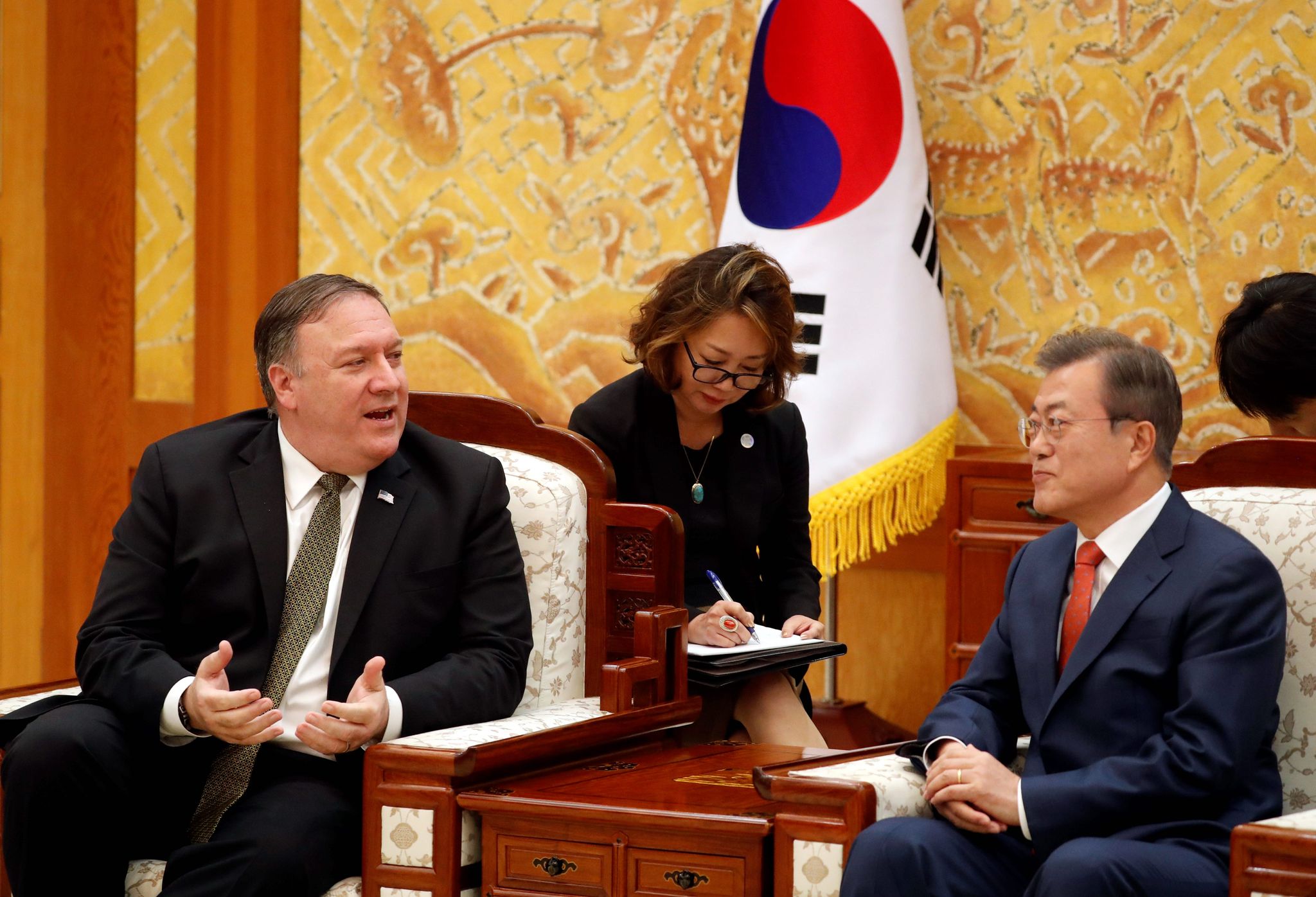
    Mr. Pompeo arrived in Seoul hours after wrapping up his fourth visit to North Korea on Sunday, telling reporters it was a “good trip” and that he and Mr. Kim made strides on the initiatives discussed at June’s historic summit in Singapore between the North Korean leader and President Trump.

    “We had a good, productive conversation,” Mr. Pompeo said during a joint briefing with South Korean President Moon Jae-in. “As President Trump said, there are many steps along the way, and we took one of them today. It was another step forward. So this is, I think, a good outcome for all of us.”

    According to Associated Press reports, Mr. Kim echoed Mr. Pompeo’s optimism. “It’s a very nice day that promises a good future for both countries,” Mr. Kim said as he, Mr. Pompeo and their respective entourages met for a 90-minute working lunch at the Paekhwawon State Guest House in the North Korean capital.

    Prior to the lunch, Mr. Kim and Mr. Pompeo held closed-door talks for roughly 3 hours. Stephen Biegun, U.S. special envoy for North Korea, and Andrew Kim, head of the Korea working group at the CIA, attended as part of the U.S. delegation. Mr. Kim was accompanied by his sister, Kim Yo-jong, and Kim Yong-chol, the North’s former top intelligence official and the main conduit for talks between the regime and Mr. Pompeo.

    Despite the goodwill expressed by both sides, neither Mr. Pompeo nor Mr. Kim opted to disclose details. During the joint press conference in Seoul, Mr. Moon attempted to press Mr. Pompeo to shed a little light on Sunday’s talks.

    “Since we have the media present here, I would like to ask you to disclose anything that you can open to the public here,” Mr. Moon said. Mr. Pompeo politely declined, telling the South Korean leader, “I don’t have much to add but we had a good, productive conversation.”

    White House critics argue that Mr. Kim and the regime in the North have leveraged Mr. Trump’s efforts to engage with Pyongyang to earn legitimacy in the international community while harboring no real intention to follow through on major U.S. initiatives, such as denuclearization on the Korean Peninsula.

    However, administration officials argue that Mr. Trump has broken through decades of diplomatic impasses that have stymied previous efforts to establish ties with Pyongyang. But officials have acknowledged the road to reconciliation for North Korea, the U.S. and the international community remains long.

    Bilateral talks between North Korea and Washington faltered recently, and Mr. Trump canceled an earlier round of meetings. Sunday’s talks marked the first breakthrough in that impasse since Singapore.

    Mr. Pompeo’s visit to North Korea was “better than the last time [but] it’s going to be a long haul” to get Mr. Kim to acquiesce to Washington’s demands, a U.S. official tied to Mr. Pompeo’s delegation told Fox News on Sunday.

    While details were scarce on Sunday’s meeting, U.S. officials said the visit focused on the nuts and bolts of the denuclearization process, proffered by the Trump administration in June, as well as the diplomatic parameters for a proposed second summit between Mr. Trump and Mr. Kim.

    In Washington, Mr. Trump indicated his willingness to hold a second face-to-face summit with the North Korean leader.

    “I look forward to seeing Chairman Kim again, in the near future,” Mr. Trump tweeted Sunday, citing the progress he and Mr. Kim made in Singapore, just as Mr. Pompeo was wrapping up his visit in Pyongyang.

    Analysts in the U.S. were upbeat but cautious.

    “While there is no way Secretary of State Mike Pompeo in roughly 210 minutes with Chairman Kim Jong-un achieved any major breakthroughs Sunday, [he] may have achieved his goal nonetheless: exploring the timing and possible locations for a second U.S.-North Korea summit,” said Harry Kazianis, head of defense studies at the Washington-based Center for the National Interest.

    Mr. Trump’s willingness to secure a second summit with North Korea could lead to an offer to officially end the Korean War, Mr. Kazianis said, in exchange “for a big action towards denuclearization.”

    “Trump will likely be tempted to hold such a summit quickly, and possibly even in the North Korean capital of Pyongyang, to make history and drive headlines, pointing to another success right before the midterm elections,” he said.

    The administration has resisted efforts to officially end the war between North and South Korea — the two countries are technically under a 1953 cease-fire agreement — out of concern that a peace deal would increase pressure on the U.S. to remove troops from South Korea.

    But Mr. Moon and Mr. Kim have pushed for the end-of-war declaration by December. Mr. Moon has argued that he and Mr. Kim have agreed that such a “political declaration” wouldn’t require the pullout of 28,500 U.S. troops stationed in South Korea.

  • Hand cannons: The world’s most powerful handguns

    The biggest and most powerful handguns ever made.

    SMITH & WESSON 460XVR REVOLVER – Smith & Wesson’s Model 460XVR has the highest muzzle velocity of any production revolver on earth. The Model 460XVR is so revolutionary that it required an entirely new designation…XVR, X-treme Velocity Revolver.

    >

  • Melania Trump, first lady, blasted by media for wearing ‘colonial’ white pith helmet on Kenya safari

    First lady Melania Trump has come under attack by media outlets during her Kenya trip for wearing a white pith helmet described as a symbol of white colonial rule.”

    First lady Melania Trump has come under attack by media outlets during her Kenya trip for wearing a white pith helmet described as a symbol of white colonial rule.”

    The helmet, which she wore Friday during a safari in Nairobi, was blasted as a “common symbol of European colonial rule” by The New York Times, while CNN said it has “come to symbolize white rule.”

    The [U.K.] Guardian said the helmets “were worn by European explorers and imperial administrators in Africa, parts of Asia and the Middle East in the 19th century before being adopted by military officers, rapidly becoming a symbol of status — and oppression.”

    The first lady refused to take the bait, telling reporters Saturday that she had no comment on her wardrobe.

    “We just completed an amazing trip — we went to Ghana, we went to Malawi, we went to Kenya, here we are in Egypt,” she said as reported by NPR. “I want to talk about my trip and not what I wear. That’s very important.”

    The pith helmet Melania Trump wore during a Kenyan safari wasn’t her most glaring faux pas. But some see her choice of a symbol of European colonial rule as a big error on the global stage. https://t.co/509wb8PJxu

    — New York Times World (@nytimesworld) October 5, 2018

    US first lady Melania Trump’s latest white hat evokes a colonialist comparison https://t.co/gh4IQhq630pic.twitter.com/hN6hGfzxF8

    — CNN International (@cnni) October 5, 2018

    At least one person on social media said that white pith helmets were also worn by Kenyans, while the first lady’s defenders called the controversy ridiculous.

    To our friends across the sea, pith helmets are still (unless I am misinformed) part of the official uniform of Kenya Gov public administration officers. Nothing shocking (nor offensive) about a similar white white hat worn by guest at the Nairobi National Park yesterday. @FLOTUSpic.twitter.com/xSoZDycgLW

    — HENRY MUSANGI (@HMUSANGI) October 6, 2018

    Oh shut up you insufferable nitpicking whiners https://t.co/vI6F7F7A4i

    — John Cardillo (@johncardillo) October 5, 2018

  • Carlo Maria Vigano claim of Theodore McCarrick cover-up by Pope Francis ‘blasphemous,’ Vatican says

    A top Vatican cardinal issued a scathing rebuke Sunday of the ambassador who accused Pope Francis of covering up the sexual misconduct of a prominent American cardinal, saying his claims were false, “

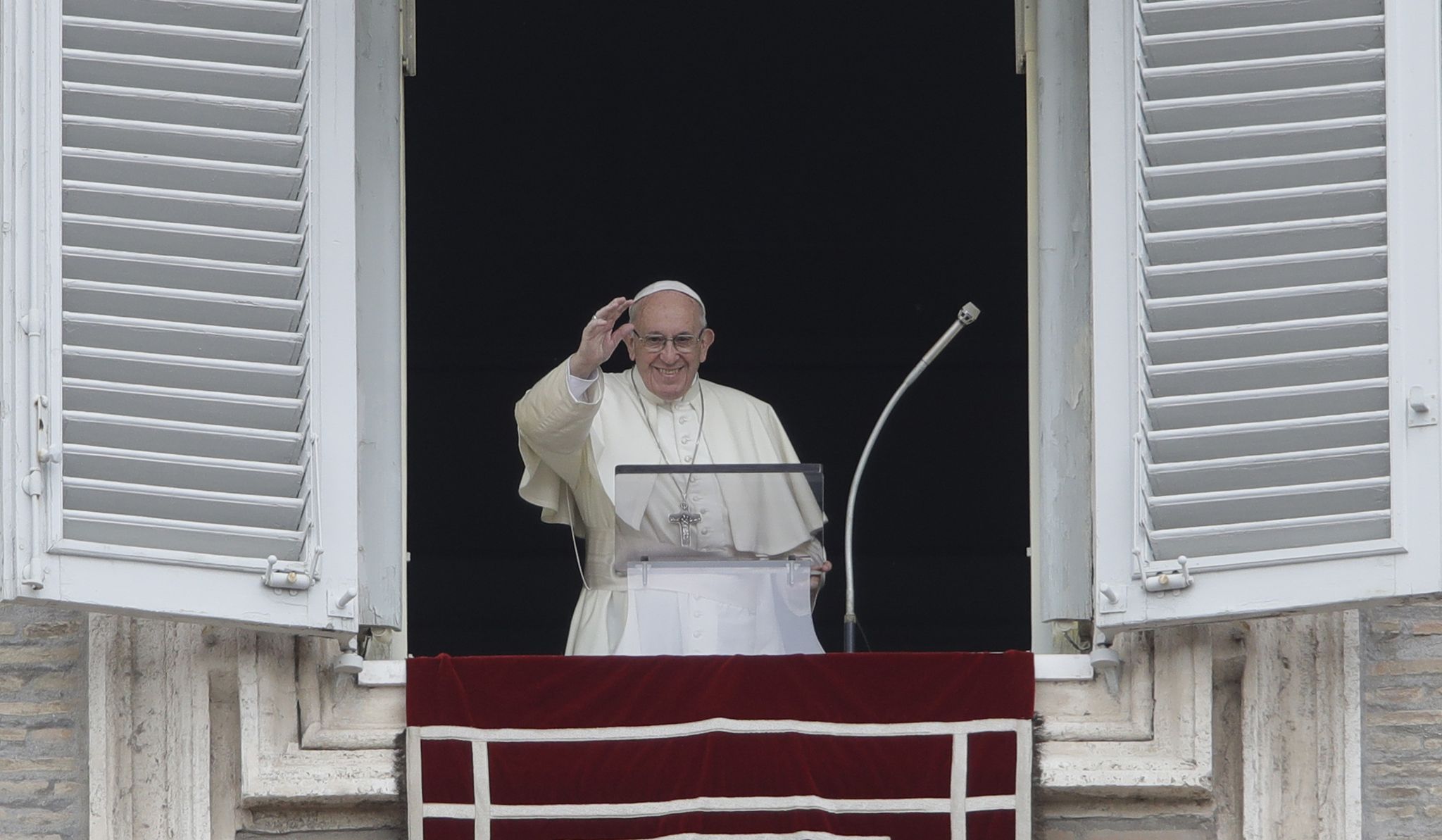
    VATICAN CITY — A top Vatican cardinal issued a scathing rebuke Sunday of the ambassador who accused Pope Francis of covering up the sexual misconduct of a prominent American cardinal, saying his claims were false, “blasphemous” and demanding that he repent.

    Six weeks after Archbishop Carlo Maria Vigano threw the papacy into turmoil over his claims about ex-Cardinal Theodore McCarrick, the head of the Vatican’s bishops office said there was no evidence in his files backing Vigano’s claims that Francis annulled any sanctions against McCarrick.

    Cardinal Marc Ouellet’s letter was issued Sunday, a day after Francis authorized a “thorough study” of all Vatican archives into how McCarrick rose through the ranks of the Catholic Church despite allegations he sexually preyed on seminarians and young priests.

    The letter, addressed to Vigano but identified as an open letter to the faithful, marked an extraordinary and decisive end to the official Vatican silence about Vigano’s claims. In it, Ouellet both defended the pope and criticized Vigano, asserting that the conservative cleric had used the scandal over sexual abuse in the U.S. to score ideological points with Francis’ critics on the Catholic right.

    Ouellet said a review of his files showed there were no documents about any sanctions imposed on McCarrick and that it was “false” to suggest Francis had annulled any such measures.

    Ouellet did acknowledge that McCarrick had been “strongly exhorted” not to travel or appear in public, and to live a discreet life of prayer given rumors against him about his past behavior with young adult men.

    The McCarrick scandal has thrown the U.S. and Vatican hierarchy into turmoil, given it was apparently an open secret in some U.S. church circles that he would invite seminarians to his New Jersey beach house and into his bed. Two men received settlements starting in 2005 from two New Jersey dioceses after they alleged McCarrick sexually molested or harassed them.

    The Vatican was informed starting in at least 2000 about the seminarian complaints.

    Francis accepted McCarrick’s resignation as a cardinal in July after a U.S. church investigation determined that an allegation that he groped a teenage altar boy in the 1970s was credible. Since then, another man has come forward saying McCarrick molested him when he was a young teen and other men have said they were harassed by McCarrick as adult seminarians and young priests.

    Ouellet’s letter marked the Vatican’s first direct response to Vigano’s 11-page denunciation Aug. 26 in which he accused two dozen Vatican and U.S. church officials of covering up for McCarrick, and demanded Francis resign for his role in the scandal.

    In the document, Vigano claimed he told Francis during a June 23, 2013 meeting that Pope Benedict XVI had sanctioned McCarrick to a lifetime of penance and prayer for having “corrupted a generation of seminarians and priests.”

    Vigano implied that Francis still rehabilitated McCarrick from the “canonical sanctions” and made him a trusted counselor.

    Ouellet noted that the June 23 meeting occurred as Francis was meeting with all his ambassadors for the first time, and was gathering an “enormous quantity of verbal and written information” about the church around the world.

    “I strongly doubt that McCarrick concerned him to the degree you’d like to think, given he was an 82-year-old emeritus archbishop who had been out of a job for seven years,” Ouellet wrote.

    Ouellet said in all his meetings with Francis about bishop nominations, he never heard him refer once to McCarrick as a trusted counselor. He said he couldn’t believe Vigano had arrived at such a “monstrous” and “blasphemous” conclusion given that Francis had nothing to do with McCarrick’s career rise in the previous decades.

    He said he understood that Vigano might be bitter at the way his own career ended and his disagreement with Francis’ policies. But he wrote:

    “You cannot end your priestly life in an open and scandalous rebellion that inflicts a painful wound” on the church and divides its people. He urged Vigano: “Come out of your hiding place, repent for your revolt and return to better sentiments toward the Holy Father.”