Blog

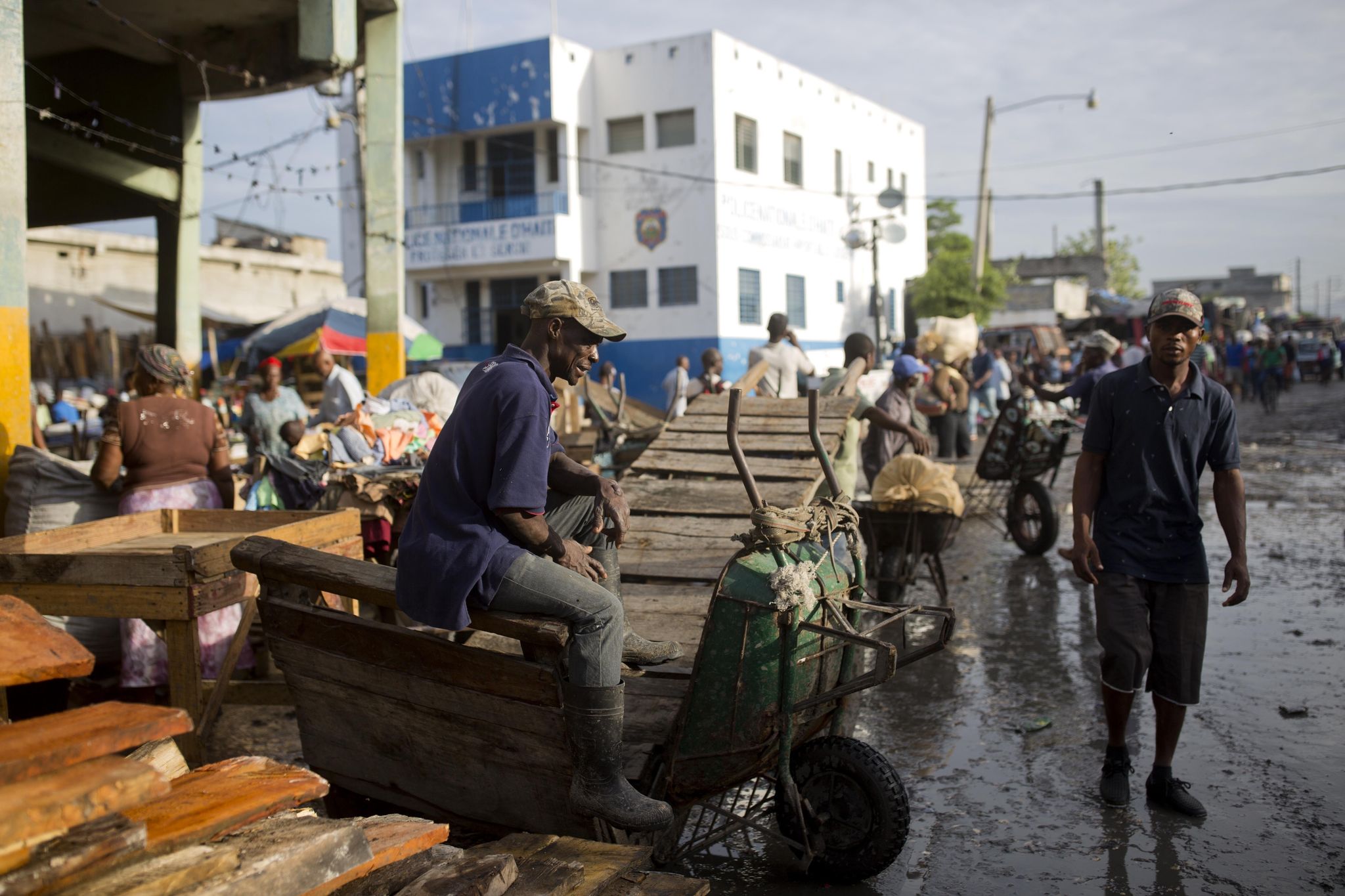
  • Magnitude 5.9 quake shakes northern Haiti

    A magnitude 5.9 earthquake shook northwestern Haiti late Saturday, damaging homes, a church and at least one hospital. Officials reported that people had been injured, but had not confirmed local medi

    PORT-AU-PRINCE, Haiti (AP) — A magnitude 5.9 earthquake shook northwestern Haiti late Saturday, damaging homes, a church and at least one hospital. Officials reported that people had been injured, but had not confirmed local media reports of deaths.

    The U.S. Geologic Survey said the quake hit at 8:11 p.m. (0011 GMT) and was centered 12 miles (19 kilometers) northwest of Port-de-Paix on Haiti’s north coast. It was 7.3 miles (11.7 kilometers) below the surface.

    The country’s civil protection agency issued a statement saying several people were injured and some houses destroyed in Port-de-Paix, Gros Morne, Chansolme and Turtle Island. Among the structures damaged was the Saint-Michel church in Plaisance.

    Other rescue workers reported the collapse of part of a hospital and an auditorium as the quake hit on a rainy evening.

    The quake was felt lightly in the capital, Port-au-Prince, as well as in the neighboring Dominican Republic.

    Impoverished Haiti, where many live in tenuous circumstances, is especially vulnerable to earthquakes. A vastly larger magnitude 7.1 quake damaged much of the capital in 2010 and killed an estimated 300,000 people.

  • Jamal Khashoggi case: Turkish officials believe Saudi writer was killed: Reports

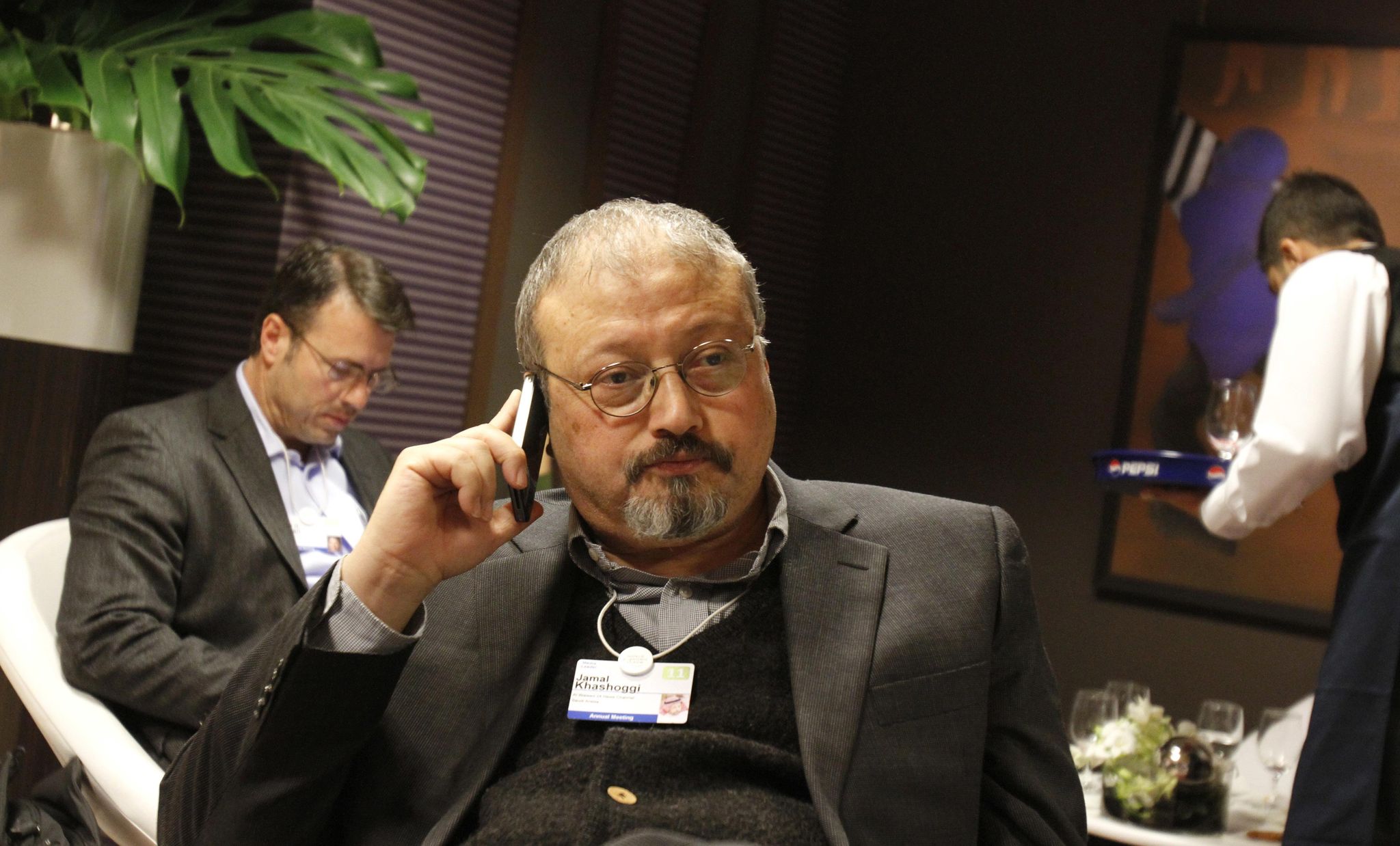
    Turkish investigators believe a prominent Saudi journalist who contributed to The Washington Post was killed in “a preplanned murder” at the kingdom’s consulate in Istanbul, the Post reported Saturday

    ISTANBUL (AP) — Turkish investigators believe a prominent Saudi journalist who contributed to The Washington Post was killed in “a preplanned murder” at the kingdom’s consulate in Istanbul, the Post reported Saturday night, citing two anonymous officials. Saudi authorities had no immediate comment, though they’ve insisted the writer left their diplomatic post.

    One Turkish official also told The Associated Press that detectives’ “initial assessment” was that Jamal Khashoggi was killed at the consulate, without elaborating.

    Khashoggi, who has lived in self-imposed exile in the U.S. for the last year, vanished Tuesday while on a visit to the consulate. His disappearance has threatened to upend already-fraught relations between Saudi Arabia and Turkey, and it raises new questions about the kingdom and the actions of its assertive Crown Prince Mohammed bin Salman, whom Khashoggi wrote critically about in his columns.

    “If the reports of Jamal’s murder are true, it is a monstrous and unfathomable act,” The Post’s editorial page editor Fred Hiatt said in a statement. “Jamal was — or, as we hope, is — a committed, courageous journalist. He writes out of a sense of love for his country and deep faith in human dignity and freedom.”

    The Post cited one anonymous official who said investigators believe a 15-member team “came from Saudi Arabia.” The official added: “It was a preplanned murder.”

    A Turkish official, requesting anonymity to discuss the ongoing investigation, told The Associated Press earlier Saturday night something similar.

    “The initial assessment of the Turkish police is that Mr. Khashoggi has been killed at the consulate of Saudi Arabia in Istanbul,” the official said. “We believe that the murder was premeditated and the body was subsequently moved out of the consulate.”

    Khashoggi, 59, went missing while on a visit to the consulate in Istanbul for paperwork to marry his Turkish fiancée. The consulate insists the writer left its premises, contradicting Turkish officials.

    “Jamal is not dead! I don’t believe he’s been killed!” his fiancée Hatice wrote on Twitter late Saturday night.

    Turkey’s official Anadolu News Agency said Saturday that the Istanbul public prosecutor’s office began a probe into Khashoggi’s disappearance Tuesday, immediately after he went missing. It added the investigation over allegations that the writer was detained had “deepened,” without elaborating.

    Khashoggi is a longtime Saudi journalist, foreign correspondent, editor and columnist whose work has been controversial in the past in the ultraconservative Sunni kingdom. He went into self-imposed exile in the United States following the ascension of Prince Mohammed, now next in line to succeed his father, the 82-year-old King Salman.

    As a contributor to The Post, Khashoggi has written extensively about Saudi Arabia, including criticizing its war in Yemen, its recent diplomatic spat with Canada and its arrest of women’s rights activists after the lifting of a ban on women driving. All those issues have been viewed as being pushed by Prince Mohammed, who similarly has led roundups of activists, businessmen and others in the kingdom.

    “With young Crown Prince Mohammed bin Salman’s rise to power, he promised an embrace of social and economic reform,” Khashoggi wrote in his first column for the Post. “But all I see now is the recent wave of arrests.”

    Khashoggi was known for his interviews and travels with Osama bin Laden between 1987 and 1995, including in Afghanistan, where he wrote about the battle against the Soviet occupation. In the early 1990s, he tried to persuade bin Laden to reconcile with the Saudi royal family and return home from his base in Sudan, but the al-Qaida leader refused.

    Khashoggi maintained ties with Saudi elites, including those in its intelligence apparatus, and launched a satellite news channel, Al-Arab, from Bahrain in 2015 with the backing of Saudi billionaire Prince Alwaleed bin Talal. The channel was on air for less than 11 hours before it was shut down. Its billionaire backer was detained in the Ritz Carlton roundup overseen by Prince Mohammed in 2017.

    The dispute over Khashoggi’s disappearance also threatens to reopen rifts between Ankara and Riyadh. Turkey has supported Qatar amid a yearlong boycott by Bahrain, Egypt, Saudi Arabia and the United Arab Emirates over a political dispute. Turkey’s support of political Islamists, like the Muslim Brotherhood, also angers leaders in Riyadh and Abu Dhabi, which label the organization a “terrorist group” threatening their hereditarily ruled nations.

    Press freedom groups have decried Khashoggi’s disappearance. U.S. Sen. Chris Murphy, D-Connecticut, who sits on the Senate’s Committee on Foreign Affairs, expressed shock over the news.

    “If this is true — that the Saudis lured a U.S. resident into their consulate and murdered him — it should represent a fundamental break in our relationship with Saudi Arabia,” Murphy wrote on Twitter.

    ___

    El Deeb reported from Beirut, while Gambrell reported from Dubai, United Arab Emirates.

  • Mike Pompeo seeks allied unity in dealing with North Korea

    America’s top diplomat left Tokyo for Pyongyang on Sunday after pledging that the U.S. will coordinate with allies Japan and South Korea on efforts to persuade North Korea to give up its nuclear weapo

    TOKYO (AP) — America’s top diplomat left Tokyo for Pyongyang on Sunday after pledging that the U.S. will coordinate with allies Japan and South Korea on efforts to persuade North Korea to give up its nuclear weapons.

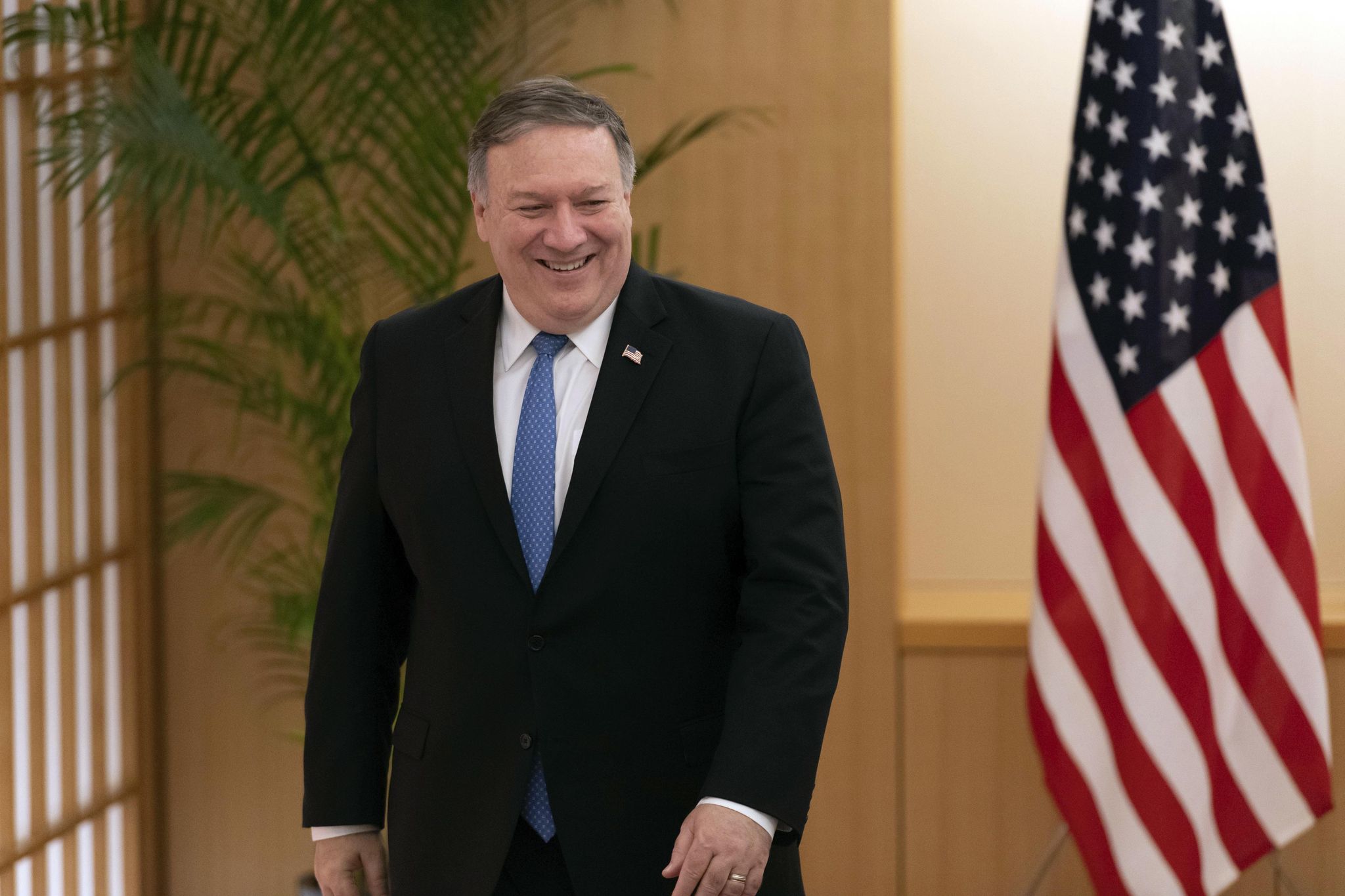
    On the eve of his fourth visit to North Korea, U.S. Secretary of State Mike Pompeo met Saturday with Japanese Prime Minister Shinzo Abe to try to unify the countries’ positions as he looks to arrange a second summit between President Donald Trump and North Korean leader Kim Jong-un and chart a path toward denuclearization.

    Japan has been wary of Trump’s initiative, fearing it could affect its long-standing security relationship with the U.S.

    Pompeo said it was important to hear from the Japanese leader “so we have a fully coordinated and unified view.” Pompeo also pledged that during his meeting with Kim on Sunday, he would raise the cases of Japanese citizens abducted by North Korea.

    Pompeo later planned stops in South Korea and China to review the negotiations.

    “It is important for us to hear from you as I travel to Pyongyang to make sure that we are fully in sync with respect to missile programs, (chemical and biological weapons) programs,” Pompeo told Abe. “We will bring up the issue of the abductees as well and then we will share with you how we hope to proceed when we are in Pyongyang tomorrow.”

    Trump is pressing to meet with Kim for a second time after their June summit in Singapore produced a vague agreement on denuclearization with few, if any, specifics. Despite the historic meeting, the two sides are deadlocked over how to achieve that goal. Trump canceled Pompeo’s initial planned return to North Korea last month.

    In contrast with South Korea, where President Moon Jae-in has been at the forefront of encouraging Trump’s rapprochement with the North, Japan has been decidedly cautious, insisting its interests and concerns be addressed.

    Abe did not speak of differences but highlighted the importance of demonstrating to the world that the U.S.-Japan alliance is “more robust than ever” and stressing the importance of “thorough coordination” with Washington on all aspects of North Korea policy.

    Pompeo has repeatedly refused to discuss details of negotiations, including a U.S. position on North Korea’s demand for a declared end to the Korean War and a proposal from Seoul for such a declaration to be accompanied by a shutdown of the North’s main known nuclear facility.

    The U.S. and Japan have pushed for the North to compile and turn over a detailed list of its nuclear sites to be dismantled as a next step in the process; the North has rejected that.

    Japan’s foreign minister, Taro Kano, said the accounting continues to be a priority for his country.

    “Disclosing all nuclear inventories is the first step toward denuclearization,” he told reporters after Pompeo wrapped up his meeting in Tokyo.

    Kono also said he and Pompeo didn’t go into details of a possible war-end declaration because it’s premature while there is virtually no progress in denuclearization. “We are not even talking about whether to do it or not,” he said. “It’s not an issue that we are even considering.”

    Many believe such a declaration could reinforce North Korea’s demands for the U.S. to withdraw its forces from South Korea and Japan.

    While traveling to Asia, Pompeo said his mission was to “make sure that we understand what each side is truly trying to achieve … and how we can deliver against the commitments that were made” in Singapore. He said they would develop options, if not finalize, the location and timing of a second Trump-Kim summit.

    He has also distanced himself from an earlier stated goal of achieving North Korea’s nuclear weapons abandonment by the end of Trump’s term in January 2021.

    Since the effort got underway with a secret visit to the North by then-CIA chief Pompeo in April, there has been only limited progress.

    North Korea so far has suspended nuclear and missile tests, freed three American prisoners and dismantled parts of a missile engine facility and tunnel entrances at a nuclear test site. It has not taken any steps to halt nuclear weapons or missile development.

    The North also has accused Washington of making “unilateral and gangster-like” demands on denuclearization and insisted that sanctions should be lifted before any progress in nuclear talks. U.S. officials have thus far said sanctions will remain in place until the North’s denuclearization is fully verified.

    ___

    AP Diplomatic Writer Matthew Lee in Seoul, South Korea, contributed to this report.

  • Russia readying election observers to monitor U.S. midterms

    Russian election officials are headed to the United States to prepare for monitoring next month’s midterms, a former member of Moscow’s Central Election Commission said Friday.

    Russian election officials are headed to the United States to prepare for monitoring next month’s midterms, a former member of Moscow’s Central Election Commission said Friday.

    Members of Russia’s federal elections agency will travel to the U.S. on Sunday in order to monitor the upcoming midterms as part of a mission being organized by the Organization for Security and Cooperation in Europe, or OSCE, an intergovernmental group that lists both nations among its member states, said Vasily Likhachev, a former member of CEC.

    The team of six Russians, including “two CEC members … and representatives of Russian civic organizations related to the field of electoral technologies,” will spend five weeks in the U.S. participating in the mission, Mr. Likhachev told TASS, a state-run newswire.

    “These six people were chosen based on the criteria developed together with the U.S.,” said Mr. Likhachev, and their participation is based on both OSCE regulations and the United Nation’s principles of cooperation, he told the outlet

    “There is not much positive in Russian-U.S. relations at the moment, but this is a positive thing that will help improve relations. Our citizens will abide by the OSCE rules and U.S. laws,” he added.

    The mission is a part of by OSCE’s Office for Democratic Institutions and Human Rights, or ODIHR, a Poland-based division of the group that has monitored elections in the U.S. since 2002, and led by Tana de Zulueta, a former member of the Italian Parliament, the group said earlier this week.

    Thirteen international experts will be stationed in Washington, D.C., and 36 long-term observers from 16 participating states will be deployed throughout the country in teams of two, OSCE said Wednesday.

    Russia interfered in the 2016 U.S. election by deploying state-sponsored computer hackers, propagandists and professional internet trolls, and Moscow similarly stands to meddle in next month’s midterms, U.S. officials said previously.

    Indeed, several alleged Russian military officers criminally charged earlier this year by the U.S. Department of Justice in connection with interfering in the 2016 race were accused of new hacking crimes Thursday related to an international cyber-espionage spree that was active as recently as May 2018.

    Russia has repeatedly denied hacking U.S. victims or interfering in the 2016 race.

  • Treasury warns U.S. banks to watch for corrupt cash from Nicaragua

    The U.S. has ratcheted up the pressure on Nicaragua’s leftist government for its crackdown on political opponents, with Treasury Department officials warning American banks to be wary of corrupt offic

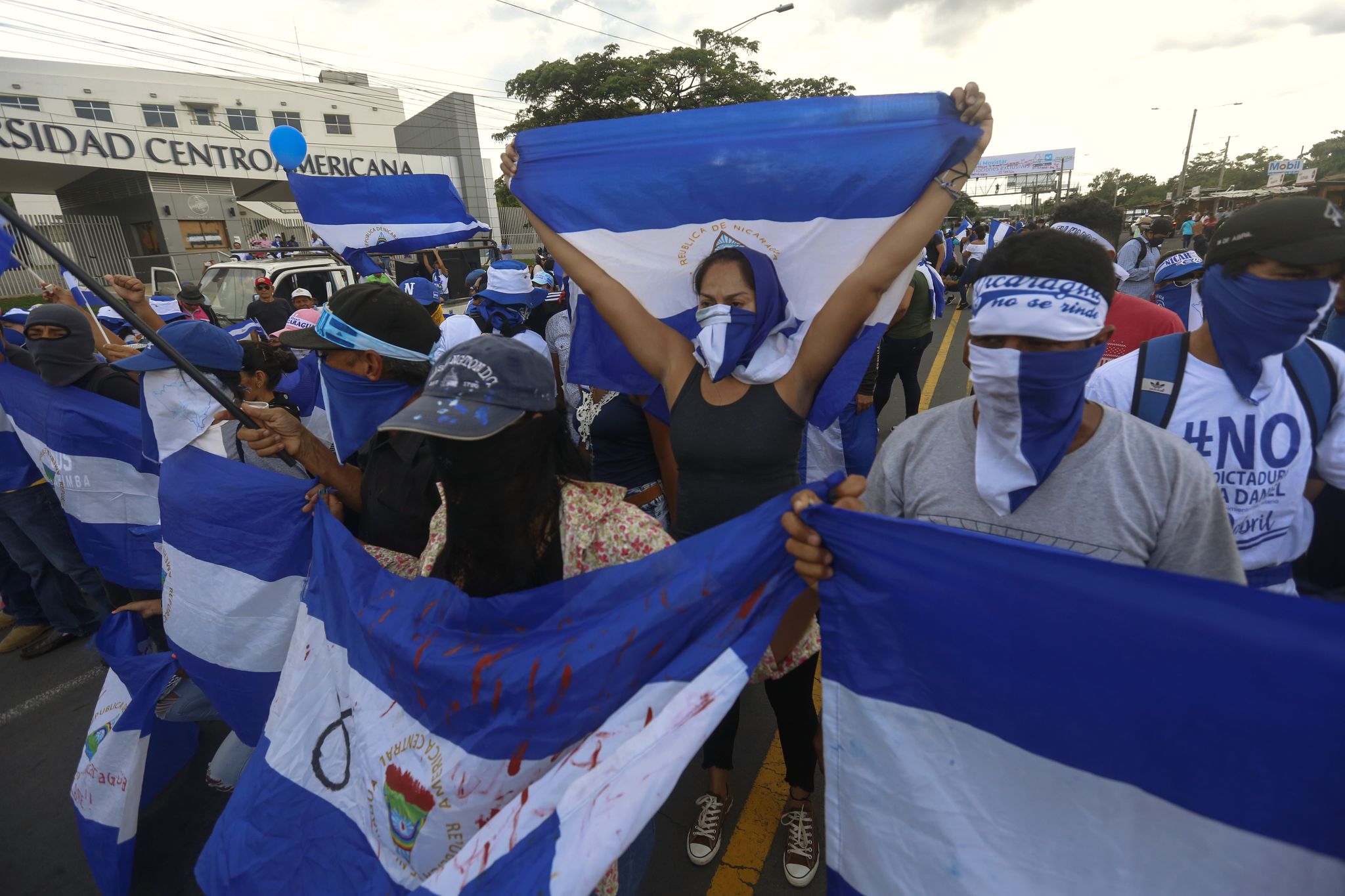
    The U.S. has ratcheted up the pressure on Nicaragua’s leftist government for its crackdown on political opponents, with Treasury Department officials warning American banks to be wary of corrupt officials moving cash from the embattled Central American country into the U.S. financial system.

    Specifically, Treasury’s Financial Crimes Enforcement Network (FinCEN) has advised financial institutions to watch for senior members of President Daniel Ortega’s government or people acting on their behalf illegally transferring assets to the U.S..

    “Given the oppressive and corrupt conduct of the Ortega regime and resulting unrest in Nicaragua, people and companies associated with or linked to the Ortega regime may try to move corruption-related assets out of Nicaragua,” FinCEN Director Kenneth A. Blanco said in the press release Thursday.

    “U.S. financial institutions are an important line of defense against corrupt and bloodstained money flowing through our system, and we are advising our partners in the financial sector to be on high alert,” Mr. Blanco said.

    Mr. Ortega, a former Marxist guerrilla leader, has lost control over most of the country since April when peaceful demonstrations morphed into a revolt against his government and its allies, with more than 300 reported dead in clashes since then.

    The Trump administration has already levied sanctions against three allies of Mr. Ortega, targeting them in July for alleged human-rights abuses and corruption. A fourth official was blacklisted by Treasury for allegedly amassing huge wealth while earning a meager government salary.

  • Meng Hongwei, Interpol president, reported missing after trip to China

    A French judicial official says the president of Interpol has been reported missing after traveling to China.

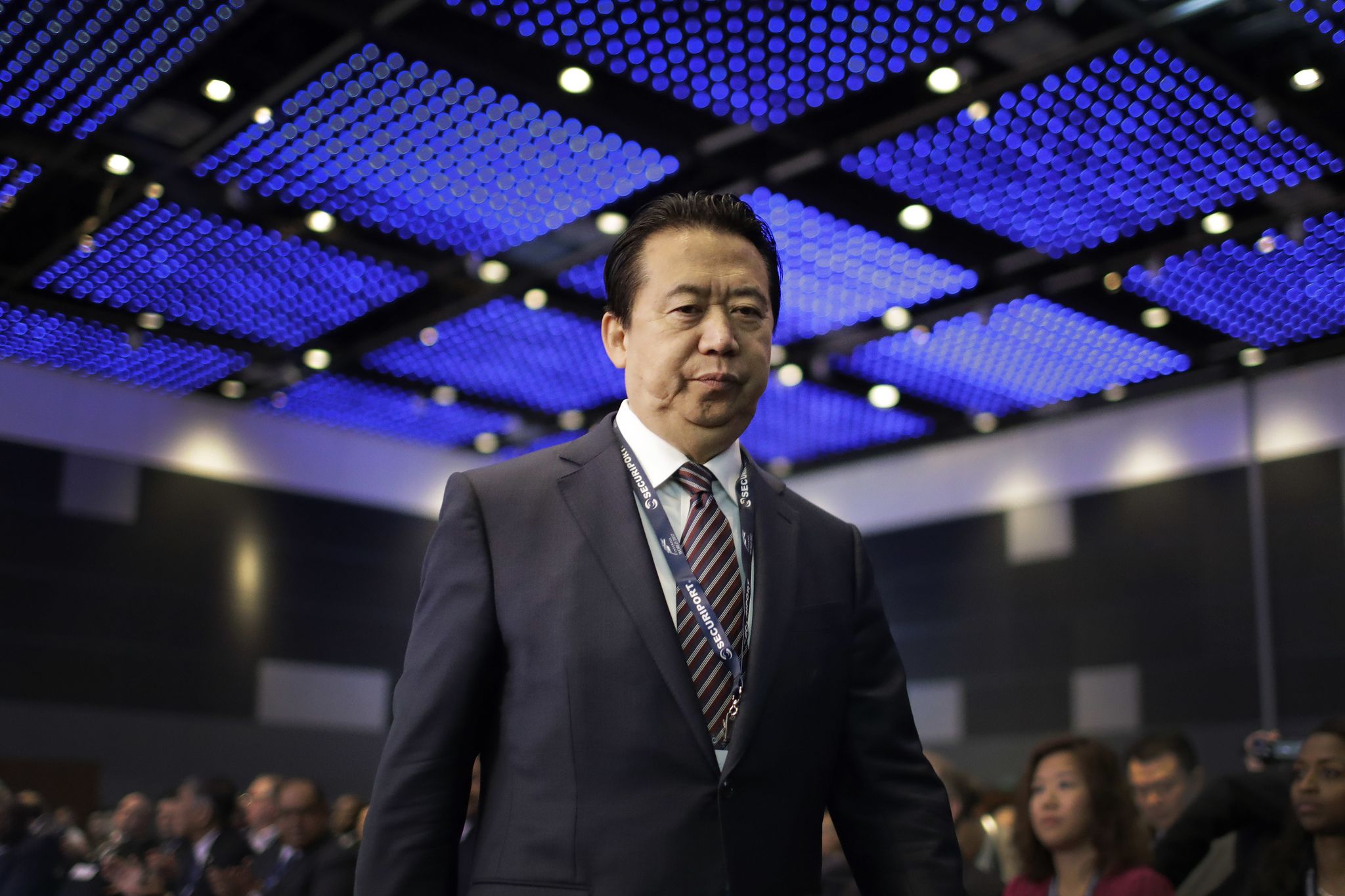
    PARIS (AP) — A French judicial official says the president of Interpol has been reported missing after traveling to China.

    The official, who spoke on condition of anonymity for an ongoing investigation, said Meng Hongwei’s wife reported him missing on Friday.

    The official said the Interpol chief left France, where the international police organization is based, and arrived in China at the end of September. She said there had been no news of him since.

    The 64-year-old Meng Hongwei was elected president of Interpol in November 2016. His term is due to run until 2020.

    A vice minister of public security in China, he previously served as vice chairman of the national narcotics control commission and director of the National Counter-Terrorism Office for China.

  • India has signed a $5 billion deal to buy Russian S-400s

    India has signed a $5 billion deal to buy five Russian S-400 air defense systems despite a looming threat of U.S. sanctions on countries that trade with Russia’s defense and intelligence sectors.

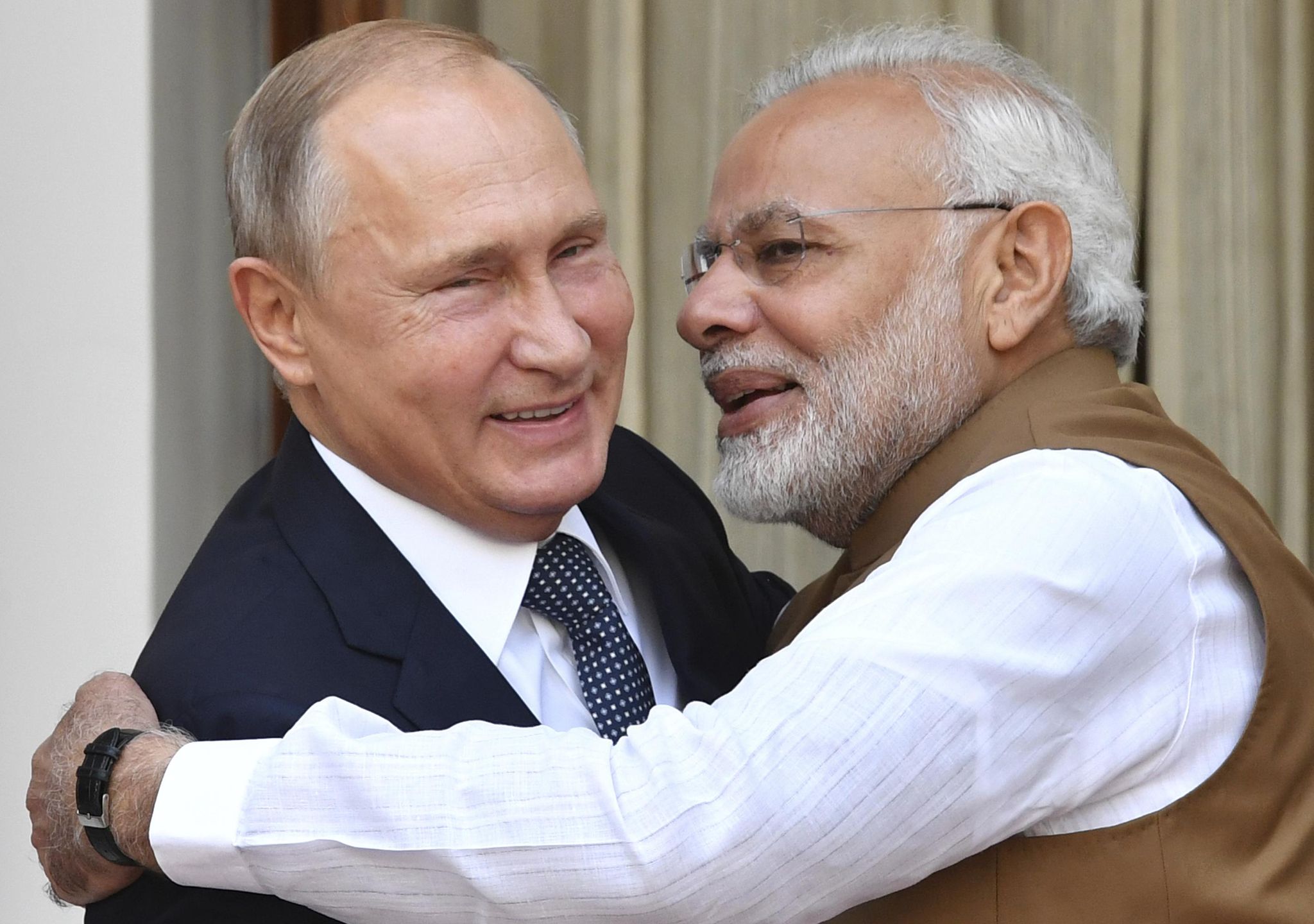
    NEW DELHI (AP) — India has signed a $5 billion deal to buy five Russian S-400 air defense systems despite a looming threat of U.S. sanctions on countries that trade with Russia’s defense and intelligence sectors.

    Russian President Vladimir Putin and India’s Prime Minister Narendra Modi signed the deal in New Delhi on Friday and discussed nuclear energy, space exploration and economics.

    India has requested a waiver from U.S. sanctions intended to punish Russia for its annexation of Crimea and alleged interference in the 2016 US elections.

    The U.S. did not spare China from sanctions last month for purchasing Russian S-400 surface-to-air missile systems and fighter jets.

    Officials confirmed the deal was signed after Putin and Modi made no reference to it during a news conference following their talks.

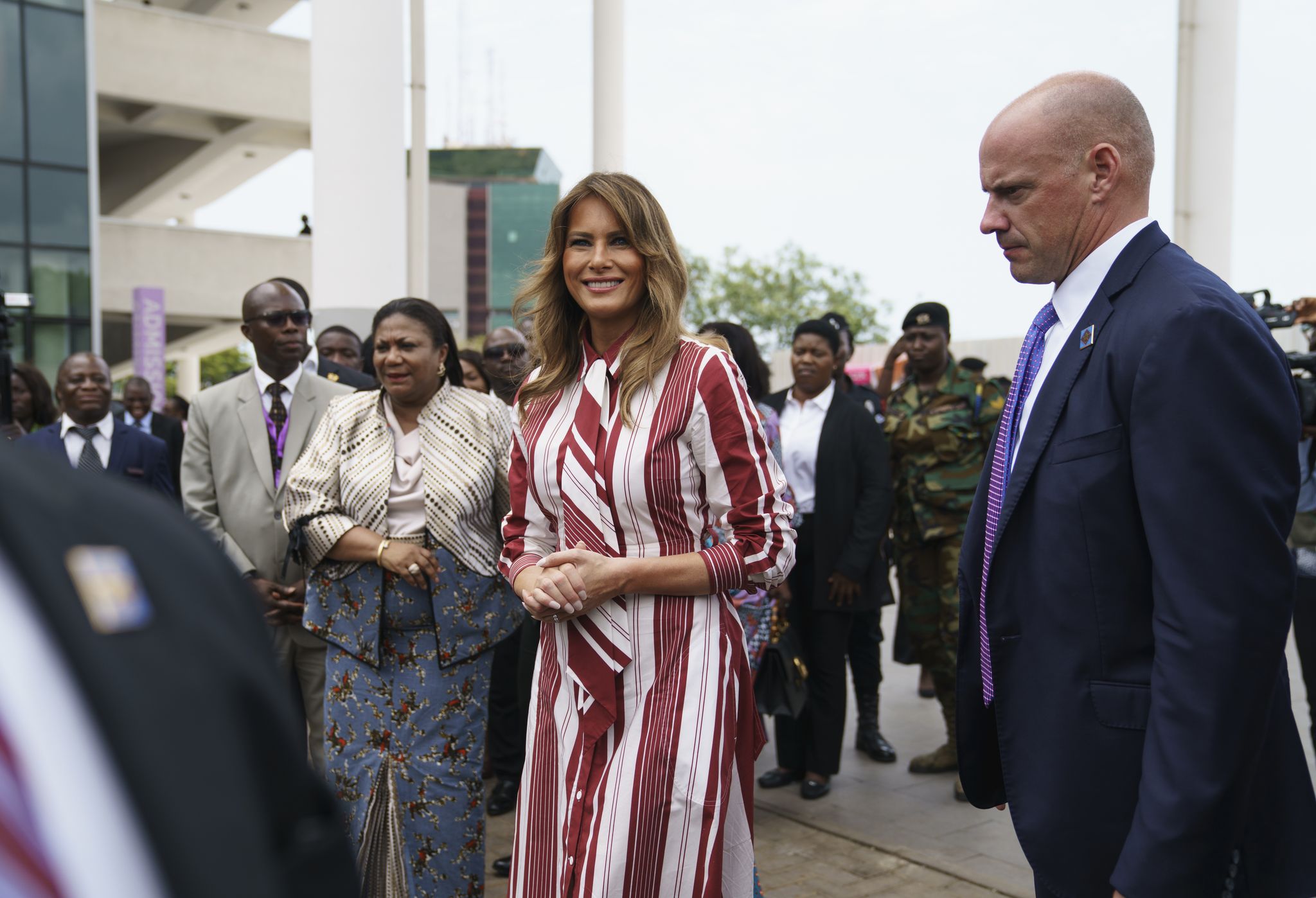
  • Melania Trump visits ex-slave holding facility in Ghana

    Melania Trump is visiting a former slave holding facility on the coast of Ghana on the second day of her Africa tour.

    CAPE COAST, Ghana (AP) — Melania Trump is visiting a former slave holding facility on the coast of Ghana on the second day of her Africa tour.

    The U.S. first lady on Wednesday was touring Cape Coast Castle. The 17th-century facility in the seaside town of Cape Coast was built by the Swedes to trade in timber and gold but became a place where slaves were held until they could be shipped out through a “Door of No Return.”

    Mrs. Trump says she expects the visit to be “very emotional.”

    Then-President Barack Obama and his family toured the castle in 2009. Obama said it was a reminder of “the capacity of human beings to commit great evil.”

    Mrs. Trump is touring Africa on her first extended solo international trip as first lady. She has stops planned in Malawi, Kenya and Egypt.

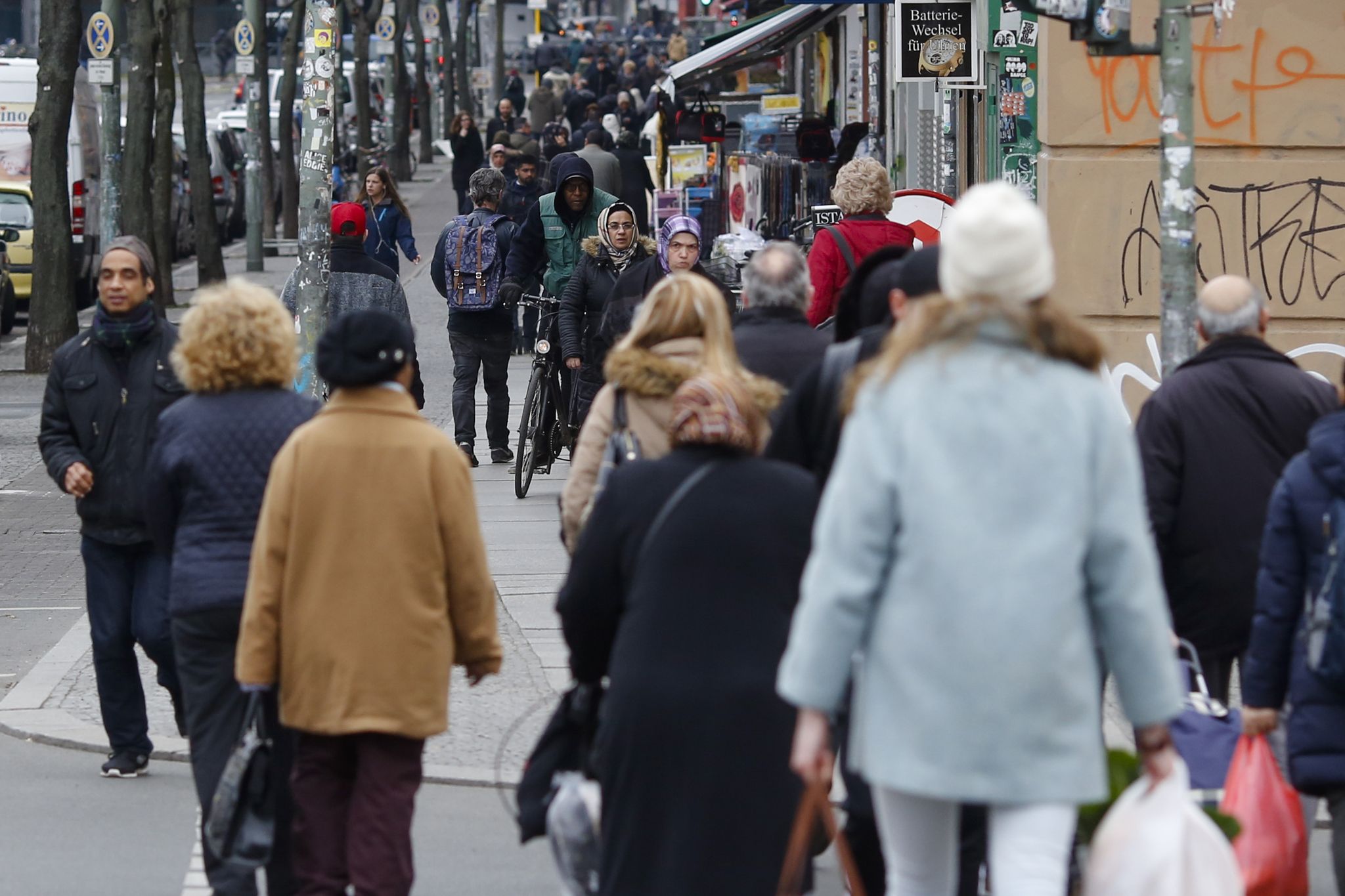
  • Berlin Kreuzberg district gentrified by tech wealth

    To outsiders, Berlin is known for its dynamic history, its funky, come-as-you-are nightlife, and its low cost of living and a tradition of squatting that even the most destitute artists and free spiri

    BERLIN — To outsiders, Berlin is known for its dynamic history, its funky, come-as-you-are nightlife, and its low cost of living and a tradition of squatting that even the most destitute artists and free spirits could afford.

    But for longtime Berliners, the German capital’s “poor but sexy” mantra is quickly becoming a thing of the past.

    Attracted to the city’s alternative vibe and affordability compared with other European capitals, American tech companies such as Google are flocking to Berlin, bringing droves of well-compensated newcomers with them. The result: Property prices are now rising faster here than anywhere else in the world, according to a recent Knight Frank report.

    The trend is making this once down-and-out city unlivable for its mainstay bohemian and immigrant communities, residents said.

    “Berliners living for generations in these areas are now being forced out,” said Roland Bomhard, a lawyer with Hogan Lovells, a law firm based in Dusseldorf. Mr. Lovells has worked in real estate for three decades. “You have a number of outspoken inhabitants crying out for barriers to gentrification.”

    Currently at a crossroads between economic boom and identity crisis, activists, citizens and politicians are scrambling for solutions on affordable housing before newcomers irrevocably transform the city’s most iconic neighborhoods.

    In late August, the federal government of longtime Chancellor Angela Merkel introduced legislation that creates hurdles for landlords seeking to raise rental prices year after year. It goes to show just how rent control has become a national issue in Germany. Hamburg, Munich and Frankfurt all rank with Berlin in the Knight Frank report’s list of 10 cities with the fastest rising property prices in the world.

    Overall, it still costs less to live in Berlin than Paris, London or Tokyo, but the average income for the 3.6 million Berliners are also relatively modest and an estimated 50,000 people are coming to reside in the city every year.

    Landlords typically have their pick of a crush of tenants when a rental property opens up, putting pressure on both landlords and renters to bend the city’s law against excessive living fees.

    In Berlin, the city’s changes are perhaps most recognizable in the famous central district of Kreuzberg.

    Once an impoverished neighborhood of immigrants and leftist students, Kreuzberg was transformed into prime real estate smack dab in the center of a newly united city after the fall of the Berlin Wall in 1989.

    Long after the wall fell, Berlin and Kreuzberg still boasted some of Germany’s highest unemployment rates and scrambled to catch up to the well-heeled urban rivals of the former West Germany.

    Now, ambitious startup founders vying to become the next Mark Zuckerberg have set up shop in Kreuzberg and other attractive areas in Berlin, fueling an economic boom, said Stefan Franzke, CEO of Berlin Partner for Business and Technology, a public-private initiative that advises businesses in Berlin.

    “I’m incredibly pleased with that progress,” he said. “We’re coming out of a period of time when we were constantly having to beat back high rates of unemployment.”

    Market in a vice

    But with as many as 60,000 people moving to Berlin and more than 500 startup companies revving up their laptops annually, the city’s real estate market is in a vice. Rental prices in Kreuzberg alone have almost doubled since 2007 to $13.78 per square meter, with the rest of the city not far behind, according to a report by German real estate portal ImmobilienScout24.

    Such rapid growth has meant that locating an affordable apartment in Berlin can take months in the best of circumstances. Longtime residents say once-iconic neighborhoods are barely recognizable because of the furious pace of development. It’s easier to find a coworking space or a craft coffee shop in Kreuzberg’s graffiti-lined streets than an anarchist book shop or dive bar that once characterized the district.

    “It’s a huge political challenge,” said Mr. Bomhard. “This growth was unthinkable, and all the projects launched years ago weren’t designed to cater to this growth.”

    The price spikes are especially challenging in a city where half of all residents still earn so little that they qualify for subsidized housing, said Katrin Schmidberger, a local politician with the Green Party who represents Kreuzberg in Berlin’s regional parliament.

    Part of Berlin’s government since 2016, the Greens have helped enact laws that clamp down on rental hikes and constrain users of Airbnb’s rental service in an attempt to prevent “impoverished renters from being pushed to the edges of the city,” Ms. Schmidberger said.

    But Kreuzberg’s activists argue that the laws have not halted American technology companies from colonizing desirable areas of the city and driving up rental prices.

    Google is slated to open a startup campus in Kreuzberg this fall, and the development has sparked a number of protests throughout the neighborhood.

    “If this campus comes to pass, it would mean even more gentrification and pressure on Kreuzberg,” said Heiko Baum, an activist with the grassroots movement Google Campus Verhindern (Prevent the Google Campus), which has organized marches and sit-ins to stop the global tech company from opening its incubator.

    “As residents, we weren’t asked if we want them here,” said the 38-year-old Mr. Baum, who has lived in Kreuzberg for 15 years. “We are raising our voices and saying that we’re preventing it.”

    Mr. Franzke with Berlin Partner for Business and Technology said he understands protesters’ concerns but added that a “blockade mentality from residents simply doesn’t work.”

    Instead, he insisted that residents work with American tech firms and the government to encourage developments elsewhere in the city that won’t disrupt lifestyles in saturated districts such as Kreuzberg.

    “Many companies have learned that in a city like Berlin, you have to actually show up and start a dialogue with residents that’s not confrontational,” he said. “Sometimes residents are agreeable, and sometimes not so much. But if the residents aren’t, then a company would be well-advised to invest in property elsewhere in Berlin.”

    Such proposals, however, do little in the short term to reverse the effects of gentrification, said Denis Yimlaz, 40, a native Berliner who works at an elementary school in Kreuzberg.

    “In the ‘60s and the ‘70s, Kreuzberg was only students and immigrant families because the neighborhood essentially got its start as a ghetto,” she said. “Now with American companies like Google and others constantly moving in, rents are rising and families can’t afford to live here anymore.”

    She knew she couldn’t necessarily stop Google and others, but she wanted them to understand how Berliners feel.

    “I wish that the people moving to Berlin would just be more conscious of the situation they’re moving into,” she said.
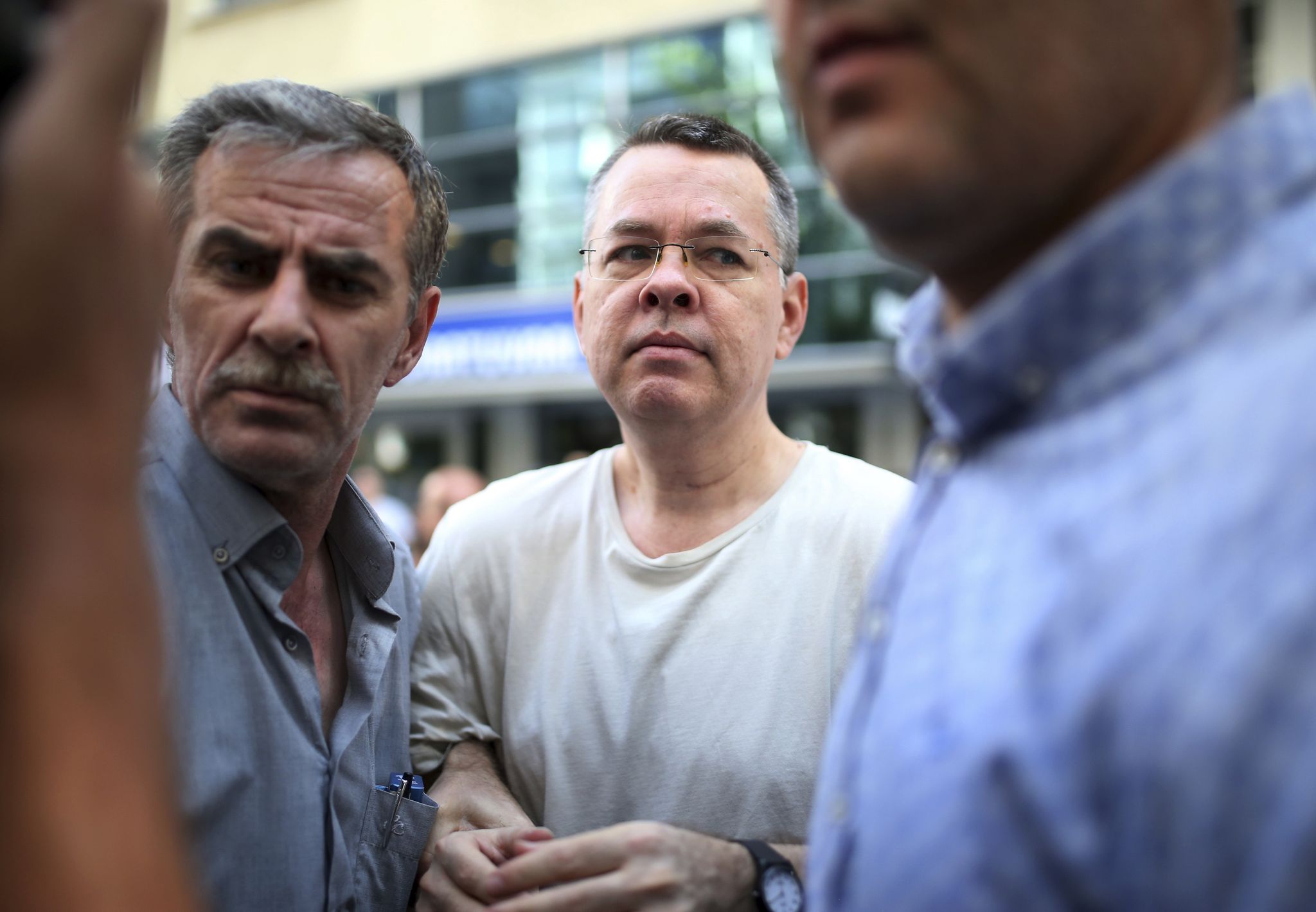
  • Andrew Brunson’s lawyer filed an appeal to Turkey’s highest court

    Andrew Brunson’s lawyer filed an appeal on Wednesday to Turkey’s highest national court requesting his client be released from house arrest, Reuters reported.

    Andrew Brunson’s lawyer filed an appeal on Wednesday to Turkey’s highest court requesting his client be released from house arrest, Reuters reported.

    Mr. Brunson’s next court date is on October 12th, and he’s been under arrest for over a year.

    The American evangelical pastor’s plight has sparked a tense economic relationship between two NATO allies, with the U.S. slapping sanctions on top Turkish officials in response to the arrest.

    Mr. Brunson was arrested on terrorism charges after the Turkish government accused him of being involved with the attempted coup in 2016, but the U.S. denies the accusation.

    The Trump administration has repeatedly called for Mr. Brunson’s release.

    A total disgrace that Turkey will not release a respected U.S. Pastor, Andrew Brunson, from prison. He has been held hostage far too long. @RT_Erdogan should do something to free this wonderful Christian husband & father. He has done nothing wrong, and his family needs him!

    — Donald J. Trump (@realDonaldTrump) July 19, 2018