Blog

  • Afghanistan attack: Nangarhar suicide blast toll soars

    A man who was injured in a twin suicide bomb blasts, that targeted girl's schools, receive medical attention at a hospital in Jalalabad, Afghanistan, 11 September 2018. Image copyright EPA Image caption The death toll from Tuesday’s suicide bombing soared overnight

    A suicide bombing in east Afghanistan has killed at least 68 people, officials say, in one of the deadliest insurgent attacks in recent months.

    The bomber struck in a crowd of people protesting against a local police chief in Nangarhar province near Pakistan.

    The death toll from Tuesday’s blast soared overnight. Another 165 people were injured – local hospitals struggled to cope with the casualties.

    Hundreds have died in a wave of recent attacks. Elections are due in October.

    No group has said it carried out the suicide bombing in the crowd of protesters in Nangarhar’s Momand Dara district, but Islamic State militants are active in the province.

    Earlier, five people were injured in two bomb attacks near a school in the same province.

    The violence follows recent diplomatic efforts to end the lengthy war between the Afghan government and the Taliban.

  • Social media faces EU fine if terror lingers for an hour

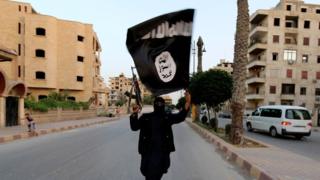
    ISIS fighter Image copyright Reuters Image caption Draft EU regulation is being planned to force social media to act more swiftly over terror content

    The European Commission is planning to order websites to delete extremist content on their sites within an hour to avoid the risk of being fined.

    The regulation would affect Twitter, Facebook and YouTube among others.

    The crackdown would lead to the EU abandoning its current approach – where the firms self-police – in favour of explicit rules.

    The shake-up comes in the wake of high-profile terror attacks across Europe over the past few years.

    Julian King, the EU’s commissioner for security, told the Financial Times that the EU would “take stronger action in order to protect our citizens”.

    The BBC has confirmed the details of the report.

    In March, the EU’s civil service published details of the current voluntary arrangement, which noted that “terrorist content is most harmful in the first hours of its appearance online”.

    At the time, it said there was “significant scope for more effective action”.

    The BBC understands the draft regulation is set to be published next month. It would need to be approved by the European Parliament and a majority of EU states before it could be put into action.

    UK unveils extremism blocking tool Tax tech giants over extremism – minister How extremists and terror groups hijacked social media – BBC Three

    Mr King told the FT that the law would apply to small social media apps as well as the bigger players.

    “Platforms have differing capabilities to act against terrorist content and their policies for doing so are not always transparent,” he added.

    A study published last month by the not-for-profit Counter Extremism Project said that between March and June, 1,348 videos related to the Islamic State group were uploaded on to YouTube, via 278 separate accounts, garnering more than 163,000 views.

    The report said that 24% of the videos had remained online for more than two hours.

    The BBC has asked Google, Twitter and Facebook to comment.

    Google has previously said that more than half of the videos YouTube removes for containing violent extremism have had fewer than 10 views.

    In its latest ‘transparency report’, Twitter says that between July and December 2017, a total of 274,460 accounts were permanently suspended for violations related to the promotion of terrorism. The company says 74% of those accounts were suspended before their first tweet.

    If the EU’s proposed regulation is approved, it will be the first time the European Commission has explicitly targeted tech firms’ handling of illegal content.

  • Google, Facebook, Twitter face EU fines over extremist posts

    ISIS fighter Image copyright Reuters Image caption Draft EU regulation is being planned to force social media to act more swiftly over terror content

    Google, Facebook and Twitter must remove extremist content within an hour or face hefty fines, the European Commission’s president has said.

    In his annual State of the Union address to the European Parliament, Jean-Claude Juncker said an hour was a “decisive time window”.

    Net firms had been given three months in March to show they were acting faster to take down radical posts.

    But EU regulators said too little was being done.

    If authorities flag content that incites and advocates extremism, the content must be removed from the web within an hour, the proposal from the EU’s lead civil servant state. Net firms that fail to comply would face fines of up to four percent of their annual global turnover.

    The proposal will need backing from the countries that make up the EU as well as the European Parliament and internet platforms will be required to develop new tools to police content.

  • UKIP AM Caroline Jones quits party over ‘far-right move’

    Caroline Jones Image caption Caroline Jones lost a leadership election to Gareth Bennett in the summer

    The former leader of the UKIP group in the Welsh Assembly has resigned from the party.

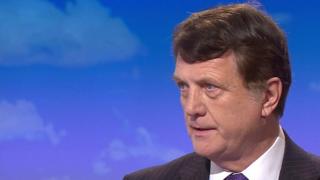
    Caroline Jones claimed UKIP leader Gerard Batten was alienating his members by moving the party to the far-right.

    The AM for South Wales West, who will now sit as an independent, said UKIP was taking “a direction that I’m not comfortable with”.

    But Mr Batten said her statement was “politically correct twaddle”.

    The resignation means the UKIP group has four AMs left from the seven which entered the Senedd in 2016.

    Image caption Gerard Batten has taken the party in “a direction I’m not comfortable with”, Caroline Jones said

    She told BBC Wales: “The party has taken a direction that I’m not comfortable with.”

    Mrs Jones said Mr Batten was changing the party “to a more far-right position, which a lot of the long-standing members are finding quite unfavourable, including myself”.

    “I never joined the party to be part of a far-right organisation. I joined the party because I wanted to come out of the European Union. I still do.”

    “Gerard Batten should listen to all sides and try to mediate and bring people together, as opposed to alienating them”, she added.

    ‘Politically ineffective’

    Mr Batten was appointed leader earlier this year, after former UKIP leader Henry Bolton was sacked.

    He is the fourth person to lead UKIP following the EU referendum.

    Caroline Jones took over the UKIP group in May after she was backed by David Rowlands and Michelle Brown in a vote.

    However, Welsh UKIP members voted over the summer for Gareth Bennett to succeed her and lead the assembly group.

    Mr Batten said: “I have brought the party back from financial meltdown, raised funds, raised membership numbers, and raised UKIP in the polls. Ms Jones has contributed nothing that I am aware of.”

    He added: “Her statement is politically correct twaddle to disguise the fact that Mrs Jones is politically ineffective. I wish her well languishing in the outer realms of irrelevance.”

  • Profile: EU’s Jean-Claude Juncker

    Image copyright AP Image caption Mr Juncker has been a close ally of Germany’s Angela Merkel during the eurozone crisis

    He has not explained how an EU-US free trade deal might impact on EU social protection policies, which currently cost the EU many billions through support for farmers and projects to help poor communities.

    He claimed that such a deal would give each European an extra 545 euros (£443; $742) – an exaggeration, according to a fact check by Eurovision, which hosted the debate.

    He has also defended the Common Agricultural Policy, saying agriculture employs about 30 million Europeans. But the UK government is among the many critics who say the CAP is wasteful and want more of the EU budget spent on digital technologies, research and investment in small businesses.

    Mats Persson, director of the Open Europe think-tank, says Mr Juncker is associated with the EU of the 1980s and 1990s, echoing a criticism attributed to Prime Minister Cameron.

    After an election that saw a surge in support for Eurosceptic parties, that connection with past EU policies may be a disadvantage, Mr Persson told the BBC.

    However, Mr Juncker is not vague about the political risks of taking tough economic decisions. He once said, “We all know what to do, we just don’t know how to get re-elected after we’ve done it.”

    (more…)

  • Juncker makes keynote EU speech

    Live Juncker makes keynote EU speech
  • Sergei Skripal and the Russian disinformation game

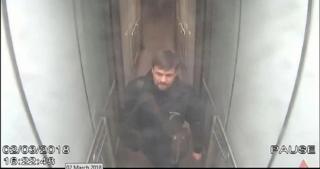
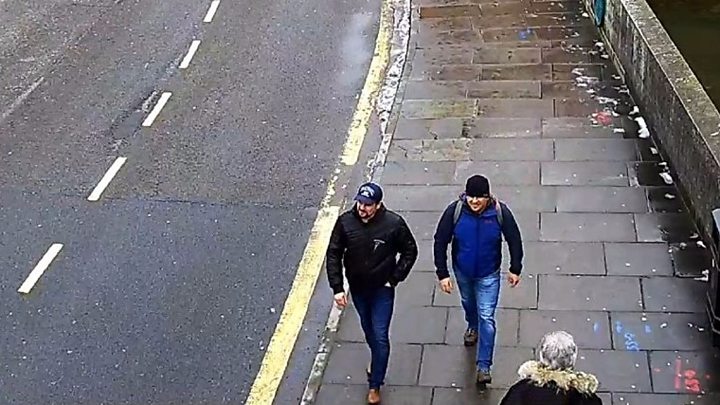
    CCTV of Alexander Petrov and Ruslan Boshirov Image copyright Met Police Image caption Police released CCTV showing the two men at Gatwick Airport

    When the UK authorities announced on Wednesday that they suspected two alleged Russian agents in the poisoning of former Russian spy Sergei Skripal and his daughter Yulia in Salisbury, they released CCTV images of the suspects arriving at Gatwick airport.

    Two of the images, framed side by side, began to spread on social media, driven by pro-Russia conspiracy theorists and suspected troll accounts. They showed the alleged agents – Alexander Petrov and Ruslan Boshirov – passing through a non-return gate at the airport.

    The images had identical timestamps. How could two men be in exactly the same place at the same time, a flood of tweets asked.

    Speaking on state TV, Russian Foreign Ministry spokeswoman Maria Zakharova claimed that either “the date and the exact time were superimposed on the image” or that Russian intelligence officers had “mastered the skill of walking simultaneously”.

    Her remarks were echoed by pro-Kremlin accounts on Twitter and on the messaging app Telegram, which is popular in Russia. Users suggested the CCTV images had been manipulated. They mocked the British authorities and alleged it was an MI6 operation.
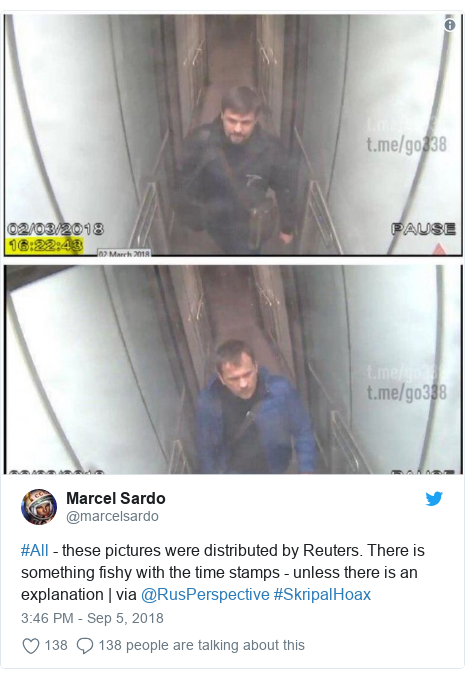
    Image Copyright @marcelsardo @marcelsardo

    Report

    Twitter post by @marcelsardo: #All - these pictures were distributed by Reuters. There is something fishy with the time stamps - unless there is an explanation | via @RusPerspective #SkripalHoax Image Copyright @marcelsardo @marcelsardo

    Report

    Soon it would not necessarily matter that the background of the CCTV images were not identical; that the camera was at a different angle; that Google Maps shows that the non-return gates at Gatwick are a series of near-identical corridors that the two men could easily have passed down, adjacent to one another, at the same time.

    What would matter would be that some people following the story would begin to question what was real and what wasn’t. Some might even begin to question the very idea that there was a real, reliable version of events at all.
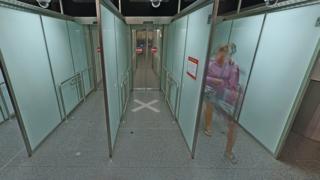
    Image copyright Google Image caption A still from Google maps, showing the exit gates at Gatwick airport

    Russia denies any involvement in the Skripal case, and its embassy in London did not respond to a request for comment from the BBC, but analysts say the Russian state is now the chief exponent of a new kind of information warfare.

    A loosely-defined network of Russian state actors, state-controlled media, and armies of social media bots and trolls is said to work in unison to spread and amplify multiple narratives and conspiracies around cases like the Skripal poisoning. The goal is no longer to deny or disprove an official version of events, it is to flood the zone with so many competing versions that nothing seems to make sense.

    “What is really striking is that you no longer see the Russian machine pushing a single message, it pushes dozens of messages,” said Ben Nimmo, a senior fellow at the Atlantic Council who studies Russian disinformation. “The idea is to confuse people.”

    Other theories circulating on Wednesday included a claim that the suspects were British actors, stars of a (non-existent) KGB spy series broadcast on British television in the 2000s. Another suggested the attempted assassination in Salisbury, and the deaths of other Russian nationals in Britain, were part of an MI6 plot. “Why do all these horrible events only happen in Britain?” asked Andrei Klimov, a Russian member of parliament, on state TV.

    Salisbury: Russian nationals named as suspects On the trail of Novichok suspects What happened to Sergei and Yulia Skripal?

    “The more different theories you put out, the more different Google results you’re going to get,” said Mr Nimmo. “So instead of seeing two or three different versions of the story you’re seeing 20 or 30. And for someone who is not following the story regularly that becomes more and more confusing until they give up. And at that point, the Russian disinformation has had its effect.”

    Early evidence of the tactic can be traced back to the 2000s but it first drew serious international attention in 2014 when Malaysian Airlines flight MH-17 was shot down over Ukraine, killing 298 people. The evidence pointed to a Russian-supplied surface-to-air missile fired from rebel-held territory in east Ukraine.

    Russia had already been accused of deploying crude disinformation techniques around its actions in east Ukraine and its annexation of Crimea, but its response to being linked to the downing of MH-17 was on a different scale – the “tipping point where Russian information warfare kicked into high gear”, Mr Nimmo said.
    Media playback is unsupported on your device

    Media captionSkripal poisoning: On the trail of Novichok suspects

    In the days and months after the aircraft was shot down, Russian state media and pro-Kremlin social accounts pushed out a raft of different and wildly contradictory theories: that a Ukrainian Su-25 combat aircraft had been picked up by radar near MH-17; that video evidence showed a missile being fired from government, not separatist, territory; that Ukrainian fighters had mistaken MH-17 for Vladimir Putin’s plane in an assassination attempt; that the CIA was behind it.

    “MH-17 is really the classic example,” said Samantha Bradshaw, a researcher on computational propaganda at the University of Oxford.

    “You saw a whole series of different conspiracies and competing narratives emerge, attached to various hashtags and social media campaigns. The goal was to confuse people, to polarise them, to push them further and further away from reality.”

    The technique expanded and evolved in the years after the MH-17 attack, with Russia linked to disinformation campaigns around its actions in Syria, the 2016 US election, the murder of Boris Nemtsov, and a UK inquiry into the murder of former Russian intelligence officer Alexander Litvinenko in London.
    Media playback is unsupported on your device

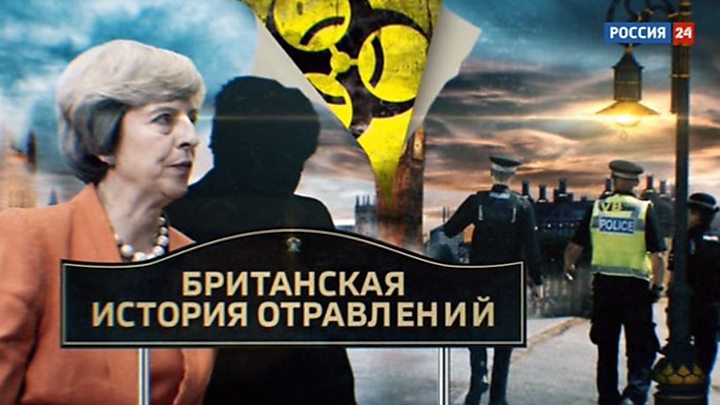
    Media captionSalisbury Novichok suspects: What does Russia’s media think?

    A key component in recent iterations of the tactic has been the use of humour and ridicule. When a UK inquiry found in 2016 that Russian president Vladimir Putin “probably approved” the murder of Litvinenko, a hashtag – #putinprobablyapproved – spread through Twitter, with tweets suggesting Mr Putin had “probably approved” the assassination of JFK, the invasion of Iraq, climate change and more.

    In the hours after the UK named the suspects in the Skripal case, a flood of near-identical tweets used pictures of comedians, historical figures and Hollywood spies – from Joseph Stalin to Jason Bourne – in place of the suspects, mocking the UK’s announcement.

    The official account of the Russian embassy in London even joined in, posting an image of the two Skripal suspects allegedly carrying the Novichok toxin alongside a picture of British police in biohazard suits, asking users to “spot the difference”. On Russian state news bulletins, anchors reported the news with a mixture of disbelief and sarcasm.

    “The strategy is optimised for the internet, it’s meant to go viral,” said Mr Nimmo. “That’s why mockery and sarcasm and attempts at funny memes are so much a part of this … It is disinformation for the information age.”

    Image Copyright @RussianEmbassy @RussianEmbassy

    Report

    Twitter post by @RussianEmbassy: Men Image Copyright @RussianEmbassy @RussianEmbassy

    Report

    In 2015, the European Union was sufficiently alarmed by Russian disinformation that it created a task force – the East Stratcom team – directed solely at counteracting the perceived threat. The small team attempts to debunk fake stories in real time, but it is reportedly vastly outmatched by the amount of material coming its way.

    Peter Wilson, the UK ambassador to the Organisation for the Prohibition of Chemical Weapons, said earlier this year the OPCW had counted more than 30 different Russian theories swirling around the poisoning of Sergei and Yulia Skripal.

    The effectiveness and reach of this type of disinformation operation in the West is debatable. A YouGov poll conducted earlier this year found that 75% of Britons believed that the Russian state was behind the Skripal poisoning, while just 5% said they thought Russia was innocent. But the sheer volume of Russian disinformation being exported abroad remained a major cause for concern, said one EU official who works on the issue but was not authorised to speak about it publicly.

    “Some people like to think this tactic was used around Brexit and it went away, or it was used around Skripal and went away, but it’s happening 24/7,” he said. “Others also use disinformation, of course … But this aggression, this exporting of information narratives abroad, this is really something where Russia is number one in the world.”

    (more…)
  • Arlene Foster to meet prime minister in London

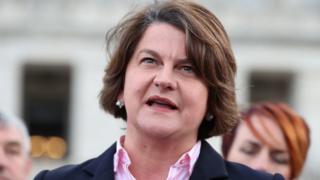
    Arlene Foster Image copyright PA Image caption DUP leader Arlene Foster had given a cautious welcome to plans to cut MLA pay and give civil servants more power

    DUP leader Arlene Foster is expected to meet the prime minister and secretary of state in London on Wednesday to discuss the government’s latest proposals over the Stormont deadlock.

    Karen Bradley has proposed a cut to MLA pay and plans to provide greater powers to local civil servants.

    The DUP gave the development a cautious welcome.

    It described it as a small step, but argued that there remains a need for ministerial decision making.

    NI secretary announces MLA pay cut Who’s calling the shots on NI policy? Stormont still dormant after 541 days

    The Northern Ireland Assembly has not sat for 20 months.

    Separately, pro-Brexit Conservaties are expected to publish a paper later on Wednesday focusing on the border and the backstop policy, which is central to the UK’s current negotiations with the EU.

    Tory Brexiteers have been strongly critical of Theresa May’s decision to sign up to a backstop.

    The launch of their paper is expected to be attended by former Brexit Secretary David Davis, former Northern Ireland Secretaries Owen Paterson and Theresa Villiers, former Northern Ireland First Minister Lord Trimble and Jacob Rees-Mogg, the chairman of the eurosceptic European Research Group.

  • Fresh call for smacking to be outlawed in the home

    Woman smacking child Image copyright Getty Images

    Smacking is harmful to children’s mental health and should be banned, school psychologists say.

    The Association of Educational Psychologists has tabled a motion to the TUC Conference calling for physical punishment to be outlawed.

    Presently, although corporal punishment is banned in schools, parents can “smack” or physically chastise a child as long as it is deemed “reasonable”.

    Psychologists say there are many better ways of teaching right from wrong.

    Member of the AEP national executive committee, John Drewicz, will tell the conference in Manchester: “Smacking is harmful to a child’s mental health, it models aggressive behaviour and it says to them that it is OK to use violence.”

    He will add: “Sixty countries already have full bans, including Sweden, Ireland, Spain, Germany and Portugal, and it is time to make violence against children illegal in the UK in all settings, including the home.”

    The motion also notes that the Welsh government is taking steps towards removing the defence of reasonable chastisement for parents.

    But some campaigners have argued that parents would be criminalised if a smacking ban were to be passed.

    There are also moves in the Scottish Parliament to ban physical chastisement of children.

    ‘Higher aggression’

    A bill, lodged by Green MSP John Finnie, has been backed by the government and looks certain to pass at Holyrood.

    Psychologists cite research suggesting that when force is used by parents, there are changes in their brain activity which mean the degree of force used on the child can escalate.

    They argue that physical chastisement also leads to a lower quality of parent-child relationship, poorer mental health in childhood and adulthood, as well as higher levels of aggression in the child and more anti-social behaviour.

    The biggest teaching union, the National Education Union, is seconding the motion.

    Dr Mary Bousted, joint general secretary of the union, said parents and carers had a right to set boundaries for their children to help them develop social skills and good behaviour.

    “However we need to ensure that children are legally safeguarded in their own homes.

    “We are not talking about dictating to parents how this is done but what we are saying is that it in 2018 beating children in anger, or as part of a pre-meditated punishment, is neither acceptable or defensible.”

  • Libya’s Tripoli airport diverts flights after rocket attack

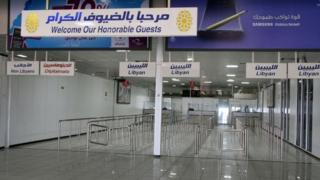
    Mitiga was closed until recently amid militia clashes in Tripoli Image copyright AFP Image caption Mitiga was closed until recently amid militia clashes in Tripoli

    The only working airport in Libya’s capital, Tripoli, has diverted flights after it came under rocket fire.

    There were no immediate reports of damage or casualties at Mitiga International Airport after the attack on Tuesday night.

    The airport had only reopened on Friday following clashes between rival militias.

    A UN-backed government is nominally in power in Tripoli but militias occupy much of the rest of the country.

    Why is Libya so lawless? Is it possible to hold elections in Libya? Libya and migration crisis

    The rocket attack forced a Libyan Airlines flight from Alexandria in Egypt to divert to Misrata, some 200km (120 miles) east of the capital.

    Other flights would also be diverted and a source told Agence France-Presse that plans were under way to move other planes at Tripoli to Misrata.

    Libyan Airlines is the only operator, running internal flights and international ones to a limited number of countries. It is barred from EU airports on security grounds.