Blog

  • Skripal poisoning: Suspects ‘civilians, not criminals’ says Putin

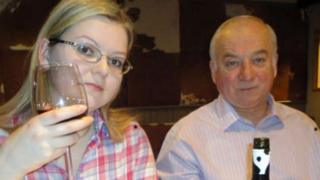
    Sergei Skripal and his daughter Yulia Image copyright Rex Features Image caption Sergei Skripal (right) and his daughter Yulia

    Russian President Vladimir Putin says there is “nothing criminal” about the men named by UK authorities over the poisoning of ex-Russian spy Sergei Skripal and his daughter.

    UK authorities have named the men as Alexander Petrov and Ruslan Boshirov, thought to be officers of Russia’s military intelligence service, the GRU.

    But Mr Putin said they were civilians and would tell their story soon.

    Mr Skripal and Yulia were poisoned in the city of Salisbury in March.

    “We know who they are, we have found them,” Mr Putin said in the far eastern city of Vladivostok.

    “I hope they will turn up themselves and tell everything. This would be best for everyone. There is nothing special there, nothing criminal, I assure you. We’ll see in the near future,” he added.

  • Free cash machines closing at record rate

    ATM Image copyright Getty Images

    More than 250 free-to-use cash machines are disappearing a month as operators shut unprofitable ones, the network co-ordinator Link has said.

    There are 53,000 free machines in the UK – but the number is shrinking at a record rate as people use less cash.

    Now the Payment Services Regulator (PSR) is cracking down on the closures and asking for more network protection.

    “Free-to-use ATMs continue to play a vital role in helping people access their money,” the regulator said.

    Hannah Nixon, the PSR’s managing director, said: “The requirements we intend to place on Link will help ensure that Link achieves their commitment to protecting the geographic spread of free-to-use ATMs across the UK.”

    Falling demand

    Link’s ATM Footprint Report found that between the end of January and the start of July 2018, the number of free-to-use ATMs fell from 54,500 to 53,200.

    That is partly because people are using cash less, Link said, thanks to the rise in popularity of new payment methods such as contactless transactions.

    But it is also because cash machine operators such as Cardtronics and Note Machine, who get a fee from our banks each time we use one, are finding that fewer of their machines are economic to run.

    Row intensifies over cash machines fee Who do we trust after cash? The High Streets with ‘too many’ ATMs

    Under pressure from banks, Link is cutting the fee it pays to operators while trying to restrict the resulting closures in city centres,

    Link said it had set up “specific arrangements to protect free-to-use ATMs more than 1km away from their next nearest free-to-use ATM”.

    The organisation has earmarked some 2,365 free machines in remote and rural areas that it wants to remain open.

    But 76 of these protected cash machines closed between January and July, 21 of them without even a Post Office nearby to get cash over the counter.

    The PSR says it is concerned and is taking action to ensure Link meets its commitments.

    It is also seeking renewed commitments from banks that consumers will continue to be offered services, allowing them to access their cash.

  • Marie Colvin: Reporter’s last days retold for cinema

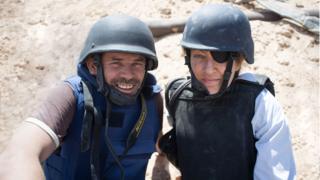
    Paul Conroy and Marie Colvin Image copyright Dogwoof Image caption Paul Conroy and the “notoriously difficult” Marie Colvin

    In 2012, in the besieged city of Homs, photojournalist Paul Conroy was lucky to escape alive when a makeshift media centre came under fire from Syrian government forces. His colleagues Marie Colvin and Remi Ochlik were killed. A new documentary Under the Wire tells the story – the first of two films this year to feature Colvin and Conroy.

    Despite the violent way she died, there are times when Conroy can only smile at the memory of the war correspondent Colvin.

    “I met Marie about 15 years ago. We were both trying to get into northern Iraq from Syria. I’d built a boat to cross the Tigris river out of lorry inner tubes and bits of wood and basically string.

    “But I got captured and was sent back and in the journalists’ bar no one would speak to me because they all thought I’d spoiled their chances of getting in. Then Marie walked in and she said – who and where is the ‘Boatman’? I put my hand up and she said, ‘Boatman, can I buy you a whiskey?’ That was the start of it.”

    After that Conroy bumped into the Sunday Times’ US-born correspondent several times. As a resourceful photo-journalist with a similar taste for the field of battle, he was aware of her reputation.

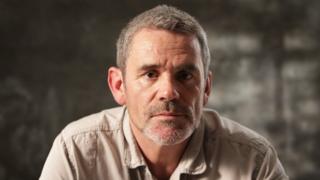
    Image copyright Getty Images Image caption Paul Conroy was trusted by Marie Colvin

    “She was notoriously difficult and some photographers she worked with found her scary. And she would just dump them if they didn’t fit.

    “Marie and I worked together in Libya for the Sunday Times and once there was a guy who was to fill in for me for a couple of days. But almost at once Marie was on the phone saying get back here now – she’d already sent this guy off 300 miles and she never spoke to him again.”

    Under the Wire, directed by film-maker Chris Martin, doesn’t try to portray Colvin as an easy colleague.

    He remembers he was filming in the Caribbean when he heard of her death. “And I saw material on YouTube of Paul trapped in Syria. I saw that the people I was working with were really concerned about his fate and I knew at once there was a story to be told.”

    Martin’s documentary shows what happens after Colvin and Conroy arrive in Homs through a 3km storm drain.

    Conroy says the city was the obvious fulcrum of the story. The government of President Bashar al-Assad saw Homs as the major centre of revolt and was ready to crush dissent there.

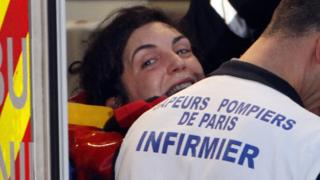
    Image copyright Getty Images Image caption Edith Bouvier is flown home to France after escaping to Lebanon

    Conroy says just getting in was difficult. “We spent a week or two in Beirut making contacts. From there we went up into the mountains between Lebanon and Syria, where we met with members of the Free Syrian Army (a loose anti-Assad coalition). They took us over the border at night time through minefields, dodging army checkpoints. They then handed us over to another unit of the Free Syrian Army.

    “It took about three days to go 30 kilometres. But the only way into Baba Amr – the part of Homs really getting hammered – was by this storm drain about 4ft high. We went through it bent double and carrying all our kit. We were pulled out of the tunnel, thrown in the back of a truck and ran the gauntlet of Syrian forces.

    Conroy says the few journalists around Homs were aware of the risks. “I was told by a Lebanese source that Syrian government policy was to kill any journalists and then drop the bodies on the battlefield. It was a horrible situation and the film makes that very clear.”

    Martin makes no apologies for having filled in pictorial gaps in the narrative. “We went to extraordinary lengths to find video material. A lot of it was just the odd five seconds taken in Homs by activists; it took a massive amount of tracking down, not just in the Middle East. We found things like a Skype call made from the journalists’ base in Homs at the moment the rockets hit.”

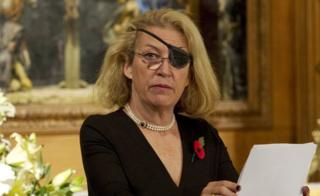
    Image copyright Getty Images Image caption Marie Colvin at a service for journalists, cameramen and support staff to have died in war zones

    But he says some 15 minutes of the running time consists of reconstructions of what happened to Colville and Conroy and to the other four journalists with them before the fatal attack – Edith Bouvier, Remi Ochlik and William Daniels, who were all French, and the Spanish journalist Javier Espinosa.

    Martin acknowledges this is not a the film like this might have been made only a few years ago.

    “We had just three or four minutes of material which Paul had shot – everything else was destroyed when the rockets came in. But we did find some footage of the tunnel and even of Paul and Marie in Homs working on what turned out to be Marie’s last piece of journalism.

    “So we pieced together that archive with our interview with Paul and with the testament of Edith Bouvier and William Daniels – and of Wael their brave translator. That was the spine of the film.”

    But Martin says the documentary market is changing and as a result he decided he needed to shoot high-quality extra material to knit the story together.

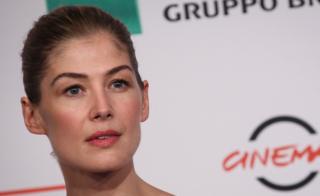
    Image copyright Getty Images Image caption Rosamund Pike is to play Colvin in a feature film called a Private War

    The production team decamped to northern Morocco to stage a version of the storm drain sequence. Additional interiors were shot in London. The craft skills on display mean the documentary often has the feel of a well-produced feature film.

    “Documentaries like Under the Wire are now mainly going to be seen first on theatrical release,” he says. “They’re not just for TV. And if you’re in cinemas you’re competing with feature films which might cost $100m (£77m) or more. So we have to engage the viewer. We can’t expect audiences to come and find the story on our terms.”

    The American director Matthew Heineman has also been at work on the life of Colvin. A Private War, which in part tells the same story, is due for release this year. But Heineman has made a feature film, starring Rosamund Pike as Colvin and with Jamie Dornan as Conroy.

    In real life Conroy only realised back in London how badly he’d been hurt in the attack, which killed Colvin and Ochlik.

    “Obviously I knew I had a huge hole in the back of my leg. But in London I found out I also had a great big piece of shrapnel wedged under my kidneys. I had 23 operations on my leg and others on my abdomen and back. I was in hospital for five months.

    “There’s still a story to be told in Syria. I can’t even begin to say how deeply I regret Marie and Remi dying. But do I regret going in and trying to do our job? Absolutely not.”

    Under the Wire is on release.

    Follow us on Facebook, on Twitter @BBCNewsEnts, or on Instagram at bbcnewsents. If you have a story suggestion email entertainment.news@bbc.co.uk.

  • Juncker to unveil EU-Africa strategy in annual address

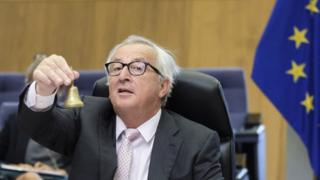
    Jean-Claude Juncker Image copyright EPA Image caption Jean-Claude Juncker is ringing time on his presidency – this is his last 12 months

    The European Commission’s president is to deliver his annual state of the union address and will propose a new Africa-Europe alliance.

    Jean-Claude Juncker will say it is time for the EU to take its place at the top table of global powers.

    He is also expected to predict the UK will have better relations with the EU than any other country after Brexit.

    This is Mr Juncker’s last 12 months in the role, with the problems of Brexit, migration and populism dominating.

    Who is Jean-Claude Juncker?Juncker’s stumbling ’caused by sciatica”I don’t own a smartphone’ – Juncker

    Mr Juncker’s speech in Strasbourg will be an attempt to turn the European Union into a serious player in global politics, the BBC’s Adam Fleming reports.

    Image copyright AFP Image caption Mr Juncker has any number of protests and crises on his agenda

    And he will urge countries to give up their national vetoes in some areas of foreign policy. One EU diplomat said this would be an attempt to prevent China – a growing force in Africa – from blocking European diplomacy with a call to just one of the member states.

    Although this is the final state of the union address before Brexit, our correspondent says Mr Juncker will not want the subject to dominate.

    At-a-glance: The UK’s four Brexit options Brexit: All you need to know

    It is unlikely he will shift the EU’s position towards the UK’s on access to the single market – but he will nod towards a future relationship that will be unlike any the EU has with another country.

    An EU diplomat said the message is: “Let’s be friends again.”

    On migration, there will be more details on EU plans to add 10,000 guards to the Frontex border agency by 2020.

    EU migration: Crisis in seven charts

    From the start of his commission’s mandate in 2014, migration his been a major crisis.

    It has sparked a rise in populism that has seen power shifts in Italy, Austria, Hungary and Poland, with Sweden the latest country to register a rise in anti-immigration votes in an election.

    Is Europe seeing a nationalist surge?

    Right after his speech, the EU parliament will decide whether to take disciplinary procedures against Hungary for breaching core democratic values.

    The commission has already launched disciplinary proceedings against Poland over reforms it says challenge the rule of law.

    The next elections to the European parliament are expected to be held in late May next year.

  • Lynette Dawson: Police begin dig in podcast-highlighted mystery

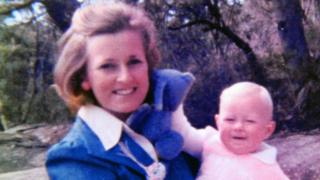
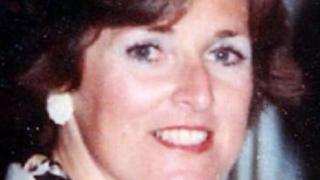
    Lynette Dawson holds one of her baby daughters Image copyright SUPPLIED Image caption Lynette Dawson, a mother of two, was last seen in 1982

    Australian police have begun digging at the former home of a Sydney woman whose disappearance in 1982 has recently attracted global attention.

    Lynette Dawson, a mother of two, vanished without a trace. Her husband, Chris Dawson, said she had left the family – perhaps for a religious group.

    Mr Dawson has denied murdering his wife after two coroners’ inquests found she had been killed by a “known person”.

    A popular podcast, The Teacher’s Pet, has brought wide attention to the case.

    On Wednesday, police said they had begun a five-day forensic search of the couple’s former home in the suburb of Bayview.

    Image copyright SUPPLIED Image caption Lynette Dawson’s disappearance has been given wider attention by a popular podcast

    An inquest in 2003 found Mr Dawson, a former rugby league star and high school teacher, had had sexual relationships with teenage students.

    One 16-year-old girl moved in with Mr Dawson’s within days of his wife’s disappearance. The pair later married, but have since separated.

    Two separate inquests recommended that murder charges be laid against a “known person”.

    ‘More extensive’ search

    Police have previously conducted digs on the property at Bayview. This time, they plan to excavate four sites on the property.

    “What’s different about this dig is it will be more extensive. We will go until we hit rock,” Supt Cook said.

    Since May, millions of people globally have downloaded The Teacher’s Pet podcast, which is produced by The Australian newspaper.

    Why 2018 is the year of the ‘podcast boom’ Are podcasts breaking through to the mainstream?

    It has highlighted the bungled handling of the case by police in the early years after Mrs Dawson’s disappearance, prompting an apology from the state’s current police commissioner.

  • Exports risk delay at borders in no-deal Brexit, watchdog warns

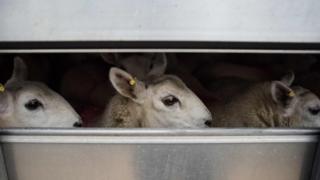
    lambs are transported Image copyright Getty Images

    The UK’s lucrative food export industry could be at risk in the event of a no-deal Brexit, a report has warned.

    Food consignments and livestock could be delayed at UK borders if more vets aren’t recruited to process them, the National Audit Office has said.

    Defra said it has expanded its workforce and is preparing for a range of Brexit scenarios.

    But the Committee of Public Accounts chairwoman, Labour’s Meg Hillier, said: “We are rapidly running out of time.”

    The Department for Environment, Food and Rural Affairs (Defra) is one of the government departments most affected by Brexit.

    But the public spending watchdog has accused it of being unprepared for a no-deal scenario, saying many of its plans were of “poor quality and lack maturity”.

    Stopped at border

    The department has failed to hire enough vets, with the report highlighting that work to “engage publicly with the veterinary market” – due to start in April – had not been authorised by the government by September.

    “Without enough vets, consignments of food could be delayed at the border or prevented from leaving the UK,” the report said.

    More vets are needed to process the export health certificates – used to prove exports comply with animal health standards and regulations – which will increase if there is a no-deal Brexit.

    “Defra will have to introduce a UK equivalent for each of the 1,400 different versions of the current EU certificates, which currently refer to EU law, and agree these with 154 countries in order to continue to export these items,” the report explained.

    The NAO said Defra will not reach agreements with all 154 countries by March 2019, when Britain leave the European union.

    UK firms exporting to countries where agreements are not reached may not be able to do so for a period after Brexit, the report said.

    UK and France fail to agree scallop deal No-deal Brexit ‘disastrous’ for food firms

    Meanwhile, the environment secretary, Michael Gove, is due to set out plans to deliver a “Green Brexit”, in which farmers will be paid for “public goods” such as improving access to the countryside, and taking action to reduce flooding.

    The Agriculture Bill – to be introduced in Parliament later – could also see payments available for farmers to invest in new technologies and methods that boost productivity.

    Subsidies paid out under the Common Agricultural Policy will be phased out over seven years.

    More IT staff

    The NAO report also raised concerns for the fishing and chemical manufacturing industries.

    Amyas Morse, the head of the NAO, said while Defra had “achieved a great deal… gaps remain”.

    Defra said it had already started to build new IT systems and developed new services to replace those currently provided by the EU.

    The department has hired 1,307 more staff for Brexit-related work.

    “Since the report was written, we have continued to reprioritise our resources, expanded our workforce and made further progress on our extensive programme of work focused on preparing for a range of Brexit scenarios,” a Defra spokesperson said.

    “Our work will mean that environmental, welfare, and bio-security standards will continue to be met in a way that supports trade and the smooth flow of goods.”

  • Pro-whaling nations block plan to create sanctuary

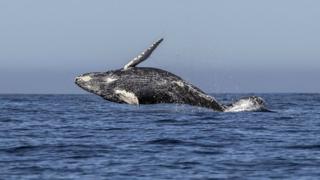
    A humpback whale (Megaptera novaeangliae) jumps out of the Pacific Ocean's waters in Los Cabos, Baja California Sur, Mexico on March 14, 2018 Image copyright Getty Images Image caption Commercial whaling is banned from whale sanctuaries

    A proposal to create a whale sanctuary in the South Atlantic Ocean has been defeated at an International Whaling Commission (IWC) meeting in Brazil.

    Japan and several other pro-whaling countries voted against the proposal, causing it to fall short of the two-thirds majority it needed to pass.

    Brazil’s Environment Minister, whose country proposed the creation of the sanctuary, said he was “disappointed”.

    Environmental campaigners are outraged at the outcome.

    The proposal was backed by 39 countries, with 25 countries voting against, including commercial whaling countries Iceland, Norway and Russia.

    Were Romans the first whale hunters? Whale spotted pushing dead calf for days

    But this is not the first time the proposal to build a whale sanctuary in the South Atlantic Ocean has failed.

    A similar proposal, tabled by Brazil, was defeated at an IWC meeting in Panama in 2012.

    Brazil’s Environment Minister Edson Duarte said he would not be deterred by the latest outcome.

    “We will work in other meetings of this commission this year to ensure that the sanctuary will finally be created,” he said.

    The IWC already recognises two whaling sanctuaries – one in the Indian Ocean and the other in the waters of the Southern Ocean around Antarctica.

    In 1986 it also agreed to a moratorium on hunting, which eventually became a quasi-permanent ban.

    But by using an exception in the ban that allows whaling for scientific purposes, Japan has still killed between 200 and 1,200 whales every year since, including young and pregnant animals.

    Could the ban on killing whales end? Why Japan keeps on whaling Japan and the whale

    And Japan is now looking to officially reinstate commercial whaling.

    The IWC will later this week give its verdict on whether it will overturn the ban on commercial whaling.

    Whaling in the 19th and early 20th Century brought the giant mammals to the brink of extinction.

  • The Brexit factions reshaping UK politics

    Parliament Image copyright Getty Images

    Westminster is buzzing with talk of splits, general elections, second referendums and even the formation of new political parties as Brexit strains traditional loyalties to breaking point.

    With votes on any deal struck by Theresa May with the EU expected to happen this autumn, here is a guide to the main factions in the Commons:

    Theresa May loyalists
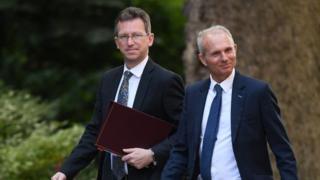
    Image copyright EPA Image caption Jeremy Wright and David Lidington – cabinet ministers loyal to the PM

    Government ministers, basically – there are just over 100 them out of a total of 316 Tory MPs – and those backbenchers who support Theresa May’s Brexit policies, or at least are not willing to vote against them and threaten her leadership.

    Most Tory MPs fall into this category but it is not enough for Mrs May to be sure of winning key Commons votes, even with the support of the DUP’s 10 MPs, who unlike Mrs May backed Leave in the EU referendum.

    Ten members of Mrs May’s government have quit in recent months – most of them because they are against her Chequers plan for post-Brexit trade, although Defence Minister Guto Bebb quit because he is in favour of it. Mr Bebb thought she had caved in to the hard Brexiteers (see below) over customs legislation. He has now joined the People’s Vote campaign (see below).

    Image copyright Getty Images

    Sixty Conservative MPs, headed by Jacob Rees-Mogg (pictured above), are members of the European Research Group – a pro-Brexit lobby, who are against Theresa May’s plans for trading arrangements with the EU.

    They are well-organised and highly motivated and the PM’s continued survival in Number 10 is, largely, in their hands.

    The rebel ranks were swollen by ex-Foreign Secretary Boris Johnson, former Brexit Secretary David Davis and his deputy Steve Baker, who all quit in protest at her blueprint for post-Brexit trade with the EU hammered out at her country residence Chequers, in July.

    Mr Baker claims as many as 80 Conservative MPs are prepared to vote against the Chequers plan. He has warned about a “catastrophic split” in the Conservative Party if it is not able to unite around a different vision. Mr Johnson has thrown grenades – and a “suicide vest” – into the debate from the pages of national newspapers, with increasingly strident attacks on the Chequers proposal, prompting an angry backlash from Theresa May loyalists.

    May warned of Tory split over Brexit plan Johnson: PM’s Brexit plan a ‘suicide vest’ At-a-glance: The new UK Brexit plan Brexit: All you need to know

    Tory soft Brexiteers
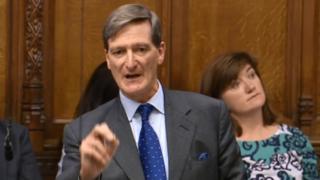
    Image copyright Getty Images

    The Dominic Grieve gang. Like most of his cohorts, who number about a dozen and include former minister Nicky Morgan (seated behind Mr Grieve in the picture above) who led an unsuccessful rebellion in the customs vote, the former attorney general is not a natural rebel.

    Mr Grieve and his supporters inflicted the government’s first Brexit defeat, in December, securing a “meaningful vote” for MPs on the final deal with Brussels, but some wonder whether his gang have the killer instinct of their pro-Brexit rivals when that final showdown happens in the autumn. Mr Grieve has said he will quit the party if Boris Johnson becomes prime minister, in reaction to a row over the former foreign secretary’s comments about the burka.

    Government survives key Brexit trade vote

    Cross-party crusaders
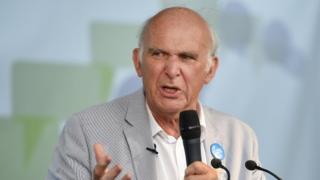
    Image copyright EPA

    Conservative MP Anna Soubry, a close ally of Labour’s Chuka Umunna in the People’s Vote campaign for another EU referendum (see below), has called in the past for the creation of a new centre-ground party.

    She also backed a call by fellow Conservative Sir Nicholas Soames – a longstanding pro-European and the grandson of Sir Winston Churchill – for a “government of national unity”, made up of senior figures from different parties to sort out Brexit, although that idea seems to have disappeared from the radar.

    But it is the leader of the Liberal Democrats, the UK’s traditional centre party, who has emerged as the biggest cheerleader for a new centre party.

    Sir Vince Cable is openly encouraging disaffected anti-Brexit Labour and Tory MPs to form new groups and work with the Lib Dems to colonise what he believes is the vast territory that has opened up in British politics as Labour moves to the left under Jeremy Corbyn and Tory Brexiteers push their party to the right.

    Sir Vince, who has said he will stand down as Lib Dem leader once Brexit has been “resolved or stopped”, admits his party, with just 12 MPs, has struggled to achieve the rapid growth in support it wanted despite being the only national party campaigning for a second referendum and has set out plans to transform into a “movement for moderates”.

    Cable to quit ‘once Brexit resolved’

    Tory second referendum group
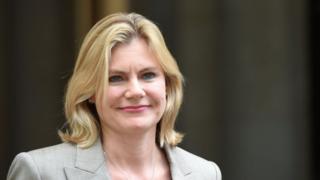
    Image copyright PA

    Former Education Secretary Justine Greening is the most senior Conservative to have called for a referendum on the final Brexit deal. She was backed by Heidi Allen and Anna Soubry, and another prominent backbencher, Sarah Wollaston, has also joined the People’s Vote campaign. along with Phillip Lee and Guto Bebb.

    No 10 rejects Greening’s referendum call

    The Corbynites
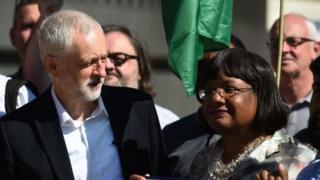
    Image copyright PA

    Jeremy Corbyn’s supporters insist the party has never been more united behind its leader – despite a bitter and divisive row about anti-Semitism that dragged on for months over the summer.

    The vast majority of the shadow cabinet – about 30 MPs – and most of the 47 new Labour MPs elected last year, in addition to a handful of long-serving left wing backbenchers, are fiercely loyal to the leader and back his Brexit stance.

    But many, maybe even the majority, of the 257 Labour MPs, including the self-styled “moderates” who served in government during the Blair/Brown era, remain unhappy with the direction the party is going in.

    Some Corbyn critics have faced no confidence votes from their local parties, a sign they could face de-selection before the next general election.

    Corbyn critics lose no-confidence votes Blair doubts Labour can be ‘taken back’ Why Corbyn allies want MP selection change

    Labour People’s Vote supporters
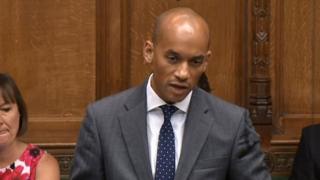
    Image copyright HOC

    Jeremy Corbyn’s backing for Brexit and refusal to throw his weight behind calls for a second referendum, after campaigning for Remain in the referendum, are a major sore point among “moderate” Labour MPs, who suspect he remains a Eurosceptic at heart.

    The cross-party People’s Vote campaign for a second referendum is backed by about 30 Labour MPs, including prominent figures such as Chuka Umunna (pictured above), Chris Leslie and Stephen Doughty.

    They outnumber members of other parties in the group, which also includes Lib Dems, Green MP Caroline Lucas, five Conservative MPs and Plaid Cymru’s four MPs.

    These MPs tend to eschew party labels when commenting on Brexit. The Labour members are in open revolt against their party leadership’s opposition to a second referendum – but they insist they are not operating as a party within a party.

    Chuka Umunna has written to members of his local party in Streatham, South London, to deny speculation he is involved in talks about the formation of a new party. The idea that the People’s Vote is the forerunner of a such a party is “patently absurd”, he writes.

    But he has also claimed Jeremy Corbyn’s supporters are trying to force “moderate” MPs like himself out of Labour, something the party leadership says is simply not the case.

    Call off the dogs, Umunna tells Corbyn Turn fire outwards, Corbyn urges MPs

    The SNP
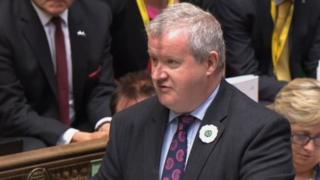
    Image copyright PA

    Like the members of the People’s Vote campaign, the SNP’s 35 MPs, led by Ian Blackford (pictured) are against Brexit and want the UK to stay in the EU single market and customs union.

    They have said they won’t stand in the way of a second referendum but have not committed to voting for one. One reason for this is that Scotland voted for Remain in 2016 and it did not make any difference to the result.

    They are likely to vote against anything resembling a “hard Brexit”.

    Labour Brexiteers

    Image copyright Labour Party

    Kate Hoey (pictured), John Mann, Frank Field and Graham Stringer – along with the currently independent Kelvin Hopkins – voted with the government in key Brexit votes, helping to ensure Theresa May’s survival.

    This is the core of a group who say they are standing up for the millions of Labour supporters who voted to Leave the EU.

    Mr Field has resigned the Labour whip in Parliament – and is fighting to remain a member of the party – after claiming it has become a “force for anti-Semitism in British politics”.

    The MP’s opponents say he jumped before he was pushed after losing a confidence vote organised by local activists in Birkenhead angry at his support for the government in Brexit votes, which they believe robbed Labour of the chance to force a general election it could have won.

    Ms Hoey is also facing calls to be expelled from Labour and has lost a confidence vote in her local Vauxhall Labour Party. Graham Stringer won a confidence vote in his Blackley and Broughton Labour branch.

    Field is not leading a Labour breakaway Field decides against calling by-election Labour needs seismic change – Blunkett
  • Brexiteers discuss leadership challenge

    theresa May Image copyright EPA

    Conservative MPs opposed to Theresa May’s Brexit plan have met to discuss how and when they could force her to stand down as prime minister.

    Around 50 members of the European Research Group (ERG) openly discussed “how best you game the leadership election rules,” a source said.

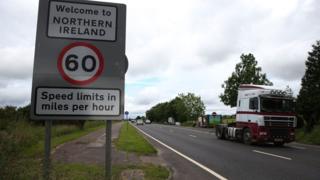
    Later, the Eurosceptic MPs are to unveil what they say is a solution to the Northern Ireland border issue.

    They have been under pressure to come up with alternative Brexit plans.

    ‘She has to go’

    One MP present at the meeting on Tuesday evening said the group considered “possible scenarios over the Autumn” depending on the deal the prime minister did or didn’t get with the EU, BBC political correspondent Jonathan Blake said.

    Image copyright PA

    The government says its plan for “harmonisation” with EU trade rules and a “combined customs territory” with the EU will avoid friction at the border.

    It says Parliament will be able to choose to diverge from the EU rules, “recognising that this would have consequences”.

    But critics say this would deny the UK the trade freedom it needs.

    The government’s Chequers plan has not yet been accepted by the EU. Both sides have also agreed on the need for a “backstop” to avoid new physical infrastructure on the border, irrespective of the final deal that is negotiated.

    Some Brexiteers have claimed the border issue is being “exploited” by the EU and Remain supporters to keep the UK closely tied to Brussels.

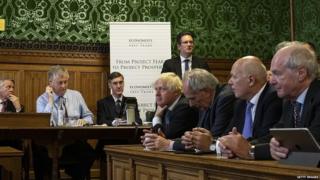
    Image copyright Getty Images Image caption Boris Johnson was among leading Tory MPs at an event discussing a “clean break”
    Speaking at an event on Tuesday, Mr Rees-Mogg said the border was the only thing standing in the way of the UK negotiating a free trade deal like the EU has with Canada.

    He added: “It is possible to move very swiftly to a Canada-plus style deal as long as we can come up with a scheme, which I think we have got for tomorrow, on how do you ensure a solution to the Northern Ireland problem that any reasonable person would accept?”

    Prime Minister Theresa May has said a free trade deal would not avoid a hard border and that this can only be achieved with “friction-free movement of goods” with no customs or regulatory checks.

  • Brazil’s Lula: Saint or sinner?

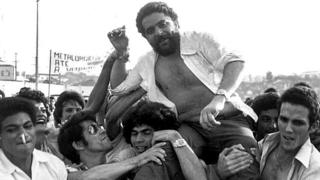
    This 22 March 1979 file photo shows Luiz Inacio Lula da Silva being lifted by metalworker colleagues after a union rally in Sao Bernardo do Campo, 55kms from Sao Paulo. Da Silva, presidential candidate for the Workers' Party, has been declared the winner of the presidential election run-off 27 October, 2002. Image copyright Getty Images Image caption Lula started his political career with the metalworkers’ union
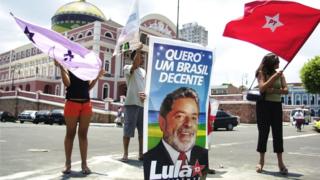
    Luiz Inácio “Lula” da Silva is seen as much as a saviour as he is a sinner in Brazil: a man who came to power promising change yet ended up leaving politics with a very different legacy.

    His life mirrored that of many Brazilians. He was born in 1945 into a poor family in the north-east of Brazil and, by the time he was seven, his family had moved to São Paulo to find work – as many millions of Brazilians have done, before and after him.

    ‘Only death will take me off streets’

    Lula did not learn to read until he was 10. At the age of 14, he got his first job as a metal worker in the car factories on the outskirts of São Paulo.

    It was in those factories that he started getting involved in politics. By 1975, he was heading the metalworkers’ union and, throughout the 1970s and 80s, he helped organise major strikes in defiance of Brazil’s military rule.

    “The working class has never got anything in this world without a battle, without perseverance and without the will to fight until the end,” he told workers in April 1980.

    Image copyright Getty Images Image caption Lula’s campaign slogan in 2002: “I want a decent Brazil”
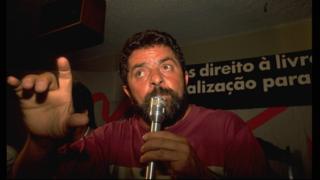
    But it was a long struggle to the top. Lula ran for president unsuccessfully three times before eventually being elected in 2002.

    And when he was, he made history as Brazil’s first working-class president, who argued it was time for Brazil to turn a new page.

    “Change: that was the key word, that was the message from Brazilian society,” he said as he was sworn in, in January 2003. “Society decided it was time to forge a new path.”

    He led Brazil during a period of unprecedented economic growth. High prices for commodities meant that he had money to spend on social programmes.

    Image copyright Getty Images Image caption Lula ran for the presidency three times before being elected in 2002
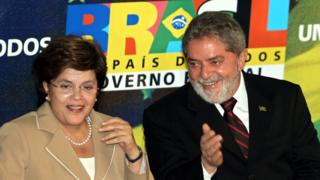
    One of his biggest legacies was lifting millions out of poverty, according to his former foreign minister, Celso Amorim.

    “Taking 30 to 40 million people out of poverty is fantastic,” says Mr Amorim.

    “They [Brazilians] identify with Lula because he’s one of them, coming from poorer parts, then becoming a metal worker, and then all the way to the presidency, without departing from these origins.”

    Spendthrift

    But he also faced criticism for spending money without addressing the core problems in society.

    “Everyone was happy because everyone had access to credit,” argues political analyst Thiago de Arago. “This is a mechanism that didn’t come from the brilliance of an economic plan but from the circumstance of the moment.”

    The good times could not last forever. After serving two consecutive terms in office, the maximum allowed under Brazil’s constitution, Lula stood down on 1 January 2011.

    Image copyright Getty Images Image caption Lula was Dilma Rousseff’s mentor and he made her his chief of cabinet
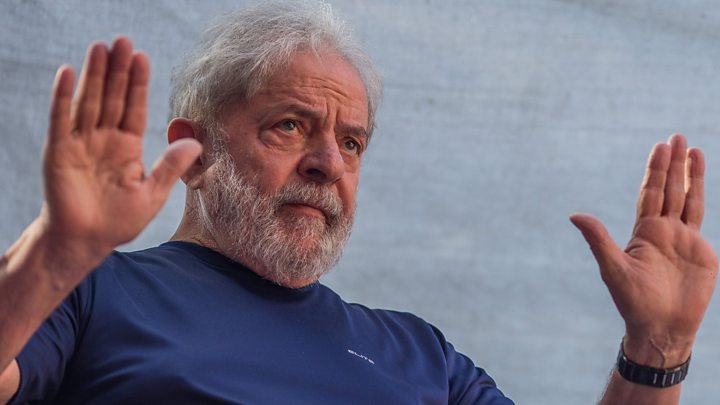
    His ally Dilma Rousseff succeeded him as president but as economic growth slowed, political dissatisfaction grew.

    In 2013, protests that started over a rise in bus fares grew into a widespread expression of anger with corrupt politicians, a situation that intensified with the start of Operation Car Wash in 2014, the biggest corruption investigation the country has ever seen.

    Brazil corruption scandals: All you need to know

    Lula was a man who said he would represent change, but in the end, he too was charged with corruption.

    ‘You can’t arrest my ideas’

    In 2017 he was sentenced to nearly a decade in prison over allegations he accepted a beachfront apartment in return for political favours from a construction company.

    In 2018, his sentence was extended to 12 years.

    Media playback is unsupported on your device

    Media captionLula forced his way through crowds of his supporters to turn himself in

    It is a charge that has divided Brazil between those who feel that he and his Workers’ Party have been unfairly treated and those who believe justice has been served.

    Lula’s legacy is mixed. “It proved that in a country like Brazil today, he cannot be protected just because of how big he was,” says Mr Arago. “I think this is a major legacy that Lula will leave for Brazilians: that no one is above the law.”

    For months, he fought to remain out of jail, but in April the Supreme Court said he had to start serving time.

    From the metalworkers’ union where he began his career, he gave his last speech: “There is no point in trying to end my ideas, they are already lingering in the air and you can’t arrest them. There is no point in trying to stop me from dreaming, because once I cease dreaming, I’ll keep dreaming through your minds and your dreams.”

    “They have to know that the death of a fighter cannot stop the revolution,” he said to the crowd.

    And even behind bars Lula has kept up the fight. But it is one he has finally lost and which has led to the fall from grace for the man who was once Brazil’s most popular politician.

    He is out of politics now but still in the minds of many and will continue to be formidable influence in Brazilian politics for a while to come.

    (more…)