Blog

  • U.S. reimposes Iran sanctions in ‘maximum pressure’ campaign


    The Trump administration on Monday reimposed sweeping sanctions on Iran, targeting its financial sector and oil industry to pressure the Islamic regime to cease nuclear weapon development and sponsori

    The Trump administration on Monday reimposed sweeping sanctions on Iran, targeting its financial sector and oil industry to pressure the Islamic regime to cease nuclear weapon development and sponsoring terrorism.

    The rollout was the largest ever single-day action targeting the Iranian regime and a crucial ste in President Trump’s pullout from the Iran nuclear deal that was announced in May.

    “Treasury’s imposition of unprecedented financial pressure on Iran should make clear to the Iranian regime that they will face mounting financial isolation and economic stagnation until they fundamentally change their destabilizing behavior,” Treasury Secretary Steven T. Mnuchin said.

    SEE ALSO: Iran’s president warns of ‘war situation’ as sanctions resume

    He called on Iran’s leaders to immediately give up support for terrorism, stop proliferating ballistic missiles, end destructive regional meddling and abandon their nuclear ambitions in order to escape the crushing sanctions.

    “The maximum pressure exerted by the United States is only going to mount from here. We are intent on making sure the Iranian regime stops siphoning its hard currency reserves into corrupt investments and the hands of terrorists,” Mr. Mnuchin said.

    Iran remained defiant, greeting the renewed U.S. sanctions with air defense drills and a warning from President Hassan Rouhani that the nation faces a “war situation.”

    “We are in the economic war situation. We are confronting a bullying enemy. We have to stand to win,” Mr. Rouhani said in a statement.

    He also vowed to keep selling the oil that is the country’s economic lifeblood.

    The sanctions end all economic benefits the United States had granted Tehran for its 2015 nuclear deal with world powers, though Iran for now continues to abide by the accord that saw it limit its enrichment of uranium.

    The restored sanctions hit list includes:

    • 50 Iranian banks and their foreign and domestic subsidiaries.

    • More than 400 targets, including over 200 persons and vessels in Iran’s shipping and energy sectors.

    • Iran Air and more than 65 of the airline’s aircraft.

    • Nearly 250 persons and associated property returned to the list of Specially Designated Nationals and Blocked Persons.

    Mr. Trump called the Obama-era nuclear deal with Iran the “worst ever” agreement stuck by the U.S. But the other parties to the deal — Britain, France, Germany, China and Russia — stuck with it.

    The European Union, France, Germany and Britain said they regretted the renewed U.S. sanctions and would try to protect their companies doing legitimate business with Tehran.

    Iran is already in the grip of an economic crisis. Its national currency, the rial, now trades at 150,000 to one U.S. dollar, down from when it traded around 40,500 to $1 a year ago. The economic chaos sparked mass anti-government protests at the end of last year which resulted in nearly 5,000 reported arrests and at least 25 people being killed. Sporadic demonstrations still continue.

    Mr. Trump stressed that the sanctions target the Iranian regime, not the Iranian people. He said the goal is curbing the government’s bad behavior, not regime change.

    “I don’t want to totally destroy their country. I don’t want to do that,” Mr. Trump said last week in an interview with The Washington Times.

    The Treasury said its Office of Foreign Assets Control will continue to maintain humanitarian authorizations and exceptions that allow for the sale of agricultural commodities, food, medicine, and medical devices to Iran.

    The administration also granted eight countries a six-month exemption from penalties for buying Iranian crude. Exempted countries are top Iranian oil importers China, India, South Korea, Turkey, Italy, United Arab Emirates and Japan, as well as occasional oil customer Taiwan.

    Asked about the eight exempted countries, White House press secretary Sarah Huckabee Sanders said the U.S. was exerting intense pressure on Iran.

    “We are going to make sure we are putting it where it hurts in these financial sectors and the oil industry. This is where they feel it, and it’s exactly why the sanctions have been targeted in those places,” she told Fox News’ “Fox & Friends.”

    • This article was based in part on wire service reports.
  • ISIS insurgency, sleeper cells to take years to defeat

    Fully defeating the Islamic State and rooting out sleeper cells that have spread across the Middle East and Africa could take years, the Defense Department’s inspector general said

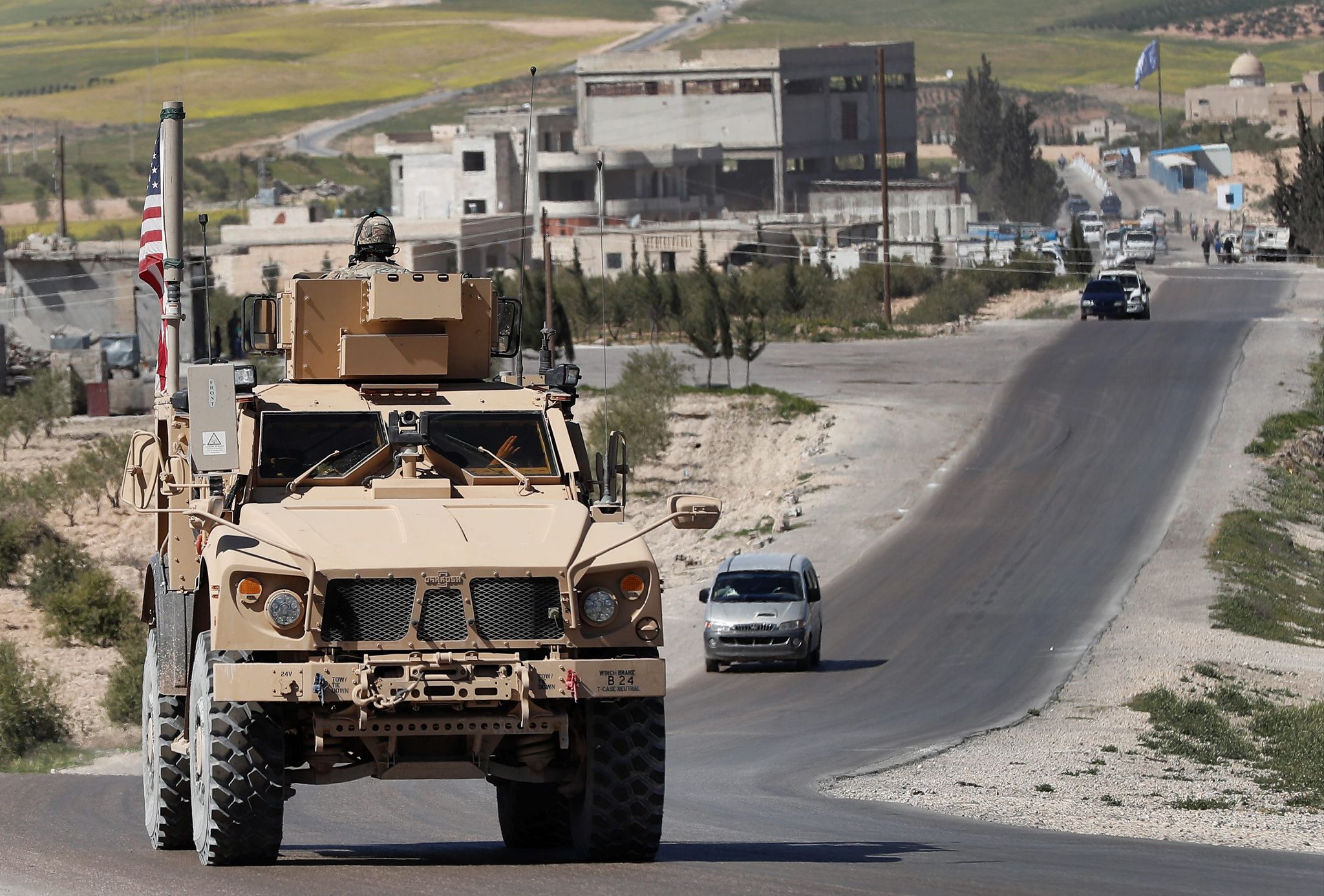
    The Islamic State may have lost the vast majority of physical territory it once held in Syria and Iraq, but fully defeating the terrorist group and rooting out sleeper cells that have spread across the Middle East and Africa could take years, the Defense Department’s inspector general said in a sweeping and at times critical review Monday that suggests final victory remains distant.

    The report said that a “reduced, covert version” of the Islamic State — also known as ISIS — maintains a presence not just in Iraq and Syria but also in Afghanistan, Libya, Somalia and Yemen. Islamic State, the report concluded, has evolved “from a land-holding terrorist entity to an insurgency” that operates numerous clandestine cells around the world.

    At a time when the Trump administration has sent mixed signals about the commitment of U.S. troops to the fights, “clearing terrorists from remote and largely ungoverned terrain is a low and difficult process, and eliminating ISIS from rural Iraq and Syria could take years,” the report says.

    The Pentagon in recent months has put forward two separate narratives in describing the fight against Islamic State, which began in 2014 under President Obama. When the U.S.-led international operation began, Islamic State held vast swaths of territory across Iraq and Syria, controlled a “capital city” in Raqqa, Syria, and boasted a sizable fighting force.

    Defense Department officials say Islamic State now has been “territorially defeated” and has lost nearly all of the land it once used as a base of operations.

    But officials also have said that the transformation of the Islamic State into an underground terrorist group presents challenges of its own. The inspector general described the recapture of Islamic State-held territory — the result of a relentless U.S.-led bombing campaign and ground operations inside Iraq and Syria — as just one phase of the mission.

    “There are significant challenges to developing capable and self-sufficient security forces in Iraq and Syria, and questions remain about the length of time it will take to train forces capable of preventing an ISIS resurgence,” the report says. “There are also significant challenges to U.S. efforts to address non-military issues, such as the promotion of democratic governance and civil society and the stabilization of liberated areas. These issues can also affect the ability of security forces to defeat Islamic State. Ongoing political uncertainty in Iraq and civil war in Syria also complicate efforts to confront an ISIS insurgency.”

    In Iraq specifically, deep-rooted issues with the Iraqi Security Forces make it difficult to eradicate the pockets of Islamic State fighters that remain across the country, and will likely require a long-term Pentagon commitment. Islamic State fighters driven from Syria are increasingly finding sanctuary across the border in Iraq, the inspector general’s report said.

    “The ISF continues to suffer from poor management of intelligence; corruption and … overlapping command arrangements with conflicting chains of command; micromanagement; and inefficient and inadequate systems for planning and transmitting orders,” the report said.

    Islamic State still has an estimated 20,000 to 30,000 fighters, both foreign and local, scattered across the region. Even before the release of Monday’s report, top U.S. military officials stressed that it was far too early to declare the group dead and buried.

    “Despite recent successes against ISIS and positive trends, we know there’s actually much work to be done,” Gen. Joseph F. Dunford, chairman of the Joint Chiefs of Staff, said last month. “ISIS is far from defeated and has a presence in countries from West Africa to Southeast Asia. Its ideology continues to inspire homegrown violent extremists in many of our countries.”

  • Iran revives black-market oil exports after US sanctions renewed


    With President Trump finally pulling the trigger on tough economic and financial sanctions, Iran is gearing up to revive a black-market oil export operation.

    With President Trump finally pulling the trigger on tough economic and financial sanctions, Iran is gearing up to revive a black-market oil export operation that kept the regime afloat the last time Washington engineered an international embargo on Iranian crude.

    The battle of wills could determine a critical piece of the Trump foreign policy as the U.S. seeks to impose its will on Iran and on its leading international partners to force a major change of behavior in Tehran. Iranian leaders said Monday that the pressure campaign won’t work.

    “We have to make the Americans understand that they must not use the language of force, pressure and threats to speak to the great Iranian nation — they must be punished once and for all,” President Hassan Rouhani told a Cabinet meeting in the Iranian capital.

    While the sanctions on Iran’s oil, shipping and banking sectors mark the most aggressive move Mr. Trump has made against the Islamic republic since pulling the U.S. out of the 2015 Iran nuclear deal, regional analysts warn that the sanctions may take a smaller bite than the administration predicts.

    Iran, they say, has been subjected to energy-sector sanctions so often over the past three decades that it has developed highly refined techniques to sell bootleg oil and launder the profits — despite Western efforts to stop such activities.

    “They have endured so many years and types of sanctions that they have better coping mechanisms than other countries,” said Ahmad Majidyar, who heads the Washington-based Middle East Institute’s Iran Observed project.

    “While sanctions could hurt them down the road, they do not see this is as an existential threat that will topple the regime,” Mr. Majidyar said in an interview Monday. “They are hoping the Trump administration is a one-term presidency and they can survive this out.”

    Without vigilant global enforcement, including potential ship interdictions on the high seas, the sanctions will fall short of stripping the Iranian regime of its cash.

    “The U.S. now has the legal and economic architecture in place to properly execute its maximum pressure campaign,” said Behnam Ben Taleblu, a sanctions analyst with the Foundation for Defense of Democracies. “But as is the case with all coercive policies, follow-through matters, especially when the Iranians are bragging that they will ‘proudly’ bust sanctions,” he said in an analysis Monday.

    With Russia, China and key European allies all saying they remain committed to the 2015 nuclear deal, it remains to be seen whether the U.S. penalties force them to comply or drive their companies away from Iran. Some, including France and Germany, have gone so far as to establish a “special payment vehicle” to finance deals with Iran while bypassing the American financial system.

    Iranian officials, meanwhile, will continue scrambling to prop up a national economy hit badly by an earlier round of U.S. sanctions, and the U.S. Treasury Department’s terrorism and illicit finance enforcement teams will hunt Tehran’s efforts to trick them.

    Dodgy ways to dodge sanctions

    There is already evidence that Iranian oil sector operatives are implementing tried-and-true evasion tactics that allowed some of the country’s oil to move on the global market prior to the Obama-era easing of sanctions under the nuclear deal three years ago.

    One major challenge for the U.S. is the size of the market that must be policed. Worldwide, 4,500 oil tankers carry 2 billion barrels of crude per year over almost 140 million square miles of ocean, according to industry and intelligence agency estimates.

    Monitoring such vast quantities of oil, ships and area is impossible, analysts say, allowing for a wide range of smuggling endeavors, including blending Iranian oil with other liquid exports that are not sanctioned. Tankers are also painted and regularly change their flags.

    Most notoriously, “ghost tankers” turn off their geotransponders and disappear from the world’s satellite tanker tracking matrix, essentially vanishing into the millions of miles of open ocean.

    Ellen R. Wald, a nonresident senior fellow with the Atlantic Council think tank’s Global Energy Center, noted reports of ghost ships “turning off [their tracking devices] for longer periods” and paving the way for ship-to-ship oil transfers and cash sales on the high seas without international detection.

    Also easing Iran’s burden were eight waivers the Trump administration issued to Iran’s major oil companies Monday, allowing them to temporarily continue reduced oil deals with Iran to ease the shock to global oil markets. U.S. officials said they expect the exempted companies to eventually cut all Iranian deals, but the waivers offer another avenue for Tehran to fight the sanctions.

    Burgeoning black market

    Iranian Foreign Minister Mohammad Javad Zarif has boasted of Iran’s plans to circumvent sanctions by selling oil in currencies other than the U.S. dollar, but European financiers acknowledge having difficulty sidestepping the American-dominated banking system.

    That leaves the black market, analysts say, with questions over exactly how much money Tehran could make. The answer is murky and depends on multiple factors, including the global price of oil.

    With the price of crude hovering around $80 per barrel, most energy market analysts agree that the total global market value is somewhere in the $3 trillion range. The catch is that some 5 percent is already being siphoned off to the black market. Although the percentage is small, it represents nearly $150 billion worth of illegal sales.

    There is also the matter of the quantity of oil being bootlegged.

    Ms. Wald noted that legal sales of Iranian crude dipped in October to roughly 1.6 million barrels per day, down from just more than 2 million a month earlier.

    Analysts have debated whether the dip was driven by decreased demand on the global market or whether Iran was exporting roughly the same total volume of crude but moving some 400,000 to 500,000 barrels per day to the black market — shifting a massive infusion of cash to its coffers.

    Smugglers’ haven

    One country that U.S. sanctions officials could watch closely is the United Arab Emirates, which occupies a patch of geography vital to Iran’s ability to move oil legally or illegally out of the Persian Gulf. Analysts say the UAE is buying about 100,000 barrels per day from Tehran.

    While the Emirati government so far appears poised to go along with the Trump administration, U.S. officials know that the regional geography makes it a sought-after haven for smugglers seeking to evade Washington’s sanctions.

    That was evident when the Obama administration attempted to hold up a global embargo on Iranian crude prior to the nuclear negotiations with Tehran.

    In 2013, U.S. officials broke up one of their highest-profile sanctions evasions by targeting Sambouk Shipping FZC, a UAE-based company that Washington accused of having ties to a Greek businessman under sanction on suspicions that he operated a clandestine shipping network for Tehran.

    Sambouk Shipping, according to the Treasury Department, was running eight vessels on behalf of the National Iranian Tanker Co. to execute ship-to-ship transfers of Iranian oil in the Persian Gulf intended to obscure the origin of the oil.

  • Saudis press Yemen campaign despite U.S. warnings

    The Saudi-led Arab coalition in Yemen is showing no sign of scaling back its brutal campaign to defeat Iranian-backed Houthi separatists from the war-torn nation, despite explicit and public demands f

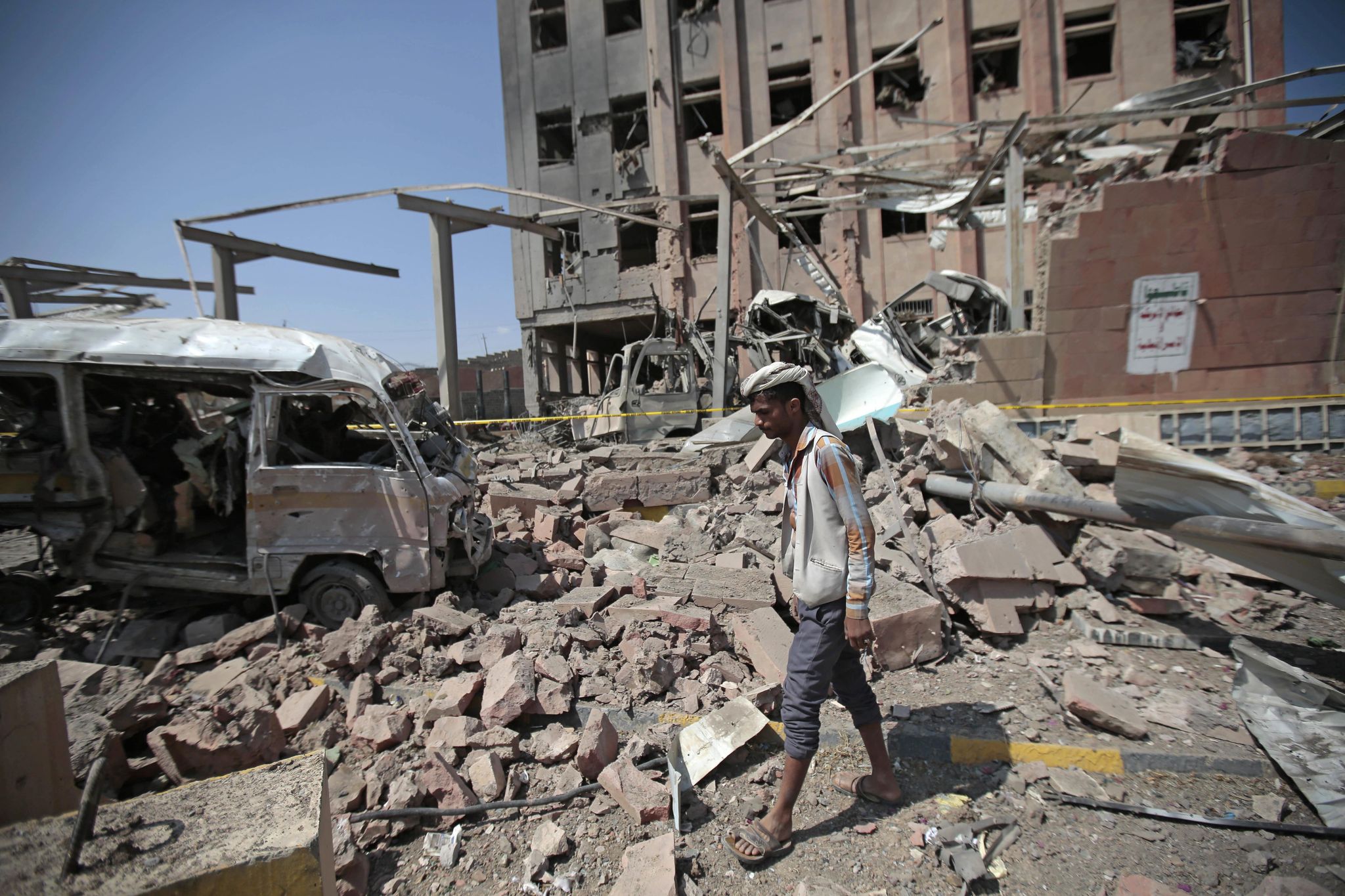
    The Saudi-led Arab coalition in Yemen is showing no sign of scaling back its brutal campaign to defeat Iranian-backed Houthi separatists from the war-torn nation, despite explicit and public demands from top Trump administration officials in recent days to end the three-year conflict amid a massive and growing humanitarian crisis.

    On Monday, Yemeni government forces backed by Saudi Arabian and Emirati air power launched a multipronged offensive as part of a campaign to retake the strategically important port city of Hodeidah, in Houthi-held southeast Yemen. Government troops and members of the Shia separatist group have engaged in intense fighting in and around the port city for the last four days, according to local reports.

    Saudi, Yemeni and Emirati forces in June tried and failed to seize the critical port city, despite Riyadh launching the largest offensive of the war against the Iranian-backed separatists. The June offensive and the current effort in Hodeidah signal a new escalation of the conflict by Saudi Crown Prince Mohammed bin Salman.

    The new wave of attacks comes less than a week after Defense Secretary James Mattis, quickly echoed by Secretary of State Mike Pompeo, demanded all parties participate in U.N.-led peace talks scheduled for next month. There has been mounting congressional criticism of U.S. backing for the Saudi war in Yemen, including logistical and intelligence support for Saudi forces.

    “We want to see everybody around a peace table based on a cease-fire [in Yemen], based on a pullback from the border, and then based on ceasing dropping of bombs,” Mr. Mattis told the Washington-based U.S. Institute for Peace last week. ” … We need to be doing this in the next 30 days” to end the war.

    Mr. Pompeo said Riyadh and its allies should play a meaningful role in U.N. peace talks led by Special Envoy to Yemen Martin Griffiths in Sweden.

    Officials in Sanaa and Riyadh told Agence France-Presse that the new Hodeidah offensive is geared toward encircling several major Houthi strongholds inside the city, in an attempt to cut those rebel redoubts off from resupply by Iranian military advisers. Fighting in and above the embattled city has been fierce, according to eyewitnesses. Humanitarian groups warn that Hodeidah is also a critical supply port for aid in what is already the region’s poorest country.

    “Hodeidah has become a ghost city, people stay indoors and the streets are deserted,” Isaac Ooko, Hodeidah area manager for the Norwegian Refugee Council, told the Reuters news agency.

    Mohammed Ali al-Huthi, head of the Houthi revolutionary council, told Al Jazeera on Monday that the Arab coalition’s renewed attacks on Hodeidah “a strenuous attempt to block talks aimed at ending the war and finding peace.”

    At the Pentagon, department officials declined to comment on the new Saudi-led offensive and whether it represented a direct rebuke to the Trump administration.

    “We continue to strongly support the efforts of Special Envoy Martin Griffiths to bring all sides of the conflict to the negotiating table,” Pentagon spokesperson Navy Cmdr. Rebecca Rebarich said in a statement.

    Riyadh’s heavy-handed strategy to defeat the Houthis, which has reportedly included the use of cluster bombs banned under the international rules of war, has failed to dislodge the Houthis, while reportedly slaughtered thousands of civilians and initiating one of the world’s worst humanitarian crises.

    There has been some talk the Hodeidah offensive is a last-ditch bid to seize territory before a peace accord is signed, in order to shape the postwar settlement in Yemen.

    “The Hodeidah operation is fraught with risk for the [Saudi] coalition,” the Middle East Institute’s Gerald M. Feierstein, ambassador to Yemen under President Obama, wrote on Monday, especially in the wake of the global outrage over the apparent killing of dissident Saudi journalist Jamal Khashoggi by Saudi government agents in Turkey last month.

    “Frustration with the conflict in Yemen continues to mount,” Mr. Feierstein said, adding, “Any mass-casualty event in Hodeidah could effectively end Western cooperation with the coalition.”

  • Russian lawmakers included in international delegation to monitor U.S. midterm elections

    A leading international delegation now in the U.S. to monitor the midterm elections includes two Russian members of parliament, according to the Russian news agency TASS.

    A leading international delegation now in the U.S. to monitor the midterm elections includes two Russian members of parliament, according to the Russian news agency TASS.

    Artyom Turov is with President Vladimir Putin’s United Russia Party, and Alexei Korniyenko is a member of the Communist Party of the Russian Federation.

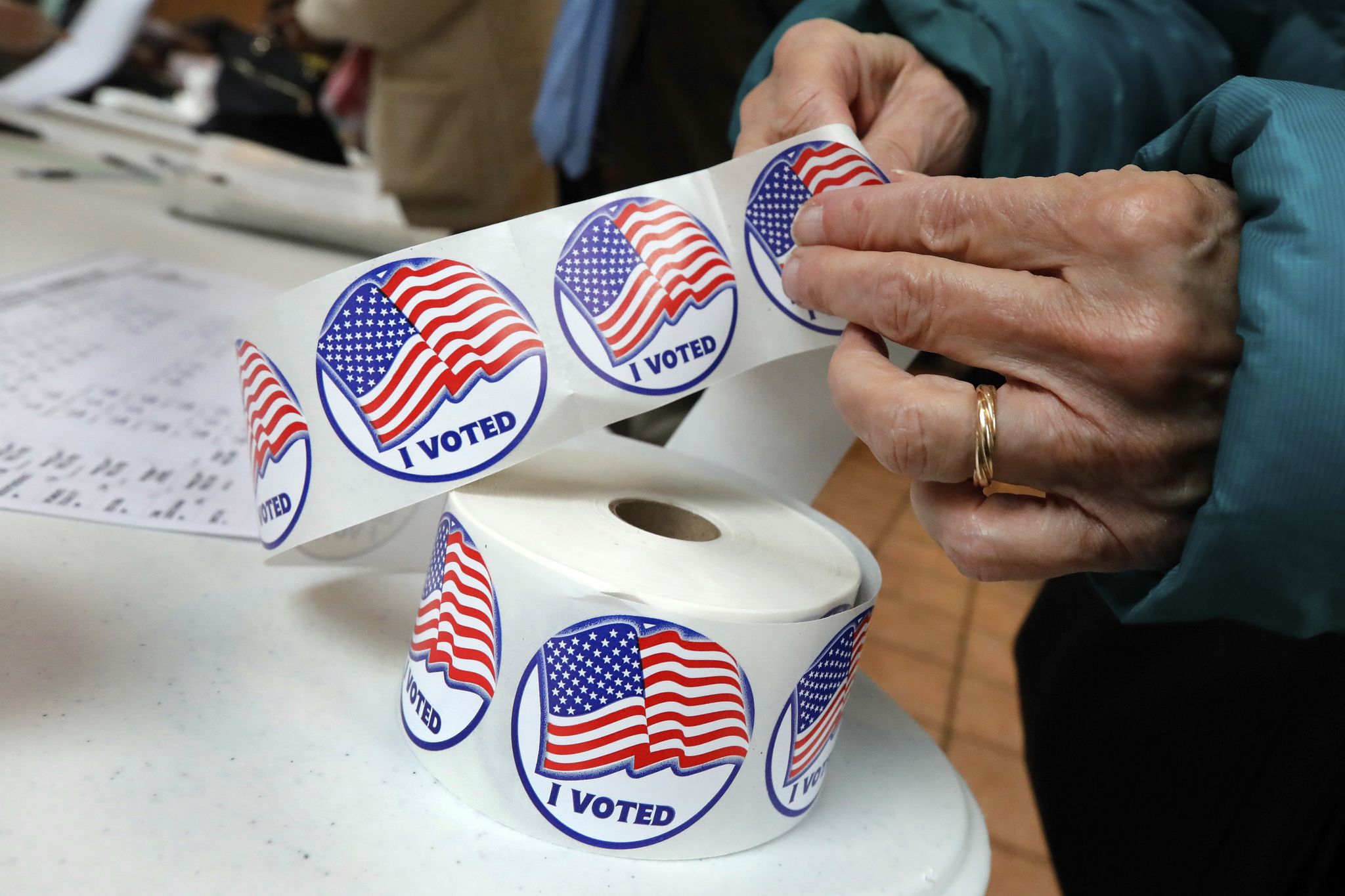
    They are among more than 100 official Organization for Security and Co-operation in Europe (OSCE) observers deployed across the United States to monitor election day issues, including voter ID disputes.

    The mission includes additional Russians, but Mr. Turov and Mr. Korniyenko, who are expected to visit roughly 10 polling stations, are said to be the only members of parliament in the group.

    “We will be working in Washington and the bordering state of Maryland,” Mr. Korniyenko told TASS.

    OSCE election monitoring teams are routine and respected around the world.

    But this year’s U.S. mission has an increased urgency as it unfolds against continued concerns that Russia could somehow try and influence the midterm results — given the evidence U.S. officials have collected documenting a major Kremlin campaign to meddle in the 2016 presidential election.

    “Our job as international observers is to bring a critical but fair eye to this process,” OSCE delegation heads George Tsereteli and Isabel Santos wrote in an op-ed published by The Hill. “In one sense, the mission is routine for us, having observed elections in the U.S. a half-dozen times since 2004.”

    “But we are also keenly aware,” they added, “that this election is taking place in a context of deep polarization, concerns over election security, and an ongoing investigation into foreign interference in the 2016 presidential contest.”

    The Kremlin has firmly denied meddling in 2016 despite special counsel Robert Mueller’s investigation into the issue, charging 26 Russian nationals and three Russian companies with election interference and additional related crimes.

  • Justin Trudeau: Canada won’t threaten NAFTA 2.0 to end tariffs

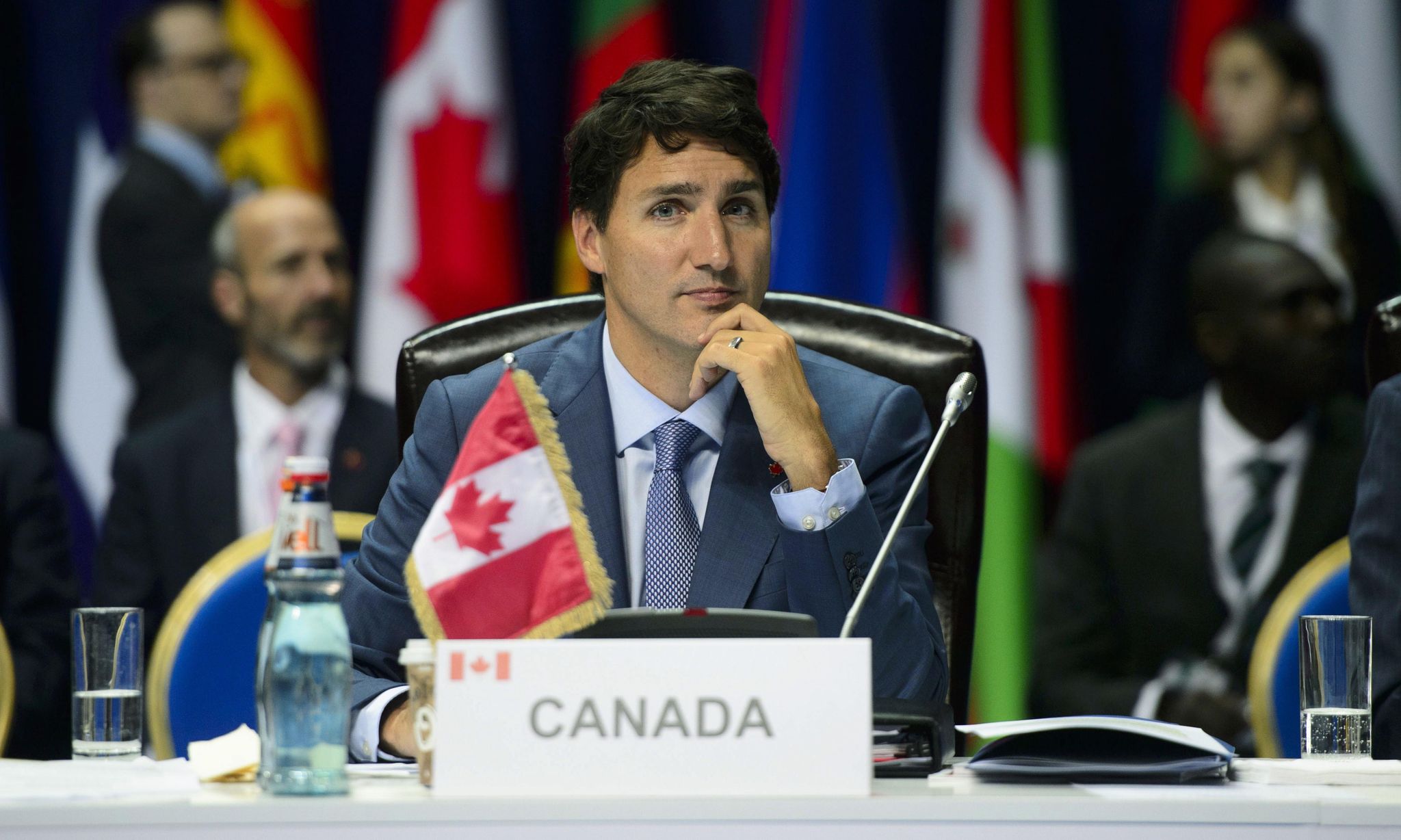
    Canadian Prime Minister Justin Trudeau said his country won’t use the new NAFTA as leverage to break President Trump’s tariffs.

    Canadian Prime Minister Justin Trudeau said his country won’t use the new NAFTA as leverage to break President Trump’s tariffs.

    “We would much rather have genuine free trade with the United States, so we’re going to continue to work to lift those tariffs,” Mr. Trudeau said in an interview clip CNN aired on Tuesday, “But we’re not at the point of saying we wouldn’t sign [the trade agreement] if it wasn’t lifted, although we are trying to make that case.”

    When pressed by CNN host Poppy Harlow, Mr. Trudeau stressed, “I don’t negotiate in public.”

    However, the prime minister told CNN that the tariffs were not the reason Canada came to the NAFTA negotiation and that they were always willing to talk trade with the U.S.

    Canada agreed to Mr. Trump’s USMCA (the United States–Mexico–Canada Agreement) in early October, but the deal is still unsigned.

    The agreement came after tough negotiations and bitter trade tensions over tariffs, during which Mr. Trump accused the U.S.’ long-time ally of taking advantage.

    Canadian Prime Minister Justin Trudeau says US tariffs weren’t the reason he was willing to agree to a new trade deal earlier this year — dismissing President Donald Trump’s argument that the duties on Canadian goods forced his hand. @PoppyHarlowCNN has the exclusive interview. pic.twitter.com/4iwscIwQa0

    — New Day (@NewDay) November 6, 2018

  • 6 detained in suspected plot to attack French president

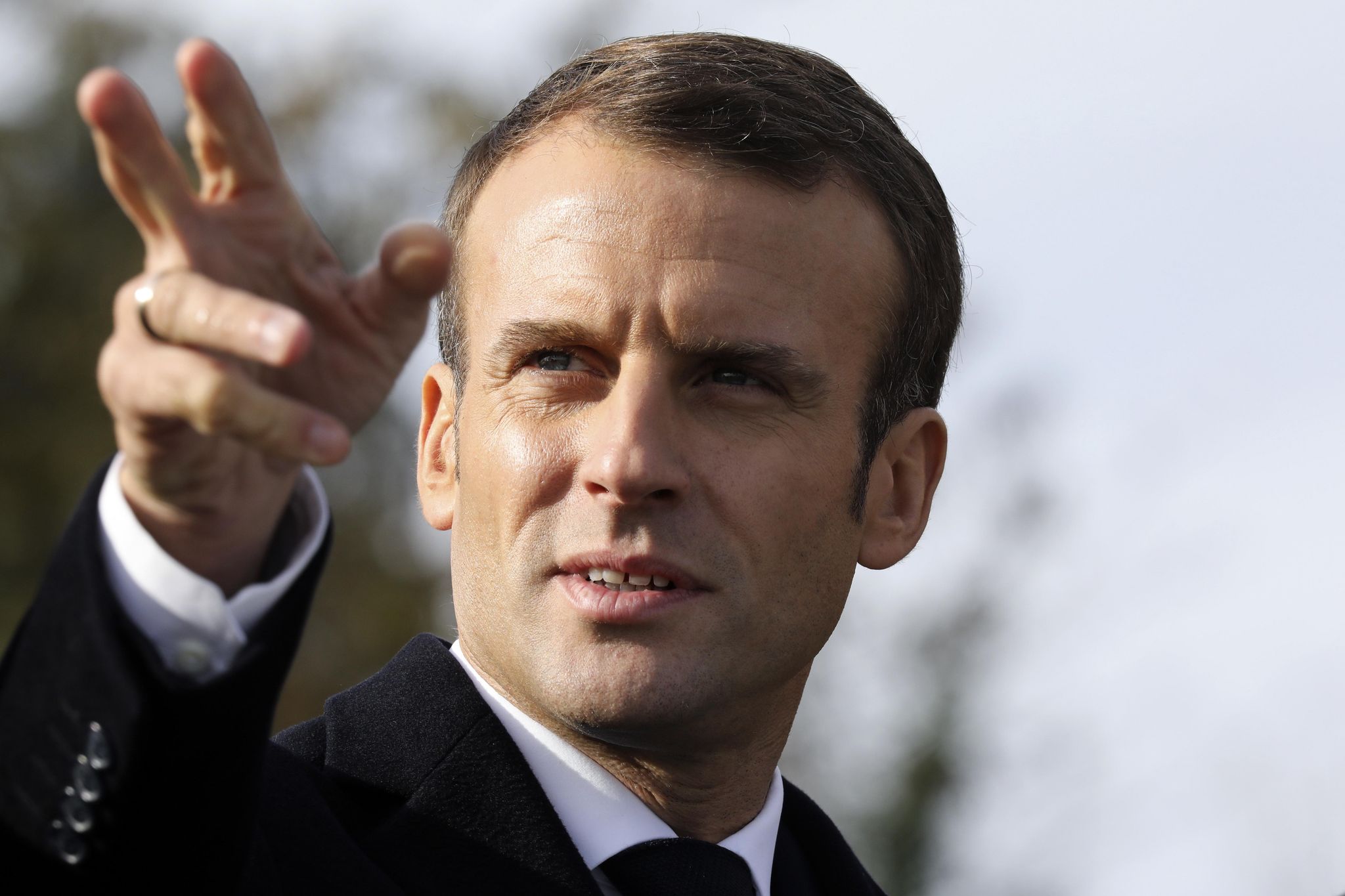
    A French judicial official says six people have been arrested on preliminary terrorism charges, suspected of plotting to attack French President Emmanuel Macron.

    PARIS (AP) — A French judicial official says six people have been arrested on preliminary terrorism charges, suspected of plotting to attack French President Emmanuel Macron.

    The official, speaking on condition of anonymity to discuss the allegations, said intelligence agents detained the six in three widely scattered regions, including the Alps, Brittany and near the Belgian border. He said the plan appeared to be vague and unfinalized but violent.

    Macron is in Verdun on Tuesday as part of World War I commemorations and hosts U.S. President Donald Trump this weekend.

  • Jamal Khashoggi: Who’s murdered Saudi Journalist?

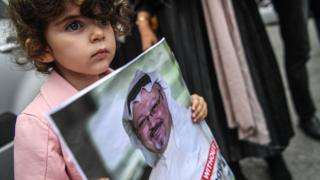
    A child holds a picture of the missing journalist Image copyright Getty Pictures Image caption Saudi Arabia blamed the killing of Jamal Khashoggi on a “rogue operation”

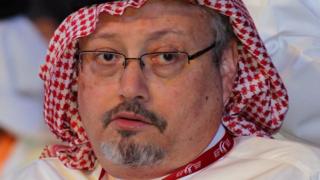
    Jamal Khashoggi – a well-identified Saudi journalist – went into his u . s . a .’s consulate in Istanbul on 2 October to obtain a wedding record and disappeared.

    After greater than two weeks of denials, Saudi Arabia sooner or later admitted that he have been killed throughout the consulate in what officers called a “rogue operation” and has vowed to punish “the ones responsible”.

    Once an adviser to the royal family, Khashoggi had fallen sharply out of favour with the Saudi executive and went into self-imposed exile last year.

    Here, we take a glance at Khashoggi, his career and the events that led up to his disappearance.

    Born in Medina in 1958, he studied trade management in the US at Indiana State School.

    Symbol copyright EPA Symbol caption Jamal Khashoggi has no longer been noticed on the grounds that lunchtime on Tuesday
    In 2003 he became editor of the Al Watan newspaper but was fired simply months into his tenure for publishing stories that have been very important of the Saudi clerical establishment.

    After his dismissal he moved to London and later Washington to serve as a media adviser to ambassador Prince Turki bin-Faisal, Saudi Arabia’s former intelligence leader.

    He again to Al Watan in 2007 but left 3 years later after additional controversy.

    Saudi critic in his own words Jamal Khashoggi gets blank column

    Following the Arab Spring uprisings in 2011, he expressed toughen for Islamist groups that had received power in different countries.

    In 2012 he was once chosen to lead the Saudi-sponsored Alarab information channel – touted as a rival to the Qatari-funded Al Jazeera.

    But The Bahrain-primarily based information channel stopped broadcasting lower than 24 hours after its release in 2015 after inviting a outstanding Bahraini opposition determine directly to speak.

    Thought To Be an authoritative voice on Saudi affairs, Khashoggi has also been a normal contributor on world news outlets.

    ‘We Saudis deserve better’

    The journalist left Saudi Arabia for the us in summer time 2017.

    In his debut September column for the Washington Put Up newspaper, he said that he and a number of other others had long past into self-imposed exile because they feared being arrested.

    He said dozens of people have been detained in an apparent crackdown on dissidents below Crown Prince Mohammed bin Salman, who has been pioneering an formidable economic and social reform application in the united states.

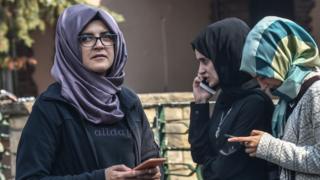
    Image copyright AFP/Getty Images Symbol caption The journalist’s fiancée Hatice Cengiz said she had waited out of doors for 11 hours, however he did not come out
    Mr Khashoggi used to be ultimate observed in public when he went into the Istanbul consulate on 2 October to procure authentic divorce files so he may marry a Turkish lady he had develop into engaged to.

    His fiancée, Hatice Cengiz, waited outside for him for hours however he by no means emerged.

    She says he had to surrender his mobile phone while entering, and had advised her to touch an adviser to Turkish President Recep Tayyip Erdogan if he did not return.

    Who Is who in alleged Saudi ‘hit squad’ Khashoggi suspect had ‘cyber spy’ coaching

    The Turkish government had been fast to report he have been murdered and stated they’d evidence, including grotesque audio recordings, to back this up.

    For weeks, Saudi Arabia insisted Khashoggi had left the development alive. However amid global outcry and force over the case, the government on 19 October mentioned for the first time that he have been killed in a fight within the consulate.

    The conflicting Saudi money owed over the incident have angered the kingdom’s Western allies, and shaken their ties with the world’s top oil exporter.

    ‘Just a author’

    Just three days earlier than his disappearance, the BBC’s Newshour programme interviewed Khashoggi off-air.

    In a launched audio snippet, he mentioned he did not assume he’d have the option to ever go back to his native country.

    “the folks being arrested don’t seem to be even being dissidents, they just have an independent mind,” he said.

    “i do not call myself an opposition: I all the time say I’m only a creator, i would like a free atmosphere to write down and speak my mind and that’s the reason what I do in the Washington Put Up.

    “they give me a platform to write freely and that i want I had that platform in my home.”

    He additionally criticised how the Saudi govt used to be beginning reform.

    “This severe transformation that may be taking place isn’t discussed – the Prince provides us each couple of weeks or couple of months with an enormous multi-billion buck project that wasn’t mentioned within the parliament, wasn’t discussed within the newspapers and the folks will simply clap and say great… and things don’t paintings that method.”

    (more…)

  • Pakistan bans Indian television channels amid water row

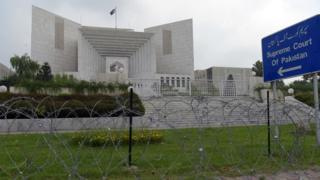
    Supreme Court of Pakistan Image copyright AFP/Getty Image caption The Supreme Court overturned an earlier ruling lifting the ban

    Pakistan’s Supreme Court has re-imposed a ban on all Indian TV channels, overturning an earlier order from a lower court.

    Chief Justice Saqib Nisar said the ban was justified as India was damming rivers that flow into Pakistan.

    Pakistan says the dams are being used against it as a weapon, a claim India denies.

    Indian television and films are popular in Pakistan, but the country has banned them before in response to tensions.

    “India is shrinking the flow of water into Pakistan,” Mr Nisar reportedly said, as he overturned an earlier verdict by the Lahore High Court. “Why shouldn’t we close their channels?”

    More than 80% of irrigated agricultural land in Pakistan depends on the river Indus and its tributaries, most of which flow from the Himalayas.

    Are India and Pakistan set for water wars? Meet India’s dam-building grandmother

    Pakistan first imposed a ban on Indian films following the Indo-Pakistan war of 1965.

    The ban was eventually lifted in 2008, but has been sporadically reintroduced.

    After India cracked down on protests in the disputed region of Kashmir in 2016, Pakistan banned all TV and radio from its neighbour.