Blog

  • Calls for abortion clinic buffer zones rejected

    Media playback is unsupported on your device

    Media captionAre women seeking abortions being harassed?

    Calls for buffer zones to be introduced outside abortion clinics to stop patients being harassed have been rejected by the home secretary.

    Sajid Javid said such protest-free areas around UK clinics “would not be a proportionate response”.

    He said a Home Office review found cases of harassment and damaging behaviour but they were “not the norm”.

    Labour called it a “disgusting failure to uphold women’s rights” and called for Mr Javid to urgently reconsider.

    The home secretary’s predecessor, Amber Rudd, has said it was “unacceptable” that anyone should feel intimidated at a clinic.

    In a written statement, Mr Javid said the review had gathered evidence that showed protesters’ behaviour had left patients distressed and caused some to rebook their appointments and not to follow medical advice.

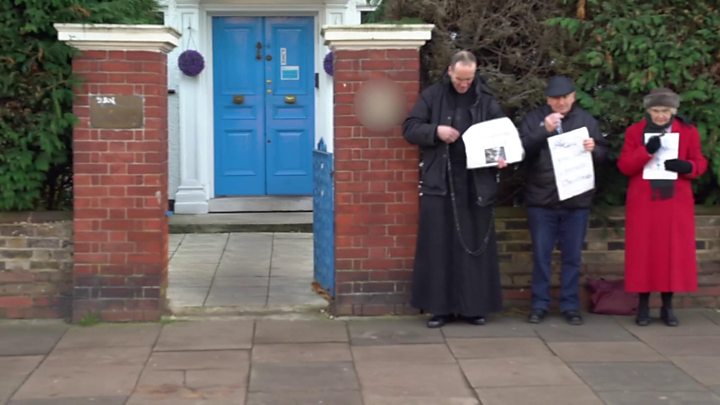
    He said that in some of these cases, protesters handed out model foetuses, displayed graphic images, followed people, blocked their paths and even assaulted them.

    However, he added that the review showed these activities were “not the norm” and most anti-abortion activities were “more passive”, such as praying, displaying banners and handing out leaflets.

    ‘I felt like a criminal for having an abortion’ ‘That’s where the babies are suffering’

    In 2017, 363 hospitals and clinics in England and Wales carried out abortions – 36 of which experienced anti-abortion demonstrations, according to the review.

    Mr Javid said: “Having considered the evidence of the review, I have therefore reached the conclusion that introducing national buffer zones would not be a proportionate response, considering the experiences of the majority of hospitals and clinics, and considering that the majority of activities are more passive in nature.”

    He went on to say that there was already legislation – such as the Public Order Act 1986 – in place that restricted protest activities which cause harm to others.

    In April, the west London council of Ealing took matters into their own hands, imposing a 100m protest-free “buffer zone” outside a Marie Stopes clinic.

    But the constituency MP, Labour’s Rupa Huq, said it was a “national problem that requires a national solution”.

    Media playback is unsupported on your device

    Media captionNewsnight: Should there be ‘buffer zones’ around abortion clinics in Britain?

    Shadow home secretary Diane Abbott said Mr Javid had “given the green light for women to be harassed and abused for exercising their right to choose.

    “This is a disgusting failure to uphold women’s rights over their own bodies. Sajid Javid must urgently reconsider,” the Labour MP said.

    And her party colleague, Yvette Cooper, chairwoman of the home affairs select committee, said: “The whole point of having this review was because existing powers are not working or are proving cumbersome and difficult for councils or the police to use.”

    (more…)

  • Fans removed from Dua Lipa concert in China

    Dua Lipa Image copyright EPA

    Fans were forcefully removed from a Dua Lipa concert in Shanghai, China, on Wednesday.

    Videos posted on social media show security workers pulling people out of their seats.

    Heavy-handed crowd control isn’t that unusual in China and many are saying people were ejected for standing up for or waving pro-gay rights flags.

    Visibly upset, Dua told the crowd: “I want to create a really safe environment for us all to have fun.”

    She added: “I want us all to dance. I want us all to sing, I want us all to just have a really good time.

    Some social media users have said people were forcibly removed because they were dancing.

    Others have also said that it was because they were waving pro-gay rights flags.

    Homosexuality isn’t illegal in China, although anti-LGBT attitudes do exist and some have said there’s a recent trend to sideline the LGBT community.

    One woman, who was at the concert with her daughter, told the BBC that people were being ejected “just for standing up”‘ during the show.

    She said she saw one incident between several security personnel, the police and a Chinese couple.

    The man was being held around the neck in a headlock before being removed, she said.

    She described the police as being “heavy-handed” and “aggressive”.

    This is the first time Dua Lipa has toured in China. She played in Guangzhou and Shanghai.

    She hasn’t addressed the incident on social media.

    A China representative for Dua Lipa’s record company Warner Music Group told the BBC that no-one was available to comment.

    The singer is scheduled to perform next in Manila on Friday.

    Follow Newsbeat on Instagram, Facebook and Twitter.

    Listen to Newsbeat live at 12:45 and 17:45 every weekday on BBC Radio 1 and 1Xtra – if you miss us you can listen back here.

  • Typhoon Mangkhut: Millions in Philippines braced for storm Ask a question

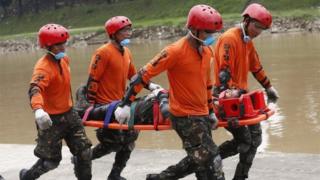
    Philippine Army soldiers practice skills in land and water rescue in times of disaster such as earthquakes and typhoons, along the banks of the Marikina River, east of Manila, Philippines, 13 September 2018. Image copyright EPA Image caption Soldiers and emergency workers have been holding drills in readiness for the storm

    Thousands of people have begun evacuating coastal areas of the Philippines as a super typhoon heads towards the country.

    Typhoon Mangkhut, packing winds of 255km/h (160mph), is due to make landfall on the northern tip of the main island of Luzon by the weekend.

    Schools and offices are being closed and farmers are racing to save crops.

    Ten million people are in the path of the storm, along with millions more in coastal areas of southern China.

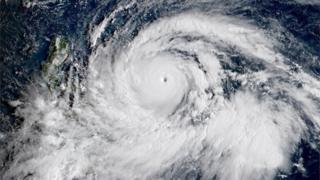
    The Philippines is hit by about 20 typhoons and storms a year. Forecasters say Mangkhut is the strongest so far in 2018 – 900km in diameter, with sustained winds of 205 km/h.

    Image copyright AFP Image caption Typhoon Mangkhut is about 900km wide

    Authorities in the Philippines say they expect storm surges of up to 7m (23 feet) and are warning that heavy rains could trigger landslides and flash floods.

    Reality Check: Are hurricanes getting worse? HA guide to the world’s deadliest storms

    The country’s deadliest storm on record is super typhoon Haiyan, which killed more than 5,000 people and affected millions in 2013.

    In Hong Kong preparations are already under way for the storm, although it is not expected to hit until Sunday.

    Are you in the area? How are you preparing for the typhoon? Let us know by emailing haveyoursay@bbc.co.uk.

    Please include a contact number if you are willing to speak to a BBC journalist. You can also contact us in the following ways:

    WhatsApp: +44 7555 173285 Tweet: @BBC_HaveYourSay Send pictures/video to yourpics@bbc.co.uk Or Upload your pictures/video here Text an SMS or MMS to 61124 or +44 7624 800 100 Please read our terms & conditions and privacy policy

  • Skripal suspects: ‘We were just tourists’

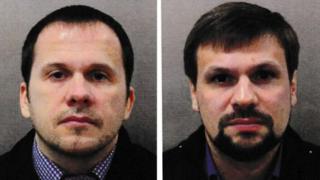
    Alexander Petrov and Ruslan Boshirov Image copyright Reuters Image caption Alexander Petrov and Ruslan Boshirov said they were visiting Salisbury

    Two men named as suspects in the poisoning of a Russian ex-spy in the UK claim they were merely tourists.

    The men, named as Alexander Petrov and Ruslan Boshirov, told the RT channel that they went sightseeing in Salisbury but returned to London within an hour.

    They are accused by the UK of trying to kill Russian ex-spy Sergei Skripal and his daughter Yulia.

    The UK has described them as agents of Russia’s military intelligence service, the GRU.

    “The town was covered by this slush. We got wet, took the nearest train and came back” to London, they told RT.

    What happened to the Skripals? The new Russian disinformation game Russian spy poisoning: What we know so far What is the GRU?

    The UK’s Crown Prosecution Service have said there is enough evidence to charge the men, who are understood to have travelled to London from Moscow on 2 March on Russian passports.

    Two days later, police say, they sprayed the military-grade nerve agent Novichok on the front door of Mr Skripal’s home in the Wiltshire city of Salisbury, before travelling home to Russia later that day.

  • Rachel Day died of sepsis 10 days after diagnosis

    Image copyright Bernie Day Image caption Rachel enjoyed working at a leisure centre and had dreams of opening a dog creche

    It was a situation made all the more impossible by the fact my daughter had been so healthy.

    Rachel loved sport and fitness, and for a long time had worked as lifeguard and swimming teacher at Llanishen Leisure Centre, before becoming assistant manager.

    There, she mentored younger staff and made friends with her sunny personality and strong work ethic.

    She was beautiful, in the bloom of her life, excited about a business idea to change her career path and open a creche for dogs.

    But that weekend – the second May bank holiday in 2017 – she fell ill.

    The Archers and sepsis – the scratch that killed Nic Grundy Why is this killer condition so hard to spot? Sepsis turned my hair white

    It came on so quickly.

    Just the day before, we had been out together, enjoying a boat trip around Cardiff Bay then going on to drink cocktails.

    She lived with a close friend and I know that on the Sunday, she had gone to bed earlier than usual, complaining she felt unwell.

    At 4am on the Monday morning, she had knocked on her flatmates’ door, asking her to take her to A&E.

    She was vomiting and complained of feeling breathless.

    She told her flatmate she was frightened she was going to die – a common symptom of sepsis as it takes over the body so quickly.

    Her flatmate did all she could – driving her straight to A&E at Cardiff’s University Hospital of Wales.
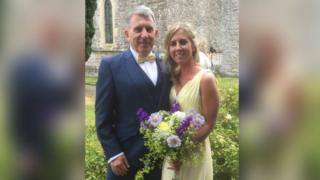
    Image copyright Bernie Day Image caption Rachel with her father, Steve Day, at a family wedding

    New guidelines for managing sepsis say it needs to be treated with intravenous antibiotics within the hour.

    But we were already way behind.

    It had consumed her, constricting her movements as it began ravaging her internal organs and tissue, leaving her in extraordinary pain.

    The following sequence will be etched forever on my mind.

    At first, despite the urgency of my 999 call, just one paramedic came to her flat.

    He sent for an ambulance and two more paramedics arrived.

    Rachel was still screaming in pain, and they couldn’t even find her blood pressure, it was so low.

    It was one hour and 20 minutes before she reached A&E – despite it being just a few miles away.

    As we drove there, I was screaming inside my head for them to hurry.
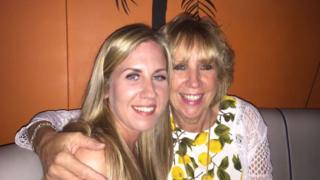
    Image copyright Bernie Day Image caption Rachel and her mother Bernie

    It was only as we neared hospital that the word sepsis was first mentioned. Sepsis, I thought. What was sepsis?

    But it was clear that the doctors and nurses on the Intensive Care Unit knew.

    As soon as Rachel arrived, she was attached up to one drip and another, pumped full of antibiotics and fluids.

    A consultant told Rachel she was going to be put under sedation to give her body a rest.

    She reassured her she wouldn’t die but, in reality, doctors probably knew she would be lucky if she lasted 24 hours.

    In fact, Rachel lasted 10 days in intensive care.

    She fought and fought.

    But it was now 12 hours after she had first attended A&E with symptoms and the sepsis was in full control.

    She had blood clots on her lungs, brain and kidneys. Her body was swollen, her beautiful face and nose disintegrating and turning black.

    After six days in an induced coma, she was slowly brought back round by doctors, so they could assess what damage had been done to her brain.

    Rachel couldn’t talk but she could communicate through blinking – one for yes, two for no.

    She recognised the voices of close friends, blinking when they sang her funny Dr Dre songs.
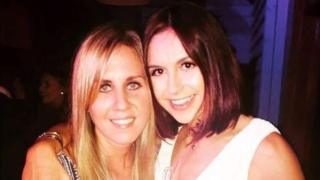
    Image copyright Bernie Day Image caption Rachel with her friend and flatmate Sohaila Ali, who initially took her to hospital

    I would sing to her in my terrible voice, mainly lyrics from the Carpenters’ hit Close to You, which I had sung to her since she was a baby.

    Needless to say, she blinked twice. Shut up, mum, she was saying. Stop singing.

    She still had her sense of humour and we thought that night that she might just make it.

    And on the following Sunday – day seven – we held out even more hope when she opened her eyes for her dad.

    But her body was too tired to do it more than once, and she was put back under sedation.

    It was the next day, on Monday, 5 June, that consultants broke the news to us that in order to save her life, they would need to amputate her limbs.

    They wanted to take both legs under the knee and her left arm.

    Although horrific, it was our view that she would be able to cope with this.

    Before surgery, the doctors let me slide onto her bed and give her a cwtch [hug].

    But when the surgeon came to talk to us afterwards, he told us the damage to her tissues had been so severe, they had had to amputate both of her arms, leaving her a quadruple amputee.

    To say we were distraught is not touching it. How would Rachel cope like that? What sort of life would she have?

    It was at this point I went to the chapel in the hospital.

    I was screaming at God, asking why this had happened to Rachel and not me.

    I walked to the window, shaking violently and wanting to throw myself out.
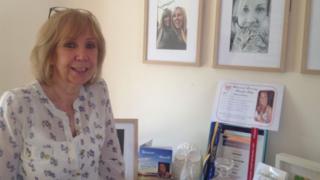
    Image copyright Bernie Day Image caption Bernie Day with photos of her daughter. She is now campaigning to raise awareness of sepsis

    But the chaplain must have heard me. She rushed in, wrapped a blanket around my shoulders and calmed me down.

    She told me I was a mum, and as a mum, I knew what I had to do.

    Sepsis: Some hospitals missing treatment target I lost part of my face from a dog scratch Pregnant woman’s tragedy

    But then there came the final blow, delivered by a consultant in tears.

    Rachel had multiple-organ failure. She wasn’t going to make it anyway.

    We invited all her friends to the hospital, let people say goodbye, put candles around her room, then switched off her life-support machine.

    This was Wednesday, 7 June 2017, and my beautiful girl was gone in minutes.
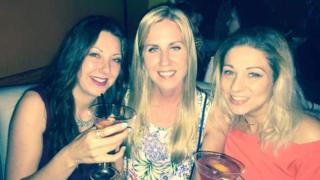
    Image copyright Bernie Day Image caption Rachel with some of her closest friends

    That was 16 months ago. More than 400 people came to her funeral.

    Obviously, we have questions about Rachel’s death. Could an earlier diagnosis have saved her?

    But for now, our family is focusing on campaigning to make people more aware of sepsis.

    The illness kills upwards of 44,000 people in the UK – more than bowel, breast and prostate cancer combined.

    The money we have raised has gone towards implementing a ‘Sepsis 6 Pathway’ at the University Hospital of Wales.

    This means anyone admitted with a fever or signs of infection will be checked against red-flag symptoms of sepsis.

    We are now hoping to train paramedics and GPs to spot early warning signs, as well as getting the pathway into more hospitals.

    Of course, we are also focusing on getting Rachel’s story out there to the wider public.

    I don’t want to let her down.

    If she died to save others, then I have to do what I can to get the message out there.

    What is sepsis?

    Sepsis is triggered by infections, but is actually a problem with our own immune system going into overdrive.

    It starts with an infection that can come from anywhere – even a contaminated cut or insect bite.

    Normally, your immune system kicks in to fight the infection and stop it spreading.

    But if the infection manages to spread quickly round the body, then the immune system will launch a massive immune response to fight it.

    This can also be a problem as the immune response can have catastrophic effects on the body, leading to septic shock, organ failure and even death.

    Symptoms include:

    slurred speech extreme shivering or muscle pain passing no urine in a day severe breathlessness “I feel like I might die” skin mottled or discoloured

    Symptoms in young children include:

    looking mottled, bluish or pale very lethargic or difficult to wake abnormally cold to the touch breathing very fast a rash that does not fade when pressed a seizure or convulsion

    Source: NHS Choices
    (more…)

  • HPV jab will be given to boys, government says

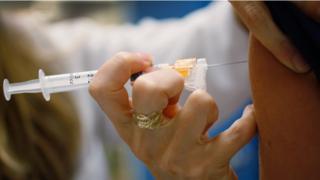
    A HPV vaccine being administered to a patient via injection Image copyright Getty Images

    A jab that protects against a virus that causes cervical cancer will be given to boys aged 12 to 13 in England.

    The policy decision brings England into line with Scotland and Wales.

    HPV vaccine is already routinely offered to girls of the same age at secondary school and is free up until they turn 18.

    Experts and campaigners have been calling for equal access to the jab, which can also guard against oral, throat and anal cancers.

    Doctors paying for sons to have cancer jab Cancer patient wants HPV vaccine for boys What is HPV?

    HPV is the name given to a large group of viruses, which can be caught through any kind of sexual contact with another person who already has it.

    Doctors say most HPV infections go away by themselves, but sometimes infections can lead to a variety of serious problems.

    For boys, this includes cancer of the anus, penis, mouth and throat.

    The vaccine has been offered to girls since 2008 as part of the NHS childhood vaccination programme, with boys being said to benefit through herd protection.

    But there is still a risk of infection in those who go on to have sex with other men or with women who have not been vaccinated.

    Thousands of boys in England are expected to be vaccinated under the programme each year, which is likely to start from 2019-20.

    Girls aged 12 to 13 in Northern Ireland are also eligible for the vaccine, but no decision has been taken on whether to make it available to boys living there.

    Dr Mary Ramsay, Head of Immunisations at Public Health England, said: “This extended programme offers us the opportunity to make HPV related diseases a thing of the past and build on the success of the girls’ programme, which has already reduced the prevalence of HPV 16 and 18, the main cancer-causing types, by over 80%.

    “We can now be even more confident that we will reduce cervical and other cancers in both men and women in the future.”

    Shirley Cramer CBE, Chief Executive, Royal Society for Public Health, said: “It is imperative that the gender-neutral programme is implemented by September 2019 to ensure as many people as possible reap the benefits.”

  • Busting the myths around sex virus HPV

    Laura Flaherty Image copyright Laura Flaherty Image caption “I thought my partner was cheating when I was diagnosed with HPV”

    High levels of shame and ignorance are associated with HPV, the sexually-transmitted virus which affects 80% of people, a survey has discovered.

    The government is rolling out HPV testing as part of routine screenings for cervical cancer.

    Nearly half of the women surveyed believed their partner must have cheated if they had HPV, but the virus can remain dormant for years.

    Campaigners fear women may not attend screenings because of the stigma.

    The survey of 2,000 women was done by Jo’s Cervical Cancer Trust last month.

    Image copyright SIphotography Image caption HPV first testing is being introduced in Wales this week
    Robert Music, Chief Executive, Jo’s Cervical Cancer Trust, said: “Testing for HPV first is a far more effective way of identifying those most at risk of cervical cancer. This change to the programme does mean more women will be told they have HPV.

    “HPV can be confusing however, so we must normalise it to ensure people don’t feel ashamed or scared about being told they have the virus.”

    HPV jab will be given to boys, government says HPV – Would you know if you had the virus HPV vaccine cuts cancer-causing infection HPV jab ‘safe and effective’

    HPV infection is rapidly declining in girls aged between 12 and 18 as a result of the HPV vaccine introduced in 2008.

    Last year, the vaccine was extended to gay men aged 16 to 45, and in July the government announced that it will also be extended to boys, although no start date has yet been given.

    There are no plans to extend the HPV vaccine to other adults over the age of 18, as the likelihood of already having the infection are high, and therefore the vaccine would be ineffective.

    Dr Philippa Kaye, GP and author said: “GPs and health professionals will be having more conversations with patients about HPV as they come in to discuss their results. Understanding how it is transmitted and the relative risks will help reduce the stigma surrounding it.”

  • Mamoudou Gassama: Mali ‘Spiderman’ becomes French citizen

    Media playback is unsupported on your device

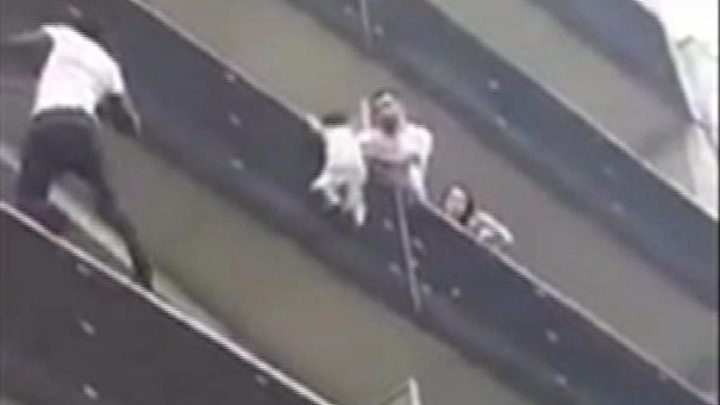
    Media captionMalian “Spiderman” rescues Paris child – then meets French president

    The Malian migrant who dramatically rescued a small boy dangling from a balcony in Paris, France, has been made a French citizen.

    Mamoudou Gassama scaled four floors with his bare hands to save the four year old, who was left unsupervised.

    Mr Gassama, who had been in France illegally, received international acclaim for his bravery.

    President Emmanuel Macron personally thanked him and said he would be offered a role in the fire service.

    “This act of great bravery exemplifies the values which help unite our national community, such as courage, selflessness, altruism and taking care of the most vulnerable,” said the official decree published on Wednesday announcing the granting of his citizenship.

    Mr Gassama was initially given French residency, a first step towards citizenship, and then fast-tracked to receive French citizenship for his heroic gesture.

    He earned the nickname Spiderman as a result of his act of bravery.

    He also signed a contract for an internship with the Paris fire service and was given a medal by the city.

    How case shines light on today’s France Travelling is a rite of passage for many Malians

    He arrived in France last year via the Mediterranean migrant route and found a job in construction in the capital.

    He worked cash-in-hand on building sites and lived in a hostel in the western suburb of Montreuil – known as “little Bamako” because of its large Malian population.

    He had not applied for asylum and was living illegally in France.

    You may also like:

    Arrested for having breakfast with a woman Furore at ‘racist’ Serena Williams cartoon Huge gold-laden rocks found in Australia

    (more…)